

Journal Description
Entropy
Entropy
is an international and interdisciplinary peer-reviewed open access journal of entropy and information studies, published monthly online by MDPI. The International Society for the Study of Information (IS4SI) and Spanish Society of Biomedical Engineering (SEIB) are affiliated with Entropy and their members receive a discount on the article processing charge.
- Open Access— free for readers, with article processing charges (APC) paid by authors or their institutions.
- High Visibility: indexed within Scopus, SCIE (Web of Science), Inspec, PubMed, PMC, Astrophysics Data System, and other databases.
- Journal Rank: JCR - Q2 (Physics, Multidisciplinary) / CiteScore - Q1 (Mathematical Physics)
- Rapid Publication: manuscripts are peer-reviewed and a first decision is provided to authors approximately 20.9 days after submission; acceptance to publication is undertaken in 3.4 days (median values for papers published in this journal in the first half of 2026).
- Recognition of Reviewers: reviewers who provide timely, thorough peer-review reports receive vouchers entitling them to a discount on the APC of their next publication in any MDPI journal, in appreciation of the work done.
- Testimonials: See what our editors and authors say about Entropy.
- Companion journals for Entropy include: Foundations, Thermo and Complexities.
- Journal Cluster of Atomic, Molecular, and Optical (AMO) Physics: Entropy, Photonics, Atoms, Lights, Optics, Physics and Quantum Beam Science.
Impact Factor:
2.1 (2025);
5-Year Impact Factor:
2.3 (2025)
Latest Articles
Stern Zero-Knowledge Identification Protocol Based on Lee Distance
Entropy 2026, 28(8), 917; https://doi.org/10.3390/e28080917 (registering DOI) - 15 Aug 2026
Abstract
Post-quantum cryptography has gained urgent attention as quantum computing poses fundamental threats to traditional public-key cryptosystems. Code-based cryptography stands out as a robust post-quantum candidate, but most existing schemes are built on Hamming distance, whereas Lee distance provides a more natural error model
[...] Read more.
Post-quantum cryptography has gained urgent attention as quantum computing poses fundamental threats to traditional public-key cryptosystems. Code-based cryptography stands out as a robust post-quantum candidate, but most existing schemes are built on Hamming distance, whereas Lee distance provides a more natural error model for specific communication channels like phase-modulation channels. This paper presents the Lee–Stern zero-knowledge identification protocol, which extends the classic Stern protocol from the binary Hamming metric to the Lee metric over arbitrary prime fields. We adopt the state-of-the-art LMMT-ISD attack framework to conduct rigorous security re-evaluation and derive necessary parameter bounds for standard post-quantum security levels. Extensive experiments analyze how code length and prime modulus affect the protocol’s overheads, showing that the proposed scheme achieves equivalent security with notably shorter code length and smaller public key size than the original binary Stern protocol.
Full article
Open AccessArticle
Benchmarking Quantum Solvers in Noisy Digital Simulations for Financial Portfolio Optimization
by
Ruizhe Shen, Zichang Hao and Ching Hua Lee
Entropy 2026, 28(8), 916; https://doi.org/10.3390/e28080916 - 14 Aug 2026
Abstract
In this work, we benchmark two prominent quantum algorithms: Quantum Imaginary-Time Evolution (QITE) and the Quantum Approximate Optimization Algorithm (QAOA) for obtaining the ground state of Ising-type Hamiltonians. Specifically, we apply them to the Markowitz portfolio optimization problem in quantitative finance, on both
[...] Read more.
In this work, we benchmark two prominent quantum algorithms: Quantum Imaginary-Time Evolution (QITE) and the Quantum Approximate Optimization Algorithm (QAOA) for obtaining the ground state of Ising-type Hamiltonians. Specifically, we apply them to the Markowitz portfolio optimization problem in quantitative finance, on both digital quantum computers and local quantum simulators with controllable two-qubit errors (noise). In noiseless settings, we find that QAOA achieves excellent convergence to the optimal results. Under noisy conditions, the QITE method exhibits greater robustness and stability, though it incurs substantially more classical numerical cost. In contrast, we demonstrate that QAOA offers better scalability and can still yield robust results if the noise can be effectively mitigated. Our findings provide valuable insights into the trade-offs between scalability and noise tolerance and demonstrate the practical potential of quantum algorithms for solving real-world optimization problems on near-term quantum devices.
Full article
(This article belongs to the Special Issue Quantum Computing in the NISQ Era, Second Edition)
Open AccessArticle
Information Loss in Scalar Monetary Aggregation: A Tensorial Langevin Framework for Financial Shock Propagation and Policy Targeting
by
M. Rodrigo Pinheiro and Mario J. Pinheiro
Entropy 2026, 28(8), 915; https://doi.org/10.3390/e28080915 - 14 Aug 2026
Abstract
We develop a tensor-based dynamical framework for monetary flows in multi-sector, multi-agent economies and quantify the information destroyed when the monetary state is reduced to a scalar aggregate. The state is a third-order tensor encoding capital flows across sectors, agent classes, and time;
[...] Read more.
We develop a tensor-based dynamical framework for monetary flows in multi-sector, multi-agent economies and quantify the information destroyed when the monetary state is reduced to a scalar aggregate. The state is a third-order tensor encoding capital flows across sectors, agent classes, and time; deviations from equilibrium obey a tensor-indexed Langevin (multivariate Ornstein–Uhlenbeck) equation with a coupling operator and channel-specific friction rates. Using standard Lyapunov theory, we assemble a stability and convergence framework for the induced vectorized system, with a bound stated so as to remain valid for the non-normal system matrices generated by asymmetric economic coupling, and characterize the stochastically forced case in the mean-square sense. Shannon entropy, Kullback–Leibler divergence, and sector–agent mutual information measure the structural information discarded by scalar aggregation. We then study a stylized, heuristically calibrated economy subject to a shock inspired by the 2007–2009 crisis; we emphasize at the outset that the figures reported below are properties of that calibration and are not empirical estimates. In this scenario Finance absorbs an 18.9% peak capital loss while Manufacturing and Services suffer 5.8% and 3.9% secondary drops, against an aggregate contraction of only 8.6%; the Kullback–Leibler divergence of the sector–agent flow distribution recovers systematically later than the aggregate signal, a lag that is positive in 96.6% of a 1000-draw Monte Carlo ensemble, although its magnitude is calibration-dependent. Under a symmetric exit rule, a deficit-targeted stimulus restores equilibrium substantially faster than a share-weighted uniform stimulus in 100% of the ensemble while spending strictly less—its realized expenditure saturates below the uniform budget because it self-terminates as deficits close—and attains integrated disequilibrium within 18% of the exact linear-quadratic optimum at equal control effort while requiring no knowledge of the system matrix. The ordinal conclusions—aggregation masks the epicenter, structure lags the aggregate, and deficit targeting dominates uniformity—are robust across a wide neighborhood of the calibration, and identify the disaggregated state as the object that stabilization policy needs and that scalar aggregation destroys.
Full article
(This article belongs to the Section Multidisciplinary Applications)
Open AccessArticle
Entropic Dynamics of Jump-Diffusion Option Pricing
by
Mohammad Abedi
Entropy 2026, 28(8), 914; https://doi.org/10.3390/e28080914 - 14 Aug 2026
Abstract
►▼
Show Figures
The standard models of stock-price dynamics and option valuation rest on stochastic processes postulated at the outset; here, we lay down an entropic-inference framework that derives these processes rather than assuming them, by making explicit the information each one encodes. A symmetry comes
[...] Read more.
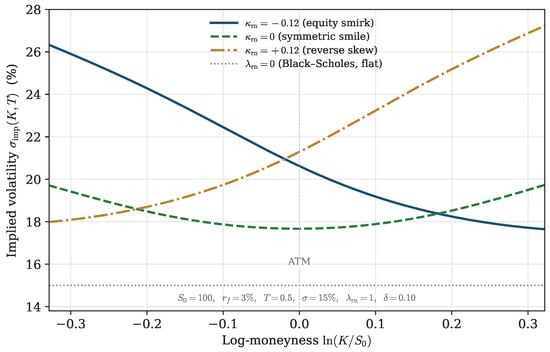
The standard models of stock-price dynamics and option valuation rest on stochastic processes postulated at the outset; here, we lay down an entropic-inference framework that derives these processes rather than assuming them, by making explicit the information each one encodes. A symmetry comes first: markets reward returns rather than price levels, which selects the logarithm of price as the dynamical variable. The price then evolves through two channels, a continuous one carrying the constraints of continuity and directionality, and a jump channel carrying the arrival rate and the first two moments of the jump size. Because these constraints act on disjoint parts of the microstate, the channels factorize as a theorem, and the dynamics is the Merton jump-diffusion, with Geometric Brownian Motion as its no-jump limit; the log-price density obeys a Kolmogorov–Feller equation, of which the Fokker–Planck equation is the no-jump limit. The same principle, now imposing no-arbitrage through the mean log-return, selects the Esscher transform from among the many martingale measures an incomplete market admits, here derived rather than borrowed; the premium then satisfies Merton’s partial integro-differential equation, and the risk-neutral mixture of lognormals generates the implied-volatility smile, the Black–Scholes results returning when jumps vanish. What changes from one model to the next is never the inference but the information supplied to it.
Full article
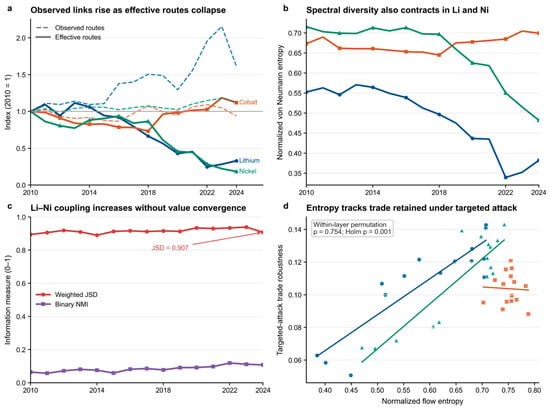
Figure 1
Open AccessArticle
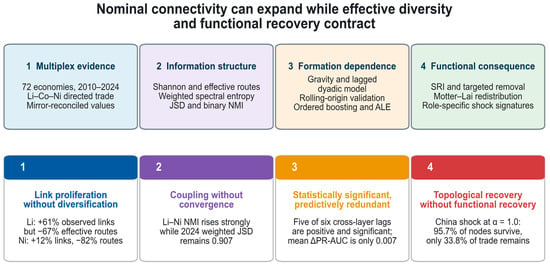
More Links but Fewer Effective Routes: Entropy and Resilience in Global Lithium, Cobalt and Nickel Trade Networks
by
Guoxu Liu, Dong Mu, Tianyu Li, Mingqian Sun and Liu Chen
Entropy 2026, 28(8), 913; https://doi.org/10.3390/e28080913 - 14 Aug 2026
Abstract
Counts of trade links are often used as evidence of diversification, yet they say little about how value is distributed across those links. Using bilateral flows for selected lithium, cobalt and nickel products among 72 economies from 2010 to 2024, we built directed,
[...] Read more.
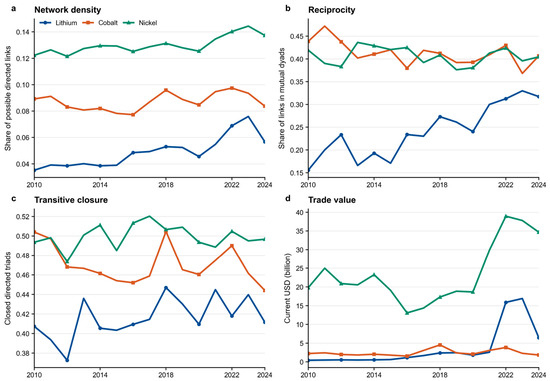
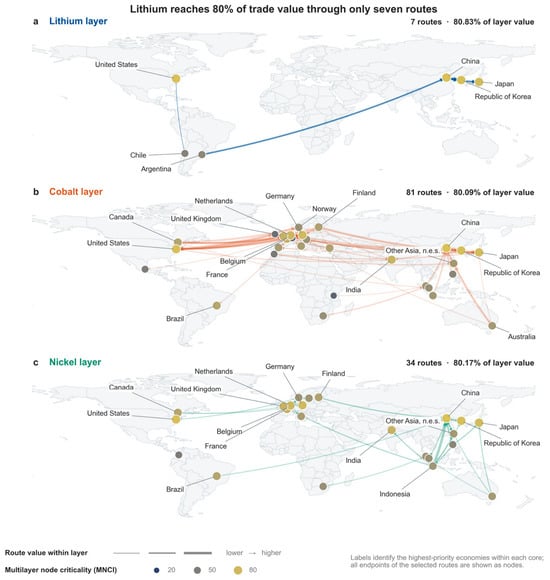
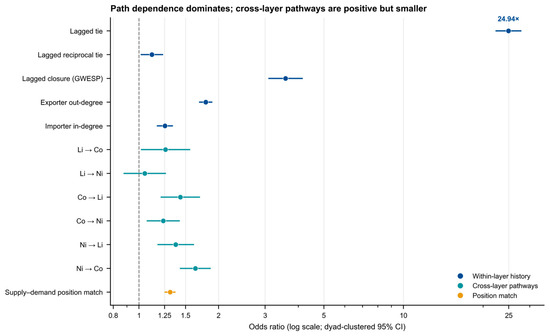
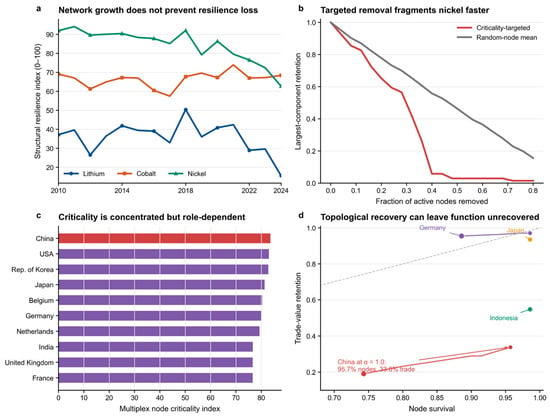
Counts of trade links are often used as evidence of diversification, yet they say little about how value is distributed across those links. Using bilateral flows for selected lithium, cobalt and nickel products among 72 economies from 2010 to 2024, we built directed, value-weighted networks and examined them with multiscale entropy measures, lagged formation models and disruption tests. Here, entropy is used in the information-theoretic sense to measure how evenly trade value, network weight or motif participation is distributed across routes and structural modes; for route-value entropy, exp(H) is the effective number of equally weighted routes. The number of lithium links increased from 180 to 290, but its entropy-effective route count declined from 38.68 to 12.75. Nickel displayed a similar divergence, falling from 118.84 to 21.81 effective routes as links increased, whereas cobalt moved in the opposite direction. Across layer-years, flow entropy was associated with the share of trade retained under targeted attack (ρ = 0.754; Holm-adjusted p = 0.001). Binary dependence between lithium and nickel rose over time, although their weighted divergence was still 0.907 in 2024. In the China-removal experiment at the largest capacity margin, 95.7% of nodes survived but only 33.8% of trade value remained. For these product baskets, a larger network therefore need not be a more diversified one, and preserved connectivity can coexist with substantial economic loss.
Full article
(This article belongs to the Special Issue Analysis of the Structural Characteristics of Complex Networks Based on Entropy Measurement)
►▼
Show Figures

Figure 1
Open AccessArticle
A Dual-Channel Architecture Based on GCN and HGCN for Dynamic Link Prediction
by
Bing Wu, Sheng Zhang, Jiangnan Zhou, Mengen Xu, Qiuming Wang, Yirong Zeng, Ka Sun and Fenglian Yuan
Entropy 2026, 28(8), 912; https://doi.org/10.3390/e28080912 - 14 Aug 2026
Abstract
Dynamic link prediction, which aims to infer future edges from historical network structures, is a fundamental task in dynamic network analysis. Traditional models fail to capture high-order information, while existing methods neglect the distinct temporal evolution patterns between low-order and high-order structures, thereby
[...] Read more.
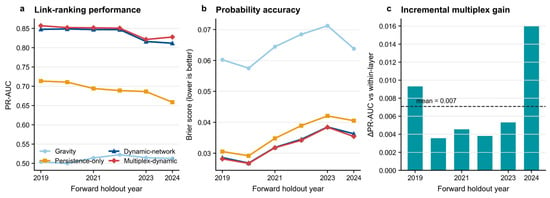
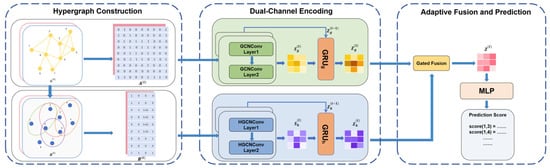
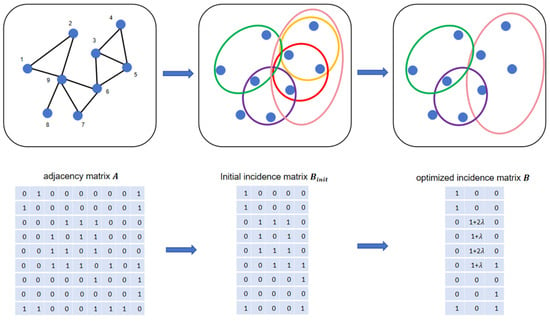
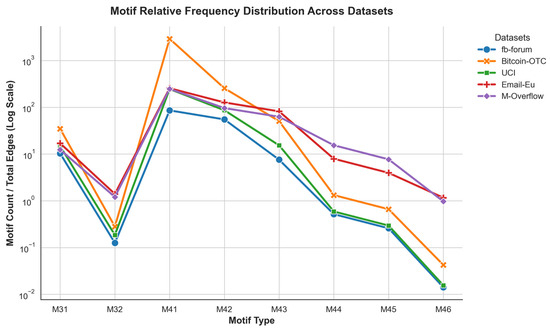
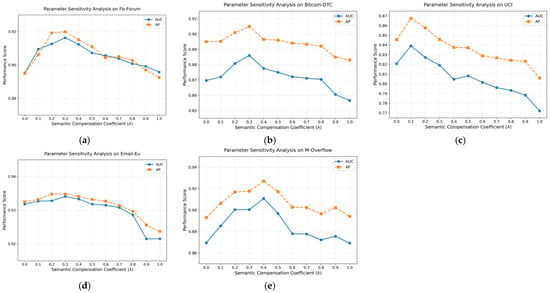
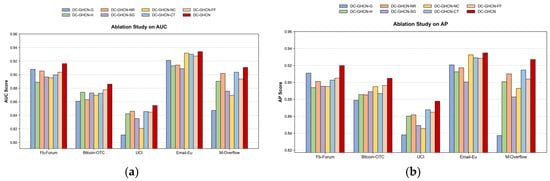
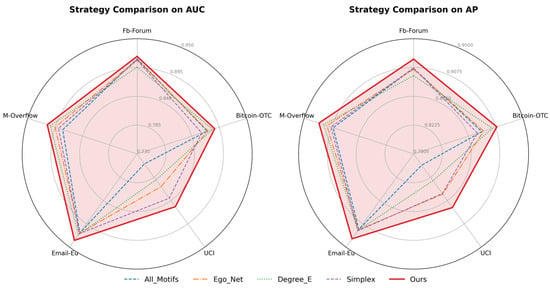
Dynamic link prediction, which aims to infer future edges from historical network structures, is a fundamental task in dynamic network analysis. Traditional models fail to capture high-order information, while existing methods neglect the distinct temporal evolution patterns between low-order and high-order structures, thereby limiting prediction accuracy. To address these issues, we propose DC-GHCN, a dynamic link prediction model based on a dual-channel architecture that integrates Graph Convolutional Network (GCN) and Hypergraph Convolutional Network (HGCN). Firstly, we extract closed motifs from dynamic network snapshots to construct an initial hypergraph, then refine it via nested motif pruning and node weight compensation strategies. Secondly, we design a dual-channel architecture: the GCN channel learns low-order structural features, while the HGCN channel learns high-order structural features. Furthermore, two independent Gated Recurrent Units (GRUs) separately model the temporal evolution of the two channels. Finally, the model employs a gating mechanism to adaptively fuse the dual-channel node representations for link prediction. Experiments on five real-world dynamic network datasets demonstrate that DC-GHCN outperforms baseline models, validating the effectiveness of the proposed model in dynamic link prediction.
Full article
(This article belongs to the Special Issue Higher-Order Interactions and Their Relevance to Real Networks)
►▼
Show Figures

Figure 1
Open AccessFeature PaperArticle
Occupancy Statistics and Entropy in Bose Systems
by
Arnaldo Spalvieri
Entropy 2026, 28(8), 911; https://doi.org/10.3390/e28080911 - 13 Aug 2026
Abstract
In this work, we compare three formulations of thermodynamic entropy for a non-interacting bosonic gas: (i) the grand-canonical Bose–Einstein entropy, (ii) the finite-N canonical entropy obtained from the exact partition function (Ziff, Uhlenbeck, and Kac construction), and (iii) the entropy of a multinomial
[...] Read more.
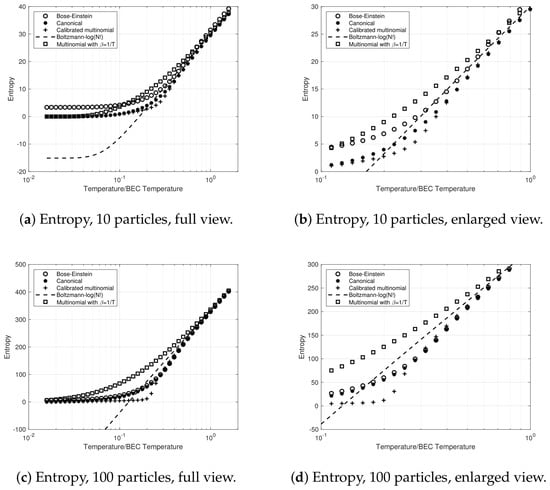
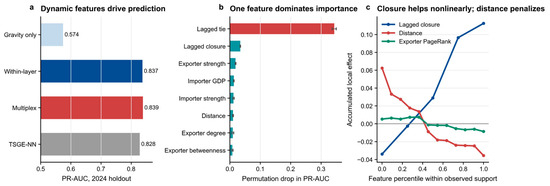
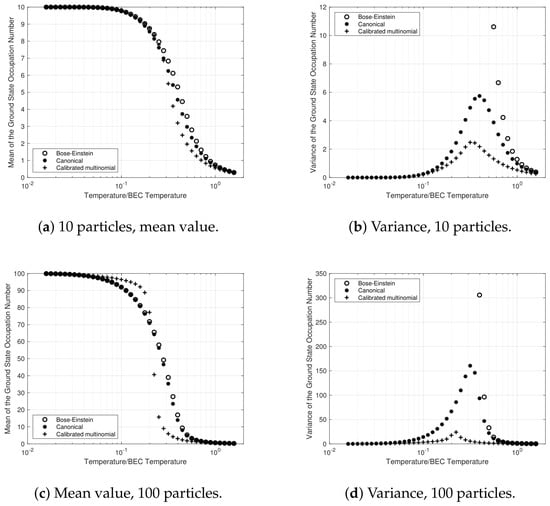
In this work, we compare three formulations of thermodynamic entropy for a non-interacting bosonic gas: (i) the grand-canonical Bose–Einstein entropy, (ii) the finite-N canonical entropy obtained from the exact partition function (Ziff, Uhlenbeck, and Kac construction), and (iii) the entropy of a multinomial distribution with Boltzmann categorical probabilities and temperature determined from Clausius’ equation. It is well-known that the grand-canonical Bose–Einstein systematically overestimates entropy of canonical systems in regimes where particle-number fluctuations are significant. The exact canonical entropy correctly enforces the particle-number constraint, but recent experimental results suggest that it also overestimates particle-number fluctuations below the crossover temperature. The multinomial distribution is less common in thermodynamics. It addresses in a mathematically exact way the puzzle of the famous − term introduced by Gibbs as a deus ex machina in discussions of thermodynamic entropy. One remarkable consequence is that the entropy of the multinomial distribution overcomes the issue of negative entropy at low temperature that affects the Gibbs and the Sackur–Tetrode entropies at low temperature. The analysis presented in the paper shows that the multinomial distribution, equipped with a categorical distribution calibrated in such a way that the resulting multinomial entropy fits Clausius’ equation, provides accurate approximations to the canonical entropy in the classical regime, while it is smaller than the canonical entropy below the crossover temperature. One feature of the multinomial distribution is that it predicts lower peak variance of the number of particles in the ground state than the canonical distribution. This is in agreement with recent experimental results; hence, this paper identifies the thermodynamically calibrated multinomial distribution as a candidate alternative to the canonical distribution for thermodynamic bosonic entropy in finite systems.
Full article
(This article belongs to the Special Issue Insight into Entropy)
►▼
Show Figures

Figure 1
Open AccessArticle
A Non-Equilibrium Thermodynamic Framework for Sequential Symmetry Breaking in Driven Complex Fluids
by
Antonio F. Miguel, Vinicius R. Pepe and Luiz A. O. Rocha
Entropy 2026, 28(8), 910; https://doi.org/10.3390/e28080910 - 13 Aug 2026
Abstract
The spontaneous emergence of macroscopic order in driven, far-from-equilibrium complex fluids lacks a generalized framework capable of bridging continuous and discrete symmetry-breaking transitions. In this study, we propose a non-equilibrium phenomenological framework that synthesizes irreversible thermodynamics, coupled Landau–de Gennes potential expansions, and active
[...] Read more.
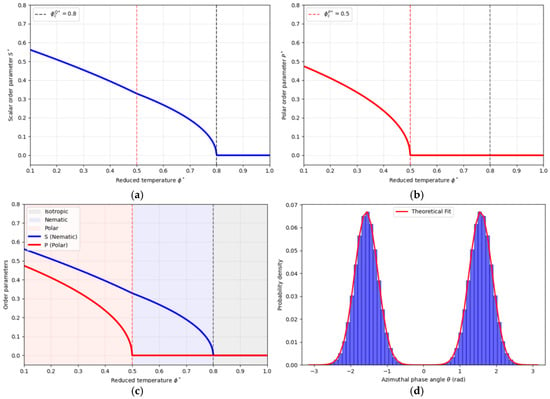
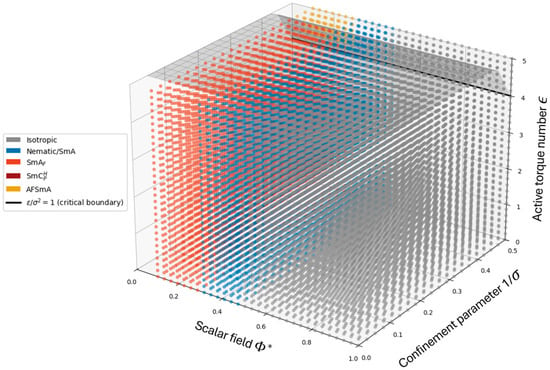
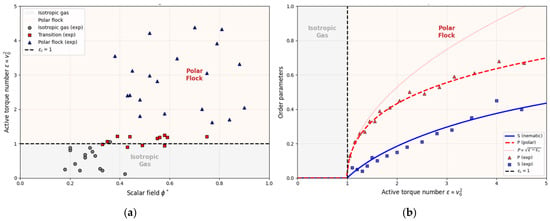
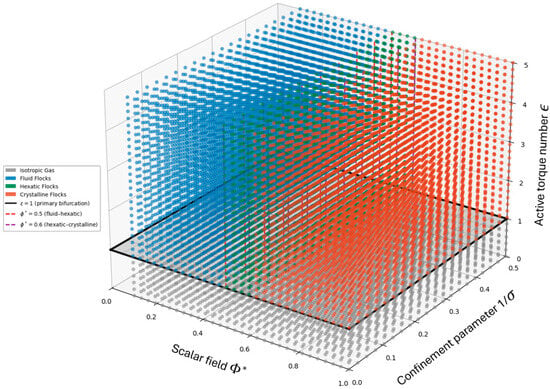
The spontaneous emergence of macroscopic order in driven, far-from-equilibrium complex fluids lacks a generalized framework capable of bridging continuous and discrete symmetry-breaking transitions. In this study, we propose a non-equilibrium phenomenological framework that synthesizes irreversible thermodynamics, coupled Landau–de Gennes potential expansions, and active hydrodynamics. The formulation employs a single tensorial order parameter, a nonlinear state-dependent jamming mobility closure, and a generalized set of dimensionless groups to map the non-equilibrium phase space. The model predicts a sequential symmetry-breaking cascade and reproduces the emergence of polar heliconical smectic and antiferroelectric phases in driven liquid crystals, as well as the transition from isotropic active gases to macroscopic fluid flocks and active Wigner crystals in purely repulsive Janus colloids. Across these systems, a dimensionless active torque number acts as the principal bifurcation parameter, suggesting that their macroscopic structural transitions are governed by a common balance between thermodynamic and kinematic effects rather than by the details of their microscopic interactions.
Full article
(This article belongs to the Special Issue Phase Transitions in Complex and Nonequilibrium Systems: From Criticality to Topological and Active Matter)
►▼
Show Figures

Figure 1
Open AccessArticle
Impact of Generalized Order Statistics and Its Dual on Entropy Estimation for the Exponentiated Generalized Pham Distribution: Theory and Applications
by
Zakiah I. Kalantan, Sulafah M. S. Binhimd, Asmaa M. Abd AL-Fattah, Asmaa A. Ahmed, Gannat R. AL-Dayian, Abeer A. EL-Helbawy and Mervat K. Abd Elaal
Entropy 2026, 28(8), 909; https://doi.org/10.3390/e28080909 - 13 Aug 2026
Abstract
Entropy is a fundamental measure of uncertainty in reliability and lifetime analysis, and the structure of the observed data intrinsically influences its estimation. In many practical applications, inference relies on ordered or record-based samples, for which generalized order statistics and their dual form
[...] Read more.
Entropy is a fundamental measure of uncertainty in reliability and lifetime analysis, and the structure of the observed data intrinsically influences its estimation. In many practical applications, inference relies on ordered or record-based samples, for which generalized order statistics and their dual form provide a comprehensive and unifying framework encompassing order statistics, reversed order statistics, and record values as special cases. Despite substantial progress in entropy estimation and lifetime modeling, little attention has been devoted to a unified entropy estimation framework for flexible lifetime models under generalized ordered sampling schemes. This paper investigates the impact of generalized order statistics and their dual form on the estimation of entropy measures for the exponentiated generalized Pham distribution. The proposed distribution extends the classical Pham model through additional shape flexibility, enabling it to accommodate diverse reliability behaviors and heterogeneous tail characteristics. Several fundamental properties are derived, and maximum likelihood estimation and corresponding confidence intervals for model parameters and entropy measures are developed under both generalized order statistics and dual generalized order statistics frameworks. The general results are further specialized to order statistics, reversed order statistics, and upper and lower record values. Applications to two real datasets demonstrate that the proposed distribution provides an excellent fit compared with competing models, as confirmed by goodness-of-fit measures. The findings underscore the pivotal structural role of generalized order statistics and their dual form in entropy-based inference, particularly for record or partially observed data, where the sampling design critically affects uncertainty quantification.
Full article
Open AccessArticle
Dynamic Thermal Relaxation in Metallic Films
by
Libin Wang, Dmitry Golubev, Yuri M. Galperin and Jukka P. Pekola
Entropy 2026, 28(8), 908; https://doi.org/10.3390/e28080908 - 13 Aug 2026
Abstract
The performance of low-temperature detectors utilizing thermal effects is determined by their energy relaxation properties. Usually, heat transport experiments in mesoscopic structures are carried out in the steady state, where temperature gradients do not change in time. Here, we present an experimental study
[...] Read more.
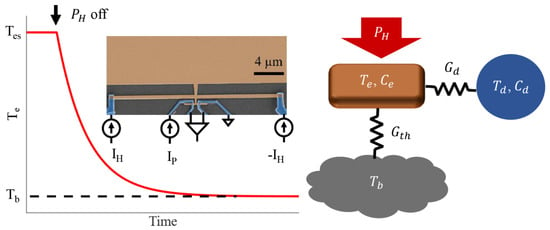
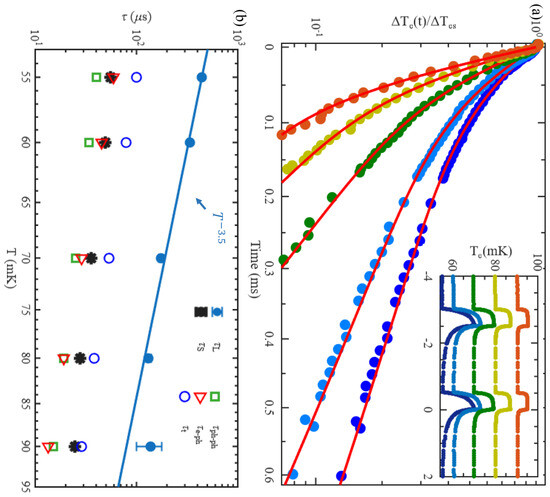
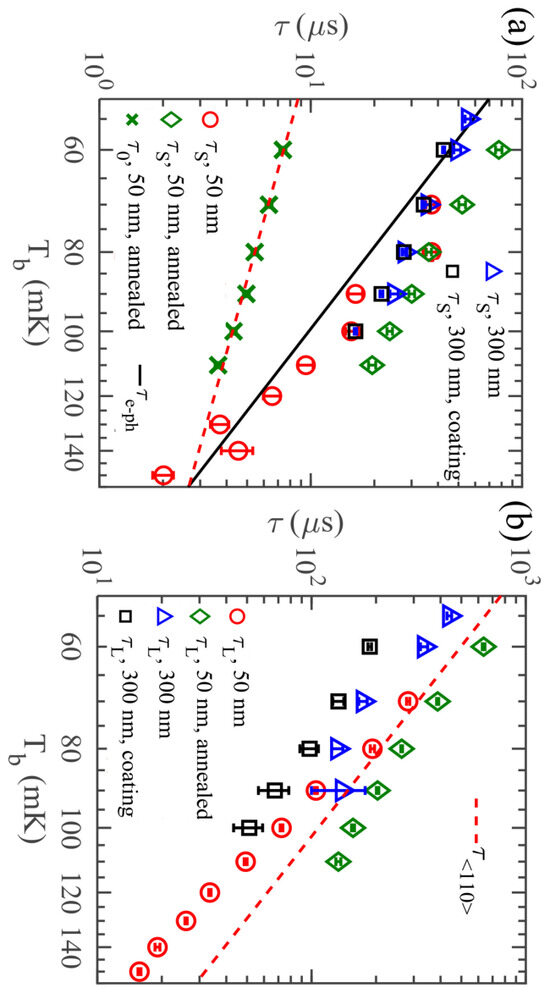
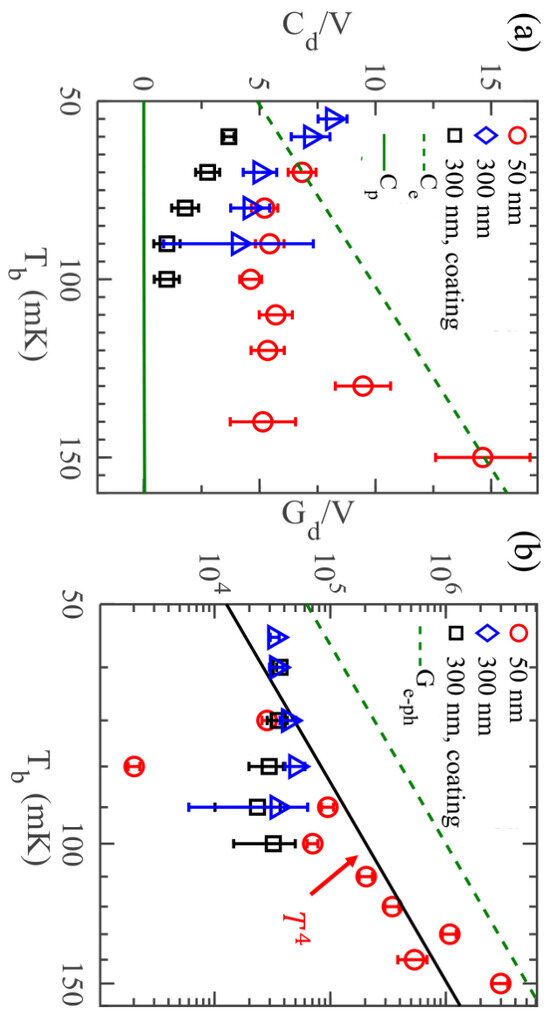
The performance of low-temperature detectors utilizing thermal effects is determined by their energy relaxation properties. Usually, heat transport experiments in mesoscopic structures are carried out in the steady state, where temperature gradients do not change in time. Here, we present an experimental study of dynamic thermal relaxation in a mesoscopic system—thin metallic film. We find that thermal relaxation of hot electrons in copper and silver films is characterized by several time constants, and that the annealing of the films changes them. In most cases, two time constants are observed, and we can model the system by introducing an additional thermal reservoir coupled to the film electrons. We determine the specific heat of this reservoir and its coupling to the electrons. We suspect that multiscale thermal relaxation arises from the complicated morphology of the films, in which the electron–phonon coupling strength in grains with different orientations varies.
Full article
(This article belongs to the Special Issue Quantum Thermodynamics in Action)
►▼
Show Figures

Figure 1
Open AccessArticle
Secrecy Performance of O-RAN-Enabled RIS-Assisted FSO/RF Satellite Downlinks
by
Yuhang Li, Xifan Chen, Jiale Shi, Guocheng Lv and Ye Jin
Entropy 2026, 28(8), 907; https://doi.org/10.3390/e28080907 - 13 Aug 2026
Abstract
Motivated by the increasing security requirements of next-generation satellite-terrestrial communication systems and the emergence of Open Radio Access Network (O-RAN) architectures, this paper presents a secrecy analysis of a novel reconfigurable intelligent surface (RIS)-assisted mixed free-space optical (FSO) and radio frequency (RF) satellite
[...] Read more.
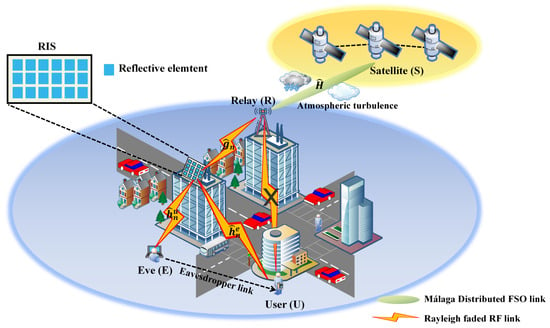
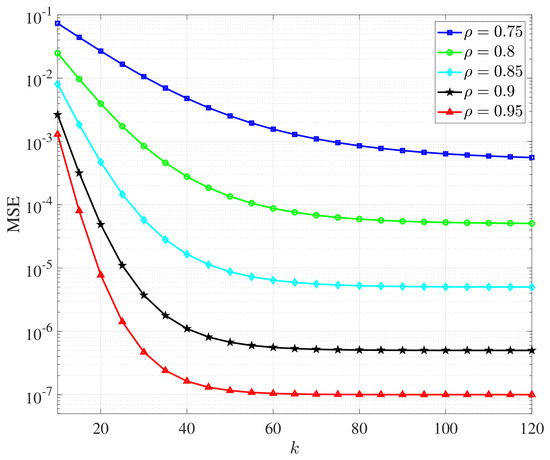
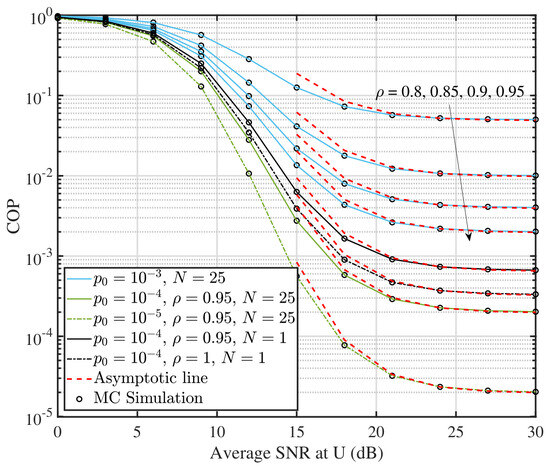
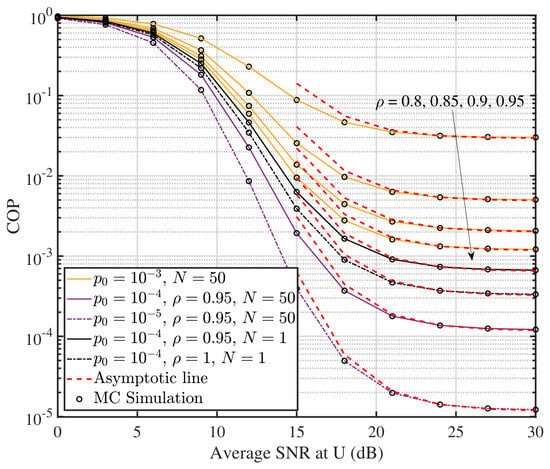
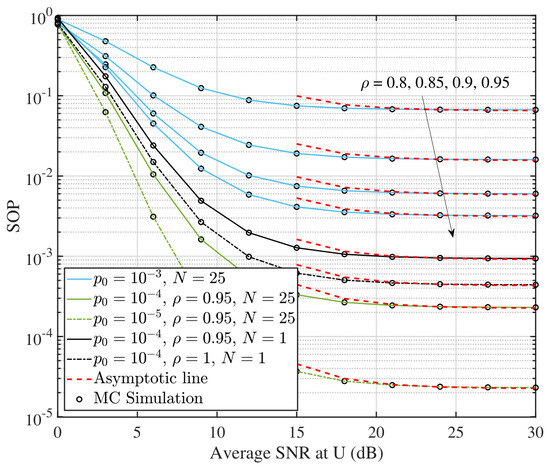
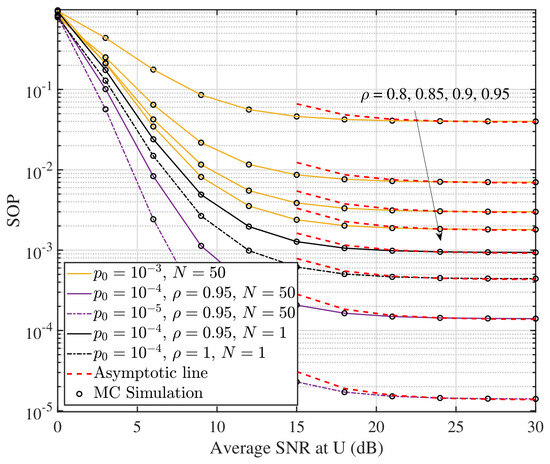
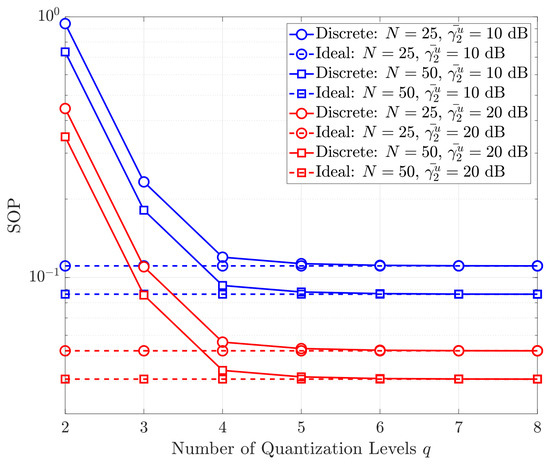
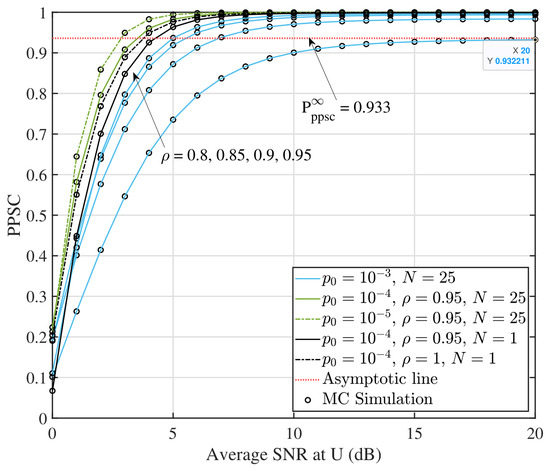
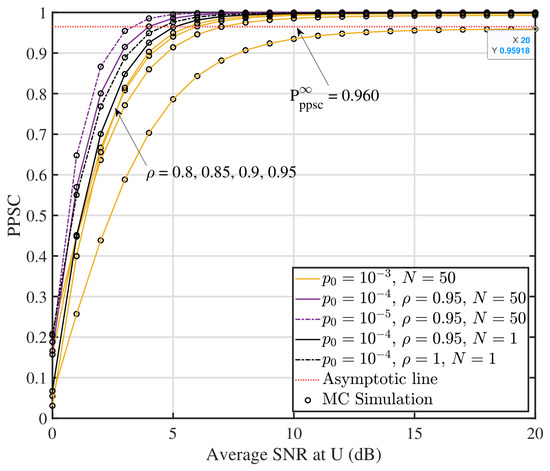
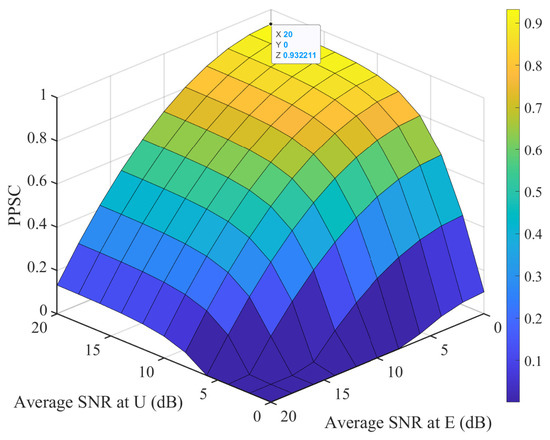
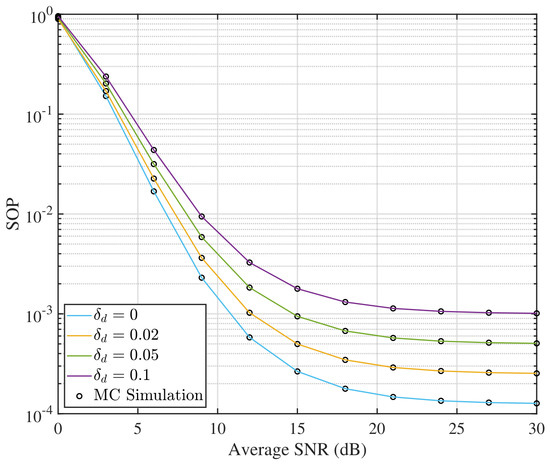
Motivated by the increasing security requirements of next-generation satellite-terrestrial communication systems and the emergence of Open Radio Access Network (O-RAN) architectures, this paper presents a secrecy analysis of a novel reconfigurable intelligent surface (RIS)-assisted mixed free-space optical (FSO) and radio frequency (RF) satellite downlink transmission system within an O-RAN-enabled non-terrestrial network (NTN) framework. The inherent broadcast nature of RF transmissions presents significant eavesdropping risks, which serves as the primary impetus for this study. We analyze the combined effects of imperfect channel state information (CSI) and random link blockage within such integrated networks. The impact of discrete phase shift constraints at the RIS is also investigated. Closed-form expressions are derived for three key performance metrics: connection outage probability (COP), secrecy outage probability (SOP), and the probability of positive secrecy capacity (PPSC). Through high signal-to-noise ratio (SNR) asymptotic analysis, corresponding asymptotic expressions are obtained, and all analytical results are validated via extensive Monte Carlo simulations. Our findings demonstrate that: (i) Link blockage probability and channel estimation accuracy jointly govern the secrecy performance floor. (ii) Increasing the number of RIS elements enhances physical-layer security by driving both the COP and SOP toward their theoretical lower bounds. (iii) Improving channel estimation accuracy diminishes the eavesdropper’s channel advantage and improves the overall system security. These results offer valuable insights for designing secure mixed FSO/RF satellite-terrestrial systems within O-RAN-enabled NTN architectures that effectively balance connectivity and confidentiality.
Full article
(This article belongs to the Special Issue O-RAN-Enabled Future-Generation Terrestrial Networks and Non-Terrestrial Networks)
►▼
Show Figures

Figure 1
Open AccessArticle
Phase-Space Formulation of Shock-Containing Irrotational Barotropic Euler Flow
by
Sandor M. Molnar and Joseph R. Godfrey
Entropy 2026, 28(8), 906; https://doi.org/10.3390/e28080906 - 13 Aug 2026
Abstract
►▼
Show Figures
We develop a KvN/Weyl/Wigner/Moyal phase-space formulation for shock-containing compressible, irrotational, barotropic Euler flow. Smooth branches are represented by branchwise Wigner distributions, while piecewise-smooth entropy-admissible shocks generate an interface-supported defect in the weak phase-space balance. This defect is concentrated on the moving shock surface
[...] Read more.
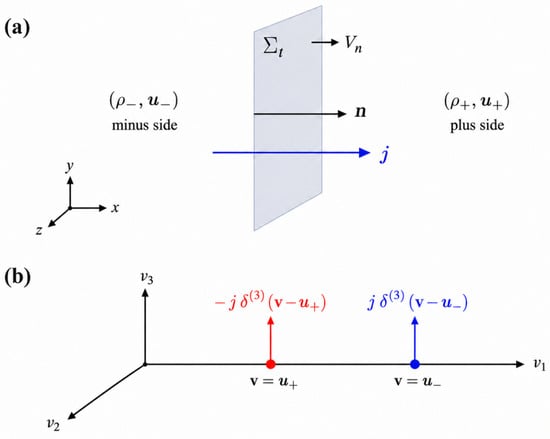
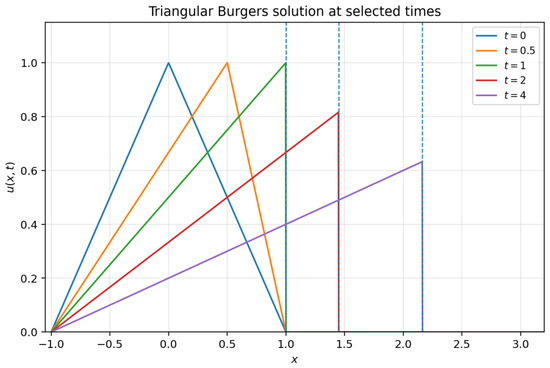
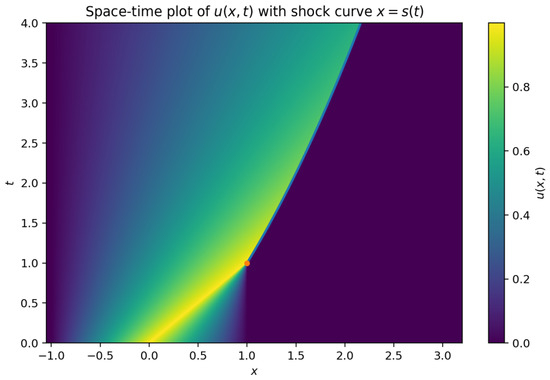
We develop a KvN/Weyl/Wigner/Moyal phase-space formulation for shock-containing compressible, irrotational, barotropic Euler flow. Smooth branches are represented by branchwise Wigner distributions, while piecewise-smooth entropy-admissible shocks generate an interface-supported defect in the weak phase-space balance. This defect is concentrated on the moving shock surface and is weighted by the normal relative transport flux between the one-sided branches. An exact planar constant-state three-dimensional example shows how the same mass flux is transferred between distinct velocity-space supports and how its moments recover the classical jump structure. We also introduce a shock solution of the one-dimensional Burgers equation with a triangular initial profile as an exactly solvable reduced benchmark. In this example, the shock trajectory, transported branch weights, branchwise Wigner transforms, and a two-component localized phase-space defect are obtained in closed form. The construction is a restricted branchwise representation of Euler shocks already selected by the Rankine–Hugoniot and entropy conditions; it is not a new admissibility criterion or a complete global Wigner theory across discontinuities. The formulation separates smooth phase-space evolution from singular interface contributions within a unified construction and provides a compact diagnostic description of shock-supported phase-space structure.
Full article
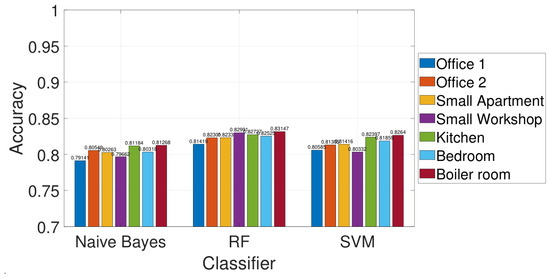
Figure 1
Open AccessArticle
Multi-Constraint Three-Dimensional Bin Packing Optimization for Mixed Vehicle Types: A Heuristic Approach
by
Yiting Hao, Dongqing Cao and Wenhao Gui
Entropy 2026, 28(8), 905; https://doi.org/10.3390/e28080905 - 12 Aug 2026
Abstract
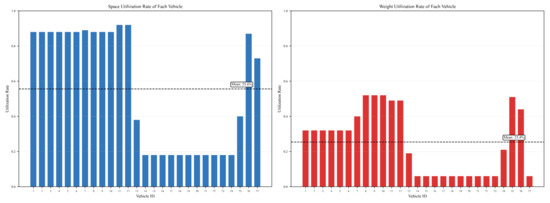
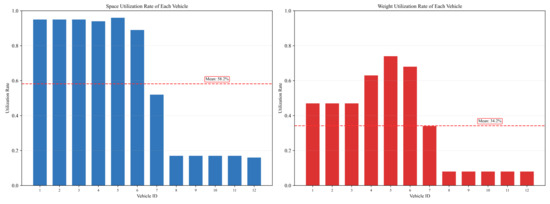
Aiming at the multi-constraint three-dimensional bin packing problem for mixed vehicle types in urban logistics, where traditional exact algorithms are limited by NP-hard computational complexity and practical engineering constraints, this study proposes a progressive optimization framework for vehicle loading and fleet allocation optimization.
[...] Read more.
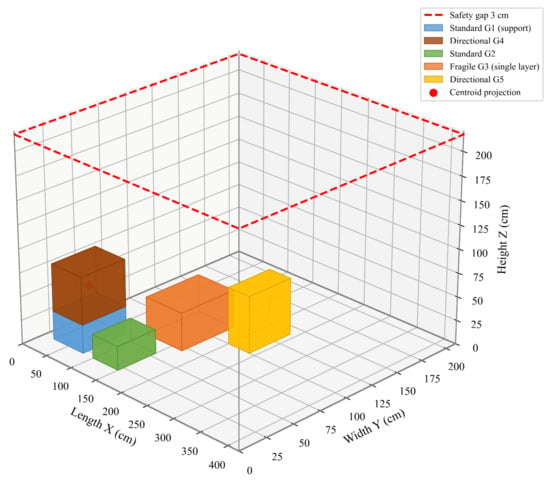
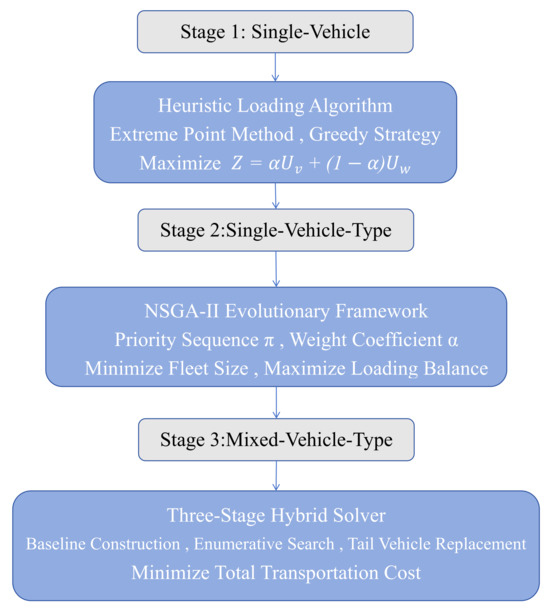
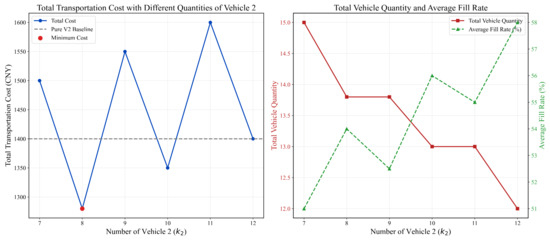
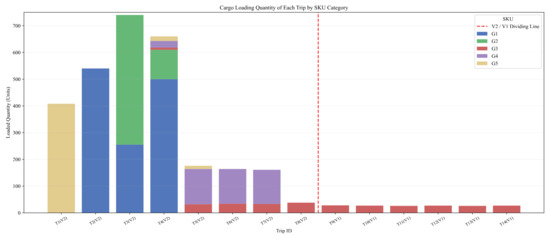
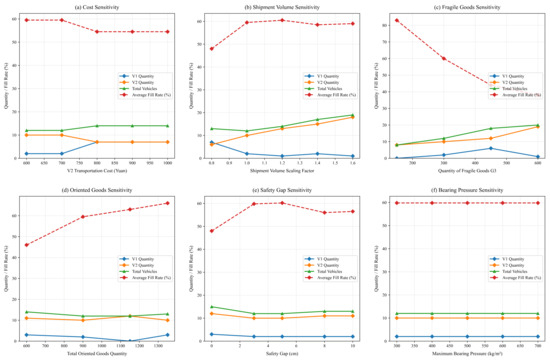
Aiming at the multi-constraint three-dimensional bin packing problem for mixed vehicle types in urban logistics, where traditional exact algorithms are limited by NP-hard computational complexity and practical engineering constraints, this study proposes a progressive optimization framework for vehicle loading and fleet allocation optimization. First, a heuristic loading algorithm based on the extreme point method and greedy strategy is developed to maximize single-vehicle loading efficiency by balancing space and weight utilization. Second, an NSGA-II based evolutionary framework with sequential encoding is constructed to minimize fleet size while improving loading balance for single-vehicle-type optimization. Third, a three-stage hybrid algorithm integrating greedy packing, enumerative search, and tail vehicle replacement is designed to optimize mixed-vehicle fleet composition and minimize total transportation cost. Experimental results demonstrate that the proposed heuristic achieves high composite loading performance across vehicle types, and the evolutionary framework significantly reduces fleet size compared with theoretical lower bounds. Under mixed-fleet optimization, the model identifies cost-effective vehicle configurations that outperform single-type dispatching strategies. Sensitivity analysis reveals that cargo composition, particularly the number of fragile items, is the most critical factor affecting system performance, while validation on 16 vehicle types confirms the robustness and practical generalizability of the method. This study verifies the effectiveness and stability of heuristic-evolutionary hybrid optimization methods, providing a reliable decision-making reference for logistics enterprises in vehicle selection, cargo allocation, and transportation planning.
Full article
(This article belongs to the Section Multidisciplinary Applications)
►▼
Show Figures

Figure 1
Open AccessArticle
On the Application of Entropy-Based Metrics for UltraWideBand Line of Sight (LOS)/Not LOS (NLOS) Classification with Ensemble Instance Selection
by
Gianmarco Baldini
Entropy 2026, 28(8), 904; https://doi.org/10.3390/e28080904 - 12 Aug 2026
Abstract
The knowledge of the Line of Sight (LOS) or Not Line of Sight (NLOS) propagation condition is useful information in wireless communication system. Such knowledge can be inferred by the analysis of the signal, by using specific signal structures (e.g., preambles) or by
[...] Read more.
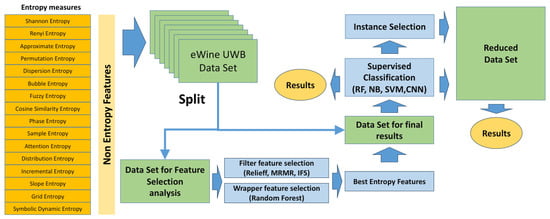
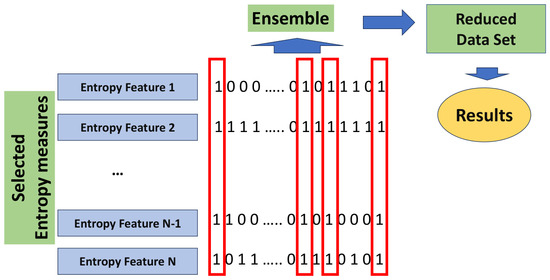
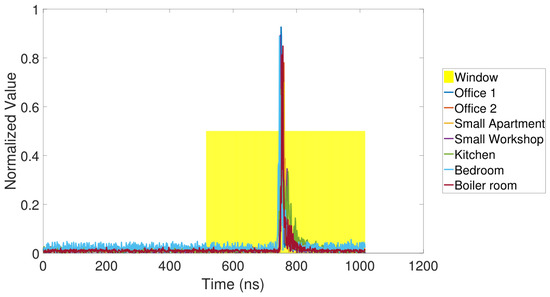
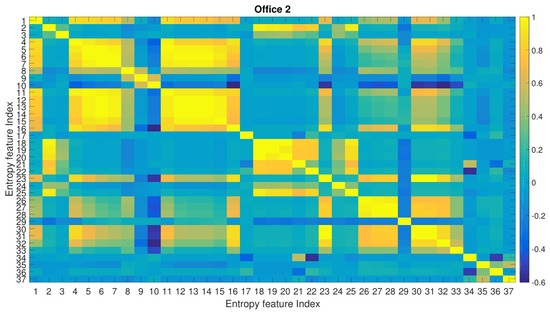
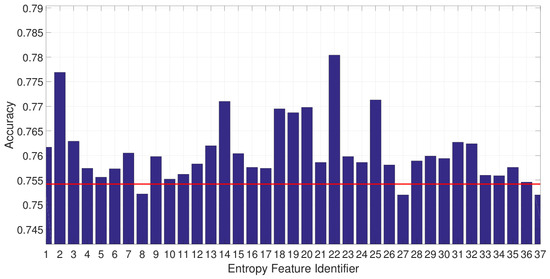
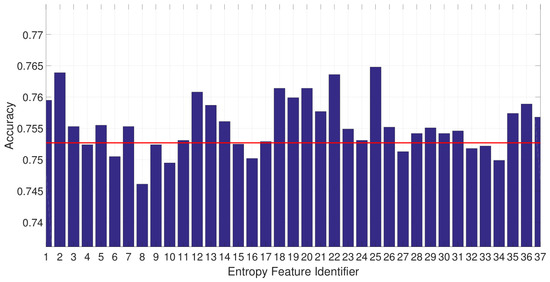
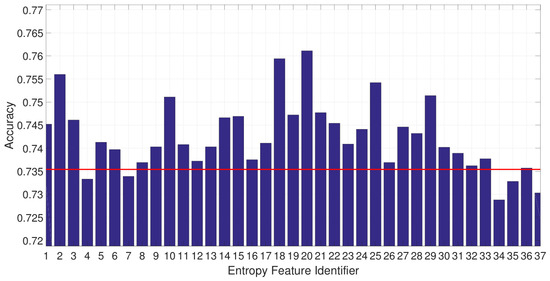
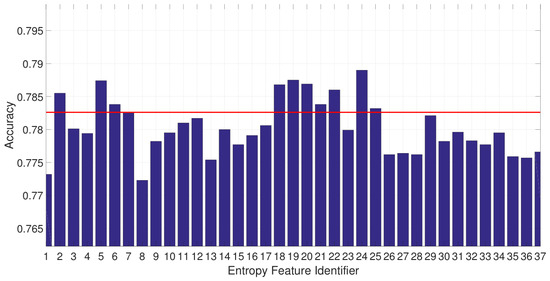
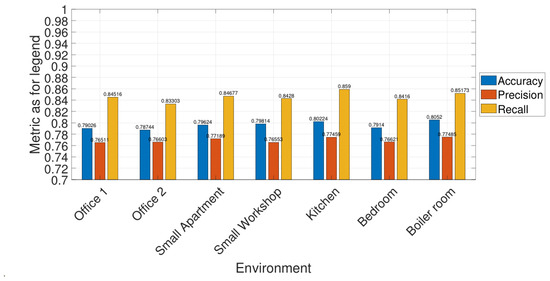
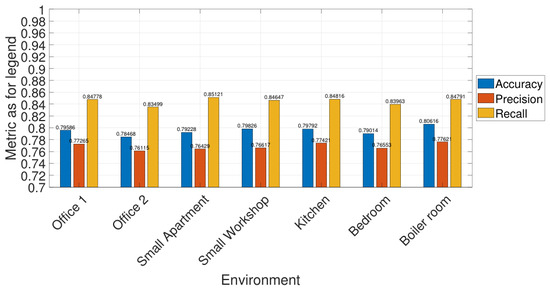
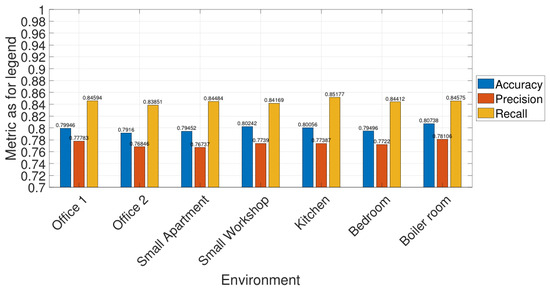
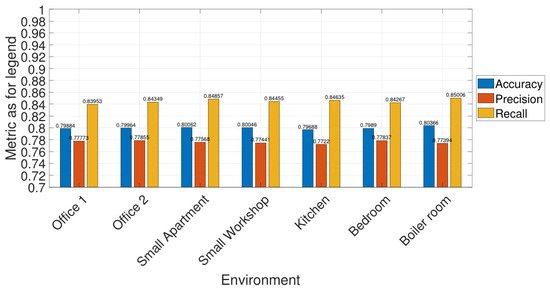
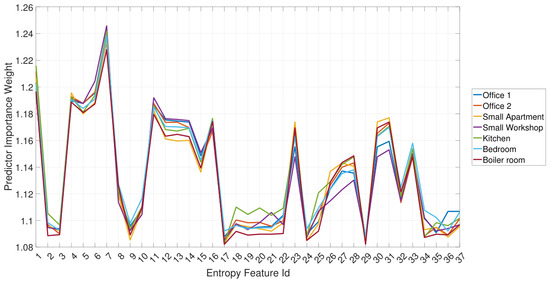
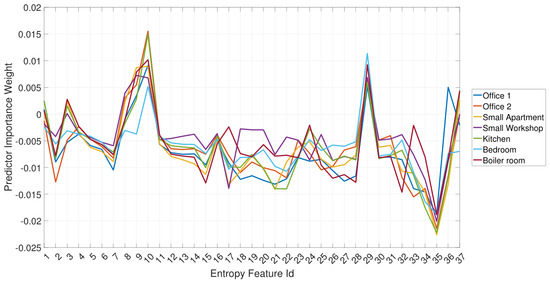
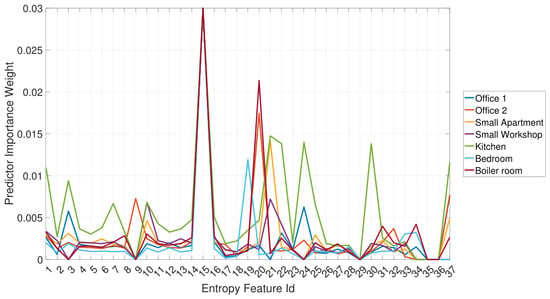
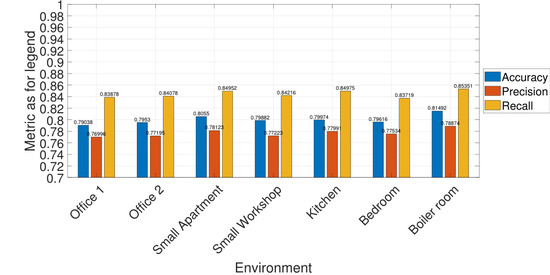
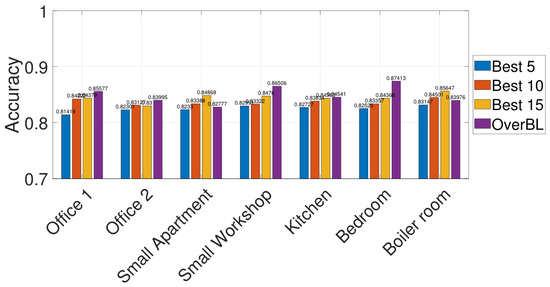
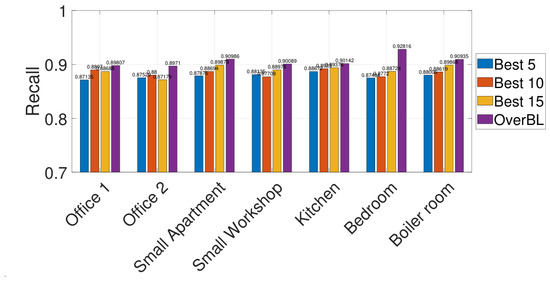
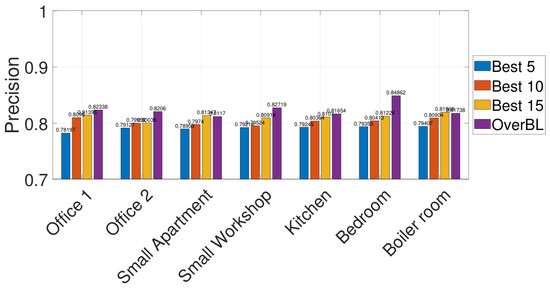
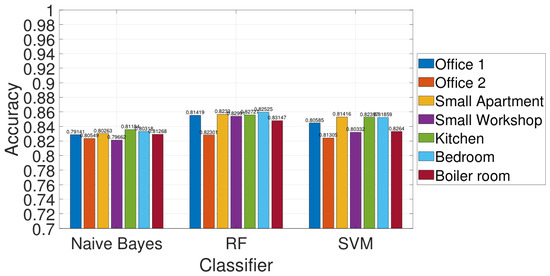
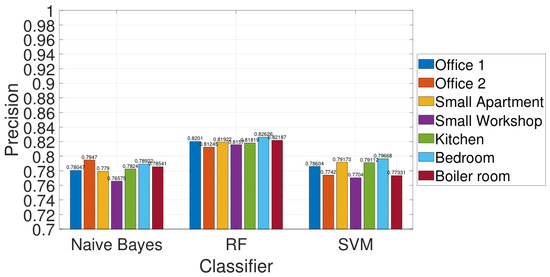
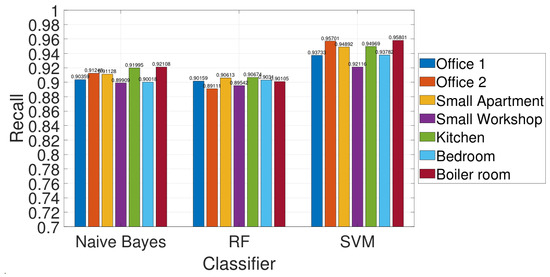
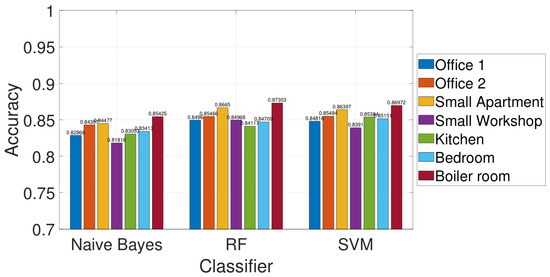
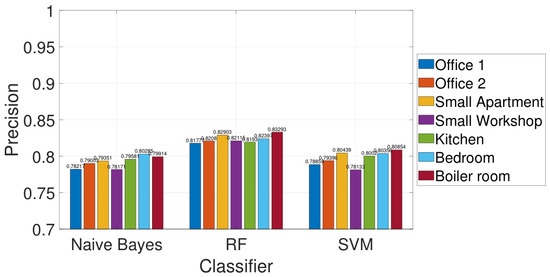
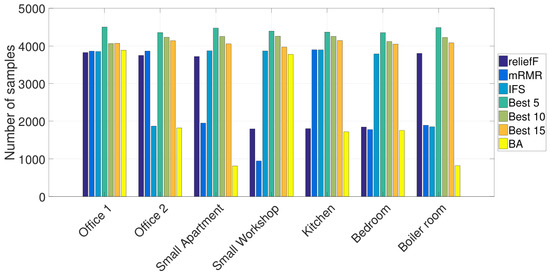
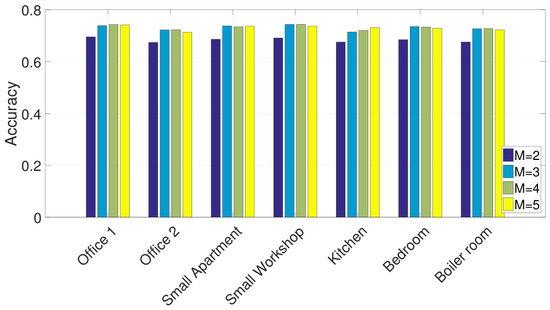
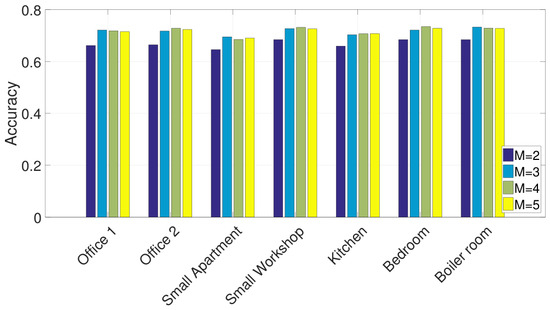
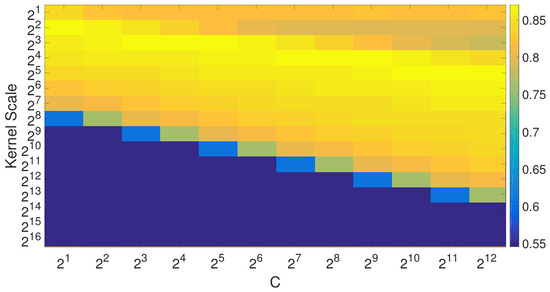
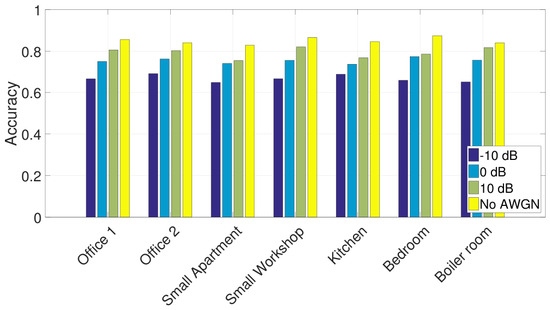
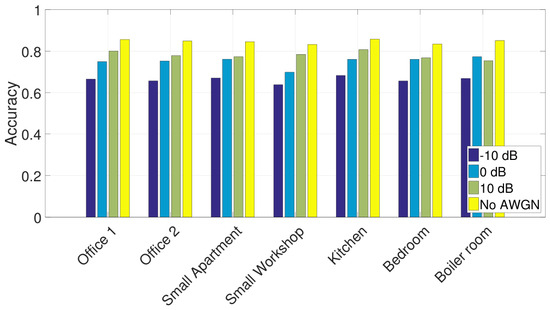
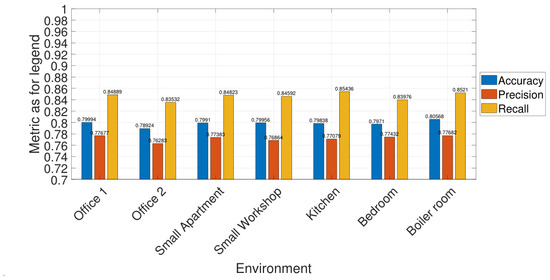
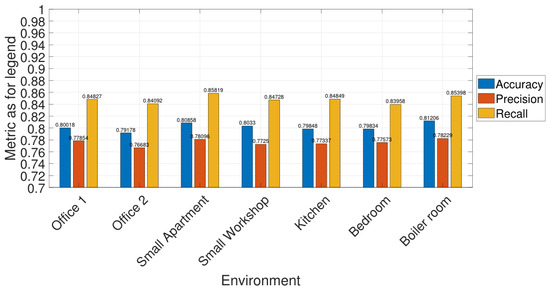
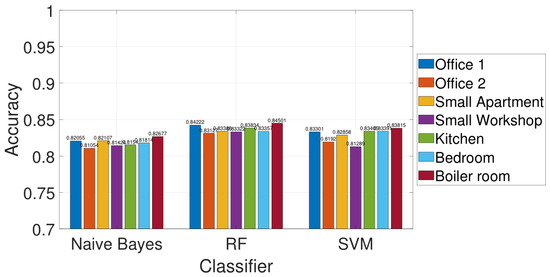
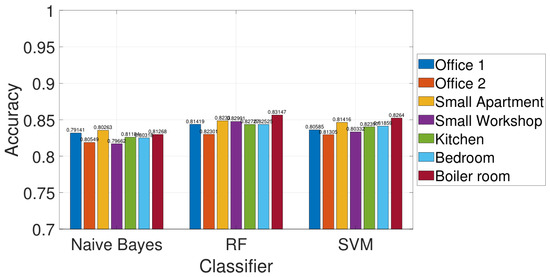
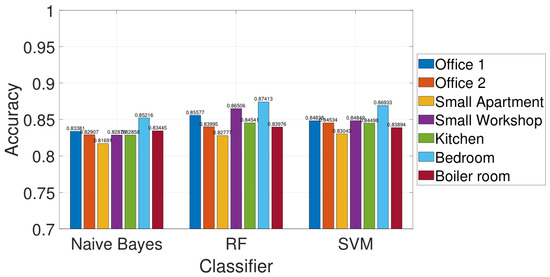
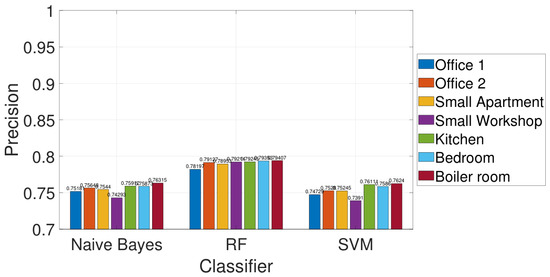
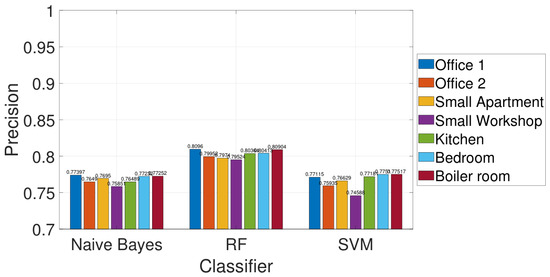
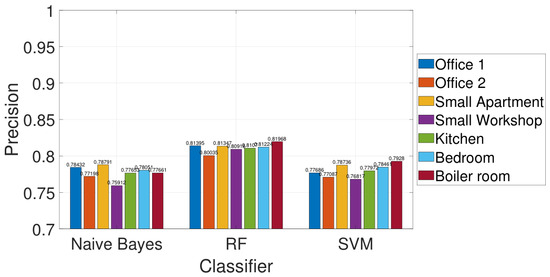
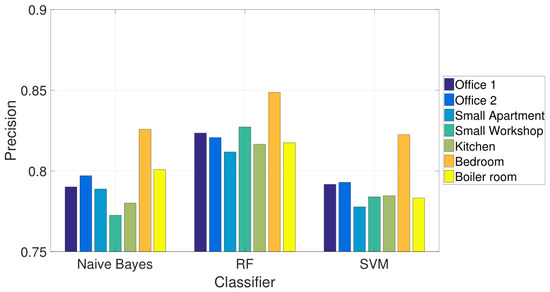
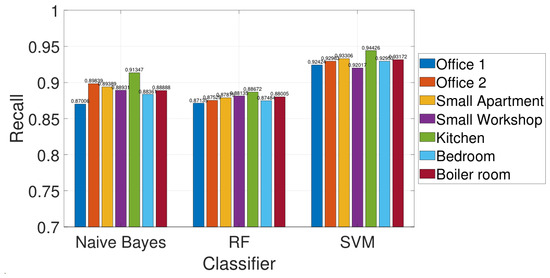
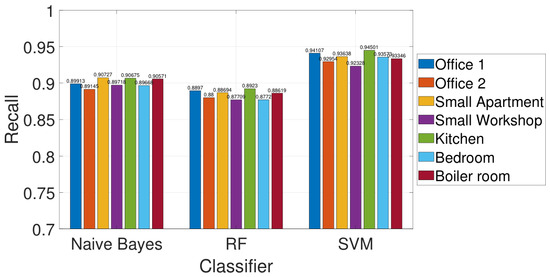
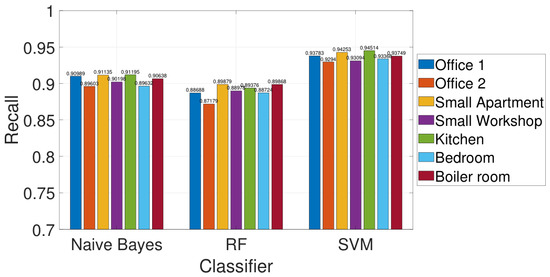
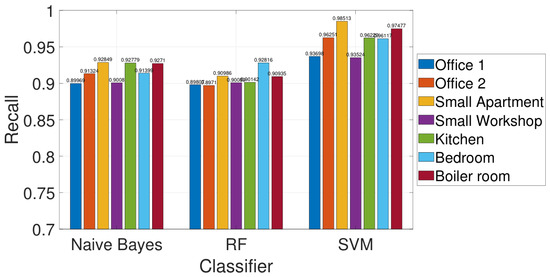
The knowledge of the Line of Sight (LOS) or Not Line of Sight (NLOS) propagation condition is useful information in wireless communication system. Such knowledge can be inferred by the analysis of the signal, by using specific signal structures (e.g., preambles) or by the application of machine learning (ML) algorithms. In recent times, deep learning (DL) has been applied with success to the classification of LOS/NLOS conditions but with a significant computational time, which can be a practical issue in computing constrained devices. On the other hand, ML relies on the identification of key discriminating features, which can enhance the classification performance. This paper explores the application of entropy metrics to this classification problem. Beyond Shannon entropy, researchers have developed various entropy metrics in recent years in various domains (e.g., healthcare), but they have been scarcely applied to UWB LOS/NLOS classification to the best of the author’s knowledge. This paper addresses this gap by applying entropy metrics in combination with ML classifiers to the public eWINE dataset, characterised by seven different propagation environments where UWB signals were transmitted and recorded in LOS and NLOS conditions. The results presented in this paper show that entropy metrics can significantly enhance the LOS/NLOS classification accuracy and can produce an overall competitive performance. In addition, this paper presents a novel instance selection approach based on the use of entropy metrics, which is demonstrated to significantly outperform even the direct application of some DL algorithms on the basis of the results presented in the literature on the same eWine data set. To summarise the novelty aspects of this study, for the first time in the literature, this study presents an extensive analysis of the discriminative advantage (discrimination index) of entropy measures introduced in the research literature in other domains (e.g., mechanical problems, analysis of physiological signals) in UWB multipath environments for UWB LOS/NLOS classification. In addition, this study presents for the first time the application of an ensemble instance selection algorithm based on entropy measures to the problem of UWB LOS/NLOS classification to handle “noise” or “boundary” samples in the data set, thereby improving model generalisation.
Full article
(This article belongs to the Section Signal and Data Analysis)
►▼
Show Figures

Figure 1
Open AccessArticle
Master Mix Localization Algorithm for Autonomous Systems in Indoor Environments
by
Zakaryae Ezzouine, Adil Salbi, Mohamed Abouzahir, Ilham Elmourabit, Adil Brouri and Sébastien Roy
Entropy 2026, 28(8), 903; https://doi.org/10.3390/e28080903 - 12 Aug 2026
Abstract
Reliable navigation in GPS-denied environments remains a critical challenge for autonomous vehicles (AVs), particularly in complex indoor and urban settings. GPS-based localization systems often fail under these conditions, highlighting the need for resilient multimodal solutions. In this article, we present a radar-assisted tracking
[...] Read more.
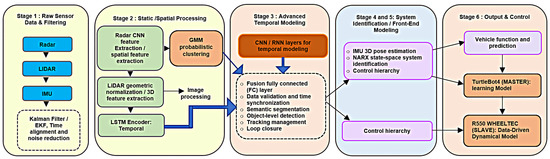
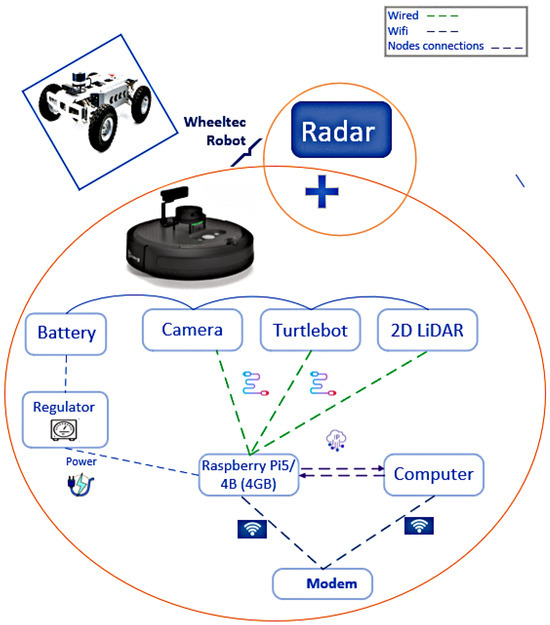
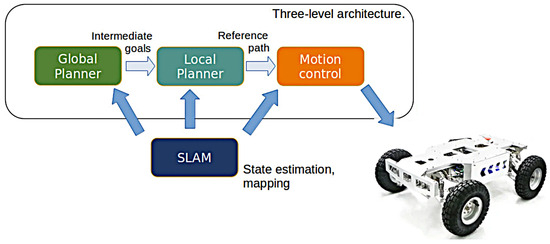
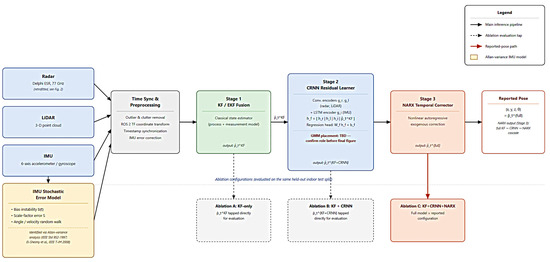
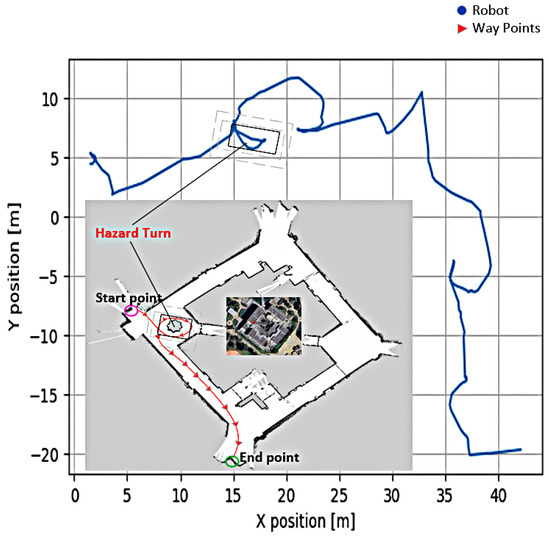
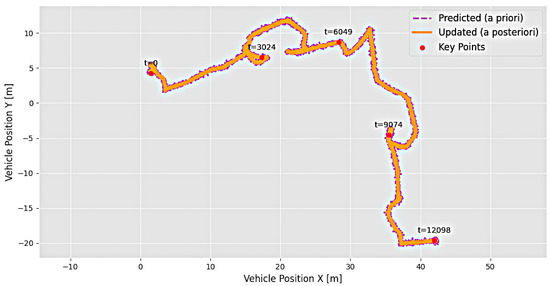
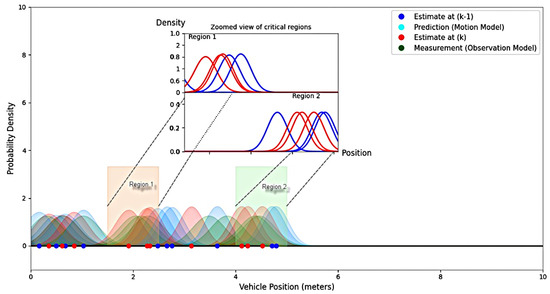
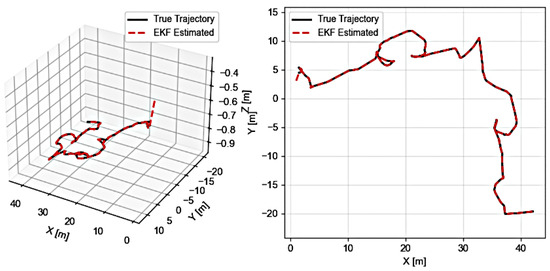
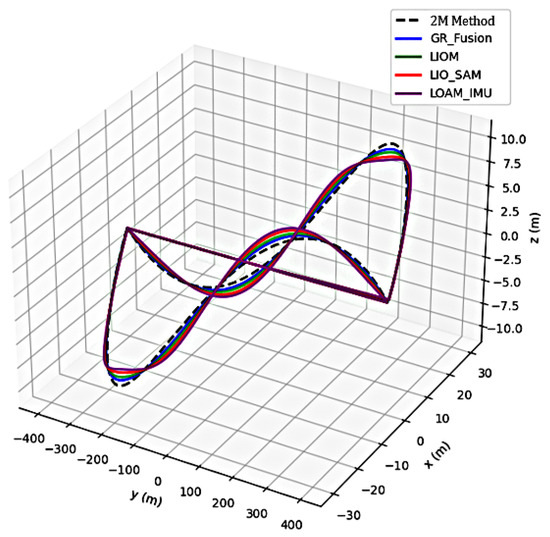
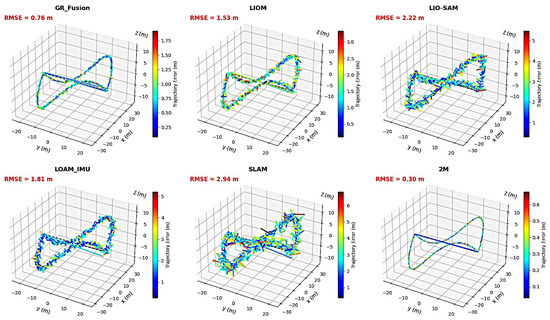
Reliable navigation in GPS-denied environments remains a critical challenge for autonomous vehicles (AVs), particularly in complex indoor and urban settings. GPS-based localization systems often fail under these conditions, highlighting the need for resilient multimodal solutions. In this article, we present a radar-assisted tracking system that integrates LiDAR and inertial measurements within a sensor-fusion architecture to achieve robust navigation. The principal methodological contribution is a unified tracking and prediction framework that combines Bayesian state estimation with learning-based temporal prediction, enabling accurate tracking while continuously forecasting the slave robot’s short-term future state from mapping observations generated by the master robot, with a typical end-to-end perception-to-action latency of 20–60 ms. The communication and prediction forecasting module operates with an update interval below 35 ms, enabling real-time cooperative robotic operation. Sensor data are fused through a pipeline incorporating Gaussian Mixture Models (GMMs) for post-processing, which helps mitigate the limitations associated with individual sensors during edge processing. Moreover, Kalman filtering is employed to mitigate sensor noise and drift, thereby improving state estimation accuracy through trajectory smoothing. The fused spatiotemporal information is subsequently exploited by a Convolutional Recurrent Neural Network (CRNN) coupled with a Nonlinear Autoregressive model with eXogenous Inputs (NARX) to model the robot’s motion dynamics and provide short-horizon state prediction. Through simulations and real-world indoor experiments conducted in GPS-denied environments, we validate the system’s ability to provide accurate and continuous pose estimation with low localization errors. Experimental results show that the proposed framework achieves root-mean-square errors of 0.12 m, 0.15 m, and 0.28 m along the X, Y, and Z axes, respectively, while maintaining sub-meter maximum position deviations throughout the evaluated trajectories. These results confirm that the proposed framework provides reliable localization and predictive state estimation for cooperative robotic navigation in indoor GPS-denied environments. Future work will investigate outdoor validation and extend the framework to additional data-driven decision-making models for future robotic services.
Full article
(This article belongs to the Special Issue Topics from the 2025 Biennial Symposium on Communications)
►▼
Show Figures

Figure 1
Open AccessArticle
Multi-Horizon Probabilistic Wind Power Forecasting for Mountainous Wind Farms Based on Entropy-Weighted Fusion and Permutation Entropy-Guided Decomposition
by
Chunhui Liu, Bilin Shao, Dawen Nie, Ning Tian, Hongbin Dai, Huibin Zeng, Wei Zhao, Xue Zhao, Xinyu Liu and Caiyun Qin
Entropy 2026, 28(8), 902; https://doi.org/10.3390/e28080902 - 10 Aug 2026
Abstract
Wind power integration into mountainous power grids amplifies probabilistic forecasting challenges arising from strong non-stationarity, multi-source meteorological redundancy and frequent curtailment events. To address the limitations of existing approaches, this paper proposes a multi-horizon probabilistic forecasting framework integrating multi-perspective entropy-weighted fusion, permutation-entropy-guided decomposition,
[...] Read more.
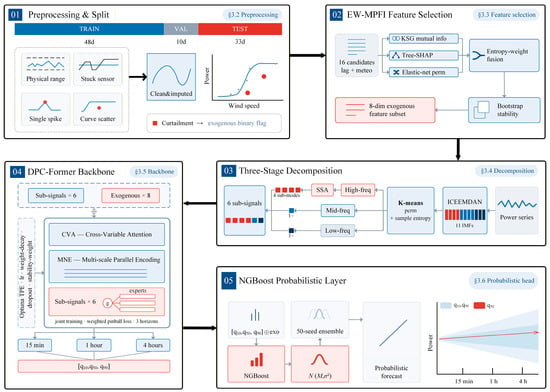
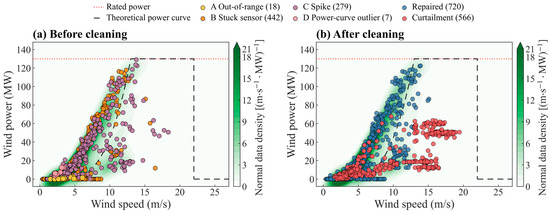
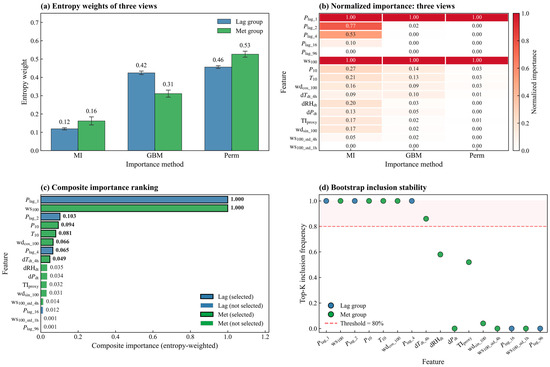
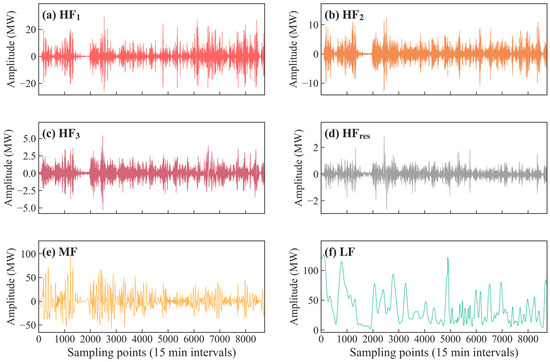
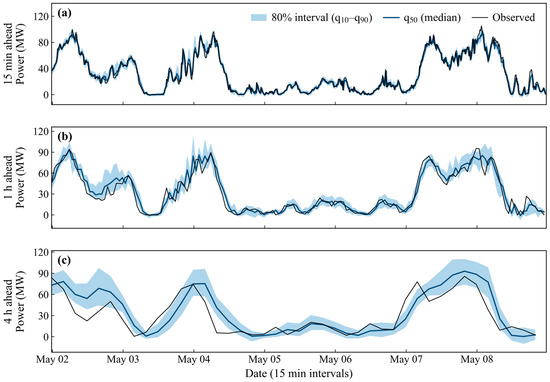
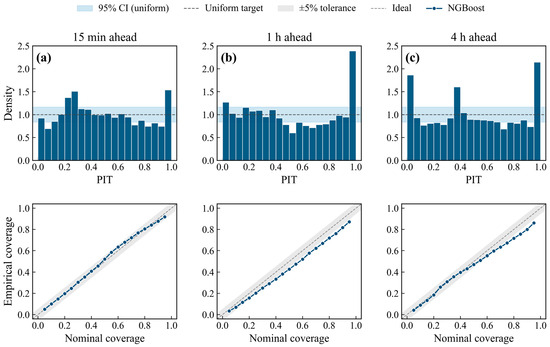
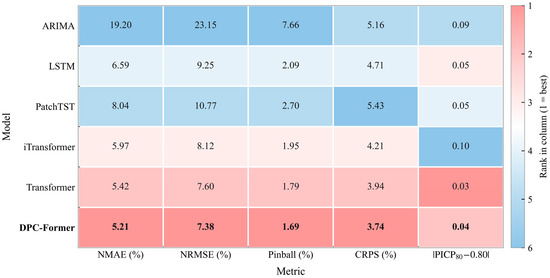
Wind power integration into mountainous power grids amplifies probabilistic forecasting challenges arising from strong non-stationarity, multi-source meteorological redundancy and frequent curtailment events. To address the limitations of existing approaches, this paper proposes a multi-horizon probabilistic forecasting framework integrating multi-perspective entropy-weighted fusion, permutation-entropy-guided decomposition, and residual-anchored probability modelling. First, an Entropy-Weighted Multi-criteria Permutation Feature Importance (EW-MPFI) module fuses KSG mutual information, Tree-SHAP, and elastic-net permutation importance through entropy-based weighted aggregation, distilling 23-dimensional meteorological inputs into eight informative features while suppressing single-criterion bias. Then, a three-stage decomposition strategy applies ICEEMDAN primary decomposition, permutation-entropy and sample-entropy guided band reconstruction, and SSA secondary refinement on high-frequency components, achieving complexity-aligned multi-scale separation. Finally, a decomposition-aware patch-based Transformer backbone (DPC-Former) generates three-quantile point forecasts, upon which an NGBoost residual layer models the conditional distribution via natural-gradient optimization in the information-geometric parameter space. Case studies on a 130 MW mountainous wind farm in Sichuan, China, covering 8736 15-min samples with 566 curtailment samples (6.48% of the dataset), show that, under the partition-wise offline batch-evaluation protocol, the proposed framework achieves an NMAE of 5.21%, an NCRPS of 3.74%, and a PICP80 of 0.84 across forecasting horizons from 15 min to 4 h. Ablation analysis attributes NMAE improvements of 25.36% and 24.57% to the decomposition and feature-selection modules, respectively, while 50-seed ensembling further reduces NCRPS, NMAE, and NRMSE by 7.40%, 7.00%, and 13.70% relative to single-seed training. A fixed-checkpoint test-block diagnostic further shows limited sensitivity at approximately weekly and three-day decomposition cadences, but a material degradation at a one-day cadence. The reported metrics should therefore be interpreted as offline best-case results rather than as performance under strictly causal real-time deployment.
Full article
(This article belongs to the Special Issue Uncertainty-Aware Feature Learning and Anomaly Detection for Unlabeled Complex Data)
►▼
Show Figures

Figure 1
Open AccessArticle
Faithful Explanation Regeneration via Cauchy–Schwarz Mixture Information Bottleneck
by
Ziyang Wang and Junliang Du
Entropy 2026, 28(8), 901; https://doi.org/10.3390/e28080901 - 10 Aug 2026
Abstract
Large pretrained language models can generate fluent free-text explanations for natural language reasoning tasks, but these explanations may contain redundant, irrelevant, or unsupported information. In this paper, we propose a faithful explanation regeneration framework based on a Cauchy–Schwarz mixture information bottleneck. The proposed
[...] Read more.
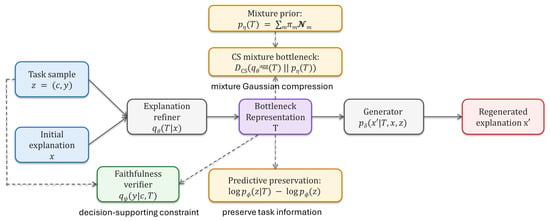
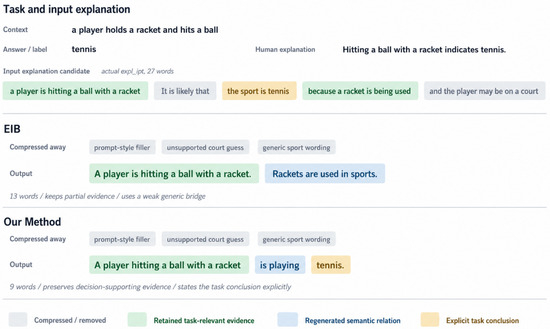
Large pretrained language models can generate fluent free-text explanations for natural language reasoning tasks, but these explanations may contain redundant, irrelevant, or unsupported information. In this paper, we propose a faithful explanation regeneration framework based on a Cauchy–Schwarz mixture information bottleneck. The proposed method compresses noisy explanations into a structured bottleneck representation while preserving task-relevant and decision-supporting information. Instead of using a unimodal Gaussian prior, we introduce a Gaussian mixture prior and employ the Cauchy–Schwarz divergence as a tractable compression regularizer. Furthermore, a faithfulness-aware objective is introduced to encourage the learned representation to remain aligned with the task decision. Experiments on free-text explanation benchmarks demonstrate that the proposed method improves explanation quality, conciseness, and faithfulness while providing an information-theoretic compression–preservation framework.
Full article
(This article belongs to the Special Issue The Information Bottleneck Method: Theory and Applications)
►▼
Show Figures

Figure 1
Open AccessArticle
Quantum Single-Path Transmission Optimization of Complex Networks
by
Zhengyi Wang, Feng Gao, Yunqing Xu, Xiaohui Wang and Jingyang Fang
Entropy 2026, 28(8), 900; https://doi.org/10.3390/e28080900 - 10 Aug 2026
Abstract
Single-path transmission optimization is a core task for resource scheduling and operation of complex networks, which requires coordinated optimization of transmission cost and flow. Classical algorithms bear heavy computational loads in high-dimensional decision spaces as networks grow. This paper constructs a hybrid quantum
[...] Read more.
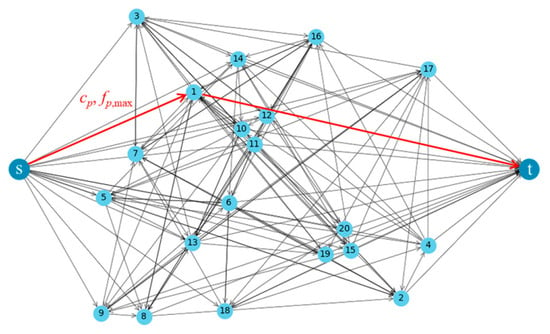
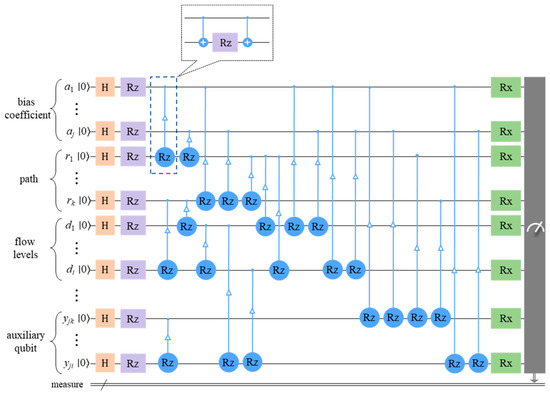
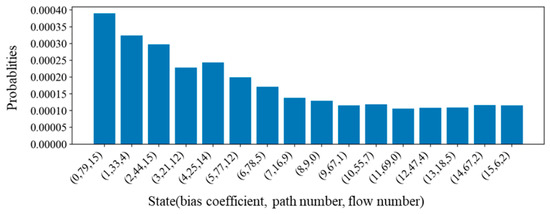
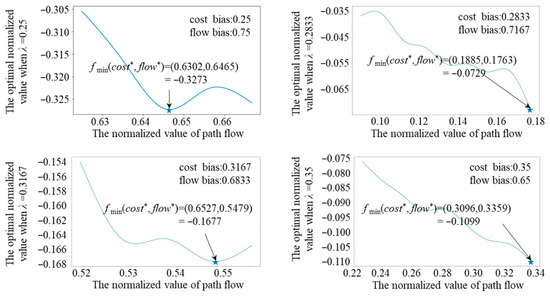
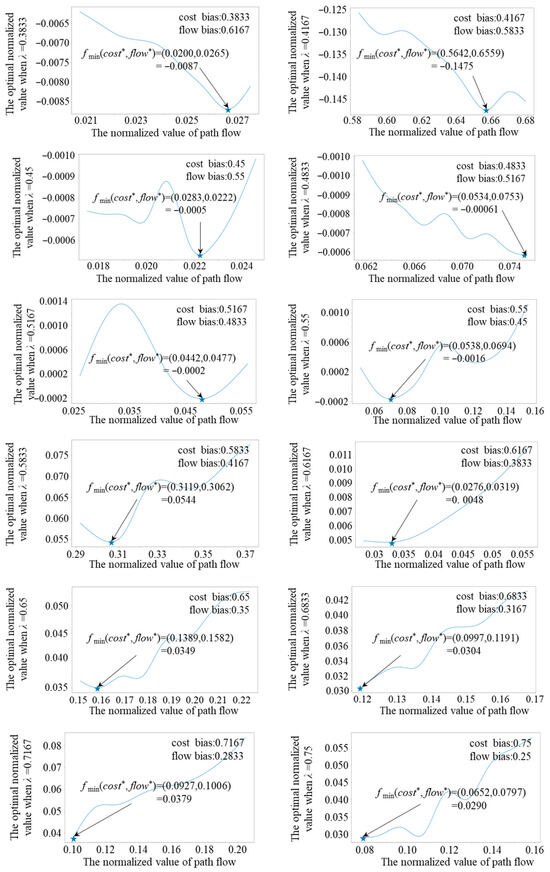
Single-path transmission optimization is a core task for resource scheduling and operation of complex networks, which requires coordinated optimization of transmission cost and flow. Classical algorithms bear heavy computational loads in high-dimensional decision spaces as networks grow. This paper constructs a hybrid quantum model integrating quantum approximate optimization algorithm (QAOA) and cubic spline interpolation. Paths, discrete flows, and trade-off coefficients are unified within a quadratic unconstrained binary optimization (QUBO) model. Least-squares fitting converts native parameters into QUBO coefficients, whose fitting errors are measured to verify robustness and penalty sensitivity, and auxiliary variables eliminate high-order terms to exponentially cut qubit consumption. QAOA narrows the feasible range via global coarse search, and cubic spline interpolation further yields precise continuous flow values. Powered by quantum superposition for parallel full-space exploration, the framework avoids repeated modeling for separate bias coefficients. Mixed integer programming (MIP) and genetic algorithm (GA) are adopted as comparative benchmarks. For the small-scale network instance, the relative error between the proposed method and the global optimum solved by MIP is less than 1%. For the large-scale case, the overall error of our approach remains within an acceptable range even when discrepancies exist between results yielded by classical algorithms.
Full article
(This article belongs to the Special Issue Graph Theory and Its Applications in Quantum Mechanics)
►▼
Show Figures

Figure 1
Open AccessArticle
Bayesian Sampling with Approximate Transport Geometry via Residual-Slice Correction
by
Yuanzheng Zhu and Qiao Hu
Entropy 2026, 28(8), 899; https://doi.org/10.3390/e28080899 - 10 Aug 2026
Abstract
Approximate transport maps can facilitate exploration of a Bayesian target distribution, but the resulting samples generally do not follow that distribution. To address this problem, we develop residual-slice correction, a sampling framework that combines slice sampling with an approximate transport map held fixed
[...] Read more.
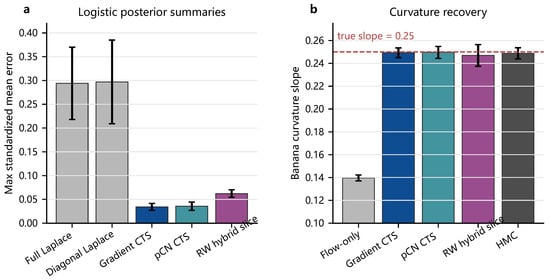
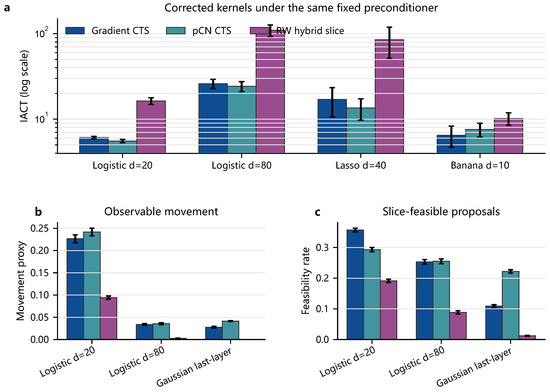
Approximate transport maps can facilitate exploration of a Bayesian target distribution, but the resulting samples generally do not follow that distribution. To address this problem, we develop residual-slice correction, a sampling framework that combines slice sampling with an approximate transport map held fixed during sampling. Each iteration uses a slice variable to represent the residual left by the map and updates the state while preserving the conditional distribution on the resulting feasible set. To assess sampling efficiency, we derive a lower bound on the corrected chain’s Dirichlet-form gap using a reference Markov kernel. The bound separates movement within each feasible set, the transport–reference comparison, and reference mixing, while projected diagnostics examine the first two factors. Numerical experiments show that residual-slice correction recovers summaries and shape diagnostics distorted by approximate transport; they also show that the choice of Markov update within each feasible set substantially affects mixing efficiency, and that the corrected chains have lower serial dependence after normalizing-flow training. Overall, the framework retains the geometric benefits of approximate transport while preserving the target distribution.
Full article
(This article belongs to the Special Issue Advances in Bayesian Statistics)
►▼
Show Figures

Figure 1
Open AccessArticle
Statistics of the Compression Ratio of a Variable-to-Variable Code: Exact Moments and Asymptotic Behavior
by
Neri Merhav
Entropy 2026, 28(8), 898; https://doi.org/10.3390/e28080898 - 10 Aug 2026
Abstract
A variable-to-variable (V2V) length code parses a source sequence into phrases of variable length and maps each phrase to a binary codeword of, generally, a different random length. After encoding n phrases, the realized compression ratio
[...] Read more.
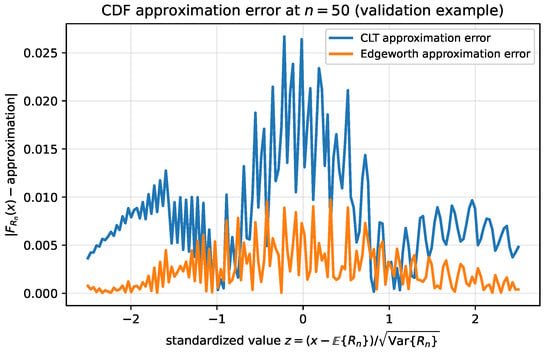
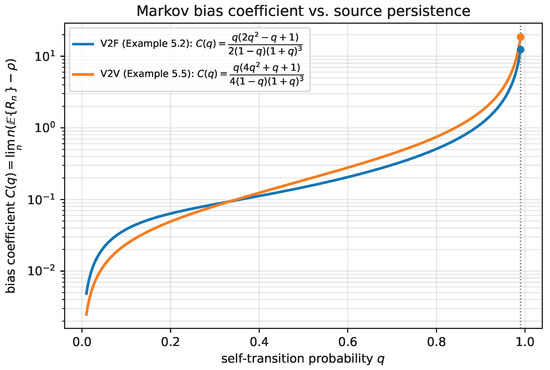
A variable-to-variable (V2V) length code parses a source sequence into phrases of variable length and maps each phrase to a binary codeword of, generally, a different random length. After encoding n phrases, the realized compression ratio —total codeword length over total source-symbol count—is the finite-sample counterpart of the code’s asymptotic rate , to which it converges only as . This paper first derives exact formulas for all integer moments of for a given discrete memoryless source (DMS). Specifically, we obtain a closed-form formula for every moment as a one-dimensional integral involving only single-phrase moment generating functions of the pair —the phrase length, in source symbols, and codeword length, in bits. From these moments we derive an Edgeworth approximation to the cumulative distribution function (CDF) of that is substantially more accurate than the central limit theorem (CLT) approximation. Using the Laplace method of integration, we also derive explicit closed-form formulas for the bias constant and for the variance constant . The analysis extends to Markov sources via state-indexed matrices with a redundancy formula obtained in closed form. On the coding-theoretic side, we cast V2V length codes as finite-state encoders and apply a generalized Kraft inequality for a compression-rate lower bound, and give a structural decomposition of the bias coefficient that separates cleanly across variable-to-fixed (V2F) length codes, fixed-to-variable (F2V) length codes, and V2V length codes. Applied to the Khodak code of Bugeaud, Drmota, and Szpankowski, this decomposition shows that its improved performance is reflected in its smaller bias constant.
Full article
(This article belongs to the Section Information Theory, Probability and Statistics)
►▼
Show Figures

Figure 1
Journal Menu
► ▼ Journal Menu-
- Entropy Home
- Aims & Scope
- Editorial Board
- Reviewer Board
- Topical Advisory Panel
- Video Exhibition
- Instructions for Authors
- Special Issues
- Topics
- Sections & Collections
- Article Processing Charge
- Indexing & Archiving
- Editor’s Choice Articles
- Most Cited & Viewed
- Journal Statistics
- Journal History
- Journal Awards
- Society Collaborations
- Conferences
- Editorial Office
Journal Browser
► ▼ Journal Browser-
arrow_forward_ios
Forthcoming issue
arrow_forward_ios Current issue - Vol. 28 (2026)
- Vol. 27 (2025)
- Vol. 26 (2024)
- Vol. 25 (2023)
- Vol. 24 (2022)
- Vol. 23 (2021)
- Vol. 22 (2020)
- Vol. 21 (2019)
- Vol. 20 (2018)
- Vol. 19 (2017)
- Vol. 18 (2016)
- Vol. 17 (2015)
- Vol. 16 (2014)
- Vol. 15 (2013)
- Vol. 14 (2012)
- Vol. 13 (2011)
- Vol. 12 (2010)
- Vol. 11 (2009)
- Vol. 10 (2008)
- Vol. 9 (2007)
- Vol. 8 (2006)
- Vol. 7 (2005)
- Vol. 6 (2004)
- Vol. 5 (2003)
- Vol. 4 (2002)
- Vol. 3 (2001)
- Vol. 2 (2000)
- Vol. 1 (1999)
Highly Accessed Articles
Latest Books
E-Mail Alert
News
Topics
Topic in
Applied Sciences, Computers, Energies, Entropy, Mathematics
Numerical Methods and Computer Simulations in Energy Analysis, 3rd Edition
Topic Editors: Marcin Kamiński, Mateus MendesDeadline: 31 August 2026
Topic in
AI, Applied Sciences, Computers, Electronics, Entropy, Future Internet, Information, IoT, Sensors, Telecom
Advances in Sixth Generation and Beyond (6G&B)
Topic Editors: Luis Javier García Villalba, Ana Lucila Sandoval OrozcoDeadline: 31 October 2026
Topic in
Entropy, IJMS, International Journal of Topology, MAKE, Mathematics, Quantum Reports, Symmetry
Topological, Quantum, and Molecular Information Approaches to Computation and Intelligence
Topic Editors: Michel Planat, Edward A. RietmanDeadline: 31 December 2026
Topic in
Entropy, Quantum Reports, Symmetry, Universe, Physics
Quantum Systems and Their Applications
Topic Editors: Chao Zheng, Jim FreericksDeadline: 28 February 2027
Conferences
Special Issues
Special Issue in
Entropy
Uncertainty-Aware Feature Learning and Anomaly Detection for Unlabeled Complex Data
Guest Editors: Zhong Yuan, Binbin Sang, Keyu LiuDeadline: 17 August 2026
Special Issue in
Entropy
The Landauer Principle in Physics, Biophysics, Engineering and Computer Science: From Foundations of Thermodynamics to Computer Engineering
Guest Editor: Edward BormashenkoDeadline: 20 August 2026
Special Issue in
Entropy
Entropy Method for Decision Making with Uncertainty, 2nd Edition
Guest Editor: Małgorzata Przybyła-KasperekDeadline: 25 August 2026
Special Issue in
Entropy
Thermodynamic Speed Limits in Quantum and Classical Systems
Guest Editors: Erez Aghion, Swetamber P. DasDeadline: 30 August 2026
Topical Collections
Topical Collection in
Entropy
Advances in Applied Statistical Mechanics
Collection Editor: Antonio M. Scarfone
Topical Collection in
Entropy
Disorder and Biological Physics
Collection Editors: Hong Qian, Felix Ritort, Lamberto Rondoni
Topical Collection in
Entropy
Entropy in Image Analysis
Collection Editor: Amelia Carolina Sparavigna