
Skip to Content
  • 3.8
    Impact Factor
  • 6.9
    CiteScore
  • 21 days
    Submission to First Decision
  • 3 days
    Acceptance to Publication

Diagnostics

Diagnostics is an international, peer-reviewed, open access journal on medical diagnosis published semimonthly online by MDPI. The British Neuro-Oncology Society (BNOS), the International Society for Infectious Diseases in Obstetrics and Gynaecology (ISIDOG) and the Swiss Union of Laboratory Medicine (SULM) are affiliated with Diagnostics and their members receive a discount on the article processing charges.
  • Open Access— free for readers, with article processing charges (APC) paid by authors or their institutions.
  • High Visibility: indexed within Scopus, SCIE (Web of Science), PubMed, PMC, Embase, Inspec, CAPlus / SciFinder, and other databases.
  • Journal Rank: JCR - Q1 (Medicine, General and Internal) / CiteScore - Q1 (Internal Medicine)
  • Rapid Publication: manuscripts are peer-reviewed and a first decision is provided to authors approximately 20.4 days after submission; acceptance to publication is undertaken in 2.9 days (median values for papers published in this journal in the first half of 2026).
  • Recognition of Reviewers: Reviewers whose reports are timely and of high quality receive an APC discount voucher for a future publication in an MDPI journal. Become a reviewer.
  • Companion journals for Diagnostics include: LabMed and AI in Medicine.

Get Alerted

Add your email address to receive forthcoming issues of this journal.

All Articles (20,697)

  • Article
  • Open Access

Background/Objectives: Stroke is an acute condition in which impaired cerebral perfusion causes focal or global neurological dysfunction. Serious complications are a major contributor to morbidity and mortality in patients with stroke. Malnutrition is common in this population, and nutritional markers, including the prognostic nutritional index (PNI), may be useful for early risk assessment of stroke-associated infections. Insulin resistance (IR) is also an emerging risk factor for stroke and has been associated with poor prognosis through various metabolic and inflammatory pathways. The triglyceride–glucose (TyG) index has been proposed as a reliable surrogate marker of IR. Various biochemical and clinical parameters are used to assess prognosis in patients with stroke. We investigated the prognostic value of the TyG index and PNI for mortality and early mortality, defined as death within the first 30 days, in these patients. Methods: After application of the exclusion criteria, 415 patients with stroke were included. Demographic characteristics, including age and sex, and comorbidities were reviewed. Complete blood count, biochemical parameters, C-reactive protein, blood gas measurements, and lactate levels were recorded. Brain computed tomography and diffusion-weighted magnetic resonance imaging findings were reviewed to classify patients into ischemic and hemorrhagic stroke subgroups. Patients were grouped as survivors or nonsurvivors, and deaths within the first 30 days were classified as early mortality. PNI and TyG index values were calculated using the following formulas: PNI = 10 × serum albumin (g/dL) + 0.005 × total lymphocyte count (cells/mm3); TyG index = ln [fasting triglycerides (mg/dL) × fasting blood glucose (mg/dL)/2]. Results: Of the 415 patients included, 389 (93.7%) had ischemic stroke and 26 (6.3%) had hemorrhagic stroke. The median age was 74 years (range, 19–98), and the sex distribution was balanced: 207 patients (49.9%) were women and 208 (50.1%) were men. The PNI was lower in nonsurvivors than in survivors in the overall stroke cohort (ischemic and hemorrhagic stroke combined; 40.9 ± 8 vs. 46.9 ± 6.8, p < 0.001), the ischemic stroke subgroup (41.1 ± 8.8 vs. 46.8 ± 6.8, p = 0.001), and the hemorrhagic stroke subgroup (39.8 ± 3.8 vs. 48.2 ± 7.3, p = 0.006). The PNI was also lower in patients who died within the first 30 days than in survivors in the overall cohort (41.86 ± 8.42 vs. 46.88 ± 6.85, p < 0.001), the ischemic stroke subgroup (42.46 ± 8.9 vs. 46.82 ± 6.83, p = 0.002), and the hemorrhagic stroke subgroup (38.6 ± 4.3 vs. 48.2 ± 7.3, p = 0.012). Conclusions: Biomarkers calculated using simple hematological parameters have a significant impact on mortality and early mortality in stroke patients (both ischemic and hemorrhagic stroke). When we examined the effects of these TyG and PNI markers on mortality in stroke patients in our study, we observed that the PNI had a significant impact on mortality. Although our findings suggest that the PNI independently predicts mortality or could guide risk assessment in the emergency department, we consider this an exploratory observation, as stroke severity measures—such as the NIHSS—and relevant treatment data were not included in our analyses. However, we believe that single-point TyG values do not carry sufficient significance regarding mortality; therefore, future research should take into account cumulative, repeated TyG measurements obtained during patient follow-up.

Diagnostics

1 November 2026
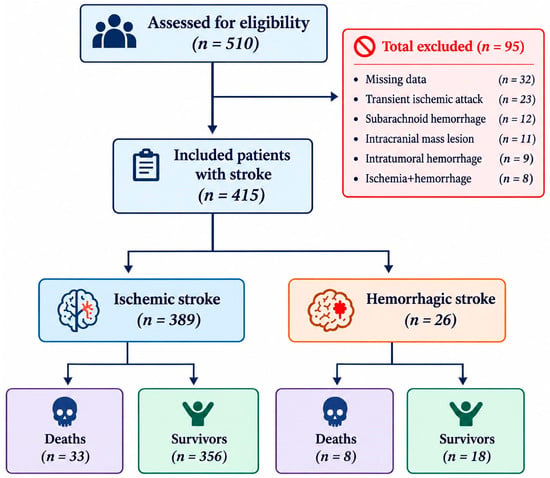
Patient selection and allocation flowchart.
  • Article
  • Open Access

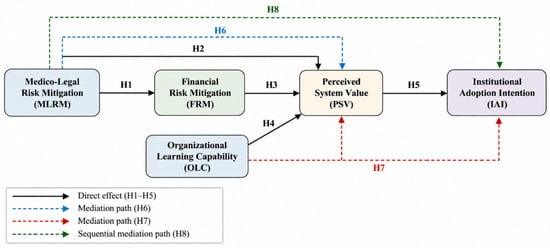
Background/Objectives: Although medico-legal autopsy remains an important source of postmortem evidence for clarifying causes and circumstances of death, identifying diagnostic discrepancies, and evaluating adverse clinical outcomes, its relevance may extend well beyond individual case resolution. Evidence generated after death can contribute to healthcare risk management, organizational learning, and institutional decision-making, yet the mechanisms through which these benefits acquire broader system value remain insufficiently understood. This study therefore examined relationships among medico-legal risk mitigation, financial risk mitigation, organizational learning capability, perceived system value, and institutional adoption intention. Methods: A cross-sectional survey of 1035 professionals working in healthcare, forensic medicine, pathology, legal, and administrative settings in Serbia was analyzed using exploratory and confirmatory factor analyses, structural equation modeling, and bootstrap mediation analysis. Results: Greater medico-legal risk mitigation was associated with both financial risk mitigation and perceived system value, whereas financial risk mitigation and organizational learning capability independently contributed to perceived system value. In turn, perceived system value showed the strongest direct relationship with institutional adoption intention. Mediation analyses further identified an indirect learning pathway and a sequential mechanism linking medico-legal risk mitigation with institutional adoption through financial risk mitigation and perceived system value. Conclusions: These findings position postmortem evidence as a potential source of diagnostic and organizational intelligence rather than solely as the endpoint of retrospective investigation. Its broader institutional relevance depends on the extent to which evidence generated through autopsy can be translated into risk mitigation, organizational learning, and recognized system value that supports systematic integration into healthcare practice.

Diagnostics

1 November 2026

Conceptual Model and Hypothesized Relationships.
  • Article
  • Open Access

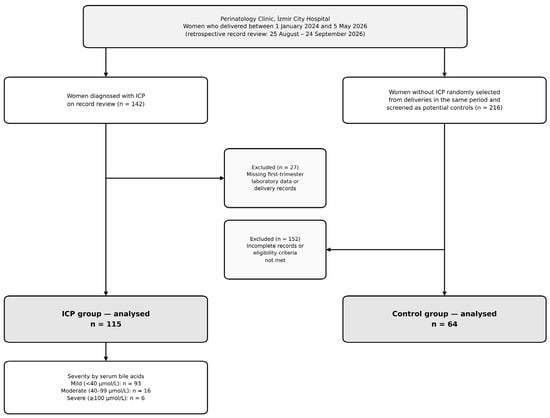
Objective: To examine whether the systemic immune-inflammation index (SII), neutrophil-to-lymphocyte ratio (NLR), platelet-to-lymphocyte ratio (PLR), AST-to-platelet ratio index (APRI) and fibrosis-4 (FIB-4) score, derived from routine first-trimester tests, are associated with subsequent intrahepatic cholestasis of pregnancy (ICP) and, within ICP, with adverse perinatal outcomes. Materials and Methods: This retrospective case–control study included 115 women with ICP and 64 controls with normal liver tests. Indices were derived from 11- to 14-week values. The two primary hypotheses concerned APRI and SII (Bonferroni α = 0.025); all other analyses were exploratory, with false discovery rate (FDR) adjustment. Within ICP, the co-primary outcomes were a composite of preterm birth, meconium-stained amniotic fluid, fetal distress, neonatal intensive care admission or 1-min Apgar score < 7, and the same composite excluding preterm birth, because delivery timing was protocol-driven by bile acids. Results: APRI (AUC 0.786; 95% CI 0.718–0.852; p < 0.001) and SII (AUC 0.615; 0.530–0.697; p = 0.011) were higher in women who later developed ICP; FIB-4 was not. ALT alone discriminated better (AUC 0.895; DeLong p = 0.003), APRI and SII added no discrimination beyond ALT (AUC 0.904; p = 0.465), and when cases were restricted to the transaminase range of controls (ALT ≤ 31 U/L), the AUC of APRI fell to 0.644. Within ICP, no index demonstrated an association with either composite outcome (all FDR-adjusted q > 0.15), although power was only ~45% for an AUC of 0.60. Bile acids were associated with the composite excluding preterm birth (AUC 0.681; adjusted OR 1.43 per 10 µmol/L; 1.16–1.76); the stronger association with the full composite (AUC 0.754) is partly definitional. Conclusions: First-trimester APRI and SII carry a group-level signal in women who later develop ICP, but this signal largely reflects transaminases and is inflated by control selection. The indices did not demonstrate an association with perinatal outcomes, although small effects cannot be excluded; surveillance and delivery timing should continue to rely on bile acids.

Diagnostics

1 November 2026

Flow diagram of participant selection. ICP: intrahepatic cholestasis of pregnancy.
  • Article
  • Open Access

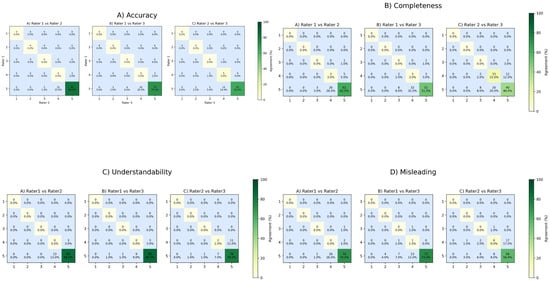
Background/Objectives: To evaluate ChatGPT-generated (GPT-5) simplifications of shoulder MRI reports from the perspectives of orthopedic surgeons and non-healthcare volunteers. Methods: In this single-center retrospective study, 100 de-identified shoulder MRI reports issued between June 2024 and June 2025 were simplified with ChatGPT in February 2026 using a standardized prompt. Between 10 March and 10 April 2026, three orthopedic surgeons independently rated each simplified text against the original report for accuracy, completeness, understandability, and misleading potential on a 5-point Likert scale (higher scores indicating better ratings). In a second arm, 100 adult non-healthcare volunteers each reviewed one simplified report and completed a six-item questionnaire on perceived clarity, comprehensibility, usefulness, and appropriateness. Results: Median expert scores were 5.0 in all domains, and all three raters assigned scores ≥ 4 in 86–98% of reports. Gwet’s AC2 ranged from 0.93 to 0.98, whereas Krippendorff’s α ranged from −0.02 to 0.05. Among volunteers, agreement ranged from 47% for understanding report terms to 80% for the appropriateness of the text. Health literacy correlated positively with most items (r = 0.329–0.429, p ≤ 0.001), and age correlated negatively with understanding report terms (r = −0.352, p < 0.001). Conclusions: The simplified reports were rated favorably by orthopedic surgeons and were perceived as useful by non-healthcare volunteers. However, the study was limited by its single-center design, the use of a single model and prompt, the absence of a comparison with the original reports in the volunteer arm, and the reliance on self-reported rather than objectively tested comprehension; therefore, it does not demonstrate improved patient comprehension or clinical safety. Such texts should supplement, not replace, the original report and physician consultation.

Diagnostics

1 November 2026

Pairwise heatmaps illustrating inter-rater exact agreement across four domains: (A) accuracy, (B) completeness, (C) understandability, and (D) misleading potential. Each panel presents pairwise comparisons between raters. Only exact agreement cells (diagonal) are color-coded from yellow to green according to agreement percentages, while non-agreement cells are displayed with a uniform light-blue background. All Likert categories (1–5), including zero-frequency cells, are shown.

Highly Accessed Articles

News & Conferences

Latest Issues

Open for Submission

Journal Sections

XFacebookLinkedIn
Diagnostics - ISSN 2075-4418