15th Anniversary of Catalysts: Recent Advances in Catalytic Reaction Engineering

A special issue of Catalysts (ISSN 2073-4344). This special issue belongs to the section "Catalytic Reaction Engineering".

Deadline for manuscript submissions: 31 December 2026 | Viewed by 1540

Editors


E-Mail Website
Guest Editor
Chemical Reactor Engineering Centre (CREC), Department of Chemical and Biochemical Engineering, Faculty of Engineering, Western University, London, ON N6A 5B9, Canada
Interests: catalysis; photocatalysis; reaction engineering; fluidized bed reactors
Special Issues, Collections and Topics in MDPI journals

E-Mail Website
Guest Editor
Département de Génie Chimique, Université Laval, 1065 Avenue de la Médecine, Québec, QC G1V 0A6, Canada
Interests: catalysis; catalytic processes; catalytic membranes

E-Mail Website
Guest Editor
Laboratory of Catalytic Reactor Engineering Applied to Chemical and Biological Systems, Department of Process and Hydraulic Engineering, Universidad Autónoma Metropolitana-Iztapalapa, Mexico City 09340, Mexico
Interests: catalytic reactor engineering; reaction kinetics; multiscale analysis in catalytic systems; transport phenomena in catalytic reactors
Special Issues, Collections and Topics in MDPI journals

Special Issue Information

Dear Colleagues,

We, as Guest Editors, invite you to submit manuscripts to this Special Issue of the Catalytic Reaction Engineering section of Catalysts to celebrate the journal’s 15th anniversary.

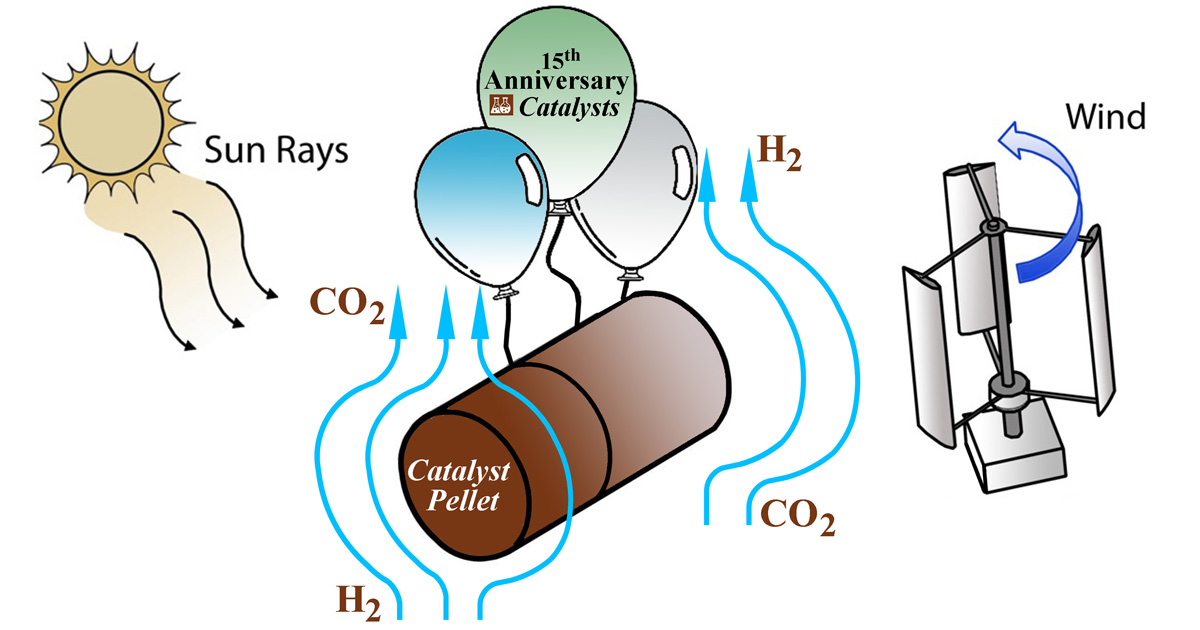
In recent years, we have witnessed a momentous change in the catalytic reaction engineering landscape, with an important segment of studies devoted to green catalytic processes with negligible CO2 footprints and others to hydrogen synthesis, an environmental chemical energy vector of choice. This is a commendable task that has been accomplished by the scientific catalysis and reaction engineering community. Furthermore, this research further will greatly benefit the implementation and scaling up of new green and sustainable catalytic reaction engineering processes in industry.

At this critical time, we invite contributions to this Special Issue launched to mark the 15th anniversary of Catalysts. Article submissions should focus on the new significant trends and approaches that will power the catalytic reaction engineering discipline in the next decade. Thus, we look forward to receiving your valuable research contributions and we anticipate that this Special Issue will be of great value to the engineering community worldwide.  

Prof. Dr. Hugo de Lasa
Prof. Serge Kaliagine
Prof. Dr. Carlos Omar Castillo Araiza
Guest Editors

Manuscript Submission Information

Manuscripts should be submitted online at www.mdpi.com by registering and logging in to this website. Once you are registered, click here to go to the submission form. Manuscripts can be submitted until the deadline. All submissions that pass pre-check are peer-reviewed. Accepted papers will be published continuously in the journal (as soon as accepted) and will be listed together on the special issue website. Research articles, review articles as well as short communications are invited. For planned papers, a title and short abstract (about 250 words) can be sent to the Editorial Office for assessment.

Submitted manuscripts should not have been published previously, nor be under consideration for publication elsewhere (except conference proceedings papers). All manuscripts are thoroughly refereed through a single-anonymized peer-review process. A guide for authors and other relevant information for submission of manuscripts is available on the Instructions for Authors page. Catalysts is an international peer-reviewed open access monthly journal published by MDPI.

Please visit the Instructions for Authors page before submitting a manuscript. The Article Processing Charge (APC) for publication in this open access journal is 2200 CHF (Swiss Francs). Submitted papers should be well formatted and use good English. Authors may use MDPI's English editing service prior to publication or during author revisions.

Keywords

  • catalysis
  • reaction engineering
  • photocatalysis
  • CO2 capture
  • hydrogen production

Benefits of Publishing in a Special Issue

  • Ease of navigation: Grouping papers by topic helps scholars navigate broad scope journals more efficiently.
  • Greater discoverability: Special Issues support the reach and impact of scientific research. Articles in Special Issues are more discoverable and cited more frequently.
  • Expansion of research network: Special Issues facilitate connections among authors, fostering scientific collaborations.
  • External promotion: Articles in Special Issues are often promoted through the journal's social media, increasing their visibility.
  • Reprint: MDPI Books provides the opportunity to republish successful Special Issues in book format, both online and in print.

Further information on MDPI's Special Issue policies can be found here.

Published Papers (3 papers)

Order results
Result details
Select all
Export citation of selected articles as:

Research

35 pages, 803 KB  
Article
A Simulation-Based Catalyst-Activity-Aware Self-Optimizing Digital Twin for o-Xylene Oxidation to Phthalic Anhydride in a Catalyst-Deactivating Fixed-Bed Reactor
by Feras Alrowaie and Abdulrahman Alkhaldi
Catalysts 2026, 16(7), 659; https://doi.org/10.3390/catal16070659 - 21 Jul 2026
Viewed by 234
Abstract
Catalyst deactivation shifts the optimal operating region of exothermic fixed-bed reactors, yet most reactor digital twins focus on monitoring rather than catalyst-state-aware operating decisions. This work presents a simulation-based self-optimizing digital-twin prototype integrating a physics-based reactor model, a moving-window constrained activity estimator, and [...] Read more.
Catalyst deactivation shifts the optimal operating region of exothermic fixed-bed reactors, yet most reactor digital twins focus on monitoring rather than catalyst-state-aware operating decisions. This work presents a simulation-based self-optimizing digital-twin prototype integrating a physics-based reactor model, a moving-window constrained activity estimator, and a target-optimization layer for o-xylene oxidation to phthalic anhydride in a vanadia–titania heat-exchanged fixed-bed reactor. Sparse axial temperature and conversion measurements are reconciled to estimate an axial catalyst activity profile; gas and coolant inlet temperatures are then updated subject to a hot-spot safety constraint. The estimator achieved an activity-profile root mean square error (RMSE) of 0.075, an outlet-conversion RMSE of 0.99 percentage points, and an outlet-temperature RMSE of 1.85 K. Under the baseline noisy-measurement scenario, estimated activity optimization raised the mean phthalic anhydride yield from 46.3% under fixed targets to 61.9%, within 0.14 percentage points of the true-activity optimum, while maintaining the maximum reactor temperature below 730 K. In this matched-model simulation study, this corresponds to recovering approximately 99.1% of the yield improvement available with perfect catalyst-state knowledge. The policy remained superior to fixed-target operation across all tested noise levels, sensor configurations, and kinetic pre-exponential perturbations. All results are obtained from synthetic-measurement simulations rather than experimental or plant data, and plant validation is still required to quantify structural model error. The findings demonstrate the value of linking catalyst-state estimation to operating-target adaptation in a reproducible catalytic-reactor digital-twin workflow. Full article
Show Figures

Figure 1

30 pages, 3587 KB  
Article
From Catalyst Aging to Operational Vulnerability: A Benchmark-Validated Framework for Industrial SO2 Converters
by Feras Alrowaie
Catalysts 2026, 16(7), 657; https://doi.org/10.3390/catal16070657 - 20 Jul 2026
Viewed by 330
Abstract
Catalyst activity loss reduces both the performance and operating flexibility of industrial sulfur dioxide converters, yet its consequences are rarely assessed beyond conversion declines. This work develops an activity-loss vulnerability framework for a four-bed double-contact SO2 converter model evaluated against an industrial [...] Read more.
Catalyst activity loss reduces both the performance and operating flexibility of industrial sulfur dioxide converters, yet its consequences are rarely assessed beyond conversion declines. This work develops an activity-loss vulnerability framework for a four-bed double-contact SO2 converter model evaluated against an industrial fresh-catalyst benchmark and applies it to four prescribed activity scenarios (a=1.0, 0.8, 0.6, 0.4). At the reference inlet-temperature policy, reducing activity from a=1.0 to a=0.4 lowered conversion from 99.758% to 96.812%, increased outlet SO2 slip from 230 to 2960 ppmv, and raised the hotspot from 613.7 to 660.3 °C, exceeding the adopted illustrative limit of 650 °C. Sensitivity, vulnerability, hotspot risk, and feasible-region maps show that the prescribed activity loss progressively shrinks the permissible operating envelope and creates a coupled productivity–emissions–thermal-safety tradeoff. A non-uniform activity profile at the same mean activity as uniform a=0.6 produced a hotspot that was 9.3 °C higher, demonstrating that average activity alone is insufficient for thermal-risk assessment. Finally, a scenario-relative Operating Efficiency Reduction Index (OERI) integrates conversion loss, SO2-slip increase, and thermal-margin loss into an illustrative scenario-screening score. The results show that catalyst activity loss should be assessed as a coupled performance, emissions, and operational-vulnerability problem rather than conversion decline alone. Full article
Show Figures

Graphical abstract

19 pages, 3265 KB  
Article
A Ternary Ag Species and Zr-Doped TiO2 Photocatalyst for Enhanced MB Decolorization Under Low-Intensity Visible LEDs
by Pichai Soison, Chamorn Chawengkijwanich, Hugo de Lasa and Siriluk Chiarakorn
Catalysts 2026, 16(6), 507; https://doi.org/10.3390/catal16060507 - 1 Jun 2026
Viewed by 495
Abstract
This study explored the influence of high silver (Ag) loading (5–10 mol%) on the photocatalytic performance of zirconium (Zr) co-doped TiO2 (AZT) with a low Zr content. Although various Ag/Zr ratios have been reported, the effect of high Ag loading combined with [...] Read more.
This study explored the influence of high silver (Ag) loading (5–10 mol%) on the photocatalytic performance of zirconium (Zr) co-doped TiO2 (AZT) with a low Zr content. Although various Ag/Zr ratios have been reported, the effect of high Ag loading combined with low Zr content remains largely unrevealed, particularly in low-temperature synthesis where the role of Zr as a phase inhibitor is less critical. To address this gap, the AZT photocatalyst was fabricated via a solvothermal method combined with organic-free peroxy route. Characterization indicated Zr4+ incorporated into the TiO2 lattice, inducing structural distortions and promoting Ti3+ defect states. Simultaneously, silver existed as ternary Ag species, which functioned as visible light responsive co-catalysts that enhanced light absorption via Surface Plasmon Resonance (SPR) and facilitated efficient charge separation. Photocatalytic performance was evaluated through Methylene Blue (MB) decolorization under household LED lamp. The optimized 7% Ag loaded catalyst achieved 99.4% removal efficiency within 6 h, with a reaction rate ten times higher than the Zr-doped sample. This superior activity was attributed to a p-n heterojunction and the SPR effect, narrowing the optical band gap to 2.60 eV. Radical scavenger experiments confirmed that the process was primarily driven by photogenerated holes. Full article
Show Figures

Figure 1

Back to TopTop