


Journal Menu
► ▼ Journal Menu-
- Brain Sciences Home
- Aims & Scope
- Editorial Board
- Reviewer Board
- Topical Advisory Panel
- Early Career Editorial Board
- Instructions for Authors
- Special Issues
- Topics
- Sections & Collections
- Article Processing Charge
- Indexing & Archiving
- Editor’s Choice Articles
- Most Cited & Viewed
- Journal Statistics
- Journal History
- Journal Awards
- Society Collaborations
- Editorial Office
Journal Browser
► ▼ Journal BrowserNeed Help?
Announcements
25 June 2026
Brain Sciences Receives an Updated Impact Factor of 3.4

We are delighted to announce that Brain Sciences (ISSN 2076-3425) has received an increased Impact Factor of 3.4 in June 2026, up by 21% from the previous year and reaching an all-time high in the journal’s history. The journal is currently indexed and ranked in the following Web of Science (Clarivate JCR™) categories:
- “Clinical Neurology”: Q2 (98th out of 296 journals);
- “Neurosciences”: Q2 (144th out of 330 journals).
More detailed statistics can be found on our website: https://www.mdpi.com/journal/brainsci/stats.
This achievement reflects the collective efforts of our authors, reviewers, and editors. Together, we will continue to track the progress of Brain Sciences and its growing impact in the field of neuroscience.
We would also like to take this opportunity to invite you to read our most popular papers for 2024–2025.
1. “Graph Neural Networks in Brain Connectivity Studies: Methods, Challenges, and Future Directions”
by Hamed Mohammadi and Waldemar Karwowski
Brain Sci. 2025, 15(1), 17; https://doi.org/10.3390/brainsci15010017
Available online: https://www.mdpi.com/2076-3425/15/1/17
2. “Exploring Gender Differences in Internet Addiction and Psychological Factors: A Study in a Spanish Sample”
by Manuel Varchetta, Ginevra Tagliaferri, Emanuela Mari, Alessandro Quaglieri, Clarissa Cricenti, Anna Maria Giannini and Manuel Martí-Vilar
Brain Sci. 2024, 14(10), 1037; https://doi.org/10.3390/brainsci14101037
Available online: https://www.mdpi.com/2076-3425/14/10/1037
3. “Akkermansia muciniphila Is Beneficial to a Mouse Model of Parkinson’s Disease, via Alleviated Neuroinflammation and Promoted Neurogenesis, with Involvement of SCFAs”
by Chen-Meng Qiao, Wen-Yan Huang, Yu Zhou, Wei Quan, Gu-Yu Niu, Ting Li, Mei-Xuan Zhang, Jian Wu, Li-Ping Zhao, Wei-Jiang Zhao et al.
Brain Sci. 2024, 14(3), 238; https://doi.org/10.3390/brainsci14030238
Available online: https://www.mdpi.com/2076-3425/14/3/238
4. “Emotion Classification Based on Transformer and CNN for EEG Spatial–Temporal Feature Learning”
by Xiuzhen Yao, Tianwen Li, Peng Ding, Fan Wang, Lei Zhao, Anmin Gong, Wenya Nan and Yunfa Fu
Brain Sci. 2024, 14(3), 268; https://doi.org/10.3390/brainsci14030268
Available online: https://www.mdpi.com/2076-3425/14/3/268
5. “Exploring the Potential Impact of GLP-1 Receptor Agonists on Substance Use, Compulsive Behavior, and Libido: Insights from Social Media Using a Mixed-Methods Approach”
by Davide Arillotta, Giuseppe Floresta, G. Duccio Papanti Pelletier, Amira Guirguis, John Martin Corkery, Giovanni Martinotti and Fabrizio Schifano
Brain Sci. 2024, 14(6), 617; https://doi.org/10.3390/brainsci14060617
Available online: https://www.mdpi.com/2076-3425/14/6/617
6. “Challenging Cognitive Load Theory: The Role of Educational Neuroscience and Artificial Intelligence in Redefining Learning Efficacy”
by Evgenia Gkintoni, Hera Antonopoulou, Andrew Sortwell and Constantinos Halkiopoulos
Brain Sci. 2025, 15(2), 203; https://doi.org/10.3390/brainsci15020203
Available online: https://www.mdpi.com/2076-3425/15/2/203
7. “From Neural Networks to Emotional Networks: A Systematic Review of EEG-Based Emotion Recognition in Cognitive Neuroscience and Real-World Applications”
by Evgenia Gkintoni, Anthimos Aroutzidis, Hera Antonopoulou and Constantinos Halkiopoulos
Brain Sci. 2025, 15(3), 220; https://doi.org/10.3390/brainsci15030220
Available online: https://www.mdpi.com/2076-3425/15/3/220
8. “Psychedelic-Induced Neural Plasticity: A Comprehensive Review and a Discussion of Clinical Implications”
by Francesco Weiss, Anna Magnesa, Matteo Gambini, Riccardo Gurrieri, Eric Annuzzi, Camilla Elefante, Giulio Perugi and Donatella Marazziti
Brain Sci. 2025, 15(2), 117; https://doi.org/10.3390/brainsci15020117
Available online: https://www.mdpi.com/2076-3425/15/2/117
9. “AI Chatbots and Cognitive Control: Enhancing Executive Functions Through Chatbot Interactions: A Systematic Review”
by Pantelis Pergantis, Victoria Bamicha, Charalampos Skianis and Athanasios Drigas
Brain Sci. 2025, 15(1), 47; https://doi.org/10.3390/brainsci15010047
Available online: https://www.mdpi.com/2076-3425/15/1/47
by Ahmed Mohamed Fahmy Yousef, Alsaeed Alshamy, Ahmed Tlili and Ahmed Hosny Saleh Metwally
Brain Sci. 2025, 15(3), 283; https://doi.org/10.3390/brainsci15030283
Available online: https://www.mdpi.com/2076-3425/15/3/283
17 June 2026
2025 Impact Factors Released
Impact Factors measure how often articles in scientific journals are cited—specifically, the average number of citations received in a given year by articles published in that journal over the previous two years, as tracked in the Web of Science. For researchers, the number answers a practical question: how often is work published in this journal being picked up and built upon?
The metric is assigned to the journal as a whole, not to individual articles. A high Impact Factor tells you something useful about a journal's place in its field; it tells you less about any single paper within it.
For a complementary, article-level view, MDPI lists an Altmetric score on each article page. Where the Impact Factor tracks academic citations, the Altmetric score captures broader online attention: how an article is being shared, discussed, and referenced beyond the journal literature. Together, they offer two different ways of asking the same question: is this research reaching people?
With 2025 CiteScores from Scopus published a few weeks ago, Clarivate has now released this year's Journal Impact Factors in the Journal Citation Reports (JCR).
254 MDPI Journals Saw a Rise in Impact Factor
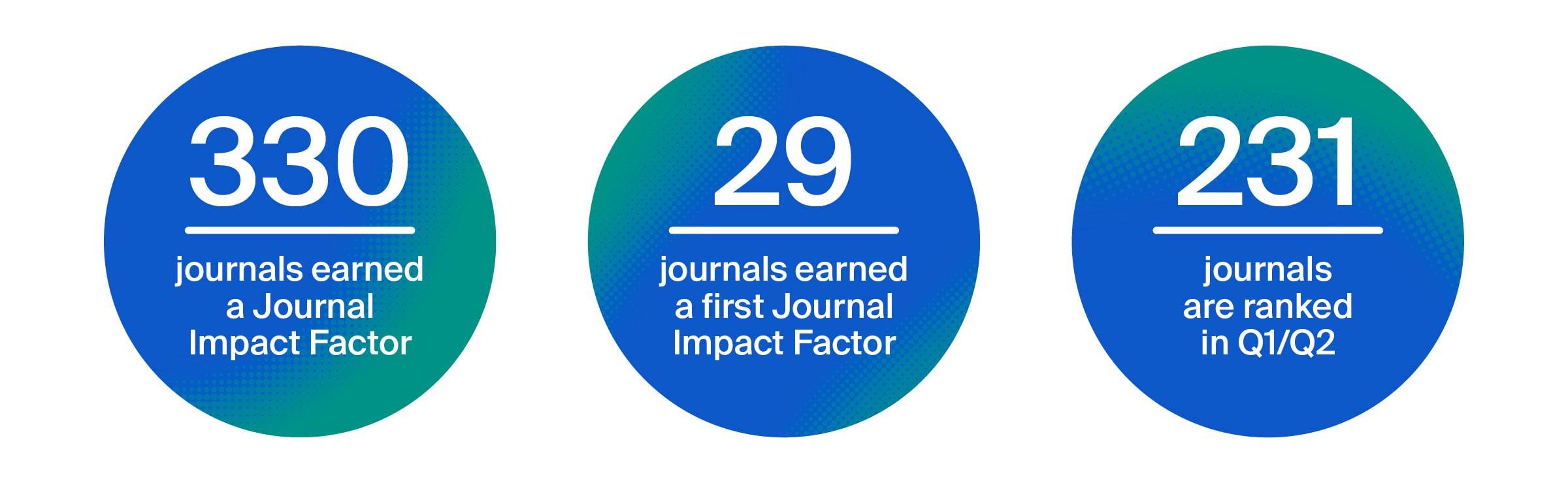
This year's JCR include 330 MDPI journals across a wide range of disciplines. Of these, 231 journals are placed in the top 50% (Q1 or Q2) of their respective subject categories, a result that spans fields as different as materials science, public health, environmental studies, and mathematics. 78 journals hold a top-quartile position (Q1), and 33 journals have a JIF of 5.0 or above.
- 330 journals earned a Journal Impact Factor (JIF)
- 29 journals earned a first JIF
- 254 journals had an increase in JIF
- 71% of ranked journals are in Q1 or Q2
For the full metrics on any MDPI journal, visit our Web of Science journals overview page or a journal's individual statistics page.
29 MDPI Journals Received Their First Journal Impact Factor
A first Impact Factor is a confirmation for an emerging journal. It marks the point at which a journal has been publishing long enough, and cited broadly enough, to enter the formal record of scientific influence. For the research communities those journals serve, it signals that the work being published is being read and built upon.
This year, 29 MDPI journals received a Journal Impact Factor for the first time, across a range of emerging and established research areas. Each represents years of editorial development and peer review—recognized in 2026 for the first time in the JCR.
This is also part of a longer shift in how science gets indexed. When the Emerging Sources Citation Index (ESCI) launched in 2016, 24 MDPI journals were included. By 2024 that number had grown to over 200, reflecting a broader change in the visibility of open access publishing within major citation tracking systems, not just at MDPI but across the sector.
Open Access with Impact
MDPI journals have received a total of 25.2 million citations in Web of Science. That figure matters less as a measure of MDPI's reach and more as a measure of what happens when research is freely available: it gets found, read, and used. Open access is only meaningful if the work actually travels and citations are one indicator that it does.
More than 4.6 million authors have published with MDPI. That breadth, across disciplines, institutions, and geographies, is what makes open access at this scale worth doing.
Thank You to the MDPI Scholarly Community
These results belong to the people who do the actual work: the Editors-in-Chief who set the standards, the Editorial Board Members and reviewers who hold them, and the authors who choose open access for their research. The numbers in the Journal Citation Reports are the downstream effect of decisions made at the desk, in the review, and at submission. Thank you for making them.
Data: 2025 Journal Impact Factors, Journal Citation Reports™ (Clarivate, 2026)
4 June 2026
Open Access, Broadly Recognized: 363 MDPI Journals Receive CiteScores for 2025
The 2025 CiteScore metrics have been officially released by Scopus, and the results confirm what has become a consistent pattern for MDPI's journal portfolio: broad recognition across disciplines, steady improvement across the majority of ranked titles, and a growing presence at the top of subject category rankings.
CiteScore, published annually by Elsevier's Scopus database, measures the average citations received by articles published in a journal over a four-year window. As a complement to the Journal Impact Factor, which uses a two-year window based on the Web of Science database, CiteScore provides an alternative, long-term perspective on citation performance.
The 365 MDPI journals in Scopus (as of May 2026) are indexed across a wide range of subject categories, ensuring that open access research remains highly discoverable to a global readership through one of the most widely used platforms in academic publishing.
Data Summary (2025 CiteScores)
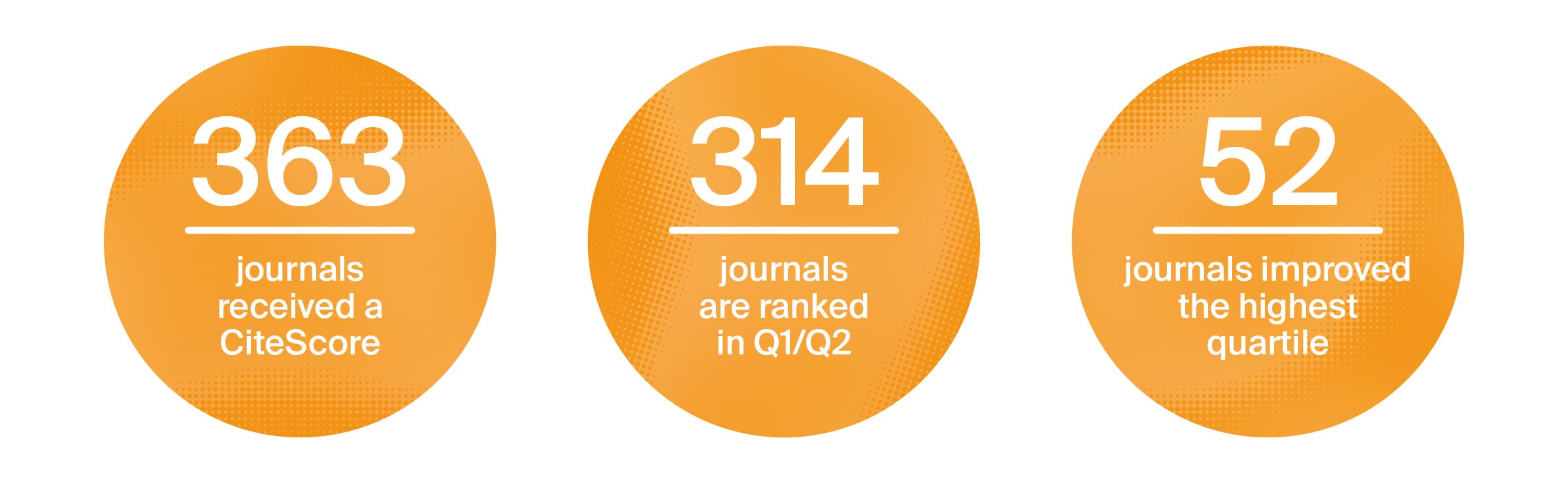
- New Additions: 41 MDPI journals received a CiteScore for the first time.
- Trending Upward: 234 of 322 previously ranked journals (73%) saw an increase in their CiteScore compared to last year.
- High Visibility: 314 journals (86%) rank in Q1 or Q2 in at least one subject category.
- Elite Performance: 42 journals rank in the top 10% of their subject categories.
Portfolio Performance
Among the 322 journals that held a CiteScore in 2024, 234 saw an increase this year. Quartile improvements outnumbered declines across the portfolio, with 52 journals moving to a higher quartile and only 20 seeing a decline. Furthermore, no previously ranked journals were removed. The 42 journals now ranked in the top 10% of their subject categories are drawn from a strong foundation of 178 journals holding a Q1 position.
With the large majority of our indexed portfolio ranked in the top half of research fields, researchers can confidently choose MDPI to meet funder mandates for high-quality, fully compliant Open Access publishing.
Exceptional Achievements for Foods and Life
Notably, both Foods and Life achieved a 99th percentile ranking in their respective subject categories for the 2025 CiteScores. This outstanding placement positions them as leading journals in their fields and highlights the high visibility and global impact of the open access research they publish.
Journal Metrics and Beyond
Journal-level metrics describe outlets, not individual articles. An increasing number of funders and institutions—including signatories of DORA and the Coalition for Advancing Research Assessment—now explicitly encourage evaluation at the article level rather than by the journal in which research appears. MDPI supports this direction: we report CiteScore alongside the Journal Impact Factor, Journal Citation Indicator, and article-level usage data because no single number captures the full reach and contribution of published research.
Thank You
These results reflect the sustained effort of thousands of editors-in-chief, editorial board members, reviewers, and authors across every field MDPI serves. The metrics are the outcome; the work is yours.
1 June 2026
MDPI INSIGHTS: The CEO’s Letter #35 – 30 Years of Open Science, Open Access Policies, Spain Summit, MMCS 2026 & Antibiotics 2026

Welcome to the MDPI Insights: The CEO's Letter.
In these monthly letters, I will showcase two key aspects of our work at MDPI: our commitment to empowering researchers and our determination to facilitating open scientific exchange.
Opening Thoughts

30 Years of Open Science, Built Together
This month, we officially launched MDPI’s 30th Anniversary campaign and dedicated anniversary website, marking an important milestone in our journey as an open access publisher. What began in 1996 with a single journal and the simple belief that scientific knowledge should be shared openly and freely has grown into a global publishing organization supporting more than 500 journals, 68,000 Editorial Board Members, and millions of researchers worldwide.
The anniversary page, entitled 30 Years of Open Science, Built Together, reflects on the people, milestones, and partnerships that have shaped MDPI over the past three decades. It includes a retrospective of our development, key moments in the evolution of open access, landmark research articles, journal anniversaries, an interview with the CEO, and perspectives from colleagues and partners who have contributed to our success.

Looking back, one of the most striking aspects of our journey is not simply our growth, but the broader transformation of scholarly publishing itself.
Open access has moved from a niche concept to a widely adopted publishing model, helping make research more accessible, discoverable, and impactful for researchers, institutions, policymakers, and society.
MDPI has been part of this transition and continues to invest in the people, technology, partnerships, and research integrity infrastructure needed to support high-quality open science at scale.
While anniversaries naturally encourage reflection, they are also an opportunity to look ahead. The challenges facing scholarly publishing today, including research integrity, artificial intelligence, accessibility, and global participation in science, will require continued collaboration across the research ecosystem. As we celebrate 30 years of publishing, our focus remains on supporting researchers, strengthening trust in open science, and helping shape the future of scholarly communication together.
I encourage you to visit the anniversary page, explore the milestones, and take a moment to reflect on the role each of us has played in contributing to MDPI’s story.
Thank you for being part of this journey.
Impactful Research

Highlights from MMCS 2026 in Beijing (14-17 May)
From 14–17 May, MDPI hosted The 5th Molecules Medicinal Chemistry Symposium (MMCS 2026) in Beijing, China, bringing together academia and industry to explore advances in chemical biology, medicinal chemistry, and drug discovery.
The conference hosted more than 230 attendees from 37 countries and regions, alongside 257 submissions and 145 accepted abstracts. With a significant increase in attendance – up by 100 participants compared with the previous edition – the popularity of MMCS continues to grow in terms of its international profile and scientific relevance within this rapidly evolving field.

The scientific program covered seven themes:
- Chemical Biology for Drug Discovery
- Medicinal Chemistry Research Progress
- Natural Products in Drug Discovery
- AI-enabled Drug Discovery
- GPCR & Ion Channel Targeted Drug Development
- Innovative Proximity-Based Drug Modalities
- Biocatalysis for Natural Product & Drug Synthesis
The event featured three plenary speakers, 14 keynote speakers, 35 selected oral presentations, and 98 poster presentations, creating opportunities for open scientific exchange and collaboration. Conference Chair Prof. Dr. Diego Muñoz-Torrero described this edition as one of the most successful MMCS events to date.
|
|
|


Thanks to our Sponsors
MMCS 2026 secured sponsorship support from 12 industrial partners, 11 of which set up on-site exhibition booths. Covering biopharmaceutical R&D, life science supplies, pharmaceutical experimental instruments, and industrial service sectors, exhibitors were able to connect their businesses directly with attendees and make connections at the conference.

30th Anniversary Celebration of Molecules
During the conference, we also celebrated the 30th anniversary of Molecules, one of MDPI’s flagship journals. The celebration brought together Section Editors-in-Chief, Editorial Board Members, MDPI leadership, and editorial colleagues to reflect on the journal’s development, achievements, and continued future growth.

Events such as MMCS 2026 highlight the important role conferences play in creating scientific exchange and collaboration, and in connecting our research communities in person.
They also reflect the continued development of MDPI’s conference portfolio and our commitment to supporting academic engagement beyond publishing alone. Thanks to everyone involved in organizing and contributing to the success of this event.
Inside MDPI

Open Access Policies Continue to Accelerate Globally
One of the clearest indicators of the continued momentum behind open access is the growing number of national and institutional policies supporting, and increasingly requiring, open dissemination of research.
Around the world, governments, funding agencies, and universities are building their open access mandates, with increasing focus on transparency, rights retention, and public accessibility of publicly funded research. While these policies vary across regions, the broader direction is clear: expectations around openness and compliance continue to accelerate.
For researchers, navigating these evolving requirements can be complex and time-consuming. Supporting the research community therefore means not only publishing high-quality open access content but also helping stakeholders better understand changing requirements and emerging opportunities. At MDPI, we see this as an important part of our role within scholarly communication.
“Expectations around openness and compliance continue to accelerate”
Through the MDPI Blog, our Content team continues to publish monthly articles overviewing different countries’ relationships with open access, exploring their histories, policies, opportunities, and statistics. All this information is centralized into an article which contains brief summaries of each country, with links to all the full articles, and is updated monthly.
Recent Policy Developments
South Africa
In 2026, South Africa’s Department of Science and Innovation introduced the South African Open Science Policy. The policy states that: “Open access shall be required for publications arising from publicly funded research, and desirable for research from all sources of funding.”
The policy envisions a coordinated and broad approach to open science that will sustainably and ethically drive socio-economic development by increasing the practice of open science through policy, training, incentivization, and infrastructure.
Canada
In Canada, the Tri-Agency OA Policy on Publications was revised, removing the 12-month embargo for research that must be deposited in a repository with an open license and with author rights retained.
The Agencies argue that “societal advancement is made possible through widespread and barrier-free access to cutting-edge research and knowledge.”
Chile
Chile is a collaborative and engaged member of the global open access movement.
The National Research and Development Agency (Agencia Nacional de Investigación y Desarrollo, or ANID) is Chile’s main funding agency for R&D. It mandates that all beneficiaries must deposit the final version of their published scientific output, with an embargo period of up to 12 months, into a repository.
ANID also supports the InES Open Science funding program, which allows universities to request funding for capacity and infrastructure building. Further, Chile is an active participant in various international initiatives, such as Redalyc, SciELO, and Red de Repositorios Latinoamericanos.
Openness Beyond Research
At MDPI, openness remains one of our core values, ensuring that research outputs are freely accessible to anyone. This commitment also extends to sharing knowledge about the scholarly publishing landscape itself, which we practice on the MDPI Blog through various topics, including open access, recent advances in science, and opportunities for researchers.
As the open access landscape continues to evolve, helping researchers, institutions, editors, and partners navigate these changes will remain an important priority for us.

Thank You
I would like to thank Jack McKenna (Senior Content Specialist, MDPI) from our Content team for his ongoing work on the MDPI Blog series covering global open access policy developments. Initiatives such as this help make complex policy discussions more accessible and useful to the wider research community.
Coming Together for Science

Reflections from the MDPI Spain Summit 2026 in Valencia (21 May)

On 21 May, we hosted the MDPI Spain Summit 2026 in Valencia.
The Summit brought together 30 Editorial Board Members and MDPI colleagues for a discussions on the future of publishing, research integrity, peer review, artificial intelligence, and the evolving research landscape in Spain.
We hosted participants from leading Spanish institutions and spoke on the importance of Spain as a major contributor to global open access (OA) research. In 2025 alone, Spain ranked among the leading countries worldwide for OA publishing, with more than 85% of publications made openly accessible. MDPI also continues to play a significant role within the Spanish research ecosystem.
MDPI in Spain
Spain remains one of MDPI's most important academic markets and a leading contributor to OA research globally. Ever since our Barcelona office opened in 2016 (Happy 10th Anniversary!), MDPI Spain has been actively supporting researchers, institutions, societies, and academic partners across the country. Today, the office plays an important role in creating engagement with the Spanish scholarly community through editorial support, partnerships, conferences, training initiatives, and outreach activities.
A cluster of high-level indicators highlight both the strength of the local research ecosystem and MDPI’s role within it:
- 43,218 total publications in Spain in 2025, of which 35,728 (83%) were open access (49% Gold OA).
- 211,200+ total publications (2021–2025), with 84% published open access.
- 13,444 MDPI publications from Spanish institutions in 2025, representing 14% of all open access publications in Spain.
- More than115,100 MDPI publications from Spanish institutions since 1996.
- More than 4,500 Editorial Board Members from Spain, including more than 150 Chief Editors and 57 Associate Editors.
- 42 institutional partners participating in MDPI’s Institutional Open Access Program (IOAP).
- Spain ranks second globally for MDPI society affiliations, with 26 affiliated society agreements currently in place.
Program Overview
What made this summit special was the openness of the discussions around the research landscape in Spain and the role MDPI plays within the market. General topics of the presentations included:
- MDPI Introduction – Stefan Tochev (CEO).
- Engagement with the Academic Community – Dr. Marta Colomer (External Affairs Lead).
- Latest Developments in the Editorial Process – Dr. Jordi Martinez (Deputy Managing Editor).
- Research integrity and Publication Ethics – Slavomir Nikodijevic (Research Integrity Specialist).
- A 360 View of Academic Publishing – Prof. Dr. Luis Angel Ruiz Fernandez (EBM of Remote Sensing).
|
|
|
|
|
|
|
|


Panel Discussion
We also hosted a panel discussion moderated by Marta, entitled “The Future of Academic Publishing” with Prof. Luis Ruiz, Prof. Marta Feliz (EBM of the journal Catalysts), Dr. Enric Sayas (Product Owner, AI & Technology Innovation), and myself. The discussion looked at the evolving role of editors, the future of peer review, and the growing importance of maintaining trust, ethics, and research integrity in an era increasingly influenced by artificial intelligence.
|
|
|
|


Themes from the Summit
Several themes emerged throughout the discussions, reflecting broader conversations taking place across publishing:
- The academic community values efficient publishing workflows, but expectations around scientific quality and editorial rigor continue to rise.
- Reviewer fatigue and long-term sustainability of peer review remain major challenges across the industry.
- AI is rapidly changing scholarly communication and requires transparent and responsible governance.
- Reputation and trust continue to depend on long-term engagement, transparency, and quality-focused decision-making.
“Maintaining an open dialogue with researchers, editors, reviewers, and institutions remains a priority for MDPI”
It was constructive to see the willingness of participants to engage directly and candidly with us. These conversations provide insights that help inform how we continue to develop our editorial processes, engagement activities, and support for the research community. While certain discussions included concerns, there was also recognition that open dialogue between publishers and the research community is essential if we want to improve scholarly communication together.
|
|
|
|


Events such as this are increasingly important for MDPI. They allow us to present our perspective, to listen to the experiences, expectations, and concerns of editors, reviewers, and researchers, and to address these accordingly.
Thank You
Thank you to our Barcelona Office and all colleagues involved in organizing the summit, as well as all participants for contributing to these thoughtful and constructive discussions.
|
|
|
|
|
|
|
|


As publishing continues to evolve, maintaining an open dialogue with researchers, editors, reviewers, and institutions remains an important priority for MDPI. Events such as the Spain Summit play an important role in helping us to build relationships, foster trust, and better understand the needs of our community.
Closing Thoughts

Highlights from Antibiotics 2026 in Barcelona (11–14 May)
This week, MDPI hosted the Antibiotics 2026 — Advances in Antimicrobial Action and Resistance conference in Barcelona, bringing together academics and industry experts to discuss one of the most important scientific and public health challenges of our time: antimicrobial resistance.
The conference welcomed 145 attendees from 42 different countries and territories, alongside 265 submissions and 127 accepted abstracts, showing the international reach of the event and the strong scientific interest in this rapidly evolving field.

Scientific Exchange on a Global Challenge
Antimicrobial resistance continues to be a global concern, creating collaboration across disciplines, institutions, and regions. The conference program focused on a range of topics including:
- Antimicrobial resistance mechanisms
- One Health approaches to antimicrobial stewardship
- Discovery of novel antimicrobial agents
- Innovation in clinical strategies and treatment approaches
- Ethnopharmacology and emerging therapies
Through keynote plenaries, invited lectures, oral presentations, and poster sessions, the conference created a platform for dialogue and scientific exchange.
|
|
|


International Participation and Collaboration
One of the highlights of the event was the diversity of participation across both geography and expertise. Researchers and speakers from Europe, North America, Asia, Africa, Australia, and Latin America took part in discussions throughout the conference, highlighting the global nature of both the challenge and the scientific response.
The scientific program included:
- 2 keynote speakers
- 10 invited speakers
- 36 selected talks
- 78 posters
The conference brought together perspectives from academia, healthcare, and industry, helping facilitate interdisciplinary collaboration around future approaches to antimicrobial research and resistance management.
|
|
|
|


The Role of Conferences in Scholarly Communication
Conferences are an important platform for collaboration, scientific exchange, and community-building. Events such as Antibiotics 2026 show the value of bringing researchers together in person to discuss emerging challenges, share new findings, and strengthen international networks across disciplines and regions.

Thank You
I would like to thank the conference chairs, speakers, participants, sponsors, and the entire MDPI conference team for their work in making this event a success. The engagement and positive feedback from attendees highlight the importance of our events in addressing some of the most pressing scientific challenges facing society today.

Chief Executive Officer
MDPI AG
25 May 2026
Brain Sciences | Highly Cited Papers in 2024 for the “Neuropsychology” Section

The “Neuropsychology” Section of Brain Sciences (ISSN: 2076-3425) aims to foster research on the relationship between the brain and human cognitive, emotional, and behavioural functions. Neuropsychological testing typically assesses individual performance in several areas, including sensorimotor functions, perception, attention, spatial construction, intelligence, executive functions, memory, language, motivation, emotion, and quality of life. We encourage articles that focus on neuropsychological functions in both healthy and disordered states across the lifespan. Topics of interest include developmental areas, such as ADHD, dyslexia, and other learning disabilities, as well as adult studies that examine the cognitive and emotional consequences of conditions like stroke, traumatic brain injury, and progressive diseases such as Alzheimer’s and Huntington’s disease. We also welcome contributions that explore the development and testing of neuropsychological interventions. We envision original empirical research based on both clinical and experimental neuropsychological paradigms, along with systematic reviews, meta-analyses, and theoretical articles. Additionally, we will consider case studies that highlight critical questions on the relationship between the brain and human behaviour.
All articles published in our journal are available in an open access format, granting you unrestricted access to the full free text. We invite you to explore our most highly cited papers in 2024, listed below as follows:
1. “Hypnotic Modulation of Autonomic Nervous System (ANS) Activity”
by Giuseppe De Benedittis
Brain Sci. 2024, 14(3), 249; https://doi.org/10.3390/brainsci14030249
Available online: https://www.mdpi.com/2076-3425/14/3/249
2. “Brain Functional Correlates of Resting Hypnosis and Hypnotizability: A Review”
by Vilfredo De Pascalis
Brain Sci. 2024, 14(2), 115; https://doi.org/10.3390/brainsci14020115
Available online: https://www.mdpi.com/2076-3425/14/2/115
3. “Spatial Orientation Assessment in the Elderly: A Comprehensive Review of Current Tests”
by Panagiota Tragantzopoulou and Vaitsa Giannouli
Brain Sci. 2024, 14(9), 898; https://doi.org/10.3390/brainsci14090898
Available online: https://www.mdpi.com/2076-3425/14/9/898
4. “Strategic Integration: A Cross-Disciplinary Review of the fNIRS-EEG Dual-Modality Imaging System for Delivering Multimodal Neuroimaging to Applications”
by Jiafa Chen Kaiwei Yu, Yifei Bi, Xing Ji and Dawei Zhang
Brain Sci. 2024, 14(10), 1022; https://doi.org/10.3390/brainsci14101022
Available online: https://www.mdpi.com/2076-3425/14/10/1022
5. “Short-Term Effect of Auditory Stimulation on Neural Activities: A Scoping Review of Longitudinal Electroencephalography and Magnetoencephalography Studies”
by Kanon Kobayashi Yasushi Shiba, Shiori Honda, Shinichiro Nakajima, Shinya Fujii, Masaru Mimura and Yoshihiro Noda
Brain Sci. 2024, 14(2), 131; https://doi.org/10.3390/brainsci14020131
Available online: https://www.mdpi.com/2076-3425/14/2/131
6. “Cognitive Decline: Current Intervention Strategies and Integrative Therapeutic Approaches for Alzheimer’s Disease”
by Kate S. Branigan and Blake T. Dotta
Brain Sci. 2024, 14(4), 298; https://doi.org/10.3390/brainsci14040298
Available online: https://www.mdpi.com/2076-3425/14/4/298
7. “Overt and Covert Effects of Mental Fatigue on Attention Networks: Evidence from Event-Related Potentials during the Attention Network Test”
by Caterina Pauletti Daniela Mannarelli and Francesco Fattapposta
Brain Sci. 2024, 14(8), 803; https://doi.org/10.3390/brainsci14080803
Available online: https://www.mdpi.com/2076-3425/14/8/803
8. “Neural Effects of One’s Own Voice on Self-Talk for Emotion Regulation”
by Hye-jeong Jo Chanmi Park, Eunyoung Lee, Jee Hang Lee, Jinwoo Kim, Sujin Han, Joohan Kim, Eun Joo Kim, Eosu Kim and Jae-Jin Kim
Brain Sci. 2024, 14(7), 637; https://doi.org/10.3390/brainsci14070637
Available online: https://www.mdpi.com/2076-3425/14/7/637
9. “Familiarity Is Key: Exploring the Effect of Familiarity on the Face-Voice Correlation”
by Sarah V. Stevenage Rebecca Edey, Rebecca Keay, Rebecca Morrison and David J. Robertson
Brain Sci. 2024, 14(2), 112; https://doi.org/10.3390/brainsci14020112
Available online: https://www.mdpi.com/2076-3425/14/2/112
10. “Subjective Cognitive Impairment Can Be Detected from the Decline of Complex Cognition: Findings from the Examination of Remedes 4 Alzheimer’s (R4Alz) Structural Validity”
by Eleni Poptsi Despina Moraitou, Emmanouil Tsardoulias, Andreas L. Symeonidis and Magda Tsolaki
Brain Sci. 2024, 14(6), 548; https://doi.org/10.3390/brainsci14060548
Available online: https://www.mdpi.com/2076-3425/14/6/548
21 May 2026
Interview with Prof. Dr. Mario Zuccarello—Section Editor-in-Chief of Brain Sciences

The following is an interview with Prof. Dr. Mario Zuccarello:
Prof. Dr. Mario Zuccarello is a Full Professor at the Division of Pediatric Neurosurgery, Department of Neurosurgery, Cincinnati Children’s Hospital Medical Center, University of Cincinnati College of Medicine, USA. His main research areas are intracranial aneurysms, brain tumors, aneurysms, carotid artery disease, cerebral vascular malformations, pituitary tumors, moyamoya disease, and Chiari malformation.
1. Could you briefly introduce your main research areas and achievements?
My main interest has been cerebro-vascular disease and skull base surgery, with particular emphasis on brain tumors located on the skull base area. My basic science research has been the pathogenesis and treatment of post-SAH cerebral vasospasm. I started my lab research in the early 80s. I developed a rabbit model of SAH and vasospasm, and I studied the involvement of Endothelin-1 and NO in the development of vasospasms. My work has been extensively published in peer review journals and presented at national and international meetings.
In the course of my career, I was the Director of Cerebro-Vascular Disease, Director of the Brain Tumor center, and Chairman of the Department of Neurosurgery. All positions were at the University of Cincinnati.
2. What about the journal made you want to take on the role of Section Editor-in-Chief?
My interest in your journal is that the author of a research article or book has the ability to publish his/her research in very accessible way to the widest possible audience.
3. What is your vision for the journal and the Section?
My vision is to advance the understanding of neuroscience/neurosurgery topics by serving the Journal as a trusted, authoritative, timely, and free venue for publishing high-impact research. My vision is to foster the publication of scholar papers, and to ensure that there will be a global dissemination of knowledge to experts, and maybe to the public. This can be accomplished only via Open Access publishing.
4. What do you think of the development of open access in the publishing field?
Open access (OA) publishing has become the dominant model for scholarly communication. OA allows free, immediate online availability of research output of articles and books. The future is in the hands of OA because OA content is open to all with no access fees.
19 May 2026
Interview with Dr. Vassilis Martiadis—Winner of the Brain Sciences Outstanding Reviewer Award
We are honored to announce that Dr. Vassilis Martiadis has been selected as the winner of the Brain Sciences 2025 Outstanding Reviewer Award.
The following is an interview with Dr. Vassilis Martiadis.
1. Could you introduce yourself to our readers? What is your current research area?
I am a clinical psychiatrist based in Naples, Italy, with twenty years’ experience working in public community mental health services at ASL Napoli 1 Centro. My practice is firmly grounded in real-world clinical care, which inevitably influences the way I interpret and evaluate research. My primary question is whether the findings can be applied to the patients I see every day.
My research lies at the intersection of clinical psychopharmacology and the treatment of complex psychiatric conditions. I primarily work on schizophrenia, focusing on antipsychotic treatments and early intervention, as well as depressive disorders across the spectrum, paying particular attention to treatment-resistant depression. OCD is another consistent interest of mine. Recently, I have become interested in metacognition and its clinical applications in psychotherapy. I find this younger field genuinely exciting because of its potential to bridge neuroscience and everyday therapeutic practice.
2. What motivated you to participate actively in the peer review process?
There are several reasons that keep me motivated. Firstly, I am motivated by curiosity: reviewing means reading new research before it is published, often touching on topics that intersect with my clinical and academic interests. Secondly, I have a genuine desire to contribute to the rapid and high-quality dissemination of scientific knowledge: rigorous peer review is a service to the entire scientific community. There is also something reciprocal about it: you put your best effort into reviewing someone else's work, in the hope that, when it is your turn as an author, someone will do the same for you. This form of professional solidarity is deeply meaningful to me.
3. What are your tips on how to prepare a detailed review report?
First, I look for the paper’s strengths and ensure they are recognized and highlighted, a step that is often overlooked. Then, I try to constructively identify the weaknesses, always suggesting concrete ways to address them, rather than just pointing out the problems. Even when a manuscript is not ready for publication, I try to offer a way forward. Every submitted paper represents the hard work of people who have dedicated a long time to it, and that deserves respect. A good review should leave authors with something useful, regardless of the outcome.
4. Based on your rich reviewing experience, could you please share the common problems that authors face?
Authors are finding it increasingly difficult to find journals that can guarantee both speed and scientific rigor at an affordable price. Open access is essential for broad dissemination, but the APC model can create inequities: institutions in lower-income countries or without institutional support are often effectively excluded. We need more sustainable models, including accessible waiver systems without bureaucratic barriers.
5. Which research topics do you think will be of particular interest to the research community in the coming years?
I see several exciting developments on the horizon. Personalized treatments are set to become increasingly important. Currently, we largely operate by trial and error, particularly when it comes to treating resistant forms of depression, schizophrenia, and OCD. AI has enormous potential in this area, not to replace clinical judgement, but to help predict treatment response in ways that are simply not possible today. Alongside pharmacological innovation, new forms of psychotherapy that are more adaptive, digitally supported and informed by frameworks such as metacognition will transform the way we treat the entire spectrum of psychiatric conditions. In my view, resistant forms across all diagnostic categories remain the frontier where the most urgent work needs to be done.
6. How has serving as a reviewer shaped your perspective on manuscript quality and improved your own writing or research practices?
Like training consistently, reviewing a lot improves your skills. Every manuscript teaches you something new: a different statistical approach, a novel way of contextualizing results or an unfamiliar writing style. It hones your ability to swiftly identify methodological issues, compels you to consider how findings align with broader literature, and ultimately enhances your writing skills. If you are serious about academic work, there is no substitute for it.
7. What advice would you give to early-career researchers who are starting to participate in peer reviews?
My honest advice is to learn to review before you learn to write. Reading and critically evaluating the work of others gives you a foundation that no writing course can fully replace. Perhaps more importantly, always remember that a reviewer is not an omnipotent judge. We are colleagues who are trying to understand, appreciate and improve someone else's work. At different points in our careers, we are all both reviewers and authors. This changes everything about how you approach the process.
8. How do you see the role of reviewers evolving with the advancements in artificial intelligence and automated tools in research publishing?
AI can be genuinely useful for summarizing large bodies of literature, checking language and style, and handling repetitive or mechanical tasks in the review process. This is a real and valuable benefit. However, clinical reasoning—the ability to weigh evidence in context, draw meaningful conclusions, and identify what is truly new—remains a human prerogative. At least for now—and I believe it will remain so for longer than many predict. The interpretation of what a finding actually means for patients and practice cannot be automated. Fortunately, that judgement is still ours.
15 May 2026
Brain Sciences Exceptional Reviewers List 2026

We are thrilled to share the updated Exceptional Reviewers List 2026. This program was established to recognize and honor scholars who have consistently delivered exceptional review reports to our journal. Committed to fostering rigorous research and promoting knowledge exchange, the journal acknowledges the vital role our reviewers play in maintaining the quality and integrity of the articles we publish. According to surveys conducted in 2025, 93% of our authors rated the peer review process as good or excellent, reflecting the strength and effectiveness of our reviewer community.
We would like to express our sincere appreciation to all the reviewers who have generously volunteered their time and expertise to assist in Brain Sciences’ peer-review process. Their dedication and attention to detail in evaluating manuscripts, offering valuable feedback, and contributing to academic rigor are truly commendable.
The Exceptional Reviewers List was introduced in May 2026. Each quarter, we will be selecting a group of outstanding reviewers and introducing them here.
Q1:
Name: Dr. Ghazaleh Soleimani
Affiliation: Department of Psychiatry and Behavioral Sciences, University of Minnesota, Minneapolis, United States
Name: Dr. Jaisan Islam
Affiliation: Department of Neuroscience, College of Medicine, Chungbuk National University, Republic of Korea
Name: Dr. Laila Craighero
Affiliation: Department of Neuroscience and Rehabilitation, University of Ferrara, Italy
Name: Dr. Ivan Serbetar
Affiliation: University of Zagreb, Faculty of Teacher Education, Croatia
Name: Dr. Hannah Carlson
Affiliation: Department of Psychology and Program in Neuroscience, Davidson College, USA
Name: Dr. Atul Gopal
Affiliation: California National Primate Center, University of California-Davis, USA
Name: Dr. Dana-Lynn Koomoa
Affiliation: Department of Pharmaceutical and Administrative Sciences, Western New England University, United States
Name: Dr. Trevor Gerson
Affiliations: 1 Children's Mercy Kansas City, USA; 2 University of Missouri - Kansas City, Missouri, USA
Name: Dr. Konstantina Kitsou
Affiliation: National and Kapodistrian University of Athens, Athens, Greece
Name: Dr. Logan T. Trujillo
Affiliation: Department of Psychology, Texas State University, United States
“I enjoy reviewing for Brain Sciences (MDPI) because their online review process allows me to efficiently provide authors with constructive feedback and quality assurance of their scientific research.”
7 May 2026
Brain Sciences | Highly Cited Papers in 2024 in the “Neuropsychiatry” Section

The “Neuropsychiatry” Section, in Brain Sciences (ISSN: 2076-3425), gathers the best available scientific evidence to guide clinical practice in the treatment of psychiatric illnesses. Original articles and reviews which advance our understanding of the etiology, course, and treatment of psychiatric illnesses are welcome. Papers reporting sound evidence-based practices which provide safeguards against reporting bias and promote the reproducibility of study procedures and the replicability of results, for example through the preregistration of study hypotheses, will also be highly valued.
All articles published in our journal are available in an open access format, granting you unrestricted access to the full free text. We invite you to explore our most highly cited papers in 2024 listed below:
1. “Neurobiological Underpinnings of Hyperarousal in Depression: A Comprehensive Review”
by Musi Xie, Ying Huang, Wendan Cai, Bingqi Zhang, Haonan Huang, Qingwei Li, Pengmin Qin and Junrong Han
Brain Sci. 2024, 14(1), 50; https://doi.org/10.3390/brainsci14010050
Available online: https://www.mdpi.com/2076-3425/14/1/50
2. “Autistic Traits as Predictors of Increased Obsessive–Compulsive Disorder Severity: The Role of Inflexibility and Communication Impairment”
by Liliana Dell’Osso, Benedetta Nardi, Chiara Bonelli, Giulia Amatori, Maria Alessandra Pereyra, Enrico Massimetti, Ivan Mirko Cremone, Stefano Pini and Barbara Carpita
Brain Sci. 2024, 14(1), 64; https://doi.org/10.3390/brainsci14010064
Available online: https://www.mdpi.com/2076-3425/14/1/64
3. “Behavioral and Psychiatric Disorders in Syndromic Autism”
by Ann C. Genovese and Merlin G. Butler
Brain Sci. 2024, 14(4), 343; https://doi.org/10.3390/brainsci14040343
Available online: https://www.mdpi.com/2076-3425/14/4/343
4. “The Effect of Antipsychotics on Cognition in Schizophrenia—A Current Narrative Review”
by Petru Fabian Lungu, Corina Miruna Lungu, Alin Ciobica, Ioana Miruna Balmus, Raluca Vitalaru, Ioannis Mavroudis, Romeo Dobrin, Mirela Cimpeanu and Irina Luciana Gurzu
Brain Sci. 2024, 14(4), 359; https://doi.org/10.3390/brainsci14040359
Available online: https://www.mdpi.com/2076-3425/14/4/359
5. “Prevalence and Correlates of the Concurrence of Autism Spectrum Disorder and Obsessive Compulsive Disorder in Children and Adolescents: A Systematic Review and Meta-Analysis”
by Claudia Aymerich, Malein Pacho, Ana Catalan, Noorulain Yousaf, Violeta Pérez-Rodríguez, Matthew J. Hollocks, Mara Parellada, Georgina Krebs, Bruce Clark and Gonzalo Salazar de Pablo
Brain Sci. 2024, 14(4), 379; https://doi.org/10.3390/brainsci14040379
Available online: https://www.mdpi.com/2076-3425/14/4/379
6. “Role of Glial Cells in Neuronal Function, Mood Disorders, and Drug Addiction”
by Yousef Tizabi, Bruk Getachew, Sheketha R. Hauser, Vassiliy Tsytsarev, Alex C. Manhães and Victor Diogenes Amaral da Silva
Brain Sci. 2024, 14(6), 558; https://doi.org/10.3390/brainsci14060558
Available online: https://www.mdpi.com/2076-3425/14/6/558
7. “Optimizing and Predicting Antidepressant Efficacy in Patients with Major Depressive Disorder Using Multi-Omics Analysis and the Opade AI Prediction Tools”
by Corrivetti, Giulio, Francesco Monaco, Annarita Vignapiano, Alessandra Marenna, Kaia Palm, Salvador Fernández-Arroyo, Eva Frigola-Capell, Volker Leen, Oihane Ibarrola, Burak Amil et al.
Brain Sci. 2024, 14(7), 658; https://doi.org/10.3390/brainsci14070658
Available online: https://www.mdpi.com/2076-3425/14/7/658
8. “Dopamine Dysregulation in Reward and Autism Spectrum Disorder”
by Kenneth Blum, Abdalla Bowirrat, Keerthy Sunder, Panayotis K. Thanos, Colin Hanna, Mark S. Gold, Catherine A. Dennen, Igor Elman, Kevin T. Murphy and Milan T. Makale
Brain Sci. 2024, 14(7), 733; https://doi.org/10.3390/brainsci14070733
Available online: https://www.mdpi.com/2076-3425/14/7/733
9. “Treatment of Cognitive Impairment Associated with Schizophrenia Spectrum Disorders: New Evidence, Challenges, and Future Perspectives”
by Irene Calzavara-Pinton, Gabriele Nibbio, Stefano Barlati, Lorenzo Bertoni, Nicola Necchini, Daniela Zardini, Antonio Baglioni, Stefano Paolini, Laura Poddighe, Viola Bulgari et al.
Brain Sci. 2024, 14(8), 791; https://doi.org/10.3390/brainsci14080791
Available online: https://www.mdpi.com/2076-3425/14/8/791
10. “Insights into the Effect of Light Pollution on Mental Health: Focus on Affective Disorders—A Narrative Review”
by Giulia Menculini, Federica Cirimbilli, Veronica Raspa, Francesca Scopetta, Gianmarco Cinesi, Anastasia Grazia Chieppa, Lorenzo Cuzzucoli, Patrizia Moretti, Pierfrancesco Maria Balducci, Luigi Attademo et al.
Brain Sci. 2024, 14(8), 802; https://doi.org/10.3390/brainsci14080802
Available online: https://www.mdpi.com/2076-3425/14/8/802
11. “Low-Grade Inflammation Associated with Major Depression Subtypes: A Cross-Sectional Study”
by Veronique Bernier, Ghada Alsaleh, Camille Point, Benjamin Wacquier, Jean-Pol Lanquart, Gwenolé Loas and Matthieu Hein
Brain Sci. 2024, 14(9), 850; https://doi.org/10.3390/brainsci14090850
Available online: https://www.mdpi.com/2076-3425/14/9/850
12. “Food Addiction”
by Haley Krupa, Ashley N. Gearhardt, Anne Lewandowski and Nicole M. Avena
Brain Sci. 2024, 14(10), 952; https://doi.org/10.3390/brainsci14100952
Available online: https://www.mdpi.com/2076-3425/14/10/952
13. “Mitochondrial Dysfunction as a Biomarker of Illness State in Bipolar Disorder: A Critical Review”
by Anna Giménez-Palomo, Helena Andreu, Oscar de Juan, Luis Olivier, Iñaki Ochandiano, Lidia Ilzarbe, Marc Valentí, Aldo Stoppa, Cristian-Daniel Llach, Giulio Pacenza et al.
Brain Sci. 2024, 14(12), 1199; https://doi.org/10.3390/brainsci14121199
Available online: https://www.mdpi.com/2076-3425/14/12/1199
14. “Identity and Temporal Fragmentation in Borderline Personality Disorder: A Systematic Review”
by Ilaria Faggioli, Cecilia Maria Esposito and Giovanni Stanghellini
Brain Sci. 2024, 14(12), 1221; https://doi.org/10.3390/brainsci14121221
Available online: https://www.mdpi.com/2076-3425/14/12/1221
6 May 2026
Interview with Dr. Sami Barrit—Winner of the Brain Sciences Best Paper Award
We are honored to announce that Dr. Sami Barrit has been selected as the winner of the Brain Sciences Best Paper Award 2025.
The following is an interview with Dr. Sami Barrit:
1. Can you please provide us with a short self-introduction?
I'm a young neurosurgeon born and raised in Brussels, specializing in stereotactic and functional neurosurgery with a particular focus on epilepsy surgery. I trained across several countries—France, Japan, and now the US—and have recently joined the Computational Precision Health program at UC Berkeley and UCSF. My research interest lies at the intersection of human and artificial intelligence, from clinical decision support to brain–computer interfaces.
2. Congratulations on your published paper and the award it has received! Could you briefly introduce your research focus and the key findings of the award-winning paper? What inspired this work?
In this study, we showed that a specialized, well-constrained LLM leveraging a curated neurology corpus outperformed practicing neurologists in a blinded evaluation of complex diagnostic cases with no hallucinations detected (that was still a major thing, back in the not-so-long-ago days). The project was motivated by a simple question: Can we build AI that is not just impressive in general, but genuinely trustworthy in the kind of difficult reasoning neurologists deal with every day?
3. What were the biggest challenges you faced during this research, and how did you overcome them?
Devising a paradigm rigorous and fair enough to be meaningful was the first challenge — but honestly, the hardest part was, as very busy residents, coordinating very busy clinicians across institutions to participate and be evaluated under proper blinded conditions. That only worked thanks to an efficient and trusting collaboration with my co-author and friend (and smartest neurologist I know), Nathan Torcida, MD, and a shared commitment to getting it right rather than getting it done fast.
4. What are the potential applications or long-term impacts of your award-winning research? How might it benefit industry or society?
Beyond the now widely debated benefits and risks of AI-driven clinical support, what I find most humbling in these findings is what they suggest about differential diagnosis itself—long considered the pinnacle of medical intellect—and how AI challenges us to rethink it. Not as a threat, but as an invitation to develop new practices of co-intelligence that, well-mastered, I believe represent a genuine opportunity for both better care and broader access to it.
5. Based on your experience, what advice would you give to early career researchers working in neurosciences?
Trust your gut and know that effort pays. Find your natural interest, your method, and—most importantly—your people, because the process matters as much as the outcome. Focus on your passion and mission, and don't let the noise distract you from it.
6. Why did you choose to publish your work in Brain Sciences? What factors influenced your decision?
Open access, a broad audience across clinical neuroscience, and an editorial process that was both efficient and respectful of authors' time, which, I'll be honest, is becoming rarer than it should be.
7. As a Best Paper Award winner, what suggestions do you have for Brain Sciences to further enhance its service or impact?
Produce richer multimedia content alongside publications—podcasts, interviews, short videos featuring guest editors or authors of landmark papers. The science is there; making it more alive and accessible to a wider audience would meaningfully extend its reach.
