


Skip to Content

Agronomy

Agronomy is an international, peer-reviewed, open access journal on agronomy and agroecology published semimonthly online by MDPI. 
The Spanish Society of Plant Biology (SEBP) is affiliated with Agronomy and their members receive discounts on the article processing charges.
Quartile Ranking JCR - Q1 (Agronomy | Plant Sciences)
Get Alerted

Add your email address to receive forthcoming issues of this journal.

All Articles (18,991)

Plants adapt to abiotic stresses by modulating morphological, physiological, and biochemical processes, which constitute the fundamental mechanisms of stress tolerance. Rice is highly susceptible to drought stress at all developmental stages, leading to substantial reductions in growth and yield, signifying the urgent need to develop drought-tolerant rice genotypes. In this study, recombinant inbred lines (RILs) in rice with enhanced drought tolerance were developed through a cross between the high-yielding rice variety BRRI-28 and the commercial variety BINA-7, followed by successive selfing and phenotypic selection. The resulting lines were evaluated using integrated morphological, physiological, biochemical, and anatomical analyses under well-watered (WW) and drought conditions (DC). BRRIdhan-56, a known drought-tolerant variety, was included as a check genotype. Among the tested lines, RIL-3 exhibited superior agronomic performance under DC, including a significantly higher tiller number, plant height, and seed dry weight, and improved root attributes compared with its parental lines and, for several traits, exceeding those of BRRIdhan-56. Leaf rolling was absent in RIL-3 and the check variety until the 23rd day of drought stress, whereas other genotypes exhibited varying degrees of stress symptoms. Panicle exertion under DC was observed exclusively in RIL-3 and the check. Although all genotypes showed reductions in biomass, relative water content, and chlorophyll levels under DC, RIL-3 consistently maintained higher values than its parental lines and comparable or superior levels to the check variety. Notably, RIL-3 exhibited a distinctive physiological response characterized by sustained chlorophyll retention and low proline accumulation under severe drought, in contrast to the high proline levels observed in sensitive lines. A root anatomical analysis further revealed well-developed aerenchyma formation in RIL-3 following drought treatment, supporting its drought tolerance. Together, these results demonstrate that RIL-3 combines an enhanced drought tolerance with a stable agronomic and yield-related performance and a unique physiological trait profile under drought stress, highlighting its potential value as a promising genotype for drought-tolerance breeding programs.

6 March 2026

Morphological features of the genotypes under stress treatment; (A) plant height in cm, (B) tiller number, (C) shoot fresh weight in grams, and (D) shoot dry weight in grams. Error bars indicate the standard error of the mean values. Mean values were calculated from individual values of three plants per treatment and genotype (N = 3). WW: well-watered, DC: drought condition. Statistical significance was determined via one-way ANOVA. Mean separation was performed using the Least Significant Difference (LSD) test at 5% significance level. Bars sharing the same letter are not significantly different, whereas different letters indicate statistically significant differences between means at p < 0.05. The ANOVA is reported in Supplementary Table S7.

In Alberta, extreme weather events, such as hailstorms, have negative impacts on agriculture. Previous studies have found that potato crop yield and quality losses from hail are dependent on both the severity and the timing of the event. It has also been demonstrated that biostimulant products can positively impact crop yields by increasing plant growth and stress resistance. In the current study, we examined whether the application of biostimulants lessens the negative impacts of simulated hailstorms on potato growth. Potato plants were defoliated at three timepoints during the growing season. Tuber yield was reduced by ~25–40%, depending on at which timepoint the plants were defoliated, and specific gravity declined for plants defoliated later in the growing season. The overall fry color increased for plants defoliated earlier in the growing season, as did the incidence of sugar ends. The application of biostimulant products prior to defoliation lessened the impact of defoliation in terms of both overall yield and tuber processing quality. Tuber yields for defoliated plants treated with biostimulants were ~12–60% higher, depending on the defoliated/treatment timepoint, compared to defoliated control plants. Specific gravity was increased for defoliated plants treated with biostimulants at later timepoints. The overall fry color and incidence of dark ends decreased for defoliated plants treated with biostimulants at early timepoints. Defoliation early in the growing season, around tuber initiation, had the most negative impact on both tuber quality and yield, and treatment with biostimulants had the greatest impact on reducing yield and quality losses when applied at this timepoint.

6 March 2026

Representative French fry discoloration patterns. Shown are representative examples of two French fry discoloration patterns. Top panel: dark end. Bottom panel: vascular discoloration.

Impact of Amendments in Combination with Fertilizers on Turfgrass and Soil Quality

  • Alex J. Lindsey,
  • Jaspal Singh and
  • Victor Abarca
  • + 1 author

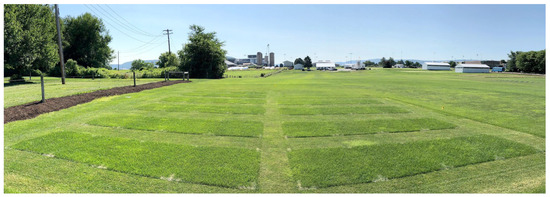
Soil amendments are widely promoted to improve turfgrass performance and soil properties in suboptimal soil; however, their effectiveness under field-managed conditions remains unclear. Two concurrent field experiments (i.e., turfgrass and soil and reduced nitrogen) were conducted from August 2022 to November 2023 in Gainesville, FL, using a randomized complete block design to evaluate organic and biological amendments under standard and reduced nitrogen (N) fertilization. In the turfgrass and soil portion, treatments included granular humic + fertilizer, liquid humic + fertilizer, biochar + fertilizer, microbial inoculant + fertilizer, compost, natural fertilizer, fertilizer, and a non-treated control. In the reduced N experiment, fertilizer rates for all amendment combinations and the natural fertilizer were applied at 50% (12.2 kg N ha−1), while the full-rate fertilizer (24.4 kg N ha−1) and non-treated control were included for comparison. Treatments were applied to St. Augustinegrass (Stenotaphrum secundatum (Walt.) Kuntze) and zoysiagrass (Zoysia spp. Willd.) established on a sand-based root zone. Turfgrass performance was assessed using visual quality, normalized difference vegetation index, and percent green via digital image analysis. Soil properties were evaluated using physical, chemical, and biological parameters. Treatment responses varied by amendment type and N rate. All treatments improved turfgrass performance relative to the non-treated control, with compost producing the greatest improvements in turfgrass quality and soil properties, including organic matter, pH, and plant-available P, K, and Fe. Humic substances, biochar, and microbial inoculants primarily increased potentially mineralizable N but provided limited improvements in turfgrass performance compared with fertilizer alone. Nitrogen rate was the primary determinant of turfgrass performance, with full N treatments producing the highest quality. Although reduced N treatments improved turfgrass quality relative to the control, amendment additions did not consistently enhance turfgrass performance under reduced N conditions.

6 March 2026

St. Augustinegrass visual quality (1–9 scale; 1 = dead or brown turf, 9 = ideal turf, 6 = minimally acceptable) in the turfgrass and soil portion of the study. Treatment mean comparisons were separated using Fisher’s protected least significant difference (LSD) at the p ≤ 0.05 level and were placed under treatment means for each rating date. NS, nonsignificant at the 0.05 probability level.

Understanding how climate extremes affect crop growth in humid–subtropical hilly regions is essential for climate-smart agriculture, yet phenology-resolved evidence remains limited. We combined 20 ETCCDI extreme climate indices (1960–2024) with field records of wheat and maize production (2005–2024) from the hilly area of southwest China, and quantified climate–crop linkages using Mantel tests and generalized additive models; persistence and prospective tendencies were evaluated using Hurst (H) and Mann–Kendall statistics. Warming extremes intensified, with significant increases in TXx (0.22 °C decade−1), SU25 (2.48 days decade−1), and DTR (0.47 °C decade−1), while TNx and TNn declined and frost days increased; most precipitation intensity indices showed no significant trends except CDD, which increased by 1.73 days decade−1. Seasonally, warm extremes and CDD strengthened during the maize season, whereas climatic conditions during the wheat season were comparatively more favorable. Climate impacts on crop growth were stage-dependent, typically lagging by 1–2 months: wheat biomass was positively associated with TXx/TNx (strongest near heading), whereas maize production was more sensitive to temperature extremes (negative) and precipitation frequency indices; CDD significantly affected both crops. These findings suggest that compound heat–drought risks for maize could increase under the persistence and trend signals observed in the historical record, while modest warming may benefit wheat but cold extremes could remain a constraint for management.

5 March 2026

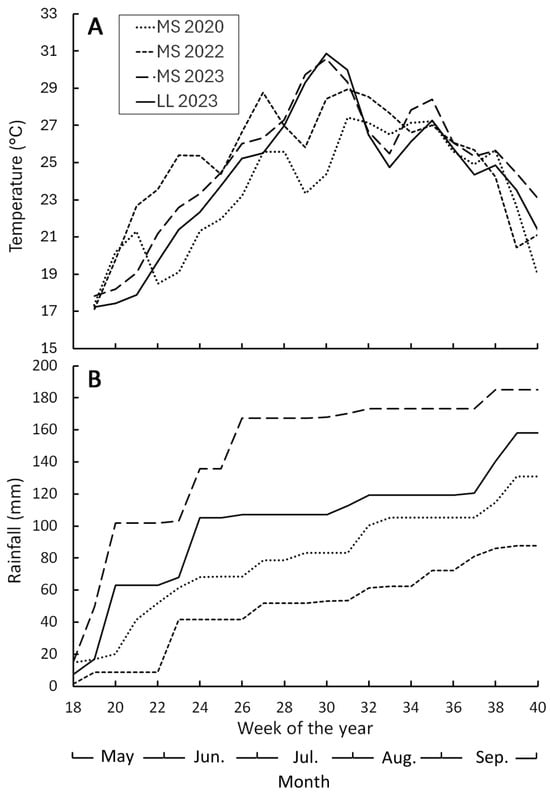
Interannual variation in the extreme temperature indices in the hilly area of southwest China during 1960–2024.

News & Conferences

Issues

Open for Submission

Editor's Choice

Reprints of Collections

Innovations and Obstacles
Reprint

Innovations and Obstacles

Microbial Communities in the Journey of Soil Remediation
Editors: Dong Liu
Pests, Pesticides, Pollinators and Sustainable Farming
Reprint

Pests, Pesticides, Pollinators and Sustainable Farming

Editors: Antonios E. Tsagkarakis, Georgios Papadoulis, Argyro Kalaitzaki
XFacebookLinkedIn
Agronomy - ISSN 2073-4395