


Wine Tourism and Sustainable Rural Development
This special issue belongs to the section "Agricultural Economics, Policies and Rural Management".
Special Issue Information
Dear Colleagues,
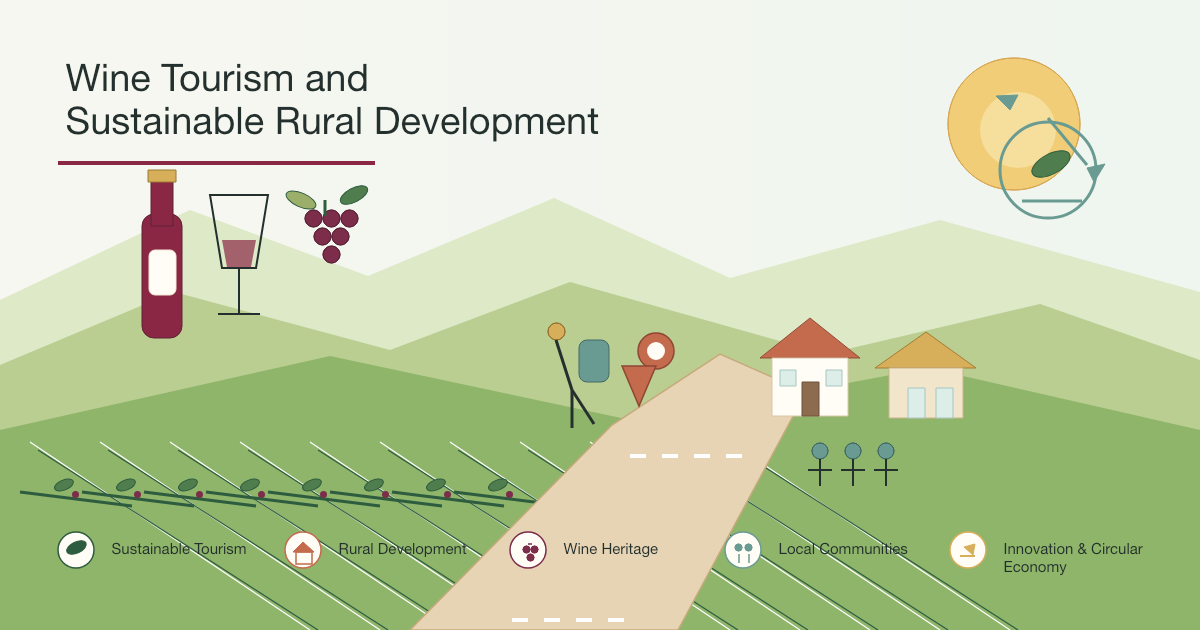
Wine tourism has become an increasingly relevant component of rural and regional tourism, creating connections between wine production, local gastronomy, cultural heritage, rural landscapes, and tourism experiences. Beyond the economic value generated by wineries and tourism services, wine tourism can contribute to the diversification of rural economies, the promotion of local products, the strengthening of local value chains, and the preservation of tangible and intangible cultural heritage. It can also create stronger links between wine producers, local communities, tourism stakeholders, and visitors, contributing to the development and visibility of rural destinations. At the same time, wine-producing rural areas face a range of challenges, including climate change, environmental pressures, demographic changes, economic vulnerability, and changing consumer expectations.
Addressing these challenges requires integrated approaches that combine environmental responsibility, economic viability, social inclusion, cultural heritage, innovation, and active stakeholder involvement. In this context, sustainable wine tourism can provide opportunities for rural entrepreneurship, destination diversification, local development, and the development of more resilient rural territories.
This Special Issue on “Wine Tourism and Sustainable Rural Development” aims to present and disseminate recent research addressing the relationship between wine tourism and the sustainable development of rural areas. It will provide a platform for interdisciplinary research exploring the opportunities, challenges, innovations, and strategies associated with sustainable wine tourism and rural development. The Special Issue welcomes original research articles, review papers, and case studies based on different geographical contexts and methodological approaches. Particular attention is given to research providing empirical evidence, identifying innovative practices, and contributing to a better understanding of how wine tourism can support sustainable and resilient rural territories.
Topics of interest for publication include, but are not limited to sustainable wine tourism and rural development; wine tourism experiences and destination development; wine and food tourism; wine heritage, cultural landscapes, and local traditions; sustainable management of wine destinations; local communities and stakeholder involvement; rural entrepreneurship and innovation; digitalisation and smart wine tourism; environmental sustainability and climate change in wine tourism; the circular economy and sustainable wine production; local products, gastronomy, and rural value chains; consumer behaviour and wine tourist preferences; wine tourism destination marketing, branding, and competitiveness; sustainable development strategies and territorial resilience; and case studies and comparative research on wine tourism destinations.
We welcome contributions from researchers and practitioners working across tourism, wine and food studies, rural development, sustainability, hospitality, economics, management, and related interdisciplinary fields.
Dr. Cristina Canja
Guest Editor
Manuscript Submission Information
Manuscripts should be submitted online at www.mdpi.com by registering and logging in to this website. Once you are registered, click here to go to the submission form. Manuscripts can be submitted until the deadline. All submissions that pass pre-check are peer-reviewed. Accepted papers will be published continuously in the journal (as soon as accepted) and will be listed together on the special issue website. Research articles, review articles as well as short communications are invited. For planned papers, a title and short abstract (about 250 words) can be sent to the Editorial Office for assessment.
Submitted manuscripts should not have been published previously, nor be under consideration for publication elsewhere (except conference proceedings papers). All manuscripts are thoroughly refereed through a single-anonymized peer-review process. A guide for authors and other relevant information for submission of manuscripts is available on the Instructions for Authors page. Agriculture is an international peer-reviewed open access semimonthly journal published by MDPI.
Please visit the Instructions for Authors page before submitting a manuscript. The Article Processing Charge (APC) for publication in this open access journal is 2600 CHF (Swiss Francs). Submitted papers should be well formatted and use good English. Authors may use MDPI's English editing service prior to publication or during author revisions.
Keywords
- wine tourism
- sustainable rural development
- wine destinations
- rural tourism
- wine heritage
- sustainable tourism
- local development
- wine and food tourism
- rural entrepreneurship
- destination management
Benefits of Publishing in a Special Issue
- Ease of navigation: Grouping papers by topic helps scholars navigate broad scope journals more efficiently.
- Greater discoverability: Special Issues support the reach and impact of scientific research. Articles in Special Issues are more discoverable and cited more frequently.
- Expansion of research network: Special Issues facilitate connections among authors, fostering scientific collaborations.
- External promotion: Articles in Special Issues are often promoted through the journal's social media, increasing their visibility.
- Reprint: MDPI Books provides the opportunity to republish successful Special Issues in book format, both online and in print.
Published Papers


Agriculture - ISSN 2077-0472