Skip to Content
  • 2.9
    Impact Factor
  • 3.6
    CiteScore
  • 20 days
    Submission to First Decision
  • 4 days
    Acceptance to Publication

Ecologies

Ecologies is an international, peer-reviewed, open access journal on all aspects of ecology published quarterly online by MDPI.

Get Alerted

Add your email address to receive forthcoming issues of this journal.

All Articles (372)

  • Article
  • Open Access

The ideal free distribution (IFD) is a central concept in behavioral ecology, describing a spatial arrangement in which freely moving individuals distribute themselves in proportion to the local availability of resources. Using analytical and numerical methods, we investigate the robustness of the IFD in a spatially heterogeneous predator–prey system with diffusion, multifactor taxis, reproductive delay, and seasonal resource fluctuations. The model admits an interior equilibrium that exactly realizes the IFD when the flux coefficients satisfy and k2=β2. We show that: (i) in the absence of delay, the coexistence equilibrium is always asymptotically stable, so no Hopf bifurcation occurs; (ii) a subcritical delay produces damped oscillations that preserve the IFD dynamically, while a supercritical delay destroys it through a Hopf bifurcation; (iii) seasonal forcing generates forced oscillations and, when its frequency matches the natural frequency of the damped oscillations, a resonance with sharply amplified amplitude; (iv) the joint action of delay and seasonality leads to mode–locking, quasi–periodicity, or complex aperiodic dynamics; (v) the IFD–preserving fluxes act as a synchronizing mechanism, washing out spatial heterogeneity and forcing spatially coherent oscillations; (vi) a violation of the flux conditions destroys the IFD even in the absence of delay and seasonality, leading to a spatially inhomogeneous steady state. These results reveal the fragility of the IFD as a predictive concept and highlight the need to account for temporal and spatial non–stationarity in ecological models of species coexistence.

Ecologies

16 November 2026

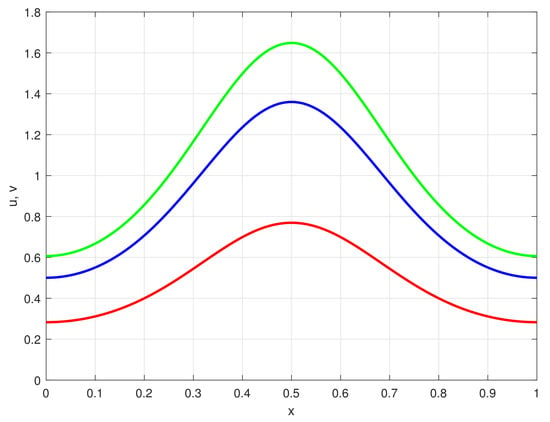
Spatial distribution of the resource 
  
    
      p
      0
    
    
      (
      x
      )
    
  
 (green), prey density 
  
    
      u
      *
    
    
      (
      x
      )
    
  
 (blue), and predator density 
  
    
      v
      *
    
    
      (
      x
      )
    
  
 (red) at the IFD equilibrium (6). Both populations scale proportionally to the local resource, so that 
  
    
      u
      *
    
    /
    
      p
      0
    
    =
    
      λ
      2
    
    /
    
      μ
      2
    
    =
    const
  
 and 
  
    
      v
      *
    
    /
    
      p
      0
    
    =
    const
  
. Parameters: 
  
    
      λ
      1
    
    =
    1.5
  
, 
  
    
      μ
      1
    
    =
    4
  
, 
  
    
      λ
      2
    
    =
    1.65
  
, 
  
    
      μ
      2
    
    =
    2
  
.
  • Article
  • Open Access

The anti-seasonal drawdown zone of the Three Gorges Reservoir (TGR) presents a unique ecological filter characterized by prolonged winter flooding and summer drought. This study investigated plant functional traits (PFTs) and CSR (Competitor–Stress tolerator–Ruderal) ecological strategies across an elevation gradient (145–175 m) in the TGR drawdown zone and the adjacent non-inundated reservoir shore slope (>175 m), to examine plant adaptation to the hydrological gradient. We measured 15 PFTs from 32 dominant species across three sites and calculated CSR strategies using three leaf traits (leaf area, specific leaf area, and leaf dry matter content). The results showed that elevation zone had significant effects on PH, SDMC, LL/LW, SLW, LDMC, SPAD, and SRA. LL/LW, LDMC, RL and FRTD were identified as hub traits in the trait correlation network. Stem traits were significantly related to slope, flooding and TP. Overall mean CSR values for the plant community were 47.90% for C, 37.01% for S, and 15.10% for R. However, the data revealed a clear elevation-dependent shift in the C–S balance: S declined from 45.78% in Zone I to 21.46% in Zone IV, while C increased from 41.86% to 55.61% and R increased to 22.93% in Zone IV. Key stress-tolerant species, such as Cynodon dactylon and Cyperus rotundus exhibited high CS-strategy values across all elevations. CSR strategies were correlated with SWC, flooding, elevation, TC and TN. Correlation heatmaps revealed distinct trait–strategy syndromes: the C strategy was negatively correlated with SDMC and LL/LW but positively correlated with SPAD and LN, whereas the S strategy showed the exact opposite pattern. Water-related factors mainly drove the C and S strategies, with SWC negatively correlated with C and flooding duration negatively correlated with S. These are correlative associations rather than causal pathways. These observed associations are consistent with the hypothesis that intense hydrological stress acts as an environmental filter shaping plant ecological strategies, although the historical filtering process itself is not directly observed in this cross-sectional study. Within this framework, niche differentiation is realized through subtle trait variations and mixed strategies.

Ecologies

12 November 2026

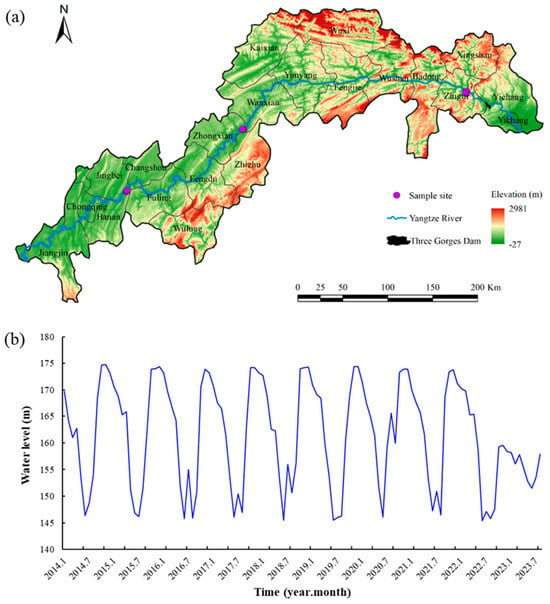
Location of study area (a) and the fluctuations of the water level (b) of the Three Gorges Reservoir.
  • Article
  • Open Access

Mangrove-fringed coastal areas provide habitat and sediment regulation ecosystem services, increasingly affected by land-use change. However, integrated local-scale assessments of habitat quality and sediment dynamics remain limited. This study assessed land-use and land-cover (LULC) changes in Mueang Samut Sakhon District, Thailand, for 2000–2020 and projected a business-as-usual (BAU) scenario for 2040 using a cellular automata-artificial neural network model (hindcast overall accuracy 74.7%). Habitat quality and sediment dynamics were assessed for 2000, 2020, and 2040 using the InVEST Habitat Quality and Sediment Delivery Ratio models, and tested with an independent mangrove dataset, sensitivity analyses, and an analysis by LULC transition. Between 2000 and 2020, built-up land increased by 34.7% and mapped mangroves declined by 50.6%, with further changes of +4.8% and −9.3% projected for 2040. Global Mangrove Watch indicated a smaller decline (29%), so the mapped loss is an upper estimate. Total habitat quality declined by 22.2% (2000–2020), mainly through habitat loss and remains concentrated along coastal and estuarine zones, with degradation increasing locally near development corridors. Under the 2040 scenario, potential soil erosion increased by 0.86%, while sediment export rose by 4.28%. The increase in avoided sediment export (3.64%) resulted mainly from higher modelled connectivity around new built-up land. Continued urban expansion may intensify pressure on remaining mangroves, reduce habitat quality, and alter sediment delivery. Integrating LULC modelling with InVEST-led assessment can support coastal planning and identify candidate areas for nature-based solutions, including mangrove restoration, which can be improved through field assessment.

Ecologies

12 November 2026

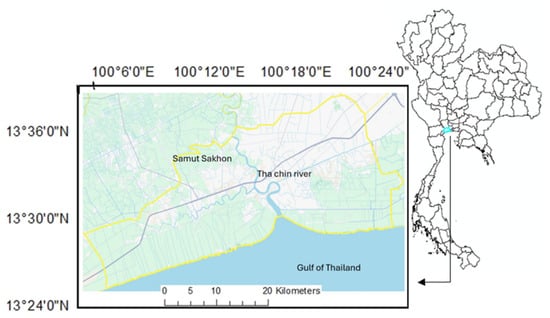
Geographic location of the study area in Thailand (Left: the district boundary (yellow line). Right: map of Thailand with provincial boundaries; the blue area shows the district).
  • Article
  • Open Access

Understanding how landscape and local factors influence biodiversity in agroforestry systems is essential for conservation in fragmented tropical landscapes. We investigated the relative importance of forest proximity and local environmental variables (canopy openness, temperature, and air humidity) in shaping bryophyte assemblages in shaded cacao agroforests in the Brazilian Atlantic Forest. Bryophytes were sampled on 218 trees across six agroforestry sites, totaling 1304 occurrences and 87 taxa. Generalized linear mixed models and multivariate analyses were used to assess patterns of species richness, occurrence frequency, and composition. Moss richness and occurrence frequency increased with forest distance, whereas liverworts showed no clear relationship. Liverwort richness was positively associated with temperature, while occurrence frequency was positively associated with temperature and negatively with air humidity. When accounting for spatial nesting via site-level block permutations, neither forest distance nor microclimate significantly structured species composition (p ≥ 0.313), reflecting site-level spatial heterogeneity. Bryoflora was dominated by generalist taxa and species with intermediate desiccation tolerance, and assemblages showed taxon-specific relationships with local environmental conditions. Our findings suggest the hypothesis that long-established, shaded cacao agroforests may support diverse bryophyte assemblages in fragmented tropical landscapes, a pattern that requires formal evaluation with native forest reference controls.

Ecologies

10 November 2026

Map of the study area. Colors indicate different land-use types according to the regional land-use and land-cover map [33]. SAF’s 1, 3, and 4 are located in the municipality of Una, while SAF’s 2, 5, and 6 are in the municipality of Ilhéus.

Highly Accessed Articles

News & Conferences

Latest Issues

Open for Submission

Journal Sections

XFacebookLinkedIn
Ecologies - ISSN 2673-4133