


Abstract
This study evaluated the effect of cold plasma (CP) on the physicochemical properties and antioxidant capacity of maize. CP treatments were performed using a glow discharge, applying argon and/or nitrogen at 50 W, with different working pressures (75, 100, and 125 Pa) and exposure times (1, 5, and 10 min). The maize samples were analyzed before and after treatments for color, fatty acid value (FAV), malondialdehyde content, superoxide dismutase and catalase activities, total phenol content (TPC), ascorbic acid content, reduced glutathione content, and antioxidant activity. The antioxidant activity was further evaluated during storage (25 °C for 180 days). After treatments, color parameters (brightness, yellowness, and saturation) showed measurable enhancement, while FAV and malondialdehyde content were significantly reduced by 14.95–56.37% and 11.38–43.71%, respectively. The optimal treatment conditions (100 Pa working pressure and 5 min exposure) maximized antioxidant enzyme activities and bioactive compound levels, accompanied by substantial increases in TPC. Under these conditions, maize samples had the highest organic radical scavenging capacities (DPPH), reaching 1.31-fold (argon plasma) and 1.25-fold (nitrogen plasma) that of untreated sample. During storage, all samples subjected to the optimal combined treatment exhibited higher DPPH radical scavenging capacity and ferric reducing antioxidant potential, along with lower FAVs and malondialdehyde contents compared to the untreated sample. Additionally, the DPPH radical scavenging capacity exhibited statistically inverse correlations with both FAV (r2 = −0.49) and malondialdehyde content (r2 = −0.15), as quantified through Pearson correlation analysis. These findings indicated that glow discharge cold plasma is a potentially effective non-thermal processing technique to enhance bioactive compound accumulation and antioxidant enzyme activity for preserving maize’s physicochemical properties, with possible use in the food industry for sustainable grain preservation strategies, particularly in delaying oxidative deterioration.
1. Introduction
As a predominant cereal crop globally, 12.42 billion tons of maize was produced in 2023, significantly exceeding rice (8.00 billion tons) and wheat (7.99 billion tons) production [1,2]. While its nutritional richness—70% starch, 10% protein, 5% lipid, and micronutrients [3]—positions maize as a critical resource for human and livestock sustenance [4], its high susceptibility to postharvest losses remains a pressing challenge. The grain’s hygroscopic embryo, high respiratory activity [5], and lipid peroxidation-prone polyunsaturated fatty acids [6] predispose it to fungal colonization and oxidative deterioration, exhibiting reduced storage stability compared with major cereal crops such as wheat and rice. This deterioration directly undermines food safety and economic viability, necessitating innovative interventions to preserve physicochemical integrity and enhance antioxidant defenses [7].
Cold plasma (CP), as an emerging non-thermal processing technology, has gained substantial research attention in agricultural, food, and biological applications due to its non-thermal nature, cost-effectiveness, operational versatility, and residue-free characteristics [2]. CP-generated reactive species (e.g., free radicals, molecules, atoms, charged particles, and photons) induce structural modifications in proteins accompanied by functional alterations [8,9], reshape starch architecture with consequent property changes [10,11], and suppress enzymatic activity associated with fruit/vegetable browning and ripening processes [12]. Recent applications in cereals demonstrate CP’s capacity to enhances cooking performance along with quality improvement in brown rice [13] and stimulate germination in wheat [14]. However, current research prioritizes fragmented optimization of processing parameters and seed viability traits while systematically neglecting holistic storage stability improvements encompassing lipid oxidation control and antioxidant preservation.
The majority of samples analyzed in previous cereal studies consist of protein isolates, pure starch, or flour. These materials exhibit greater susceptibility to degradation during routine storage than whole grains, particularly through lipid hydrolysis and oxidation processes. They fail to replicate the protective husk and lipid-rich germ of intact kernels—a disconnect that limits practical translation. Although CP treatment of intact kernels presents a more practical approach than the aforementioned sample types, existing research on grain plasma treatment has predominantly focused on two domains: surface decontamination and crop breeding [15,16]. Feizollahi et al. [17] demonstrated that atmospheric pressure cold plasma treatment reduces the deoxynivalenol contamination in barley while preserving its quality attributes. Subsequent studies have revealed that both low-pressure dielectric barrier discharge and low-frequency glow discharge plasma treatments significantly enhance the germination and growth performance of maize [18,19]. However, its systemic effects on whole-grain storage stability remain unexplored. The decline in the quality of cereals and their derived products is intricately linked to their antioxidant capacity, which is fundamentally determined by bioactive compound profiles including phenols, ascorbic acid, and GSH [20,21,22]. It is therefore imperative to elucidate the comprehensive effects of glow discharge cold plasma on the physicochemical properties and antioxidant capacity of maize.
The primary aim of this study is to systematically evaluate the effects of glow discharge cold plasma on maize storage stability, focusing on kernel coloration, fatty acid value, malondialdehyde content, antioxidant enzyme activities, and bioactive antioxidant retention. Distinct from prior plasma applications limited to seed decontamination or germination enhancement, this work pioneers a dual-functional preservation strategy targeting both structural integrity and oxidative defenses in intact maize kernels, thereby providing valuable insights for the application of this technology in maize preservation and addressing a critical gap in whole-grain storage technology.
2. Materials and Methods
2.1. Materials
The maize kernels (cv. Huanong 866; 11.5% moisture content) were harvested from experimental plots established using a randomized complete block design with three biological replicates [23]. The field trials were conducted in Xingyang City (34.88° N, 113.37° E), Henan Province, China, during October 2023. The following reagents were procured from Tianjin Komeo Chemical Reagent Co., Ltd., Tianjin, China: ethanol, sodium hydroxide, phenolphthalein, trichloroacetic acid, sodium carbonate, ascorbic acid, metaphosphoric acid, oxalic acid, ethylene diamine tetraacetic acid (EDTA), ammonium molybdate, potassium phosphate and glacial acetic acid. 2-thiobarbituric acid, Folin–Ciocalteu phenol reagent, and 1,1-diphenyl-2-picrylhydrazyl radicals were purchased from Shanghai Aladdin Biochemical Technology Co., Ltd., Shanghai, China, while gallic acid and 5,5′-dithiobis (2-nitrobenzoic acid) (DTNB) were provided by Shanghai Yuanye Biotechnology Co., Ltd., Shanghai, China. All reagents were of analytical grade and used without any further purification.
2.2. Plasma Treatment and Maize Storage
A total of 1000 g of maize kernels was weighed and placed in the cold plasma seed treatment device (HD-3N, Zhongke Changtai Plasma Technology Co., Ltd., Changzhou, China), as previously described [24]. To minimize high-energy particle bombardment on seeds during plasma discharge, treatment parameters were optimized based on previous studies and preliminary experiments [25]. Following the configuration of the power output to 50 W and the vacuum to 10 Pa, argon or nitrogen was introduced, and the treatment was performed at varying working pressures (75, 100, and 125 Pa) for differing durations (1, 5, and 10 min). Each treated sample was labeled as X-Y m, where X represents the working pressure and Y represents the treatment time. Untreated samples (0 min) under each gas source were designated as controls.
A 100 g quantity of each maize kernel sample, both before and after treatment, was used to analyze the color attributes. Additionally, 400 g of each maize kernel sample was ground into powder using a low-temperature continuous hammer cyclone mill (TDW 5000, Tongxin Tianbo Technology Development Co., Beijing, China) and subsequently stored at 4 °C for further analysis. The remaining kernels from all maize samples were stored in airtight polyethylene bags (0.16 mm thickness) for 180 days at 25 ± 1 °C. During the storage period, the seeds in each bag were mixed periodically. At 30-day intervals, an appropriate quantity of kernels was collected and designated as a test sample.
2.3. Color Characteristics
A colorimeter (CR-410, Hangzhou Ke Sheng Instrument Co., Ltd., Hangzhou, China) was used to measure the color parameters (L*, a*, and b*) of maize kernels after treatment. The total color difference (ΔE), chroma (C*), and hue (h*) were calculated according to the following equations [26]:
The values of , , and were determined from the untreated control samples, representing the lightness (100: perfect white; zero: black), greenness-redness, and blueness-yellowness, respectively [27]. All images were captured using a Canon EOS R6 camera (Canon Inc., Tokyo, Japan) positioned at a vertical distance of 10 cm from the corn kernel samples and stored in JPEG format.
2.4. Fatty Acid Value (FAV)
FAV was determined following Liu’s method [28], with minor modifications. Briefly, 1 g of maize kernel powder was mixed with 6 mL of 95% ethanol (v/v) and vortexed thoroughly for 1 h. The mixture was then centrifuged at 3000 g for 5 min at room temperature. Subsequently, 4 mL of the resulting supernatant was collected, and five drops of phenolphthalein solution were added as an indicator. The mixture was titrated with 0.05 M sodium hydroxide until a pink color persisted for a period of 10–15 s. Moreover, 4 mL of 95% ethanol was utilized as a blank experiment, in lieu of the 4 mL of the preceding sample. FAV was expressed as mg NaOH/100 g, representing the amount of NaOH required to neutralize free fatty acids in 100 g of maize kernel powder.
2.5. Malondialdehyde (MDA) Content
The MDA content in all maize powder samples was analyzed using spectrophotometry based on the thiobarbital method [29]. The samples were mixed with 10% (w/v) trichloroacetic acid, vortexed vigorously, and then subjected to centrifugation (8000 g, 15 min) at 4 °C. The resulting supernatant (upper layer) was collected as the MDA extract. The extract was then reacted with 0.67% (w/v) 2-thiobarbituric acid in a boiling bath and centrifuged again after rapid cooling. The supernatant was collected and absorbances at 450, 532, and 600 nm were measured. Results were expressed as µmol/g on a fresh weight basis.
2.6. Enzyme Activities of Superoxide Dismutase (SOD) and Catalase (CAT)
The activities of SOD and CAT were measured spectrophotometrically using colorimetric assay kits (Catalog #BC0170 for SOD and Catalog #BC0200 for CAT; Beijing Solarbio Science & Technology Co., Ltd., Beijing, China) according to the manufacturer’s protocols. For both enzymatic analyses, precisely 0.1 g of each maize powder sample was used to obtain crude enzyme extracts. Those extracts were subsequently analyzed using a UV-Vis spectrophotometer (UV-3400S, Shanghai Linchylab Instruments Co., Ltd., Beijing, China), with absorbance measurements recorded at specific wavelengths: 560 nm for SOD and 240 nm for CAT. All results were expressed in U/g on a fresh weight basis.
2.7. Total Phenol Content (TPC)
The TPC of maize powder samples, both before and after CP treatment, was determined using the Folin–Ciocalteu method, as described by Spanos and Wrolstad [30]. Measurements were conducted with a UV-Vis spectrophotometer (UV-3400S, Shanghai Linchylab Instruments Co., Ltd., Beijing, China) at a wavelength of 765 nm. The TPC was calculated according to the calibration curve (y = 0.0034x + 0.0032, R2 = 0.9996) derived from a 0.5 mg/mL gallic acid standard solution. The results were represented as gallic acid equivalents (mg/g) in the maize powder samples.
2.8. Ascorbic Acid (AA) Content
The modified molybdenum blue colorimetric method, as referenced in prior research [31], was used in the analysis. Briefly, 0.1 g of maize powder was thoroughly mixed with 5 mL of oxalic acid–EDTA solution in a mortar to obtain a homogeneous mixture. This mixture was then transferred to a centrifuge tube and centrifuged at 3000 rpm for 10 min. After centrifugation, 1 mL of the supernatant was carefully collected and transferred to a fresh centrifuge tube. Subsequently, 3 mL of oxalic acid–EDTA solution, 0.8 mL of 5% (v/v) sulfuric acid, 0.4 mL of metaphosphoric acid–acetic acid solution, and 1.6 mL of 5% (w/v) ammonium molybdate solution were added sequentially. The resulting mixture was vortexed vigorously to ensure complete homogenization and then incubated in a water bath at 30 °C for 10 min. The mixture’s absorbance was measured at a wavelength of 760 nm. A calibration curve (y = 0.2896x − 0.0042, R2 = 0.9992) was prepared using a serially diluted ascorbic acid standard solution (1 mg/mL) with concentrations ranging from 0.4 to 5.6 mg/L. The AA content was calculated based on the standard curve and expressed as mg/100 g on a fresh weight basis.
2.9. Glutathione (GSH) Content
The GSH content in maize kernel was determined using Ellman’s method [32]. Briefly, 0.3 g of maize powder was mixed with 5% (w/v) metaphosphoric acid solution in a mortar to form a homogeneous mixture, which was then adjusted to a total volume of 10 mL with the same acid solution. The mixture was centrifuged at 2000 rpm for 10 min at 4 °C. Subsequently, 2 mL of the supernatant was collected and transferred to a fresh centrifuge tube. Then, 4 mL of potassium phosphate-buffer solution and 0.4 mL of DTNB solution were added to the supernatant. The mixture was vortexed thoroughly and left to react at room temperature for 20 min. The resulting mixture was then subjected to a spectrophotometric analysis at a wavelength of 412 nm, and the GSH content was subsequently calculated using a calibration curve (y = 0.0063x − 0.002, R2 = 0.9974) derived from a 10 μg/mL GSH standard solution. The results were expressed as μg/g on a fresh weight basis.
2.10. Antioxidant Capacity
The antioxidant capacity was assessed using the 1,1-diphenyl-2-picrylhydrazyl (DPPH) free radical scavenging method [29] and the ferric reducing antioxidant power (FRAP) method. The FRAP assay was conducted using a total antioxidant capacity assay kit (Catalog #BC1310) purchased from Beijing Solarbio Science & Technology Co., Ltd. (Beijing, China). For the DPPH assay, 200 mg of each maize powder sample was used, whereas 100 mg of each sample was used for the FRAP assay. Each assay was performed in triplicate. The results were expressed as the scavenging percentage for the DPPH assay and as μmol/g on a fresh weight basis for the FRAP assay.
2.11. Statistical Analysis
All experiments were conducted in triplicate and the results were expressed as mean ± standard deviation. Statistical significance was determined by one-way ANOVA, followed by the Duncan multiple test model (p < 0.05) using SPSS 26.0 software (SPSS Inc., Chicago, IL, USA). Prior to ANOVA, data normality and homogeneity of variance assumptions were verified using SPSS. A correlation heatmap was plotted with Origin 2022 software (OriginLab Corporation, Northampton, MA, USA).
3. Results and Discussion
3.1. Color Evolution of Maize Kernels
As a critical quality indicator for agricultural products, color is always linked to freshness and has a direct impact on consumer preferences [33]. Lightness (L*) and yellowness (b*) values were employed as indicators to assess corn freshness [34], with higher values corresponding to increased brightness and yellowness. In addition, chroma values (C*) exhibited a positive correlation with perceived color intensity in human visual assessment [26].
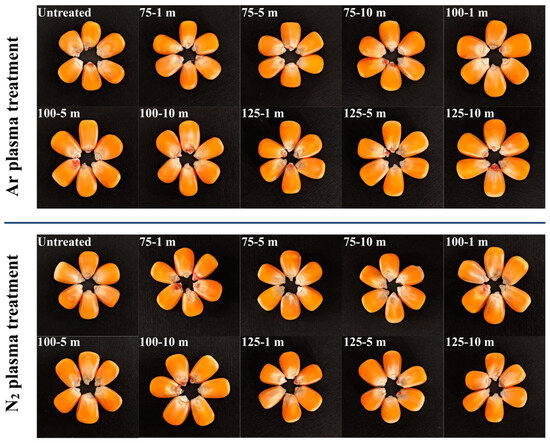
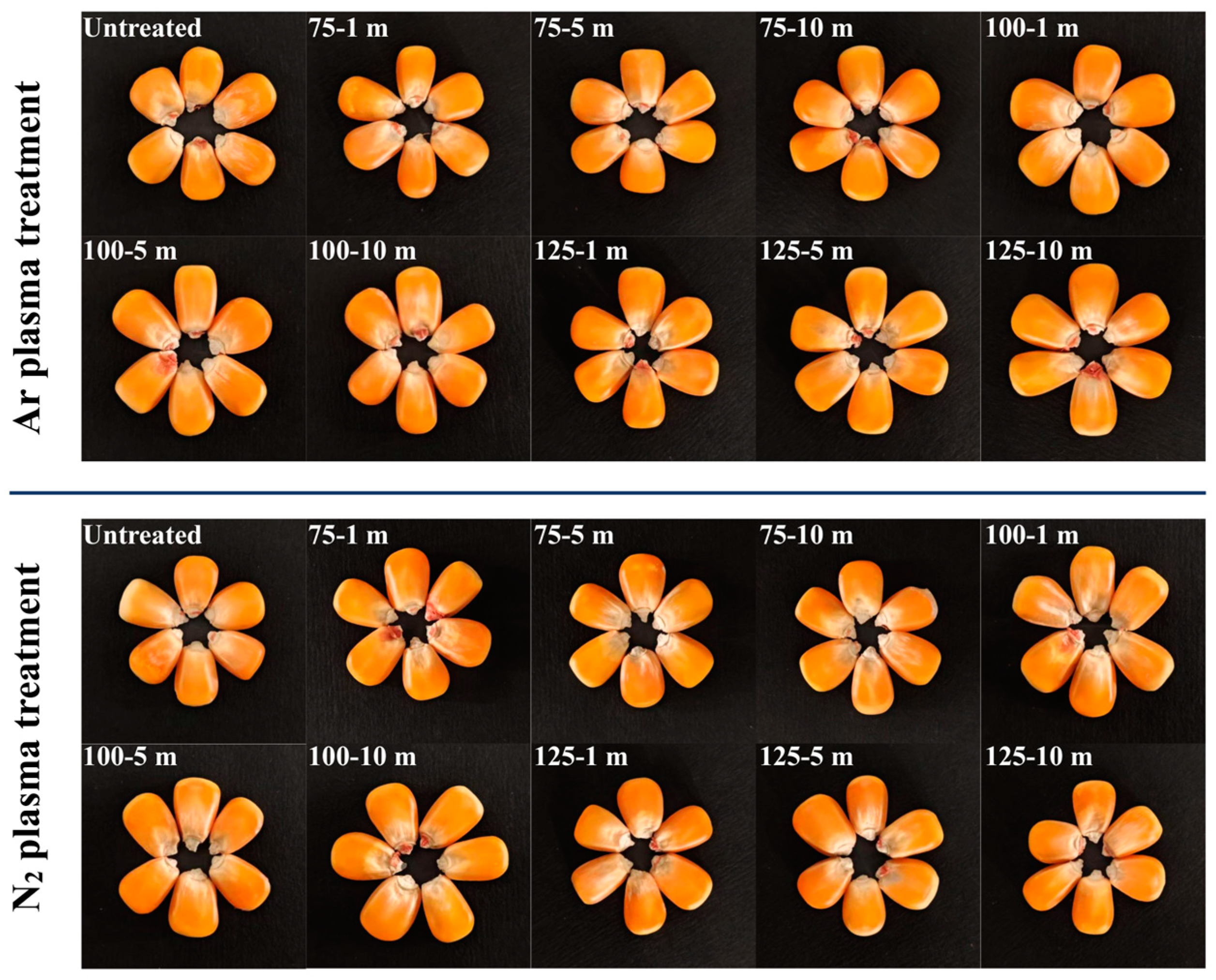
As demonstrated in Figure 1 and Table 1, cold plasma (CP) treatment modifies the color characteristics of maize kernels. In comparison to untreated controls, all treated samples exhibited increased L* and b* values, with decreased a* values, suggesting that CP treatment enhances kernel brightness while intensifying yellowness and attenuating redness. A significant elevation in chroma values (C*) was observed between treated samples and untreated controls (p < 0.05), demonstrating enhanced color saturation induced by CP processing. Ar plasma-treated samples showed a slight increase in hue (h*) values, whereas N2 plasma-treated samples exhibited significantly higher h* values compared to the untreated control (p < 0.05). The elevated h* values indicated a shift in maize hue from redness to yellowness following CP treatment. Notably, the 100-5 m samples achieved the highest L*, b*, C*, and h* values, along with the lowest a* values.
Figure 1.
Effect of CP treatments on overall appearance of maize kernels.
Table 1.
Color properties of different CP-treated maize kernels.
Previous studies have demonstrated that carotenoids determine the color intensity of orange and yellow maize kernels [35], with the carotenoid concentration being inversely correlated with the b* value [36]. Further studies have indicated that the characteristic red intensity imparted by carotenoids in food products exhibits a positive correlation with the number of conjugated double bonds, as a higher count of conjugated double bonds leads to increased absorption maxima (λmax) [37,38]. In this study, the enhanced yellowness and reduced redness of maize kernels were mechanistically attributed to diminished carotenoid concentrations, resulting from (i) cold plasma-emitted UV light-mediated photo-oxidation of carotenoids and (ii) reactive nitrogen–oxygen species-driven β-carotene degradation/isomerization during CP processing.
Meanwhile, plasma-induced surface etching, inhibition of polyphenol oxidase and peroxidase activity, and carotenoid degradation through conjugated double-bond cleavage likely explain the L* value elevation [39,40,41,42]. Except for the 100-5 m sample exposed to N2 plasma, the other treated samples did not exhibit significant color variations from their untreated controls, as indicated by their ΔE values being below the threshold of 5 [43]. Consequently, CP treatment increased brightness, yellowness, and color saturation, indicating that CP could effectively preserve the freshness of maize kernels. These color alterations influenced consumer perception and sensory acceptability by maintaining visual quality traits closely associated with maize freshness. Previous studies that have documented CP-induced color brightening in green peas [44] and brown rice [40] were consistent with our results, demonstrating the effectiveness of CP in maintaining the marketability of maize.
3.2. Fatty Acid Value (FAV) Change and Malondialdehyde (MDA) Accumulation
FAV exhibits a strong correlation with free fatty acid content, which originates from triglyceride hydrolysis and undergoes oxidative rancidity, ultimately accelerating quality deterioration in agricultural products [45,46]. MDA, as the primary product of membrane lipid peroxidation, serves as a widely accepted biomarker for quantifying oxidative damage intensity in stored grain cells [47].
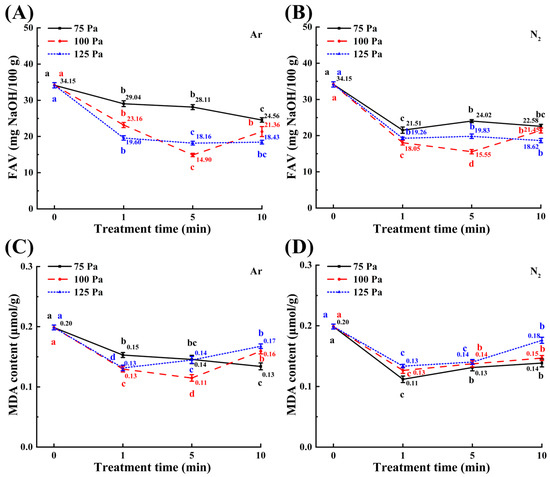
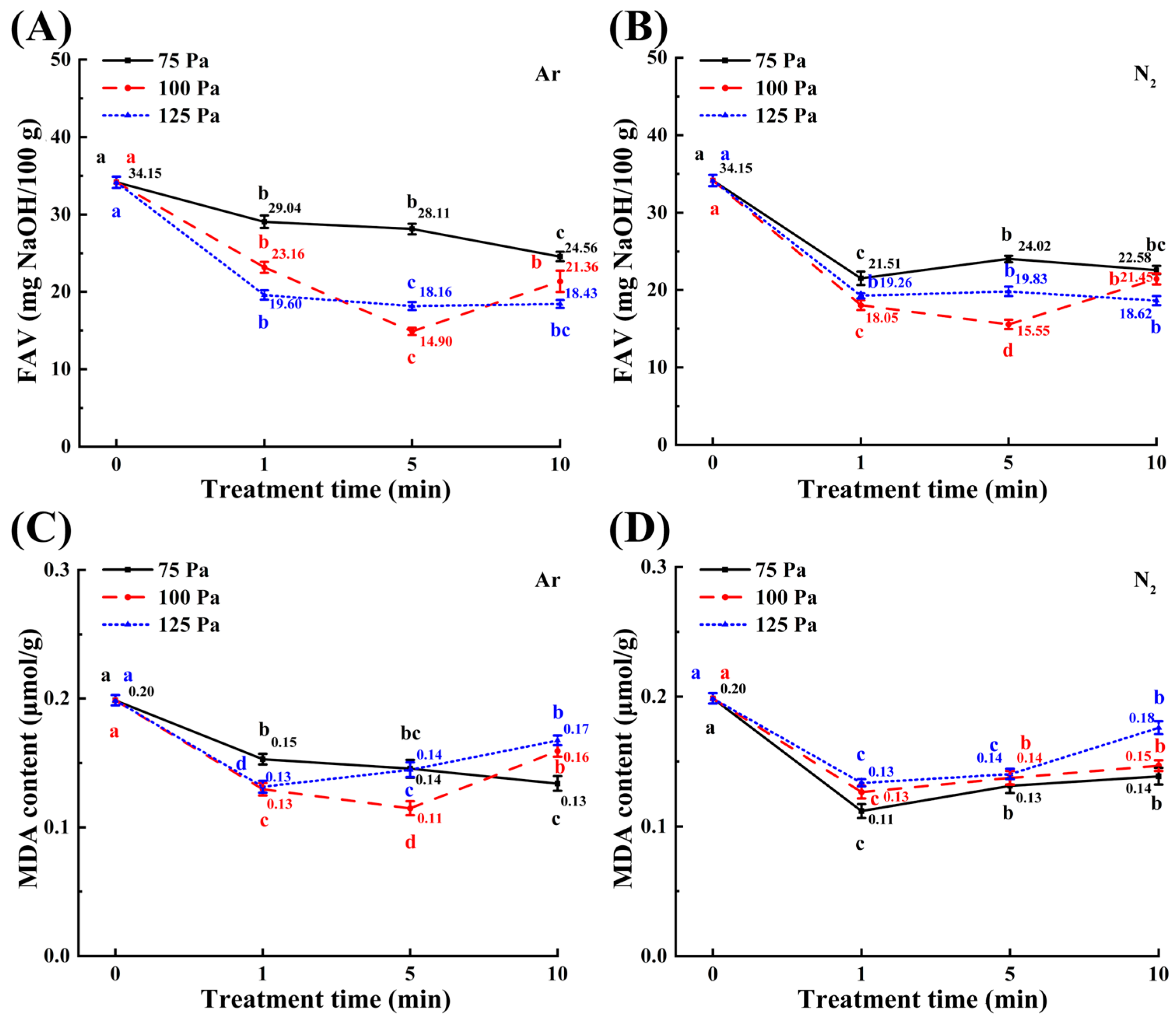
As demonstrated in Figure 2A,B, all CP treatments significantly reduced FAV and MDA levels in maize kernels (p < 0.05). Among all treated samples, the 100-5 m samples exhibited the lowest FAVs, at 14.90 mg NaOH/100 g for Ar plasma treatment and 15.55 mg NaOH/100 g for N2 plasma treatment (p < 0.05) (Figure 2A,B). This reduction likely stems from oxidative interactions between CP-generated reactive species (e.g., electrons, ions) and unsaturated fatty acids (e.g., oleic acid, linoleic acid), thereby diminishing their contents [48]. Concurrently, microorganisms in stored grain secrete enzymes that cause hydrolysis reactions, thereby forming free fatty acids [49]. This suggests that CP’s antimicrobial efficacy may synergistically contribute to FAV reduction [50].
Figure 2.
Effect of CP treatments on FAV (A,B) and MDA content (C,D) in maize kernels. Different colored letters indicate significant differences (p < 0.05) between samples at each working pressure.
As shown in Figure 2C,D, the MDA contents of maize samples after all CP treatments were 57.58–84.42% (Ar plasma) and 56.28–88.44% (N2 plasma) of untreated controls. Minimal MDA accumulation was observed in samples 100-5 m (Ar plasma) and 75-1 m (N2 plasma). Furthermore, the MDA content in the treated maize samples demonstrated a general trend of decreasing initially and then increasing over time, with the exception of those treated with Ar at 75 Pa working pressure. This phenomenon can be attributed to the exposure of maize to prolonged and intense plasma treatment, which has been shown to induce a state of stress, resulting in a slight increase in MDA content [51]. The observed reduction in FAV and MDA content principally originates from plasma-generated reactive species interfering with lipid oxidation cascades. Lipoxygenase catalyzes the oxidation of polyunsaturated fatty acids liberated through lipase-mediated hydrolysis of membrane phospholipids, driving their conversion into lipid hydroperoxides [52]. The latter decomposes to produce secondary oxidation products such as MDA with shorter carbon chains [53]. Research indicates that reactive nitrogen–oxygen species generated by CP interact with those enzymes through hydrogen bonding, leading to structural changes and final inactivation [54,55,56]. The coordinated attenuation of FAV and MDA across treatments underscores CP’s capacity to mitigate cellular oxidative injury and inhibit lipid peroxidation cascades under suitable treatment conditions.
3.3. Superoxide Dismutase (SOD) and Catalase (CAT) Activity Analysis
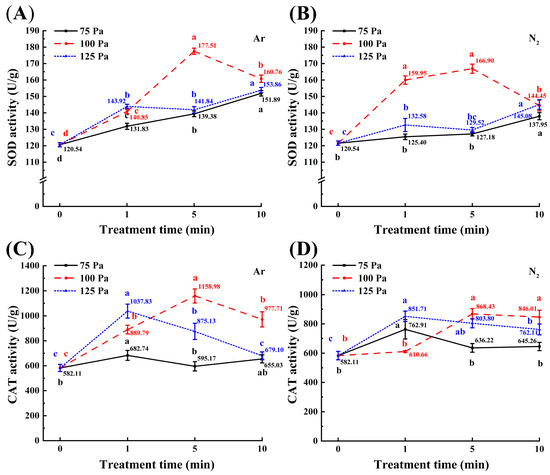
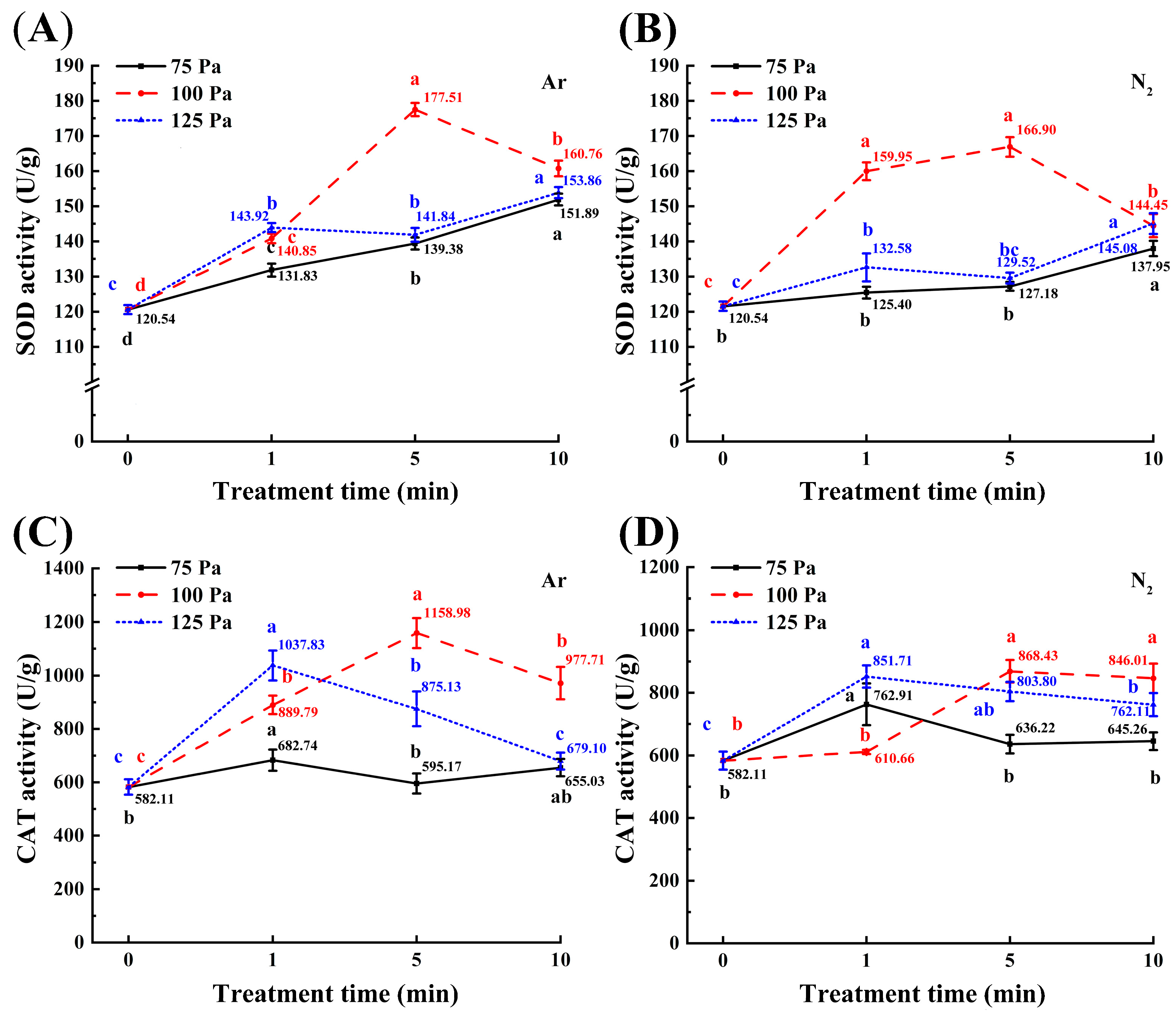
SOD and CAT, as the most important enzymatic antioxidants, protect plant cells from being oxidized by O2− [57] and damaged by H2O2 [58], respectively. As given in Figure 3, the SOD and CAT activities of all treated maize samples were obviously higher than those of untreated controls. Under Ar plasma treatment, the 100-5 m sample demonstrated maximal enzymatic enhancement, with SOD and CAT activities reaching 1.47-fold and 1.99-fold of untreated control levels (p < 0.05), respectively. A similar outcome was observed for N2 plasma treatment, where the 100-5 m sample attained peak activities of 166.90 U/g (SOD) and 868.43 U/g (CAT) (p < 0.05). These findings align with documented plasma-induced antioxidant activation in blueberries [59], cumin seedlings [60], and Astragalus membranaceus seedlings [61], collectively demonstrating that CP treatment under appropriate conditions enhance oxidative stress resilience by stabilizing enzymatic antioxidant systems in plant tissues [62]. The increase in SOD and CAT activity in maize samples may be attributable to the upregulation of SOD- and CAT-related genes, which was induced by an increase in endogenous reactive oxygen species (ROS) resulting from the production of exogenous ROS after CP treatments [18,62].
Figure 3.
Effect of CP treatments on SOD (A,B) and CAT (C,D) activity in maize kernels. Different colored letters indicate significant differences (p < 0.05) between samples at each working pressure.
3.4. Changes in Total Phenol, Ascorbic Acid (AA), and Glutathione (GSH) Content
Previous research has reported that non-enzymatic antioxidants, together with enzymatic antioxidants in cereals and fruits, play an important role in the scavenging of intracellular ROS induced by biotic and abiotic stresses, such as fungal infection [63], UV-B radiation [64], NaCl stress [65], and heat treatment [66]. To evaluate CP effects on maize antioxidant systems, we systematically analyzed the changes in total phenol, AA, and GSH contents before and after treatment.
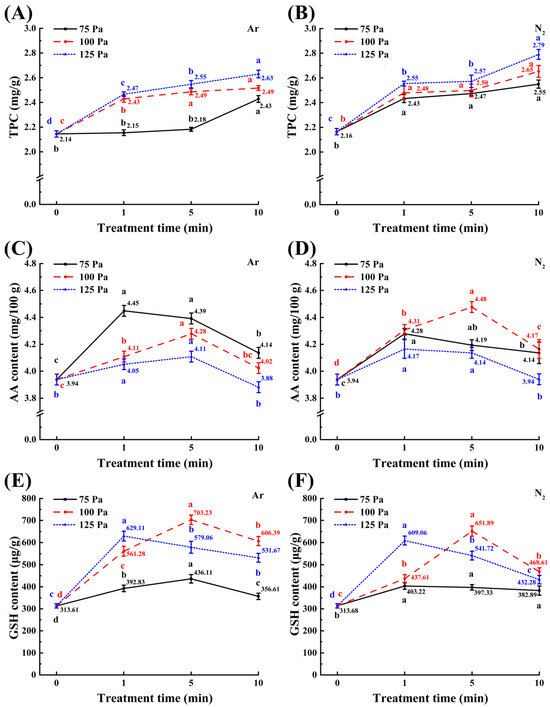
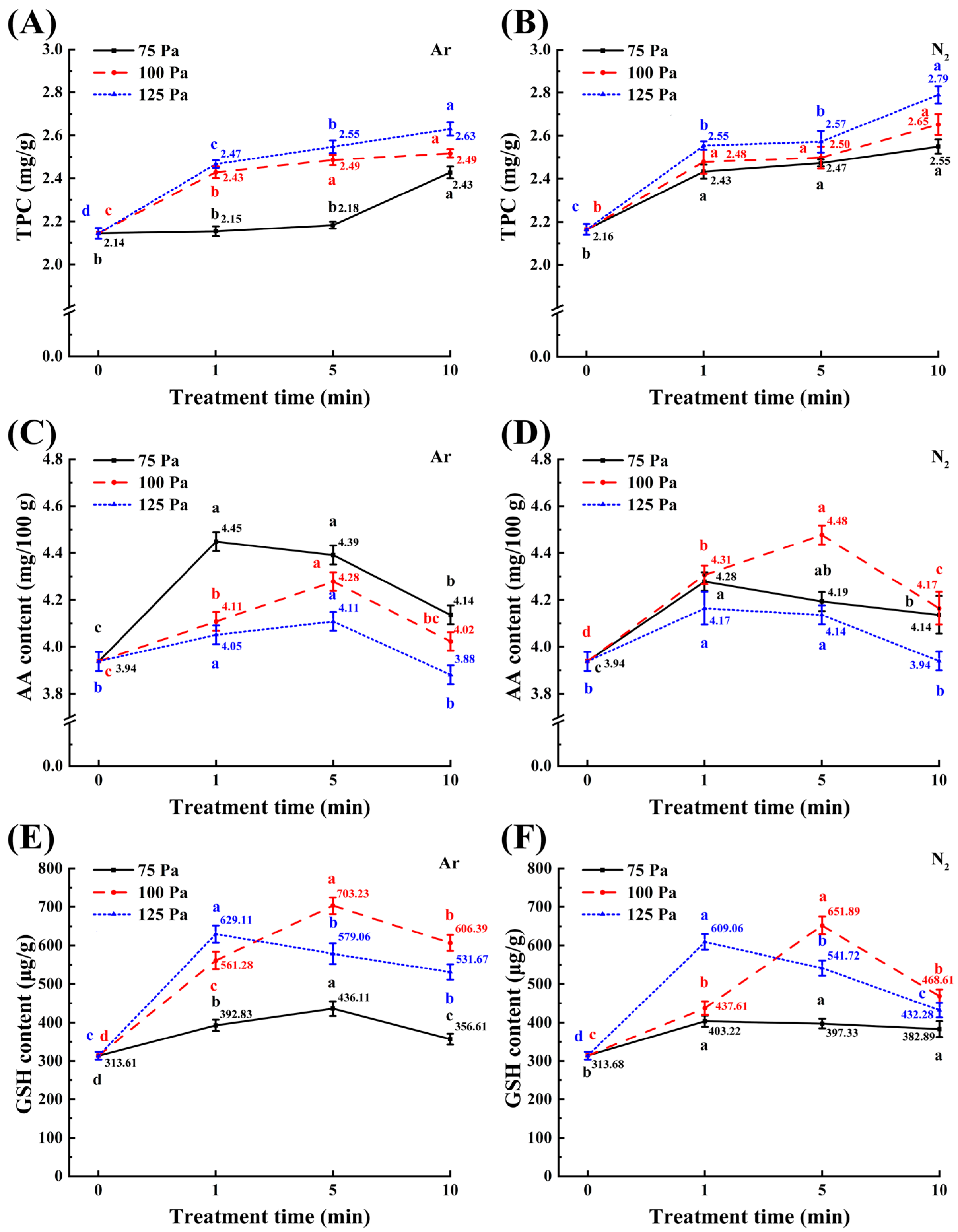
As can be seen from Figure 4A,B, total phenol content (TPC) exhibited a progressive increase with elevated working pressure and extended treatment time. The maximal enhancement of TPC was observed in the 125-10 m samples, reaching 2.63 mg/g (Ar plasma) and 2.79 mg/g (N2 plasma), which represent significant increases in comparison to the untreated controls (2.14 mg/g and 2.16 mg/g, respectively; p < 0.05). This result is probably related to reduced TPC utilization via lower activities of polyphenol oxidase and peroxidase, both of which use phenolic compounds as substrates to counteract oxidants [67]. Deactivation of both polyphenol oxidase and peroxidase was found to occur as a result of the plasma-generated reactive species interacting with the amino acids and secondary structure of these enzymes [55]. The observed sustained elevation in TPC under intensified plasma conditions (higher working pressure and prolonged treatment time) can be attributed to the depolymerization of polyphenols [68].
Figure 4.
Effect of CP treatments on the contents of total phenols (A,B), AA (C,D) and GSH (E,F) in maize kernels. Different colored letters indicate significant differences (p < 0.05) between samples at each working pressure.
As shown in Figure 4C–F, the AA and GSH contents in maize samples exhibited an initial increase followed by a subsequent decrease with prolonged treatment time across all plasma treatments at constant working pressure. Notably, the Ar and N2 plasma-treated samples, specifically 75-1 m and 100-5 m, demonstrated a significant and maximal enhancement in AA content, showing increases of 12.95% and 13.67%, respectively, compared to their untreated controls (p < 0.05). Furthermore, the application of Ar and N2 plasma treatments resulted in a significant increase in GSH content in the maize samples (p < 0.05). Among these, the 100-5 m samples showed the highest GSH levels, which were 2.24-fold and 2.08-fold higher than those of their respective untreated controls. This observed increase may be due to changes in enzyme activity associated with GSH metabolism following CP treatment [69].
3.5. Antioxidant Capacity Analysis
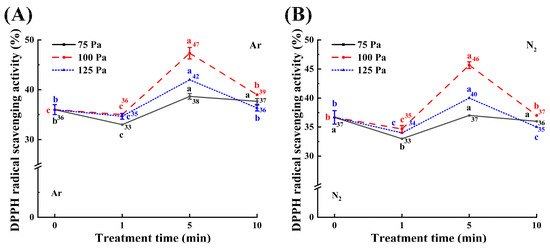
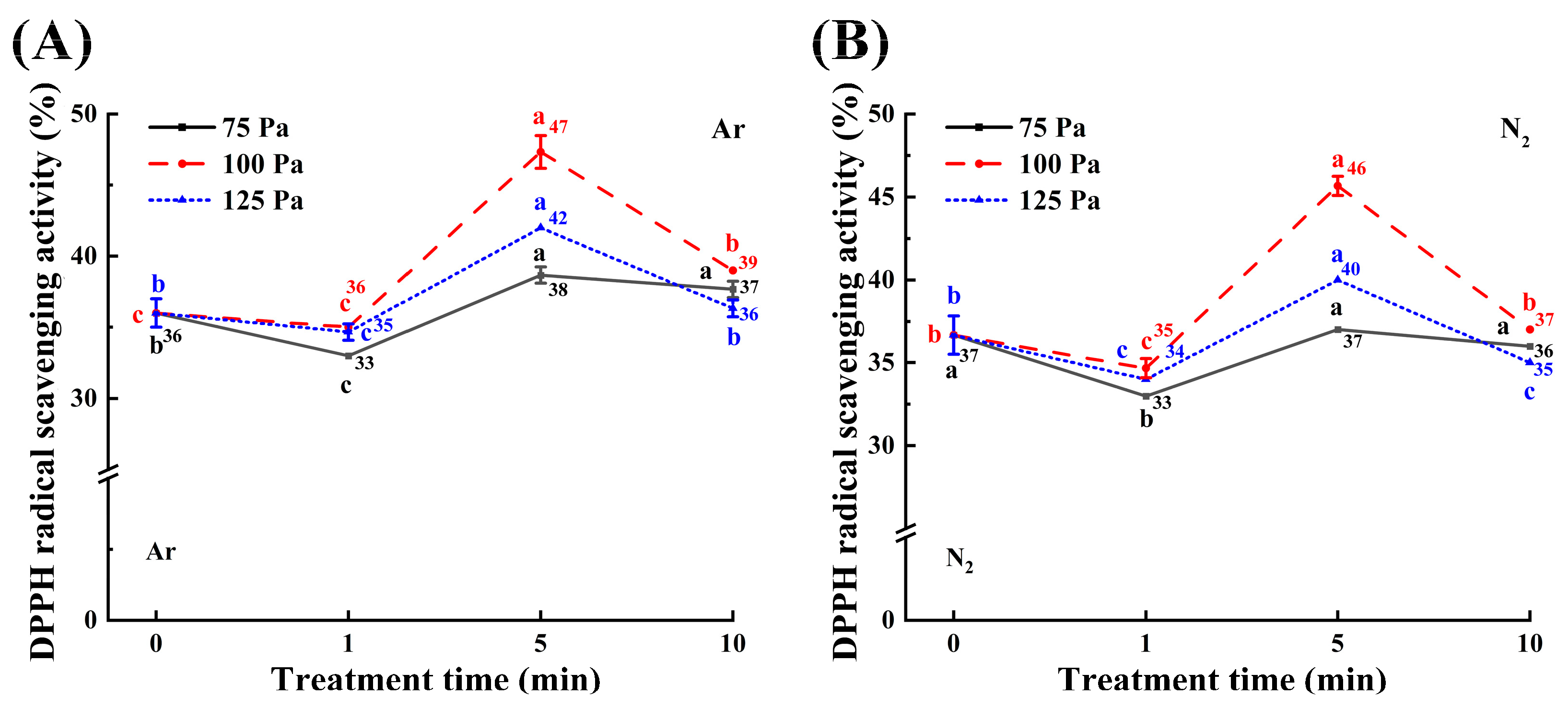
The results presented above demonstrate that CP treatment effectively enhances antioxidant enzymes and compounds in maize, thereby mitigating oxidative damage. In order to further evaluate the antioxidant capacity of the maize samples before and after treatment, the 1,1-diphenyl-2-picrylhydrazyl (DPPH) assay was employed (Figure 5). The trends in DPPH radical scavenging activity of maize kernels treated with Ar and N2 plasma were comparable. During the initial treatment phase (1 min), scavenging activity decreased across all working pressures, likely due to induced oxidative stress. However, when the treatment time was extended to 5 min, a significant increase in scavenging activity was observed in treated samples compared to their respective untreated controls. The most pronounced enhancement occurred at 100 Pa working pressure, exceeding the effects observed at 125 Pa and 75 Pa. Specifically, the 100-5 m samples treated with Ar and N2 plasma demonstrated the greatest improvement, reaching 1.31-fold and 1.25-fold increases, respectively, compared to untreated controls. These findings suggest that moderate working pressure optimizes the antioxidant capacity of maize, enabling samples to adapt to treatment conditions and counteract oxidative stress. Although scavenging activity declined in all treated samples after 10 min of treatment, samples treated at 100 Pa maintained the highest scavenging activity, confirming that appropriate working pressure and treatment time are crucial for enhancing antioxidant capacity.
Figure 5.
Effect of CP treatments ((A) Ar plasma; (B) N2 plasma) on DPPH radical scavenging activity in maize kernels. Different colored letters indicate significant differences (p < 0.05) between samples at each working pressure.
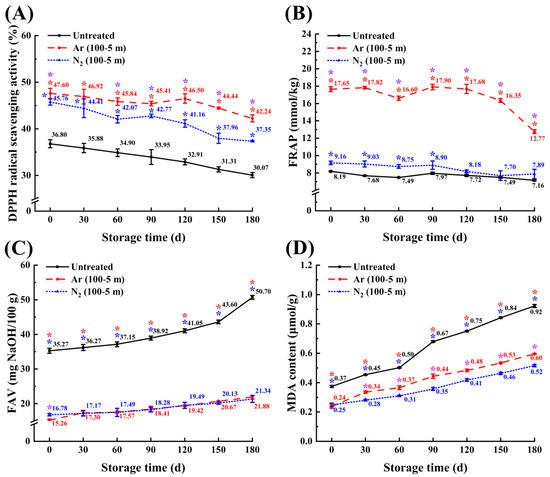
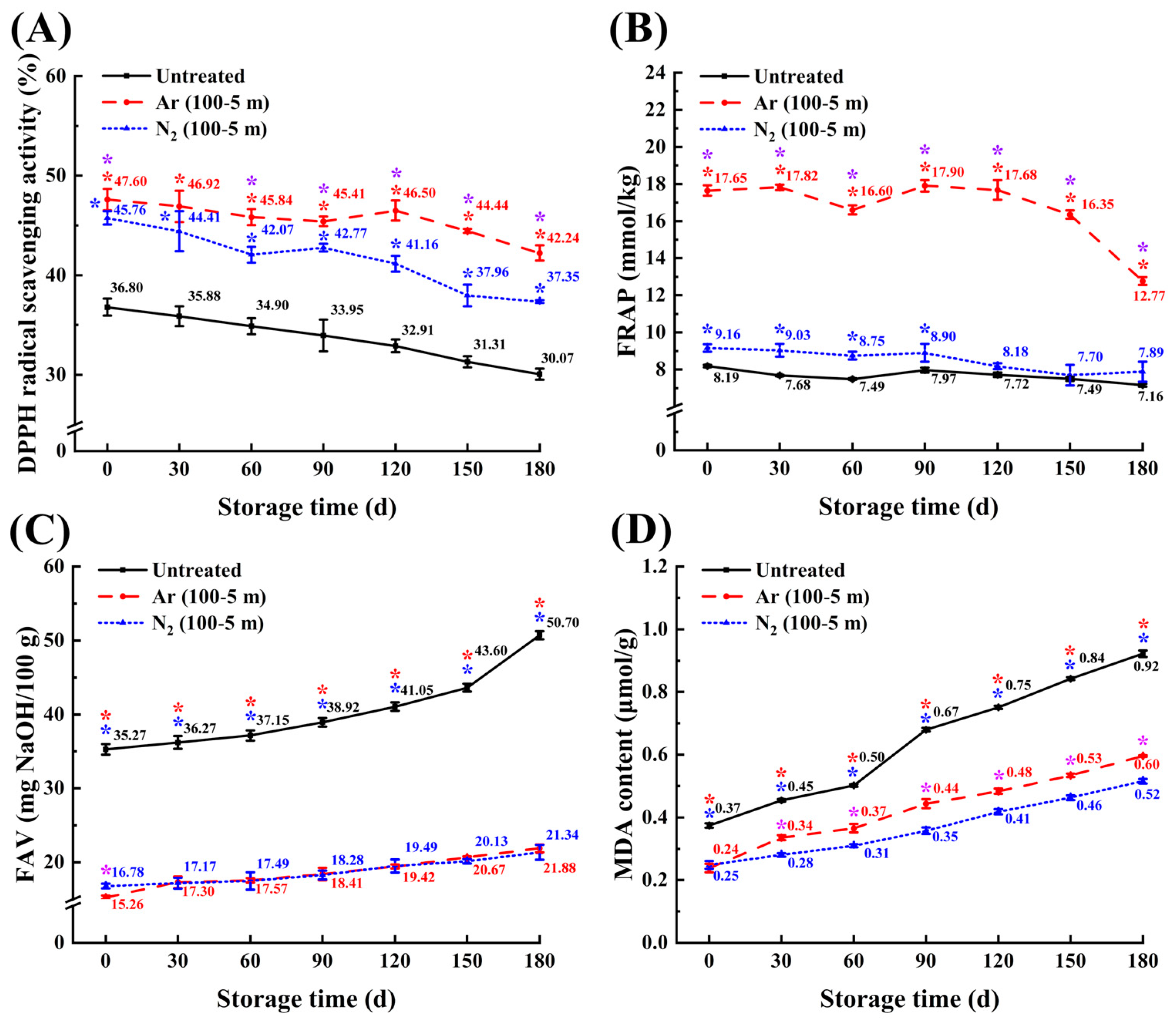
To further elucidate the role of CP treatment in enhancing maize antioxidant capacity during storage, the 100-5 m samples treated with Ar and N2 plasma, along with untreated controls, were stored for 180 days at 25 °C. The antioxidant properties were monitored using DPPH and ferric reducing antioxidant potential (FRAP) assays. As shown in Figure 6, all maize samples exhibited a gradual decline in antioxidant activity, with fluctuations observed in both DPPH and FRAP measurements. This phenomenon may be attributed to the prolonged depletion of non-enzymatic antioxidants during storage, which are continuously consumed to neutralize reactive oxygen species generated by metabolic activities in maize kernels, while also serving as substrates for oxidative catalysis by polyphenol oxidase and peroxidase, collectively leading to their degradation and diminished antioxidant capacity [67,70]. Furthermore, progressive lipid oxidation during storage results in the accumulation of MDA, which likely inactivates SOD through chelation of Cu2+ ions at its catalytic active sites, thereby disrupting enzymatic antioxidant defense mechanisms [71].
Figure 6.
Effect of CP treatments on DPPH radical scavenging activity (A), FRAP (B), FAV (C), and MDA content (D) in maize kernels during storage for 180 d at 25 °C. */*/* represent comparisons between all treated samples with Ar plasma and the untreated control, comparisons between all treated samples with N2 plasma and the untreated control, and comparisons between samples treated with different gas plasma at each time, respectively (p < 0.05).
Compared to the untreated controls, CP-treated samples demonstrated significantly enhanced DPPH scavenging activity throughout storage (p < 0.05) (Figure 6A). Notably, Ar plasma-treated samples consistently maintained higher antioxidant activity than N2 plasma-treated samples, except at day 30. Furthermore, FRAP analysis revealed that the 100-5 m samples exhibited higher values than the untreated control (Figure 6B). Significant differences in FRAP values were observed between Ar plasma-treated samples and untreated control throughout storage, while N2 plasma-treated samples showed significant differences from the untreated control from day 0 to day 90 (p < 0.05). Furthermore, the FRAP values of the Ar plasma-treated samples (100-5 m) were consistently and significantly higher than those of N2 plasma-treated sample throughout the storage period. These results demonstrate that CP treatment with Ar plasma provides a stronger enhancement of antioxidant capacity compared to N2 plasma, further supporting the potential of CP treatment under appropriate conditions to improve the antioxidant properties of maize during storage.
3.6. The Recovery of FAV and MDA Content During Storage
Figure 6C,D present the changes in FAV and MDA content of the 100-5 m samples and the untreated control during a 180-day storage period. Both FAV and MDA content exhibited a gradual increase in all maize samples throughout storage. The untreated control exhibited a rapid escalation in these parameters, with FAV increasing from 35.27 to 50.70 mg NaOH/100 g and MDA content rising from 0.22 to 0.97 μmol/g over the storage period. In contrast, the 100-5 m samples maintained significantly lower FAV and MDA levels compared to the untreated control at each time (p < 0.05). At the end of the storage period (day 180), the Ar plasma-treated sample (100-5 m) demonstrated FAV and MDA contents that were 43.15% and 60.84% of the untreated control, respectively. Similarly, the N2 plasma-treated sample (100-5 m) showed FAV and MDA contents corresponding to 42.09% and 44.02% of the untreated control, respectively. These findings are consistent with previous studies demonstrating that CP treatment effectively reduces FAV in brown rice and MDA content in foxtail millet under appropriate treatment conditions during storage [72,73]. It is noteworthy that the Ar plasma-treated sample exhibited significantly higher MDA content than the N2 plasma-treated sample throughout the storage period, a phenomenon potentially attributable to the distinct characteristics of reactive species generated by different plasma gases [74]. These results, combined with the observed enhancement of antioxidant capacity, suggest that CP treatment under appropriate conditions can effectively delay maize aging by significantly mitigating lipid peroxidation.
3.7. Correlation Analysis
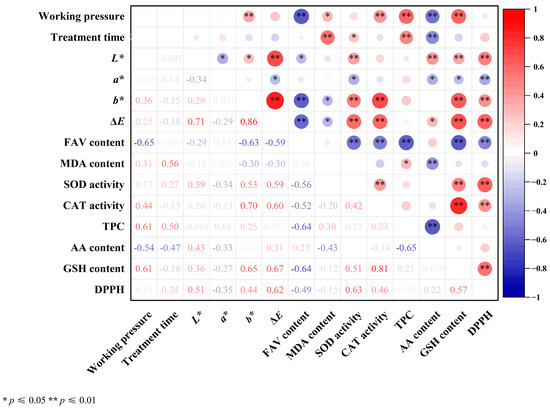
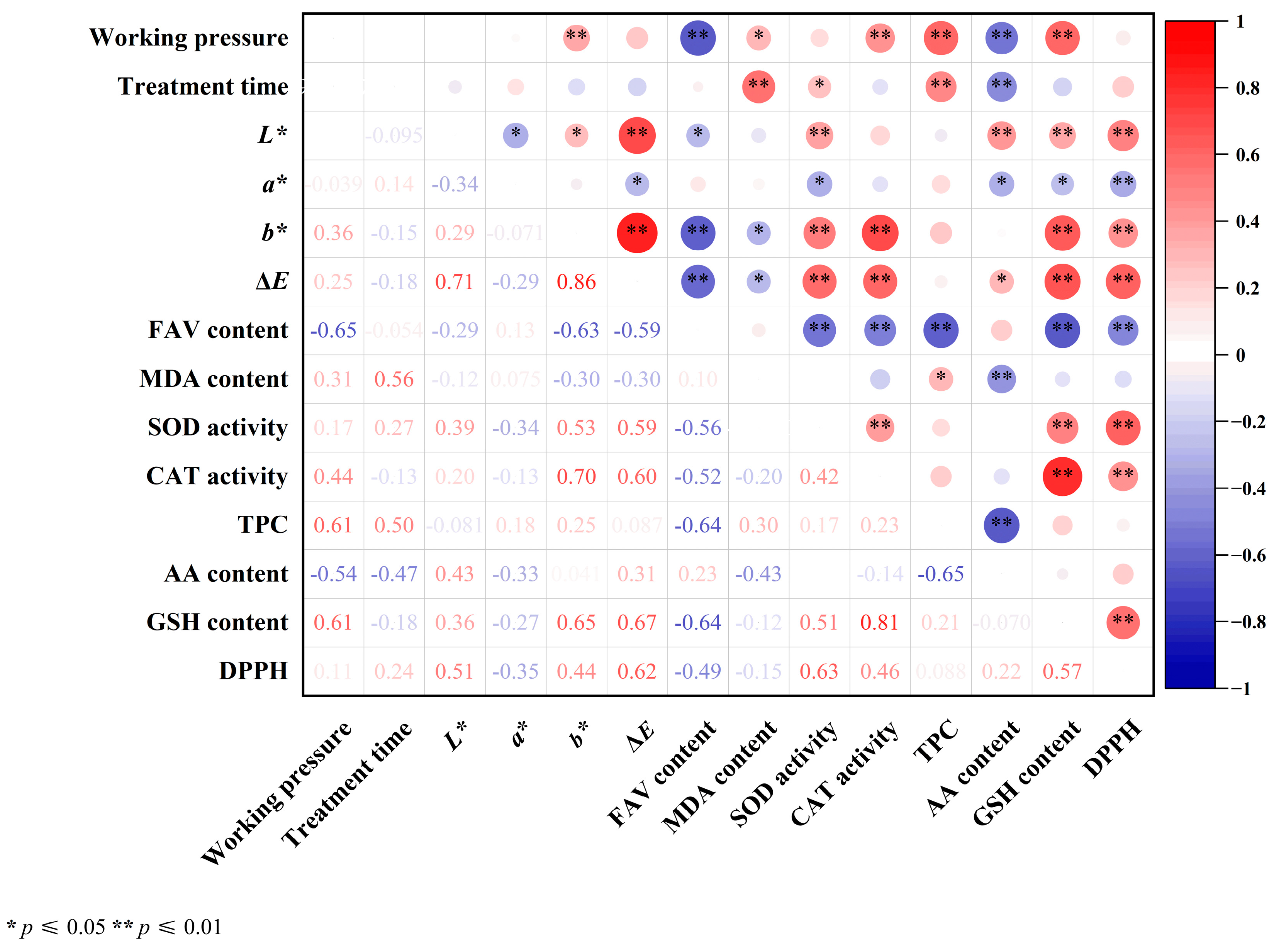
In order to comprehensively comprehend the effects of CP on the physicochemical properties and antioxidant capacities of maize kernels, a correlation analysis was conducted between color (L*, a*, b*, and ΔE), FAV, MDA content, SOD and CAT activities, antioxidant compounds, and DPPH radical scavenging ability at varying working pressures and treatment times. A correlation heatmap was plotted using the Pearson correlation coefficient (r2) (Figure 7).
Figure 7.
Correlations between changes in color, FAV, MDA, antioxidant enzyme activity, antioxidant compounds, and DPPH scavenging activity in maize kernels. * and ** indicated significant differences at the p ≤ 0.05 and p ≤ 0.01 levels, respectively. Red (+1) and blue (−1) colors show the positive and negative correlations between different indexes, respectively.
As demonstrated in Figure 7, the analysis revealed significant relationships among the measured parameters. FAV (r2 = −0.65 and r2 = −0.054) and AA content (r2 = −0.54 and r2 = −0.47) exhibited negative correlations with working pressure and treatment time, respectively. In contrast, a* (r2 = 0.039 and r2 = 0.14), SOD (r2 = 0.17 and r2 = 0.27), TPC (r2 = 0.61 and r2 = 0.50), and DPPH (r2 = 0.11 and r2 = 0.24) demonstrated positive correlations with the working pressure and treatment time, respectively. Working pressure was positively correlated with CAT activity (r2 = 0.44) and GSH content (r2 = 0.61). The DPPH radical scavenging ability exhibited positive correlations with SOD activity (r2 = 0.63), CAT activity (r2 = 0.46), TPC (r2 = 0.088), AA content (r2 = 0.22), and GSH content (r2 = 0.57). These findings suggest that enhanced antioxidant capacity is closely associated with increased activities of antioxidant enzymes and elevated levels of antioxidant compounds. Conversely, notable negative correlations were observed between the DPPH radical scavenging ability and both FAV (r2 = −0.49) and MDA (r2 = −0.15). These results suggest that improved antioxidant capacity is associated with reduced membrane damage and quality deterioration in maize kernels.
3.8. Application Potential of Cold Plasma as a Pretreatment Technology for Postharvest Grain Storage
As previously reported, FAV and MDA content are reliable indicators of maize quality deterioration during storage, given that lipid hydrolysis and oxidation advance more rapidly than protein or starch degradation [75,76]. Untreated maize samples stored at 25 °C (11.8% moisture content) for 120 days demonstrated comparable FAV levels (~40.00 mg NaOH/100 g/40.00 mg KOH/100 g) to those stored at 20 °C in silo bags (15.5% moisture) for the same duration [77]. In contrast, CP-treated samples exhibited markedly reduced FAVs: 19.42 mg NaOH/100 g (Ar plasma) and 19.49 mg NaOH/100 g (N2 plasma). The FAV and MDA contents in CP-treated maize samples were also lower than those reported for rice stored under conventional 30 °C conditions or a 98.9% N2-controlled atmosphere for 60 days [78]. Furthermore, the initial FAV and MDA levels of CP-treated maize were lower than those of the rice samples mentioned above. These results suggest that CP effectively delays quality deterioration by inhibiting lipid hydrolysis and oxidation.
The glow discharge cold plasma system—comprising four essential components (vacuum system, glow discharge generator, conveying system, and standardized material cylinders)—demonstrates significant scalability potential. The industrial-scale implementation could be achieved through the (i) parallel arrangement of many discharge units, (ii) optimization of the vacuum system’s energy consumption, and (iii) integration with continuous grain conveying systems. Notably, differences in physicochemical properties and antioxidant capacity between Ar and N2 plasma-treated maize samples were observed, likely attributed to distinct energy levels of reactive species generated by different gas sources. Under identical discharge voltage and treatment duration, Ar plasma produced stronger current and higher-energy active species than N2 plasma [79], correlating with its 13.09% superior DPPH radical scavenging efficacy after 180 days of storage. However, given the higher cost of Ar and the considerable preservation of sensory qualities, N2 plasma treatment may be more cost-effective for practical applications.
4. Conclusions
The present study validates glow discharge cold plasma as an effective non-thermal strategy for maize quality preservation through dual mechanisms of antioxidant enhancement and oxidative suppression. The optimized treatment (100 Pa working pressure and 5 min exposure) significantly fortified the antioxidant defense system, evidenced by 38.46–99.10% increases in SOD/CAT activity, approximately 16.00% elevation in TPC, and enhanced AA and GSH levels, alongside 54.47–56.37% and 30.00–45.00% reductions in FAV and MDA content, respectively. These coordinated modifications sustained enhanced antioxidant capacity throughout 180 days of ambient storage, with significantly lower FAV and MDA rebound compared to untreated controls, demonstrating CP’s efficacy in prolonging storage stability. While CP demonstrates superior preservation efficacy compared to conventional methods, its commercial implementation requires systematic pilot-scale validation of nutrient retention and sensory attributes. To advance this technology toward industrial adoption, future research should prioritize (i) deciphering the molecular mechanisms underlying CP-induced effects through integrated transcriptomic–metabolomic profiling, and (ii) developing hybrid preservation systems combining CP with controlled-atmosphere storage technologies to achieve synergistic quality stabilization.
Author Contributions
Conceptualization and supervision, M.L. and C.Q.; formal analysis and data curation, C.R. and C.L.; validation, Z.F. and J.Z.; writing—original draft, M.L.; writing—review and editing, M.L. and C.Q.; funding acquisition, M.L. All authors have read and agreed to the published version of the manuscript.
Funding
This work was sponsored by Natural Science Foundation of Henan Province (No. 232300421265), the Joint Fund of the Technical R&D Program of Henan Province (No. 232103810061), the Henan Postdoctoral Research Funding Project (No. HN2024056), and the Postdoctoral Fund of Henan University of Technology (No. 21450063).
Institutional Review Board Statement
Not applicable.
Informed Consent Statement
Not applicable.
Data Availability Statement
The original contributions presented in the study are included in the article, and further inquiries can be directed to the corresponding authors.
Conflicts of Interest
The authors declare no conflicts of interest.
References
- Faostat Online Database. Available online: https://www.fao.org/faostat/zh/#data/QCL/visualize (accessed on 24 February 2025).
- Solon, J.G.; Killeen, S. Decontamination and sterilization. Surgery 2019, 37, 51–57. [Google Scholar]
- Sánchez-Rodríguez, A.R.; Rey, M.D.; Nechate-Drif, H.; Castillejo, M.Á.; Jorrín-Novo, J.V.; Torrent, J.; del Campillo, M.C.; Sacristán, D. Combining P and Zn fertilization to enhance yield and grain quality in maize grown on Mediterranean soils. Sci. Rep. 2021, 11, 7427. [Google Scholar] [CrossRef] [Scilit]
- Zhao, X.Q.; Niu, Y.N.; Bai, X.D.; Mao, T.T. Transcriptomic and metabolic profiling reveals a lignin metabolism network involved in mesocotyl elongation during maize seed germination. Plants 2022, 11, 1034. [Google Scholar] [CrossRef] [Scilit]
- Mannaa, M.; Kim, K.D. Influence of temperature and water activity on deleterious fungi and mycotoxin production during grain storage. Mycobiology 2017, 45, 240–254. [Google Scholar] [CrossRef] [Scilit] [PubMed]
- Li, Z.Q.; Hong, T.N.; Zhao, Z.Y.; Gu, Y.T.; Guo, Y.Z.; Han, J.H. Fatty acid profiles and nutritional evaluation of fresh sweet-waxy corn from three regions of china. Foods 2022, 11, 2636. [Google Scholar] [CrossRef] [Scilit] [PubMed]
- Simões, D.; Carbas, B.; Soares, A.; Freitas, A.; Silva, A.S.; Brites, C.; Andrade, E.D. Assessment of agricultural practices for controlling fusarium and mycotoxins contamination on maize grains: Exploratory study in maize farms. Toxins 2023, 15, 136. [Google Scholar] [CrossRef] [Scilit] [PubMed]
- Sharma, S.; Singh, R.K. Cold plasma treatment of dairy proteins in relation to functionality enhancement. Trends Food Sci. Technol. 2020, 102, 30–36. [Google Scholar] [CrossRef] [Scilit]
- Li, N.; Yu, J.J.; Jin, N.; Chen, Y.; Li, S.H.; Chen, Y. Modification of the physicochemical and structural characteristics of zein suspension by dielectric barrier discharge cold plasma treatment. J. Food Sci. 2020, 85, 2452–2460. [Google Scholar] [CrossRef] [Scilit]
- Zuo, Y.X.; Zou, F.L.; Yang, M.; Xu, G.F.; Wu, J.H.; Wang, L.J.; Wang, H.Y. Effects of plasma-activated water combined with ultrasonic treatment of corn starch on structural, thermal, physicochemical, functional, and pasting properties. Ultrason. Sonochem. 2024, 108, 106963. [Google Scholar] [CrossRef] [Scilit]
- Sruthi, N.U.; Josna, K.; Pandiselvam, R.; Kothakota, A.; Gavahian, M.; Mousavi Khaneghah, A. Impacts of cold plasma treatment on physicochemical, functional, bioactive, textural, and sensory attributes of food: A comprehensive review. Food Chem. 2022, 368, 130809. [Google Scholar] [CrossRef] [Scilit]
- Punia Bangar, S.; Trif, M.; Ozogul, F.; Kumar, M.; Chaudhary, V.; Vukic, M.; Tomar, M.; Changan, S. Recent developments in cold plasma-based enzyme activity (browning, cell wall degradation, and antioxidant) in fruits and vegetables. Compr. Rev. Food Sci. Food Saf. 2022, 21, 1958–1978. [Google Scholar] [CrossRef] [Scilit] [PubMed]
- Chen, H.H.; Chen, Y.K.; Chang, H.C. Evaluation of physicochemical properties of plasma treated brown rice. Food Chem. 2012, 135, 74–79. [Google Scholar] [CrossRef] [Scilit]
- Bozhanova, V.; Marinova, P.; Videva, M.; Nedjalkova, S.; Benova, E. Effect of cold plasma on the germination and seedling growth of durum wheat genotypes. Processes 2024, 12, 544. [Google Scholar] [CrossRef] [Scilit]
- Mravlje, J.; Regvar, M.; Starič, P.; Zaplotnik, R.; Mozetič, M.; Vogel-Mikuš, K. Decontamination and germination of buckwheat grains upon treatment with oxygen plasma glow and afterglow. Plants 2022, 11, 1366. [Google Scholar] [CrossRef] [Scilit] [PubMed]
- Soulier, M.; Maho, T.; Lo, J.; Guillot, P.; Muja, C. Bread wheat (Triticum aestivum L.) fungal and mycotoxin contamination control enhanced by a dual-frequency cold plasma. Food Control 2024, 163, 110477. [Google Scholar] [CrossRef] [Scilit]
- Feizollahi, E.; Iqdiam, B.; Vasanthan, T.; Thilakarathna, M.S.; Roopesh, M.S. Effects of atmospheric-pressure cold plasma treatment on deoxynivalenol degradation, quality parameters, and germination of barley grains. Appl. Sci. 2020, 10, 3530. [Google Scholar] [CrossRef] [Scilit]
- Hossain, M.F.; Sohan, M.S.R.; Hasan, M.; Miah, M.M.; Sajib, S.A.; Karmakar, S.; Khalid-Bin-Ferdaus, K.M.; Kabir, A.H.; Rashid, M.M.; Talukder, M.R.; et al. Enhancement of seed germination rate and growth of maize (Zea mays L.) through LPDBD ar/air plasma. J. Soil Sci. Plant Nutr. 2022, 22, 1778–1791. [Google Scholar] [CrossRef] [Scilit]
- Sohan, M.S.R.; Hasan, M.; Hossain, M.F.; Sajib, S.A.; Khalid-Bin-Ferdaus, K.M.; Kabir, A.H.; Rashid, M.M.; Talukder, M.R.; Elseehy, M.M.; El-Shehawi, A.M.; et al. Low-frequency glow discharge (LFGD) plasma treatment enhances maize (Zea mays L.) seed germination, agronomic traits, enzymatic activities, and nutritional properties. Chem. Biol. Technol. Agric. 2022, 9, 18. [Google Scholar] [CrossRef] [Scilit]
- Shi, Z.Q.; Liu, Y.; Hu, Z.M.; Liu, L.; Yan, Q.H.; Geng, D.D.; Wei, M.; Wan, Y.; Fan, G.Q.; Yang, H.K.; et al. Effect of radiation processing on phenolic antioxidants in cereal and legume seeds: A review. Food Chem. 2022, 396, 133661. [Google Scholar] [CrossRef] [Scilit]
- Öztürk, S.; Cerit, İ.; Mutlu, S.; Demirkol, O. Enrichment of cookies with glutathione by inactive yeast cells (Saccharomyces cerevisiae): Physicochemical and functional properties. J. Cereal Sci. 2017, 78, 19–24. [Google Scholar] [CrossRef] [Scilit]
- Pitkänen, O.; Hallman, M.; Andersson, S. Generation of free radicals in lipid emulsion used in parenteral nutrition. Pediatr. Res. 1991, 29, 56–59. [Google Scholar] [CrossRef] [Scilit] [PubMed]
- Barro, F.; Barceló, P.; Lazzeri, P.A.; Shewry, P.R.; Martín, A.; Ballesteros, J. Functional properties and agronomic performance of transgenic tritordeum expressing high molecular weight glutenin subunit genes 1ax1 and 1dx5. J. Cereal Sci. 2003, 37, 65–70. [Google Scholar] [CrossRef] [Scilit]
- Chen, Z.T.; Wang, R.L.; Li, X.J.; Zhu, J.; Xu, Y.N.; Liu, J.J. Sorption equilibrium moisture and isosteric heat of cold plasma treated milled rice. Innov. Food Sci. Emerg. Technol. 2019, 55, 35–47. [Google Scholar] [CrossRef] [Scilit]
- Puač, N.; Petrović, Z.L.; Živković, S.; Giba, Z.; Grubišić, D.; Đorđević, A.R. Low-temperature plasma treatment of dry empress-tree seeds. In Plasma Processes and Polymers; d’Agostino, R., Favia, P., Oehr, C., Wertheimer, M.R., Eds.; WILEY-VCH Verlag GmbH & Co. KGaA: Weinheim, Germany, 2005; pp. 193–203. [Google Scholar]
- Pathare, P.B.; Opara, U.L.; Al-Said, F.A. Colour measurement and analysis in fresh and processed foods: A review. Food Bioproc. Technol. 2013, 6, 36–60. [Google Scholar] [CrossRef] [Scilit]
- Bohlooli, S.; Ramezan, Y.; Esfarjani, F.; Hosseini, H.; Eskandari, S. Effect of soaking in plasma-activated liquids (PALS) on heavy metals and other physicochemical properties of contaminated rice. Food Chem. X 2024, 24, 101788. [Google Scholar] [CrossRef] [Scilit] [PubMed]
- Liu, K.L.; Liu, Y.; Chen, F.S. Effect of gamma irradiation on the physicochemical properties and nutrient contents of peanut. LWT—Food Sci. Technol. 2018, 96, 535–542. [Google Scholar] [CrossRef] [Scilit]
- Wu, Q.; Li, C.J.; Zhang, D.D.; Tian, Q.S.; Tao, X.Y.; Luo, Z.S.; Fu, X.Z.; Zhang, Y.R. Nitrogen modified atmosphere packaging maintains the bioactive compounds and antioxidant capacity of postharvest fresh edible peanuts. Postharvest Biol. Technol. 2022, 190, 111957. [Google Scholar] [CrossRef] [Scilit]
- Spanos, G.A.; Wrolstad, R.E. Influence of processing and storage on the phenolic composition of Thompson Seedless grape juice. J. Agric. Food Chem. 1990, 38, 1565–1571. [Google Scholar] [CrossRef] [Scilit]
- Han, S.J.; Zhao, J.F.; Liu, Y.; Xi, L.Q.; Liao, J.A.; Liu, X.Y.; Su, G.D. Effects of green manure planting mode on the quality of korla fragrant pears (Pyrus sinkiangensis Yu). Front. Plant Sci. 2022, 13, 1027595. [Google Scholar] [CrossRef] [Scilit]
- Moron, M.S.; Depierre, J.W.; Mannervik, B. Levels of glutathione, glutathione reductase and glutathione s-transferase activities in rat lung and liver. Biochim. Biophys. Acta Gen. Subj. 1979, 582, 67–78. [Google Scholar] [CrossRef] [Scilit]
- Choi, D.S.; Park, S.H.; Choi, S.R.; Kim, J.S.; Chun, H.H. The combined effects of ultraviolet-c irradiation and modified atmosphere packaging for inactivating Salmonella enterica serovar Typhimurium and extending the shelf life of cherry tomatoes during cold storage. Food Packag. Shelf Life 2015, 3, 19–30. [Google Scholar] [CrossRef] [Scilit]
- Calvo-Brenes, P.; O’Hare, T. Effect of freezing and cool storage on carotenoid content and quality of zeaxanthin-biofortified and standard yellow sweet-corn (Zea mays L.). J. Food Compos. Anal. 2020, 86, 103353. [Google Scholar] [CrossRef] [Scilit]
- Kljak, K.; Grbeša, D.; Karolyi, D. Reflectance colorimetry as a simple method for estimating carotenoid content in maize grain. J. Cereal Sci. 2014, 59, 109–111. [Google Scholar] [CrossRef] [Scilit]
- Saenz, E.; Abdala, L.J.; Borrás, L.; Gerde, J.A. Maize kernel color depends on the interaction between hardness and carotenoid concentration. J. Cereal Sci. 2020, 91, 102901. [Google Scholar] [CrossRef] [Scilit]
- Santos, L.C.O.; Cubas, A.L.V.; Moecke, E.H.S.; Ribeiro, D.H.B.; Amante, E.R. Use of cold plasma to inactivate escherichia coli and physicochemical evaluation in pumpkin puree. J. Food Prot. 2018, 81, 1897–1905. [Google Scholar] [CrossRef] [Scilit] [PubMed]
- Darvish, H.; Ramezan, Y.; Khani, M.R.; Kamkari, A. Effect of low-pressure cold plasma processing on decontamination and quality attributes of saffron (Crocus sativus L.). Food Sci. Nutr. 2022, 10, 2082–2090. [Google Scholar] [CrossRef] [Scilit]
- Thirumdas, R.; Saragapani, C.; Ajinkya, M.T.; Deshmukh, R.R.; Annapure, U.S. Influence of low pressure cold plasma on cooking and textural properties of brown rice. Innov. Food Sci. Emerg. Technol. 2016, 37, 53–60. [Google Scholar] [CrossRef] [Scilit]
- Lee, K.H.; Kim, H.J.; Woo, K.S.; Jo, C.; Kim, J.K.; Kim, S.H.; Park, H.Y.; Oh, S.K.; Kim, W.H. Evaluation of cold plasma treatments for improved microbial and physicochemical qualities of brown rice. LWT—Food Sci. Technol. 2016, 73, 442–447. [Google Scholar] [CrossRef] [Scilit]
- Shen, C.; Chen, W.Q.; Li, C.Z.; Cui, H.Y.; Lin, L. The effects of cold plasma (cp) treatment on the inactivation of yam peroxidase and characteristics of yam slices. J. Food Eng. 2023, 359, 111693. [Google Scholar] [CrossRef] [Scilit]
- Chaple, S.; Sarangapani, C.; Jones, J.; Carey, E.; Causeret, L.; Genson, A.; Duffy, B.; Bourke, P. Effect of atmospheric cold plasma on the functional properties of whole wheat (Triticum aestivum L.) grain and wheat flour. Innov. Food Sci. Emerg. Technol. 2020, 66, 102529. [Google Scholar] [CrossRef] [Scilit]
- An, N.N.; Lv, W.Q.; Li, D.; Wang, L.J.; Wang, Y. Effects of hot-air microwave rolling blanching pretreatment on the drying of turmeric (Curcuma longa L.): Physiochemical properties and microstructure evaluation. Food Chem. 2023, 398, 133925. [Google Scholar] [CrossRef] [Scilit] [PubMed]
- Bai, J.W.; Li, D.D.; Abulaiti, R.; Wang, M.Q.; Wu, X.Z.; Feng, Z.W.; Zhu, Y.T.; Cai, J.R. Cold plasma as a novel pretreatment to improve the drying kinetics and quality of green peas. Foods 2025, 14, 84. [Google Scholar] [CrossRef] [Scilit] [PubMed]
- Kalinger, R.S.; Pulsifer, I.P.; Hepworth, S.R.; Rowland, O. Fatty acyl synthetases and thioesterases in plant lipid metabolism: Diverse functions and biotechnological applications. Lipids 2020, 55, 435–455. [Google Scholar] [CrossRef] [Scilit] [PubMed]
- Tian, P.P.; Lv, Y.Y.; Yuan, W.J.; Zhang, S.B.; Hu, Y.S. Effect of artificial aging on wheat quality deterioration during storage. J. Stored Prod. Res. 2019, 80, 50–56. [Google Scholar] [CrossRef] [Scilit]
- Ebone, L.A.; Caverzan, A.; Chavarria, G. Physiologic alterations in orthodox seeds due to deterioration processes. Plant Physiol. Biochem. 2019, 145, 34–42. [Google Scholar] [CrossRef] [Scilit]
- Cao, Z.Y.; Li, X.J.; Song, H.D.; Jie, Y.; Liu, C. Effect of intermittent low-pressure radiofrequency helium cold plasma treatments on rice gelatinization, fatty acid, and hygroscopicity. Foods 2024, 13, 1056. [Google Scholar] [CrossRef] [Scilit]
- Rajarammanna, R.; Jayas, D.; White, N.D.G. Comparison of deterioration of rye under two different storage regimes. J. Stored Prod. Res. 2010, 46, 87–92. [Google Scholar] [CrossRef] [Scilit]
- Zahoranová, A.; Henselová, M.; Hudecová, D.; Kalináková, B.; Kovácik, D.; Medvecká, V.; Cernák, M. Effect of cold atmospheric pressure plasma on the wheat seedlings vigor and on the inactivation of microorganisms on the seeds surface. Plasma Chem. Plasma Process. 2016, 36, 397–414. [Google Scholar] [CrossRef] [Scilit]
- Ghodsimaab, S.P.; Makarian, H.; Hagh, Z.G.; Gholipoor, M. Scanning electron microscopy, biochemical and enzymatic studies to evaluate hydro-priming and cold plasma treatment effects on the germination of Salvia leriifolia Benth. Seeds. Front. Plant Sci. 2023, 13, 1035296. [Google Scholar] [CrossRef] [Scilit]
- Mathavaraj, P.; Muthusamy, V.; Katral, A.; Mandal, P.; Zunjare, R.U.; Hossain, F. Lipoxygenases (loxs): Will turning off this genetic switch help safeguard the flavor and nutritional quality of stored lipid-rich staple foods? Food Chem. 2025, 470, 142637. [Google Scholar] [CrossRef] [Scilit]
- Schiller, D.; Contreras, C.; Vogt, J.; Dunemann, F.; Defilippi, B.G.; Beaudry, R.; Schwab, W. A dual positional specific lipoxygenase functions in the generation of flavor compounds during climacteric ripening of apple. Hortic. Res. 2015, 2, 15003. [Google Scholar] [CrossRef] [Scilit] [PubMed]
- Rout, S.; Srivastav, P. Effect of cold plasma on the technological and functional modification of plant proteins and enzymes. Innov. Food Sci. Emerg. Technol. 2023, 88, 103447. [Google Scholar] [CrossRef] [Scilit]
- Mayookha, V.P.; Pandiselvam, R.; Kothakota, A.; Padma Ishwarya, S.; Chandra Khanashyam, A.; Kutlu, N.; Rifna, E.J.; Kumar, M.; Panesar, P.S.; Abd El-Maksoud, A.A. Ozone and cold plasma: Emerging oxidation technologies for inactivation of enzymes in fruits, vegetables, and fruit juices. Food Control 2023, 144, 109399. [Google Scholar] [CrossRef] [Scilit]
- Misra, N.N.; Pankaj, S.K.; Segat, A.; Ishikawa, K. Cold plasma interactions with enzymes in foods and model systems. Trends Food Sci. Technol. 2016, 55, 39–47. [Google Scholar] [CrossRef] [Scilit]
- Wang, C.T.; Wang, C.T.; Cao, Y.P.; Robert Nout, M.J.; Sun, B.G.; Liu, L. Effect of modified atmosphere packaging (MAP) with low and superatmospheric oxygen on the quality and antioxidant enzyme system of golden needle mushrooms (Flammulina velutipes) during postharvest storage. Eur. Food Res. Technol. 2011, 232, 851–860. [Google Scholar] [CrossRef] [Scilit]
- Chen, Y.Q.; Cheng, J.H.; Sun, D.W. Chemical, physical and physiological quality attributes of fruit and vegetables induced by cold plasma treatment: Mechanisms and application advances. Crit. Rev. Food Sci. Nutr. 2019, 60, 2676–2690. [Google Scholar] [CrossRef] [Scilit]
- Dong, X.Y.; Yang, Y. A novel approach to enhance blueberry quality during storage using cold plasma at atmospheric air pressure. Food Bioproc. Technol. 2019, 12, 1409–1421. [Google Scholar] [CrossRef] [Scilit]
- Rasooli, Z.; Barzin, G.; Davari Mahabadi, T.; Entezari, M. Stimulating effects of cold plasma seed priming on germination and seedling growth of cumin plant. S. Afr. J. Bot. 2021, 142, 106–113. [Google Scholar] [CrossRef] [Scilit]
- Wei, S.; Zhao, L.; Liu, Z.; Zhang, X.; Hui, Y.; Wang, D.; Liu, Z.; Liu, G. Cold plasma treatment for Astragalus membranaceus seed germination and seedling growth improvement. Legume Res. 2023, 46, 609–615. [Google Scholar] [CrossRef] [Scilit]
- Li, Y.J.; Wang, T.C.; Meng, Y.R.; Qu, G.Z.; Sun, Q.H.; Liang, D.L.; Hu, S.B. Air atmospheric dielectric barrier discharge plasma induced germination and growth enhancement of wheat seed. Plasma Chem. Plasma Process. 2017, 37, 1621–1634. [Google Scholar] [CrossRef] [Scilit]
- Surovy, M.Z.; Mahmud, N.U.; Bhattacharjee, P.; Hossain, M.S.; Mehebub, M.S.; Rahman, M.; Majumdar, B.C.; Gupta, D.R.; Islam, T. Modulation of nutritional and biochemical properties of wheat grains infected by blast fungus Magnaporthe oryzae Triticum pathotype. Front. Microbiol. 2020, 11, 1174. [Google Scholar] [CrossRef] [Scilit]
- Tahir, H.; Sajjad, M.; Qian, M.J.; Zeeshan Ul Haq, M.Z.; Tahir, A.; Farooq, M.A.; Wei, L.; Shi, S.P.; Zhou, K.B.; Yao, Q.S. Glutathione and ascorbic acid accumulation in mango pulp under enhanced UV-B based on transcriptome. Antioxidants 2024, 13, 1429. [Google Scholar] [CrossRef] [Scilit] [PubMed]
- Keutgen, A.J.; Pawelzik, E. Modifications of strawberry fruit antioxidant pools and fruit quality under NaCl stress. J. Agric. Food Chem. 2007, 55, 4066–4072. [Google Scholar] [CrossRef] [Scilit]
- Wang, K.; Shao, X.; Gong, Y.; Xu, F.; Wang, H. Effects of postharvest hot air treatment on gene expression associated with ascorbic acid metabolism in peach fruit. Plant Mol. Biol. Rep. 2014, 32, 881–887. [Google Scholar] [CrossRef] [Scilit]
- Robards, K.; Prenzler, P.D.; Tucker, G.; Swatsitang, P.; Glover, W. Phenolic compounds and their role in oxidative processes in fruits. Food Chem. 1999, 66, 401–436. [Google Scholar] [CrossRef] [Scilit]
- Farias, T.R.B.; Rodrigues, S.; Fernandes, F.A.N. Effect of dielectric barrier discharge plasma excitation frequency on the enzymatic activity, antioxidant capacity and phenolic content of apple cubes and apple juice. Food Res. Int. 2020, 136, 109617. [Google Scholar] [CrossRef] [Scilit]
- Cui, D.J.; Yin, Y.; Li, H.D.; Hu, X.X.; Zhuang, J.; Ma, R.N.; Jiao, Z. Comparative transcriptome analysis of atmospheric pressure cold plasma enhanced early seedling growth in Arabidopsis thaliana. Plasma Sci. Technol. 2021, 23, 95–117. [Google Scholar] [CrossRef] [Scilit]
- Mellidou, I.; Keulemans, J.; Kanellis, A.K.; Davey, M.W. Regulation of fruit ascorbic acid concentrations during ripening in high and low vitamin c tomato cultivars. BMC Plant Biol. 2012, 12, 239. [Google Scholar] [CrossRef] [Scilit]
- Arya, A.; Azarmehr, N.; Mansourian, M.; Doustimotlagh, A.H. Inactivation of the superoxide dismutase by malondialdehyde in the nonalcoholic fatty liver disease: A combined molecular docking approach to clinical studies. Arch. Physiol. Biochem. 2021, 127, 557–564. [Google Scholar] [CrossRef] [Scilit]
- Chen, H.H.; Hung, C.L.; Lin, S.Y.; Liou, G.J. Effect of low-pressure plasma exposure on the storage characteristics of brown rice. Food Bioproc. Technol. 2015, 8, 471–477. [Google Scholar] [CrossRef] [Scilit]
- Wang, L.H.; Li, Z.; Qin, J.; Huang, Y.; Zeng, X.A.; Aadil, R.M. Investigation on the impact of quality characteristics and storage stability of foxtail millet induced by air cold plasma. Front. Nutr. 2022, 9, 1064812. [Google Scholar] [CrossRef] [Scilit] [PubMed]
- Hemmati, V.; Garavand, F.; Goudarzi, M.; Sarlak, Z.; Cacciotti, I.; Tiwari, B. Cold atmospheric-pressure plasma treatment of turmeric powder: Microbial load, essential oil profile, bioactivity and microstructure analyses. Int. J. Food Sci. Technol. 2021, 56, 2224–2232. [Google Scholar] [CrossRef] [Scilit]
- Genkawa, T.; Uchino, T.; Inoue, A.; Tanaka, F.; Hamanaka, D. Development of a low-moisture-content storage system for brown rice: Storability at decreased moisture contents. Biosys. Eng. 2008, 99, 515–522. [Google Scholar] [CrossRef] [Scilit]
- Park, C.E.; Kim, Y.S.; Park, K.J.; Kim, B.K. Changes in physicochemical characteristics of rice during storage at different temperatures. J. Stored Prod. Res. 2012, 48, 25–29. [Google Scholar] [CrossRef] [Scilit]
- Zhao, Y.; Qi, T.J.; Cui, C.Y.; Liu, X.G.; Liu, R.Y.; Liu, S.C.; Song, Y.L.; Li, Y.F.; Lv, H.X. Effects of different storage temperatures on the quality and metabolome of maize with high moisture content. LWT Food Sci. Technol. 2024, 214, 117117. [Google Scholar] [CrossRef] [Scilit]
- Qu, C.L.; Xia, Y.Z.; Yang, Q.K.; Li, W.H.; Hu, M.; Lu, P. Novel insights into rice deterioration for nitrogen controlled atmosphere and re-aeration storage based on no-targeted metabolomics. LWT Food Sci. Technol. 2023, 178, 114631. [Google Scholar] [CrossRef] [Scilit]
- Turner, M. Chapter 2—Physics of cold plasma. In Cold Plasma in Food and Agriculture; Misra, N.N., Schlüter, O., Cullen, P.J., Eds.; Academic Press: San Diego, CA, USA, 2016; pp. 17–51. [Google Scholar]

Disclaimer/Publisher’s Note: The statements, opinions and data contained in all publications are solely those of the individual author(s) and contributor(s) and not of MDPI and/or the editor(s). MDPI and/or the editor(s) disclaim responsibility for any injury to people or property resulting from any ideas, methods, instructions or products referred to in the content. |
© 2025 by the authors. Licensee MDPI, Basel, Switzerland. This article is an open access article distributed under the terms and conditions of the Creative Commons Attribution (CC BY) license (https://creativecommons.org/licenses/by/4.0/).