Article

Use of Mucilage from Opuntia ficus-indica in the Manufacture of Probiotic Cream Cheese

by
Pamela Dutra Rodrigues
1,
Isabela de Andrade Arruda Fernandes
2,
Annecler Rech de Marins
3,
Andresa Carla Feihrmann
1,3 and
Raquel Guttierres Gomes
1,*
1
Programa de Pós-Graduação em Engenharia de Alimentos, Universidade Estadual de Maringá (UEM), Maringá 87020-900, PR, Brazil
2
Programa de Pós-Graduação em Engenharia de Alimentos (PPGEAL), Universidade Federal do Paraná (UFPR), Curitiba 81531-980, PR, Brazil
3
Programa de Pós-Graduação em Ciências de Alimentos, Universidade Estadual de Maringá (UEM), Maringá 87020-900, PR, Brazil
*
Author to whom correspondence should be addressed.
Processes 2024, 12(10), 2289; https://doi.org/10.3390/pr12102289
Submission received: 4 September 2024 / Revised: 9 October 2024 / Accepted: 14 October 2024 / Published: 18 October 2024
(This article belongs to the Section Food Process Engineering)

Abstract

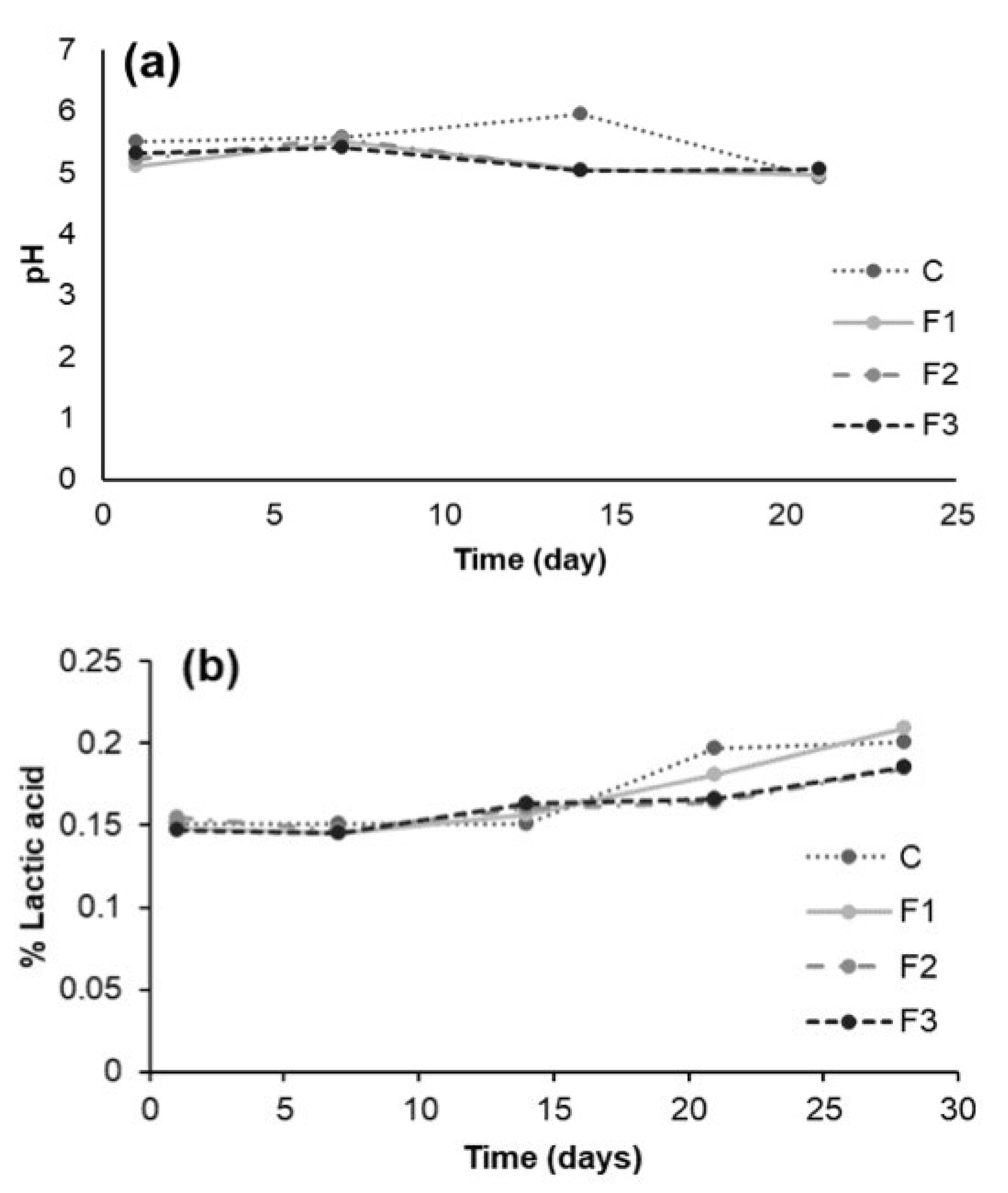
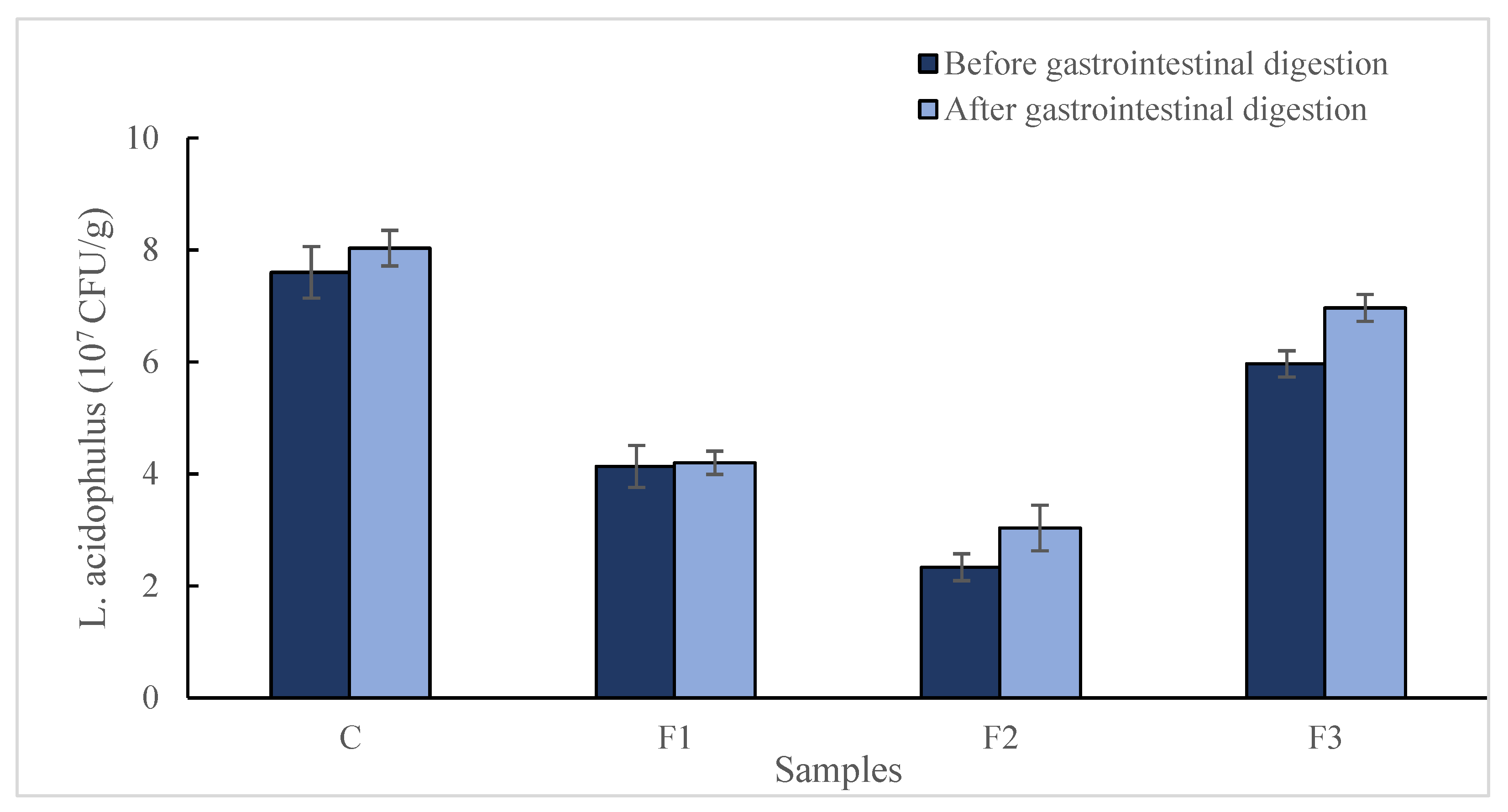
Cream cheese is a type of fresh cheese with a thin consistency with great potential for adding probiotics. However, artificial thickeners have been used in its production, decreasing consumer satisfaction. This study suggests natural mucilage, specifically from the Cactaceae Opuntia ficus-indica, as a replacement for artificial thickeners due to its thick gelatinous properties. This study evaluated different cream cheese formulations by adding varying concentrations of Opuntia ficus-indica mucilage and the probiotic Lactobacillus acidophilus (L. acidophilus). Four formulations were created: formulation C (control, without mucilage), F1 (containing 1 mL/kg mucilage), F2 (2 mL/kg), and F3 (3 mL/kg mucilage). The physicochemical characteristics (pH, 4.90–5.57; 0.15–0.20% acidity; 1.78–2.42% protein; 29.98–30.88% fat; 38.27–41.63% moisture; and 1.25–1.63% ash) and microbiological analysis met the quality standards required by Brazilian legislation, and the cream cheese showed probiotic potential, with L. acidophilus counts above 108 CFU/mL within four weeks of storage. Regarding sensory evaluation, the texture received one of the highest scores (7.89), followed by aroma (7.11). Therefore, the Cactaceae mucilage has proven to be a viable alternative to replace artificial thickeners in cream cheese, making it an excellent option for probiotic supplementation.
Keywords: Opuntia ficus-indica; mucilage; cream cheese; functional food Opuntia ficus-indica; mucilage; cream cheese; functional food