
You are currently viewing a new version of our website. To view the old version click .

International Journal of Financial Studies

International Journal of Financial Studies is an international, peer-reviewed, scholarly open access journal on financial market, instruments, policy, and management research published monthly online by MDPI.

Quartile Ranking JCR - Q2 (Business, Finance)
All Articles (1,082)

Evaluating Green Finance: Investment Patterns and Environmental Outcomes

  • Lala Rukh,
  • Shakir Ullah and
  • Ijaz Sanober
  • + 2 authors

This study aims to investigate the impact of green finance on corporate sector investments and their associated environmental outcomes. The authors collected cross-sectional survey data with a sample of four hundred firms selected from the five green-relevant industries in an emerging economy. The results indicate that, over the last three years, seventy percent of firms have accessed at least one green instrument. Overall, the firms under study indicate that PKR 3.4 million is being allocated to green finance, and PKR 2.7 million is spent on CAPEX. However, each million PKR is associated with a ten percent capital expenditure, which exhibits the highest adoption of the renewable energy sector, while the manufacturing sector has the lowest adoption. Regression results depict that Greenhouse gas reduction is only achievable if expenditure on R&D is ensured for environmental gains. This study indicates a declining incremental impact when green finance exceeds PKR 5.00 million, suggesting that firms’ limitations in utilizing the additional amount may be a factor. Financially constrained firms achieve stronger environmental goals, confirming that strict criteria to finance projects show more responsibility and discipline in executing projects. However, small- and medium-sized firms are confronted with barriers, such as lack of information and transaction costs. The findings of this study highlight the need for a multi-layered regulatory framework, innovation-driven incentives, and fintech integration to fully realize the potential of green finance. The outcome enables financial institutions, sustainability practitioners, and regulators to connect financial markets, national climate, and development goals.
18 December 2025

Predicted probability of GHG improvement by R&D intensity and finance adoption. (see embedded figure in electronic article).

By employing the 2017 reform of China’s financial statement presentation as an exogenous shock, we evaluate how the change shapes the likelihood of stock price crashes. Our analysis indicates that firms affected by the reform exhibit notably higher crash risk after the new reporting format is adopted, and this finding remains consistent across multiple robustness checks. The increase in crash risk can be largely attributed to managerial incentives to manage earnings by reclassifying held-for-sale assets and other special items. Moreover, the reform exerts a stronger effect on firms that exhibit poor information transparency and receive little oversight from internal and external monitors.

17 December 2025

Time trend of gains on disposal of assets and government subsidies from 2016 to 2023.

Customer segmentation is essential in financial services for designing targeted interventions, managing dormant portfolios, and supporting marketing re-engagement strategies. Traditional approaches such as Recency–Frequency–Monetary (RFM) analysis offer interpretability but often lack the flexibility needed to capture heterogeneous behavioral patterns. This study presents an automated segmentation framework that integrates machine learning-based clustering with RFM-based interpretability benchmarks. KMeans and Hierarchical clustering are evaluated across multiple values of k using internal validity metrics (Silhouette Coefficient, Davies–Bouldin Index) and interpretability alignment measures (Adjusted Rand Index, Normalized Mutual Information, Homogeneity, Completeness, and V-Measure). The Hungarian algorithm is used to align machine-learned clusters with RFM segments for comparability. The framework reveals behavioral subgroups not captured by RFM alone, demonstrating that machine learning can expose hidden heterogeneity within dormant customer populations. While outcome-based financial validation is not yet feasible due to the cold-start nature of the deployment environment, the study provides a reproducible, scalable pipeline for segmentation that balances analytical rigor with business interpretability. The findings highlight how data-driven clustering can refine traditional segmentation logic, supporting more nuanced portfolio monitoring and re-engagement strategies in financial services.

17 December 2025

Flowchart for the Automated Customer Segmentation Pipeline.

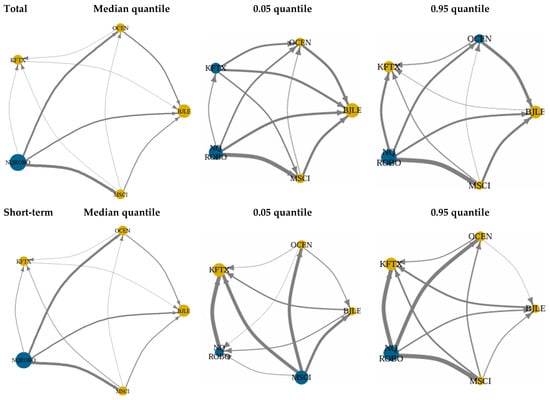
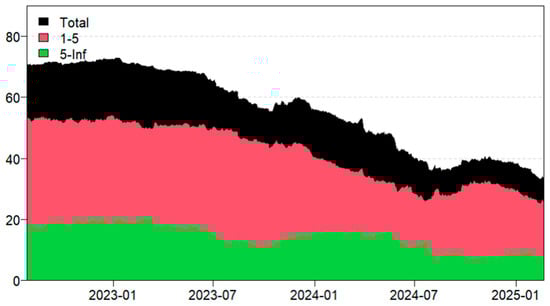
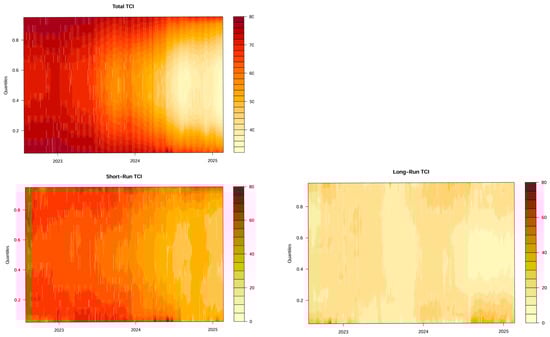
This study investigates risk contagion and dependence structures between U.S. and Chinese technology-related stock markets, focusing on the electronics and semiconductor sectors. We employ DCC-GARCH models to capture time-varying correlations and copula models to analyze nonlinear and tail dependencies. To highlight extreme risk dynamics, we extend the analysis to Value-at-Risk (VaR) series derived from a GARCH(1,1)-Skewed-t model. Empirical results reveal three major findings. First, volatility clustering and negative skewness are evident across markets, with extreme downside risks concentrated during the 2015 Chinese stock market crash and the 2020 COVID-19 pandemic. Second, copula results show stronger upper-tail dependence in cross-border broad markets and more symmetric dependence within domestic Chinese markets, while U.S. sectoral linkages exhibit the highest vulnerability during downturns. Third, dynamic copula analysis indicates that downside contagion is episodic and crisis-driven, whereas rebound co-movements are structurally persistent. These findings contribute to understanding systemic vulnerability in global technology markets. They provide insights for investors, regulators, and policymakers on monitoring cross-market contagion and managing systemic risk under stress scenarios.

17 December 2025

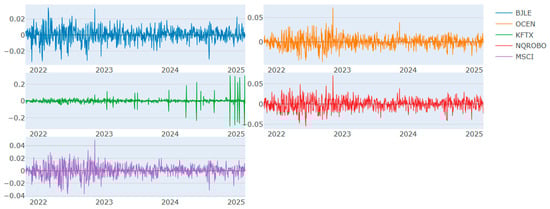
DCC-GARCH dynamic correlations between the U.S. and China markets.

News & Conferences

Issues

Open for Submission

Editor's Choice

Reprints of Collections

Artificial Intelligence Applications in Financial Technology
Reprint

Artificial Intelligence Applications in Financial Technology

Editors: Albert Y.S. Lam, Yanhui Geng
The Financial Industry 4.0
Reprint

The Financial Industry 4.0

Editors: Thanh Ngo, Dominique Guegan, Dinh-Tri Vo

Get Alerted

Add your email address to receive forthcoming issues of this journal.

XFacebookLinkedIn
Int. J. Financial Stud. - ISSN 2227-7072