


Abstract
This systematic review explores the incorporation of Environmental, Social, and Governance (ESG) factors within financial risk prediction models, with a particular focus on Machine Learning (ML), Natural Language Processing (NLP), and Large Language Models (LLM). Adhering to the Preferred Reporting Items for Systematic Reviews and the Meta-Analyses (PRISMA) and PICOC frameworks, we identified 74 peer-reviewed publications disseminated between 2009 and March 2025 from the Scopus database. After excluding 10 systematic and literature reviews to avoid double-counting of evidence, we conducted quantitative analysis on 64 empirical studies. The findings indicate that traditional econometric methodologies continue to prevail (48%), followed by ML strategies (39%), NLP methodologies (8%), and Other (5%). Research that concurrently focuses on all three dimensions of ESG constitutes the most substantial category (44%), whereas the Social dimension, in isolation, receives minimal focus (5%). A geographic analysis reveals a concentration of research activity in China (13 studies), Italy (10), and the United States and India (6 each). Chi-square tests reveal no statistically significant relationship between the methodological approaches employed and the ESG dimensions examined (p = 0.62). The principal findings indicate that ML models—particularly ensemble methodologies and neural networks—exhibit enhanced predictive accuracy in the context of credit risk and default probability, whereas NLP methodologies reveal significant potential for the analysis of unstructured ESG disclosures. The review highlighted ongoing challenges, including inconsistencies in ESG data, variability in ratings across different providers, insufficient coverage of emerging markets, and the disparity between academic research and practical application in model implementation.
1. Introduction
The crisis caused by climate change in recent years has emphasized the need to consider Environmental, Social, and Governance (ESG) criteria in business investment. Although the ESG concept was introduced decades ago in the United Nations’ Principles for Responsible Investment (PRI) (UNEP FI & UN Global Compact, 2006), it has gained momentum due to the growing importance of corporate sustainability performance alongside financial performance, enabling Socially Responsible Investments (SRIs). Increasing regulations and investor expectations regarding corporate sustainability require integrating these factors into financial risk management.
Environmental factors include mitigation of climate change, resource efficiency, pollution prevention, and protection of biodiversity. Social factors include treatment of workers, respect for human rights, community engagement, and product safety. Governance factors include corporate governance matters such as board structure and executive pay (United Nations Global Compact, 2004).
The European Union (EU) has been the world leader in ESG financial rules. A key milestone was the Non-Financial Reporting Directive (Directive 2014/95/EU), which required large companies to disclose social and environmental information (European Parliament and Council, 2014). In 2021, the Sustainable Finance Disclosure Regulation (SFDR) came into effect, requiring financial market participants to explain how they integrate sustainability risks (European Parliament and Council, 2019). The EU also introduced the Taxonomy Regulation in 2020 to define sustainable economic activities (European Parliament and Council, 2020). The adoption of the Corporate Sustainability Reporting Directive (CSRD) in 2022 further expanded the scope and rigor of ESG reporting, enforcing alignment with the European Sustainability Reporting Standards (European Parliament and Council, 2022). These efforts show that the EU is incorporating ESG as a part of both financial risk regulation and disclosure.
In contrast to this comprehensive regulatory approach, the U.S. adopted a more fragmented strategy. The U.S. Securities and Exchange Commission (SEC) gave advice in 2010 suggesting that companies should disclose climate risks under existing materiality (U.S. Securities and Exchange Commission, 2010). In 2022, the SEC proposed comprehensive climate risk disclosure rules aligned with the Task Force on Climate-related Financial Disclosures (TCFDs) (U.S. Securities and Exchange Commission, 2022). At the same time, investor-led groups like the Sustainability Accounting Standards Board (SASB) developed ESG metrics that are specific to each industry (Sustainability Accounting Standards Board, 2020). These developments reflect a growing recognition of the materiality of ESG factors in investor risk assessment, despite a less prescriptive regulatory environment compared to the EU.
In contrast to the market-driven evolution observed in the United States, China has rapidly advanced ESG integration through top-down regulatory mandates. In 2008, stock exchanges started making voluntary disclosures. By 2016, these disclosures had turned into national green finance guidelines (People’s Bank of China, 2016). By 2021, the China Securities Regulatory Commission required listed firms to disclose ESG-related risks in periodic reports (China Securities Regulatory Commission, 2021). In 2024, the Ministry of Finance introduced draft Corporate Sustainability Disclosure Standards to align with global norms (Ministry of Finance of the People’s Republic of China, 2024). Other regional hubs, such as Hong Kong and Singapore, have also made rules about ESG reporting, which are often based on the TCFD framework.
All these government initiatives have fostered researchers to propose advanced models to analyze and predict the impact of ESG factors on financial risks. Existing studies reveal that although traditional econometric methodologies continue to prevail, the use of Machine Learning (ML), Natural Language Processing (NLP), and Large Language Models (LLMs) are demonstrating their suitability for capturing nonlinear relationships and processing unstructured ESG data that conventional approaches cannot handle effectively.
In this context, the contribution of this survey is threefold: (i) we identify existing solutions related to the application of data-driven techniques—including ML, NLP, and LLM—for ESG-based financial risk prediction, following the PRISMA and PICOC frameworks to ensure methodological rigor; (ii) we propose a taxonomy to classify the studies in terms of methodological approaches, ESG dimensions, geographic scope, and data sources, and perform a comparative analysis according to these criteria; and (iii) we highlight the lessons learned from existing approaches, identify critical research gaps, and outline future directions to guide the development of more robust ESG risk assessment frameworks.
2. Related Systematic Literature Reviews
To cover various aspects of ESG factors from multiple perspectives—such as Artificial Intelligence (AI) applications in finance, corporate sustainability performance, and climate-related financial risks—several authors have conducted systematic literature reviews. This section presents a comprehensive analysis of ten reviews identified during our search process, which provide valuable insights into the current state of knowledge and methodological approaches in the field.
Following the PICOC and PRISMA methodology described in Section 3, these ten reviews were identified and selected. By presenting them separately, we provide context on the current state of knowledge while avoiding the methodological issue of double-counting evidence from secondary analyses in our quantitative synthesis.
Lim (2024) conducted a systematic literature mapping study at the intersection of ESG, AI and finance. The study analyzed 370 papers to identify knowledge gaps and research trends, identifying eight archetypical research domains including Trading and Investment, ESG Disclosure, Data, and Responsible Use of AI. The mapping revealed that the Trading and Investment domain shows the highest research intensity but is becoming crowded, while the Data archetype demonstrates significant growth potential. The study employed bibliometric analysis combined with network analyses and topic modeling, utilizing tools such as EndNote X9, NVivo11, and Excel spreadsheets for data organization. Key findings emphasized that the integration of ESG and AI in finance offers new opportunities for sustainable investment practices, with ML algorithms demonstrating capability in analyzing ESG data to inform investment decisions. The research highlighted regulatory frameworks’ significant impact on ESG and AI adoption in finance and called for future research to explore emerging AI techniques for ESG applications.
Redondo and Aracil (2024) conducted a systematic review, adhering to PRISMA best practices, to evaluate the incorporation of climate-related credit risk (CRR) into the credit risk assessment and management frameworks of banks. They analyzed 145 research papers that were written by policymakers and financial regulators and used quantitative methods and content analysis to do so. The synthesis process produced four themes: CRR drivers, CRR tools, CRR data, and CRR pricing. This study concludes that the process of climate-related credit risk evaluation differs markedly from the latter, influenced by factors such as uncertainty, non-linearity, heterogeneity across geographical and sectoral dimensions, and the irreversible characteristics of the CRR factors. The study also highlights concerns regarding CRR data, especially their comparability, availability, and reliability. It suggests that using AI tools could help with these issues. There is a discussion about a general framework for integrating CRR into the management process of credit risk and how policy contexts and risk appetite are important for managing CRR.
Kaleem et al. (2024) conducted a review of ML techniques for predicting business failure in the Brazilian context, with particular focus on ESG factor integration. The study analyzed data from 235 companies using principal component analysis on 40 variables related to bankruptcy prediction, ultimately identifying seven key predictive variables. An elaborate suite of 11 major ML algorithms was employed, including Decision Tree, Random Forest, Ada Boost, Gradient Boosting, Support Vector Machine, Naive Bayes, and Logistic Regression. The findings demonstrated that ESG factors significantly predict business failure in Brazil, with the incorporation of ESG scores enhancing bankruptcy prediction model precision. The research revealed that Decision Tree, Random Forest, Ada Boost, and Gradient Boosting models performed excellently, while ESG variables affected different algorithms to varying degrees. The study contributes valuable insights for investors, policymakers, and business leaders regarding risk assessment and strategic decision-making in developing economies.
In 2025, a PRISMA-based systematic review was conducted by Ed-Dafali et al. (2025) regarding ESG practices and their overall impact on sustainability and financial performance. In total, 85 articles published in high-quality refereed journals, and recorded in Scopus, were carefully considered. The results show that having effective governance factors, such as various levels of presence and integration of the ESG approach, as well as efficient risk management, are the most important drivers of improved ESG performance and financial profitability. At the same time, some gaps are currently observed in the knowledge base, especially regarding new, up-and-coming issues such as green innovation, ESG controversy, and the impact of digitalization. The geographic distribution of the research covers developed nations (61%) and developing nations (34%, including 25% transcending national boundaries).
Similarly, de Souza Barbosa et al. (2023) utilized the same systematic literature review method following the PRISMA protocol to map and examine the literature concerning the influence of ESG factors on corporate sustainability performance from diversified perspectives. This study involved the critical and extensive examination of selected articles and the utilization of network analysis software, to examine the precise conformity of keywords. Ultimately, the study produced a compilation of 49 research articles that were gathered using systematic literature reviews, adding two research articles using the snowball technique. Some major findings point towards the fact that the consideration and integration of ESG factors improve corporate sustainability performance.
dos Reis Cardillo and Cruz Basso (2025) investigated the variables that influence the relationship between ESG-factors and corporate financial performance (CFP) and corporate social responsibility (CSR) factors. In the study, the authors focused on 108 articles listed on the Web of Science and Scopus databases, published between 2019 and 2023. The authors were able to identify the major variables, important studies, and approaches to the study. The paper highlights that the inconsistent orientation of the moderating variables like governance, culture, and technological and market maturity significantly impacts the relationship between financial performance and ESG and CFP. The study indicates that the literature appears inconsistent due to various study approaches and the definitions applied to the study. Indeed, these variables remain understudied. The study calls for standardization of the definition of the variables and the use of advanced study approaches to improve the relationship between corporate sustainability and financial performance.
Fiaschi et al. (2020) offered a critical review of ESG metrics, evaluating existing indices and their limitations in measuring corporate wrongdoing. The study proposed an M-quantile regression approach to develop an index of corporate wrongdoing, understood as firms’ involvement in controversies over universal human rights. The methodology was applied to a novel hand-collected dataset of 380 large publicly listed firms from both advanced and emerging economies, covering the period 2003–2012. The dataset included 1078 controversies across 102 countries and 3473 firm-year events. The research highlighted that existing ESG data, while widely used in academia, present significant limitations that require assessment and resolution. The proposed methodology provides a direct measure of reliability through confidence intervals and allows for flexible operationalizations of indices based on the severity of human rights abuses. The study emphasized the importance of shifting corporate focus from “doing good” to “doing no harm,” arguing that existing metrics may overlook harmful corporate practices despite positive CSR initiatives.
Mashaqi et al. (2025) carried out the synthesis of the literature to examine the non-linear relationship between environmental quality and risk-taking activities of banks for the Middle East and North African (MENA) region. In the study, the research applied generalized quadratic quantile regressions and the data involved 154 publicly listed banks from the MENA region during 2011 and 2023. The findings revealed a U-shaped relationship between bank risk-taking and environmental quality, indicating that initial improvements in environmental quality reduce risk-taking until a threshold is reached. Larger banks demonstrated better management of environmental hazards without increasing risk-taking behavior, highlighting the moderating influence of bank size. The research challenged conventional linear models and advocated for the Resource-Based View in understanding risk management. Practical implications emphasized the need for effective risk management strategies that consider both bank size and environmental improvements, with particular attention to smaller banks facing increased risk due to limited resources.
Aversa (2024) performed a literature review of banks’ sustainability report disclosures in relation to climate change and financial stability. The study examined the sustainability reports of banks on the FTSE Italia All-Share index for 2020–2021, employing multivariate techniques such as Reinert’s method for hierarchical descendant analysis and cluster analysis. The study utilized text analytics that integrated unsupervised learning with information extraction and retrieval methodologies, employing tools such as Iramuteq 0.7 alpha 2. The findings revealed significant deficiencies in the quality and comprehensiveness of sustainability reports. Banks provided limited disclosure on climate change, prioritizing broader environmental, social, and governance reporting instead. The study emphasized the need for enhanced transparency and alignment with international standards in banks’ scenario analysis and disclosure of transition and physical risks.
Magli and Amaduzzi (2025) wrote a literature review that examined the best practices for innovation in annual reports. It focused on how corporate reporting has changed over time and how technology can enhance transparency. The review showed that technology and changes in the law have driven substantial advancements in financial reporting, including the adoption of AI-based analytics and blockchain-enabled verification systems. The European Commission’s efforts, such as the 2001 Green Paper on CSR and the 2014 Directive on non-financial disclosures, were examined. The study focused on the CSRD, which mandates comprehensive sustainability disclosures starting with the 2024 financial year. It also addressed the Triple Bottom Line approach, which encourages businesses to look at their performance in terms of economic, social, and environmental factors.
2.1. Summary of Methodological Approaches
The identified reviews demonstrate diverse methodological approaches. Systematic literature reviews following PRISMA guidelines were employed by Redondo and Aracil (2024), Ed-Dafali et al. (2025), and de Souza Barbosa et al. (2023). Bibliometric analysis was utilized by Lim (2024) and dos Reis Cardillo and Cruz Basso (2025). ML approaches for data analysis were featured in Kaleem et al. (2024) and Aversa (2024). Quantitative econometric methods including quantile regression were employed by Mashaqi et al. (2025) and Fiaschi et al. (2020). The variety of methodological approaches reflects the interdisciplinary nature of ESG research spanning finance, management, environmental sciences, and data science.
Despite the diversity of methodological approaches, these reviews coincide with the following points of discussion. First, there is a consistent tension between predictive accuracy and interpretability: ML-based approaches demonstrate superior forecasting performance, yet their adoption in practice remains limited by explainability concerns (Kaleem et al., 2024; Lim, 2024). Second, data quality and standardization emerge as persistent obstacles across all reviews, with ESG rating divergence undermining cross-study comparability (Fiaschi et al., 2020; Redondo & Aracil, 2024). Third, the relationship between ESG and financial outcomes appears highly context-dependent, varying by region, industry, firm size, and regulatory regime (dos Reis Cardillo & Cruz Basso, 2025; Ed-Dafali et al., 2025). These issues help identify our research questions, and they will be further explored within the Section 5, where inconsistencies among the 64 primary studies considered will be explored.
2.2. Research Gaps Identified
Across the reviewed literature, several consistent research gaps emerged. First, there is a need for standardized ESG metrics and variables to enable meaningful cross-study comparisons (Berg et al., 2022; Billio et al., 2021). Second, the integration of emerging technologies such as AI and ML with ESG analysis requires further exploration (Lim, 2024). Third, research on ESG impacts from stakeholder perspectives beyond shareholders, particularly workers and communities, remains limited (de Souza Barbosa et al., 2023). Fourth, the relationship between ESG factors and financial performance continues to show inconsistent findings due to methodological heterogeneity (dos Reis Cardillo & Cruz Basso, 2025; Friede et al., 2015). Fifth, climate-related financial risk assessment tools and data reliability require significant development (Basel Committee on Banking Supervision, 2021; Financial Stability Board, 2021). These gaps provide direction for future research endeavors in the field.
This systematic review addresses the second research gap, where emerging technologies in ESG metrics are underutilized. This gap is very important for three reasons. First, ESG data increasingly originates from unstructured sources—sustainability reports, news media, social platforms—that traditional econometric methods cannot effectively process. Second, the nonlinear relationships between ESG factors and financial outcomes require algorithms capable of capturing complex interdependencies. Third, regulatory pressure for real-time ESG risk monitoring (e.g., SFDR, CSRD) demands computational approaches that can process information faster than annual rating cycles allow. By examining how ML and NLP are currently deployed in this domain, this review identifies both achievements and opportunities for methodological advancement. This research seeks to examine how ESG factors are incorporated into financial risk prediction models, especially concerning ML and NLP tools. This systematic review identifies the trends, problems, and opportunities for further research concerning the use of ML and NLP for financial risk prediction based on ESG considerations.
2.3. Theoretical Foundations: ESG Mechanisms and Financial Risk
To better understand the connection between the effect resulting from the incorporation of Environmental, Social, and Governance (ESG) factors and financial risk, it is necessary to have an understanding of recognized theories. There are certain theories that help to clarify the impact of different ESG factors in managing financial performance.
Stakeholder Theory (Freeman, 1984) argues that companies that manage relationships with stakeholders beyond shareholders achieve better long-term performance because they are less exposed to operational disruptions, reputational damage, and regulatory penalties. From this view, strong ESG performance can be seen as a sign of effective stakeholder management, which helps reduce risk.
Information Asymmetry Theory (Akerlof, 1970) provides another explanatory mechanism. ESG disclosure reduces information asymmetry between firms and investors by revealing non-financial risks that traditional accounting metrics fail to capture. Enhanced transparency through ESG reporting allows investors and creditors to more accurately assess default probability and required risk premiums, thereby affecting cost of capital and credit ratings.
Risk Management Theory frames ESG performance as a proxy for overall management quality and organizational resilience (Godfrey, 2005). Firms with robust environmental management systems, strong labor relations, and effective governance structures demonstrate superior risk identification and mitigation capabilities. These competencies translate into lower operational risk, reduced litigation exposure, and greater adaptability to regulatory changes.
Legitimacy Theory (Suchman, 1995) suggests that firms must operate within the bounds of societal expectations to maintain their “license to operate.” ESG practices enhance organizational legitimacy, reducing the risk of consumer boycotts, regulatory sanctions, and activist campaigns that could impair financial performance.
These theories also help explain why ML and NLP are useful for ESG risk assessment. ML models can handle non-linear relationships. For example, the impact of a firm’s environmental record on credit risk is not the same across industries, and it also depends on how much the firm emits. NLP helps address two problems from the theories above: companies are not always clear in what they disclose (disclosure opacity), and outsiders usually know less than management (information asymmetry). Much of what we know about ESG comes from text—sustainability reports, news articles, and regulatory filings—and structured ratings may miss this or reflect it too late. NLP can detect early signs of ESG problems before they show up in the numbers, which goes beyond just improving predictions.
3. Methodology of the Systematic Review: Search, Screening, and Analysis
This systematic review uses the PICOC model to ensure that the process and procedure followed are robust, clear, and well-articulated, and that it also satisfies the PRISMA checklist.
3.1. PICOC Framework
The PICOC framework—standing for Population, Intervention, Comparison, Outcomes, and Context—offers a systematic and transparent approach for formulating research questions and structuring the scope of systematic reviews (Kitchenham & Charters, 2007).
Applying the PICOC framework in this review helps to clarify the inclusion criteria, guide the search strategy, and ensure methodological coherence. The main elements as applied to our study are as follows:
- Population (P): The population of interest includes firms, industries, and financial markets where ESG criteria are actively considered. This encompasses organizations across a broad spectrum of sectors and jurisdictions, with varying degrees of ESG integration. The review emphasizes firms that disclose ESG information and investors or analysts who incorporate ESG signals into financial decision-making.
- Intervention (I): The primary intervention examined is the integration of ESG factors into financial risk assessment processes through advanced data-driven techniques. Specifically, the review focuses on the use of ML and AI models—particularly NLP and LLM—to extract, interpret, and apply ESG-related data from structured and unstructured sources. These include financial disclosures, ESG rating agencies, media sentiment, and social networks.
- Comparison (C): This component involves contrasting different approaches to ESG integration and their influence on financial risk modeling. Comparators include firms that do not employ ESG criteria, variations in ESG scoring methodologies—such as MSCI1 versus Sustainalytics2 —and different ML/AI architectures. The review also explores the comparative performance of models using internally generated ESG data versus external sources, as well as traditional statistical techniques versus modern AI-driven models.
- Outcomes (O): The expected outcomes center on financial risk indicators (e.g., credit risk, volatility), predictive performance metrics (e.g., precision, recall, Area Under the ROC Curve (AUC), etc.), and broader measures of financial stability. Additional outcomes include identifying the ESG dimensions most correlated with financial resilience and evaluating the interpretability and reliability of ML-generated predictions.
- Context (C): The contextual scope covers an extensive range of geographical and industry sectors. In light of the global nature of ESG integration, the literature review features research conducted involving both emerging and developed markets, and varying levels of regulatory environments.
3.2. PRISMA Framework
The PRISMA framework (Moher et al., 2009) is a standardized, evidence-based reporting guideline developed to improve the transparency, accuracy, and quality of systematic reviews and meta-analyses (Page et al., 2021).
The PRISMA framework divides the systematic review process into four key phases. Each phase was addressed as described below for the purpose of this study:
- Identification: The review began with a comprehensive literature search using the Scopus database, chosen for its broad interdisciplinary coverage, especially in finance, technology, and sustainability. A carefully designed Boolean query was developed to combine relevant keywords such as “ESG,” “financial risk,” “machine learning,” and “natural language processing.” To ensure up-to-date coverage, the search was performed until the first quarter of 2025. This initial search considered articles published between 2009 and March 2025.
- Screening: All records were imported into Rayyan3, a collaborative screening tool specifically designed for systematic reviews. Rayyan’s blind screening features and tagging system facilitated the categorization of studies by methodology and ESG focus. During this step, clear inclusion and exclusion criteria based on the PICOC framework were applied. Title and abstract screening resulted in the exclusion of records that did not meet the eligibility criteria, primarily due to: lack of focus on ESG factors, absence of financial risk analysis, no application of ML/AI/NLP techniques, or inappropriate publication types (editorials, book chapters, non-peer-reviewed sources).
- Eligibility: The remaining were retrieved and reviewed in detail to assess compliance with the eligibility criteria. A standardized evaluation form was used to ensure consistent application of inclusion rules. During this phase, we excluded the ones not meeting the inclusion criteria upon detailed examination. Reasons for exclusion were documented and recorded for transparency.
- Inclusion: The final population of studies was ultimately included in the synthesis. A subset of these were identified as systematic or literature reviews, which are discussed in Section 2 to provide context on the current state of the field. To avoid double-counting of evidence and potential bias from including secondary analyses, the quantitative analyses presented in the Section 4 are based on the remaining empirical studies (see Table 1).
 Table 1. Inclusion and exclusion criteria used during screening.
3.2.1. Research Questions
This study seeks to address several key questions that highlight its unique contributions to the field of ESG-driven financial risk analysis. These questions are organized into two main groups: (i) those related to the integration of ESG, ML, and NLP (RQ1–RQ3), and (ii) those related to the global and conceptual aspects of ESG research in financial risk analysis (RQ4–RQ5).
- RQ1:
- How can NLP techniques improve the accuracy of financial risk prediction models by incorporating data from non-traditional sources?
- RQ2:
- What ML techniques are most effective in predicting financial risks based on ESG data?
- RQ3:
- How do different ESG factors impact the financial stability of companies?
- RQ4:
- How does this study bridge the gap between academic research on ESG and its practical applications in the financial industry?
- RQ5:
- To what extent does this research capture the global relevance of ESG factors in financial risk management across different regions and industries?
These questions help to define the contents of this study and also help to clarify the general understanding of how ESG elements may be included in models of financial risk prediction.
3.2.2. Search Strategy and Data Sources
To ensure a thorough capture of relevant literature addressing ESG integration in financial risk modeling using advanced computational methods, a carefully structured Boolean search equation was developed. The query combines controlled vocabulary and free-text terms to maximize both precision and recall. The search reflects the evolving nature of recent publications and to include the most current studies available:
(“ESG” AND “Environmental, Social, and Governance”) AND (“Financial Impact” OR “Financial Risk”) AND (“predict*” OR “Machine Learning” OR “ML” OR “Artificial Intelligence” OR “AI” OR “Data Science” OR “algorithm*” OR “Natural Language Processing” OR “NLP” OR “Large Language Models” OR “LLM”) AND (PUBYEAR < 2025 OR PUBDATETXT(“January 2025” OR “February 2025” OR “March 2025”))
The rationale behind the search structure is described below:
- The dual inclusion of “ESG” and “Environmental, Social, and Governance” ensures that the query captures both acronym-based and descriptive keyword indexing, reducing the chance of omitting relevant literature and avoiding unrelated articles talking about environmental, social, and governance, in general,.
- The clause (“Financial Impact” OR “Financial Risk”) targets studies focused on the financial consequences or vulnerabilities associated with ESG integration, aligning directly with the central research objective.
- The technological terms (“predict*”, “Machine Learning”, “ML”, “AI”, etc.) are included to filter for studies employing computational and algorithmic techniques. The wildcard * in “predict*” and “algorithm*” captures variations such as prediction, predictive, algorithms, etc., increasing the scope of relevant matches.
- The time filters—PUBYEAR < 2025 and PUBDATETXT(...)—ensure temporal precision.
This search strategy was designed to balance specificity (ensuring relevance to ESG and AI-driven financial risk modeling) with sensitivity (capturing a wide array of terminologies and research designs).
3.2.3. Database Selection
Scopus offers the most comprehensive coverage of peer-reviewed literature in business, finance, and management sciences, indexing over 27,000 journals and providing broader coverage than Web of Science in interdisciplinary fields such as sustainable finance (Falagas et al., 2008; Mongeon & Paul-Hus, 2016). Furthermore, Scopus demonstrates substantial overlap with other major databases; studies comparing database coverage have found that approximately 84% of Web of Science records are also indexed in Scopus (Singh et al., 2021). Given that ESG–financial risk research spans multiple disciplines—including finance, environmental science, computer science, and management—Scopus’s interdisciplinary indexing was particularly suited to capture the breadth of relevant literature. Nevertheless, this single-database approach may have excluded some relevant studies indexed exclusively in Web of Science, Google Scholar, or regional databases.
The use of English language publications is widespread in systematic reviews. This approach is further justified by the established role of English as the lingua franca of contemporary scientific communication (Englander, 2014), while this is helpful in ensuring consistency in both screening and analysis, it may result in language bias because some studies may be published in other languages, especially in non-English speaking regions of Europe, Asia, and Latin America. However, as a way of mitigating this problem, we would like to point out that many journals from these regions publish in English, and several high-impact ESG studies from countries such as China and Italy were included in our sample.
3.3. Filtering and Screening
After executing the search queries in Scopus, all retrieved records were exported in RIS format to enable compatibility with reference management and screening tools. Initial filtering was applied to exclude non-English publications and limit the dataset to peer-reviewed journal articles, conference papers, and review articles.
The resulting dataset was imported into Rayyan, which was used as follows:
- Screen titles and abstracts based on predefined inclusion and exclusion criteria.
- Automatically detect and manually verify duplicate records.
- Tag and categorize articles by thematic criteria (e.g., ESG focus, methodology, data sources).
- Track screening decisions through systematic highlighting and annotation features.
This structured approach ensured that the literature selection process was transparent, reproducible, and consistent with best practices for systematic reviews. Metadata for each article—including title, abstract, authors, keywords, publication date, and citation count—was preserved to support traceability and future updates of the review.
To ensure methodological consistency and relevance, all records imported into Rayyan were screened using a predefined set of inclusion and exclusion criteria. These criteria were developed based on the PICOC framework and the research objectives of this review. The goal was to retain only those studies that directly address the intersection of ESG, financial risk, and data-driven methodologies. Table 1 summarizes the specific eligibility criteria applied during the screening phase.
3.4. Data Analysis
This section describes the analytical methods employed to examine the collected data.
3.4.1. Software and Tools
All analyses were performed using Python (version 3.10) with the following libraries:
- pandas: for data manipulation and contingency table creation;
- scipy.stats: for Chi-square and Fisher’s Exact tests;
- nltk: for stopword lists;
- spacy: for lemmatization; (en_core_web_sm model);
- unidecode: for accent normalization;
- wordcloud: for word cloud generation;
- matplotlib: for data visualization.
3.4.2. Text Mining and Word Cloud Generation
To explore the most frequently discussed concepts across the reviewed literature, a text mining approach was applied. The process involved the following steps:
- Corpus construction: A text corpus was built by aggregating relevant textual fields from the extracted data, specifically the “Findings” and “Challenges” from the 64 empirical studies.
- Text preprocessing: The corpus underwent standard NLP preprocessing, including tokenization, lowercasing, removal of URLs, numbers, and punctuation, accent normalization (unidecode), stop word removal (NLTK), and lemmatization (spaCy, en_core_web_sm). Domain-specific terms (e.g., “ESG,” “sustainability”) were also filtered to highlight more distinctive concepts.
- Frequency analysis: Word frequencies were computed using Python’s Counter class to identify the most recurrent terms in the literature.
- Visualization: Word clouds were generated using the WordCloud library in Python, where the size of each word corresponds to its frequency in the corpus. The parameter collocations=False was set to avoid duplicate bigrams.
3.4.3. Statistical Analysis
To examine relationships and associations among categorical variables extracted from the reviewed studies (e.g., ESG dimensions and methodological approaches), statistical tests were performed.
Chi-Square Test of Independence. The chi-square () test is employed to assess whether significant associations exist between categorical variables, specifically between the research methods used and the ESG categories addressed (Agresti, 2002). This non-parametric test evaluates whether the observed frequency distribution differs from the expected distribution under the assumption of independence. The formula used to measure the value required by the chi-square test is represented as shown in Equation (1); where
- = the chi-square test statistic;
- = the observed frequency for category i;
- = the expected frequency for category i under the null hypothesis of independence;
- n = the number of categories (cells) in the contingency table.
Fisher’s exact test. When sample sizes are small or when expected cell frequencies fall below 5, the chi-square approximation becomes unreliable (Kim, 2017). In such cases, Fisher’s exact test was applied as an alternative. Unlike the chi-square test, which relies on asymptotic approximations, Fisher’s exact test calculates the exact probability of obtaining the observed distribution (or a more extreme one) under the null hypothesis of independence. This test is particularly appropriate for contingency tables and was used in our pairwise comparisons between methodological categories. The test computes the probability using the hypergeometric distribution, as shown in Equation (2); where
- = the four cell frequencies in a contingency table;
- n = the total sample size ();
- = the binomial coefficient, representing the number of ways to choose k elements from n elements;
- p = the probability of obtaining the observed (or more extreme) distribution under the null hypothesis.
The two-sided version of the test was employed to detect associations in either direction.
Significance Level. For all statistical tests conducted in this study, a significance level of was adopted. The results yielding a p-value below this threshold () were considered statistically significant, indicating sufficient evidence to reject the null hypothesis of independence between variables. For marginally significant results (), findings are reported but interpreted with appropriate caution.
4. Results
The systematic search conducted in Scopus yielded 709 records published between 2009 and March 2025. After removing one duplicate, 708 unique records were screened based on title and abstract. During this phase, 633 records were excluded for not meeting the eligibility criteria, primarily due to the lack of focus on ESG factors, absence of financial risk analysis, no application of data-driven techniques, or inappropriate publication types. The remaining 75 full-text articles were assessed for eligibility, of which 1 article was excluded upon detailed examination. Ultimately, 74 studies were included in the final synthesis. Of these, 10 were identified as systematic or literature reviews, which are discussed in Section 2 to provide context on the current state of the field. To avoid double-counting of evidence and potential bias from including secondary analyses, the quantitative analyses presented in the following sections are based on the remaining 64 empirical studies. Figure 1 illustrates the complete PRISMA flow diagram.
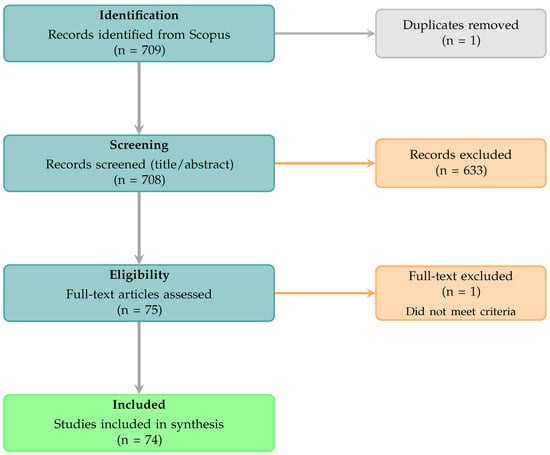
Figure 1.
PRISMA flow diagram illustrating the systematic review process.
4.1. Overview and Geographic Distribution
As shown in Table 2, the time distribution of the 74 articles (including reviews) clearly demonstrates a growth trajectory in ESG-related financial risk research. The earliest study in our sample dates from 2018, with only one publication, reflecting the nascent state of this intersection at that time. The period of 2019–2021 shows modest activity, with zero to three articles per year, likely representing the foundational phase where researchers began exploring the integration of ESG factors into financial risk models.
Table 2.
Number of articles included per year.
A marked turning point was observed in 2022, when the number of publications rose to 10—more than triple the number found in the preceding year. This acceleration coincides with significant regulatory developments, including the adoption of the EU CSRD, and increased SEC attention to climate-related disclosures in the United States. The upward trend continues sharply, with 16 articles in 2023 and reaching a peak of 26 articles in 2024, representing 35% of the total sample. The 15 articles from early 2025 (partial year, January–March) suggest that this growth trajectory is likely to continue.
This growth reflects the expanding interest in sustainable finance research and applications. This post-2020 trend is supported by the convergence of three elements: (i) the availability and increase in ESG data sources and raters, which allowed more advanced quantitative analysis to occur; (ii) the advancement of ML and NLP technology relevant to finance; and (iii) increased demands by financial actors and authorities regarding the transparency of ESG risk evaluation after the pandemic triggered by the COVID-19 crisis, which underlined the relevance of other than financial risk drivers.
Table 3 shows the top 10 countries most cited across the 64 studies. China leads the distribution with 13 studies, closely followed by Italy, which has 10 studies, reflecting the increasing number of studies and corresponding increased corporate support and involvement in ESG considerations. India and the US are also very visible, having 6 studies each, and then follows the UK, which has 4 studies, showing the increased involvement of each of these countries in financial studies involving ESG considerations.
Table 3.
Top 10 countries mentioned across 64 empirical studies.
4.2. Methodological Approaches
Table 4 presents the distribution of methodological approaches identified in the 64 empirical studies, grouped into four main categories: Statistical Methods, ML/AI, NLP, and Other approaches.
Table 4.
Specific analytical methods employed in 64 empirical studies.
As shown in Table 4, traditional statistical techniques remain dominant (31 studies, 48%), which reflects their entrenched role in financial research. However, the presence of AI and ML methods (25 studies, 39%) is notable and expected to grow in a rapidly evolving field like ESG. The limited use of NLP techniques (five studies, 8%) suggests an opportunity for methodological expansion in future research, especially considering the rise in unstructured ESG data from reports, media, and social platforms.
This review shows that ML models are proving to be highly effective tools for ESG-based financial risk prediction. Algorithms like Random Forest, Gradient Boosting, and CatBoost stand out for their ability to capture complex relationships between ESG factors and financial outcomes with high accuracy across multiple evaluation metrics (Goldberg & Mouti, 2022; Taskin et al., 2025). Their strength lies in handling the nonlinear patterns inherent in ESG data that traditional econometric models often miss. Similarly, neural network architectures, including Artificial Neural Networks (ANN) and hybrid approaches combining Self-Organizing Maps with ANN (SOM-ANN), have demonstrated superior performance in modeling the multidimensional nature of ESG–financial relationships (Cheong et al., 2025; Lin & Jin, 2023), while Logistic Regression does not achieve the same predictive power as more advanced models, it remains a viable option when model interpretability is prioritized—a critical consideration given regulatory requirements for transparent decision-making in financial institutions (Taskin et al., 2025). Taken together, these findings highlight the value of ML in capturing subtle ESG signals that influence financial risk (D’Ecclesia et al., 2024; Xue et al., 2024), while also recognizing that traditional statistical methods retain an important role when explainability and auditability are essential.
The role of NLP in ESG–financial risk research remains limited but promising. Among the five empirical studies employing NLP techniques, several demonstrate its potential for extracting risk-relevant information from unstructured sources. Hajek et al. (2024) found that ESG report content significantly predicts corporate credit ratings, while Shang et al. (2025) combined NLP with traditional methods to analyze corporate debt default risk. Cardoni and Kiseleva (2023) applied text mining to examine the relationship between sustainable governance and firm value, and C. Zhang and Hu (2025) used NLP to analyze the relationship between ESG performance and firms’ productivity. These studies suggest that NLP can capture qualitative ESG signals—such as disclosure tone, reporting completeness, and governance language—that structured data alone cannot provide. However, most applications remain limited to basic techniques like keyword extraction and sentiment analysis, with more advanced approaches such as transformer-based models (BERT, GPT) largely unexplored in this domain.
4.3. ESG Dimension Analysis
Table 5 presents the distribution of the 64 empirical studies according to their ESG orientation, based on each study’s dominant ESG Focus (single or combined pillars). Studies may still consider other ESG dimensions alongside their primary focus.
Table 5.
Distribution of articles by ESG Focus.
Studies focused on all three ESG dimensions simultaneously represent the largest category (28 studies, 44%), followed by those focusing on Governance and Environmental aspects combined (12 studies, 19%). The Social dimension alone is the focus of only three studies (5%), suggesting limited scholarly attention to non-financial performance metrics tied to stakeholder expectations. Governance is a common term, and it is presumably used due to its relevance to risk and control. Environmental indicators are gaining prominence, reflecting the growing importance of climate-related disclosure.
To examine whether there is a relationship between the type of model used and the ESG dimension studied, a chi-square test of independence was performed on the 64 empirical studies. Table 6 presents the contingency table showing the observed frequencies for each combination of method and ESG category.
Table 6.
Contingency table: method × ESG category (64 Empirical Studies).
Table 7 shows the expected frequencies under the assumption of independence between variables, as calculated for the chi-square test.
Table 7.
Expected frequencies for method × ESG (chi-square test).
The result of the chi-square test was not statistically significant (, , , ). This indicates that, in our sample, the type of modeling method does not appear to influence which ESG dimension is analyzed. Table 8 summarizes the most frequently studied ESG category for each methodological approach.
Table 8.
Most frequent ESG category per method.
As shown in Table 8, most methodological approaches tend to focus on all ESG dimensions simultaneously. Studies classified as “Other” show no dominant ESG category, with equal representation across ESG, Governance, and the Governance–Environmental combination.
While the global chi-square test indicates no significant association between methodological approaches and ESG dimensions when focusing on all categories simultaneously, a more granular analysis using Fisher’s exact test for pairwise comparisons reveals nuanced patterns between the two dominant methodological categories: AI/ML () and Statistical methods ().
Table 9 presents the results of these pairwise comparisons. The analysis focused on the presence or absence of specific ESG components across methodological approaches.
Table 9.
Fisher’s exact test: pairwise comparison between AI/ML and statistical methods.
The pairwise analysis reveals one statistically significant finding. The combination of Governance and Environmental (GE) dimensions is significantly more common in AI/ML studies (32.0%) than in Statistical studies (9.7%, ). Additionally, AI/ML methods demonstrate a stronger association with studies that incorporate the Environmental component: 92.0% of AI/ML studies focus on Environmental factors compared to 74.2% of Statistical studies (). Studies focusing exclusively on Governance—without Environmental or Social dimensions—are found only among Statistical methods (12.9% vs. 0% in AI/ML, ).
These patterns suggest a methodological specialization within the field. Researchers appear to preferentially apply ML techniques when analyzing environmental factors, possibly due to the greater complexity and heterogeneity of environmental data (carbon emissions, energy consumption, and climate risk indicators) that benefit from ML algorithms’ capacity to capture nonlinear relationships and process diverse data sources. Conversely, governance-focused studies, which often rely on well-structured categorical variables (board composition, ownership structure, and audit quality), may be adequately addressed through traditional econometric approaches such as panel regression and fixed effects models.
4.4. Data Sources and Study Types
The quality and reliability of ESG research depend significantly on the data sources employed. Table 10 presents the main ESG data sources used across the 64 empirical studies, revealing a concentrated reliance on a limited number of commercial providers.
Table 10.
ESG Data sources used in 64 empirical studies.
Refinitiv (formerly Thomson Reuters) emerges as the dominant data provider, utilized in 23 studies (36% of the empirical sample), followed by Bloomberg with 16 studies (25%). Together, these two commercial providers account for over half of the data sources employed in ESG–financial risk research. This concentration raises important considerations regarding data accessibility and potential methodological biases, as smaller research institutions may face cost barriers when accessing these proprietary databases.
ESG rating agencies employ different techniques. Refinitiv rates entities based on percentile ranks, utilizing more than 450 ESG factors. Bloomberg utilizes a scoring technique based on disclosures. MSCI concentrates on industry-related topics and is forward-looking. Correlation coefficients as low as 0.38 have been reported by Berg et al. (2022) between major ESG rating providers. These disparities occur based on differences in scope, measurement, and weight. These inconsistencies may impact the comparability of research, causing divergence in findings based on the usage of possibly contrasting suppliers, such as Refinitiv, Bloomberg, and MSCI, among others, despite focusing on the identical set of entities and periods. Recent research has started to examine ways in which these disparities impact particular financial performances; for instance, Sun et al. (2025) demonstrate that divergent ESG evaluations create sustainability uncertainty that significantly impacts supply chain financing decisions in China. Future research should explicitly address this limitation through multi-source validation or sensitivity analyses across rating providers.
The differences in ESG data may influence how comparable and reliable models are. When research is conducted using different ESG data suppliers, it is possible that variation in findings may stem from differences in data measurement and not actual economic differences. For example, if one study finds that ESG performance reduces credit risk using data from Refinitiv, but another study finds no relationship using data from Bloomberg, it may be due to differences in how each provider measures environmental and governance aspects.
This heterogeneity poses three specific challenges for the field:
- Replication difficulties: Replication of research in this way is not possible if the source of the ESG ratings is private. It is possible that the same company has been rated quite differently by two different providers.
- Model portability: A model trained on data from one ESG provider may not work well with data from another provider. This is a problem for financial institutions that use different data subscriptions.
- Meta-analytic synthesis: Systematic reviews and meta-analyses aggregating findings across studies face the challenge that effect sizes may not be commensurable when underlying ESG measurements differ fundamentally.
Future research should prioritize multi-provider validation studies that explicitly test whether substantive conclusions hold across ESG data sources, and the emerging ISSB standards may eventually provide a common measurement framework that addresses these comparability concerns.
Regional data sources also play a significant role, particularly CSMAR (China Stock Market and Accounting Research Database), which appears in seven studies focusing on Chinese markets. This reflects the growing academic interest in ESG dynamics within emerging economies and the need for region-specific data infrastructure. The World Bank serves as a complementary source for macroeconomic and institutional indicators in three studies, and is often used simultaneously with more detailed ESG information at the individual enterprise level.
Notably, the diversity of data sources introduces challenges for cross-study comparability. Different providers employ varying methodologies for ESG scoring, which may explain some of the heterogeneity observed in research findings across the literature. This underscores the importance of transparency in data source selection and the potential value of studies that explicitly compare results across multiple ESG data providers.
Understanding the methodological nature of the reviewed literature provides insight into the maturity and direction of ESG–financial risk research. Table 11 categorizes the 74 identified studies according to their primary research design.
Table 11.
Distribution of study types.
The distribution reveals a strong empirical orientation within the field, with 64 studies (86%) conducting original quantitative analyses using firm-level or market data. This predominance of empirical work reflects the applied nature of ESG–financial risk research, where practitioners and academics seek actionable insights for investment decisions and risk management frameworks.
The 10 systematic and literature reviews (14%) serve a complementary but essential function, synthesizing existing knowledge and identifying research gaps. These reviews are described in detail in Section 2 and were excluded from the quantitative analyses in subsequent sections to avoid double-counting of evidence. The presence of multiple recent reviews (seven published in 2024–2025) indicates a consolidation phase in the literature, where researchers are increasingly attempting to organize and evaluate the rapidly growing body of empirical evidence.
4.5. Application Scope
A comprehensive understanding of how ESG factors are applied in financial research requires examining the specific outcomes and risk dimensions that researchers have investigated. Table 12 presents the financial outcomes and risk dimensions studied across the reviewed literature, organized by application area.
Table 12.
Application scope: financial outcomes and risk dimensions studied (64 Empirical Studies).
4.5.1. Corporate Financial Performance
The largest application area focuses on firm performance metrics, with 25 studies examining traditional financial indicators such as Return on Assets (ROA), Return on Equity (ROE), and Tobin’s Q. This concentration reflects the fundamental research question driving the field: whether ESG integration creates or destroys shareholder value. The predominance of accounting-based metrics (ROA, ROE) alongside market-based measures (Tobin’s Q) suggests researchers are attempting to capture both operational efficiency and market valuation effects of ESG practices.
4.5.2. Risk Assessment
Risk-related applications represent the second major research stream, encompassing three distinct dimensions:
- Credit Risk/Default Risk (ten studies): This category examines how ESG factors influence corporate creditworthiness and bankruptcy probability. Studies in this area are particularly relevant for financial institutions developing ESG-integrated credit scoring models and for rating agencies incorporating sustainability metrics into their assessments.
- Stock Price Volatility/Market Risk (eight studies): Research in this area investigates whether strong ESG performance reduces stock price fluctuations and systematic risk exposure. Findings generally suggest that ESG acts as a risk mitigation mechanism, potentially lowering the cost of equity capital.
- Bank Risk-Taking (four studies): A specialized stream focusing on how ESG considerations affect risk appetite and risk management practices within banking institutions. This area has gained prominence following regulatory emphasis on climate-related financial risks.
4.5.3. Other Application Areas
Eight studies focus specifically on ESG disclosure quality, examining both the determinants and consequences of corporate sustainability reporting. This research stream addresses critical questions about information asymmetry, greenwashing detection, and the role of mandatory versus voluntary disclosure regimes. The growing regulatory emphasis on standardized ESG reporting (e.g., CSRD in Europe, SEC climate rules in the US) makes this application area increasingly relevant for practitioners and policymakers.
Six studies develop predictive models for ESG scores themselves, rather than using ESG as a predictor of financial outcomes. This emerging application area responds to practical needs: the high cost of commercial ESG ratings, delays in score publication, and coverage gaps for smaller firms. ML approaches are particularly prominent in this category, with models trained to predict ESG scores from publicly available financial and textual data.
Five studies focus specifically on carbon emissions and climate risk, reflecting the urgency of climate-related financial concerns. This specialized stream examines how carbon intensity affects firm valuation, how climate transition risks manifest in credit spreads, and how physical climate risks impact asset prices. The concentration of environmental-specific studies signals the field’s response to regulatory initiatives such as the Task Force on Climate-related Financial Disclosures (TCFD) recommendations.
Several patterns emerge from this application landscape. First, there is a notable imbalance: corporate performance and credit risk dominate, while social-specific applications (e.g., labor practices and community impact) remain underexplored. Second, most studies adopt a firm-level perspective; portfolio-level and systemic risk applications are scarce. Third, the temporal dimension is often overlooked—few studies examine how ESG–financial relationships evolve over time or differ across economic cycles. These gaps suggest promising directions for future research.
4.6. Thematic Analysis from Word Clouds
To complement the quantitative analysis, a text mining approach was applied to the “Findings” and “Challenges” extracted from the 64 empirical studies. Word clouds were generated after standard NLP preprocessing (tokenization, lemmatization, stopword removal, and domain-specific filtering) to visualize the most salient concepts across the literature. This approach enables the identification of recurring themes, dominant research patterns, and the overall tone of reported results.
The word cloud derived from the “Findings” (Figure 2) reveals the thematic priorities of ESG–financial risk research. The most prominent terms—performance, firm, financial, relationship, and corporate—underscore the literature’s central focus on establishing empirical linkages between ESG factors and corporate financial outcomes.
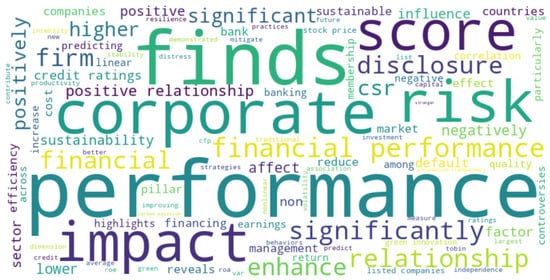
Figure 2.
Word cloud of research findings.
Several semantic clusters emerge from the Findings visualization:
- Performance-oriented terms: The dominance of performance, financial, firm, and corporate reflects the literature’s emphasis on measuring tangible financial impacts of ESG integration. Terms such as enhance, improve, and positive suggest that a majority of studies report beneficial associations between ESG practices and financial outcomes.
- Risk and stability concepts: Words like risk, default, credit, and stability indicate substantial research attention to how ESG factors influence various dimensions of financial risk, including credit risk, default probability, and overall corporate resilience.
- Disclosure and transparency: The presence of disclosure, transparency, score, and rating highlights the importance of ESG reporting quality and third-party assessments in mediating financial outcomes.
- Stakeholder and governance dimensions: Terms such as investor, stakeholder, board, and management reflect research attention to governance mechanisms and stakeholder relationships as channels through which ESG affects financial performance.
- Methodological indicators: The appearance of significant, positive, negative, and relationship indicates that most studies employ hypothesis-testing frameworks to establish statistical associations, with findings predominantly reporting significant positive relationships.
Notably, the relatively high frequency of positive compared to negative suggests an optimistic consensus in the literature regarding ESG’s beneficial effects on financial outcomes, though this may also reflect publication bias toward positive findings.
Complementing the analysis of findings, we also examined the “Challenges” reported across the 64 empirical studies. Understanding the obstacles and limitations acknowledged by researchers is crucial for identifying methodological gaps, data constraints, and areas requiring further development. This analysis reveals not only what the field has achieved, but also what barriers persist in translating ESG research into practical applications.
The “Challenges” word cloud (Figure 3) provides insight into the methodological and practical obstacles facing ESG–financial risk research. The prominence of financial, risk, performance, and limitation indicates that challenges are often framed in relation to the core constructs under investigation.
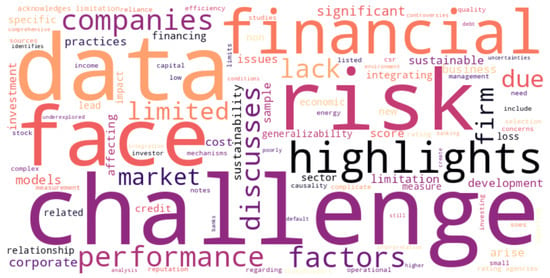
Figure 3.
Word cloud of research challenges.
Key challenge clusters include
- Data-related constraints: Terms such as data, lack, limited, sample, and availability point to persistent data quality issues. Researchers frequently cite insufficient ESG data coverage, inconsistent reporting standards, and limited historical time series as significant obstacles to robust analysis.
- Methodological limitations: Words like generalizability, complexity, model, and interpretation reflect concerns about the external validity of findings. Many studies acknowledge that results derived from specific geographic or sectoral contexts may not transfer to other settings.
- Measurement challenges: The presence of score, measure, indicator, and assessment highlights ongoing difficulties in operationalizing ESG constructs. Disagreements among ESG rating providers and the lack of standardized metrics complicate cross-study comparisons.
- Market and contextual factors: Terms such as market, country, sector, and industry indicate that researchers recognize the context-dependent nature of ESG–financial relationships. Regulatory environments, cultural factors, and industry characteristics introduce heterogeneity that challenges universal conclusions.
- Stakeholder and disclosure issues: Words like stakeholder, disclosure, transparency, and information suggest challenges related to corporate reporting practices, including concerns about greenwashing and the reliability of self-reported ESG information.
- Endogeneity and causality: Although less visually prominent, terms related to bias, selection, and endogeneity appear in the corpus, reflecting methodological concerns about establishing causal relationships rather than mere correlations.
As a synthesis of thematic patterns, comparing the two word clouds reveals an important asymmetry: while the “Findings” cloud emphasizes positive outcomes and established relationships, the “Challenges” cloud highlights persistent uncertainties and limitations. This contrast suggests that while the field achieved substantial progress in documenting ESG–financial associations, significant methodological and data-related hurdles remain before these findings can be translated into reliable predictive models for practical application.
The thematic analysis also reveals a notable gap: terms related to emerging technologies (ML, NLP, and AI) appear with moderate frequency in the findings but are largely absent from the challenges discourse. This may indicate that while advanced computational methods are increasingly employed, their specific limitations—such as interpretability concerns, overfitting risks, and computational requirements—are not yet systematically discussed in the literature.
4.7. Summary of Key Findings
This systematic review analyzed 64 empirical studies examining the intersection of ESG factors and financial performance using quantitative methods (after excluding 10 systematic reviews from the 74 identified articles). The key findings are summarized as follows:
- Methodological landscape: Traditional econometric approaches remain dominant (48%), followed by AI/ML methods (39%) and NLP techniques (8%). The chi-square test revealed no significant association between methodological approach and ESG dimension studied (, ), suggesting that method selection is independent of the specific ESG focus.
- ESG dimension coverage: Integrated ESG studies focusing on all three dimensions simultaneously dominate the literature (44%), followed by combined Governance and Environmental focus (19%). The Social dimension alone receives minimal attention (5%), highlighting a gap in stakeholder-focused research.
- Geographic distribution: Research output is concentrated in China (13 studies), Italy (10 studies), and the United States and India (6 studies each), reflecting both regulatory developments and emerging market interest in ESG integration.
- Temporal trends: Publication output shows substantial growth, with 2024 representing the peak year, underscoring accelerating academic interest in ESG–financial performance relationships.
- Context-dependent effects: ESG integration significantly influences corporate financial stability, though effects vary by region and sector, reflecting the context-dependent relevance of ESG in financial risk management.
- Academic-practice gap: A gap persists between academic ESG models and practical adoption in financial institutions, particularly regarding interpretability and operational deployment.
- ML effectiveness: ML models—especially ensemble methods and neural networks—demonstrate high effectiveness in ESG-based risk prediction, signaling a methodological shift toward data-driven approaches.
- NLP potential: Most models rely on structured ESG data, limiting their scope. NLP methods incorporating unstructured data (e.g., media sentiment analysis, ESG disclosure mining) show promise for improving model accuracy and capturing dynamic risk signals.
These findings underscore the need for regionally sensitive and ethically grounded ESG modeling frameworks, as well as the potential of advanced AI techniques to bridge academic knowledge and practical financial risk assessment.
5. Discussion
This section synthesizes the findings of the systematic review in relation to the research questions posed at the outset. We discuss the implications of our results, identify critical gaps in the current literature, and outline open problems that warrant future investigation.
5.1. Addressing the Research Questions
5.1.1. RQ1: How Can NLP Techniques Improve Financial Risk Prediction Models?
Our review identified only 5 studies (8%) explicitly employing NLP techniques for ESG-based financial risk prediction, indicating that this methodological approach remains underutilized despite its significant potential. The studies that did incorporate NLP demonstrated promising results in several key areas.
First, NLP enables the extraction of risk-relevant information from unstructured sources that traditional models cannot process, including sustainability reports, CSR disclosures, news articles, and social media content. These sources often contain early warning signals of ESG-related risks—such as environmental controversies, labor disputes, or governance failures—that precede their reflection in structured financial data.
Second, sentiment analysis and topic modeling techniques allow researchers to capture qualitative dimensions of ESG performance that standardized ratings may overlook. For instance, the tone and specificity of environmental disclosures can reveal management commitment beyond what numerical scores convey.
However, the current application of NLP in this field faces limitations. Most of the research is based on fairly simple techniques such as keyword extraction, Term Frequency-Inverse Document Frequency (TF-IDF), and simple sentiment analysis using predefined lists of words. The downside is that keyword extraction is unable to take context and negations into consideration, and predefined word lists for sentiment analysis are often unsuited for the language of finance and sustainability. More recent approaches like transformer models (BERT, FinBERT, and ClimateBERT), large language models (GPT-4 and Claude), and domain-specific embeddings have not been widely used in ESG–financial risk analysis. However, they offer significant benefits: they can understand complex sustainability narratives, detect greenwashing through textual consistency analysis, support the analysis of disclosures in non-English languages, and identify emerging sustainability issues that were not present in training data. This represents a significant opportunity for future research.
5.1.2. RQ2: What ML Techniques Are Most Effective for ESG-Based Risk Prediction?
The review reveals a clear hierarchy of methodological effectiveness among the 25 studies employing AI/ML approaches. Ensemble methods—particularly Random Forest, Gradient Boosting, and CatBoost—consistently outperformed traditional statistical models across multiple evaluation metrics (accuracy, precision, recall, AUC).
Neural network architectures, including ANN and SOM-ANN, demonstrated superior capability in capturing the nonlinear relationships between ESG factors and financial outcomes. These models proved especially effective for credit risk prediction and default probability estimation, where complex interdependencies among environmental, social, and governance variables influence outcomes in non-additive ways.
Logistic regression, while less powerful than ensemble methods, remains a viable option when model interpretability is prioritized. Several studies noted that regulatory requirements in financial services often mandate explainable models, creating a trade-off between predictive accuracy and operational deployability.
An important challenge that demands more attention is the “black box” problem of high-performing ML models and its implications for financial regulations. Financial regulations such as the EU AI Act, or rules from the Basel Committee regarding managing risks associated with models, or SEC regulations regarding fair lending practices, all call for models that are explainable and auditable to some degree. The problem is that some of the models that are able to accurately predict ESG risks—neural nets or ensemble models—cannot provide clear, rule-like explanations that regulators would find satisfactory for high-value financial applications.
Recent solutions involve post hoc explanation techniques; for example, SHAP and LIME, interpretable models that are easily understood; for example, decision trees, Generalized Additive Models (GAMs), and techniques that combine ML model predictions with rule extraction that are easily interpretable. However, based on our review, very few studies have specifically addressed the aspect of ML related to interpretability techniques. Still, the aspect of interpretability is not yet adequately investigated, requiring immediate intervention for practical applications.
A critical gap identified in this area is the limited use of deep learning architectures. Convolutional Neural Networks (CNN) and Recurrent Neural Networks (RNN), which have proven effective in other financial applications, are virtually absent from ESG-focused research. Similarly, hybrid approaches combining multiple ML techniques with traditional econometric methods remain rare, despite their potential to leverage the strengths of both paradigms.
5.1.3. RQ3: How Do Different ESG Factors Impact Financial Stability?
The analysis of ESG dimension distribution reveals important patterns in how individual factors affect corporate financial stability. Studies focusing on all three ESG dimensions simultaneously (44%) generally report positive associations between integrated ESG performance and financial outcomes, supporting the view that sustainability practices create long-term value.
However, when examining individual dimensions, the effects are more nuanced:
- Environmental factors: Studies focusing on environmental aspects (8 studies exclusively, 12 combined with governance) consistently find that strong environmental performance reduces credit risk and enhances firm valuation, particularly in carbon-intensive industries. Climate risk disclosure and carbon emission management emerge as key predictors of financial resilience.
- Governance factors: Governance-focused studies (5 exclusive, 12 combined with environmental) emphasize the role of board composition, executive compensation alignment, and transparency mechanisms in reducing agency costs and information asymmetry. Governance factors show the strongest association with credit ratings and default risk.
- Social factors: The social dimension receives the least attention (three studies exclusively), representing a significant gap. Available evidence suggests that social performance—including labor practices, community relations, and human rights policies—affects firm reputation and stakeholder trust, but the financial materiality of these factors remains less established than for environmental and governance aspects.
The underrepresentation of the Social dimension warrants deeper examination, as it may reflect multiple underlying factors:
- Data limitations: Social performance is more challenging to measure compared to environmental metrics (such as carbon emissions and energy consumption) and governance metrics (such as board composition and ownership). The likes of diversity and happiness of employees and societal footprint cannot be measured uniformly.
- Measurement challenges: While environmental performance can be quantified in physically measurable terms, social performance lacks the ability to be distinctly measured in physical terms as it can only be judged through self-evaluation or third-party reviews in many instances.
- Perceived financial materiality: Investors and researchers may perceive social factors as having weaker or more indirect links to financial outcomes compared to environmental risks (climate transition, carbon pricing) or governance failures (fraud, mismanagement). This perception—whether accurate or not—shapes research priorities.
- Structural biases in ESG research: The academic finance community’s traditional focus on quantifiable risk factors may systematically disadvantage research on social dimensions, which often require qualitative or mixed-methods approaches.
- Temporal lag: Social risks such as labor disputes, human rights problems, or resistance from the community may emerge in a timeframe longer than environmental and governance risks, thus becoming difficult to quantify from a financial perspective in typical studies.
Addressing this imbalance represents a priority for future ESG research. The COVID-19 pandemic highlighted the financial materiality of social factors—firms with stronger employee relations and supply chain resilience demonstrated superior performance during the crisis (Cheema-Fox et al., 2022). As stakeholder capitalism gains prominence and social disclosure requirements expand (e.g., EU Corporate Sustainability Due Diligence Directive), the Social dimension is likely to receive increased research attention.
The context-dependent nature of ESG impacts is a recurring theme. Effects vary significantly across regions (developed vs. emerging markets), industries (carbon-intensive vs. service sectors), and firm characteristics (size, ownership structure). This heterogeneity suggests that universal ESG models may be inadequate, and region- or sector-specific approaches may be necessary.
5.1.4. RQ4: Bridging Academic Research and Practical Applications
This review identifies a persistent gap between academic ESG models and their adoption in financial practice. Several factors contribute to this disconnect:
- Interpretability concerns: Many ML models operate as “black boxes,” limiting their acceptance by regulators and risk managers who require transparent, auditable decision processes, while techniques such as SHAP values and LIME can enhance interpretability, their application in ESG research remains limited.
- Data accessibility: Academic studies frequently rely on proprietary ESG databases (Refinitiv, Bloomberg, MSCI) that may be cost-prohibitive for smaller financial institutions. The lack of standardized, publicly available ESG datasets hinders model replication and broader adoption.
- Temporal misalignment: ESG ratings are typically updated annually, while financial risk management requires more frequent assessments. Models capable of incorporating real-time ESG signals from news and social media could address this gap but remain underdeveloped.
- Regulatory uncertainty: The evolving landscape of ESG disclosure requirements (CSRD, SEC climate rules, and ISSB standards) creates uncertainty about which metrics and frameworks will prevail, making practitioners hesitant to invest in specific modeling approaches.
To bridge this gap, future research should prioritize model deployability alongside predictive accuracy, develop open-source tools and datasets, and engage more directly with industry practitioners to understand operational constraints. In particular, we propose three implementable directions: (1) collaborative case studies between researchers and financial institutions to test ESG risk models in real trading or credit evaluation settings, with a focus on documenting how model performance degrades when moving from controlled environments to real-world application; (2) regulatory sandboxes that allow experimentation with AI-powered ESG risk evaluation tools; and (3) industry–researcher partnerships to develop shared benchmarks based on verified ESG risk events—cases that can be empirically confirmed but may fall outside the predictions of existing ESG risk models.
5.1.5. RQ5: Global Relevance of ESG Factors Across Regions and Industries
The geographic distribution of reviewed studies reveals both progress and limitations in capturing global ESG dynamics. European countries (Italy, UK, Romania) and Asian markets (China, India, Malaysia) dominate the sample, reflecting regulatory leadership (EU) and emerging market growth in ESG adoption.
However, significant regional gaps persist, and critically, the regulatory heterogeneity across these regions affects the generalizability of research conclusions. European studies operate within a prescriptive mandatory disclosure regime (CSRD, SFDR, Taxonomy Regulation), where ESG reporting is legally required and standardized. Chinese studies reflect a top-down regulatory approach with government-mandated green finance guidelines but less emphasis on social and governance factors. US studies occur in a principles-based, largely voluntary disclosure environment with ongoing regulatory uncertainty.
These institutional differences mean that findings from one regulatory context may not transfer to another: for instance, the positive ESG–performance relationship documented in EU markets, where disclosure is mandatory and investor expectations are high, may not hold in jurisdictions with weaker enforcement or different stakeholder priorities. Our chi-square analysis found no statistically significant relationship between methodology and ESG dimension (), but this null finding may mask important regional heterogeneity that country-specific analyses would reveal. Future research should explicitly model regulatory regime as a moderating variable and conduct cross-regional comparative studies to establish boundary conditions for ESG–financial relationships.
- Underrepresented regions: Africa, Latin America (except Brazil), and the Middle East (except UAE) are virtually absent from the literature. ESG factors may operate differently in these contexts due to distinct regulatory environments, institutional frameworks, and stakeholder expectations.
- Cross-regional comparisons: Few studies conduct systematic comparisons across regulatory regimes, limiting our understanding of how institutional context moderates ESG–financial relationships.
- Industry coverage: While the banking and energy sectors receive substantial attention, other industries with significant ESG exposure—such as agriculture, mining, and fast fashion—remain underexplored.
Temporal Dynamics and Structural Change. Most studies in this review look at single points in time or short periods. Few examine how ESG–financial relationships change over time. This snapshot approach may miss important changes caused by new regulations, market adaptation, and shifting stakeholder expectations.
Several factors suggest that ESG–financial relationships are unlikely to remain stable:
- Regulatory regime shifts: The introduction of mandatory ESG disclosure requirements (CSRD in Europe, SEC climate rules in the US) could alter the information environment. Relationships estimated during voluntary disclosure periods may not hold once reporting becomes compulsory and standardized.
- Market learning and pricing efficiency: With enhanced ESG data available and investor sophistication increasing, ESG risks could be incorporated faster into market prices.
- Crisis-induced structural breaks: The COVID-19 outbreak, the energy crisis of 2022, or even climate-related events could produce structural breaks that result in post-crisis differences in the ESG/finance relationship that are distinct from pre-crisis values.
- Evolving materiality: Time-varying changes in financial materiality for different ESG issues may occur. For example, carbon emissions became relevant because of climate policies, social issues because of the global pandemic, while governance issues keep fluctuating depending on scandals and cycles of regulation.
Future research should employ time-varying parameter models, structural break tests, and regime-switching approaches to capture these dynamics. Longitudinal studies spanning multiple regulatory periods would provide valuable insights into the stability and evolution of ESG–financial relationships.
The global relevance of ESG factors is further complicated by measurement inconsistencies. ESG rating agencies apply different methodologies, weights, and data sources, producing divergent assessments of the same company. This “ESG rating divergence” problem undermines cross-study comparability and challenges the development of globally applicable risk models.
5.2. Critical Analysis and Open Problems
Methodological gaps were identified regarding the analytical approaches employed in current ESG–financial risk research. Three main limitations emerged from our analysis:
- Lack of holistic frameworks: Most studies examine ESG–financial relationships in isolation, without integrating macroeconomic conditions, industry dynamics, or firm-specific factors into comprehensive risk models. Holistic frameworks that capture these interdependencies are needed.
- Limited causal inference: The predominance of correlational designs (panel regression, cross-sectional analysis) limits causal claims. Quasi-experimental approaches, instrumental variable methods, and natural experiments could strengthen causal identification.
- Temporal dynamics: Few studies examine how ESG–financial relationships evolve over time or differ across economic cycles. Longitudinal designs and time-varying parameter models could address this gap.
Another critical gap relates to data challenges. Despite the growing availability of ESG data from commercial providers, significant obstacles persist:
- Standardization: The absence of globally accepted ESG reporting standards creates measurement inconsistencies. The emergence of ISSB standards may eventually address this, but current research must navigate heterogeneous data sources.
- Coverage gaps: ESG data availability remains concentrated among large, publicly traded firms in developed markets. Small and medium enterprises, private companies, and firms in emerging markets are underrepresented.
- Greenwashing detection: Current models largely accept reported ESG information at face value, with limited capacity to detect greenwashing or verify disclosure accuracy. NLP-based verification tools represent a promising but underdeveloped area.
This review also identifies two main technological opportunities that deserve attention in future research:
- Real-time monitoring: Integration of alternative data sources—satellite imagery, IoT sensors, social media streams—could enable real-time ESG risk monitoring, moving beyond static annual ratings.
- Explainable AI (XAI): Developing interpretable ML models for ESG risk assessment is essential for regulatory acceptance. Techniques such as attention mechanisms, concept-based explanations, and counterfactual analysis deserve greater attention.
While technological innovations offer promising solutions, their practical implementation in financial institutions requires careful attention to regulatory and operational factors:
- Adaptability to local regulations: ESG frameworks must accommodate regional regulatory variations. Models designed for EU contexts may not transfer directly to US, Asian, or emerging market settings without significant adaptation.
- Integration with existing risk frameworks: ESG factors should complement, not replace, traditional financial risk metrics. Research on optimal integration strategies—how to weight ESG alongside credit scores, market risk measures, and liquidity indicators—remains limited.
- Cost–benefit analysis: The implementation costs of sophisticated ESG risk models may exceed their benefits for smaller institutions. Scalable, cost-effective solutions are needed to democratize access to ESG analytics.
5.3. Limitations of This Review
This review has several limitations. First, the restriction to English language publications may have introduced selection bias by excluding relevant research published in other languages, particularly from non-English speaking regions in Europe, Latin America, and Asia where significant ESG regulatory developments have occurred, while Scopus captures English language publications from researchers in these regions, vernacular research that has not been translated remains outside our scope. However, this approach is consistent with the established role of English as the lingua franca of contemporary scientific communication (Englander, 2014).
Second, the focus on peer-reviewed articles excluded gray literature and practitioner reports that may contain cutting-edge methodological innovations not yet appearing in academic journals.
Third, the search was limited to Scopus, potentially missing studies indexed exclusively in Web of Science, Google Scholar, or regional databases.
Fourth, and importantly, the field’s rapid evolution means that studies from 2024 to 2025 included in our review may not have undergone the same level of validation and replication as earlier work. The recency of these publications means their findings should be interpreted with appropriate caution, as methodological approaches and empirical conclusions in this fast-moving field may be subject to revision as more evidence accumulates.
Finally, the emergence of LLM applications and evolving regulatory frameworks (particularly SEC climate rules and ISSB standards) represent developments that occurred during or after our search period and may not be fully captured.
6. Conclusions
This systematic review reveals that ESG integration into financial risk models is a field in methodological transition, while traditional econometric approaches remain dominant (48%), ML methods (39%)—particularly ensemble methods and neural networks—demonstrate superior predictive accuracy for credit risk assessment. Natural Language Processing remains underutilized (8%), with advanced techniques such as transformer-based models and LLMs virtually unexplored, representing a significant opportunity for processing unstructured ESG disclosures and detecting greenwashing.
The analysis reveals notable imbalances. Studies focusing on all three ESG pillars simultaneously constitute the largest category (44%), while the Social dimension alone receives limited attention (5%). Geographically, research concentrates in China (13 studies) and Europe (particularly Italy, 10 studies), with Africa, Latin America, and the Middle East significantly underrepresented.
Persistent challenges include ESG data inconsistency across rating providers, limited SME coverage, lack of standardized reporting frameworks, and a pronounced academic-practice gap due to model interpretability concerns.
This review identifies three priority areas for future research: (1) application of LLMs for automating sustainability report assessment and detecting disclosure inconsistencies; (2) development of region-sensitive modeling frameworks accounting for institutional and regulatory differences; and (3) greater attention to the Social dimension. Addressing these gaps will enable more robust and globally applicable ESG risk assessment frameworks.
Author Contributions
Conceptualization, C.C.-G. and D.J.-E.; methodology, C.C.-G.; software, C.C.-G.; validation, C.C.-G., D.J.-E. and Y.C.; formal analysis, C.C.-G.; investigation, C.C.-G.; resources, C.C.-G.; data curation, C.C.-G.; writing—original draft preparation, C.C.-G.; writing—review and editing, D.J.-E. and Y.C.; visualization, C.C.-G.; supervision, D.J.-E. and Y.C. All authors have read and agreed to the published version of the manuscript.
Funding
This research was supported by the internal project MultimediaData-EnergyAware: Data Science for Multimedia Content Analysis and Energy-Aware Communication Middleware, Number VIU25010, financed by Valencian International University.
Institutional Review Board Statement
Not applicable.
Informed Consent Statement
Not applicable.
Data Availability Statement
The data supporting reported results are available from the corresponding author upon reasonable request.
Acknowledgments
During the preparation of this manuscript, the authors used Rayyan for systematic screening, SciSpace for data extraction, and OpenAI ChatGPT (GPT-5.1) to refine the fluency and linguistic clarity of author-written sentences during the translation and text-editing process (grammar, structure, spelling, and punctuation). The authors did not use generative AI or AI-assisted technologies to write the manuscript. Any tool-assisted outputs used for language refinement were thoroughly reviewed and edited by the authors, who take full responsibility for the content of this publication.
Conflicts of Interest
The authors declare no conflicts of interest.
Abbreviations
The following abbreviations are used in this manuscript:
| ESG | Environmental, Social, and Governance |
| ML | Machine Learning |
| NLP | Natural Language Processing |
| LLM | Large Language Model |
| AI | Artificial Intelligence |
| PRISMA | Preferred Reporting Items for Systematic Reviews and Meta-Analyses |
| PICOC | Population, Intervention, Comparison, Outcomes, Context |
| ROA | Return on Assets |
| ROE | Return on Equity |
| AUC | Area Under the ROC Curve |
| CSRD | Corporate Sustainability Reporting Directive |
| TCFD | Task Force on Climate-related Financial Disclosures |
Appendix A
A complete, article-level summary of the 64 studies is provided in Table A1.
Table A1.
Summary of ESG-related empirical studies (N = 64).
Table A1.
Summary of ESG-related empirical studies (N = 64).
| Reference | Country | Method | ESG | Effect | Findings | Challenges |
|---|---|---|---|---|---|---|
| (Baek & Kang, 2025) | United States | Statistical | ESG | Positive | The study finds that stronger ESG performance enhances banks’ asset quality and reduces funding costs through income diversification. Improvements in environmental and social factors help reduce non-performing loans, while governance does not significantly impact interest expenses. | The paper highlights concerns about overexposure to volatile non-interest income affecting banks’ asset quality and funding cost management. It notes the underexplored intersection of ESG performance and income diversification strategies in banking. |
| (C. Zhang & Hu, 2025) | China | NLP | E | Positive | The paper finds that ESG performance significantly affects firms’ new quality productivity. Digital transformation also positively influences new quality productivity. | The measurement of new quality productivity is still immature. Companies face challenges in integrating ESG practices effectively. |
| (Shang et al., 2025) | China | NLP | ESG | Positive | The study finds that strong ESG performance significantly reduces corporate debt default risk among Chinese listed corporates from 2012 to 2022. ESG performance enhances risk management by improving funding access and optimizing supply-demand dynamics. | The study identifies data constraints as a challenge in articulating the mechanisms of ESG performance on corporate debt default risk. There is a scarcity of corporate debt default risk data, hindering comprehensive analysis. |
| (Yadav & Asongu, 2025) | India | AI/ML | GE | Positive | The study reveals that higher ESG scores significantly enhance firm resilience during financial distress. ESG scores mitigate the adverse effects of financial distress on firm value. The interaction between ESG and financial distress highlights ESG’s strategic importance in corporate governance. | The study highlights that findings from the Indian market may not translate globally, indicating a limitation in broader applicability. Industry-specific challenges are noted, particularly in the energy sector. |
| (Li et al., 2025) | China | Statistical | ESG | Positive | The study finds a positive relationship between ESG practices and corporate finance efficiency, suggesting that promoting ESG can enhance financing efficiency. High financial risk negatively impacts corporate financing efficiency. | The paper highlights the challenge of enhancing financing efficiency under tight credit conditions due to limited financial resources. It discusses the complexity of factors affecting corporate financing efficiency. |
| (Taskin et al., 2025) | Turkey | AI/ML | ESG | Unclear | The paper demonstrates that past ESG grades and scores reliably predict future ESG performance in BIST sustainability index companies. It provides a simple alternative to complex data-driven methods for predicting ESG scores. | The study is limited to Borsa Istanbul companies, affecting generalizability to developed markets. Models do not account for unforeseen events impacting ESG scores. |
| (Cheong et al., 2025) | China | AI/ML | GE | Positive | The study reveals a significant nonlinear relationship between public environmental concern and corporate ESG performance in Chinese A-share listed companies. The SOM-ANN framework effectively elucidates the empirical relationship. | The integration of ANNs in economic research is limited due to interpretation challenges. Overfitting is a significant challenge, where models perform well on training data but poorly on new data. |
| (Ren et al., 2025) | China | Statistical | GE | Positive | The study finds a U-shaped relationship between ESG disclosure transparency and idiosyncratic risk (IR). ESG disclosure transparency initially lowers IR but increases it after a certain threshold. | The research is limited to the Chinese manufacturing environment, affecting the generalizability of the findings. Data comparability issues arise from various sources for ESG indicators. |
| (Rahman et al., 2025) | Australia and China | Statistical | ESG | Positive | The study finds a positive relationship between ESG and financial performance, particularly for non-SOEs compared to SOEs. Robustness tests confirm the stability of results across different industries. | Challenges include unequal development conditions between SOEs and non-SOEs in sustainable development priorities. Non-SOEs face higher risks and uncertainties when investing in ESG projects. |
| (Ab Aziz et al., 2025) | South Africa, Malaysia, Qatar | Statistical | E | Unclear | The study found a significant negative relationship between ESG controversies and firm performance in ASEAN-5 countries. Firms with fewer ESG controversies exhibited superior performance. | ESG controversies create significant obstacles to business survival, impacting reputation and investor confidence. Different governance issues in ASEAN-5 complicate the handling of ESG factors. |
| (Rudkin et al., 2025) | United Kingdom | Other | G | Positive | The paper demonstrates that ESG strategies can yield significant abnormal returns without incurring alpha costs. ESG-flavored alphas show insignificant differences compared to traditional strategies. | Methodological limitations arise from not accounting for confounding factors. ESG uncertainty arises from disagreements among rating agencies. |
| (Xue et al., 2024) | China | Statistical | GE | Positive | Higher ESG ratings significantly enhance corporate Total Factor Productivity (TFP) in listed companies in China. The positive impact of ESG ratings on TFP persists over time. | Endogeneity issues in research can arise from sample selection bias and omitted variables. Neglecting ESG factors may lead to increased investment risks and reputational damage. |
| (Comporek, 2024) | Poland | Statistical | ESG | Positive | The study finds a positive relationship between the social dimension of ESG activities and financial performance metrics like ROE and ROC. The environmental pillar negatively impacts ROA ratios. | The research sample is relatively small, consisting of only 33 companies, which limits generalizability. The Polish capital market’s specific nature may impact the results. |
| (Burcă et al., 2024) | Romania | Statistical | G | Positive | The paper assesses the relationship between financial resilience and sustainable development vulnerabilities due to the COVID-19 pandemic. It highlights the negative impact of financial vulnerability on firms’ financial resilience. | The paper discusses the challenge of modeling corporate processes before changing business models. Firms face higher operational costs and capital costs due to sustainability pressures. |
| (Alnor, 2024) | Saudi Arabia | Statistical | ESG | Positive | The study found that audit committee size and independence positively impact business performance in Saudi Arabia. Environmental sustainability practices demonstrated a positive relationship with business performance. | The study acknowledges limitations due to its focus on nonfinancial businesses in the Saudi market. Future research should explore additional factors impacting business performance. |
| (Lo & Zhang, 2024) | United States | Other | ESG | Positive | The paper proposes a quantitative framework for assessing the financial impact of various forms of impact investing. It derives conditions under which impact investing affects traditional portfolio performance. | Early-stage drug development faces low probabilities of success, long time horizons, and large capital requirements. The financial impact of impact investing can be neutral, positive, or negative. |
| (Jucá et al., 2024) | Brazil, Slovenia | Other | GE | Positive | The study finds that ESG controversies negatively impact financial performance in environmentally sensitive industries and developed countries. Emerging countries experience fewer ESG controversies. | The study faces limitations due to a low number of companies with an ESG controversy score. Further research could explore specific factors linked to ESG controversies. |
| (Zhao et al., 2024) | Peru, South Korea, China | AI/ML | GE | Positive | The paper finds that AI significantly enhances enterprise investment efficiency in China, particularly through improved accounting information transparency. Robustness checks confirm the strength of AI’s impact. | The paper identifies a lack of consensus on measuring AI development as a significant challenge. Endogeneity issues complicate the estimation of AI’s impact on enterprise investment efficiency. |
| (D’Ecclesia et al., 2024) | Italy | AI/ML | GE | Unclear | The paper finds a non-linear relationship between carbon intensity and ESG scores, particularly for AEX, DAX, FTSE, and MIB indexes. Higher ESG ratings are often associated with lower carbon intensity. | Incorporating sustainability in investment management remains challenging for investors. Companies face difficulties in understanding areas to improve their ESG features. |
| (Bernardini et al., 2024) | Italy | AI/ML | GE | Positive | The paper reveals substantial heterogeneity among environmental scores from seven providers regarding their reliance on raw data. It identifies meaningful variables for environmental assessment. | The reliance on third-party ESG scores complicates sustainable investment assessments. Data gaps hinder environmental assessments. |
| (Xie, 2024) | Australia | Statistical | SE | Positive | The study finds a significant inhibitory impact of ESG performance on carbon emission intensity. Advancing green finance further mitigates this inhibitory effect. | Environmental policies and sociocultural contexts vary, affecting the ESG performance and carbon emission intensity relationship. The study relies on static data analyses. |
| (Alsulami, 2024) | Saudi Arabia | AI/ML | GE | Positive | The paper finds a nonlinear relationship between earnings management and sustainable firm performance, influenced by operational risk disclosure thresholds. | The study highlights the challenge of managerial opportunism due to limited operational risk disclosure. Earnings manipulation poses a risk, distorting financial health. |
| (Veeravel et al., 2024) | India | Statistical | GE | Positive | The study finds a positive relationship between ESG disclosure scores and firm performance measures like ROA, ROE, Tobin’s Q, and P/E ratio. | The study is constrained by a limited study period covering only 11 years. There is a lack of standard format for compiling sustainability reporting. |
| (Jyoti & Khanna, 2024) | India | Statistical | G | Positive | The study examines the long-term impact of corporate sustainability performance on stock market performance indicators using ESG scores. The Environmental score is negatively associated with market performance. | The study only utilized market performance ratios as dependent variables. It relied solely on secondary data from the Bloomberg database. |
| (Potharla et al., 2024) | India | AI/ML | ESG | Positive | The study found a positive association between social sustainability and stock price synchronicity in 146 companies from India. A one-unit increase in the COMMUNITY score enhances stock price synchronicity. | The study highlights a lack of thorough investigation into the social pillar’s discrete elements. There is an underexplored relationship between social sustainability and stock price synchronicity. |
| (Najaf et al., 2024) | United Arab Emirates, United Kingdom | Statistical | E | Positive | The study found a significant negative relationship between Scope 3 carbon emissions and market performance. Fintech firms showed a positive relationship between lower carbon emissions and market performance. | Concerns about data security and privacy arise with fintech integration in ESG performance. Increased risks of cyberattacks and data breaches weaken public trust. |
| (Gunnarapong et al., 2024) | Thailand | AI/ML | ESG | Positive | The study investigates the relationship between ESG performance and bank value moderated by loan loss reserves. ESG performance positively relates to Tobin’s Q. | Integrating ESG factors into financial models for loan loss reserves is complex. Banks face challenges in meeting ESG requirements while managing loan loss reserves. |
| (Hajek et al., 2024) | Czech Republic, France | NLP | ESG | Unclear | The study reveals that ESG report content significantly predicts corporate credit ratings. Incorporating ESG factors enhances the accuracy of predicting credit ratings. | Predicting credit ratings based on ESG signals involves interpreting complex ESG factors and integrating inconsistent data sources. Customised NLP approaches are necessary. |
| (Arif et al., 2024) | United Kingdom, New Zealand, Pakistan | Statistical | ESG | Positive | The study finds that ESG disclosures significantly reduce future earnings risk, except for governance disclosures. Environmental disclosures positively impact earnings risk. | Stakeholders’ information needs regarding sustainable practices remain unaddressed. The literature primarily focuses on common risk proxies. |
| (Orazalin et al., 2024) | United Kingdom, France, Kuwait | AI/ML | SE | Positive | The study finds that CSR performance significantly predicts financial stability in the financial sector. CSR initiatives enhance financial stability across insurance, banking, and investment banking sectors. | Financial sector firms face CSR-related risks that threaten their financial survival. Engagement in non-socially responsible activities has led to a loss of trust. |
| (Mahmood et al., 2024) | Iraq | AI/ML | GE | Positive | The study found no significant relationship between CEO turnover and company performance. There is a negative correlation between board independence and corporate performance in large firms. | Companies face challenges in connecting innovation with existing business practices. Limited research exists on corporate governance changes. |
| (Oza & Patekar, 2024) | India | Statistical | ESG | Positive | The study finds a positive correlation between ESG scores and financial performance in the services sector. For the manufacturing sector, ESG scores show limited significance. | Overregulation may lead to unintended consequences. Many studies on ESG scores lack rigorous data testing. |
| (Delport et al., 2024) | South Africa | Statistical | SG | Positive | The study found a statistically significant positive relationship between governance and ROE. ESG positively impacts Tobin’s Q. | The COVID-19 pandemic posed significant threats to low- and middle-income countries. The lack of standardization in ESG ratings creates confusion. |
| (Khanchel et al., 2023) | Tunisia | Statistical | SG | Positive | The study finds that green innovation and ESG disclosure positively affect financial performance. Positive impacts of ESG dimensions are more observable with moderate green innovation investment. | Managers face pressure from stakeholders to improve practices. Uncertainties about market and regulatory changes hinder implementation. |
| (Abdul Razak et al., 2023) | Malaysia | Statistical | ESG | Positive | The study finds that ESG performance, particularly governance, reduces credit risk as measured by CDS spreads. The governance pillar is more significant in mitigating credit risk. | The study faces limitations related to data availability and quality. There is a trade-off between sample size and responsiveness of credit risk measures. |
| (Georgiana Noja et al., 2023) | Romania | Statistical | ES | Positive | The paper highlights the distinct drivers of financial performance in renewable versus conventional energy sectors. ESG actions were found to have no direct implications on financial performance. | The energy transition faces economic, social, environmental, and technical challenges. Companies must adapt to changing energy mixes. |
| (Lin & Jin, 2023) | Taiwan | AI/ML | ESG | Unclear | The study establishes an early warning system predicting systemic banking crises one year in advance. ESG factors influence the occurrence of systemic banking crises. | The paper discusses class imbalance in systemic banking crises. Feature selection is often overlooked in class imbalance problems. |
| (Gholami et al., 2022) | Australia | Statistical | E | Unclear | The study finds a favorable association between higher corporate ESG performance disclosure and reduced cost of capital. Corporate ESG performance disclosure also mitigates idiosyncratic risk. | Failing to meet stakeholders’ expectations can lead to operational consequences. The study acknowledges limitations in examining only large Australian listed companies. |
| (Capelli et al., 2023) | Italy | AI/ML | ESG | Unclear | The study introduces VaR ESG, a new risk metric integrating ESG factors with traditional VaR measures. VaR ESG demonstrated predictive power, significantly reducing unexpected losses. | The paper highlights the need for integrating ESG risks into traditional financial measures. It discusses the inaccuracy of financial risk measures when overshootings exceed four per year. |
| (Caballero Fernández et al., 2023) | Mexico | Statistical | S | Positive | The ESG strategy showed a positive divergence with a maximum return difference of 7.33%. The ESG strategy exhibited better average performance and lower volatility. | Robo-advisors can lead to customer disengagement. The study highlights the need for sustainable education targeting specific retail investor groups. |
| (Turek et al., 2023) | Poland | AI/ML | ESG | Unclear | The paper assesses financial performance based on the number of implemented T4.0 technologies. Higher average financial performance indicators were found in enterprises with at least two T4.0 implementations. | The geographical limitation of the surveyed managers affects the research’s generalizability. A small representation of enterprises implementing multiple T4.0 technologies limits the analysis. |
| (Yang & Hu, 2023) | Taiwan | Statistical | S | Positive | The research finds that improving information transparency enhances CSR performance and credit ratings. Information transparency negatively affects credit ratings, supporting the hypothesis. | The paper discusses agency problems arising from information asymmetry. Overinvestment in CSR is highlighted as a challenge. |
| (Birindelli & Palea, 2023) | Italy | AI/ML | S | Unclear | The study finds that CSR mechanisms like sustainability reporting significantly increase banks’ likelihood of pursuing green product strategies. Banks engaging in sustainability reporting have higher odds of green financing. | ESG-related compensation mechanisms disincentivize green financing. Internal organizational mechanisms often play a symbolic role. |
| (Fandella et al., 2023) | Italy | AI/ML | ESG | Unclear | The paper tests the impact of CSR performance on the costs of debt, equity, and average capital in BRICS countries. ESG combined scores do not affect financial risk, but inclusion in the ESG index lowers capital costs. | The paper discusses the high costs associated with pursuing CSR standards. It highlights a trade-off between ESG performance and financial profitability. |
| (Meles et al., 2023) | Italy, China | AI/ML | E | Positive | The paper finds that green innovation significantly decreases firms’ default risk. The mitigating effect of green innovation is stronger in market-oriented countries. | The paper notes a lack of studies on the relationship between eco-innovation and firm risk. It highlights the challenge of reverse causality. |
| (Kanno, 2023) | Japan | AI/ML | E | Positive | The study finds that ESG performance contributes more to predicting default risk over longer horizons. Higher ESG scores correlate with increased default risk for ESG management firms. | The potential for funds raised through green bonds to be misallocated. High costs associated with ESG investments pose significant challenges. |
| (Gao et al., 2023) | China, France | Statistical | ESG | Positive | ESG performance significantly enhances corporate performance across all life cycle stages. Financial risk mediates the relationship between ESG performance and corporate performance. | The study acknowledges rating divergence from different ESG rating agencies. Data collection difficulties led to the selection of only China’s A-share listed companies. |
| (Cardoni & Kiseleva, 2023) | Italy | NLP | SG | Positive | The study found a nonlinear correlation between Ymbv and SG. A positive link was observed for companies with low sustainable governance scores. | Fast-growing corporations face ownership and control separation challenges. Economic crises and corporate scandals have impacted business operations significantly. |
| (Hurduzeu et al., 2022) | Romania | Statistical | E | Positive | The paper examines ESG’s role in enhancing financial performance in the energy sector. Environmental dimensions negatively affect financial performance, while CSR actions positively influence efficiency. | The environmental pillar of ESG has negative effects on firm financial performance. Governance influences on EBIT and ROA were found to be unfavorable. |
| (Ellili, 2022) | United Arab Emirates | Statistical | G | Positive | The study finds a positive relationship between ESG disclosure and dividend policy among UAE listed companies. Board independence mediates this relationship. | Not addressed in the paper. |
| (Cheng & Micale, 2022) | United States | Statistical | G | Unclear | The paper finds that higher ESG risk exposure increases the association between current earnings and firm values. Governance risk exposure is the most significant factor. | The paper discusses the potential for an endogenous relationship between ESG risk exposures and firm values. It raises concerns about correlation vs. causality. |
| (Chams et al., 2021) | Spain | Statistical | ESG | Positive | The study reveals a stimulus effect between free cash flow and ESG scores. The interaction between TQM and FCF negatively affects ESG performance. | The Thomson Reuters ESG index may not provide a comprehensive view of sustainability performance. The governance dimension showed no significant findings. |
| (Kumar & Firoz, 2022) | India | Statistical | ESG | Positive | The paper finds a positive relationship between ESG disclosures and Corporate Financial Performance measured by ROCE and ROA. Better ESG disclosure practices significantly improve CFP. | The paper highlights the lack of a solid strategy structure for addressing social and environmental issues in India. Companies may lack confidence in adopting ESG management practices. |
| (Goldberg & Mouti, 2022) | United States | AI/ML | ESG | Positive | The paper finds a cross-sectional correlation between predicted and realized target ranges averaging ∼45%. Non-linear models demonstrated better predictive power than linear models. | Machine learning models tend to overfit or underfit when hyperparameters are poorly chosen. Retraining models can be computationally intensive. |
| (Shakil, 2022) | Malaysia | Statistical | ESG | Unclear | The study finds a significant adverse influence of ESG performance on stock price volatility. Higher ESG performance leads to lower stock price volatility. | The COVID-19 pandemic severely damaged the textile and apparel sector. The study does not consider idiosyncratic risk factors. |
| (Aslan et al., 2021) | Germany | Statistical | ESG | Unclear | The study finds that high ESG performance significantly lowers the probability of corporate credit default. The social pillar shows the largest influence on default probabilities. | The paper acknowledges limitations due to missing ESG data on firms that defaulted. It discusses survivorship bias in ESG data. |
| (Liu & Huang, 2022) | China | AI/ML | ESG | Positive | The study finds that sustainable financing negatively impacts financial risk management in banks overall. Positive shocks in financial risk management enhance sustainable financing. | The study does not incorporate assumptions regarding regulations and supervisions. Barriers to sustainable financing include economic markets and political institutions. |
| (Almici, 2023) | Italy | NLP | ESG | Positive | The paper finds that integrating sustainability into executive compensation positively affects firms’ non-financial performance. Specific corporate governance characteristics enhance this relationship. | The study’s sample could be expanded to include all Italian Milan Stock Exchange-listed companies. The research is limited to firms in the Financial Times Milan Stock Exchange Index. |
| (X. Zhang et al., 2022) | China | AI/ML | SG | Unclear | The study finds a non-linear relationship between ESG performance and asset returns. ESG pillars influence abnormal returns differently. | The lack of reliable ESG data sources is a key challenge for ESG investing in China. ESG data are still in an initial development stage. |
| (Zanin, 2022) | Italy | AI/ML | GE | Positive | The paper estimates the effects of ESG scores on credit ratings across various sectors. The Environmental pillar score significantly improves credit ratings. | The paper notes a caveat regarding the interpretation of ESG scores by sector. It discusses mixed evidence between credit rating agencies. |
| (Jeffrey et al., 2019) | United States | AI/ML | ESG | Positive | The paper finds that corporate financial performance (CFP) is the largest contributor to membership on the Fortune Most Admired Companies list. Specific corporate social responsibility (CSR) behaviors also contribute to a company’s membership on this prestigious list. CSR behaviors are important for improving a firm’s reputation with investors. The research highlights that CSR can enhance corporate reputation beyond financial performance alone. | The system fails to distinctly separate old and new measurements, solidifying pre-established judgments of reputation. The reliance on Fortune’s list may overemphasize financial performance, questioning its effectiveness as a reputation measure. The Backwards Wald regression method eliminates insignificant factors, risking the loss of potentially significant contributors. The study’s cross-sectional design limits insights compared to a longitudinal approach. |
| (Rezaee et al., 2020) | United States, China | AI/ML | ESG | Positive | The paper finds that corporate financial performance is the largest contributor to membership on the Fortune Most Admired Companies list. CSR behaviors also contribute to membership. | The system fails to distinctly separate old and new measurements. The reliance on Fortune’s list may overemphasize financial performance. |
| (Qureshi et al., 2021) | Pakistan, China, Czech Republic | AI/ML | E | Positive | The study finds a bidirectional relationship between ESGP and accounting-based CFP measure. ESGP positively influences future corporate financial performance. | The paper discusses challenges related to causality factors and simultaneity. Methodological challenges faced by earlier empirical studies are highlighted. |
| (Coluccia et al., 2018) | Italy | Statistical | SE | Unclear | The paper investigates the relationship between CSR disclosure and institutional factors among European listed companies. Higher corruption levels correlate with lower CSR disclosure quality. | The paper acknowledges a limitation due to the small sample size. It highlights the complex environment firms face. |
Notes
| 1 | Morgan Stanley Capital International. Available at: https://www.msci.com; accessed on 20 June 2025. |
| 2 | Sustainalytics ESG Research and Data. Available at: https://www.sustainalytics.com; accessed on 13 June 2025. |
| 3 | Rayyan—a web-based platform for systematic reviews. Available at: https://www.rayyan.ai; accessed on 10 January 2025. |
References
- Ab Aziz, N., Alshdaifat, S., & Al Amosh, H. (2025). ESG controversies and firm performance in ASEAN: Do board gender diversity and sustainability committee matter? Business Strategy and Development, 8(1), e70094. [Google Scholar] [CrossRef]
- Abdul Razak, L., Ibrahim, M., & Ng, A. (2023). Environment, social and governance (ESG) performance and CDS spreads: The role of country sustainability. Journal of Risk Finance, 24(5), 585–613. [Google Scholar] [CrossRef]
- Agresti, A. (2002). Categorical data analysis (2nd ed.). Wiley. [Google Scholar]
- Akerlof, G. A. (1970). The market for “Lemons”: Quality uncertainty and the market mechanism. Quarterly Journal of Economics, 84(3), 488–500. [Google Scholar] [CrossRef]
- Almici, A. (2023). Does sustainability in executive remuneration matter? The moderating effect of Italian firms’ corporate governance characteristics. Meditari Accountancy Research, 31(7), 49–87. [Google Scholar] [CrossRef]
- Alnor, N. (2024). Corporate governance characteristics and environmental sustainability affect the business performance among listed saudi company. Sustainability, 16(19), 8436. [Google Scholar] [CrossRef]
- Alsulami, F. (2024). The operational risk disclosure threshold effect in the earnings management–sustainability firm performance nexus in Saudi Arabia: A dynamic panel threshold regression model. Sustainability, 16(10), 4264. [Google Scholar] [CrossRef]
- Arif, M., Gan, C., & Bataineh, H. (2024). Global evidence on the association between environmental, social, and governance disclosures and future earnings risk. Business Strategy and the Environment, 33(3), 2497–2517. [Google Scholar] [CrossRef]
- Aslan, A., Poppe, L., & Posch, P. (2021). Are sustainable companies more likely to default? Evidence from the dynamics between credit and ESG ratings. Sustainability, 13(15), 8568. [Google Scholar] [CrossRef]
- Aversa, D. (2024). Disclosures of banks’ sustainability reports, climate change and central banks: An empirical analysis with unstructured data. Risk Governance and Control: Financial Markets and Institutions, 14(1), 76–102. [Google Scholar] [CrossRef]
- Baek, S., & Kang, M. (2025). Does ESG enhance asset quality and funding cost management in banking diversification? Finance Research Letters, 73, 106542. [Google Scholar] [CrossRef]
- Basel Committee on Banking Supervision. (2021). Climate-related financial risks: Measurement methodologies. Bank for International Settlements. [Google Scholar]
- Berg, F., Kölbel, J. F., & Rigobon, R. (2022). Aggregate confusion: The divergence of ESG ratings. Review of Finance, 26(6), 1315–1344. [Google Scholar] [CrossRef]
- Bernardini, E., Fanari, M., Foscolo, E., & Ruggiero, F. (2024). Environmental data and scores: Lost in translation. Corporate Social Responsibility and Environmental Management, 31(5), 4796–4818. [Google Scholar] [CrossRef]
- Billio, M., Costola, M., Hristova, I., Latino, C., & Pelizzon, L. (2021). Inside the ESG ratings: (Dis)agreement and performance. Corporate Social Responsibility and Environmental Management, 28(5), 1426–1445. [Google Scholar] [CrossRef]
- Birindelli, G., & Palea, V. (2023). To green or not to green? How CSR mechanisms at the governance level affect the likelihood of banks pursuing green product strategies. Corporate Governance (Bingley), 23(1), 219–242. [Google Scholar] [CrossRef]
- Burcă, V., Bogdan, O., Bunget, O.-C., & Dumitrescu, A.-C. (2024). Corporate financial performance vs. corporate sustainability performance, between earnings management and process improvement. Sustainability, 16(17), 7744. [Google Scholar] [CrossRef]
- Caballero Fernández, R., Galindo Manrique, A., & Rojas Vargas, N. (2023). Fuzzy jensen’s alpha analysis in robo-advisors esg strategies. Fuzzy Economic Review, 28(2), 39–58. [Google Scholar] [CrossRef]
- Capelli, P., Ielasi, F., & Russo, A. (2023). Integrating ESG risks into value-at-risk. Finance Research Letters, 55, 103875. [Google Scholar] [CrossRef]
- Cardoni, A., & Kiseleva, E. (2023). The dependencies between sustainable governance and market value. CSR, Sustainability, Ethics and Governance, 2023, 117–128. [Google Scholar]
- Chams, N., García-Blandón, J., & Hassan, K. (2021). Role reversal! financial performance as an antecedent of esg: The moderating effect of total quality management. Sustainability, 13(13), 7026. [Google Scholar] [CrossRef]
- Cheema-Fox, A., LaPerla, B. R., Serafeim, G., Turber, D., & Wang, H. S. (2022). Corporate resilience and response to COVID-19. Journal of Applied Corporate Finance, 34(1), 24–40. [Google Scholar] [CrossRef]
- Cheng, M., & Micale, J. (2022). ESG risks and the value relevance of current and historical earnings. Financial Markets, Institutions and Instruments, 31(5), 207–237. [Google Scholar] [CrossRef]
- Cheong, T., Liu, S., Ma, N., & Han, T. (2025). The impact of public environmental concern on corporate ESG performance. Journal of Risk and Financial Management, 18(2), 82. [Google Scholar] [CrossRef]
- China Securities Regulatory Commission. (2021). Standards for the contents and formats of information disclosure by companies offering securities to the public no. 2—Contents and formats of annual reports (2021 revision). Announcement No. 15 [2021]. Available online: https://lawinfochina.com/display.aspx?id=36782&lib=law (accessed on 15 July 2025).
- Coluccia, D., Fontana, S., & Solimene, S. (2018). Does institutional context affect CSR disclosure? A study on Eurostoxx 50. Sustainability, 10(8), 2823. [Google Scholar] [CrossRef]
- Comporek, M. (2024). Esg scores, earnings management and financial performance: Evidence from Poland. Financial and Credit Activity: Problems of Theory and Practice, 5(58), 185–198. [Google Scholar]
- D’Ecclesia, R., Levantesi, S., & Stefanelli, K. (2024). Measuring business impacts on the sustainability of European-listed firms. Socio-Economic Planning Sciences, 96, 102078. [Google Scholar] [CrossRef]
- Delport, I., Oberholzer, M., & van Rooyen, S. (2024). The relationship between sustainability and financial performance of South African companies. Journal of Economic and Financial Sciences, 17(1), 962. [Google Scholar]
- de Souza Barbosa, A., da Silva, M., da Silva, L., Morioka, S., & de Souza, V. (2023). Integration of Environmental, Social, and Governance (ESG) criteria: Their impacts on corporate sustainability performance. Humanities and Social Sciences Communications, 10(1), 1–18. [Google Scholar] [CrossRef]
- dos Reis Cardillo, M. A., & Cruz Basso, L. F. (2025). Revisiting knowledge on ESG/CSR and financial performance: A bibliometric and systematic review of moderating variables. Journal of Innovation & Knowledge, 10(1), 100612. [Google Scholar]
- Ed-Dafali, S., Adardour, Z., Derj, A., Bami, A., & Hussainey, K. (2025). A PRISMA-based systematic review on economic, social, and governance practices: Insights and research agenda. Business Strategy and the Environment, 34(2), 1896–1916. [Google Scholar] [CrossRef]
- Ellili, N. (2022). Impact of environmental, social and governance disclosure on dividend policy: What is the role of corporate governance? Evidence from an emerging market. Corporate Social Responsibility and Environmental Management, 29(5), 1396–1413. [Google Scholar] [CrossRef]
- Englander, K. (2014). The rise of English as the language of science. In Writing and publishing science research papers in english: A global perspective (pp. 3–4). Springer. [Google Scholar]
- European Parliament and Council. (2014). Directive 2014/95/EU of the european parliament and of the council of 22 October 2014 amending directive 2013/34/EU as regards disclosure of non-financial and diversity information by certain large undertakings and groups (NFRD). Official Journal of the European Union, L330, 1–9. Available online: https://eur-lex.europa.eu/eli/dir/2014/95/oj (accessed on 2 July 2025).
- European Parliament and Council. (2019). Regulation (EU) 2019/2088 of the european parliament and of the council of 27 November 2019 on sustainability-related disclosures in the financial services sector (SFDR). Official Journal of the European Union, L317, 1–16. Available online: https://eur-lex.europa.eu/eli/reg/2019/2088/oj (accessed on 15 July 2025).
- European Parliament and Council. (2020). Regulation (EU) 2020/852 of the european parliament and of the council of 18 June 2020 on the establishment of a framework to facilitate sustainable investment, and amending regulation (EU) 2019/2088 (taxonomy regulation). Official Journal of the European Union, L198, 13–43. Available online: https://eur-lex.europa.eu/eli/reg/2020/852/oj (accessed on 1 July 2025).
- European Parliament and Council. (2022). Directive (EU) 2022/2464 of the european parliament and of the council of 14 December 2022 amending regulation (EU) No 537/2014, directive 2004/109/EC, directive 2006/43/EC and directive 2013/34/EU, as regards corporate sustainability reporting (CSRD). Official Journal of the European Union, L322, 15–80. Available online: https://eur-lex.europa.eu/eli/dir/2022/2464/oj (accessed on 1 July 2025).
- Falagas, M. E., Pitsouni, E. I., Malietzis, G. A., & Pappas, G. (2008). Comparison of PubMed, Scopus, Web of Science, and Google Scholar: Strengths and weaknesses. The FASEB Journal, 22(2), 338–342. [Google Scholar] [CrossRef]
- Fandella, P., Sergi, B., & Sironi, E. (2023). Corporate social responsibility performance and the cost of capital in BRICS countries. The problem of selectivity using environmental, social and governance scores. Corporate Social Responsibility and Environmental Management, 30(4), 1712–1722. [Google Scholar] [CrossRef]
- Fiaschi, D., Giuliani, E., Nieri, F., & Salvati, N. (2020). How bad is your company? Measuring corporate wrongdoing beyond the magic of ESG metrics. Business Horizons, 63(3), 287–299. [Google Scholar] [CrossRef]
- Financial Stability Board. (2021). The availability of data with which to monitor and assess climate-related risks to financial stability. Financial Stability Board. [Google Scholar]
- Freeman, R. E. (1984). Strategic management: A stakeholder approach. Pitman. [Google Scholar]
- Friede, G., Busch, T., & Bassen, A. (2015). ESG and financial performance: Aggregated evidence from more than 2000 empirical studies. Journal of Sustainable Finance & Investment, 5(4), 210–233. [Google Scholar] [CrossRef]
- Gao, S., Meng, F., Wang, W., & Chen, W. (2023). Does ESG always improve corporate performance? Evidence from firm life cycle perspective. Frontiers in Environmental Science, 11, 1105077. [Google Scholar] [CrossRef]
- Georgiana Noja, G., Cristea, M., Gabriel Pirtea, M., Panait, M., Dracea, R., & Abrudan, D. (2023). Drivers of firms’ financial performance in the energy sector: A comparative approach between the conventional and renewable energy fields. Engineering Economics, 34(2), 205–222. [Google Scholar] [CrossRef]
- Gholami, A., Sands, J., & Shams, S. (2022). Corporates’ sustainability disclosures impact on cost of capital and idiosyncratic risk. Meditari Accountancy Research, 31(4), 861–886. [Google Scholar] [CrossRef]
- Godfrey, P. C. (2005). The relationship between corporate philanthropy and shareholder wealth: A risk management perspective. Academy of Management Review, 30(4), 777–798. [Google Scholar] [CrossRef]
- Goldberg, L., & Mouti, S. (2022). Sustainable investing and the cross-section of returns and maximum drawdown. Journal of Finance and Data Science, 8, 353–387. [Google Scholar]
- Gunnarapong, N., Boonyanet, W., & Jangphanish, K. (2024). The moderating impact of loan loss reserves on the relationship between ESG performance and bank value: Empirical evidence of Thai listed banks. Journal of Infrastructure, Policy and Development, 8(7), 5272. [Google Scholar] [CrossRef]
- Hajek, P., Sahut, J.-M., & Myskova, R. (2024). Predicting corporate credit ratings using the content of ESG reports. Annals of Operations Research, 1–28. [Google Scholar] [CrossRef]
- Hurduzeu, G., Noja, G., Cristea, M., Dracea, R., & Filip, R. (2022). Revisiting the impact of ESG practices on firm financial performance in the energy sector: New empirical evidence. Economic Computation and Economic Cybernetics Studies and Research, 56(4), 37–53. [Google Scholar]
- Jeffrey, S., Rosenberg, S., & McCabe, B. (2019). Corporate social responsibility behaviors and corporate reputation. Social Responsibility Journal, 15(3), 395–408. [Google Scholar] [CrossRef]
- Jucá, M., Muren, P., Valentinčič, A., & Ichev, R. (2024). The impact of ESG controversies on the financial performance of firms: An analysis of industry and country clusters. Borsa Istanbul Review, 24(6), 1305–1315. [Google Scholar] [CrossRef]
- Jyoti, G., & Khanna, A. (2024). How does sustainability performance affect firms’ market performance? An empirical investigation in the Indian context. Environment, Development and Sustainability, 26(8), 20457–20483. [Google Scholar] [CrossRef]
- Kaleem, M., Raza, H., Ashraf, S., Almeida, A. M., & Machado, L. P. (2024). Does ESG predict business failure in Brazil? An application of machine learning techniques. Risks, 12(12), 185. [Google Scholar] [CrossRef]
- Kanno, M. (2023). Does ESG performance improve firm creditworthiness? Finance Research Letters, 55, 103894. [Google Scholar] [CrossRef]
- Khanchel, I., Lassoued, N., & Baccar, I. (2023). Sustainability and firm performance: The role of environmental, social and governance disclosure and green innovation. Management Decision, 61(9), 2720–2739. [Google Scholar] [CrossRef]
- Kim, H.-Y. (2017). Statistical notes for clinical researchers: Chi-squared test and Fisher’s exact test. Restorative Dentistry & Endodontics, 42(2), 152–155. [Google Scholar]
- Kitchenham, B., & Charters, S. (2007). Guidelines for performing systematic literature reviews in software engineering (Technical Report No. EBSE-2007-01). Keele University and Durham University.
- Kumar, P., & Firoz, M. (2022). Does accounting-based financial performance value Environmental, Social and Governance (ESG) disclosures? A detailed note on a corporate sustainability perspective. Australasian Accounting, Business and Finance Journal, 16(1), 41–72. [Google Scholar] [CrossRef]
- Li, L., Suhrab, M., Radulescu, M., & Banuta, M. (2025). Moving toward sustainable finance: Leveraging Environment, Social and Governance (ESG) performance and risk management to drive corporate financing efficiency. Engineering Economics, 36(1), 72–95. [Google Scholar] [CrossRef]
- Lim, T. (2024). Environmental, Social, and Governance (ESG) and artificial intelligence in finance: State-of-the-Art and research takeaways. Artificial Intelligence Review, 57(76), 1–64. [Google Scholar] [CrossRef]
- Lin, S.-L., & Jin, X. (2023). Does ESG predict systemic banking crises? A computational economics model of early warning systems with interpretable multi-variable LSTM based on mixture attention. Mathematics, 11(2), 410. [Google Scholar] [CrossRef]
- Liu, H., & Huang, W. (2022). Sustainable financing and financial risk management of financial institutions—Case study on chinese banks. Sustainability, 14(15), 9786. [Google Scholar] [CrossRef]
- Lo, A., & Zhang, R. (2024). Quantifying the impact of impact investing. Management Science, 70(10), 7161–7186. [Google Scholar] [CrossRef]
- Magli, F., & Amaduzzi, A. (2025). Innovations in corporate reporting: The effects of digital innovation, sustainability, and AI. Springer Nature. [Google Scholar]
- Mahmood, N., Kadhim, S., Jabbar, K., Hasan, H., Sharaf, H., & Alwan, A. (2024). The influence of financial sustainability of the corporate governance features on the firm’s performance. Corporate Law and Governance Review, 6(4), 152–161. [Google Scholar] [CrossRef]
- Mashaqi, E., Albaity, M., & Mallek, R. S. (2025). Nonlinear relationship between environmental quality and bank risk-taking in the MENA region. International Journal of Energy Economics and Policy, 15(2), 466–483. [Google Scholar] [CrossRef]
- Meles, A., Salerno, D., Sampagnaro, G., Verdoliva, V., & Zhang, J. (2023). The influence of green innovation on default risk: Evidence from Europe. International Review of Economics and Finance, 84, 692–710. [Google Scholar]
- Ministry of Finance of the People’s Republic of China. (2024). Sustainability disclosure standards for business enterprises—Basic standard (trial). Document No. 17 [2024]. Available online: https://www.gov.cn/zhengce/zhengceku/202412/content_6993358.htm (accessed on 15 July 2025).
- Moher, D., Liberati, A., Tetzlaff, J., Altman, D. G., & The PRISMA Group. (2009). Preferred reporting items for systematic reviews and meta-analyses: The PRISMA statement. PLoS Medicine, 6(7), e1000097. [Google Scholar]
- Mongeon, P., & Paul-Hus, A. (2016). The journal coverage of Web of Science and Scopus: A comparative analysis. Scientometrics, 106(1), 213–228. [Google Scholar]
- Najaf, K., Ali, M., Asiaei, K., & Dhiaf, M. M. (2024). The impact of carbon emissions on market performance: Fintech versus non-fintech. Electronic Commerce Research, 1–20. [Google Scholar] [CrossRef]
- Orazalin, N., Kuzey, C., Uyar, A., & Karaman, A. (2024). Does CSR contribute to the financial sector’s financial stability? The moderating role of a sustainability committee. Journal of Applied Accounting Research, 25(1), 105–125. [Google Scholar] [CrossRef]
- Oza, P., & Patekar, A. (2024). Does environmental, social, and governance strategy lead to better firm 1145 performance: Analysis of nifty 500 companies. Corporate Governance and Sustainability Review, 8(2), 24–36. [Google Scholar] [CrossRef]
- Page, M. J., McKenzie, J. E., Bossuyt, P. M., Boutron, I., Hoffmann, T. C., Mulrow, C. D., Shamseer, L., Tetzlaff, J. M., Akl, E. A., Brennan, M., Chou, R., Glanville, J., Grimshaw, J. M., Hróbjartsson, A., Lalu, M. M., Li, T., Loder, E. W., Mayo-Wilson, E., McDonald, S., … Moher, D. (2021). The PRISMA 2020 statement: An updated guideline for reporting systematic reviews. BMJ, 372, n71. [Google Scholar] [CrossRef]
- People’s Bank of China, Ministry of Finance, National Development and Reform Commission, Ministry of Environmental Protection, China Banking Regulatory Commission, China Securities Regulatory Commission & China Insurance Regulatory Commission. (2016, August 31). Guidelines for establishing the green financial system. Yinfa [2016] No. 228. Available online: https://www.pbc.gov.cn/english/130721/2025080815064739553/index.html (accessed on 3 August 2025).
- Potharla, S., Turubilli, S., & Shekar, M. (2024). The social pillar of ESG: Exploring the link between social sustainability and stock price synchronicity. Indian Journal of Corporate Governance, 17(1), 130–152. [Google Scholar] [CrossRef]
- Qureshi, M., Akbar, M., Akbar, A., & Poulova, P. (2021). Do ESG endeavors assist firms in achieving superior financial performance? A case of 100 best corporate citizens. SAGE Open, 11(2), 21582440211021598. [Google Scholar] [CrossRef]
- Rahman, M. J., Rana, T., Zhu, H., & Chen, J. (2025). Does ESG performance have an impact on financial performance? Moderating effect of firm nature. In Carbon accounting for sustainability and environmental management (pp. 125–145). Routledge. [Google Scholar]
- Redondo, H., & Aracil, E. (2024). Climate-related credit risk: Rethinking the credit risk framework. Global Policy, 15(1), 21–33. [Google Scholar] [CrossRef]
- Ren, J., Lai, K.-H., Shan, S., & You, J. (2025). Is more not always better? Untangling the impact of ESG disclosure transparency on idiosyncratic risk. Journal of Environmental Management, 373, 123648. [Google Scholar] [CrossRef] [PubMed]
- Rezaee, Z., Dou, H., & Zhang, H. (2020). Corporate social responsibility and earnings quality: Evidence from China. Global Finance Journal, 45, 100473. [Google Scholar] [CrossRef]
- Rudkin, W., Cai, C., & Zhou, Y. (2025). Can we enhance investment with ESG? International Review of Financial Analysis, 97, 103776. [Google Scholar]
- Shakil, M. (2022). Environmental, social and governance performance and stock price volatility: A moderating role of firm size. Journal of Public Affairs, 22(3), e2574. [Google Scholar]
- Shang, Y., Xiao, Z., Nasim, A., & Zhao, X. (2025). Influence of ESG on corporate debt default risk: An analysis of the dual risk scenarios. Journal of International Money and Finance, 151, 103248. [Google Scholar]
- Singh, V. K., Singh, P., Karmakar, M., Leta, J., & Mayr, P. (2021). The journal coverage of Web of Science, Scopus and dimensions: A comparative analysis. Scientometrics, 126(6), 5113–5142. [Google Scholar] [CrossRef]
- Suchman, M. C. (1995). Managing legitimacy: Strategic and institutional approaches. Academy of Management Review, 20(3), 571–610. [Google Scholar]
- Sun, G., Hu, X., Chen, X., & Xiao, J. (2025). Sustainability uncertainty and supply chain financing: A perspective based on divergent ESG evaluations in China. Systems, 13(10), 850. [Google Scholar] [CrossRef]
- Sustainability Accounting Standards Board (SASB). (2020). SASB standards. Sustainability Accounting Standards Board. Available online: https://www.teck.com/media/2020-SASB-Index.pdf (accessed on 5 July 2025).
- Taskin, D., Sariyer, G., Acar, E., & Cagli, E. (2025). Do past ESG scores efficiently predict future ESG performance? Research in International Business and Finance, 74, 102706. [Google Scholar]
- Turek, J., Ocicka, B., Rogowski, W., & Jefmański, B. (2023). The role of Industry 4.0 technologies in driving the financial importance of sustainability risk management. Equilibrium. Quarterly Journal of Economics and Economic Policy, 18(4), 1009–1044. [Google Scholar]
- United Nations Environment Programme Finance Initiative (UNEP FI) & UN Global Compact. (2006, April 27). Principles for responsible investment. Launched at the New York Stock Exchange. Available online: https://www.unpri.org/ (accessed on 16 June 2025).
- United Nations Global Compact. (2004). Who cares wins: Connecting financial markets to a changing world (Report). United Nations. [Google Scholar]
- U.S. Securities and Exchange Commission (SEC). (2010, February 8). Commission guidance regarding disclosure related to climate change. Release Nos. 33-9106; 34-61469. Available online: https://www.sec.gov/files/rules/interp/2010/33-9106.pdf (accessed on 10 July 2025).
- U.S. Securities and Exchange Commission (SEC). (2022, March 21). The enhancement and standardization of climate-related disclosures for investors. Proposed Rule, Release Nos. 33-11042; 34-94478. Available online: https://www.sec.gov/rules-regulations/2024/03/s7-10-22 (accessed on 23 July 2025).
- Veeravel, V., Murugesan, V., & Narayanamurthy, V. (2024). Does ESG disclosure really influence the firm performance? Evidence from India. Quarterly Review of Economics and Finance, 95, 193–202. [Google Scholar]
- Xie, Y. (2024). The interactive impact of green finance, ESG performance, and carbon neutrality. Journal of Cleaner Production, 456, 142269. [Google Scholar] [CrossRef]
- Xue, Q., Jin, Y., & Zhang, C. (2024). ESG rating results and corporate total factor productivity. International Review of Financial Analysis, 95, 103381. [Google Scholar] [CrossRef]
- Yadav, A., & Asongu, S. (2025). The role of ESG performance in moderating the impact of financial distress on company value: Evidence of wavelet-enhanced quantile regression with indian companies. Business Strategy and the Environment, 34(3), 2782–2798. [Google Scholar] [CrossRef]
- Yang, P.-S., & Hu, J.-L. (2023). Information transparency, corporate social responsibility, and credit rating: Evidence from Taiwan’s enterprises. Vision: The Journal of Business Perspective, 09722629231173255. [Google Scholar] [CrossRef]
- Zanin, L. (2022). Estimating the effects of ESG scores on corporate credit ratings using multivariate ordinal logit regression. Empirical Economics, 62(6), 3087–3118. [Google Scholar]
- Zhang, C., & Hu, M. (2025). A study of the impact of ESG performance on firms’ new quality productivity. Frontiers in Artificial Intelligence and Applications, 403, 727–732. [Google Scholar]
- Zhang, X., Zhao, X., & He, Y. (2022). Does it pay to be responsible? The performance of ESG investing in China. Emerging Markets Finance and Trade, 58(11), 3048–3075. [Google Scholar] [CrossRef]
- Zhao, X., Zhai, G., Charles, V., Gherman, T., Lee, H., Pan, T., & Shang, Y. (2024). Enhancing enterprise investment efficiency through artificial intelligence: The role of accounting information transparency. Socio-Economic Planning Sciences, 96, 102092. [Google Scholar] [CrossRef]
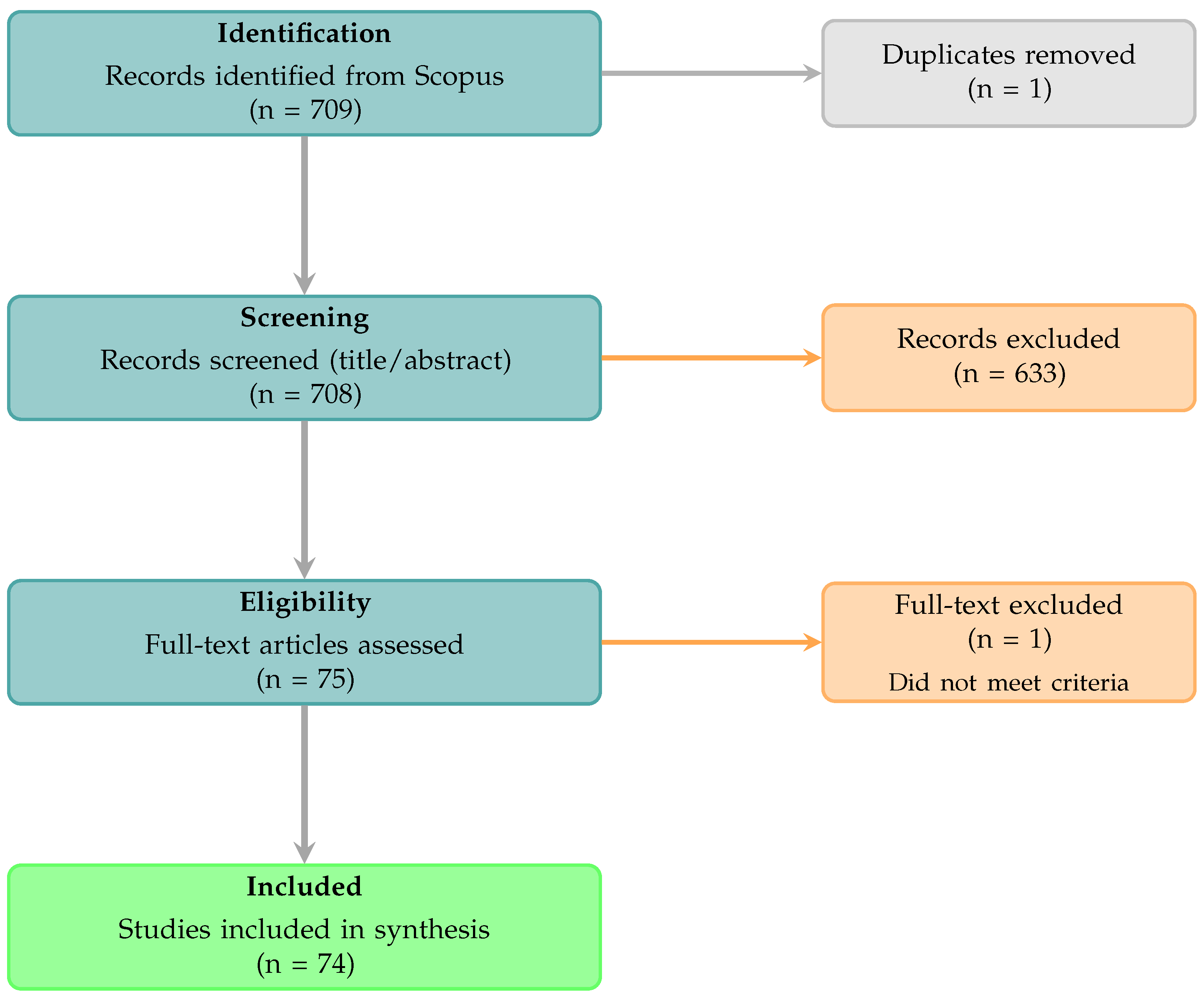
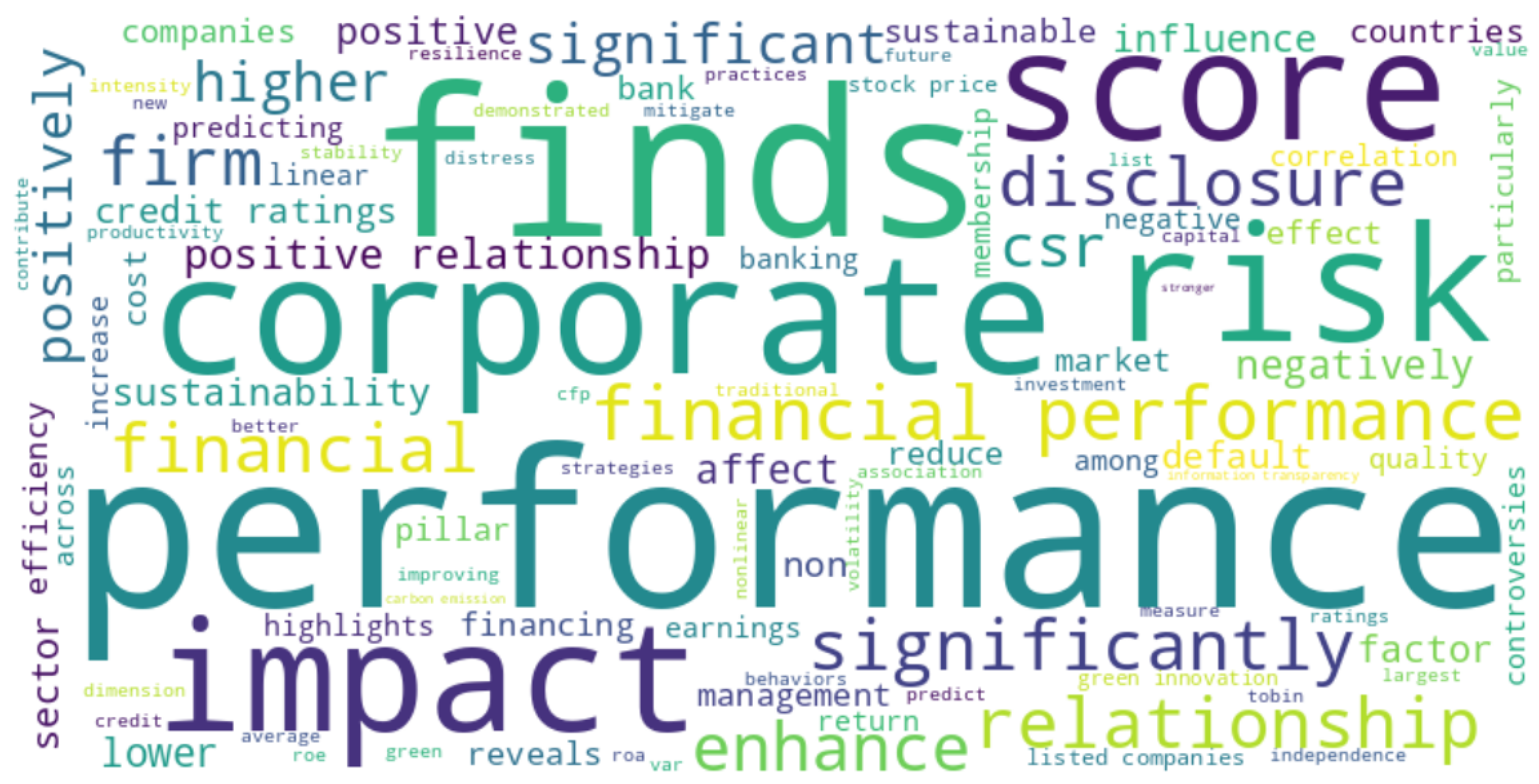
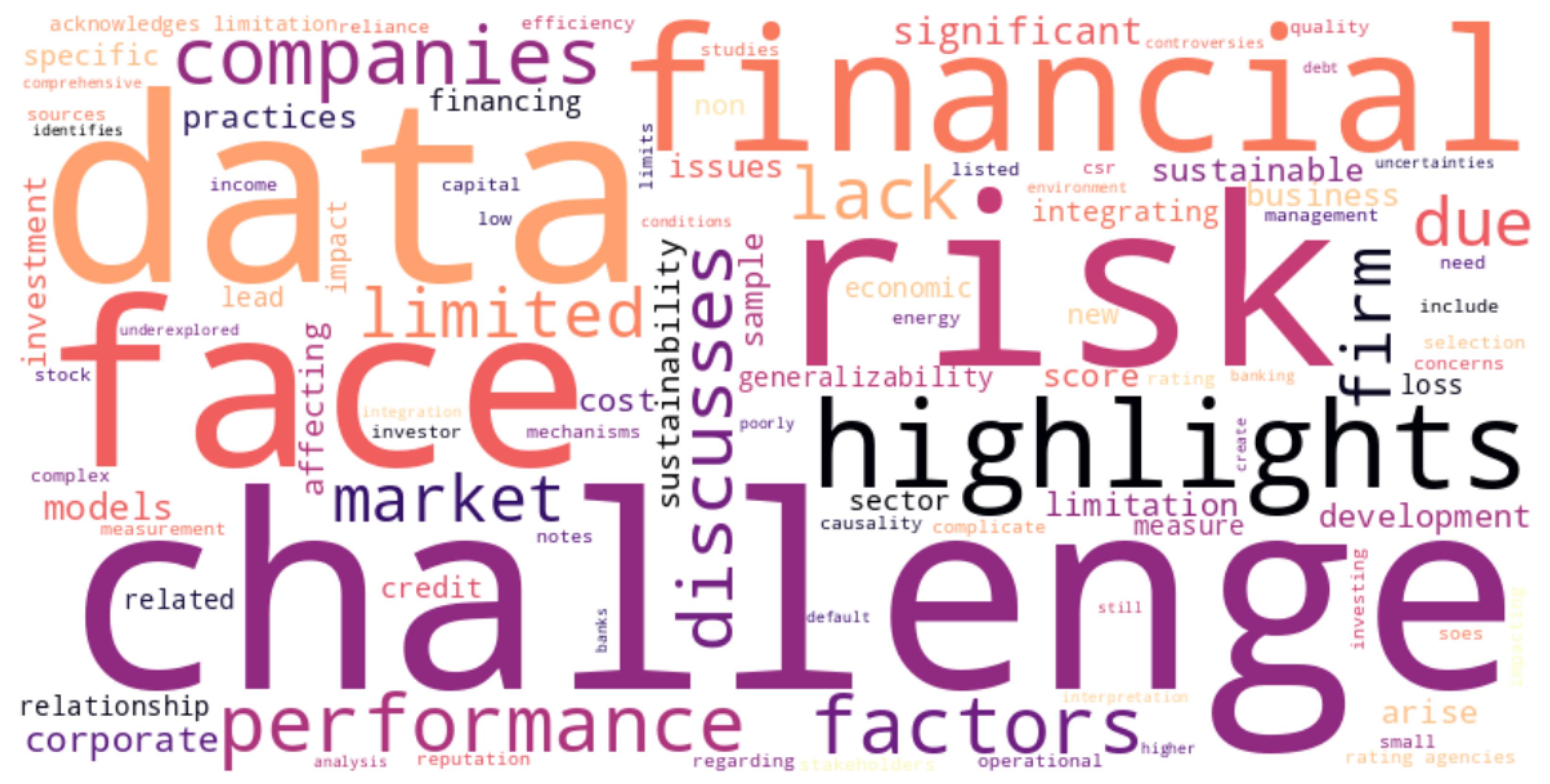
Disclaimer/Publisher’s Note: The statements, opinions and data contained in all publications are solely those of the individual author(s) and contributor(s) and not of MDPI and/or the editor(s). MDPI and/or the editor(s) disclaim responsibility for any injury to people or property resulting from any ideas, methods, instructions or products referred to in the content. |
© 2026 by the authors. Licensee MDPI, Basel, Switzerland. This article is an open access article distributed under the terms and conditions of the Creative Commons Attribution (CC BY) license.