1. Introduction
The current research examines how effectively the Cypriot economy circulates and reuses money within its economic system, using the Theory of the Cycle of Money theoretical framework. The entry summarizes empirical results showing that Cyprus maintains a high general index of the cycle of money, significantly above the global average, indicating a well-structured and highly functional economic system capable of withstanding fiscal or monetary crises. By analyzing GDP, bank deposits, and global benchmarks, the study demonstrates that Cyprus’s financial structure supports strong money distribution, helping the country recover quickly from economic shocks, such as the crisis period of 2012–2017.
The Theory of the Cycle of Money provides a comprehensive analytical framework that uncovers both the structure and the functional dynamics of an economy. By focusing on the derivative of GDP, the theory isolates the economic activity generated by the reuse and redistribution of money, thereby capturing the true cyclical flow of financial resources within a system. Unlike conventional macroeconomic approaches, it demonstrates how an economy can be stimulated without exerting pressure on fiscal or monetary policy. This is achieved by leveraging the existing stock of money more efficiently and enabling it to circulate multiple times within the economic network, thus increasing overall economic activity without additional public spending, taxation, or monetary expansion. The empirical application of the theory to Cyprus shows that the General Index of the Cycle of Money is remarkably high. This finding indicates that Cyprus possesses a well-organized economic structure capable of generating high levels of internal liquidity circulation. In other words, money in Cyprus is reused, redistributed, and reallocated across sectors with substantial efficiency. Such performance reflects strong economic functionality, resilience, and the capacity of the economy to maintain robust activity even under external constraints. The results suggest that Cyprus operates with a highly effective distributional mechanism, where the movement of money supports sustained economic performance. The Theory of the Cycle of Money, therefore, not only elucidates the internal economic architecture of the country but also highlights how optimizing monetary circulation—without altering fiscal or monetary stances—can significantly enhance growth, stability, and socioeconomic welfare (
Ardika et al., 2025;
Greil, 2017;
Hearson & Prichard, 2018;
Jakfar & Nuraini, 2025;
Mpofu & Wealth, 2022;
Polezharova et al., 2020;
Wahyuningtias et al., 2025).
The 2012–2017 period is intentionally selected because it represents a phase of intense economic stress and post-crisis adjustment for many economies, particularly in Europe. From the perspective of the Theory of the Cycle of Money, crisis periods are analytically critical, as they reveal the true functional capacity of an economy to reuse and redistribute money internally when external financing, credit expansion, and fiscal flexibility are constrained. During expansionary periods, high growth rates may mask structural weaknesses in monetary circulation, whereas crisis conditions expose whether internal liquidity circulation can sustain economic activity. The years 2012–2017 coincide with the aftermath of the global financial crisis and the European sovereign debt crisis, a period characterized by banking instability, fiscal consolidation, and structural reforms. Using this common crisis window allows for the analysis to focus on structural monetary dynamics rather than cyclical or short-term fluctuations. In addition, this period ensures data consistency and comparability across countries, as reliable and harmonized data on GDP and bank deposits are available for all observed cases.
The empirical analysis is confined to the 2012–2017 period, which corresponds to a phase of severe financial stress and post-crisis adjustment in Cyprus and across Europe. This choice is theoretically motivated within the framework of the Theory of the Cycle of Money. Crisis periods restrict access to external financing, reduce discretionary fiscal and monetary policy space, and compress credit expansion, thereby allowing for the internal mechanisms of monetary redistribution to be observed more clearly. While it is acknowledged that crisis conditions introduce temporary shocks, such conditions are analytically useful because they expose whether an economy can sustain activity through internal reuse and circulation of money rather than through external support. Accordingly, the results should be interpreted as capturing the structural performance of the Cypriot economy under stress conditions, rather than as a timeless characterization of its economic structure across all phases of the business cycle. During the examined period, Cyprus and other European economies, such as Greece and Latvia, were simultaneously affected by EU-level policy interventions, regional financial instability, and coordinated regulatory adjustments. These common external influences are not explicitly modeled as separate control variables; instead, they form a shared macroeconomic environment across the compared cases. This implicit commonality allows for differences in the cycle-of-money index to be attributed primarily to internal economic structure rather than to heterogeneous policy responses. The conclusion that Cyprus exhibits a relatively efficient economic structure is therefore comparative and conditional: it reflects superior internal monetary circulation relative to economies exposed to similar external constraints, not a causal claim established through counterfactual experimentation. The absence of a full pre-crisis or post-2017 counterfactual assessment is acknowledged as a limitation, and future research extending the analysis to longer time horizons and alternative macroeconomic regimes is necessary to distinguish more sharply between crisis-specific effects and long-term structural characteristics. The countries included in the analysis are not chosen randomly but are selected according to clear methodological criteria. First, all observed countries experienced significant economic stress, adjustment programs, or structural challenges during the examined period, making them suitable cases for testing the resilience of internal monetary circulation. Second, the sample deliberately includes economies with diverse structural characteristics—differences in size, income level, financial depth, and institutional arrangements—so that the explanatory power of the cycle-of-money framework can be evaluated across heterogeneous contexts rather than a single regional or developmental group. Third, only countries for which consistent and comparable data on GDP and bank deposits are available for the full 2012–2017 period are included. This approach ensures methodological uniformity and allows for differences in index values to be attributed to structural features of monetary circulation rather than data limitations or timing effects. The purpose of the selection is therefore theoretical validation through comparative stress testing, not statistical representativeness.
Within this framework, the empirical applications of the Index of the Cycle of Money cover the following countries: Cyprus, which is the focal case of the present paper; Greece, Latvia, Serbia, Bulgaria, and Poland, representing European economies with varying degrees of crisis exposure and adjustment; as well as Costa Rica and Thailand, which extend the analysis beyond Europe to different institutional and developmental settings. Each country is examined independently using the same theoretical framework, identical index construction, and the same time window, ensuring full comparability of results across cases.
This research forms part of a broader project examining the Theory of the Cycle of Money across multiple countries. A significant contemporary development—the introduction of the 15% global minimum tax for multinational enterprises—aligns with the Fixed-Length Principle (FLP) formulated within the cycle-of-money framework. According to the FLP, the stability and functionality of an economic system depend on the preservation of a fixed “length” or minimum threshold in the monetary redistribution process. The new global tax rule reinforces this principle by ensuring that corporations contribute a baseline level of financial return to the countries in which they operate, thereby sustaining the circulation and reuse of money within domestic economies. The comparative analysis conducted in this project offers substantial empirical support for the Theory of the Cycle of Money.
2. The Theory of the Cycle of Money
The Theory of the Cycle of Money is a structural economic framework developed by Challoumis that focuses on the internal circulation, redistribution, and reuse of money within an economy, rather than on the absolute quantity of money or short-term growth rates. A basic characteristic is that savings are distinguished between escape and enforcement savings. Escape savings are the money that leaves the country’s economic system, and enforcement savings are those that stay inside the economic system and force the reuse of money (
Challoumis, 2025a). The core premise of the theory is that economic functionality and resilience depend primarily on how frequently money is reallocated among economic agents before exiting the domestic system. In this sense, the theory shifts analytical attention from money creation to money circulation, emphasizing qualitative efficiency rather than quantitative expansion.
At the center of the theory lies the distinction between money that remains within the domestic economy and is repeatedly reused and money that escapes the system through savings held abroad, profit repatriation, or controlled international transactions. Economic activity is generated when money circulates through consumption, wages, investment, and taxation, thereby supporting multiple rounds of transactions. Conversely, when money exits the domestic cycle, it ceases to contribute to internal demand, liquidity, and production. The theory, therefore, conceptualizes economic performance as the net outcome of these two opposing monetary flows: internal reuse versus external leakage.
The analytical innovation of the Theory of the Cycle of Money is that it links GDP dynamics to the circulation process itself, rather than treating GDP as a static outcome. In this framework, GDP is interpreted as the result of repeated monetary movements within the economy (
Challoumis, 2023). The derivative of GDP captures the intensity of these movements and reflects the degree to which money is redistributed among households, firms, and institutions. An economy with a high degree of internal reuse can generate substantial economic activity even without additional fiscal spending, monetary expansion, or external inflows. To operationalize these concepts, the theory introduces the Index of the Cycle of Money, which provides a measurable indicator of how effectively money circulates domestically. The index is constructed using macroeconomic variables that reflect internal liquidity—most notably GDP and bank deposits—allowing for the degree of monetary reuse to be quantified and compared across countries. Higher index values indicate a well-structured economy in which money circulates repeatedly before leaving the system, while lower values signal structural weaknesses, excessive leakages, or dependence on external financing.
A key implication of the theory is that economic resilience is structurally determined. Economies with a sufficiently high cycle-of-money index are able to absorb shocks more effectively, as internal circulation compensates for reductions in credit availability, capital inflows, or fiscal space. Crisis periods are, therefore, particularly informative within this framework: when external support mechanisms weaken, only economies with strong internal monetary redistribution can maintain activity and recover within a reasonable time horizon.
The Theory of the Cycle of Money also provides a conceptual foundation for the Fixed Length Principle, which concerns the minimum degree of monetary redistribution that must occur before money exits the economy. From this perspective, taxation and institutional design play a crucial role in preserving the domestic cycle of money. Economic agents that retain and reinvest money locally—such as small- and medium-sized enterprises—strengthen the cycle, while agents that systematically extract profits from the domestic economy weaken it. The theory thus offers a unified explanation linking monetary circulation, tax policy, economic structure, and long-term stability. The Theory of the Cycle of Money presents an alternative macroeconomic paradigm in which the efficiency of monetary circulation, rather than the scale of monetary or fiscal intervention, is the primary determinant of economic functionality. By focusing on internal reuse, leakages, and structural redistribution, the theory provides both an explanatory and diagnostic tool for assessing economic resilience, particularly in crisis-prone or highly open economies.
The Theory of the Cycle of Money provides a structural framework for analyzing how effectively money is redistributed and reused within an economy. Unlike conventional macroeconomic approaches that emphasize growth rates, fiscal expansion, or monetary policy interventions, the theory focuses on the internal dynamics of monetary circulation. Its central premise is that economic resilience depends not only on the quantity of money but primarily on the efficiency with which existing money circulates through households, firms, and institutions. This perspective becomes particularly relevant during periods of economic stress, when external financing and policy flexibility are limited. The motivation of this research is to assess whether a small, open economy that experienced a severe banking crisis can nevertheless sustain a high level of internal monetary circulation. Cyprus constitutes a particularly suitable case, as it underwent an abrupt financial shock in the early 2010s, followed by rapid stabilization and recovery. Understanding the monetary structure that underpinned this recovery contributes to a deeper explanation of crisis resilience beyond standard macroeconomic indicators. The main contribution of the paper is the empirical application of the Index of the Cycle of Money to the Cypriot economy over the 2012–2017 period, using GDP and bank deposits as core variables. By computing both the country-specific index and the corresponding global benchmark, the study evaluates the relative efficiency of internal monetary redistribution in Cyprus. The results demonstrate that Cyprus consistently scores well above the global average, indicating a highly functional monetary circulation despite adverse conditions. The novelty of the study lies in what the Cypriot case reveals beyond previous country applications of the theory. Earlier studies examined larger or more diversified economies (such as Greece, Poland, or Thailand) or countries with different financial structures. Cyprus adds a distinct dimension: it is a small economy with an oversized banking sector, high deposit intensity relative to GDP, and strong exposure to international capital flows. The findings show that a high cycle-of-money index can be maintained even in such an economy, provided that internal redistribution mechanisms remain strong. This extends the theory by demonstrating that economic size or openness does not preclude high monetary functionality, and that recovery speed is closely linked to internal circulation rather than external support alone. In addition, the Cypriot case provides further empirical support for the Fixed Length Principle, illustrating how economies with strong internal reuse of money are better positioned to absorb shocks and stabilize without excessive fiscal or monetary intervention. The results, therefore, reinforce the explanatory power of the cycle-of-money framework and clarify its relevance for tax policy, banking structures, and crisis management in small open economies.
3. Literature Review
The findings demonstrate that Cyprus ranks among the top countries globally, exhibiting an exceptionally high General Index of the Cycle of Money. Such performance indicates a highly efficient distribution of money and provides a compelling explanation for the country’s ability to recover effectively and rapidly from its banking crisis of the previous decade. Cyprus’s economic structure allowed for money to circulate repeatedly within the system, boosting liquidity, supporting productive sectors, and accelerating stabilization without excessive dependence on fiscal expansion. Beyond Cyprus, the investigation covers countries such as Greece, Latvia, Serbia, Bulgaria, Poland, Costa Rica, and Thailand, among many others. These economies present general index values above the critical threshold of 0.2 and, in most cases, above the average benchmark of 0.5. Values of this magnitude indicate that these countries possess the internal monetary circulation capacity required to withstand potential economic shocks (
Bertarelli & Lodi, 2019;
Eubanks & Furton, 2024;
M. Guo et al., 2022;
Knapp et al., 2025;
Landorf, 2009;
Newbold & Johnston, 2020;
Ouyang et al., 2020;
Petrolia et al., 2020;
Yang et al., 2018). The cross-country evidence thus confirms the broader applicability of the theory and supports the conclusion that economies with higher cycle-of-money indices exhibit greater resilience and crisis-absorbing capability. The robustness of the model is further validated by the cases of Greece and Cyprus, both of which experienced severe economic crises. In each instance, the empirical values of the cycle-of-money index accurately reflected the economies’ ability to recover. Greece, despite facing one of the most intense recessions in modern European history, maintained an index above the survival threshold, helping explain its gradual but persistent recovery trajectory. Cyprus, with an even higher index, demonstrated a significantly faster stabilization process. These findings reinforce the theoretical foundations of the cycle-of-money framework, demonstrate the real-world relevance of the Fixed Length Principle, and highlight the importance of efficient monetary circulation as a central determinant of economic resilience (
Challoumis, 2021,
2023). The present study’s findings confirm that the Fixed-Length Principle (FLP) is a determinant in fortifying and stabilizing the cycle of money within an economy. By imposing a minimum “length” of redistribution in monetary flows before they exit the economic system, the FLP augments internal liquidity circulation and supports the sustainable functioning of economic activity. Latvia’s case is very illustrative. Country economic indicators, when viewed through the lens of the General Index of the Cycle of Money, reveal how Latvia would position itself to respond to shocks in the economy.
The index quantifies the degree of reuse and domestic redistribution of money. Latvia’s value, which is the same as others observed during this study, proves that its economic system has structural capacity for the absorption of crises with recovery via efficient internal circulation rather than excessive reliance on external financing. The same pattern holds for the countries discussed before. Their indices support the conclusion that the Fixed-Length Principle reinforces resilience, enabling governments to respond to downturns through mechanisms inherent in the economy’s own monetary flow dynamics. In this way, cross-country evidence confirms a theoretical proposition that an economy with a sufficiently robust cycle of money can mitigate the negative impacts of crises more effectively. Results are based on theoretical foundations within the Theory of the Cycle of Money, which states that tax revenues finally return to society, especially via education and health sectors, as public systems, being the main channel through which money is redistributed back into the economy; thus, supporting human capital formation, increasing productivity, and fostering long-term stability. Therefore, it shifts attention toward qualitative efficiency rather than just the quantity collected. In this context, the main policy recommendation is that tax authorities should keep relatively low tax burdens for small- and medium-sized economic units, like freelancers, small businesses, and companies operating locally, because these entities play an important role in reusing money internally. Low taxation increases their liquidity, allowing them to reinvest and grow more often, moving cash around within the domestic economy. This principle corresponds directly with the logic of the cycle of money: every time currency moves inside the system, it increases the effect without putting any further pressure on fiscal or monetary policies.
To conclude, the proof provided across nations shows that the Fixed-Length Principle not only supports the operation of the cycle of money but also offers a strong reason for tax policies in favor of small- and medium-sized economic actors. These policies help add strength to economic resilience, improve redistribution via essential public services, and further contribute to the general stability of national economies.
The Arm’s-Length Principle (ALP) is the standard international practice that tax administrations have used to determine the tax obligations of multinational enterprises and corporate groups. This principle allows for the tax administration to verify whether the prices and conditions of controlled transactions, i.e., transactions between related companies, are consistent with those that would be agreed between independent companies in comparable and uncontrolled situations. Since governments rely on this comparison, they will seek to prevent the shifting of profits and declare multinationals’ income in the jurisdictions where economic activity takes place. However, there are structural limitations with the ALP. Multinational companies tend to have great flexibility in controlling their transactions, which implies that they can easily manipulate transfer prices and allocate profits to low-tax countries. This means that even though authorities apply the ALP, it may be a case of the method facilitating tax minimization strategies rather than preventing them effectively. Empirical evidence shows that related companies can shape their transactions so as to formally comply with the arm’s-length standard while still minimizing their tax liabilities.
Within this framework, there exists a corrective mechanism in the Fixed-Length Principle (FLP) proposed by the Theory of the Cycle of Money. According to FLP, companies carrying out controlled or intra-group transactions should pay a fixed and stable amount of tax regardless of any manipulable pricing schemes. A fixed contribution ensures that multinationals would not be able to make their taxable income disappear through internal pricing arrangements. The FLP, therefore, introduces a minimum-tax requirement that enhances both fairness and functionality in taxation. The justification for this principle lies in how multinational enterprises behave concerning monetary flows. Big international companies take money out of domestic economies through profit repatriation schemes, internal invoicing setups, and capital transfers by placing these funds into international banking systems instead of reinvesting them locally. When money leaves the domestic cycle, it reduces consumption, lowers liquidity circulation, and diminishes reuse activity that would otherwise support GDP growth (
Aditia & Kano, 2025;
Atkinson et al., 2018;
Bateman & Kling, 2020;
Drupp et al., 2017;
Gkargkavouzi & Halkos, 2024;
Reynolds, 2019;
Shamshiyev, 2023;
Shi & Sun, 2025;
Ye et al., 2024). From a Theory of the Cycle of Money perspective, this is viewed as an economic functionality loss since extracted money does not contribute toward local productivity, employment, or investment. The application of the Fixed-Length Principle ensures that at least some part of these outflows return to society as stable tax revenues. These revenues help support public services—especially health care and education infrastructure—which then further strengthens internal circulation of money. In this sense, FLP stands for both fairness in taxation and the enhancement of cycle-of-money-dependent economic resilience. By comparison, local SMEs generally keep their financial resources in the domestic economic system: they deposit their savings in local banks, spend their money locally, and invest it directly into consumption, employment, and liquidity circulation. Since these companies reinforce the domestic cycle of money instead of weakening it, the Fixed-Length Principle supports the conclusion that they should face a lower tax rate. Cutting down on SME taxation increases internal monetary reuse, which stimulates local demand and boosts overall economic activity—growth without adding to the burden of either fiscal or monetary policy. The Arm’s-Length Principle by itself cannot solve contemporary tax problems resulting from a globalized economy. The Fixed-Length Principle complements it by providing stability in the tax contribution of multinationals, safeguarding the domestic cycle of money, and advocating for a tax structure that incentivizes local economic actors who maintain internal liquidity and foster long-term stability in economics (
Doeleman, 2023;
Gambhir, 2022;
Gelepithis & Hearson, 2021;
Mwape et al., 2025b;
Napadaică, 2025;
Sugishita, 1995).
The Fixed-Length Principle (FLP) operates as a complementary mechanism within the broader framework of the Theory of the Cycle of Money. According to this principle, small- and medium-sized enterprises (SMEs) should face lower tax obligations than large multinational companies. The rationale is grounded in monetary circulation: SMEs typically conduct their commercial activities within the domestic economy, and the money they generate is largely reinvested or spent locally. This behavior enhances the internal cycle of money, increases the frequency with which money is reused, and strengthens the economic multiplier effect without requiring additional fiscal intervention.
In contrast, large international companies often structure their activities in ways that substitute for, or even overshadow, the commercial operations of smaller local firms. Through centralized supply chains, intra-group transactions, and multinational financial structures, they frequently channel substantial portions of their profits outside the domestic economy. As a result, the money they collect from local consumption often exits the national financial system and is deposited in foreign banks or used to optimize global tax liabilities. From the perspective of the cycle of money, this outflow represents a loss of internal liquidity and a reduction in economic functionality.
Under the Arm’s-Length Principle (A.L.P.), the tax obligations of multinational enterprises engaged in international or controlled transactions are calculated by comparing these transactions with hypothetical or observed uncontrolled ones. Although the A.L.P. provides a standardized approach, it relies heavily on methodologies, documentation, and data supplied by the multinationals themselves. This dependence creates asymmetries: companies can shape their transfer-pricing policies to minimize taxable income while still appearing compliant (
Challoumis, 2019a). Thus, the A.L.P. often struggles to capture the true economic value created within each jurisdiction. Because large companies effectively substitute for or dominate the commercial activities of smaller firms, they exert disproportionate influence on domestic monetary flows. This makes their tax behavior especially consequential for the health of the local economic cycle. Therefore, the Fixed-Length Principle becomes essential: it ensures that multinational corporations contribute a stable and predictable minimum tax, preventing the erosion of the domestic cycle of money.
By applying the FLP, governments can guarantee the following:
Large companies return an adequate share of their profits to the domestic economy, regardless of internal transfer-pricing structures;
SMEs receive tax relief, enabling them to reinvest, maintain liquidity, and sustain the internal circulation of money;
The cycle of money remains strong, as the monetary outflows caused by multinational profit-shifting are balanced by mandatory, fixed tax contributions.
While the Arm’s-Length Principle provides a methodological framework for assessing cross-border tax obligations, the Fixed-Length Principle ensures economic fairness and functional stability by aligning tax policy with the actual contribution of different types of enterprises to domestic monetary circulation. Large companies, which tend to extract money from the economy, must contribute more; small and medium companies, which reinforce internal liquidity, should be taxed less (
Ardika et al., 2025;
Chand et al., 2022;
Jakfar & Nuraini, 2025;
Mpofu & Wealth, 2022;
Permatasari & Husnasari, 2022;
Tănase & Drăghici, 2023). The central argument is that small- and medium-sized enterprises (SMEs) play a crucial role in strengthening the distribution and internal circulation of money within a country’s economy. Unlike large multinational corporations, SMEs typically retain and reinvest their financial resources domestically. Their savings are held in local banks, their expenditures occur within the national market, and their investment activities directly stimulate local production, employment, and consumption. As a result, the money they generate is reused multiple times inside the economic system rather than being transferred abroad.
This continuous internal reuse of money significantly enhances the cycle of money, increasing the frequency with which monetary units circulate through households, firms, and institutions. The repeated movement of money amplifies economic activity without requiring additional fiscal expansion or external borrowing. In this sense, SMEs act as powerful engines of liquidity circulation and economic resilience. This effect is analytically captured in Equation (4) of the General Index of the Cycle of Money, which demonstrates that the index increases as money is redistributed and reused more frequently within the domestic economy. The equation formalizes the intuitive observation that the greater the number of internal monetary transactions, the higher the level of economic functionality. Each additional cycle of reuse raises the value of the index and, consequently, strengthens the GDP’s derivative component that reflects actual economic motion.
Therefore, the behavior of SMEs aligns directly with the theoretical foundations of the cycle-of-money framework:
They minimize monetary leakages from the national economy;
They support stable, sustained liquidity circulation;
They contribute disproportionately to the internal economic multiplier.
Large international companies often cause significant outflows of money—whether through repatriated profits, transfer-pricing strategies, or foreign savings—reducing the number of times money re-enters the system. This distinction explains why the cycle of money is strengthened primarily by the activity of SMEs and why tax policy should be designed to support them. The economic logic confirmed by Equation (4) and by the empirical evidence across countries is clear: the more frequently money is reallocated within a domestic economy, the higher the General Index of the Cycle of Money, and the stronger the economic functionality and resilience of the country (
Castagna, 2021;
Eglmaier, 2022;
Sander et al., 2024).
4. Data, Model, Applications, and Influences or Materials and Methods
The methodological framework applied to the case of Cyprus follows the same procedures used in previous analyses conducted for Greece, Latvia, Serbia, Bulgaria, Poland, Costa Rica, Thailand, and numerous other countries. Consistency in methodology ensures that the results are directly comparable across different economic systems and that the theoretical assumptions of the Theory of the Cycle of Money are applied uniformly. The present study, therefore, adopts the exact empirical strategy and analytical steps employed in earlier works. This alignment allows for the interpretation of the findings for Cyprus within the broader international context and strengthens the validity of cross-country comparisons. As in the prior studies, the methodology is fully consistent with the theoretical principles of the cycle of money, ensuring that the derived indices reflect both the internal reuse of money and the monetary leakages from the economy. Accordingly, the methodology for the current research is presented below, following the same structure and logic as in previous applications of the theory. This uniform approach guarantees methodological continuity and allows for the results for Cyprus to be evaluated reliably against the established benchmarks found in the earlier country studies (
Avi-Yonah & Kim, 2022;
Azémar & Dharmapala, 2019;
De Vito et al., 2025;
Dumiter & Jimon, 2020;
Egger et al., 2018;
Hoopes et al., 2022;
Kohlhase & Pierk, 2019;
Y. Li et al., 2020;
Lipka, 2022;
Paulus, 2022;
Picard, 2020). The calculations of the cycle of money are derived and explained through a series of mathematical formulations (
Challoumis, 2024c,
2024d). These formulations provide the theoretical foundation for quantifying both the internal reuse of money within an economy and the monetary leakages that reduce economic functionality. By clarifying the differential relations, the structural components, and the operational rules governing the movement of money, these mathematical expressions allow for a precise computation of the General Index of the Cycle of Money and support the empirical application of the theory across countries:
The variable
is the velocity of financial liquidity,
is the velocity of escaped savings, and
is the cycle of money. The variable
is the index of the cycle of money,
is the national income or GDP, and
is the bank deposits of the country. In addition,
symbolizes the general index of the
of the country,
is the index of the
of the country, and
is the global index of
. Finally,
is the general global index of
, and is obtained as a global constant (
Bilicka, 2019;
Da Fonseca & Jucá, 2020;
Gasparėnienė et al., 2022;
Gumpert et al., 2016;
Ierkwagh & Ierkwagh, 2020;
Judijanto et al., 2025;
Kato & Okoshi, 2018a;
Katusiime, 2021;
J. Li et al., 2019;
Litwińczuk, 2024;
Mwape et al., 2025a;
Schoen, 2009). The proper hypothesis is to establish the connection between the index of the global average
, the bank deposits, and the GDP per capita, with an econometric approach. The initial hypothesis is then confirmed, as the cycle of money in Cyprus is above the global average index of the cycle of money (
Challoumis, 2019b,
2024a). The results of Equations (4) and (5) show that an economy with a value close to
in the General Index of the Cycle of Money can respond immediately to an economic crisis. Values around this threshold represent an adequate level of monetary distribution and reuse, indicating a well-structured economy with a functional allocation of money among citizens and consumers. Equation (1) defines the cycle of money, which is used to determine
and
in Equation (2). The quantitative expression of the cycle of money is linked to GDP through the derivatives
corresponding, respectively, to the terms
and
. Thus, the cycle of money for a country is
which is equivalent to
The variables are defined as follows:
Therefore, GDP can be expressed through the cycle-of-money components as:
or
or equivalently,
If an international organization were able to track monetary transitions across countries through
,
, and
, then the total cycle of money could be expressed as:
The calculation logic of the core relationship
is grounded in the theoretical structure of the Theory of the Cycle of Money and does not rely on the direct observation of
(speed of financial liquidity) and
(speed of fleeing savings) as independent empirical variables. Instead, these components are defined conceptually and are operationalized indirectly through observable macroeconomic aggregates. Specifically,
represents the intensity of internal monetary reuse and redistribution within the domestic economy, while
captures monetary leakages associated with savings, profit repatriation, and capital outflows. Because no international statistical authority provides direct measures of these flows, the theory explicitly derives them through the differential behavior of GDP and domestic bank deposits, which serve as empirically observable proxies for internal circulation and retention of money. The adaptability of the formulation to the Cypriot economy is justified on both theoretical and empirical grounds. Cyprus is a small, open, banking-intensive economy with high deposit-to-GDP ratios, making bank deposits a particularly appropriate indicator of internal liquidity retention. The use of GDP and bank deposits, therefore, reflects country-specific structural characteristics rather than an uncritical transfer of methods from other contexts (
Challoumis, 2025b;
Challoumis et al., 2025). The same operationalization has been applied consistently across countries to ensure comparability, but the resulting index values differ precisely because the underlying economic structures differ. This demonstrates that the methodology is sensitive to national conditions rather than mechanically imposed.
Moreover, the index does not aim to measure absolute velocities of money in a mechanical sense, but rather the relative efficiency of internal monetary circulation. Its validity is assessed through internal consistency (theoretical coherence of the decomposition
), empirical plausibility (alignment of index values with observed crisis resilience and recovery speed), and cross-country benchmarking. In the case of Cyprus, the exceptionally high index value is consistent with the country’s rapid post-crisis stabilization despite severe banking-sector shocks, supporting the applicability of the formula in this specific economic scenario. To clarify these points, the research focuses on the conceptual meaning of
and
, their indirect measurement through GDP and bank deposits, and the rationale for their use in the Cypriot context (
Challoumis, 2024b). This ensures that the core indicator of the cycle of money rests on a transparent and theoretically grounded measurement basis, rather than on ad hoc or unverified assumptions.
In terms of the comparability between national and global cycle-of-money indices, the global average index of the cycle of money is constructed using an aggregation logic that differs from the national-level calculation. At the national level, the index reflects the internal redistribution and reuse of money within a single economic system, based on country-specific GDP and bank deposit dynamics. By contrast, the global average index is derived from aggregated international data and represents a synthetic benchmark rather than an internally closed economic system. As such, the global index does not correspond to an observable global economy with unified monetary circulation, but instead captures an average structural reference point across heterogeneous national systems. In terms of the interpretation of horizontal comparison and benchmark use, the comparison between the Cypriot index and the global average is therefore not intended as a strict like-for-like accounting comparison. Rather, the global index functions as a normalized reference benchmark that indicates the threshold of a well-structured monetary circulation system under the Theory of the Cycle of Money. The fact that Cyprus exceeds this benchmark does not imply mechanical superiority over a hypothetical global economy, but signals that its internal monetary circulation operates at a level associated with high structural functionality. The comparison is thus qualitative and diagnostic, not an assertion of direct quantitative equivalence. With regard to methodological limitations and clarification of scope, the difference in aggregation logic between national and global indices is acknowledged as a methodological limitation. To avoid misinterpretation, the manuscript does not claim that national and global indices are perfectly comparable in absolute terms. Instead, the global benchmark is used to contextualize national performance within the theoretical framework of the cycle of money. Future research should focus on developing harmonized aggregation methods or panel-based normalization techniques that would allow more precise quantitative comparison across levels of analysis.
Because no global institution provides such detailed data, the empirical analysis relies on the Index of the Cycle of Money. The cycle of money expresses the difference between the differential equation of the volume of money reused inside the economy, and the differential equation of the money lost externally. For this reason, the Theory of the Cycle of Money supports higher taxation on companies involved in controlled transactions and on large multinational enterprises, since they remove money from the domestic economy. Small and medium companies reuse money multiple times domestically and therefore strengthen the cycle of money. An exception is made for high-technology firms and factories whose activities cannot be substituted by smaller companies (
Fuest et al., 2025;
Garcia-Bernardo et al., 2023;
Kato & Okoshi, 2018a;
Ocampo, 2022;
Stausholm & Garcia-Bernardo, 2024;
Sureth-Sloane et al., 2023). The recent decision of the G7 to impose a 15% global minimum tax on multinational enterprises aligns directly with the Fixed-Length Principle (FLP) of the Theory of the Cycle of Money. For years, the FLP has argued that international companies should face an additional standardized tax burden because they do not sufficiently reuse or redistribute their earnings within the domestic economy. Instead, they tend to transfer profits abroad through controlled transactions, reducing internal liquidity circulation and weakening the domestic cycle of money. The G7 decision, therefore, represents a practical global policy movement toward the very logic embedded in the FLP—ensuring that multinational companies return a minimum monetary contribution to the societies in which they operate.
The theory also provides a framework for estimating the recovery time of an economy after a crisis. A country with a General Index of the Cycle of Money equal to 0.9 possesses a highly efficient internal monetary circulation, yet even in this optimal range, it typically requires 3 to 5 years to fully exit an economic crisis. The theory holds that each reduction of 0.1 in the index adds approximately 3 to 5 additional years of required recovery time. This reflects the decreased velocity and diminished reuse of money within the domestic economy as the index declines. For example, a country with a cycle-of-money index of 0.6 is three steps below the 0.9 benchmark (i.e., 0.9 → 0.8 → 0.7 → 0.6). Accordingly, it faces three intervals of added recovery time, each corresponding to 3 to 5 years. Therefore, such an economy typically needs , in addition to the base recovery period. In total, the estimated recovery time becomes 12 to 15 years. This extended duration demonstrates the direct relationship between the efficiency of monetary circulation and the resilience of an economy when confronted with external shocks or systemic crises. The G7 minimum-tax initiative and the Fixed-Length Principle are conceptually aligned in their objective to reinforce domestic monetary circulation by ensuring a stable tax contribution from multinational enterprises. At the same time, the General Index of the Cycle of Money offers a powerful diagnostic indicator, allowing policymakers to estimate the duration of economic recovery and to understand how fluctuations in monetary distribution affect long-term macroeconomic stability. A key limitation of the paper is that it examines Cyprus over the period 2012–2017, which is the same timeframe used in related studies for Greece, Latvia, Serbia, Bulgaria, Poland, Costa Rica, Thailand, and many other countries. Although this common period allows for direct cross-country comparison, it also restricts the analysis to a crisis-driven economic environment that may not fully capture each country’s broader structural characteristics. Because these years coincide with widespread financial instability, EU-level policy interventions, and post-crisis adjustments, the findings may reflect temporary conditions rather than long-term economic behavior. Moreover, the extensive existing research focusing on this identical period means that interpretations risk overlapping with crisis-specific narratives already established in the literature. Therefore, while the uniform timeframe strengthens comparability across countries within the project, it simultaneously limits the generalizability of results and highlights the need for future studies using expanded datasets that include both pre-crisis and post-crisis years.
5. Results
The following table presents the key parameters used in the analysis, including bank deposits as a share of GDP, GDP per capita, and the corresponding indices of the cycle of money. This section demonstrates the dependence of Cyprus’s cycle-of-money index on the internal financial structure of the economy, specifically by examining the relationship between domestic bank deposits and GDP per capita. For comparative purposes, the analysis also incorporates the global average values of bank deposits and GDP per capita, allowing for Cyprus’s performance to be evaluated relative to broader international benchmarks.
Table 1 includes significance markers, where values accompanied by *** indicate results that are statistically significant at the 0.01 level (
Beretta, 2024;
Mancuso et al., 2023;
Sargentis & Koutsoyiannis, 2023). The relatively higher value of the Global Average Index of the Cycle of Money arises because the global calculation does not correspond to a single economic system; instead, it reflects aggregated dynamics across many countries and therefore follows a different computational structure than national-level indices (
Challoumis, 2024c,
2024d). The Durbin–Watson statistic is approximately 2.5, suggesting the absence of harmful autocorrelation and confirming that the regression residuals do not exhibit systematic patterns over time. This reinforces the statistical soundness of the estimated model. The indices derived from the analysis provide important insights into the distribution of money within Cyprus and the structural configuration of its economy. The first three rows of
Table 1 show that the
p-values are statistically significant, leading to the rejection of the null hypothesis and confirming that the explanatory variables exert a meaningful influence on the cycle-of-money index. Consequently, the model is deemed adequate and suitable for interpreting the monetary dynamics of the Cypriot economy. The results reveal that Cyprus exhibits a strong internal monetary circulation supported by substantial domestic bank deposits and a robust GDP per capita. These findings validate the theoretical expectations of the Theory of the Cycle of Money and further justify the use of bank deposits and GDP per capita as key determinants of the index. Using the above calculations and theoretical framework, it is possible to analyze the economic structure of Cyprus and identify if the country falls within top-performing economies regarding monetary circulation and internal financial functionality.
The dataset applied in this study spans the years 2012–2017, a period that holds particular importance for the European Union. During these years, various member states—most notably those with high public debt—were under tremendous economic pressure characterized by financial instability and structural reforms that impacted both national and regional economic conditions (
Dechezleprêtre & Sato, 2017;
Guijarro & Tsinaslanidis, 2020;
Halkos & Aslanidis, 2025;
X. Li et al., 2024;
Sagoff, 1981;
Senatore et al., 2025;
Shao et al., 2020;
Zhao et al., 2024;
P. Zhou et al., 2023). Given this historical background, the selected period becomes highly appropriate for assessing the cycle of money in Cyprus. The aftermath of the Cypriot banking crisis saw swift adjustments accompanied by institutional restructuring as well as major changes in how money was distributed and moved around within an economy. As such, observing what happened to the index of the cycle of money during 2012–2017 sheds light on just how well Cyprus managed to restart its monetary circulation, reactivate internal economic flows, and rebuild its financial system. Thus, results from this period suffice for a reliable determination of Cyprus’s post-crisis economic resilience, quality in its internal monetary mechanisms, and relative position among European as well as global economies. These findings also support further arguments about Cyprus having a strong and efficient cycle of money that would place it within economies having well-structured distributional mechanisms corresponding to high economic functionality.
Within the Theory of the Cycle of Money, bank deposits as a share of GDP are not treated as a passive stock variable but as a structural indicator of internal liquidity retention. Deposits represent money that remains within the domestic financial system and is therefore available for repeated reuse through consumption, credit provision, wage payments, and investment (
Cain et al., 2024;
Cao et al., 2024;
Jiang et al., 2023;
Joo et al., 2018;
Mazzucato, 2023;
Noga, 2024;
Pouw et al., 2022;
Rogers et al., 2015;
Zhang et al., 2020;
Y. Zhou & Su, 2025). A higher deposit-to-GDP ratio implies that a larger portion of monetary resources is retained domestically rather than escaping through capital outflows, profit repatriation, or foreign savings. In this framework, deposits function as a conduit through which money re-enters the economic cycle multiple times, strengthening internal redistribution. The positive association between deposits and the cycle-of-money index, therefore, reflects a structural transmission mechanism: retained liquidity increases the frequency and intensity of internal monetary circulation.
It is acknowledged that bank deposit data may be affected by shadow money and informal financial activity. However, the Theory of the Cycle of Money explicitly accounts for this possibility. Shadow money strengthens the cycle of money only when it remains within the domestic economy and circulates internally; it weakens the cycle when it is saved or transferred abroad. Consequently, deviations between the expected and observed values of the cycle-of-money index may themselves signal the presence of monetary leakages associated with shadow activity. In the case of Cyprus, the high deposit-to-GDP ratio combined with a high cycle-of-money index suggests that retained liquidity predominantly participates in domestic circulation rather than being externally extracted. Thus, while shadow money cannot be observed directly, its net effect is implicitly captured through the index rather than ignored.
The empirical analysis does not claim causal identification in the econometric sense. The OLS regression is employed as a structural consistency check rather than as a causal model. Its purpose is to examine whether variables that theoretically represent internal liquidity retention and economic capacity are systematically associated with the cycle-of-money index. Multicollinearity diagnostics and residual tests confirm the statistical adequacy of the model, but the interpretation of coefficients remains associative and structural, not causal. Accordingly, the results demonstrate that economies with higher domestic liquidity retention and income levels tend to exhibit stronger monetary circulation, consistent with theoretical expectations. The research shows that the regression supports structural alignment with the theory rather than causal inference, thereby avoiding overstatement of explanatory power.
Table 2 shows the OLS regression results, which indicate a strong and statistically significant relationship between the cycle-of-money index for Cyprus and the core domestic economic variables. Bank deposits as a share of GDP exhibit a large positive coefficient (34,372.6) that is highly statistically significant at the 1% level, suggesting that higher domestic liquidity retention substantially strengthens the internal circulation of money. GDP per capita also enters the model with a positive and highly significant coefficient (207.384), indicating that higher income levels are associated with a more efficient reuse and redistribution of money within the economy (
Campoy-Muñoz et al., 2017;
Canaan, 2020;
Drinia et al., 2022;
Y. Guo et al., 2018;
Kostakis & Lolos, 2024;
Libecap, 2009;
McCay & Jentoft, 1998;
Seila et al., 2025). The constant term is negative and statistically significant, capturing baseline structural effects not explicitly modeled by the explanatory variables. By contrast, the global index of the cycle of money has a positive but statistically insignificant coefficient, implying that global benchmark conditions do not exert a direct influence on the Cypriot cycle-of-money index once domestic economic factors are accounted for. Overall, the results highlight the dominant role of internal financial structure—particularly domestic deposits and income levels—in shaping the efficiency of monetary circulation in Cyprus, in line with the theoretical expectations of the Theory of the Cycle of Money. Variance Inflation Factor (VIF) tests were conducted to examine potential multicollinearity among the explanatory variables. Because the regression includes only two regressors—GDP per capita and bank deposits as a share of GDP—the VIF values are identical by construction, as each variable is regressed on the other in the auxiliary regression. When computed correctly with an intercept term, both VIF values are approximately 2.97, which is well below commonly accepted critical thresholds. This indicates that multicollinearity is not a concern in the estimated model and that the coefficient estimates are stable and can be interpreted reliably.
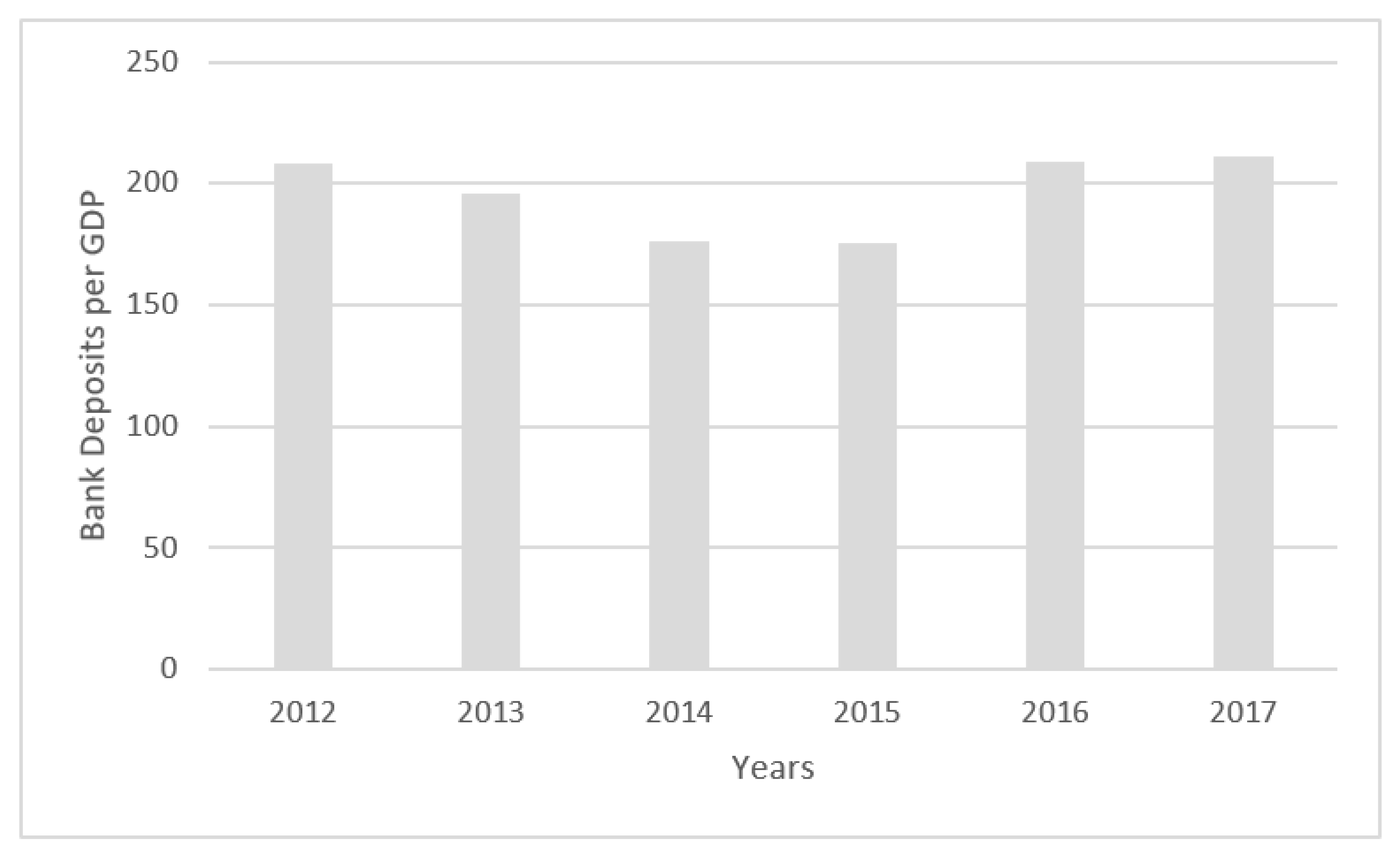
Table 3 shows data that bears mentioning, in that financial deposits are used as a percentage of GDP, because it makes it plausible to extract conclusions about the whole economy per GDP, and to proceed to comparisons more easily with other countries. The data related to Cyprus’s bank deposits are as follows:
Figure 1 presents the situation of financial deposits in the Cyprus financial system, as a percent of GDP, for the period from 2012 to 2017. In addition, the next scheme presents the GDP of Cyprus from this period.
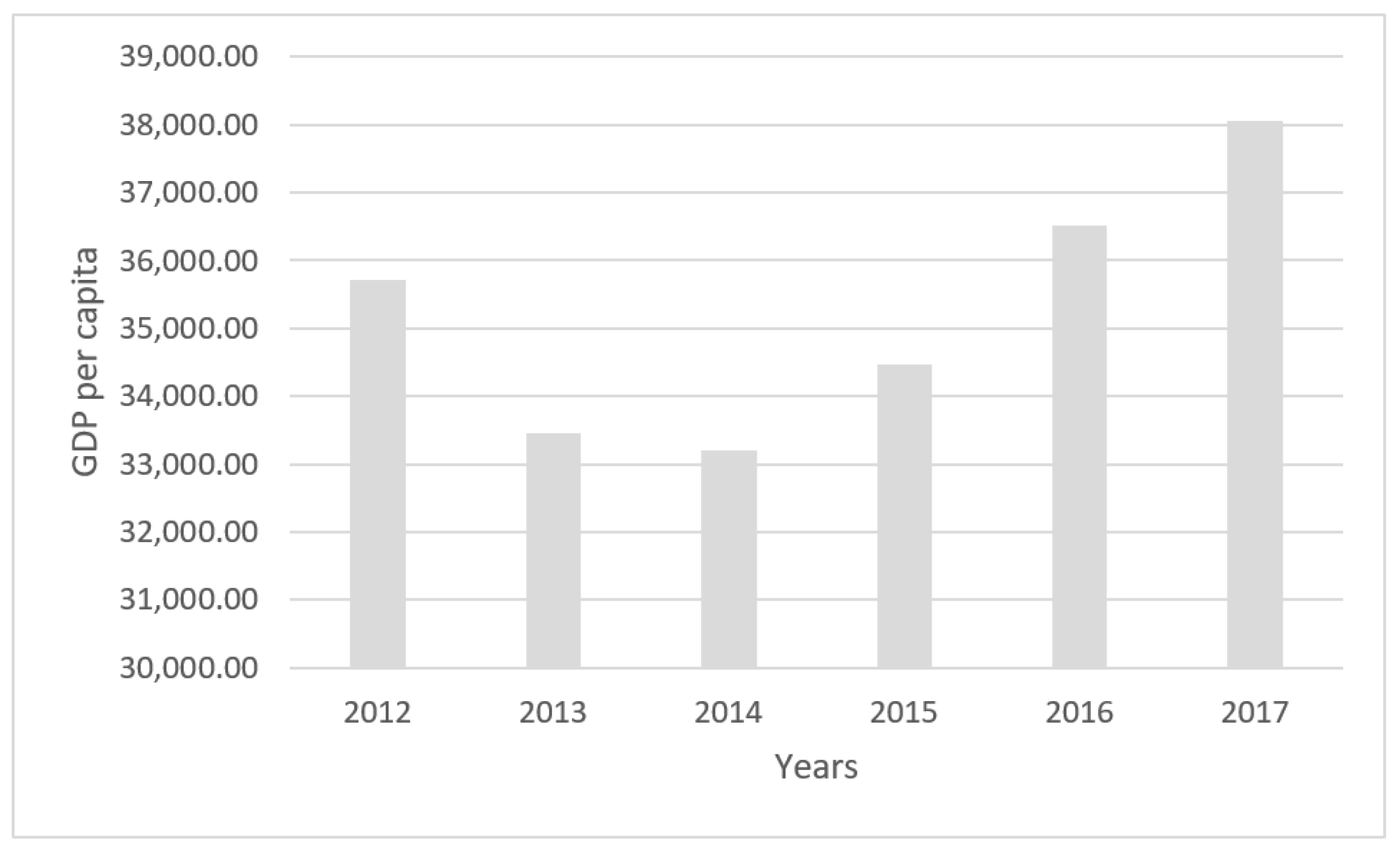
Figure 2 presents the condition of the GDP of the Cyprus economy for the period from 2012 to 2017. Also, the next scheme presents the GDPs of Cyprus for the same period.
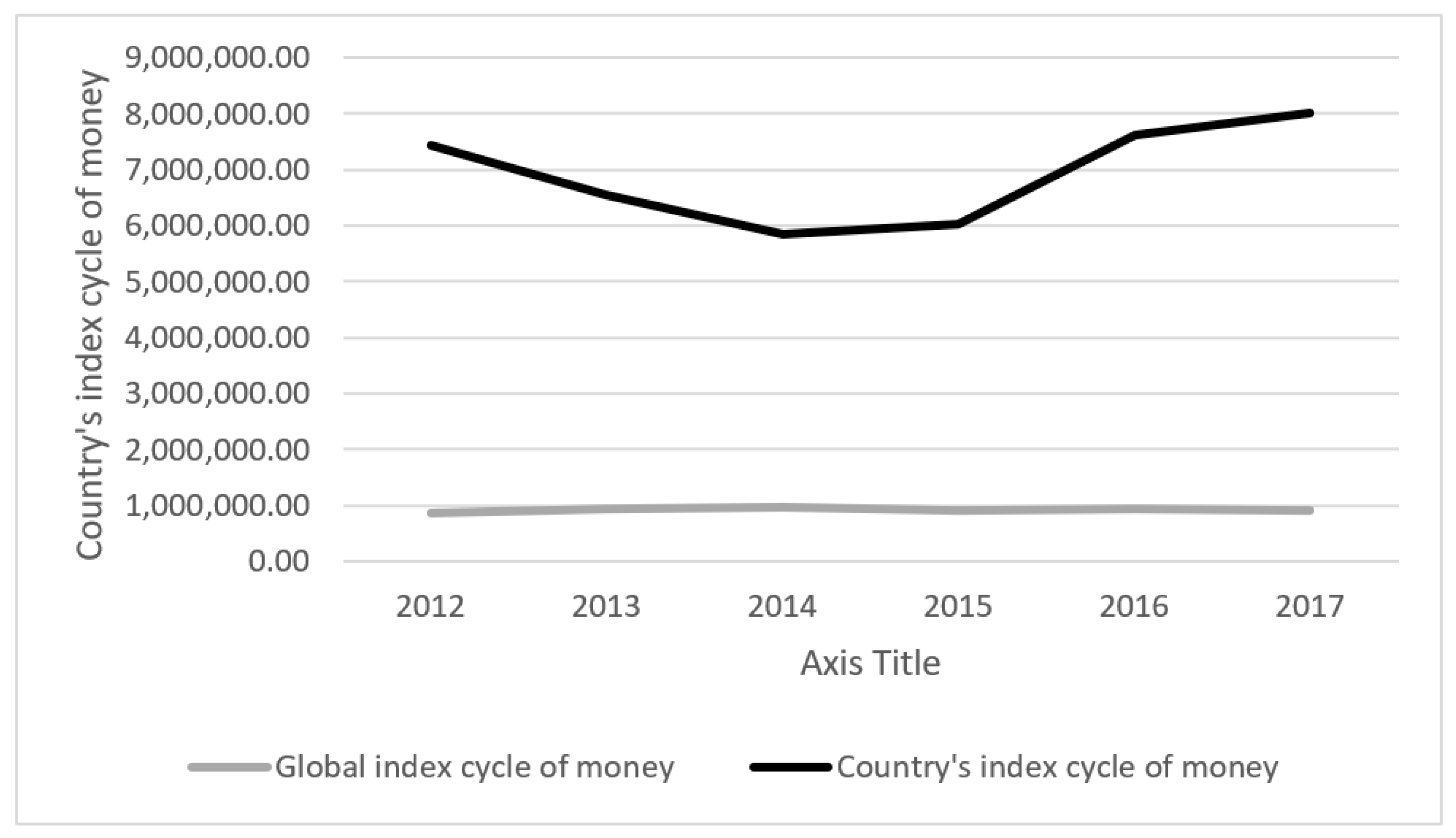
According to prior results, the index of Cyprus is USD 41,529,323.
And the index of global average is USD 5,509,172.04.
Calculating the general index of the cycle of money for the case of Cyprus and for the global view:
The general index of for Cyprus is
The general index of for the global view is
Therefore, it is concluded that Cyprus’s cycle-of-money index stands well above the global average. This indicates that the dynamics of the Cypriot economy are fully consistent with the expectations of the theoretical model, and its internal structure aligns closely with the initial hypothesis of a highly functional and efficient monetary distribution system.
Based on the results illustrated in
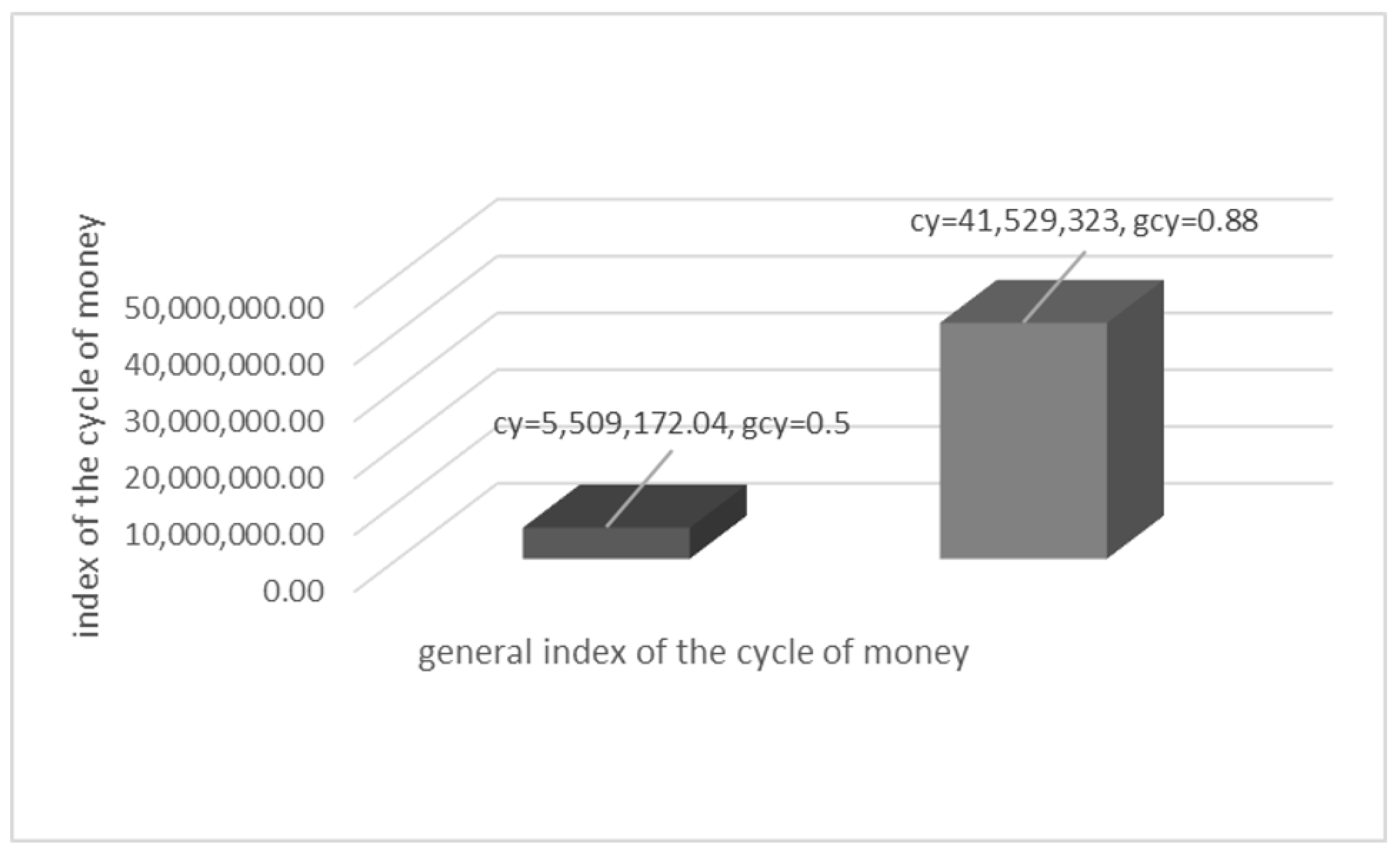
Figure 3, it is evident that the cycle-of-money index for Cyprus is significantly higher than the global average value of 0.5, which is treated as a global benchmark. Cyprus attains a value of 0.88, placing it well above the international reference point and indicating a highly efficient internal monetary circulation. According to the Theory of the Cycle of Money, countries with a general index above 0.2 possess the structural capacity to withstand an economic crisis. The higher the index, the more rapidly an economy is able to return to its pre-crisis state, due to the stronger internal reuse and redistribution of money. Economies that approach the threshold of 0.5 are classified as having a well-structured and balanced monetary system, consistent with the implications of Equation (5). Cyprus, with an index of 0.88, not only surpasses this structural threshold but also demonstrates a level of internal economic functionality associated with high resilience and rapid recovery potential. Its position above the global constant reflects a monetary environment where domestic savings, investments, and financial flows circulate efficiently, supporting sustained economic activity even under periods of stress.
The empirical evidence confirms that Cyprus’s economic structure aligns closely with the theoretical expectations of the cycle-of-money framework and situates the country among the top-performing economies in terms of internal monetary dynamics. (
Challoumis, 2025a). This conclusion indicates that the economic structure of Cyprus exhibits one of the highest levels of monetary distribution and internal circulation among comparable economies. Nevertheless, despite this strong performance, Cyprus can further improve its economic functionality through additional structural reforms. Large international corporations and major domestic enterprises continue to substitute for or overshadow small- and medium-sized enterprises (SMEs), which weakens the domestic cycle of money by redirecting financial flows outside the country. To address this issue, policymakers should apply the Fixed-Length Principle (FLP), which supports the imposition of higher taxes on large companies and multinational groups, especially those engaged in controlled transactions. Such a policy would ensure that a greater share of their profits returns to the domestic economy, thereby enhancing the internal redistribution of money, strengthening liquidity flows, and improving overall social welfare. At the same time, the government should place stronger emphasis on protecting and promoting SMEs, which play a central role in maintaining internal monetary circulation. By preventing monetary leakages caused by the activities of larger corporations and by supporting local enterprise, Cyprus can further reinforce its already robust cycle-of-money index and secure long-term economic resilience.
The General Index of the Cycle of Money, which summarizes these dynamics, is presented in the following figure.
Figure 4 illustrates the comparison between the general index of the cycle of money for Cyprus and the global average. The global benchmark stands at approximately 5.5 million, corresponding to a global cycle-of-money index of 0.5, which represents the threshold of a well-structured economy capable of withstanding economic shocks. In contrast, Cyprus displays a substantially higher value of 41.5 million, corresponding to a cycle-of-money index of 0.88, indicating a significantly stronger distribution and reuse of money within its economic system. The visual contrast between the two bars highlights the extent to which Cyprus exceeds the global norm, reinforcing the study’s conclusion that the Cypriot economy maintains a highly efficient internal monetary circulation and possesses enhanced resilience against financial crises.
Future research should extend the analysis beyond the 2012–2017 window to capture a more comprehensive view of Cyprus’s economic dynamics. Examining earlier periods—prior to the financial crisis—would allow researchers to distinguish structural characteristics from crisis-induced distortions, while incorporating post-2017 data would clarify whether the high cycle-of-money index persists under conditions of economic recovery and stability. Including more recent years is particularly important given shifts in digital banking, tax reforms, international financial regulation, and changing patterns of savings and investment. Moreover, applying the same methodology to a longer timeline for Cyprus and comparing it with updated datasets for the other countries in the project may reveal long-term convergence or divergence trends in the distribution and reuse of money. Such an expanded longitudinal approach would strengthen the empirical robustness of the theory of the cycle of money and provide policymakers with deeper insights into how economic reforms influence monetary circulation over time.
6. Discussion
The current findings indicate that Cyprus’s economic system ranks among the highest performers in terms of the cycle of money, demonstrating a strong internal monetary dynamic. This high index confirms that Cyprus possesses a well-functioning economic structure capable of redistributing money efficiently throughout society. Nevertheless, there remains room for further improvement, particularly in enhancing the balance between large enterprises and small- and medium-sized enterprises (SMEs). A key policy implication of the Theory of the Cycle of Money is that taxation should be differentiated according to the contribution of each type of enterprise to the internal monetary circulation. SMEs typically reinvest their earnings domestically and stimulate repeated rounds of consumption and investment; therefore, reducing their tax burden would strengthen the internal cycle of money and increase national economic resilience. Conversely, large corporations—especially multinational firms—often substitute or supplant the activities of smaller enterprises and may transfer a portion of their profits abroad. For this reason, they should face higher tax obligations, ensuring that a fair share of their revenue re-enters the domestic economy. However, not all large companies operate in a way that diminishes internal monetary circulation. High-technology firms and industrial factories, which generate knowledge, innovation, and productive capacity that smaller firms cannot easily replicate, should receive favorable tax treatment. Supporting these strategic sectors encourages technological upgrades, strengthens competitiveness, and generates multiplier effects that benefit the broader economy. Increasing the internal distribution of money naturally stimulates domestic investment, as funds remain within the economic system rather than leaking abroad. A country with a robust and well-structured cycle of money is better equipped to withstand economic shocks and recover more rapidly from crises. In the case of Cyprus, the general index consistently exceeds the benchmark value of 0.5, which corresponds to the level of “common GDP per capita” used as the global reference point. From 2012 to 2017, Cyprus’s index remained above this threshold, reinforcing the conclusion that its economic structure is not only functional but also exceptionally resilient during a period marked by significant financial challenges in Europe. The evidence confirms that Cyprus’s monetary system operates at a high level of efficiency, yet strategic policy adjustments—particularly in the area of tax design—could further enhance its economic stability, investment potential, and long-term growth.
The policy implications discussed in this study are derived from the theoretical structure of the Theory of the Cycle of Money rather than from causal econometric identification. The empirical analysis is not designed to estimate the direct impact of tax policy changes on the cycle-of-money index, nor to establish causal links between taxation and monetary circulation. Instead, the regression results serve as a structural consistency check, confirming that variables associated with domestic liquidity retention and income capacity align with the theoretical expectations of the model. Accordingly, the policy discussion should be interpreted as theory-informed and conditional, rather than as prescriptive recommendations based on causal inference.
Regarding taxation, monetary circulation, and the Cypriot context, the argument for differentiated taxation between multinational enterprises and small- and medium-sized enterprises (SMEs) follows from the theory’s emphasis on internal monetary reuse. SMEs typically reinvest earnings locally, deposit funds in domestic banks, and generate repeated rounds of consumption and employment, thereby strengthening internal monetary circulation. In contrast, multinational companies—particularly those engaged in controlled transactions—often transfer profits abroad, contributing to monetary leakages that weaken the domestic cycle of money. However, Cyprus presents special national characteristics as a small, open economy with offshore financial activities and a significant international services sector. These features imply that not all multinational firms operating in Cyprus generate net monetary leakages; some contribute positively through employment, technology transfer, and domestic service demand. Therefore, any tax differentiation should be applied selectively and in conjunction with institutional safeguards, rather than uniformly.
In terms of practical interpretation and limitations of policy guidance, the manuscript does not advocate immediate or uniform tax increases on multinational companies, nor blanket tax reductions for SMEs. Instead, it highlights a structural principle: economic agents that systematically extract money from the domestic economy weaken monetary circulation, while those that retain and reuse money domestically strengthen it. The Fixed-Length Principle provides a conceptual framework for aligning taxation with this distinction, but its implementation requires country-specific empirical validation, regulatory calibration, and careful consideration of Cyprus’s role in international finance. Future research incorporating firm-level data, sectoral tax information, and dynamic econometric models is necessary to empirically test the interaction between tax policy and the cycle-of-money index and to translate the theoretical insights into fully operational policy instruments.
Despite the robust empirical findings, this study is subject to several limitations that should be acknowledged. First, the analysis focuses on a relatively short time horizon (2012–2017), which, although deliberately chosen to capture a period of economic stress, restricts the ability to generalize the results to long-run economic dynamics. Crisis conditions may amplify or suppress monetary circulation mechanisms in ways that differ from those observed during stable or expansionary periods. Consequently, the estimated index values primarily reflect crisis-related structural behavior rather than full-cycle economic performance. Second, the empirical application is confined to a single-country case. While Cyprus provides a valuable and informative example—particularly given its small size and banking-centered economic structure—the findings cannot be automatically extrapolated to other economies with different institutional, financial, or developmental characteristics. Moreover, the limited number of annual observations constrains the scope of econometric analysis and prevents the application of more advanced dynamic or causal modeling techniques. Third, the construction of the Index of the Cycle of Money relies on aggregate macroeconomic indicators, such as GDP and bank deposits. Although these variables are theoretically well-grounded within the framework of the theory, they may not fully capture informal financial activity, shadow money, or cross-border monetary movements that are not reflected in official statistics. As a result, some aspects of monetary circulation may remain unobserved. Future research can address these limitations in several ways. Extending the analysis to longer time horizons—including pre-crisis and post-2017 periods—would allow for a clearer distinction between structural and cyclical components of the cycle of money. Expanding the empirical framework to include additional countries or panel datasets would enable systematic cross-country comparisons and enhance external validity. Furthermore, incorporating disaggregated data, sectoral indicators, or financial flow matrices could improve the measurement of monetary reuse and provide deeper insight into the channels through which money circulates within an economy. Finally, future studies could explore the interaction between the cycle-of-money index and institutional variables, tax policy design, or financial regulation to better understand the mechanisms through which monetary circulation influences long-term economic resilience.
7. Conclusions and Prospects
The Theory of the Cycle of Money supports free competition and provides a coherent foundation for the tax policy embedded in the Fixed-Length Principle (FLP). In doing so, it offers clear policy directions for economies—particularly regarding the behavior and obligations of large-capital enterprises. According to the theory, large companies should channel their investments toward factories, productive infrastructure, and high-technology industries, rather than substituting goods and services that can be efficiently produced by small- and medium-sized enterprises (SMEs). This distinction is essential: when large firms replace activities that SMEs could perform, they weaken internal monetary circulation and diminish the economic multiplier effect. SMEs, by contrast, constitute the most effective and rapid mechanism for strengthening a country’s private sector. They operate primarily within the domestic market, reinvest their earnings locally, and circulate money multiple times through consumption, wages, and local investment. Their expansion broadens the tax base and ultimately allows a country to maintain lower overall tax rates while still supporting public revenue needs. With regard to the banking sector, branches of international banks that are fully integrated into the domestic financial system should be considered part of the national economy. However, banks that retain funds outside the domestic system—such as banks located in tax havens or institutions that hold large volumes of capital classified as shadow money—do not contribute to the internal cycle of money. These externalized funds weaken economic functionality, as they are not reinvested domestically and do not participate in the internal circulation that supports GDP formation. If a country simultaneously exhibits a low ratio of bank deposits to GDP and still aligns with the predictions of the cycle-of-money theory, this discrepancy is a strong indicator of shadow money, as documented by
Bourdin and Nadou (
2018),
Brown and Lauder (
1991),
Engström et al. (
2020), and
Spash (
2015). Shadow money has a dual nature: it increases the cycle of money when it is reused within the economy through informal channels or gray-market activities. It decreases the cycle of money when it is saved or held abroad, escaping the domestic monetary system. Thus, shadow money occupies a gray economic zone, both contributing to and detracting from monetary circulation. Crucially, the index of the cycle of money provides an empirical means of detecting its presence: deviations between expected and observed values often signal monetary leakages attributable to shadow activities. A tax system that fails to distinguish effectively between large and small enterprises reveals an underlying bureaucratic deficiency. Accurate identification is essential for applying the Fixed-Length Principle, implementing fair taxation, and preserving the internal cycle of money. A tax structure that treats fundamentally different entities in the same way undermines economic efficiency and inhibits the ability of SMEs to contribute fully to the development of the domestic economy (
Bourdin & Nadou, 2018;
Brown & Lauder, 1991;
Engström et al., 2020;
Spash, 2015).
The results demonstrate that Cyprus exceeds the worldwide average index of the cycle of money, confirming that its economic system operates with a high degree of internal monetary circulation. As illustrated in
Figure 2 and
Figure 3, Cyprus’s index lies at the upper end of the scale, indicating that the country’s financial system supports a strong distribution and reuse of money. Although local banks experienced some losses, these remain limited, reinforcing the view that the internal financial structure is resilient. Despite this positive performance, the Cypriot economy still presents opportunities for improvement. As shown in
Table 2, a portion of the country’s monetary flows continues to exit the domestic financial system through international transactions. These outflows reduce the potential volume of money available for internal reuse and partially weaken the domestic cycle. Nevertheless, the empirical findings remain fully consistent with the initial hypothesis of the model, confirming that Cyprus maintains a robust monetary distribution structure. In recent years, Cyprus has tended to preserve similar patterns of monetary reuse as in previous decades. The calculated value of 0.88 places Cyprus well-above the global average index of 0.5, demonstrating that the country enjoys a high level of financial dynamism, liquidity circulation, and internal economic functionality. Comparable studies conducted for Greece, Latvia, Serbia, Bulgaria, Thailand, Costa Rica, and other countries reveal that many of these economies cluster around the global average value, suggesting that their internal structures are sufficiently well-formed to withstand potential economic shocks. A key implication of the theory is that the shadow market does not necessarily pose a systemic threat, provided that money remains within the national economy. Funds that circulate internally—whether in the formal or informal sector—eventually become subject to direct or indirect taxation. The principal concern arises when money leaves the domestic economic system entirely, as is often the case with large multinational companies engaged in controlled transactions or global financial operations. For this reason, the Theory of the Cycle of Money supports a differentiated tax policy. Large international and multinational firms, which tend to substitute for local business activities and retain profits abroad, should bear higher tax burdens to compensate for the monetary leakage they create. By contrast, small- and medium-sized enterprises (SMEs) consistently reinvest in the domestic economy, maintain savings in local banks, and promote repeated monetary circulation; consequently, they should face lower taxation. Such a policy strengthens the internal cycle of money and enhances economic resilience.
The current value of 0.88 is slightly lower than the historical level of 0.904 observed from 1980 to 2020. This small decline of 0.02 reflects the temporary weakening of the economy during the crisis period of 2012–2017, when monetary outflows and financial instability increased. Even so, the value of 0.88 remains exceptionally high by international standards and clearly indicates that Cyprus possesses a well-structured economic system with strong internal monetary redistribution. This high degree of circulation and reuse of money played a decisive role in enabling Cyprus to recover effectively from its severe economic crisis.