



Next Issue
Volume 15, February
Previous Issue
Volume 14, December


Soc. Sci., Volume 15, Issue 1 (January 2026) – 56 articles
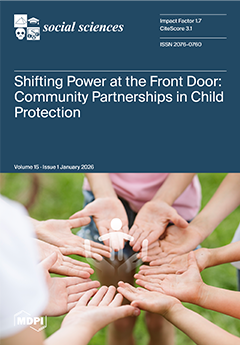
Cover Story (view full-size image): Inequities experienced by Indigenous people within child protection systems are well documented. One avenue for addressing these inequities lies at the ‘front door’ of child protection, when reports are first made. This article reports on a formative evaluation of a shared decision-making forum in Aotearoa, New Zealand, where a community Māori (Indigenous) organisation meets with the statutory agency to make initial decisions about reports and to offer early, community-based supports. Key enablers included a policy context emphasizing community devolution, stakeholder consensus on the forum’s aims, and strong relationships between organizational leaders. These were further supported by effective practice processes, a commitment to ongoing review, community-based location and leadership, and alignment with practitioners’ values. Challenges and implications are discussed. View this paper
  • Issues are regarded as officially published after their release is announced to the table of contents alert mailing list.
  • You may sign up for e-mail alerts to receive table of contents of newly released issues.
  • PDF is the official format for papers published in both, html and pdf forms. To view the papers in pdf format, click on the "PDF Full-text" link, and use the free Adobe Reader to open them.
Order results
Result details
Section
Select all
Export citation of selected articles as:
39 pages, 2155 KB  
Article
Developing Energy Citizenship—Empowerment Through Engagement and (Co-)Ownership, Individually and in Energy Communities
by Jens Lowitzsch, Michiel Heldeweg, Julia Epp and Monika Bucha
Soc. Sci. 2026, 15(1), 56; https://doi.org/10.3390/socsci15010056 - 22 Jan 2026
Viewed by 160
Abstract
Opportunities for citizens to become prosumers have grown rapidly with renewable energy (RE) technologies reaching grid parity. The European Union’s ability to harness this potential depends on empowering energy citizens, fostering active engagement, and overcoming resistance to RE deployment. European energy law introduced [...] Read more.
Opportunities for citizens to become prosumers have grown rapidly with renewable energy (RE) technologies reaching grid parity. The European Union’s ability to harness this potential depends on empowering energy citizens, fostering active engagement, and overcoming resistance to RE deployment. European energy law introduced “renewable self-consumers” and “active customers” with rights to consume, sell, store, and share RE, alongside rights for citizens collectively organised in energy communities. This article explores conditions for inclusive citizen engagement and empowerment within the RE system. Building on an ownership- and governance-oriented approach, we further develop the concept of energy citizenship, focusing on three elements: conditions for successful engagement, individual versus collective (financial) participation, and the role of public (co-)ownership in fostering inclusion. The analysis is supported by 82 semi-structured interviews, corroborating our theoretical lens. Findings show that participation, especially of vulnerable consumers, relies on an intact “engagement chain,” while energy communities remain an underused instrument for inclusion. Institutional environments enabling municipalities and public entities to act as pace-making (co-)owners are identified as key. Complementing the market and the State, civil society holds important potential to enhance engagement. Inspired by the 2017 European Pillar of Social Rights, we propose a corresponding “European Pillar of Energy Rights.” Full article
(This article belongs to the Special Issue From Vision to Action: Citizen Commitment to the European Green Deal)
Show Figures

Figure 1

16 pages, 559 KB  
Commentary
Design Justice in Action: Co-Developing an HIV and Substance Use Linkage Intervention with Young Adults Involved in the Carceral System
by Sheridan Sweet, Nicole McCaffery, Jerry Jiang, Robert W. S. Coulter, James E. Egan, Janet Myers, Martha Shumway, Marina Tolou-Shams and Emily F. Dauria
Soc. Sci. 2026, 15(1), 55; https://doi.org/10.3390/socsci15010055 - 22 Jan 2026
Viewed by 97
Abstract
To redress systemically biased approaches to health interventions and service design, it is critical that public health researchers employ frameworks that are intentional in their approach to recognizing and working against existing power structures to advance equity in public health. Design Justice represents [...] Read more.
To redress systemically biased approaches to health interventions and service design, it is critical that public health researchers employ frameworks that are intentional in their approach to recognizing and working against existing power structures to advance equity in public health. Design Justice represents an approach to design which centers marginalized people and uses collaborative design processes to address community needs and challenges. The purpose of this paper is to describe our process for applying a Design Justice framework to Project XX. Project XX is a study funded by XX designed to develop and test an eHealth-enhanced peer navigation intervention to improve engagement in substance use and HIV-related services for young adults with recent carceral system involvement. We situate the project within the theoretical foundation of Design Justice and community-engaged research, describe its development and implementation, and analyze the application of Design Justice principles from an implementation science perspective by overlaying them with Stanford University’s Center for Dissemination and Implementation’s five key dimensions of dissemination and implementation methods. We highlight successes, challenges, and lessons learned, offering recommendations to guide more equitable and inclusive approaches for future research and practice. Full article
(This article belongs to the Special Issue Public Health and Social Change)
Show Figures

Figure 1

20 pages, 351 KB  
Article
Lethal Care: The Louisiana State Penitentiary Model of Medical Violence
by Ernest K. Chavez
Soc. Sci. 2026, 15(1), 54; https://doi.org/10.3390/socsci15010054 - 21 Jan 2026
Viewed by 267
Abstract
Under the Eighth Amendment, prisons are legally mandated to provide constitutionally adequate standards of medical care to the incarcerated. But how do we make sense of a carceral structure in which the very delivery of medical care results in preventable death? This article [...] Read more.
Under the Eighth Amendment, prisons are legally mandated to provide constitutionally adequate standards of medical care to the incarcerated. But how do we make sense of a carceral structure in which the very delivery of medical care results in preventable death? This article offers a carceral case study of how prison medical care during the era of mass incarceration generates racialized mortality at the Louisiana State Penitentiary, also known as Angola Prison. By analyzing caselaw documents drawn from the docket of Lewis v. Cain, an ongoing lawsuit alleging inadequate medical care at Angola, this article seeks to address the limits of pursuing relief from prison conditions through legal interventions and reforms that are always yet to arrive. Rather than examining prison medical care and preventable death as problems to be reformed, this project aims to develop theoretical insight into how Angola Prison enacts “medical violence” against its captive population. This refers to the use of prison healthcare capacities to harm rather than affirm the lives of the incarcerated. As this case study argues, medical violence operates through organized abandonment, disregard, and carceral extraction, which together extend the life of the prison through the deaths of its captive population. Full article
(This article belongs to the Special Issue Carceral Death: Failures, Crises, and Punishments)
16 pages, 493 KB  
Article
‘Layered Resilience’ in Urban Context: An Investigation into the Interplay Between the Local State and Ethnic Minority Groups in Two European Cities During the COVID-19 Pandemic
by Jörg Dürrschmidt and John Eade
Soc. Sci. 2026, 15(1), 53; https://doi.org/10.3390/socsci15010053 - 21 Jan 2026
Viewed by 152
Abstract
This article explores urban ‘societal resilience’ during the global pandemic of 2020–2021. This health crisis involved a complex interweaving of social, cultural, political, and economic processes which involved both top-down measures undertaken by nation-state governments and bottom-up actions by local residents. In a [...] Read more.
This article explores urban ‘societal resilience’ during the global pandemic of 2020–2021. This health crisis involved a complex interweaving of social, cultural, political, and economic processes which involved both top-down measures undertaken by nation-state governments and bottom-up actions by local residents. In a research study undertaken in two European cities—Stuttgart and London—we focussed on two migrant minorities and the involvement by ‘experts’ and ‘non-experts’ in the meso-level where these top-down measures and bottom-up actions met. Our study provided a grounded understanding of ‘layered resilience’ where resiliency develops through the disjunctive order of communication patterns, public service delivery, institutionalized dialogue, narratives, and values. Through distinguishing between resiliency and resilience, we seek to illustrate the ‘elastic’ character of urban modes of integration. Our study suggests the need for more empirically grounded investigations into the continuity and difference between adaptation and adjustment, normality and normalcy, and resilience and resiliency. It also highlights the importance of context-specific and path-dependent notions of resilience and resiliency. Full article
(This article belongs to the Special Issue Understanding Societal Resilience)
Show Figures

Figure 1

19 pages, 290 KB  
Article
The Psychological Correlates of Courage in the Workplace: An Evolutionary Perspective on the Function of Courageous Altruism
by Sarai D. Garcia, Sergio A. Lopez, Kaitlyn D. Longo, Julia G. Lombard, Glenn Geher and Ethan Eisenberg
Soc. Sci. 2026, 15(1), 52; https://doi.org/10.3390/socsci15010052 - 21 Jan 2026
Viewed by 455
Abstract
In the workplace, there are situations that arise where an individual can make courageous decisions in the face of adversity. This research used an evolutionary-based personality approach to examine the dispositional predictors of the tendency to make courageous decisions in the workplace. More [...] Read more.
In the workplace, there are situations that arise where an individual can make courageous decisions in the face of adversity. This research used an evolutionary-based personality approach to examine the dispositional predictors of the tendency to make courageous decisions in the workplace. More specifically, this study examined personality, risk-taking propensity, and resilience as predictor variables for courageous decision-making in the workplace. We presented participants (N = 1343) with Behavioral Courage Scales designed for this study (one was completely self-report and the other was a behavioroid measure), along with the Ten-Item Personality Inventory, which taps the Big Five personality traits (TIPI), Brief Resilience Scale (BRS), and the General Risk Propensity Scale (GRiPS). Correlational analyses demonstrated significant positive relationships between courageous decision-making and extraversion, openness, emotional stability, conscientiousness, agreeableness, and risk-taking propensity. Importantly, when it came to self-reported courage, we found that risk-taking propensity was negatively correlated with dispositional courage, whereas risk-taking propensity was positively related to intentions of courageous action. Overall, these findings suggest that traits such as agreeableness and conscientiousness might predict courageous and altruistic behaviors that benefit coworkers, even when it might cause conflict that brings a net reduction to the benefits of the individual. Full article
2 pages, 130 KB  
Correction
Correction: Gorelik (2025). Ethnic Divisions Within Unity: Insights into Intra-Group Segregation from Israel’s Ultra-Orthodox Society. Social Sciences 14: 169
by Boris Gorelik
Soc. Sci. 2026, 15(1), 51; https://doi.org/10.3390/socsci15010051 - 21 Jan 2026
Viewed by 98
Abstract
Missing Funding [...] Full article
(This article belongs to the Section Social Stratification and Inequality)
15 pages, 229 KB  
Article
The Shaping of Contemporary Morality in Intimacy Decision-Making in Britain
by Julia Carter
Soc. Sci. 2026, 15(1), 50; https://doi.org/10.3390/socsci15010050 - 21 Jan 2026
Viewed by 216
Abstract
In this paper I aim to draw attention to the continued emphasis on ‘moral tales in stories of family construction. In research projects on both conventional family practices such as marriage and non-conventional ones such as living apart together (LAT) and mixed-sex civil [...] Read more.
In this paper I aim to draw attention to the continued emphasis on ‘moral tales in stories of family construction. In research projects on both conventional family practices such as marriage and non-conventional ones such as living apart together (LAT) and mixed-sex civil partnerships, morality continues to emerge as a core guiding principle for how relationships are organised and maintained. Yet beyond the importance of children in these moral tales, little consideration is given to the other dimensions and shapes that this ‘morality’ may take. Here I bring together three qualitative research projects to illustrate the strong drive of moral obligations in the face of family fluidity, relationship plurality, and individualised therapeutic discourse. With this data I argue that obligations continue to organise relationship decision-making, and we can imagine these obligations as formed of three interrelated dimensions: (1) social ‘oughts’, formed of culture, norms, and values (e.g., we ought to get married because that is the normal thing to do in our society), (2) relational ‘oughts’, including children, family, friends, life/family course, death, health (e.g., we ought to live apart to protect the children), and (3) individual ‘oughts’, which involve strongly held personal beliefs, and an ethic of self-care (e.g., we ought to get a civil partnership because it aligns with my feminist values). Understanding the shape of contemporary intimate morality is an important step in developing future theory, policy, and practice in the field. Full article
(This article belongs to the Special Issue Intimate Relationships in Diverse Social and Cultural Contexts)
15 pages, 276 KB  
Article
Levels of Academic Engagement and Social Media Addiction Among University Students: A Comparative Study
by Yosbanys Roque Herrera, Santiago Alonso García, Dennys Vladimir Tenelanda López and Juan Antonio López Núñez
Soc. Sci. 2026, 15(1), 49; https://doi.org/10.3390/socsci15010049 - 20 Jan 2026
Viewed by 394
Abstract
Social media is a valuable resource in many spheres of life in the 21st century; however, excessive, uncontrolled use is associated with various adverse health conditions. In this study, we used a quantitative approach, an observational design, and a comparative scope to compare [...] Read more.
Social media is a valuable resource in many spheres of life in the 21st century; however, excessive, uncontrolled use is associated with various adverse health conditions. In this study, we used a quantitative approach, an observational design, and a comparative scope to compare levels of academic commitment and social media addiction, and their respective dimensions, grouping participants according to various sociodemographic and educational criteria. A total of participants was 1200 students (65.3% female) with an average age of 21.4 years, from the Faculty of Health Sciences at the National University of Chimborazo, Ecuador, and data were collected using the Ultrecht Academic Commitment Scale and Social Media Addiction Questionnaire. When grouped by major, statistically significant differences were found only for dedication (p = 0.038), lack of control over social media use (p = 0.016), and excessive social media use (p = 0.002). When grouped by social media use, there were statistically significant differences in all the dependent variables, with p-values ranging from 0.000 to 0.011. Regarding the frequency of social media use, no significant differences were found in academic engagement (p ≥ 0.05), while the opposite was observed for social media use. A comparative analysis identified categories with significant differences. The results enabling an accurate diagnosis and the adoption of the most appropriate educational strategies; also serves as a theoretical and methodological basis for further research on the subject. Full article
(This article belongs to the Special Issue Educational Technology for a Multimodal Society)
11 pages, 240 KB  
Article
School-Based Health Services to Improve Youth Access to Reproductive Health Care
by Elissa M. Barr, Ashley Sarra Mezzano, Carmen Smotherman, Kassie R. Terrell and Michele J. Moore
Soc. Sci. 2026, 15(1), 48; https://doi.org/10.3390/socsci15010048 - 19 Jan 2026
Viewed by 391
Abstract
School-based health centers (SBHCs) provide accessible, comprehensive healthcare to students, particularly in underserved communities, and play a critical role in addressing reproductive health needs. Despite their benefits, the availability of SBHCs remains limited across the U.S., with ongoing debates regarding their role in [...] Read more.
School-based health centers (SBHCs) provide accessible, comprehensive healthcare to students, particularly in underserved communities, and play a critical role in addressing reproductive health needs. Despite their benefits, the availability of SBHCs remains limited across the U.S., with ongoing debates regarding their role in educational settings, especially concerning reproductive health services. This study assessed public opinion regarding reproductive health services in SBHCs within middle and high schools in Duval County, Florida. A representative sample of 605 adults was surveyed using a Random-Digit-Dialing approach, and data were weighted for analysis. Overall, support for reproductive health services was high, with 68–74% of respondents in high school and 49–57% in middle school favoring services such as STI testing and treatment, pregnancy testing, and providing condoms. Significant differences in support levels are noted across demographic groups, particularly by age and race. The findings indicate strong community support for implementing reproductive health services in SBHCs, highlighting their potential to improve access to essential health services for adolescents. This research provides valuable insights for policymakers to advocate for the expansion of SBHCs to include comprehensive reproductive health services, addressing health disparities among youth. Full article
(This article belongs to the Special Issue Equity Interventions to Promote the Sexual Health of Young Adults)
22 pages, 1617 KB  
Article
Who Teaches Older Adults? Pedagogical and Digital Competence of Facilitators in Mexico and Spain
by Claudia Isabel Martínez-Alcalá, Julio Cabero-Almenara and Alejandra Rosales-Lagarde
Soc. Sci. 2026, 15(1), 47; https://doi.org/10.3390/socsci15010047 - 16 Jan 2026
Viewed by 359
Abstract
Digital inclusion has become an essential component in ensuring the autonomy, social participation, and well-being of older adults. However, their learning of digital skills depends to a large extent on the quality of support provided by the facilitator, whose age, training, and experience [...] Read more.
Digital inclusion has become an essential component in ensuring the autonomy, social participation, and well-being of older adults. However, their learning of digital skills depends to a large extent on the quality of support provided by the facilitator, whose age, training, and experience directly influence teaching processes and how older adults relate to technology. This study compares the digital competences, and ICT skills of 107 facilitators of digital literacy programs, classified into three groups: peer educators (PEERS), young students without gerontological training (YOS), and young gerontology specialists (YGS). A quantitative design was used. Statistical analyses included non-parametric tests (Kruskal–Wallis, Mann–Whitney, Kendall’s Tau) and parametric tests (ANOVA, t-tests), to examine associations between socio-demographic variables, the level of digital competence, and ICT skills for teachers (technological and pedagogical). The results show clear differences between profiles. YOS achieved the highest scores in digital competence, especially in problem-solving and tool handling. The YGS achieved a balanced profile, combining competent levels of digital skills with pedagogical strengths linked to their gerontological training. In contrast, PEERS recorded the lowest levels of digital competence, particularly in security and information management; nevertheless, their role remains relevant for fostering trust and closeness in training processes among people of the same age. It was also found that educational level is positively associated with digital competence in all three profiles, while age showed a negative relationship only among PEERS. The findings highlight the importance of creating targeted training courses focusing on digital, technological, and pedagogical skills to ensure effective, tailored teaching methods for older adults. Full article
(This article belongs to the Special Issue Educational Technology for a Multimodal Society)
Show Figures

Graphical abstract

19 pages, 319 KB  
Article
Intercultural Education Through Spanish Secondary Bilingual and Non-Bilingual Students’ Eyes: Perceptions, Benefits, and Future Impact
by Anna Shemaeva, María Elena Gómez-Parra and Roberto Espejo-Mohedano
Soc. Sci. 2026, 15(1), 46; https://doi.org/10.3390/socsci15010046 - 16 Jan 2026
Viewed by 226
Abstract
Placed in the broader discourse on Intercultural Citizenship Education (ICitE) this study explores the anticipated impact of bilingual education (BE) on intercultural competence (IC) and global civic orientations associated with intercultural citizenship (ICit) among students in their final year of secondary school (4th-year [...] Read more.
Placed in the broader discourse on Intercultural Citizenship Education (ICitE) this study explores the anticipated impact of bilingual education (BE) on intercultural competence (IC) and global civic orientations associated with intercultural citizenship (ICit) among students in their final year of secondary school (4th-year ESO) in Spain, focusing on differences in perceptions between bilingual and non-bilingual participants. A quantitative methodology was employed, utilising a closed-ended validated questionnaire administered to 2187 students from bilingual and non-bilingual settings across the whole country. The results reveal that bilingual students perceive BE as beneficial for their IC, whereas their monolingual counterparts assign less such utility to BE. We conclude that even though intercultural education is not explicitly taught in the curriculum, it is implicit in bilingual education programmes due to the positioning of the additional language as a medium and lived daily practice with tangible outcomes rather than an academic requirement. We also discovered that within the bilingual students’ group there are lower expectations regarding BE’s impact on the anticipated development of their global civic identity compared to intercultural awareness. The findings indicate that BE offers a context naturally conducive to IC development and has potential for fostering ICit which appears to be untapped. This study has implications for the discussion on the role of BE in education for the 21st century and urges stakeholders to address BE affordances for nurturing ICit by adding the critical citizenship component to it as proposed in the Intercultural Citizenship Education framework. Full article
24 pages, 310 KB  
Essay
Power and Love in Intimate Partner Violence Theories: A Conceptual Integration
by Roberta Di Pasquale and Andrea Rivolta
Soc. Sci. 2026, 15(1), 45; https://doi.org/10.3390/socsci15010045 - 15 Jan 2026
Viewed by 260
Abstract
The field of study on intimate partner violence has long been characterized by a bitter debate between the following two opposing theoretical and ideological positions on the nature of the phenomenon: the first is typical of the feminist perspective and considers IPV as [...] Read more.
The field of study on intimate partner violence has long been characterized by a bitter debate between the following two opposing theoretical and ideological positions on the nature of the phenomenon: the first is typical of the feminist perspective and considers IPV as an expression of gender-based violence; the second is typical—among others—of the attachment-based perspective and maintains that IPV would be a neutral form of violence with respect to gender. The aim of this contribution is to try to show how it is possible to make a more heuristically fruitful comparison between these two antagonistic perspectives, shifting the focus on the conceptual frameworks that underlie them and on their two different corresponding key explanatory concepts as follows: on the one hand, gender-based power on which the feminist perspective hinges, and on the other, love and love-related emotional dynamics on which the attachment-based perspective focuses. Finally, we will argue how these two key explanatory concepts can be kept combined in a sort of binocular vision and integrated into a more complex “power-and-love” explanatory framework. To this end, we will refer to a systemic approach to IPV, in particular to the contribution of Virginia Goldner, who proposes a model based on the close interconnection between power dynamics and love-related dynamics in the genesis and perpetuation of male violence in heterosexual intimate relationships. Full article
(This article belongs to the Special Issue Contemporary Work in Understanding and Reducing Domestic Violence)
9 pages, 248 KB  
Opinion
Where Person-Centered Care Falls Short: Toward an Approach That Tackles Othering and Stigmatization of People with Dementia
by Menal Ahmad and Anne-Mei The
Soc. Sci. 2026, 15(1), 44; https://doi.org/10.3390/socsci15010044 - 15 Jan 2026
Viewed by 285
Abstract
This theoretical opinion article critiques person-centered dementia care (PCDC) for overlooking the structural dimensions of Othering and stigma. In response to these limitations, we propose three key conceptual shifts essential to overcoming Othering and stigma experienced by people with dementia. First, although PCDC [...] Read more.
This theoretical opinion article critiques person-centered dementia care (PCDC) for overlooking the structural dimensions of Othering and stigma. In response to these limitations, we propose three key conceptual shifts essential to overcoming Othering and stigma experienced by people with dementia. First, although PCDC emphasizes individual agency, it is constrained by institutional priorities and professional perspectives, which can unintentionally reinforce structural inequalities. Centering the lived experiences of people with dementia as essential knowledge can rebalance power and validate their expertise. Second, reducing stigma means moving beyond PCDC’s individualized focus to recognize the social conditions that perpetuate Othering. This requires inclusive interactions and professional reflection that challenge biomedical assumptions. Third, PCDC is often limited to formal care settings, neglecting how people with dementia maintain social roles and a sense of community belonging. Addressing stigma, therefore, requires extending support into everyday life through contextual, strengths-based approaches that sustain social roles. Full article
19 pages, 2514 KB  
Article
Making It Work: The Invisible Work of Mothers in Pursuit of Inclusion in School Settings
by Jessica A. Harasym, Paige Reeves and Shanon K. Phelan
Soc. Sci. 2026, 15(1), 43; https://doi.org/10.3390/socsci15010043 - 14 Jan 2026
Viewed by 343
Abstract
Inclusive education is at the forefront of transnational policy agendas. Yet, normative, deficit-oriented disability discourses and institutional gaps continue to shape how inclusion is enacted in schools, often displacing extensive and unacknowledged labour onto families, especially mothers. Drawing on feminist theories of invisible [...] Read more.
Inclusive education is at the forefront of transnational policy agendas. Yet, normative, deficit-oriented disability discourses and institutional gaps continue to shape how inclusion is enacted in schools, often displacing extensive and unacknowledged labour onto families, especially mothers. Drawing on feminist theories of invisible work, this article critically examines the everyday labour performed by mothers of disabled children as they navigate inclusive education systems in Alberta, Canada. Situated within a broader collective case study, this analysis asks: What forms of invisible work do mothers undertake in pursuit of inclusion within education systems labelled as inclusive? Semi-structured interviews were conducted with nine mothers of disabled children. Reflexive thematic analysis illuminated four intersecting dimensions of invisible work: (1) working within the system, (2) working to fit the system, (3) crafting system workarounds, and (4) working above and beyond the system. These forms of work reveal how inclusive education systems rely on mothers to bridge the gap between policy rhetoric and lived experiences. Findings illuminate how mothers’ invisible work simultaneously sustains, negotiates, and resists systemic ableism, highlighting the need to recognize and redistribute this work and reimagine inclusion as a shared structural responsibility rather than an individual, maternal pursuit. Full article
(This article belongs to the Special Issue Towards Equity: Services for Disabled Children and Youth)
Show Figures

Figure 1

1 pages, 144 KB  
Correction
Correction: Vázquez et al. (2025). Construction and Validation of the Attitude Toward Returning to an Ex-Partner Scale. Social Sciences 14: 528
by María Agustina Vázquez, Miguel Mora-Pelegrín, María Aranda and Beatriz Montes-Berges
Soc. Sci. 2026, 15(1), 42; https://doi.org/10.3390/socsci15010042 - 13 Jan 2026
Viewed by 140
Abstract
In the original publication (Vázquez et al [...] Full article
17 pages, 280 KB  
Article
‘There’s Nothing We Can Do for You Here’: Experiences of Territorial Inequality and Resistance in Two Italian Local Contexts
by Fabio Perocco and Giorgio Pirina
Soc. Sci. 2026, 15(1), 41; https://doi.org/10.3390/socsci15010041 - 12 Jan 2026
Viewed by 238
Abstract
This article examines two cases of territorial inequalities in Italy: Murano (Venice), renowned for artistic glassmaking, and the inner-rural area of Gennargentu–Mandrolisai (Sardinia). Despite their differences, findings indicate that the two areas share experiences of exclusion linked not only to physical isolation but [...] Read more.
This article examines two cases of territorial inequalities in Italy: Murano (Venice), renowned for artistic glassmaking, and the inner-rural area of Gennargentu–Mandrolisai (Sardinia). Despite their differences, findings indicate that the two areas share experiences of exclusion linked not only to physical isolation but also, and above all, to a lack of effective public policies. The findings suggest that territorial disparity results from multiple processes requiring targeted responses. Full article
24 pages, 9488 KB  
Article
Community Summits as Catalysts for Healing: Addressing Eco-Anxiety and Fostering Collective Resilience in Environmental Justice Movements
by Chinmayi Bethanabatla, Dani Wilson, Miranda Aman and Tina Ndoh
Soc. Sci. 2026, 15(1), 40; https://doi.org/10.3390/socsci15010040 - 12 Jan 2026
Viewed by 282
Abstract
The ideals of community and collective action are key tenets of the environmental justice (EJ) movement. Yet the pervasive grind culture that underpins capitalist societies makes it challenging to embrace these core values. EJ convenings are organized by a variety of entities, including [...] Read more.
The ideals of community and collective action are key tenets of the environmental justice (EJ) movement. Yet the pervasive grind culture that underpins capitalist societies makes it challenging to embrace these core values. EJ convenings are organized by a variety of entities, including grassroots organizations, government agencies, environmental non-governmental agencies, and academic institutions, and often reflect the tone of the organizing entity. This work explores the impact of a community and academic partnered EJ summit in addressing ecological grief (eco-grief) and ecological anxiety (eco-anxiety), supporting collective action, and attending to healing justice. We interviewed thirteen participants who attended the 2024 Pittsburgh Environmental Justice Summit using semi-structured, open-ended questions. Drawing on insights from lived experiences with the environment and environmental harms, we sought to understand how participants perceived EJ, health, and healing, as well as the role of summits and community efforts in shaping these perspectives. Emotional impacts like eco-grief, eco-anxiety, and intergenerational trauma were other common themes established through the interviews. Despite negative emotions being more commonly expressed than positive emotions, hope emerged as the most widely expressed theme. The summit was viewed as a space for reflection, support, establishing new contacts, and promoting growth and resilience. The results underscore the importance of integrating emotional and psychological aspects into EJ frameworks as well as the value of community-based approaches that combine EJ and healing practices to foster resilience, promote equitable health outcomes, and cultivate hope through collective action and support. Full article
(This article belongs to the Special Issue Public Health and Social Change)
Show Figures

Figure 1

23 pages, 1598 KB  
Article
Understanding Transit Migration Through the Push-Pull Plus Framework: Evidence from Casa del Migrante, Honduras
by Mabely Romero, Bernardo Trejos, Marco Granadino, Juan Carlos Flores and Pablo Lamino
Soc. Sci. 2026, 15(1), 39; https://doi.org/10.3390/socsci15010039 - 12 Jan 2026
Viewed by 312
Abstract
Migration through Central America continues to rise, yet limited research examines how people make migration decisions, especially among those traveling in transit. This study addresses that gap by analyzing the motivations of migrants passing through Casa del Migrante San José in Ocotepeque, Honduras, [...] Read more.
Migration through Central America continues to rise, yet limited research examines how people make migration decisions, especially among those traveling in transit. This study addresses that gap by analyzing the motivations of migrants passing through Casa del Migrante San José in Ocotepeque, Honduras, to examine how long-term pressures interact with immediate triggers during migration. A mixed-methods approach was used, integrating two data sources: 3934 registration records from the Human Mobility Pastoral database (2021–2022) and 75 semi-structured interviews conducted in December 2022. The Push-Pull Plus (PPP) framework was applied to interpret how persistent conditions, immediate triggers, and available support networks influence decisions to migrate. Quantitative results show a marked increase in arrivals during 2022, especially among Venezuelan migrants, with a peak in October following a U.S. policy announcement. Most participants were men aged 21–40 with incomplete secondary education, and economic hardship was the most frequently cited reason for leaving. However, interviews indicate that financial motives were often intertwined with insecurity, family obligations, and unexpected opportunities to travel. Overall, the findings suggest that migration decisions are complex, dynamic, and timing-sensitive, underscoring the need for policies that address the root causes while providing support for migrants in transit. Full article
(This article belongs to the Special Issue Civil Society, Migration and Citizenship)
Show Figures

Figure 1

18 pages, 455 KB  
Review
Future-Oriented Global Drivers of Change in Education: From Industrial Revolutions to a New Social Contract—A Scoping Review
by Tatjana Bulajeva and Asta Meškauskienė
Soc. Sci. 2026, 15(1), 38; https://doi.org/10.3390/socsci15010038 - 12 Jan 2026
Viewed by 244
Abstract
The rapid technological development caused by industrial revolutions (Industry 4.0 and 5.0) puts a lot of pressure on the education system that regulates initial and continuous human resource development. The present study undertakes a scoping review of the policy papers of WEF, OECD, [...] Read more.
The rapid technological development caused by industrial revolutions (Industry 4.0 and 5.0) puts a lot of pressure on the education system that regulates initial and continuous human resource development. The present study undertakes a scoping review of the policy papers of WEF, OECD, and UNESCO to understand the future challenges faced by education. The online databases of these international organizations were used to identify the English versions of the education policy reports published between 2020 and 2025 using the keywords “skills policy”, “closing skills gap”, “future skills”, “drivers of change”, “trends transforming education”, and “future education”. After screening and performing a thematic analysis, we identified fifteen publications that met the inclusion criteria. Choosing a systematic-narrative hybrid strategy, we conducted a systemic scoping review using the PRISMA-ScR guidelines. We found that the analyzed WEF and OECD policy reports contribute the most to understanding global skills policy and global trends driving changes in education. Our review has also revealed that the WEF-developed Global Skills Taxonomy and Taxonomy Adoption Toolkit contribute to further skills policy improvement and its practical implementation in bridging the skills gap. Full article
Show Figures

Figure 1

19 pages, 282 KB  
Article
Techno-Digital Vulnerability and Intelligence Failures
by Ehud Eiran
Soc. Sci. 2026, 15(1), 37; https://doi.org/10.3390/socsci15010037 - 11 Jan 2026
Viewed by 321
Abstract
Scholars and practitioners of international relations and security studies view technological capabilities in general, and digital ones in particular, as crucial to enhancing state power. Among other things, digital technologies sharpen intelligence, thus reducing the likelihood of strategic surprise by improving situational awareness [...] Read more.
Scholars and practitioners of international relations and security studies view technological capabilities in general, and digital ones in particular, as crucial to enhancing state power. Among other things, digital technologies sharpen intelligence, thus reducing the likelihood of strategic surprise by improving situational awareness and strengthening deterrence. Yet the empirical record of the early twenty-first century presents a paradox: states with highly advanced digital infrastructures remain vulnerable to unexpected strategic shocks, including intelligence failures. This article develops a conceptual framework, techno-digital vulnerability, that explains why digital superiority can paradoxically increase susceptibility to strategic surprise. Drawing on international relations theory, this article identifies four interrelated mechanisms: illusions of informational completeness; structural dependence on digital systems; hypervisibility of digitally open societies; and the systematic undervaluation of low-tech adversaries. The argument is illustrated through the case of Israel’s failure to foresee the Hamas attack of 7 October 2023. The article concludes by outlining the implications for digitally advanced democracies and for the study of strategic surprise in IR. Full article
(This article belongs to the Special Issue Technology, Digital Media and Politics)
18 pages, 285 KB  
Article
The Seeds Are Sown: Towards Interracial Inclusivity at a UK Predominantly White Institution
by Christopher Jones and Jordan Mullard
Soc. Sci. 2026, 15(1), 36; https://doi.org/10.3390/socsci15010036 - 9 Jan 2026
Viewed by 431
Abstract
The mental distress experienced by ethnic minority students studying at predominantly White institutions is well documented. These institutions and their spaces can be hostile environments for ethnic minority students and staff, leading to low retention, engagement and poor mental health. Often posited through [...] Read more.
The mental distress experienced by ethnic minority students studying at predominantly White institutions is well documented. These institutions and their spaces can be hostile environments for ethnic minority students and staff, leading to low retention, engagement and poor mental health. Often posited through a deficit lens, we challenge models that situate the experiences of what we call the resilient minority (ReM)—racialised ethnic groups—into categories to be fixed. By deploying qualitative research into Black and White university student experiences of racial inclusion, we explore alternative views to building stronger, more resilient communities. By further theorising interracial anxiety (the increased levels of anxiety felt by White people when interacting with ReM or experienced by ReM in predominantly White contexts), we highlight how decolonisation, built on representation and recognition, not only generates important discussions about interracial anxiety but also creates opportunities for change. We evidence how the representation of ReM groups through a Black feminist and decolonial critique in predominantly White contexts can reduce anxiety, promote wellbeing and potentially foster interracial inclusivity in higher education. Full article
(This article belongs to the Special Issue Race and Ethnicity Without Diversity)
13 pages, 236 KB  
Viewpoint
Building Student and Community Engagement in Schools Through Social Work Placements to Support Children’s Wellbeing
by Erica Russ, Inga Lie and Lynn Berger
Soc. Sci. 2026, 15(1), 35; https://doi.org/10.3390/socsci15010035 - 8 Jan 2026
Viewed by 291
Abstract
Schools focus on the education of students, but it is recognised that student engagement and educational achievement are enhanced where student wellbeing is considered. Student wellbeing can be supported both in school and through connections to the school and broader community. While teachers [...] Read more.
Schools focus on the education of students, but it is recognised that student engagement and educational achievement are enhanced where student wellbeing is considered. Student wellbeing can be supported both in school and through connections to the school and broader community. While teachers seek to support student wellbeing, they are often ill-equipped, given workload and educational focus, limiting their capacity to address student wellbeing needs, particularly those linked to social or community issues. School social workers provide a valuable adjunct to the work of educators, enabling a greater focus on wellbeing through the provision of targeted psychosocial support and community engagement that recognises and responds to broader factors impacting education achievement. In schools without social workers, social work student placements can provide opportunities to introduce school communities to the value and benefits social workers offer. This practice paper explores examples of school-based social work student placements offered through the social work field education program at one regional Australian University, including activities, strategies undertaken, and identified benefits of social work student placements. With indicated benefits, it is argued that the inclusion of social workers in schools adds value to the educational team, supporting children’s wellbeing and thereby contributing to improved educational engagement and achievement. Full article
(This article belongs to the Special Issue Social Work on Community Practice and Child Protection)
16 pages, 452 KB  
Article
Examining the Link Between Critical Thinking, In-School Racial Discrimination, and Perceptions of Future College-Going Beliefs
by Adrian Gale, Danielle R. Harrell, Edward D. Scott, Jr. and James M. Ellis
Soc. Sci. 2026, 15(1), 34; https://doi.org/10.3390/socsci15010034 - 7 Jan 2026
Viewed by 356
Abstract
Youth from racial minority backgrounds frequently report encountering racial discrimination within their school. These experiences can create additional barriers to their pursuit of higher education. This study explored whether critical thinking can protect and enhance youth college aspirations despite discrimination. We examined whether [...] Read more.
Youth from racial minority backgrounds frequently report encountering racial discrimination within their school. These experiences can create additional barriers to their pursuit of higher education. This study explored whether critical thinking can protect and enhance youth college aspirations despite discrimination. We examined whether critical thinking protects against the impact of racial discrimination on beliefs about future college plans in a racially/ethnically diverse sample of 189 adolescents (Mage = 14.47, SD = 1.402, 66.8% female) using a cross-sectional approach. Results indicated that among adolescents with low and moderate critical thinking skills, higher levels of in-school racial discrimination were linked to lower beliefs in their future college attendance. This suggests that in environments where racial discrimination is prevalent, individuals with lower critical thinking skills are more susceptible to negative effects on their college expectations. Conversely, for adolescents with high critical thinking skills, the relationship between in-school racial discrimination and beliefs about college plans was not significant. These findings emphasize the importance of developing critical thinking skills through interventions and policies to mitigate the adverse effects of in-school racial discrimination and to promote college access and success among underrepresented racial minority youth. Full article
(This article belongs to the Section Childhood and Youth Studies)
Show Figures

Figure 1

18 pages, 304 KB  
Article
Understanding Inequity in Graduation Rates at Hispanic-Serving Institutions (HSIs): An Intersectional Analysis by Race, Gender, and First-Generation College Status
by Christopher Erwin, Nancy López, E. Diane Torres-Velásquez and Cynthia Wise
Soc. Sci. 2026, 15(1), 33; https://doi.org/10.3390/socsci15010033 - 7 Jan 2026
Viewed by 528
Abstract
We examine complex inequities that emerge when race, gender, and first-generation college status are treated as interdependent, rather than independent statuses, for assessing student outcomes at Hispanic-Serving Institutions (HSIs). Drawing on student-level administrative data from two public HSIs in the U.S. Southwest, we [...] Read more.
We examine complex inequities that emerge when race, gender, and first-generation college status are treated as interdependent, rather than independent statuses, for assessing student outcomes at Hispanic-Serving Institutions (HSIs). Drawing on student-level administrative data from two public HSIs in the U.S. Southwest, we analyze four-year graduation and placement in developmental English and mathematics. Using continuing-generation college white women as the reference group, we estimate marginal effects and then construct linear combinations for twenty intersectional social locations defined by race, gender, and first-generation college status. Our findings show that first-generation American Indian men, first-generation college Black men, and first-generation college Hispanic men experience some of the largest achievement gaps in both graduation and developmental placement, gaps that would remain obscured in conventional reporting by race, gender, or class alone. We argue that quantitative intersectionality, grounded in critical race and intersectionality scholarship, offers a value-added approach to state-based institutional analytics that can inform equity metrics, accountability systems, and resource allocation at HSIs and beyond. We conclude with recommendations for redesigning data infrastructures, reporting practices, and equity initiatives to better align HSI servingness with the lived realities of structurally marginalized students. Full article
23 pages, 4014 KB  
Article
A Targeted Crime Reduction Implementation: An Analysis of Immediate Effects and Long-Term Sustainability
by Ana Ortiz Salazar, Elizabeth Dotson and Loren Atherley
Soc. Sci. 2026, 15(1), 32; https://doi.org/10.3390/socsci15010032 - 7 Jan 2026
Viewed by 589
Abstract
Crime in Seattle, WA (USA), has long been concentrated in a few discrete geographic areas. This study examines the impact of a one-year place-based soft policing intervention to reduce crime and disorder in these two acutely affected areas: The Blade and Little Saigon. [...] Read more.
Crime in Seattle, WA (USA), has long been concentrated in a few discrete geographic areas. This study examines the impact of a one-year place-based soft policing intervention to reduce crime and disorder in these two acutely affected areas: The Blade and Little Saigon. Employing Bayesian Structural Time Series (BSTS) to estimate the treatment effect of the intervention on several crimes and calls for service measures, we find mixed results with important implications. One area responded with significant reductions in crime and community-driven calls for service. The second treatment area did not reflect these effects, suggesting that key contextual variations may influence performance of Problem-Oriented Policing treatments. Additionally, treatment effects in the first location were observed to partially diminish over time, indicating a point of diminishing returns. This study suggests that a multi-partner soft policing approach to crime reduction is effective; however, treatment must be tailored to local context, and treatment areas should be expected to adjust, necessitating programed variability to maintain treatment efficacy. A “test-as-you-go” approach is critical to optimal performance. Implications for future place-based interventions are discussed. Full article
Show Figures

Figure 1

24 pages, 340 KB  
Article
Examining the Gendered Narratives in News Coverage of Joyce Banda
by Tigere Paidamoyo Muringa and James Ndlovu
Soc. Sci. 2026, 15(1), 31; https://doi.org/10.3390/socsci15010031 - 7 Jan 2026
Cited by 1 | Viewed by 336
Abstract
A growing body of literature recognises media narratives’ influence in shaping public perceptions of leadership and governance. Studies suggest that women presidential aspirants are often framed within symbolic constraints, where they are perceived as capable leaders in supportive roles but not as legitimate [...] Read more.
A growing body of literature recognises media narratives’ influence in shaping public perceptions of leadership and governance. Studies suggest that women presidential aspirants are often framed within symbolic constraints, where they are perceived as capable leaders in supportive roles but not as legitimate rulers. This study systematically reviews news coverage of Malawi’s first female president, Joyce Banda, examining how the media differentiates women’s ability to “lead” and their perceived inability to “rule”. Specifically, the study seeks to answer two key questions: How does the media in Malawi frame women’s political leadership in terms of governance and executive power? And what recurring gendered narratives emerge in media portrayals of women seeking the presidency? This investigation employs a content analysis of Malawi24, utilising Framing Theory and Feminist Theory to examine the dominant themes in political reporting. Analysis showed that media coverage reinforces a symbolic barrier to power, portraying women as leaders within limits while positioning men as natural rulers. Various perspectives on women’s legitimacy in executive positions were expressed, with narratives frequently questioning their authority and decision-making capabilities. The findings of this study suggest that gendered media framing constrains women’s political ambitions by reinforcing patriarchal expectations of leadership. Addressing this bias requires greater media accountability and equitable portrayals of women in executive political roles. Full article
(This article belongs to the Section Gender Studies)
17 pages, 1521 KB  
Article
Religion and Continuity for Children in Care—An Examination of Public Views in 40 Countries
by Zacky Dhaffa Pratama and Marit Skivenes
Soc. Sci. 2026, 15(1), 30; https://doi.org/10.3390/socsci15010030 - 6 Jan 2026
Viewed by 310
Abstract
This comparative study, the first to date, examines how representative samples of citizens across 40 OECD countries (N = 41,232) balance religion and child welfare when deciding whether to move a five-year-old thriving in foster care to match parental religion. Using a vignette [...] Read more.
This comparative study, the first to date, examines how representative samples of citizens across 40 OECD countries (N = 41,232) balance religion and child welfare when deciding whether to move a five-year-old thriving in foster care to match parental religion. Using a vignette experiment and six hypotheses, the analysis links religiosity, perceived religious rights, authoritarian values, institutional context, and confidence in child protection to placement preferences. A large majority (88%) would not move the child, prioritising stability and well-being. The results show a trust “paradox” in which higher confidence in child protection correlates with support for moving the child. Justifications show broad appeal to the best interest principle across opposing choices. Deference to professional assessment varies markedly across countries, indicating divergent authority of social work expertise. Findings underscore the need to operationalise the best interests standard and to account for institutional context, while policymakers should recognise stable placements as the public default. Full article
(This article belongs to the Special Issue Social Work on Community Practice and Child Protection)
Show Figures

Graphical abstract

13 pages, 321 KB  
Review
Displacement and Higher Education: A Review of the Research on Ukraine
by Elena Denisova-Schmidt and Olha Marmilova
Soc. Sci. 2026, 15(1), 29; https://doi.org/10.3390/socsci15010029 - 6 Jan 2026
Viewed by 337
Abstract
This paper provides a systematic review of scholarly and gray literature on the education of displaced Ukrainian students and scholars in the aftermath of the 2022 Russian invasion. Drawing on 119 papers published between 2022 and 2025, the analysis identifies major research themes, [...] Read more.
This paper provides a systematic review of scholarly and gray literature on the education of displaced Ukrainian students and scholars in the aftermath of the 2022 Russian invasion. Drawing on 119 papers published between 2022 and 2025, the analysis identifies major research themes, including the sudden disruption of education, challenges of integration into host countries, psychological well-being, risks of long-term brain drain, and the emerging agency and resilience of displaced learners. This review highlights a clear shift in the literature from documenting immediate humanitarian responses toward examining long-term adaptation, equity, and institutional support mechanisms, accompanied by increasing methodological diversity and rigor. Despite these advances, significant gaps remain: few studies adopt longitudinal or comparative perspectives and underrepresented groups such as internally displaced students, LGBTQ+ learners, students with disabilities, and international students remain largely overlooked. The paper concludes with recommendations for future research and policy development, emphasizing the need for inclusive, sustainable, and evidence-based strategies to support displaced Ukrainian students and scholars in both the short and long term. Full article
(This article belongs to the Special Issue Exploring Higher Education Access for Displaced Populations)
Show Figures

Figure 1

15 pages, 276 KB  
Article
Being Afraid of and for One’s Parents: The Lived Experience of Children Exposed to Parental Burnout
by Anne-Catherine Dubois, Zoe Mallien, Magali Lahaye and Isabelle Aujoulat
Soc. Sci. 2026, 15(1), 28; https://doi.org/10.3390/socsci15010028 - 6 Jan 2026
Viewed by 321
Abstract
Background: Parental burnout is a state of extreme exhaustion that is detrimental to family life. There is some evidence, albeit limited, that children of exhausted parents are at risk of neglect or abuse. The children’s lived experience remains an underinvestigated issue. This [...] Read more.
Background: Parental burnout is a state of extreme exhaustion that is detrimental to family life. There is some evidence, albeit limited, that children of exhausted parents are at risk of neglect or abuse. The children’s lived experience remains an underinvestigated issue. This qualitative and participatory study aimed to explore children’s and adolescents’ perceptions and experience of parental burnout, as well as the resources they identify as available to assist them. Methods: We interviewed 24 children of exhausted parents, including children typically developing (n = 17), children with illness/disability (n = 3), and children with learning/behavioral difficulties (n = 4). We used interactive data collection tools, adapted to the participants’ age. The interviews were followed by a participatory validation seminar. Results: We evidenced a high emotional burden experienced by children exposed to parental burden. The children conveyed feeling insecure about what happens, perceiving a mismatch between their own needs and those of their parents, and being afraid both of and for their parents. Conclusions: Our results call for an increased recognition of parental burnout as not only a personal or family problem, but a possibly important societal and public health concern, with implications for child prevention and health promotion. Full article
(This article belongs to the Section Childhood and Youth Studies)
11 pages, 209 KB  
Article
Cultural Immersion in Freshman Courses Using Virtual Exchange: Empowering Students Through Local and Global Engagement
by Ruchi Bhatnagar
Soc. Sci. 2026, 15(1), 27; https://doi.org/10.3390/socsci15010027 - 5 Jan 2026
Viewed by 284
Abstract
This mixed-methods research study focuses on the efficacy of virtual exchange (VE) in promoting authentic cross-cultural immersion, critical awareness of social issues, and collective engagement in local and global communities among undergraduate students. The partner institutions in this VE project were a large [...] Read more.
This mixed-methods research study focuses on the efficacy of virtual exchange (VE) in promoting authentic cross-cultural immersion, critical awareness of social issues, and collective engagement in local and global communities among undergraduate students. The partner institutions in this VE project were a large public US university and a small private university in Hong Kong. Discussions focused on access and opportunity issues in the US and Hong Kong for various communities, leading to a deeper analysis of the distribution of power and privilege in both countries. I analyzed the impact of VE on the US students (n = 45) through pre- and post-test surveys using the Intercultural Sensitivity Scale (ISS), which measures cross-cultural competence and thematic analysis of student artifacts. VE students’ competence significantly increased from pre-test to post-test on the ISS, while the students in a similar course without VE (n = 28) showed no change. Analysis of student artifacts revealed a shift in global awareness, an appreciation of authentic insights about another the culture, a critical understanding of social structures, and a need for collaboration concerning global issues among youth. Overall, VE offered powerful and enriching experiences for students by integrating international immersion into college education courses. Full article
(This article belongs to the Special Issue Global and Virtual Sociological Teaching—Challenges & Opportunities)
Previous Issue
Next Issue
Back to TopTop
