


Abstract
Crime in Seattle, WA (USA), has long been concentrated in a few discrete geographic areas. This study examines the impact of a one-year place-based soft policing intervention to reduce crime and disorder in these two acutely affected areas: The Blade and Little Saigon. Employing Bayesian Structural Time Series (BSTS) to estimate the treatment effect of the intervention on several crimes and calls for service measures, we find mixed results with important implications. One area responded with significant reductions in crime and community-driven calls for service. The second treatment area did not reflect these effects, suggesting that key contextual variations may influence performance of Problem-Oriented Policing treatments. Additionally, treatment effects in the first location were observed to partially diminish over time, indicating a point of diminishing returns. This study suggests that a multi-partner soft policing approach to crime reduction is effective; however, treatment must be tailored to local context, and treatment areas should be expected to adjust, necessitating programed variability to maintain treatment efficacy. A “test-as-you-go” approach is critical to optimal performance. Implications for future place-based interventions are discussed.
1. Introduction
Not all “hot spots” are the same. Environmental and situational factors (i.e., context) influence the spatial and temporal concentrations of crime and disorder which characterize the place (Gorr and Lee 2017). Successful management of these problem areas (i.e., intervention) is context-dependent, and as these conditions may be novel or latent, a “test-as-you-go” evaluation (Sherman 2022c) has never been more important, or accessible. This study follows treatment of two place-based initiatives and “Continuous Impact Assessment” in Seattle, WA (USA).
Seattle has extensive history managing two chronically disordered areas: an area of the downtown core known as “The Blade,” and part of the Chinatown International District (CID) known as Little Saigon. Persistent or chronic aggregators of crime and disorder, these areas consistently demonstrate abnormally high levels of violent crime, community generated calls for service, and associated visible disorder. While these areas have predictably improved as Seattle transformed from working port to technology hub, the SARS-CoV-2 global pandemic (“COVID-19”), and the movement to reform the criminal justice system in the wake of the murder of George Floyd saw The Blade and Little Saigon regress to become acutely hazardous.
Beginning in September 2024, the City of Seattle launched a multi-disciplinary, non-enforcement place-based intervention to reduce crime and disorder in these areas. Three scheduled daily doses of community outreach and beautification demonstrated “management” and “guardianship” (Braga 2008). Police accompanied scheduled treatments in a supporting role (physical security). While findings suggest this to be a successful application of Problem-Oriented Policing (POP), each area responded differently, providing key insights as to the distinctly contextual nature of disorder and the important role of Continuous Impact Assessment in active public safety management.
This study reports the “test-as-you-go” evaluation (Sherman 2022c) of this evidence-based intervention, as well as some post hoc analysis for a comprehensive result. Bayesian Structured Time Series analysis, undertaken to monitor the intervention, indicates a 25% decrease in community-generated calls for service of priority 1-3 (P1-3) and a 29% decline in reports of crime in The Blade. No significant effects were detected in Little Saigon. While initially effective in The Blade, the analysis reveals that the strength of the intervention diminishes over time, suggesting that sustainable, long-term crime and harm reduction may require a more agile management strategy. Additionally, the lack of response in Little Saigon suggests treatments should be specifically tailored to observe local context. This study underscores the importance of context, ongoing evaluation, and adaptation of intervention strategies to maintain their efficacy in enhancing community safety and well-being.
2. Literature Review
For a variety of reasons synthesized by Park et al. (1925) “concentric zone theory,” the pathway from industry to opulence is riddled with crime and disorder. In this, Seattle is typical. Over the nearly 175 years of European occupation in Seattle, industrialization and the centrally located “working waterfront” have posed challenges to public safety. A lack of cohesive urban planning, deinstitutionalization, the rise and proliferation of opiate drugs, the Second Great Awakening (Sherman 2018), and the COVID-19 global pandemic converged to materialize a public safety emergency in downtown Seattle.
Although a moratorium on encampment removals was not issued, the City of Seattle “paused” homeless encampment removals during the pandemic (Brownstone and Beekman 2020). The pandemic was similarly observed to exacerbate an already deep and persistent epidemic of opioid use in the United States Ghose et al. (2022). Coupled with a crisis of affordable housing, the double-edged sword of the economic boom in the region (Colburn and Aldern 2022), homelessness, and open-air drug/stolen goods markets flourished—particularly along The Blade and in Little Saigon.
As Seattle emerged from the pandemic, so too did a number of concerning crime trends. Although crime had been trending downward for more than thirty years, 2023 tied 1994 for the highest number of homicides in a calendar year (69) in Seattle (Green 2024). Violent crime, a common bell weather among US cities, rose more than 20% in 2021 for the first time in years (Federal Bureau of Investigation n.d.). By the 2023 general election, the rhetoric of “decriminalize,” and “defund” had given way to a more conventional call for formal social controls. That election saw seven of nine Seattle City Councilmembers replaced by candidates with a more conventional, “centrist,” focus on public safety (Barnett 2023).
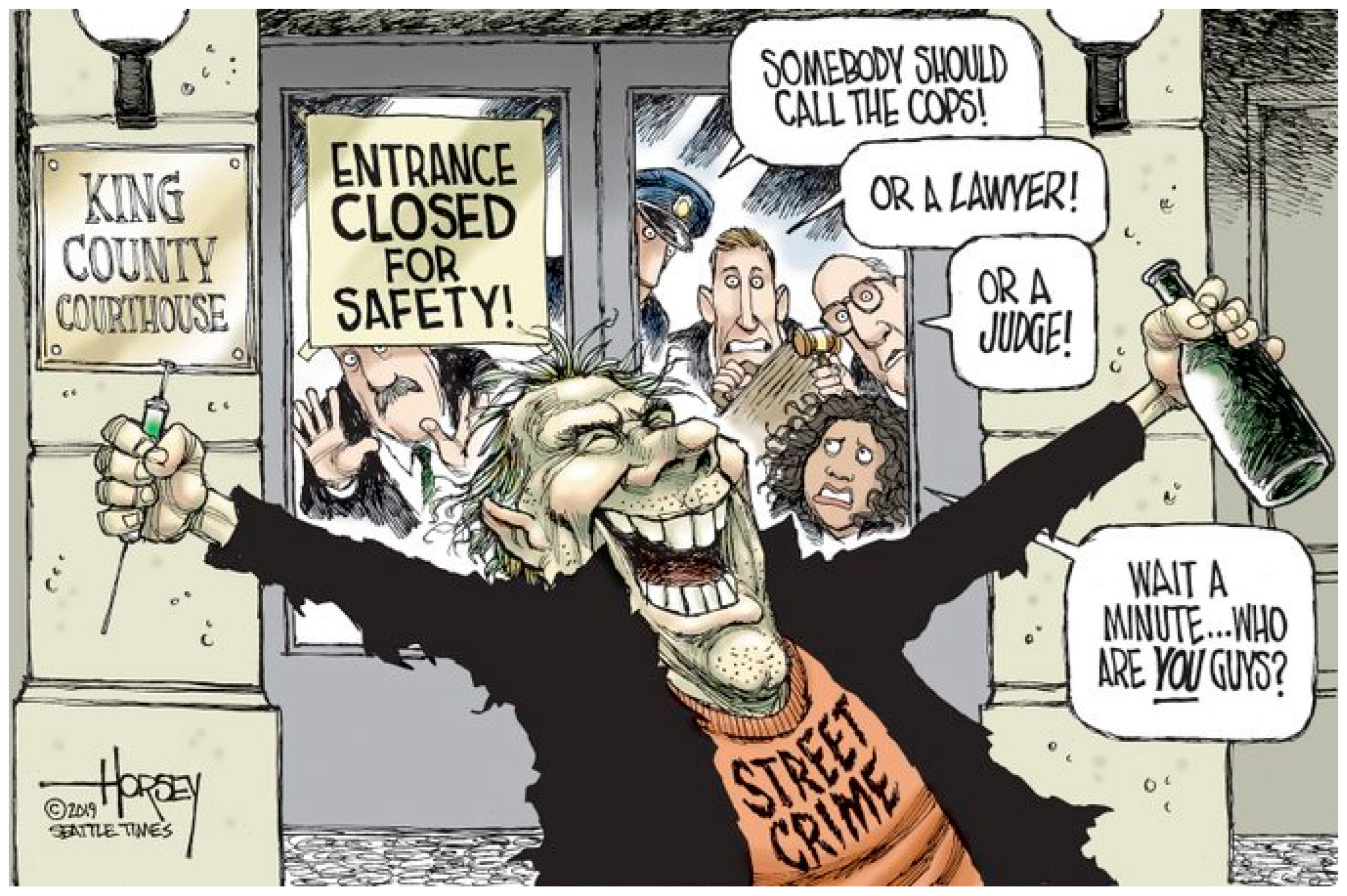
Crime in Seattle has long been concentrated in a few discrete geographic areas. A now famous study of Seattle crime, authored by Weisburd et al. (2012), found approximately 50% of all crime was concentrated along just 5% to 6% of “street segments.” The experience of visitors and residents of Seattle appears to agree. In a controversial 2019 editorial, Seattle Times cartoonist, David Horsey, depicts (see Figure 1, below) the “nightmare in broad daylight” (Horsey 2019).
Figure 1.
“Nightmare in broad daylight”.
Though largely not representative of most people’s experience of most areas of Seattle, Horsey’s commentary, and the response it garnered, underscores the current public safety problem set. Rough applications of crime control dosage are no longer acceptable under the Second Great Awakening of police reform. Different from the First Great Awakening (1970 to 1985), which saw “50 cities of more than 250,000 residents… cut in half the annual total count of citizens killed by police” (Sherman 2018, p. 424) through an emphasis on case law and legislation (i.e., “fleeing felon” laws, etc.), the Second Great Awakening focuses on how policing is administered, emphasizing governance (policy) and Evidence-Based Policing to control the collateral harms (e.g., fatal force, disparate impact, etc.) that can result from the delivery of police service.
Evidence-Based Policing (EBP) provides a systematic framework for implementing and evaluating interventions, grounded in empirical research, to improve public safety outcomes. Founded on the principle and lessons of “evidence-based medicine” (Sherman 2013), EBP seeks a “just right” or “Goldilocks” condition (Sherman 2022a). Place-based interventions, those that target specific micro-geographic areas characterized by high concentrations of crime, have consistently demonstrated efficacy (Weisburd et al. 2012). These interventions, commonly rooted in “Hot Spots Policing” (Koper 1995), emphasize the identification and remediation of underlying situational and social conditions contributing to crime and disorder.
Place-Based, Soft Policing Interventions
A place-based, “soft policing” approach offers an evidence-based pathway to crime and “community harm” reduction in Seattle. In contrast to enforcement-forward, “arrest your way out” interventions, these applications of policing have proven effective at reducing crime while enhancing quality of life, improving perceptions of safety, trust, and police legitimacy. By supporting resources engaged in management and guardianship of problem locations, police provide both physical security and a commitment to “formal social control” that strengthens “social cohesion.” These narrowly focused (geographic and temporal), even parsimonious doses of police service, grounded in an established theory of change (Social Disorganization theory), support the causal estimates presented in following sections.
Routine Activities theory argues that crime will occur when three elements converge in time and space: a motivated offender, a suitable target, and the absence of a capable guardian (Cohen and Felson 1979). Through place-based policing approaches, this theory helps to elucidate the reasoning behind the removal of suitable targets through the introduction of capable guardians. Additionally, Broken Windows theory posits that visible physical disorder—such as graffiti, litter, and deteriorating buildings—signals weakened informal social control and increases the likelihood of crime (Wilson and Kelling 1982). While early applications of this theory emphasized enforcement-oriented order-maintenance policing, contemporary research has increasingly reframed Broken Windows as a place-based, non-enforcement framework, emphasizing environmental remediation and situational prevention. This shift is particularly salient for police-led initiatives that prioritize Problem-Oriented Policing (POP), hot spots policing, and interagency coordination rather than arrest-driven responses. Critically, scholars emphasize that the effectiveness of foot patrols is maximized when officers engage in problem-oriented activities, including identifying environmental risk factors and coordinating remediation efforts with municipal partners Weisburd et al. (2010). Furthermore, when combined with the tenants of Social Disorganization theory, these provide a solid theoretical framework from which to focus intervention efforts.
A robust body of research demonstrates that a visible, strategically deployed police presence has a significant deterrent effect on crime in identified hot spots. Ariel et al. (2016) found that even “soft” policing interventions, such as the deployment of uniformed but unarmed Police Community Support Officers (PCSOs), resulted in a 39% reduction in crime in targeted areas. This finding illustrates that the symbolic authority of a uniformed presence can effectively deter criminal behavior and enhance community sentiment without relying on punitive enforcement. Moreover, research on the Koper Curve principle has established guidelines for optimizing the duration and frequency of patrols in high-crime areas.
Koper (1995), as expanded upon by Lum and Koper (2024), demonstrated that short, random, and frequent patrols, typically lasting 10 to 20 min, produce stronger deterrent effects than extended or predictable deployments. Studies by Sherman (2022c), Santos and Santos (2021), and Hutt et al. (2018) similarly indicate that deterrence peaks within this time frame, with diminishing returns after approximately 20 min of officer presence. This evidence supports the use of Koper-style patrols, which enable efficient allocation of police resources while maintaining a visible deterrent effect across multiple hot spots.
Recent research also emphasizes the importance of moving beyond traditional enforcement-forward approaches and toward a balanced and community-oriented policing model. Caplan et al. (2021), for example, found that a risk-based policing initiative in Kansas City, combining directed patrols, business checks, and positive community interactions, achieved a 22% reduction in violent crime with fewer arrests and citations. These results indicate that visible police activity, when coupled with community engagement and problem-solving behaviors, may enhance the legitimacy and sustainability of crime prevention efforts.
While police visibility remains a critical component, enduring reductions in crime and disorder require a multi-agency and problem-oriented framework. These collectively efficacious approaches aim to identify and address the root causes of recurring crime problems through systematic analysis and collaboration with other agencies and stakeholders. Braga et al. (2024) found that community-based problem-oriented disorder policing programs produced an average 26% reduction in crime, significantly outperforming other aggressive order-maintenance strategies. Furthermore, Bullock et al. (2023) reported that police practitioners view serious violence as a shared social problem that cannot be resolved through the enforcement of law alone, highlighting the importance of structured partnership frameworks.
A growing body of empirical research supports the effectiveness of police-aligned environmental remediation strategies. Street-level studies demonstrate that micro-environmental conditions including graffiti, litter, and poor building maintenance, are significantly associated with higher rates of violent and property crime, even after controlling for neighborhood-level socioeconomic factors (Lee et al. 2023). Quasi-experimental and randomized controlled trials demonstrate that improving these physical conditions leads to significant reductions in violent crime, gun violence, and nuisance offenses at micro-places (Branas et al. 2011). Importantly, these studies show that crime reductions can be achieved without increasing police enforcement activity, reinforcing the idea that disorder can be addressed through place management rather than punitive control. This approach is supported in the literature through the conversations of over/under policing and moving toward the “Just Right” policing model posited by Sherman (2022b). This is particularly poignant in combination with Routine Activities, Broken Windows, and Social Disorganization theories as the “Just Right” policing approach combines these concepts while addressing the concerns of the over-policing nature of the order-maintenance approach.
Borrion et al. (2020) proposed a “second generation of POP [Problem Oriented Policing]” that expands target outcomes beyond crime rates to include social, environmental, economic, and ethical outcomes. This broader goal necessitates a broader collaboration. Public safety is the provenience of police departments, other municipal agencies, social services, and community organizations alike. Under this model, police serve as coordinators rather than solitary enforcers, providing an “umbrella of safety” that enables other city and community actors to address underlying conditions. Municipal partners can enhance environmental safety through improvements in lighting, sanitation, and urban design, while social service agencies can engage with individuals experiencing homelessness, addiction, or behavioral health issues that contribute to public disorder. Community-based organizations play a vital role in co-producing solutions and fostering trust between residents and authorities. This holistic, whole-system approach reflects an understanding that sustainable crime reduction depends on addressing structural, environmental, and social determinants in concert.
In the parlance of Problem-Oriented Policing, this collective effort can be understood through the lens of the Problem Analysis Triangle (Eck and Spelman 1987). Similar to the “fire triangle” (Drysdale 2011), this lens details the complex, interconnected nature of factors relevant to crime and disorder. Crime results from a vulnerable “Target/Victim” in an unmanaged “Place” accessible to an unsupervised “Offender.” Much like the fire triangle (oxygen, fuel, heat), addressing the criminogenic nature of the Target/Victim, the Place, and/or the Offender causes the conditions for crime to collapse.
The scale of intervention is a critical determinant of success. Braga et al. (2024) found that community oriented disorder-focused policing initiatives achieved a 44% reduction in crime when concentrated on smaller, well-defined “micro-places,” compared to only 20% reductions when interventions were applied to larger zones. These findings underscore the necessity of precision in location identification, focusing on small, high-crime areas and maximizing both deterrent and preventive effects, while minimizing unintended consequences and resource waste. In addition to controlling collateral harms that can accompany order-maintenance interventions, this just right policing is efficient at achieving crime control, and quality of life outcomes.
This analysis seeks to clarify whether a place-based soft police intervention, paired with city-driven revitalization efforts, in chronically disordered areas is effective at reducing crime. We hypothesize that this intervention will positively impact the area of treatment through a decrease in violent crime. This analysis also seeks to answer whether this intervention implementation is equally effective in two different treatment areas. Given the geographic, functional differences between the two treatment locations, we hypothesize that while both will be positively impacted, treatment effectiveness will differ by location.
What follows is an analysis of a place-based, soft police intervention in two discrete, and chronically disordered areas in Seattle’s urban center. Police and other service providers engaged in scheduling intensive beautification efforts in the two treatment areas, three times a day during a twelve-month period. During that time, sanitation workers processed the areas with police in attendance for security. Bayesian Structured Time Series analysis indicates a 25% and 29% decrease in violent crime and community-driven calls for service, respectively, in one of the two treated areas. The second area (i.e., Little Saigon), however, did not respond to the intervention. Additionally, treatment in the downtown core area was found to moderately degrade and plateau over time.
3. Methodology
3.1. Intervention Areas
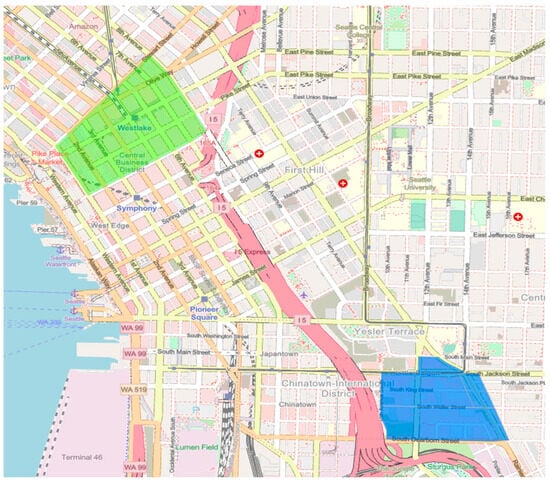
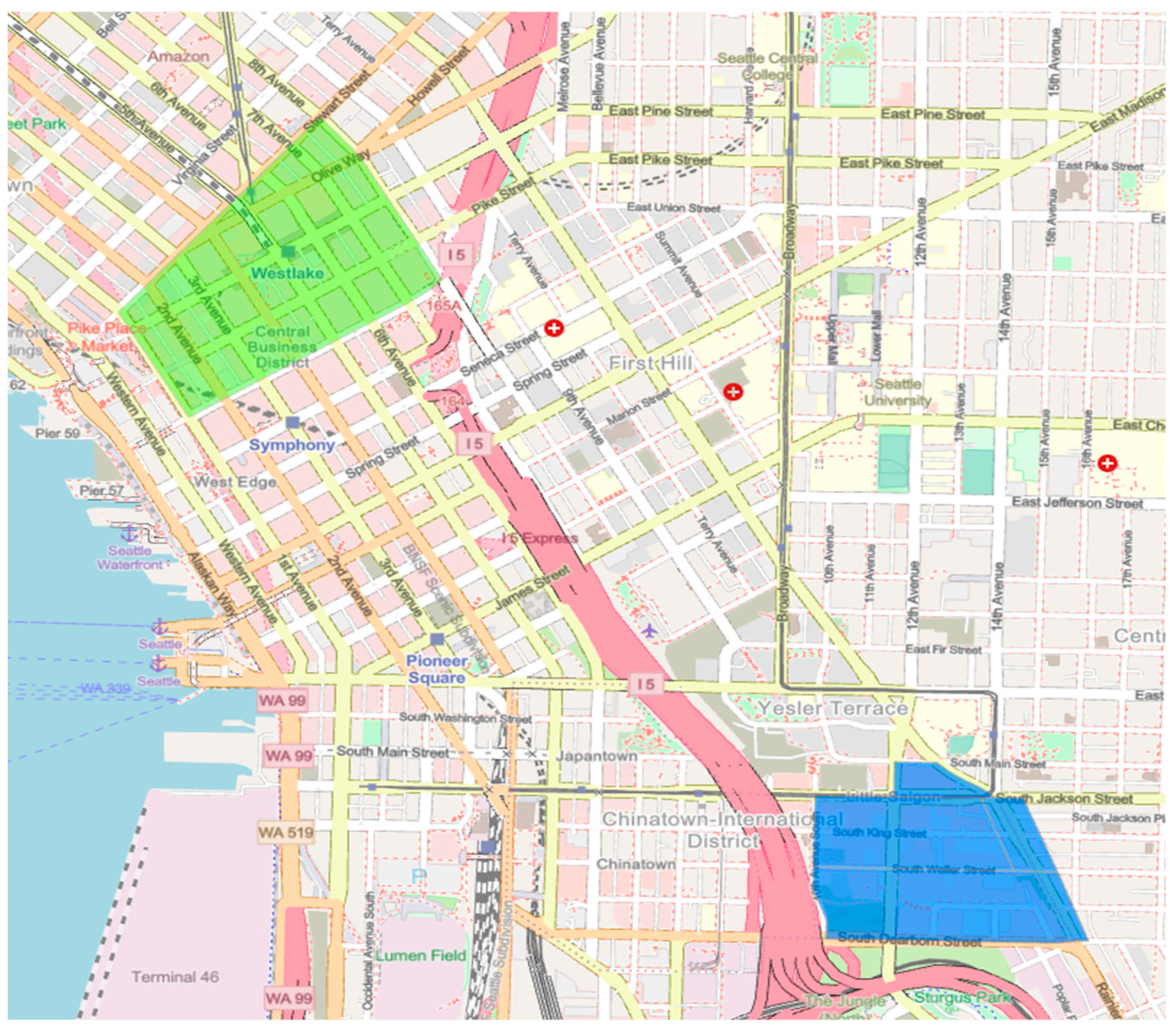
Figure 2 visualizes the boundaries of the two intervention areas in the downtown core/The Blade and Little Saigon areas, which were determined in collaboration with the mayor’s office and based on historical crime data. Specifically, the green polygon represents the Downtown Activation Plan (DAT) Zone 1 (the downtown core/The Blade), enclosed by Stewart Street and Union Street to the north and south, and First and Eighth Avenues to the east and west. Relative to Seattle neighborhoods, The Blade is mostly included within the Downtown Commercial Micro-Community Policing Plan (MCPP) area, and partially within the South Lake Union/Cascade MCCP. The green polygon is about 18% of the Downtown Commercial MCCP area. In terms of precincts, the largest geographic police division, the green polygon, makes up 0.8% of the West precinct. The blue polygon represents DAT Zone 2 in the Little Saigon neighborhood. It makes up 0.6% of the West precinct, and 23% of the Chinatown/International District MCPP. The selection of boundaries for this intervention area was informed by the community-led Phố Đẹp (Beautiful Neighborhood) initiative, which during its initial phase, gathered community members and stakeholders to physically walk the neighborhood streets to identify focus areas that could benefit from Crime Prevention Through Environmental Design (CPTED) strategies (Friends of Little Saigon 2025). A more detailed description of the intervention areas is included in the Discussion Section.
Figure 2.
Downtown Activation Team (DAT) intervention areas.
3.2. Scheduled Restoration Actions
At each of the identified locations, three “scheduled restoration actions” occur per day, which consist of 30–60 min of effort per deployment. These restoration actions include a minimum of two officers per action to support the city partners working in the treated area. These officers provide an umbrella of safety and security for the city department teams to do their work. This work includes street cleaning, picking up rubbish and needles, cleaning graffiti, and clearing sidewalks for better flow of pedestrian traffic. Additionally, leadership has noted that the key to effective intervention efforts includes officer engagement and interactions with the people in the areas. The assumption is that if officers remain in their cars for the duration of the restoration actions, the impact is greatly diminished.
For example, at 0230 every day, two Seattle Police Department (SPD) officers accompany Seattle Department of Transportation (SDOT) employees for a 15–20 min street flush activity aimed at cleaning the street and sidewalks within the target area (see Table 1). This is scheduled such that it will not interfere with the day-to-day high tourist pedestrian movement through the treated zone. Other planned restoration actions occur at 0700 and 1300. These actions are staffed primarily by patrol and bike units (minimum two officers) and involve targeted officer visibility and engagement with individuals within the emphasis area. The goals of these daytime actions are to provide a law enforcement presence and address criminal behavior while city crews clean up trash/needles/graffiti/etc. The actions of the individual restoration efforts are based primarily on the observed need of the time and day of the scheduled action, such that city crews have flexibility when necessary to address new and emerging issues. Depending on the need of the day, crews may work through the restoration zone as a whole or focus efforts on smaller subsections as circumstances dictate. The primary component is the combined and visible effort of these collaborative teams in the beautification and revitalization of these spaces while also employing a soft-touch policing presence.
Table 1.
Restoration schedule.
The timings of these restoration actions were scheduled to leverage the watch overlap times in the department to provide the most coverage with the least drain on resources. Additionally, other city department schedules had to be considered along with union regulations, creating a complex milieu of scheduling components. Although marked as a rare occurrence, there were a small number of occasions in which the scheduled restoration efforts did not occur. The reasons for such instances included highly inclement weather, events which pulled officers from their zone to support a high profile/dangerous event, and rare scheduling conflicts. The exact number of these occurrences was not recorded.
In addition to the daily scheduled restoration actions, there are monthly large scale scheduled restoration operations. These include roughly 15 officers working a mix of overtime and straight time. These officers are hand-selected volunteers who engage in the area on foot/bike/cars. Additionally, there are up to 10 King County Metro officers working with the restoration team to augment the SPD officers. These large-scale restoration operations are generally targeted at narcotics violations and firearm recoveries.
3.3. Data
We use outcome measures of calls for service and police reports to operationalize the effect of the intervention on crime and disorder. We designate the week of 15 September 2024 as the start of the intervention. Specifically, the pre-treatment period goes from the first week of January 2022 to the week before the start of the intervention, up to 14 September 2024. The post-treatment period lasts a full year from the start of the intervention. We use weekly counts of incident/offense (I/O) events that occurred within the boundaries of the areas of interest, as well as counts of calls for service to the police. Even if multiple offenses are associated with the same I/O report, the event is only counted once. Likewise, if multiple calls are associated by the dispatcher with the same Computer-Aided Dispatch (CAD) event ID, we only count one observation.
Unlike calls for service, I/O reported events are classified using standardized offense codes from the National Incident-Based Reporting System (NIBRS). In addition to evaluating the intervention’s effect on overall crime, we also examine changes in violent crime and property crime separately (the specific NIBRS codes are included in Table A1 in Appendix A). Given that not every call for service results in a police report, using counts of calls for service allows us to capture incidents that might not qualify as ‘reportable’ events, but that are perceived by the public as worthy of police response. Although I/O event counts are also affected by reporting behavior, calls for service data might be more sensitive to the presence of potential reporters (Klinger 1997).
As control time series, we use the average maximum daily temperature and a public school “calendar” indicator. While traditional synthetic control methods tend to use comparable control areas as donor pools, we limit the control series to variables we can assume are unaffected by the intervention and that generally follow the same seasonal behavior as crime. As such, the counterfactual is constructed using these two control series (in addition to the pre-treatment values of the outcome series). We obtained temperature data from the National Oceanic and Atmospheric Administration’s (NOAA) Weather Service and Weather Underground when NOAA data was unavailable (National Weather Service n.d.; Weather Underground n.d.) The school indicator is a binary indicator, where days of the year are coded as 1 if Seattle public schools were in session. As such, the weekly indicator is the sum of school days. We obtain this information from the Seattle public schools calendar (Seattle Public Schools 2025).
3.4. Estimation Methods
The acutely normless condition (anomie) of the geographical areas selected for treatment limits conventional crime analysis. Although visibly disordered, as evidenced by “broken windows” often cited as and indicative of the underlying socially disorganized condition, these conditions suppress crime reporting (Shaw and McKay 1942). Such “reporting bias” limits the ability to conduct “targeting,” and “testing” (Sherman 2013) in support of Evidence-Based Policing. The Seattle project applied conventional Problem-Oriented Policing treatment but required a more sophisticated approach to the analysis.
Bayesian methods are increasingly common in the social sciences (Lynch and Bartlett 2019). Once considered obscure and surreptitious solutions, and the domain of wonks like “Student” (Gossett) (McCloskey and Ziliak 2010), these techniques have evolved through emerging technologies and the need to solve complex problems posed by sparse and diffused signals across large datasets.
This project implements a Bayesian Structural Time Series (BSTS) approach to causal inference to estimate the effect of the intervention on the two measures of interest Brodersen et al. (2015).1 The method is conceptually related to the “synthetic control” approach, which constructs a counterfactual as a weighted average of multiple “donor” time series that are correlated to the outcome of interest but are not themselves affected by the intervention (Abadie et al. 2010). The main assumption of this approach is that if the synthetic control closely follows the outcome series during the pre-treatment period, it is a plausible estimate of what the outcome series would have looked like during the post-treatment period if the intervention had not occurred. The donor series are also assumed to be unaffected by the intervention, which is a valid assumption for our application’s control series (i.e., temperature and the public school calendar indicator).
Brodersen et al.’s preferred modeling framework, BSTS, incorporates two more sources of information, in addition to the pre- and post-intervention donor time series, to generate the counterfactual. Specifically, the synthetic control is also built based on before-treatment values of the treated series, as well as prior knowledge of the model parameters. When no prior knowledge is available, the model uses default “weakly informative” priors, relying more heavily on the contemporaneous values of the control series and past values of the treated series (Brodersen et al. 2015). We do not provide priors in the current use case. The posterior distribution of the counterfactual is thus predicted using pre-treatment values of the outcome series and post-treatment values of the donor series. The causal effect estimate is computed as the difference between the observed and predicted values post-intervention.
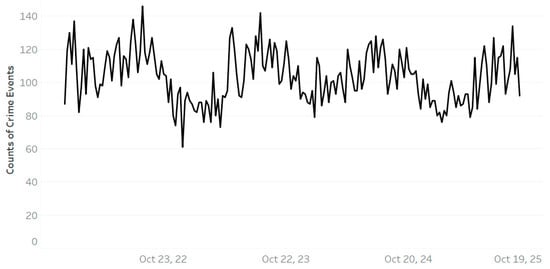
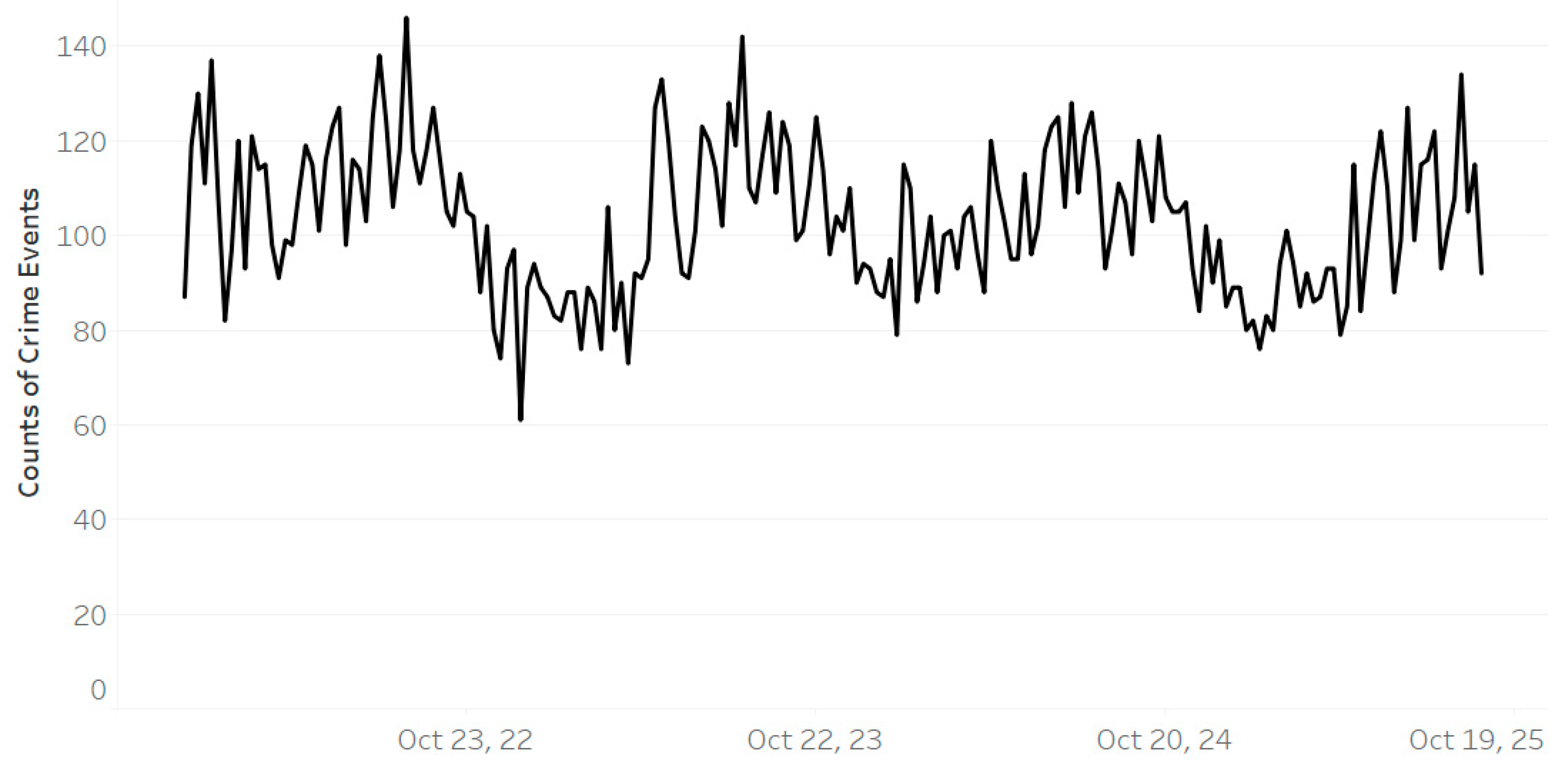
The BSTS state space model approach incorporates a seasonal component and a local linear trend component (i.e., where the trend slope is allowed to vary over time periods). We specify 52 seasons in our model, representing a weekly annual cycle. As shown in Figure 3, crime counts in Seattle are highly seasonal. The series shows weekly counts of violent crime, which tend to peak during the summer and fall to the lowest levels during the winter. This is the case for most crime types. Accordingly, explicitly specifying seasonality allows the model to isolate the effect of the intervention from increases/decreases in crime otherwise expected due to the season. Although we do not specify a trend, the model includes a local level component as the default, where the level’s prior standard deviation roughly indicates how much change is expected in the baseline level over time. Brodersen et al. suggest a smaller value (0.01) for the prior standard deviation for more “stable” target series. We expect a smaller standard deviation value to generate more conservative causal effect estimates (if the true effect is large) as the estimated counterfactual is not expected to depart significantly from the pre-intervention level. However, a larger prior standard deviation (e.g., 0.1 as validated by Brodersen et al.) can potentially lead to wider credible intervals. As such, we use a value of 0.05 for the prior standard deviation of the random walk of the local level. Table A2 in Appendix A includes results for select models with standard deviation values of 0.01 and 0.1.
Figure 3.
Weekly counts of violent crime events citywide.
The BSTS approach also implements a Bayesian method of probabilistic variable selection, a spike-and-slab prior, encouraging model coefficients to be close to zero (i.e., sparsity) if they are not informative.2 This technique prevents overfitting in the presence of multiple (or uninformative) controls and leads to a more parsimonious model specification for the counterfactual. Although the approach allows the researcher to specify a time-varying relationship between the covariates and the treated series, we assume that the coefficient estimates of the control series are static.
Lastly, the Bayesian approach to inference generates a posterior distribution of the counterfactual estimate instead of one single estimate. Through Markov Chain Monte Carlo (MCMC) sampling, multiple counterfactual trajectories are generated incorporating uncertainty from the model parameters and data samples.
We also recognize that spillover effects, positive or negative, are an important consideration. Empirical research on the spatial distribution of crime demonstrates that criminal activity is highly concentrated within a limited number of micro-locations, and that interventions at these sites often generate benefits extending beyond their immediate boundaries. Contrary to concerns about displacement, studies by Bowers et al. (2011) and Telep et al. (2014) found that place-based interventions frequently produce a diffusion of benefits, whereby crime decreases in nearby areas as well. This phenomenon enhances the overall efficacy of targeted interventions by amplifying their reach and cost-effectiveness.
Where we find a substantively and statistically significant treatment effect of the intervention, we also examine whether the intervention displaces crime or diffuses benefits to surrounding areas. Specifically, we calculate the Weighted Displacement Quotient (WDQ) as specified by Bowers and Johnson (2003). The WDQ compares changes in the treatment area to “surrounding” and “control” areas, where positive values suggest benefit diffusion and negative values suggest crime displacement. The WDQ is calculated by
- Computing the “Buffer Displacement Measure,” the pre-post change in the buffer area relative to that of the control area:
- Computing the “Succes Measure,” the pre-post change in the intervention area relative to the change in the control area:
- Comparing the two measures by obtaining their ratio:
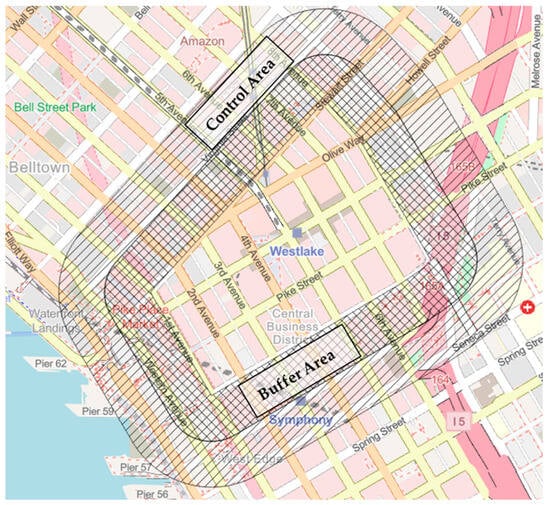
We define a surrounding buffer area of 400 feet, following the same morphology as the given intervention area, as well as a control area surrounding the buffer area also of 400 feet. As explained by the WDQ authors, the nested approach to the control area selection increases its comparability due to its geographical proximity, as it is likely to share characteristics with the target area. Given the unique conditions of The Blade and Little Saigon hot spots, it is difficult to justify any other area in the city as a comparable control area. As seen in Figure 4, 400 feet was selected as the buffer distance in order to encompass a full block since we consider streets as natural boundaries that can shape displacement or diffusion.
Figure 4.
Buffer and control areas for WDQ calculation.
4. Results
We generate causal effect estimates starting at 4 weeks post-intervention up to 52 weeks (a full year of post-intervention data) in order to evaluate the sustainability of the intervention’s effect over time. We also report and visualize absolute differences between the counterfactual and observed series at the last week of the post-intervention period, as well as discuss the resulting percentage change.
4.1. DAT Pike/Pine (The Blade)
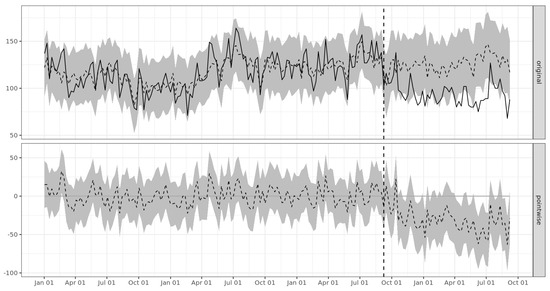
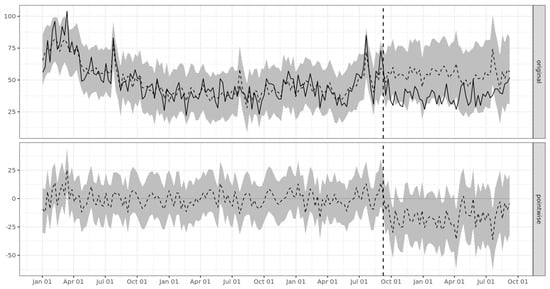
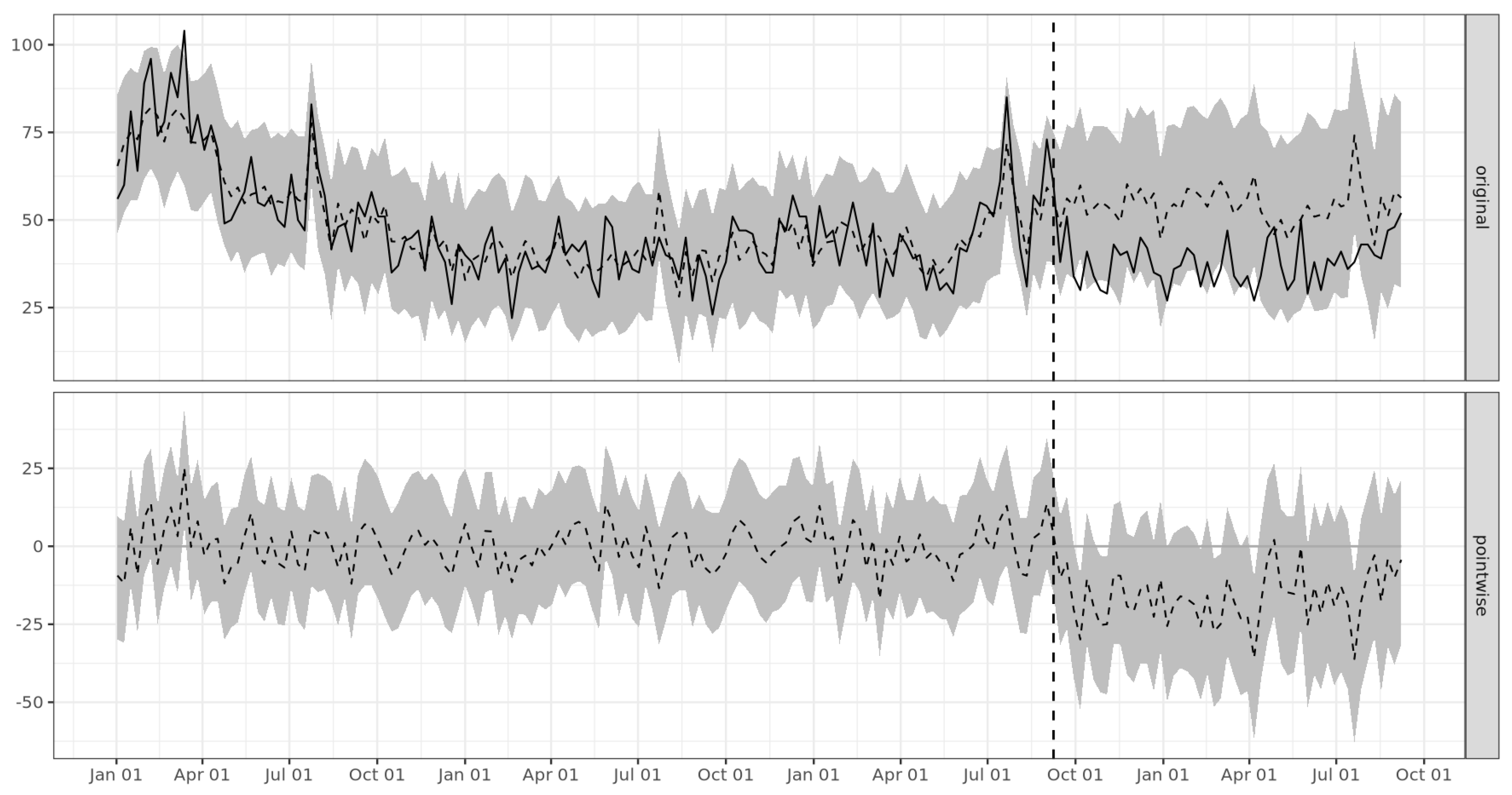
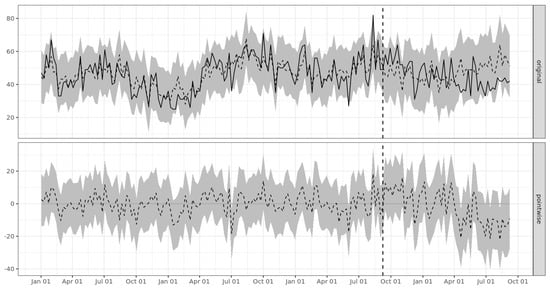
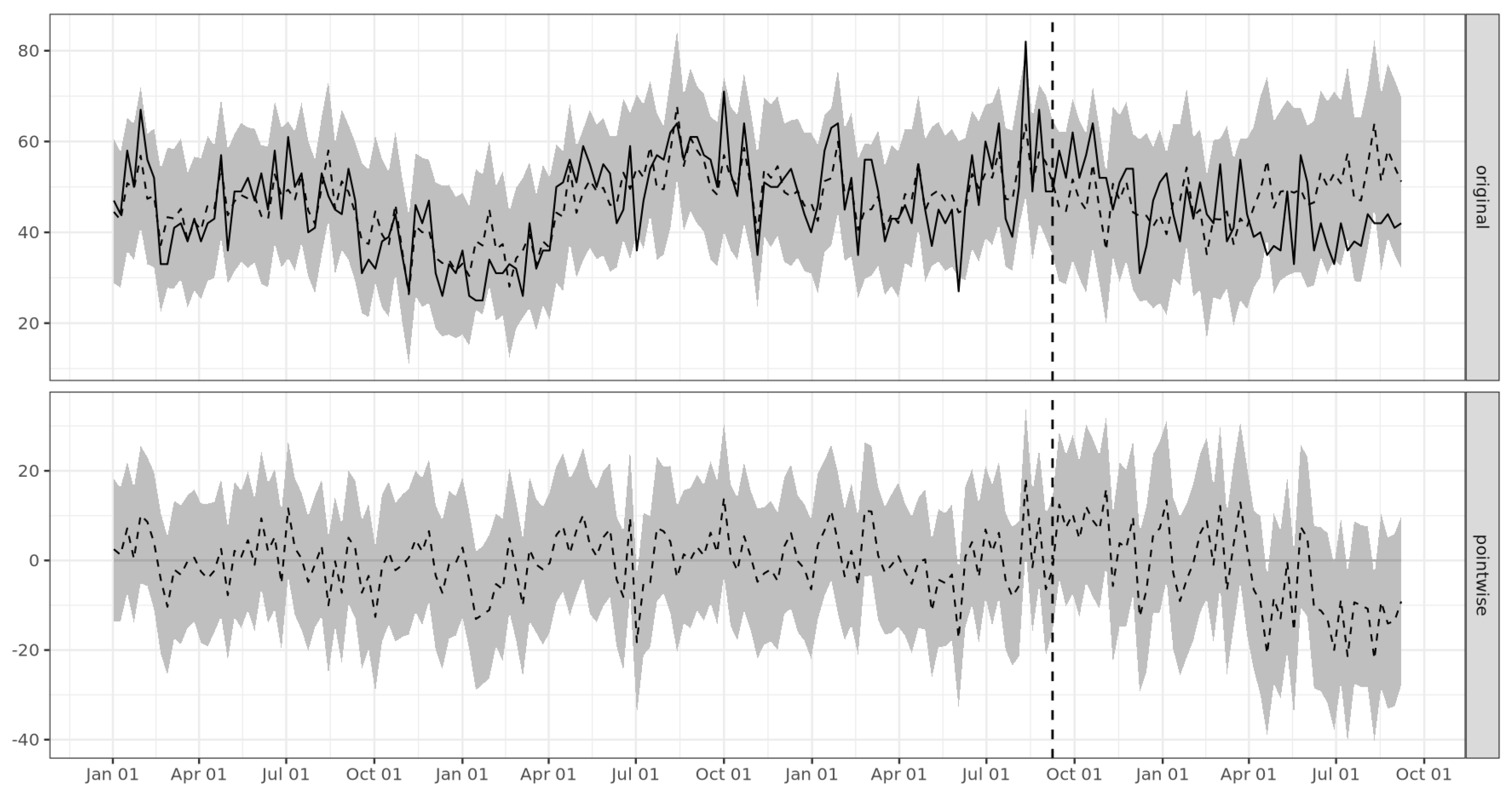
Figure 5’s upper panel visualizes the weekly time series of call volume (represented by the black line), overlayed on the estimated counterfactual values and their 95% credible intervals (represented by the dashed line and the gray shaded area). The lower panel plots the week-specific absolute difference between the predicted counterfactual and the observed call count. As of the second week of September (7–13 September) 2025, community generated calls of priority 1 to 3 were 25% lower than they would have been in the absence of the intervention (Bayesian p-value = 0.001, R2 = 0.55). This is around 31 less average weekly calls occurring in “The Blade”, with a 95% interval of 17.3 to 45.4 less weekly calls. In terms of absolute differences, the largest reductions occurred during the summer months, which is expected as call volume tends to increase as temperature increases. Specifically, the weeks of 8 June and 31 August saw the largest reductions, with 61 and 63 less calls than expected, respectively.
Figure 5.
Weekly counts of calls for service DAT Zone 1 (Downtown Core/The Blade). The vertical line represents the intervention week. Upper panel: observed against counterfactual weekly counts. Lower panel: pointwise weekly differences between counterfactual and observed values.
As with call volume, Figure 6 visualizes the weekly time series of all types of crime in I/O reports. The two-control series model explains about 72% of the weekly crime count series variance. As of the second week of September (7–13 September), the average count of all crimes was 29% lower than it would have been in the absence of the intervention (Bayesian p-value = 0.007). This equates to roughly 16 less average weekly events in The Blade/downtown core, with a 95% interval of 3 to 31 less weekly events. Consistent with calls for service results, the week of 27 July saw the largest absolute reduction, at 38 less events than otherwise expected. It is also evident from the series that the effect size (i.e., the difference between the counterfactual and observed counts) diminished during the last few weeks of the period of analysis, which suggests that the long-term sustainability of the intervention may be hindered without adjustments.
Figure 6.
Weekly counts of The Blade all crime DAT Zone 1. The vertical line represents the intervention week. Upper panel: observed against counterfactual weekly counts. Lower panel: pointwise weekly differences between counterfactual and observed values.
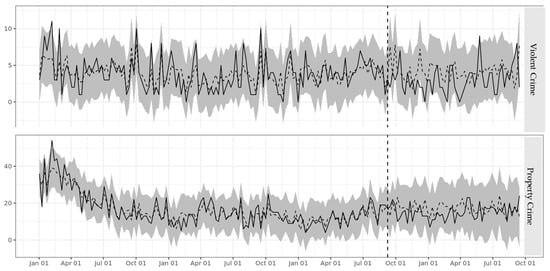
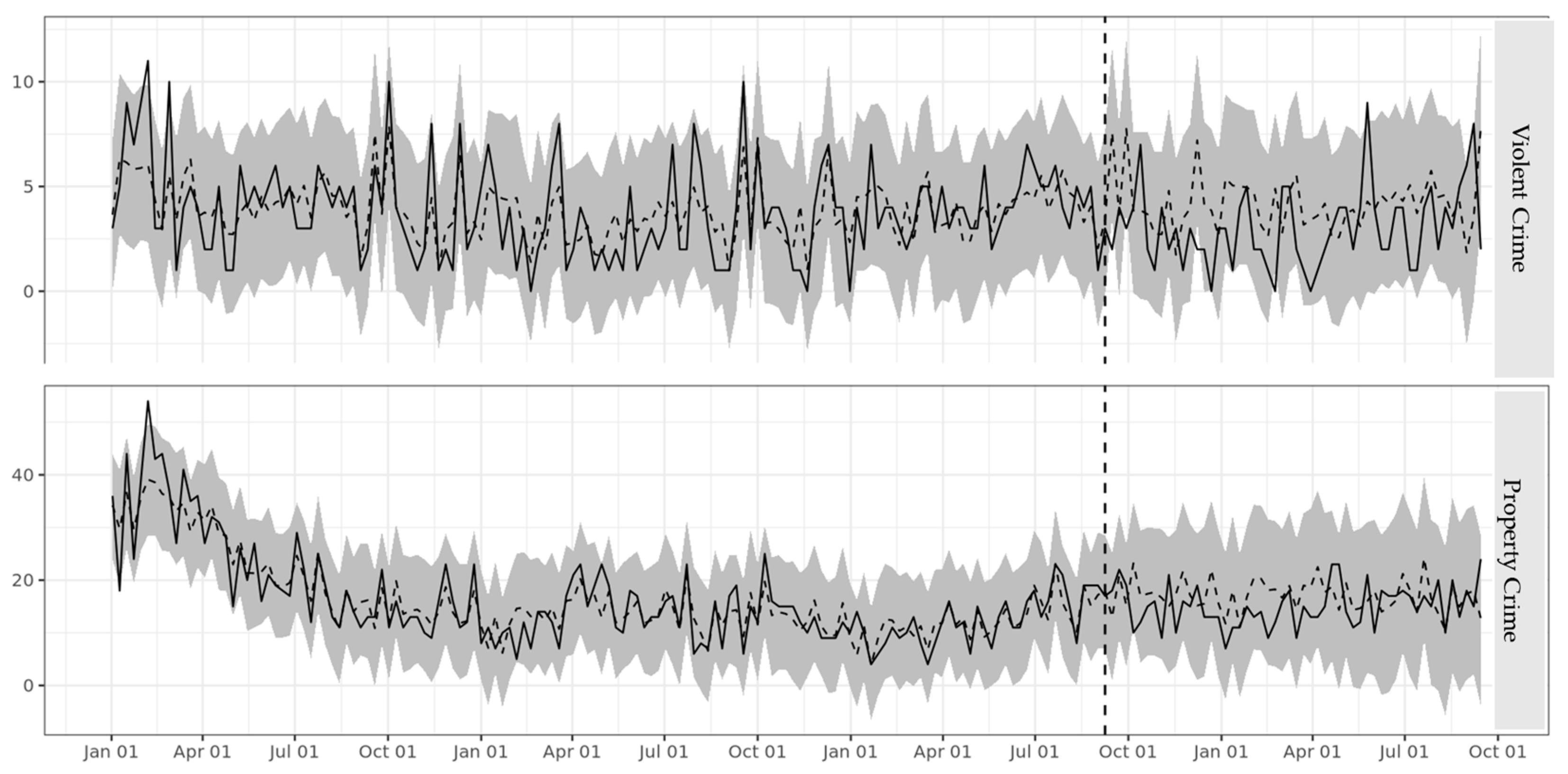
When breaking crime events into property and violent crime, as visualized in Figure 7, there is no statistically or substantively significant reduction in property crime. Although the reduction in violent crime is statistically significant at the 0.05 alpha (α) level, given the small count of weekly violent events in Zone 1/The Blade (ranging from 0 to 11 weekly events), the estimated 25% reduction is equivalent to only 1 less weekly event, which is almost undiscernible on visual inspection of the series, but impactful in terms of this crime type’s societal implications (R2 = 0.46). Furthermore, the results are sensitive to the standard deviation of the local level parameter, which becomes statistically nonsignificant with a stricter specification (see Table A2 in Appendix A).
Figure 7.
Weekly counts of violent crime and property crime DAT Zone 1. The vertical line represents the intervention week. Upper panel: observed against counterfactual weekly counts for violent crime. Lower panel: observed against counterfactual weekly counts for property crime.
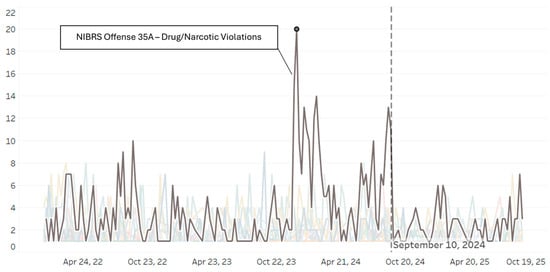
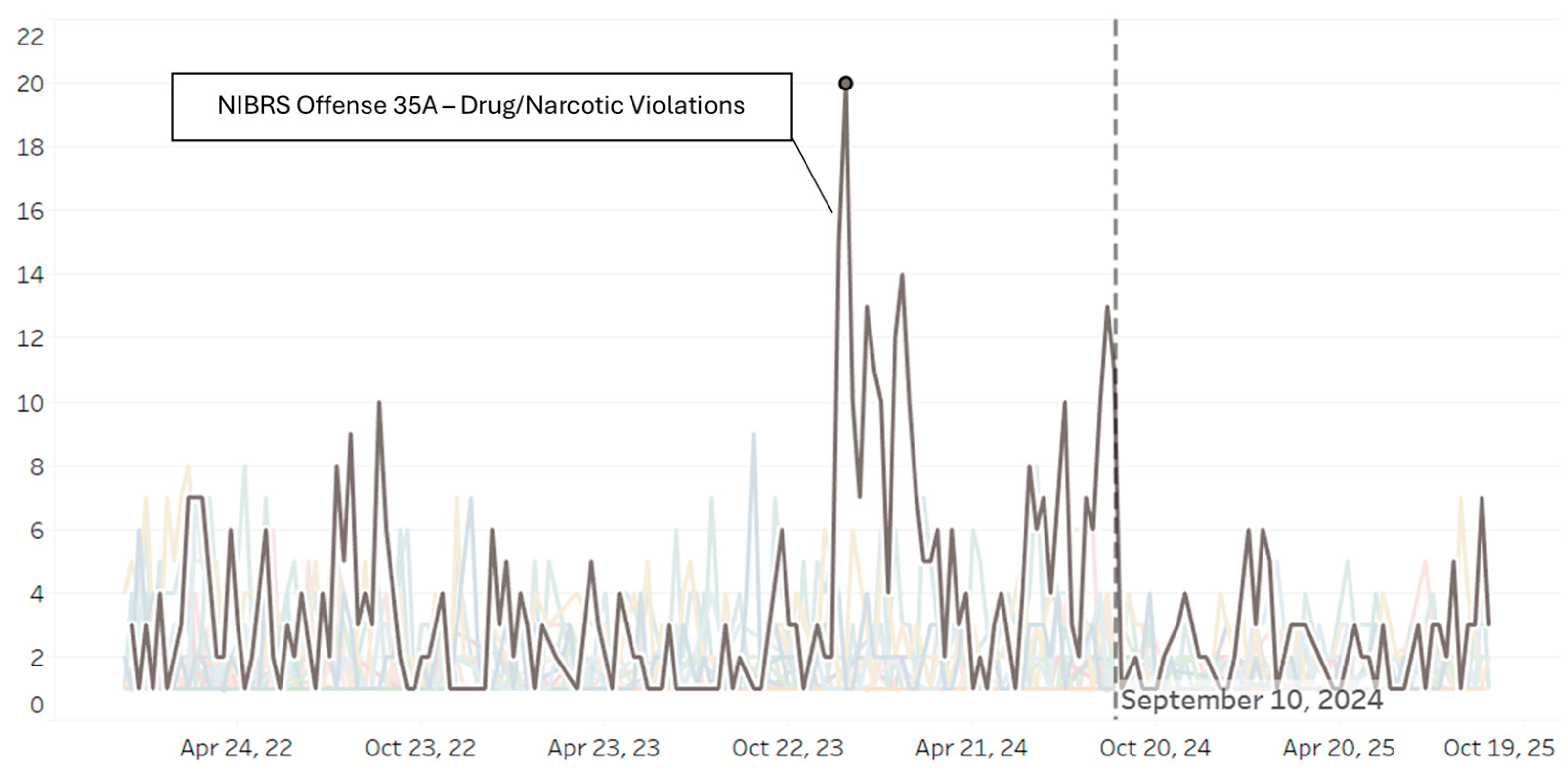
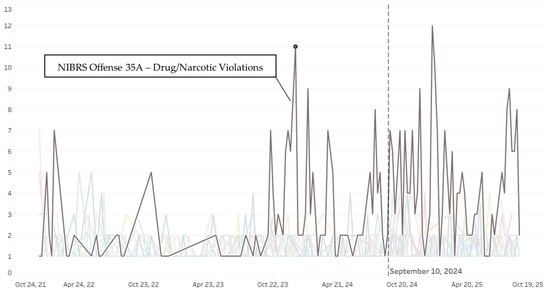
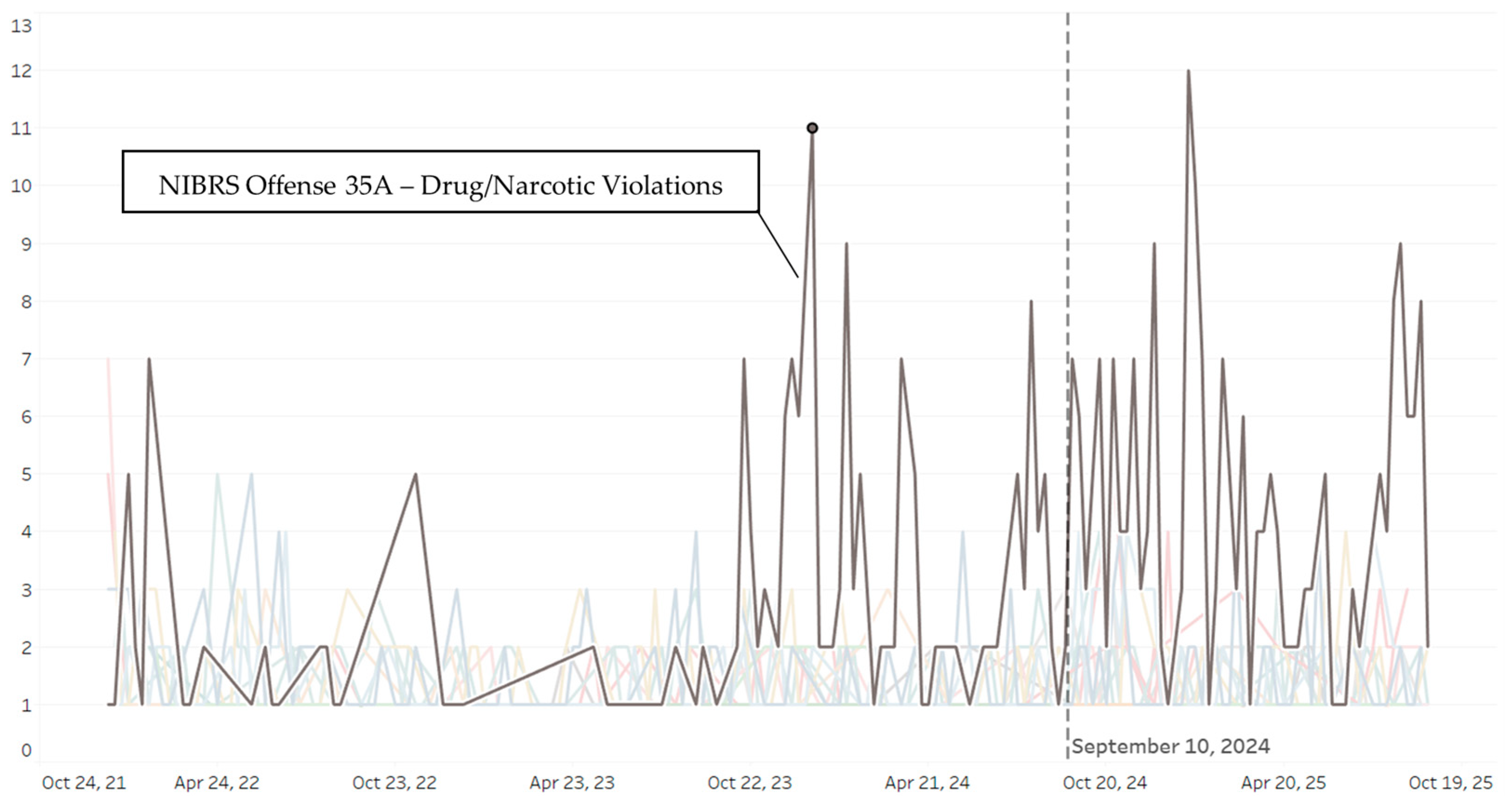
A more detailed inspection of crime types suggests that the reduction in overall crime was partially driven by a reduction in narcotic violations, which were, as aforementioned, a focus of the operation. Figure 8 visualizes weekly events of violent and non-property crime broken down by their reported offense code. Offenses with reported NIBRS code 35A (represented by the highlighted gray line) made 26% of non-property crime in The Blade between 10 September 2023 and 10 September 2024, while this percentage decreased to 16% during the same post-intervention period between 2024 and 2025. The amendment to Washington state law regarding the possession and use of controlled substances (RCW 69.50.4013), also incorporated into Seattle’s municipal code, is also evident in the sharp increase in event counts in late 2023 (Department of Corrections—WASHINGTON STATE n.d.).
Figure 8.
Weekly counts of non-property crime (includes violent crime) by NIBRS code in The Blade.
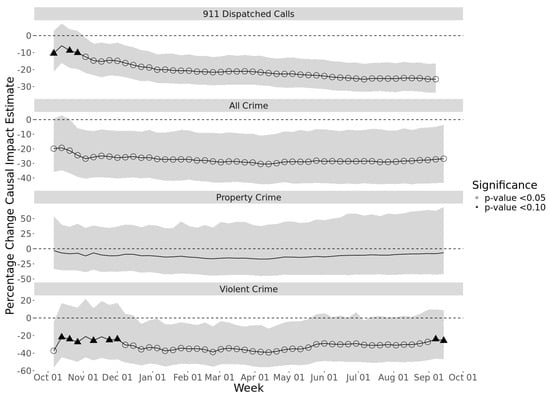
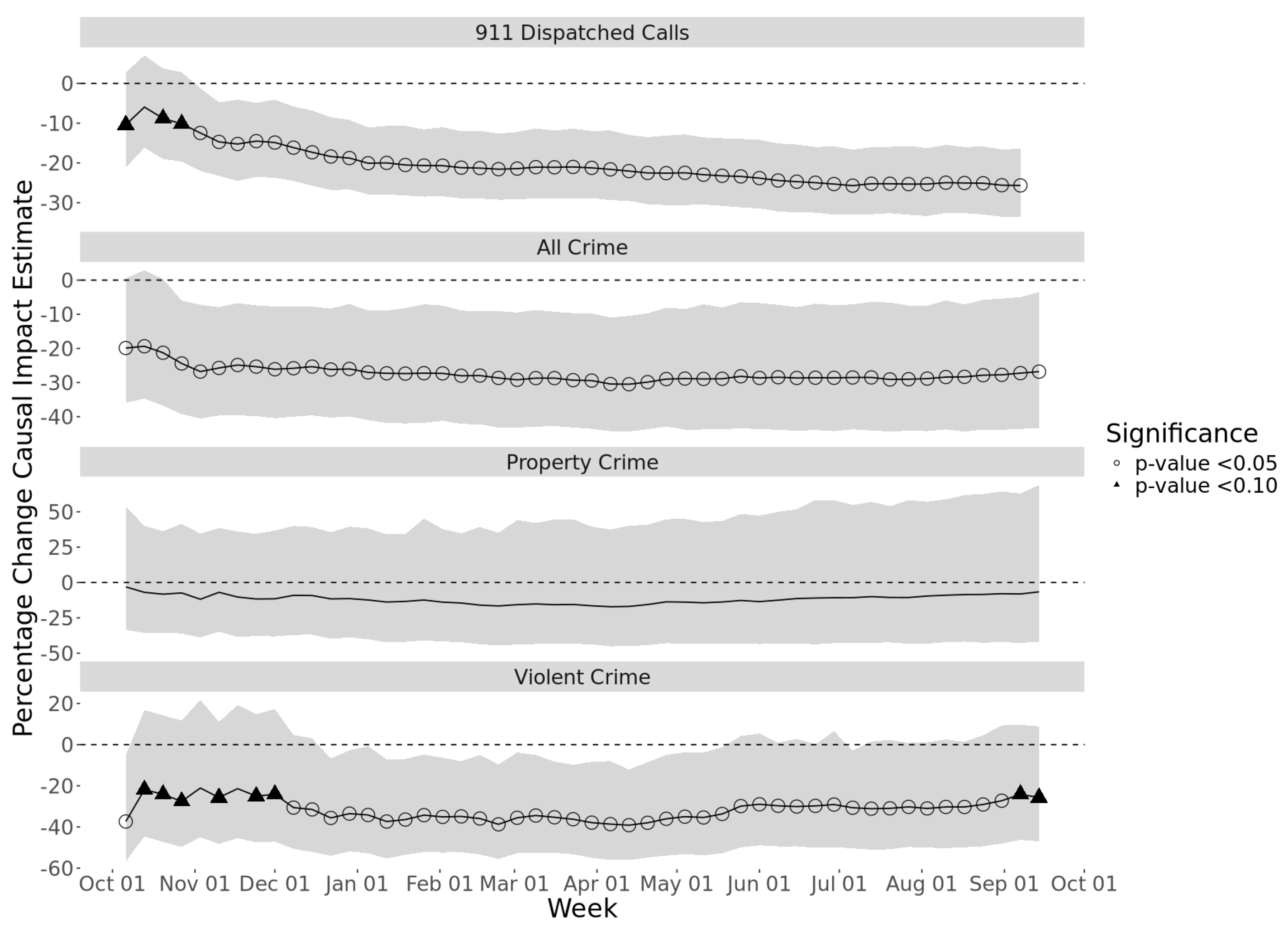
Lastly, Figure 9 visualizes causal estimates starting at 4 weeks post-intervention up to 52 weeks post-intervention for all measures of interest. Relative changes in community generated calls of priority 1 to 3 vary from a 6% decrease (during the earlier weeks of the intervention) to a 26% decrease in late summer. In absolute terms, these percents represent between 8 and 33 less weekly calls in the Blade area. All effect estimates are statistically significant (p-value < 0.05); the first few weeks are significant at the 0.10 alpha level. In terms of substantive significance, considering that the median service time spent on community-generated P1-3 calls is about 68 min, the results translate to 9 to 37 less hours of service than otherwise expected in the absence of the intervention.
Figure 9.
Relative effects by week for all outcome measures DAT Zone 1 6 October 2024–7 September 2025.
Weekly relative changes in property crime, although negative, are not statistically significant. Both all and violent crime show a subtle increase in the reduction size during the weeks in the middle of the period of analysis. Notably, the credible interval of the relative effect estimates on dispatched calls is narrower than those of other measures, reflecting less uncertainty in the estimate. The relative changes in violent crimes vary from a 21% to a 39% reduction, or a weekly events reduction of one to two. While a small absolute difference, one or two violent crimes have considerably more severe impacts on the community than any other type of crime. Effects on all/total crime vary from 19% to 31% less crime, or 11 to 17 less weekly events.
To determine whether the intervention had a displacement or benefit diffusion effect, we examine the change in crime in The Blade relative to the change in the surrounding 400-feet buffer and a control area surrounding the buffer (see Figure 4). We compare counts of all crime during 52 weeks pre-intervention and 52 weeks post-intervention. Table 2 includes the components of the WDQ.
Table 2.
Weighted Displacement Quotient (WDQ).
The resulting buffer displacement measure, although very close to zero (0.027), is positive, which implies some geographical displacement. However, the success measure is negative and larger in magnitude (−0.226), which indicates, as confirmed by the previous results, that the program was successful in reducing crime in The Blade. Accordingly, the resulting WDQ is −0.12 (0.027/−0.227), suggesting that although there was some displacement, it was less relative to the direct positive effects of the intervention.
4.2. Little Saigon
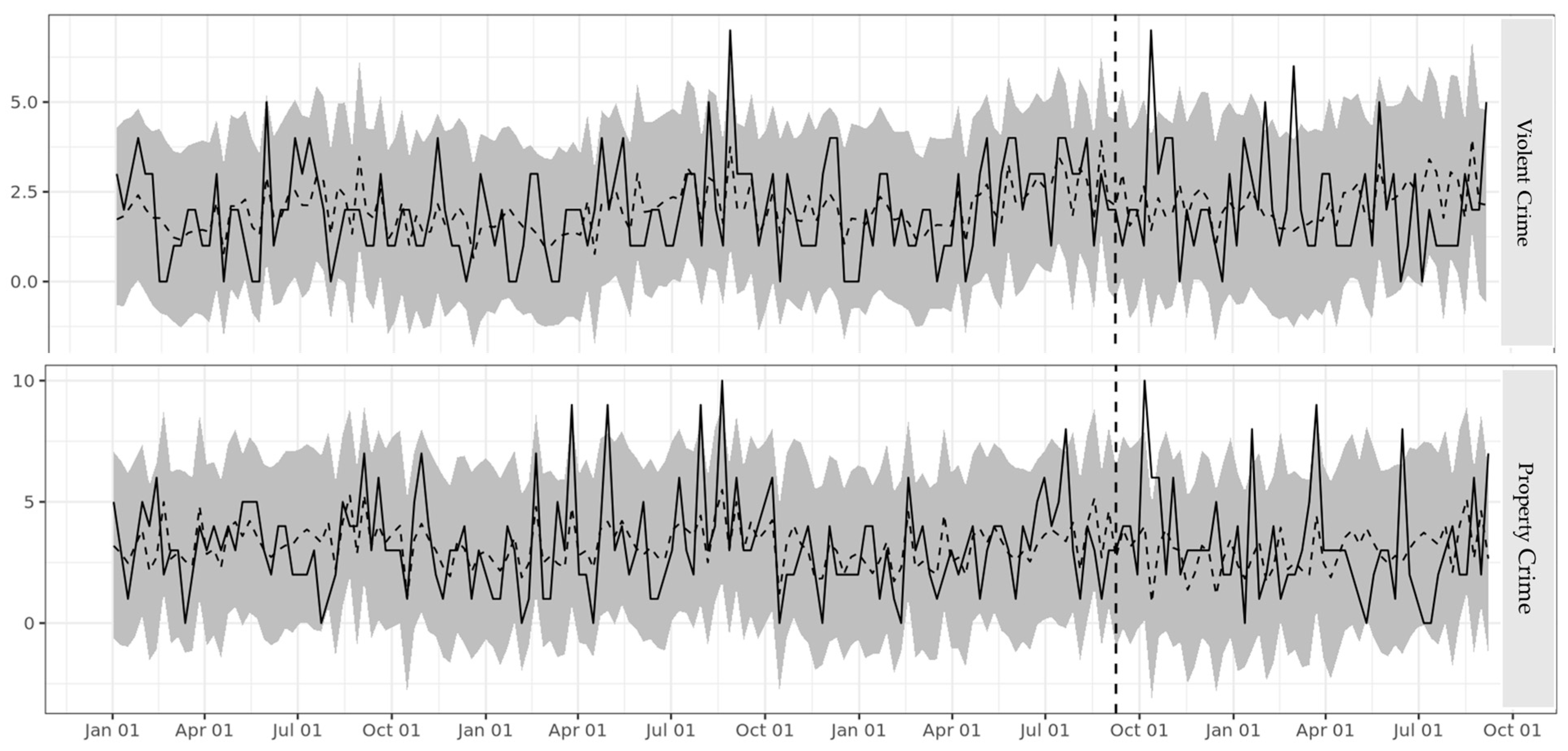
Although, in theory, both DAT zones were subject to the same intervention operationally, results suggest that the intervention was ineffective in Zone 2 (Little Saigon). None of the measures of interest, including calls for service and all types of crime, saw significant reductions when compared to the estimated counterfactual (see Figure A1 and Figure A2 in Appendix A). Although non-statistically significant on average, the calls for service panel shows deviation from historical seasonality, with the late 2025 summer months not increasing as in previous years (See Figure 10).
Figure 10.
Weekly counts of calls for service DAT Zone 2/Little Saigon.
Upon further inspection of crime broken down by offense, as visualized in Figure 11, counts of narcotic violations were seemingly also sensitive to the “adoption” of RCW 69.50.4013, increasing in late 2023 from less than two average weekly offenses to about three weekly offenses. Yet, unlike the reduction observed in The Blade after the start of the intervention, narcotic violations remained at similar levels in Little Saigon. In fact, they reached a weekly maximum during the post-treatment period.
Figure 11.
Weekly counts of non-property crime (includes violent crime) by NIBRS code in Little Saigon.
The violent and property crime models for DAT Zone 2 also exhibited the poorest fit, only accounting for about 30% of the variance in the series, which weakens inferences from this specific output. Unlike DAT Zone 1 and citywide crime patterns, weekly counts of property and violent crime do not exhibit strong summer seasonality, making it more challenging to model the behavior of the series. In fact, the level of weekly crime seems to stay relatively constant over time, which reflects the chronic conditions of the Little Saigon area, remaining resistant to external factors.
5. Discussion
Applied research is fraught but essential. Much of what we have come to understand about crime and disorder is based on theory and rough experimentation. The Downtown Activation Team interventions taking place during the twelve months between September 2024 and September 2025 illustrate the nuance and complexity, necessitating more data, new methods, and some revisions to the theoretical models of behavior used to understand acute disorder. Disorder is not monolithic: context and environment are critical to designing interventions. Furthermore, as these conditions tend to be acute and concentrated, achieving statistical power can be a challenge. However, tailoring interventions to address root causes and fundamental characteristics of the affected area and leveraging Bayesian methods can surface important scientific insight.
This intervention and the validated effects suggest the tenants of Social Disorganization theory and Problem-Oriented Policing hold, but perhaps not in all cases. Managing places and providing general guardianship in narrowly focused, place-based, and soft police interventions in areas like The Blade are effective and efficient. Yet, areas of acute, chronic disorder—“off the beaten path” so to speak—may require a more carefully constructed intervention. Little Saigon did not respond in the same way as The Blade, and important contextual factors offer important insights.
Little Saigon and The Blade are subtly different. The Blade is a centralized transit corridor through downtown Seattle, bringing thousands of workers to and from the financial/business district during the workday. This influx of white-collar workers is notably absent from the Little Saigon area. Transit in this location is served by a smaller number of local bus lines. Also, the businesses located in the Little Saigon area are primarily ethnic groceries and restaurants, with smaller commercial interests occupying a considerably less dense surrounding area.
Observationally, both The Blade and Little Saigon host highly mobile populations of both prosocial and antisocial users, but the ratio of prosocial use is reasoned to be less in and around Little Saigon. The result is a more stubborn entrenchment of criminogenic influences. Specifically, the area around Little Saigon was observed to host persistent stolen goods markets. These markets were less prominent along The Blade. The supportive relationship between stolen goods markets and open-air drug markets is well established (Roumasset and Hadreas 1977). While the underlying root cause of disorder is substance use disorder, a poorly managed public space is necessary to draw clients and servicers for the stolen goods transaction. Observations reveal secondary open-air drug transactions taking place in proximity (temporally and geospatially) to the stolen goods market.
Although not formally tested in this analysis, the conditions and ultimate persistence of the stolen goods market and nearby open-air drug transactions are probable differentiators for the observed effects. As aforementioned, the scheduled restoration efforts only involved a soft police presence; as such, it is possible that this approach might have not had the same effect in Little Saigon as it did in The Blade. Again, offenses specifically related to narcotic violations did not seem to decrease in Little Saigon in the same way as in The Blade (see Figure 8 and Figure 11). While some of the conditions are the same along The Blade, field observations did not identify the occurrence of stolen goods markets to the same extent. Potentially, as a result of a higher volume and more diverse prosocial use or secondary use by that transitory population outside of commuter hours (coffee/lunch breaks, transit between offices, etc.), stolen goods markets do not appear with the same intensity or persistence along The Blade as they do in Little Saigon. That essential economy appears to be important to understanding treatment effects and will likely inform future efforts to address crime and disorder in Little Saigon.
The continuous evaluation of this intervention, beyond the period of analysis of this study, can also reveal a more detailed understanding of optimal treatment dosages and duration for areas with more persistent conditions. In fact, although overall changes in community-generated calls for service were not statistically significant in Little Saigon, during the later months of the post-treatment period, call volume was notably lower than expected (see Figure 10), suggesting that the time it takes for the intervention to take effect may vary based on other place-specific characteristics.
Even though we find evidence for some crime displacement in The Blade, the overall net effect of the intervention is positive. It is important to note, however, that the implemented displacement measure, the WDQ, cannot tell us an absolute estimate of the exact number of crimes that occurred in the buffer area as a result of the intervention. In the same way, we recognize that displacement estimates are hindered by the validity of the control area, which in our case is difficult to fully achieve given the unique conditions of the DAT Zone 1 treatment area.
Other potential differentiating factors not formally tested in this analysis include the effect of reporting bias and police trust differences. Effective policing is more than just the absence of crime. Much of the “consent of the governed” depends upon perception. “Fear of crime,” trust, and perceptions of police legitimacy are essential to the enterprise. Such data are particularly important when crime data are unreliable, affected by the condition they are intended to reflect. While not included in the statistical analysis, it is worthwhile and recommended for future research to examine police mistrust baselines in the intervention areas.
In the same way, future research may examine other outcome measures that are less sensitive to reporting bias, but that might capture the impacts of the intervention, such as citizens’ service requests and reports to the city through their ‘Find it, Fix it’ platform. Reported issues include abandoned vehicles, graffiti, illegal dumping of needles or public litter, street sign maintenance, and unauthorized encampments, among others (City of Seattle Customer Service Bureau n.d.).
There also appears to be a point of diminishing returns. Absent the ability to provide 24/7 intensive management of these areas, periodic treatment or “management” of these spaces is effective. In fact, in the months leading up to the DAT intervention, police “emphasis” patrols were stationed in these areas. While police presence had an effect in the short-term, users of the space adjusted or otherwise became inured to their presence, suggesting that periodic but randomized treatment may be optimal. With that in mind, the analysis suggests that the treatment effects in The Blade were maximized after six months, when crime is usually expected to increase for the summer. However, after several months of treatment, antisocial actors appeared to anticipate the intervention and altered their behavioral patterns to accommodate the disruption. If periodic management of these spaces is optimal, regular reconfiguration of the treatment is necessary to avoid similar adjustment over the long-term.
This project leverages Bayesian methods to provide essential evaluative and diagnostic analyses, offering significant methodological contributions. Traditionally inaccessible to the social sciences, precise and convenient computational methods open new avenues for evaluation. In this instance, Bayesian Structured Time Series analysis produces probabilistic causal estimates, not relying to the same extent on strict parametric assumptions in forming forecast models. Rather, outcome series can be modeled with a more flexible and complex specification of components than in classical approaches, such as regression discontinuity or difference-in-difference (DiD) methods. At the same time, with only two control series, the BSTS approach was able to model up to 72% of one of the outcome series variations during the pre-treatment period, validating the well-established relationship between temperature and crime (Ranson 2012; Anderson et al. 2000). Although this analysis implemented structural time series modeling with the CausalImpact package (in R version 4.5.2), the approach can be replicated with other Bayesian tools now available in Python (e.g., PyMC). By comparing actual performance with a counterfactual that closely follows the pre-treatment observed series, the validity of the inferred effect is strengthened.
6. Conclusions
We remain encumbered by our perspective but not deterred. Applied social science can be likened to building an aircraft in flight. We make use of the available data and methods to render a best guess about the state and performance of the aircraft. From there, an engineering fix can be prepared but it cannot be applied with the aid of a hangar and ground equipment. You cannot pause the experiment for retooling.
This experiment proved a partially successful practical application of Evidence-Based Policing. The result was a 25% reduction in crime and a 29% reduction in community-driven calls for service along The Blade and no detectable effect in Little Saigon. Additionally, there appears to be a point of diminishing returns, indicating either a periodic reconfiguration of the experiment or its termination. Finally, not all acutely disordered areas may respond in the same way. An intervention customized to address fundamental and/or root cause features of the environment is necessary to achieve success.
Author Contributions
Conceptualization, L.A., A.O.S. and E.D.; Methodology, A.O.S., L.A. and E.D.; Validation, E.D., L.A. and A.O.S.; Formal Analysis, A.O.S.; Data Curation, A.O.S. and E.D.; Writing—Original Draft Preparation, E.D., L.A. and A.O.S.; Writing—Review & Editing, E.D., A.O.S., and L.A.; Visualization, A.O.S. All authors have read and agreed to the published version of the manuscript.
Funding
This research received no external funding.
Institutional Review Board Statement
Not applicable.
Informed Consent Statement
Not applicable.
Data Availability Statement
The original data presented in this study are available on request from the corresponding author due to the inclusion of sensitive criminal justice information, such as exact geographical coordinates. However, aggregated counts are openly available in the Seattle Police Department Public Git Repository at https://github.com/SeattlePolicePublicGit/SPDPublicRepo (accessed on 20 September 2025).
Conflicts of Interest
The authors declare no conflict of interest.
Appendix A
Table A1.
List of NIBRS offense codes—property and violent crime.
Table A2.
Causal impact results—varying local level standard deviation values.
Figure A1.
Weekly counts of all crime DAT Zone 2.
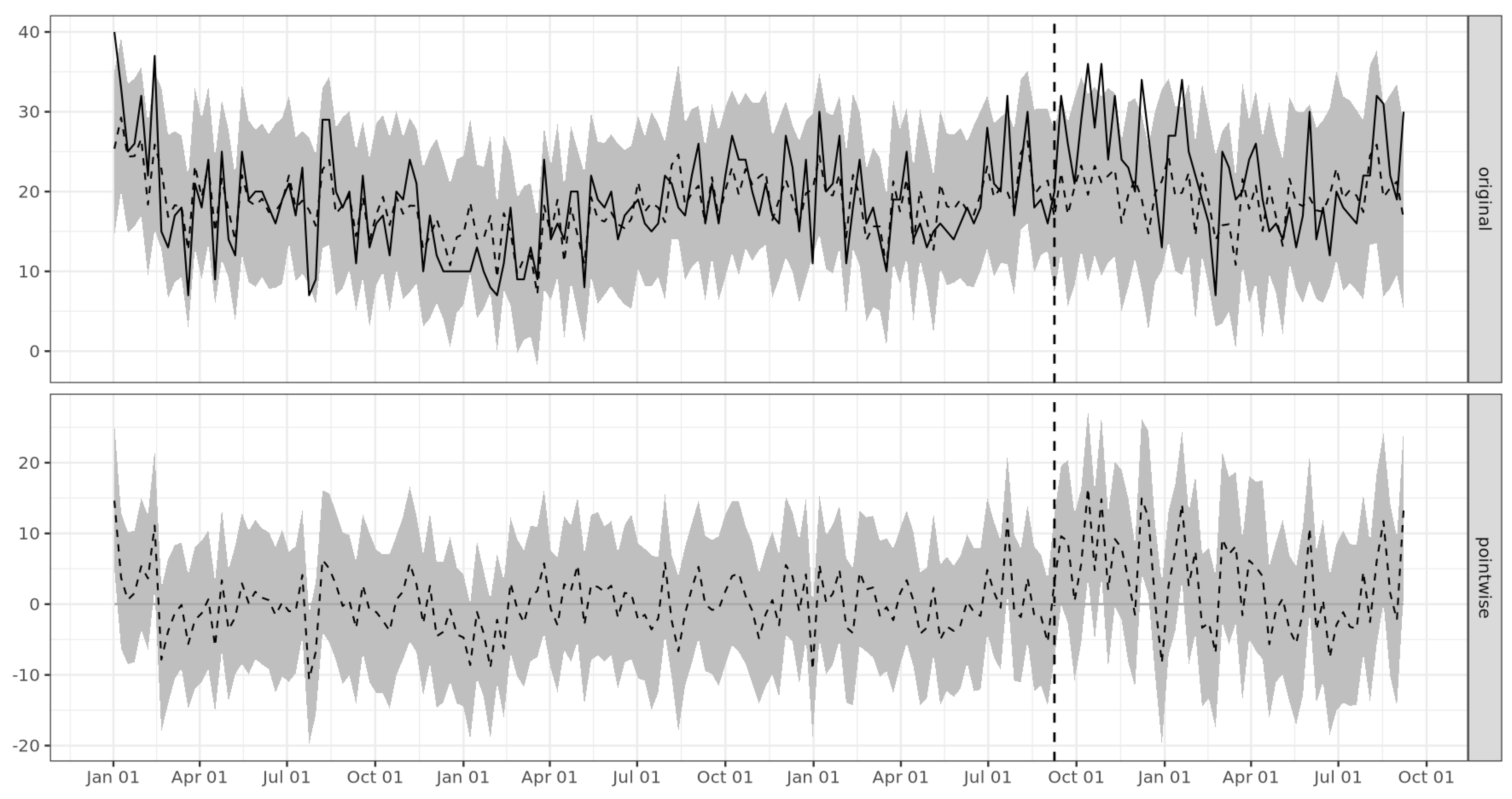
Figure A2.
Weekly counts of violent crime and property crime DAT Zone 2.
Notes
| 1 | We use the R CausalImpact package, version 1.3.0. Brodersen et al. (2017). |
| 2 | We use the CausalImpact package default value for the control series’ prior probability of being included in the model, specified by an expected model size parameter of 3. The probability is equal to this parameter value divided by the number of regressors, implying that all control series are included in the model. Other default parameters incorporated in the spike-and-slab prior, such as the expected explained variance and prior degrees of freedom, are also left as default, which is consistent with a sparse model. |
References
- Abadie, Alberto, Alexis Diamond, and Jens Hainmueller. 2010. Synthetic Control Methods for Comparative Case Studies: Estimating the Effect of California’s Tobacco Control Program. Journal of the American Statistical Association 105: 493–505. [Google Scholar] [CrossRef] [Scilit]
- Anderson, Craig A., Kathryn B. Anderson, Nancy Dorr, Kristina M. DeNeve, and Mindy Flanagan. 2000. Temperature and aggression. Advances in Experimental Social Psychology 32: 63–133. [Google Scholar]
- Ariel, Barak, Cristobal Weinborn, and Lawrence W. Sherman. 2016. Soft policing at hot spots: Do police community support officers deter crime? Policing: A Journal of Policy and Practice 12: 277–317. [Google Scholar]
- Barnett, Erica C. 2023. Election Night Results Represent a Turn to the Center for Seattle. Seattle: PubliCola. [Google Scholar]
- Borrion, Herve E., Paul Ekblom, Dalal Alrejeh, Aiduan L. Borrion, Aidan Keane, Daniel Kock, Timothy Mitchener-Nissen, and Sonia Toublaine. 2020. The problem with crime problem-solving: Towards a second generation pop? The Brisith Journal of Criminology 60: 219–40. [Google Scholar] [CrossRef] [Scilit]
- Bowers, Kate, and Shane D. Johnson. 2003. Measuring the Geographical Displacement and Diffusion of Benefit Effects of Crime Prevention Activity. Journal of Quantitative Criminology 19: 275–301. [Google Scholar] [CrossRef] [Scilit]
- Bowers, Kate, Shane Johnson, Rob T. Guerette, Lucia Summers, and Suzanne Poynton. 2011. Spatial displacement and diffusion of benefits among geographically focused policing initiatives. Campbell Systematic Reviews 7: 1–144. [Google Scholar] [CrossRef] [Scilit]
- Braga, Anthony A. 2008. Problem-Oriented Policing and Crime Prevention (Vol. 2). Monsey: Criminal Justice Press. [Google Scholar]
- Braga, Anthony A., Cory Schnell, and Brandon C. Welsh. 2024. Disorder Policing to Reduce Crime: An Updated Systematic Review and Meta-Analysis. Criminology & Public Policy 23: 745–75. [Google Scholar]
- Branas, Charles C., Rose A. Cheney, John M. MacDonald, Vicky W. Tam, Tara D. Jackson, and Thomas R. Ten Have. 2011. A difference-in-differences analysis of health, safety, and greening vacant urban space. American Journal of Epidemiology 174: 1296–306. [Google Scholar] [CrossRef] [Scilit]
- Brodersen, Kay H., and Alain Hauser. 2017. Package CausalImpact. Mountain View: Google LLC. [Google Scholar]
- Brodersen, Kay H., Fabien Gallusser, Jim Koehler, Nicolas Remy, and Steven L. Scott. 2015. Inferring Causal Impact Using Bayesian Structural Time-Series Models. The Annals of Applied Statistics 9: 247–74. [Google Scholar] [CrossRef] [Scilit]
- Brownstone, Sydney, and Daniel Beekman. 2020. Most encampment removals in Seattle put on ‘pause’ to prioritize coronavirus outreach, city says. The Seattle Times, March 17.
- Bullock, Karen S., Iain Agar, Matt Ashby, Iain Brennan, Gavin Hales, Aiden Sidebottom, and Nick Tilley. 2023. Police practitioner views on the challenges of analysing and responding to knife crime. Crime Science 12: 2. [Google Scholar] [CrossRef] [Scilit]
- Caplan, Joel M., Leslie W. Kennedy, and Jonas H. Baughman. 2021. Data-Informed and Place-Based Violent Crime Prevention: The Kansas City, Missouri Risk-Based Policing Initiative. Police Quarterly 24: 521–40. [Google Scholar] [CrossRef] [Scilit]
- City of Seattle Customer Service Bureau. n.d. Customer Service Bureau. Find It, Fix It—Service Request Mobile App. Available online: https://www.seattle.gov/customer-service-bureau/find-it-fix-it-mobile-app (accessed on 20 September 2025).
- Cohen, Lawrence E., and Marcus Felson. 1979. Social Change and Crime Rate Trends: A Routine Activity Approach. American Sociological Review 44: 588–608. [Google Scholar] [CrossRef] [Scilit]
- Colburn, Gregg, and Clayton P. Aldern. 2022. Homelessness Is a Housing Problem: How Structural Factors Explain US Patterns. Berkeley: University of California Press. [Google Scholar]
- Department of Corrections—WASHINGTON STATE. n.d. Blake Decision. Available online: https://doc.wa.gov/corrections/hearings-sentencing/resentencing/blake-decision (accessed on 10 June 2025).
- Drysdale, Dougal. 2011. An Introduction to Fire Dynamics, 3rd ed. Hoboken: Wiley & Sons. [Google Scholar]
- Eck, John E., and William Spelman. 1987. Problem Solving: Problem-Oriented Policing in Newport News. Washington, DC: Police Executive Research Forum. [Google Scholar]
- Federal Bureau of Investigation. n.d. Crime Data Explorer. Available online: https://cde.ucr.cjis.gov/LATEST/webapp/#/pages/explorer/crime/query (accessed on 5 May 2025).
- Friends of Little Saigon. 2025. Phố Đẹp (Beautiful Neighborhood), Little Saigon Safety Plan. Available online: https://drive.google.com/file/d/1g43FttyfbHl5FGT4rX41O8AUENY9YHV3/view (accessed on 10 May 2025).
- Ghose, Rina, Amir M. Forati, and John R. Mantsch. 2022. Impact of the COVID-19 Pandemic on Opioid Overdose Deaths: A Spatiotemporal Analysis. Journal of Urban Health 99: 316–27. [Google Scholar] [CrossRef] [Scilit] [PubMed]
- Gorr, Wilpen, and YongJei Lee. 2017. Chronic and temporary crime hot spots. In Unraveling the Crime-Place Connection, Volume 22. Abingdon: Routledge, pp. 41–63. [Google Scholar]
- Green, Sara J. 2024. Nearly 70 killed in Seattle homicides last year. The Seattle Times, January 10.
- Horsey, David. 2019. Seattle’s nightmare in broad daylight. The Seattle Times, December 5.
- Hutt, Oliver, Kate Bowers, Shane Johnson, and Toby Davies. 2018. Data and evidence challenges facing place-based policing. Policing: An International Journal 41: 339–51. [Google Scholar] [CrossRef] [Scilit]
- Klinger, David A. 1997. Measurement error in calls-for-service as an indicator of crime. Criminology 35: 705–26. [Google Scholar] [CrossRef] [Scilit]
- Koper, Christopher S. 1995. Just enough police presence: Reducing crime and disorderly behavior by optimizing patrol time in crime hot spots. Justice Quarterly 12: 649–72. [Google Scholar] [CrossRef] [Scilit]
- Lee, Sungmin, Chanam Lee, Ji W. Nam, Anne V. Moudon, and Jason A. Mendoza. 2023. Street environments and crime around low-income and minority schools: Adopting an environmental audit tool to assess crime prevention through environmental design (CPTED). Landscape and Urban Planning 232: 104676. [Google Scholar] [CrossRef] [Scilit]
- Lum, Cynthia, and Christopher S. Koper. 2024. Evidence-Based Policing: Translating Research into Practice, 3rd ed. Oxford: Oxford University Press. [Google Scholar]
- Lynch, Scott M., and Bryce Bartlett. 2019. Bayesian Statistics in Sociology: Past, Present, and Future. Annual Review of Sociology 45: 47–68. [Google Scholar] [CrossRef] [Scilit]
- McCloskey, Deirdre N., and Stephen Ziliak. 2010. The Cult of Statistical Significance: How the Standard Error Costs Us Jobs, Justice, and Lives. Ann Arbor: University of Michigan Press. [Google Scholar]
- National Weather Service. n.d. National Weather Service API. Available online: https://api.weather.gov (accessed on 20 September 2025).
- Park, Robert, Ernest W. Burgess, and Roderick D. McKenzie. 1925. The City. Chicago: University of Chicago Press. [Google Scholar]
- Ranson, Matthew. 2012. Crime, Weather, and Climate Change. Harvard Kennedy School M-RCBG Associate Working Paper Series No. 8. Cambridge, MA: Mossavar-Rahmani Center for Business Government. [Google Scholar]
- Roumasset, James, and John Hadreas. 1977. Addicts, Fences, and the Market for Stolen Goods. Public Finance Quarterly 5: 247–72. [Google Scholar] [CrossRef] [Scilit]
- Santos, Rachel B., and Roberto G. Santos. 2021. Proactive police response in property crime micro-time hot spots: Results from a partially-blocked blind random controlled trial. Journal of Quantitative Criminology 37: 247–65. [Google Scholar] [CrossRef] [Scilit]
- Seattle Public Schools. 2025. 2025–26 School Year Calendar. Available online: https://www.seattleschools.org/news/school-calendar/ (accessed on 20 September 2025).
- Shaw, Clifford R., and Henry D. McKay. 1942. Juvenile Delinquency and Urban Areas. Chicago: University of Chicago Press. [Google Scholar]
- Sherman, Lawrence W. 2013. The rise of evidence-based policing: Targeting, testing, and tracking. Crime and Justice 42: 377–51. [Google Scholar] [CrossRef] [Scilit]
- Sherman, Lawrence W. 2018. Reducing fatal police shootings as system crashes: Research, theory, and practice. Annual Review of Criminology 1: 421–49. [Google Scholar] [CrossRef] [Scilit]
- Sherman, Lawrence W. 2022a. Goldilocks and the three “Ts”: Targeting, testing, and tracking for “just right” democratic policing. Criminology & Public Policy 21: 175–96. [Google Scholar]
- Sherman, Lawrence W. 2022b. “Just Right” Policing: A Job for Science. Cambridge Journal of Evidence-Based Policing 6: 134–39. [Google Scholar] [CrossRef] [Scilit]
- Sherman, Lawrence W. 2022c. “Test-as-you-go” for hot spots policing: Continuous impact assessment with repeat crossover designs. Cambridge Journal of Evidence-Based Policing 6: 25–41. [Google Scholar] [CrossRef] [Scilit]
- Telep, Cody W., Renée J. Mitchell, and David Weisburd. 2014. How much time should the police spend at crime hot spots? Journal of Quantitative Criminology 31: 451–82. [Google Scholar]
- Weather Underground. n.d. Seattle, WA Weather History. Available online: https://www.wunderground.com/history/monthly/us/wa/seattle (accessed on 20 September 2025).
- Weisburd, David, Cody W. Telep, Joshua C. Hinkle, and John E. Eck. 2010. Is problem-oriented policing effective in reducing crime and disorder? Criminology & Public Policy 9: 139–72. [Google Scholar]
- Weisburd, David, Elizabeth R. Groff, and Sue-Ming Yang. 2012. The Criminology of Place: Street Segments and Our Understanding of the Crime Problem. New York: Oxford University Press. [Google Scholar]
- Wilson, James Q., and George L. Kelling. 1982. Broken windows: The police and neighborhood safety. Atlantic Monthly 249: 29–39. [Google Scholar]

Disclaimer/Publisher’s Note: The statements, opinions and data contained in all publications are solely those of the individual author(s) and contributor(s) and not of MDPI and/or the editor(s). MDPI and/or the editor(s) disclaim responsibility for any injury to people or property resulting from any ideas, methods, instructions or products referred to in the content. |
© 2026 by the authors. Licensee MDPI, Basel, Switzerland. This article is an open access article distributed under the terms and conditions of the Creative Commons Attribution (CC BY) license.