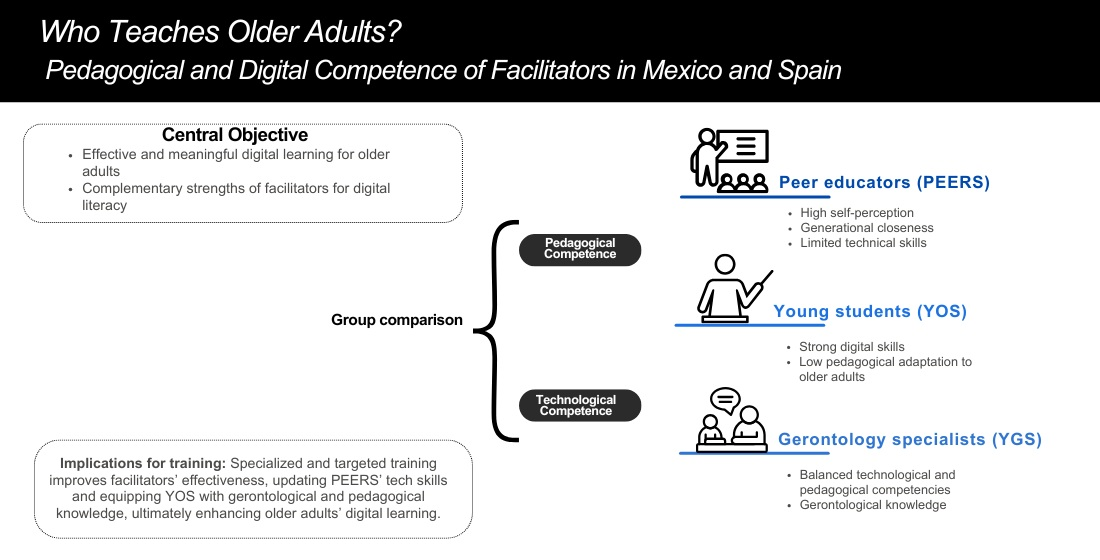

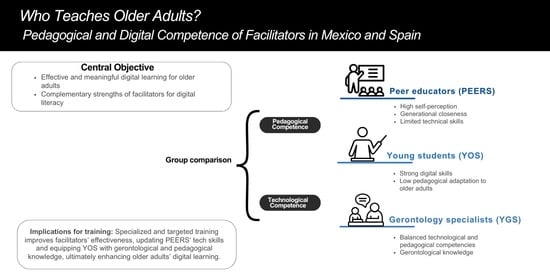
Who Teaches Older Adults? Pedagogical and Digital Competence of Facilitators in Mexico and Spain



Abstract
1. Introduction
1.1. Digital Inclusion in Mexico and Spain: Divide, Policies, and Structural Challenges
1.2. Educators’ Profiles in the Learning of the Elderly
- How do facilitators perceive their level of digital skills?
- What is the level of digital competence of different facilitator profiles?
- What ICT skills for teachers (technological and pedagogical) distinguish the different facilitator profiles in teaching digital skills to older adults?
2. Materials and Methods
2.1. Study Design
2.2. Study Context
2.3. Participants
2.4. Instruments
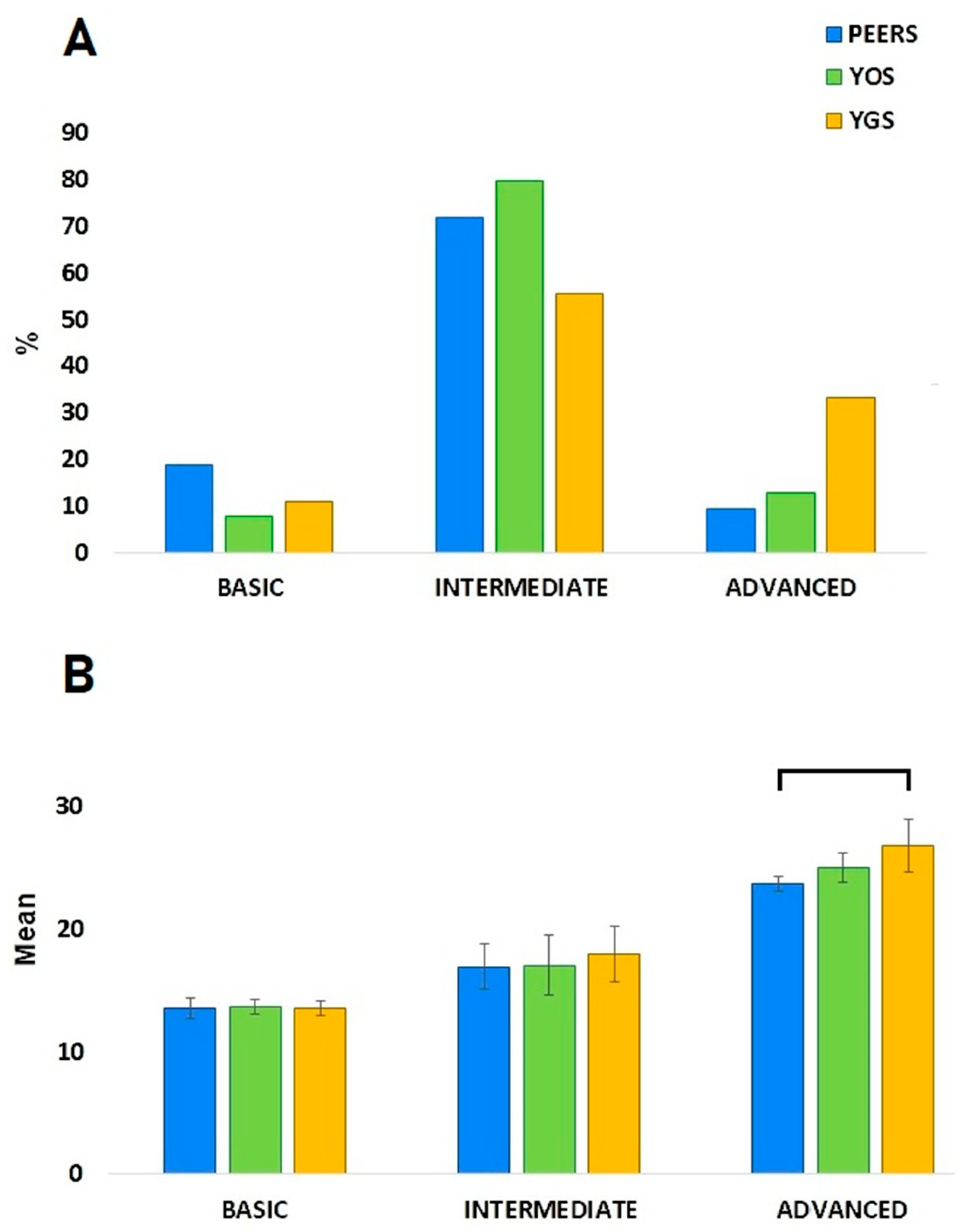
- Digital Competence Scale (DCS): Based on the European Digital Competence Framework for Citizens (DigComp 2.2, File S2), this instrument assessed the level of digital competence of the facilitators (Schwarz et al. 2024). Participants indicate their level of ability to perform a series of digital tasks, using the following options to reply: Yes, I can do it with help; Yes, I can do it on my own; Yes, I can help others; No, I cannot do it at all. Each item was highlighted, and the total amount allowed the classification of the participants into four levels of digital competency (Table 3):
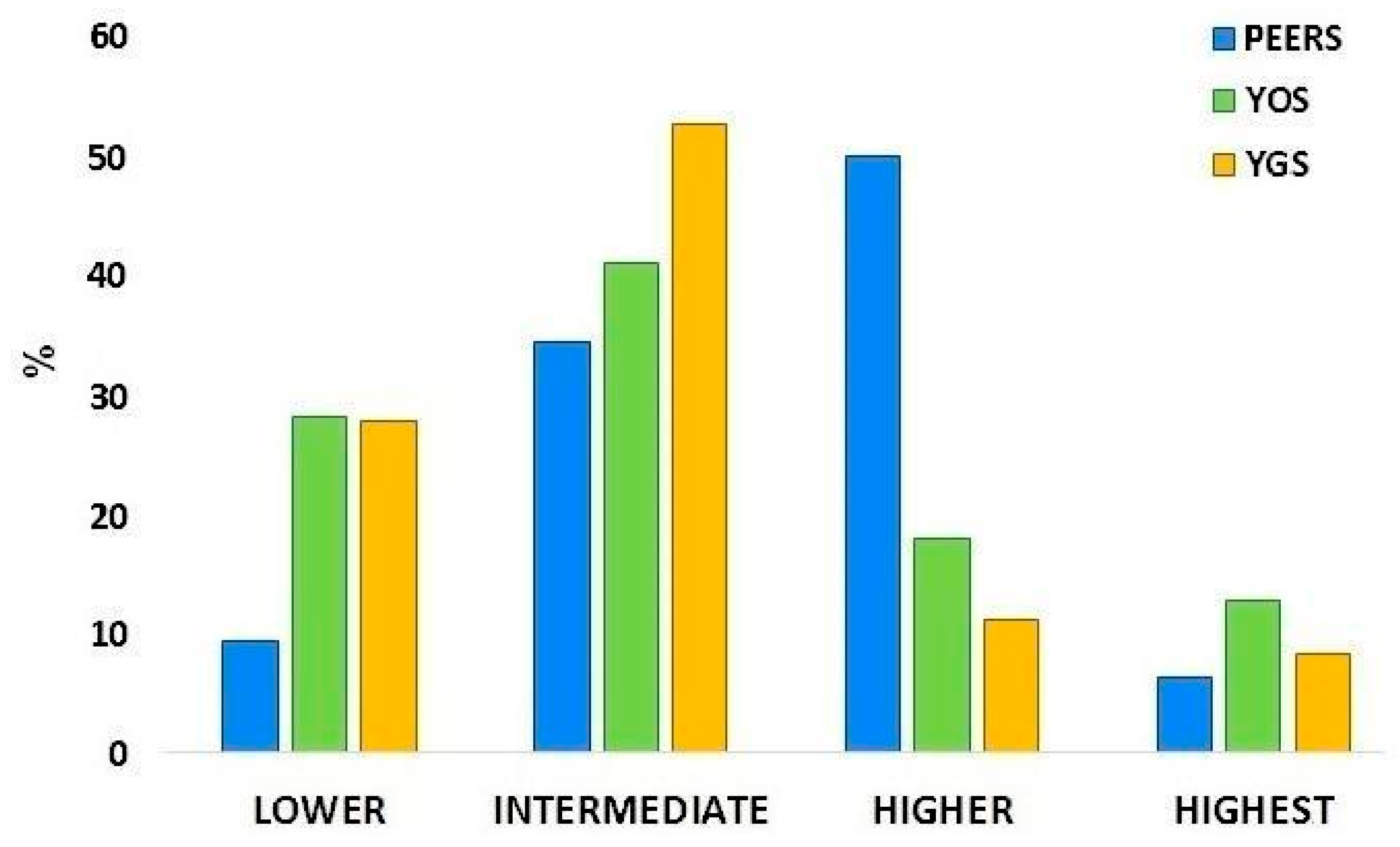
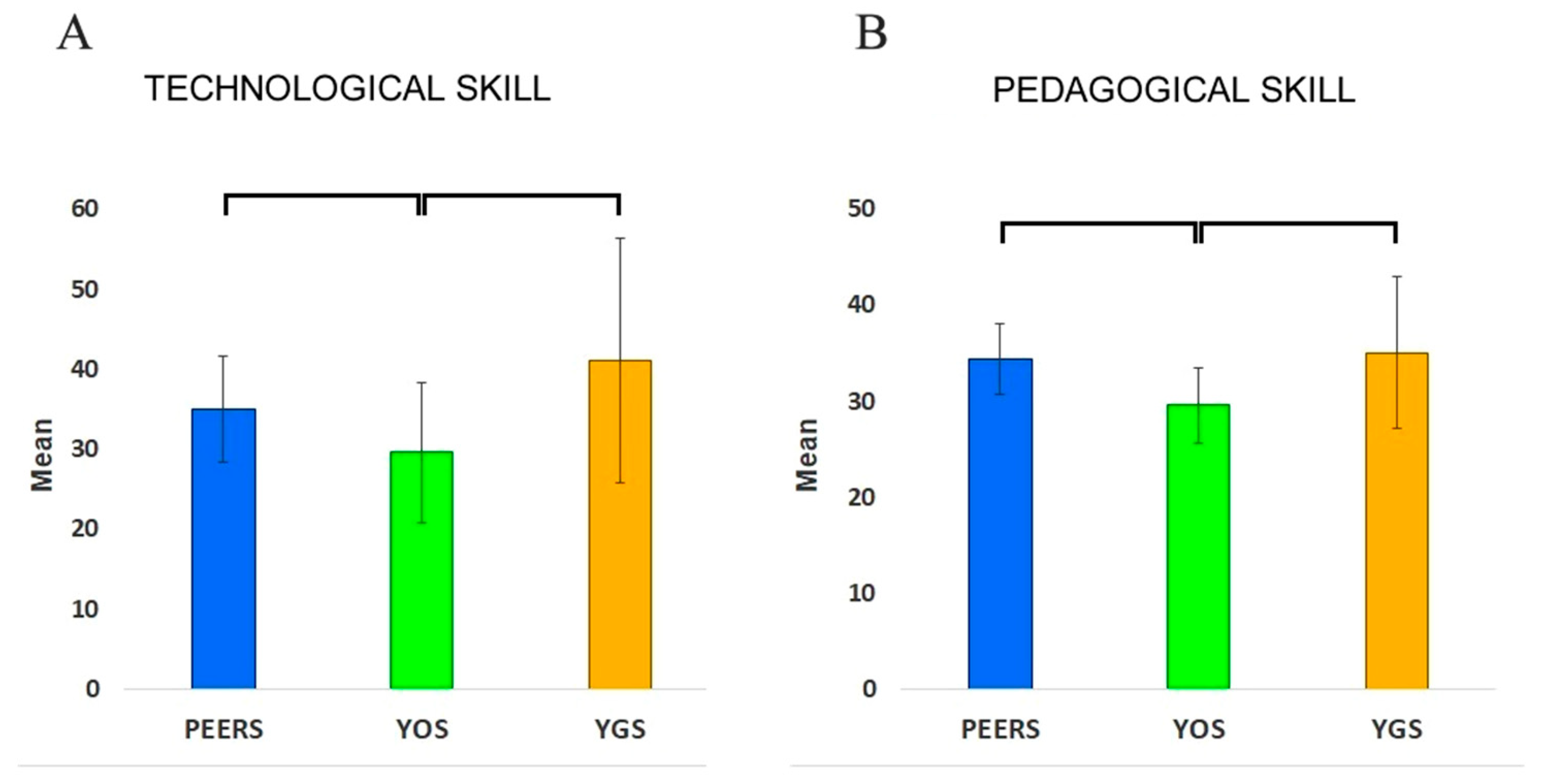
- Survey on ICT skills for teachers (File S1): The objective of this survey was to identify the different types of ICT skills possessed by facilitators of digital literacy programs. The instrument was adapted from the UNESCO ICT Competency Framework for Teachers (UNESCO 2019) and was conceptually informed by previous research on teachers’ ICT competencies (Hernández Suárez et al. 2016; Prodromou et al. 2019). The instrument includes a self-perception question that asks participants to assess their level of digital skills using a 4-point Likert scale (Lower, Intermediate, Higher, and Highest). Furthermore, two specific areas of competence were evaluated: technological skills (15 items) and pedagogical skills (10 items), which provided a comprehensive overview of the facilitators’ skills relating to the use of technologies in their educational work. The scale for the competency items was as follows (Table 4):
2.5. Procedure
- Phase 1. Identification and contact with institutions and programs. During this phase, institutions and programs that offer digital literacy courses for older adults in Mexico and Spain were identified, including community centers, universities, non-governmental organizations, and public and private initiatives. Once the organizations were contacted, communication was established with their coordinators and facilitators, to whom the aim of the study was clearly explained, and they were formally invited to participate. The inclusion criteria considered facilitators of digital literacy programs for different ages who actively participated in teaching older adults.
- Phase 2: Application of instruments and data collection. Participants received standardized instruments to collect sociodemographic data and assess digital competence and ICT skills for teachers (technological and pedagogical). All instruments were administered remotely and asynchronously, in a fixed order, and took about 40 min to complete. Assistance was available for questions or technical difficulties. Responses were reviewed immediately after submission for completeness and consistency. Additionally, the instruments were distributed via a Google Forms questionnaire. In Spain, facilitators completed the survey using the institutional equipment they normally use for their training activities, while the groups of young people and gerontologists responded using their personal devices. The extended data collection period was justified by the need to coordinate the participation of multiple institutions in two countries. It was also due to the heterogeneity of the programs, contexts, and facilitator profiles. Over this time, there were no significant changes in program conditions that would affect data comparability. Therefore, all data were merged for further analysis.
2.6. Data Analysis
2.7. Ethics
3. Results
3.1. Socio-Demographic and Scale Results
Age
3.2. Self-Perception of Digital Skills
3.2.1. Descriptive Analyses for Socio-Demographic Variables and Scales
3.2.2. Comparison of Medians for Years of Education and Years of Experience
3.2.3. Comparison of Medians for the DCS
3.3. Technological and Pedagogical Skills
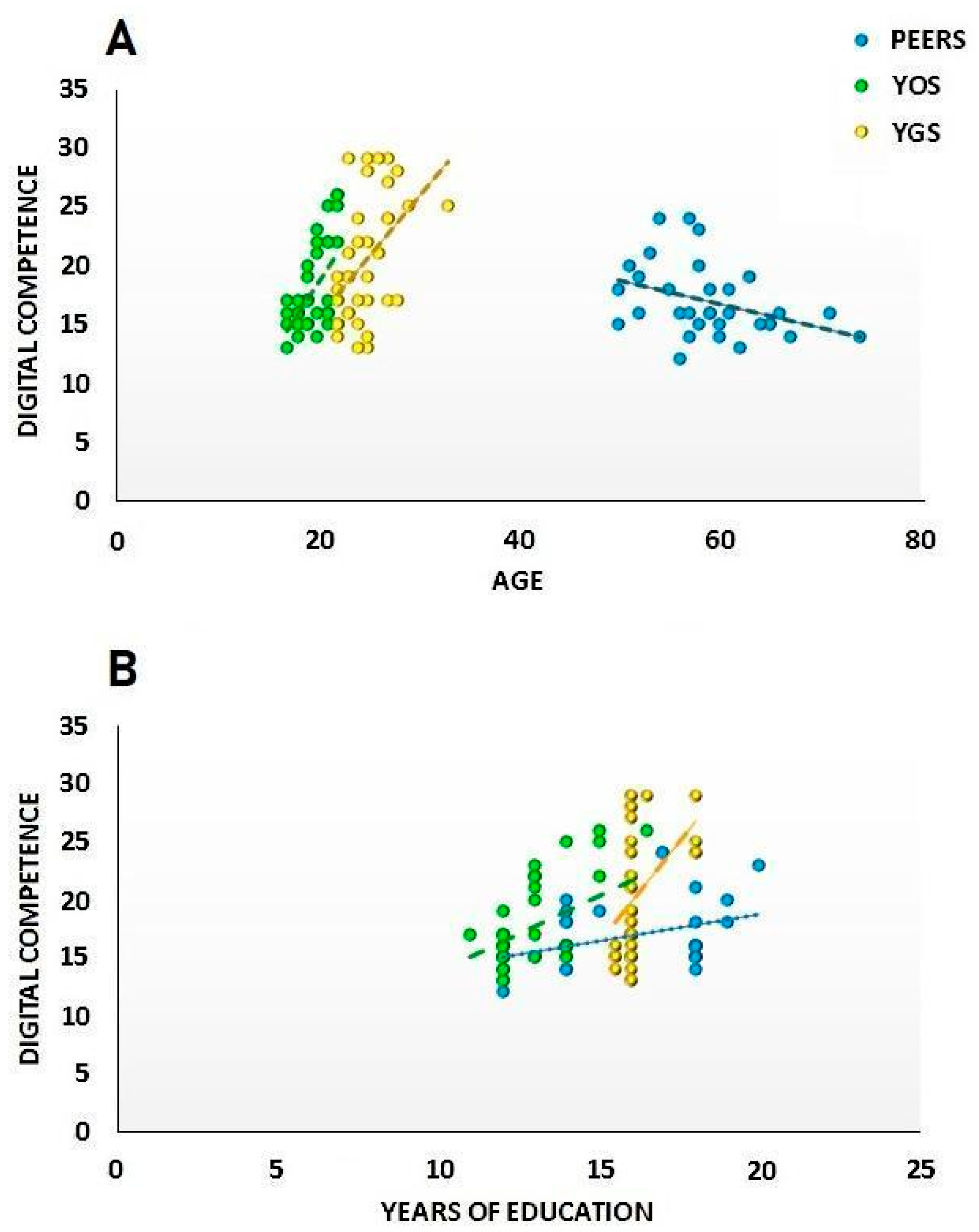
3.4. Correlations Between Socio-Demographic Variables and the DCS
3.4.1. Age and DCS Scores
3.4.2. Years of Education
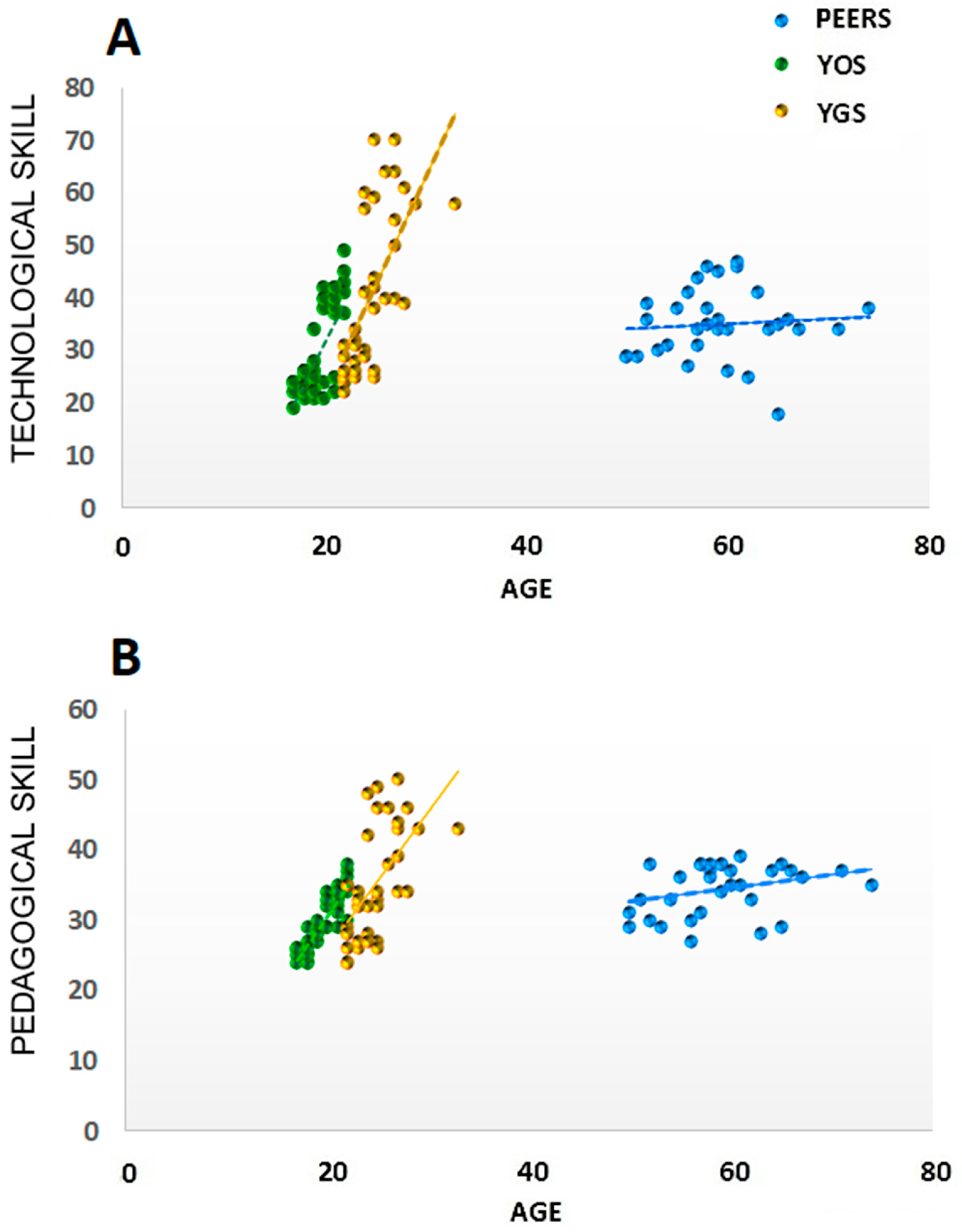
3.5. Correlations Between Socio-Demographic Variables and Technological and Pedagogical Skills
3.5.1. Age and Technological and Pedagogical Skills
3.5.2. Years of Education and Technological and Pedagogical Skills
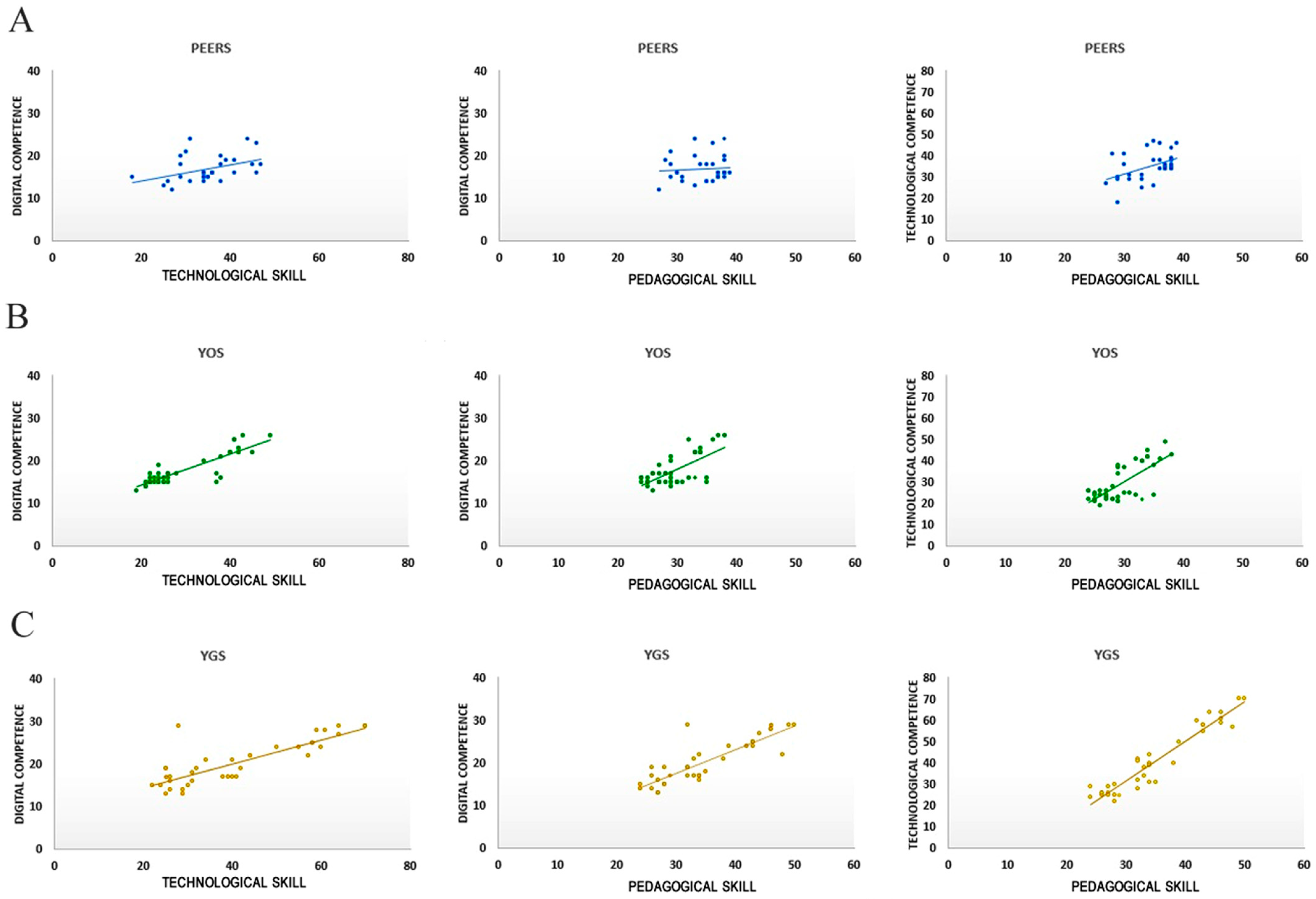
3.6. Correlations Between DCS, Technological and Pedagogical Skills
4. Discussion
5. Limitations
6. Conclusions
Supplementary Materials
Author Contributions
Funding
Institutional Review Board Statement
Informed Consent Statement
Data Availability Statement
Conflicts of Interest
Abbreviations
| PEERS | Peer educators: A group of older adult teachers who instruct older adult participants. |
| YOS | Young students with other studies (not gerontology ones). |
| YGS | Young with gerontology studies (gerontology specialists). |
Appendix A

| Country | Role | Municipality | n | % |
|---|---|---|---|---|
| Spain (n = 61) | PEERS | Sevilla (Capital) | 20 | 32.8% |
| PEERS | Osuna | 12 | 19.7% | |
| YOS | Sevilla (Capital) | 20 | 32.8% | |
| YOS | Osuna | 9 | 14.7% | |
| Mexico (n = 46) | YOS | Pachuca de Soto | 10 | 21.7% |
| YGS | Pachuca de Soto | 19 | 41.3% | |
| YGS | Mineral de la Reforma | 10 | 21.7% | |
| YGS | Actopan | 5 | 10.9% | |
| YGS | Omitlán | 2 | 4.3% |
References
- Arthanat, Sajay, Kerryellen G. Vroman, Catherine Lysack, and Joseph Grizzetti. 2019. Multi-Stakeholder Perspectives on Information Communication Technology Training for Older Adults: Implications for Teaching and Learning. Disability and Rehabilitation: Assistive Technology 14: 453–61. [Google Scholar] [CrossRef] [Scilit] [PubMed]
- Barrie, Heather, Brian Detlor Tania La Rose, Heidi Julien, and Alexander Serenko. 2021. “Because I’m old”: The role of ageism in older adults’ experiences of digital literacy training in public libraries. Journal of Technology in Human Services 39: 379–404. [Google Scholar] [CrossRef] [Scilit]
- Bhattacharjee, Priyankar, Steven Baker, and Jenny Waycott. 2020. Older Adults and Their Acquisition of Digital Skills: A Review of Current Research Evidence. Paper presented at the 32nd Australian Conference on Human–Computer Interaction, Online, December 2–4; pp. 437–43. [Google Scholar] [CrossRef] [Scilit]
- Breck, Bethany M., Cory B. Dennis, and Skye N. Leedahl. 2018. Implementing Reverse Mentoring to Address Social Isolation among Older Adults. Journal of Gerontological Social Work 61: 513–25. [Google Scholar] [CrossRef] [Scilit] [PubMed]
- Carrillo, Carmen, and Maria A. Flores. 2018. Veteran Teachers’ Identity: What Does the Research Literature Tell Us? Cambridge Journal of Education 48: 639–56. [Google Scholar] [CrossRef] [Scilit]
- Chiu, Ching J., Wan C. Tsai, Wan L. Yang, and Jong L. Guo. 2019. How to Help Older Adults Learn New Technology? Results from a Multiple Case Research Interviewing Internet Technology Instructors. Computers & Education 129: 61–70. [Google Scholar] [CrossRef] [Scilit]
- Drabowicz, Tomasz. 2017. Social Theory of Internet Use: Corroboration or Rejection among the Digital Natives? Correspondence Analysis of Adolescents in Two Societies. Computers & Education 105: 57–67. [Google Scholar] [CrossRef] [Scilit]
- Elgamal, Raghad, Tara La Rose, Brian Detlor, Heidi Julien, and Alexander Serenko. 2024. A community partnership approach to digital literacy training for older adults between public libraries and seniors’ organizations. The Canadian Journal of Information and Library Science 47: 3–17. [Google Scholar] [CrossRef] [Scilit]
- Fan, Zhenhua, and Nian Zhang. 2022. Disconnected Citizens in the Social Media Age: Unpacking the Effects of Digital Exclusion on Satisfaction with Democracy in Europe. Information Technology & People 35: 1652–73. [Google Scholar] [CrossRef] [Scilit]
- Ferreira, Susan M., Sergio Sayago, and Josep Blat. 2016. Going Beyond Telecenters to Foster the Digital Inclusion of Older People in Brazil. Information Technology for Development 22: 26–46. [Google Scholar] [CrossRef] [Scilit]
- Fields, Jessica, Anupama. G. Cemballi, Cathy Michalec, Debbie Uchida, Kami Griffiths, Heather Cardes, Jacqueline Cuellar, Anna H. Chodos, and Courtney R. Lyles. 2020. In-Home Technology Training among Socially Isolated Older Adults. Journal of Applied Gerontology 40: 489–99. [Google Scholar] [CrossRef] [Scilit]
- Flauzino, Karina L., Maria G. C. Pimentel, Samila S. T. Batistoni, Isabela Zaine, Lilian. O. B. Vieira, Kamila R. H. Rodrigues, and Meire Cachioni. 2020. Digital literacy for older adults: Perceptions about teaching-learning. Educação & Realidade 45: E104913. [Google Scholar] [CrossRef] [Scilit]
- Formosa, Marvin. 2018. The Promise of Geragogy: Ensuring Quality Standards for Older Adult Learning. Paper presented at the AIUTA International Conference: Standards of Education among U3As and the Intergenerational Formation, Barcelona, Spain, June 29; pp. 13–17. [Google Scholar]
- Gates, Jessica R., and Gemma Wilson-Menzfeld. 2022. What Role Does Geragogy Play in the Delivery of Digital Skills Programs for Middle and Older Age Adults? Journal of Applied Gerontology 41: 1971–80. [Google Scholar] [CrossRef] [Scilit] [PubMed]
- Hernández Suárez, César A., Mayra A. Arévalo Duarte, and Audin A. Gamboa Suárez. 2016. Competencias TIC para el desarrollo profesional docente en educación básica. Praxis & Saber 7: 41–69. [Google Scholar] [CrossRef] [Scilit]
- Hill, Rosie, Lucy R. Betts, and Stephen E. Gardner. 2015. Older Adults’ Experiences and Perceptions of Digital Technology. Computers in Human Behavior 48: 415–23. [Google Scholar] [CrossRef] [Scilit]
- Holgersson, Jesper, and Eva Söderström. 2019. Bridging the Gap: Exploring Elderly Citizens’ Perceptions of Digital Exclusion. Paper presented at the 27th European Conference on Information Systems (ECIS), Stockholm-Uppsala, Sweden, June 8–14. [Google Scholar]
- Instituto Nacional de Estadística (INE). 2025. Annual Population Census. Madrid: Instituto Nacional de Estadística. Available online: https://www.ine.es/en/metodologia/t20/meto_censo_poblacion_anual_en.pdf (accessed on 8 December 2025).
- Instituto Nacional de Estadística y Geografía (INEGI). 2022. Estadísticas a propósito del Día Internacional de las Personas Adultas Mayores. Press release No. 568/22, September 30. Mexico City: Instituto Nacional de Estadística y Geografía. Available online: https://inegi.org.mx/contenidos/saladeprensa/aproposito/2022/EAP_ADULMAY2022.pdf (accessed on 8 December 2025).
- Instituto Nacional de Estadística y Geografía (INEGI). 2024. Encuesta Nacional sobre Disponibilidad y Uso de Tecnologías de la Información en los Hogares (ENDUTIH) 2023; Press release No. 372/24, June 13. Mexico City: Instituto Nacional de Estadística y Geografía. Available online: https://www.inegi.org.mx/contenidos/saladeprensa/boletines/2024/ENDUTIH/ENDUTIH_23.pdf (accessed on 8 December 2025).
- Katey, Daniel, and Sally Chivers. 2025. Navigating the digital divide: Exploring the drivers, drawbacks, and prospects of social interaction technologies’ adoption and usage among older adults during COVID-19. Journal of Aging Research 2025: 7625097. [Google Scholar] [CrossRef] [Scilit]
- Kesharwani, Ankit. 2020. Do Digital Natives Adopt New Technology Differently? Information & Management 57: 103170. [Google Scholar] [CrossRef] [Scilit]
- Kirschner, Paul A., and Pedro De Bruyckere. 2017. The Myths of the Digital Native and the Multitasker. Teaching and Teacher Education 67: 135–42. [Google Scholar] [CrossRef] [Scilit]
- Lee, Hee Y., Eun Y. Choi, Kim Young Sun, Jessica Neese, and Yan Luo. 2020. Rural and non-rural digital divide persists in older adults: Internet access, usage, and perception. Innovation in Aging 4: 412. [Google Scholar] [CrossRef] [Scilit]
- Leedahl, Skye N., Melanie S. Brasher, Erica Estus, Bethany M. Breck, Cory B. Dennis, and Samantha C. Clark. 2019. Implementing an Interdisciplinary Intergenerational Program Using the Cyber Seniors® Model. Gerontology & Geriatrics Education 40: 71–89. [Google Scholar] [CrossRef] [Scilit]
- Lines, Lorna, Oluchi Ikechi, and Kate S. Hone. 2007. Accessing E-Government Services: Design Requirements for the Older User. Paper presented at the International Conference on Universal Access in Human–Computer Interaction, Beijing, China, July 22–27; pp. 932–40. [Google Scholar]
- MacFarland, Thomas W., and Jan M. Yates. 2016. Prueba U de Mann–Whitney. In Introducción a la Estadística No Paramétrica para las Ciencias Biológicas con R. Cham: Springer International Publishing, pp. 103–32. [Google Scholar]
- Marimuthu, Ramalatha, Shally Gupta, Larry Stapleton, Dominique Duncan, and Bozenna Pasik-Duncan. 2022. Challenging the Digital Divide: Factors Affecting the Availability, Adoption, and Acceptance of Future Technology in Elderly User Communities. Computer 55: 56–66. [Google Scholar] [CrossRef] [Scilit]
- Martínez-Alcalá, Claudia I., Alejandra Rosales-Lagarde, Maria Alonso-Lavernia, Jose A. Ramírez-Salvador, Brenda Jiménez-Rodríguez, Rosario M. Cepeda-Rebollar, and Raúl. A. Agis-Juárez. 2018. Digital Inclusion in Older Adults. Frontiers in ICT 5: 21. [Google Scholar] [CrossRef] [Scilit]
- Martínez-Alcalá, Claudia I., Alejandra Rosales-Lagarde, Yonal M. Pérez-Pérez, José S. Lopez-Noguerola, María L. Bautista-Díaz, and Raúl A. Agis-Juarez. 2021. The Effects of COVID-19 on the Digital Literacy of the Elderly. Frontiers in Education 6: 716025. [Google Scholar] [CrossRef] [Scilit]
- Martínez-Domínguez, Marlen, and Jorge Mora-Rivera. 2020. Internet Adoption and Usage Patterns in Rural Mexico. Technology in Society 60: 101226. [Google Scholar] [CrossRef] [Scilit]
- Mubarak, Farooq, and Reima Suomi. 2022. Elderly Forgotten? Digital Exclusion in the Information Age and the Rising Grey Digital Divide. INQUIRY: The Journal of Health Care Organization, Provision, and Financing 59: 00469580221096272. [Google Scholar] [CrossRef] [Scilit]
- Naik, Sushma S., and Onkaragouda Kakade. 2024. Impact of Digitalization on Society. mLAC Journal for Arts, Commerce and Sciences 2: 1–13. [Google Scholar] [CrossRef] [Scilit]
- Nikou, Shahrokh, Malin Brännback, and Gunilla Widén. 2019. The Impact of Digitalization on Literacy. Paper presented at the European Conference on Information Systems (ECIS) 2019, Stockholm and Uppsala, Sweden, June 8–14; ISBN 978-1-7336325-0-8. Research Papers. Available online: https://aisel.aisnet.org/ecis2019_rp/39 (accessed on 8 December 2025).
- Ostertagova, Eva, Oskar Ostertag, and Jozef Kováč. 2014. Methodology and Application of the Kruskal–Wallis Test. Applied Mechanics and Materials 611: 115–20. [Google Scholar] [CrossRef] [Scilit]
- Perim, Claudilene, Carla Sousa, and Manuel J. Damásio. 2025. Digital Literacy and Older People: A case study in lifelong learning institutions in Lisbon. Educational Gerontology, 1–15. [Google Scholar] [CrossRef] [Scilit]
- Pihlainen, Kaisa, Anja Ehlers, Rebekka Rohner, Katerina Cerna, Eija Kärnä, Moritz Hess, Lisa Hengl, Lotta Aavikko, Susanne Frewer-Graumann, Vera Gallistl, and et al. 2023. Older Adults’ Reasons to Participate in Digital Skills Learning: An interdisciplinary, multiple case study from Austria, Finland, and Germany. Studies in the Education of Adults 55: 101–19. [Google Scholar] [CrossRef] [Scilit]
- Pihlainen, Kaisa, Kristiina Korjonen-Kuusipuro, and Eija Kärnä. 2021. Perceived Benefits from Non-Formal Digital Training Sessions in Later Life. International Journal of Lifelong Education 40: 155–69. [Google Scholar] [CrossRef] [Scilit]
- Pizzul, Dario, and Alessandro Caliandro. 2025. Implementing a peer-to-peer digital literacy course for older adults: Impact on device use, digital competence, attitudes and well-being. International Journal of Lifelong Education, 1–17. [Google Scholar] [CrossRef] [Scilit]
- Pizzul, Dario, Emanuela Sala, Alessandro Caliandro, Daniele Zaccaria, and Simone Carlo. 2024. Evaluating the impact of a peer-education digital literacy course on older adults’ digital skills and wellbeing: A mixed-methods study protocol. Frontiers in Sociology 9: 1432607. [Google Scholar] [CrossRef] [Scilit]
- Prodromou, Maria, Sotiris Themistocleous, Katerina Theodoridou, Vasilis Bokolas, Dimitra Sitareniou, and Giagkos Lavranos. 2019. Needs Assessment Regarding ICT for Elderly People and their Carers: The PROADAS study. Nosileftiki 58: 163–71. [Google Scholar]
- Puka, Llukan. 2011. Kendall’s Tau. In International Encyclopedia of Statistical Science. Berlin/Heidelberg: Springer, pp. 713–15. [Google Scholar]
- Ramdowar, Harshini, Kavi K. Khedo, and Nitish Chooramun. 2024. A Comprehensive Review of Mobile User Interfaces in mHealth Applications for Elderly Users and Related Ageing Barriers. Universal Access in the Information Society 23: 1613–29. [Google Scholar] [CrossRef] [Scilit]
- Rasi-Heikkinen, Päivi, and Michael Doh. 2023. Older Adults and Digital Inclusion. Educational Gerontology 49: 345–47. [Google Scholar] [CrossRef] [Scilit]
- Rosales, Andrea, and Daniel Blanche-T. 2022. Explicit and Implicit Intergenerational Digital Literacy Dynamics: How Families Contribute to Overcome the Digital Divide of Grandmothers. Journal of Intergenerational Relationships 20: 328–46. [Google Scholar] [CrossRef] [Scilit]
- Sayago, Sergio, and Josep Blat. 2009. About the Relevance of Accessibility Barriers in the Everyday Interactions of Older People with the Web. Paper presented at the 2009 International Cross-Disciplinary Conference on Web Accessibility (W4A), Madrid, Spain, April 20–21; pp. 104–13. [Google Scholar] [CrossRef] [Scilit]
- Schwarz, Sthepanie, Till Bieg, Erich Svecnik, Alexander Schmölz, Corinna Geppert, and Cornelia Gerdenitsch. 2024. Digital Competence Scale (DCS): A Short Self-Assessment Instrument for Measuring Digital Competences. Nordic Journal of Digital Literacy 19: 126–43. [Google Scholar] [CrossRef] [Scilit]
- Seifert, Alexander, Matthias Hofer, and Jörg Rössel. 2018. Older adults’ perceived sense of social exclusion from the digital world. Educational Gerontology 44: 775–85. [Google Scholar] [CrossRef] [Scilit]
- Seifert, Alexander, Sheila R. Cotten, and Bo Xie. 2021. A Double Burden of Exclusion? Digital and Social Exclusion of Older Adults in Times of COVID-19. The Journals of Gerontology: Series B 76: e99–e103. [Google Scholar] [CrossRef] [Scilit]
- Seo, Hyunjin, Josep Erba, Darcey Altschwager, and Mugur Geana. 2019. Evidence-Based Digital Literacy Class for older, low-income African-American adults. Journal of Applied Communication Research 47: 130–52. [Google Scholar] [CrossRef] [Scilit]
- Tomczyk, Łukasz, Anna Mróz, Katarzyna Potyrała, and Joana Wnęk-Gozdek. 2020. Digital Inclusion from the Perspective of Teachers of Older Adults—Expectations, experiences, challenges and supporting measures. Gerontology and Geriatrics Education 43: 132–47. [Google Scholar] [CrossRef] [Scilit]
- UNESCO. 2019. Marco de competencias de los docentes en materia de TIC. Organización de las Naciones Unidas para la Educación, la Ciencia y la Cultura. Available online: https://www.oitcinterfor.org/node/7797 (accessed on 8 December 2025).
- Van Deursen, Alexander J., and Ellen J. Helsper. 2015. The Third-Level Digital Divide: Who Benefits Most from Being Online? In Communication and Information Technologies Annual. Edited by Laura Robinson, Shelia R. Cotten and Jeremy Schulz. Bingley: Emerald Group Publishing Limited, vol. 10, pp. 29–52. [Google Scholar] [CrossRef] [Scilit]
- Van Deursen, Alexander J., and Jan A. Van Dijk. 2015. Toward a Multifaceted Model of Internet Access for Understanding Digital Divides: An Empirical Investigation. The Information Society 31: 379–91. [Google Scholar] [CrossRef] [Scilit]
- Van Dijk, Jan. 2020. The Digital Divide. Hoboken: John Wiley & Sons. [Google Scholar]
- Van Dijk, Jan A. 2012. The Evolution of the Digital Divide—The Digital Divide Turns to Inequality of Skills and Usage. In Digital Enlightenment Yearbook 2012. Edited by Jacques Bus, Malcolm Crompton, Marit Hansen and Georgios Lioudakis. Amsterdam: IOS Press, pp. 57–75. [Google Scholar] [CrossRef] [Scilit]
- Vercruyssen, Anina, Werner Schirmer, Nelly Geerts, and Dimitri Mortelmans. 2023. How “Basic” Is Basic Digital Literacy for Older Adults? Insights from digital skills instructors. Frontiers in Education 8: 1231701. [Google Scholar] [CrossRef] [Scilit]
- Wanka, Anna, Anna Urbaniak, Frank Oswald, and Franz Kolland. 2023. Digital Transformations in Ageing Societies. Zeitschrift für Gerontologie und Geriatrie 56: 177–80. [Google Scholar] [CrossRef] [Scilit]
- Wilkin, Sarah, Huw Davies, and Rebecca Eynon. 2017. Addressing Digital Inequalities amongst Young People: Conflicting discourses and complex outcomes. Oxford Review of Education 43: 130–45. [Google Scholar] [CrossRef] [Scilit]


| Mean (SD) | Mean (SD) | Mean (SD) | Df = 2, 104 | ||
|---|---|---|---|---|---|
| PEERS | YOS | YGS | F | p | |
| Age | 59 (6) | 19.51 (2) | 24.77 (2) | 1195.48 | <0.001 |
| Pedagogical skills | 34 (3) | 29 (9) | 32.8(6) | 10.90 | <0.001 |
| A. Socio-Demographic measures and comparisons of the three groups of Facilitators * | |||||||||||
|---|---|---|---|---|---|---|---|---|---|---|---|
| Intergroup | Intergroup | ||||||||||
| PEERS n = 32 | YOS n = 39 | YGS n = 36 | PEERS vs. YOS vs. YGS | PEERS vs. YOS | PEERS vs. YGS | YOS vs. YGS | |||||
| Median | Median | Median | χ2 | p | z | p | z | p | z | p | |
| Education (years) | 17 | 13 | 16 | 48.28 | <0.001 | −4.9 | <0.001 | −0.2 | 0.78 | −6.99 | <0.001 |
| Experience (years) | 5.5 | 0.5 | 2 | 48.39 | 0.001 | −6.49 | <0.001 | −3.8 | <0.001 | −4.13 | <0.001 |
| B. Scale measures and comparisons of the three group of Facilitators * | |||||||||||
| DCS | 16 | 16 | 19 | 9.49 | <0.001 | −0.8 | 0.40 | −2.8 | <0.001 | −2.32 | 0.02 |
| Techn. skills | 34.5 | 25 | 38.5 | 15.67 | <0.001 | −2.8 | <0.001 | −0.7 | 0.42 | −3.7 | <0.001 |
| Interval | Level |
|---|---|
| 0–6 points | No skills |
| 7–14 points | Basic |
| 15–22 points | Intermediate |
| 23–30 points | Advanced |
| Value | Description |
|---|---|
| 1 | Not competent at all |
| 2 | Not very competent |
| 3 | Competent |
| 4 | Very competent |
| 5 | Fully competent |
Disclaimer/Publisher’s Note: The statements, opinions and data contained in all publications are solely those of the individual author(s) and contributor(s) and not of MDPI and/or the editor(s). MDPI and/or the editor(s) disclaim responsibility for any injury to people or property resulting from any ideas, methods, instructions or products referred to in the content. |
© 2026 by the authors. Licensee MDPI, Basel, Switzerland. This article is an open access article distributed under the terms and conditions of the Creative Commons Attribution (CC BY) license.
Share and Cite
Martínez-Alcalá, C.I.; Cabero-Almenara, J.; Rosales-Lagarde, A. Who Teaches Older Adults? Pedagogical and Digital Competence of Facilitators in Mexico and Spain. Soc. Sci. 2026, 15, 47. https://doi.org/10.3390/socsci15010047
Martínez-Alcalá CI, Cabero-Almenara J, Rosales-Lagarde A. Who Teaches Older Adults? Pedagogical and Digital Competence of Facilitators in Mexico and Spain. Social Sciences. 2026; 15(1):47. https://doi.org/10.3390/socsci15010047
Chicago/Turabian StyleMartínez-Alcalá, Claudia Isabel, Julio Cabero-Almenara, and Alejandra Rosales-Lagarde. 2026. "Who Teaches Older Adults? Pedagogical and Digital Competence of Facilitators in Mexico and Spain" Social Sciences 15, no. 1: 47. https://doi.org/10.3390/socsci15010047
APA StyleMartínez-Alcalá, C. I., Cabero-Almenara, J., & Rosales-Lagarde, A. (2026). Who Teaches Older Adults? Pedagogical and Digital Competence of Facilitators in Mexico and Spain. Social Sciences, 15(1), 47. https://doi.org/10.3390/socsci15010047