


Abstract
The role of the endometrial microbiome in embryo implantation remains incompletely understood. While most studies have focused on taxonomic composition and Lactobacillus dominance, the ecological organization of microbial communities associated with implantation success has received limited attention. The aim of this study was to investigate whether implantation outcome following euploid embryo transfer is associated with differences in endometrial microbial network structure and community organization. Endometrial biopsies collected during the window of implantation from 95 women undergoing subsequent euploid embryo transfer were analyzed using 16S rRNA gene sequencing. Microbial diversity, co-occurrence networks, community structure, hub taxa, network robustness, and microbial association patterns were evaluated. The Pregnant group demonstrated a more interconnected microbial network with a greater number of significant associations, larger ecological modules, and increased network integration than the Non-pregnant group. Seventeen microbial associations were unique to the Pregnant network, whereas eleven were unique to the Non-pregnant network, indicating implantation-associated ecological rewiring. Lactobacillus-centered association patterns also differed between groups. These findings suggest that successful implantation is associated with coordinated endometrial microbial community organization rather than changes in individual taxa. Microbial network structure may represent a novel dimension of endometrial receptivity assessment.
1. Introduction
Endometrial receptivity emerges from the coordinated interaction of multiple biological systems rather than from the activity of individual cellular or molecular components alone [1,2,3]. Although embryo quality remains a major determinant of reproductive success, implantation ultimately depends on the ability of the endometrium to establish a receptive microenvironment capable of supporting embryo attachment, invasion, and maternal–fetal communication [3,4].
The development of next-generation sequencing (NGS) technologies has challenged the long-standing concept of the sterile uterine cavity. Several studies have demonstrated the presence of a distinct endometrial microbiome, revealing microbial communities that differ from those found in the vagina and may influence reproductive function [5,6]. Particular attention has been given to Lactobacillus, which is frequently the dominant genus in the reproductive tract [7] and has been associated with favorable implantation and pregnancy outcomes in several IVF studies [5,8,9]. Conversely, reduced Lactobacillus abundance and increased microbial diversity have frequently been interpreted as indicators of dysbiosis and potentially impaired endometrial receptivity [5,9,10]. More recently, associations between the endometrial microbiome and local immune cell distribution during the window of implantation have been reported, suggesting that microbial communities may contribute to endometrial receptivity through interactions with the local immune environment [11].
Despite growing interest in the endometrial microbiome, the majority of published studies have focused primarily on taxonomic composition, relative abundance, and Lactobacillus dominance. However, microbial communities function as complex ecological systems in which microorganisms continuously interact through cooperative and competitive relationships that may influence community stability and biological function [12,13]. Consequently, the biological significance of a microbial community may not be fully explained by the abundance of individual taxa alone.
In recent years, ecological network approaches have emerged as powerful tools for studying microbial communities. Co-occurrence network analyses allow the characterization of microbial association patterns, community organization, hub taxa, ecological modules, and network robustness, providing insights beyond conventional abundance-based analyses [12,14,15]. Such approaches have revealed that alterations in microbial network architecture may be associated with health and disease states across multiple biological systems. Importantly, network-based analyses can identify ecological characteristics that may not be evident from conventional abundance-based approaches. Because these networks are inferred from statistical correlations, they should be interpreted as representations of microbial association patterns rather than direct evidence of biological interactions. Nevertheless, the ecological organization of the endometrial microbiome remains poorly understood, and data regarding microbial interaction networks in relation to implantation outcome are scarce. To date, most endometrial microbiome studies have focused on abundance-based analyses, whereas applications of ecological network approaches in reproductive microbiome research remain limited.
Interpretation of microbiome–implantation associations is complicated by the major contribution of embryo quality to implantation outcome. The increasing use of preimplantation genetic testing for aneuploidy (PGT-A) provides an opportunity to minimize embryo-related confounding factors and more specifically investigate the contribution of the endometrial environment to implantation outcome [16,17,18]. In this context, analysis of women undergoing transfer of a single euploid embryo may provide a more accurate assessment of endometrial determinants of implantation success.
Therefore, the aim of this study was to investigate whether implantation following single euploid embryo transfer is associated with differences in the ecological organization of the endometrial microbiome. In addition to conventional microbiome analyses, we evaluated microbial co-occurrence association networks, community modules, hub taxa, network robustness, and implantation-associated rewiring of microbial interactions to characterize the ecological features associated with endometrial receptivity.
2. Materials and Methods
2.1. Study Population and Endometrial Sampling
This prospective observational study included 95 women undergoing IVF treatment at Nadezhda Women’s Health Hospital (Sofia, Bulgaria), between March 2022 and February 2025. All participants underwent an endometrial biopsy during the window of implantation in a natural menstrual cycle, corresponding to five days after ovulation. Ovulation was identified by detection of the urinary luteinizing hormone (LH) surge, while the timing of endometrial sampling within the expected window of implantation was confirmed by routine histopathological evaluation [19]. The biopsy cycle was not used for embryo transfer. Instead, all patients subsequently underwent frozen-thawed transfer of a single euploid embryo as determined by preimplantation genetic testing for aneuploidy (PGT-A) using the same standardized hormone replacement protocol, with embryo transfer performed on progesterone day 5 (P+5), within 6 months after the biopsy. Implantation outcome was determined by serum human chorionic gonadotropin (hCG) test 14 days after embryo transfer and used to classify participants into Pregnant and Non-pregnant groups for comparative microbiome analyses. Accordingly, women with successful implantation following single euploid embryo transfer served as the reference (control) group for all comparative microbiome analyses, whereas women with implantation failure comprised the comparison group. Thus, microbiome analyses were performed on endometrial samples obtained before embryo transfer, allowing evaluation of the endometrial microbial environment as a potential predictor of subsequent implantation outcome.
Endometrial tissue samples were collected using a Pipelle catheter (CCD Laboratories, Paris, France) and immediately processed for microbiome analysis. Women with histologically confirmed chronic endometritis, clinically evident endometrial pathology (including endometriosis, adenomyosis, endometrial polyps, endometrial hyperplasia, or endometrial carcinoma), clinically diagnosed active genital tract infection based on routine gynecological examination and microbiological testing, antibiotic use within the preceding three months, or treatment with vaginal medications before biopsy were excluded. Chronic endometritis was assessed by immunohistochemical detection of CD138-positive plasma cells as part of the routine histopathological evaluation according to established diagnostic criteria. Endometrial biopsies were obtained before embryo transfer and prior to initiation of any additional implantation-directed microbiome-modulating treatment.
All participants provided written informed consent prior to enrollment. The study was conducted in accordance with the Declaration of Helsinki and was approved by the Institutional Review Board of Nadezhda Women’s Health Hospital (Approval No. 56/29.12.2020).
2.2. 16S rRNA Gene Amplicon Sequencing
Endometrial microbial communities were characterized by sequencing of the bacterial 16S rRNA gene. Total genomic DNA was extracted from endometrial biopsy specimens using the Quick-DNA Fecal/Soil Microbe Microprep Kit (Zymo Research, Irvine, CA, USA) according to the manufacturer’s instructions. DNA concentration and purity were assessed using a NanoDrop™ 2000c spectrophotometer (Thermo Fisher Scientific, Waltham, MA, USA).
The hypervariable V4–V5 region of the bacterial 16S rRNA gene was amplified using the universal primer pair 515F/907R [20,21]. PCR products were verified by agarose gel electrophoresis, purified, quantified, and pooled at equimolar concentrations for library preparation. Paired-end sequencing (2 × 250 bp) was performed by Novogene Co., Ltd. (Cambridge, UK) on the Illumina HiSeq platform, with a minimum target sequencing depth of approximately 30,000 paired-end reads per sample.
Because the endometrium represents a low-biomass microbial niche, particular attention was paid to minimizing environmental and reagent-derived contamination throughout sample collection and laboratory processing. Endometrial biopsies were obtained under sterile conditions using sterile Pipelle catheters following careful cervical cleansing, and all subsequent sample handling was performed using sterile consumables and aseptic laboratory procedures.
To monitor potential background contamination, three negative controls were processed in parallel with the clinical specimens: (i) sterile distilled water, (ii) sterile phosphate-buffered saline (PBS) (VWR, Radnor, PA, USA) used for sample preservation, and (iii) PBS subjected to the complete workflow including DNA extraction, PCR amplification, library preparation, and sequencing. In addition to their qualitative evaluation, a prevalence-based contamination screening was performed using the decontam R package (method = “prevalence”), incorporating the negative controls together with the clinical samples. Candidate contaminant ASVs were considered robust candidates only when they were identified by the prevalence-based decontam algorithm and showed both higher prevalence and higher mean relative abundance in the negative controls than in the clinical samples. ASVs meeting all three criteria were considered robust candidate contaminants and were subsequently mapped to their assigned taxa; multiple ASVs sharing the same taxonomic assignment were summarized at the corresponding taxon level. The identified candidate contaminants were subsequently compared with the taxa retained for downstream abundance and network analyses. This assessment indicated that the candidate contaminant features did not correspond to the principal taxa supporting the main abundance- and network-based findings of the study. Because only three negative extraction controls were available and the endometrium represents a low-biomass microbial environment, candidate contaminant classifications were interpreted conservatively and were used primarily to assess the robustness of the downstream analyses rather than as definitive evidence of technical contamination.
Sample-level sequencing quality metrics for all clinical samples and negative controls are provided in Supplementary Table S1, including raw paired-end reads, merged reads (Combined), reads retained after quality filtering (Qualified), and non-chimeric reads (Nochime). For alpha diversity analyses, sequencing depth was normalized by rarefaction to 10,355 reads per sample.
2.3. Bioinformatics Processing
Raw paired-end sequencing data were processed using the QIIME2 platform [22]. Demultiplexed reads were quality filtered, denoised, merged, and screened for chimeric sequences using the DADA2 algorithm, which reconstructs exact amplicon sequence variants (ASVs) without clustering reads into operational taxonomic units (OTUs) [23,24].
Taxonomic classification was performed using the classify-sklearn plugin implemented in QIIME2 [25] and a pre-trained Naïve Bayes classifier against the SILVA SSU rRNA reference database (release 138.2) [26,27]. Taxonomic assignments were generated across multiple hierarchical levels, including phylum, class, order, family, genus, and species.
Although ASV inference provides substantially higher sequence resolution than conventional OTU-based approaches, reliable species-level classification from short-read V4–V5 amplicons remains limited for numerous bacterial taxa. Consequently, downstream ecological analyses were performed primarily at the genus level, where taxonomic assignments are considered more robust and less susceptible to misclassification, particularly in low-biomass microbiome studies [24,28].
To minimize technical bias arising from differences in sequencing depth, ASV abundance tables were normalized prior to downstream statistical analyses. Genera were ranked according to their mean relative abundance across all samples, and the 30 most abundant annotated genera were retained for network construction and comparative analyses. Species-level analyses were restricted to taxa detected in at least 20% of samples to reduce data sparsity and improve the robustness of correlation-based analyses.
As an additional quality-control step, the prevalence-based contamination assessment described above was performed prior to downstream statistical analyses to evaluate the potential influence of background contaminants on the taxa retained for ecological analyses.
2.4. Network Construction
Microbial co-occurrence networks were constructed to characterize ecological relationships among the dominant members of the endometrial microbiome. To reduce the influence of low-prevalence taxa and improve network stability, analyses were restricted to the 30 most abundant bacterial genera, ranked according to their mean relative abundance across all study samples.
Pairwise associations between bacterial genera were evaluated separately in the pregnant and non-pregnant groups using Spearman’s rank correlation coefficient, which is well suited for microbiome datasets because it does not assume normally distributed variables and is robust to monotonic relationships [12,29]. Correlations with an absolute Spearman’s coefficient (|ρ|) ≥ 0.50 and a nominal p < 0.05 were retained for network construction. Positive correlations were interpreted as potential co-occurrence relationships, whereas negative correlations were considered indicative of mutual exclusion patterns. Correlation networks were represented as undirected weighted graphs, where nodes corresponded to bacterial genera and edges represented significant pairwise associations.
Network analyses were performed in R (version 4.4.2) using the igraph package for network construction and topological analyses [30], tidygraph for graph manipulation, and ggraph for network visualization. Global network topology was characterized by calculating the number of nodes and edges, network density, mean degree, clustering coefficient (transitivity), connected components, graph diameter, and modularity. Community structure was identified using the Louvain algorithm, which partitions networks by maximizing modularity [31]. The default resolution parameter implemented in the igraph package (resolution = 1.0) was used because the primary objective was descriptive comparison of community organization rather than optimization of community partitioning. Node importance within each microbial network was evaluated using degree centrality, allowing identification of highly connected genera potentially contributing to overall network organization. Network robustness was evaluated by sequential node removal simulations. In targeted attack simulations, nodes were removed in descending order of degree centrality, whereas in random attack simulations nodes were removed in random order. After each removal step, the relative size of the largest connected component was calculated as a measure of network robustness. Sequential node removal continued until all nodes had been removed.
To compare microbial community organization between implantation outcome groups, the numbers of shared and group-specific microbial associations, together with differences in network topology and community structure, were evaluated. Network visualization was performed using the ggraph package, with node size proportional to degree centrality and edge width proportional to the absolute value of Spearman’s correlation coefficient.
2.5. Statistical Analysis
Statistical analyses were conducted in R version 4.4.2 (R Foundation for Statistical Computing, Vienna, Austria) and IBM SPSS Statistics version 21.0 (IBM Corp., Armonk, NY, USA). Taxonomic abundance data were imported into R and processed for downstream analyses. Where appropriate, low-prevalence genera were excluded to limit sparsity. Relative abundance values were used in diversity, differential abundance, and network analyses.
The distribution of continuous variables was examined using the Kolmogorov–Smirnov test. Between-group comparisons were performed with Student’s t-test for approximately normally distributed variables and with the Mann–Whitney U test for non-normally distributed variables. Categorical variables were analyzed using the chi-square test or Fisher’s exact test, depending on expected cell frequencies.
Differences in overall microbial community composition were assessed by permutational multivariate analysis of variance (PERMANOVA). Associations between microbial taxa were quantified using Spearman’s rank correlation coefficients. Between-group differences in correlation coefficients were examined using Fisher’s z-transformation, followed by Benjamini–Hochberg correction of the resulting p-values. Network centrality was characterized using degree, strength, betweenness, closeness, and eigenvector centrality.
The Benjamini–Hochberg procedure was applied to control the false discovery rate in analyses involving multiple comparisons. Adjusted p-values below 0.05 were considered statistically significant. Continuous data are reported as mean ± standard deviation or as median and interquartile range, according to their distribution.
3. Results
3.1. Patient Characteristics
The study included 95 women undergoing single euploid embryo transfer following IVF treatment, comprising 51 women in the Non-pregnant group and 44 women in the Pregnant group. Baseline demographic, reproductive, and treatment-related characteristics are summarized in Table 1.
Table 1.
Baseline demographic, reproductive, and treatment characteristics of the study population according to implantation outcome.
No statistically significant differences were observed between the two groups with respect to age, body mass index (BMI), previous IVF cycles, previous embryo transfers, reproductive history, endometrial thickness at embryo transfer, or time between biopsy and embryo transfer (all p > 0.05). These findings indicate that the study groups were comparable with respect to the evaluated baseline clinical characteristics prior to embryo transfer.
3.2. Alpha-Diversity Analysis of the Endometrial Microbiome
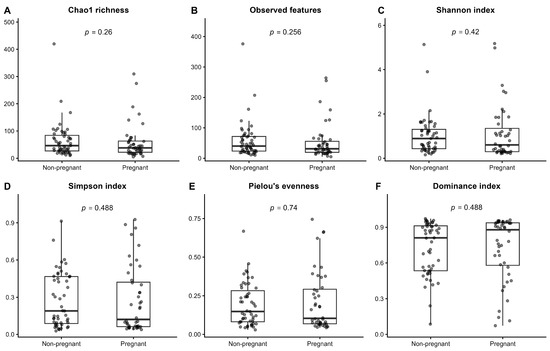
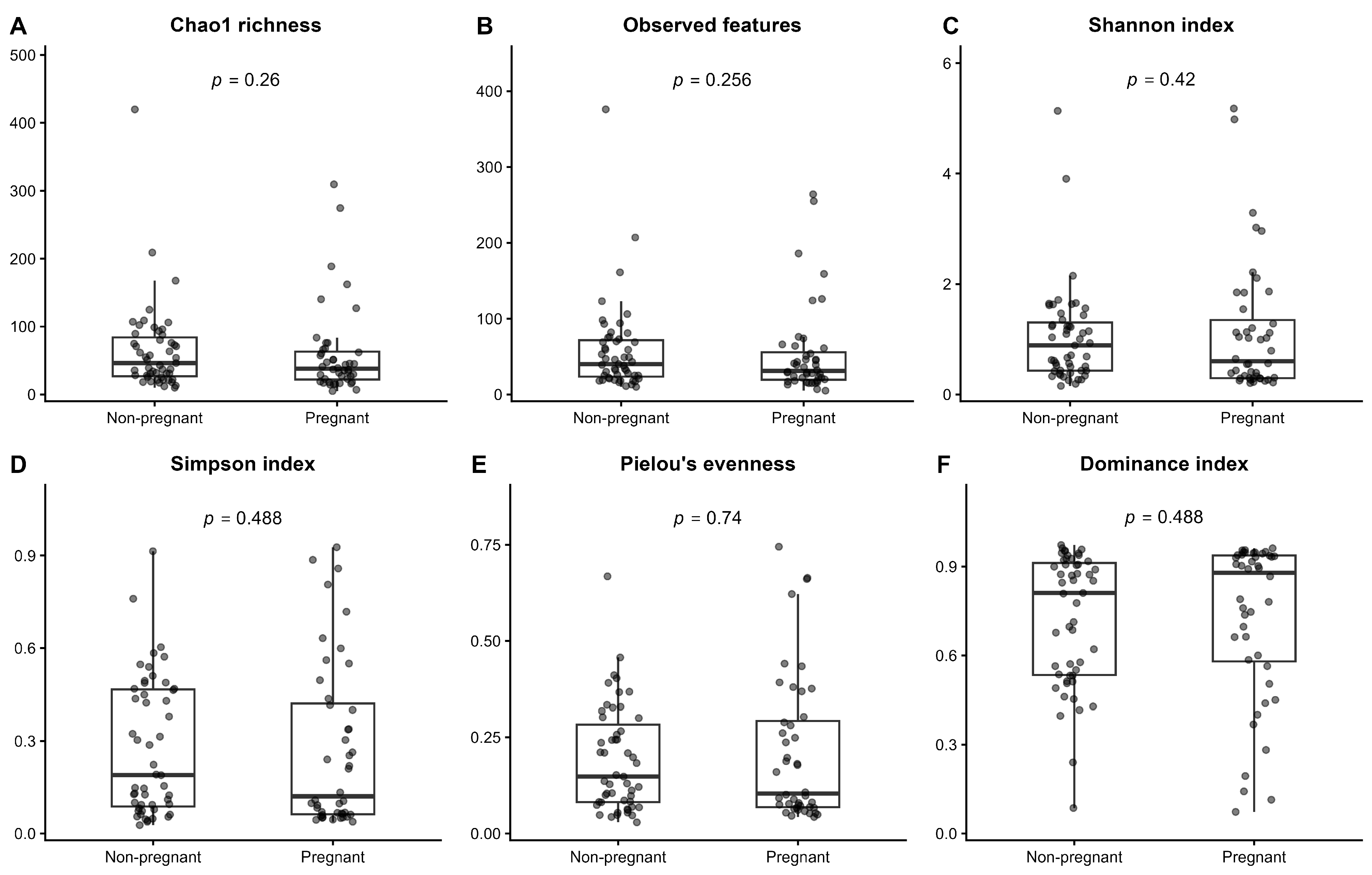
Alpha-diversity metrics were compared between the Pregnant and Non-pregnant groups using indices reflecting microbial richness, diversity, evenness, and sequencing coverage (Figure 1). No statistically significant differences were observed for Chao1 richness, observed features, Shannon diversity, Simpson diversity, Pielou’s evenness, or Good’s coverage between implantation outcome groups. These findings indicate that overall within-sample microbial diversity was comparable between women with successful implantation and those with implantation failure.
Figure 1.
Alpha-diversity indices of the endometrial microbiome according to implantation outcome. (A) Chao1 richness; (B) Observed features; (C) Shannon index; (D) Simpson index; (E) Pielou’s evenness; (F) Dominance index. Boxplots indicate the median and interquartile range, whiskers extend to 1.5× the interquartile range, and dots represent individual samples. Comparisons between the Pregnant (n = 44) and Non-pregnant (n = 51) groups were performed using the Mann–Whitney U test.
In both groups, relatively low Shannon diversity (1.03–1.13) and Simpson diversity (0.27–0.28), together with low Pielou’s evenness (0.19–0.21) and high dominance values (0.72–0.73), indicate microbial communities dominated by a limited number of bacterial taxa rather than highly diverse communities.
3.3. Beta Diversity and Endometrial Microbiome Composition According to Implantation Outcome
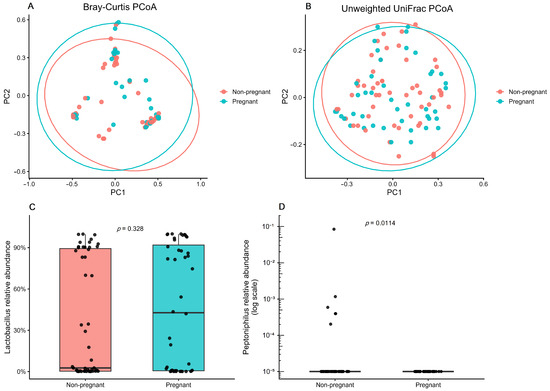
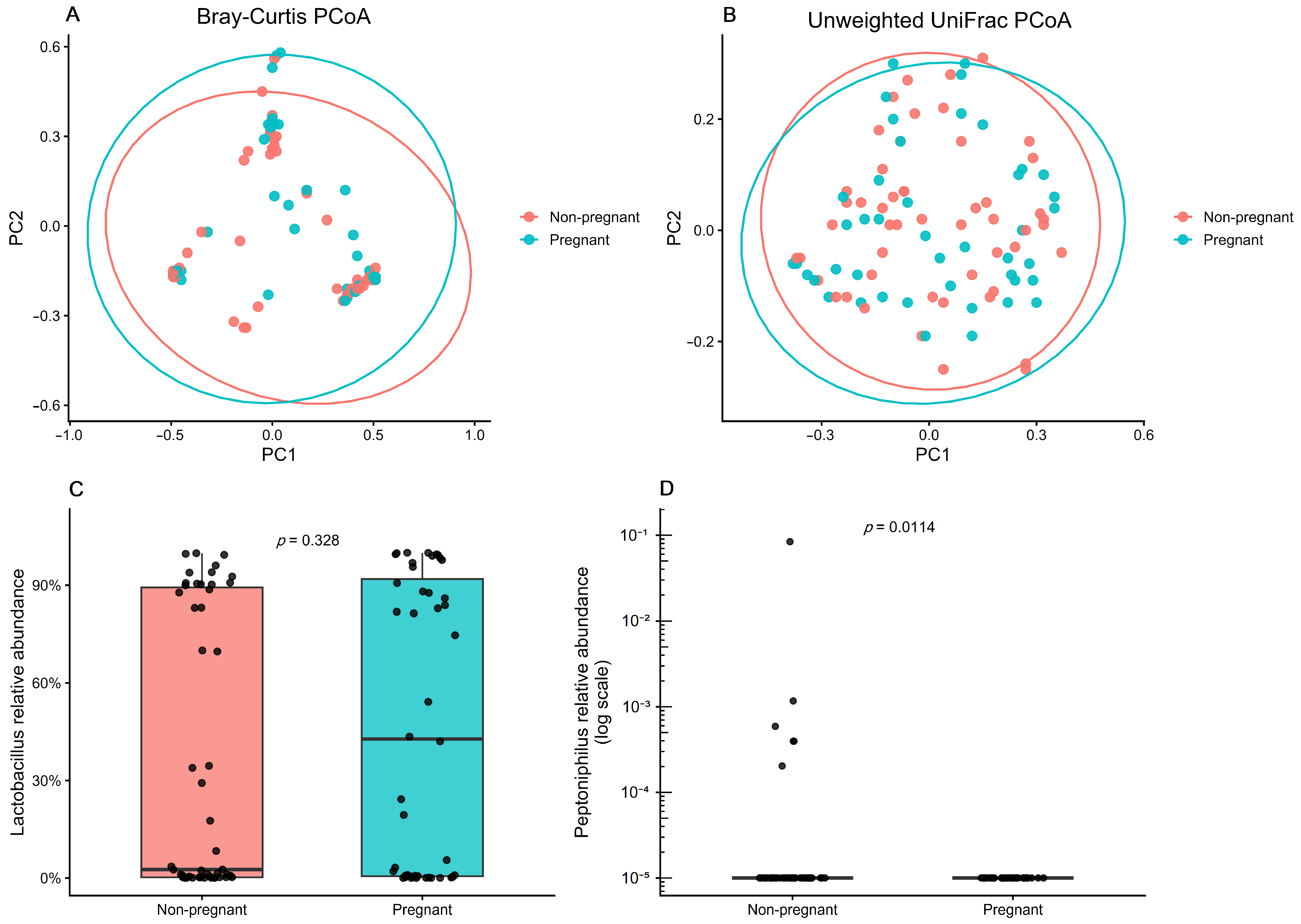
Beta-diversity analyses based on Bray–Curtis dissimilarity and unweighted UniFrac distances revealed substantial overlap between implantation outcome groups (Figure 2A,B). Visual examination of the PCoA plots did not demonstrate clear clustering according to implantation outcome, suggesting that overall microbial community composition differed only modestly between groups. Consistent with these observations, permutational multivariate analysis of variance (PERMANOVA) based on Bray–Curtis dissimilarity did not identify significant differences in overall microbial community composition between the Pregnant and Non-pregnant groups (R2 = 0.011, p = 0.298). These results indicate that implantation outcome explained only a small proportion of the variation in endometrial microbial community composition.
Figure 2.
Beta-diversity and conventional taxonomic analyses of the endometrial microbiome according to implantation outcome. (A) Principal coordinates analysis (PCoA) based on Bray–Curtis dissimilarity (PERMANOVA: R2 = 0.011, p = 0.298). (B) Principal coordinates analysis (PCoA) based on unweighted UniFrac distances (PERMANOVA: R2 = 0.004, p = 0.773). Ellipses represent the dispersion of samples within each implantation outcome group. (C) Relative abundance of Lactobacillus in women with successful implantation (Pregnant) and implantation failure (Non-pregnant). Lactobacillus remained the predominant genus in both implantation outcome groups and showed a higher mean relative abundance in the Pregnant group, although the difference did not reach statistical significance (Mann–Whitney test, p = 0.328). (D) Relative abundance of Peptoniphilus, the genus showing the strongest association with implantation outcome among the top 30 most abundant genera. Increased abundance was observed in a subset of Non-pregnant samples (Mann–Whitney test, p = 0.011; FDR = 0.354). The y-axis is presented on a logarithmic scale.
The endometrial microbiome demonstrated substantial inter-individual variability in both implantation outcome groups. Lactobacillus represented the predominant genus in both implantation outcome groups and showed a higher mean relative abundance in the Pregnant group compared with the Non-pregnant group (46.4% vs. 36.1%, respectively). However, this difference did not reach statistical significance (Mann–Whitney test, p = 0.328; Figure 2C). The mean taxonomic composition of the endometrial microbiome at the phylum and genus levels highlights the predominance of Bacillota and Lactobacillus in both implantation outcome groups (Appendix A Figure A1).
Among the 30 most abundant genera, Peptoniphilus exhibited the strongest association with implantation outcome. Elevated relative abundance of this genus was observed in a subset of Non-pregnant samples, whereas Pregnant samples generally demonstrated consistently low abundance levels (Mann–Whitney test, p = 0.011; Figure 2D). Peptoniphilus was nominally significant before FDR correction but did not remain significant after multiple-testing correction (FDR = 0.354). No other genera remained significant after correction for multiple testing.
A prevalence-based contamination screening using the negative extraction controls identified 14 conservatively defined candidate contaminant features, corresponding predominantly to genera commonly reported as laboratory contaminants, including Serratia, Sphingomonas, Methylobacterium, Acinetobacter, Bradyrhizobium, and Cutibacterium (Appendix A Table A1). Although several of these genera were also present among the 30 most abundant taxa, the candidate contaminant ASVs represented only a small proportion of all ASVs assigned to the candidate-associated genera included in the Top 30 (2.6–7.5%), indicating that only a subset of ASVs within these genera was classified as potential contaminants. Furthermore, none corresponded to statistically significant differentially abundant taxa, none were identified as principal hub taxa, and they were not major contributors to the principal network characteristics underlying the biological conclusions of this study.
3.4. Endometrial Microbial Network Structure According to Implantation Outcome
Although conventional abundance-based analyses revealed only limited differences between implantation outcome groups after multiple-testing correction, microbial association network analysis was subsequently performed to determine whether variation in community organization could also be identified. All correlations retained in the final microbial association networks remained statistically significant after Benjamini–Hochberg correction for multiple testing (FDR < 0.05), indicating that the reported network edges were not driven by nominal significance alone. To investigate whether implantation outcome is associated with differences in microbial community organization, correlation-based microbial networks were constructed separately for the Pregnant and Non-pregnant groups using significant Spearman correlations among the most abundant endometrial genera.
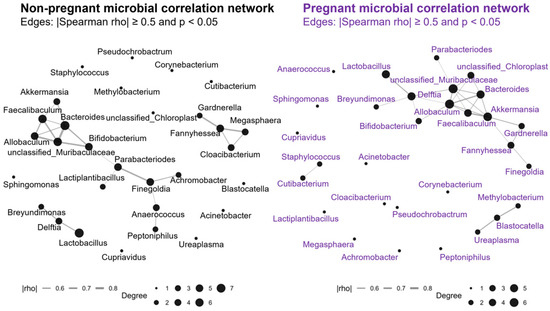
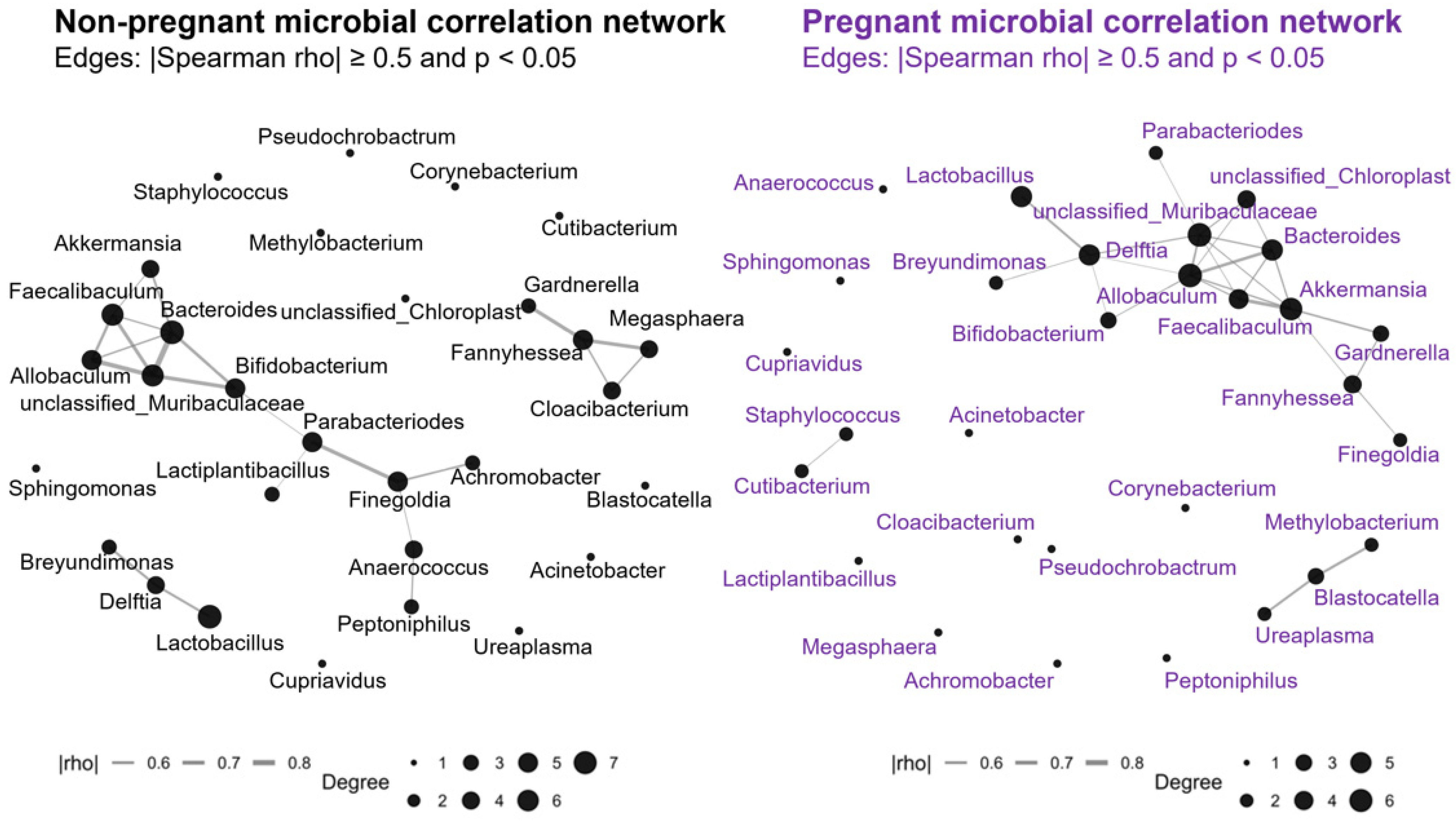
Visual inspection of the resulting networks suggested differences in network topology between implantation outcome groups (Figure 3). The Pregnant network showed a trend toward a denser and more interconnected structure, whereas the Non-pregnant network appeared more fragmented and characterized by fewer microbial associations.
Figure 3.
Comparison of microbial correlation networks according to implantation outcome. Microbial co-occurrence networks constructed using significant Spearman correlations (|ρ| ≥ 0.5, p < 0.05) among the analyzed endometrial genera. Networks are shown separately for Pregnant and Non-pregnant groups. Node size reflects degree centrality.
Network topology analysis was consistent with these observations (Table 2). The Pregnant network contained more nodes (21 vs. 19) and edges (28 vs. 22) than the Non-pregnant network, resulting in a slightly higher network density (0.133 vs. 0.129) and average degree (2.667 vs. 2.316). The average association strength was also higher in the Pregnant group (1.643 vs. 1.413), indicating stronger microbial associations.
Table 2.
Network topology characteristics of endometrial microbial co-occurrence networks according to implantation outcome.
Furthermore, the Pregnant network exhibited a slightly higher clustering coefficient (0.522 vs. 0.500) and degree centralization (0.217 vs. 0.149), consistent with a trend toward a more cohesive network organization. The taxa exhibiting the highest degree centrality within each implantation outcome network are presented in Figure A2. In contrast, the Non-pregnant network showed higher modularity (0.623 vs. 0.457), consistent with a more compartmentalized community structure. The shorter mean path length observed in the Pregnant network (1.272 vs. 1.577) further indicated more efficient connectivity among microbial taxa.
Overall, the collective pattern across multiple complementary network characteristics consistently supported a more integrated microbial association architecture in the Pregnant group, whereas the Non-pregnant group exhibited a more fragmented pattern of microbial associations.
3.5. Distribution of Positive and Negative Microbial Associations
To further characterize the nature of microbial associations, significant correlations were classified as positive or negative according to the sign of the Spearman correlation coefficient. The Pregnant network contained a greater number of positive associations than the Non-pregnant network (27 vs. 21), whereas only a single negative association was identified in each group (Table 2).
These findings indicate that positive microbial associations predominated in both implantation outcome groups. However, the Pregnant group exhibited a greater overall number of significant microbial associations than the Non-pregnant group.
3.6. Implantation-Associated Microbial Network Rewiring
To characterize implantation-associated changes in microbial ecological organization, significant microbial associations identified in the two groups were compared.
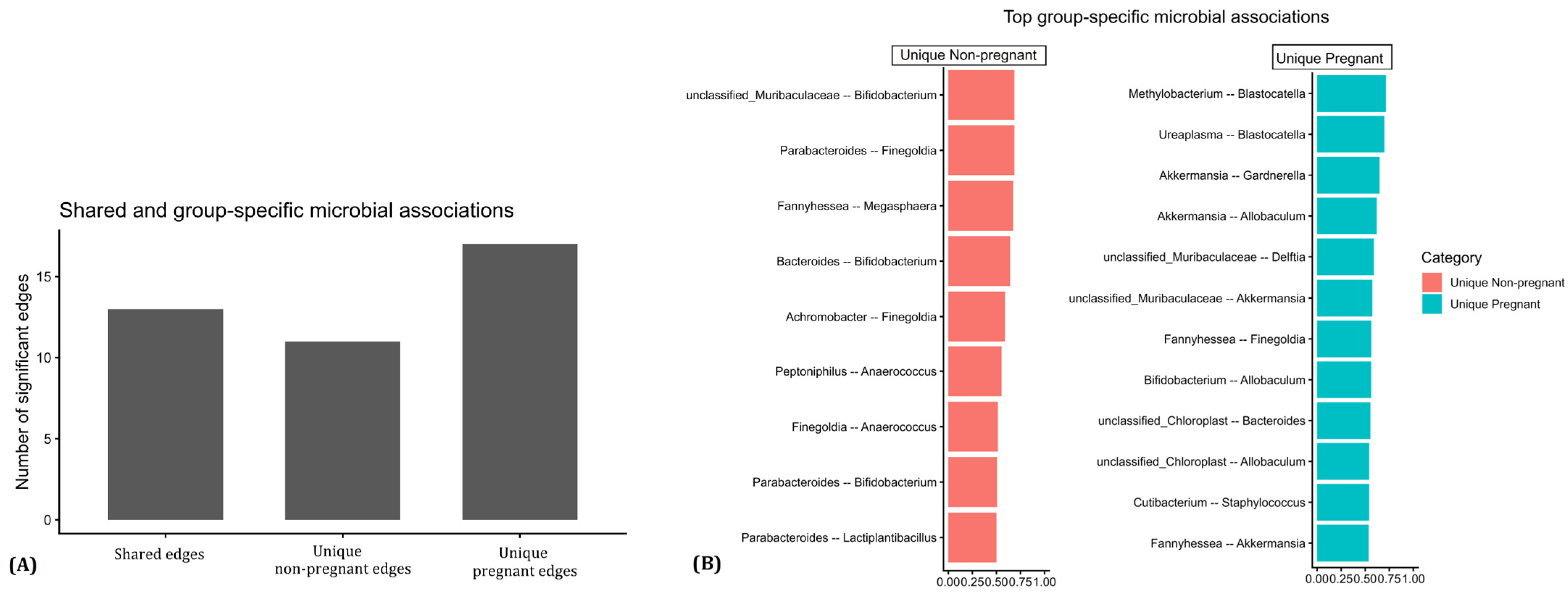
A total of 13 microbial associations were shared between Pregnant and Non-pregnant networks, while 17 associations were unique to the Pregnant group and 11 were unique to the Non-pregnant group (Figure 4A). These findings indicate substantial network rewiring associated with implantation outcome.
Figure 4.
Implantation-associated microbial network rewiring. (A) Shared and group-specific microbial associations identified in Pregnant and Non-pregnant networks. (B) Top group-specific microbial associations according to implantation outcome.
Examination of group-specific microbial associations revealed distinct patterns within the Pregnant network. Several implantation-associated correlations involved taxa such as Akkermansia, Allobaculum, Blastocatella, Delftia and unclassified Muribaculaceae, suggesting that successful implantation is accompanied by reorganization of microbial association patterns rather than simple changes in individual taxon abundance (Figure 4B).
Community-level analysis further supported this observation. Taxa frequently changed module membership between the Pregnant and Non-pregnant networks, indicating extensive restructuring of microbial community organization beyond individual pairwise associations (Figure A3).
3.7. Differential Lactobacillus-Associated Correlation Patterns
Given the proposed role of Lactobacillus in endometrial receptivity, we next examined implantation-associated changes in microbial associations involving Lactobacillus.
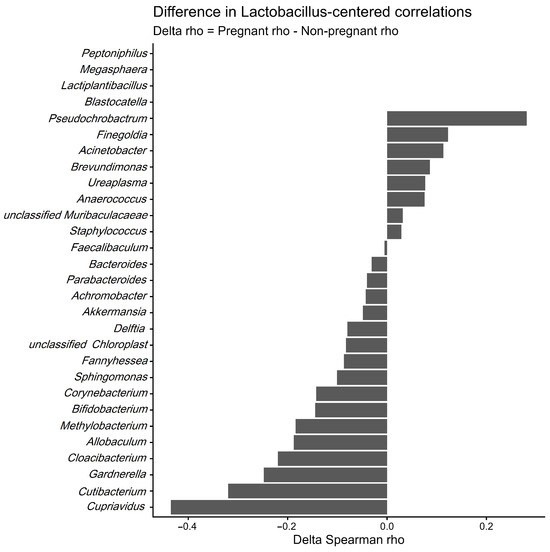
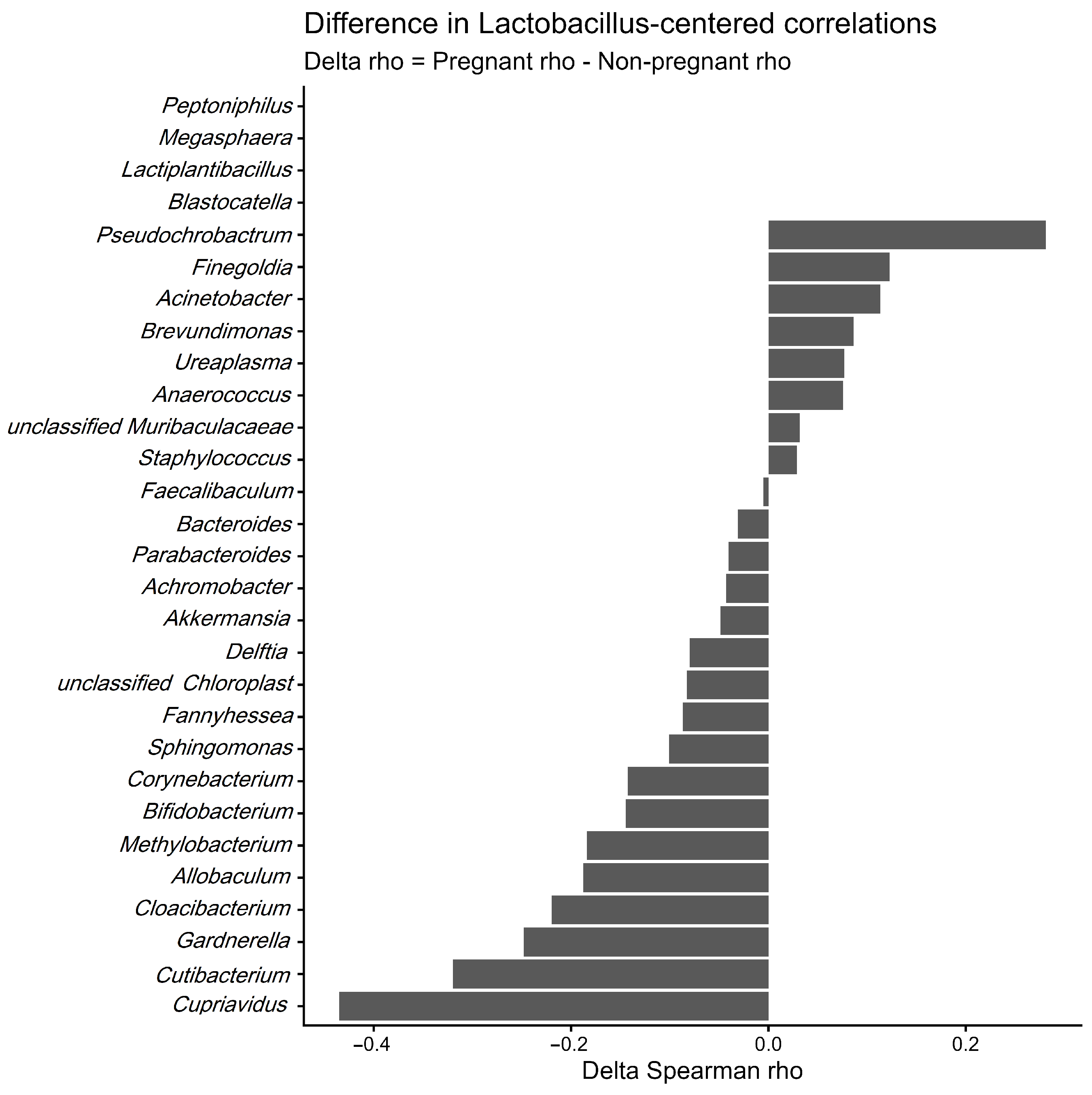
Comparison of correlation coefficients between groups demonstrated substantial rewiring of Lactobacillus-associated ecological relationships (Figure 5). Several genera, including Pseudochrobactrum, Finegoldia, Acinetobacter, Brevundimonas, Ureaplasma and Anaerococcus, exhibited more positive (or less negative) correlations with Lactobacillus in the Pregnant group. In contrast, Cupriavidus, Cutibacterium, Gardnerella, Cloacibacterium, Allobaculum, Methylobacterium and Bifidobacterium demonstrated relatively weaker or negative associations.
Figure 5.
Differential Lactobacillus-centered microbial associations between implantation outcome groups. Bar plot showing delta Spearman correlation coefficients (Pregnant rho—Non-pregnant rho) for microbial associations involving Lactobacillus. Positive Delta rho values indicate that the Lactobacillus–taxon correlation is more positive (or less negative) in the Pregnant group than in the Non-pregnant group, whereas negative values indicate the opposite.
These findings suggest that implantation success may be associated not only with the abundance of Lactobacillus itself, but also with the ecological context reflected by its associations with other members of the endometrial microbiome.
3.8. Hub Taxa and Network Robustness
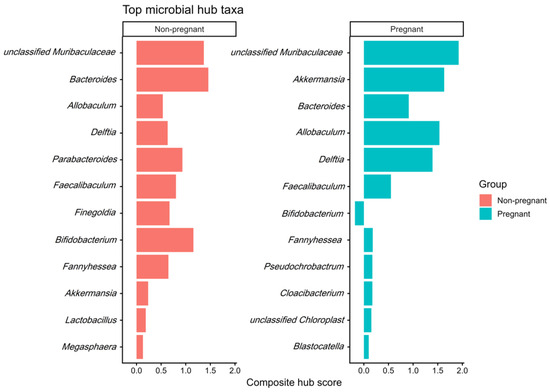
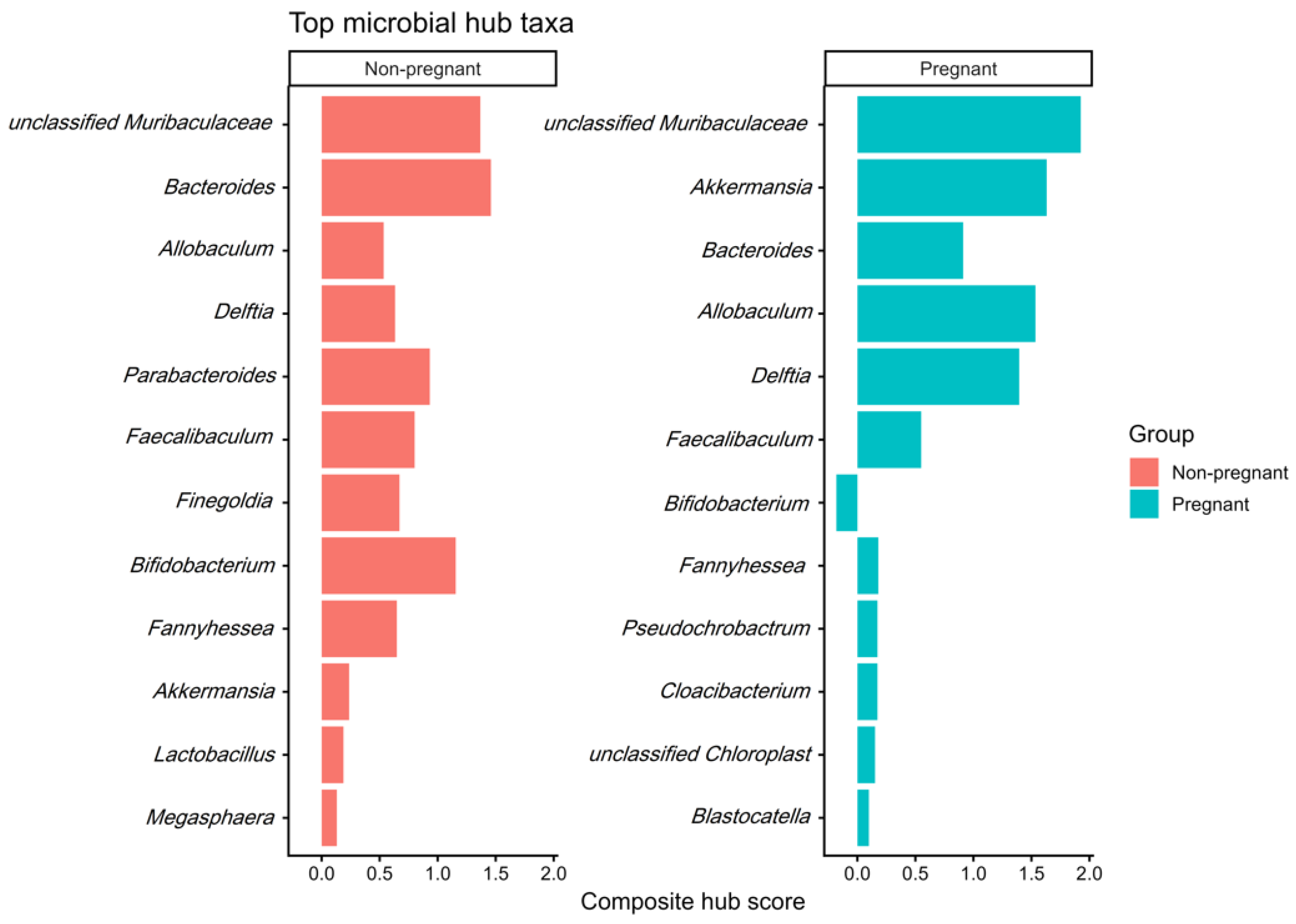
To identify taxa occupying central ecological positions within microbial communities, network centrality analyses were performed. Composite hub scores integrating degree, strength, betweenness, closeness and eigenvector centrality measures identified distinct hub taxa profiles between implantation outcome groups (Figure 6).
Figure 6.
Hub taxa ranking based on composite microbial network centrality analysis. Taxa ranked according to a composite hub score integrating degree, strength, betweenness, closeness, and eigenvector centrality measures within the microbial networks.
While several central taxa were detected in both networks, including unclassified Muribaculaceae and Bacteroides, the Pregnant network demonstrated increased centrality of Akkermansia, Allobaculum and Delftia, suggesting a more hierarchical microbial organization associated with successful implantation.
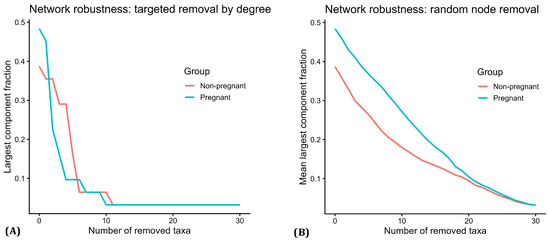
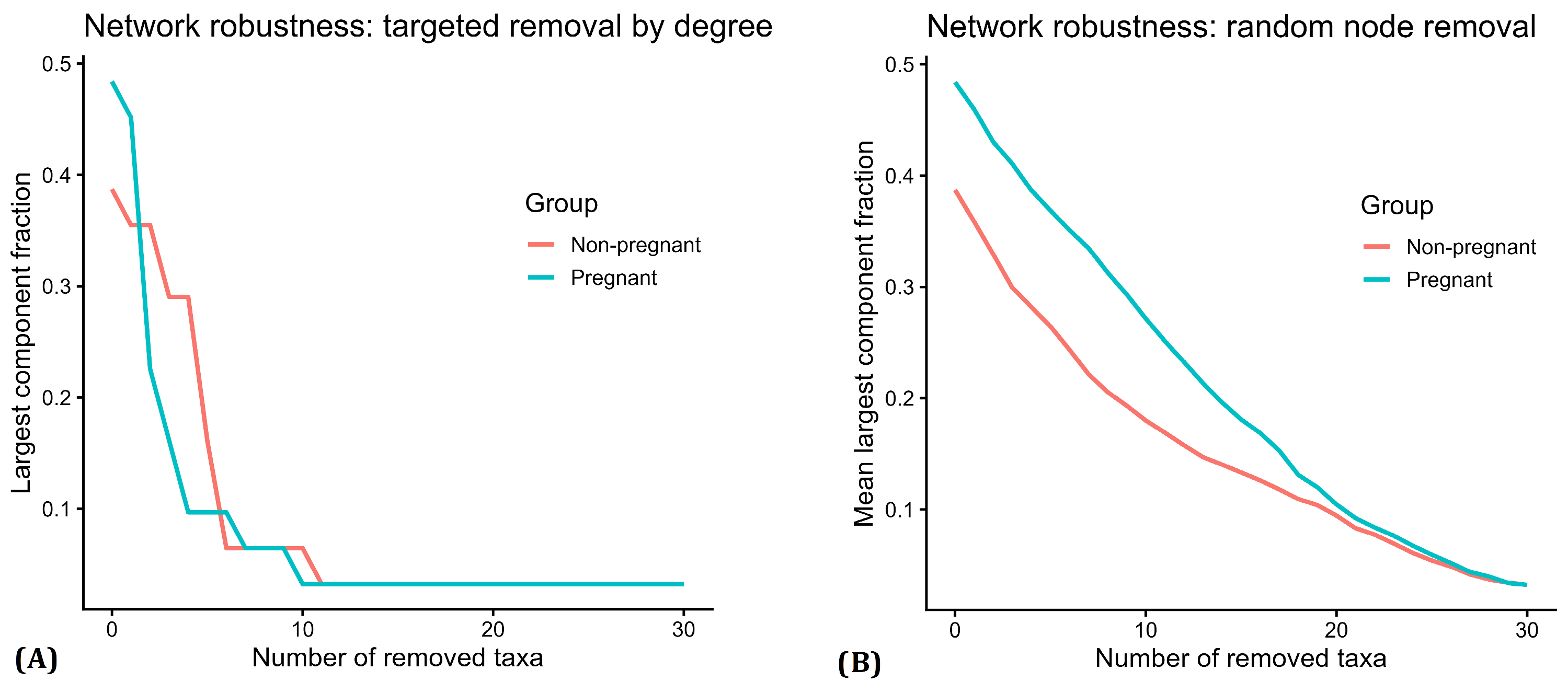
Network robustness simulations further demonstrated marked differences between groups (Figure 6). During targeted removal of highly connected taxa, the Pregnant network fragmented more rapidly, indicating greater apparent dependence on key hub taxa (Figure 7A). Conversely, under random node removal, the Pregnant network maintained a larger connected component over a broader range of perturbations, suggesting increased ecological resilience (Figure 7B).
Figure 7.
Robustness and resilience of endometrial microbial networks according to implantation outcome. (A) Network robustness following targeted removal of highly connected taxa. (B) Network robustness following random node removal. Changes in the size of the largest connected network component following sequential node removal simulations.
Together, these findings indicate that successful implantation is associated with a microbial network characterized by stronger ecological integration, increased hub dependency and greater resistance to random perturbations.
The ranking of hub taxa identified in the Non-pregnant and Pregnant microbial networks, together with their degree and composite hub scores, is summarized in Appendix A Table A2.
4. Discussion
The present study investigated the relationship between the endometrial microbiome and implantation outcome following transfer of a single euploid embryo. By focusing on women undergoing single euploid embryo transfer, the study design reduced embryo-related confounding and allowed a more specific evaluation of the endometrial microbial environment as a potential contributor to implantation success. This is particularly relevant because previous studies have shown that embryo aneuploidy and embryo-related factors account for a substantial proportion of implantation failure, whereas true recurrent implantation failure after repeated euploid embryo transfer appears to be relatively uncommon [16,17].
Most previous studies on the endometrial microbiome in IVF have focused on taxonomic composition, overall microbial diversity, and Lactobacillus dominance. Moreno et al. reported that a non-Lactobacillus-dominated endometrial microbiota was associated with impaired implantation, pregnancy, and live birth outcomes, supporting the concept that endometrial microbial composition may influence reproductive success [5]. Similarly, Kyono et al. reported pregnancy outcome differences according to Lactobacillus-dominated and non-Lactobacillus-dominated endometrial microbiota profiles in infertile patients [7]. However, other studies have produced less consistent findings. Franasiak et al. demonstrated that the endometrial microbiome can be characterized at the time of embryo transfer but did not establish a simple taxonomic signature that reliably predicts implantation outcome [6]. Hashimoto et al. further reported comparable pregnancy rates between women with eubiotic and dysbiotic endometrial profiles in an IVF setting, suggesting that Lactobacillus dominance alone may not fully explain implantation success [32]. Our previous prospective cohort study similarly demonstrated an association between endometrial microbiome composition and implantation outcome following frozen embryo transfer, supporting the concept that microbial community characteristics may influence reproductive success [9]. Collectively, these observations suggest that implantation-associated microbiome variation may extend beyond differences in individual taxa and may involve broader ecological characteristics of microbial community organization.
Our findings are consistent with this interpretation. Lactobacillus remained the predominant genus in both implantation outcome groups and showed a higher mean relative abundance in the Pregnant group, although the difference did not reach statistical significance (Figure 2A). Similarly, alpha-diversity and beta-diversity analyses did not demonstrate major separation between implantation outcome groups (Figure 1 and Figure 2). These results indicate that conventional microbiome metrics captured only limited differences associated with implantation outcome. Importantly, the strongest nominal taxonomic signal was observed for Peptoniphilus, which was enriched in a subset of Non-pregnant samples, but this finding did not remain significant after correction for multiple testing. Therefore, the present results do not support a simple abundance-based model of implantation outcome. The limited differences detected by conventional diversity and abundance-based analyses provided the rationale for examining whether implantation-associated variation might instead be reflected in the organization of microbial associations. In this context, the network analysis was used as a complementary ecological approach rather than as a substitute for standard taxonomic analyses. These findings do not diminish the recognized importance of Lactobacillus in endometrial receptivity but suggest that its relative abundance alone does not fully explain implantation outcome in the present cohort. Instead, implantation-associated differences were more evident at the level of microbial correlations than at the level of individual taxon abundance, suggesting that ecological context may provide complementary information beyond abundance alone.
The main finding of this study is that implantation outcome was associated with marked differences in microbial network organization, with the Pregnant group exhibiting a more integrated and interconnected ecological structure. Notably, these ecological differences were observed despite the predominance of Lactobacillus in both implantation outcome groups, suggesting that microbial community organization may capture aspects of endometrial ecology that are not fully reflected by conventional abundance-based taxonomic analyses. Moreover, only thirteen microbial associations were shared between the two networks, whereas twenty-eight associations were group-specific. These findings indicate substantial microbial network rewiring in relation to implantation outcome.
Microbial communities are increasingly recognized as complex ecological systems in which community function may emerge from interactions among taxa rather than from the abundance of individual organisms alone. Co-occurrence network approaches have been widely used to infer potential cooperative, competitive, or shared-niche relationships among microorganisms and to identify community structure, hub taxa, and ecological modules [12,13,15]. Although correlation-based networks do not prove direct biological interactions, they provide a useful framework for identifying community-level organization and generating hypotheses about ecological structure. Interestingly, our previous studies focusing on taxonomic composition and immune–microbiome associations identified implantation-related differences that could not be fully explained by individual taxa alone [9,11], providing additional rationale for the ecosystem-level approach used in the present study. In this context, the more integrated network observed in the Pregnant group may reflect a more coordinated microbial ecosystem associated with endometrial receptivity. However, increased structural integration should not be interpreted as inherently beneficial. In microbial ecology, highly connected networks may also arise in dysbiotic communities or polymicrobial biofilms through increased ecological interdependence among opportunistic microorganisms [12,15,29]. Therefore, the present findings should be interpreted as evidence of differences in microbial community organization rather than direct evidence that greater network connectivity itself promotes implantation. The functional significance of the observed ecological architecture remains to be established through future studies integrating microbial association networks with functional, metabolomic, and host-response data.
Although the sequencing data were processed using an ASV-based DADA2 pipeline, which provides higher sequence resolution than conventional OTU clustering, the use of short-read V4–V5 16S rRNA amplicons limits confident species-level taxonomic assignment for many bacterial taxa. Therefore, ecological network analyses were intentionally performed at the genus level, where taxonomic classification is generally considered more reliable and less susceptible to misclassification. Genus-level co-occurrence networks have been widely applied in microbiome research and provide a robust framework for investigating community organization despite the limited taxonomic resolution inherent to short-read amplicon sequencing. Species-level ecological analyses based on uncertain taxonomic assignments could introduce spurious correlations and reduce the biological interpretability of inferred microbial interaction networks.
Hub taxa analysis further supported the presence of implantation-associated ecological restructuring. The Pregnant network showed increased centrality of selected taxa, including Akkermansia, Allobaculum, and Delftia, whereas the Non-pregnant network showed a more compartmentalized topology. Interestingly, although Lactobacillus was the most abundant genus in both implantation outcome groups, it did not emerge as a major hub taxon in either network. This observation highlights the distinction between taxonomic dominance and ecological centrality, indicating that high relative abundance does not necessarily correspond to a central position within microbial interaction networks. Instead, less abundant taxa may occupy key topological positions because they participate in a larger number of ecological relationships. In microbial ecology, highly connected taxa are often interpreted as potential keystone taxa because they may influence community structure and function despite not necessarily being the most abundant members of the community [14,15,33]. Therefore, the present findings suggest that taxa occupying central network positions may contribute to the organization of the endometrial microbial ecosystem, although their functional role in implantation remains unknown. Interestingly, several hub taxa did not exhibit statistically significant differences in relative abundance between implantation outcome groups, suggesting that network centrality analysis provides ecological information complementary to conventional abundance-based comparisons. Growing evidence indicates that reproductive disorders are associated not only with shifts in the relative abundance of specific endometrial taxa but also with changes in microbial community organization and inter-taxon interactions, emphasizing the importance of evaluating the microbiome as an ecological network rather than as individual taxa alone [34,35].
Network robustness analysis revealed a dual pattern. The Pregnant network showed greater sensitivity to targeted removal of highly connected taxa, suggesting increased dependence on hub taxa. At the same time, it showed greater resilience to random node removal, indicating that the overall network was more resistant to non-selective perturbation. Similar principles have been described in ecological and biological networks, where integrated systems may be robust to random disturbance but vulnerable to targeted disruption of central nodes [36,37]. In the present study, this pattern is consistent with the interpretation that successful implantation is associated with a more structured microbial community rather than a random collection of taxa.
The biological mechanisms linking microbial network organization to implantation remain speculative. One possibility is that a more integrated microbial ecosystem contributes to endometrial homeostasis by influencing epithelial barrier function, microbial metabolite production, local inflammation, or immune cell behavior [38]. Endometrial dysbiosis has been associated with inflammation-related endometrial changes in women with reproductive failure, supporting the concept that microbial imbalance may affect implantation through immune-mediated pathways [39,40,41,42]. This concept is further supported by our recent findings demonstrating associations between endometrial microbiome composition and the local distribution of immune cell populations during the window of implantation, suggesting a potential link between microbial community organization and immune-mediated regulation of endometrial receptivity [11]. This is biologically plausible because endometrial receptivity depends on tightly regulated immune, epithelial, stromal, and inflammatory processes. However, the present study did not directly assess microbial metabolites, immune activation, or causal interactions between bacteria and host tissues; therefore, these mechanistic links remain hypothetical.
Because the implantation outcome groups were comparable with respect to maternal age, BMI, and the number of previous IVF cycles, the observed differences in microbial network organization are unlikely to be explained primarily by these baseline clinical characteristics. Nevertheless, future studies involving larger cohorts and multivariable network analyses will be important to further evaluate the contribution of host clinical factors to microbial community organization.
Several limitations should be acknowledged. First, this was an observational study and cannot establish causality. Second, microbial networks inferred from correlation analyses describe structural organization rather than direct functional interactions among microorganisms, and compositional data structure may influence correlation-based network inference. Consequently, increased network connectivity should not be interpreted as evidence of functionally beneficial microbial interactions. In addition, the ecological network characteristics evaluated in the present study were derived at the cohort level and therefore cannot be directly calculated or interpreted from a single patient sample. Consequently, the identified network signatures should currently be regarded as population-level characteristics of microbial community organization rather than immediately applicable clinical biomarkers. Third, although ASV inference using the DADA2 algorithm improves sequence resolution compared with traditional OTU-based approaches, short-read V4–V5 16S rRNA sequencing still provides limited taxonomic resolution and does not permit confident species-level classification for many bacterial taxa. Consequently, ecological analyses were performed at the genus level, and future studies employing full-length 16S rRNA sequencing or shotgun metagenomics will be important to validate and extend these findings at higher taxonomic resolution while also providing functional insights into microbial communities. Moreover, ecological relationships inferred at the genus level may mask species-specific relationships, particularly within taxonomically diverse genera such as Lactobacillus, whose members differ substantially in their host interactions, metabolic and immunomodulatory properties. Therefore, the ecological associations reported in the present study should be interpreted as genus-level patterns rather than direct evidence of species- or strain-specific interactions. Fourth, although the present cohort is comparable to or larger than many previously published endometrial microbiome studies, the sample size may have limited statistical power to detect subtle taxonomic differences and may also influence the stability of correlation-derived microbial network topology. Consequently, the observed network organization should be considered exploratory and hypothesis-generating until confirmed in larger independent cohorts and future network stability analyses. Fifth, interpretation of endometrial microbiome studies remains challenging because the endometrium represents a low-biomass microbial environment in which contamination from reagents, sampling procedures, and laboratory handling may substantially influence sequencing-based analyses. To address this issue, negative controls were processed throughout the analytical workflow, and an additional prevalence-based contamination screening was performed using the decontam algorithm. This analysis identified a limited number of conservatively defined candidate contaminant features, corresponding predominantly to genera previously reported as common laboratory contaminants. Importantly, these taxa did not overlap with the principal statistically supported findings or the hub taxa underlying the ecological network analyses, providing additional confidence that the main biological conclusions of the present study are unlikely to be driven by background contamination. Nevertheless, contamination remains an important methodological consideration in endometrial microbiome research [28,43]. Finally, although restricting the study to frozen-thawed transfer of a single euploid embryo using a standardized hormone replacement protocol substantially reduced embryo- and treatment-related confounding, implantation remains a multifactorial process influenced by endometrial, embryonic, immunological, hormonal, and clinical factors. In addition, potentially relevant variables such as the underlying cause of infertility and blastocyst morphology were not specifically evaluated in the present analyses and may have contributed to residual confounding.
Despite these limitations, the present study provides evidence that implantation outcome following single euploid embryo transfer is associated with differences in the ecological organization of the endometrial microbiome. To our knowledge, this is among the first studies to evaluate microbial co-occurrence networks, hub taxa, network rewiring, module organization, and network robustness in relation to implantation outcome after euploid embryo transfer. However, these network signatures are not yet suitable for clinical implementation. Future studies should validate these findings in independent cohorts and integrate microbiome data with immune profiling, metabolomics, and clinical variables to determine whether microbial network features can improve prediction or mechanistic understanding of endometrial receptivity.
5. Conclusions
Successful implantation following single euploid embryo transfer was associated with substantial differences in the ecological organization of the endometrial microbiome. Ecological network analyses demonstrated increased connectivity, distinct hub taxa, greater network integration, and implantation-associated rewiring of microbial associations in the Pregnant group. These findings suggest that implantation-associated variation in the endometrial microbiome may be more readily captured by microbial community organization than by the abundance of individual taxa alone.
Together with previous evidence linking the endometrial microbiome to implantation outcome and local immune regulation, the present findings support the concept that successful implantation is associated with a more coordinated endometrial microbial ecosystem. Future studies integrating microbiome, immune, metabolomic, and clinical data may help clarify the biological significance of these ecological networks and their potential contribution to endometrial receptivity.
Supplementary Materials
The following supporting information can be downloaded at: https://www.mdpi.com/article/10.3390/microbiolres17080152/s1, Table S1: Sequencing quality metrics for all clinical samples and negative extraction controls.
Author Contributions
Conceptualization, S.H., G.S., D.M. and D.P.; methodology, T.T., D.P., M.R. and B.R.; software, T.T. and D.P.; validation, S.H., D.M. and B.R.; formal analysis, D.P. and R.G.; investigation, T.T., M.R., M.H., J.S. and S.K.; resources, T.T., D.M. and G.S.; data curation, T.T., D.P., M.R., M.H., J.S., S.K. and I.P.; writing—original draft preparation, T.T., D.P., M.R.; writing—review and editing, R.G., M.H. and I.P.; visualization, D.P., M.R. and R.G.; supervision, S.H. and G.S.; project administration, S.H., D.P. and B.R.; funding acquisition, G.S. and S.H. All authors have read and agreed to the published version of the manuscript.
Funding
This study was funded by National Science Fund, Ministry of Education, Bulgaria, Contract No. KP-06-N53/14/16.11.2021.
Institutional Review Board Statement
The study was conducted in accordance with the Declaration of Helsinki and approved by the Institutional Review Board of Nadezhda Women’s Health Hospital (56/29.12.2020, approved on 29 December 2020).
Informed Consent Statement
Informed consent was obtained from all subjects involved in the study.
Data Availability Statement
The original data presented in the study are openly available in zenodo.org at DOI: https://doi.org/10.5281/zenodo.21497254 (accessed on 22 July 2026).
Conflicts of Interest
The authors declare no conflicts of interest.
Abbreviations
| BMI | Body mass index |
| bp | Base pairs |
| DNA | Deoxyribonucleic acid |
| FDR | False discovery rate |
| hCG | Human chorionic gonadotropin |
| IQR | Interquartile range |
| IVF | In vitro fertilization |
| LD | Lactobacillus-dominated |
| NGS | Next-generation sequencing |
| OTU | Operational taxonomic units |
| PCR | Polymerase chain reaction |
| PCoA | Principal coordinates analysis |
| PERMANOVA | Permutational multivariate analysis of variance |
| PGT-A | Preimplantation genetic testing for aneuploidy |
| QIIME | Quantitative Insights Into Microbial Ecology |
| rRNA | Ribosomal ribonucleic acid |
| SD | Standard deviation |
Appendix A
Figure A1.
Mean taxonomic composition of the endometrial microbiome according to implantation outcome. Stacked bars show the mean relative abundance of the 10 most abundant taxa at the (A) phylum and (B) genus levels in the Non-pregnant and Pregnant groups. For each taxonomic level, the left subpanel presents the overall composition, whereas the right subpanel provides an expanded view of the non-dominant taxa after excluding “Others” and the predominant taxon—Bacillota at the phylum level and Lactobacillus at the genus level. Taxa in the expanded subpanels were renormalized to 100% within the remaining microbial fraction.
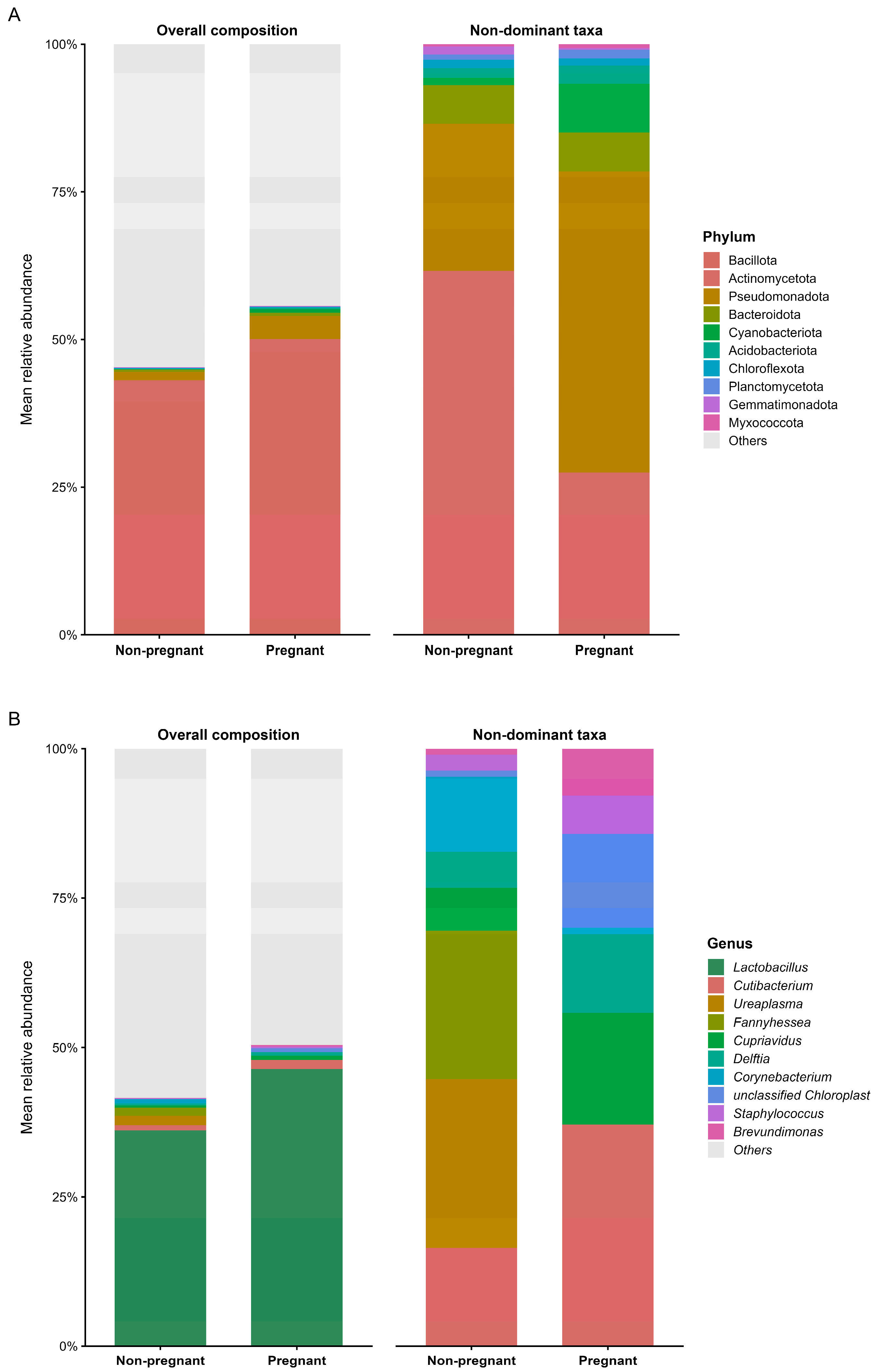
Figure A2.
Degree centrality of microbial taxa in implantation outcome-specific co-occurrence networks. Degree centrality values were calculated for all taxa included in the Pregnant and Non-pregnant microbial co-occurrence networks. Higher degree values indicate a greater number of significant microbial associations and a more central position within the network. Bar lengths represent the number of direct connections (degree) identified for each taxon in the corresponding network.
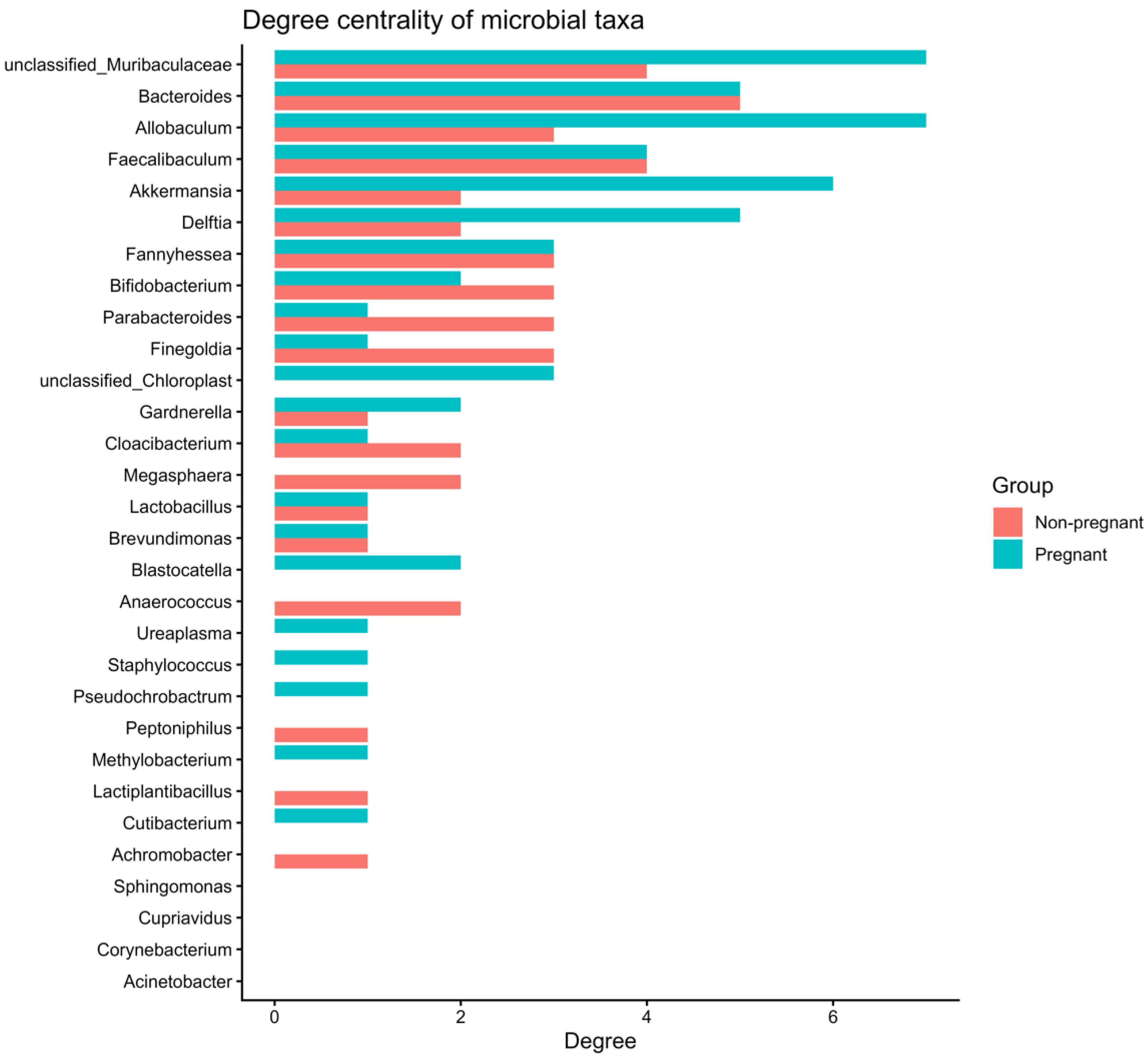
Figure A3.
Microbial module reorganization between Pregnant and Non-pregnant co-occurrence networks. Alluvial plot illustrating the redistribution of microbial taxa between network modules identified in the Pregnant and Non-pregnant co-occurrence networks. Each rectangle represents a network module, while connecting flows indicate taxa shared between modules across implantation outcome groups. Flow width is proportional to the number of taxa assigned to a given module.
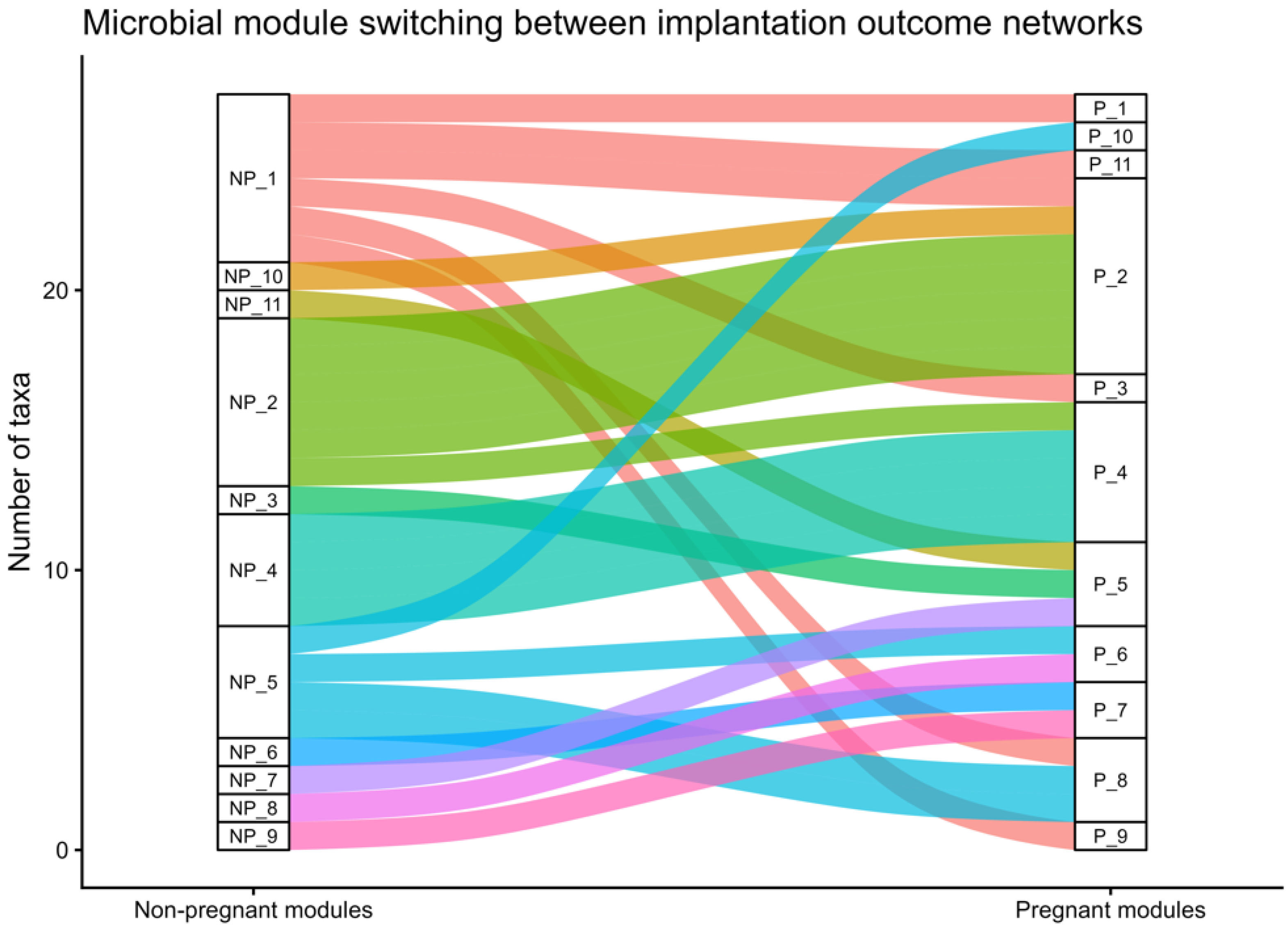
Table A1.
Candidate contaminant features identified using negative extraction controls and prevalence-based contamination screening.
Table A2.
Hub taxa ranking based on composite network centrality scores in the Non-pregnant and Pregnant microbial co-occurrence networks.
References
- Mor, G.; Cardenas, I. The immune system in pregnancy: A unique complexity. Am. J. Reprod. Immunol. 2010, 63, 425–433. [Google Scholar] [CrossRef] [Scilit] [PubMed]
- Evans, J.; Salamonsen, L.A. Inflammation, leukocytes and menstruation. Rev. Endocr. Metab. Disord. 2012, 13, 277–288. [Google Scholar] [CrossRef] [Scilit] [PubMed]
- Lessey, B.A.; Young, S.L. What exactly is endometrial receptivity? Fertil. Steril. 2019, 111, 611–617. [Google Scholar] [CrossRef] [Scilit] [PubMed]
- Brosens, J.J.; Salker, M.S.; Teklenburg, G.; Nautiyal, J.; Salter, S.; Lucas, E.S.; Steel, J.H.; Christian, M.; Chan, Y.W.; Boomsma, C.M.; et al. Uterine selection of human embryos at implantation. Sci. Rep. 2014, 4, 3894. [Google Scholar] [CrossRef] [Scilit] [PubMed]
- Moreno, I.; Codoñer, F.M.; Vilella, F.; Valbuena, D.; Martinez-Blanch, J.F.; Jimenez-Almazán, J.; Alonso, R.; Alamá, P.; Remohí, J.; Pellicer, A.; et al. Evidence that the endometrial microbiota has an effect on implantation success or failure. Am. J. Obstet. Gynecol. 2016, 215, 684–703. [Google Scholar] [CrossRef] [Scilit] [PubMed]
- Franasiak, J.M.; Werner, M.D.; Juneau, C.R.; Tao, X.; Landis, J.; Zhan, Y.; Treff, N.R.; Scott, R.T. Endometrial microbiome at the time of embryo transfer: Next-generation sequencing of the 16S ribosomal subunit. J. Assist. Reprod. Genet. 2016, 33, 129–136. [Google Scholar] [CrossRef] [Scilit] [PubMed]
- Kyono, K.; Hashimoto, T.; Nagai, Y.; Sakuraba, Y. Analysis of endometrial microbiota by 16S ribosomal RNA gene sequencing among infertile patients: A single-center pilot study. Reprod. Med. Biol. 2018, 17, 297–306. [Google Scholar] [CrossRef] [Scilit] [PubMed]
- Kadogami, D.; Kimura, F.; Hanada, T.; Tsuji, S.; Nakaoka, Y.; Murakami, T.; Morimoto, Y. Impact of Lactobacillus in the uterine microbiota on in vitro fertilization outcomes. J. Reprod. Immunol. 2023, 160, 104138. [Google Scholar] [CrossRef] [Scilit] [PubMed]
- Parvanov, D.; Ganeva, R.; Ruseva, M.; Handzhiyska, M.; Tihomirova, T.; Chapanova, S.; Staneva, R.; Rukova, B.; Pancheva, M.; Serafimova, M.; et al. Association between endometrial microbiome and implantation success in women with frozen embryo transfer: Results of a prospective cohort study. Biotechnol. Biotechnol. Equip. 2023, 37, 2250007. [Google Scholar] [CrossRef] [Scilit]
- Gao, X.; Louwers, Y.V.; Laven, J.S.E.; Schoenmakers, S. Clinical Relevance of Vaginal and Endometrial Microbiome Investigation in Women with Repeated Implantation Failure and Recurrent Pregnancy Loss. Int. J. Mol. Sci. 2024, 25, 622. [Google Scholar] [CrossRef] [Scilit] [PubMed]
- Ganeva, R.; Tihomirova, T.; Parvanov, D.; Ruseva, M.; Handzhiyska, M.; Chapanova, S.; Metodiev, D.; Pancheva, M.; Serafimova, M.; Staneva, R.; et al. Association Between Endometrial Microbiome Composition and Local Immune Cell Distribution During the Window of Implantation. Immuno 2026, 6, 39. [Google Scholar] [CrossRef] [Scilit]
- Faust, K.; Raes, J. Microbial interactions: From networks to models. Nat. Rev. Microbiol. 2012, 10, 538–550. [Google Scholar] [CrossRef] [Scilit] [PubMed]
- Friedman, J.; Alm, E.J. Inferring correlation networks from genomic survey data. PLoS Comput. Biol. 2012, 8, e1002687. [Google Scholar] [CrossRef] [Scilit] [PubMed]
- Banerjee, S.; Schlaeppi, K.; van der Heijden, M.G.A. Keystone taxa as drivers of microbiome structure and functioning. Nat. Rev. Microbiol. 2018, 16, 567–576. [Google Scholar] [CrossRef] [Scilit] [PubMed]
- Berry, D.; Widder, S. Deciphering microbial interactions and detecting keystone species with co-occurrence networks. Front. Microbiol. 2014, 5, 219. [Google Scholar] [CrossRef] [Scilit] [PubMed]
- Franasiak, J.M.; Forman, E.J.; Hong, K.H.; Werner, M.D.; Upham, K.M.; Treff, N.R.; Scott, R.T., Jr. The nature of aneuploidy with increasing age of the female partner: A review of 15,169 consecutive trophectoderm biopsies evaluated with comprehensive chromosomal screening. Fertil. Steril. 2014, 101, 656–663.e1. [Google Scholar] [CrossRef] [Scilit] [PubMed]
- Pirtea, P.; De Ziegler, D.; Tao, X.; Sun, L.; Zhan, Y.; Ayoubi, J.M.; Seli, E.; Franasiak, J.M.; Scott, R.T., Jr. Rate of true recurrent implantation failure is low: Results of three successive frozen euploid single embryo transfers. Fertil. Steril. 2021, 115, 45–53. [Google Scholar] [CrossRef] [Scilit] [PubMed]
- Garratt, J.; Mohammadi, B.; Al-Hashimi, B.; Linara-Demakakou, E.; Bhattacharya, R.; Ahuja, K.K.; Macklon, N.; Rahmati, M. Endometrial immune assessment in patients with a history of previous euploid blastocyst failure. Front. Immunol. 2025, 16, 1547159. [Google Scholar] [CrossRef] [Scilit] [PubMed]
- Alfer, J.; Fattahi, A.; Bleisinger, N.; Krieg, J.; Behrens, R.; Dittrich, R.; Beckmann, M.W.; Hartmann, A.; Classen-Linke, I.; Popovici, R.M. Endometrial Dating Method Detects Individual Maturation Sequences During the Secretory Phase. In Vivo 2020, 34, 3055. [Google Scholar] [CrossRef] [Scilit] [PubMed]
- Caporaso, J.G.; Lauber, C.L.; Walters, W.A.; Knight, R. Global patterns of 16S rRNA diversity at a depth of millions of sequences per sample. Proc. Natl. Acad. Sci. USA 2010, 108, 4516–4522. [Google Scholar] [CrossRef] [Scilit] [PubMed]
- Schwieger, F.; Tebbe, C.C. A new approach to utilize PCR-single-strand-conformation polymorphism for 16S rRNA gene-based microbial community analysis. Appl. Environ. Microbiol. 1998, 64, 4870–4876. [Google Scholar] [CrossRef] [Scilit] [PubMed]
- Bolyen, E.; Rideout, J.R.; Dillon, M.R.; Bokulich, N.A.; Abnet, C.C.; Al-Ghalith, G.A.; Alexander, H.; Alm, E.J.; Arumugam, M.; Asnicar, F.; et al. Reproducible, interactive, scalable and extensible microbiome data science using QIIME 2. Nat. Biotechnol. 2019, 37, 852–857. [Google Scholar] [CrossRef] [Scilit] [PubMed]
- Callahan, B.J.; McMurdie, P.J.; Rosen, M.J.; Han, A.W.; Johnson, A.J.; Holmes, S.P. DADA2: High-resolution sample inference from Illumina amplicon data. Nat. Methods 2016, 13, 581–583. [Google Scholar] [CrossRef] [Scilit] [PubMed]
- Callahan, B.; McMurdie, P.; Holmes, S. Exact sequence variants should replace operational taxonomic units in marker-gene data analysis. ISME J. 2017, 11, 2639–2643. [Google Scholar] [CrossRef] [Scilit] [PubMed]
- Bokulich, N.A.; Kaehler, B.D.; Rideout, J.R.; Dillon, M.; Bolyen, E.; Knight, R.; Huttley, G.A.; Gregory Caporaso, J. Optimizing taxonomic classification of marker-gene amplicon sequences with QIIME 2’s q2-feature-classifier plugin. Microbiome 2018, 6, 90. [Google Scholar] [CrossRef] [Scilit] [PubMed]
- Quast, C.; Pruesse, E.; Yilmaz, P.; Gerken, J.; Schweer, T.; Yarza, P.; Peplies, J.; Glöckner, F.O. The SILVA ribosomal RNA gene database project: Improved data processing and web-based tools. Nucleic Acids Res. 2013, 41, D590–D596. [Google Scholar] [CrossRef] [Scilit] [PubMed]
- Yilmaz, P.; Parfrey, L.W.; Yarza, P.; Gerken, J.; Pruesse, E.; Quast, C.; Schweer, T.; Peplies, J.; Ludwig, W.; Glöckner, F.O. The SILVA and “All-species Living Tree Project (LTP)” taxonomic frameworks. Nucleic Acids Res. 2014, 42, D643–D648. [Google Scholar] [CrossRef] [Scilit] [PubMed]
- Eisenhofer, R.; Minich, J.J.; Marotz, C.; Cooper, A.; Knight, R.; Weyrich, L.S. Contamination in Low Microbial Biomass Microbiome Studies: Issues and Recommendations. Trends Microbiol. 2019, 27, 105–117. [Google Scholar] [CrossRef] [Scilit] [PubMed]
- Röttjers, L.; Faust, K. From hairballs to hypotheses-biological insights from microbial networks. FEMS Microbiol. Rev. 2018, 42, 761–780. [Google Scholar] [CrossRef] [Scilit] [PubMed]
- Csardi, G.; Nepusz, T. The igraph software package for complex network research. InterJ. Complex Syst. 2006, 1695, 1–9. [Google Scholar]
- Blondel, V.D.; Guillaume, J.L.; Lambiotte, R.; Lefebvre, E. Fast unfolding of communities in large networks. J. Stat. Mech. Theory Exp. 2008, 2008, P10008. [Google Scholar] [CrossRef] [Scilit]
- Hashimoto, T.; Kyono, K. Does dysbiotic endometrium affect blastocyst implantation in IVF patients? J. Assist. Reprod. Genet. 2019, 36, 2471–2479. [Google Scholar] [CrossRef] [Scilit] [PubMed]
- Amit, G.; Bashan, A. Top-down identification of keystone taxa in the microbiome. Nat. Commun. 2023, 14, 3951. [Google Scholar] [CrossRef] [Scilit] [PubMed]
- Zhang, B.; Lin, S.; Wang, S.; Chen, W.; Chen, Y.; Cao, D.; Liu, Q.; Yao, Y. Investigation of the Endometrial Microbiome in Recurrent Pregnancy Loss Individuals: Microbial Imbalance and Network Fragility. Int. J. Womens Health 2025, 17, 2853–2868. [Google Scholar] [CrossRef] [Scilit] [PubMed]
- Gao, H.; Xiao, J.; Liang, B.; Wang, X.; Li, H.; Li, G.; Wu, B. Main differential endometrial microbiota associated with recurrent implantation failure: A case control study. Front. Endocrinol. 2025, 16, 1504609. [Google Scholar] [CrossRef] [Scilit] [PubMed]
- Landi, P.; Minoarivelo, H.O.; Brännström, Å.; Hui, C.; Dieckmann, U. Complexity and stability of ecological networks: A review of the theory. Popul. Ecol. 2018, 60, 319–345. [Google Scholar] [CrossRef] [Scilit]
- Kajihara, K.T.; Hynson, N.A. Networks as tools for defining emergent properties of microbiomes and their stability. Microbiome 2024, 12, 184. [Google Scholar] [CrossRef] [Scilit] [PubMed]
- Wang, W.; Feng, D.; Ling, B. Biologia Futura: Endometrial microbiome affects endometrial receptivity from the perspective of the endometrial immune microenvironment. Biol. Futur. 2022, 73, 291–300. [Google Scholar] [CrossRef] [Scilit] [PubMed]
- Benner, M.; Ferwerda, G.; Joosten, I.; van der Molen, R.G. How uterine microbiota might be responsible for a receptive, fertile endometrium. Hum. Reprod. Update 2018, 24, 393–415. [Google Scholar] [CrossRef] [Scilit] [PubMed]
- Agostinis, C.; Mangogna, A.; Bossi, F.; Ricci, G.; Kishore, U.; Bulla, R. Uterine Immunity and Microbiota: A Shifting Paradigm. Front. Immunol. 2019, 10, 2387. [Google Scholar] [CrossRef] [Scilit] [PubMed]
- Al-Nasiry, S.; Ambrosino, E.; Schlaepfer, M.; Morré, S.A.; Wieten, L.; Voncken, J.W.; Spinelli, M.; Mueller, M.; Kramer, B.W. The interplay between reproductive tract microbiota and immunological system in human reproduction. Front. Immunol. 2020, 11, 378. [Google Scholar] [CrossRef] [Scilit] [PubMed]
- Cela, V.; Daniele, S.; Obino, M.E.R.; Ruggiero, M.; Zappelli, E.; Ceccarelli, L.; Papini, F.; Marzi, I.; Scarfò, G.; Tosi, F.; et al. Endometrial Dysbiosis Is Related to Inflammatory Factors in Women with Repeated Implantation Failure: A Pilot Study. J. Clin. Med. 2022, 11, 2481. [Google Scholar] [CrossRef] [Scilit] [PubMed]
- de Goffau, M.C.; Lager, S.; Salter, S.J.; Wagner, J.; Kronbichler, A.; Charnock-Jones, D.S.; Peacock, S.J.; Smith, G.C.S.; Parkhill, J. Recognizing the reagent microbiome. Nat. Microbiol. 2018, 3, 851–853. [Google Scholar] [CrossRef] [Scilit] [PubMed]

Disclaimer/Publisher’s Note: The statements, opinions and data contained in all publications are solely those of the individual author(s) and contributor(s) and not of MDPI and/or the editor(s). MDPI and/or the editor(s) disclaim responsibility for any injury to people or property resulting from any ideas, methods, instructions or products referred to in the content. |
© 2026 by the authors. Licensee MDPI, Basel, Switzerland. This article is an open access article distributed under the terms and conditions of the Creative Commons Attribution (CC BY) license.