



Next Issue
Volume 17, September
Previous Issue
Volume 17, July


Microbiol. Res., Volume 17, Issue 8 (August 2026) – 23 articles
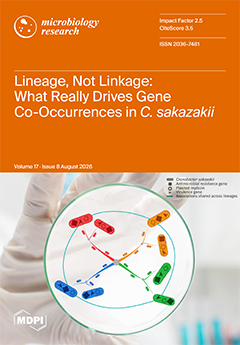
Cover Story (view full-size image): Cronobacter sakazakii is a rare but life-threatening neonatal pathogen often linked to powdered infant formula. Analyzing clinical C. sakazakii genomes from the United States, this study found antimicrobial resistance genes, plasmid replicons, and virulence genes clustering together largely because they traveled within the same lineage—not because they were functionally linked. Stratification by sequence type (ST) dissolved most apparent associations, leaving two exceptions: a conserved IncFIB-rep cluster 574 plasmid replicon backbone and an IncFII-hcp/tssD association. Core-genome phylogenetics revealed 16 clonal clusters, including a pair of genomically identical ST1 isolates sampled nine years apart, pointing to long-term persistence. These findings offer a genomic framework for understanding and monitoring this neonatal pathogen. View this paper
  • Issues are regarded as officially published after their release is announced to the table of contents alert mailing list.
  • You may sign up for e-mail alerts to receive table of contents of newly released issues.
  • PDF is the official format for papers published in both, html and pdf forms. To view the papers in pdf format, click on the "PDF Full-text" link, and use the free Adobe Reader to open them.
Order results
Result details
Section
Select all
Export citation of selected articles as:
13 pages, 11452 KB  
Article
Potential Role of Po-milR-1 and Its Target Po-3KAT in the Growth, Development and Stress Response of Pleurotus ostreatus
by Yingjuan Li, Danyun Xu and Aimin Ma
Microbiol. Res. 2026, 17(8), 163; https://doi.org/10.3390/microbiolres17080163 - 19 Aug 2026
Viewed by 194
Abstract
Pleurotus ostreatus is an important edible mushroom, and its growth and development are affected by genetic and epigenetic mechanisms. miRNAs play an important role in fungal epigenetic mechanisms. In previous studies, Po-3KAT was identified as a candidate target of Po-milR-1, and its [...] Read more.
Pleurotus ostreatus is an important edible mushroom, and its growth and development are affected by genetic and epigenetic mechanisms. miRNAs play an important role in fungal epigenetic mechanisms. In previous studies, Po-3KAT was identified as a candidate target of Po-milR-1, and its product was a substrate for ergosterol synthesis. However, the potential relationship between Po-milR-1 and Po-3KAT has not been studied in P. ostreatus. Therefore, this study aims to explore the potential role of Po-milR-1 and Po-3KAT in P. ostreatus. By integrating the Po-milR-1 interference vector into the genome of P. ostreatus, it was found that the mycelial growth rate was accelerated and the fruiting body phenotype changed in the Po-STTM transformants. The expression analysis during development suggested an inverse expression pattern between Po-milR-1 and Po-3KAT. The analysis of qRT-PCR and HPLC showed that 2 mmol/L H2O2 promoted the expression of Po-3KAT, and the content of ergosterol increased to 1.17-fold, while 5 mmol/L H2O2 inhibited the expression of Po-3KAT, and the content of ergosterol decreased to 0.82-fold. In contrast to oxidative stress, 100 mmol/L and 250 mmol/L salt stress inhibited the expression of Po-3KAT, and the content of ergosterol decreased to 0.87-fold and 0.94-fold, respectively. These results suggest that Po-milR-1 and Po-3KAT may be involved in the regulation of growth, development, and stress responses in P. ostreatus, and may be associated with the change in ergosterol content. Full article
(This article belongs to the Section Food and Agricultural Microbiology)
Show Figures

Figure 1

12 pages, 1646 KB  
Article
Rapid Amperometric Assessment of Substrate Oxidation and Acute Toxicant Responses in Acidithiobacillus Strain Thio1
by Alyona Yachkula, Tatiana Kuvichkina, Anton Zvonarev, Tatiana Abashina, Anatoly Reshetilov and Mikhail Vainshtein
Microbiol. Res. 2026, 17(8), 162; https://doi.org/10.3390/microbiolres17080162 - 19 Aug 2026
Viewed by 189
Abstract
Obligate acidophilic bacteria of the genus Acidithiobacillus are widely used and well known in the biomining industry. Over the past decade, it has been shown that bacterial activity can be determined in short-term experiments via amperometric measurements of microbial oxygen consumption, as changes [...] Read more.
Obligate acidophilic bacteria of the genus Acidithiobacillus are widely used and well known in the biomining industry. Over the past decade, it has been shown that bacterial activity can be determined in short-term experiments via amperometric measurements of microbial oxygen consumption, as changes in the Clark electrode current are proportional to changes in the concentration of dissolved oxygen. This article presents a study of Acidithiobacillus sp. strain Thio1, which was isolated from pyrite–chalcopyrite copper ore and is closely related to A. ferrooxidans. Oxygen consumption by strain Thio1 was measured during the bacterial oxidation of substrates as changes in the electrode current. To evaluate the acute respiratory response of the bacteria to Cu, Zn, and As, respiration suppression was measured at increasing concentrations of the toxicants. The proposed amperometric method is not a substitute for the long-term biogeotechnological evaluation of strain activity using specific ore or pulp samples. At the same time, it can be used as a complementary microbiological method. The proposed approach offers distinct advantages: testing takes mere minutes (rapid analysis), and comparisons of substrates or toxicants can be performed using a single biomass sample (standardization). The amperometric method also demonstrated that oxygen was consumed during the corrosion of solid specimens (steel and chalcopyrite) by Acidithiobacillus sp. strain Thio1. However, applying this method to biocorrosion requires further study because the proportion of oxygen consumption directly related to microbial corrosion remains unknown. Full article
Show Figures

Figure 1

5 pages, 187 KB  
Editorial
Host–Microbe Interactions in Health and Disease: Editorial
by Pablo Mendez-Pfeiffer, Josué Juárez and Manuel G. Ballesteros-Monrreal
Microbiol. Res. 2026, 17(8), 161; https://doi.org/10.3390/microbiolres17080161 - 18 Aug 2026
Viewed by 185
Abstract
Host and microbe interactions continue to drive the trajectory of disease [...] Full article
(This article belongs to the Special Issue Host–Microbe Interactions in Health and Disease)
20 pages, 5358 KB  
Article
Dynamics of the Intestinal Microbiota of Zebrafish Under the Influence of a Synbiotic Based on Bacillus subtilis MT74
by Mikhail Nikolaevich Churilov, Maria Sergeevna Mazanko, Evgeniya Valeryevna Prazdnova, Maxim Pavlovich Kulikov, Radomir Viktorovich Skripnichenko, Valeria Vadimovna Vibe, Viktoria Nikolayevna Shevchenko and Dmitry Vladimirovich Rudoy
Microbiol. Res. 2026, 17(8), 160; https://doi.org/10.3390/microbiolres17080160 - 18 Aug 2026
Viewed by 219
Abstract
The development of probiotic and synbiotic preparations for aquaculture is of considerable practical importance. However, research in this field has typically focused on end-point effects, whereas the dynamics of the interactions between the probiotic, the host, and the intestinal bacterial communities remain insufficiently [...] Read more.
The development of probiotic and synbiotic preparations for aquaculture is of considerable practical importance. However, research in this field has typically focused on end-point effects, whereas the dynamics of the interactions between the probiotic, the host, and the intestinal bacterial communities remain insufficiently characterized. In this study, we evaluated the effect of a synbiotic supplement based on the Bacillus subtilis MT74 strain on the composition of the gut microbiota and gene expression in zebrafish (Danio rerio). Fish received either the synbiotic supplement or equivalent dietary doses of its individual components, namely Bacillus subtilis MT74 culture and inulin. Gut microbial community composition was assessed by 16S rRNA gene amplicon sequencing, and the expression of igf1, hsp70l, gsta.1, lyz, mt2, and b2m was evaluated on days 6, 15, and 30. In addition, the persistence of the studied strain in the gut microbiota after discontinuation of its dietary administration was evaluated. The results revealed multistage changes in gut microbiota composition and host gene expression profiles. These findings indicate that microbiome restructuring and stabilization during dietary intervention are dynamic processes accompanied by changes in host regulatory responses. Full article
Show Figures

Figure 1

25 pages, 5350 KB  
Article
Molecular and Phylogenetic Identification of Fungal Taxa Associated with Soybean Anomaly in Brazil
by Lucas Guimarães Ramos, Solange Maria Bonaldo, Gustavo Farias, Carlos Guilherme Theodoro dos Santos, Jeferson Gonçalves de Jesus, Marcio Roggia Zanuzo and Thiago Alexandre Santana Gilio
Microbiol. Res. 2026, 17(8), 159; https://doi.org/10.3390/microbiolres17080159 - 18 Aug 2026
Viewed by 794
Abstract
Soybean anomaly, characterized by immature pod and grain rot, has been reported in Brazilian soybean production fields, but the fungal taxa associated with symptomatic tissues remain poorly characterized. This study aimed to identify fungi associated with soybean plants showing anomaly symptoms using molecular [...] Read more.
Soybean anomaly, characterized by immature pod and grain rot, has been reported in Brazilian soybean production fields, but the fungal taxa associated with symptomatic tissues remain poorly characterized. This study aimed to identify fungi associated with soybean plants showing anomaly symptoms using molecular and phylogenetic approaches. Symptomatic samples were collected from production fields in Mato Grosso and Rondônia, Brazil. Fungal isolates were obtained from pods, seeds, stems, and leaves, and DNA was extracted for amplification of the ITS and LSU rDNA regions. Sequences were compared with GenBank reference data using BLAST, and phylogenetic analyses were performed using Maximum Likelihood. The analyses revealed isolates belonging to Colletotrichum, Corynespora, Diaporthe, Fusarium, Moniliophthora, Neurospora, Roseograndinia, and Xylaria. Among these, Colletotrichum, Diaporthe, and Fusarium are well-documented soybean pathogens, whereas Corynespora, Moniliophthora, Neurospora, Roseograndinia, and Xylaria remain poorly documented in this host and may represent secondary or opportunistic colonizers. The findings expand molecular information on fungi associated with soybean anomaly in Brazil. However, because pathogenicity tests were not performed, the results should be interpreted as evidence of fungal association with symptomatic tissues rather than confirmation of causality. Full article
(This article belongs to the Section Food and Agricultural Microbiology)
Show Figures

Graphical abstract

13 pages, 573 KB  
Article
Compatibility of Hirsutella citriformis Gum with Entomopathogenic Fungi and Mortality of Bactericera cockerelli (Sulc) (Hemiptera: Triozidae)
by Servando H. Cantú-Bernal, Ricardo Gomez-Flores, Rosa A. Flores-Villarreal, Abigail E. Aguilar-Rocha, César Iván Romo-Sáenz, Emilio Olivares-Sáenz, Patricia Tamez-Guerra, Orquídea Pérez-González and Victor E. Aguirre-Arzola
Microbiol. Res. 2026, 17(8), 158; https://doi.org/10.3390/microbiolres17080158 - 14 Aug 2026
Viewed by 667
Abstract
Entomopathogenic fungi (EPF) are important microbial agents for sustainable pest management. However, their effectiveness depends on compatible formulations that preserve conidial viability and biological activity. Hirsutella citriformis Speare produces an extracellular gum with potential application as a microbial formulation component. The present study [...] Read more.
Entomopathogenic fungi (EPF) are important microbial agents for sustainable pest management. However, their effectiveness depends on compatible formulations that preserve conidial viability and biological activity. Hirsutella citriformis Speare produces an extracellular gum with potential application as a microbial formulation component. The present study evaluated its short-term compatibility with Beauveria bassiana (Balsamo) Vuillemin and Metarhizium brunneum (Petch) conidia, together with mortality associated with gum-based treatments against Bactericera cockerelli (Šulc), under greenhouse conditions. Conidia were formulated in 0.5% (w/v) gum and applied at 1 × 10⁷ conidia mL−1. Conidial germination remained above 90% and was not affected by gum exposure. Significant treatment effects on mortality were detected for adults and nymphs, using binomial generalized linear models. B. bassiana formulation produced 75.0% and 93.56%, whereas M. brunneum produced 65.2% and 78.2% adult and nymph mortality, respectively. The gum-containing treatment, which included Tween 80, was associated with 44.9% adult and 63.0% nymph mortality. H. citriformis gum therefore showed short-term compatibility with both fungi. However, because we did not include a Tween alone control, mortality may not be specifically attributed to the gum. Further studies will evaluate the basis of this mortality and formulation performance, under storage and field conditions. Full article
(This article belongs to the Section Food and Agricultural Microbiology)
Show Figures

Graphical abstract

20 pages, 10600 KB  
Article
Clonal Lineage, Not Functional Linkage, Shapes Antimicrobial Resistance Gene, Plasmid Replicon, and Virulence Gene Co-Occurrences in Clinical Cronobacter sakazakii from the United States
by Zhao Chen and Meiwen Cui
Microbiol. Res. 2026, 17(8), 157; https://doi.org/10.3390/microbiolres17080157 - 13 Aug 2026
Viewed by 266
Abstract
Cronobacter sakazakii is a rare, life-threatening neonatal pathogen. In this study, we profiled antimicrobial resistance genes (ARGs), plasmid replicons, virulence genes, sequence types (STs), and core-genome phylogeny across all publicly available clinical C. sakazakii genomes from the United States (n = 116). [...] Read more.
Cronobacter sakazakii is a rare, life-threatening neonatal pathogen. In this study, we profiled antimicrobial resistance genes (ARGs), plasmid replicons, virulence genes, sequence types (STs), and core-genome phylogeny across all publicly available clinical C. sakazakii genomes from the United States (n = 116). All isolates harbored exclusively chromosomally encoded blaCSA variants. IncFIB and rep cluster 574 co-occurred in 93.1% of isolates as a conserved backbone among 17 replicon types. Among 49 virulence genes, 13 formed a universal core (flagellar motility and type VI secretion); accessory genes such as the yersiniabactin cluster were sporadic. ARG, plasmid replicon, and virulence gene contents were strongly structured by ST, dominated by ST4, ST1, ST8, and ST13. Stratified testing shows most pairwise associations were confounded by clonal lineage, except the IncFIB-rep cluster 574 co-carriage and an IncFII-hcp/tssD association, significant after ST stratification but not multiple testing correction. Core-genome phylogenetics identified 16 clusters, from a large ST4-dominated group to nine singletons, corroborated by ST monophyly; a genomically identical ST1 pair, nine years apart, indicated long-term clonal persistence. Ancestral state reconstruction distinguished stable single acquisitions from features with repeated turnover. Core-genome and gene-content phylogenies demonstrated substantial discordance despite significant overall correlation. These findings provide a genomic framework for clinical C. sakazakii population structure in the United States. Full article
(This article belongs to the Section Medical and Veterinary Microbiology)
Show Figures

Figure 1

16 pages, 8760 KB  
Article
Phytopathometry of Fungal Diseases Associated with Necrotic Syndrome in Wild Cactus (Pachycereus pringlei) in B.C.S., Mexico
by Ramón Jaime Holguín-Peña, Daniel Ruiz-Juárez, Mónica Gutiérrez-Rojas, Betzabé E. López-Corona, Edgar Omar Rueda-Puente, Wilson Geobel Ceiro-Catasú and Diana Medina-Hernández
Microbiol. Res. 2026, 17(8), 156; https://doi.org/10.3390/microbiolres17080156 - 11 Aug 2026
Viewed by 285
Abstract
Columnar cacti do not provide direct economic benefits; they are vital for maintaining the ecological balance of flora and fauna in desert ecosystems. Over the past 20 years, necrotic disease has been observed in the southern part of the peninsula, leading to a [...] Read more.
Columnar cacti do not provide direct economic benefits; they are vital for maintaining the ecological balance of flora and fauna in desert ecosystems. Over the past 20 years, necrotic disease has been observed in the southern part of the peninsula, leading to a decline in populations. The infectious nature of the disease associated with cactus necrosis syndrome (CNS) was determined by estimating the incidence, severity, and dispersion index. The pathogenic fungi were studied based on symptoms, dispersion patterns, morphological features, and molecular analysis. To determine the pathogenicity and severity of the isolated fungi, experimental inoculations were performed on small cacti. Results showed that at least five fungi (Phoma spp., Nigrospora sphaerica, Chaetomium spp., Coniochaeta spp., and Alternaria alternata) may be associated with CNS, with responses varying depending on whether infections are mixed or straightforward. Common symptoms included canker and pustules, with prevalence rates of 78.87% and 85.3%, respectively. An increase in incidence of 9.89% was noted compared to 2019 (74.83%) and 2020 (84.72%). The average severity rate for all observed symptoms was 55.21%. These findings identify the causal agents involved in necrotic diseases, which could influence the severity and progression of CNS in B.C.S. Full article
(This article belongs to the Topic Microbial Dynamics in Extreme Environments)
Show Figures

Figure 1

19 pages, 6335 KB  
Article
Occurrence and Temporal Dynamics of Campylobacter spp. in Broiler Production Systems: Insights from Faecal and Air Monitoring
by Marta Gonçalves, Joana Campos, Inês C. Rodrigues, Nuno Vale, Paulo Martins da Costa and Paula Silva
Microbiol. Res. 2026, 17(8), 155; https://doi.org/10.3390/microbiolres17080155 - 11 Aug 2026
Viewed by 294
Abstract
Campylobacter spp. are common commensals in broiler chickens and certain species are major causes of foodborne illness in humans. However, their on-farm dynamics and environmental dissemination remain poorly understood. This study investigated the occurrence and temporal dynamics of Campylobacter spp. in commercial broiler [...] Read more.
Campylobacter spp. are common commensals in broiler chickens and certain species are major causes of foodborne illness in humans. However, their on-farm dynamics and environmental dissemination remain poorly understood. This study investigated the occurrence and temporal dynamics of Campylobacter spp. in commercial broiler production systems by integrating faecal and airborne monitoring across three consecutive production cycles in two farms with contrasting productive historical performance. Faecal (n = 24) and air samples (n = 24) were analysed using culture-based methods, quantitative polymerase chain reaction (qPCR), and 16S rRNA gene amplicon sequencing, which were subsequently compared to assess concordance. In faecal samples, Campylobacter spp. colonisation generally occurred from mid-cycle onwards, with earlier and more consistent detection in the farm with suboptimal growth performance. In the optimal growth-performing farm, colonisation was not detected in the first cycle but emerged in subsequent cycles, coinciding with declining productive parameters, which include mortality, average weight at slaughter, Feed Conversion Ratio (FCR), and European Production Efficiency Factor (EPEF). Airborne Campylobacter DNA was intermittently detected by qPCR, in some cases preceding or occurring independently of faecal detection, whereas culture-based methods consistently failed to recover viable Campylobacter from air samples. Microbiome sequencing detected Campylobacter sporadically and at low relative abundances, yielding fewer positive detections across the monitored sampling timepoints than the targeted methods. Overall, qPCR proved to be the most sensitive approach across matrices, while faecal culture provided biologically meaningful data on viable loads. This study also documented temporal changes in Campylobacter detection patterns alongside productive performance indicators under commercial production conditions. These findings highlight the complementary value of faecal and airborne monitoring and underscore the importance of combining targeted molecular and culture-based approaches to characterise Campylobacter dynamics under commercial production conditions. Full article
(This article belongs to the Section Medical and Veterinary Microbiology)
Show Figures

Figure 1

10 pages, 243 KB  
Review
Candida Infections: Epidemiology, Clinical Manifestations and Quality-of-Life Burden
by Ana R. Miljković
Microbiol. Res. 2026, 17(8), 154; https://doi.org/10.3390/microbiolres17080154 - 7 Aug 2026
Viewed by 524
Abstract
Candida infections represent a major global public health challenge and remain among the most common opportunistic fungal infections worldwide. Although Candida albicans remains the predominant pathogen, the incidence of infections caused by non-albicans species, particularly Candidozyma auris, has increased substantially in recent [...] Read more.
Candida infections represent a major global public health challenge and remain among the most common opportunistic fungal infections worldwide. Although Candida albicans remains the predominant pathogen, the incidence of infections caused by non-albicans species, particularly Candidozyma auris, has increased substantially in recent years. Candida infections range from superficial mucocutaneous disease to invasive life-threatening infections associated with high morbidity and mortality. In addition to clinical burden, growing evidence indicates a substantial negative impact on health-related quality of life, particularly among patients with recurrent vulvovaginal candidiasis and chronic fungal infections. Full article
14 pages, 718 KB  
Article
Community Surveillance of Staphylococcus aureus and Presumptive MRSA Nasal Colonization in Rural Portugal: The BI-STAPH Project—Phase 2: Fundão
by Rodrigo Costa, Ainhoa Ferreira Cordero, Francisco Ferreira, João Metello, Carina Santos, João Belo, Patrícia Coelho, Sónia Mateus, Miguel Castelo Branco and Francisco Rodrigues
Microbiol. Res. 2026, 17(8), 153; https://doi.org/10.3390/microbiolres17080153 - 6 Aug 2026
Viewed by 306
Abstract
Staphylococcus aureus is one of the leading causes of both community- and healthcare-associated infections. Nasal colonization constitutes the primary reservoir for subsequent infection and transmission, while methicillin-resistant Staphylococcus aureus (MRSA) remains a major public health concern because of its resistance to multiple antimicrobial [...] Read more.
Staphylococcus aureus is one of the leading causes of both community- and healthcare-associated infections. Nasal colonization constitutes the primary reservoir for subsequent infection and transmission, while methicillin-resistant Staphylococcus aureus (MRSA) remains a major public health concern because of its resistance to multiple antimicrobial agents. However, data regarding community nasal colonization in rural Portuguese populations remain scarce. The BI-STAPH Project was established to address this knowledge gap through systematic surveillance of rural communities in inland Portugal. To estimate the prevalence of presumptive nasal colonization by Staphylococcus aureus and MRSA among adults living in the municipality of Fundão, Portugal, and to explore potential associations between colonization and demographic, behavioural, occupational, and environmental characteristics. A prospective community-based cross-sectional study was conducted as the second phase of the BI-STAPH Project. A total of 200 adults were recruited from different parishes of the municipality of Fundão. Bilateral nasal swabs were collected and processed using standardized microbiological methods for the presumptive identification of S. aureus. Presumptive MRSA isolates were investigated using a PBP2′ latex agglutination assay. Sociodemographic and exposure-related information was obtained through structured questionnaires. Associations between presumptive colonization and participant characteristics were evaluated using Pearson’s chi-square or Fisher’s exact tests, as appropriate. Presumptive S. aureus nasal colonization was identified in 56 of 200 participants, corresponding to a prevalence of 28.0% (95% CI: 21.8–34.2%). No presumptive MRSA-positive isolates were identified, corresponding to an observed prevalence of 0% (95% CI: 0.0–1.8%). Colonization prevalence was 29.5% among females and 26.8% among males, and ranged from 25.8% to 31.1% across age groups; neither sex nor age was significantly associated with colonization. Participants reporting daily animal contact had a colonization prevalence of 32.3%, compared with 20.5% among those without animal contact, but this difference was not statistically significant (p = 0.075). Overall, no statistically significant associations were identified between presumptive S. aureus colonization and the demographic, behavioural, occupational, or environmental variables evaluated. Presumptive S. aureus nasal colonization was common among adults living in the rural municipality of Fundão, Portugal, whereas no presumptive MRSA-positive isolates were identified in this study population. No statistically significant associations were observed between colonization and the characteristics evaluated. These findings expand the epidemiological evidence generated by the BI-STAPH Project and support continued community-based surveillance of S. aureus in rural Portugal. Future multicentre studies incorporating molecular confirmation, antimicrobial susceptibility testing, and larger populations will be important to better characterize circulating strains and transmission patterns within a One Health framework. Full article
(This article belongs to the Section Medical and Veterinary Microbiology)
Show Figures

Figure 1

24 pages, 5855 KB  
Article
Endometrial Microbial Network Organization Is Associated with Implantation Success Following Single Euploid Embryo Transfer
by Teodora Tihomirova, Dimitar Parvanov, Margarita Ruseva, Rumiana Ganeva, Maria Handzhiyska, Jinahn Safir, Ivan Pavlov, Sofia Koristashevskaya, Dimitar Metodiev, Blaga Rukova, Georgi Stamenov and Savina Hadjidekova
Microbiol. Res. 2026, 17(8), 152; https://doi.org/10.3390/microbiolres17080152 - 5 Aug 2026
Viewed by 244
Abstract
The role of the endometrial microbiome in embryo implantation remains incompletely understood. While most studies have focused on taxonomic composition and Lactobacillus dominance, the ecological organization of microbial communities associated with implantation success has received limited attention. The aim of this study was [...] Read more.
The role of the endometrial microbiome in embryo implantation remains incompletely understood. While most studies have focused on taxonomic composition and Lactobacillus dominance, the ecological organization of microbial communities associated with implantation success has received limited attention. The aim of this study was to investigate whether implantation outcome following euploid embryo transfer is associated with differences in endometrial microbial network structure and community organization. Endometrial biopsies collected during the window of implantation from 95 women undergoing subsequent euploid embryo transfer were analyzed using 16S rRNA gene sequencing. Microbial diversity, co-occurrence networks, community structure, hub taxa, network robustness, and microbial association patterns were evaluated. The Pregnant group demonstrated a more interconnected microbial network with a greater number of significant associations, larger ecological modules, and increased network integration than the Non-pregnant group. Seventeen microbial associations were unique to the Pregnant network, whereas eleven were unique to the Non-pregnant network, indicating implantation-associated ecological rewiring. Lactobacillus-centered association patterns also differed between groups. These findings suggest that successful implantation is associated with coordinated endometrial microbial community organization rather than changes in individual taxa. Microbial network structure may represent a novel dimension of endometrial receptivity assessment. Full article
Show Figures

Figure 1

27 pages, 6069 KB  
Review
The Role of Gut Microbiota in Childhood Short Stature: From Mechanistic Insights to Therapeutic Strategies
by Hongbo Yuan, Yanyan Liu, Xu Li, Jiaping Lv, Xiaoyang Pang, Shuwen Zhang, Lizhi Ma, Hui Zhang and Yunna Wang
Microbiol. Res. 2026, 17(8), 151; https://doi.org/10.3390/microbiolres17080151 - 4 Aug 2026
Viewed by 518
Abstract
Short stature is a common pediatric endocrine–metabolic disorder characterized by impaired linear growth and increased risks of adverse health outcomes. Although previous reviews have summarized associations between gut microbiota and childhood health, few have focused on the mechanistic links among microbial composition, microbial-derived [...] Read more.
Short stature is a common pediatric endocrine–metabolic disorder characterized by impaired linear growth and increased risks of adverse health outcomes. Although previous reviews have summarized associations between gut microbiota and childhood health, few have focused on the mechanistic links among microbial composition, microbial-derived metabolites, endocrine regulation, and skeletal growth in short stature. This review provides an integrated framework exploring the potential interactions among gut microbiota composition, microbial-derived metabolites, endocrine regulation, and skeletal development in short stature. We summarize the clinical characteristics and epidemiological features of major short stature subtypes and discuss emerging evidence demonstrating the involvement of gut microbiota alterations and metabolite dysregulation in growth regulation. Particular attention is given to the bidirectional interactions between the gut microbiota and the growth hormone/insulin-like growth factor-1 (GH/IGF-1) axis, as well as the potential role of the gut–liver–bone axis in skeletal growth. Furthermore, this review integrates evidence from metabolomics studies, experimental animal models, and microbiota-targeted interventions to provide mechanistic insights into microbiota-mediated growth regulation. Dietary factors, physical activity, sleep, antibiotic exposure, probiotic interventions, and current clinical treatments are also discussed from the perspective of microbiota modulation. Despite increasing interest in microbiota-based strategies, clinical translation remains limited by insufficient functional validation, unclear causal relationships, and a lack of well-designed intervention trials. Future integration of functional microbiology, multi-omics approaches, and human-based validation platforms may facilitate the development of microbiome-based precision interventions for improving growth outcomes in children with short stature, particularly those with ISS. Full article
(This article belongs to the Section Medical and Veterinary Microbiology)
Show Figures

Figure 1

14 pages, 4019 KB  
Article
Environmental and Clinical Spread of MDR Acinetobacter baumannii: A Genomic Epidemiology Investigation
by Alice Caramaschi, Marianna Farotto, Marta Mellai, Francesco Favero, Davide Corà, Paolo Bottino, Christian Leli, Lidia Ferrara, Chiara Bazzano, Silvio Collani, Valeria Bonato, Andrea Rocchetti, Marinella Bertolotti, Annalisa Roveta, Antonio Maconi and Elisa Bona
Microbiol. Res. 2026, 17(8), 150; https://doi.org/10.3390/microbiolres17080150 - 3 Aug 2026
Viewed by 362
Abstract
During the COVID-19 pandemic, healthcare systems experienced significant disruption, increasing the risk of multidrug-resistant (MDR) pathogen transmission. Acinetobacter baumannii, a critical-priority MDR pathogen, is known for its ability to persist in hospital environments and rapidly acquire resistance. To investigate the genomic characteristics, [...] Read more.
During the COVID-19 pandemic, healthcare systems experienced significant disruption, increasing the risk of multidrug-resistant (MDR) pathogen transmission. Acinetobacter baumannii, a critical-priority MDR pathogen, is known for its ability to persist in hospital environments and rapidly acquire resistance. To investigate the genomic characteristics, antimicrobial resistance determinants, and phylogenetic relationships of outbreak-associated Acinetobacter baumannii isolates, whole-genome sequencing (WGS) and comparative genomic analyses on 24 clinical and environmental strains collected during the COVID-19 period were performed. Twenty-four A. baumannii isolates collected between August 2020 and February 2021 from clinical and environmental samples were analyzed by WGS. All isolates displayed an MDR phenotype, with uniform resistance to carbapenems and aminoglycosides, and preserved colistin susceptibility. One environmental strain showed extreme drug resistance. WGS confirmed medium-quality genome assemblies and the clonal spread of a single A. baumannii lineage. Most resistance genes, including OXA-23, ADC-type β-lactamases, and ade efflux pumps, were chromosomally encoded and shared across all isolates. Plasmid-mediated resistance genes were variably distributed. This outbreak of MDR A. baumannii was driven by the clonal dissemination of a genomically stable lineage. Combined genomic and epidemiological analyses underscore the importance of integrated surveillance and environmental decontamination to prevent the spread of MDR pathogens. Full article
Show Figures

Figure 1

25 pages, 1714 KB  
Review
Raw Milk as a Vehicle for Antimicrobial-Resistant Pathogens: Emerging Public Health Risks from a One Health Perspective
by Koycho Koev
Microbiol. Res. 2026, 17(8), 149; https://doi.org/10.3390/microbiolres17080149 - 30 Jul 2026
Viewed by 454
Abstract
Raw-milk and raw dairy products remain a high-sensitivity One Health interface because they bypass a major microbial control step and may carry viable foodborne pathogens, bacteria exhibiting antimicrobial resistance (AMR), and AMR genes from dairy animals, farm environments, milking equipment, handlers, storage systems, [...] Read more.
Raw-milk and raw dairy products remain a high-sensitivity One Health interface because they bypass a major microbial control step and may carry viable foodborne pathogens, bacteria exhibiting antimicrobial resistance (AMR), and AMR genes from dairy animals, farm environments, milking equipment, handlers, storage systems, and informal or direct-sale chains. This narrative review synthesizes verified scientific evidence on raw milk as a potential vehicle pathway for resistant foodborne pathogens, clinically relevant opportunistic bacteria, indicator organisms, and AMR determinants, and evaluates AMR-related emerging public health risks through a One Health perspective. The review integrates evidence from outbreak investigations, raw milk and raw dairy surveillance, culture-based antimicrobial susceptibility testing, polymerase chain reaction (PCR), whole-genome sequencing (WGS), metagenomics, metaproteomics, risk assessment, and the consumer-risk literature. The synthesis shows that raw-milk-associated AMR evidence should be interpreted by inference level rather than by a single organism or global prevalence estimate. Public health concern becomes stronger when detection or occurrence is supported by viable recovery, plausible consumer exposure, transmission linkage, infection or colonization evidence, source-attribution data, or quantified burden estimates. Evidence is strongest for exposure pathways involving Campylobacter, extended-spectrum beta-lactamase (ESBL)-producing Enterobacterales, methicillin-resistant Staphylococcus aureus (MRSA), Salmonella, Listeria, Enterococcus, Yersinia, and raw-milk resistomes, although causal strength differs across organism groups and study designs. The review distinguishes detection or occurrence, viable recovery, potential exposure, transmission, infection or colonization, source attribution, and attributable AMR burden. One Health control requires mastitis prevention, prudent antimicrobial use, milking hygiene, environmental monitoring, pasteurization or equivalent exposure barriers, WGS-supported outbreak investigation, integrated surveillance, and targeted risk communication. Full article
(This article belongs to the Section Medical and Veterinary Microbiology)
Show Figures

Figure 1

19 pages, 3540 KB  
Article
Biological Control of Seedling Damping-Off of Pepper Caused by Rhizoctonia solani Using Bacillus sp. JB005 Isolated from Tidal Flats
by Chae Yeon Hwang, Murugesan Chandrasekaran and Se Chul Chun
Microbiol. Res. 2026, 17(8), 148; https://doi.org/10.3390/microbiolres17080148 - 30 Jul 2026
Viewed by 291
Abstract
Pepper (Capsicum annuum L.) is a major vegetable cultivated for seasoning in Korea. Peppers are typically grown as seedlings and transplanted into fields. Infection with Rhizoctonia solani immediately before transplantation can cause significant damage and loss during cultivation. The effectiveness of chemical [...] Read more.
Pepper (Capsicum annuum L.) is a major vegetable cultivated for seasoning in Korea. Peppers are typically grown as seedlings and transplanted into fields. Infection with Rhizoctonia solani immediately before transplantation can cause significant damage and loss during cultivation. The effectiveness of chemical fungicides is becoming increasingly limited owing to pesticide resistance, emphasizing the need for sustainable agricultural practices. This study aimed to identify a novel biocontrol agent by investigating tidal flat microorganisms capable of controlling damping-off disease in pepper caused by Rhizoctonia solani. Furthermore, we studied the inhibitory effects of different Bacillus species on the mycelial growth of R. solani AG-4 (KACC 40141) for the biological control of damping-off disease. Of the 116 bacterial strains from the tidal flats tested, five (including Bacillus sp. JB005) showed strong inhibitory activity in dual-culture assays against R. solani AG-4. These strains also demonstrated siderophore production, suggesting their potential to suppress damping-off in pepper. We screened useful agricultural traits (e.g., biofilm formation, IAA production, and phosphate solubilizing activity); the most promising strains were used for greenhouse experiments. The results indicated that Bacillus sp. JB005 strongly inhibited damping-off in pepper, suggesting that Bacillus sp. JB005 could serve as a biocontrol agent against R. solani infections. Full article
(This article belongs to the Topic New Challenges on Plant–Microbe Interactions)
Show Figures

Figure 1

12 pages, 1600 KB  
Article
Studies on the Potential of Beneficial Bacteria in a Biological Input Made from a Fermented Nettle (Urtica dioica L.) Slurry
by Audrius Kačergius
Microbiol. Res. 2026, 17(8), 147; https://doi.org/10.3390/microbiolres17080147 - 29 Jul 2026
Viewed by 289
Abstract
Replacing chemical compounds with biologically derived bioproducts in agriculture can make a comprehensive contribution to achieving the goals of both the Paris Agreement and the Green Deal. Scientific literature contains a significant amount of data on the use of probiotics in agriculture, which [...] Read more.
Replacing chemical compounds with biologically derived bioproducts in agriculture can make a comprehensive contribution to achieving the goals of both the Paris Agreement and the Green Deal. Scientific literature contains a significant amount of data on the use of probiotics in agriculture, which facilitate the supply of nutrients to plants, stimulate physiological processes, and inhibit the development of pathogens. These products do not have a negative impact on the surrounding environment and can therefore be used in sustainable land management. This article analyzes the microbiological composition of a bio-input made from fermented nettle extract and the species diversity of the cultivable bacteria. It was found that this input is rich in bacteria beneficial to plants and soil (Clostridium, Paenibacillus, Frankia, Rhizobium, Bradyrhizobium, Azospirillum, Azotobacter, and others), some of which can be cultured under artificial conditions. Among the cultivable bacteria grown from the tested input, the majority were representatives of the Pseudomonadota (92%), and a small proportion were Bacillota (6%). Among them were a great many different bacteria beneficial to the soil ecosystem. Thus, there is considerable potential here for the use of these bacteria in the production of biological products. Full article
(This article belongs to the Section Microbial Ecology and Microbiomes)
Show Figures

Figure 1

4 pages, 168 KB  
Correction
Correction: Ben Chehida et al. New Insights into Molecular Characterization, Antimicrobial Resistance and Virulence Factors of Methicillin-Sensitive Coagulase-Positive Staphylococcus spp. from Dogs with Pyoderma and Otitis Externa. Microbiol. Res. 2024, 15, 1208–1224
by Faten Ben Chehida, Wafa Tombari, Haythem Gharsa, Youssef Rabia, Sana Ferhi, Maha Jrad and Lilia Messadi
Microbiol. Res. 2026, 17(8), 146; https://doi.org/10.3390/microbiolres17080146 - 28 Jul 2026
Viewed by 245
Abstract
In the published paper [...] Full article
14 pages, 735 KB  
Article
Antimicrobial Resistance Profiles of Escherichia coli Isolates from Water Samples of Hydroelectric Reservoirs in the Paraná River Basin, Brazil
by Alana Oswaldina Gavioli Meira dos Santos Botega, Ellen Cristina Gaetti-Jardim, Christiane Marie Schweitzer, Elerson Gaetti-Jardim Júnior and Anamaria Mello Miranda Paniago
Microbiol. Res. 2026, 17(8), 145; https://doi.org/10.3390/microbiolres17080145 - 28 Jul 2026
Viewed by 329
Abstract
The spread of antimicrobial-resistant bacteria in aquatic environments is a public health concern, especially in areas with anthropogenic activity. Hydroelectric reservoirs may act as interfaces facilitating the dissemination of resistance. Escherichia coli is used as an indicator of environmental contamination and antimicrobial resistance. [...] Read more.
The spread of antimicrobial-resistant bacteria in aquatic environments is a public health concern, especially in areas with anthropogenic activity. Hydroelectric reservoirs may act as interfaces facilitating the dissemination of resistance. Escherichia coli is used as an indicator of environmental contamination and antimicrobial resistance. To investigate the occurrence of E. coli in reservoirs of the Urubupungá Hydroelectric Complex (Paraná River basin, Brazil) and to characterize antimicrobial resistance profiles and ESBL/AmpC-related genes. Methods: Water samples were collected during rainy and dry seasons (2022–2024). A total of 200 E. coli isolates were analyzed by broth microdilution (EUCAST). ESBL and AmpC production were phenotypically assessed, and resistance genes (blaCTX-M, blaTEM, blaSHV, and ampC) were detected by PCR. 26% of isolates showed resistance to at least one antimicrobial, mainly tetracycline (18%), amoxicillin (15%), and ampicillin (15%). All isolates were susceptible to imipenem, meropenem, and norfloxacin. Among the investigated resistance markers, ampC was the most frequently detected gene, whereas blaCTX-M was the predominant ESBL-associated determinant. Significant associations were observed between blaCTX-M and resistance to cefotaxime, ceftazidime, and cefepime, whereas the presence of ampC was significantly associated with cefoxitin resistance. Significant associations were observed between β-lactam resistance and ESBL genes. Hydroelectric reservoirs under anthropogenic influence may serve as environmental reservoirs of antimicrobial-resistant E. coli, particularly ESBL producers. These findings highlight the role of aquatic environments in the dissemination of clinically relevant resistance genes. Full article
(This article belongs to the Section Antimicrobials and Antimicrobial Resistance)
Show Figures

Figure 1

6 pages, 185 KB  
Correction
Correction: Preziuso et al. Schmallenberg Virus: Pathogenesis, Diagnostic Challenges, and Control Gap in Endemic Europe. Microbiol. Res. 2026, 17, 113
by Silvia Preziuso, Anna-Rita Attili, Chiara Storoni, Lorenza Di Perna, Yubao Li and Vincenzo Cuteri
Microbiol. Res. 2026, 17(8), 144; https://doi.org/10.3390/microbiolres17080144 - 27 Jul 2026
Viewed by 256
Abstract
In the original publication [...] Full article
20 pages, 4513 KB  
Article
Antimicrobial Efficacy and Transcriptomic Mode of Action of GS-2 Against Foodborne Pathogens
by Catherine W. Y. Wong, Isai Salas Gonzalez, Laura M. Carroll, Joelle K. Salazar, Thomas F. Rau, Max Teplitski and Wei Zhang
Microbiol. Res. 2026, 17(8), 143; https://doi.org/10.3390/microbiolres17080143 - 25 Jul 2026
Viewed by 436
Abstract
The transition toward reusable food packaging driven by European circular economy regulations introduces new food safety challenges related to microbial persistence and cross-contamination. GS-2 is a novel, food-safe antimicrobial formulation developed for use as a coating on reusable packaging materials. In the present [...] Read more.
The transition toward reusable food packaging driven by European circular economy regulations introduces new food safety challenges related to microbial persistence and cross-contamination. GS-2 is a novel, food-safe antimicrobial formulation developed for use as a coating on reusable packaging materials. In the present study, the intrinsic antimicrobial activity of GS-2 was evaluated in liquid suspension against foodborne bacterial (Escherichia coli O157:H7, Listeria monocytogenes, and Salmonella enterica Agona) and fungal pathogens (Aspergillus flavus and Aspergillus niger), and the transcriptomic response of L. monocytogenes following sublethal GS-2 exposure was investigated. GS-2 exhibited concentration-dependent microbicidal activity, with strong reductions observed at ≥2.8–3.0% against bacterial strains and A. flavus, while A. niger demonstrated resistance. Among bacteria, L. monocytogenes showed the greatest sensitivity, with populations reduced below detection limits at 3% GS-2. To elucidate mechanistic responses, RNA sequencing was performed on L. monocytogenes exposed to sublethal GS-2 concentrations (0.1–1.0%). Transcriptomic analyses using discrete and continuous models revealed a pronounced adaptive stress response at 0.5% GS-2, characterized by coordinated upregulation of pathways involved in carbon, nitrogen, and nucleotide metabolism. At higher sublethal concentrations (1%), transcriptional profiles shifted toward growth arrest and cellular damage management. These findings support GS-2 as a promising antimicrobial for enhancing the microbial safety of reusable food packaging systems. Full article
(This article belongs to the Section Food and Agricultural Microbiology)
Show Figures

Figure 1

16 pages, 294 KB  
Article
Postmortem Bacteriology in Nosocomial Bronchopneumonia: A Comparison Between Cultures and Molecular Analysis
by Georgiana-Denisa Gavriliţă, Ştefania Ungureanu, Paul-Cosmin Tirla, Cristian Pop and Alexandra Enache
Microbiol. Res. 2026, 17(8), 142; https://doi.org/10.3390/microbiolres17080142 - 24 Jul 2026
Viewed by 399
Abstract
Nosocomial bronchopneumonia is a severe lung infection that develops more than 48 h after hospital admission and is frequently caused by antibiotic-resistant bacteria. It is often identified postmortem in forensic practice, particularly in patients with severe traumatic injuries requiring prolonged hospitalization and immobilization. [...] Read more.
Nosocomial bronchopneumonia is a severe lung infection that develops more than 48 h after hospital admission and is frequently caused by antibiotic-resistant bacteria. It is often identified postmortem in forensic practice, particularly in patients with severe traumatic injuries requiring prolonged hospitalization and immobilization. Diagnosis is typically based on macroscopic findings and histopathological examination of lung tissue. This study aimed to evaluate the diagnostic value of postmortem microbiological testing by comparison with antemortem microbiological data. Ten patients with a clinical diagnosis of nosocomial bronchopneumonia were selected from forensic cases. During autopsy, tracheal swabs and lung tissue samples were collected and subjected to culture-based and molecular analyses. The results were compared with those obtained from antemortem microbiological investigations. Pathogens characteristic of nosocomial infections were identified; however, concordance with in-hospital microbiological data was highest when using next-generation sequencing (NGS) metagenomic analysis. Tracheal swab culture appears to have limited reliability for postmortem identification of bacterial agents in healthcare-associated bronchopneumonia. In contrast, metagenomic next-generation sequencing (mNGS) of lung tissue obtained at autopsy showed the highest concordance with antemortem microbiological findings and may provide valuable complementary diagnostic information, particularly in polymicrobial infections. Full article
(This article belongs to the Section Medical and Veterinary Microbiology)
19 pages, 1751 KB  
Article
Characterization of a Trichoderma asperellum Strain’s Ecophysiological Traits and Compatibility with Fungicides and Insecticides for Integrated Crop Protection
by David Montes-Moreno, Verónica Alacid, Antonio V. Sanz-Ros, Pedro Palazón and Inmaculada Garrido-Jurado
Microbiol. Res. 2026, 17(8), 141; https://doi.org/10.3390/microbiolres17080141 - 23 Jul 2026
Viewed by 481
Abstract
The growing demand for sustainable crop protection has intensified interest in biological control agents. This study characterized a Trichoderma asperellum strain (IDE-10) to assess its suitability for integrated pest and disease management. Key ecophysiological traits, including temperature, pH, and ultraviolet (UV) tolerance, were [...] Read more.
The growing demand for sustainable crop protection has intensified interest in biological control agents. This study characterized a Trichoderma asperellum strain (IDE-10) to assess its suitability for integrated pest and disease management. Key ecophysiological traits, including temperature, pH, and ultraviolet (UV) tolerance, were evaluated, along with compatibility with commonly used fungicides and insecticides. The strain exhibited optimal growth at 28.28 °C and sustained high growth rates up to 35 °C, with a maximum threshold of 39.21 °C, indicating strong adaptation to warm climates. Sporulation was enhanced between 25 and 35 °C, with no growth at 5 °C, and soil viability remained stable from 7 to 21 °C. The IDE-10 strain demonstrated broad pH tolerance (3–7) and high resistance to UV-A and UV-B radiation, distinguishing it from commercial strains. Insecticides had no significant adverse effects, while fungicide compatibility varied, with IDE-10 being compatible with metalaxyl- and copper-based formulations. These findings highlight the robustness and adaptability of T. asperellum IDE-10, supporting its potential as a biocontrol agent for sustainable crop protection strategies, particularly in Mediterranean agricultural systems. Full article
(This article belongs to the Section Food and Agricultural Microbiology)
Show Figures

Figure 1

Previous Issue
Back to TopTop
