




Next Issue
Volume 33, July
Previous Issue
Volume 33, May


Curr. Oncol., Volume 33, Issue 6 (June 2026) – 73 articles
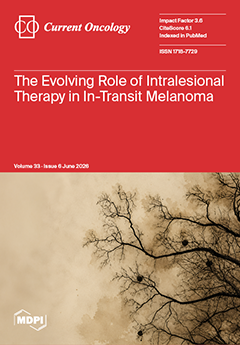
Cover Story (view full-size image): In-transit melanoma spreads through dermal lymphatic channels, forming clusters of tumors that are often too numerous or widespread for surgery alone. This review traces the evolution of intralesional therapies, which are injected directly into tumors to destroy cancer cells while stimulating systemic antitumor immunity. We follow the field from early immune-stimulating agents to modern oncolytic viruses, targeted immunocytokines, electroporation-based gene delivery, and focused ultrasound. Therefore, a central theme emerges: the most effective therapies induce immunogenic cell death and sustain antigen presentation, particularly when combined with checkpoint blockade. Moreover, these advances support a shift toward mechanism-based, personalized treatment strategies using local therapy to overcome immune resistance and generate durable systemic responses. View this paper
  • Issues are regarded as officially published after their release is announced to the table of contents alert mailing list.
  • You may sign up for e-mail alerts to receive table of contents of newly released issues.
  • PDF is the official format for papers published in both, html and pdf forms. To view the papers in pdf format, click on the "PDF Full-text" link, and use the free Adobe Reader to open them.
Order results
Result details
Section
Select all
Export citation of selected articles as:
17 pages, 4531 KB  
Article
Predicting Post-Radiotherapy Lymphocyte Recovery for Individualized Risk Stratification in Locally Advanced Esophageal Squamous Cell Carcinoma
by Hongshan Ji, Yuhao Su, Menglu Liu, Yajing Wang, Qiuying An, Yage Jia, Zihan Zhang, Jin Yan, Jingxin Bai, Ping Zhang and Zhiguo Zhou
Curr. Oncol. 2026, 33(6), 374; https://doi.org/10.3390/curroncol33060374 - 22 Jun 2026
Viewed by 363
Abstract
The prognostic value of post-radiotherapy (RT) lymphocyte recovery remains unclear in locally advanced esophageal squamous cell carcinoma (ESCC), and tools to predict recovery are lacking. This study evaluated lymphocyte recovery as a survival predictor and developed a prediction model. We analyzed 233 patients [...] Read more.
The prognostic value of post-radiotherapy (RT) lymphocyte recovery remains unclear in locally advanced esophageal squamous cell carcinoma (ESCC), and tools to predict recovery are lacking. This study evaluated lymphocyte recovery as a survival predictor and developed a prediction model. We analyzed 233 patients (2019–2024; training:validation = 7:3). Lymphocyte recovery was assessed at 1 and 3 months post-RT (ΔALC1 > 0.41 and ΔALC3 > 0.25 × 10⁹/L, calculated as ALC at each time point minus ALC at the end of RT). Patients were stratified into three groups by recovery status: no recovery (Group 0), recovery at both time points (Group 2), or at only one time point (Group 1). Multivariate logistic regression identified predictors of lymphocyte recovery, and a nomogram was developed and internally validated. Median overall survival (OS) was 26.4 months and median progression-free survival (PFS) was 13.9 months. OS differed significantly among groups: 16.0 months (Group 0), 26.0 months (Group 1), and 50.0 months (Group 2) (p < 0.001). Median PFS was 10.2, 12.0, and 36.6 months, respectively (p < 0.001). Independent predictors included ECOG 0 and thoracic spine V5 < 57.3%; planning target volume < 210 cm3 showed a trend toward association (p = 0.051). The nomogram demonstrated AUCs of 0.77 and 0.75 in the training and validation cohorts. Superior lymphocyte recovery appears to be associated with improved survival. The model, if externally validated, may facilitate individualized risk stratification. Full article
(This article belongs to the Section Thoracic Oncology)
Show Figures

Figure 1

6 pages, 176 KB  
Editorial
From Adjunct to Essential: Integrating Supportive Care into Oncology
by Gilla K. Shapiro, Fredrick D. Ashbury, Jonathan Avery, Jacqueline L. Bender, Sylvie Lambert and Madeline Li
Curr. Oncol. 2026, 33(6), 373; https://doi.org/10.3390/curroncol33060373 - 22 Jun 2026
Viewed by 406
Abstract
Psychosocial oncology is a discipline concerned with the social, psychological, emotional, spiritual, quality-of-life, and practical aspects of cancer for patients and families, with the aim of supporting whole-person care [...] Full article
13 pages, 520 KB  
Article
Next-Generation Sequencing in Differentiated Thyroid Cancer Patients Treated with Lenvatinib: Results and Challenges in Real-Life Practice
by Matteo Ferrari, Alice Nervo, Francesca Maletta, Sara Mariani, Elisa Vaccaro, Alessandro Piovesan and Emanuela Arvat
Curr. Oncol. 2026, 33(6), 372; https://doi.org/10.3390/curroncol33060372 - 21 Jun 2026
Viewed by 774
Abstract
Objective: Our objectives were to describe molecular profiling in a real-life cohort of patients with radioiodine-resistant (RAI-R) differentiated or poorly differentiated thyroid cancer (DTC or PDTC) treated with lenvatinib and to focus on factors potentially influencing the quality of tissue samples for molecular [...] Read more.
Objective: Our objectives were to describe molecular profiling in a real-life cohort of patients with radioiodine-resistant (RAI-R) differentiated or poorly differentiated thyroid cancer (DTC or PDTC) treated with lenvatinib and to focus on factors potentially influencing the quality of tissue samples for molecular analysis, including the impact of storage time, defined as the interval between tissue collection and molecular testing. Design: We retrospectively included all lenvatinib-treated RAI-R DTC or PDTC patients tested with DNA- and/or RNA-based next-generation sequencing (NGS) in our center, also analyzing the results of fluorescence in situ hybridization (FISH) for RET fusions if the sample did not satisfy quality criteria for RNA-based NGS analysis. We investigated differences in terms of histotype, biopsy site, or storage time between adequate and inadequate samples for RNA-based NGS. Results: At least one gene alteration was detected in 50% of the cohort (18 out of 36 patients); RAS and BRAF were the most frequent mutations, while gene fusions accounted for 5.6% of cases. Tissue samples were more frequently adequate for DNA-based NGS compared to RNA-NGS analysis (93.9% vs. 58.3%, p < 0.001). The median storage time was significantly longer in the case of inadequate samples for RNA-based NGS compared with adequate specimens (41.5 vs. 9.5 months, p = 0.016); samples archived for ≥3 years led more frequently to an inadequate result. Conclusions: Advanced RAI-R TC candidates for systemic therapy often harbor gene alterations. An adequate result was less frequently achieved in cases of RNA-based NGS than in DNA-based NGS, especially if the interval between tissue collection and molecular analysis was longer; nevertheless, the limited cohort size precludes definitive conclusions. Full article
(This article belongs to the Section Head and Neck Oncology)
Show Figures

Figure 1

15 pages, 935 KB  
Systematic Review
The Route of Administration Determines the Efficacy of Zinc in Preventing Radiation-Induced Oral Mucositis: A Systematic Review and Meta-Analysis
by Chih-Sheng Tsao, Kai-Yu Wang and Chih-Ying Liao
Curr. Oncol. 2026, 33(6), 371; https://doi.org/10.3390/curroncol33060371 - 21 Jun 2026
Viewed by 1053
Abstract
Radiation-induced oral mucositis (RIOM) frequently causes severe pain and treatment interruptions in patients with head and neck cancer. While earlier guidelines suggested zinc supplementation, updated MASCC/ISOO guidelines downgraded it to ‘No Guideline Possible’ due to highly conflicting evidence. This study aims to resolve [...] Read more.
Radiation-induced oral mucositis (RIOM) frequently causes severe pain and treatment interruptions in patients with head and neck cancer. While earlier guidelines suggested zinc supplementation, updated MASCC/ISOO guidelines downgraded it to ‘No Guideline Possible’ due to highly conflicting evidence. This study aims to resolve these inconsistencies by evaluating zinc’s prophylactic efficacy and investigating whether the route of administration determines its clinical benefit. Following PRISMA guidelines and INPLASY registration (INPLASY202620063), we searched PubMed, Embase, and the Cochrane Library through February 2026. We included randomized controlled trials (RCTs) comparing prophylactic zinc versus placebo or standard care in head and neck cancer patients receiving radiotherapy. Risk of bias was assessed using the Cochrane Risk of Bias 2 (RoB 2) tool. The primary outcome was severe (Grade 3–4) RIOM incidence. Data from five RCTs (332 patients) were pooled using a random-effects model. Overall, zinc significantly reduced severe mucositis risk (RR = 0.35, 95% CI: 0.17–0.73, p = 0.005). Crucially, an exploratory subgroup analysis revealed a striking divergence based on delivery route. Topical zinc mouthwash demonstrated encouraging protection (RR = 0.16, 95% CI: 0.05–0.49, p = 0.001) with zero heterogeneity (I2 = 0%). In contrast, systemic zinc yielded borderline, inconsistent benefits (RR = 0.52, 95% CI: 0.27–1.01, p = 0.055, I2 = 37%). In conclusion, the localized pool of contemporary evidence clearly demonstrates that the systemic oral ingestion of zinc supplements does not provide a reliable prophylactic benefit against severe radiation-induced oral mucositis in head and neck cancer care. Conversely, topical zinc mouthwashes exhibit an encouraging protective trend; however, the severe paucity of available randomized trials and low cumulative patient volume preclude definitive clinical verification. While these exploratory findings suggest that topical administration may provide a more consistent protective trend compared to systemic routes, they should be interpreted as hypothesis-generating rather than definitive. Future large-scale, multi-center RCTs are strictly warranted to validate these promising route-specific benefits before formal guideline integration. Full article
(This article belongs to the Section Head and Neck Oncology)
Show Figures

Figure 1

18 pages, 1338 KB  
Review
Mechanisms of Progression and Challenges for Intervention in the Natural History of Early Prostate Cancer: A Narrative Review
by Kieran Sandhu, Simon Pacey, Daniel S. Brewer and Vincent J. Gnanapragasam
Curr. Oncol. 2026, 33(6), 370; https://doi.org/10.3390/curroncol33060370 - 19 Jun 2026
Viewed by 823
Abstract
Prostate cancer is the most common cancer diagnosed in men and the incidence is rising globally. Disease-related mortality however remains comparatively low. There is now irrefutable evidence that many men do not need treatment if diagnosed with early cancer and can instead be [...] Read more.
Prostate cancer is the most common cancer diagnosed in men and the incidence is rising globally. Disease-related mortality however remains comparatively low. There is now irrefutable evidence that many men do not need treatment if diagnosed with early cancer and can instead be safely managed conservatively. Active surveillance is therefore now an increasingly popular management option for these men. A minority of men on surveillance however will experience disease progression to a point where radical treatment is necessary. It is therefore logical to consider interventions that might slow down or abrogate this natural history. This is particularly important for subgroups of men with early cancer who are at a higher risk of progression and where the risk–benefit of therapeutic intervention is much more favourable. In this narrative review we explore the literature on known molecular and genetic events in prostate cancer which may drive progression. Our principal focus was to consider mechanisms that could be realistically targeted by therapeutics. We further consider key attributes that early cancer therapeutic trials should incorporate in their design. These include risk-stratified patient selection, bespoke dosing schedules and the importance of unambiguous, clinically meaningful endpoints in this new trial space. Full article
(This article belongs to the Section Genitourinary Oncology)
Show Figures

Figure 1

24 pages, 509 KB  
Review
Maintenance Therapy in Acute Myeloid Leukemia: Current Perspectives and Future Directions
by Pilar Velarde, Asmaa Aloufi and David Sanford
Curr. Oncol. 2026, 33(6), 369; https://doi.org/10.3390/curroncol33060369 - 18 Jun 2026
Viewed by 1537
Abstract
The management of acute myeloid leukemia (AML) remains characterized by high relapse rates despite advances in induction and consolidation therapy. Relapse prevention represents a major unmet need, particularly in patients ineligible for allogeneic hematopoietic stem cell transplantation (allo-HSCT) or at high risk of [...] Read more.
The management of acute myeloid leukemia (AML) remains characterized by high relapse rates despite advances in induction and consolidation therapy. Relapse prevention represents a major unmet need, particularly in patients ineligible for allogeneic hematopoietic stem cell transplantation (allo-HSCT) or at high risk of post-transplant recurrence. This review examines current evidence supporting maintenance strategies following intensive chemotherapy or allo-HSCT, with emphasis on measurable residual disease (MRD)-guided approaches and targeted therapies. We summarize data from randomized and phase II/III trials evaluating hypomethylating agents, FLT3 inhibitors, IDH inhibitors, and immunotherapeutic strategies in post-remission settings. Oral azacitidine (CC-486) demonstrated overall survival benefit in older patients in first complete remission who were not transplant candidates, establishing a standard of care in this population. In FLT3-mutated AML, post-transplant maintenance with sorafenib and gilteritinib reduces relapse risk, with emerging evidence supporting MRD as a predictive biomarker for benefit. Other targeted agents and immunotherapies have shown promising early-phase results, although confirmatory data are limited. Ongoing phase III studies will clarify optimal patient selection, treatment duration, and integration with transplantation, aiming to transform post-remission management from passive surveillance to precision-based relapse prevention. Full article
Show Figures

Figure 1

23 pages, 7957 KB  
Systematic Review
Thrombosis-Associated Risk Factors in Pediatrics and Adults Treated with Asparaginase-Containing Chemotherapy for ALL: A Systematic Review and Meta-Analysis
by Jack T. Seki, Eshetu G. Atenafu and Hassan Sibai
Curr. Oncol. 2026, 33(6), 368; https://doi.org/10.3390/curroncol33060368 - 18 Jun 2026
Viewed by 765
Abstract
Background: Thromboembolism is a serious complication in acute lymphoblastic leukemia (ALL). This systematic review and meta-analysis evaluated thrombosis incidence and risk factors across populations receiving asparaginase-based therapy. Methods: From 214 studies (1994–2026), 58 met inclusion criteria, totaling 23,655 adult, pediatric, and [...] Read more.
Background: Thromboembolism is a serious complication in acute lymphoblastic leukemia (ALL). This systematic review and meta-analysis evaluated thrombosis incidence and risk factors across populations receiving asparaginase-based therapy. Methods: From 214 studies (1994–2026), 58 met inclusion criteria, totaling 23,655 adult, pediatric, and mixed-population patients. Searches included Ovid MEDLINE, Embase, Cochrane CENTRAL, PubMed Central, and Google Scholar. Eligible studies were observational cohorts or clinical trials reporting thrombosis in ALL patients treated with asparaginase. Risk factors assessed included study design, asparaginase formulation, immunophenotype, gender, treatment phase, corticosteroid use, mediastinal mass, ABO blood group, body weight, and age. Random-effects models were used for meta-analysis, and risk of bias was assessed using ROBINS-I and RoB-2. Results: Adults had significantly higher thrombosis rates than children (p < 0.0001). Study design, asparaginase formulation, immunophenotype, and treatment phase differed significantly across age groups (p < 0.0001). T-cell ALL showed higher thrombosis rates than B-cell ALL (p < 0.0001). Significant pediatric risk factors included age ≥ 10 years, mediastinal mass, non-O blood type, and overweight/obesity (all p ≤ 0.0004). Gender and corticosteroid use were not significant predictors. Findings were limited by substantial heterogeneity across included studies. Conclusions: Thrombosis risk was multifactorial. Adults and older children had higher risk, and pediatric patients with overweight/obesity, mediastinal mass, or non-O blood type were particularly vulnerable. Thromboprophylaxis is advised for high-risk groups. This review was not registered and received no external funding. Full article
(This article belongs to the Section Hematology)
Show Figures

Graphical abstract

14 pages, 5179 KB  
Article
Morphologic Features and Clinical Outcomes of Acinar Cell Carcinoma of the Pancreas: A Multicenter Retrospective Study of 37 Patients in South Korea
by Yoon Suk Lee, Woo Hyun Paik, Min Kyu Jung, Jung Won Chun, Young Hoon Choi, Joo Kyung Park, Kyu Hyun Paik, In Seok Lee, Sang Myung Woo and Jin-Hyeok Hwang
Curr. Oncol. 2026, 33(6), 367; https://doi.org/10.3390/curroncol33060367 - 18 Jun 2026
Viewed by 665
Abstract
Background: The clinical characteristics of pancreatic acinar cell carcinoma (ACC) remain poorly defined due to its rarity. This study aimed to evaluate the morphological features and clinical outcomes of pancreatic ACC. Method: This multicenter retrospective study analyzed clinical data from seven referral hospitals. [...] Read more.
Background: The clinical characteristics of pancreatic acinar cell carcinoma (ACC) remain poorly defined due to its rarity. This study aimed to evaluate the morphological features and clinical outcomes of pancreatic ACC. Method: This multicenter retrospective study analyzed clinical data from seven referral hospitals. Electronic medical records were comprehensively reviewed to extract patient data. Survival outcomes were calculated from the date of pathologic confirmation of ACC. Results: Of the 37 patients, 28 (75.7%) were male. The age distribution at diagnosis ranged widely from 12 to 86 years, with a median of 62.0 years; seven patients (18.9%) were aged under 50 years. Morphologically, 24 patients (64.9%) presented with solid masses, whereas four had cystic masses and four exhibited mixed solid and cystic components. Regarding tumor resectability, 19 patients (51.4%) had resectable disease, 7 (18.9%) were locally advanced, and 11 (29.7%) were metastatic. In terms of treatment, 22 patients (59.4%) underwent surgical resection, 12 (32.4%) received palliative chemotherapy, and the remainder received best supportive care. In the surgical resection group, the median OS was not reached, demonstrating significantly prolonged survival (mean OS, 7.6 years; 5-year OS rate, 51%). In contrast, the median OS was 0.9 years in the palliative chemotherapy group and 0.1 years in the best supportive care group (p = 0.040). Conclusions: Pancreatic ACC showed a broad age distribution, with approximately 20% of patients aged <50 years, and pleomorphic morphological features, including solid, cystic, and mixed patterns. Patients who underwent surgical resection demonstrated favorable long-term survival outcomes compared to historical data for pancreatic ductal adenocarcinoma. Full article
(This article belongs to the Special Issue Evolving Role of Surgical Resection in Pancreatic Cancer)
Show Figures

Figure 1

13 pages, 496 KB  
Article
A Prospective Population-Based Study of Chimeric Antigen Receptor T-Cell Therapy for Patients with Diffuse Large B-Cell Lymphoma
by Lee Mozessohn, Pierre J. A. Villeneuve, Nibene H. Somé, Rebecca E. Mercer, Lisa Masucci, Tom Kouroukis, Christopher Bredeson, Suriya Aktar, Qi Guan, Anca Prica, Christine I. Chen, Danielle Rodin, Matthew C. Cheung, Munaza Chaudhry, Scott Gavura, Cassandra McKay, William W. L. Wong and Kelvin K. W. Chan
Curr. Oncol. 2026, 33(6), 366; https://doi.org/10.3390/curroncol33060366 - 18 Jun 2026
Viewed by 865
Abstract
Chimeric antigen receptor (CAR) T-cell therapy is a new standard of care for patients with diffuse large B-cell lymphoma (DLBCL); however, studies including healthcare resource utilization (HRU) during routine care are lacking. Accordingly, a population-based study was conducted using linked administrative databases from [...] Read more.
Chimeric antigen receptor (CAR) T-cell therapy is a new standard of care for patients with diffuse large B-cell lymphoma (DLBCL); however, studies including healthcare resource utilization (HRU) during routine care are lacking. Accordingly, a population-based study was conducted using linked administrative databases from Ontario, Canada. Patients with DLBCL that failed ≥2 lines of systemic therapy were included. Cox proportional hazard models estimated associations between covariates and overall survival (OS). Logistic, binomial and Poisson regression explored associations between covariates with toxicity and HRU. We identified 308 patients enrolled to receive CAR T-cell therapy of which 255 patients received CAR T-cells (mean age 59 years; 39% female). From the date of CAR T-cell infusion, the median OS was 25.0 months (95% CI, 21.6–28.1 months). Cytokine release syndrome and immune effector cell-associated neurotoxicity syndrome data were available for 155 patients and were reported in 135 (87.1%) and 42 (27.1%) patients, respectively. Of those that received CAR-T cells, 172 patients (67%) were hospitalized with a median length of stay of 5 days (IQR, 0–20) and 243 (95%) had an emergency department visit without hospitalization. Our prospective population-based study demonstrates comparable efficacy and safety of CAR T-cell therapy in the real-world to the pivotal trials and highlights this as an efficacious and relatively safe treatment option for patients with DLBCL in routine clinical care. Full article
(This article belongs to the Section Hematology)
Show Figures

Figure 1

20 pages, 10026 KB  
Article
Real-World Outcomes of CDK4/6 Inhibitors in Germline BRCA1/2-Mutated Hormone Receptor-Positive, HER2-Negative Metastatic Breast Cancer: Turkish Oncology Group (TOG) Study
by Mustafa Seyyar, Ali Kalem, Mürsel Sali, Berkan Karabuğa, Taha Koray Sahin, Ahmet Kürşad Dişli, Alper Türkel, Berkan Karadurmuş, Ece Şahin Hafızoğlu, Nilüfer Avcı, Irem Bilgetekin, Naziyet Köse Baytemur, Esma Uguztemur, Utku Oflazoğlu, Hasibe Bilge Gür, İlhan Hacıbekiroğlu, Aysun Fatma Akkuş, Sernaz Topaloğlu, Ayberk Bayramgil, Özgecan Dülgar Kaya, Melike Yazıcı, Teoman Şakalar, Seval Akay, Nargiz Majidova, Murad Guliyev, Özkan Alan, Serkan Gülcü, Tülay Eren, Gökşen İnanç İmamoğlu, Ali Kaan Güren, Osman Köstek, Ahmet Ünlü, Banu Ozturk, Esra Aydın, Shamkhal Safarov, Bekir Doğan, Mehmet Akif Tükenmez, Teyfik Demir, Elif Şahin, Engin Erdemoğlu, Fatma Keskin Uzundere, Osman Bütün, Bülent Karabulut, Mehmet Uzun, Tuba Baydaş, Elanur Karaman, Hacı Arak, Ferhat Ekinci, Musa Barış Aykan, İsmail Ertürk, Deniz Can Guven, Adem Deligönül, Cengiz Karaçin, Öztürk Ateş, Mevlüde İnanç, Havva Yeşil, Sercan Aksoy, Tolga Köşeci, İlker Nihat Ökten, Hasan Çağrı Yıldırım and Devrim Çabukadd Show full author list remove Hide full author list
Curr. Oncol. 2026, 33(6), 365; https://doi.org/10.3390/curroncol33060365 - 17 Jun 2026
Viewed by 872
Abstract
Germline BRCA1/2-mutated (gBRCAm) hormone receptor-positive/HER2-negative (HR+/HER2-) metastatic breast cancer (MBC) is a biologically distinct subset in which the efficacy of cyclin-dependent kinase 4/6 (CDK4/6) inhibitors remains incompletely characterized. We evaluated real-world outcomes and prognostic factors in a multicenter retrospective Turkish cohort treated with [...] Read more.
Germline BRCA1/2-mutated (gBRCAm) hormone receptor-positive/HER2-negative (HR+/HER2-) metastatic breast cancer (MBC) is a biologically distinct subset in which the efficacy of cyclin-dependent kinase 4/6 (CDK4/6) inhibitors remains incompletely characterized. We evaluated real-world outcomes and prognostic factors in a multicenter retrospective Turkish cohort treated with a CDK4/6 inhibitor plus endocrine therapy (June 2020–September 2025). Progression-free survival (PFS) and overall survival (OS) were estimated using Kaplan–Meier and Cox methods. Among 121 patients, 30 (24.8%) had BRCA1, 88 (72.7%) had BRCA2, and three (2.5%) had dual mutations; 66.9% received first-line therapy, with ribociclib in 69.4% and palbociclib in 29.8%. Objective response rate was 69.4% and the clinical benefit rate was 82.6%. Median PFS was 17.0 months and OS 47.0 months. PFS was numerically longer in BRCA1 than in BRCA2 carriers (25.0 vs. 14.0 months), although the difference was not statistically significant in the pairwise comparison (HR 1.50, 95% CI 0.88–2.56; log-rank p = 0.135); the dual BRCA1/2 subgroup (n = 3) had the poorest outcomes and was assessed descriptively. OS did not differ significantly between BRCA1 and BRCA2 carriers (57.0 vs. 49.0 months; log-rank p = 0.520). PFS did not differ between ribociclib and palbociclib (p = 0.192); OS favored ribociclib at borderline significance (p = 0.050), but this was not confirmed in Cox regression. In multivariable analysis, ECOG ≥ 1 (HR 1.85; p = 0.010) and fulvestrant-based therapy (HR 1.74; p = 0.041) predicted shorter PFS; fulvestrant also predicted worse OS (HR 2.39; p = 0.008). CDK4/6 inhibitor-based therapy shows meaningful activity in gBRCAm HR+/HER2- MBC; the numerically poorer outcomes observed in BRCA2 carriers are hypothesis-generating and warrant validation in larger cohorts. Full article
(This article belongs to the Section Breast Cancer)
Show Figures

Figure 1

29 pages, 837 KB  
Review
Metabolism and Immunity-Adapted Radiotherapy (M.I.A.R): A Conceptual Framework for Overcoming the Therapeutic Plateau in Clinical Radiotherapy
by Georgios Maravelis, Ioannis M. Koukourakis, Pantelis Skarlos and Michael I. Koukourakis
Curr. Oncol. 2026, 33(6), 364; https://doi.org/10.3390/curroncol33060364 - 17 Jun 2026
Viewed by 814
Abstract
Despite technological advances in radiation therapy (RT), improvements in locoregional control of locally advanced disease remain limited, indicating a plateau in RT effectiveness. It is becoming increasingly clear that RT occurs within a dynamic metabolic microenvironment that merges oncogenic activity with metabolic and [...] Read more.
Despite technological advances in radiation therapy (RT), improvements in locoregional control of locally advanced disease remain limited, indicating a plateau in RT effectiveness. It is becoming increasingly clear that RT occurs within a dynamic metabolic microenvironment that merges oncogenic activity with metabolic and immune interactions. This includes responses to oxidative stress, regulation of cell death and survival signals, energy metabolism, protein synthesis, autophagy of molecules and organelles, and ultimately, the anti-tumor immune response. Each tumor, regardless of its histology, maintains a unique molecular and microenvironmental identity that influences its response to RT. Furthermore, RT acts as a cellular stressor that activates responses in cancer and stromal cells, impacting clinical outcomes. The concept of Metabolism and Immunity Adaptive Radiotherapy (M.I.A.R) recognizes that RT success depends not only on radiation dose and distribution but mainly on key interventions that alter and influence the biological environment before, during, and after therapy. It highlights the importance of an initial diagnostic workup, which is achievable with current tools, to identify tumor-specific oncogenes, metabolic, and immune profiles. Within the context of M.I.A.R., effective RT requires tumor preconditioning combined with concurrent use of drugs, including metabolism-targeting agents, to increase tumor sensitivity to radiation. Post-RT metabolic and immune interventions are essential for complete tumor eradication. This involves combining existing oncogene-targeting therapies with available immune treatments, supported by low-toxicity modulating drugs/agents with demonstrated preclinical activity against specific molecular and microenvironmental features. Overall, while MIAR remains a theoretical approach, existing preclinical and recent clinical data, e.g., those exploiting tumor hypoxia and re-oxygenation status, or post-RT immunotherapy, strongly support further dedicated investigation. Full article
Show Figures

Graphical abstract

12 pages, 450 KB  
Article
Evaluating the Use of Tumor Bank DNA to Validate Genetic Factors Impacting Opioid Response in Patients with Advanced Cancer
by Christine L. Watt, Rebecca Lelievre, Gaelle Chopin Stukart Parsons, Caroline Vergette, Venus Chirip, Nadia Polskaia, Julie Lapenskie, Bryan Lo, Pearl Campbell, Asma Bankapur, Gareth Palidwor and James Downar
Curr. Oncol. 2026, 33(6), 363; https://doi.org/10.3390/curroncol33060363 - 17 Jun 2026
Viewed by 775
Abstract
Opioids are first-line therapy for cancer pain, yet up to 30% of patients fail to achieve adequate control at standard doses. Opioid response is partly genetically mediated, and understanding these factors may improve symptom management. This project aimed to assess the feasibility of [...] Read more.
Opioids are first-line therapy for cancer pain, yet up to 30% of patients fail to achieve adequate control at standard doses. Opioid response is partly genetically mediated, and understanding these factors may improve symptom management. This project aimed to assess the feasibility of using tumor bank DNA for pharmacogenetic analyses and to validate previously identified genetic variants associated with opioid response using existing genetic and clinical data. In this retrospective cohort study, clinical data (morphine equivalent daily dose, demographics) and genetic data (single-nucleotide polymorphisms) were analyzed across 31 candidate loci. Adult deceased patients with melanoma, colorectal, or lung cancer treated with opioids between 2016 and 2021 and with available tumor bank DNA were included. Patients without sufficient DNA or not deceased were excluded. Of 3503 potential samples, 502 met the inclusion criteria. The median morphine equivalent daily dose was 40 mg (range 1–2140 mg). Eleven loci across six genes may be associated with higher (OPRM1, TAOK3, NFKBIA, COMT, and RHBDF2) and lower (COMT and GCH1) opioid dose requirements (p < 0.05, not significant after Bonferroni correction). Ultimately, tumor bank DNA is a feasible resource for pharmacogenetic research. Identified loci may contribute to variability in opioid response and support future personalized pain management strategies. Full article
(This article belongs to the Section Palliative and Supportive Care)
Show Figures

Figure 1

18 pages, 16565 KB  
Case Report
Pituitary Metastasis in Lung Cancer Patients: Case Series and Review of the Literature
by Sofia Ntouraki, Afroditi Roumpou, Athina Asimakopoulou, Ioannis Gkiozos, Fotini Sarropoulou, Maria Mani, Androniki Marioli, Dimitrios Bouklas, Konstantinos Syrigos and Melpomeni Peppa
Curr. Oncol. 2026, 33(6), 362; https://doi.org/10.3390/curroncol33060362 - 16 Jun 2026
Viewed by 776
Abstract
The pituitary gland is an uncommon site of tumor metastasis and is predominantly associated with malignancies of the lung and breast. Metastatic involvement of the pituitary gland in lung cancer (LC) typically indicates advanced disease and is associated with poor prognosis and pituitary [...] Read more.
The pituitary gland is an uncommon site of tumor metastasis and is predominantly associated with malignancies of the lung and breast. Metastatic involvement of the pituitary gland in lung cancer (LC) typically indicates advanced disease and is associated with poor prognosis and pituitary insufficiency, which often remains underdiagnosed and significantly affects quality of life and survival. We present four cases of pituitary metastasis (PM) originating from LC, characterized by distinct histological subtypes, variable timing from initial diagnosis, and diverse clinical manifestations. Clinical presentation was heterogeneous: two patients had involvement of both pituitary lobes with multiple pituitary hormone deficiencies, one had anterior lobe involvement with anterior pituitary deficiency following immune checkpoint inhibitor-associated hypophysitis, and one remained asymptomatic. Therapeutic approaches included partial surgical resection followed by radiotherapy in two patients and radiotherapy alone in the other two; all patients continued systemic antineoplastic therapy and received hormone replacement as indicated. Mean overall survival was 7.5 months. PM can occur across all histological subtypes of LC and typically signifies advanced disease with poor prognosis. Early identification and appropriate management of hypopituitarism may improve quality of life and clinical outcomes. Full article
(This article belongs to the Section Thoracic Oncology)
Show Figures

Figure 1

14 pages, 421 KB  
Article
Development and Preliminary Validation of a Tool to Assess Barriers and Facilitators to Participation in Adjuvant Endocrine Therapy Switch Trials
by Silvia Belloni, Paola Tiberio, Emanuela Mencaglia, Alice Silvia Brera, Chiara Giacon, Chiara Benvenuti, Flavia Jacobs, Mariangela Gaudio, Rosalba Torrisi, Armando Santoro, Rosario Caruso, Cristina Arrigoni, Alberto Zambelli and Rita De Sanctis
Curr. Oncol. 2026, 33(6), 361; https://doi.org/10.3390/curroncol33060361 - 16 Jun 2026
Viewed by 577
Abstract
Improving accrual to clinical trials is critical in oncology, particularly in studies evaluating treatment de-escalation or modification strategies, such as endocrine therapy (ET) switch trials in breast cancer. In disease-free patients who have completed an initial period of standard adjuvant ET, decision-making is [...] Read more.
Improving accrual to clinical trials is critical in oncology, particularly in studies evaluating treatment de-escalation or modification strategies, such as endocrine therapy (ET) switch trials in breast cancer. In disease-free patients who have completed an initial period of standard adjuvant ET, decision-making is shaped by individual, clinical, and contextual factors that may act as barriers and facilitators to trial participation. The lack of validated instruments complicates the comprehensive evaluation of these determinants. Therefore, our study aimed to develop and validate a scale for measuring barriers and facilitators to clinical trial participation in adjuvant endocrine therapy switch trials (CAMBRIA-1 and EMBER-4) among breast cancer patients. Therefore, a multiphase study was undertaken: phase one focused on item generation through literature review and expert consensus; phase two assessed preliminary validity through content and face validation (S-CVI and CVR) and pre-testing (Cronbach’s alpha). The final scale encompassed 17 items and exhibited strong evidence of face and content validity (S-CVI = 0.78 and CVR > 0.725 for all items) and internal consistency (Cronbach’s alpha = 0.874). Since preliminary internal consistency has been established, this tool may support future psychometric refinement and large-scale investigations. An understanding of these determinants may inform trial enrolment and drug development in breast cancer management, as well as tailor patient engagement strategies. Full article
(This article belongs to the Special Issue Advances in Endocrine Therapy for Breast Cancer)
Show Figures

Figure 1

8 pages, 941 KB  
Case Report
Calciphylaxis as a Rare Complication Associated with Pemigatinib Treatment—A Case Report
by Katarina Čular, Dora Tomek Hamzić, Ljiljana Smiljanić Tomičević, Daška Štulhofer Buzina, Mirna Bradamante, Luka Simetić, Ivan Bilić and Borislav Belev
Curr. Oncol. 2026, 33(6), 360; https://doi.org/10.3390/curroncol33060360 - 15 Jun 2026
Viewed by 433
Abstract
Fibroblast growth factor receptor 2 (FGFR2) inhibitors such as pemigatinib are targeted therapies for cholangiocarcinoma with FGFR2 alterations. While generally well tolerated, they are associated with unique adverse events. Calciphylaxis, a potentially fatal vascular calcification disorder, is a rare complication. We present a [...] Read more.
Fibroblast growth factor receptor 2 (FGFR2) inhibitors such as pemigatinib are targeted therapies for cholangiocarcinoma with FGFR2 alterations. While generally well tolerated, they are associated with unique adverse events. Calciphylaxis, a potentially fatal vascular calcification disorder, is a rare complication. We present a 43-year-old woman with metastatic intrahepatic cholangiocarcinoma harboring an FGFR2 fusion who developed calciphylaxis after seven months of pemigatinib therapy. Despite drug discontinuation, antibiotics, and multidisciplinary supportive care, she deteriorated rapidly and died from sepsis and advanced disease. Histopathological analysis confirmed dermal and vascular calcifications consistent with calciphylaxis. This case highlights the importance of early recognition of cutaneous lesions in patients on FGFR inhibitors. Prompt cessation of therapy, management of metabolic derangements, and consideration of sodium thiosulfate may be lifesaving. Full article
Show Figures

Figure 1

13 pages, 559 KB  
Review
Excessive Tearing and Lacrimal and Canalicular Blockage Secondary to Docetaxel in Breast Cancer Patients in the Metastatic and Adjuvant Settings
by Margaret L. Pfeiffer and Bita Esmaeli
Curr. Oncol. 2026, 33(6), 359; https://doi.org/10.3390/curroncol33060359 - 15 Jun 2026
Viewed by 701
Abstract
While most ophthalmologists and medical oncologists are aware of the excessive tearing and canalicular and lacrimal duct blockage associated with docetaxel, there is lack of deeper understanding of the appropriate management of this side effect and what clinical settings justify surgical intervention as [...] Read more.
While most ophthalmologists and medical oncologists are aware of the excessive tearing and canalicular and lacrimal duct blockage associated with docetaxel, there is lack of deeper understanding of the appropriate management of this side effect and what clinical settings justify surgical intervention as opposed to conservative management. In this review, we summarize the findings in the seminal original research studies that document the association between the frequency of administration of docetaxel and treatment duration and the frequency of excessive tearing as a subjective symptom versus canalicular and lacrimal duct blockage as anatomic findings seen during probing and irrigation. Based on the published literature to date, we note that excessive tearing is a common and important side effect of docetaxel and can be seen in breast cancer patients who are receiving docetaxel either weekly or every three weeks in metastatic or adjuvant settings. However, the anatomic findings of canalicular and lacrimal duct stenosis are almost exclusively seen in patients receiving weekly docetaxel or in patients with metastatic breast cancer who are treated with docetaxel for prolonged periods. Lacrimal duct blockage is much less commonly reported in patients with early breast cancer who are receiving docetaxel every three weeks for short durations and, to our knowledge to date, have not been reported in the literature in breast cancer patients receiving docetaxel in the adjuvant setting. Full article
(This article belongs to the Section Breast Cancer)
Show Figures

Figure 1

9 pages, 209 KB  
Article
The Impact of Malnutrition on Post-Operative Complications in Patients with Ovarian Cancer: A NSQIP Study
by Lina Salman, Anjali Kulkarni and Jacob McGee
Curr. Oncol. 2026, 33(6), 358; https://doi.org/10.3390/curroncol33060358 - 15 Jun 2026
Viewed by 726
Abstract
We aimed to evaluate the impact of malnutrition on post-operative mortality and complications in patients undergoing surgery for ovarian cancer (OC). In this retrospective cohort study utilizing the ACS NSQIP database (2013-2022), all individuals with a diagnosis of OC were included. Patients were [...] Read more.
We aimed to evaluate the impact of malnutrition on post-operative mortality and complications in patients undergoing surgery for ovarian cancer (OC). In this retrospective cohort study utilizing the ACS NSQIP database (2013-2022), all individuals with a diagnosis of OC were included. Patients were classified as having “malnutrition” if they met any of the following: (1) pre-operative albumin level <3.5 g/dL; (2) ≥10% weight loss over 6 months + BMI = 18.5–20 kg/m2 in patients <70 years old or BMI = 18.5–22 kg/m2 in patients ≥70 years); and (3) BMI < 18.5. Baseline characteristics, 30-day post-operative mortality and complications were compared between “malnutrition” and “no malnutrition” groups. Of the 20,174 included, 8744 (43.3%) had malnutrition and 11,430 (56.7%) had no malnutrition. The malnutrition group had longer total length of hospital-stay (mean days 4.78 vs. 4.17, p < 0.0001), higher rates of venous thromboembolism, and higher cardiac morbidity compared to “no malnutrition”. On univariate analysis, mortality was higher in the “malnutrition” group (0.8% vs. 0.3%, p < 0.0001). This remained significant after adjusting for potential confounders (aOR 2.92, 95% CI 1.92–4.43, p < 0.0001). In conclusion, in patients undergoing surgery for OC, malnutrition increased the risk of post-operative mortality and complications. Malnutrition assessment should be integrated in pre-operative counseling in patients undergoing surgery for OC. Full article
(This article belongs to the Section Gynecologic Oncology)
11 pages, 531 KB  
Article
A Nomogram Prediction Model and Scoring System for Resistance in Acute Myeloid Leukemia Patients Treated with Venetoclax Combined with Hypomethylating Agents
by Qingqing Fan, Yujiao Guo, Xiang Hui, Yu Zhang, Jianrui Li, Jinhua Liang and Yongqing Wang
Curr. Oncol. 2026, 33(6), 357; https://doi.org/10.3390/curroncol33060357 - 13 Jun 2026
Viewed by 367
Abstract
To investigate the predictive factors for resistance to VEN combined with HMAs in the treatment of AML, construct a drug resistance prediction model, and visualize the model. A retrospective analysis was conducted on 74 AML patients. Multivariate logistic regression was used to identify [...] Read more.
To investigate the predictive factors for resistance to VEN combined with HMAs in the treatment of AML, construct a drug resistance prediction model, and visualize the model. A retrospective analysis was conducted on 74 AML patients. Multivariate logistic regression was used to identify independent predictors of primary resistance, based on which a nomogram model and a risk scoring system for drug resistance were constructed. The results showed that KIT (p = 0.012), TP53 (p = 0.010), and FAB-M5 (p = 0.059) were significantly associated with primary resistance to VEN. A nomogram prediction model incorporating FAB-M5, KIT, and TP53 was established. Based on the nomogram model, a drug resistance prediction scoring tool comprising three variables was developed, categorizing patients into high-risk (6–10 points), intermediate-risk (3–5 points), and low-risk (0–2 points) groups. Significant differences in NR rates were observed among the three risk groups (p < 0.001). KIT, TP53, and FAB-M5 are independent factors influencing VEN resistance. The constructed nomogram prediction model and scoring system may provide valuable references for predicting primary resistance to VEN. Full article
Show Figures

Graphical abstract

22 pages, 1130 KB  
Article
Social and Workplace Experiences of Individuals with a History of Cancer in Newfoundland and Labrador
by Krista King, Derrick Bishop, Stephanie Budgell, Melanie Vokey, Georgia Skardasi, Cindy Whitten, Teri Stuckless, Holly Etchegary and Sevtap Savas
Curr. Oncol. 2026, 33(6), 356; https://doi.org/10.3390/curroncol33060356 - 13 Jun 2026
Cited by 1 | Viewed by 755
Abstract
Introduction: As global cancer incidence and survival rates continue to rise, understanding the experiences and needs of individuals in the survivorship phase is critical to inform policies that promote equitable care and adequate support for cancer survivors. Objective: The objective of this study [...] Read more.
Introduction: As global cancer incidence and survival rates continue to rise, understanding the experiences and needs of individuals in the survivorship phase is critical to inform policies that promote equitable care and adequate support for cancer survivors. Objective: The objective of this study was to examine the lived social and workplace experiences of cancer survivors in Newfoundland and Labrador (Canada) using a qualitative research design. Methods: The study was open to cancer survivors of majority age who resided in Newfoundland and Labrador after their diagnosis. Between June 2023 and August 2024, twenty-five individuals participated in the study. Data were collected virtually through focus groups, individual interviews, or written responses. Demographic and socioeconomic characteristics of participants were collected via a survey. Thematic analysis was performed on all qualitative data. Two patient partner investigators informed the research throughout the entire project. Results: Data were rich and diverse, revealing a range of positive and negative experiences in social and workplace settings. Major themes included stigma in social and workplace environments, financial toxicity, workplace accommodations, social support and information needs. Young participants had unique challenges. Participants offered recommendations aimed at enhancing available supports and improving the quality of life of cancer survivors. Overall, findings highlight shared experiences across different regions and cultures while also painting the local context. Discussion: The results of this study reveal diverse experiences among cancer survivors within social and workplace settings. The findings and resulting recommendations can inform meaningful improvement to policies and programs, thus promoting equity and enhancing the lived experiences of cancer survivors. Full article
(This article belongs to the Section Psychosocial Oncology)
Show Figures

Figure 1

16 pages, 1509 KB  
Article
Evaluation of Real-World Studies on Management of Relapsed Multiple Myeloma After BCMA-Directed Therapy Failure from U.S. Academic Centers and USMIRC
by Nagham Youssef, Maha Hameed, Shebli Atrash, Barry Paul, Abdullah Mohammad Khan, Hira Shaikh, Christopher Strouse, Andrew Vegel, Zena Chahine, Anita Mazloom, Muhammad Salman Faisal, Taha Al-Juhaishi, Omar Alkharabsheh, Anas Zayad, Carmel Awadallah, Jordan Snyder, Zahra Mahmoudjafari, Muhammad Umair Mushtaq, Jeries Kort, Alma Habib, Forat Lutfi, Al-Ola Abdallah, Mansi Shah, Prerna Mewawalla and Sarah Waheedadd Show full author list remove Hide full author list
Curr. Oncol. 2026, 33(6), 355; https://doi.org/10.3390/curroncol33060355 - 12 Jun 2026
Viewed by 1752
Abstract
B-cell maturation antigen (BCMA)-directed therapies (BDTs) have transformed relapsed/refractory multiple myeloma treatment, but optimal post-failure sequencing remains undefined. We evaluated real-world outcomes from three retrospective, multicenter analyses. Study 1 compared BCMA CAR-T and BCMA T-cell engagers (TCEs) in BDT-exposed patients (n = [...] Read more.
B-cell maturation antigen (BCMA)-directed therapies (BDTs) have transformed relapsed/refractory multiple myeloma treatment, but optimal post-failure sequencing remains undefined. We evaluated real-world outcomes from three retrospective, multicenter analyses. Study 1 compared BCMA CAR-T and BCMA T-cell engagers (TCEs) in BDT-exposed patients (n = 95). Study 2 evaluated teclistamab in BDT-exposed versus BDT-naïve patients (n = 164). Study 3 examined talquetamab (GPRC5D-targeting TCE) in heavily pretreated patients (n = 68). CAR-T therapy achieved superior outcomes versus TCE (overall response rate [ORR] 79% vs. 51%, p < 0.001; median overall survival [OS] 30 vs. 12 months, p = 0.008). Teclistamab-treated BDT-exposed patients had lower ORR (53% vs. 68%, p = 0.02) and shorter median progression-free survival (PFS; 2.5 vs. 9.7 months, p = 0.01) compared with BDT-naïve patients. Administration < 6 months post-BDT showed inferior outcomes (hazard ratio [HR] 2.5 for PFS; HR 2.9 for OS). Talquetamab achieved an ORR of 68.3% among BDT-exposed patients, with significantly lower response rates when administered < 6 months post-BDT or when BDT was the immediate preceding treatment (56.8% vs. 84.6% and 48% vs. 80.6%, respectively). Treatment-free intervals of ≥6 months between T-cell-redirecting therapies improved efficacy and survival. Post-BDT sequencing should prioritize CAR-T therapy when feasible, allow >6-month intervals before BDT re-challenge, and utilize non-BCMA targets for early relapse or BDT-refractory disease. Full article
(This article belongs to the Special Issue U.S. Myeloma Innovations Research Collaborative (USMIRC) Collection)
Show Figures

Graphical abstract

21 pages, 6922 KB  
Article
Domain-Specific Computational, Functional and Structural Methods Enable Interpretation of BRCA1 BRCT Variants of Uncertain Significance
by Gabriella C. Torretto, Matthew D. Martin, Kaamraan Islam, Nicole E. Archer, Harriet E. Feilotter and Scott K. Davey
Curr. Oncol. 2026, 33(6), 354; https://doi.org/10.3390/curroncol33060354 - 11 Jun 2026
Viewed by 760
Abstract
Background: Pathogenic germline BRCA1 and BRCA2 variants cause most hereditary breast and ovarian cancers. Widespread genetic testing has revealed thousands of variants with unknown effects on disease risk, known as variants of uncertain significance (VUS). BRCA VUS, the majority of which are missense, [...] Read more.
Background: Pathogenic germline BRCA1 and BRCA2 variants cause most hereditary breast and ovarian cancers. Widespread genetic testing has revealed thousands of variants with unknown effects on disease risk, known as variants of uncertain significance (VUS). BRCA VUS, the majority of which are missense, complicate genetic test interpretation and clinical decision-making. This study aimed to evaluate BRCA1 VUS pathogenicity with enhanced accuracy through computational, functional and structural methods. Methods: We characterized the structural distribution of BRCA1 variants. In silico tools scored known consequence variants within a specific region of BRCA1. The Molecular Feature Selection Tool (MolecularFeaST; Renwick Lab at Queen’s University; Kingston, ON, Canada) performed feature selection of the most discriminative tools. MATLAB (MATLAB R2024a; Mathworks; Natick, MA, USA) Classification Learner Application trained supervised machine learning models using combinations of the most accurate tools; the best model assigned pathogenicity prediction scores to VUS. Select VUS were functionally assessed through phosphopeptide binding pull-down assays and structurally analyzed on PyMOL (v2.4.1; Schrödinger Inc.; New York, NY, USA). Results: The RING and BRCT domains were identified as hotspots for missense pathogenic variants and VUS; BRCT was selected as the focus of the computational classifier. Nine in silico tools (CADD hg19, MetaRNN, ClinPred, VEST4, BayesDel AD, EVE, Eigen PC, gMVP and PolyPhen2) defined the BRCT-specific missense variant classifier. Twenty-two VUS (R1699P, F1704S, W1837L, W1712G, F1734S, V1804A, I1674V, V1804L, V1804I, I1807V, T1675S, I1764L, N1774I, E1698K, Q1848K, P1749S, A1669T, N1774H, L1839V, T1658I, L1705I, V1654L) demonstrated varying phosphopeptide binding ability and protein levels relative to the wildtype. Computational structural modeling contextualized VUS phosphopeptide interactions and structural implications. Conclusions: We provide in silico and functional evidence for the classification of BRCA1 BRCT VUS and highlight the utility of domain-specific computational approaches for characterizing missense variants in multi-domain genes. Full article
(This article belongs to the Special Issue Advanced Research on Breast Cancer Genes in Cancers)
Show Figures

Figure 1

11 pages, 686 KB  
Article
Association Between Thoracic Inlet Size and Cervical Anastomosis Outcomes in Esophageal Cancer Surgery
by Iskan Calli, Ibrahim Dogan, Halil Alper Bozkurt, Mehmet Kadir Bartin, Ezgi Sonmez and Sebahattin Celik
Curr. Oncol. 2026, 33(6), 353; https://doi.org/10.3390/curroncol33060353 - 11 Jun 2026
Viewed by 362
Abstract
Esophageal cancer surgery is associated with high morbidity and mortality, and anastomotic leakage remains a critical determinant of outcomes. Although thoracic inlet size has been linked to complications in retrosternal reconstruction, its role in posterior mediastinal reconstruction is unclear. In this retrospective study, [...] Read more.
Esophageal cancer surgery is associated with high morbidity and mortality, and anastomotic leakage remains a critical determinant of outcomes. Although thoracic inlet size has been linked to complications in retrosternal reconstruction, its role in posterior mediastinal reconstruction is unclear. In this retrospective study, 67 patients who underwent esophagectomy with posterior mediastinal reconstruction were analyzed. Thoracic inlet measurements were obtained from preoperative computed tomography. Postoperative complications occurred in 29.9% of patients, anastomotic leakage (AL) in 14.9%, and overall 30-day postoperative mortality in 13.4%. The thoracic inlet area (TIA) was significantly lower in non-survivors than in survivors (513.5 vs. 703.3 mm2, p = 0.012). Anastomotic leakage was markedly more frequent among non-survivors (66.7% vs. 6.9%). In multivariable analysis adjusted for age and sex, thoracic inlet area remained associated with postoperative mortality; however, the findings should be interpreted cautiously because of the limited sample size and retrospective design. These findings suggest a possible association between thoracic inlet geometry and postoperative outcomes in posterior mediastinal reconstruction; however, larger prospective multicenter studies are required before definitive clinical conclusions can be drawn. Full article
(This article belongs to the Special Issue Quality of Life in Surgical Oncology Patients)
Show Figures

Graphical abstract

19 pages, 1284 KB  
Article
Gestational Trophoblastic Neoplasia Following Hydatidiform Mole and Non-Molar Pregnancy: Clinical and Prognostic Features from a 40-Year Cohort Study at a Reference Center in Southern Brazil
by Elza Maria Hartmann Uberti, Lidia Rosi de Freitas Medeiros, Rodrigo Bernardes Cardoso, Eduardo Silveira, Cassiano Burman Patias, Carlos Eduardo dos Santos Filho, Rosilene Jara Reis, Josenel Maria Barcelos Copetti and Jose Pio Furtado
Curr. Oncol. 2026, 33(6), 352; https://doi.org/10.3390/curroncol33060352 - 11 Jun 2026
Viewed by 703
Abstract
Background: Gestational trophoblastic neoplasia (GTN) is rare but highly curable. This study compared clinical characteristics and outcomes between molar and non-molar disease. Methods: This retrospective cohort included 550 patients at a Brazilian reference center (1985–2025). Survival was assessed using Kaplan–Meier methods. Multivariable analyses [...] Read more.
Background: Gestational trophoblastic neoplasia (GTN) is rare but highly curable. This study compared clinical characteristics and outcomes between molar and non-molar disease. Methods: This retrospective cohort included 550 patients at a Brazilian reference center (1985–2025). Survival was assessed using Kaplan–Meier methods. Multivariable analyses included Poisson and Cox regression models. Results: Molar GTN comprised 86% of cases. Non-molar GTN (14%) presented with more advanced FIGO stages, higher WHO risk scores, and more metastases (p < 0.001). Overall five-year disease-specific survival (DSS) was 97.4% (95% CI 95.9–98.9) and progression-free survival (PFS) was 92.4% (95% CI 90.1–94.7). Non-molar disease had lower DSS (84.4% vs. 99.8%; p < 0.001) and PFS (85.3% vs. 93.5%; p = 0.049) in unadjusted analyses. However, after multivariable adjustment, GTN type was not independently associated with DSS (HR 9.41; 95% CI 0.70–127; p = 0.092) or PFS (HR 1.61; 95% CI 0.57–4.60; p = 0.372). Non-molar patients had a lower likelihood of subsequent pregnancy (RR 0.60; 95% CI 0.36–1.00; p = 0.049). Conclusions: Although non-molar GTN presents with more aggressive clinical features, survival outcomes appear to be primarily driven by baseline disease severity rather than GTN subtype itself. Full article
(This article belongs to the Section Gynecologic Oncology)
Show Figures

Figure 1

15 pages, 1018 KB  
Article
Real-World Survival Outcomes Following Chemoradiotherapy with or Without Durvalumab in PD-L1-Defined Subgroups of Stage III Unresectable NSCLC
by Janne Selke, Yvonne Dzierma, Katrin Manda, Guido Hildebrandt, Bernd Frerker, Paul Kalata, Christin Ackermann and Felix Bock
Curr. Oncol. 2026, 33(6), 351; https://doi.org/10.3390/curroncol33060351 - 10 Jun 2026
Viewed by 758
Abstract
Durvalumab consolidation after definitive chemoradiotherapy (CRT) is the standard of care for unresectable stage III non-small cell lung cancer (NSCLC) but real-world data comparing PD-L1-defined subgroups are limited. This retrospective single-centre study analyzed overall survival (OS) and progression-free survival (PFS) in 142 patients [...] Read more.
Durvalumab consolidation after definitive chemoradiotherapy (CRT) is the standard of care for unresectable stage III non-small cell lung cancer (NSCLC) but real-world data comparing PD-L1-defined subgroups are limited. This retrospective single-centre study analyzed overall survival (OS) and progression-free survival (PFS) in 142 patients with inoperable stage III NSCLC with definitive CRT between 2015 and 2022. All tumours were assessed for PD-L1 expression, including retrospective testing, where required. Patients were assigned into three cohorts: PD-L1-positive with (PD-L1+mD; n = 57) and without (PD-L1+oD; n = 44) durvalumab maintenance and PD-L1-negative without durvalumab (PD-L1−oD; n = 41). Mean follow-up was 44.0 months. Median OS was 27.3, 15.1 and 23.4 months for PD-L1+mD, PD-L1+oD, and PD-L1−oD, respectively. Median PFS was 18.4, 10.5 and 13.4 months for PD-L1+mD, PD-L1+oD, and PD-L1−oD, respectively. OS and PFS were significantly improved with durvalumab in PD-L1-positive patients (p = 0.043 and p = 0.027). PD-L1-negative patients showed no significant OS or PFS differences versus PD-L1+oD. Immunotherapy-related pneumonitis ≥grade 1 was documented in 15.7% patients. In real-world practice, durvalumab improves OS and PFS in PD-L1-positive unresectable stage III NSCLC and its omission appears particularly unfavourable. Full article
(This article belongs to the Section Thoracic Oncology)
Show Figures

Figure 1

16 pages, 430 KB  
Article
Participants’ Evolving Experiences, Hope, and Coping While Enrolled in a Community-Based Bereavement Support Program: A Pre–Post Mixed-Methods Pilot Study
by Yoojung Kim and Carmen G. Loiselle
Curr. Oncol. 2026, 33(6), 350; https://doi.org/10.3390/curroncol33060350 - 10 Jun 2026
Viewed by 575
Abstract
Living with Loss, an eight-session community-based bereavement program, supports individuals who have lost a loved one to cancer within the past two years. This pilot study sought to document people’s experiences across program delivery and compare levels of hope and coping before [...] Read more.
Living with Loss, an eight-session community-based bereavement program, supports individuals who have lost a loved one to cancer within the past two years. This pilot study sought to document people’s experiences across program delivery and compare levels of hope and coping before and after program completion. Participants (N = 11) completed self-report e-questionnaires (Hope Herth Index and Brief Cope Scale) before and after program completion. Semi-structured individual interviews were conducted before program attendance, at the midpoint and after program completion. Levels of hope and coping were compared using paired-sample t-tests. Digitally recorded interview data were transcribed verbatim and thematically analyzed. Total hope scores significantly increased at program completion. There were no significant pre-post changes in coping subscales. Qualitative data revealed three themes: (1) tangible and intangible program contributions to bereavement processes (i.e., developing coping strategies, perspective changes), (2) an enhanced sense of community post-attendance (i.e., mutual understandings, group-related growth), and (3) distinct preferences for in-person vs. virtual delivery (i.e., depth of interpersonal connections, anticipated instrumental issues including parking restrictions). Preliminary findings suggest that Living with Loss is relevant and beneficial for bereaved participants. Documenting experiences across program delivery serves to further inform program adjustments to better meet participants’ needs and preferences. Full article
(This article belongs to the Section Psychosocial Oncology)
Show Figures

Figure 1

13 pages, 882 KB  
Article
Automated PROMISE V2 Scoring from PSMA PET/CT Reports Using Large Language Models: A Comparative Evaluation of Prompt Design and Model Performance
by Tilman Speicher, Isa Ethem Demirkol, Arne Blickle, Moritz B. Bastian, Stephan Maus, Andrea Schaefer-Schuler, Mark Bartholomä, Caroline Burgard, Samer Ezziddin and Florian Rosar
Curr. Oncol. 2026, 33(6), 349; https://doi.org/10.3390/curroncol33060349 - 9 Jun 2026
Cited by 1 | Viewed by 838
Abstract
Large language models (LLMs) are increasingly explored for clinical use. However, the extent to which such models can reliably support physicians in reporting, staging, and the assessment of classification remains an active area of research. This study aimed to evaluate and compare multiple [...] Read more.
Large language models (LLMs) are increasingly explored for clinical use. However, the extent to which such models can reliably support physicians in reporting, staging, and the assessment of classification remains an active area of research. This study aimed to evaluate and compare multiple LLMs for automated PROMISE V2 classification for prostate cancer. A total of 126 unambiguous German-language PSMA PET/CT text reports were retrospectively analyzed, with reference standards established by expert consensus based on image interpretation and the original report text. Five LLMs (GPT-5.4, DeepSeek-V3.2, Claude Sonnet 4.6, Gemini 3 Flash and Grok 4) were assessed using two English-language prompting strategies of varying complexity. Agreement with the reference standard served as the primary endpoint. Performance varied in the short-prompt setting (36.5–79.4%) but improved consistently with the long prompt (74.6–86.5%), with Gemini 3 Flash achieving the highest agreement. Across PROMISE V2 subcategories, agreement rates were high (miT: 81.0–92.1%, miN: 92.9–96.0%, miM: 92.9–95.2%), despite inter-model differences. In conclusion, contemporary LLMs demonstrate promising performance in deriving PROMISE V2 scores from unambiguous original report texts, particularly when guided by detailed prompts. Full article
Show Figures

Figure 1

13 pages, 719 KB  
Article
Perspectives of Rectal Cancer Patients Undergoing Non-Operative Management (NOM): A Qualitative Study
by Armaghan Alam, Ameer Farooq, Farhad Udwadia, Manoj Raval, Ahmer Karimuddin, Terry Phang, Amandeep Ghuman and Carl Brown
Curr. Oncol. 2026, 33(6), 348; https://doi.org/10.3390/curroncol33060348 - 9 Jun 2026
Viewed by 591
Abstract
There is growing interest in non-operative management (NOM) for rectal cancer patients who achieve a complete response to neoadjuvant therapy. The patients’ perspectives of these approaches are limited. Here, we describe a qualitative study where we conducted semi-structured interviews with fourteen rectal cancer [...] Read more.
There is growing interest in non-operative management (NOM) for rectal cancer patients who achieve a complete response to neoadjuvant therapy. The patients’ perspectives of these approaches are limited. Here, we describe a qualitative study where we conducted semi-structured interviews with fourteen rectal cancer patients, including seven men and seven women, who were successfully treated by NOM at our center between 2020 and 2022. The responses were analyzed using the constant comparative method. Four major thematic categories emerged: impact of rectal cancer diagnosis, treatment values, decision-making factors, and the impact of NOM surveillance. Avoidance of a stoma was a major theme in both determining patient treatment values as well as ultimately driving their decision-making. Trust in the treating physician was also found to be a major theme in decision-making. While the psychological burden of surveillance did emerge as a major theme, patients who did not have recurrence were still quite satisfied with their decision to pursue NOM. Limitations of this study include selection bias, the single-center design, and the lack of patients who ultimately experienced recurrence following NOM. As NOM of rectal cancer becomes more commonplace, understanding the patients’ perspectives will ensure appropriate counseling and shared decision-making. Full article
(This article belongs to the Special Issue Quality of Life in Surgical Oncology Patients)
Show Figures

Graphical abstract

10 pages, 187 KB  
Commentary
Strengthening Biomarker Research in Canadian Cancer Clinical Trials: A Pathology-Focused White Paper
by David F. Schaeffer, Jennifer Chan, Jason Morin, Marie-Christine Guiot, George M. Yousef, Catherine J. Streutker, Harman Sekhon, Madeline Fitzpatrick, Shakeel Virk, Alexander Wyatt, Alan Spatz, Lois Shepherd, Jonathan M. Loree and Mary Kinloch
Curr. Oncol. 2026, 33(6), 347; https://doi.org/10.3390/curroncol33060347 - 9 Jun 2026
Viewed by 621
Abstract
Pathology is foundational to biomarker-driven and translational oncology research, yet systemic barriers limit full pathology engagement in Canadian cancer clinical trials, compromising the tissue-based questions such trials are designed to answer. This commentary and white paper synthesizes the perspectives of a national pathology [...] Read more.
Pathology is foundational to biomarker-driven and translational oncology research, yet systemic barriers limit full pathology engagement in Canadian cancer clinical trials, compromising the tissue-based questions such trials are designed to answer. This commentary and white paper synthesizes the perspectives of a national pathology working group convened at the 2025 Canadian Cancer Trials Group (CCTG) Annual General Meeting with a descriptive internal audit of the CCTG Tumour Tissue Data Repository (TTDR), in which biospecimen attrition was tabulated at the patient level by disease site; no inferential testing was performed. The TTDR data revealed substantial attrition across disease sites, with no tissue submitted for 32–44% of patients and slides submitted in place of formalin-fixed paraffin-embedded blocks for up to 51% of cases, reflecting persistent misalignment between protocol expectations and laboratory capacity. From these observations, five interrelated gaps were identified—in trial design, funding and resourcing, digital pathology infrastructure, academic recognition, and knowledge translation around consent and ethics governance. Five corresponding strategies are proposed to align research demands with pathology capacity, reduce attrition, and strengthen biomarker-driven trials. As a consensus- and experience-driven analysis rather than a systematic review, these recommendations are intended to frame a national conversation and a starting point for prospective evaluation. Full article
17 pages, 1354 KB  
Article
Social Progress Index as a Determinant of Healthcare Access and Treatment in Pancreatic Cancer
by Francisco Tustumi, Felipe Antonio Boff Maegawa, Victória Bulcão Caraciolo, Giovanna Mennitti Shimoda, Isabella Paes Leme Rufino, Bianca Aguiar Giacometti dos Santos, Lucas Cata Preta Stolzemburg, Daniel José Szor, Sergio Eduardo Alonso Araujo, Pedro Luiz Serrano Uson Junior and Nelson Wolosker
Curr. Oncol. 2026, 33(6), 346; https://doi.org/10.3390/curroncol33060346 - 9 Jun 2026
Viewed by 621
Abstract
Background: Health accessibility is a key determinant of equitable cancer care. In many countries, specialized oncology services are concentrated in urban and socioeconomically advantaged regions, forcing many patients to travel long distances for treatment. Consequently, geographic and social characteristics may be impactful [...] Read more.
Background: Health accessibility is a key determinant of equitable cancer care. In many countries, specialized oncology services are concentrated in urban and socioeconomically advantaged regions, forcing many patients to travel long distances for treatment. Consequently, geographic and social characteristics may be impactful in determining cancer healthcare outcomes. Objective: The aim of this study was to evaluate the association between the municipal-level Social Progress Index (SPI) and geographic travel burden, stage at diagnosis, treatment, and survival in patients with pancreatic cancer in São Paulo state, Brazil. Methods: We conducted a population-based study using data from “Fundação Oncocentro” on adults with pancreatic adenocarcinoma (2005–2025). The SPI (0–100 scale), a composite measure of municipal social and environmental development, was the primary exposure. It is structured into 3 dimensions and 12 components: Basic Human Needs (nutrition, medical care, water and sanitation, housing, safety); Foundations of Well-being (education, information access, health, environmental quality); and Opportunity (rights, freedom of choice, social inclusion, higher education). Municipal residence and cancer center locations were geocoded, and travel distance (km) was estimated. Multivariable Cox, logistic, and linear regression models assessed associations between SPI and overall survival, stage IV at diagnosis, surgery, and travel distance. Results: A total of 13,478 patients were included (mean follow-up 15.1 ± 27.2 months; mean age 62.3 years; 50.4% male). Stage IV disease was frequent (46.3%), and surgery was performed in 33% of cases. Over half of patients (53.2%) traveled more than 10 km for treatment. Increasing SPI was strongly associated with shorter travel distance (β −62.6 km per SPI unit; p < 0.001) and higher odds of surgery (OR 1.04; p < 0.001) and remained independently associated with a higher likelihood of undergoing surgical treatment (adjusted OR 1.04; p < 0.001). The proportion of stage IV disease did not decrease with increasing SPI and was slightly higher in the highest quartile (49.3%). In survival analysis, SPI demonstrated a protective effect in univariate modeling (HR 0.987; p < 0.001), but lost significance in multivariable analysis (p = 0.125). Travel burden was not retained as an independent predictor of survival after adjustment. Conclusions: Municipal-level SPI was a strong determinant of healthcare access and the likelihood of receiving surgical treatment for pancreatic cancer. Social and geographic vulnerability directly influence care pathways, revealing structural inequities in access to treatment. SPI-based stratification may serve as a practical tool to identify priority regions for transport support and equitable allocation of oncology services. Full article
Show Figures

Graphical abstract

11 pages, 466 KB  
Article
A Prognostic Model Incorporating Age and Systemic Inflammation Response Index for Primary CNS Lymphoma
by Ryosuke Matsuda, Takeshi Okuda, Hiromasa Yoshioka, Kengo Yamada, Takayuki Morimoto, Tsutomu Nakazawa, Hiromichi Hayami, Ryosuke Maeoka, Shohei Yokoyama and Ichiro Nakagawa
Curr. Oncol. 2026, 33(6), 345; https://doi.org/10.3390/curroncol33060345 - 9 Jun 2026
Viewed by 513
Abstract
Background: Here, we propose a novel predictive scoring system incorporating age and the systemic inflammation response index (SIRI), which is calculated using neutrophil, monocyte, and lymphocyte counts, for patients with newly diagnosed primary central nervous system lymphoma (PCNSL). Methods: The study included 55 [...] Read more.
Background: Here, we propose a novel predictive scoring system incorporating age and the systemic inflammation response index (SIRI), which is calculated using neutrophil, monocyte, and lymphocyte counts, for patients with newly diagnosed primary central nervous system lymphoma (PCNSL). Methods: The study included 55 consecutive patients with sufficient blood test data and follow-up at our institution between November 2006 and May 2022. Age and SIRI were identified as prognostic factors and incorporated into a predictive multivariate Cox proportional hazards model. A scoring system of 0–2 points was created, with 1 point each assigned to age ≥ 65 years and high SIRI score (≥1.43 × 10⁹/L). We subsequently validated the predictive scoring system in an independent external validation cohort. Results: Patients with 0, 1, and 2 points were assigned to groups 1, 2, and 3, respectively. The median overall survival (OS) was 35.9 months in the entire training cohort and 57.8, 37.2, and 16.1 months in groups 1, 2, and 3, respectively. The three groups showed significant differences in median OS (p < 0.001), with lower scores corresponding to longer survival times. The performance of our new scoring system was significant in the training cohort and in the external validation cohort. Conclusion: Our new scoring system incorporating age and SIRI may serve as a preliminary prognostic model for predicting OS in patients with PCNSL. This score may be beneficial for disease risk stratification and clinical decision-making in the future. Full article
(This article belongs to the Section Neuro-Oncology)
Show Figures

Figure 1

Previous Issue
Next Issue
Back to TopTop
