
Drug Resistance in Cancer: From Molecular Mechanisms to Therapeutic Innovations
Topic Information
Dear Colleagues,
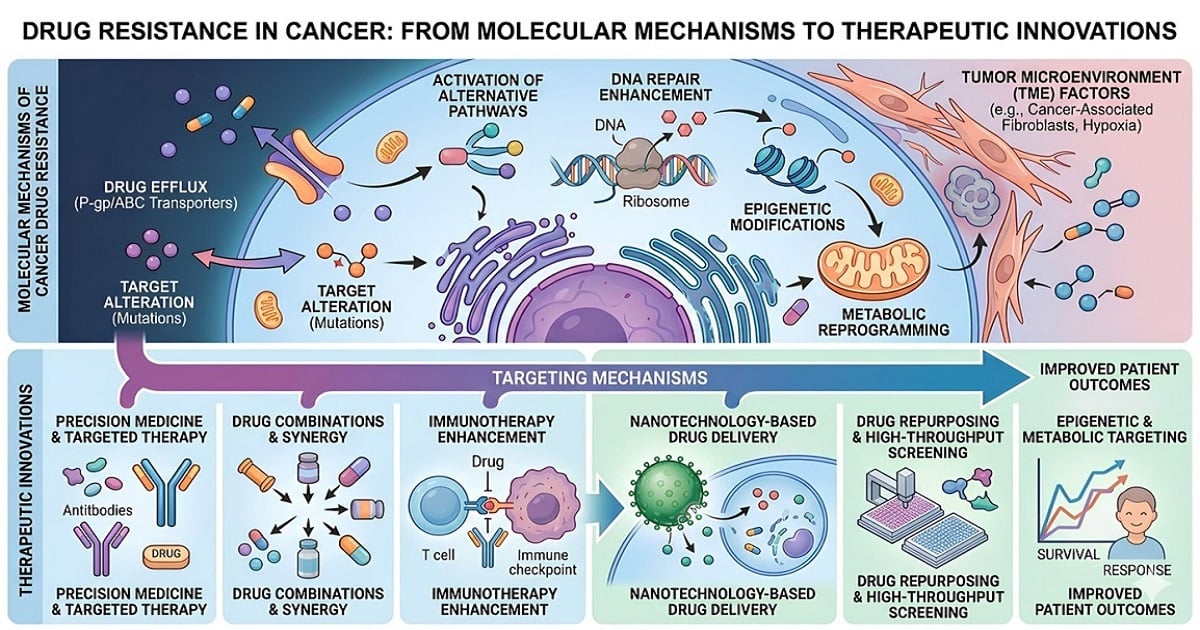
Drug resistance remains one of the central challenges in oncology, critically limiting the long-term efficacy of chemotherapy, targeted therapies, and immunotherapies. Both intrinsic and acquired resistance arise through dynamic and multifactorial processes, reflecting the ability of cancer cells to adapt under therapeutic pressure. At the molecular level, resistance is driven by genetic and epigenetic alterations that affect drug targets, activate compensatory signaling pathways, and promote genomic instability. These changes are tightly linked to tumor heterogeneity and cellular plasticity, enabling the emergence of resistant subclones and phenotypic transitions that sustain tumor progression and relapse.
Beyond cancer cell-intrinsic mechanisms, the tumor microenvironment plays a crucial role in modulating drug response by providing biochemical and physical support that protects malignant cells and influences immune evasion and metabolic adaptation. Increasing evidence also frames drug resistance as an evolutionary process shaped by selective pressures imposed by treatment, highlighting the importance of temporal dynamics and adaptive responses.
Recent advances have led to the development of innovative therapeutic strategies aimed at overcoming resistance, including rational drug combinations, biomarker-driven precision oncology approaches, and novel modalities such as targeted protein degradation and advanced drug delivery systems. At the same time, adaptive therapeutic strategies and approaches targeting tumor–microenvironment interactions are emerging as promising avenues to delay or prevent resistance.
This Topic aims to bring together cutting-edge research and comprehensive reviews that deepen the understanding of the molecular basis of drug resistance and foster the development of more effective and durable therapeutic strategies in cancer.
Dr. Luca Falzone
Prof. Dr. Daniela Calina
Prof. Dr. Massimo Libra
Topic Editors
Keywords
- drug resistance
- tumor heterogeneity
- cancer evolution
- targeted therapy
- tumor microenvironment
- cellular plasticity
- precision oncology
- therapeutic strategies
- epigenetics
Participating Journals


182 Articles
Launched in 2021
-Impact Factor
-CiteScore
27 DaysSubmission to First Decision
5 DaysAcceptance to Publication
-Highest JCR Category Ranking

18,370 Articles
Launched in 2013
4.5Impact Factor
7.8CiteScore
18 DaysSubmission to First Decision
3 DaysAcceptance to Publication
Q2Highest JCR Category Ranking

38,109 Articles
Launched in 2009
4.8Impact Factor
9.0CiteScore
18 DaysSubmission to First Decision
3 DaysAcceptance to Publication
Q2Highest JCR Category Ranking

4,837 Articles
Launched in 1999
4.1Impact Factor
5.0CiteScore
16 DaysSubmission to First Decision
3 DaysAcceptance to Publication
Q2Highest JCR Category Ranking

116,612 Articles
Launched in 2000
5.6Impact Factor
10.0CiteScore
18 DaysSubmission to First Decision
3 DaysAcceptance to Publication
Q1Highest JCR Category Ranking

15,168 Articles
Launched in 2009
6.9Impact Factor
12.5CiteScore
16 DaysSubmission to First Decision
3 DaysAcceptance to Publication
Q1Highest JCR Category Ranking

836 Articles
Launched in 2019
4.1Impact Factor
5.4CiteScore
28 DaysSubmission to First Decision
5 DaysAcceptance to Publication
Q1Highest JCR Category Ranking

Preprints.org is a multidisciplinary platform offering a preprint service designed to facilitate the early sharing of your research. It supports and empowers your research journey from the very beginning.
MDPI Topics is collaborating with Preprints.org and has established a direct connection between MDPI journals and the platform. Authors are encouraged to take advantage of this opportunity by posting their preprints at Preprints.org prior to publication:
i. Share your research immediately: disseminate your ideas prior to publication and establish priority for your work.
ii. Safeguard your intellectual contribution: Protect your ideas with a time-stamped preprint that serves as proof of your research timeline.
iii. Boost visibility and impact: Increase the reach and influence of your research by making it accessible to a global audience.
iv. Gain early feedback: Receive valuable input and insights from peers before submitting to a journal.
v. Ensure broad indexing: Web of Science (Preprint Citation Index), Google Scholar, Crossref, SHARE, PrePubMed, Scilit and Europe PMC.