



Pyrolysis Technology for Sustainable Waste Valorization
Special Issue Information
Dear Colleagues,
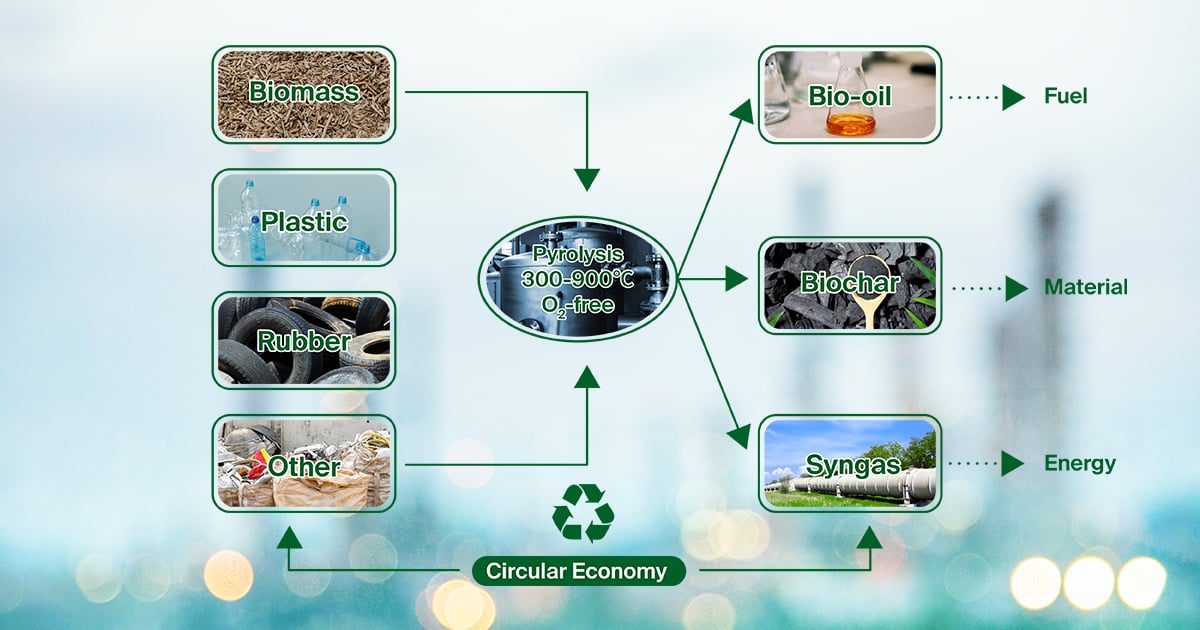
It is challenging to envision a sustainable circular economy without efficient conversion of waste streams into valuable products and energy carriers. The application of pyrolysis technology has evolved far beyond conventional thermal treatment into transformative areas such as carbon-negative material production, distributed waste-to-resource hubs, industrial symbiosis, soil remediation, and fossil fuel displacement. This evolution has catalyzed significant breakthroughs in reactor engineering, feedstock flexibility, product upgrading, process intensification, and real-time process control, resulting in enhanced bio-oil quality, tailored biochar functionalities, higher syngas purity, improved energy efficiency, and reduced operational footprints. Concurrently, the growing integration of pyrolysis with renewable power, hydrogen production, and chemical recovery platforms has stimulated innovative research into catalyst development, vapor upgrading, contaminant mitigation, and system electrification, enabling more selective conversion pathways, scalable modular designs, and resilient operation under variable feedstock conditions.
This Special Issue aims to present and disseminate the latest advances in the science, technology, modeling, application, management, and sustainability assessment of pyrolysis-based waste valorization.
Topics of interest for publication include, but are not limited to, the following:
- Advanced pyrolysis configurations: fast, slow, microwave, solar-assisted, and catalytic pyrolysis;
- Feedstock characterization and pretreatment for diverse waste streams (plastics, biomass, e-waste, tires, sludges);
- Product upgrading and refining: bio-oil hydrotreatment, syngas conditioning, and activated biochar production;
- Co-pyrolysis of mixed wastes and synergistic effects in multifeedstock systems;
- Integration with downstream processes: gasification, fermentation, chemical synthesis, and energy storage;
- Lifecycle assessment, techno-economic analysis, and carbon footprint evaluation of pyrolysis systems;
- Pyrolysis for carbon sequestration and negative emission technologies;
- Emission control, volatile organic compound mitigation, and solid residue management;
- Digital twin, machine learning, and AI-driven optimization of pyrolysis processes.
Dr. Hongyan Nan
Guest Editor
Manuscript Submission Information
Manuscripts should be submitted online at www.mdpi.com by registering and logging in to this website. Once you are registered, click here to go to the submission form. Manuscripts can be submitted until the deadline. All submissions that pass pre-check are peer-reviewed. Accepted papers will be published continuously in the journal (as soon as accepted) and will be listed together on the special issue website. Research articles, review articles as well as short communications are invited. For planned papers, a title and short abstract (about 250 words) can be sent to the Editorial Office for assessment.
Submitted manuscripts should not have been published previously, nor be under consideration for publication elsewhere (except conference proceedings papers). All manuscripts are thoroughly refereed through a single-anonymized peer-review process. A guide for authors and other relevant information for submission of manuscripts is available on the Instructions for Authors page. Recycling is an international peer-reviewed open access monthly journal published by MDPI.
Please visit the Instructions for Authors page before submitting a manuscript. The Article Processing Charge (APC) for publication in this open access journal is 1800 CHF (Swiss Francs). Submitted papers should be well formatted and use good English. Authors may use MDPI's English editing service prior to publication or during author revisions.
Keywords
- pyrolysis
- waste valorization
- biochar and bio-oil
- catalytic upgrading
- circular economy
Benefits of Publishing in a Special Issue
- Ease of navigation: Grouping papers by topic helps scholars navigate broad scope journals more efficiently.
- Greater discoverability: Special Issues support the reach and impact of scientific research. Articles in Special Issues are more discoverable and cited more frequently.
- Expansion of research network: Special Issues facilitate connections among authors, fostering scientific collaborations.
- External promotion: Articles in Special Issues are often promoted through the journal's social media, increasing their visibility.
- Reprint: MDPI Books provides the opportunity to republish successful Special Issues in book format, both online and in print.
Published Papers


Recycling - ISSN 2313-4321