

Journal Menu
► ▼ Journal Menu-
- Polymers Home
- Aims & Scope
- Editorial Board
- Reviewer Board
- Topical Advisory Panel
- Early Career Editorial Board
- Instructions for Authors
- Special Issues
- Topics
- Sections & Collections
- Article Processing Charge
- Indexing & Archiving
- Editor’s Choice Articles
- Most Cited & Viewed
- Journal Statistics
- Journal History
- Journal Awards
- Society Collaborations
- Conferences
- Editorial Office
Journal Browser
► ▼ Journal BrowserNeed Help?
Announcements
29 September 2026
Tu Youyou Award—Final Call for Nominations
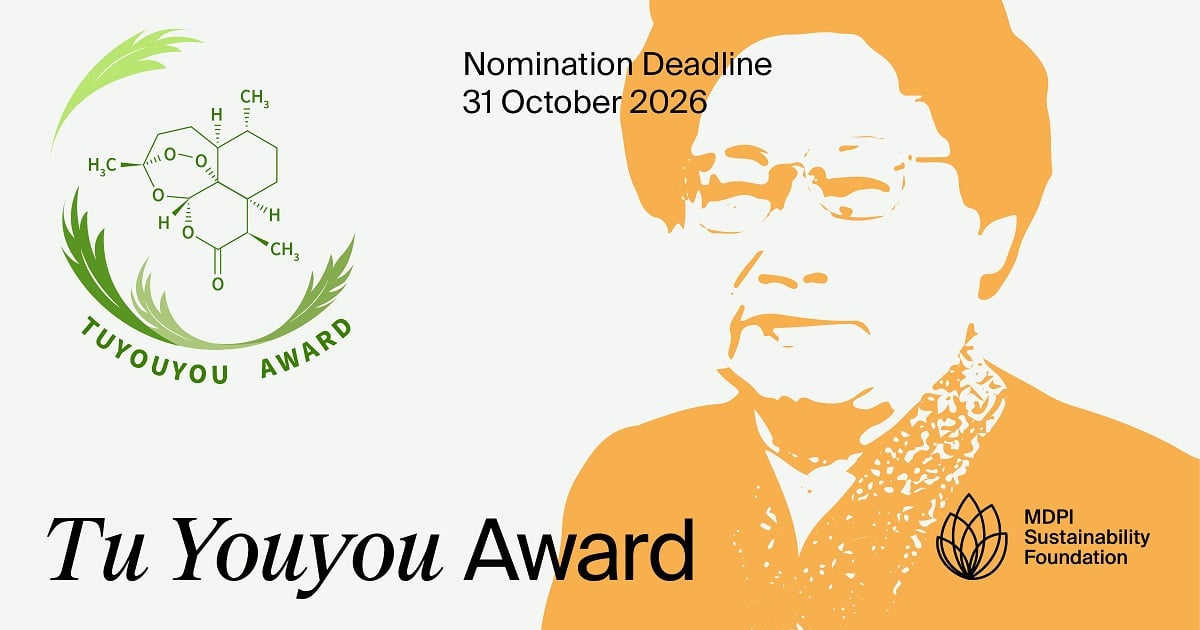
The nomination deadline for the Tu Youyou Award is approaching. Researchers are encouraged to submit nominations by 31 October 2026 (UTC-12).
The Tu Youyou Award recognizes outstanding researchers whose work has made significant contributions to natural products chemistry and medicinal chemistry, advancing scientific innovation and human health. It is named after Nobel laureate Tu Youyou, whose discovery of artemisinin has saved millions of lives.
The current award committee is chaired by Prof. Dr. William Gerwick, a Distinguished Professor at the University of California San Diego, USA, and a renowned expert in marine natural products chemistry and pharmacology. Under his leadership, the committee will evaluate nominations and recognize impactful research achievements in the related fields.
Prize:
- CHF 100,000
- A medal
- A certificate
The monetary prize will be shared equally should there be multiple recipients.
Who may be nominated?
- Scientists with outstanding achievements and contributions in the fields of natural products chemistry and medicinal chemistry.
Nominees must be individuals; team or group nominations are not permitted. Nominations are valid only for the current award cycle.
Who may submit a nomination?
- The director of the nominee’s host research institution or a recognized scientist within the field.
Self-nominations will not be considered.
Nomination materials:
- A biographical sketch
- A detailed description of the nominee’s contributions
- 5–10 representative academic publications
- A list of academic honors, awards, and funded projects
- A nomination letter signed by two nominators
How to submit?
Submit your nomination by 31 October 2026 via: https://tuyouyouprize.org/nomination/form.
For further information, please visit the Tu Youyou Award website. For any inquiries, please contact the Tu Youyou Award Team at tuyouyouaward@mdpi.com.
19 August 2026
The 2nd International Conference on Bioengineering: Bioengineering in an Era of AI (BIOENG 2026) Announces Distinguished Speakers Lineup and Late-Breaking Poster Submission Opportunity
The 2nd International Conference on Bioengineering (BIOENG 2026), Bioengineering in an Era of AI, is pleased to announce its distinguished lineup of Plenary, Keynote, and Invited Speakers. Taking place from 10 to 13 November 2026 in Barcelona, Spain, the conference will bring together leading researchers, engineers, clinicians, and innovators to explore the latest advances shaping the future of bioengineering.
Conference: The 2nd International Conference on Bioengineering: Bioengineering in an Era of AI (BIOENG 2026)
Date: 10–13 November 2026
Place: Barcelona, Spain
Website: https://sciforum.net/event/BIOENG2026
Distinguished Plenary Speakers
BIOENG 2026 is honored to welcome two internationally renowned leaders in bioengineering and regenerative medicine:
- Prof. Dr. Sir Cato T. Laurencin—University of Connecticut, USA;
- Prof. Dr. Dame Molly Stevens—University of Oxford, UK.
Keynote Speakers:
The keynote program features experts representing a broad range of disciplines across bioengineering, AI, biomedical technologies, and biomechanics:
- Prof. Dr. Louis Andrew Lyon—Chapman University, USA;
- Prof. Dr. Anthony Guiseppi-Elie—Texas A&M University, USA; President and Sr. Fellow, AIIMSEI;
- Prof. Dr. Wei Gao—Division of Engineering and Applied Science, California Institute of Technology, USA;
- Prof. Dr. Franz Konstantin Fuss—University of Bayreuth, Germany.
Invited Speakers:
The conference will also feature an international group of invited experts whose work spans regenerative medicine, biomaterials, biosensing, biomedical engineering, AI, diagnostics, human–machine interaction, and global health:
- Prof. Dr. Ennio Tasciotti—San Raffaele University, Italy;
- Prof. Dr. Stelios Andreadis—State University of New York in Buffalo, USA;
- Prof. Dr. Dana Al-Sulaiman—King Abdullah University of Science and Technology, Saudi Arabia;
- Prof. Dr. Carmen Mayorga—UPC—Peruvian University of Applied Sciences, Peru;
- Dr. Selim Bozkurt—Ulster University, UK;
- Prof. Dr. Leopoldo Angrisani—University of Naples Federico II, Italy;
- Prof. Dr. Maribel Vazquez—Rutgers, The State University of New Jersey, USA;
- Prof. Dr. Silviya Petrova Zustiak—Saint Louis University, USA;
- Dr. Hana Lísalová—Institute of Physics of the Czech Academy of Sciences, Czech Republic;
- Prof. Dr. Gianluca Di Flumeri—Sapienza University of Rome, Italy;
- Dr. Luciano Sappia—Scientific Advisor and Innovation Consultant, TotemXR, Catalonia, Spain;
- Dr. Claudio Parolo—Ramón y Cajal Fellow, Universitat Rovira i Virgili; Co-founder, Global Health Innovative Solutions, Spain.
Together, these speakers will contribute to a diverse scientific program addressing emerging technologies, translational research, and the growing role of AI across bioengineering and healthcare.
Late-Breaking Poster Submissions Are Now Open
Missed the initial abstract submission deadline? Late-breaking poster submissions are now open, providing a final opportunity to present your latest research at BIOENG 2026.
Researchers are invited to submit their work for consideration in the conference poster sessions. The submission portal will remain open for a limited time, so we encourage interested researchers to submit their abstracts as soon as possible.
Submit your late-breaking poster abstract here: https://sciforum.net/submissions/BIOENG2026/link/1.
Join us in Barcelona from 10 to 13 November 2026 for four days of scientific exchange, interdisciplinary collaboration, and networking with the international bioengineering community.
31 July 2026
Ursula Röthlisberger Receives the Inaugural Michele Parrinello Award
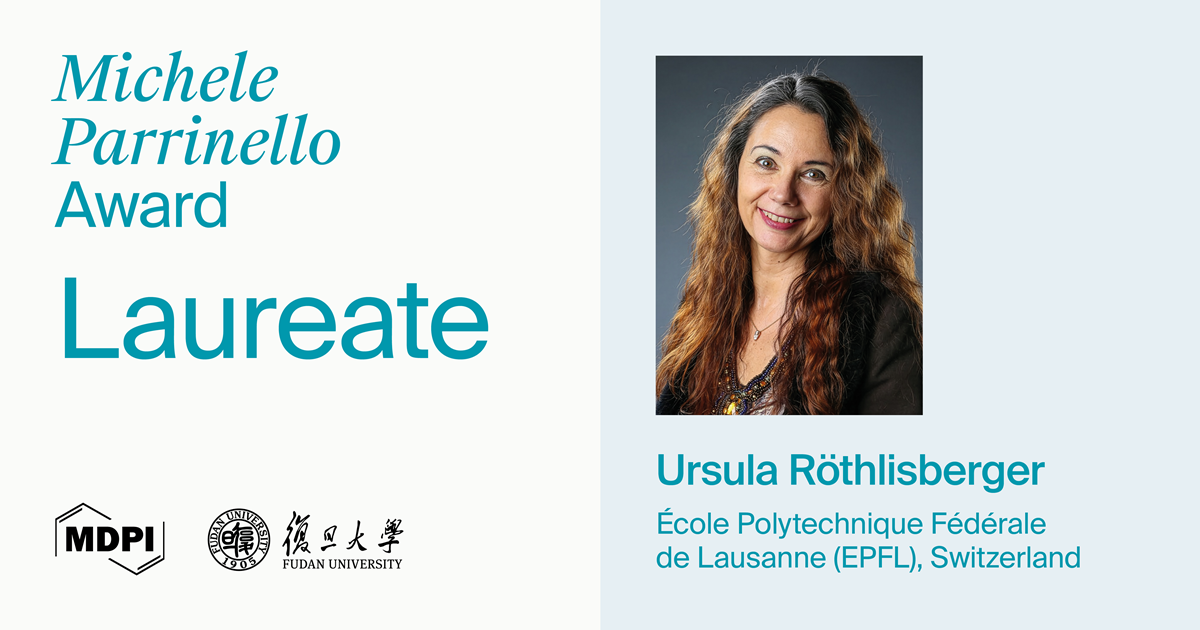
We are pleased to announce that the inaugural Michele Parrinello Award has been conferred upon Prof. Ursula Röthlisberger, in recognition of her outstanding contributions to computational chemistry and molecular simulation, particularly through her pioneering work in ab initio molecular dynamics and QM/MM multiscale simulation methods. This award celebrates researchers whose work embodies the spirit of scientific innovation and rigor that Professor Parrinello has championed throughout his career. We warmly congratulate Prof. Röthlisberger on this well-deserved recognition.
The achievements of Prof. Ursula Röthlisberger highlight the profound impact of computational methods on our understanding of complex chemical, biological, and materials systems. We invite the global scientific community to join us in celebrating her outstanding contributions to computational science.
“Professor Ursula Röthlisberger has been recognized by the 2026 Michele Parrinello Award Committee as an exceptional leader in computational chemistry and molecular simulation. Her innovative research has significantly advanced the predictive modeling of complex chemical and biological systems and has created lasting impact across multiple scientific disciplines. Through her outstanding scientific achievements, dedication to education, and leadership in the international research community, she has played a vital role in shaping the development of modern computational science.”
—Prof. Dr. Xin-Gao Gong, Chair of the Award Committee
2026 Michele Parrinello Award Laureate
|
Ursula Röthlisberger |
Prof. Ursula Röthlisberger is a professor at the Institute of Chemical Sciences and Engineering, EPFL, Switzerland, where she leads the Laboratory of Computational Chemistry and Biochemistry. Her research focuses on developing computational methods for molecular simulation, including ab initio molecular dynamics and quantum mechanical/molecular mechanical (QM/MM) multiscale approaches, to study complex chemical, biological, and materials systems. Her work has contributed to the advancement of computational frameworks for understanding molecular processes at the atomic level. She has also applied computational approaches to investigate next-generation photovoltaic materials, including dye-sensitized and perovskite solar cells, providing insights into material properties, stability, and performance through collaboration with experimental researchers. |

2026 Award Committee
Committee Chair:
- Prof. Dr. Xin-Gao Gong, Fudan University, China.
Committee Members (listed in alphabetical order):
- Prof. Alessandro Laio, Scuola Internazionale Superiore di Studi Avanzati, Italy;
- Prof. Michiel Sprik, University of Cambridge, UK;
- Prof. David J. Srolovitz, the University of Hong Kong, China;
- Prof. Mark E. Tuckerman, New York University, USA;
- Prof. Su-Huai Wei, Eastern Institute of Technology, Ningbo, China.
Note: The 2026 Award Committee comprises six members, including one anonymous member.
2026 Award Ceremony
The inaugural Michele Parrinello Award Ceremony will take place on 7 November 2026, at the Southern University of Science and Technology (SUSTech) in Shenzhen, China, as part of the 2026 MDPI Materials Science Conference. Further information and updates will be available on the official Michele Parrinello Award website.
About the Michele Parrinello Award
The Michele Parrinello Award was established in November 2025 to honor Professor Michele Parrinello’s enduring legacy in advancing computational science. This biennial international award recognizes senior researchers who have made outstanding contributions to computational physical sciences, encompassing physics, chemistry, and materials science. The recipient will receive a monetary prize of 50,000 EUR, a commemorative medal, and a certificate.
For further information about the award and the laureate, please visit the Michele Parrinello Award website.
4 December 2025
Meet Us at the Polymers 2026: Trends, Innovation and Future Conference, 25–28 June 2026, Nanjing, China

We are pleased to announce that the Polymers 2026: Trends, Innovation and Future conference will be held in Nanjing, China, from 25 to 28 June 2026. This conference is organized by MDPI’s open access journal Polymers (IF 4.9, CiteScore 9.7). After the great success of Polymers 2018 in Barcelona, Polymers 2022 in Turin, and Polymers 2024 in Athens, Polymers 2026 is set to raise the bar once again—bringing together global experts to explore the latest breakthroughs and future directions in polymer science.
Conference Chairs:
- Prof. Dr. Sixun Zheng, Shanghai Jiao Tong University, China;
- Prof. Dr. Xuming Xie, Tsinghua University, China;
- Prof. Dr. Dimitrios Bikiaris, Aristotle University of Thessaloniki, Greece.
This conference brings together global experts in polymer science, engineering, and technology to explore cutting-edge innovations—from green and sustainable chemistry to AI-powered material design.
Session topics of interest:
S1. Polymer Synthesis;
S2. Green Sustainable Polymers;
S3. Polymer Processing;
S4. Polymer Networks and Gels;
S5. Polymer Composites;
S6. Polymer Applications;
S7. Polymers and the Environment;
S8. Artificial Intelligence in Polymer Science.
Important dates:
Deadline for abstract submission: 26 February 2026;
Notification of acceptance: 26 March 2026;
Deadline for Early Bird registration: 2 April 2026;
Deadline for covering author registration: 9 April 2026;
Deadline for registration: 25 May 2026.
Guide for authors:
To submit your abstract, please click on the following link: https://sciforum.net/user/submission/create/1478.
To register for the event, please click on the following link: https://sciforum.net/event/polymers2026?section=#registration.
For details regarding Abstract Submission, Poster and Slide Submission, and Publication Opportunities, you may refer to the “Instructions for Authors” section: https://sciforum.net/event/polymers2026?section=#instructions.
Do not miss this unique opportunity to be at the forefront of the Polymers transformation.
For any enquiries regarding the event, please contact polymers2026@mdpi.com.
29 September 2026
Nobel Prize in Chemistry—Where Breakthroughs Meet Open Sciences
Since 1901, the Nobel Prizes have celebrated the moments when human curiosity breaks new ground—achievements that so often start small: an unexpected result, a question nobody else thought to ask, an idea pursued long before its value was clear. More than a tribute to individual achievement, the Nobel Prize honors the patience and imagination that quietly rewrite what we know, and expand what’s possible for generations to come.

Join us for an upcoming webinar as our experts revisit the groundbreaking research of past laureates in the in chemistry and material sciences and examine the trends currently shaping the field. This session will offer a deeper understanding of how past breakthroughs continue to influence the direction of modern research.

|
Date: 7 October 2026, 13:00 (CEST) Free to register for this webinar here! |
Date: 7 October 2026, 15:00 (CEST) Free to register for this webinar here! |

“Nanoparticle-Catalysed Microwave-Driven MCRs for Sustainable Heterocycle Synthesis”
by Venkatesan Kasi, Malgorzata Jeleń, Xiao-Hui Chu, Parasuraman Karthikeyan, Beata Morak Młodawska and Lai-Hock Tey
Molecules 2026, 31(6), 1031; https://doi.org/10.3390/molecules31061031
“Polymer-Functionalized Nanocatalysts: Engineering Interfaces and Microenvironments for Enhanced Catalysis”
by Zhiyi Sun, Shuo Wang and Xuemin Hu
Polymers 2026, 18(4), 465; https://doi.org/10.3390/polym18040465
“Strong Tribocatalytic Degradation of Organic Pollutants by Natural Shell Particles”
by Yuqin Xie, Mingzhang Zhu, Zhenming Xu, Lina Bing, Wanping Chen and Zhenjiang Shen
Nanomaterials 2026, 16(3), 194; https://doi.org/10.3390/nano16030194
“Solar-Light-Activated Photochemical Skin Injury Induced by Highly Oxygenated Compounds of Sosnovsky’s Hogweed”
by Valery M. Dembitsky and Alexander O. Terent’ev
Photochem 2026, 6(1), 7; https://doi.org/10.3390/photochem6010007
“Photocatalytic Performance of the Synergetic Coupling of NiO-MgO Nanostructures on a g-C3N4 Composite Towards Methylene Blue Under Visible-Light Irradiation”
by Shaojun Hao, Siew Wen Ching, Timm Joyce Tiong, Yeow Hong Yap and Chao-Ming Huang
J. Compos. Sci. 2026, 10(1), 45; https://doi.org/10.3390/jcs10010045
“Formal Synthesis of Ortho-Cyanated N-Heterocycles via Direct, Metal-Free Cyanation of N-Oxides Under Benign Conditions”
by Hua Xiao, Reziyamu Wufuer and Dong Wang
Molecules 2026, 31(2), 276; https://doi.org/10.3390/molecules31020276
“Sustainable Production and Characterization of ZnO–GO Nanocomposites from Waste Zn–C Batteries for Photocatalytic Degradation of Malachite Green”
by Sonja Stanković, Milan Radovanović, Stefan Đorđievski, Vladan Nedelkovski, Boštjan Markoli, Snežana Milić and Milan Antonijević
Metals 2026, 16(1), 71; https://doi.org/10.3390/met16010071
“Metalloporphyrin-Based Covalent Organic Frameworks: Design, Construction, and Photocatalytic Applications”
by Rui Liu, Yuting Jia, Yongqing Xia and Shengjie Wang
Catalysts 2026, 16(1), 76; https://doi.org/10.3390/catal16010076
“Eco-Friendly Synthesis of ZnO-Based Nanocomposites Using Haloxylon and Calligonum Extracts for Enhanced Photocatalytic Degradation of Methylene Blue”
by Elham A. Alzahrani, Sabri Ouni, Mohamed Bouzidi, Abdullah S. Alshammari, Ahlam F. Alshammari, Rizwan Ali, Odeh A. O. Alshammari, Naim Belhaj Mohamed and Noureddine Chaaben
J. Compos. Sci. 2026, 10(1), 18; https://doi.org/10.3390/jcs10010018

“s_mmpbsa: A Lite and Cross-Platform MM-PBSA Program”
by Jiaxing Zhang, Tao Gu, Chuanxi Li and Wei Qi
Molecules 2026, 31(10), 1683; https://doi.org/10.3390/molecules31101683
“Advances in Molecular Dynamics Simulations for Hydrogels and Nanocomposite-Reinforced Hydrogels: Multiscale Simulation Strategies and Future Directions”
by Lanlan Wang, Xiangling Gu, Yanyan Zhao, Jinju Tian, Xiaokun Ma and Mingqiong Tong
Gels 2026, 12(4), 288; https://doi.org/10.3390/gels12040288
“Quaternium-22 as a High-Performance Corrosion Inhibitor for Carbon Steel in Acidic Media: Experimental and Theoretical Insights”
by Mohammed Afifi, Nasser M. El Basiony, Aziza S. El-Tabei, Shimaa Abdel Halim and Magdy A. M. Ibrahim
Surfaces 2026, 9(2), 30; https://doi.org/10.3390/surfaces9020030
“A Review of Computational Modeling of Polymer Composites and Nanocomposites”
by Zhangke Yang and Zhaoxu Meng
Polymers 2026, 18(4), 443; https://doi.org/10.3390/polym18040443
“Iduronate Ring Puckering Effects on Preferred Glycosidic Linkage Conformations in Heparin/Heparan Sulfate and Dermatan Sulfate Disaccharides”
by Olgun Guvench
Molecules 2026, 31(3), 504; https://doi.org/10.3390/molecules31030504
“Refined Langmuir–Hinshelwood Kinetics for Heterogeneous Photocatalytic Systems: Analytical Closed-Form Solution, Enhanced Approximations and Experimental Validation”
by Juan Francisco Ramos-Justicia, Ana Urbieta and Paloma Fernández
Physchem 2026, 6(1), 5; https://doi.org/10.3390/physchem6010005

“Synergistic Pt-Ni Cocatalysis on Dendritic CdS Boosts Photocatalytic H2 Evolution by Promoting Charge Separation and Water Dissociation”
by Yilin Niu, Bozhong Tian, Jingrui Duan, Wen Luo, Yang Wu and Yifan Zhang
Catalysts 2026, 16(6), 527; https://doi.org/10.3390/catal16060527
“Performance and Stability Enhancement of Perovskite Solar Cells Based on Iron-Doped Bi-Electron Transport Layers”
by Saleh Alyahya, Mohamad Arnaout, Marc Al Atem, Mutaz A. Alanazi, Bedir Yousif and Alaa A. Zaky
Inorganics 2026, 14(4), 118; https://doi.org/10.3390/inorganics14040118
“Nano–Bio Hybrid Catalysts: Enzyme–Nanomaterial Interfaces for Sustainable Energy Conversion”
by Ghazala Muteeb, Youssef Basem, Abdel Rahman Alaa, Mahmoud Hassan Ismail, Mohammad Aatif, Mohd Farhan, Sheeba Kumari and Doaa S. R. Khafaga
Catalysts 2026, 16(4), 367; https://doi.org/10.3390/catal16040367
“Role of Solid Additives in Morphological and Structural Optimization of Bulk Heterojunction Organic Solar Cells”
by Muhammad Raheel Khan, Bożena Jarząbek and Abid Ullah
Materials 2026, 19(7), 1387; https://doi.org/10.3390/ma19071387
“A Multifunctional Nickel-Based Metal–Organic Framework (MOF) for Hydrogen Production, Supercapacitors, and Electrocatalysis”
by Zeinab Hussein Hashem, Laila H. Abdel-Rahman, Santiago Gómez-Ruiz and Hani Nasser Abdelhamid
Catalysts 2026, 16(3), 283; https://doi.org/10.3390/catal16030283
“Recent Advances in Anion-Doping Transition Metal Layered Double Hydroxide for Water Oxidation to Hydrogen Evolution”
by Yang Zhu, Luyu Liu, Linlin Xu, Tingjun Ji, Xiang Ding, Haotian Qin, Siyuan Tang and Fuzhan Song
Catalysts 2026, 16(2), 141; https://doi.org/10.3390/catal16020141
“Comparative DFT Study of Lignocellulosic Binders on N- and S-Monodoped Graphene for Sustainable Li-Ion Battery Electrodes”
by Joaquín Alejandro Hernández Fernández, Juan Carrascal and Jose Alfonso Prieto Palomo
J. Compos. Sci. 2026, 10(2), 70; https://doi.org/10.3390/jcs10020070
“Polymer Coatings for Electrochemical Biosensors”
by Niyaz Alizadeh, Antonios Georgas, Christos Argirusis, Georgia Sourkouni and Nikolaos Argirusis
Coatings 2026, 16(2), 164; https://doi.org/10.3390/coatings16020164
“A Review of Graphene Oxide and Reduced Graphene Oxide Applications: Multifunctional Nanomaterials for Sustainable Environmental and Energy Devices”
by Ikbal Adrian Milka, Bijak Riyandi Ahadito, Desnelli, Nurlisa Hidayati and Muhammad Said
C 2026, 12(1), 11; https://doi.org/10.3390/c12010011
“Advances in Alkaline Water Electrolysis—The Role of In Situ Ionic Activation in Green Hydrogen Production”
by Vladimir M. Nikolić, Katarina M. Dimić-Mišić, Slađana Lj. Maslovara, Dejana P. Popović, Mihajlo N. Gigov, Sanja S. Krstić and Milica P. Marčeta Kaninski
Catalysts 2026, 16(1), 98; https://doi.org/10.3390/catal16010098
“Sustainable Carbon Nanomaterials from Biomass Precursors: Green Synthesis Strategies and Environmental Applications”
by Ernesto Almaraz-Vega, Aislinn Itzel Morales-Vargas, Guillermo Gómez Delgado, Laura Castellanos-Arteaga, Ofelia Iñiguez Gómez and Claudia Cecilia Flores Salcedo
Nanomaterials 2026, 16(1), 75; https://doi.org/10.3390/nano16010075
“Molecular Dynamics Simulation of Nano-Aluminum: A Review on Oxidation, Structure Regulation, and Energetic Applications”
by Dihua Ouyang, Xin Chen, Qiantao Zhang, Chunpei Yu, He Cheng, Weiqiang Pang and Jieshan Qiu
Nanomaterials 2026, 16(1), 74; https://doi.org/10.3390/nano16010074
“Catalytic Effects of Nanocage Heterostructures in Lithium-Sulfur Batteries”
by Tianhao Ding, Haiyan Zhu, Zhequn Ren, Shanlin Chen, Jianxiao Shang, Tingting Li, Guohao Yin, Yuyuan Huang, Shaobo Jia, Chou Wu et al.
Catalysts 2026, 16(1), 51; https://doi.org/10.3390/catal16010051
17 September 2026
Meet Us at the 6th China International Congress on Composite Materials (CCCM-6), 21–24 October 2026, Chongqing, China

The China International Conference on Composite Materials (CCCM) is a premier academic conference in China’s composites sector, held biennially and distinguished by its large scale, high academic standards, and extensive industry influence. Focusing on cutting-edge developments, key core technologies, and engineering applications in the field of composite materials, the 6th China International Conference on Composite Materials (CCCM-6) is scheduled to take place in Chongqing from 21 to 24 October 2026, alongside the 9th International Exhibition on Technological Innovations and Achievements in the Composites Industry (ICIE-9).
The following MDPI journals will be represented:
- Coatings;
- Polymers;
- J. Compos. Sci.;
- AI Materials;
- Materials;
- Ceramics;
- Solids;
- Journal of Functional Biomaterials (JFB);
- Electronic Materials;
- Recycling;
- Fibers;
- Adhesives;
- Textiles;
- C;
- Construction Materials;
- Metals;
- Nanomaterials.
If you are planning to attend the conference, please visit our booth #E09. Our delegates look forward to meeting you in person and answering any questions that you may have. For more information about the conference, please visit the following website: https://cccm6.csfcm.org.cn.
9 September 2026
Empowering Academic Growth with MDPI Academic Publishing Workshop at Faculty of Science, Naresuan University, 13 November 2026

We are delighted to announce the MDPI Academic Publishing Workshop, organized in partnership with the Faculty of Science, Naresuan University, Phitsanulok. This collaborative initiative reflects a shared commitment to strengthening research capacity and supporting the academic community in navigating the evolving landscape of scholarly publishing.
As part of our ongoing dedication to researcher development, the workshop is designed for young investigators, PhD and master’s students, and early career researchers. Participants will gain practical guidance on writing scientific papers in English, selecting the right journal for their work, and understanding how artificial intelligence is shaping scientific publishing today. The session also offers a direct opportunity to engage with MDPI editors and to build lasting connections between authors and the Editorial Office.
Date: 13 November 2026
Time: 13:00–16:00
Location: SC4 210, Faculty of Science, Naresuan University, Phitsanulok, Thailand
Language: English
Registration: https://www.surveymonkey.com/r/6R2WDF5
| Time | Program | Speaker |
| 13:00–13:10 | Opening Speech | Assoc. Prof. Dr. Uthai Wichai |
| 13:10–13:30 | MDPI and Journal Introduction | Dr. Sawarot Phetsuk and Dr. Krit Inthajak |
| 13:30–14:20 | How to Write Scientific Papers in English | Dr. Krit Inthajak |
| 14:20–14:30 | Q&A Session | |
| 14:30–15:00 | Journal Selection (How to Find the Right Journal) | Dr. Siriporn Tantiwatcharothai |
| 15:00–15:10 | Q&A Session | |
| 15:10–15:40 | Artificial Intelligence in Scientific Publishing | Ms. Ploy Assavajamroon |
| 15:40–15:50 | Q&A Session |
Chair:
 |
Assoc. Prof. Dr. Gareth Ross is a polymer and biomaterials researcher in the Department of Chemistry at Naresuan University, Thailand. He earned his BSc (Hons) in chemistry and PhD in biomaterials and polymer science from Aston University, UK, where his doctoral research examined ocular biotribology and contact-lens lubrication mechanisms. He has worked at Naresuan University since 2012. His research focuses on hydrogel synthesis and characterization, macromer technology, polymer–surfactant interactions, and the controlled entrapment and release of hydrophilic compounds for materials and biomedical applications. |
Opening Speaker:
 |
Assoc. Prof. Dr. Uthai Wichai is Dean of the Faculty of Science and a chemist in the Department of Chemistry at Naresuan University, Thailand. He holds a BSc in chemistry from Mahidol University and MS and PhD degrees in chemistry from the University of Alabama, USA. His research focuses on the synthesis and applications of capsaicinoids, capsinoids, and related derivatives, alongside broader work involving functional polymeric and bioactive materials. Before becoming Dean, he held several university leadership roles, including Head of the Department of Chemistry; Vice Dean for Policy, Strategy, and Planning; and Vice President for Strategic and Planning Affairs. |
MDPI Speakers:
 |
Dr. Sawarot Phetsuk graduated from Chiang Mai University with a PhD in chemistry. She joined MDPI as an Assistant Editor for Polymers in the Polymer Science Section and later progressed to become a Section Managing Editor for Polymers. Since 2023, she has also served as a Group Leader, overseeing editorial operations and supporting the development of editorial teams. |
 |
Dr. Krit Inthajak obtained his PhD in engineering and technology from Sirindhorn International Institute of Technology, Thammasat University. He joined MDPI in March 2020 as an Assistant Editor for Molecules. He was appointed as a Section Managing Editor in 2021 and worked as a Group Leader from 2021 to 2024. He is now one of MDPI’s Regional Engagement Editors for the Asia–Pacific region. |
 |
Dr. Siriporn Tantiwatcharothai obtained her PhD in applied chemistry from the Faculty of Science, King Mongkut’s Institute of Technology Ladkrabang, Thailand. She joined MDPI in December 2022 as an Assistant Editor for Catalysts. In 2024, she was promoted to Section Managing Editor, later becoming a Chief Section Managing Editor in April 2025. Currently, she is one of MDPI’s Regional Engagement Editors for the Asia–Pacific region. |
 |
Ms. Ploy Assavajamroon obtained her master’s degree in chemistry from Thammasat University in 2020 and joined MDPI as an Assistant Editor for Crystals in the same year. She became a Section Managing Editor in 2021 and a Group Leader in 2022. She is currently one of MDPI’s Regional Engagement Editors for the Asia–Pacific region. |
Organizer:

MDPI – Multidisciplinary Digital Publishing Institute
Website: www.mdpi.com
8 September 2026
Topics Webinar丨Interdisciplinary Approaches to Next Generation Circular Economy, 15 September 2026

The Circular Economy (CE) model, which aims to maximize resource efficiency and minimize waste generation throughout the entire life cycle of a product, is gradually replacing the traditional linear economy model based on the “produce, use, and dispose” approach.
In the search for sustainable solutions for various material groups, including metals, glass and ceramics, polymers, biomass, and composite materials, researchers and practitioners focus on both extending product lifetimes and promoting reuse through the application of environmentally safer material, chemical, and biological recycling methods. However, further progress depends more on interdisciplinary than on single-discipline approaches, integrating innovative concepts in materials science, energy, and waste management to develop sustainable, process-optimized green technologies aligned with the core principles of the Circular Economy.
The webinar will provide a forum for discussing interdisciplinary aspects of the Circular Economy. In addition, the related Topic, titled “Circular Economy in Interdisciplinary Perspective: Valorization of Raw Materials, Sustainable Products, and Pro-Ecological Industrial Developments”, is open for submissions here.
Date: 15 September 2026
Time: 1:30 p.m. CEST | 7:30 a.m. EDT | 7:30 p.m. CST Asia
Landing Page: https://sciforum.net/event/Topics-53
Register now for free!

Program:
| Speaker | Presentation Title | Time in CEST | Time in EDT | Time in CST Asia |
| MDPI Speaker | Introduction of Topics | 1:30–1:35 p.m. | 7:30–7:35 a.m. | 7:30–7:35 p.m. |
| Prof. Dr. Krzysztof Pielichowski | Chair Introduction | 1:35–1:40 p.m. | 7:35–7:40 a.m. | 7:35–7:40 p.m. |
| Dr. Izabela Czekaj | Smart Molecular Design of Catalytic Processes for Biomass Valorization and Circular Carbon Economy | 1:40–2:00 p.m. | 7:40–8:00 a.m. | 7:40–8:00 p.m. |
| Prof. Dr. Giovann De Feo | From Waste Management to Circular Economy: The Role of Environmental Education and Stakeholder Engagement | 2:00–2:20 p.m. | 8:00–8:20 a.m. | 8:00–8:20 p.m. |
| Prof. Dr. Brian Vejrum Wæhrens | Dynamic Data-Driven Process Optimization for Production Faced by Input Material Variance—Enabling Circular Manufacturing with Adaptive Manufacturing Using Industrial AI | 2:20–2:40 p.m. | 8:20–8:40 a.m. | 8:20–8:40 p.m. |
| Q&A Session | 2:40–3:00 p.m. | 8:40–9:00 a.m. | 8:40–9:00 p.m. | |
| Prof. Dr. Krzysztof Pielichowski | Closing of Webinar | 3:00–3:05 p.m. | 9:00–9:05 a.m. | 9:00–9:05 p.m. |
After registering, you will receive a confirmation email containing information on how to join the workshop. Registrations with academic institutional email addresses will be prioritized.
Unable to attend? Register anyway and we’ll let you know when the recording is available to watch.
Webinar Chair and Speakers:
- Prof. Dr. Krzysztof Pielichowski, Cracow University of Technology, Kraków, Poland;
- Dr. Izabela Czekaj, Cracow University of Technology, Kraków, Poland;
- Prof. Dr. Giovanni De Feo, University of Salerno, Fisciano, Italy;
- Prof. Dr. Brian Vejrum Wæhrens, Aalborg University, Aalborg, Demark.
Relevant Topic:
“Interdisciplinary Approaches to Next Generation Circular Economy: From Material Valorization via Innovative Product Design to Sustainable Industrial Transformation”
Topic Editors: Prof. Dr. Krzysztof Pielichowski, Prof. Dr. Piotr Duda, Dr. Michał Łach, Dr. Tomasz Mariusz Majka, Dr. Tomasz Zdeb and Dr. Giovanni De Feo
Abstract submission deadline: 31 May 2027
Manuscript submission deadline: 31 July 2027
1 September 2026
MDPI INSIGHTS: The CEO’s Letter #38 – 2 Million Published Articles, Outstanding Reviewers, Michele Parrinello Award, AIS 2026 & WSF-12

Welcome to the MDPI Insights: The CEO's Letter.
In these monthly letters, I will showcase two key aspects of our work at MDPI: our commitment to empowering researchers and our determination to facilitating open scientific exchange.
Opening Thoughts

MDPI Reaches 2 million Published Articles
This month, MDPI reached an important milestone: the publication of our two-millionth article.
It is a number that would have been difficult to imagine in 1996, when MDPI’s first journal, Molecules, published its first volume of 74 papers. It took 25 years to reach our first million published articles in December 2022, and less than four years to reach the second million in August 2026.
From 74 Papers to Two Million Articles
The milestone also comes during our 30th anniversary year, providing another opportunity to reflect on how both MDPI and Open Access publishing have developed over the past three decades. Today, more than half of the world’s published research is Open Access, while MDPI has grown into a portfolio of journals supported by more than 70,000 Editorial Board Members. In 2025 alone, articles published in MDPI journals received 1.9 billion views and downloads.
While two million is an impressive number, what matters most is what sits behind it. Every article represents research conducted and shared by authors, editorial decisions made by academic editors, expertise contributed by reviewers, and the work of colleagues across MDPI supporting the publication and dissemination of research.
Many of the stories in this month’s CEO Letter reflect these communities. We recognize the contributions of the more than 209,000 reviewers who supported MDPI journals in 2025, celebrate scientific excellence through the inaugural Michele Parrinello Award, and look at how communities continue to develop through AIS 2026 and the 12th World Sustainability Forum.
“In 2025 alone, articles published in MDPI journals received 1.9 billion views and downloads”
Publishing at Scale, with Purpose
Reaching two million articles is an important milestone in MDPI’s history, but it is also a reminder of the responsibility that comes with publishing at this scale. As we look ahead, our focus remains on quality, research integrity, strong editorial standards, and providing researchers with reliable and efficient ways to share their work openly with the world.
Thank you to our authors, editors, reviewers, institutional partners, and colleagues around the world who have contributed to this journey.
Impactful Research

Recognizing Scientific Excellence: The Michele Parrinello Award
Supporting researchers means more than publishing and disseminating scientific work. It also means recognizing the researchers, editors, reviewers, and scholars whose contributions advance their fields.
I’m pleased to highlight the inaugural Michele Parrinello Award, which has been awarded to Prof. Ursula Röthlisberger of the École Polytechnique Fédérale de Lausanne (EPFL), Switzerland. Prof. Röthlisberger was recognized for her contributions to computational chemistry and molecular simulation, particularly her pioneering work in ab initio molecular dynamics and quantum mechanical/molecular mechanical (QM/MM) multiscale simulation methods.
Prof. Röthlisberger leads the Laboratory of Computational Chemistry and Biochemistry at EPFL, developing computational approaches to understand complex chemical, biological, and materials systems at the atomic level. Her work also extends to next-generation photovoltaic materials, demonstrating the interdisciplinary reach of computational science.
The Michele Parrinello Award was established in 2025 to honor Prof. Michele Parrinello's pioneering contributions to atomistic simulation and computational science. Presented biennially, it recognizes senior researchers who have made significant contributions across physics, chemistry, and materials science. The recipient receives a EUR 50,000 prize, commemorative medal, and certificate.
Awarding Scientific Excellence
The selection was overseen by an international Award Committee, chaired by Prof. Dr. Xin-Gao Gong of Fudan University and a group of researchers from institutions in China, Italy, the UK, and the USA. Nominations were evaluated based on rigor, integrity, and academic excellence. In announcing the winner, Prof. Gong highlighted the impact of Prof. Röthlisberger’s research across multiple scientific disciplines, alongside her contributions to education and leadership within the international research community.
Recognizing Contributions Across the Research Community
The Michele Parrinello Award is part of MDPI’s broader commitment to recognizing excellence across different disciplines, contributions, and career stages.
Our journal awards include:
- Best Paper Awards – recognizing outstanding published research
- Young Investigator Awards – supporting exceptional early-career researchers
- Best PhD Thesis Awards – recognizing promising emerging scholars
- Outstanding Reviewer Awards – acknowledging the essential contribution of peer reviewers
- Travel Awards – helping early-career researchers participate in international conferences
- Editor of Distinction Awards – recognizing exceptional contributions from Editorial Board Members.
Alongside these journal awards, MDPI supports flagship initiatives including the Tu Youyou Award, the World Sustainability Award, the Emerging Sustainability Leader Award, and now the Michele Parrinello Award.
Learn More:
Inside MDPI

Recognizing the People Behind Peer Review: MDPI’s 2025 Outstanding Reviewer Awards
Behind every published article is a network of people contributing their expertise to the scholarly record. Among them, reviewers play an essential role, providing independent assessment, feedback, and subject expertise that help editors make informed decisions and authors build on their research.
In 2025, more than 209,000 individuals contributed their expertise as reviewers for MDPI journals. This represents an enormous contribution of time and knowledge from researchers around the world, occurring often alongside their own research, teaching, and professional responsibilities.
I’m pleased to share the recipients of MDPI’s 2025 Outstanding Reviewer Awards, recognizing reviewers who have shown great dedication, expertise, and responsiveness throughout the peer-review process.
Outstanding Reviewers
As at July 2026, 181 MDPI journals have presented Outstanding Reviewer Awards to 412 recipients, highlighting their work across disciplines ranging from biology, chemistry, engineering, and medicine to environmental sciences, public health, and the social sciences. To learn more about the list of outstanding reviewers, please visit the following pages:
- Biology and Life Sciences;
- Business and Economics;
- Chemistry and Materials Science;
- Computer Science and Mathematics;
- Engineering;
- Environmental and Earth Sciences;
- Medicine and Pharmacology;
- Physical Sciences;
- Public Health and Healthcare;
- Social Sciences, Arts and Humanities.
While these awards highlight a select group of outstanding contributors, they also create an opportunity to acknowledge our entire reviewer community. Peer review depends on researchers sharing their knowledge and experience with others. Their feedback can improve manuscripts, support editors in making informed decisions, and contribute to maintaining the quality and integrity of the scientific record.
“Reviewers play an essential role, providing independent assessment, feedback, and subject expertise”
Supporting the Academic Community
The Outstanding Reviewer Awards are part of MDPI’s awards program, through which our journals recognize contributions across the academic community, including those from researchers, early-career scholars, reviewers, and Editorial Board Members.
Bringing these contributions to the forefront is important because much of the work that supports scholarly publishing happens behind the scenes. The time, expertise, and critical feedback provided by reviewers are essential to a rigorous and constructive peer-review process.
As MDPI celebrates its 30th anniversary, I would like to thank the more than 209,000 reviewers who contributed to our journals in 2025 and to congratulate the 412 Outstanding Reviewer Award recipients recognized for going above and beyond in supporting their respective research communities.
Coming Together for Science

AIS 2026: Growing a Community Around AI and Sensor Research
One of the most rewarding aspects of our conference program is seeing scientific communities develop over time. A conference may begin by bringing together researchers around an emerging field, but with each edition it can create new relationships, collaborations, and opportunities for researchers to reconnect and exchange ideas.
The 3rd International Conference on AI Sensors and Transducers (AIS 2026) is a good example of this growth.

“What stands out is the community developing around AIS”
This year’s conference took place from 2 to 7 August in Jeju, South Korea, welcoming over 560 participants – an increase of 225 attendees compared with 2025 and 160 compared with the inaugural conference of 2024. Across the program, participants contributed 373 presentations and 109 poster displays, including four plenary presentations, 52 keynote speeches, 192 invited talks, and 125 oral presentations.
Building an International Research Community
Beyond the numbers, what stands out is the community developing around AIS. Many researchers have now participated in all three editions of the conference, with delegates already expressing their intention to return for AIS 2027. The program also brought together established researchers from across the field for discussions on AI sensors and emerging sensing technologies.
 |
 |
Building Engagement in South Korea
This year’s conference reflects our continued engagement with the research community in South Korea. AIS 2026 welcomed 150 participants from the Korean academic community and strengthened our cooperation with the Korean Sensors Society.

This is an important part of what our conferences can achieve. By bringing researchers together in person, we create opportunities to present the latest research and build relationships between scholars, institutions, societies, and at MDPI that can continue after an event concludes.
Looking Ahead
With this momentum, AIS 2027 is planned for 29 July to 3 August 2027 in Kunming, Yunnan, China, with the participation of an international group of Conference Chairs already confirmed from institutions in Europe, North America, and Asia-Pacific.
Three editions into AIS, the continued growth of this conference shows what is possible when we invest consistently in scientific communities. The objective is not simply to organize larger conferences each year but to create spaces where researchers return, new collaborations develop, and scientific communities become stronger.
Many thanks to the Conference Chairs, speakers, sponsors, supporting organizations, participants, and all MDPI colleagues who contributed to AIS 2026. Growing an international event takes years of relationship-building and considerable work behind the scenes, and this year’s conference reflects that collective effort.

Closing Thoughts

World Sustainability Forum 12: Coming Together for a More Sustainable Future
Sustainability challenges rarely sit within a single discipline, institution, or country. Addressing them requires researchers, policymakers, industry, and communities to exchange ideas and work across traditional boundaries.
This is one of the ideas behind the World Sustainability Forum (WSF), which has now reached its 12th edition.
 |
 |
From 21 to 24 August, the 12th World Sustainability Forum (WSF-12) took place in Hong Kong, bringing together more than 300 experts, scholars, policymakers, and industry representatives from over 100 universities and research institutions across 53 countries and regions. The Forum received 543 abstract submissions, showcasing international interest in sustainability research.
Connecting Research, Policy, and Industry
Across four days, the scientific program featured 230 onsite presentations, including plenary, keynote, invited and oral presentations, together with 53 poster presentations. The program also included a plenary panel discussion, Connecting Sustainability Solutions Across Sectors, presenting perspectives from academia, government, and industry.
 |
 |
This interdisciplinary exchange is particularly important in sustainability research. Challenges relating to our cities, environment, energy systems, economies, and societies are increasingly interconnected, and progress depends on creating opportunities for different disciplines and sectors to learn from one another.
WSF-12 also generated opportunities for industry participation. As a Strategic Partner, the China National Petroleum Corporation (CNPC) E-Light International Communication Brand contributed to industry engagement throughout the Forum.

MDPI Sustainability Foundation Awards
Another highlight of WSF-12 was the presentation of three MDPI Sustainability Foundation Awards, celebrating the 2025 and 2026 winners of the World Sustainability Award and the 2026 winner of the Emerging Sustainability Leader Award.
 |
 |
 |
Recognizing researchers and emerging leaders in their fields is an important part of supporting scientific communities. These awards are an opportunity to celebrate individual achievements and highlight research that contributes to a more sustainable future.
Looking Ahead to WSF-13
After twelve editions, WSF is a great example of how a scientific community can develop over time. This is also what we hope to achieve through MDPI’s broader conference program. Scientific meetings should be more than individual events: by investing consistently in research communities, we can create spaces where people return, new relationships develop, different perspectives meet, and collaboration continues beyond the conference itself.

The next chapter is already taking shape. The 13th World Sustainability Forum(WSF-13) will take place from 8 to 11 June 2027 in Nice, France. Chaired by Prof. Dr. Adel Ben Youssef and organized by MDPI and the journal Sustainability in collaboration with Université Côte d’Azur, WSF-13 will continue the Forum’s interdisciplinary approach across the natural sciences, engineering, and social sciences.
Thank You
Many thanks to the Conference Chairs, speakers, strategic partners, sponsors, supporting organizations, participants, and all MDPI colleagues who contributed to WSF-12. Events of this scale require considerable coordination and collaboration behind the scenes, and the continued growth of WSF reflects the collective efforts of the MDPI Conference Department and a global community committed to sustainability research, innovation, and collaboration.

Chief Executive Officer
MDPI AG
25 August 2026
Meet Us at the 19th Pujiang Innovation Forum—Biomaterials Sub-Forum, 13 September 2026, Shanghai, China

Conference: 19th Pujiang Innovation Forum-Biomaterials Sub-Forum
Date: 13 September 2026
Location: Shanghai, China
We are pleased to announce MDPI will participate in the Biomaterials Sub-Forum of the 19th Pujiang Innovation Forum, held on 13 September 2026 at the Zhangjiang Science Hall in Shanghai. We warmly invite researchers, clinicians, and industry professionals to visit our booth, connect with our delegates, and exchange the latest scientific insights.
The sub-forum is organized by Donghua University and focuses on cutting-edge areas including biomedical materials, tissue engineering, regenerative medicine, advanced manufacturing, and industrial translation. It aims to build an international platform that bridges interdisciplinary research, clinical needs, technology transfer, industry collaboration, and capital investment—all with the goal of accelerating the translation of biomaterials innovations into future healthcare solutions.
The following MDPI journals will be represented at the conference:
- Polymers;
- Bioengineering;
- Microplastics;
- Journal of Functional Biomaterials (JFB);
- Macromol;
- Textiles.
Should you be planning to attend the above conference, please do not hesitate to start an online conversation with us. Our delegates look forward to meeting you in person and answering any questions that you may have. For more information, please visit the conference website: https://www.pujiangforum.cn/zh/content/01KZQT2C9AVE1D0EGZKH8F3M13.