Skip to Content

Pharmaceuticals

Pharmaceuticals is a peer-reviewed, open access journal of medicinal chemistry and related drug sciences, published monthly online by MDPI.
The Academy of Pharmaceutical Sciences (APS) is affiliated with Pharmaceuticals and its members receive discounts on the article processing charges.
Indexed in PubMed | Quartile Ranking JCR - Q1 (Pharmacology and Pharmacy | Chemistry, Medicinal)

Get Alerted

Add your email address to receive forthcoming issues of this journal.

All Articles (11,075)

Design, Synthesis, In Vitro and In Vivo Evaluation of Novel Anti-Alzheimer’s (1E,4E)-1,5-Bis[(het)aryl]penta-1,4-dien-3-one Derivatives

  • Géssica Oliveira Mendes,
  • Lucas Diego Pereira Bento and
  • Franco Henrique Andrade Leite
  • + 21 authors

Background/Objectives: Alzheimer’s disease (AD) is a progressive, multifactorial neurodegenerative condition characterized by neurofibrillary tangles, neuronal loss, cognitive impairment, and accumulation of β-amyloid plaques. Considering the limitations of current treatments, which present adverse effects and only alleviate symptoms without modifying disease progression, there is an urgent need for new therapeutic approaches. This study aimed to investigate the neuroprotective potential of synthetic derivatives of (1E,4E)-1,5-bis[(het)aryl]penta-1,4-dien-3-ones, focusing on the inhibition of the cholinesterase enzymes acetylcholinesterase (AChE) and butyrylcholinesterase (BChE), targets directly related to the cholinergic deficit observed in AD. Methods: The compounds were initially synthesized by aldol condensation reactions, with subsequent physicochemical characterization. They were then subjected to in silico assays that demonstrated high binding affinity to the active sites of AChE and BChE. The derivatives were evaluated in vitro for their inhibitory activity on these enzymes and in vivo in an experimental model of AD induced by streptozotocin in Wistar rats. Results: The synthesized derivatives showed favorable predicted interactions with the active sites of AChE and BChE, supporting their potential as cholinesterase inhibitors. In vitro assays demonstrated inhibitory activity against both enzymes, with selected derivatives showing improved activity compared with the parent scaffold. In the in vivo model, treatment with the selected compounds was associated with neuroprotective effects, suggesting preservation of nervous tissue integrity under AD-like conditions. Conclusions: These findings indicate that derivatives may represent promising candidates for further investigation as multitarget agents for AD. The study reinforces the relevance of integrating organic synthesis, molecular modeling, enzymatic assays, and in vivo evaluation in the search for new therapeutic strategies for neurodegenerative diseases.

1 August 2026

1,5-bis(1H-benzo[d]imidazol-2-yl)pentan-3-one obtained by drug design approaches.

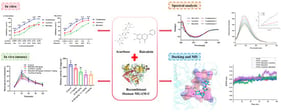
Background: Combining natural products with conventional antidiabetic agents to inhibit α-glucosidase activity is an effective strategy for preventing postprandial hyperglycemia. Baicalein, a natural flavonoid with well-documented low toxicity, showed potential synergistic effect with acarbose in diabetic models; however, the synergistic performance and mechanisms of the two agents targeting human maltase–glucoamylase (MGAM) remain unclear. Methods: Recombinant human MGAM-C and MGAM-N were expressed in Pichia pastoris for in vitro inhibition assays. Maltose-loaded mice were used to assess the in vivo hypoglycemic activity and intestinal maltase inhibition. Inhibitor–enzyme interactions were investigated by fluorescence spectroscopy, circular dichroism (CD), multiple molecular docking, and molecular dynamics (MD) simulations. Results: Baicalein potently inhibited MGAM-C and MGAM-N with IC50 values of 20.41 ± 4.80 μM and 14.04 ± 0.94 μM, respectively, and demonstrated a synergistic effect when combined with acarbose. In vivo, co-administration significantly reduced blood glucose levels and suppressed small intestinal maltase activity in maltose-loaded mice. Mechanistic studies revealed that baicalein functions as a non-competitive inhibitor by binding to the allosteric site of MGAM-C via stable hydrogen bonds with residues Ile1716 and Trp1749. This interaction induces conformational changes in the enzyme’s secondary structure and optimizes the hydrophobic microenvironment of the active site, thereby enhancing the binding affinity and hydrogen bond stability of acarbose. These molecular events collectively contribute to the synergistic inhibition of MGAM-C hydrolytic activity. Conclusions: This research revealed the synergistic inhibitory effect of baicalein and acarbose on MGAM and the underlying mechanisms, thereby providing a theoretical basis for developing pharmaceutical formulations to enhance acarbose efficacy.

1 August 2026

Baicalein and acarbose co-inhibit the activity of mouse α-glucosidase (A), MGAM-C (B) and MGAM-N (C). CI values above data points were calculated by CompuSyn 1.0 software. CI < 0.9, CI = 0.9–1.1, and CI > 1.1 indicate synergism, additive effect, and antagonism, respectively. (D) MGAM-C inhibitory activity following combined treatment with baicalein and acarbose under distinct pre-incubation orders. Groups are designated as Con (baicalein and acarbose were pre-incubated together with the enzyme for 30 min prior to substrate addition), B (baicalein pre-incubated for 30 min prior to acarbose addition), and A (acarbose pre-incubated for 30 min prior to baicalein addition). Data are shown as mean ± SEM. **** p < 0.0001, *** p < 0.001.

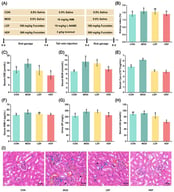
Objectives: The purpose of this study was to investigate the protective effects and underlying mechanisms of fucoidan on contrast-induced acute kidney injury (CI-AKI) in mice, focusing on the TLR4/NF-κB and Nrf2/GPX4 pathways. Methods: Five-week-old male ICR mice were randomly divided into normal control, contrast model, low-dose (100 mg/kg), and high-dose (300 mg/kg) fucoidan groups. Renal index, biochemical markers, histopathology, oxidative stress indicators, inflammatory cytokine levels, and the expression of TLR4/NF-κB, Nrf2/HO-1, and ferroptosis-related proteins were assessed. Untargeted metabolomics followed by KEGG pathway enrichment was also performed. Results: Our results showed that contrast successfully established the CI-AKI model, as evidenced by an increased kidney index, abnormal biochemical parameters, severe renal pathological damage, oxidative stress imbalance, inflammatory activation, ferroptosis, and metabolic disturbances. Fucoidan dose-dependently improved kidney index and biochemical markers, alleviated pathological injury, enhanced antioxidant capacity, suppressed inflammation and ferroptosis, and reversed metabolic pathway disorders (e.g., purine and glycerophospholipid metabolism), with the high dose showing more pronounced effects. Conclusions: Fucoidan could effectively ameliorate CI-AKI, and its effects are closely associated with the inhibition of the TLR4/NF-κB pathway, activation of the Nrf2/HO-1 pathway, regulation of ferroptosis-related proteins, and improvement of key metabolic disturbances, suggesting a new research direction for the prevention of CI-AKI.

1 August 2026

Effect of fucoidan on contrast-induced acute kidney injury in mice (n = 6). (A) Experimental design; (B) kidney index; (C) CRE; (D) BUN; (E) Cys-C; (F) KIM-1; (G) UP; (H) UA; (I) H&E staining (400 ×, 50 = μm). The yellow arrow indicates the narrowing of the Bowman’s capsule, the black arrow indicates the constriction of the proximal tubule lumen, the green arrow indicates sloughed-off cells, and the blue arrow indicates the infiltration of interstitial inflammatory cells. Different letters over bars indicate statistical significance between the two groups (p < 0.05); the same letter indicates no significant difference.

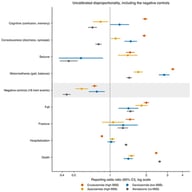
Background/Objectives: The four androgen-receptor pathway inhibitors (ARPIs) for advanced prostate cancer are broadly comparable in efficacy, so the choice between them depends on tolerability and, in elderly patients, on central nervous system (CNS) safety. CNS signals from the FDA Adverse Event Reporting System (FAERS) now inform that choice, yet they rest on uncalibrated disproportionality, which cannot separate pharmacology from reporting. Methods: Across the full FAERS database (20,328,575 reports), we computed reporting odds ratios (ROR) for enzalutamide, apalutamide, darolutamide, and abiraterone over 32 drug–event pairs, recalibrated every estimate against a drug-specific empirical null from 18 negative controls, and corrected for multiplicity. The null was fitted two ways and validated against twelve label-established positive controls. Results: Uncalibrated analysis flagged 22 of 32 pairs, and also 41 of 72 control pairs on events judged to carry no true effect, so its null does not hold. Calibration removes that bias, but the verdict then depends on how the null is fitted: with its dispersion taken as the sample standard deviation of the control estimates, no pair reached q < 0.05, while under the maximum-likelihood fit the framework prescribes six did, three of them being CNS pairs. Positive controls confirmed that calibration retains genuine agent-specific effects, and the detection floor lay above every CNS estimate for the same agent. Conclusions: Comparative ARPI CNS signals in FAERS are not identifiable; the verdict is set by the calibration design rather than by the drugs, so such signals should not stand alone in agent selection. The firmer safety axis remains fall and fracture risk, the class’s dominant serious harm in trials and guidelines.

1 August 2026

Raw reporting odds ratios (RORs) with 95% confidence intervals (CIs) for the four androgen-receptor pathway inhibitors (ARPIs) across event groups, including the pooled 18 decontaminated negative controls. Forty-one of the 72 drug–control pairs reach nominal significance although the events were selected to carry no true effect, and 34 of those lie below one: the naive null is wrong, and these agents under-report inert events rather than over-report them.

News & Conferences

Volumes

Latest Issues

Open for Submission

Editor's Choice

Reprints of Collections

Bioactive Compounds Derived from Plants and Their Medicinal Potential
Reprint

Bioactive Compounds Derived from Plants and Their Medicinal Potential

Editors: Maria de Lourdes Pereira, Veeranoot Nissapatorn, Ana Paula Girol, Sónia M. R. Oliveira
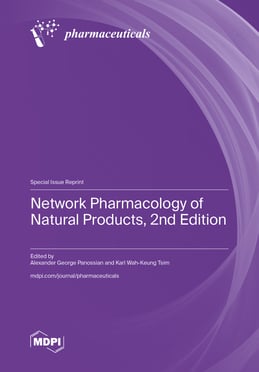
Network Pharmacology of Natural Products, 2nd Edition
Reprint

Network Pharmacology of Natural Products, 2nd Edition

Editors: Alexander George Panossian, Karl Wah-Keung Tsim
XFacebookLinkedIn
Pharmaceuticals - ISSN 1424-8247