



- 4.6Impact Factor
- 8.6CiteScore
- 16 daysTime to First Decision
Electrocatalysts and Reaction Mechanisms for Oxygen and CO2 Reduction Reactions
This special issue belongs to the section “Electrochemistry“.
Special Issue Information
Dear Colleagues,
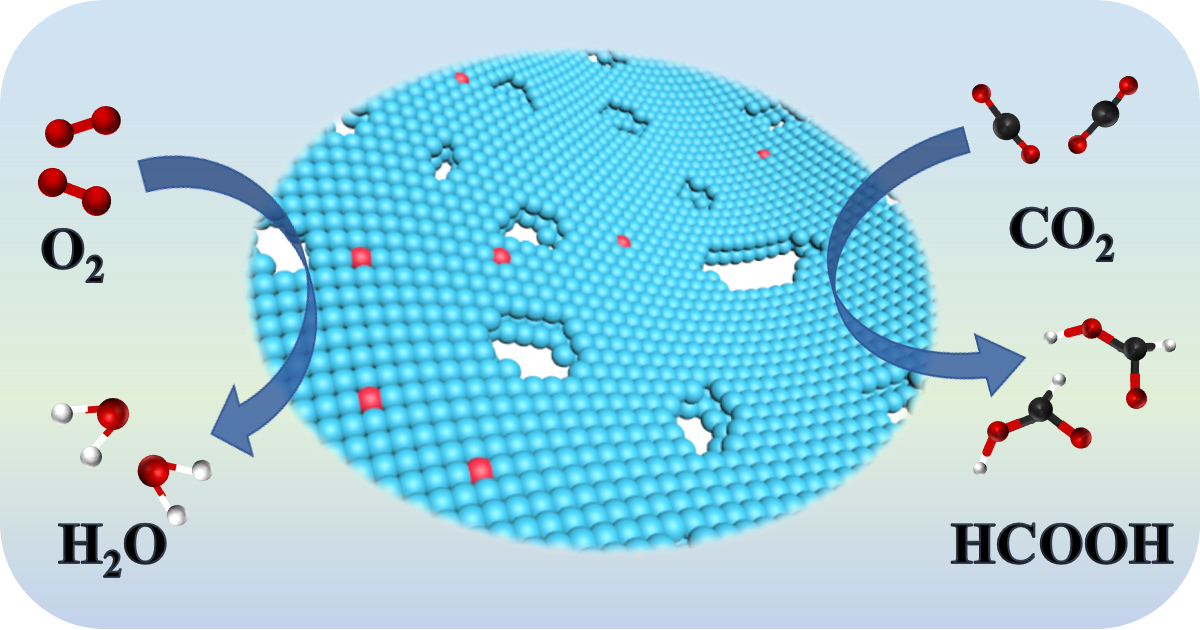
Cathodic oxygen reduction in fuel cells is a multi-electron process with complicated intermediates such as sluggish chemical kinetics, which is a major barrier to large-scale fuel cell usage. According to the literature, doping and defect engineering can significantly increase catalyst materials' catalytic activity. The mechanism of doping and defect engineering produces more unsaturated sites in the catalyst material, which is beneficial to reaction molecule adsorption. Doping and defect engineering can also be used to adjust the electronic structure of the catalyst, promote the oxidative desorption of intermediate products, and accelerate the reaction.
Renewable energy enables the electrochemical CO2 reduction reaction (CO2RR) production of economically value-added chemicals to achieve energy storage in the form of chemical bonds, this strategy can effectively alleviate the climate problems caused by carbon dioxide emissions. As a simple proton–electron transfer reaction process, efficient electrocatalysts can achieve large-reaction current density and maintain high CO or HCOOH selectivity (FEC1>90%). However, the market demand for long-chain hydrocarbons is higher, the multiple single-step reactions process produces a variety of reaction intermediates, the C2+ products are widely distributed, the cost of separating the target products is high, and the reaction mechanism is not clear.
The present Special Issue of electrocatalysis is dedicated to the development and implementation of high-efficiency catalysts. We welcome more researchers to use spectroscopy methods and higher resolution electron microscope technology to study the mechanisms of the oxygen and CO2RR reduction reaction path to guide the design of efficient and inexpensive catalysts, or to improve the reaction devices and simplify the production conditions for them, as well as ensure stable long-term operation under high current conditions.
Dr. Qiaoxia Li
Guest Editor
Manuscript Submission Information
Manuscripts should be submitted online at www.mdpi.com by registering and logging in to this website. Once you are registered, click here to go to the submission form. Manuscripts can be submitted until the deadline. All submissions that pass pre-check are peer-reviewed. Accepted papers will be published continuously in the journal (as soon as accepted) and will be listed together on the special issue website. Research articles, review articles as well as short communications are invited. For planned papers, a title and short abstract (about 250 words) can be sent to the Editorial Office for assessment.
Submitted manuscripts should not have been published previously, nor be under consideration for publication elsewhere (except conference proceedings papers). All manuscripts are thoroughly refereed through a single-blind peer-review process. A guide for authors and other relevant information for submission of manuscripts is available on the Instructions for Authors page. Molecules is an international peer-reviewed open access semimonthly journal published by MDPI.
Please visit the Instructions for Authors page before submitting a manuscript. The Article Processing Charge (APC) for publication in this open access journal is 2700 CHF (Swiss Francs). Submitted papers should be well formatted and use good English. Authors may use MDPI's English editing service prior to publication or during author revisions.
Keywords
- ORR
- CO2RR
- efficient electrocatalysts
- long-chain hydrocarbons
- doping
- defect project
- catalytic mechanism
Benefits of Publishing in a Special Issue
- Ease of navigation: Grouping papers by topic helps scholars navigate broad scope journals more efficiently.
- Greater discoverability: Special Issues support the reach and impact of scientific research. Articles in Special Issues are more discoverable and cited more frequently.
- Expansion of research network: Special Issues facilitate connections among authors, fostering scientific collaborations.
- External promotion: Articles in Special Issues are often promoted through the journal's social media, increasing their visibility.
- Reprint: MDPI Books provides the opportunity to republish successful Special Issues in book format, both online and in print.
Published Papers
Get Alerted
Add your email address to receive forthcoming issues of this journal.


Molecules - ISSN 1420-3049