




Skip to Content

Materials

Materials is an international peer-reviewed, open access journal on materials science and engineering published semimonthly online by MDPI.
The Spanish Materials Society (SOCIEMAT), Manufacturing Engineering Society (MES) and Chinese Society of Micro-Nano Technology (CSMNT) are affiliated with Materials and their members receive discounts on the article processing charges.
Indexed in PubMed | Quartile Ranking JCR - Q2 (Metallurgy and Metallurgical Engineering | Physics, Applied | Physics, Condensed Matter)

Get Alerted

Add your email address to receive forthcoming issues of this journal.

All Articles (55,226)

Wood is a versatile material; however, it is susceptible to changes when exposed to extreme temperatures. This study investigated the physical, chemical, and mechanical properties of raulí (Nothofagus alpina) under different thermal stress conditions. The results showed that the moisture content at temperatures below 5 °C exhibited a significant reduction from 9.7% to 7.5% within the first 20 days. Conversely, under extreme cold (−20 °C), significant changes only occurred after 60 days, with an increase from 9.7% to 11%. At higher temperatures (50 °C, 95 °C, and 120 °C), moisture content dropped sharply after 40 days, nearing 0%. Additionally, analysis showed minor color changes in samples at low temperatures: RW2 (20 d; 5 °C, ΔE* = 3.46) and RW7 (40 d; 5 °C, ΔE* = 0.61); however, color changes were observed at higher temperatures (95–120 °C). RW15 (60 d; 120 °C, ΔE* = 37.16), indicating the degradation of cell wall polymers. Mechanical testing using three-point bending demonstrated that controlled heat treatments can improve the modulus of elasticity (MOE), modulus of rupture (MOR), and fracture energy. The most significant improvements were obtained at 120 °C for 60 days, with increases in MOE, MOR, and fracture energy of 22%, 60%, and 118%, respectively, compared to untreated wood.

23 March 2026

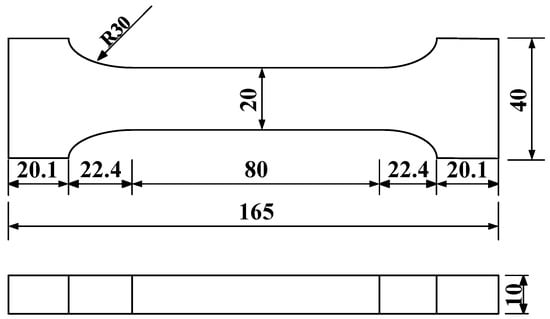
Dimensions of experimental specimens (a) for quasi-static bending experiments in the TL plane (b).

Advanced Materials and Processing Technologies

  • Lidija Ćurković,
  • Sonja Jozić and
  • Irena Žmak

This reprint gathers the fourteen research articles originally published in the Special Issue of Materials titled “Advanced Materials and Processing Technologies” [...]

24 March 2026

Tool Wear and Surface Finish in AISI 304 Stainless Steel Dry Turning with Cermet Inserts

  • Laurence Colares Magalhães,
  • Nelson Antenor Sorte and
  • Armando Marques
  • + 1 author
The present study investigates the surface integrity and flank wear of uncoated cermet inserts during dry turning of AISI 304 stainless steel. Three-dimensional metrology techniques were employed to assess both surface roughness and cutting-tool flank wear. Cutting speed and feed rate were the process parameters varied in the experiments. Both parameters exhibited a significant influence on the final surface quality. Specifically, increasing the cutting speed resulted in a deterioration of the surface finish under the evaluated conditions. Considering an average flank wear (VBB) of 0.1 mm as the tool life criterion, tool lives of 15 min and 9 min were achieved at cutting speeds of 120 m/min (lowest level) and 150 m/min (highest level), respectively. At lower cutting speeds, abrasive wear and adhesion were the predominant wear mechanisms, whereas chipping and diffusion became more pronounced at the higher cutting speed. The dry turning of AISI 304 stainless steel with uncoated cermet inserts proved viable in terms of sustainability and surface integrity; however, effective chip evacuation remains a critical concern. The use of compressed air or minimum quantity lubrication (MQL) may help mitigate this issue.
23 March 2026

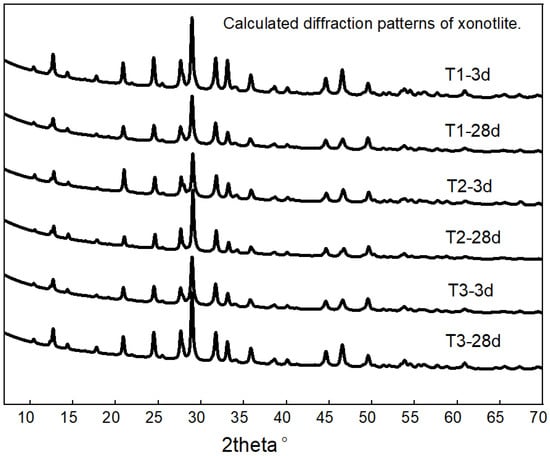
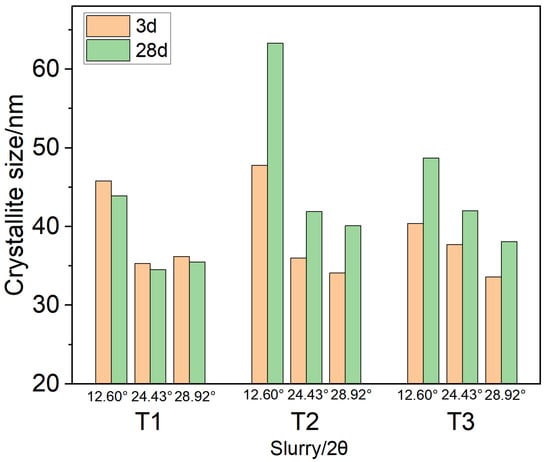
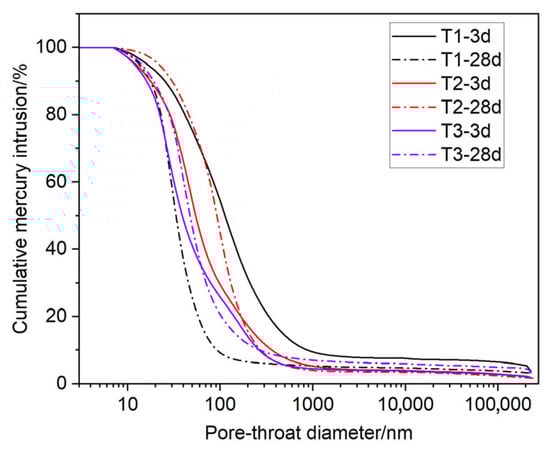
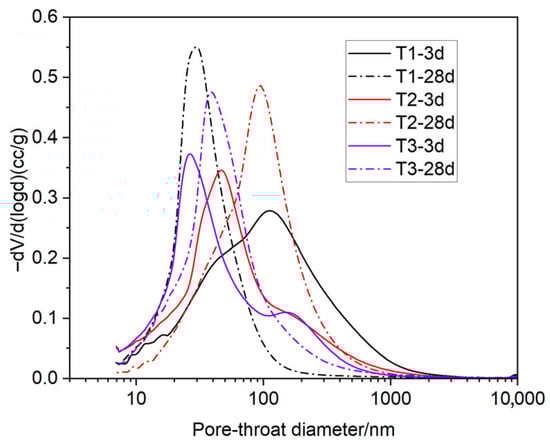
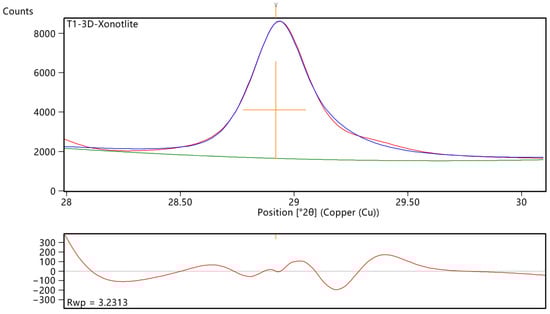
Supersulfated cement (SSC) is an environmentally friendly cementitious material with a low clinker content, in which industrial byproduct gypsum serves as the sulfate source, thereby enabling the valorization of solid waste. The hydration process, pore structure, microstructure, and hydration products were investigated using paste samples by means of isothermal calorimetry, X-ray diffraction (XRD), thermogravimetric analysis (TG–DTG), Fourier transform–infrared spectroscopy (FT-IR), mercury intrusion porosimetry (MIP), and scanning electron microscopy (SEM), while compressive strength was evaluated using mortar specimens. Compared with ordinary Portland cement (OPC), SSC offers clear advantages in reducing energy consumption and greenhouse gas emissions. In this study, the effects of titanium gypsum (TG) and flue gas desulfurization gypsum (FGD) on the hydration behavior, fluidity, mechanical properties, and microstructural evolution of an anhydrite (AH)–phosphogypsum (PG)-based SSC were systematically investigated. The results indicate that the incorporation of 11% TG and FGD mitigates the strong sulfate environment caused by the rapid dissolution of soluble AH, thereby regulating the hydration process. As the proportion of TG and FGD increased, the cumulative heat release within 72 h gradually decreased. When AH was completely replaced, the cumulative heat release of TG4 and FG4 decreased by approximately 19.7% and 28.6%, respectively. TG and FGD exhibited opposite effects on the fluidity of SSC while both promoting strength development. Among all mixtures, TG2 and FG2 showed the best performance, with the highest 28-day compressive strengths of 50.15 MPa and 51.95 MPa, respectively. Microstructural analysis reveals that differences in particle size distribution and dissolution kinetics among gypsums governed the sulfate release characteristics and slag activation mechanisms, thus leading to distinct hydration pathways, pore structure evolution, and microstructural densification. This study provides a theoretical basis for the efficient utilization of various industrial byproduct gypsums and offers important guidance for the controllable design of SSC performance.

23 March 2026

News & Conferences

Volumes

Latest Issues

Open for Submission

Editor's Choice

Reprints of Collections

New Trends in Mechanical and Tribological Properties of Materials and Components
Reprint

New Trends in Mechanical and Tribological Properties of Materials and Components

Editors: Andrea Mura, Luigi Mazza, Edoardo Goti
Novel Cementitious Materials
Reprint

Novel Cementitious Materials

Editors: Peiyu Yan, Yao Luan, Chunsheng Zhou
XFacebookLinkedIn
Materials - ISSN 1996-1944