Synergistic Effects of Fiber Inclination, Geometry, and Thermal Treatment on Fe-SMA Fiber Pull-Out Resistance in High-Performance Concrete



Abstract
1. Introduction
- The pull-out behavior of Fe-SMA fibers embedded in HPC under different inclination angles has not been adequately quantified, despite the fact that fiber orientation is a key variable in real randomly distributed composites.
- The influence of more advanced hooked-end geometries on Fe-SMA fiber anchorage remains insufficiently understood, particularly when compared with the more mature steel-fiber literature and the mostly NiTi-based SMA-fiber studies.
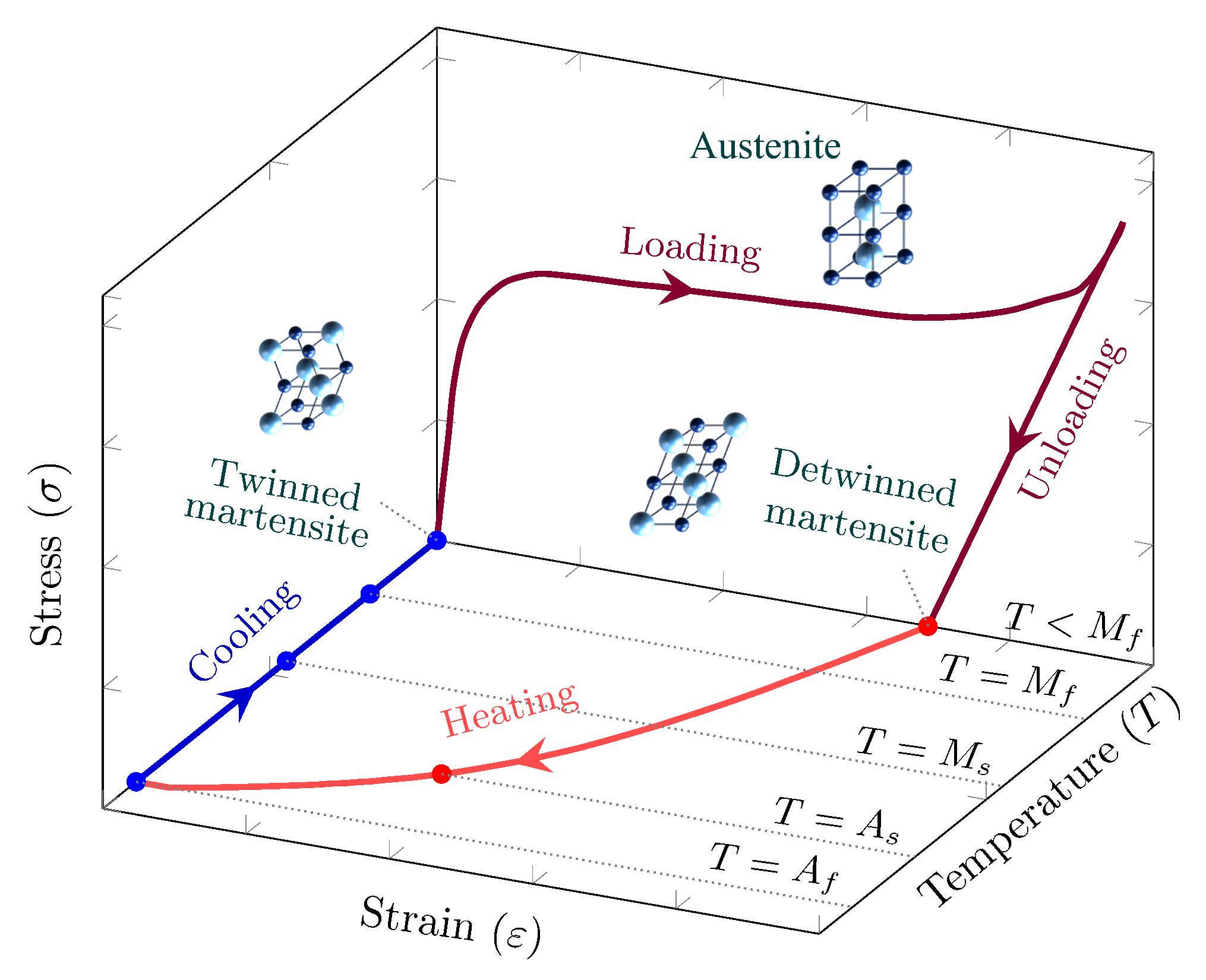
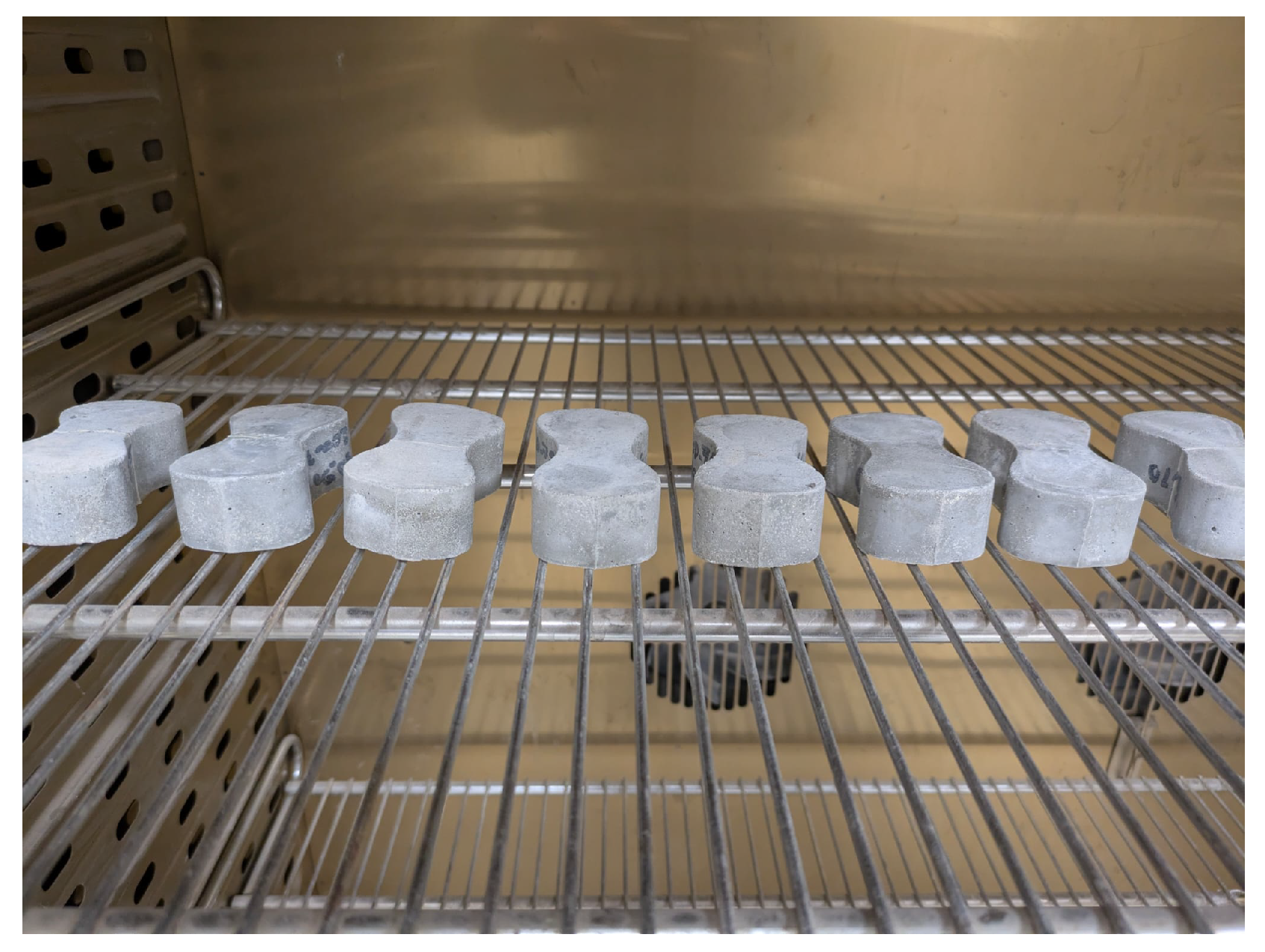
- The coupled effect of thermal treatment and fiber geometry on Fe-SMA pull-out is still unclear, even though thermal activation is indispensable for mobilizing the shape memory effect and may simultaneously damage the matrix or the bond interface.
- There is still limited experimental guidance for selecting the most effective combination of Fe-SMA fiber geometry, orientation, and activation temperature for future thermally activated Fe-SMA cementitious composites.
- Experimentally evaluating the pull-out resistance of Fe-SMA fibers embedded in HPC while varying three governing parameters simultaneously: fiber end geometry, inclination angle, and thermal treatment.
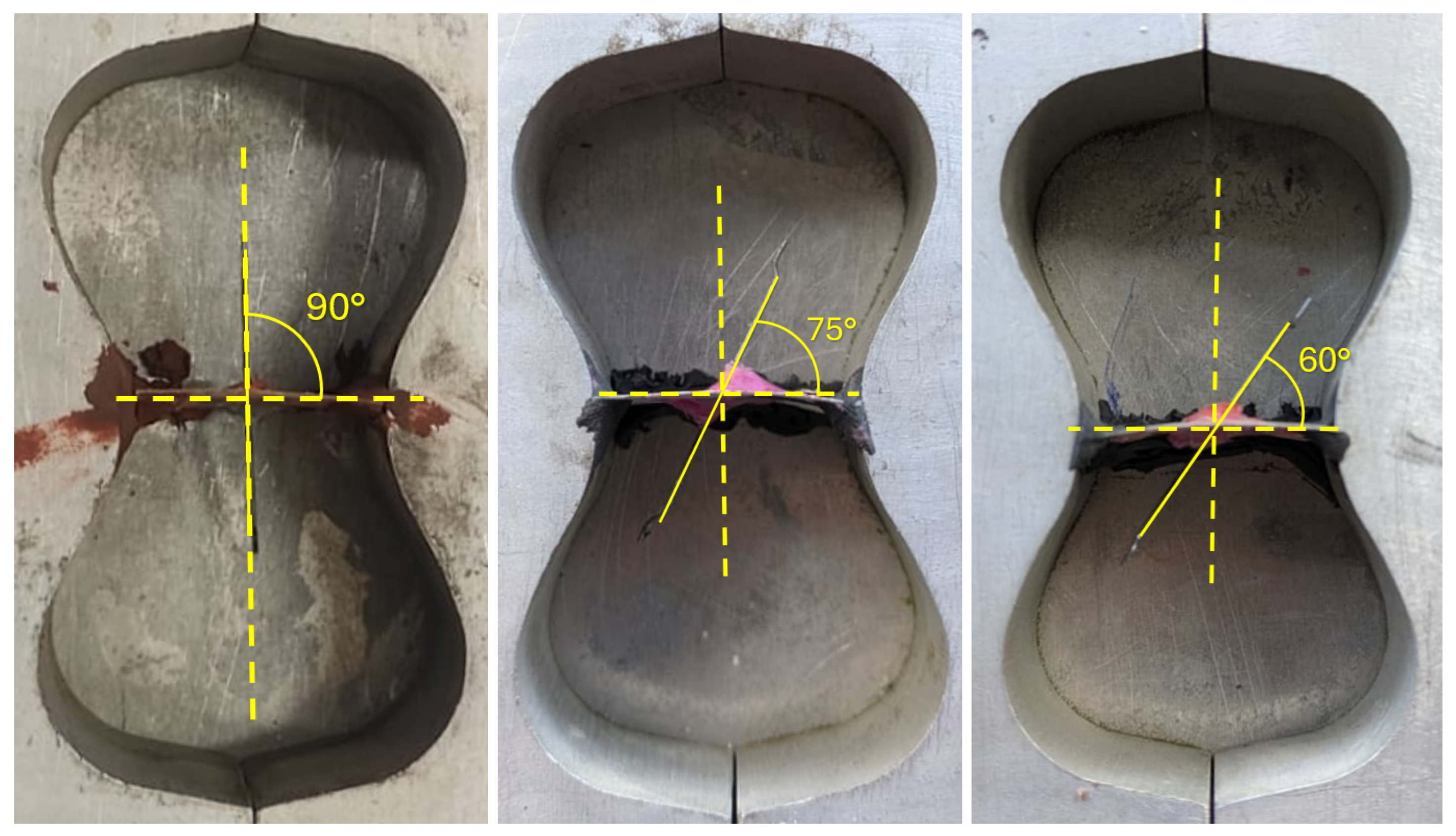
- Comparing single-hook (3D) and double-hook (4D) Fe-SMA fibers at inclination angles of 60°, 75°, and 90° under ambient, 100 °C, and 200 °C conditions in order to clarify their individual and combined effects on the pull-out response.
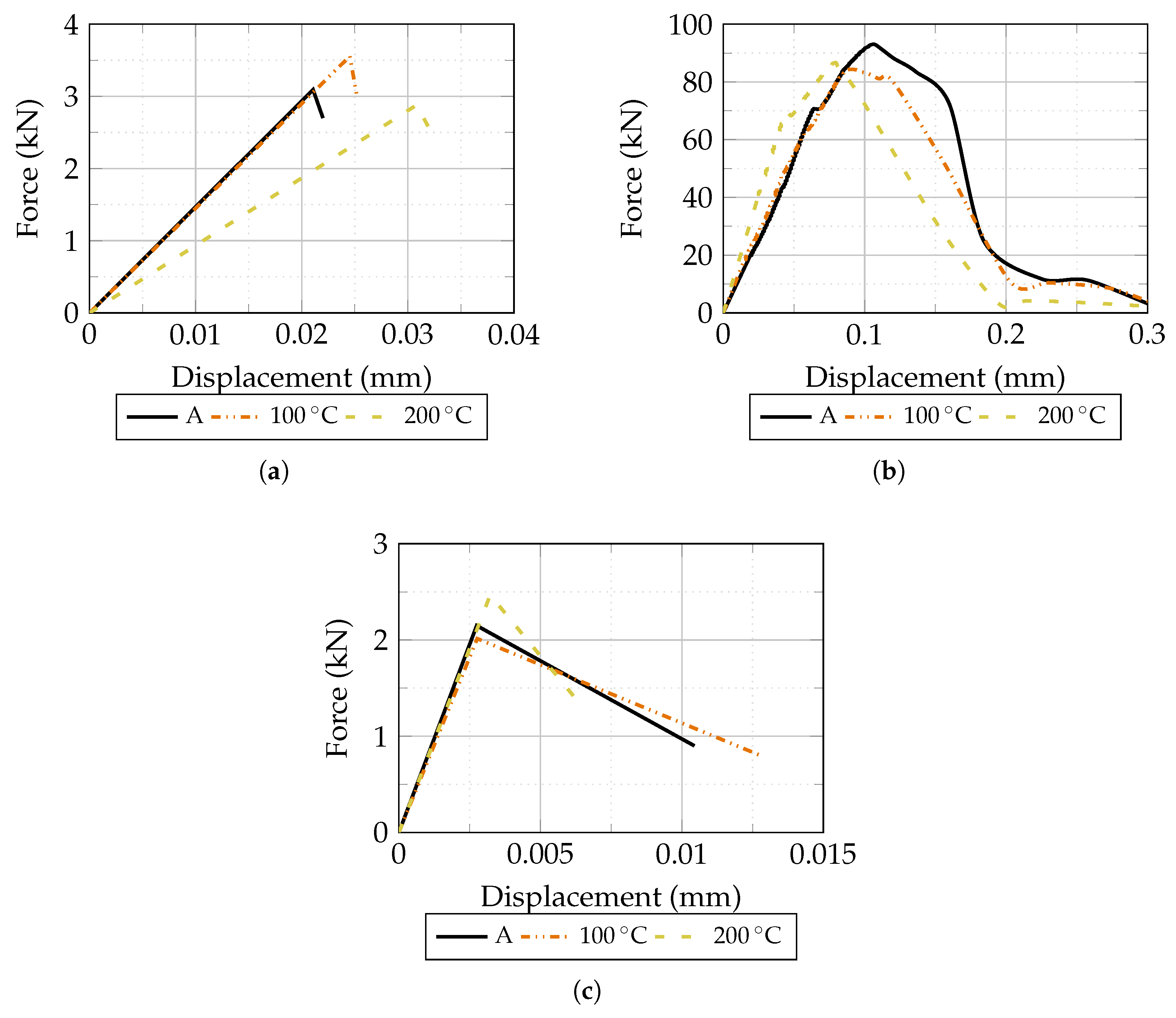
- Characterizing the companion mechanical properties of plain HPC under the same thermal conditions so that the observed pull-out behavior can be interpreted in relation to changes in the surrounding matrix.
- Identifying the most favorable combination of geometry, inclination, and thermal exposure for maximizing fiber–matrix load transfer, thereby providing a micromechanical basis for the future design of Fe-SMA fiber-reinforced HPC with thermally activated functionality.
2. Experimental Program
2.1. Materials
2.2. Specimen Preparation
2.3. Test Methods
2.3.1. Testing Principle and Measured Quantities
2.3.2. Thermal Treatment
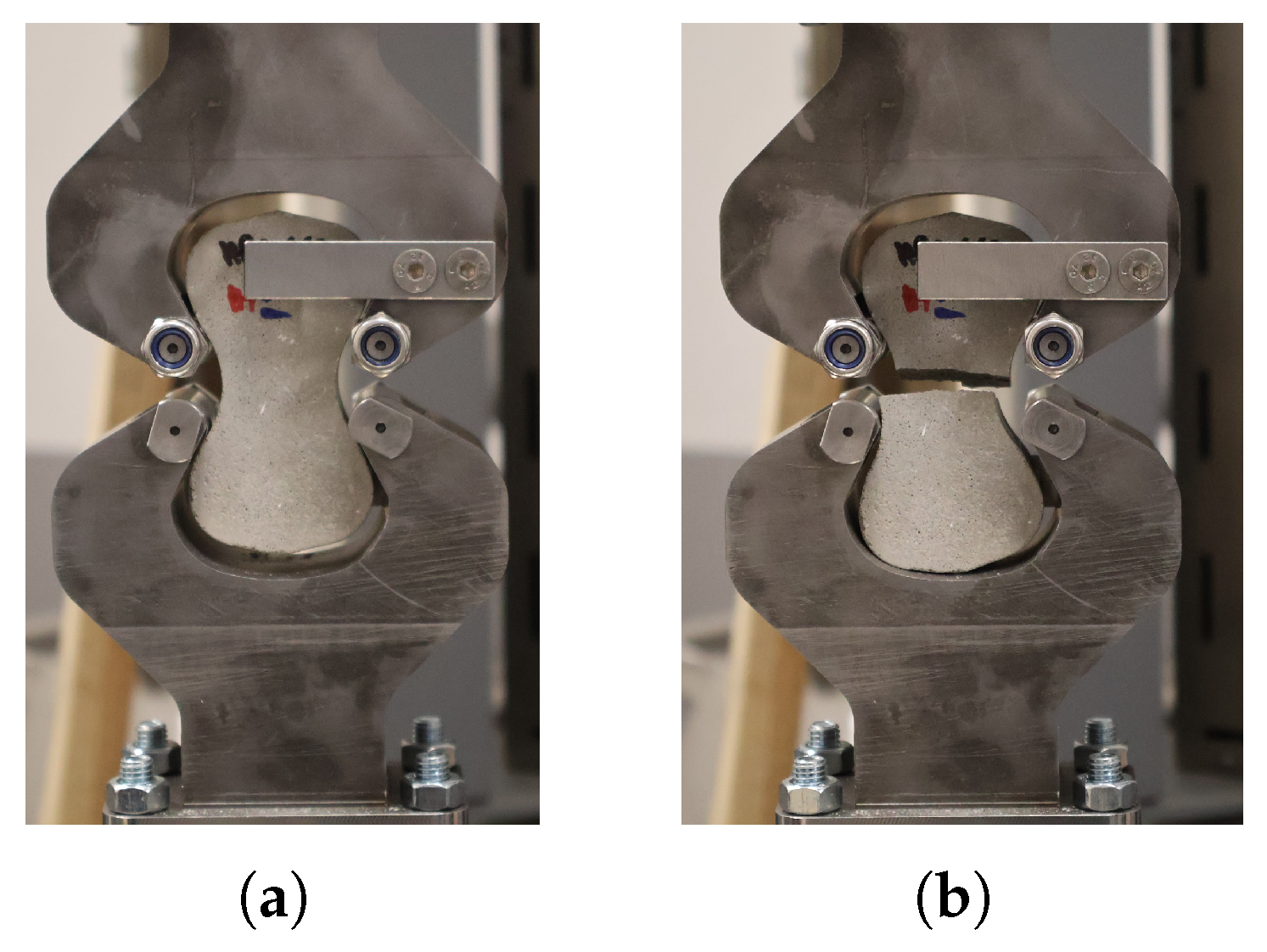
2.3.3. Mechanical Testing
3. Results and Discussion
4. Conclusions
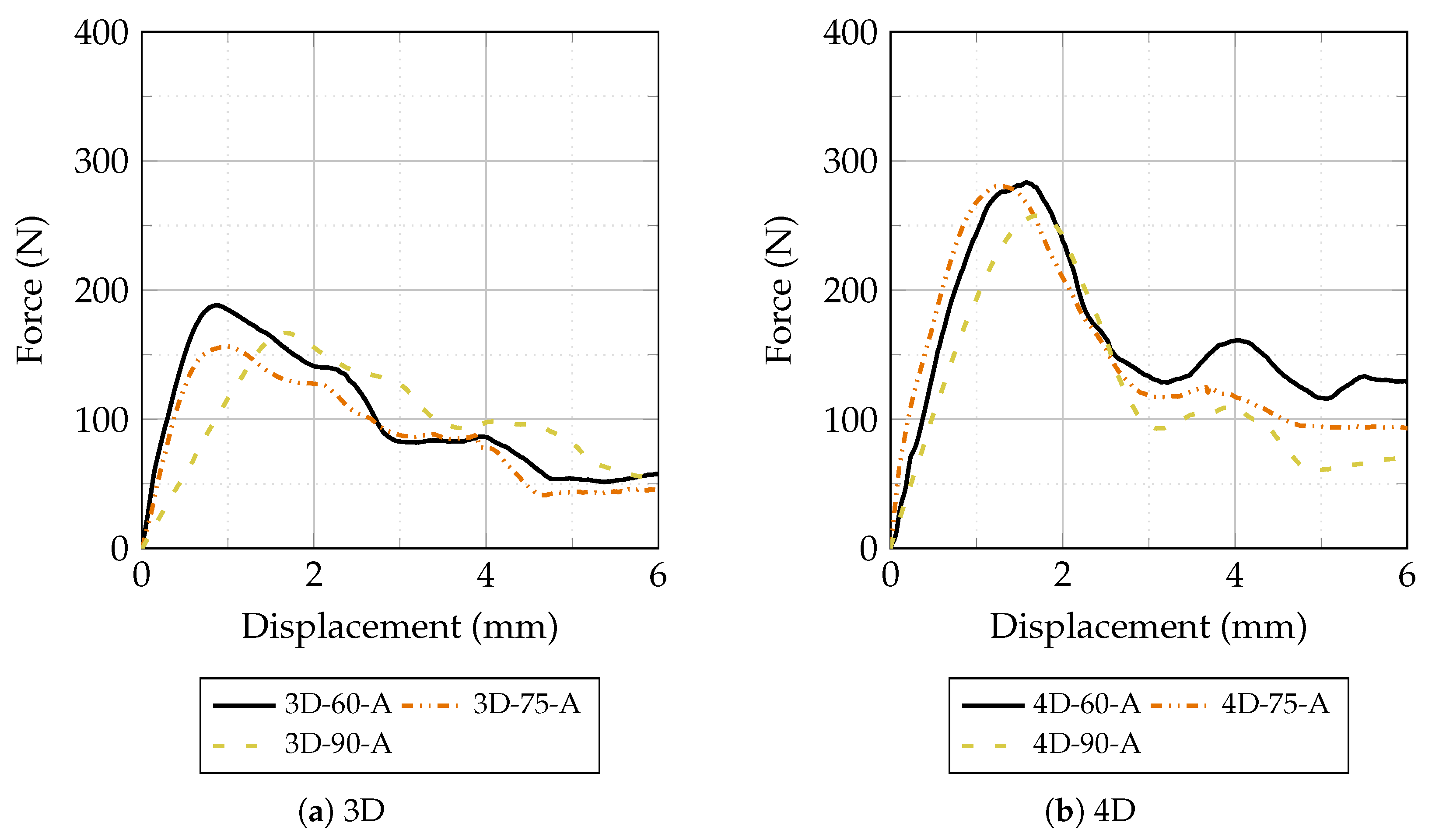
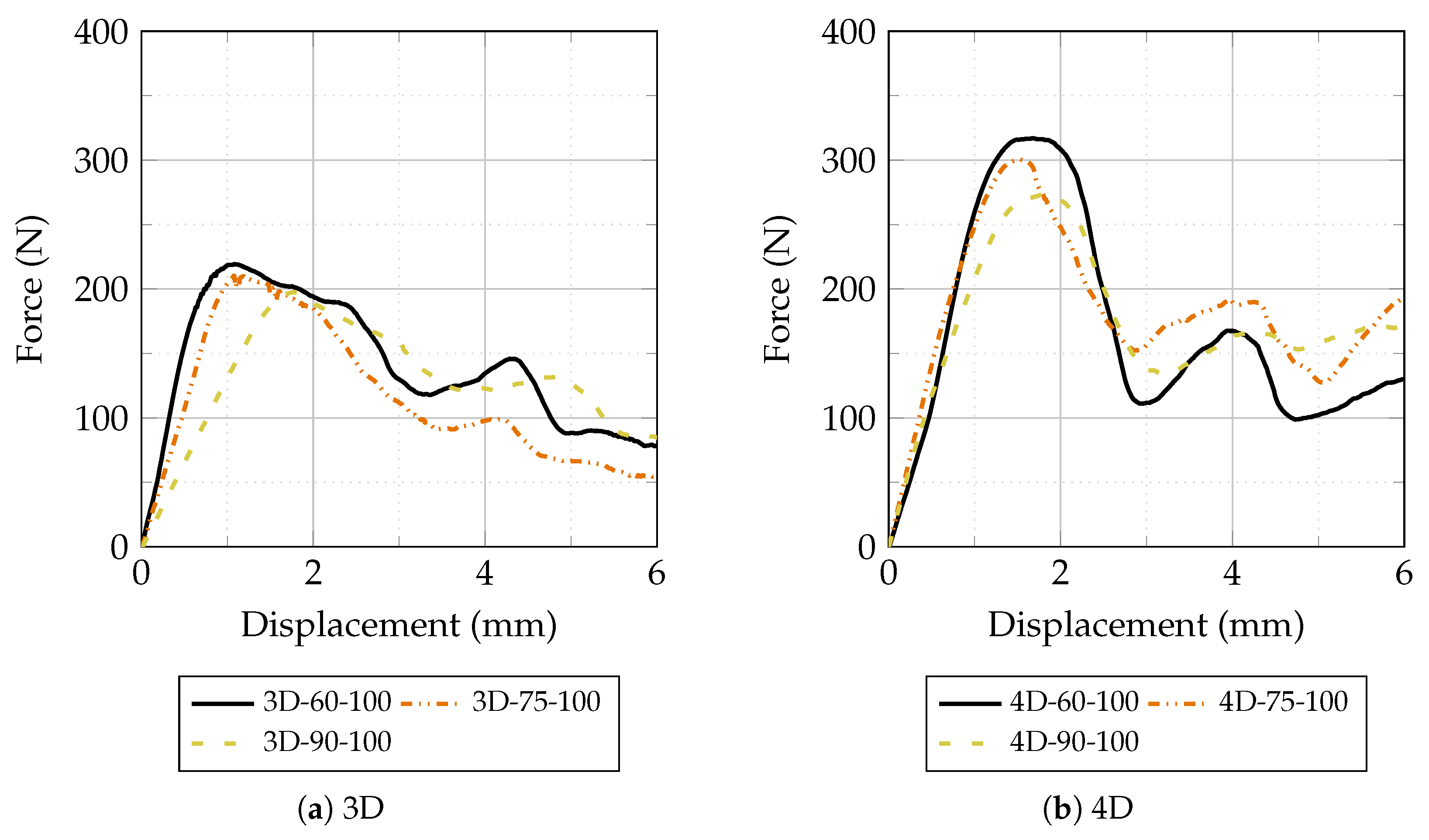
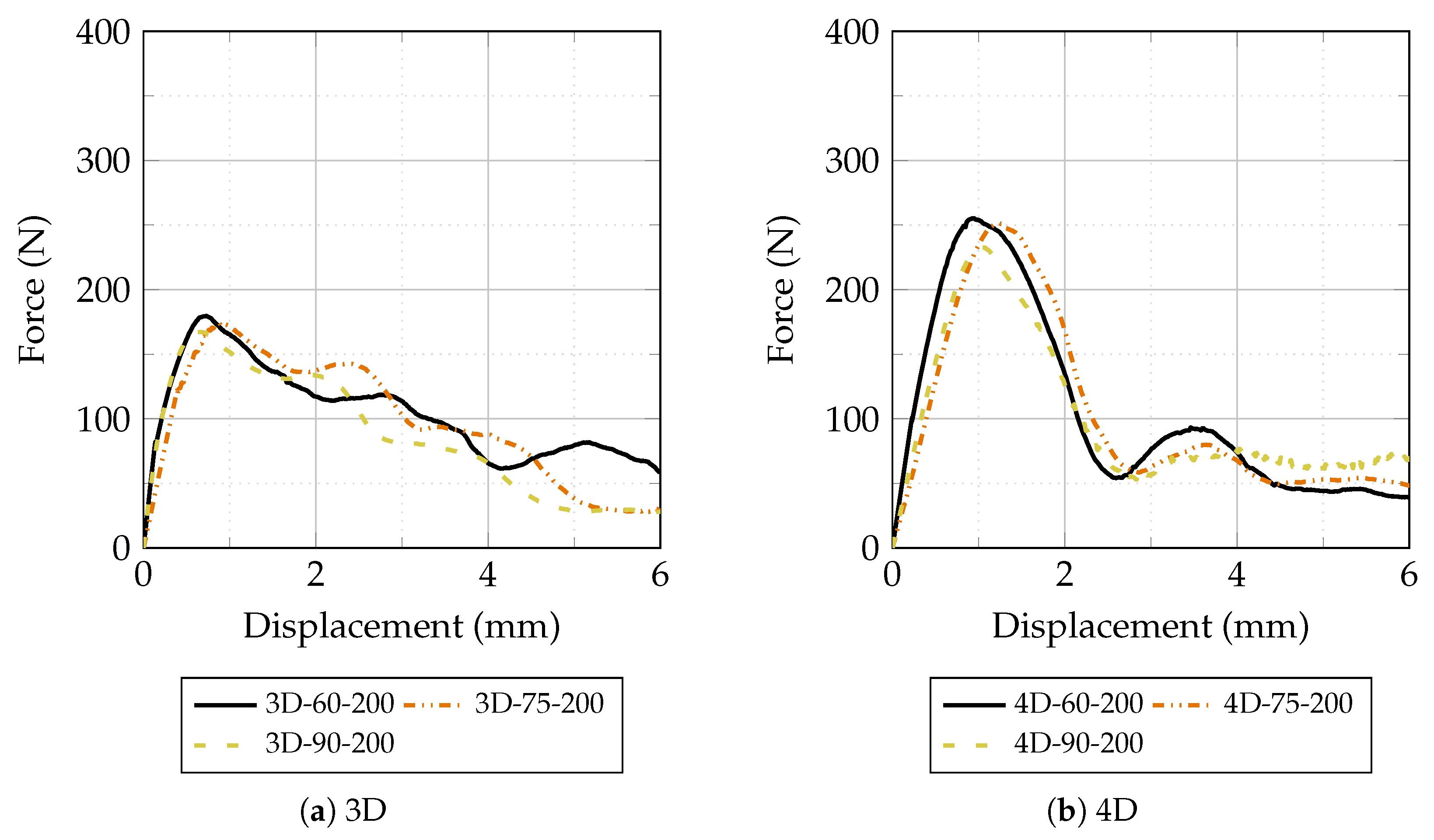
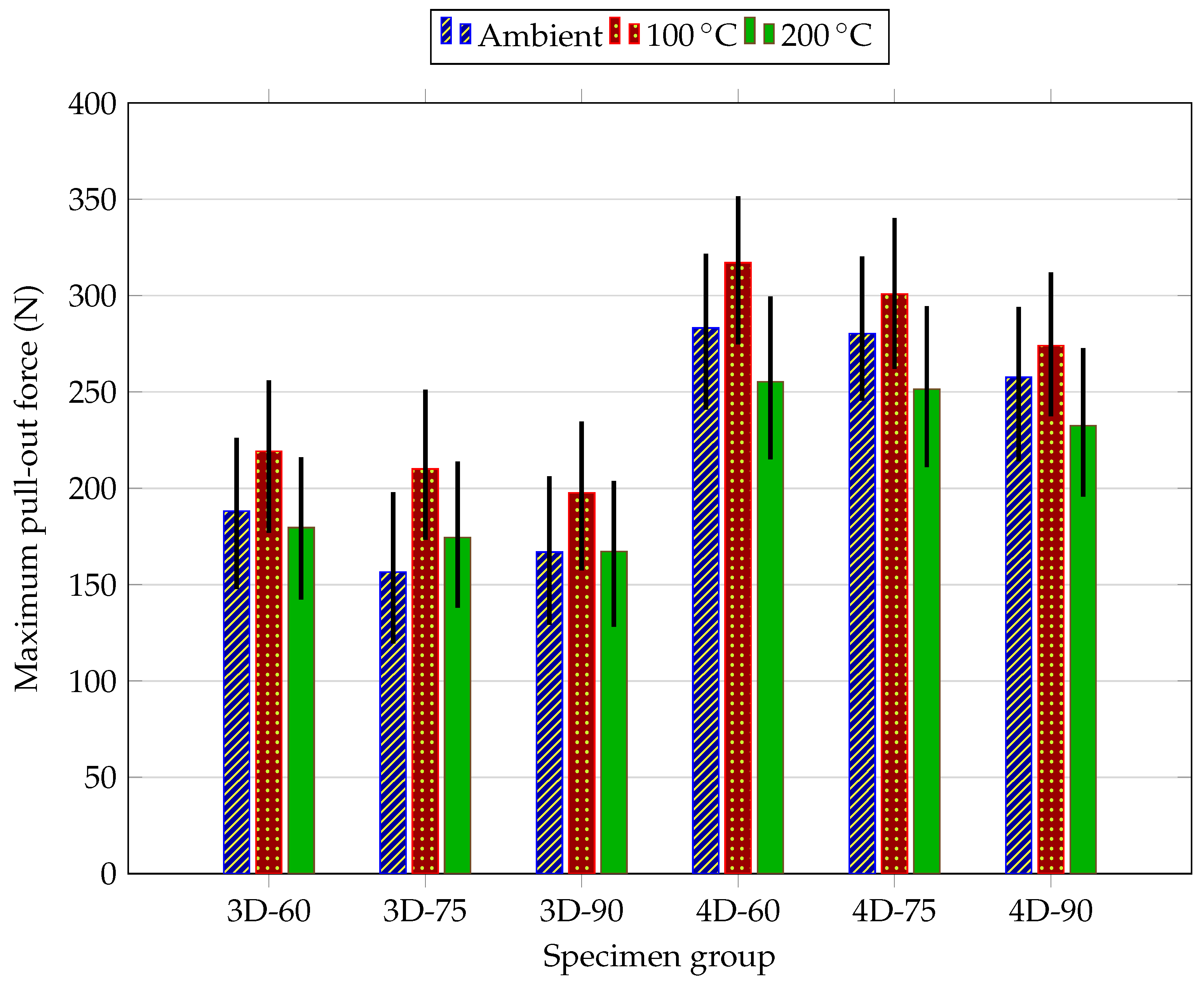
- The fiber geometry had the most significant influence on pull-out resistance. At ambient temperature, 4D double-hook fibers achieved peak pull-out forces approximately 50–70% higher than 3D single-hook fibers, with this advantage preserved at 200 °C (40–42%). The redundant anchorage provided by the second hook proved robust under thermal degradation, making 4D geometry the preferred configuration for thermally activated Fe-SMA fiber applications.
- Thermal treatment produced a non-monotonic effect on pull-out resistance. Exposure to 100 °C increased resistance by approximately 10–17% for 3D fibers and 6–12% for 4D fibers, attributed to recovery stresses generated by partial martensitic reverse transformation of the pre-strained Fe-SMA material. At 200 °C, resistance decreased below ambient levels by approximately 5–12% for all groups due to concurrent matrix degradation and completion of the martensitic reverse transformation beyond the austenite finish temperature. Within the investigated temperature range, exposure to 100° produced the highest pull-out resistance, whereas exposure to 200° reduced the pull-out resistance below the ambient-temperature level.
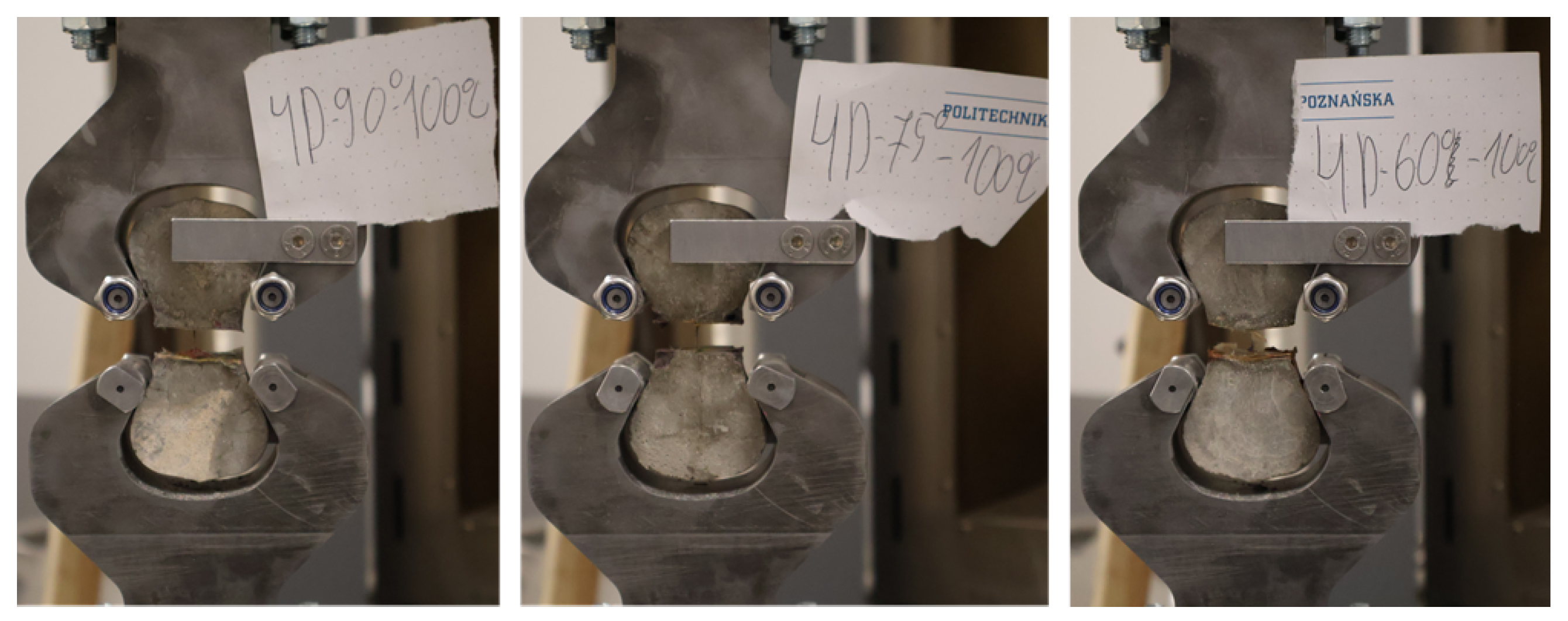
- The inclination angle consistently influenced pull-out resistance across all thermal conditions. Specimens at 60° achieved the highest peak forces and perpendicular (90°) specimens the lowest, confirming the contribution of the snubbing effect. The angular sensitivity diminished at 200 °C, indicating that thermal matrix degradation reduces the effectiveness of the snubbing mechanism.
- The synergistic interaction between all three variables was confirmed by the 4D-60-100 configuration achieving the highest pull-out resistance in the entire experimental program. This result demonstrates that combined optimization of fiber geometry, inclination angle, and thermal activation temperature offers a viable strategy for maximizing fiber–matrix load transfer in thermally activated Fe-SMA fiber-reinforced HPC composites.
Author Contributions
Funding
Data Availability Statement
Acknowledgments
Conflicts of Interest
References
- Tabrizikahou, A.; Kuczma, M.; Czaderski, C.; Shahverdi, M. From experimental testing to computational modeling: A review of shape memory alloy fiber-reinforced concrete composites. Compos. Part B Eng. 2024, 281, 111530. [Google Scholar] [CrossRef] [Scilit]
- Lanwer, J.P.; Höper, S.; Gietz, L.; Kowalsky, U.; Empelmann, M.; Dinkler, D. Fundamental Investigations of Bond Behaviour of High-Strength Micro Steel Fibres in Ultra-High Performance Concrete under Cyclic Tensile Loading. Materials 2021, 15, 120. [Google Scholar] [CrossRef] [Scilit]
- Ding, X.; Zhao, M.; Li, H.; Zhang, Y.; Liu, Y.; Zhao, S. Bond Behaviors of Steel Fiber in Mortar Affected by Inclination Angle and Fiber Spacing. Materials 2022, 15, 6024. [Google Scholar] [CrossRef] [Scilit]
- Jang, E.Y.; Kim, J.J.; Yoo, D.Y. Dynamic Pullout Behavior of Multiple Steel Fibers in UHPC: Effects of Fiber Geometry, Inclination Angle, and Loading Rate. Materials 2019, 12, 3365. [Google Scholar] [CrossRef] [Scilit]
- Wang, X.; Xu, B.; Luan, K.; Mu, R.; Chen, J. Optimization of the Shape of Hooked-End Steel Fiber Based on Pulling Out and Reinforcing Cementitious Composites. Materials 2023, 17, 47. [Google Scholar] [CrossRef] [Scilit]
- Cao, Y.; Yu, Q. Effect of inclination angle on hooked end steel fiber pullout behavior in ultra-high performance concrete. Compos. Struct. 2018, 201, 151–160. [Google Scholar] [CrossRef] [Scilit]
- Abdallah, S.; Rees, D.W.; Hilal, A.A.; Fan, M.; Ghaffar, S.H.; Ali, H.A. Pull-out behaviour of inclined straight and hooked-end fibres in normal and high strength concretes. Constr. Build. Mater. 2025, 471, 140744. [Google Scholar] [CrossRef] [Scilit]
- Kim, M.K.; Kim, D.J.; Chung, Y.S.; Choi, E. Effects of a Short Heat Treatment Period on the Pullout Resistance of Shape Memory Alloy Fibers in Mortar. Materials 2019, 12, 2278. [Google Scholar] [CrossRef] [Scilit] [PubMed]
- Yang, Z.; Du, Y.; Liang, Y.; Ke, X. Mechanical Behavior of Shape Memory Alloy Fibers Embedded in Engineered Cementitious Composite Matrix under Cyclic Pullout Loads. Materials 2022, 15, 4531. [Google Scholar] [CrossRef] [Scilit]
- Yang, Z.; Gong, X.; Wu, Q.; Fan, L. Bonding Mechanical Properties between SMA Fiber and ECC Matrix under Direct Pullout Loads. Materials 2023, 16, 2672. [Google Scholar] [CrossRef] [Scilit] [PubMed]
- Lee, J.H.; Lee, K.J.; Choi, E. Flexural capacity and crack-closing performance of NiTi and NiTiNb shape-memory alloy fibers randomly distributed in mortar beams. Compos. Part B Eng. 2018, 153, 264–276. [Google Scholar] [CrossRef] [Scilit]
- Dehghani, A.; Aslani, F. Effect of 3D, 4D, and 5D hooked-end type and loading rate on the pull-out performance of shape memory alloy fibres embedded in cementitious composites. Constr. Build. Mater. 2021, 273, 121742. [Google Scholar] [CrossRef] [Scilit]
- Kim, D.J.; Kim, H.A.; Chung, Y.S.; Choi, E. Pullout resistance of straight NiTi shape memory alloy fibers in cement mortar after cold drawing and heat treatment. Compos. Part B Eng. 2014, 67, 588–594. [Google Scholar] [CrossRef] [Scilit]
- Dehghani, A.; Aslani, F.; Liu, Y. Pullout behaviour of shape memory alloy fibres in self-compacting concrete and its relation to fibre surface microtopography in comparison to steel fibres. Constr. Build. Mater. 2022, 323, 126570. [Google Scholar] [CrossRef] [Scilit]
- Menna, D.W.; Genikomsou, A.S.; Green, M.F. Effect of heat treatment and end-hook geometry on pullout behaviour of heavily cold worked superelastic NiTi shape memory alloy fibres embedded in concrete. Constr. Build. Mater. 2022, 361, 129630. [Google Scholar] [CrossRef] [Scilit]
- Tabrizikahou, A.; Białasik, J. Post-damage flexural self-strengthening response of iron-based shape memory alloy fiber-reinforced concrete: Experimental and numerical investigation. Constr. Build. Mater. 2026, 508, 145125. [Google Scholar] [CrossRef] [Scilit]
- Shahverdi, M.; Michels, J.; Czaderski, C.; Motavalli, M. Iron-based shape memory alloy strips for strengthening RC members: Material behavior and characterization. Constr. Build. Mater. 2018, 173, 586–599. [Google Scholar] [CrossRef] [Scilit]
- Hilscher, M.; Jübner, P.; Ghafoori, E. Iron-Based Shape Memory Alloys in Construction: A Review of Research, Applications, and Challenges. Shape Mem. Superelasticity 2025, 11, 363–377. [Google Scholar] [CrossRef] [Scilit]
- Qiang, X.; Chen, L.; Jiang, X. Achievements and Perspectives on Fe-Based Shape Memory Alloys for Rehabilitation of Reinforced Concrete Bridges: An Overview. Materials 2022, 15, 8089. [Google Scholar] [CrossRef] [Scilit]
- Xu, L.; Zhu, M.; Zhao, J.; Chen, M.; Shi, M. The Utilization of Shape Memory Alloy as a Reinforcing Material in Building Structures: A Review. Materials 2024, 17, 2634. [Google Scholar] [CrossRef] [Scilit] [PubMed]
- Tabrizikahou, A.; Kuczma, M.; Łasecka Plura, M.; Farsangi, E.N.; Noori, M.; Gardoni, P.; Li, S. Application and modelling of Shape-Memory Alloys for structural vibration control: State-of-the-art review. Constr. Build. Mater. 2022, 342, 127975. [Google Scholar] [CrossRef] [Scilit]
- Tabrizikahou, A.; Kuczma, M.; Shahverdi, M. Impact of fiber geometry, temperature, loading rate, and concrete mix on the pull-out resistance of iron-based shape memory alloy (Fe-SMA): Experimental investigation. Constr. Build. Mater. 2024, 456, 139298. [Google Scholar] [CrossRef] [Scilit]
- Tabrizikahou, A.; Kuczma, M.; Triantafyllidis, Z.; Shahverdi, M. Prestressing of concrete using iron-based shape memory alloy (Fe-SMA) short fibers: Experimental and numerical analysis. Constr. Build. Mater. 2025, 467, 140309. [Google Scholar] [CrossRef] [Scilit]
- Yao, J.; Leung, C.K.Y. A new physical model for empirical fiber snubbing effect in cementitious composites based on large deflection beam theory. Constr. Build. Mater. 2019, 200, 238–251. [Google Scholar] [CrossRef] [Scilit]
- Zhang, R.; Yan, X.; Guo, L. Pullout damage analysis of steel fiber with various inclination angles and interface states in UHPC through acoustic emission and microscopic observation. J. Build. Eng. 2022, 51, 104271. [Google Scholar] [CrossRef] [Scilit]
- C192/C192M-19; Standard Practice for Making and Curing Concrete Test Specimens in the Laboratory. ASTM International: West Conshohocken, PA, USA, 2019. [CrossRef] [Scilit]
- Dong, Z.; Klotz, U.E.; Leinenbach, C.; Bergamini, A.; Czaderski, C.; Motavalli, M. A novel Fe–Mn–Si shape memory alloy with improved shape recovery properties by VC precipitation. Adv. Eng. Mater. 2009, 11, 40–44. [Google Scholar] [CrossRef] [Scilit]
- ASTM C307-2018; Standard Test Method for Tensile Strength of Chemical-Resistant Mortar, Grouts, and Monolithic Surfacings. ASTM International: West Conshohocken, PA, USA, 2018.
- Cao, Y.; Yu, Q.; Brouwers, H.; Chen, W. Predicting the rate effects on hooked-end fiber pullout performance from Ultra-High Performance Concrete (UHPC). Cem. Concr. Res. 2019, 120, 164–175. [Google Scholar] [CrossRef] [Scilit]
- Wu, Z.; Khayat, K.H.; Shi, C. How do fiber shape and matrix composition affect fiber pullout behavior and flexural properties of UHPC? Cem. Concr. Compos. 2018, 90, 193–201. [Google Scholar] [CrossRef] [Scilit]
- EN 1015-11; Methods of Test for Mortar for Masonry—Part 11: Determination of Flexural and Compressive Strength of Hardened Mortar. European Committee for Standardization (CEN): Brussels, Belgium, 2020.
- Behnood, A.; Ghandehari, M. Comparison of compressive and splitting tensile strength of high-strength concrete with and without polypropylene fibers heated to high temperatures. Fire Saf. J. 2009, 44, 1015–1022. [Google Scholar] [CrossRef] [Scilit]
- Husem, M. The effects of high temperature on compressive and flexural strengths of ordinary and high-performance concrete. Fire Saf. J. 2006, 41, 155–163. [Google Scholar] [CrossRef] [Scilit]
- Abdallah, S.; Fan, M.; Rees, D.W.A. Analysis and modelling of mechanical anchorage of 4D/5D hooked end steel fibres. Mater. Des. 2016, 112, 539–552. [Google Scholar] [CrossRef] [Scilit]







| Constituent | Mass (kg) in m3 |
|---|---|
| Portland cement CEM II 42.5 R | 620 |
| Limestone powder | 480 |
| Fine sand 0–0.5 mm | 700 |
| Coarse sand 0.5–1.0 mm | 300 |
| Water | 190 |
| Superplasticizer | 16.5 |
| Shrinkage-reducing admixture | 16.5 |
| Fiber Type | Angle | Temperature | Number of Briquettes |
|---|---|---|---|
| 3D | 90° | Ambient | 3 |
| 100 °C | 3 | ||
| 200 °C | 3 | ||
| 75° | Ambient | 3 | |
| 100 °C | 3 | ||
| 200 °C | 3 | ||
| 60° | Ambient | 3 | |
| 100 °C | 3 | ||
| 200 °C | 3 | ||
| 4D | 90° | Ambient | 3 |
| 100 °C | 3 | ||
| 200 °C | 3 | ||
| 75° | Ambient | 3 | |
| 100 °C | 3 | ||
| 200 °C | 3 | ||
| 60° | Ambient | 3 | |
| 100 °C | 3 | ||
| 200 °C | 3 | ||
| Total number of briquettes | 54 | ||
| Ambient | 100 °C | 200 °C | |||||||
|---|---|---|---|---|---|---|---|---|---|
| Specimen | Mean | Max/Min | SD (%) | Mean | Max/Min | SD (%) | Mean | Max/Min | SD (%) |
| 3D-60 | 188.20 | 192.71/181.16 | 5.98 | 219.28 | 222.63/210.38 | 6.75 | 179.59 | 182.64/175.71 | 3.50 |
| 3D-75 | 156.52 | 164.57/152.97 | 6.27 | 210.03 | 217.80/206.94 | 5.86 | 174.46 | 180.32/171.62 | 4.54 |
| 3D-90 | 166.91 | 172.84/162.72 | 5.14 | 197.66 | 201.25/190.85 | 5.38 | 167.28 | 170.25/161.73 | 4.53 |
| 4D-60 | 283.23 | 288.28/274.39 | 7.17 | 317.07 | 318.17/308.24 | 6.30 | 255.24 | 266.16/248.49 | 9.13 |
| 4D-75 | 280.37 | 286.83/279.00 | 4.70 | 300.80 | 306.71/295.49 | 5.62 | 251.45 | 261.00/244.61 | 8.29 |
| 4D-90 | 257.62 | 260.55/247.66 | 7.36 | 274.05 | 278.66/270.88 | 3.98 | 232.58 | 239.26/229.29 | 5.25 |
Disclaimer/Publisher’s Note: The statements, opinions and data contained in all publications are solely those of the individual author(s) and contributor(s) and not of MDPI and/or the editor(s). MDPI and/or the editor(s) disclaim responsibility for any injury to people or property resulting from any ideas, methods, instructions or products referred to in the content. |
© 2026 by the authors. Licensee MDPI, Basel, Switzerland. This article is an open access article distributed under the terms and conditions of the Creative Commons Attribution (CC BY) license.
Share and Cite
Białasik, J.; Podraza, W.; Samulczyk, D.; Tabrizikahou, A. Synergistic Effects of Fiber Inclination, Geometry, and Thermal Treatment on Fe-SMA Fiber Pull-Out Resistance in High-Performance Concrete. Materials 2026, 19, 1668. https://doi.org/10.3390/ma19081668
Białasik J, Podraza W, Samulczyk D, Tabrizikahou A. Synergistic Effects of Fiber Inclination, Geometry, and Thermal Treatment on Fe-SMA Fiber Pull-Out Resistance in High-Performance Concrete. Materials. 2026; 19(8):1668. https://doi.org/10.3390/ma19081668
Chicago/Turabian StyleBiałasik, Jan, Wojciech Podraza, Dominika Samulczyk, and Alireza Tabrizikahou. 2026. "Synergistic Effects of Fiber Inclination, Geometry, and Thermal Treatment on Fe-SMA Fiber Pull-Out Resistance in High-Performance Concrete" Materials 19, no. 8: 1668. https://doi.org/10.3390/ma19081668
APA StyleBiałasik, J., Podraza, W., Samulczyk, D., & Tabrizikahou, A. (2026). Synergistic Effects of Fiber Inclination, Geometry, and Thermal Treatment on Fe-SMA Fiber Pull-Out Resistance in High-Performance Concrete. Materials, 19(8), 1668. https://doi.org/10.3390/ma19081668