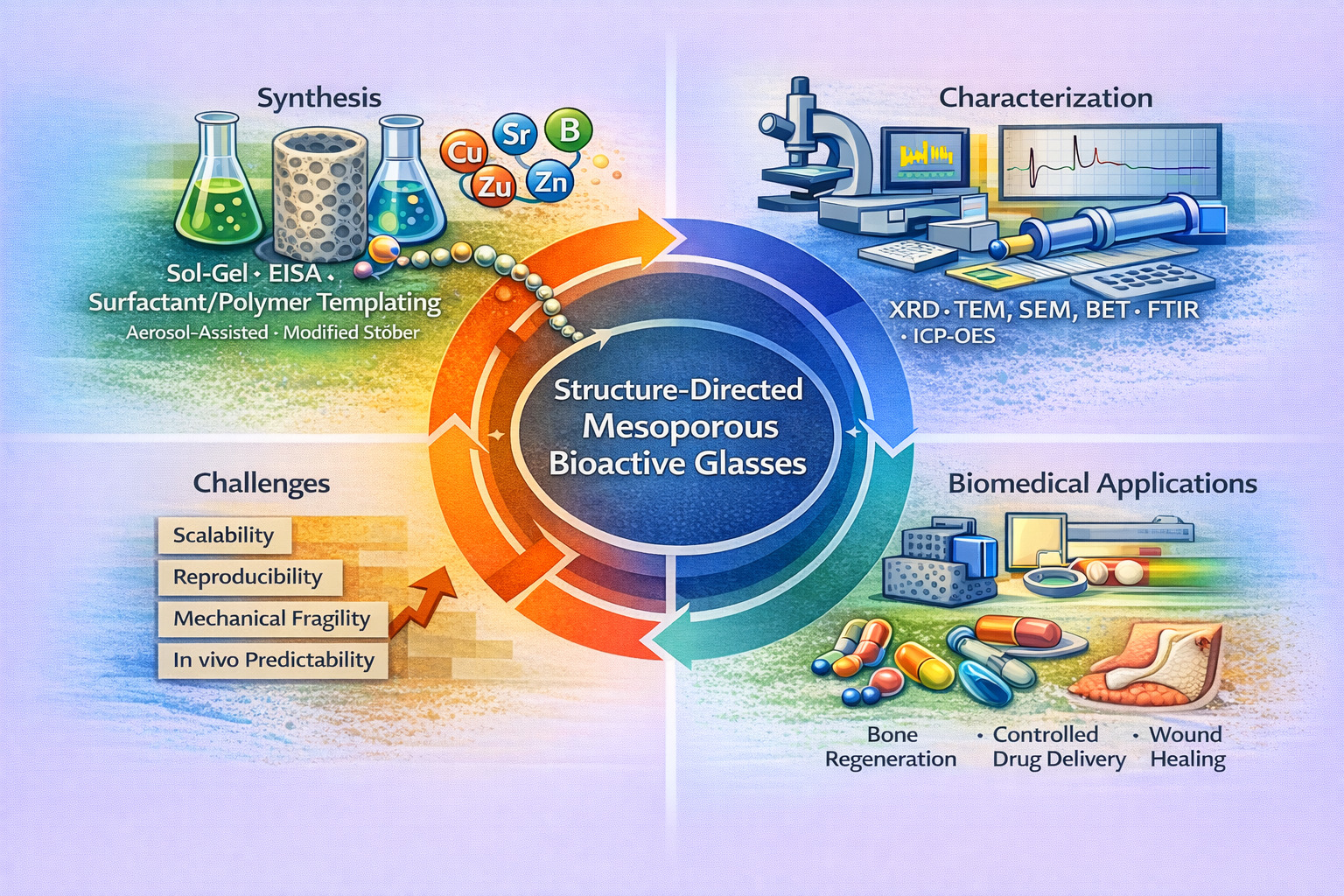
Mesoporous Bioactive Glasses: A Review on Structure-Directing-Based Synthesis, Characterization, and Biomedical Applications


Abstract
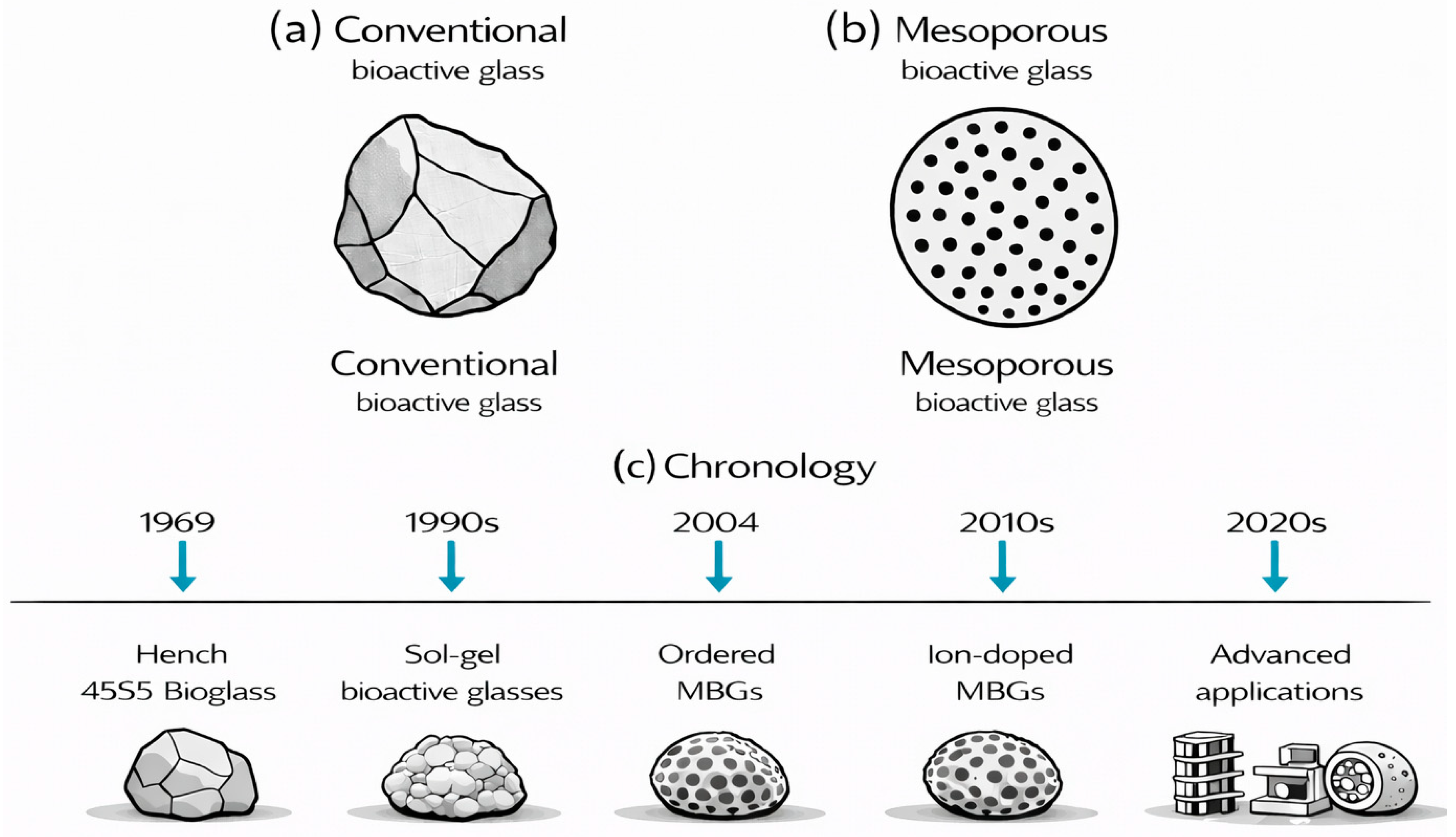
1. Introduction
2. Synthesis Mechanisms and Methods Used to Obtain MBGs
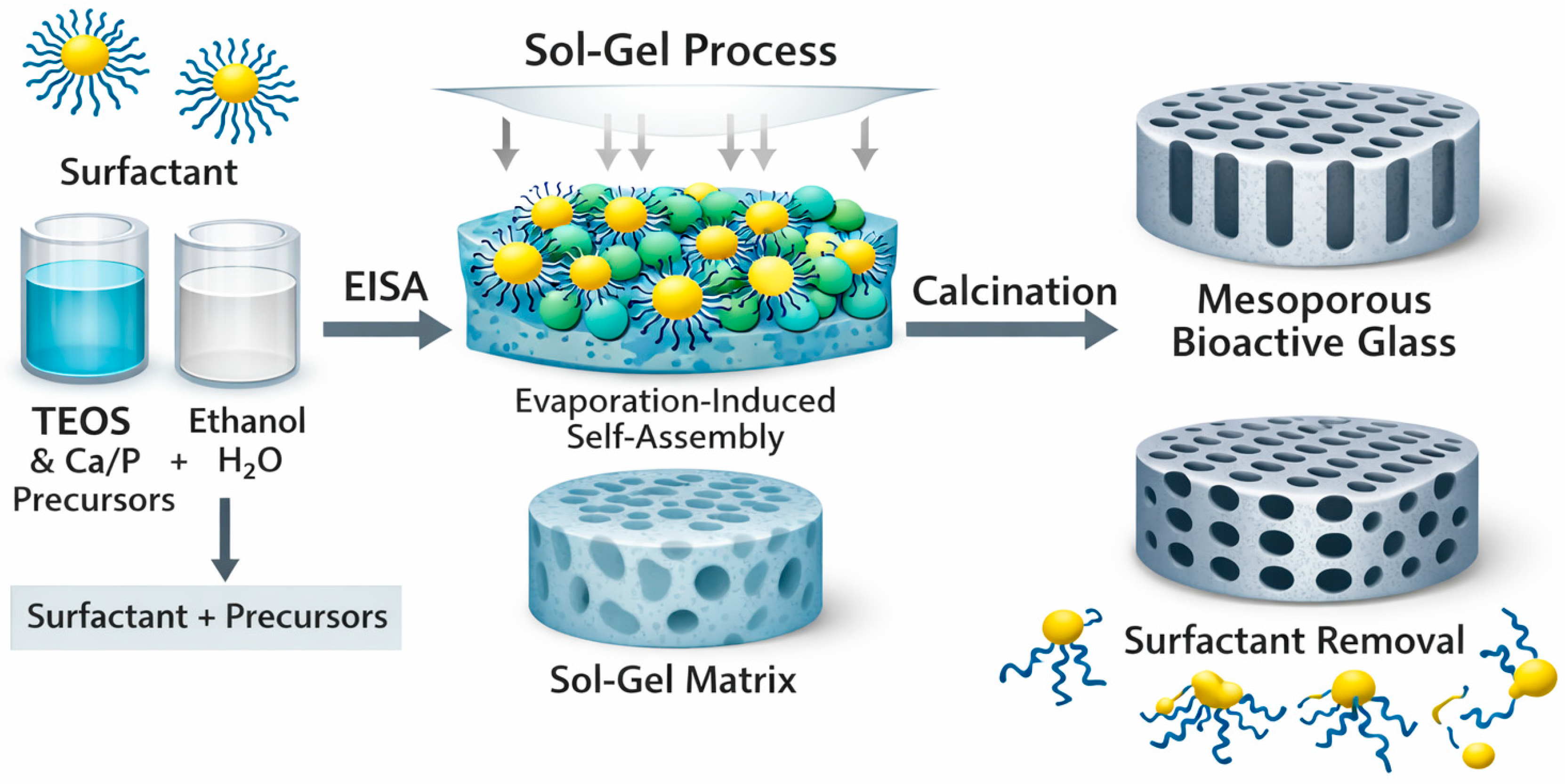
2.1. Surfactant-Templated Sol–Gel and Evaporation-Induced Self-Assembly (EISA)
2.2. Representative P123-Templated MBG Protocol
2.3. Critical Synthesis Parameters
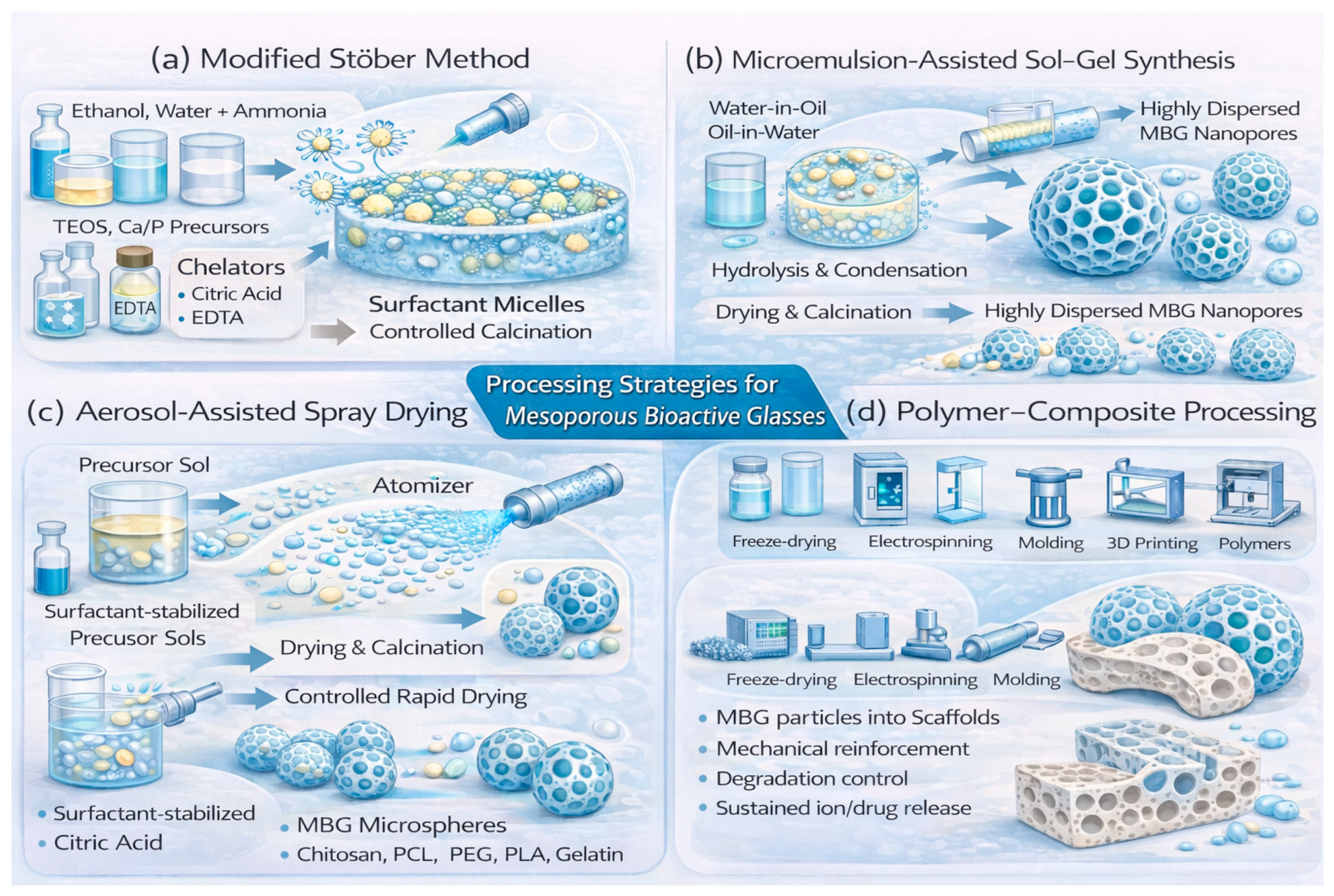
2.4. Modified Sol–Gel Methods
2.5. Microemulsion-Assisted Sol–Gel Synthesis
2.6. Aerosol-Assisted Spray Drying
2.7. Polymer–Composite Processing
3. Structure-Directing Agents (SDAs) and Templating Mechanisms
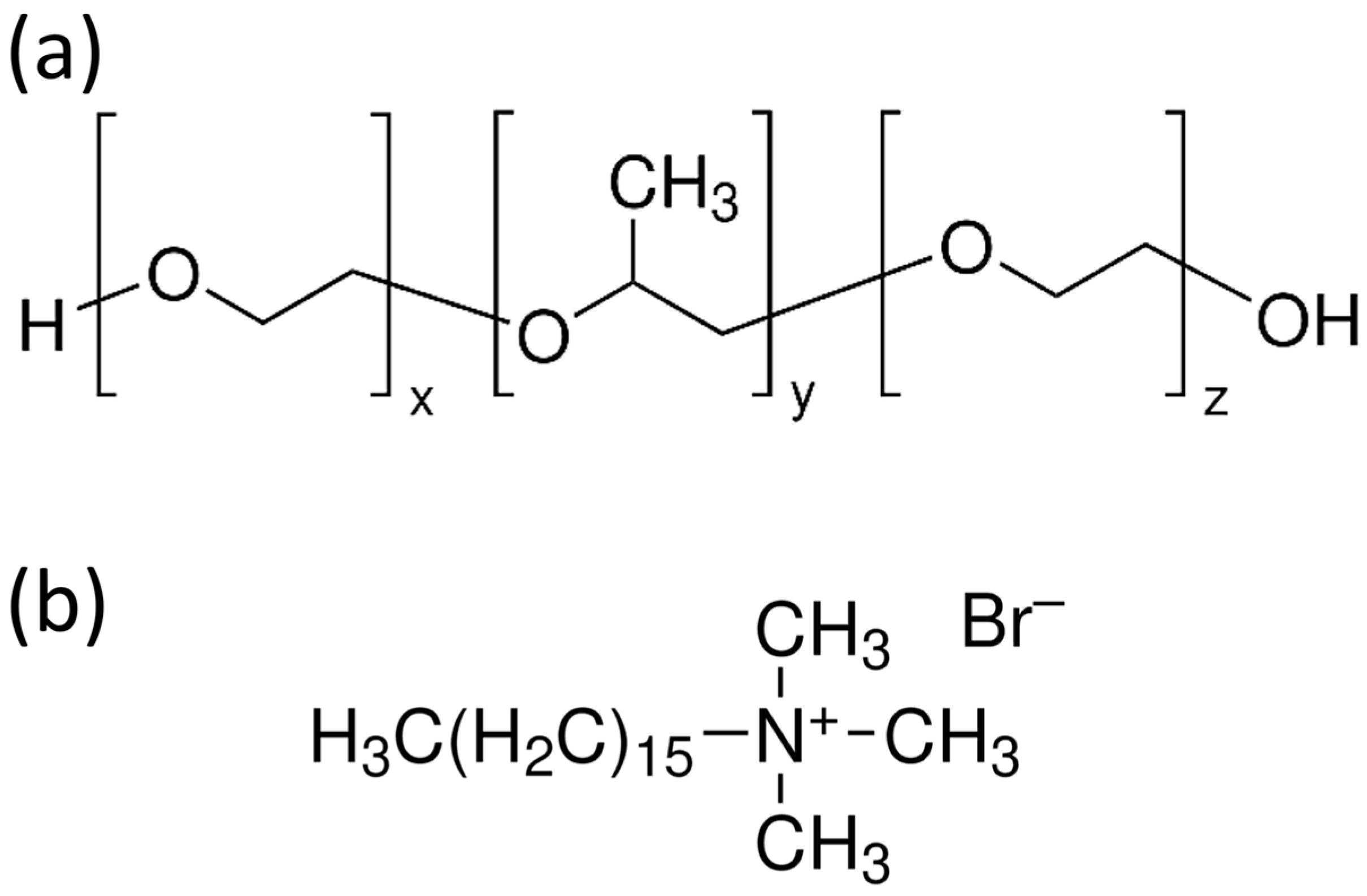
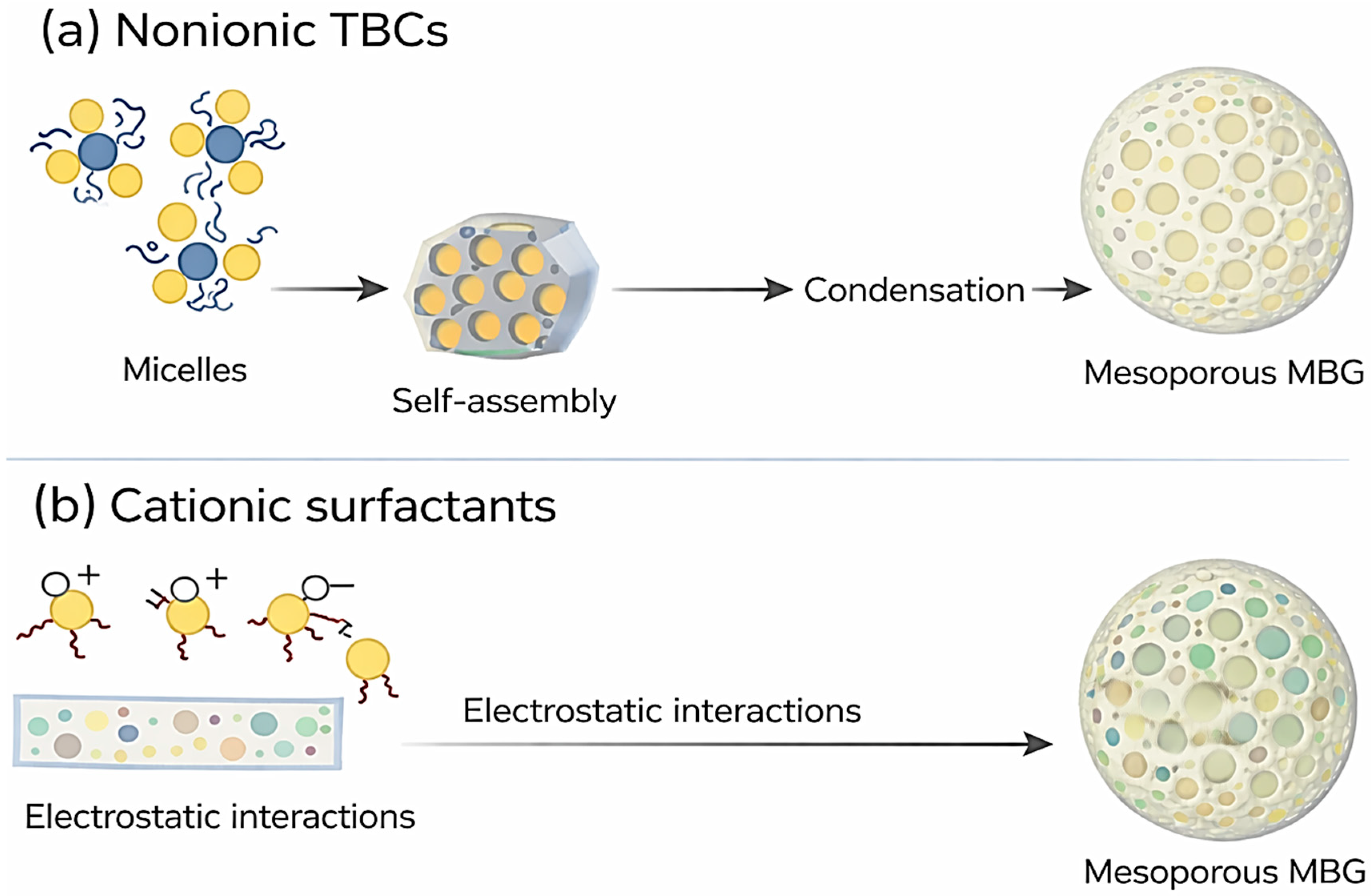
3.1. Nonionic Triblock Copolymers (TBCs)
3.2. Cationic Surfactants
Mechanistic Assessment of Surfactant–Calcium Interactions
3.3. Polymeric and Natural SDAs
3.4. Dual-Template and Hierarchical Porosity Strategies
3.5. Comparative Overview of SDAs
4. Influence of Composition and Therapeutic Ion Doping
4.1. Effects of Base Composition on Mesostructure and Bioactivity
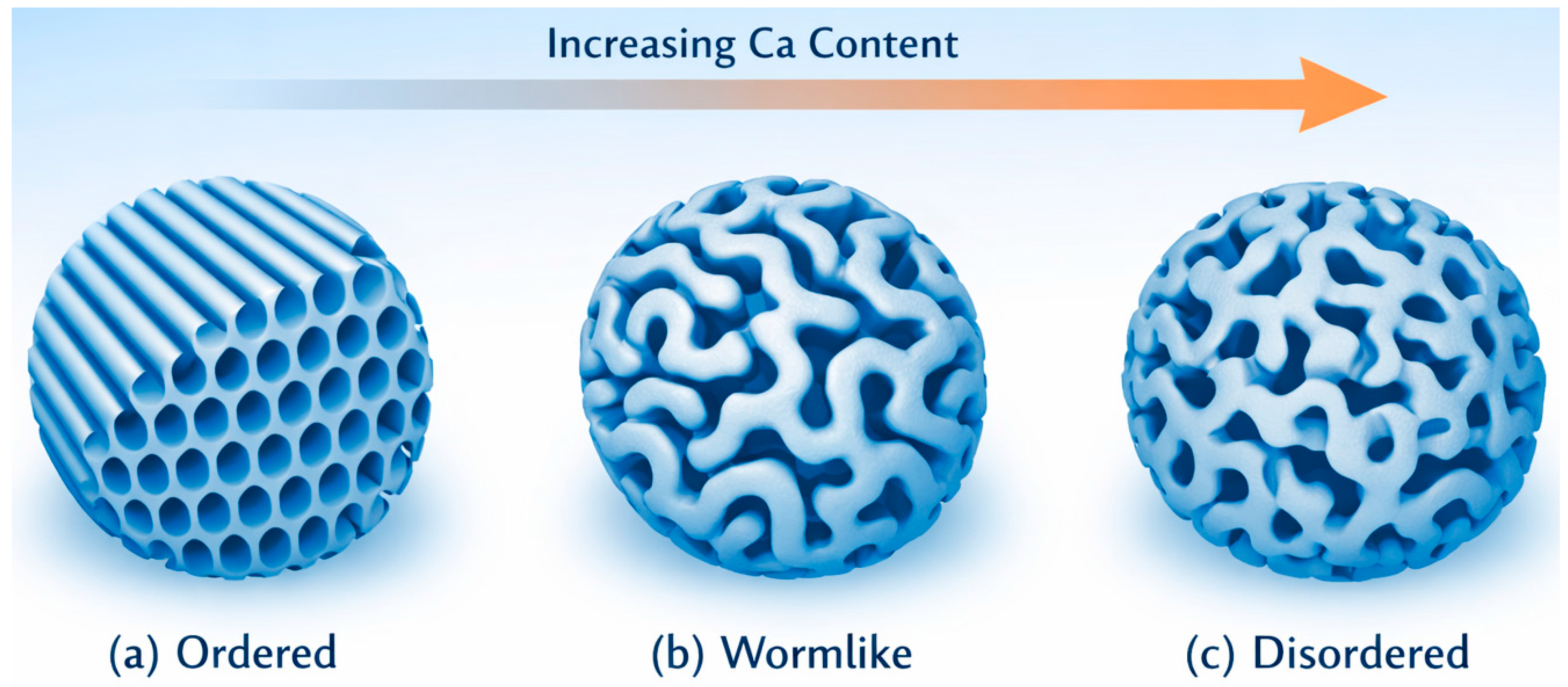
4.1.1. Calcium Oxide Content: Context-Dependent Effects on Mesostructure and Bioactivity
4.1.2. Role of P2O5 Content in Ternary MBG Systems
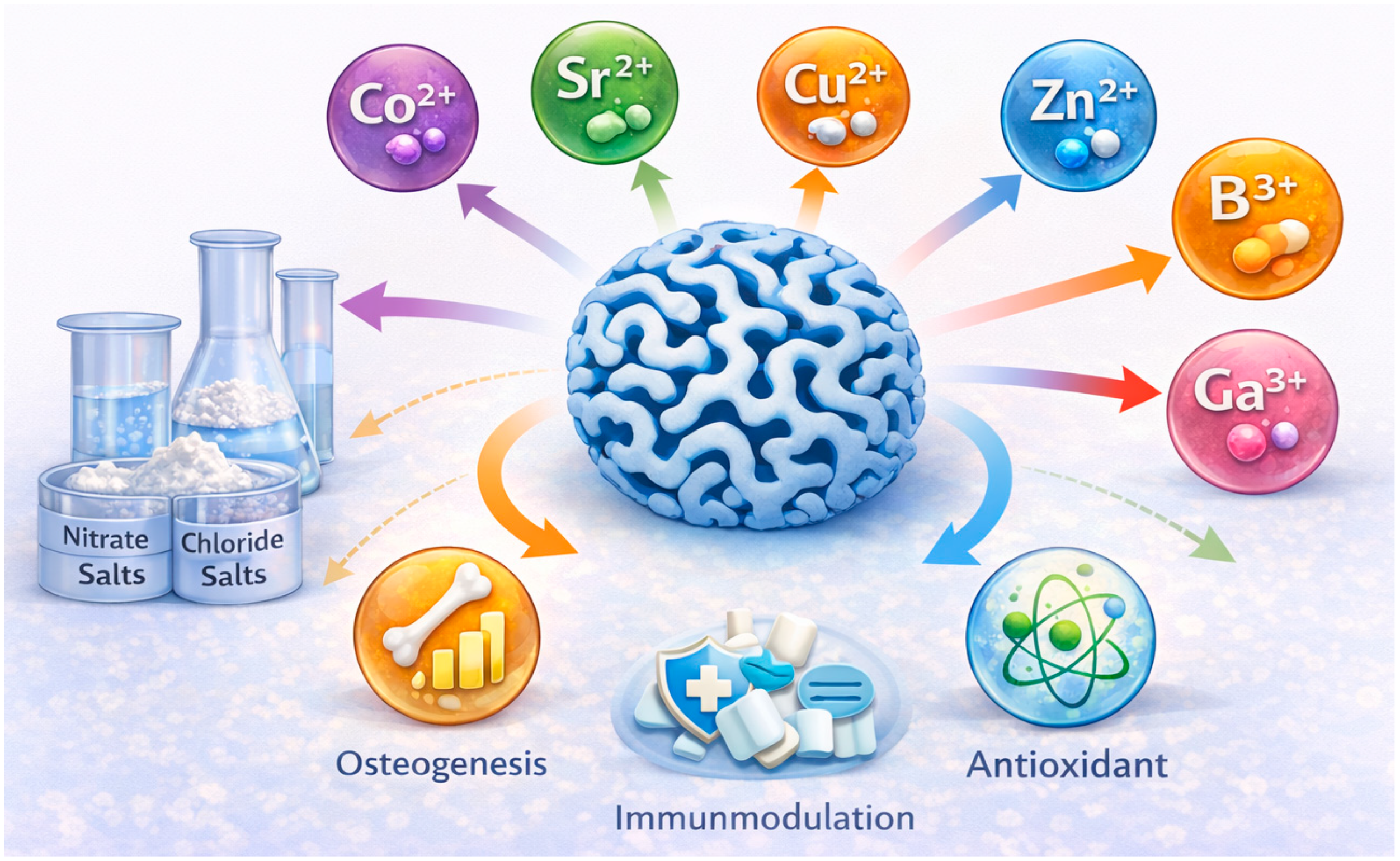
4.2. Effects of Therapeutic Ion Doping
5. Characterization Techniques for MBGs
5.1. X-Ray Diffraction (XRD)
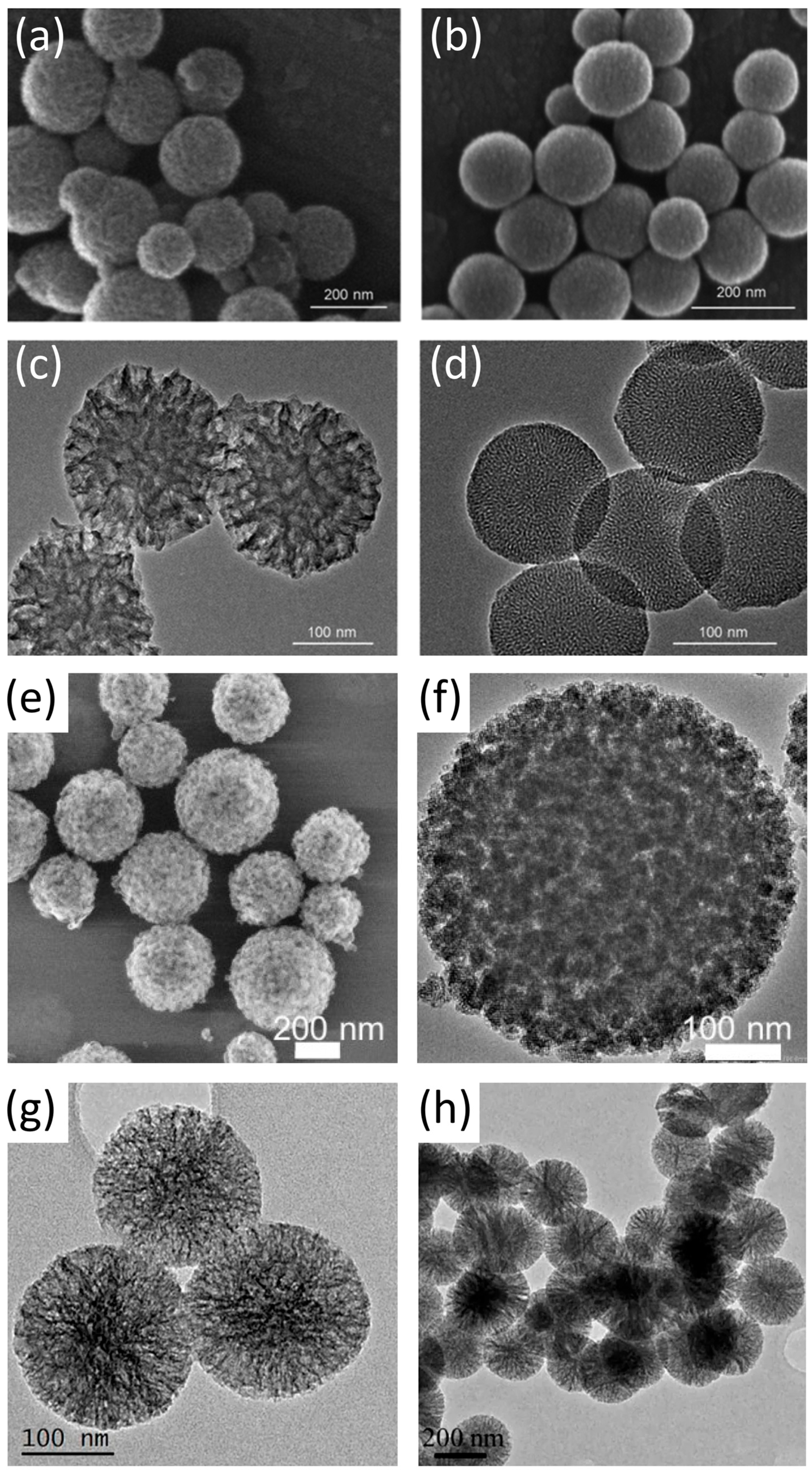
5.2. Transmission Electron Microscopy (TEM)
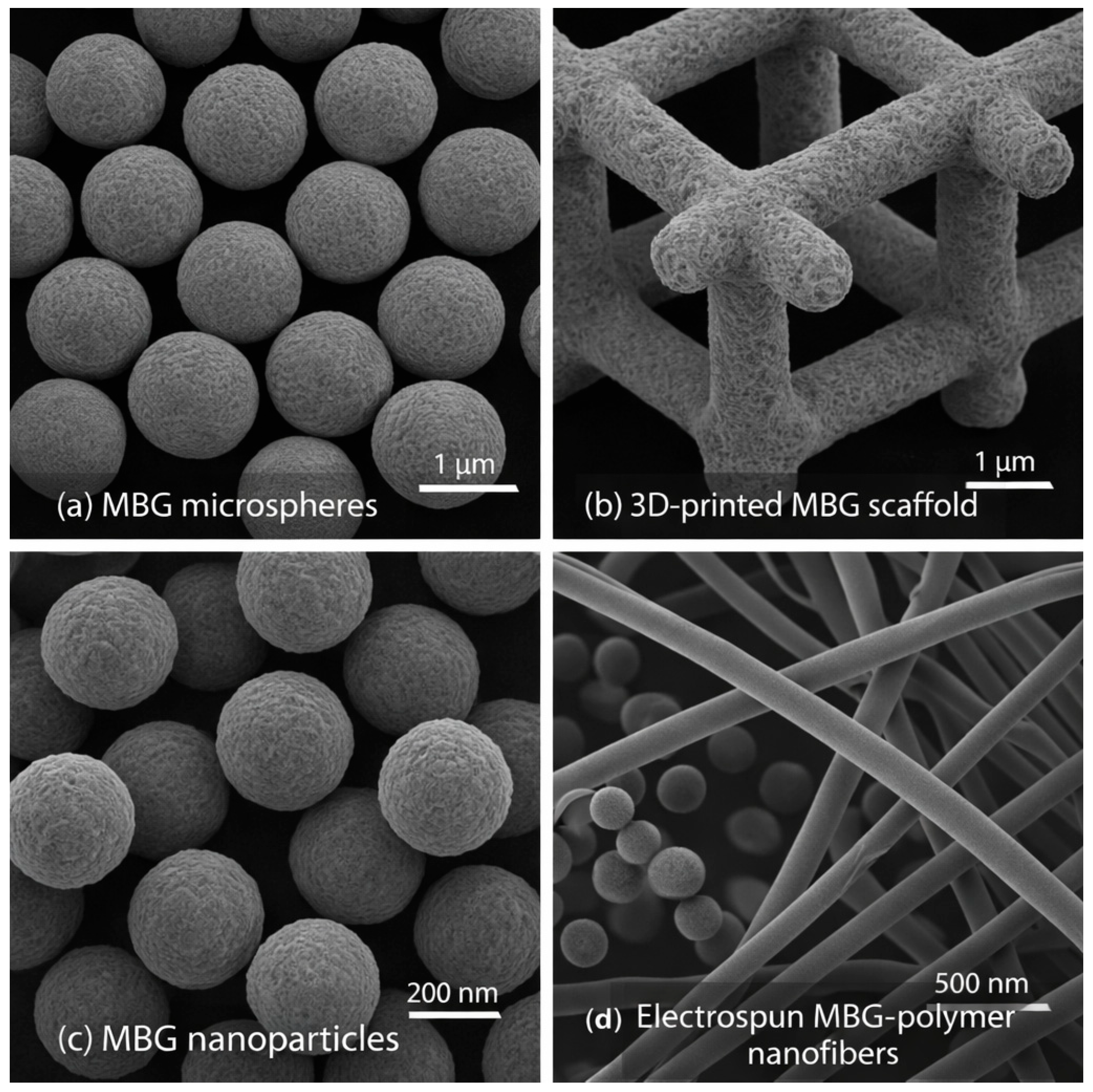
5.3. Scanning Electron Microscopy (SEM)
5.4. Fourier-Transform Infrared Spectroscopy (FTIR)
5.5. Inductively Coupled Plasma Optical Emission Spectroscopy (ICP-OES)
5.6. The Brunauer–Emmett–Teller (BET) Method
5.7. Additional Characterization Techniques
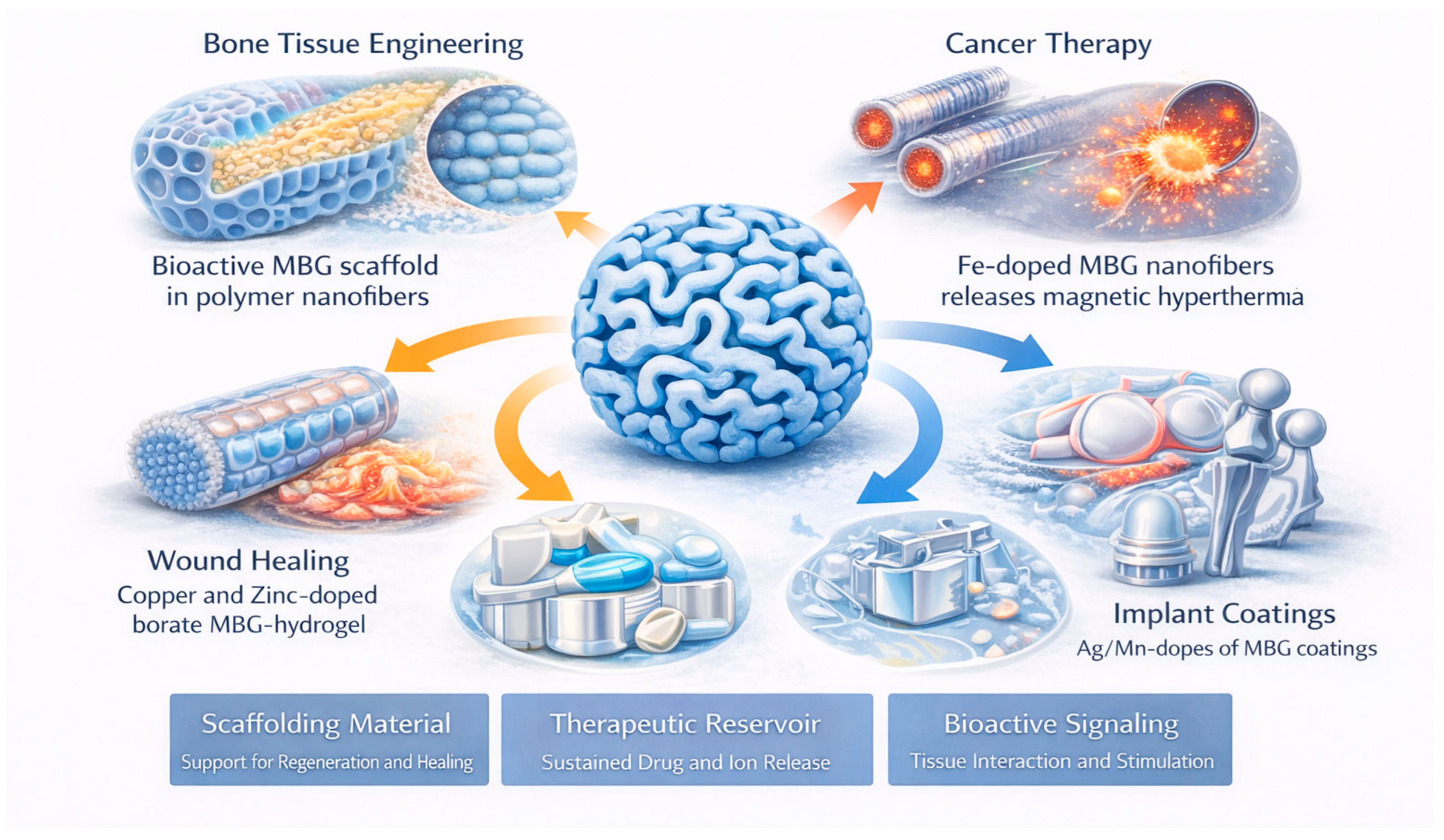
6. Biomedical Applications of MBGs
Structure–Property–Application Trade-Offs in Mesoporous Bioactive Glasses

| Application Area | Key MBG Feature Utilized | Specific Example/Study | Key Finding/Benefit | Refs. |
|---|---|---|---|---|
| Bone tissue engineering | bioactivity, porosity, polymer composites | Sr-MBG/PVA composite scaffolds | enhanced bioactivity and osteogenic differentiation | [4] |
| hierarchical porosity (macro- + mesopores) | 3D-printed MBG scaffolds with AgNPs | antibacterial, osteoblast proliferation, bone formation | [1] | |
| ion doping (e.g., Sr, Zn, B) | Zn-MBGs in sheep model | promoted bone regeneration, angiogenesis, osteogenesis | [98] | |
| Drug delivery (anticancer) | high surface area, mesopores, sustained release | Silibinin-releasing MBG nanoparticles | cytotoxic to breast cancer cells, sustained release | [74] |
| magnetic properties (Fe-doped MBGs) | Fe-doped MBG nanofibers for melanoma therapy | magnetic hyperthermia, >80% cell death | [57] | |
| Drug delivery (antibiotic) | high surface area, mesopores, controlled release | gentamicin-loaded MBGs | effective antibacterial activity, sustained release over 10 days | [122] |
| dual functionality (antibiotic + antioxidant) | Ce-MBG scaffolds loaded with gentamicin | antibiotic delivery, antioxidant properties | [101] | |
| Wound healing | bioactivity, angiogenesis, antibacterial, degradation | Zn-/Cu-doped borate MBGs | accelerated wound closure, enhanced angiogenesis, antibacterial activity | [21] |
| antioxidant, antibacterial, pro-healing (in hydrogels) | Cu-doped MBG nanozyme cryogels | accelerated diabetic wound closure, reduced inflammation | [76] | |
| Dental applications | bioactivity, remineralization, antibacterial | Cu-doped MBG nanospheres in dental composites | maintained mechanical properties, antibacterial activity against S. mutans | [77,86] |
| enamel remineralization (with ACP) | MBGs loaded with amorphous calcium phosphate | significant enamel remineralization, fluorapatite layer formation | [67] | |
| Cardiovascular applications | cardioprotective, antioxidant | Mg-doped MBGs with gallic acid | reduced infarct size, improved cardiac function, anti-inflammatory | [110] |
| Intervertebral disk regeneration | anti-inflammatory, ECM synthesis promotion, injectability | MBG/sodium alginate hydrogel with melatonin | preserved disk height, reduced inflammation, promotes ECM synthesis | [123] |
| Hemostatic applications | rapid coagulation, antibacterial | Cu-ion loaded MBGs in chitosan/gelatin cryogels | rapid hemostasis, effective for acute/persistent bleeding | [65] |
| Coatings for implants | bioactivity, osseointegration, antibacterial | Ag/Mn-doped MBG coatings on PEEK | enhanced osteogenic differentiation, antibacterial activity | [73] |
| bioactivity, osseointegration, long-term stability | zein/Ag-Sr doped MBG coatings on titanium | antibacterial, osteogenic, uniform coating | [58,75] |
7. Challenges and Future Perspectives
7.1. Current Challenges
7.2. Future Research Directions
8. Conclusions
Funding
Data Availability Statement
Conflicts of Interest
Abbreviations
| BET | Brunauer–Emmett–Teller |
| BMSCs | bone marrow mesenchymal stem cells |
| CaO | calcium oxide |
| ccCs | catechol-conjugated chitosan |
| CT | computed tomography |
| CTAB | hexadecyltrimethylammonium bromide |
| DLS | dynamic light scattering |
| EDTA | ethylenediaminetetraacetic acid |
| EDX | energy dispersive X-ray Spectroscopy |
| EISA | evaporation-induced self-assembly |
| EO | ethylene oxide |
| FTIR | Fourier transform infrared spectroscopy |
| HA | hydroxyapatite |
| HCA | hydroxyl carbonate apatite |
| HRTEM | high-resolution transmission electron microscopy |
| ICP-OES | Inductively Coupled Plasma Optical Emission Spectroscopy |
| LLA | polylactic acid |
| MRI | magnetic resonance imaging |
| NAC | N-acetylcysteine |
| NMR | nuclear magnetic resonance |
| NPs | nanoparticles |
| P4VP | poly(4-vinylpyridine) |
| PCL | polycaprolactone |
| PEG | polyethylene glycol |
| PHB | Cs-poly(3-hydroxybutyrate)-chitosan |
| Pluronics P123, F127, and F68 | poly(ethylene glycol)-block-poly(propylene glycol)-block-poly(ethylene glycol) |
| PMMA | poly(methyl methacrylate) |
| PPO | poly(propylene oxide) |
| PU | polyurethane |
| PVA | polyvinyl alcohol |
| PVPy | polyvinylpyrrolidone |
| ROS | reactive oxygen species |
| RT | room temperature |
| SAED | selected area electron diffraction |
| SAXS | small-angle X-ray scattering |
| SBF | simulated body fluid |
| SEM | scanning electron microscopy |
| TBC | triblock copolymer |
| TEM | transmission electron microscopy |
| TEOS | tetraethyl orthosilicate |
| TEP | triethyl phosphate |
| VEGF | vascular endothelial growth factor |
| XRD | X-ray diffraction |
References
- Sánchez-Salcedo, S.; García, A.; González-Jiménez, A.; Vallet-Regí, M. Antibacterial Effect of 3D Printed Mesoporous Bioactive Glass Scaffolds Doped with Metallic Silver Nanoparticles. Acta Biomater. 2023, 155, 654–666. [Google Scholar] [CrossRef]
- Auniq, R.B.-Z.; Pakasri, N.; Boonyang, U. Synthesis and in Vitro Bioactivity of Three-Dimensionally Ordered Macroporous-Mesoporous Bioactive Glasses; 45S5 and S53P4. J. Korean Ceram. Soc. 2020, 57, 305–313. [Google Scholar] [CrossRef]
- Deng, H.; Sun, C.; Yang, X.; Chen, X.; Zhang, Q.; Yan, Y. Gelatin-Based Hydrogel Incorporated with Metal-Phenolic Network-Coated Mesoporous Bioactive Glasses for Enhanced Bone Regeneration. Int. J. Biol. Macromol. 2025, 318, 144882. [Google Scholar] [CrossRef]
- Jiménez-Holguín, J.; López-Hidalgo, A.; Sánchez-Salcedo, S.; Peña, J.; Vallet-Regí, M.; Salinas, A.J. Strontium-Modified Scaffolds Based on Mesoporous Bioactive Glasses/Polyvinyl Alcohol Composites for Bone Regeneration. Materials 2020, 13, 5526. [Google Scholar] [CrossRef]
- Jiménez-Holguín, J.; Lozano, D.; Saiz-Pardo, M.; de Pablo, D.; Ortega, L.; Enciso, S.; Fernández-Tomé, B.; Díaz-Güemes, I.; Sánchez-Margallo, F.M.; Portolés, M.T.; et al. Bone Regeneration in Sheep Model Induced by Strontium-Containing Mesoporous Bioactive Glasses. Biomater. Adv. 2025, 169, 214168. [Google Scholar] [CrossRef]
- Gómez-Cerezo, N.; Lozano, D.; Salinas, A.J.; Vallet-Regí, M. Mesoporous Bioactive Glasses: A Powerful Tool in Tissue Engineering and Drug Delivery. Adv. Healthc. Mater. 2025, 15, e02201. [Google Scholar] [CrossRef]
- Kaou, M.H.; Furkó, M.; Balázsi, K.; Balázsi, C. Advanced Bioactive Glasses: The Newest Achievements and Breakthroughs in the Area. Nanomaterials 2023, 13, 2287. [Google Scholar] [CrossRef]
- Ege, D.; Zheng, K.; Boccaccini, A.R. Borate Bioactive Glasses (BBG): Bone Regeneration, Wound Healing Applications, and Future Directions. ACS Appl. Bio Mater. 2022, 5, 3608–3622. [Google Scholar] [CrossRef]
- Rahaman, M.N.; Day, D.E.; Sonny Bal, B.; Fu, Q.; Jung, S.B.; Bonewald, L.F.; Tomsia, A.P. Bioactive Glass in Tissue Engineering. Acta Biomater. 2011, 7, 2355–2373. [Google Scholar] [CrossRef]
- Madival, H.; Rajiv, A. A Comprehensive Review of Bioactive Glasses: Synthesis, Characterization, and Applications in Regenerative Medicine. Biomed. Mater. Devices 2025, 4, 1380–1400. [Google Scholar] [CrossRef]
- Ponta, O.; Ciceo-Lucacel, R.; Vulpoi, A.; Radu, T.; Simon, S. Molybdenum Effect on the Structure of SiO2–CaO–P2O5 Bioactive Xerogels and on Their Interface Processes with Simulated Biofluids. J. Biomed. Mater. Res. A 2014, 102, 3177–3185. [Google Scholar] [CrossRef]
- Baino, F. Copper-Doped Ordered Mesoporous Bioactive Glass: A Promising Multifunctional Platform for Bone Tissue Engineering. Bioengineering 2020, 7, 45. [Google Scholar] [CrossRef]
- Taghvaei, A.H.; Danaeifar, F.; Gammer, C.; Eckert, J.; Khosravimelal, S.; Gholipourmalekabadi, M. Synthesis and Characterization of Novel Mesoporous Strontium-Modified Bioactive Glass Nanospheres for Bone Tissue Engineering Applications. Micropor. Mesopor. Mat. 2020, 294, 109889. [Google Scholar] [CrossRef]
- Almasri, D.; Dahman, Y. Impact of Composition and Surfactant-Templating on Mesoporous Bioactive Glasses Structural Evolution, Bioactivity, and Drug Delivery Property. J. Biomater. Appl. 2025, 39, 1064–1083. [Google Scholar] [CrossRef]
- Bhattacharya, A.; Salim, A.A.; Zain, S.K.M.; Sazali, E.S.; Ghoshal, S.K.; Hisam, R.; Handayani, W. Bone Tissue Regeneration Potency of Phosphorus Pentoxide-Imbued Mesoporous Borosilicate Bioglass Scaffolds: Performance Evaluation and Mechanistic Insights. Ceram. Int. 2025, 51, 26594–26608. [Google Scholar] [CrossRef]
- Huang, W.-L.; Vietanti, F.; Wu, M.-H.; Chou, Y.-J. Mesoporous Bioactive Glass Microspheres via Aerosol-Assisted Spray Drying Method: Structural and Biological Insights through P123 Modulation. J. Asian Ceram. Soc. 2025, 13, 223–234. [Google Scholar] [CrossRef]
- Schumacher, M.; Habibovic, P.; van Rijt, S. Mesoporous Bioactive Glass Composition Effects on Degradation and Bioactivity. Bioact. Mater. 2021, 6, 1921–1931. [Google Scholar] [CrossRef]
- Riti, P.I.; Vulpoi, A.; Ponta, O.; Simon, V. The Effect of Synthesis Route and Magnesium Addition on Structure and Bioactivity of Sol–Gel Derived Calcium-Silicate Glasses. Ceram. Int. 2014, 40, 14741–14748. [Google Scholar] [CrossRef]
- Riti, P.I.; Vulpoi, A.; Simon, V. Effect of pH Dependent Gelation Time and Calcination Temperature on Silica Network in SiO2–CaO and SiO2–MgO Glasses. J. Non-Cryst. Solids 2015, 411, 76–84. [Google Scholar] [CrossRef]
- Kermani, F.; Mollazadeh Beidokhti, S.; Baino, F.; Gholamzadeh-Virany, Z.; Mozafari, M.; Kargozar, S. Strontium- and Cobalt-Doped Multicomponent Mesoporous Bioactive Glasses (MBGs) for Potential Use in Bone Tissue Engineering Applications. Materials 2020, 13, 1348. [Google Scholar] [CrossRef]
- Kermani, F.; Nazarnezhad, S.; Mollaei, Z.; Mollazadeh, S.; Ebrahimzadeh-Bideskan, A.; Askari, V.R.; Oskuee, R.K.; Moradi, A.; Hosseini, S.A.; Azari, Z.; et al. Zinc- and Copper-Doped Mesoporous Borate Bioactive Glasses: Promising Additives for Potential Use in Skin Wound Healing Applications. Int. J. Mol. Sci. 2023, 24, 1304. [Google Scholar] [CrossRef]
- Popescu, R.; Magyari, K.; Vulpoi, A.; Trandafir, D.; Licarete, E.; Todea, M.; Ştefan, R.; Voica, C.; Vodnar, D.; Simon, S. Bioactive and Biocompatible Copper Containing Glass-Ceramics with Remarkable Antibacterial Properties and High Cell Viability Designed for Future in Vivo Trials. Biomater. Sci. 2016, 4, 1252–1265. [Google Scholar] [CrossRef]
- Veres, R.; Vulpoi, A.; Magyari, K.; Ciuce, C.; Simon, V. Synthesis, Characterisation and in Vitro Testing of Macroporous Zinc Containing Scaffolds Obtained by Sol–Gel and Sacrificial Template Methods. J. Non-Cryst. Solids 2013, 373–374, 57–64. [Google Scholar] [CrossRef]
- Pontremoli, C.; Pagani, M.; Maddalena, L.; Carosio, F.; Vitale-Brovarone, C.; Fiorilli, S. Polyelectrolyte-Coated Mesoporous Bioactive Glasses via Layer-by-Layer Deposition for Sustained Co-Delivery of Therapeutic Ions and Drugs. Pharmaceutics 2021, 13, 1952. [Google Scholar] [CrossRef]
- Batool, S.A.; Ahmad, K.; Irfan, M.; Ur Rehman, M.A. Zn–Mn-Doped Mesoporous Bioactive Glass Nanoparticle-Loaded Zein Coatings for Bioactive and Antibacterial Orthopedic Implants. J. Funct. Biomater. 2022, 13, 97. [Google Scholar] [CrossRef]
- Neščáková, Z.; Kaňková, H.; Galusková, D.; Galusek, D.; Boccaccini, A.R.; Liverani, L. Polymer (PCL) Fibers with Zn-Doped Mesoporous Bioactive Glass Nanoparticles for Tissue Regeneration. Int. J. Appl. Glass Sci. 2021, 12, 588–600. [Google Scholar] [CrossRef]
- Pádua, A.S.; Figueiredo, L.; Silva, J.C.; Borges, J.P. Chitosan Scaffolds with Mesoporous Hydroxyapatite and Mesoporous Bioactive Glass. Prog. Biomater. 2023, 12, 137–153. [Google Scholar] [CrossRef]
- Kandari, S.; Divya; Gupta, S.; Pal, S.; Yadav, M.; Murugavel, S. Copper-Containing Mesoporous Bioactive Glasses with Multifunctional Properties. ACS Appl. Bio Mater. 2025, 8, 9285–9298. [Google Scholar] [CrossRef]
- Martelli, A.; Bellucci, D.; Cannillo, V. Additive Manufacturing of Polymer/Bioactive Glass Scaffolds for Regenerative Medicine: A Review. Polymers 2023, 15, 2473. [Google Scholar] [CrossRef]
- Atkinson, I.; Seciu-Grama, A.M.; Mocioiu, O.C.; Mocioiu, A.M.; Predoana, L.; Voicescu, M.; Cusu, J.P.; Grigorescu, R.M.; Ion, R.M.; Craciunescu, O. Preparation and Biocompatibility of Poly Methyl Methacrylate (PMMA)-Mesoporous Bioactive Glass (MBG) Composite Scaffolds. Gels 2021, 7, 180. [Google Scholar] [CrossRef]
- Azari, Z.; Kermani, F.; Mollazadeh, S.; Alipour, F.; Sadeghi-Avalshahr, A.; Ranjbar-Mohammadi, M.; Jalali Kondori, B.; Mollaei, Z.; Hosseini, S.A.; Nazarnezhad, S.; et al. Fabrication and Characterization of Cobalt- and Copper-Doped Mesoporous Borate Bioactive Glasses for Potential Applications in Tissue Engineering. Ceram. Int. 2023, 49, 38773–38788. [Google Scholar] [CrossRef]
- Cheng, S.-Y.; Chiang, Y.-L.; Chang, Y.-H.; Thissen, H.; Tsai, S.-W. An Aqueous-Based Process to Bioactivate Poly(ε-Caprolactone)/Mesoporous Bioglass Composite Surfaces by Prebiotic Chemistry-Inspired Polymer Coatings for Biomedical Applications. Colloids Surf. B Biointerfaces 2021, 205, 111913. [Google Scholar] [CrossRef]
- Chen, S.; Li, M.; Michálek, M.; Kaňková, H.; Zhao, L.; Boccaccini, A.R.; Galusek, D.; Zheng, K. Cross-Linking of Mesoporous Bioactive Glass Nanoparticle Incorporated Gelatin Hydrogels by Tannic Acid with Enhanced Mechanical Performance and Stability. Materialia 2024, 36, 102165. [Google Scholar] [CrossRef]
- Peluso, V.; D’Amora, U.; Prelipcean, A.M.; Scala, S.; Gargiulo, N.; Seciu-Grama, A.-M.; Caputo, D.; De Santis, R.; Gloria, A.; Russo, T. Design of Silver Containing Mesoporous Bioactive Glass-Embedded Polycaprolactone Substrates with Antimicrobial and Bone Regenerative Properties. Mater. Today Commun. 2023, 37, 107509. [Google Scholar] [CrossRef]
- Dourado Fernandes, C.; Harmanci, S.; Grünewald, A.; Hadzhieva, Z.; Oechsler, B.F.; Sayer, C.; Hermes de Araújo, P.H.; Boccaccini, A.R. Boron-Doped Mesoporous Bioactive Glass Nanoparticles (B-MBGNs) in Poly(ε-Caprolactone)/Poly(Propylene Succinate-Co-Glycerol Succinate) Nanofiber Mats for Tissue Engineering. ACS Appl. Bio Mater. 2025, 8, 5557–5567. [Google Scholar] [CrossRef]
- Kermani, F.; Sadidi, H.; Ahmadabadi, A.; Hoseini, S.J.; Tavousi, S.H.; Rezapanah, A.; Nazarnezhad, S.; Hosseini, S.A.; Mollazadeh, S.; Kargozar, S. Modified Sol–Gel Synthesis of Mesoporous Borate Bioactive Glasses for Potential Use in Wound Healing. Bioengineering 2022, 9, 442. [Google Scholar] [CrossRef]
- Hosseinpour, S.; Gomez-Cerezo, M.N.; Cao, Y.; Lei, C.; Dai, H.; Walsh, L.J.; Ivanovski, S.; Xu, C. A Comparative Study of Mesoporous Silica and Mesoporous Bioactive Glass Nanoparticles as Non-Viral MicroRNA Vectors for Osteogenesis. Pharmaceutics 2022, 14, 2302. [Google Scholar] [CrossRef]
- Madival, H.; Rajiv, A.; Muniraju, C.; Reddy, M.S. Advancements in Bioactive Glasses: A Comparison of Silicate, Borate, and Phosphate Network Based Materials. Biomed. Mater. Devices 2026, 4, 425–445. [Google Scholar] [CrossRef]
- Foroutan, F.; Kyffin, B.A.; Abrahams, I.; Corrias, A.; Gupta, P.; Velliou, E.; Knowles, J.C.; Carta, D. Mesoporous Phosphate-Based Glasses Prepared via Sol–Gel. ACS Biomater. Sci. Eng. 2020, 6, 1428–1437. [Google Scholar] [CrossRef]
- Ji, L.; Wang, C.; Chen, F.; Xie, C.; Qin, X.; Yang, X. Unidirectional Drug Release Controlled by a PLA/Mesoporous Bioactive Glass/PVA Polymer Composite. Polym. Bull. 2025, 82, 10301–10317. [Google Scholar] [CrossRef]
- khosravi, N.; Moradi, A.; Sharifianjazi, F.; Tavamaishvili, K.; Bakhtiari, A.; Mohammadi, A. A Review of Samarium-Containing Bioactive Glasses: Biomedical Applications. J. Compos. Compd. 2025, 7. [Google Scholar] [CrossRef]
- Handrea-Dragan, M.; Botiz, I. Multifunctional Structured Platforms: From Patterning of Polymer-Based Films to Their Subsequent Filling with Various Nanomaterials. Polymers 2021, 13, 445. [Google Scholar] [CrossRef]
- Leordean, C.; Marta, B.; Gabudean, A.-M.; Focsan, M.; Botiz, I.; Astilean, S. Fabrication of Highly Active and Cost Effective SERS Plasmonic Substrates by Electrophoretic Deposition of Gold Nanoparticles on a DVD Template. Appl. Surf. Sci. 2015, 349, 190–195. [Google Scholar] [CrossRef]
- Darko, C.; Botiz, I.; Reiter, G.; Breiby, D.W.; Andreasen, J.W.; Roth, S.V.; Smilgies, D.M.; Metwalli, E.; Papadakis, C.M. Crystallization in Diblock Copolymer Thin Films at Different Degrees of Supercooling. Phys. Rev. E 2009, 79, 041802. [Google Scholar] [CrossRef]
- Jahanshahi, K.; Botiz., I.; Reiter, R.; Thomann, R.; Heck, B.; Shokri, R.; Stille, W.; Reiter, G. Crystallization of Poly(γ-Benzyl L-Glutamate) in Thin Film Solutions: Structure and Pattern Formation. Macromolecules 2013, 46, 1470–1476. [Google Scholar] [CrossRef]
- Botiz, I.; Codescu, M.-A.; Farcau, C.; Leordean, C.; Astilean, S.; Silva, C.; Stingelin, N. Convective Self-Assembly of π-Conjugated Oligomers and Polymers. J. Mater. Chem. C 2017, 5, 2513–2518. [Google Scholar] [CrossRef]
- Andone, B.-A.; Handrea-Dragan, I.M.; Botiz, I.; Boca, S. State-of-the-Art and Future Perspectives in Infertility Diagnosis: Conventional versus Nanotechnology-Based Assays. Nanomed.: Nanotechnol. Biol. Med. 2023, 54, 102709. [Google Scholar] [CrossRef]
- Tudureanu, R.; Handrea-Dragan, I.M.; Boca, S.; Botiz, I. Insight and Recent Advances into the Role of Topography on the Cell Differentiation and Proliferation on Biopolymeric Surfaces. Int. J. Mol. Sci. 2022, 23, 7731. [Google Scholar] [CrossRef]
- Biswal, T. Biopolymers for Tissue Engineering Applications: A Review. Mater. Today Proc. 2021, 41, 397–402. [Google Scholar] [CrossRef]
- Handrea-Dragan, I.M.; Botiz, I.; Tatar, A.-S.; Boca, S. Patterning at the Micro/Nano-Scale: Polymeric Scaffolds for Medical Diagnostic and Cell-Surface Interaction Applications. Colloids Surf. B Biointerfaces 2022, 218, 112730. [Google Scholar] [CrossRef]
- Botiz, I.; Freyberg, P.; Leordean, C.; Gabudean, A.-M.; Astilean, S.; Yang, A.C.-M.; Stingelin, N. Emission Properties of MEH-PPV in Thin Films Simultaneously Illuminated and Annealed at Different Temperatures. Synth. Met. 2015, 199, 33–36. [Google Scholar] [CrossRef]
- Adamkiewicz, W.; Siek, M.M.; Mazur, T.W.; Lach, S.; Grzybowski, B.A. Additive Contact Polarization of Nonferroelectric Polymers for Patterning of Multilevel Memory Elements. ACS Appl. Mater. Interfaces 2020, 12, 1504–1510. [Google Scholar] [CrossRef]
- Foster, D.P.; Majumdar, D. Critical Behavior of Magnetic Polymers in Two and Three Dimensions. Phys. Rev. E 2021, 104, 024122. [Google Scholar] [CrossRef]
- Botiz, I.; Grozev, N.; Schlaad, H.; Reiter, G. The Influence of Protic Non-Solvents Present in the Environment on Structure Formation of Poly(γ-Benzyl-l-Glutamate) in Organic Solvents. Soft Matter 2008, 4, 993–1002. [Google Scholar] [CrossRef]
- Zain, S.K.M.; Sazali, E.S.; Ghoshal, S.K.; Hisam, R. In Vitro Bioactivity and Biocompatibility Assessment of PCL/PLA–Scaffolded Mesoporous Silicate Bioactive Glass: Role of Boron Activation. J. Non-Cryst. Solids 2024, 625, 122763. [Google Scholar] [CrossRef]
- Saberi, A.; Behnamghader, A.; Aghabarari, B.; Yousefi, A.; Majda, D.; Huerta, M.V.M.; Mozafari, M. 3D Direct Printing of Composite Bone Scaffolds Containing Polylactic Acid and Spray Dried Mesoporous Bioactive Glass-Ceramic Microparticles. Int. J. Biol. Macromol. 2022, 207, 9–22. [Google Scholar] [CrossRef]
- Sadeqzadeh, K.; Nazarnezhad, S.; Kermani, F.; Azari, Z.; Foroughi, K.; Mollazadeh, S.; Ebrahimzadeh-Bideskan, A.; Shafieian, R.; Sadeghi-Avalshahr, A.; El-Fiqi, A.; et al. Electrospun Nanofibers Combined with Fe-Doped Mesoporous Bioactive Glass Nanoparticles Induce in Vitro Melanoma Cell Death. Ceram. Int. 2024, 50, 11236–11245. [Google Scholar] [CrossRef]
- Maciąg, F.; Moskalewicz, T.; Cholewa-Kowalska, K.; Hadzhieva, Z.; Dziadek, M.; Dubiel, B.; Łukaszczyk, A.; Boccaccini, A.R. Influence of Mesoporous Bioactive Glass Particles Doped with Cu and Mg on the Microstructure and Properties of Zein-Based Coatings Obtained by Electrophoretic Deposition. J. Electrochem. Soc. 2023, 170, 082501. [Google Scholar] [CrossRef]
- Deilmann, L.; Winter, O.; Cerrutti, B.; Bradtmüller, H.; Herzig, C.; Limbeck, A.; Lahayne, O.; Hellmich, C.; Eckert, H.; Eder, D. Effect of Boron Incorporation on the Bioactivity, Structure, and Mechanical Properties of Ordered Mesoporous Bioactive Glasses. J. Mater. Chem. B 2020, 8, 1456–1465. [Google Scholar] [CrossRef]
- Matos, R.J.R.; Silva, J.C.; Soares, P.I.P.; Borges, J.P. Polyvinylpyrrolidone Nanofibers Incorporating Mesoporous Bioactive Glass for Bone Tissue Engineering. Biomimetics 2023, 8, 206. [Google Scholar] [CrossRef]
- Li, C.; Wang, C.; Boccaccini, A.R.; Zheng, K. Sol-Gel Processing and Characterization of Binary P2O5-CaO and Ternary P2O5-CaO-Li2O Mesoporous Phosphate Bioactive Glasses. J. Non-Cryst. Solids X 2023, 17, 100159. [Google Scholar] [CrossRef]
- Toloue, E.B.; Mohammadalipour, M.; Mukherjee, S.; Karbasi, S. Ultra-Thin Electrospun Nanocomposite Scaffold of Poly (3-Hydroxybutyrate)-Chitosan/Magnetic Mesoporous Bioactive Glasses for Bone Tissue Engineering Applications. Int. J. Biol. Macromol. 2024, 254, 127860. [Google Scholar] [CrossRef] [PubMed]
- Deng, H.; Chen, X.; Zhang, W.; Yang, H.; Yang, X.; Zhang, Q.; Yan, Y. Bioactive Glasses-Based Nanoenzymes Composite Double-Network Hydrogel with ROS Scavenging for Bone Tissue Engineering. Eur. Polym. J. 2025, 224, 113718. [Google Scholar] [CrossRef]
- Yuan, S.; Zheng, B.; Zheng, K.; Lai, Z.; Chen, Z.; Zhao, J.; Li, S.; Zheng, X.; Wu, P.; Wang, H. Immunoregulation in Skull Defect Repair with a Smart Hydrogel Loaded with Mesoporous Bioactive Glasses. Biomater. Res. 2024, 28, 0074. [Google Scholar] [CrossRef] [PubMed]
- Hou, Q.; He, X.; Guo, M.; Li, X.; Zhang, Z.; Xu, X.; Xu, Y.; Shi, Q.; Han, Y. Enhanced Hemostatic Efficacy of Cryogel with Copper Ion-Loaded Mesoporous Bioactive Glasses for Acute and Persistent Bleeding. J. Nanobiotechnol. 2025, 23, 102. [Google Scholar] [CrossRef]
- Yan, X.X.; Deng, H.X.; Huang, X.H.; Lu, G.Q.; Qiao, S.Z.; Zhao, D.Y.; Yu, C.Z. Mesoporous Bioactive Glasses. I. Synthesis and Structural Characterization. J. Non-Cryst. Solids 2005, 351, 3209–3217. [Google Scholar] [CrossRef]
- Ren, J.; Rao, J.; Wang, H.; He, W.; Feng, J.; Wei, D.; Zhao, B.; Wang, X.; Bian, W. Synergistic Remineralization of Enamel White Spot Lesions Using Mesoporous Bioactive Glasses Loaded with Amorphous Calcium Phosphate. Front. Bioeng. Biotechnol. 2023, 11, 1109195. [Google Scholar] [CrossRef] [PubMed]
- Kim, T.-H.; Singh, R.K.; Kang, M.S.; Kim, J.-H.; Kim, H.-W. Gene Delivery Nanocarriers of Bioactive Glass with Unique Potential to Load BMP2 Plasmid DNA and to Internalize into Mesenchymal Stem Cells for Osteogenesis and Bone Regeneration. Nanoscale 2016, 8, 8300–8311. [Google Scholar] [CrossRef]
- Liu, J.; Du, G.; Yu, H.; Zhang, X.; Chen, T. Synthesis of Hierarchically Porous Bioactive Glass and Its Mineralization Activity. Molecules 2023, 28, 2224. [Google Scholar] [CrossRef]
- Yao, H.; Luo, J.; Deng, Y.; Li, Z.; Wei, J. Alginate-Modified Mesoporous Bioactive Glass and Its Drug Delivery, Bioactivity, and Osteogenic Properties. Front. Bioeng. Biotechnol. 2022, 10, 994925. [Google Scholar] [CrossRef]
- Aguilar-Rabiela, A.E.; Leal-Egaña, A.; Nawaz, Q.; Boccaccini, A.R. Integration of Mesoporous Bioactive Glass Nanoparticles and Curcumin into PHBV Microspheres as Biocompatible Composite for Drug Delivery Applications. Molecules 2021, 26, 3177. [Google Scholar] [CrossRef]
- Pawłowski, Ł.; Akhtar, M.A.; Zieliński, A.; Boccaccini, A.R. Electrophoretic Deposition and Characterization of Composite Chitosan/Eudragit E 100 or Poly(4-Vinylpyridine)/Mesoporous Bioactive Glass Nanoparticles Coatings on Pre-Treated Titanium for Implant Applications. Surf. C 2024, 479, 130542. [Google Scholar] [CrossRef]
- Nawaz, A.; Bano, S.; Yasir, M.; Wadood, A.; Ur Rehman, M.A. Ag and Mn-Doped Mesoporous Bioactive Glass Nanoparticles Incorporated into the Chitosan/Gelatin Coatings Deposited on PEEK/Bioactive Glass Layers for Favorable Osteogenic Differentiation and Antibacterial Activity. Mater. Adv. 2020, 1, 1273–1284. [Google Scholar] [CrossRef]
- Nawaz, Q.; Fuentes-Chandía, M.; Tharmalingam, V.; Ur Rehman, M.A.; Leal-Egaña, A.; Boccaccini, A.R. Silibinin Releasing Mesoporous Bioactive Glass Nanoparticles with Potential for Breast Cancer Therapy. Ceram. Int. 2020, 46, 29111–29119. [Google Scholar] [CrossRef]
- Batool, S.A.; Liaquat, U.; Channa, I.A.; Gilani, S.J.; Makhdoom, M.A.; Yasir, M.; Ashfaq, J.; Jumah, M.N.; Rehman, M.A. Development and Characterization of Zein/Ag-Sr Doped Mesoporous Bioactive Glass Nanoparticles Coatings for Biomedical Applications. Bioengineering 2022, 9, 367. [Google Scholar] [CrossRef] [PubMed]
- Zhu, S.; Li, M.; Wang, Z.; Feng, Q.; Gao, H.; Li, Q.; Chen, X.; Cao, X. Bioactive Glasses-Based Nanozymes Composite Macroporous Cryogel with Antioxidative, Antibacterial, and Pro-Healing Properties for Diabetic Infected Wound Repair. Adv. Healthc. Mater. 2023, 12, 2302073. [Google Scholar] [CrossRef]
- Marovic, D.; Haugen, H.J.; Negovetic Mandic, V.; Par, M.; Zheng, K.; Tarle, Z.; Boccaccini, A.R. Incorporation of Copper-Doped Mesoporous Bioactive Glass Nanospheres in Experimental Dental Composites: Chemical and Mechanical Characterization. Materials 2021, 14, 2611. [Google Scholar] [CrossRef]
- Altan, D.; Özarslan, A.C.; Özel, C.; Tuzlakoğlu, K.; Sahin, Y.M.; Yücel, S. Fabrication of Electrospun Double Layered Biomimetic Collagen–Chitosan Polymeric Membranes with Zinc-Doped Mesoporous Bioactive Glass Additives. Polymers 2024, 16, 2066. [Google Scholar] [CrossRef] [PubMed]
- Shen, H.; Wang, B.; Shen, Z.; Xie, Z.; Zhang, J.; Wang, C.; Zheng, K. Cerium-Containing Mesoporous Bioactive Glass Nanoparticles Doped Resin Infiltrants: Synergistic Mechanical Reinforcement and Bioactive Therapy for Early Caries Management. Ceram. Int. 2025, 51, 53782–53795. [Google Scholar] [CrossRef]
- Chen, Y.-Y.; Ma, T.-L.; Chang, P.-J.; Chiou, Y.-J.; Chang, W.-M.; Weng, C.-F.; Chen, C.-Y.; Chang, Y.-K.; Lin, C.-K. Synergistic Effect of Strontium Doping and Surfactant Addition in Mesoporous Bioactive Glass for Enhanced Osteogenic Bioactivity and Advanced Bone Regeneration. Polymers 2025, 17, 187. [Google Scholar] [CrossRef]
- Anghel, E.M.; Petrescu, S.; Mocioiu, O.C.; Cusu, J.P.; Atkinson, I. Influence of Ceria Addition on Crystallization Behavior and Properties of Mesoporous Bioactive Glasses in the SiO2–CaO–P2O5–CeO2 System. Gels 2022, 8, 344. [Google Scholar] [CrossRef]
- Matic, T.; Daou, F.; Cochis, A.; Barac, N.; Ugrinovic, V.; Rimondini, L.; Veljovic, D. Multifunctional Sr,Mg-Doped Mesoporous Bioactive Glass Nanoparticles for Simultaneous Bone Regeneration and Drug Delivery. Int. J. Mol. Sci. 2024, 25, 8066. [Google Scholar] [CrossRef]
- Guo, W.; Li, Y.; Guan, Y.; Ma, T.; Chen, J.; Feng, J.; Liao, J. Synthesis, Drug Loading and Release Study of Spherical Bioactive Glass Regulated by Two Templates. J. Non-Cryst. Solids 2024, 627, 122825. [Google Scholar] [CrossRef]
- Magyari, K.; Stefan, R.; Vodnar, D.C.; Vulpoi, A.; Baia, L. The Silver Influence on the Structure and Antibacterial Properties of the Bioactive 10B2O3−30Na2O−60P2O2 Glass. J. Non-Cryst. Solids 2014, 402, 182–186. [Google Scholar] [CrossRef]
- Naruphontjirakul, P.; Li, M.; Boccaccini, A.R. Strontium and Zinc Co-Doped Mesoporous Bioactive Glass Nanoparticles for Potential Use in Bone Tissue Engineering Applications. Nanomaterials 2024, 14, 575. [Google Scholar] [CrossRef]
- Munir, A.; Marovic, D.; Nogueira, L.P.; Simm, R.; Naemi, A.-O.; Landrø, S.M.; Helgerud, M.; Zheng, K.; Par, M.; Tauböck, T.T.; et al. Using Copper-Doped Mesoporous Bioactive Glass Nanospheres to Impart Anti-Bacterial Properties to Dental Composites. Pharmaceutics 2022, 14, 2241. [Google Scholar] [CrossRef] [PubMed]
- Chiriac, L.B.; Todea, M.; Vulpoi, A.; Muresan-Pop, M.; Turcu, R.V.F.; Simon, S. Freeze-Drying Assisted Sol–Gel-Derived Silica-Based Particles Embedding Iron: Synthesis and Characterization. J. Sol-Gel Sci. Technol. 2018, 87, 195–203. [Google Scholar] [CrossRef]
- Vanea, E.; Moraru, C.; Vulpoi, A.; Cavalu, S.; Simon, V. Freeze-Dried and Spray-Dried Zinc-Containing Silica Microparticles Entrapping Insulin. J. Biomater. Appl. 2014, 28, 1190–1199. [Google Scholar] [CrossRef]
- Arcos, D.; López-Noriega, A.; Ruiz-Hernández, E.; Terasaki, O.; Vallet-Regí, M. Ordered Mesoporous Microspheres for Bone Grafting and Drug Delivery. Chem. Mater. 2009, 21, 1000–1009. [Google Scholar] [CrossRef]
- Kargozar, S.; Gorgani, S.; El-Fiqi, A. Mesoporous Bioactive Glasses: Effective Biocompatible Materials for Drug Delivery and Tissue Engineering. In Bioceramics: Status in Tissue Engineering and Regenerative Medicine (Part 2); Bentham Science Publishers: Potomac, MD, USA, 2024; pp. 88–103. [Google Scholar]
- Kesse, X.; Vichery, C.; Jacobs, A.; Descamps, S.; Nedelec, J.-M. Unravelling the Impact of Calcium Content on the Bioactivity of Sol–Gel-Derived Bioactive Glass Nanoparticles. ACS Appl. Bio Mater. 2020, 3, 1312–1320. [Google Scholar] [CrossRef]
- Wu, C.; Chang, J. Mesoporous Bioactive Glasses: Structure Characteristics, Drug/Growth Factor Delivery and Bone Regeneration Application. Interface Focus. 2012, 2, 292–306. [Google Scholar] [CrossRef]
- Migneco, C.; Fiume, E.; Verné, E.; Baino, F. A Guided Walk through the World of Mesoporous Bioactive Glasses (MBGs): Fundamentals, Processing, and Applications. Nanomaterials 2020, 10, 2571. [Google Scholar] [CrossRef]
- Brinker, C.J. Hydrolysis and Condensation of Silicates: Effects on Structure. J. Non-Cryst. Solids 1988, 100, 31–50. [Google Scholar] [CrossRef]
- Rahman, S.; Mendonca, A.; Alhalawani, A.; Polintan, D.; Clarkin, O.M.; Towler, M.R. The Effect of Calcination Rate on the Structure of Mesoporous Bioactive Glasses. J. Sol-Gel Sci. Technol. 2019, 89, 426–435. [Google Scholar] [CrossRef]
- Kumar, A.; Sudipta; Murugavel, S. Influence of Textural Characteristics on Biomineralization Behavior of Mesoporous SiO2-P2O5-CaO Bioactive Glass and Glass-Ceramics. Mater. Chem. Phys. 2020, 242, 122511. [Google Scholar] [CrossRef]
- Zhao, S.; Li, Y.; Li, D. Synthesis of CaO–SiO2–P2O5 Mesoporous Bioactive Glasses with High P2O5 Content by Evaporation Induced Self Assembly Process. J. Mater. Sci. Mater. Med. 2011, 22, 201–208. [Google Scholar] [CrossRef]
- Jiménez-Holguín, J.; Arcos, D.; Lozano, D.; Saiz-Pardo, M.; de Pablo, D.; Ortega, L.; Enciso, S.; Fernández-Tomé, B.; Díaz-Güemes, I.; Sánchez-Margallo, F.M.; et al. In Vitro and In Vivo Response of Zinc-Containing Mesoporous Bioactive Glasses in a Sheep Animal Model. Int. J. Mol. Sci. 2022, 23, 13918. [Google Scholar] [CrossRef] [PubMed]
- Ege, D.; Nawaz, Q.; Beltrán, A.M.; Boccaccini, A.R. Effect of Boron-Doped Mesoporous Bioactive Glass Nanoparticles on C2C12 Cell Viability and Differentiation: Potential for Muscle Tissue Application. ACS Biomater. Sci. Eng. 2022, 8, 5273–5283. [Google Scholar] [CrossRef] [PubMed]
- Taghvaei, A.H.; Mosadeghian, F.; Mosleh-Shirazi, S.; Ebrahimi, A.; Kaňuchová, M.; Girman, V.; Bednarčík, J.; Khosrowpour, Z.; Gholipourmalekabadi, M.; Pahlevani, M. Fabrication and Characterization of Novel ZnO-Loaded Mesoporous Bioactive Glass Nanospheres with Enhanced Physiochemical Properties and Biocompatibility for Bone Tissue Engineering. J. Non-Cryst. Solids 2024, 626, 122781. [Google Scholar] [CrossRef]
- Atkinson, I.; Seciu-Grama, A.M.; Petrescu, S.; Culita, D.; Mocioiu, O.C.; Voicescu, M.; Mitran, R.-A.; Lincu, D.; Prelipcean, A.-M.; Craciunescu, O. Cerium-Containing Mesoporous Bioactive Glasses (MBGs)-Derived Scaffolds with Drug Delivery Capability for Potential Tissue Engineering Applications. Pharmaceutics 2022, 14, 1169. [Google Scholar] [CrossRef]
- Ling, Z.; Guo, S.; Xie, H.; Chen, X.; Yu, K.; Jiang, H.; Xu, R.; Wu, Y.; Zheng, K. Synergistic Effects of Cerium-Containing Bioactive Glasses and Apoptotic Extracellular Vesicles Alleviate Bisphosphonate-Related Osteonecrosis of Jaw. Appl. Mater. Today 2024, 38, 102177. [Google Scholar] [CrossRef]
- Xu, W.; Qin, Z.; Xu, R.; Li, S.; Zheng, K.; Tan, H. Injectable, pro-Osteogenic and Antioxidant Composite Microspheres Composed of Cerium-Containing Mesoporous Bioactive Glass and Chitosan for Bone Regeneration Applications. Ceram. Int. 2023, 49, 25757–25766. [Google Scholar] [CrossRef]
- Wu, L.; Yang, F.; Xue, Y.; Gu, R.; Liu, H.; Xia, D.; Liu, Y. The Biological Functions of Europium-Containing Biomaterials: A Systematic Review. Mater. Today Bio 2023, 19, 100595. [Google Scholar] [CrossRef] [PubMed]
- Miao, G.; Chen, X.; Mao, C.; Li, X.; Li, Y.; Lin, C. Synthesis and Characterization of Europium-Containing Luminescent Bioactive Glasses and Evaluation of in Vitro Bioactivity and Cytotoxicity. J. Sol-Gel Sci. Technol. 2014, 69, 250–259. [Google Scholar] [CrossRef]
- Morais, D.S.; Coelho, J.; Ferraz, M.P.; Gomes, P.S.; Fernandes, M.H.; Hussain, N.S.; Santos, J.D.; Lopes, M.A. Samarium Doped Glass-Reinforced Hydroxyapatite with Enhanced Osteoblastic Performance and Antibacterial Properties for Bone Tissue Regeneration. J. Mater. Chem. B 2014, 2, 5872–5881. [Google Scholar] [CrossRef]
- Ashemary, A.; Haidary, S.; Muhammed, Y.; Çardakli, İ. Preparation and Characterization of Mesoporous Lanthanum-Doped Bioactive Glass Nanoparticles. Dig. J. Nanomater. Biostruct. 2023, 18, 681–688. [Google Scholar] [CrossRef]
- Ciraldo, F.E.; Arango-Ospina, M.; Goldmann, W.H.; Beltrán, A.M.; Detsch, R.; Gruenewald, A.; Roether, J.A.; Boccaccini, A.R. Fabrication and Characterization of Ag- and Ga-Doped Mesoporous Glass-Coated Scaffolds Based on Natural Marine Sponges with Improved Mechanical Properties. J. Biomed. Mater. Res. A 2021, 109, 1309–1327. [Google Scholar] [CrossRef]
- Zhou, S.; Tu, Z.; Chen, Z.; Jiang, D.; Lv, S.; Cui, H. Engineering Ga-Doped Mesoporous Bioactive Glass-Integrated PEEK Implants for Immunomodulatory and Enhanced Osseointegration Effects. Colloids Surf. B Biointerfaces 2025, 245, 114189. [Google Scholar] [CrossRef]
- Yu, W.; Ding, J.; Chen, J.; Jiang, Y.; Zhao, J.; Liu, J.; Zhou, J.; Liu, J. Magnesium Ion-Doped Mesoporous Bioactive Glasses Loaded with Gallic Acid Against Myocardial Ischemia/Reperfusion Injury by Affecting the Biological Functions of Multiple Cells. Int. J. Nanomed. 2024, 19, 347–366. [Google Scholar] [CrossRef]
- Tabassum, S.; Saqib, M.; Batool, M.; Sharif, F.; Gilani, M.A.; Huck, O. Eco-Friendly Synthesis of Mesoporous Bioactive Glass Ceramics and Functionalization for Drug Delivery and Hard Tissue Engineering Applications. Biomed. Mater. 2024, 19, 035014. [Google Scholar] [CrossRef] [PubMed]
- Boroumand, N.; Dini, G.; Poursamar, S.A.; Ali Asadollahi, M. Sol-Gel Derived Mesoporous 45S5 Bioactive Glass Containing Mg and Zr Ions: Synthesis, Characterization, and in Vitro Biological Investigation. Arab. J. Chem. 2024, 17, 105374. [Google Scholar] [CrossRef]
- Cao, Y.; Zhang, L.; Xu, Y.Q.; Wang, X.; Liu, B.L. Preparation and Bioactivity of Mesoporous Bioactive Glasses with Different Phosphorus Contents. Adv. Mater. Res. 2011, 287, 1997–2002. [Google Scholar] [CrossRef]
- Aguiar, H.; Solla, E.L.; Serra, J.; González, P.; León, B.; Almeida, N.; Cachinho, S.; Davim, E.J.C.; Correia, R.; Oliveira, J.M.; et al. Orthophosphate Nanostructures in SiO2–P2O5–CaO–Na2O–MgO Bioactive Glasses. J. Non-Cryst. Solids 2008, 354, 4075–4080. [Google Scholar] [CrossRef]
- Cui, Y.; Hong, S.; Jiang, W.; Li, X.; Zhou, X.; He, X.; Liu, J.; Lin, K.; Mao, L. Engineering Mesoporous Bioactive Glasses for Emerging Stimuli-Responsive Drug Delivery and Theranostic Applications. Bioact. Mater. 2024, 34, 436–462. [Google Scholar] [CrossRef]
- Vallet-Regí, M.; Colilla, M.; Izquierdo-Barba, I.; Vitale-Brovarone, C.; Fiorilli, S. Achievements in Mesoporous Bioactive Glasses for Biomedical Applications. Pharmaceutics 2022, 14, 2636. [Google Scholar] [CrossRef]
- Guo, Y.-P.; Lü, J.; Ke, Q.-F. Chapter 4-Mesoporous Bioactive Glasses: Fabrication, Structure, Drug Delivery Property, and Therapeutic Potential. In Biomedical, Therapeutic and Clinical Applications of Bioactive Glasses; Kaur, G., Ed.; Woodhead Publishing: Sawston, UK, 2019; pp. 127–151. ISBN 978-0-08-102196-5. [Google Scholar]
- Wu, C.; Chang, J.; Xiao, Y. Mesoporous Bioactive Glasses As Drug Delivery and Bone Tissue Regeneration Platforms. Ther. Deliv. 2011, 2, 1189–1198. [Google Scholar] [CrossRef]
- Gómez-Cerezo, N.; Arcos, D.; Vallet-Regí, M. Chapter 11-Mesoporous Bioactive Glasses for Biomedical Composites. In Materials for Biomedical Engineering; Grumezescu, V., Grumezescu, A.M., Eds.; Elsevier: Amsterdam, The Netherlands, 2019; pp. 355–391. ISBN 978-0-12-818431-8. [Google Scholar]
- Izquierdo-Barba, I.; Vallet-Regí, M. Mesoporous Bioactive Glasses: Relevance of Their Porous Structure Compared to That of Classical Bioglasses. Biomed. Glas. 2015, 1, 140–150. [Google Scholar] [CrossRef]
- Krishnamoorthy, E.; Purusothaman, B.; Subramanian, B. Productizing Nano-Bioactive Glass-Based Bilayer Scaffolds: A Graft for Reconstruction of Mandibular and Femoral Bone Defects. ACS Appl. Mater. Interfaces 2024, 16, 25317–25332. [Google Scholar] [CrossRef] [PubMed]
- Anand, A.; Das, P.; Nandi, S.K.; Kundu, B. Development of Antibiotic Loaded Mesoporous Bioactive Glass and Its Drug Release Kinetics. Ceram. Int. 2020, 46, 5477–5483. [Google Scholar] [CrossRef]
- Wu, R.; Huang, L.; Xia, Q.; Liu, Z.; Huang, Y.; Jiang, Y.; Wang, J.; Ding, H.; Zhu, C.; Song, Y.; et al. Injectable Mesoporous Bioactive Glass/Sodium Alginate Hydrogel Loaded with Melatonin for Intervertebral Disc Regeneration. Mater. Today Bio 2023, 22, 100731. [Google Scholar] [CrossRef]
- Ray, S.; Thormann, U.; Kramer, I.; Sommer, U.; Budak, M.; Schumacher, M.; Bernhardt, A.; Lode, A.; Kern, C.; Rohnke, M.; et al. Mesoporous Bioactive Glass-Incorporated Injectable Strontium-Containing Calcium Phosphate Cement Enhanced Osteoconductivity in a Critical-Sized Metaphyseal Defect in Osteoporotic Rats. Bioengineering 2023, 10, 1203. [Google Scholar] [CrossRef]
- Barik, A.; Kirtania, M.D. In-Vitro and In-Vivo Tracking of Cell-Biomaterial Interaction to Monitor the Process of Bone Regeneration. In Regenerative Medicine: Emerging Techniques to Translation Approaches; Chakravorty, N., Shukla, P.C., Eds.; Springer Nature Singapore: Singapore, 2023; pp. 305–329. ISBN 978-981-19-6008-6. [Google Scholar]
- Björk, E.M.; Atakan, A.; Wu, P.-H.; Bari, A.; Pontremoli, C.; Zheng, K.; Giasafaki, D.; Iviglia, G.; Torre, E.; Cassinelli, C.; et al. A Shelf-Life Study of Silica- and Carbon-Based Mesoporous Materials. J. Ind. Eng. Chem. 2021, 101, 205–213. [Google Scholar] [CrossRef]
- Bustihan, A.; Botiz, I.; Branco, R.; Martins, R.F. Enhancing Mechanical Energy Absorption of Honeycomb and Triply Periodic Minimal Surface Lattice Structures Produced by Fused Deposition Modelling in Reusable Polymers. Polymers 2025, 17, 1111. [Google Scholar] [CrossRef] [PubMed]
- Bates, F.S.; Fredrickson, G.H. Block Copolymers—Designer Soft Materials. Phys. Today 1999, 52, 32–38. [Google Scholar] [CrossRef]


| Parameter | Optimal Range/Condition (for Silicate MBGs) | Effect of Deviation (Examples) | Impact on MBG Properties | Refs. |
|---|---|---|---|---|
| TEOS/SDA molar ratio | 10–40 (for P123) | higher ratios | increased pore ordering, but may reduce pore volume | [14] |
| pH and catalyst type | pH 1–2 (acidic, e.g., HNO3, HCl) | pH < 1 or >5; milder catalysts (e.g., citric acid for borates) | optimal TEOS hydrolysis and Si-OH formation; rapid, uncontrolled condensation/poor mesostructure at high pH; slower hydrolysis/better ordering with milder catalysts | [14,16,21,31,36,80] |
| Aging temperature | 60–80 °C | room temperature (20–25 °C); >100 °C | accelerates EISA and micelle ordering (24–48 h); slow EISA/extended aging (48–72 h) at RT; rapid solvent loss/disordered structures at high temperature | [16,80] |
| Aging time | 24–48 h (most P123 syntheses); 12–24 h (borate glasses) | <12 h; >72 h | insufficient consolidation/weak structures; minimal additional benefit/increased synthesis time | [16,36,80] |
| Calcination temperature | 600–700 °C (silicate MBGs); 500–600 °C (borate/phosphate) | <500 °C; >700 °C (silicates); 800 °C (Ce-MBGs) | incomplete template removal/residual organics; mesopore collapse/partial crystallization (e.g., wollastonite, CaSiO3)/significant surface area loss | [59,81] |
| Calcination heating rate | slow (0.5–1 °C/min) | fast (>5 °C/min) | gradual template decomposition/preserves ordering; rapid gas evolution/damages mesostructure | [59,80,81] |
| Calcination holding time | 3–6 h | shorter times; longer times | carbon residues may remain; sintering/pore shrinkage may occur | [14,16] |
| Parameter | P123/F127 (Non-Ionic) | CTAB (Cationic) |
|---|---|---|
| Primary surfactant–Ca2+ interaction | coordination of Ca2+ with ether oxygen atoms in PEO chains | electrostatic screening and competition between Ca2+ and CTA+ for interaction with silicate species |
| Micelle stabilization mechanism | steric stabilization provided by hydrated PEO corona combined with Ca2+ coordination | electrostatic repulsion between positively charged headgroups |
| Effect of increasing Ca2+ concentration | generally stabilizing up to moderate–high CaO contents | strongly destabilizing at moderate CaO contents |
| Dominant disruption mechanism at high Ca2+ | changes in solvation environment and formation of Ca-rich phases | charge screening, increased ionic strength, and micelle aggregation |
| Sensitivity to ionic strength | low to moderate | high |
| Typical mesostructural outcome | ordered mesopores retained over a wider CaO compositional range | early loss of long-range mesostructural order |
| Relevance for MBG design | suitable for high-bioactivity compositions requiring elevated CaO contents | primarily applicable to low–moderate CaO compositions |
| Feature | CTAB (Cationic Surfactant) | Pluronic P123 (Nonionic TBC) | Pluronic F127 (Nonionic TBC) | Refs. |
|---|---|---|---|---|
| Mechanism | electrostatic interactions with anionic silica species | H-bonding and van der Waals with PEO blocks | H-bonding and van der Waals with PEO blocks | [14] |
| Molecular weight | ~364.45 Da | ~5800 Da | ~12,600 Da | [14,16] |
| Micelle size | small (~2–3 nm) | medium (~5–7 nm) | large (~8–10 nm) | [14] |
| Typical pore size | 2–4 nm | 4–7 nm (often ~4.2 nm) | 5–8 nm (often ~5.8 nm) | [14,16,83] |
| Pore ordering | hexagonal (p6 mm) | hexagonal or wormlike | hexagonal or cubic | [14] |
| Surface area | very high (400–500 m2/g) | high (300–400 m2/g) | moderate (200–300 m2/g) | [14] |
| Pore volume | low (0.2–0.4 cm3/g) | high (0.4–0.7 cm3/g) | high (0.5–0.8 cm3/g) | [14] |
| Wall thickness | thin (~2–3 nm) | medium (~3–5 nm) | thick (~5–7 nm) | [14] |
| Sensitivity to Ca2+ | high (disrupts mesophase ordering) | moderate (less sensitive) | moderate (less sensitive) | [14] |
| Drug loading capacity | limited (for small pores) | high | very high (for large molecules) | [14] |
| Primary advantages | very high surface area, uniform small pores | good balance of SA/PV, less Ca2+ sensitive | large pores, thick walls, good for protein delivery | - |
| Primary limitations | high Ca2+ sensitivity, lower pore volume | smaller pores than F127, less structural stability at high temperatures | lower surface area than CTAB/P123 | - |
| Therapeutic Ion | Doping Range (mol%) | Key Biological Effects | Example of Application | Refs. |
|---|---|---|---|---|
| Strontium (Sr2+) | 0–10 mol% SrO | enhances osteogenesis, inhibits osteoclast activity, promotes HA formation | bone regeneration in sheep model | [5,80] |
| Copper (Cu2+) | 1–5 mol% CuO | antibacterial, angiogenic (stimulates VEGF), osteogenic | bone tissue engineering, dental composites | [12,28,77,86] |
| Zinc (Zn2+) | 1–5 mol% ZnO | antibacterial, osteogenic, promotes bone metabolism, wound healing | bone regeneration, wound healing | [21,78,98,100] |
| Boron (B3+) | 0–5 mol% B2O3 | osteogenic, angiogenic, increases network connectivity, improves mechanical properties | enhanced bioactivity, muscle tissue application | [59,99] |
| Cerium (Ce3+/Ce4+) | 1–5 mol% CeO2 | antioxidant, anti-inflammatory (ROS scavenging), osteogenic | bone regeneration, caries management | [79,81,101,103] |
| Cobalt (Co2+) | 1–3 mol% CoO | angiogenic | tissue engineering | [20,31] |
| Gallium (Ga3+) | 1–3 mol% Ga2O3 | antibacterial, immunomodulatory | immunomodulatory PEEK implants | [108,109] |
| Manganese (Mn2+) | 1–3 mol% MnO | osteogenic | osteogenic differentiation | [25,73] |
| Iron (Fe3+) | 5–10 mol% Fe2O3 | magnetic properties (for hyperthermia), drug release | cancer therapy (melanoma) | [57] |
| Magnesium (Mg2+) | Up to 10 mol% MgO | osteogenic, biodegradable, cardioprotective | myocardial ischemia/reperfusion | [3,110] |
| Technique | Purpose | Key Information Obtained | Advantages | Limitations | Refs. |
|---|---|---|---|---|---|
| SAXS | confirms mesoscopic ordering, lattice parameters | degree of ordering (hexagonal, wormlike), pore periodicity | non-destructive, confirms mesostructural ordering | lower resolution than TEM, limited to bulk structure | [59] |
| TEM | direct visualization of mesopore structure and ordering | pore channel morphology, wall thickness, ordering quality, particle morphology/size | direct visualization, confirms templating success, amorphous nature | complex/thin sample prep, beam damage, small sampling area, expensive | [13,16] |
| BET/BJH | quantifies surface area, pore volume, pore size distribution | specific surface area, total pore volume, pore size distribution, isotherm type | quantitative data, sensitive to structural changes | requires dry samples, theoretical models, does not distinguish surface chemistry | [13,14,16] |
| SEM | examines surface morphology, particle/scaffold architecture | particle shape/size, surface roughness/porosity, aggregation, macroporosity, scaffold interfaces, HA formation | direct surface imaging, good for larger features, elemental mapping (with EDX) | lower resolution than TEM, conductive coating needed, surface charging, limited depth info | [1,78] |
| XRD | confirms/detects amorphousness/crystallization/phase changes | amorphous vs. crystalline phases, mesopore ordering (low angle), HA formation | reliable confirmation of glassy nature, non-destructive, bulk analysis | no local atomic info, minor inclusions escape detection, needs standards | [10,81] |
| FTIR | identifies functional groups, network structure, bonding environment | silicate network formation, organic residues, C-H bands (surfactant removal), HA formation | non-destructive, fast, identifies chemical bonds, sensitive to structural changes | qualitative not quantitative, limited spatial resolution, overlapping peaks | [14,21] |
| NMR | provides detailed info on network structure and connectivity | Qn species (29Si), BO3/BO4 units (11B), phosphate environment (31P) | detailed local atomic arrangement, network connectivity | specialized equipment, requires specific nuclei, complex data interpretation | [59] |
| EDS/EDX | elemental composition and distribution | stoichiometry, dopant distribution, homogeneity | elemental mapping, semi-quantitative, coupled with SEM/TEM | limited accuracy, sample matrix effects, destructive (if standalone digestion) | [13] |
| SBF Immersion | evaluates in vitro bioactivity | HA layer formation (XRD/SEM), “cauliflower” morphology, Ca/P ratio | direct assessment of bioactivity, standardized protocol | in vitro may not fully reflect in vivo, qualitative assessment can be subjective | [80] |
| Ion release studies | quantifies release of therapeutic ions | release kinetics (burst, sustained, plateau phases), ion concentration | quantitative, essential for drug delivery/therapy | requires sensitive techniques (ICP-OES/MS), complex if multiple ions/matrices, destructive (sample dissolution) | [14] |
| Cell viability/proliferation | assesses cytotoxicity and cell growth | metabolic activity, cell count, DNA quantification, live/dead assay | direct assessment of biocompatibility | in vitro model, may not predict in vivo response, potential for assay interference | [16] |
| Osteogenic differentiation | evaluates bone cell maturation | ALP activity, OCN/BSP expression, mineralization (Alizarin Red S) | osteoinductivity direct assessment | in vitro model, complex assays, often long duration | [80,85,100] |
| Antibacterial activity | measures antimicrobial efficacy | zone of inhibition, CFU count, live/dead staining | direct assessment of antimicrobial properties | in vitro model, specific bacterial strains, concentration dependence | [1,86] |
| In vivo studies | evaluates performance in living systems | bone volume/density (µCT), histology, angiogenesis, immune response, mechanical strength | direct assessment of physiological relevance | high cost, ethical considerations, complex logistics, species-specific results | [5,98] |
| Research Area | Specific Direction | Potential Impact/Benefits | Enabling Technologies | Refs. |
|---|---|---|---|---|
| Advanced synthesis methods | eco-Friendly Synthesis (bio-based SDAs, plant extracts, reduced solvents) | reduced environmental footprint, safer manufacturing, sustainable biomaterials | green chemistry, biotechnology | [111] |
| precision manufacturing (aerosol-assisted, microfluidics, multi-material 3D printing) | customized geometries, improved homogeneity, scalable production | advanced additive manufacturing, microfluidic devices, robotics | [1,29,56] | |
| Multifunctional MBGs and smart materials | stimuli-Responsive MBGs (pH, T, enzyme, magnetic, light, ultrasound) | on-demand drug release, targeted therapy, adaptive implants | advanced polymer chemistry, sensor integration, remote activation | [115] |
| multifunctional platforms (theranostic, combined therapeutic + diagnostic) | integrated diagnosis and therapy, personalized treatment, real-time monitoring | nanotechnology, advanced imaging, biosensors | [115] | |
| Advanced characterization and modeling | in situ characterization (e.g., synchrotron SAXS) | real-time process understanding, optimized synthesis parameters | synchrotron radiation, advanced spectroscopic techniques | [59] |
| computational modeling (MD simulations, predictive models) | accelerated material design, prediction of properties, reduced experimental burden | high-performance computing, AI/machine learning | [14] | |
| Personalized medicine and expanding applications | patient-specific designs (3D printing, tailored ion doping) | customized implants, optimized therapeutic effect for individual patients | medical imaging (CT/MRI), AI algorithms, advanced 3D printing | [1,29,56] |
| integration with stem cells (MBG-stem cell composites) | enhanced regenerative capacity, complex tissue reconstruction | cell biology, tissue engineering protocols | [29,56] | |
| novel therapeutic areas (neural, cardiac tissue engineering, biosensors) | solutions for unmet medical needs (e.g., nerve regeneration, heart repair) | neurobiology, electrophysiology, enzyme immobilization | [47,50,57,74,110] | |
| Advanced composites | hybrid organic-inorganic materials (with 2D materials like graphene, MXenes) | enhanced mechanical strength, electrical conductivity, tunable degradation, multi-functionality | advanced material science, nanotechnology, interfacial engineering | [29,30] |
Disclaimer/Publisher’s Note: The statements, opinions and data contained in all publications are solely those of the individual author(s) and contributor(s) and not of MDPI and/or the editor(s). MDPI and/or the editor(s) disclaim responsibility for any injury to people or property resulting from any ideas, methods, instructions or products referred to in the content. |
© 2026 by the authors. Licensee MDPI, Basel, Switzerland. This article is an open access article distributed under the terms and conditions of the Creative Commons Attribution (CC BY) license.
Share and Cite
Vulpoi, A.; Botiz, I. Mesoporous Bioactive Glasses: A Review on Structure-Directing-Based Synthesis, Characterization, and Biomedical Applications. Materials 2026, 19, 876. https://doi.org/10.3390/ma19050876
Vulpoi A, Botiz I. Mesoporous Bioactive Glasses: A Review on Structure-Directing-Based Synthesis, Characterization, and Biomedical Applications. Materials. 2026; 19(5):876. https://doi.org/10.3390/ma19050876
Chicago/Turabian StyleVulpoi, Adriana, and Ioan Botiz. 2026. "Mesoporous Bioactive Glasses: A Review on Structure-Directing-Based Synthesis, Characterization, and Biomedical Applications" Materials 19, no. 5: 876. https://doi.org/10.3390/ma19050876
APA StyleVulpoi, A., & Botiz, I. (2026). Mesoporous Bioactive Glasses: A Review on Structure-Directing-Based Synthesis, Characterization, and Biomedical Applications. Materials, 19(5), 876. https://doi.org/10.3390/ma19050876