Special Issue "Advances in Fruit Quality Formation and Regulation"

A special issue of Horticulturae (ISSN 2311-7524). This special issue belongs to the section "Developmental Physiology, Biochemistry, and Molecular Biology".

Deadline for manuscript submissions: 31 December 2021.

Special Issue Editors

Prof. Dr. Xueren Yin
E-Mail
Guest Editor
College of Agriculture and Biotechnology, Zhejiang University, Hangzhou 310058, China
Interests: fruit development and quality; fruit postharvest biology and technology; fruit tree and environmental responses; plant hormones and their interactions; molecular biology
Prof. Dr. Qinggang Zhu
E-Mail Website
Guest Editor
College of Horticulture, Northwest A&F University, Yangling 712100, Shaanxi, China
Interests: fruit postharvest biology and technology, plant hormones and their interactions
Dr. Wenqiu Wang
E-Mail
Guest Editor
College of Agriculture and Biotechnology, Zhejiang University, Hangzhou 310058, China
Interests: fruit development and quality, fruit postharvest biology and technology, genomics, small RNA, long-non coding RNA

Special Issue Information

Dear Colleagues,

Fruit quality is determined by both genetic (species/cultivars) and environmental factors. From both applied and basic research, the quality traits, for a specific cultivar, could be significantly altered by preharvest (developmental) and post-harvest treatments/technologies. Thus, in addition to the genetic differences, the pre-/post-harvest regulations on fruit quality have been guiding most of the related research, which should eventually benefit quality improvement. In the past decade, mechanisms of fruit quality formation and regulation have gained rapid advances, from physiology to molecular aspects. Furthermore, many key genes/transcription factors related to quality changes have been identified and their functions, likewise, revealed. However, there are still many basic theoretical problems that need to be solved urgently—the post-harvest fruit quality maintenance mechanism and the mature and senescence regulation network are still incomplete, the interaction mechanism between environmental conditions and endogenous factors is not clear, and the similarities, differences, and laws of different types of fruit quality maintenance regulation methods are still unclear. In addition, it is notable that the unbalances among the various quality traits (i.e., anthocyanin metabolism has gained the most focus) and fruit species, and, apart from transcriptional regulatory, other mechanisms such as translation regulation, translation modification and microRNA, should receive more attention. The purpose of this Special Issue is to present the recent advances in fruit quality formation and regulation. This Special Issue will mainly focus on pre-/post-harvest regulations on fruit quality and aims to cover various quality traits, including (but not limited to) flavor, aroma, texture and color.

Prof. Dr. Xueren Yin
Prof. Dr. Qinggang Zhu
Dr. Wenqiu Wang
Guest Editors

Manuscript Submission Information

Manuscripts should be submitted online at www.mdpi.com by registering and logging in to this website. Once you are registered, click here to go to the submission form. Manuscripts can be submitted until the deadline. All papers will be peer-reviewed. Accepted papers will be published continuously in the journal (as soon as accepted) and will be listed together on the special issue website. Research articles, review articles as well as short communications are invited. For planned papers, a title and short abstract (about 100 words) can be sent to the Editorial Office for announcement on this website.
Submitted manuscripts should not have been published previously, nor be under consideration for publication elsewhere (except conference proceedings papers). All manuscripts are thoroughly refereed through a single-blind peer-review process. A guide for authors and other relevant information for submission of manuscripts is available on the Instructions for Authors page. Horticulturae is an international peer-reviewed open access monthly journal published by MDPI.

Please visit the Instructions for Authors page before submitting a manuscript. The Article Processing Charge (APC) for publication in this open access journal is 1400 CHF (Swiss Francs). Submitted papers should be well formatted and use good English. Authors may use MDPI's English editing service prior to publication or during author revisions.

Keywords

  • Fruit quality
  • Fruit color
  • Fruit aroma
  • Fruit texture
  • Transcriptomic and metabolomics
  • Developmental regulation on fruit quality
  • Post-harvest regulation on fruit quality.

Published Papers (3 papers)

Order results
Result details
Select all
Export citation of selected articles as:

Research

Article
Effects of Fruit Load on Sugar/Acid Quality and Puffiness of Delayed-Harvest Citrus
Horticulturae 2021, 7(7), 189; https://doi.org/10.3390/horticulturae7070189 - 10 Jul 2021
Viewed by 466
Abstract
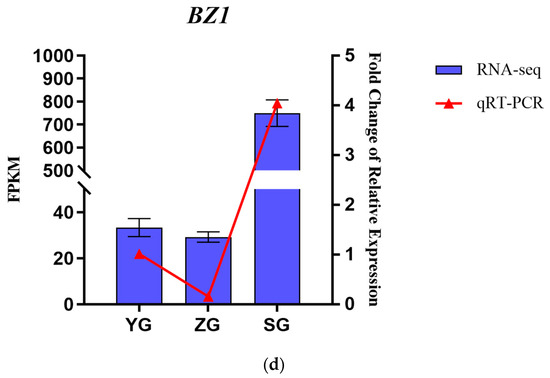
Delayed harvesting technology is believed to improve the citrus fruit flavor, but improper tree fruit load under delayed harvest might cause puffiness and reduce fruit quality. In order to find out an optimum tree fruit load level to obtain better flavor quality as [...] Read more.
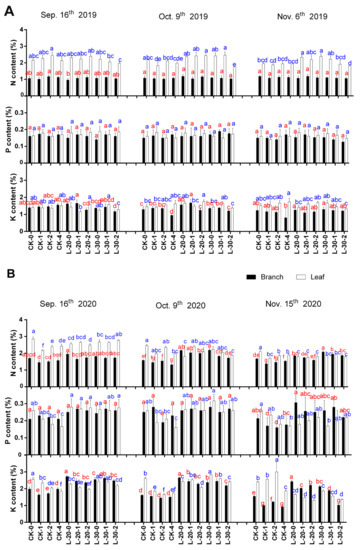
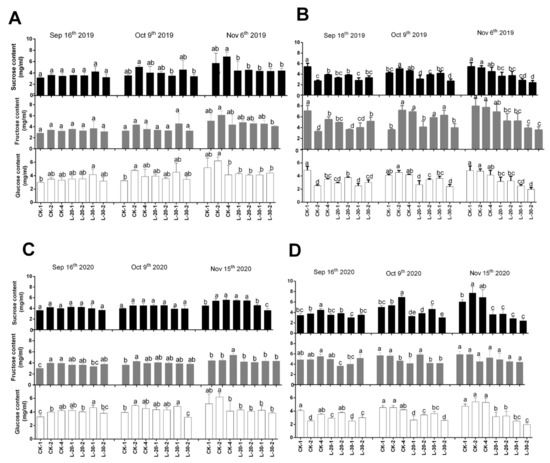
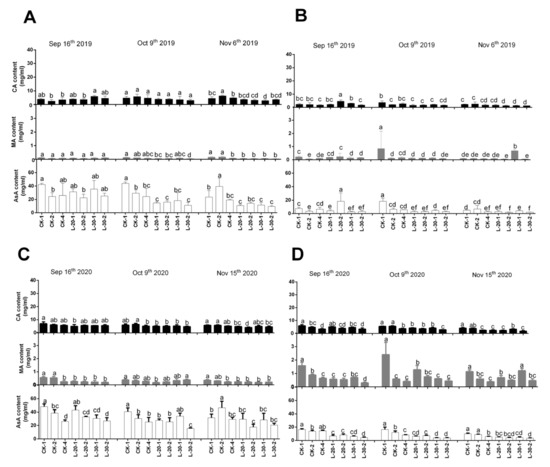
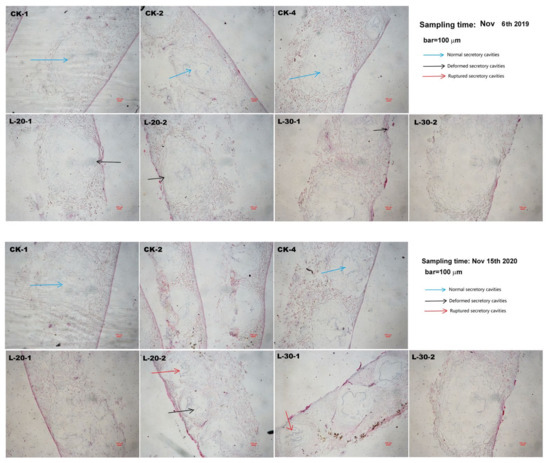
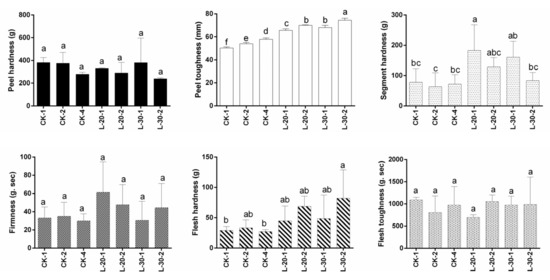
Delayed harvesting technology is believed to improve the citrus fruit flavor, but improper tree fruit load under delayed harvest might cause puffiness and reduce fruit quality. In order to find out an optimum tree fruit load level to obtain better flavor quality as well as reduce puffiness in delayed-harvest citrus under protected cultivation, experiments were conducted in the present study between 2019 and 2020 to determine the effect of different fruit loads and fruit-bearing per single branch on the soluble sugars and organic acids metabolism in the peel and flesh, the anatomical structure of the matured fruit peel, and fruit texture-related indexes. The results suggested significant negative correlations between leaf N level and flesh sucrose and glucose contents, and between branch P level and flesh citric acid contents; no significant correlation between NPK levels and flesh texture; relatively lower leaf N and branch P under relatively higher load can increase flesh sucrose and glucose accumulation and slow down citric acid degradation to the greater extent, thus optimizing the sugar/acid ratio of fruits during delayed harvest. The lignification of parenchyma cells closely around peel secretory cavities due to ascorbic acid deficiency might be the primary cause for puffiness under low-load treatments. Full article
(This article belongs to the Special Issue Advances in Fruit Quality Formation and Regulation)
Show Figures

Figure 1

Article
Transcriptome Co-Expression Network Analysis Identifies Key Genes and Regulators of Sweet Cherry Anthocyanin Biosynthesis
Horticulturae 2021, 7(6), 123; https://doi.org/10.3390/horticulturae7060123 - 24 May 2021
Viewed by 584
Abstract
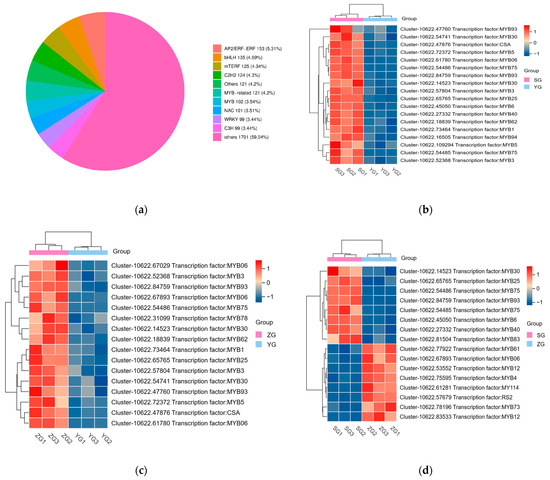
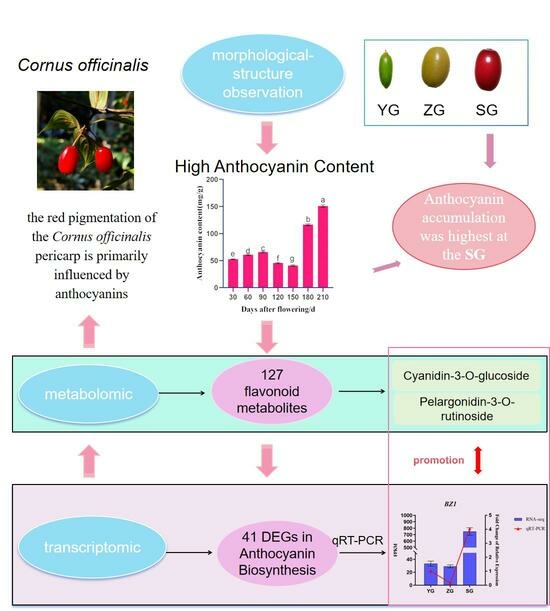
Anthocyanin is the key factor that results in the attractive color of sweet cherry fruits. However, information regarding sweet cherry coloration and the potential mechanisms underlying anthocyanin biosynthesis is limited. In this study, we found that the anthocyanin accumulation varied in sweet cherry [...] Read more.
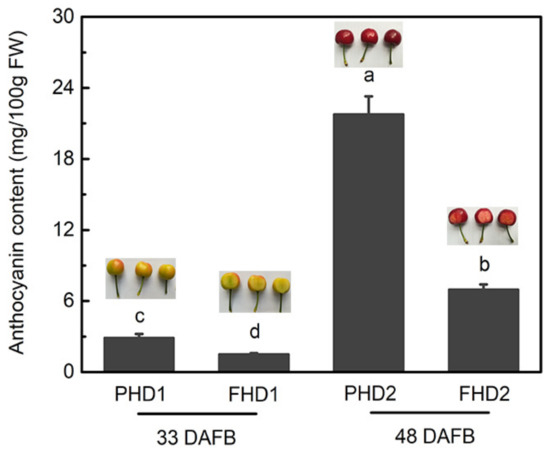
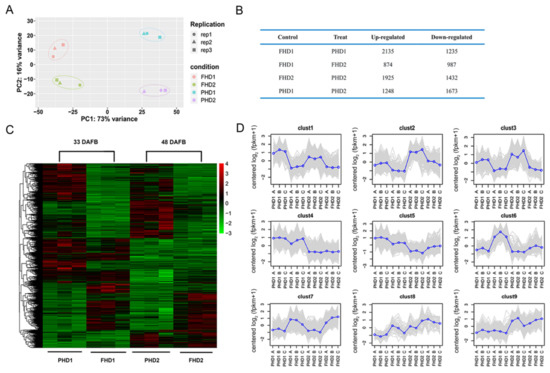
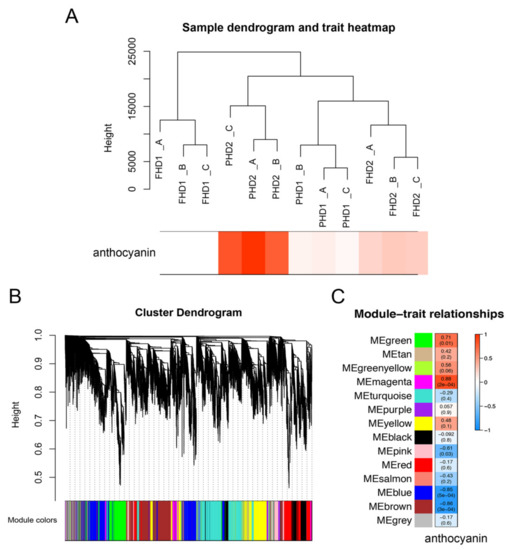
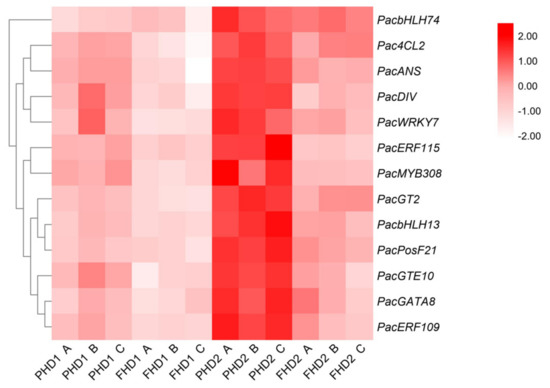
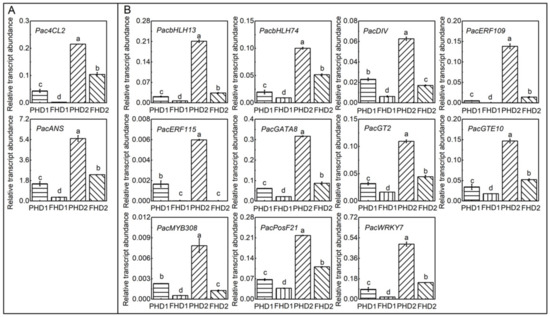
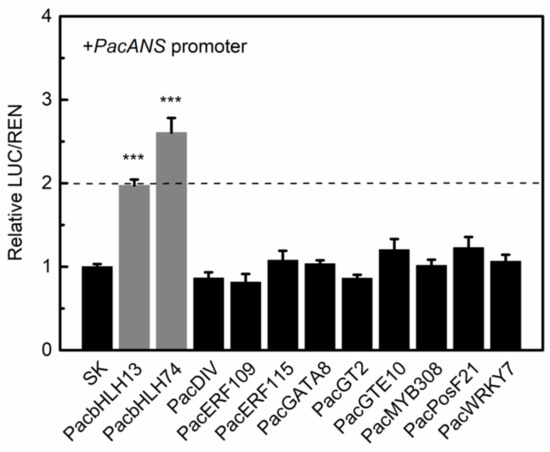
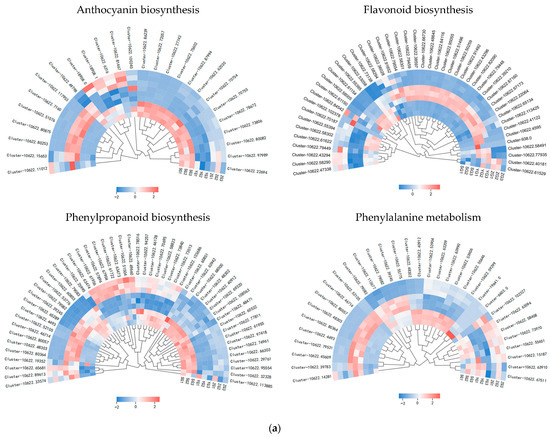
Anthocyanin is the key factor that results in the attractive color of sweet cherry fruits. However, information regarding sweet cherry coloration and the potential mechanisms underlying anthocyanin biosynthesis is limited. In this study, we found that the anthocyanin accumulation varied in sweet cherry flesh and peel, while the anthocyanin content increased sharply in the dark red (DR) stage. Correlations between anthocyanin concentrations and RNA sequencing (RNA-seq), constructed with Weighted Gene Co-Expression Network Analysis (WGCNA), indicated that two structural genes (Pac4CL2, PacANS) and 11 transcription factors (PacbHLH13/74, PacDIV, PacERF109/115, PacGATA8, PacGT2, PacGTE10, PacMYB308, PacPosF21, and PacWRKY7) had similar expression patterns with the changes in anthocyanin content. Additionally, real-time PCR verified all of these gene expression patterns and revealed that PacANS exhibited the highest transcription level. In order to search for potential regulators for anthocyanin biosynthesis, a dual-luciferase assay was performed to investigate the regulatory activities of 11 transcription factors on the PacANS promoter. The results revealed that two novelty bHLHs, PacbHLH13 and PacbHLH74, can trans-activate the PacANS promoter and they might be the candidate genes for regulating anthocyanin synthesis in sweet cherry fruits. The present findings provide a novel viewpoint with regard to anthocyanin biosynthesis mechanisms and the regulatory transcriptional network of fruit coloration in sweet cherries. Full article
(This article belongs to the Special Issue Advances in Fruit Quality Formation and Regulation)
Show Figures

Figure 1

Article
Cultivation Conditions Change Aroma Volatiles of Strawberry Fruit
Horticulturae 2021, 7(4), 81; https://doi.org/10.3390/horticulturae7040081 - 14 Apr 2021
Viewed by 528
Abstract
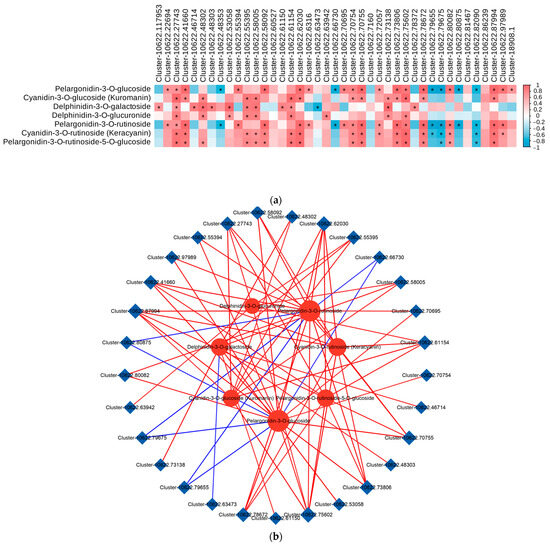
Volatile compounds principally contribute to flavor of strawberry (Fragaria × ananassa) fruit. Besides to genetics, cultivation conditions play an important role in fruit volatile formation. Compared to soil culture as control, effects of substrate culture on volatile compounds of two strawberry [...] Read more.
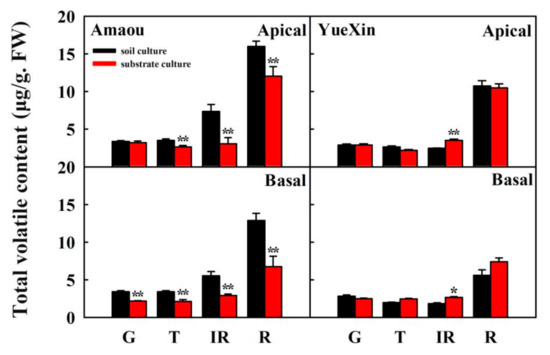
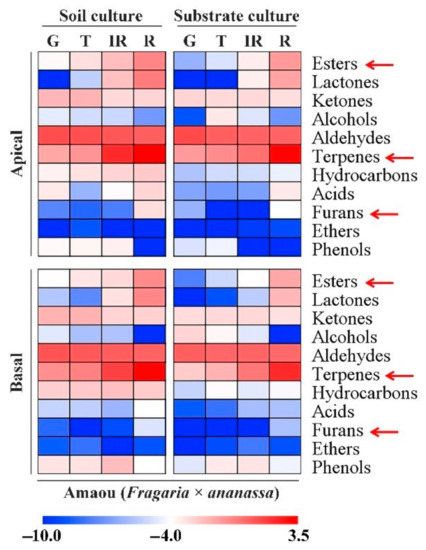
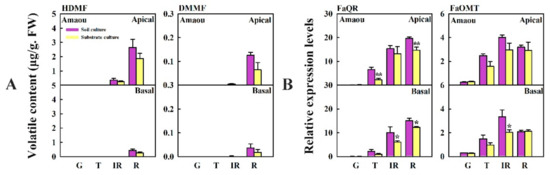
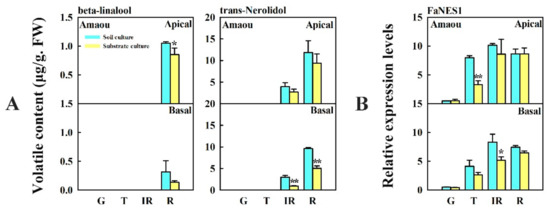
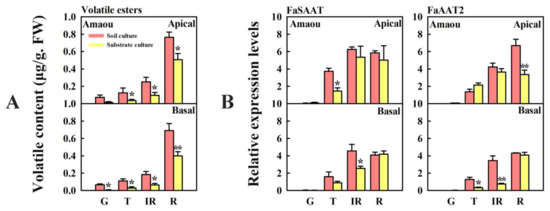
Volatile compounds principally contribute to flavor of strawberry (Fragaria × ananassa) fruit. Besides to genetics, cultivation conditions play an important role in fruit volatile formation. Compared to soil culture as control, effects of substrate culture on volatile compounds of two strawberry cultivars (‘Amaou’ and ‘Yuexin’) were investigated. GC-MS analysis revealed significant difference in volatile contents of ‘Amaou’ strawberry caused by substrate culture. No significant effect was observed for cultivar ‘Yuexin’. For ‘Amaou’ strawberry from soil culture produced higher volatile contents compared with substrate culture. This difference is contributed by high contents of esters, lactones, ketones, aldehydes, terpenes, hydrocarbons, acids, furans and phenols in ‘Amaou’ strawberry fruit from soil culture. Furanones, beta-linalool, trans-Nerolidol and esters are major contributor to strawberry aroma, whose contents are higher in soil culture planted fruit when compared to substrate culture. Moreover, strawberry fruit from soil culture had higher transcripts related to volatile biosynthesis were observed, including FaQR, FaOMT, FaNES1, FaSAAT and FaAAT2. Full article
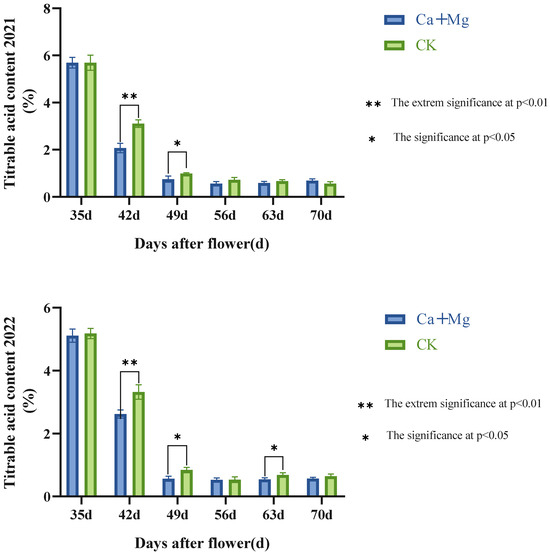
(This article belongs to the Special Issue Advances in Fruit Quality Formation and Regulation)
Show Figures

Figure 1

Back to TopTop