



Green Catalytic Oxidation and Hydrogenation Routes for Biobased Chemicals Production
This special issue belongs to the section "Biomass Catalysis".
Special Issue Information
Dear Colleagues,
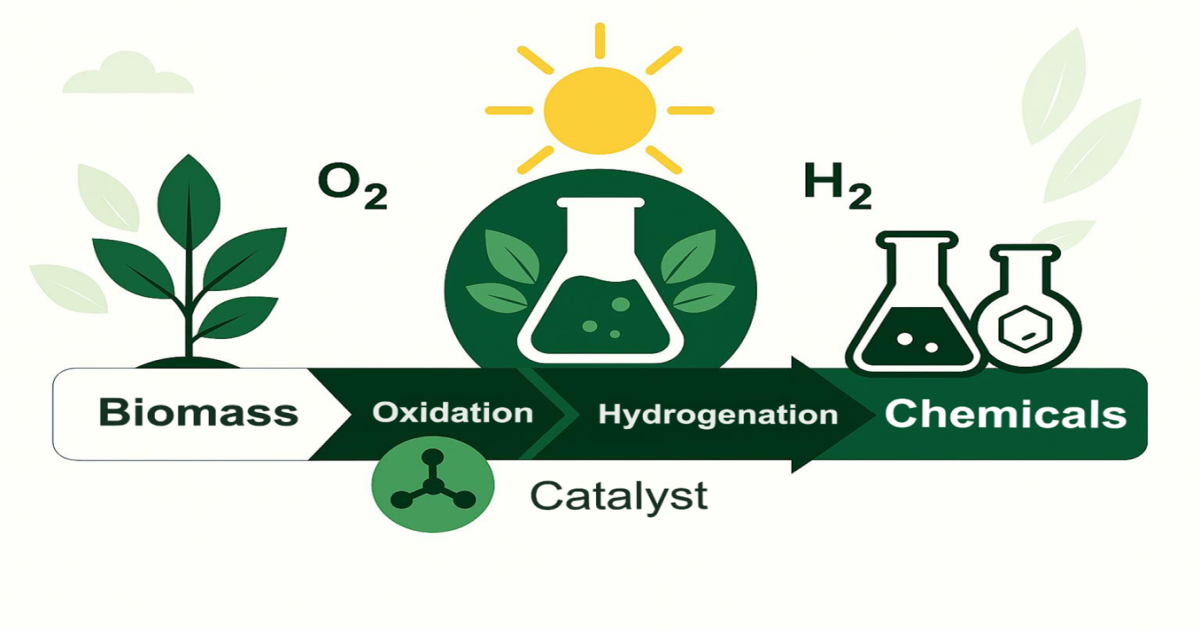
Green catalytic oxidation and hydrogenation routes are pivotal in the sustainable production of biobased chemicals, offering environmentally benign alternatives to conventional petrochemical processes. Catalytic oxidation, including photo-oxidation, plays a critical role in converting biomass-derived intermediates and platform molecules like furfural, hydroxymethylfurfural, and levulinic acid into value-added oxygenated chemicals. These oxygenated products serve as key intermediates for a variety of downstream applications in the chemical, pharmaceutical, and materials industries. Conversely, catalytic hydrogenation selectively reduces functional groups such as carbonyls, unsaturated bonds, and nitro groups yielding alcohols, alkanes, or other reduced compounds that are indispensable in the synthesis of fuels, solvents, and specialty chemicals.
The primary objective of this Special Issue is to highlight novel developments, innovative photo/catalytic systems, and cutting-edge methodologies that enhance the efficiency, selectivity, and sustainability of these catalytic routes. Emphasis will be placed on breakthroughs that overcome current limitations, such as catalyst stability, scalability, and integration within biorefinery frameworks, as well as on strategies that align with green chemistry principles to minimize environmental impact and promote resource circularity. Contributions highlighting mechanistic insights, advanced catalyst design, process intensification, and techno-economic assessments are particularly encouraged to advance the field and support the transition towards sustainable chemical manufacturing.
Prof. Dr. Simona M. Coman
Dr. Bogdan E. Cojocaru
Guest Editors
Manuscript Submission Information
Manuscripts should be submitted online at www.mdpi.com by registering and logging in to this website. Once you are registered, click here to go to the submission form. Manuscripts can be submitted until the deadline. All submissions that pass pre-check are peer-reviewed. Accepted papers will be published continuously in the journal (as soon as accepted) and will be listed together on the special issue website. Research articles, review articles as well as short communications are invited. For planned papers, a title and short abstract (about 250 words) can be sent to the Editorial Office for assessment.
Submitted manuscripts should not have been published previously, nor be under consideration for publication elsewhere (except conference proceedings papers). All manuscripts are thoroughly refereed through a single-anonymized peer-review process. A guide for authors and other relevant information for submission of manuscripts is available on the Instructions for Authors page. Catalysts is an international peer-reviewed open access monthly journal published by MDPI.
Please visit the Instructions for Authors page before submitting a manuscript. The Article Processing Charge (APC) for publication in this open access journal is 2200 CHF (Swiss Francs). Submitted papers should be well formatted and use good English. Authors may use MDPI's English editing service prior to publication or during author revisions.
Keywords
- green catalytic oxidation
- catalytic hydrogenation routes
- bio-based chemicals production
- renewable biomass feedstocks
- sustainable synthesis
- green oxidants (molecular oxygen, hydrogen peroxides)
- hydrogen donors
- photocatalysis
- pollutants degradation
- biofuels
Benefits of Publishing in a Special Issue
- Ease of navigation: Grouping papers by topic helps scholars navigate broad scope journals more efficiently.
- Greater discoverability: Special Issues support the reach and impact of scientific research. Articles in Special Issues are more discoverable and cited more frequently.
- Expansion of research network: Special Issues facilitate connections among authors, fostering scientific collaborations.
- External promotion: Articles in Special Issues are often promoted through the journal's social media, increasing their visibility.
- Reprint: MDPI Books provides the opportunity to republish successful Special Issues in book format, both online and in print.
Published Papers


Catalysts - ISSN 2073-4344