
Topical Advisory Panel applications are now closed. Please contact the Editorial Office with any queries.
Journal Description
Atoms
Atoms
is an international, peer-reviewed, open access journal on all aspects of the atom published monthly online by MDPI.
- Open Access— free for readers, with article processing charges (APC) paid by authors or their institutions.
- High Visibility: indexed within Scopus, ESCI (Web of Science), Astrophysics Data System, Inspec, CAPlus / SciFinder, INSPIRE, and other databases.
- Journal Rank: CiteScore - Q2 (Nuclear and High Energy Physics)
- Rapid Publication: manuscripts are peer-reviewed and a first decision is provided to authors approximately 18.5 days after submission; acceptance to publication is undertaken in 4.8 days (median values for papers published in this journal in the second half of 2025).
- Recognition of Reviewers: reviewers who provide timely, thorough peer-review reports receive vouchers entitling them to a discount on the APC of their next publication in any MDPI journal, in appreciation of the work done.
Impact Factor:
1.5 (2024);
5-Year Impact Factor:
1.5 (2024)
Latest Articles
Multichannel Quantum Defect Theory with Numerical Reference Functions: Applications to Cold Atomic Collisions
Atoms 2026, 14(3), 26; https://doi.org/10.3390/atoms14030026 - 21 Mar 2026
Abstract
We develop a method for calculating multichannel wavefunctions in the spirit of quantum defect theory, based on numerically calculated reference functions. We benchmark the method by calculating cold collisional properties of 85Rb and 6Li in the presence of external magnetic fields
[...] Read more.
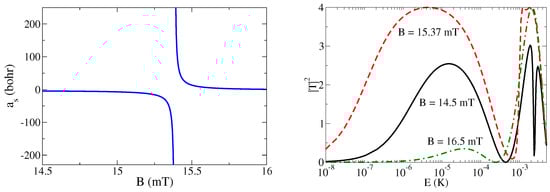
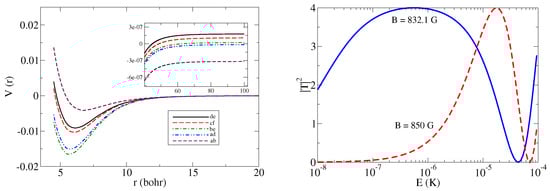
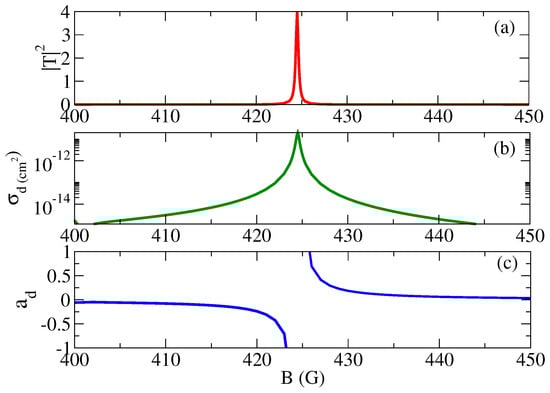
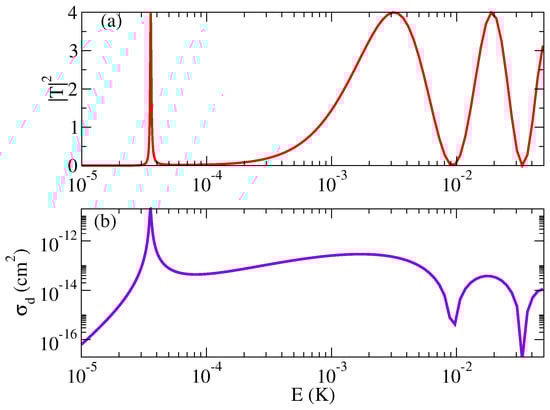
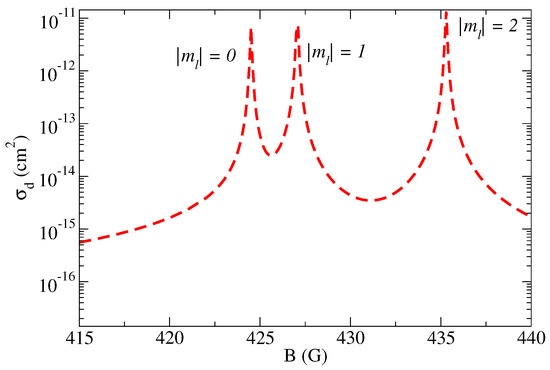
We develop a method for calculating multichannel wavefunctions in the spirit of quantum defect theory, based on numerically calculated reference functions. We benchmark the method by calculating cold collisional properties of 85Rb and 6Li in the presence of external magnetic fields tuned across specific s-wave Feshbach resonances and thereby reproducing known results. We then apply the method to calculate experimentally observed d-wave Feshbach resonance in 87Rb-85Rb cold collisions. Our numerical results for this d-wave resonance show good agreement with the experimental observations. The method is applicable to arbitrary interaction potentials and to any energy range near the scattering threshold. The implementation of our method to any multichannel two-body scattering problem is straightforward.
Full article
(This article belongs to the Section Quantum Chemistry, Computational Chemistry and Molecular Physics)
►
Show Figures
Open AccessCorrection
Correction: Pawelkiewicz et al. Introducing Machine Learning in Teaching Quantum Mechanics. Atoms 2025, 13, 66
by
M. K. Pawelkiewicz, Filippo Gatti, Didier Clouteau, Viatcheslav Kokoouline and Mehdi Adrien Ayouz
Atoms 2026, 14(3), 25; https://doi.org/10.3390/atoms14030025 - 19 Mar 2026
Abstract
Missing Supplementary Materials [...]
Full article
(This article belongs to the Special Issue Artificial Intelligence for Quantum Sciences)
Open AccessArticle
Ni- and Co-like Xe Ion EUV Spectra Produced by Excitation Around the Ionisation Threshold of Xe XXVII
by
Elmar Träbert
Atoms 2026, 14(3), 24; https://doi.org/10.3390/atoms14030024 - 12 Mar 2026
Abstract
A high-resolution flat-field grating spectrometer has been employed at the Livermore EBIT-I electron beam ion trap for observations of extreme-uv spectra of Ni-like ions Xe26+ and Co-like ions Xe27+. Multistep ionisation involving the long-lived 3d94s 3D3
[...] Read more.
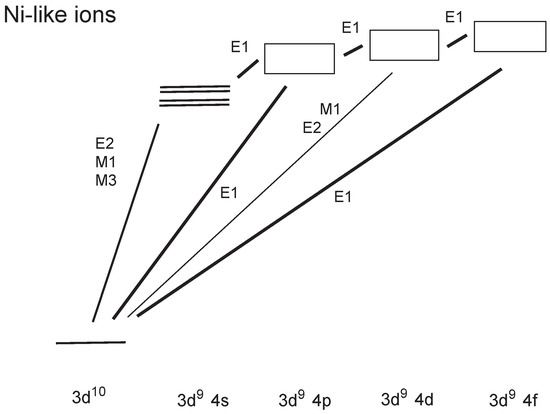
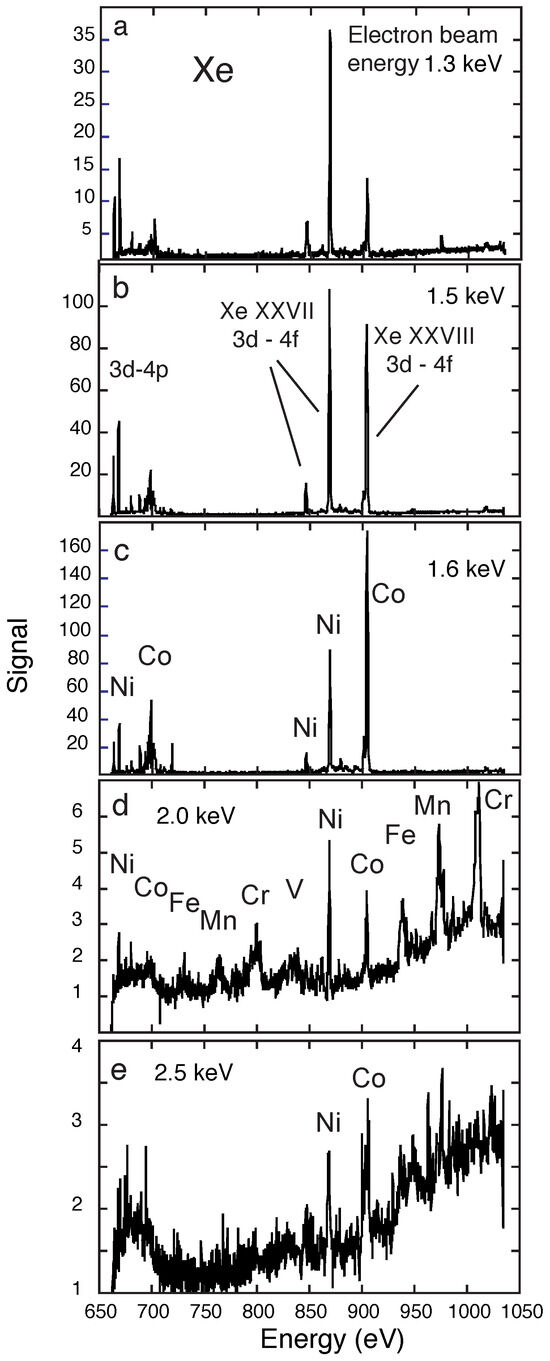
A high-resolution flat-field grating spectrometer has been employed at the Livermore EBIT-I electron beam ion trap for observations of extreme-uv spectra of Ni-like ions Xe26+ and Co-like ions Xe27+. Multistep ionisation involving the long-lived 3d94s 3D3 level in the Ni-like ion as a stepping stone has a significant influence on the charge state distribution at a given electron beam energy, as has been reported elsewhere. Complementing those observations of 3d-4s and transitions from long-lived levels, the present report shows spectra of 3d-4p and 3d-4f transitions that arise from the decays of short-lived levels in both ions and their neighbouring ions of higher charge states and provide bright reference signals for the changes in the charge state distribution. Their observation is serendipitously furthered by the visual absence of 3d-4d transitions from the observed spectra, although and transitions between these configurations are permitted.
Full article
(This article belongs to the Section Atomic, Molecular and Nuclear Spectroscopy and Collisions)
►▼
Show Figures

Figure 1
Open AccessReview
Quantum Encryption in Phase Space
by
Randy Kuang
Atoms 2026, 14(3), 23; https://doi.org/10.3390/atoms14030023 - 11 Mar 2026
Abstract
Quantum Encryption in Phase Space (QEPS) is a physical-layer encryption framework that harnesses the quantum-mechanical properties of coherent states to secure optical communications against both classical and quantum computational threats. By applying randomized phase shifts, displacements, or their dynamic combinations—implemented as unitary transformations
[...] Read more.
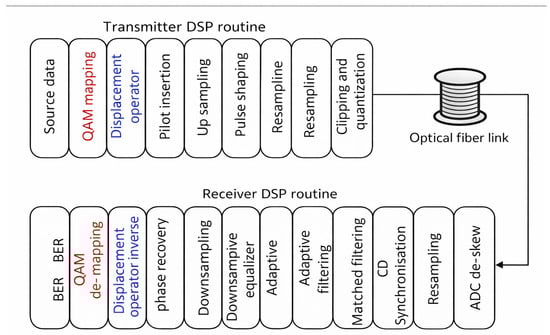
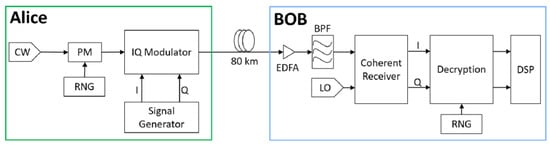
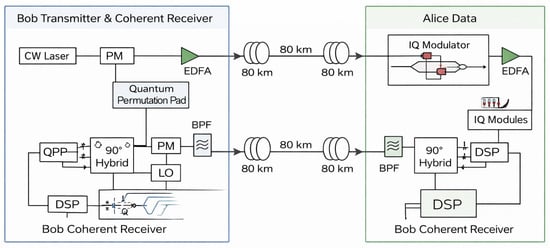
Quantum Encryption in Phase Space (QEPS) is a physical-layer encryption framework that harnesses the quantum-mechanical properties of coherent states to secure optical communications against both classical and quantum computational threats. By applying randomized phase shifts, displacements, or their dynamic combinations—implemented as unitary transformations in phase space—QEPS disrupts the phase reference essential for coherent detection, establishing aphase synchronization barrier. This review synthesizes the theoretical foundations, security mechanisms, and experimental progress of the QEPS framework, encompassing its three principal variants: the round-trip Quantum Public Key Envelope (QPKE) protocol—a public-key-like scheme built upon phase randomization (QEPS-p), the symmetric phase-only QEPS-p, and the displacement-based QEPS-d. Experimental validations demonstrate that authorized users achieve bit-error rates (BERs) below the forward-error-correction threshold, whereas eavesdroppers are confined to BERs near 50%, equivalent to random guessing—all while utilizing standard coherent optical transceivers at data rates up to 200 Gb/s over 80 km of fiber. We further examine QEPS’s robustness to channel impairments, its seamless compatibility with existing digital signal processing (DSP) pipelines, and its distinctive position within the post-quantum cryptography landscape. Finally, we outline key challenges and future research directions toward deploying QEPS as a practical, quantum-resistant security layer for next-generation optical networks.
Full article
(This article belongs to the Special Issue Quantum Optics and Quantum Information)
►▼
Show Figures

Figure 1

Open AccessArticle
Multiplatform Computing of Transition Probabilities in Os V
by
Patrick Palmeri, Saturnin Enzonga Yoca, Exaucé Bokamba Motoumba, Alix Niels, Maxime Brasseur and Pascal Quinet
Atoms 2026, 14(3), 22; https://doi.org/10.3390/atoms14030022 - 11 Mar 2026
Abstract
Osmium is an element of the Periodic Table with an atomic number Z equal to 76. In Tokamaks with divertors made of tungsten ( ), it is produced in the neutron-induced transmutation of the latter. Therefore one can expect that
[...] Read more.
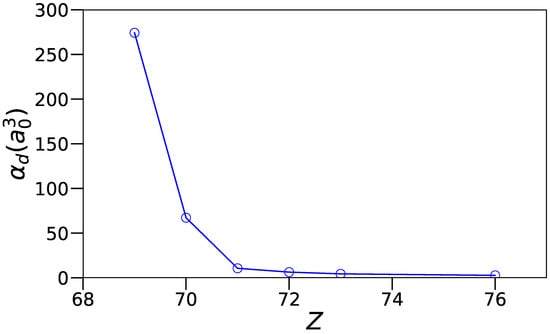
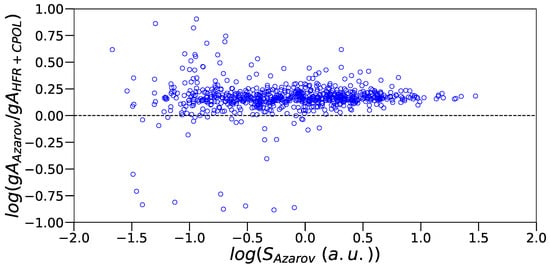
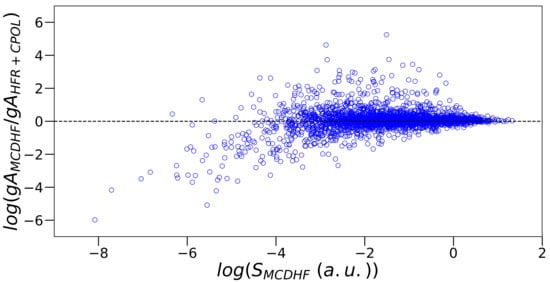
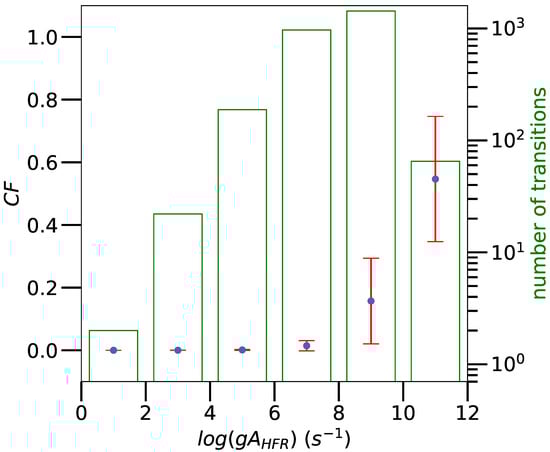
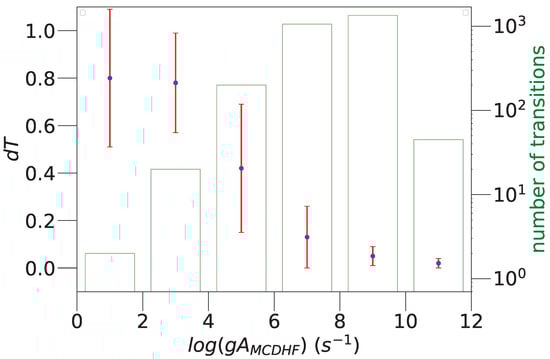
Osmium is an element of the Periodic Table with an atomic number Z equal to 76. In Tokamaks with divertors made of tungsten ( ), it is produced in the neutron-induced transmutation of the latter. Therefore one can expect that their sputtering may generate ionic impurities of all possible charge states in the fusion plasma. As a consequence, these could contribute to radiation losses in these controlled nuclear devices. The knowledge of radiative rates in all the spectra of osmium is thus important in this field. In this framework, a multiplatform approach has been used to determine the Os V radiative properties and estimate their accuracy. The transition probabilities have been computed for the 2677 electric dipole (E1) transitions falling in the spectral range from 400 Å to 12,000 Å. Three independent atomic structure models have been considered; one based on the fully relativistic ab initio multiconfiguration Dirac–Hartree–Fock (MCDHF) method and two based on the semi-empirical pseudo-relativistic Hartree–Fock (HFR) method.
Full article
(This article belongs to the Section Atomic, Molecular and Nuclear Spectroscopy and Collisions)
►▼
Show Figures

Figure 1
Open AccessArticle
Extension of an Efficient Approach for Spin-Angular Integrations in Atomic Structure Calculations
by
Gediminas Gaigalas
Atoms 2026, 14(3), 21; https://doi.org/10.3390/atoms14030021 - 9 Mar 2026
Abstract
In this study, an extension of the general method [G. Gaigalas, Z. Rudzikas, C. Froese Fischer, J. Phys. B, At. Mol. Phys. (1997). DOI: 10.1088/0953-4075/30/17/006] is described for finding algebraic expressions of the spin-angular parts of the reduced matrix elements of any one-
[...] Read more.
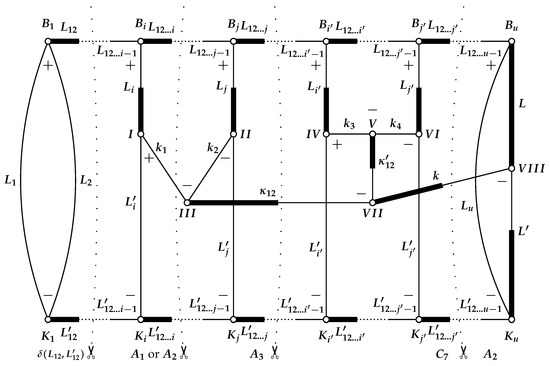
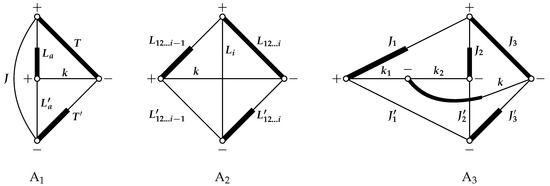
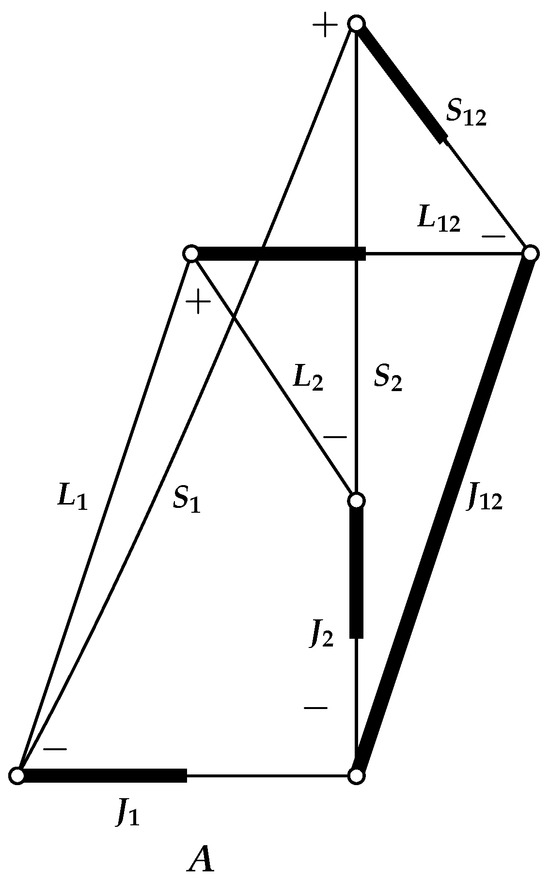
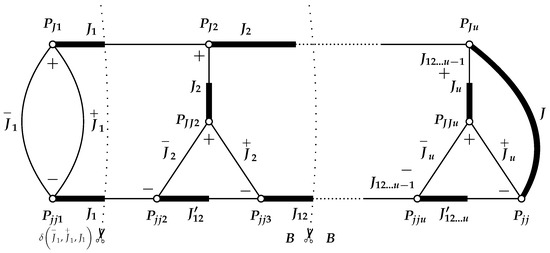
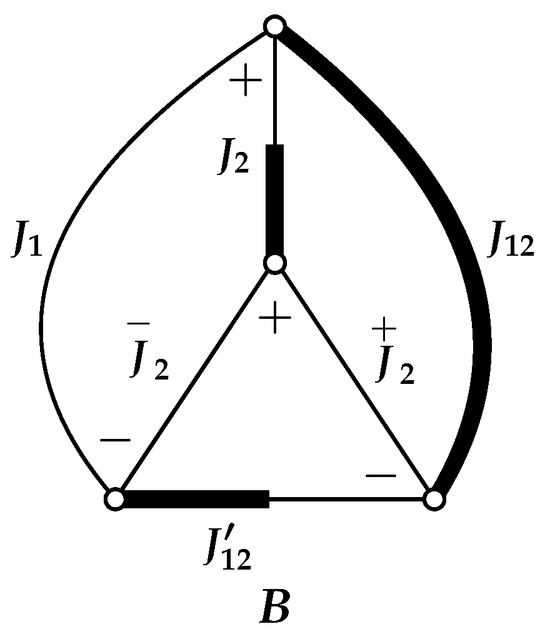
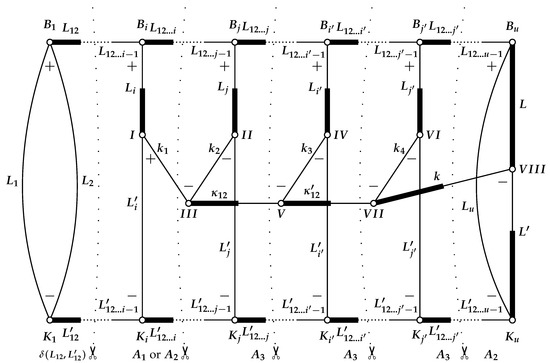
In this study, an extension of the general method [G. Gaigalas, Z. Rudzikas, C. Froese Fischer, J. Phys. B, At. Mol. Phys. (1997). DOI: 10.1088/0953-4075/30/17/006] is described for finding algebraic expressions of the spin-angular parts of the reduced matrix elements of any one- and two-particle operator for an arbitrary number of shells in an atomic configuration. This extension is related, at first, to a change in the definition of tensor structure, where a non-scalar space with respect to l and s for any two-particle operator acts on four different shells. This leads to more efficient expressions for recoupling matrices and amplitudes, which are presented in the paper. In addition, the paper presents new expressions for some of the recoupling matrices, in which 6j- and 9j-coefficients are summed up algebraically. All this leads to a significantly simpler and faster calculation of the spin-angular parts of any non-scalar two-particle operator.
Full article
(This article belongs to the Special Issue Future Directions in Atomic Physics Inspired by the Pioneering Work of Charlotte Froese Fischer and Ian Philip Grant)
►▼
Show Figures

Figure 1

Open AccessArticle
jj to LSJ Transformation for Configuration State Functions with an Arbitrary Number of Open Shells
by
Gediminas Gaigalas
Atoms 2026, 14(3), 20; https://doi.org/10.3390/atoms14030020 - 9 Mar 2026
Abstract
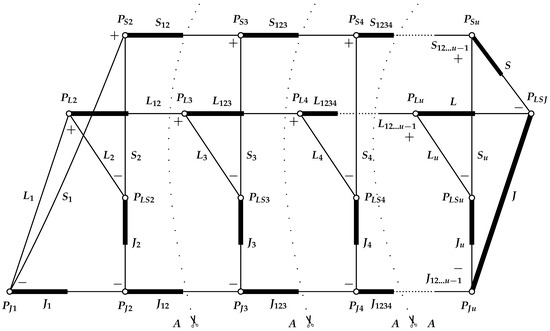
This paper presents a methodology that allows for calculated energy levels and other atomic characteristics in relativistic atomic theory, i.e., using the -coupling scheme, to be identified in terms of -coupling characteristics. The paper begins with outlining the
[...] Read more.
This paper presents a methodology that allows for calculated energy levels and other atomic characteristics in relativistic atomic theory, i.e., using the -coupling scheme, to be identified in terms of -coupling characteristics. The paper begins with outlining the general principles for effectively addressing this problem. Furthermore, it provides a general expression that enables such identification when the atomic state function consists of any number of configuration state functions, each with any number of open shells, and explains how this expression was obtained. The methodology developed in this paper has been successfully implemented in the General Relativistic Atomic Structure Package and can be applied to other similar packages.
Full article
(This article belongs to the Special Issue Future Directions in Atomic Physics Inspired by the Pioneering Work of Charlotte Froese Fischer and Ian Philip Grant)
►▼
Show Figures

Figure 1

Open AccessPerspective
Diabatic Potential Energy Matrices at the Interface of Nonadiabatic Dynamics, Machine Learning, and Quantum Computing
by
Yuchen Wang
Atoms 2026, 14(3), 19; https://doi.org/10.3390/atoms14030019 - 8 Mar 2026
Abstract
The accurate description of nonadiabatic quantum molecular dynamics represents one of the most significant challenges in modern computational chemistry, serving as a gateway to understanding complex phenomena ranging from photochemistry and electron transfer to surface scattering and biological exciton transport. A key difficulty
[...] Read more.
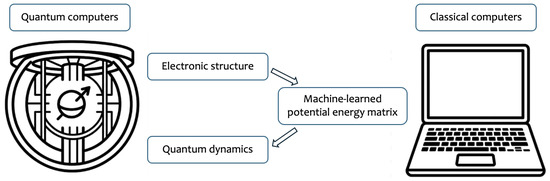
The accurate description of nonadiabatic quantum molecular dynamics represents one of the most significant challenges in modern computational chemistry, serving as a gateway to understanding complex phenomena ranging from photochemistry and electron transfer to surface scattering and biological exciton transport. A key difficulty lies in bridging high-level electronic structure theory for ground and excited states with accurate quantum dynamics theory. Although on-the-fly semiclassical approaches are increasingly viable, most quantum dynamics simulations still rely on pre-constructed potential energy surfaces, or in the nonadiabatic context, diabatic potential energy matrices (DPEMs). This perspective paper addresses the theoretical foundations, construction methodologies, and emerging frontiers of DPEMs. We examine the mathematical framework of the adiabatic-to-diabatic transformation, addressing the inherent topological challenges imposed by the geometric phase and the curl condition. We further analyze the transformative impact of machine learning, detailing how machine learning algorithms, such as permutation invariant polynomial neural networks and deep learning architectures, are reshaping the construction of global, high-dimensional DPEMs. Finally, we explore the disruptive potential of quantum computing, discussing how quantum algorithms are automating the direct simulation of nonadiabatic dynamics. In emerging quantum-centric workflows, DPEMs will continue to provide the critical bridge which enables the mapping of realistic, time-dependent molecular Hamiltonians onto quantum hardware.
Full article
(This article belongs to the Section Quantum Chemistry, Computational Chemistry and Molecular Physics)
►▼
Show Figures

Figure 1
Open AccessArticle
Numerical Computation of Critical Binding Parameters of Screened Coulomb Potentials
by
Grant B. Bunker
Atoms 2026, 14(3), 18; https://doi.org/10.3390/atoms14030018 - 5 Mar 2026
Abstract
►▼
Show Figures
For nearly a century, screened Coulomb potentials have been of recognized importance in diverse areas of physics and chemistry. A key feature of interest in these potentials is the phenomenon of critical screening. This paper has three main purposes: to present an extensive,
[...] Read more.
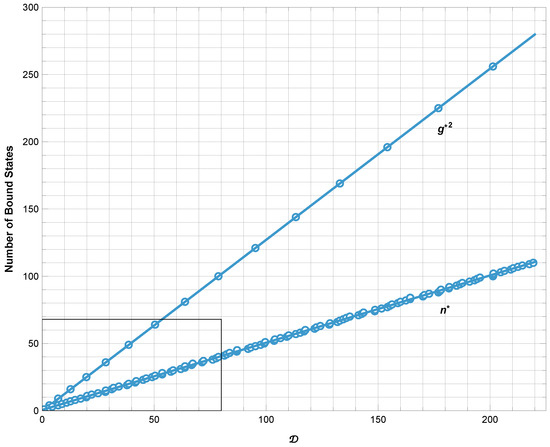
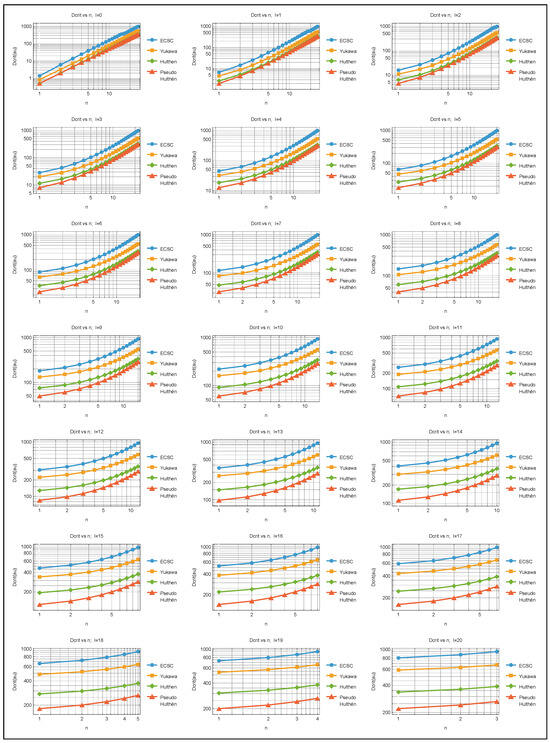
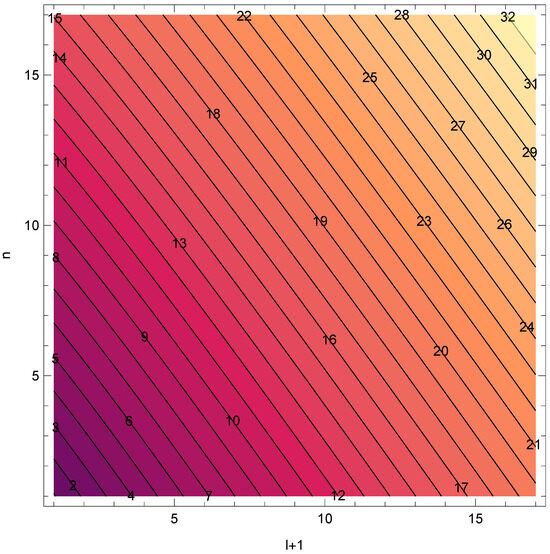
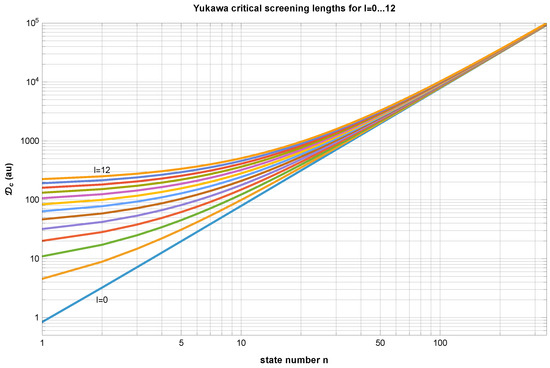
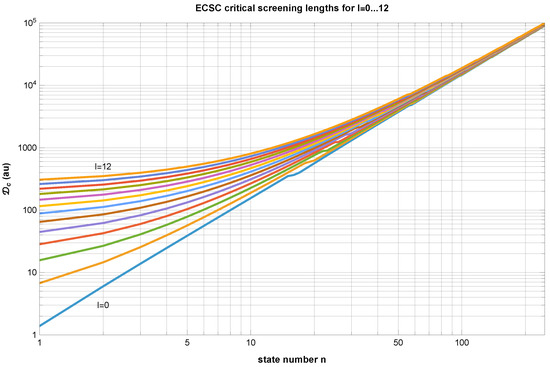
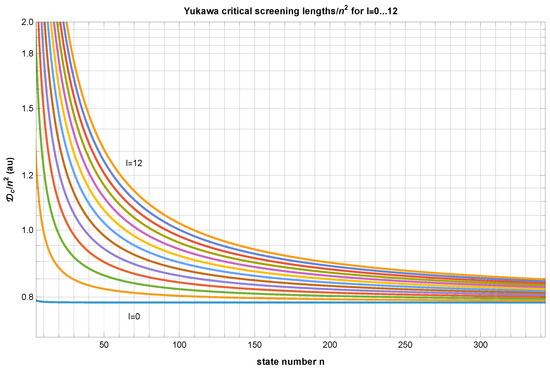
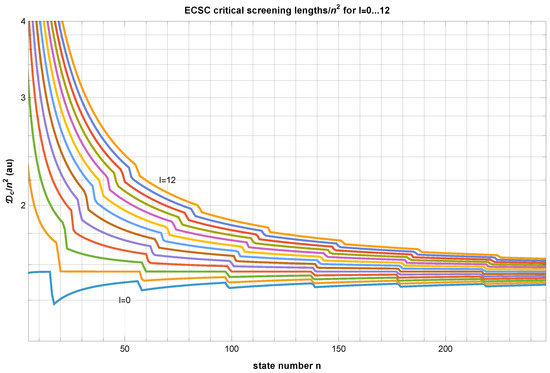
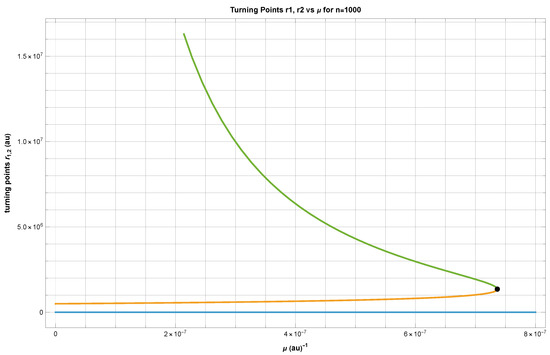
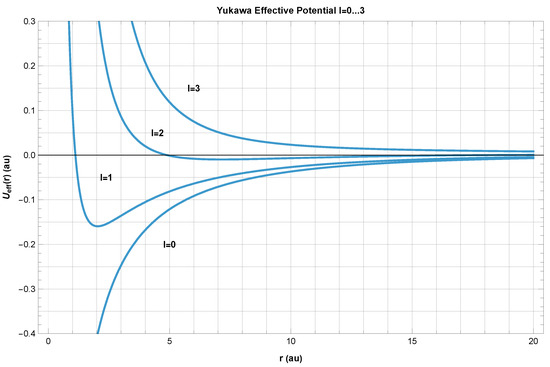
For nearly a century, screened Coulomb potentials have been of recognized importance in diverse areas of physics and chemistry. A key feature of interest in these potentials is the phenomenon of critical screening. This paper has three main purposes: to present an extensive, open-access, high accuracy (60 digit) benchmark reference dataset of critical screening parameters, with validation; to confirm excellent past work in the field (to 30 digits), and to correct an historical oversight in its literature; and to present the essentials of our new approach, the “Phase Method” (PM), for computing them. Using the PM, we calculate critical screening parameters, accurate to 60 decimal digits, for the Yukawa/Debye, Hulthén, Pseudo-Hulthén, and Exponential Cosine Screened Coulomb (ECSC)) potentials. The practical feasibility of such calculations on inexpensive hardware opens up new possibilities in research and education. We highlight an apparently overlooked 1989 paper of Demiralp on critical screening parameters of the Yukawa potential, which accurately calculated them to 30 decimal digits. Our main results are computations of the critical screening parameters for screening lengths au and angular momenta . The claimed accuracy of our results is supported by several independent lines of evidence: comparison with the most accurate (30 digit) values available in the print literature for the Yukawa, Hulthén, and ECSC potentials; comparison to 60 decimal digits accuracy with exactly known eigenvalues and critical binding parameters of the Pseudo-Hulthén potential; consistency tests between computed critical parameters, for various l-values for the Pseudo-Hulthén Potential, and known exact relations between eigenvalues; and application of a novel consistency test between results with different potential parameters, that exploits an exact scaling symmetry of this entire class of potentials. Similar calculations were done for ECSC and Yukawa potentials for screening lengths up to and , to 30 digit accuracy, which show interesting (and to our knowledge, not previously reported) periodic structure in for the ECSC potential that is not observed for the Yukawa potential. The asymptotic scaling behavior of critical parameters for the Yukawa and Hulthén potentials is explained quantitatively by simple semiclassical calculations, as is the scaling of circular states for those and other potentials.
Full article

Figure 1
Open AccessArticle
Study of the Hyperfine Structure of Sr II, Ba I and Ba II: An MCDHF Approach for Modeling the Low-Lying Levels
by
Lorenzo Nezosi, Lucas Maison, Patrick Palmeri, Per Jönsson and Michel Godefroid
Atoms 2026, 14(3), 17; https://doi.org/10.3390/atoms14030017 - 5 Mar 2026
Abstract
Using the Multiconfiguration Dirac–Hartree–Fock method as implemented in the General Relativistic Atomic Structure Package, the magnetic dipole and electric quadrupole hyperfine structure constants were determined for the ground and first excited levels of 135,137Ba II isotopes, as well as for 137Ba
[...] Read more.
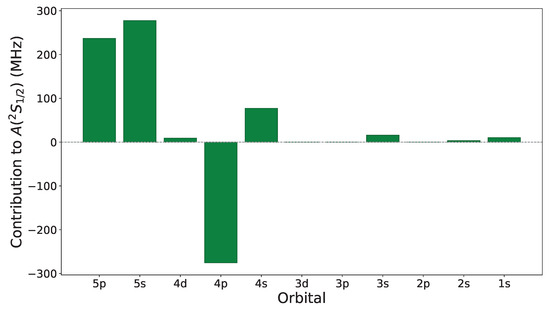
Using the Multiconfiguration Dirac–Hartree–Fock method as implemented in the General Relativistic Atomic Structure Package, the magnetic dipole and electric quadrupole hyperfine structure constants were determined for the ground and first excited levels of 135,137Ba II isotopes, as well as for 137Ba I and 87Sr II, to assess the robustness of the developed model. This study builds upon and extends previous investigations by examining the levels involved in resonance lines, with the aim of resolving persistent discrepancies in the hyperfine structure of 137Ba II and 87Sr II. New code developments such as the use of natural orbitals, as well as the addition of polarization effects and Configuration State Function Generators, as implemented in GRASPG, were tested for these heavy elements. The developed strategy allowed us to achieve encouraging results that satisfactorily agree with experiments for all studied levels but in the 137Ba II isotope. This disagreement was also observed in 135Ba II isotope as well as in 87Sr II. With two valence electrons, 137Ba I is definitely more complex, requiring a multireference approach. Even with the latter, the theory–observation disagreement observed for the hyperfine structure of the low-lying levels remains large in comparison with the alkali-like systems. Possible ongoing developments to remediate this issue are discussed in the conclusions.
Full article
(This article belongs to the Special Issue Computational Atomic Physics in Astrophysics)
►▼
Show Figures

Figure 1

Open AccessReview
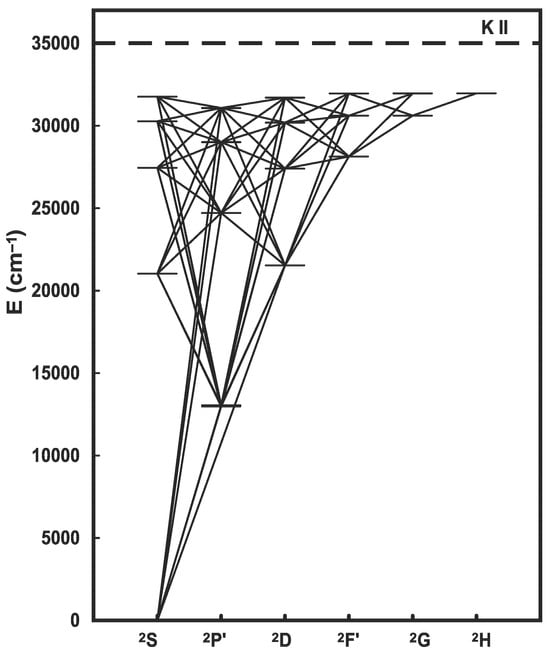
Application of Atomic Models to Determine Elemental Abundances in Stars in the Non-LTE Approximation: Neutral Potassium and Copper
by
Sergei M. Andrievsky and Sergey A. Korotin
Atoms 2026, 14(3), 16; https://doi.org/10.3390/atoms14030016 - 4 Mar 2026
Abstract
In this paper, we discuss the atomic models developed for the non-local thermodynamic equilibrium (LTE) analysis of the spectra of two odd-Z chemical elements, the little-studied potassium and copper, whose nuclei are often thought to form in Cosmos through different astrophysical processes. The
[...] Read more.
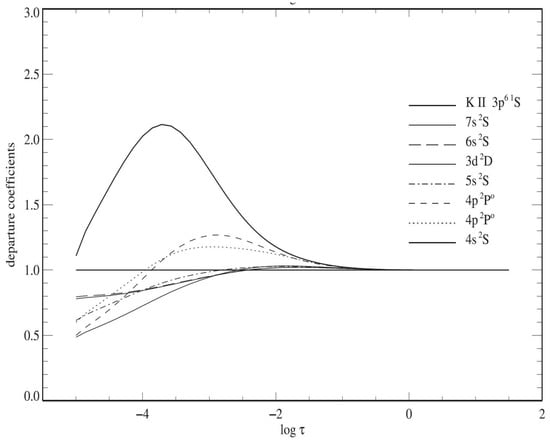
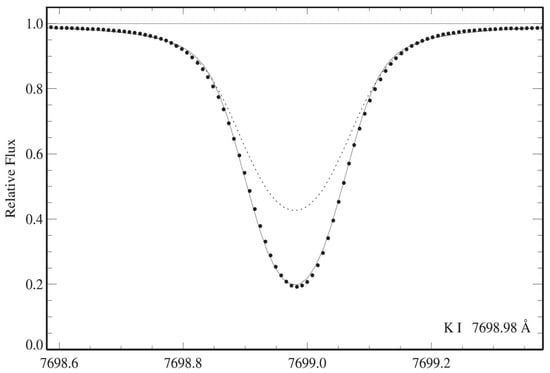
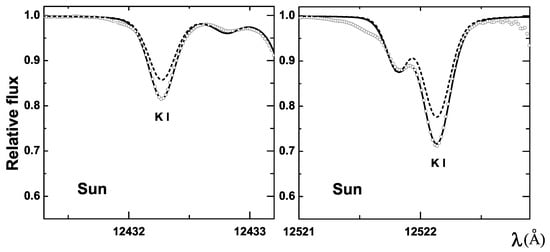
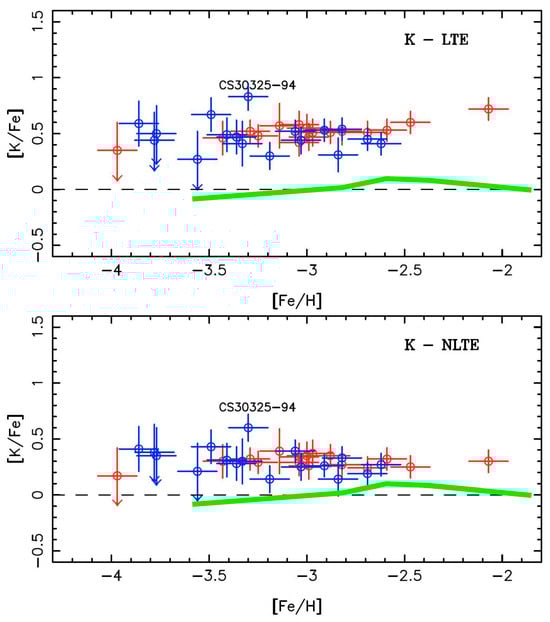
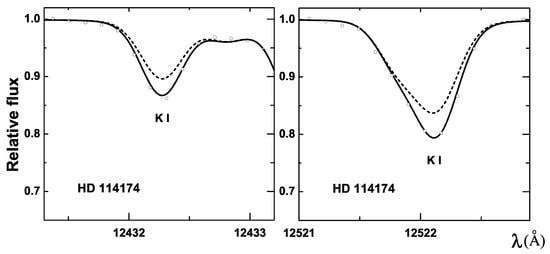
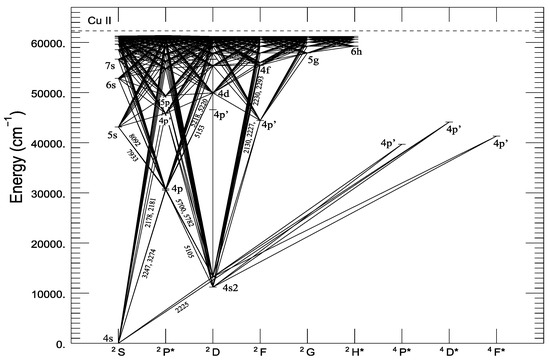
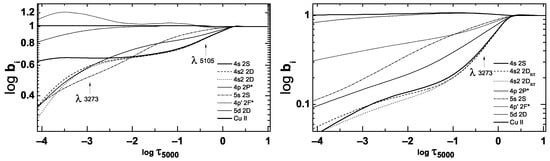
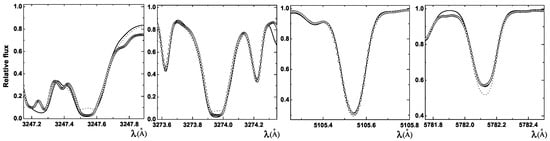
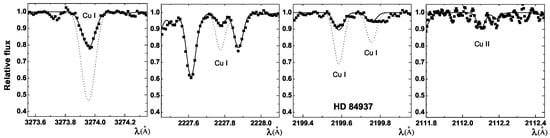
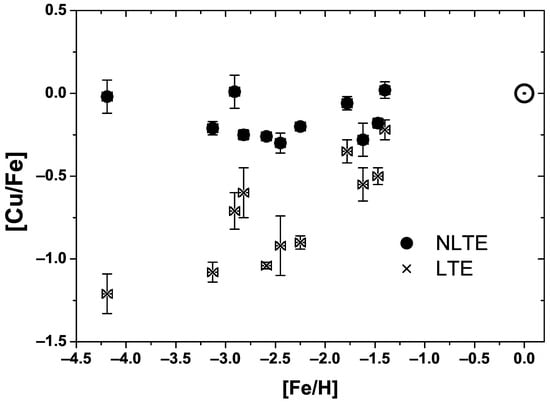
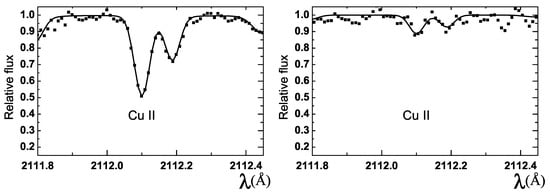
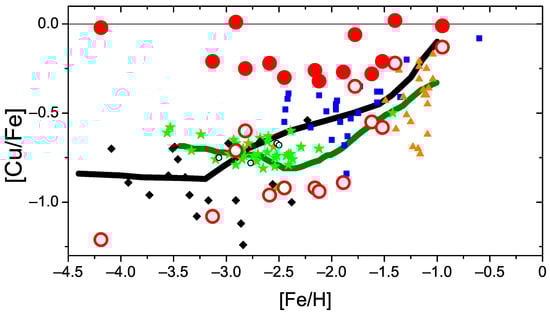
In this paper, we discuss the atomic models developed for the non-local thermodynamic equilibrium (LTE) analysis of the spectra of two odd-Z chemical elements, the little-studied potassium and copper, whose nuclei are often thought to form in Cosmos through different astrophysical processes. The K I and Cu I atomic models have been developed and updated over the past decade and applied to determine non-LTE abundances of these elements in the hot and cool dwarfs, giants, and supergiants of different metallicities, from solar to extremely low metallicity. The abundances of potassium and copper in old metal-poor halo stars are of considerable interest because these objects bear the imprints of nucleosynthesis in Type II supernovae and hypernovae in the early Galaxy. The vast majority of the studies of the spectra of these atoms have been based on the assumption of LTE. In some cases, this approach has led to incorrect results, which have sometimes affected our understanding of evolutionary processes in stars and stellar systems. The main objective of this article is to highlight the importance of using the non-LTE stellar abundance data to improve or modify existing theoretical models of cosmic chemical evolution. In particular, significantly different results for the copper abundance in old Galactic stars were obtained compared to LTE data. This finding could inspire specialists working in the field of chemodynamic models to search for realistic pathways for the formation of this element in massive stars. Despite this, since the first non-LTE results on the copper abundance in the oldest Galactic stars, LTE data remained in use for several years. This situation seriously hinders progress in research into some certain aspects of cosmic nucleosynthesis.
Full article
(This article belongs to the Special Issue Atomic Processes and Their Role in Astrophysical Phenomena)
►▼
Show Figures

Figure 1
Open AccessArticle
Atomic Ions Ionization Energy Values Assessment: Interpolative Empirical Analysis
by
Mariana S. Sendova
Atoms 2026, 14(3), 15; https://doi.org/10.3390/atoms14030015 - 28 Feb 2026
Abstract
►▼
Show Figures
In this paper, a novel ionization energy, , set theory-based organizational structure is suggested: (i) iso-protonic sets, ; (ii) iso-electronic sets, ; and (iii) iso-ionic sets, . A computational algorithm is
[...] Read more.
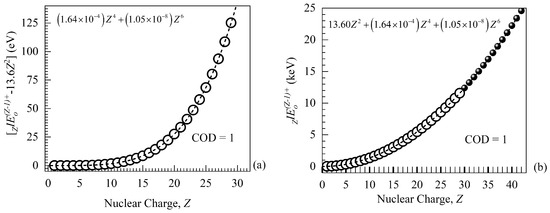
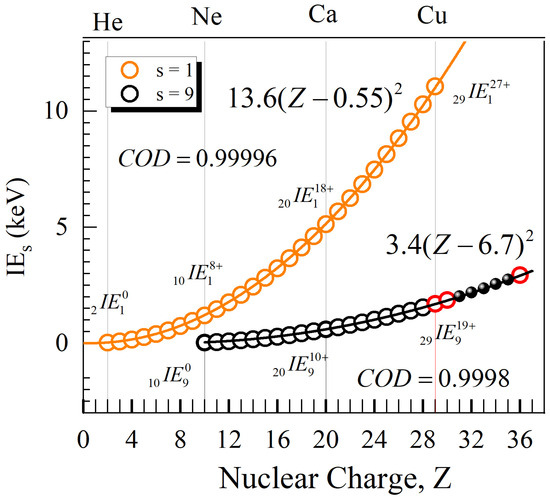
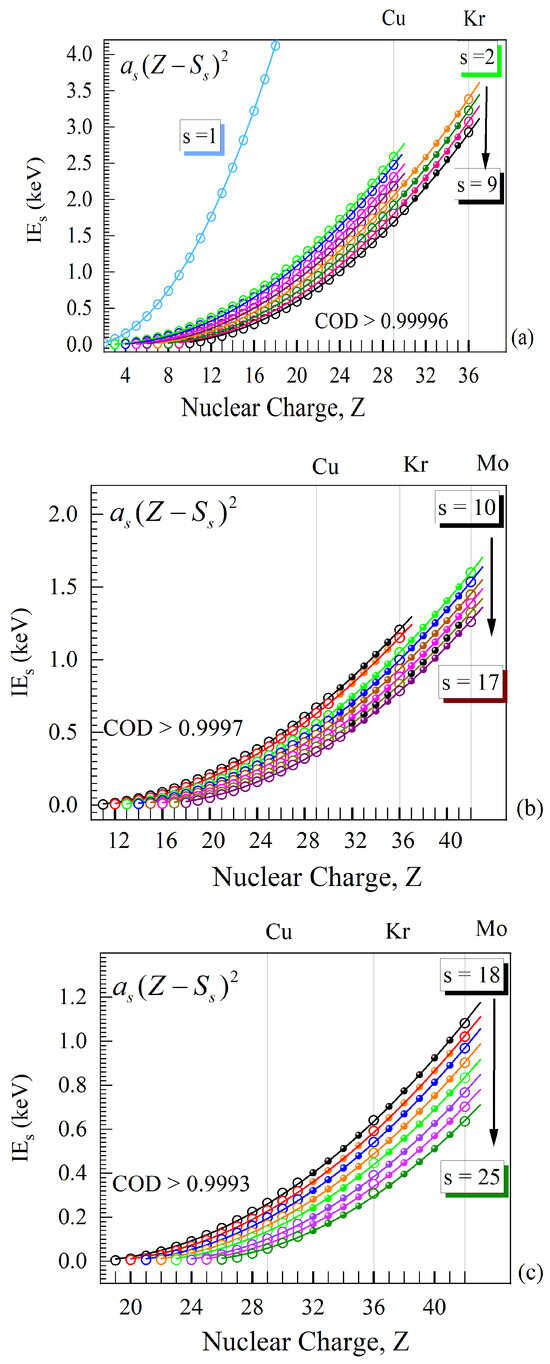
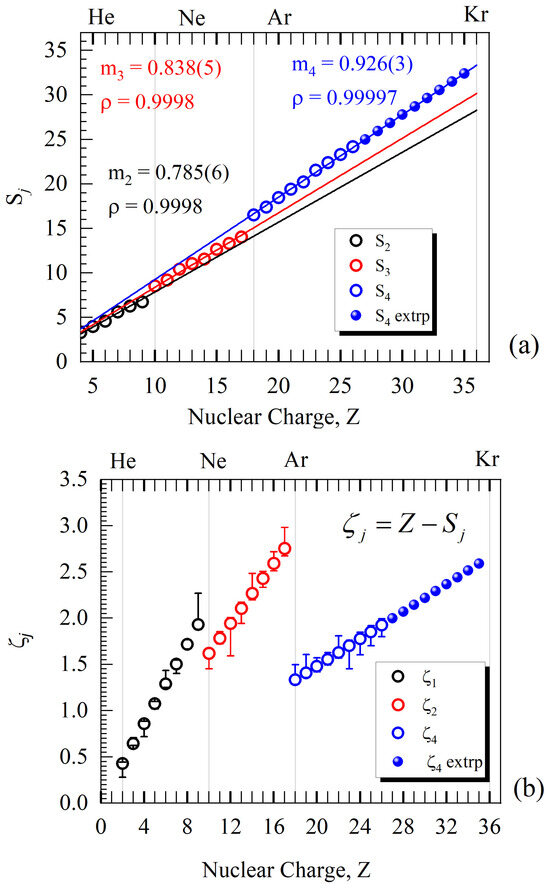
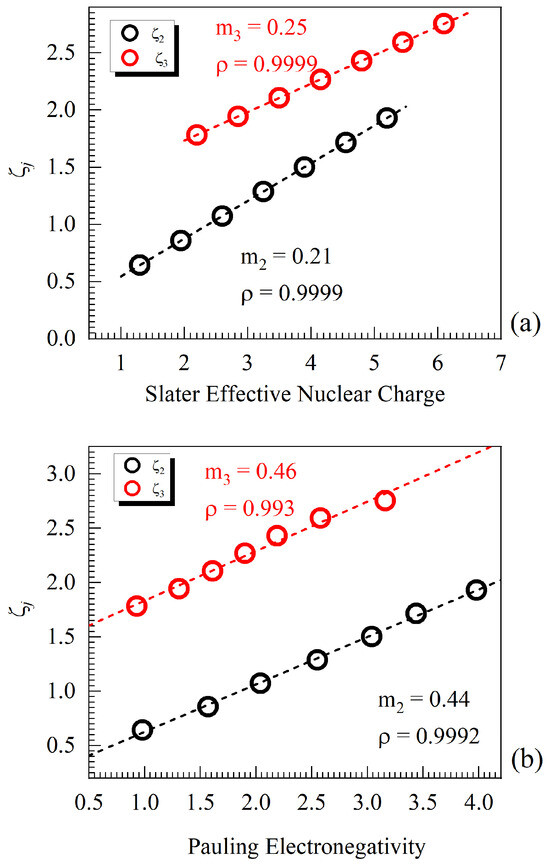
In this paper, a novel ionization energy, , set theory-based organizational structure is suggested: (i) iso-protonic sets, ; (ii) iso-electronic sets, ; and (iii) iso-ionic sets, . A computational algorithm is proposed which was demonstrated on twenty-five iso-electronic -sets plotted vs. the nuclear charge, Z. The algorithm allows for: (i) the interpolative assessment of 162 new (not measured) IE values, with their uncertainties estimated by the Lagrange method, for ions from 30Zn to 41Nb; and (ii) effective atomic nuclear charge assessment. It is shown that the IE effective atomic nuclear charge assessment is strongly correlated with the Slater’s effective charge and Pauling electronegativity scale.
Full article

Figure 1
Open AccessArticle
Application of Extended Dirac Equation to Photon–Electron Interactions and Electron–Positron Collision Processes: A Quantum Theoretical Approach Using a 256 × 256 Matrix Representation
by
Hirokazu Maruyama
Atoms 2026, 14(2), 14; https://doi.org/10.3390/atoms14020014 - 19 Feb 2026
Abstract
We propose a novel theoretical framework for describing photon–electron interactions and electron collision processes in a unified manner within quantum electrodynamics. Specifically, we develop a method to construct the Dirac operator in curved spacetime using only matrix representations rooted in the basis structure
[...] Read more.
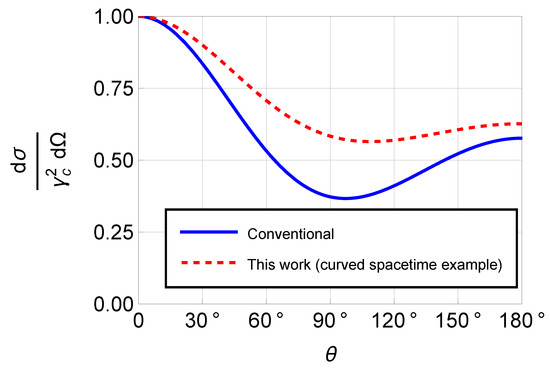
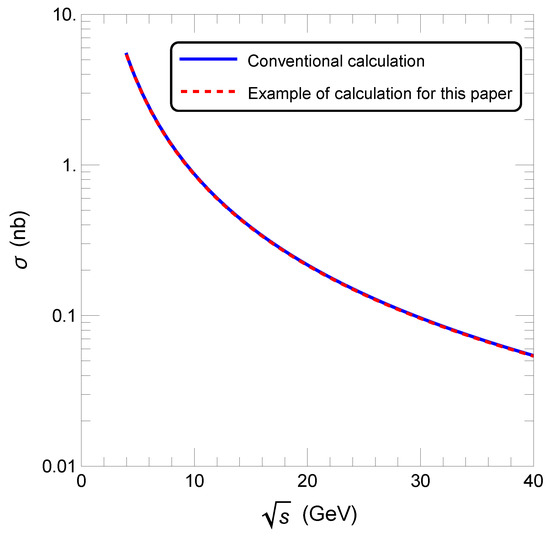
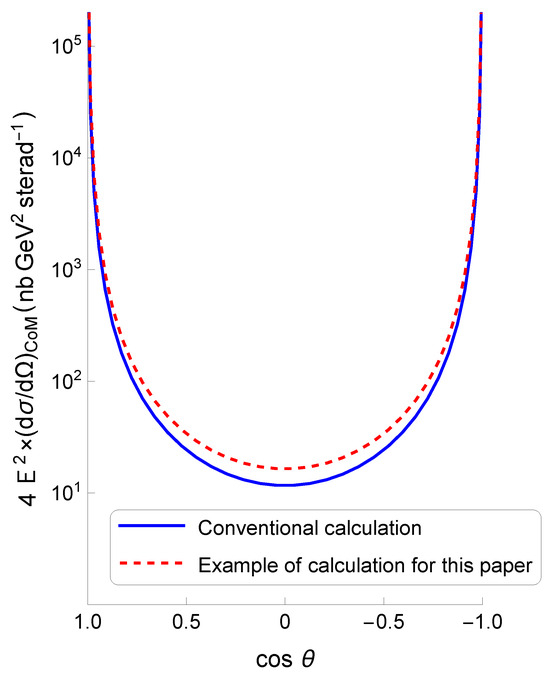
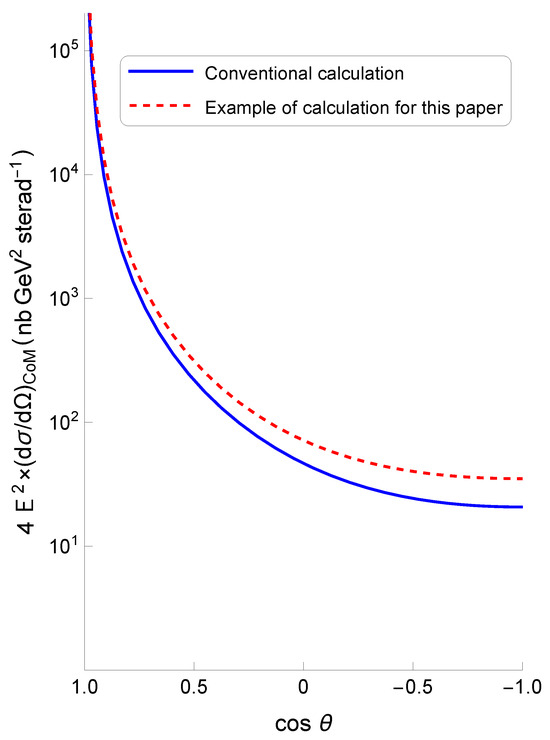
We propose a novel theoretical framework for describing photon–electron interactions and electron collision processes in a unified manner within quantum electrodynamics. Specifically, we develop a method to construct the Dirac operator in curved spacetime using only matrix representations rooted in the basis structure of four-dimensional gamma matrix algebra, without introducing vierbeins (tetrads) or independent spin connections. We realize 16 gamma matrices with two indices as matrices and embed the spacetime metric directly into the matrix elements. This reduces geometric operations such as covariantization, connection-like operations, and basis transformations to matrix products and trace calculations, yielding a unified and transparent computational scheme. The spacetime dimension remains as four, and the number “16” represents the number of basis elements of four-dimensional gamma matrix algebra ( ). Based on the extended QED Lagrangian, vertex rules, propagators, spin sums, and traces can be handled uniformly, making it suitable for automation. As validation of this method, we analyzed four fundamental scattering processes in atomic and particle physics: (i) Compton scattering (photon–electron scattering), (ii) muon pair production ( ), (iii) Møller scattering (electron–electron collision), and (iv) Bhabha scattering (electron–positron collision). In the flat spacetime limit, we confirmed the exact reproduction of standard quantum electrodynamics (QED) results including the Klein–Nishina formula. Furthermore, trial calculations using a metric with off-diagonal components show systematic deviations from flat results near scattering angle , suggesting that metric-induced angular dependence could in principle serve as an observable signature. The matrix representation developed in this work enables unified pipeline execution of theoretical calculations for photon interactions and charged particle collision processes, with expected applications to precision calculations in atomic and particle physics.
Full article
(This article belongs to the Section Atomic, Molecular and Nuclear Spectroscopy and Collisions)
►▼
Show Figures

Figure 1
Open AccessArticle
Dielectronic Recombination Strengths and Plasma Rate Coefficients of Lithium-like Argon Ions: Theory and Experiment
by
Houke Huang, Zhongkui Huang, Yang Yuan, Hanbing Wang, Zeshan Muhammad, Chang Liu, Weiqiang Wen, Linfan Zhu, Xinwen Ma and Stephan Fritzsche
Atoms 2026, 14(2), 13; https://doi.org/10.3390/atoms14020013 - 13 Feb 2026
Abstract
Dielectronic recombination (DR) is widely recognized as a fundamental atomic process in many astrophysical and laboratory plasmas, where it plays a crucial role in determining ionization balance and level populations over a broad temperature range. Reliable DR resonance strengths and plasma rate coefficients
[...] Read more.
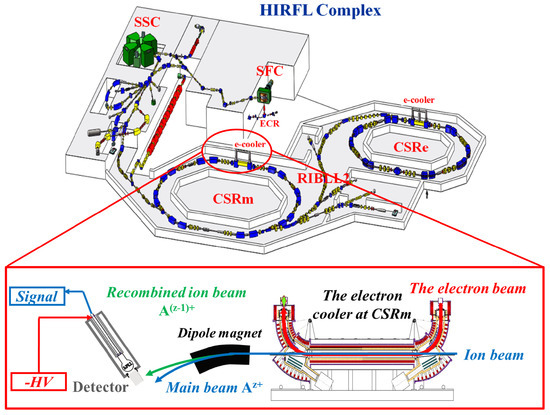
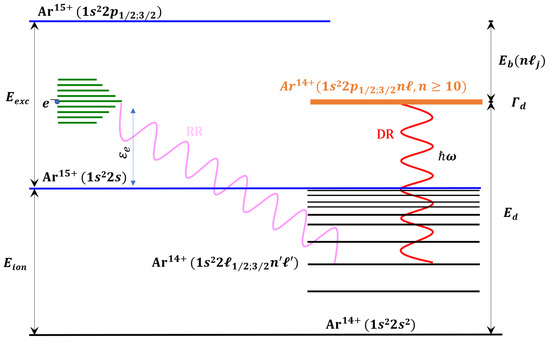
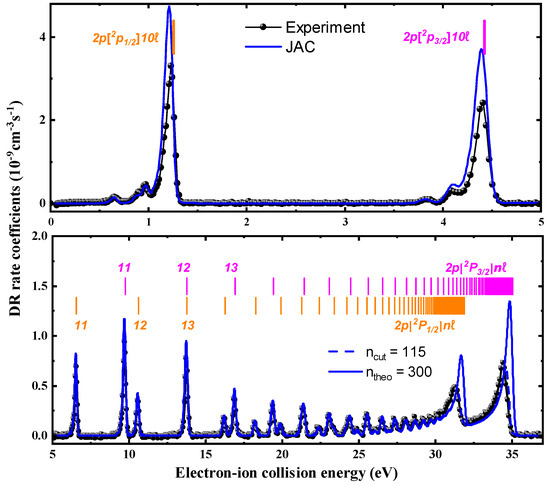
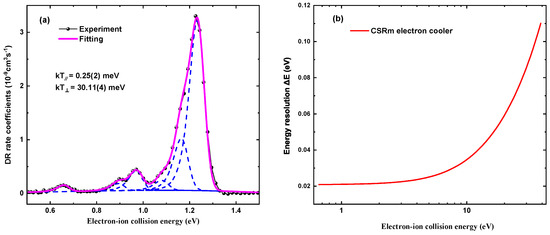
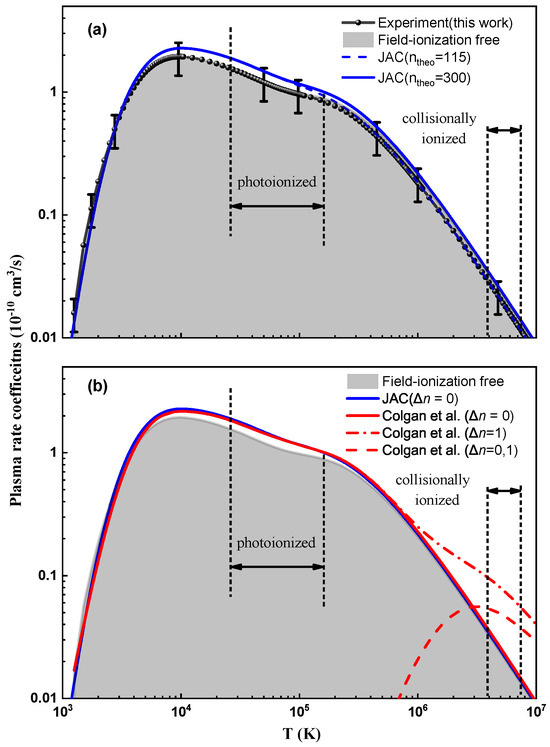
Dielectronic recombination (DR) is widely recognized as a fundamental atomic process in many astrophysical and laboratory plasmas, where it plays a crucial role in determining ionization balance and level populations over a broad temperature range. Reliable DR resonance strengths and plasma rate coefficients for such plasma modeling can be computed using the Jena Atomic Calculator (JAC)—a relativistic code based on the multiconfiguration Dirac–Hartree–Fock (MCDHF) method. In this work, we investigate the DR of Li-like Ar15+ ions in their ground state (2s), focusing on resonances associated with the fine-structure core excitations . The resulting fine-structure-resolved DR resonance strengths and plasma rate coefficients are in good agreement with recent high-resolution DR measurements of Ar15+ ions performed at the Main Cooler Storage Ring (CSRm) in Lanzhou, China. These results provide a stringent benchmark for JAC calculations and support their applicability in plasma modeling.
Full article
(This article belongs to the Special Issue Computational Atomic Physics in Astrophysics)
►▼
Show Figures

Figure 1
Open AccessArticle
Two-Atom Superradiance Including Magnetic State Degeneracy
by
Paul R. Berman
Atoms 2026, 14(2), 12; https://doi.org/10.3390/atoms14020012 - 6 Feb 2026
Abstract
►▼
Show Figures
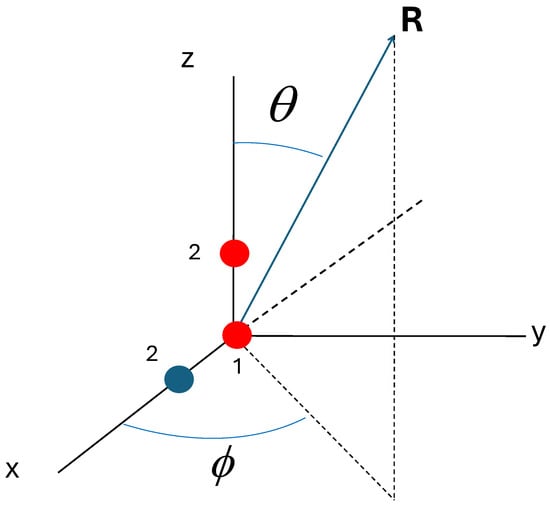
The radiation pattern emitted by two atoms, interacting with each other via the vacuum radiation field, has been calculated, including effects of magnetic state degeneracy for atoms with a ground state having angular momentum and an excited state having
[...] Read more.
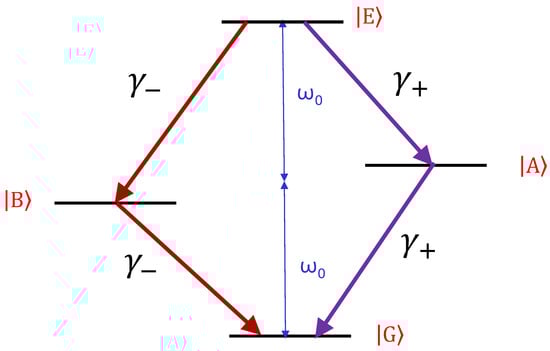
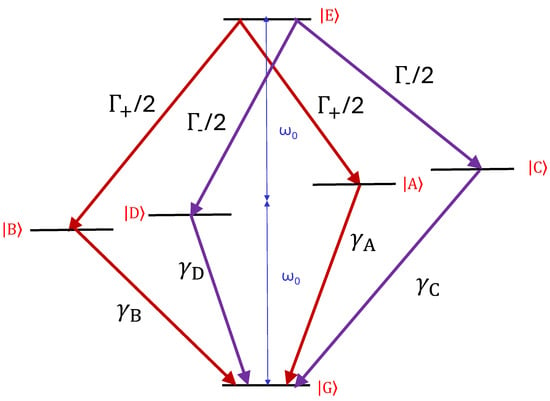
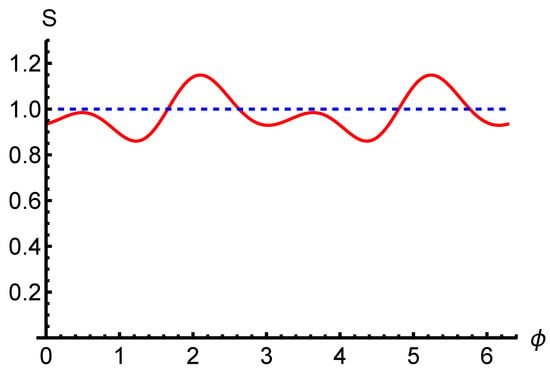
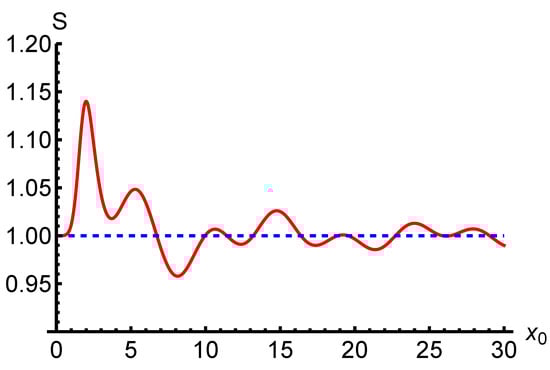
The radiation pattern emitted by two atoms, interacting with each other via the vacuum radiation field, has been calculated, including effects of magnetic state degeneracy for atoms with a ground state having angular momentum and an excited state having angular momentum. For an initial condition in which both atoms are inverted, the time-integrated radiation pattern is identical to that for non-interacting atoms if the atoms lie on the z-axis, but differs if the atoms lie on the x-axis. The underlying dynamics giving rise to this behavior are examined.
Full article

Figure 1
Open AccessArticle
Two-Center Repulsive Coulomb System in a Constant Magnetic Field
by
Miguel E. Gómez Quintanar and Adrian M. Escobar-Ruiz
Atoms 2026, 14(2), 11; https://doi.org/10.3390/atoms14020011 - 5 Feb 2026
Abstract
We study the planar repulsive two-center Coulomb system in the presence of a uniform magnetic field perpendicular to the plane, taking the inter-center separation a and the magnetic field strength B as independent control parameters. The free-field system is Liouville
[...] Read more.
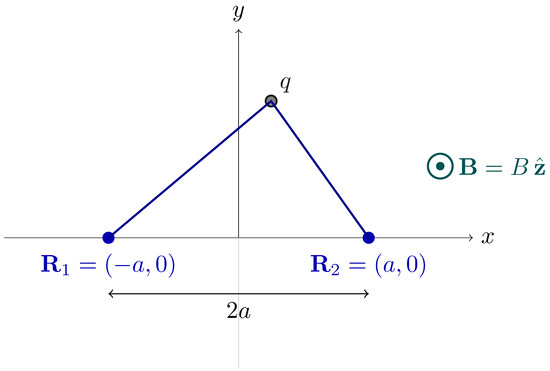
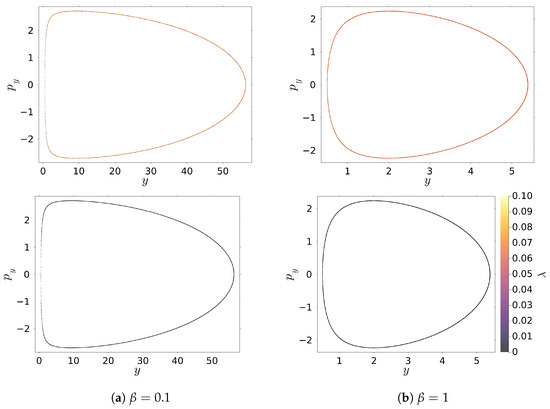
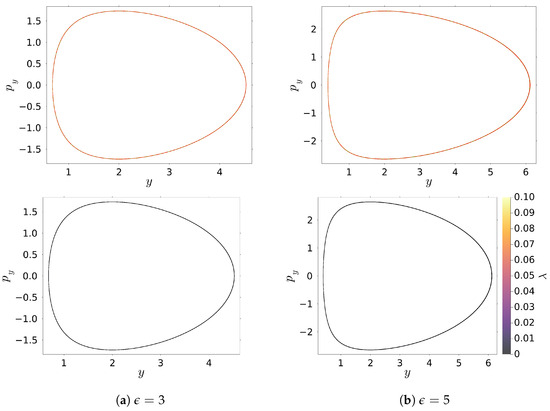
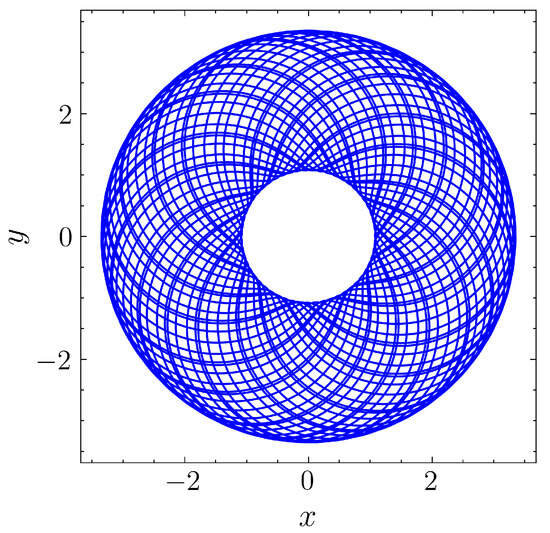
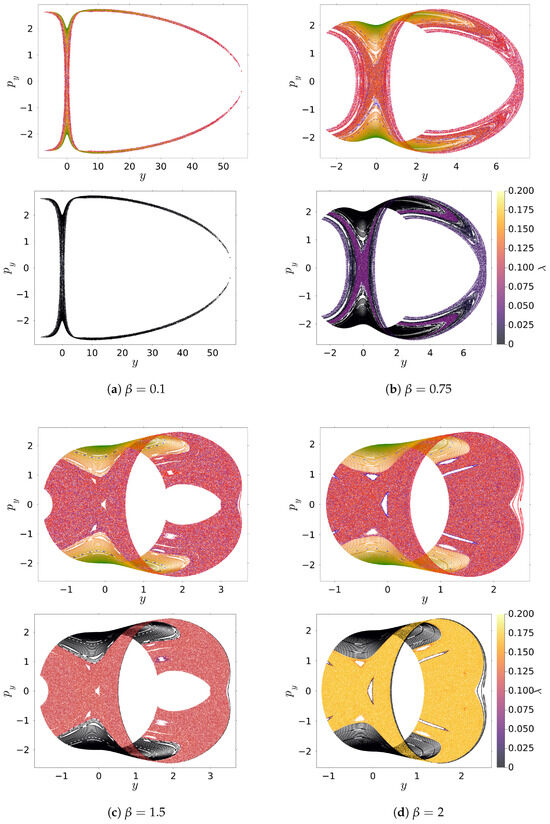
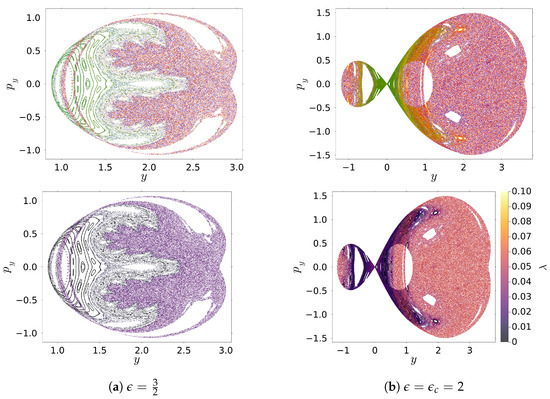
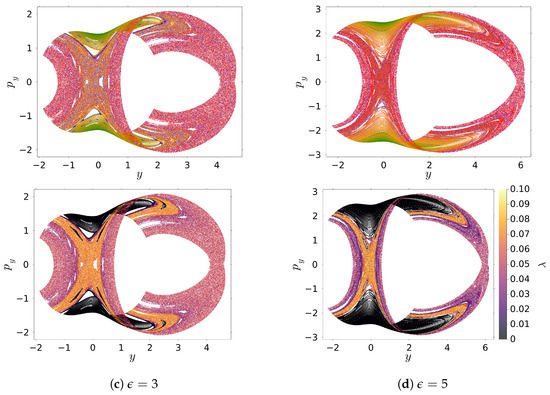
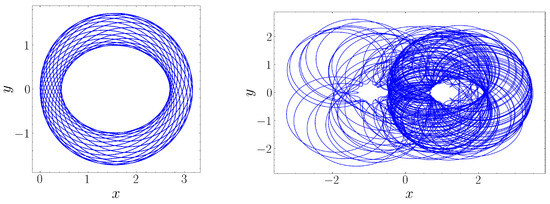
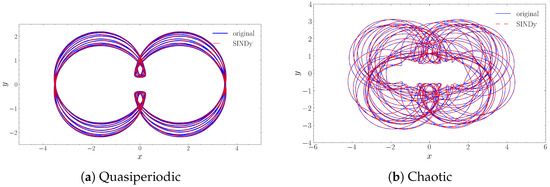
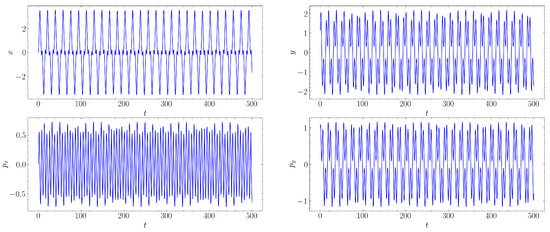
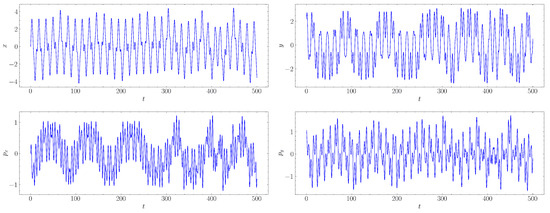
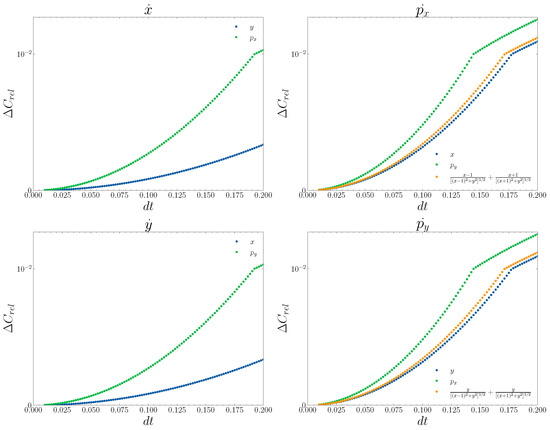
We study the planar repulsive two-center Coulomb system in the presence of a uniform magnetic field perpendicular to the plane, taking the inter-center separation a and the magnetic field strength B as independent control parameters. The free-field system is Liouville integrable and the motion is unbounded. The magnetic confinement introduces nonlinear coupling that breaks integrability and gives rise to chaotic bounded dynamics. Using Poincaré sections and maximal Lyapunov exponents, we characterize the transition from regular motion at to mixed regular–chaotic dynamics for . To probe the recoverability of the dynamics, we apply sparse regression techniques to numerical trajectories and assess their ability to capture the equations of motion across mixed dynamical regimes. Our results clarify how magnetic confinement competes with two-center repulsive interactions in governing the emergence of chaos and delineate fundamental limitations of data-driven model discovery in nonintegrable Hamiltonian systems. We further identify an organizing mechanism whereby the repulsive two-center system exhibits locally one-center-like dynamics in the absence of any static confining barrier.
Full article
(This article belongs to the Section Atomic, Molecular and Nuclear Spectroscopy and Collisions)
►▼
Show Figures

Figure 1
Open AccessArticle
Influence of End Cap Structure on the Axial Geometric Parameter of the Linear Paul Trap
by
Lin Li and Zi Li
Atoms 2026, 14(2), 10; https://doi.org/10.3390/atoms14020010 - 5 Feb 2026
Abstract
►▼
Show Figures
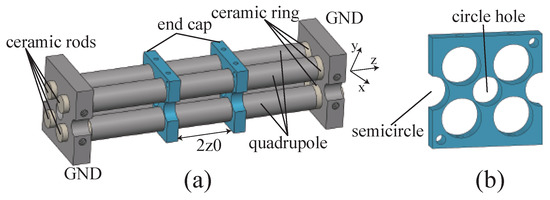
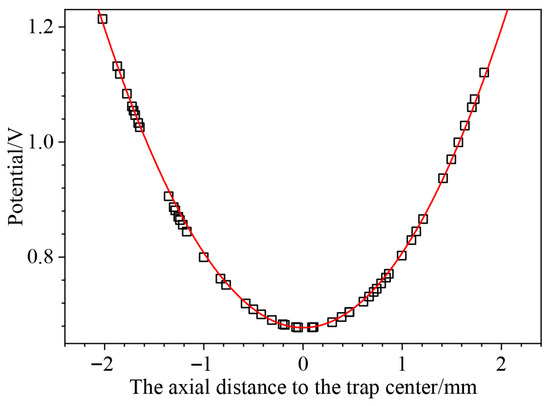
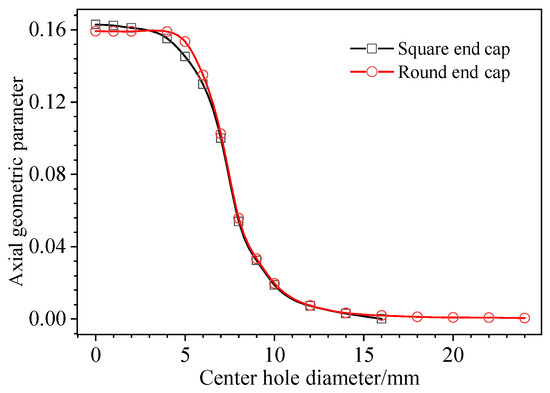
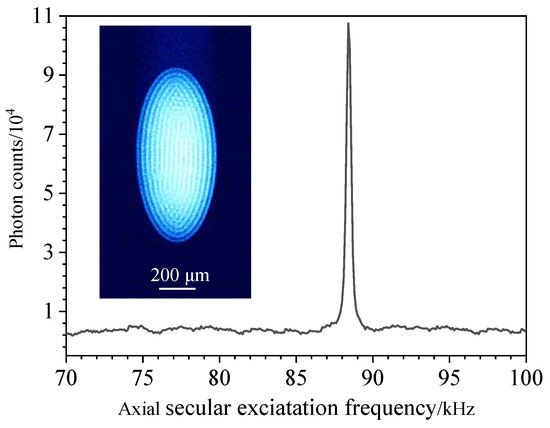
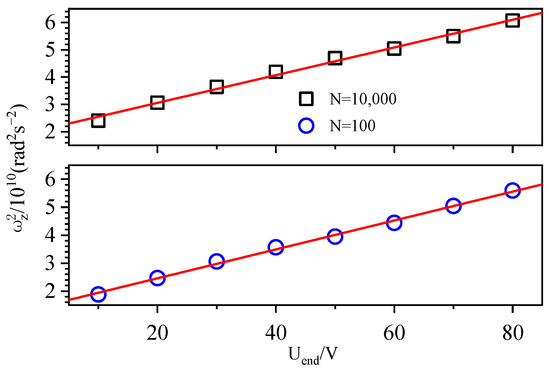
Through finite-element simulation, the axial potential distribution of the ion trap is analyzed. The effects of the central hole diameter of the end cap and the spacing between the two end caps on the axial geometric parameters of the ion trap are investigated.
[...] Read more.
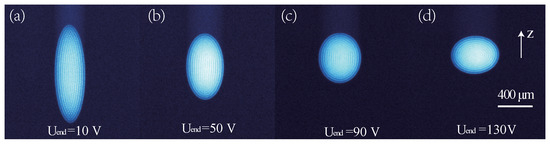
Through finite-element simulation, the axial potential distribution of the ion trap is analyzed. The effects of the central hole diameter of the end cap and the spacing between the two end caps on the axial geometric parameters of the ion trap are investigated. Based on these findings, a set of linear Paul traps is designed by selecting suitable end caps and quadrupoles. Stable trapping of calcium ions (Ca+) is successfully achieved, and these ions are subsequently laser-cooled into ionic Coulomb crystals. In the experiment, secular motion excitation of the Ca+ ion Coulomb crystal is performed, yielding an axial geometric parameter of 0.115(1) for the ion trap. This value aligns well with the simulation result of 0.114(2). The precise determination of the axial geometric parameter provides a solid foundation for subsequent high-precision optical or mass spectrometry measurements.
Full article

Figure 1
Open AccessArticle
Study of the Triplet States in the Autoionizing Electron Spectra of He and Ar Induced by Low-Energy Electrons
by
Bratislav P. Marinković, Lorenzo Avaldi and Jozo J. Jureta
Atoms 2026, 14(2), 9; https://doi.org/10.3390/atoms14020009 - 31 Jan 2026
Abstract
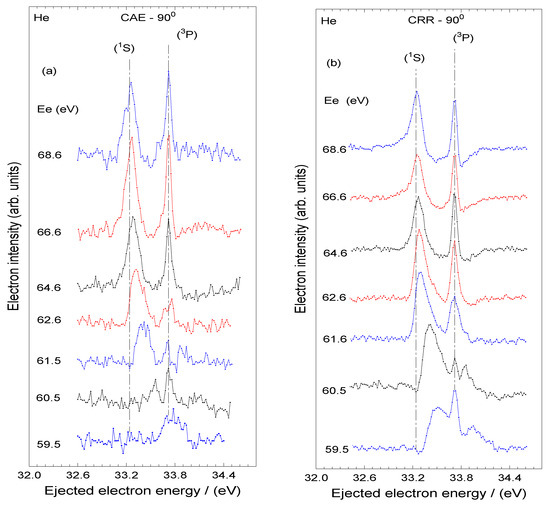
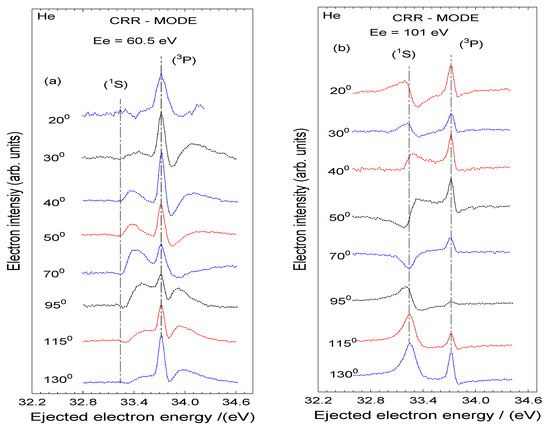
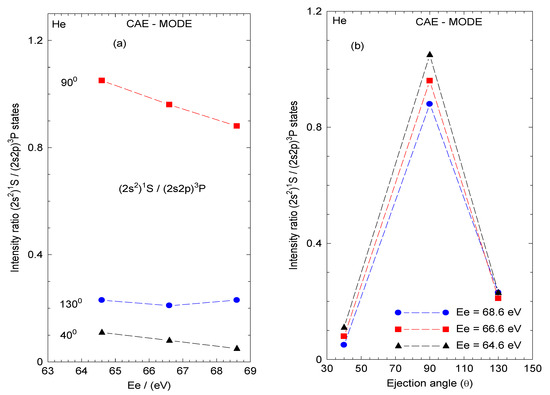
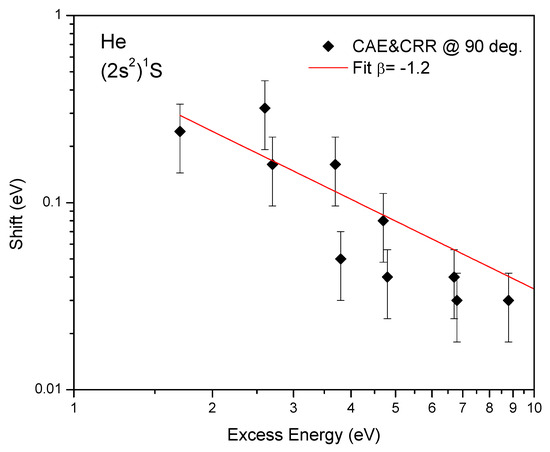
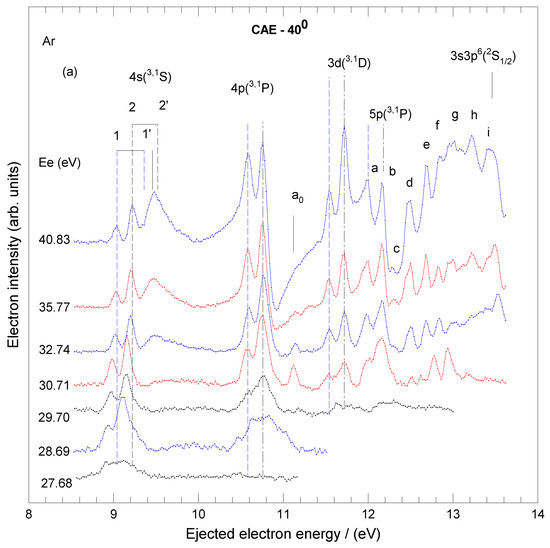
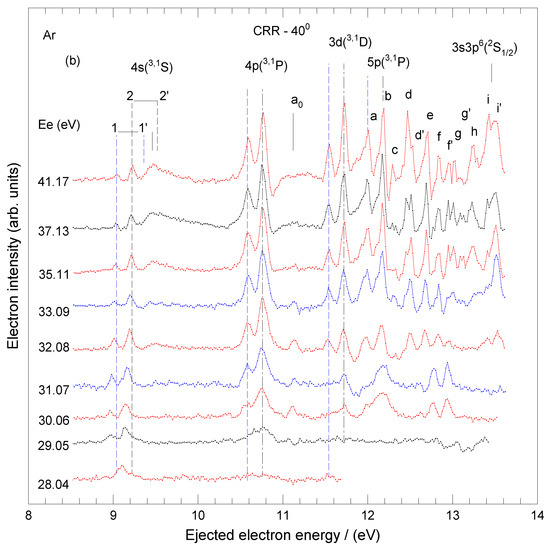
In this work, the He and Ar triplet autoionizing states have been studied using a non-monochromatic electron beam and a high-resolution electrostatic analyzer at low incident electron energies and three ejection angles: 40°, 90°, and 130°. Low-energy electrons have been used because they
[...] Read more.
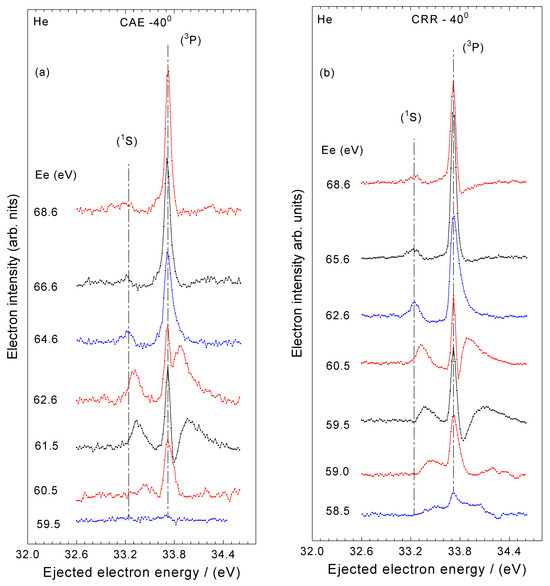
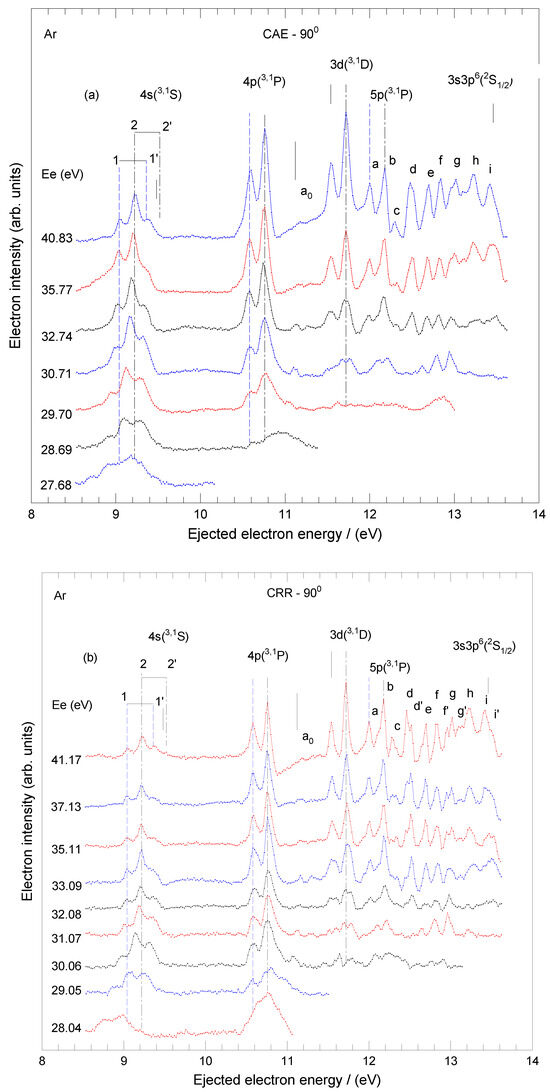
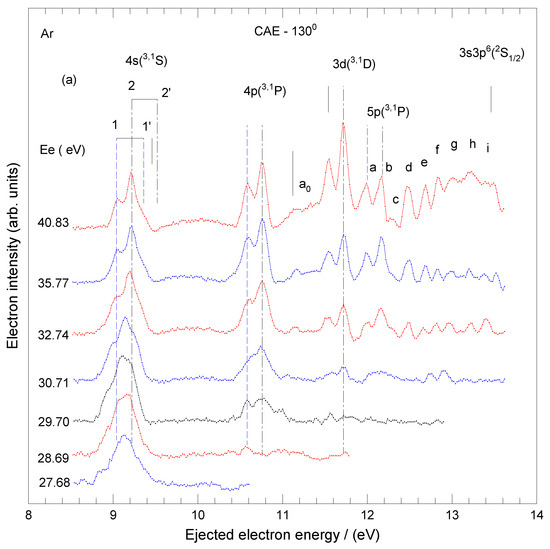
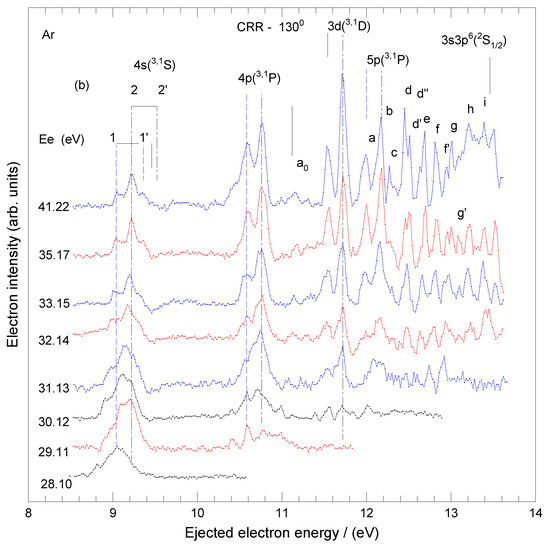
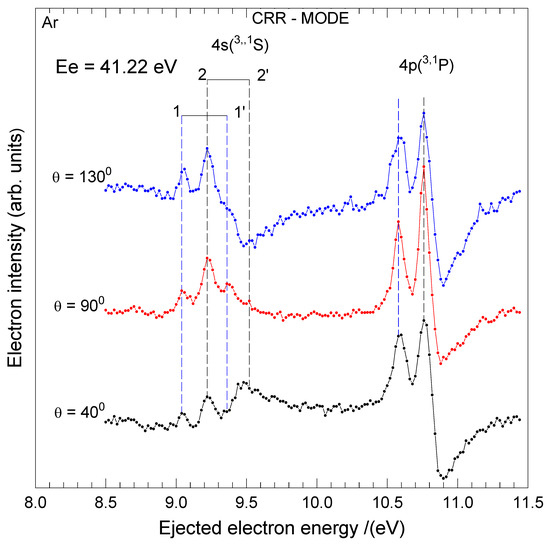
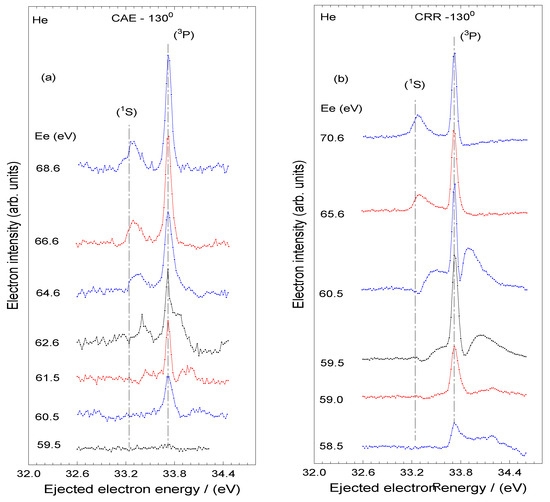
In this work, the He and Ar triplet autoionizing states have been studied using a non-monochromatic electron beam and a high-resolution electrostatic analyzer at low incident electron energies and three ejection angles: 40°, 90°, and 130°. Low-energy electrons have been used because they have a high probability of exciting triplet states regardless of whether they are discrete isolate states or are embedded in the ionization continuum. Additionally, the He ejected electron spectra have been measured at several ejection angles between 20° and 130° and two incident energies, namely 60.5 eV and 101 eV. The anisotropic angular distributions indicate that orbital angular momentum exchange between the ejected and scattered electrons occurred. The energies of the first triplets 3s3p64s(3S) and 3s3p64p(3P) states of argon are found to be (24.985 ± 0.020) eV and (26.52 ± 0.02) eV, respectively.
Full article
(This article belongs to the Special Issue Electronic, Photonic and Ionic Interactions with Atoms and Molecules)
►▼
Show Figures

Figure 1
Open AccessTechnical Note
NBODYCL: A Program to Generate Regularized Classical Trajectories for the n–Body Coulomb Problem
by
Mbuso K. Matfunjwa, Harindranath B. Ambalampitiya and Ilya I. Fabrikant
Atoms 2026, 14(2), 8; https://doi.org/10.3390/atoms14020008 - 23 Jan 2026
Abstract
A program package for calculating regularized classical trajectories for Coulomb n–body problem is developed. The Coulomb singularities from the equations of motion are removed by transformations of variables including the time. This effectively conserves the energy of the time-independent systems to a
[...] Read more.
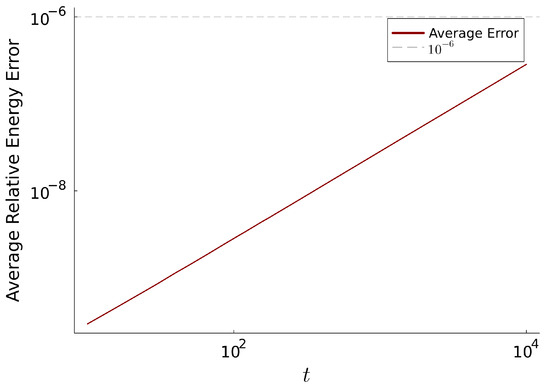
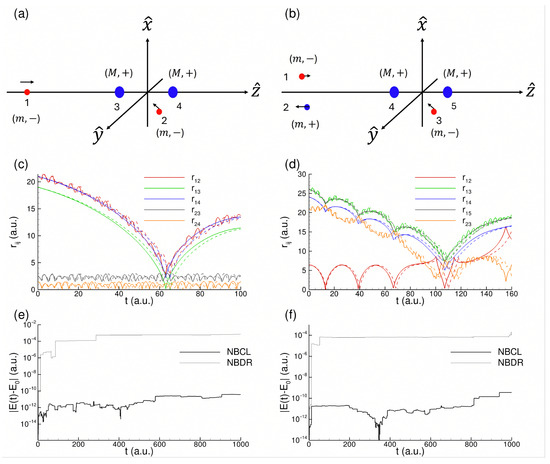
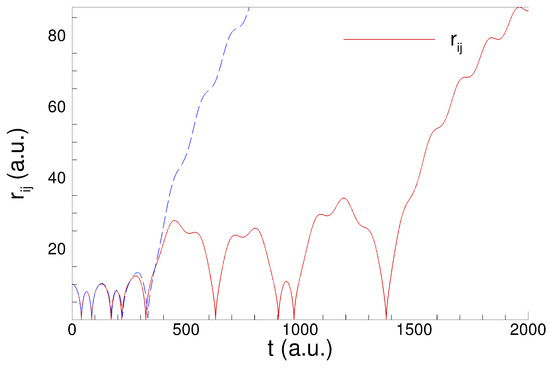
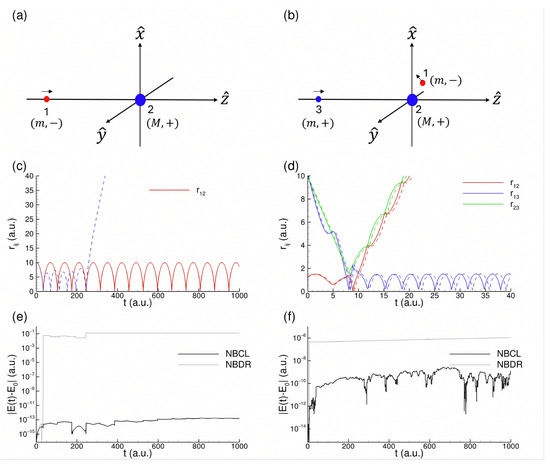
A program package for calculating regularized classical trajectories for Coulomb n–body problem is developed. The Coulomb singularities from the equations of motion are removed by transformations of variables including the time. This effectively conserves the energy of the time-independent systems to a high accuracy for long time propagation. Sample calculations are shown for the cases of 2, 3, 4, and 5 particle systems giving comparisons with the un-regularized trajectories. The program can be used for general purposes including the classical-trajectory Monte-Carlo simulations for charged-particle collisions in free or laser environments.
Full article
(This article belongs to the Special Issue Collisions and Applications: Electron, Positron, and Positronium Interactions with Atoms and Molecules)
►▼
Show Figures

Figure 1
Open AccessArticle
Calculation of Hyperfine Structure in Tm ii
by
Andrey I. Bondarev
Atoms 2026, 14(1), 7; https://doi.org/10.3390/atoms14010007 - 21 Jan 2026
Abstract
The first measurements of the magnetic dipole hyperfine structure constants A in singly ionized thulium revealed substantial discrepancies with the corresponding theoretical calculations. Subsequent measurements expanded the very limited available dataset and demonstrated that two of the previously reported experimental A values were
[...] Read more.
The first measurements of the magnetic dipole hyperfine structure constants A in singly ionized thulium revealed substantial discrepancies with the corresponding theoretical calculations. Subsequent measurements expanded the very limited available dataset and demonstrated that two of the previously reported experimental A values were incorrect, thereby motivating new theoretical calculations. In this work, we employ the configuration interaction method to calculate the A constants for several low-lying levels in Tm ii, with the random-phase-approximation corrections also taken into account. Our results show good agreement with the new experimental data and provide reliable predictions for additional states where measurements are not yet available.
Full article
(This article belongs to the Section Atomic, Molecular and Nuclear Spectroscopy and Collisions)
Highly Accessed Articles
Latest Books
E-Mail Alert
News
Topics
Topic in
Atoms, Crystals, Molecules, Organics, Symmetry, Inorganics
Advances in Molecular Symmetry and Chirality Research
Topic Editors: Ralph N. Salvatore, Guzman Gil-RamirezDeadline: 31 March 2026
Topic in
Atoms, Symmetry, Universe, Physics, Applied Sciences
Latest Progress in High Energy Physics
Topic Editors: Xiaoyu Wang, Alberto Ruiz-JimenoDeadline: 31 January 2027
Special Issues
Special Issue in
Atoms
Quantum Optics and Quantum Information
Guest Editors: Apurba De, Tasnim AhmedDeadline: 31 March 2026
Special Issue in
Atoms
Electronic, Photonic and Ionic Interactions with Atoms and Molecules
Guest Editors: Antonio Carlos Fontes dos Santos, Karoly TokesiDeadline: 30 April 2026
Special Issue in
Atoms
Electron-Impact Ionization: Fragmentation and Cross-Section
Guest Editor: Nidhi SinhaDeadline: 30 April 2026
Special Issue in
Atoms
Computational Atomic Physics in Astrophysics
Guest Editors: Jerome Deprince, Patrick PalmeriDeadline: 31 May 2026