


Digital Therapeutics Applications for Chronic Disease Management
This special issue belongs to the section "Computing and Artificial Intelligence".
Special Issue Information
Dear Colleagues,
The digital revolution that healthcare has been experiencing in the last several decades has been greatly accelerated by the COVID-19 pandemic, which has fostered the development of new decentralized technologies, implementing innovative infrastructures able to provide remote healthcare to the population in a cost-efficient manner.
In this context, digital therapeutics (DT) technologies played a key role. DT consists of software applications, products, and services which implement evidence-based treatments through digital means to increase the fruition and effectiveness of modern healthcare. Moreover, DT unlocks the ability to define standardized data models to harmonize health data at the global level; based on those data, researchers all over the world can develop and discover new methodologies and strategies to further improve healthcare.
Specifically, new DT approaches targeting chronic diseases such as diabetes, multiple sclerosis, and asthma, among others, could be revolutionary, integrating conventional therapies with new cutting-edge tools able to not only increase the impact of treatment on patients’ health but also to improve their quality of life. Indeed, DT facilitates the implementation of patient-centric approaches where therapies are personalized at the individual level and automatic algorithms are deployed in appealing and familiar devices such as smartphones and smartwatches, further increasing patient adherence.
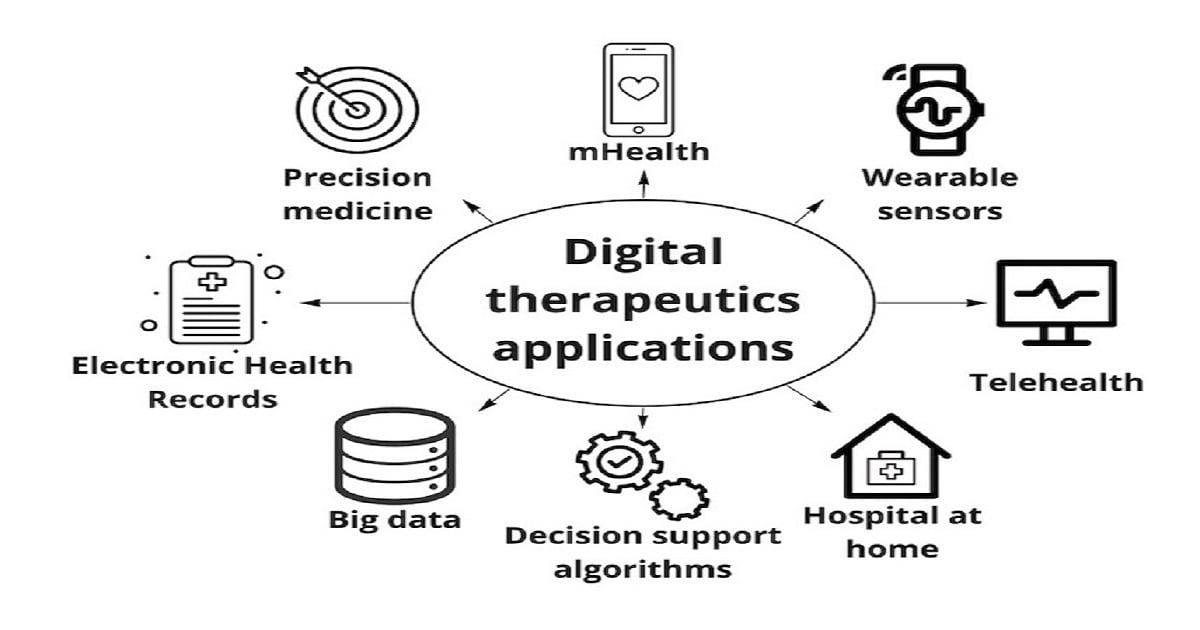
We are pleased to announce the Special Issue entitled “Digital Therapeutics Applications for Chronic Disease Management: Latest Advances and Prospects”, the aim of which is to collect original research papers and reviews about the use of DT approaches to facilitate the management of chronic diseases. Topics of interest include, but are not limited to, the use of DT for:
- Decision support systems;
- Remote patient monitoring and telemedicine systems;
- Therapy optimization and personalization;
- Precision medicine;
- Digital intervention to foster self- management;
- Persuasive technology and behavior change support systems to foster healthy habits and adherence to therapy;
- Prevention of disease progression or complications;
- Big data analytics;
- Artificial intelligence and machine learning model deployment;
- Mobile apps in healthcare;
- Advanced wearable sensors development;
- AI-assisted systems for telerehabilitation and the remote assessment of patients.
Dr. Giacomo Cappon
Dr. Martina Vettoretti
Dr. Manuel Ottaviano
Guest Editors
Manuscript Submission Information
Manuscripts should be submitted online at www.mdpi.com by registering and logging in to this website. Once you are registered, click here to go to the submission form. Manuscripts can be submitted until the deadline. All submissions that pass pre-check are peer-reviewed. Accepted papers will be published continuously in the journal (as soon as accepted) and will be listed together on the Special Issue website. Research articles, review articles as well as short communications are invited. For planned papers, a title and short abstract (about 250 words) can be sent to the Editorial Office for assessment.
Submitted manuscripts should not have been published previously, nor be under consideration for publication elsewhere (except conference proceedings papers). All manuscripts are thoroughly refereed through a single-anonymized peer-review process. A guide for authors and other relevant information for submission of manuscripts is available on the Instructions for Authors page. Applied Sciences is an international peer-reviewed open access semimonthly journal published by MDPI.
Please visit the Instructions for Authors page before submitting a manuscript. The Article Processing Charge (APC) for publication in this open access journal is 2400 CHF (Swiss Francs). Submitted papers should be well formatted and use good English. Authors may use MDPI's English editing service prior to publication or during author revisions.
Keywords
- digital therapeutics
- digital health
- personalized therapy
- proactive medicine
- chronic diseases
- wearable sensors
- advanced healthcare methods
- telemedicine
- telemonitoring
- healthcare platform
Benefits of Publishing in a Special Issue
- Ease of navigation: Grouping papers by topic helps scholars navigate broad scope journals more efficiently.
- Greater discoverability: Special Issues support the reach and impact of scientific research. Articles in Special Issues are more discoverable and cited more frequently.
- Expansion of research network: Special Issues facilitate connections among authors, fostering scientific collaborations.
- External promotion: Articles in Special Issues are often promoted through the journal's social media, increasing their visibility.
- Reprint: MDPI Books provides the opportunity to republish successful Special Issues in book format, both online and in print.
Published Papers


Appl. Sci. - ISSN 2076-3417