



Journal Description
Telecom
Telecom
is an international, peer-reviewed, open access journal on communications and networks published bimonthly online by MDPI. FITCE Hellas - Hellenic Branch of FITCE is affiliated with Telecom and its members receive a discount on the article processing charge.
- Open Access— free for readers, with article processing charges (APC) paid by authors or their institutions.
- High Visibility: indexed within ESCI (Web of Science), Scopus, Ei Compendex, and other databases.
- Journal Rank: CiteScore - Q2 (Electrical and Electronic Engineering)
- Rapid Publication: manuscripts are peer-reviewed and a first decision is provided to authors approximately 23 days after submission; acceptance to publication is undertaken in 8.9 days (median values for papers published in this journal in the second half of 2025).
- Recognition of Reviewers: APC discount vouchers, optional signed peer review and reviewer names are published annually in the journal.
- Journal Clusters of Network and Communications Technology: Future Internet, IoT, Telecom, Journal of Sensor and Actuator Networks, Network, Signals.
Impact Factor:
2.4 (2024);
5-Year Impact Factor:
2.7 (2024)
Latest Articles
Anti-Skid Aircraft Braking Mechanism Using Consensus Control over Wireless Avionic Intra-Communication
Telecom 2026, 7(3), 56; https://doi.org/10.3390/telecom7030056 (registering DOI) - 13 May 2026
Abstract
►
Show Figures
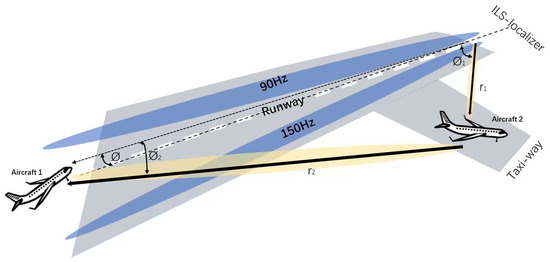
This article discusses the anti-skid braking control mechanism of aircrafts. Aircrafts use a sliding-mode controller (SMC) to generate the desired braking torque on its wheels to stop while landing. Potential runway variations and load differences on the wheels are considered, affecting the friction
[...] Read more.
This article discusses the anti-skid braking control mechanism of aircrafts. Aircrafts use a sliding-mode controller (SMC) to generate the desired braking torque on its wheels to stop while landing. Potential runway variations and load differences on the wheels are considered, affecting the friction force on each wheel. Variations in the friction force generate drag torque, causing aircrafts to drift away from the runway. In order to counteract the drift, we propose a supervisory consensus controller, which adjusts the braking torque of each wheel to achieve equal force on each wheel. We consider a wireless communication channel between the supervisory controller and each wheel’s brake controller in an attempt to reduce cabling. As wireless communication needs to deal with potential communication losses that affect the overall control performance, a new control model that can accommodate communication losses has been devised. The proposed model is evaluated, and we demonstrate how well the consensus controller works over a noisy channel. Simulation results demonstrate that the proposed consensus-based control significantly improves braking performance, reducing drag torque and achieving up to 15–20% reduction in landing distance under 25% packet loss compared to baseline approaches.
Full article
Open AccessArticle
Binary Dragonfly Algorithm with Semicircular Mobility for Multi-Objective Optimization of Underwater Wireless Sensor Networks
by
Eduardo Vázquez, Aldo Mendez, Leopoldo A. Garza, Alberto Reyna and Gerardo Romero
Telecom 2026, 7(3), 55; https://doi.org/10.3390/telecom7030055 (registering DOI) - 12 May 2026
Abstract
►▼
Show Figures
Underwater wireless sensor networks (UWSNs) support critical applications such as environmental monitoring, offshore exploration, and surveillance; however, their performance is constrained by high propagation delay, limited energy resources, and node mobility caused by ocean dynamics. Many clustering approaches assume static nodes and use
[...] Read more.
Underwater wireless sensor networks (UWSNs) support critical applications such as environmental monitoring, offshore exploration, and surveillance; however, their performance is constrained by high propagation delay, limited energy resources, and node mobility caused by ocean dynamics. Many clustering approaches assume static nodes and use fixed-weight objective aggregation, which may reduce adaptability and lead to premature convergence. This paper proposes a cluster-head selection and cluster formation method for UWSNs based on a binary multi-objective Dragonfly Algorithm (BMDA-UWSN). The method considers energy consumption, acoustic latency, and load balance within a Pareto-based optimization framework, thereby reducing dependence on fixed-weight aggregation during the search stage. In addition, the Dragonfly-based optimization process uses dynamically adjusted coefficients to regulate the balance between exploration and exploitation while preserving solution diversity. To represent underwater node displacement, a semicircular mobility model with angular variation of ±45° is incorporated into the simulation scenario. Results obtained for a 100-node network show that BMDA-UWSN achieved better performance than Direct Transmission, LEACH, LEACH-C, SS-GSO, and CDFO-UWSN in terms of network lifetime, packet delivery, latency, and residual energy under the evaluated conditions. In particular, the first node dies at iteration 126 with BMDA-UWSN, compared with iteration 95 for CDFO-UWSN, while packet delivery increases by approximately 20% and latency decreases by about 5%. These findings suggest that BMDA-UWSN is a competitive clustering approach for underwater monitoring scenarios when evaluated under controlled node mobility conditions.
Full article

Figure 1
Open AccessArticle
A Graded Partial Dielectric Transformer for Bandwidth Enhancement in an Ultrawideband High-Power Combined TEM Antenna
by
Alexander D. Dowell, Mohamed Z. M. Hamdalla and Kalyan C. Durbhakula
Telecom 2026, 7(3), 54; https://doi.org/10.3390/telecom7030054 (registering DOI) - 11 May 2026
Abstract
Designing an ultrashort, fast-rising high-power microwave (HPM) system requires an antenna that simultaneously provides ultrawideband (UWB) operation, high gain, and megawatt-level power handling under strict size, weight, and power (SWaP) constraints. To meet these requirements, this paper proposes an improved UWB HPM antenna
[...] Read more.
Designing an ultrashort, fast-rising high-power microwave (HPM) system requires an antenna that simultaneously provides ultrawideband (UWB) operation, high gain, and megawatt-level power handling under strict size, weight, and power (SWaP) constraints. To meet these requirements, this paper proposes an improved UWB HPM antenna that integrates a graded partial dielectric transformer (PDT) with a Koshelev-type combined antenna. The graded PDT improves impedance matching and field continuity by smoothing the dielectric-to-free-space transition, thereby alleviating a key bandwidth limitation of conventional combined antennas. Through iterative simulation, low-cost fabrication, and experimental validation, the proposed design achieves a 2.8x bandwidth enhancement, increasing the measured fractional bandwidth from 53% to 148%, with S11 < −10 dB from 0.5 to 3.0 GHz and with an additional −10 dB operating band from 3.5 to 4.4 GHz. Simulations predict a peak gain value of 15 dBi at 2.1 GHz. High-voltage pulsed tests (9–10 kV, 500 ps rise time) confirm robust operation, with radiated electric fields exceeding 10 kV/m at 1 m and no observable breakdown. The lightweight 3D-printed PLA structure (197 g) provides a scalable solution for directed-energy and electromagnetic-pulse applications.
Full article
(This article belongs to the Special Issue Advances in Microwave, Antenna, and Radio Frequency Technology and Its Applications)
►▼
Show Figures

Figure 1
Open AccessFeature PaperArticle
A Decentralized and Flexible BPM Framework Based on Blockchain VM Interpreter and Inter-Blockchain Communication
by
Nakhoon Choi and Heeyoul Kim
Telecom 2026, 7(3), 53; https://doi.org/10.3390/telecom7030053 - 6 May 2026
Abstract
►▼
Show Figures
While integrating blockchain technology into Business Process Management (BPM) has gained attention, existing compilation-based approaches suffer from high redeployment costs and isolated network structures. This study proposes an FSM-based workflow interpreter engine utilizing the Inter-Blockchain Communication (IBC) protocol within the Cosmos ecosystem to
[...] Read more.
While integrating blockchain technology into Business Process Management (BPM) has gained attention, existing compilation-based approaches suffer from high redeployment costs and isolated network structures. This study proposes an FSM-based workflow interpreter engine utilizing the Inter-Blockchain Communication (IBC) protocol within the Cosmos ecosystem to overcome these limitations. The proposed system adopts an interpreter architecture that treats business logic as lightweight JSON specifications instead of hard-coding it into smart contracts. This separation allows for process updates through data modification rather than contract redeployment, significantly increasing operational flexibility. Furthermore, custom IBC packet structures were designed to enable seamless cross-chain process synchronization between independent application-specific blockchains. Experimental results demonstrate that the interpreter approach reduces process update costs by over 90% compared to conventional compilation methods. Additionally, gas consumption exhibited a linear growth pattern relative to task count and gateway complexity, ensuring cost predictability for large-scale business scenarios. Interoperability validation using a standard Procurement Order (PO) process showed successful cross-chain state transitions with a latency of approximately 1.45 s. This research provides a practical solution for building trust-based decentralized collaboration ecosystems by simultaneously achieving operational efficiency and interoperability in blockchain BPM.
Full article

Figure 1
Open AccessReview
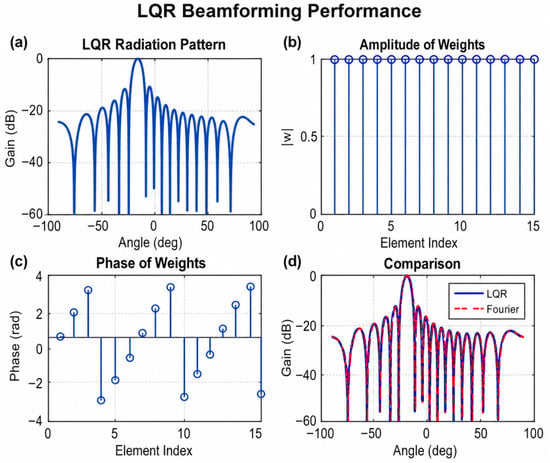
Seeing Without Being Seen: A Review of Ethical and Human-Centric ISAC in 6G
by
Maria Gardano, Antonio Nocera, Michela Raimondi and Ennio Gambi
Telecom 2026, 7(3), 52; https://doi.org/10.3390/telecom7030052 - 5 May 2026
Abstract
Integrated Sensing and Communication (ISAC), enabling communication infrastructure to simultaneously transmit data and sense the surrounding physical environment, is emerging as a cornerstone technology for sixth-generation (6G) mobile networks. While these capabilities unlock new applications in healthcare, safety, and ambient intelligence, they also
[...] Read more.
Integrated Sensing and Communication (ISAC), enabling communication infrastructure to simultaneously transmit data and sense the surrounding physical environment, is emerging as a cornerstone technology for sixth-generation (6G) mobile networks. While these capabilities unlock new applications in healthcare, safety, and ambient intelligence, they also introduce novel ethical and societal challenges related to privacy, transparency, user autonomy, and trust, which are values fundamental to the social acceptance of the technology. Firstly, an overview of academic, institutional, and industrial contributions on human-centric 6G is provided, with a focus on how ethical values are addressed in ISAC-related contexts. Secondly, this paper reviews the distinctive characteristics of ISAC through representative human-centric use cases involving non-interactive and often invisible sensing of people, highlighting the ethical and societal implications emerging from such scenarios. By analyzing current standardization efforts and the scientific literature, this paper identifies emerging trends in Key Values (KVs) relevant to ISAC, as well as open research gaps that must be addressed to support trustworthy and value-oriented ISAC design in future 6G networks.
Full article
(This article belongs to the Topic Next-Generation Wireless and Mobile Network Technologies: Architectures, Protocols, and Applications)
►▼
Show Figures

Figure 1
Open AccessFeature PaperArticle
Constructing an Ensemble Stacking Model for Detecting DDoS Attacks
by
Chin-Ling Chen and Wan-Jing Lee
Telecom 2026, 7(3), 51; https://doi.org/10.3390/telecom7030051 - 5 May 2026
Abstract
►▼
Show Figures
Distributed Denial-of-Service (DDoS) attacks continue to escalate in scale and complexity, posing significant threats to modern network infrastructures and cloud services. Although many machine learning and deep learning approaches have been proposed for intrusion detection, most existing studies rely on raw traffic features
[...] Read more.
Distributed Denial-of-Service (DDoS) attacks continue to escalate in scale and complexity, posing significant threats to modern network infrastructures and cloud services. Although many machine learning and deep learning approaches have been proposed for intrusion detection, most existing studies rely on raw traffic features and binary classification, which limits their ability to capture complex temporal characteristics of multi-class DDoS attacks. To address these challenges, this study proposes an ensemble stacking framework combined with a frequency-domain feature representation for DDoS detection using the CIC-DDoS2019 dataset. Random Forest (RF), AdaBoost, and XGBoost are employed as base learners, while Logistic Regression is adopted as the meta-learner, and grid search cross-validation is used to determine the optimal hyperparameters. The main contributions of this study are threefold. First, a feature extraction pipeline integrating Fast Fourier Transform (FFT), sliding-window segmentation, and SHA256-based deduplication is proposed to capture temporal–frequency characteristics of network traffic while reducing redundant feature segments. Second, a stacking ensemble model is constructed to integrate heterogeneous classifiers and improve classification robustness across multiple attack types. Third, the proposed framework significantly improves computational efficiency by reducing feature redundancy, leading to substantial reductions in model training time. Experimental results demonstrate that the proposed FFT + SHA256 + SW stacking model achieves near-perfect detection performance, with an accuracy of 0.9997 and an F1-score of 0.9998 on the original dataset, which further improves to an accuracy of 0.9998 and an F1-score of 0.9999 when combined with SMOTE. Statistical evaluation using the Friedman test confirms that the stacking model consistently achieves the best ranking among the evaluated classifiers. The results indicate that the proposed approach provides an accurate, efficient, and scalable solution for large-scale DDoS attack detection.
Full article

Figure 1
Open AccessFeature PaperArticle
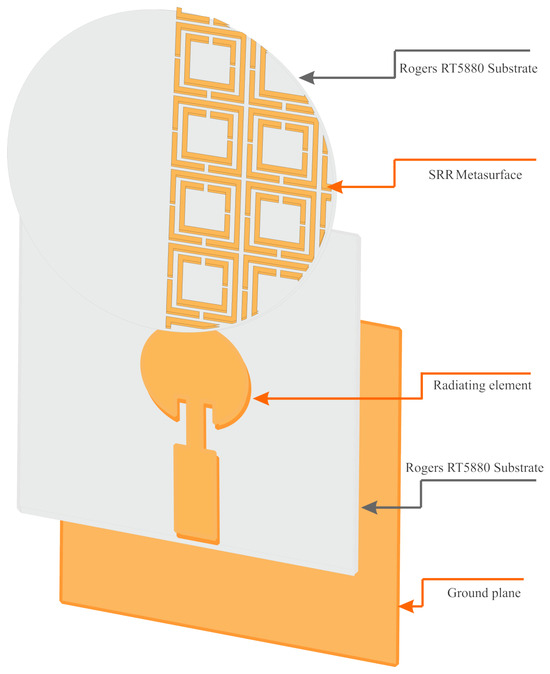
Incremental Sparse Adaptive PCA for Streaming Industrial Sensor Data
by
Rebin Saleh and Balázs Villányi
Telecom 2026, 7(3), 50; https://doi.org/10.3390/telecom7030050 - 4 May 2026
Abstract
►▼
Show Figures
Industrial Internet of Things (IIoT) systems generate high-dimensional, non-stationary sensor streams under strict memory and computational constraints, limiting the applicability of classical batch dimensionality reduction methods. While incremental PCA (IPCA) enables online updates, it produces dense components and lacks mechanisms for drift adaptation
[...] Read more.
Industrial Internet of Things (IIoT) systems generate high-dimensional, non-stationary sensor streams under strict memory and computational constraints, limiting the applicability of classical batch dimensionality reduction methods. While incremental PCA (IPCA) enables online updates, it produces dense components and lacks mechanisms for drift adaptation and interpretability. Existing sparse PCA methods, in contrast, are predominantly batch-oriented and unsuitable for streaming deployment. This paper presents incremental sparse adaptive PCA (ISAPCA), a unified streaming framework that integrates exponential forgetting for concept drift adaptation, mini-batch Oja–Sanger subspace tracking for online variance maximization, and proximal soft thresholding with QR re-orthonormalization for stable sparse component learning. The contribution lies in the coordinated implementation of these established mechanisms within a constant-memory architecture tailored to industrial edge and TinyML settings. We evaluate ISAPCA on three industrial datasets (SmartBuilding, Tennessee Eastman Process, and GasSensor) and compare it against streaming IPCA and offline upper-bound methods (randomized PCA, sparse PCA, and dictionary learning). ISAPCA retains approximately 93% and 96% of IPCA’s explained variance on SmartBuilding and Tennessee Eastman streams, respectively, while achieving improved explained variance on GasSensor (0.862 vs. 0.822 for IPCA, respectively). Across datasets, ISAPCA enforces sparse loadings without severe degradation in reconstruction fidelity. Ablation analysis confirms the necessity of both forgetting and sparsity components for stable performance under drift. Runtime measurements show sub-millisecond batch updates (0.234–0.606 ms for 256-sample mini-batches), demonstrating suitability for real-time deployment. These results indicate that ISAPCA provides a practical and interpretable solution for streaming dimensionality reduction in non-stationary industrial IoT environments, balancing variance retention, sparsity, and computational efficiency.
Full article

Figure 1
Open AccessArticle
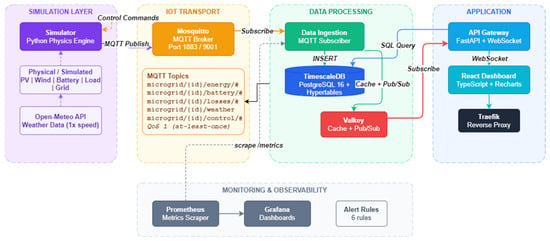
SDN-Assisted Deep Q-Learning Framework for Adaptive Mobility and Handover Optimization in Hybrid 5G Networks
by
Yahya S. Junejo, Faisal K. Shaikh, Bhawani S. Chowdhry and Waleed Ejaz
Telecom 2026, 7(3), 49; https://doi.org/10.3390/telecom7030049 - 2 May 2026
Abstract
►▼
Show Figures
In the evolving landscape of next-generation wireless networks, ensuring seamless mobility and high-quality service delivery for millions of devices and end users in dynamic scenarios, where the speed of a wireless device keeps changing with time, is important. The mobility, seamless and continuous
[...] Read more.
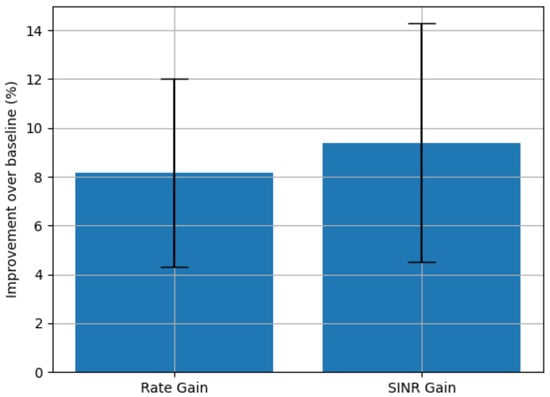
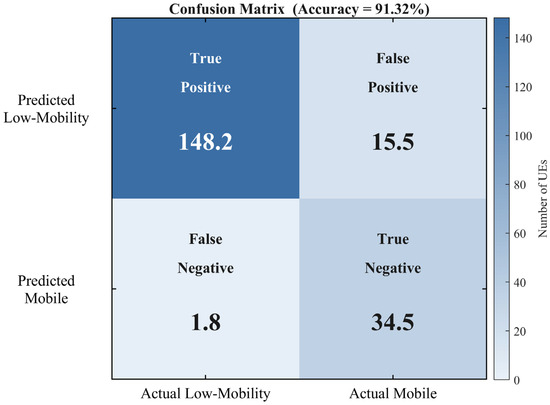
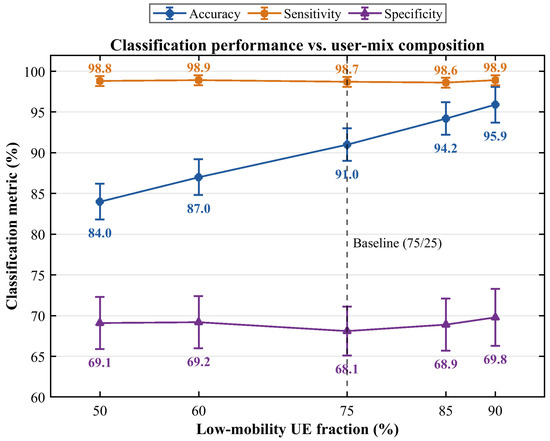
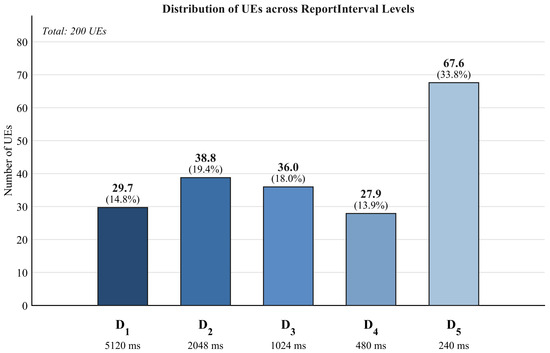
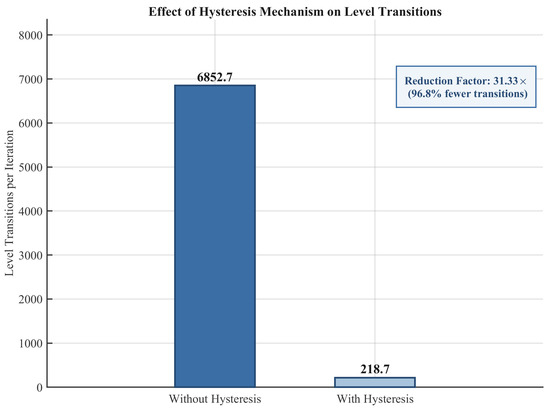
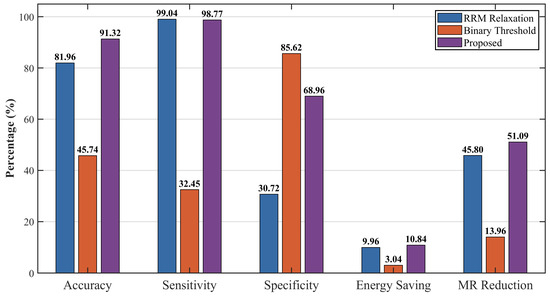
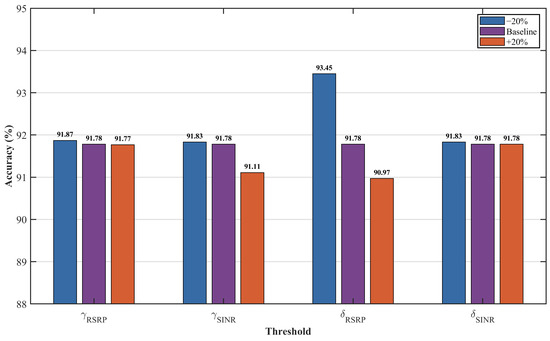
In the evolving landscape of next-generation wireless networks, ensuring seamless mobility and high-quality service delivery for millions of devices and end users in dynamic scenarios, where the speed of a wireless device keeps changing with time, is important. The mobility, seamless and continuous connectivity, and ultra-dense deployment of wireless networks pose a significant challenge. Seamless and successful transition of a wireless device from point A to point B in variable-speed scenarios is one of the major challenges in future networks. This paper presents a novel Deep Q-Network (DQN)-based reinforcement learning (RL) framework integrated with Software-Defined Networking (SDN) for intelligent mobility management in hybrid 5G cellular networks consisting of macro and small base stations. The proposed system architecture utilizes a SDN controller to receive real-time user measurement reports, including Reference Signal Received Power (RSRP), Signal-to-Interference Noise Ratio (SINR), and user velocity, thereby classifying user mobility into distinct subclasses and dynamically determining optimal handover parameters. Leveraging the DQN’s capability to learn adaptive strategies, the model enables seamless transitions between macro and small cells based on mobility profiles, thereby enhancing Quality of Service (QoS) metrics such as latency, throughput, and handover efficiency. Simulation results demonstrate consistent performance improvements over baseline and existing models in ultra-dense network environments, with handover success rates 10–15% higher across SINR and different speed scenarios, while maintaining a packet failure rate of 9% across different speed scenarios, allowing more users to transition during various environmental changes seamlessly. Our proposed model is compared with our previous work and Learning-based Intelligent Mobility Management (LIM2) models. Specifically, our previous work focused on adaptive handover management primarily for high-speed train scenarios using a learning-assisted approach tailored to fixed high-mobility scenarios, with a limitation to single mobility conditions. This work contributes to the field of merging SDN’s centralized control with the predictive power of RL, paving the way for more resilient and responsive mobile networks in high-mobility scenarios. The proposed approach incorporates subclass-based mobility action abstraction, joint optimization of TTT and hysteresis margin, and dynamic target cell selection using global network information available at the SDN controller.
Full article

Figure 1

Open AccessArticle
5G Network Deployments: A Greener Connectivity Paradigm for Industry
by
Ahren Hart, Hamish Sturley, Paul Mclean, Pablo Salva-Garcia and Muhammad Zeeshan Shakir
Telecom 2026, 7(3), 48; https://doi.org/10.3390/telecom7030048 - 26 Apr 2026
Abstract
►▼
Show Figures
The UK telecommunications sector’s 5G rollout is projected to consume 2.1% of national electricity by 2030, raising urgent sustainability concerns. This study empirically investigates, under controlled laboratory conditions, the energy performance and cost characteristics of two private 5G architectures—Vodafone’s Mobile Private Network (MPN)
[...] Read more.
The UK telecommunications sector’s 5G rollout is projected to consume 2.1% of national electricity by 2030, raising urgent sustainability concerns. This study empirically investigates, under controlled laboratory conditions, the energy performance and cost characteristics of two private 5G architectures—Vodafone’s Mobile Private Network (MPN) and an Open Radio Access Network (O-RAN) via BubbleRAN—and contextualises them against public network references and the United Nations Sustainable Development Goals (SDGs). Two complementary dimensions of energy performance are assessed: absolute power consumption (Watts), reflecting total system draw regardless of throughput; and throughput efficiency (Mbps/W), capturing useful data delivered per unit of energy. In terms of absolute power, O-RAN consumes less (460 W active, 378 W idle) than MPN (645 W active, 620 W idle). In terms of throughput efficiency, MPN delivers 1.45 Mbps/W versus O-RAN’s 0.44 Mbps/W under these specific controlled, single-cell conditions, a difference that reflects the tested hardware configurations (n77 vs. n78 band; 936 Mbps vs. 202 Mbps throughput; 2 × 2 vs. 4 × 4 MIMO) as much as any intrinsic architectural distinction. Both architectures offer substantially lower annual energy costs (£1060–£1486) compared to public micro-cells (£1991–£2666), representing 44–60% savings. Session continuity was 100% across all controlled trials; this reflects short-term laboratory conditions and should not be extrapolated to a long-term network availability guarantee without extended field validation. These results are configuration-specific preliminary indicators; the relative efficiency advantage of each architecture is expected to vary with load, band, and deployment scale. By 2030, UK 5G network operations are projected to generate 795,347–1,260,532 tonnes of CO2 annually across low-to-high demand scenarios; private deployment, by reducing site proliferation 15–33%, could displace a meaningful share of this footprint. These findings support SDGs 4, 8, 9, 12, and 13. Hybrid O-RAN–MPN pilots are recommended to maximise sustainability gains while advancing social equity and net-zero targets.
Full article

Figure 1
Open AccessFeature PaperArticle
An Edge–Mesh–Cloud Telemetry Architecture for High-Mobility Environments: Low-Latency V2V Hazard Dissemination in Competitive Motorcycling
by
Rubén Juárez and Fernando Rodríguez-Sela
Telecom 2026, 7(2), 47; https://doi.org/10.3390/telecom7020047 - 21 Apr 2026
Abstract
►▼
Show Figures
At racing speeds above 300 km/h (≈83 m/s), hazard awareness becomes a vehicular-communications problem: 100 ms already correspond to about 8.3 m of blind travel before an alert can influence braking, line choice, or torque delivery. Cloud-only telemetry is therefore insufficient under intermittent
[...] Read more.
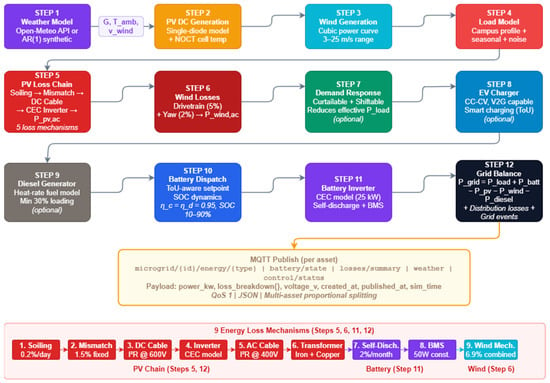
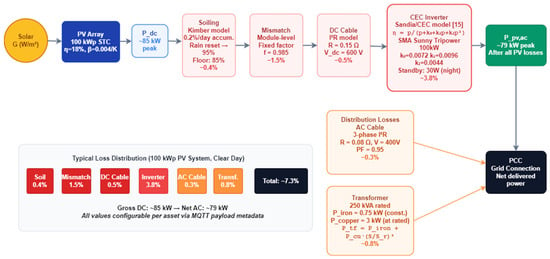
At racing speeds above 300 km/h (≈83 m/s), hazard awareness becomes a vehicular-communications problem: 100 ms already correspond to about 8.3 m of blind travel before an alert can influence braking, line choice, or torque delivery. Cloud-only telemetry is therefore insufficient under intermittent coverage and variable round-trip delay, while conventional trackside and pit-wall links do not provide direct inter-bike hazard dissemination. We propose Hybrid Epistemic Offloading (HEO), an edge–mesh–cloud architecture for high-mobility V2V/V2X hazard dissemination that explicitly separates an ephemeral safety plane from a durable cloud-analytics plane. On-bike edge nodes ingest high-rate ECU/IMU signals over CAN and persist full-fidelity traces into standardized ASAM MDF containers, enabling loss-tolerant buffering, deterministic replay, and post hoc auditability across coverage gaps. For real-time safety, motorcycles form a local V2V mesh that disseminates compact hazard digests using latency-bounded gossip with adaptive fanout, TTL-based suppression, and redundancy-aware forwarding over sidelink-capable V2X links. The hazard channel is formulated as uncertainty-aware to account for localization error and propagation delay at race pace. We evaluate the system in two stages: (i) a reproducible mobility-coupled simulation/emulation campaign for mesh dissemination and durable edge → gateway → cloud delivery; and (ii) an MDF4 replay-based Jerez pilot for stability-oriented co-design analysis. Under the tested conditions, the durable MQTT path achieved an 83.4 ms median, 175.9 ms p95, and 303.74 ms maximum end-to-end latency with no observed event loss. In the Jerez pilot, the co-design workflow reduced mean wheel slip from 6.26% to 3.75% (−40.10%) and a control-volatility proxy from 0.1290 to 0.0212 (−83.58%).
Full article

Figure 1

Open AccessArticle
Ultra-Thin Compact Bidirectional S-Slot Antenna for 5G Communications
by
Mohamed M. Gad, Mai O. Sallam, Allam M. Ameen, Mohamed H. Bakr and Ezzeldin A. Soliman
Telecom 2026, 7(2), 46; https://doi.org/10.3390/telecom7020046 - 20 Apr 2026
Abstract
►▼
Show Figures
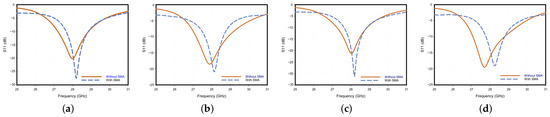
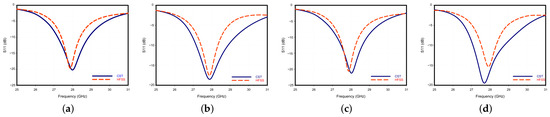
A compact and low-profile S-slot antenna for millimeter-wave wireless communication applications is presented in this paper. The antenna employs an S-shaped slot etched within a ground plane and excited by a hook-shaped microstrip feeding line to radiate a linearly polarized wave with a
[...] Read more.
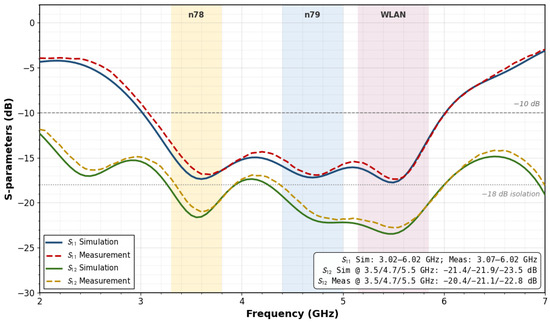
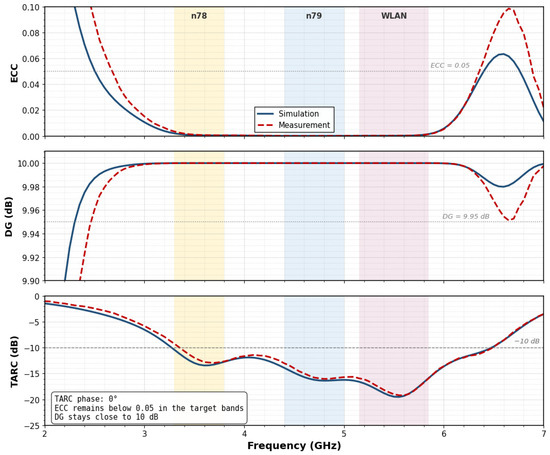
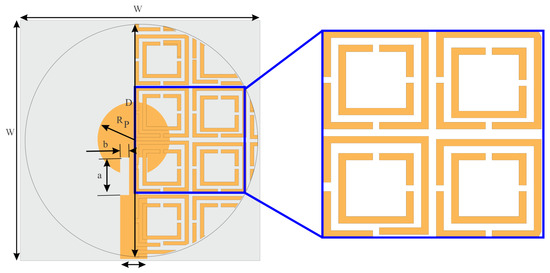
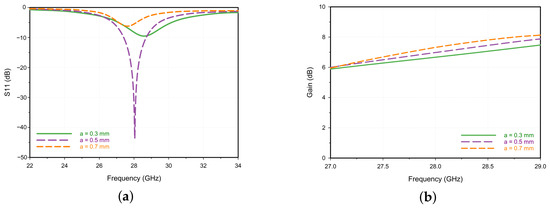
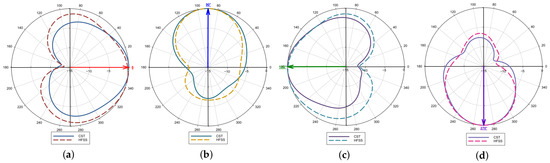
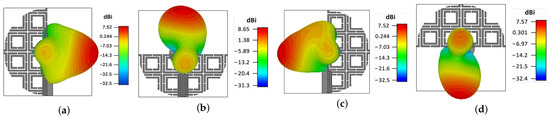
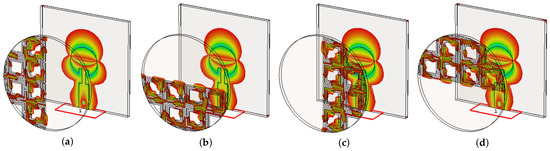
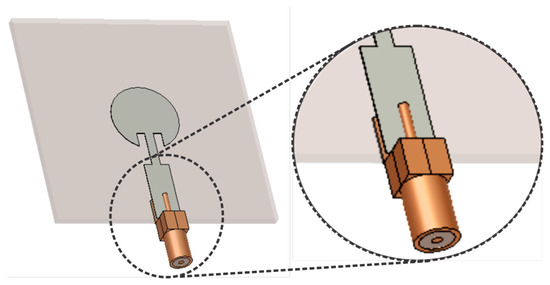
A compact and low-profile S-slot antenna for millimeter-wave wireless communication applications is presented in this paper. The antenna employs an S-shaped slot etched within a ground plane and excited by a hook-shaped microstrip feeding line to radiate a linearly polarized wave with a bidirectional broadside radiation beam. The antenna geometrical parameters are optimized to cover the n257 and n261 5G bands of the 5G mobile communications. The proposed antenna is fabricated and measured. Simulated and measured results demonstrate good impedance matching, with a measured fractional bandwidth of 18.3% and a maximum realized gain of 4.8 dBi across the desired operating bandwidth for the S-slot antenna with extended ground plane necessary for the purpose of measurements. The performance remains largely unaffected when the ground plane is reduced, highlighting the antenna’s suitability for compact implementations. Consequently, the proposed antenna is well suited for indoor 5G small-cell deployments and future railway wireless communication systems. Moreover, it can serve as a unit element in MIMO arrays or larger antenna configurations. To further demonstrate scalability and system-level applicability, the antenna element is extended into a compact eight-element MIMO array providing dual linear polarization. The array exhibits low mutual coupling, an envelope correlation coefficient on the order of , and a diversity gain approaching 10 dB. These results demonstrate highly independent radiation characteristics and reliable MIMO performance in multipath environments.
Full article

Figure 1

Open AccessArticle
A High-Precision Joint Synchronization and Channel Estimation Method for OFDM
by
Zhihua Li, Xinpei Xu, Jintao Wang, Mingyang Si and Zhongcheng Wei
Telecom 2026, 7(2), 45; https://doi.org/10.3390/telecom7020045 - 16 Apr 2026
Abstract
►▼
Show Figures
A low-overhead joint synchronization and channel estimation method for conventional CP-OFDM systems is developed to mitigate the error accumulation of stage-wise processing under multipath fading and carrier frequency offset (CFO). The joint estimation of symbol timing offset (STO), CFO, and channel parameters is
[...] Read more.
A low-overhead joint synchronization and channel estimation method for conventional CP-OFDM systems is developed to mitigate the error accumulation of stage-wise processing under multipath fading and carrier frequency offset (CFO). The joint estimation of symbol timing offset (STO), CFO, and channel parameters is formulated in a least-squares framework, and the analytical elimination of the channel vector reduces the original three-dimensional optimization to a two-dimensional search. In addition, reusable common terms and a precomputable pseudoinverse-related operator are exploited to reduce redundant online computations. Simulation results show that, under different signal-to-noise ratio (SNR) and normalized CFO conditions, the method achieves higher perfect synchronization probability and lower root-mean-square error (RMSE) for STO, CFO, and channel estimation than conventional CP-based baselines, while providing a favorable trade-off between estimation accuracy and computational complexity.
Full article

Figure 1

Open AccessArticle
A GWO-Based Optimization for mmWave Integrated Sensing and Communications in IoT Systems
by
AN Soumana Hamadou, Shengzhi Du, Thomas O. Olwal and Barend J. Van Wyk
Telecom 2026, 7(2), 44; https://doi.org/10.3390/telecom7020044 - 14 Apr 2026
Abstract
►▼
Show Figures
The next generations of wireless networks will use more intensively shared spectrum and hardware resources. This leads to huge demand for integrated sensing and communication (ISAC) technology. Additionally, the integration of millimeter-wave (mmWave) spectrum can improve the sensing capabilities and communication rates of
[...] Read more.
The next generations of wireless networks will use more intensively shared spectrum and hardware resources. This leads to huge demand for integrated sensing and communication (ISAC) technology. Additionally, the integration of millimeter-wave (mmWave) spectrum can improve the sensing capabilities and communication rates of ISAC systems. This development is of great significance to the internet of things (IoT), as it is essential for intelligent operations and decision-making to have accurate surround sensing and device communication. This study presents a novel methodology for beamforming design in mmWave ISAC base stations within IoT systems, utilizing a grey wolf optimizer (GWO) to optimize the total communication rate and effective sensing power. Also, this work is mostly focused on simulation and heuristic optimization methods. The analyses conducted indicate that the suggested GWO-based optimization achieves a sum rate of up to 22.7 and a sensing power of 65.8 dBm when the base station (BS) is equipped with 8 antennas, in comparison to the results from the particle swarm optimization (PSO)-based and genetic algorithm (GA)-based schemes.
Full article

Figure 1
Open AccessFeature PaperArticle
Evaluating Binary Serialization Protocols for IoT/M2M Applications over Hybrid Terrestrial and Non-Terrestrial Networks
by
Natesh Kumar, Mariano Falcitelli, Francesco Kotopulos De Angelis, Paolo Pagano and Sandro Noto
Telecom 2026, 7(2), 43; https://doi.org/10.3390/telecom7020043 - 10 Apr 2026
Abstract
►▼
Show Figures
The rapid growth of Internet of Things (IoT) deployments in hybrid terrestrial/non-terrestrial networks (TN/NTN) faces a major bottleneck: the verbosity of standard data formats like JSON. This is critical for large-scale M2M systems tracking and monitoring multimodal dry containers, where devices must comply
[...] Read more.
The rapid growth of Internet of Things (IoT) deployments in hybrid terrestrial/non-terrestrial networks (TN/NTN) faces a major bottleneck: the verbosity of standard data formats like JSON. This is critical for large-scale M2M systems tracking and monitoring multimodal dry containers, where devices must comply with the strict message-size limits of commercial satellite IoT (around 160 bytes per message). We present a comparative evaluation of four device-friendly binary serialization protocols (CBOR, MessagePack, Protocol Buffers, and a custom Struct+Zlib hybrid) targeted at battery-powered microcontrollers. Using a horizontally scalable testbed with up to 2000 concurrent devices and the oneM2M standard framework, we assess payload efficiency, throughput, latency, and maintainability. Only Protocol Buffers and Struct+Zlib meet NTN message-size limits, with Protocol Buffers providing the best trade-off between performance and long-term maintainability. Real-world validation with the Astrocast LEO satellite platform and the oneM2M Mobius framework confirms these results. Cost analysis suggests potential savings exceeding €62,000 per month for a 10,000-device maritime fleet, demonstrating both technical feasibility and economic viability. This study provides a methodological framework for designing efficient, scalable IoT systems in hybrid TN/NTN networks, offering practical guidance for global container tracking and monitoring deployments.
Full article

Figure 1

Open AccessEditorial
Special Issue on Digitization, Information Technology and Social Development
by
Przemysław Falkowski-Gilski
Telecom 2026, 7(2), 42; https://doi.org/10.3390/telecom7020042 - 10 Apr 2026
Abstract
We live in a digital society filled with cutting-edge ICT solutions [...]
Full article
(This article belongs to the Special Issue Digitalization, Information Technology and Social Development)
Open AccessArticle
RSMA-Assisted Fluid Antenna ISAC via Hierarchical Deep Reinforcement Learning
by
Muhammad Sheraz, Teong Chee Chuah and It Ee Lee
Telecom 2026, 7(2), 41; https://doi.org/10.3390/telecom7020041 - 9 Apr 2026
Abstract
►▼
Show Figures
Integrated sensing and communications (ISAC) requires tight coordination between spatial signal design and multiple-access strategies to balance communication throughput and sensing accuracy under shared spectral and hardware constraints. However, existing ISAC frameworks with rate-splitting multiple access (RSMA) typically rely on fixed antenna arrays
[...] Read more.
Integrated sensing and communications (ISAC) requires tight coordination between spatial signal design and multiple-access strategies to balance communication throughput and sensing accuracy under shared spectral and hardware constraints. However, existing ISAC frameworks with rate-splitting multiple access (RSMA) typically rely on fixed antenna arrays and decoupled optimization, which fundamentally limit their ability to adapt to fast channel variations and dynamic sensing requirements. This paper introduces a fluid antenna-enabled RSMA-assisted ISAC architecture, in which movable antenna ports are exploited as a new spatial degree of freedom to enhance adaptability in both communication and sensing operations. Fluid antenna systems (FAS) are deployed at both the base station and user terminals, allowing dynamic port selection that reshapes the effective channel and sensing beampattern in real time. We formulate a joint sum-rate maximization problem subject to explicit sensing-quality constraints, capturing the coupled impact of antenna port selection, RSMA rate allocation, and multi-beam transmit design. The proposed framework maximizes the communication sum-rate while ensuring that the sensing functionality satisfies a predefined sensing quality constraint. This constraint-based ISAC formulation guarantees that sufficient sensing power is directed toward the target while optimizing communication performance. The resulting optimization involves strongly coupled discrete and continuous decision variables, rendering conventional optimization methods ineffective. To address this challenge, a hierarchical deep reinforcement learning (HDRL) framework is developed, where an upper-layer deep Q-network (DQN) determines discrete antenna port selection and a lower-layer twin delayed deep deterministic policy gradient (TD3) algorithm optimizes continuous beamforming and rate-splitting parameters. Numerical results demonstrate that the proposed approach significantly improves system performance, achieving higher communication sum-rate while satisfying sensing requirements under dynamic propagation conditions.
Full article

Figure 1
Open AccessArticle
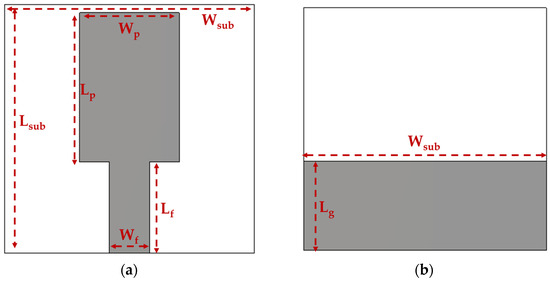
A Novel IoT Security Framework Combining X25519 with NIST Lightweight Ascon Encryption and Hybrid Transform-Domain Steganography
by
Mohammed Al Saleh, Rima Shbaro and Joseph Azar
Telecom 2026, 7(2), 40; https://doi.org/10.3390/telecom7020040 - 8 Apr 2026
Abstract
►▼
Show Figures
This paper aims to secure sensitive data generated by IoT devices by introducing a lightweight hybrid approach that combines steganography and cryptography. While classical cryptography offers confidentiality guarantees, the visibility of the produced ciphertexts keeps them at risk of traffic analysis, which could
[...] Read more.
This paper aims to secure sensitive data generated by IoT devices by introducing a lightweight hybrid approach that combines steganography and cryptography. While classical cryptography offers confidentiality guarantees, the visibility of the produced ciphertexts keeps them at risk of traffic analysis, which could reveal communication patterns. Although some studies use Curve25519-based protocols, ECC paired with RDWT, or VLSB-based steganography, there is no complete approach that combines cryptographic and steganographic methods that is tailored to IoT devices. Our proposed scheme addresses this gap by integrating X25519 with Elligator 2 for efficient key exchange, using Ascon-AEAD128 for encryption, and finally hiding the encrypted payload within cover images using hybrid DWT-DCT steganography. When compared to similar hybrid approaches, our method achieves better performance, with results showing high imperceptibility, low computational overhead, and good resistance to noise. The cryptographic-steganographic combo adopted by our proposed framework improves confidentiality, integrity, and resistance to detection in resource-constrained IoT systems.
Full article

Figure 1
Open AccessFeature PaperArticle
Propagation Analysis of 4G/5G Mobile Networks Along Railway Lines: Implications for FRMCS Deployment in Latvia (2025)
by
Aleksandrs Ribalko, Elans Grabs, Aleksandrs Madijarovs, Armands Lahs, Toms Karklins, Anna Karklina, Aleksandrs Romanovs, Ernests Petersons, Lilita Gegere and Aleksandrs Ipatovs
Telecom 2026, 7(2), 39; https://doi.org/10.3390/telecom7020039 - 3 Apr 2026
Abstract
►▼
Show Figures
This paper investigates the quality of mobile network coverage along the Riga–Tukums railway corridor with a focus on the performance of 4G and 5G technologies. Ensuring reliable mobile connectivity along suburban railway corridors remains a significant technical challenge due to mixed forest–urban propagation
[...] Read more.
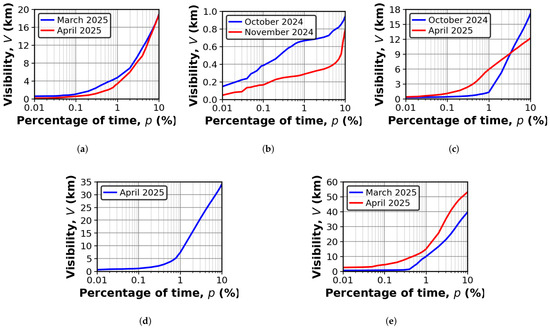
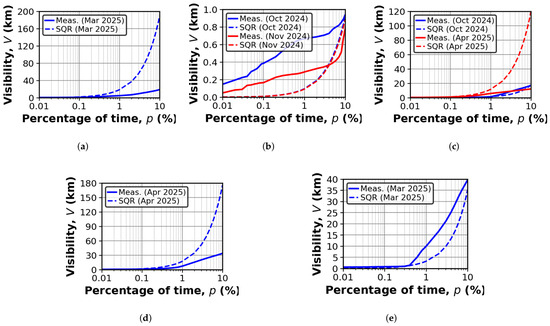
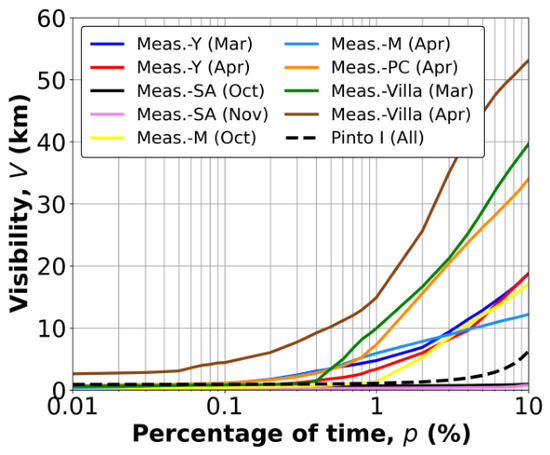
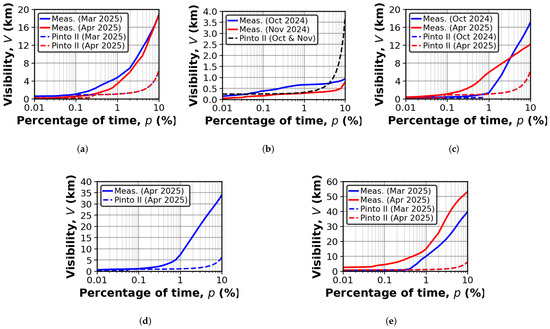
This paper investigates the quality of mobile network coverage along the Riga–Tukums railway corridor with a focus on the performance of 4G and 5G technologies. Ensuring reliable mobile connectivity along suburban railway corridors remains a significant technical challenge due to mixed forest–urban propagation conditions, macro-cell-dominated LTE infrastructure, mobility-induced channel variability, and fluctuating passenger density. Unlike high-speed railway environments that are extensively studied in dedicated 5G-R scenarios, suburban railway systems often rely on existing macro-cell deployments, where coverage continuity, signal quality stability, and capacity constraints must be addressed simultaneously. This study presents a measurement-based evaluation of 4G and 5G radio performance along the Riga–Tukums railway corridor under real operational conditions (50–90 km/h). Classical propagation models (Okumura–Hata and COST231-Hata) are quantitatively validated using MAE and RMSE metrics, followed by correlation analysis between RSSNR and QoS indicators. A theoretical Doppler sensitivity assessment (80–200 km/h) is conducted to evaluate mobility robustness across LTE and 5G frequency bands. Mobility transition regions and handover-related time windows are geometrically estimated, and passenger density-based capacity modeling is applied to assess throughput degradation under peak occupancy scenarios. Based on these results, a multi-layer network planning strategy integrating 700 MHz macro coverage, 1700 MHz capacity enhancement, and 3500 MHz 5G NR deployment is proposed. The optimization strategy resulted in an estimated 22–28% increase in stable service coverage in previously weak-signal zones and demonstrated that propagation model deviations remain within ranges comparable to recent railway studies (≈15–25 dB RMSE). These findings provide a structured framework for suburban railway communication optimization and support the gradual modernization of railway infrastructure toward FRMCS-ready architectures. The study illustrates the applicability of modern modelling tools for assessing and improving mobile communication systems and contributes to the broader development of digital infrastructure within Latvia’s transport sector.
Full article

Figure 1
Open AccessArticle
A Comparative Benchmark of Scale-Up and Scale-Out MIMO Architectures for 5G and Prospective 6G Networks
by
Samuel Otero Rebolo and Victor Monzon Baeza
Telecom 2026, 7(2), 38; https://doi.org/10.3390/telecom7020038 - 3 Apr 2026
Abstract
►▼
Show Figures
The evolution toward prospective sixth-generation (6G) wireless networks is expected to significantly increase user density, bandwidth demand, and architectural complexity, reinforcing the need for scalable multiple-input multiple-output (MIMO) deployments. In this context, two fundamentally different design strategies have emerged: scaling up centralized antenna
[...] Read more.
The evolution toward prospective sixth-generation (6G) wireless networks is expected to significantly increase user density, bandwidth demand, and architectural complexity, reinforcing the need for scalable multiple-input multiple-output (MIMO) deployments. In this context, two fundamentally different design strategies have emerged: scaling up centralized antenna arrays and scaling out distributed cooperative infrastructures. This paper presents a system-level comparative benchmark of scale-up and scale-out MIMO architectures under identical operating conditions of three representative downlink deployments: centralized Massive MIMO, centralized XL-Massive MIMO, and distributed Cell-Free MIMO. All architectures are assessed under identical urban channel conditions, transmit power, bandwidth, and traffic assumptions, considering sub-6 GHz (3.5 GHz) and millimeter-wave (28 GHz) frequency bands as proxies for 5G and prospective 6G operation. A unified Monte Carlo simulation framework is employed to jointly evaluate aggregate throughput, spectral efficiency, coverage performance, interference behavior, and energy efficiency over a wide range of user densities and service radii. The results highlight the distinct architectural trade-offs between centralized and distributed deployments: XL-Massive MIMO maximizes aggregate throughput and spatial reuse in dense hotspot scenarios, whereas Cell-Free MIMO provides superior coverage uniformity and improved energy efficiency in wide-area deployments. By isolating the impact of architectural scaling under consistent assumptions, the presented benchmark offers quantitative guidance for 6G network design and deployment planning.
Full article

Figure 1
Open AccessArticle
Protecting HWSNs from Super Adversaries with Robust Certificateless Signcryption
by
Parichehr Dadkhah, Parvin Rastegari, Mohammad Dakhilalian, Phil Yeoh, Mingzhong Wang, Shahrzad Saremi, Rania Shibl, Yassine Himeur and Wathiq Mansoor
Telecom 2026, 7(2), 37; https://doi.org/10.3390/telecom7020037 - 1 Apr 2026
Abstract
►▼
Show Figures
Healthcare Wireless Sensor Networks (HWSNs) have attracted significant attention due to their vital role in diseases’ diagnosis, monitoring, and treatment. By continuously collecting patients’ physiological data and enabling remote medical services, these networks can greatly improve the quality of healthcare. However, the inadequate
[...] Read more.
Healthcare Wireless Sensor Networks (HWSNs) have attracted significant attention due to their vital role in diseases’ diagnosis, monitoring, and treatment. By continuously collecting patients’ physiological data and enabling remote medical services, these networks can greatly improve the quality of healthcare. However, the inadequate handling of security and privacy issues poses serious risks to patients. In this context, signcryption schemes are essential cryptographic primitives that simultaneously provide authentication, confidentiality, and data integrity with a low overhead. Recently, Deng et al. proposed a certificateless signcryption (CL-SC) scheme for HWSNs and proved its security in the standard model. In this paper, we demonstrate that their scheme is insecure under an enhanced adversarial model, where a super Type II adversary, which is a malicious key generation center, can replace the system’s master public key using the master secret key under its control, and subsequently forge valid signcryptions on arbitrary messages on behalf of a sensor node. To address this vulnerability, we propose an enhanced CL-SC scheme based on elliptic curve cryptography (ECC). Under the hardness assumptions of the Elliptic Curve Decisional Diffie–Hellman Problem (ECDDHP) and the Computation Attack Algorithm (CAA), the proposed scheme achieves confidentiality and existential unforgeability against both super Type I and super Type II adversaries in the standard model. Performance analysis further shows that our scheme is efficient and well suited for resource-constrained HWSN environments.
Full article

Figure 1
Journal Menu
► ▼ Journal Menu-
- Telecom Home
- Aims & Scope
- Editorial Board
- Topical Advisory Panel
- Instructions for Authors
- Special Issues
- Topics
- Article Processing Charge
- Indexing & Archiving
- Editor’s Choice Articles
- Most Cited & Viewed
- Journal Statistics
- Journal History
- Journal Awards
- Society Collaborations
- Conferences
- Editorial Office
Journal Browser
► ▼ Journal BrowserHighly Accessed Articles
Latest Books
E-Mail Alert
News
Topics
Topic in
Applied Sciences, Electronics, Micromachines, Sensors, Telecom
Microwave Components and Devices: Emerging Technologies and Applications
Topic Editors: Sensong An, Bowen ZhengDeadline: 31 May 2026
Topic in
Applied Sciences, Electronics, JSAN, Photonics, Sensors, Telecom
Machine Learning in Communication Systems and Networks, 3rd Edition
Topic Editors: Yichuang Sun, Haeyoung Lee, Oluyomi SimpsonDeadline: 20 August 2026
Topic in
AI, Applied Sciences, Computers, Electronics, Entropy, Future Internet, Information, IoT, Sensors, Telecom
Advances in Sixth Generation and Beyond (6G&B)
Topic Editors: Luis Javier García Villalba, Ana Lucila Sandoval OrozcoDeadline: 31 October 2026
Topic in
Applied Sciences, Electronics, JMSE, Signals, Telecom, Sensors
Advances in Underwater Signal Processing and Communication: Challenges, Innovations, and Applications
Topic Editors: Jaehak Chung, Hojun Lee, Yongcheol KimDeadline: 30 November 2026
Conferences
Special Issues
Special Issue in
Telecom
Wireless Communications for UAVs, IoT, 5G Technologies, Information and Coding Theory
Guest Editor: Sarun DuangsuwanDeadline: 31 May 2026
Special Issue in
Telecom
Emerging Technologies in Communications and Machine Learning
Guest Editors: Sotirios K. Goudos, Chrysostomos StyliosDeadline: 30 June 2026
Special Issue in
Telecom
Performance Criteria for Advanced Wireless Communications
Guest Editor: Seyeong ChoiDeadline: 31 July 2026
Special Issue in
Telecom
UAV Communications in the 6G Era: From Near-Field Theory to Intelligent Networking
Guest Editors: Dingcheng Yang, Tiankui Zhang, Yu Xu, Fahui Wu, Huabing LuDeadline: 31 July 2026