


Abstract
This paper focuses on a section of the state road D28, Bjelovar northern bypass, Republic of Croatia, which was opened to traffic in 2002. Following the expiration of the 20-year design service life, it was determined that the section required reconstruction, as visual inspections indicated a significant deterioration in ride comfort. To define the appropriate reconstruction strategy, specifically the strengthening of the pavement structure, reliable data on pavement bearing capacity were needed. Historical design thicknesses were compared with current measurements, and deflection data obtained using a Falling Weight Deflectometer (FWD) were analyzed for sections where visual assessments suggested reduced structural capacity. Based on the calculated modulus of elasticity, a pavement structure was designed and subsequently strengthened through the addition of an extra load-bearing layer composed of a cold-recycled mixture with foamed bitumen.
1. Introduction
A pavement management system is a framework for identifying optimal maintenance strategies at various management levels to keep pavements in appropriate condition [1]. Accurate detection of pavement distress and a thorough understanding of its causative factors are fundamental for the selection of effective maintenance strategies and interventions. Pavement degradation is governed by a combination of factors, including traffic loading patterns, climatic conditions, the material composition and thickness of pavement layers, construction quality, and the efficacy of prior maintenance measures [2].
Functional condition assessment evaluates surface properties that directly affect user safety, comfort, and usability, while structural assessment determines how well the pavement behaves under traffic and environmental stresses. Pavement condition data can be collected through visual inspection, non-destructive, or destructive testing. Visual inspections range from manual surveys to automated data collection methods [3], making it crucial to use objective and repeatable classification procedures. Non-destructive testing, preferred over destructive methods like coring and drilling, assesses pavement condition without causing damage. Deflection measurement, commonly performed using the KUAB 120 Falling Weight Deflectometer (FWD; KUAB, Rättvik, Sweden), applies dynamic loads simulating vehicle wheel impacts. Geophones measure vertical pavement deformation at various distances from the load application point, capturing the pavement’s response [3].
As noted by Čičković and Bald [4], this method can be used to predict the quality of inter-layer bonding between asphalt layers. Qian et al. [5] compared dynamic moduli obtained in the laboratory with those derived from deflection measurements on test sections and found that the ratio of dynamic moduli for different asphalt pavements ranged from 0.7 to 0.9.
Marecos et al. [6] compared two non-destructive methods—the Falling Weight Deflectometer (FWD) and Ground Penetrating Radar (GPR)—for assessing the bearing capacity of asphalt pavements. Elastic moduli were determined from FWD deflections using a back-calculation procedure, with asphalt binder course thickness found to significantly influence the results. The study emphasizes the importance of comprehensive load-bearing capacity data for understanding pavement structure and selecting appropriate reinforcement solutions.
This paper examines the pavement condition of the northern bypass Bjelovar, state road D28, a key segment of the Zagreb–Osijek route in the Republic of Croatia. Opened in 2002, the pavement had reached the end of its 20-year design life at the time of inspection. Field measurements and non-destructive deflection tests using an FWD were performed to evaluate its condition and determine the need for strengthening or reconstruction.
2. Pavement Condition Assessment Data Collection
Structural pavement assessment evaluates the pavement’s capacity to carry traffic loads based on layer thicknesses, material properties, subgrade condition, and traffic data [7]. Structural pavement condition assessment is conducted to determine the required load-bearing capacity of a pavement. This involves monitoring road surface characteristics and analyzing results, whether theoretical or empirical, to evaluate structural performance and predict service life under expected traffic conditions [8]. Pavement condition data can be collected via visual inspection, measurement tools, or automated vehicles. Visual assessments typically use pavement distresses catalogues to classify damage accurately and ensure consistent evaluation [9]. The required data for pavement assessment include traffic information, year of construction or major rehabilitation, lane characteristics, and pavement layer types and thicknesses.
One of the most important elements in determining the traffic load is counting the traffic on the roadway. From the data on the number of vehicles of certain categories in a previous series, it is possible to determine the trend of their movement for the period in which the road is expected to be used after its rehabilitation or construction (design period) [10]. While data on the driving surface is relatively easily obtained, collecting data on the composition, load-bearing capacity and thickness of the pavement layers is much more difficult. They can be collected using destructive and non-destructive methods [11].
2.1. Visual Inspection
During visual road inspections, damages and deformations are identified, recorded in the distresses catalogue, and repaired according to their severity [12]. Typical pavement distresses include cracks, deformations, and surface deterioration, with cracks classified as longitudinal, transverse, alligator, or block cracks [13].
2.2. Pavement Evaluation Methods
Many effective approaches involve measuring deflections in conjunction with extracting small cores (Ø 100 mm) to determine layer thicknesses and collect material samples for fundamental laboratory testing [8].
2.2.1. Destructive Methods for Pavement Condition Assessment
Destructive methods are testing techniques that disturb the pavement structure. These methods are commonly used for pavements with surface irregularities and typically include cutting pavement layers and extracting samples for laboratory analysis. Common techniques involve coring or drilling test pits to determine layer composition and thickness [8,11].
2.2.2. Non-Destructive Methods of Pavement Condition Assessment–Falling Weight Deflectometer (FWD)
Deflection data are used to calculate the structural load-bearing index, aiding pavement management by predicting remaining service life and identifying rehabilitation needs [14]. Deflection measurements provide a reliable, cost-effective way to evaluate load-bearing capacity; lower deflections indicate stronger pavements with near-elastic behavior [15]. FWD is a widely used device for this purpose. However, deflection data must be carefully interpreted to derive meaningful insights into pavement performance [16]. Calculating the modulus of elasticity from FWD results is essential to determine the stiffness of existing pavement layers [17].
3. Evaluation of the Structural Condition of State Road D28 Pavement
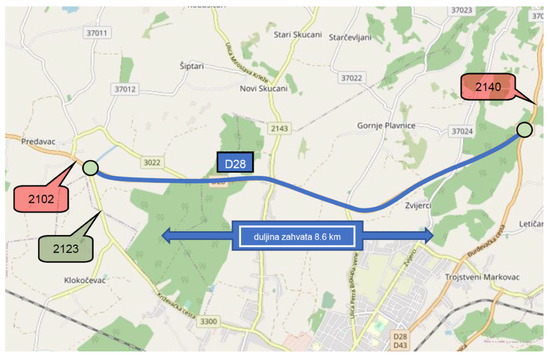
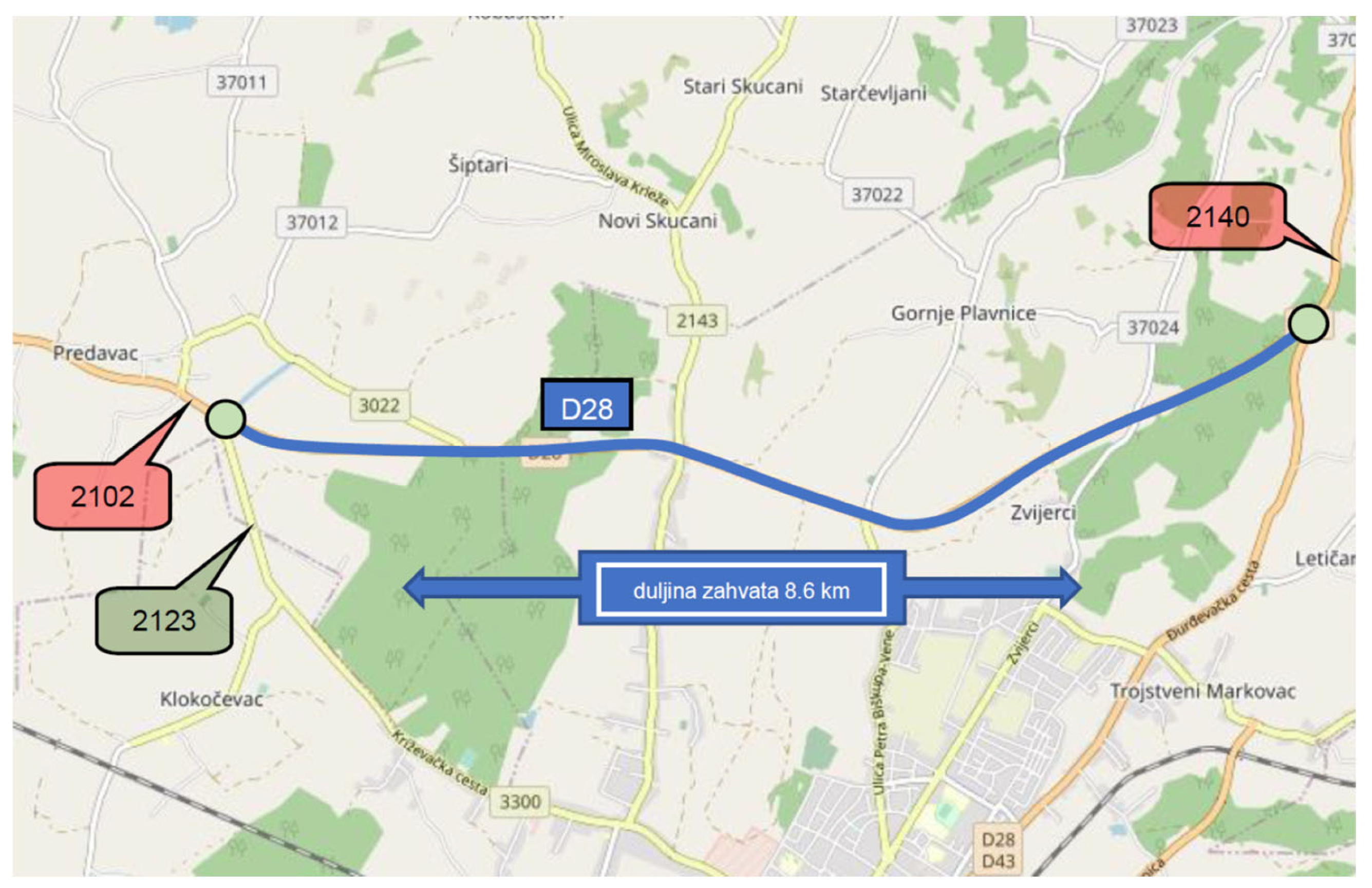
The 8.6 km section of state road D28 (Predavac–Letičani) analyzed in this paper serves as the northern bypass of Bjelovar, Croatia, and is part of the Zagreb–Osijek corridor. To assess pavement conditions and determine appropriate reinforcement measures, visual inspections, non-destructive deflection testing using an FWD, and field excavations were conducted. Figure 1 presents an overview map indicating the location of the D28 section and the extent of the intervention.
Figure 1.
Overview map of the narrow area of D28 Bjelovar bypass, Republic of Croatia, with the locations of traffic counters Reprinted with permission from Ref. [18]. Copyright 2020, Hrvatske ceste d.o.o.
3.1. Traffic Load
Traffic counters installed on the section provide detailed data on vehicle volume and classification by vehicle groups. Axle counters are positioned near the planned intervention zone (see Figure 1). Analysis of traffic composition, particularly heavy goods vehicles, articulated trucks, and tractors, indicates that transit traffic predominates along the route from the D10 (Gradec junction) to the D2 Đurđevac intersection.
3.2. Visual Inspection of the Road Sections
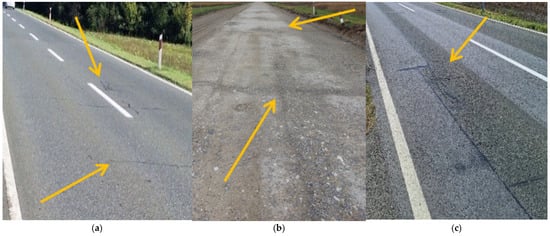
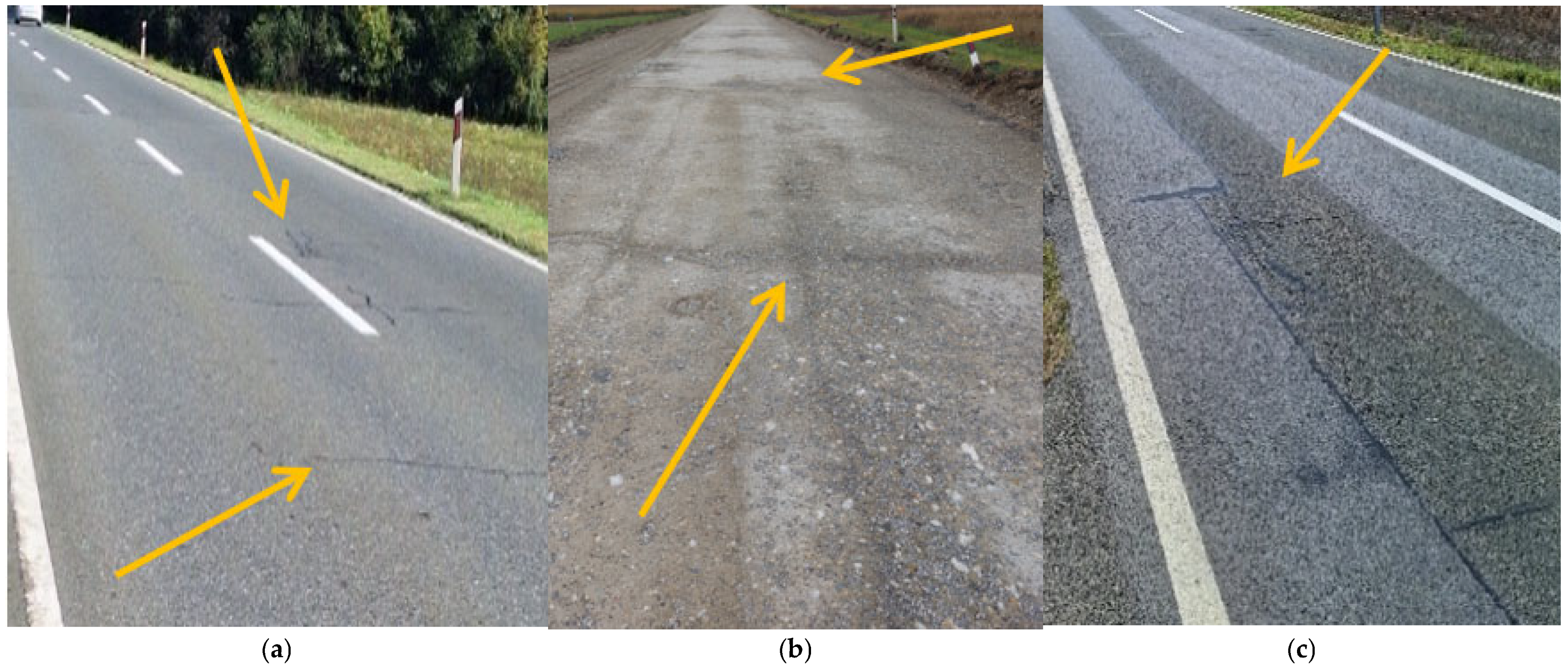
Visual inspection of the D28 state road and its sub-sections revealed typical pavement distresses, including structural cracks, rutting, thermal cracks, and localized surface repairs. In Figure 2a, structural cracks in the pavement can be observed. Figure 2b shows the same structural cracks on the cement-stabilized layer following asphalt milling. These cracks were subsequently reflected onto the asphalt layer, indicating that the pavement’s structural capacity is compromised. Routine maintenance involved applying a new thin asphalt overlay to replace the deteriorated pavement layer, which had been compromised by temperature-induced microcracks, reduced skid resistance, and severe rutting. However, in areas where the existing pavement exhibited structural cracks, poor longitudinal evenness, and pronounced rutting, the newly applied thin asphalt layer rapidly developed deformations similar to those in the underlying layers (see Figure 2c).
Figure 2.
(a) Cracking (km 0+800–2+100); (b) cement-stabilized layer exhibiting cracks after asphalt removal (km 0+800–2+100); (c) Local Pavement Repairs (km 5+000–km 5+500).
3.3. Field Sampling and Laboratory Tests
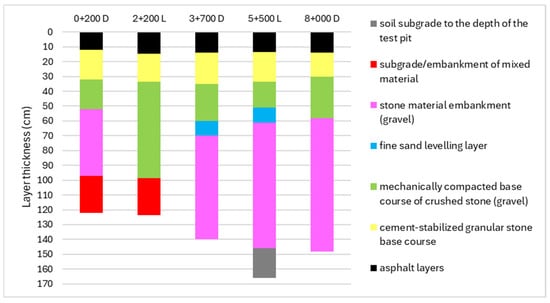
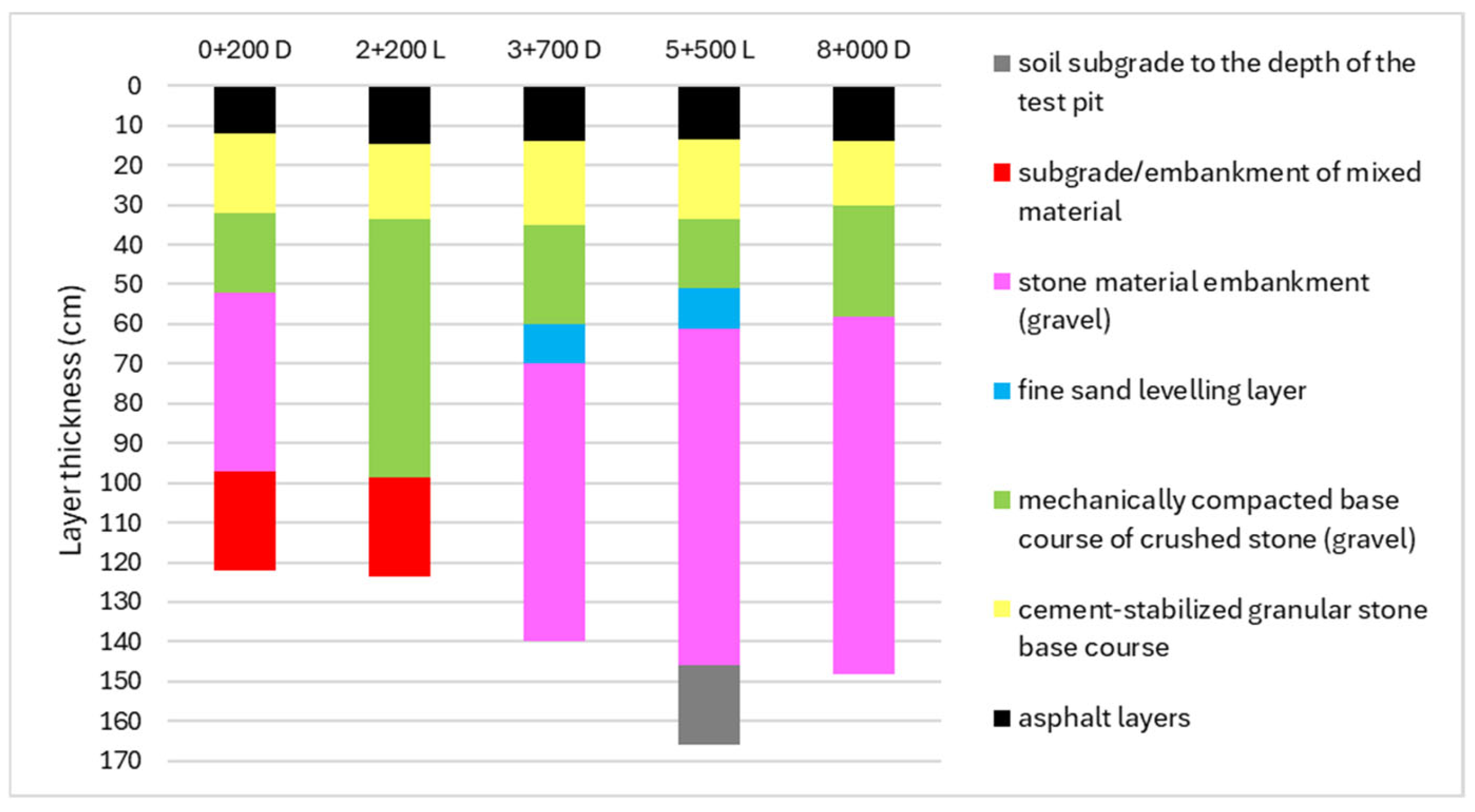
The diagram in Figure 3 illustrates the variability in the thickness of the mechanically compacted base layer and the stone-material subgrade. These findings indicate that both the embankment and subgrade are composed of the same gravel material, while the unbound base course (UBC) is also made of gravel. Variations in layer thickness can affect the pavement’s structural performance, as thinner sections of the base or subgrade may lead to localized weaknesses, reduced load-bearing capacity, and accelerated pavement deterioration under traffic loading.
Figure 3.
Graph of layer thickness and composition of pavement structure Adapted with permission from Ref. [19]. Copyright 2020, Hrvatske ceste d.o.o.
Granular stone material samples extracted from exploration pits were compacted using the Modified Proctor method to determine the optimal moisture content and maximum dry bulk density. The optimal moisture content was determined using the Modified Proctor test, representing the water content that allows the material to reach maximum dry density under standard compaction energy. Proper placement of the base layer material at this moisture content is essential to achieve adequate compaction. The bearing capacity of the UBC was evaluated using the California Bearing Ratio (CBR) on specimens compacted at optimal moisture, following the HRN EN 13286-47:2012 standard [20].
4. FWD Deflection Results for Pavement Layers of the D28 Bjelovar Bypass
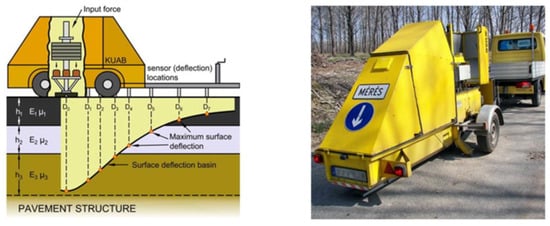
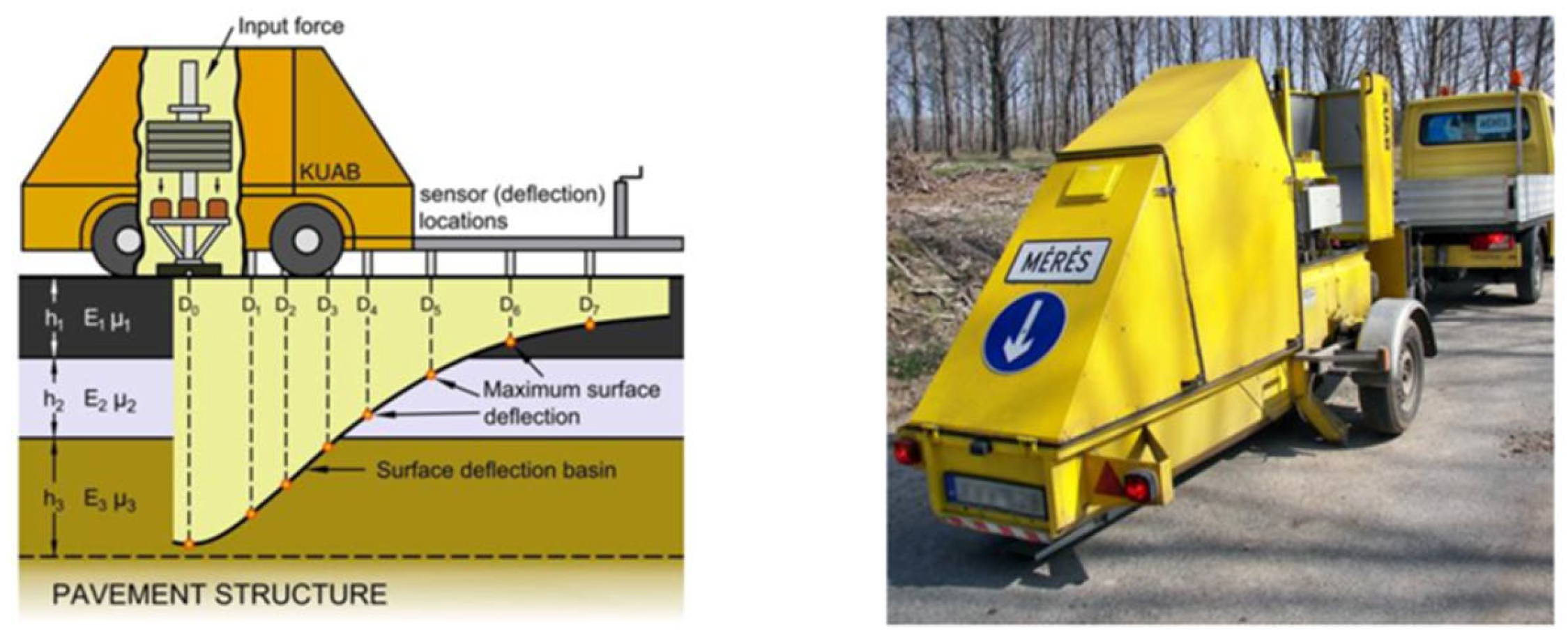
The modulus of elasticity was determined via non-destructive deflection testing using a KUAB-brand FWD. Measurements were taken along the right wheel track in both directions at 100 m intervals in one direction and offset by 50 m in the opposite direction. Deflection sensors were positioned at 20 cm (d1), 30 cm (d2), 45 cm (d3), 60 cm (d4), 90 cm (d5), and 120 cm (d6) from the load center (see Figure 4).
Figure 4.
KUAB Falling Weight Deflectometer (FWD)–schematic of operation (left) and field testing equipment (right) [21].
On the D28 Bjelovar bypass, four representative sub-sections exhibiting pronounced rutting and structural or thermal cracking, along with one sub-section with extremely low deflections, were analyzed (see Table 1).
Table 1.
Analyzed subsections A, B, C and D [22]. Adapted from Ref. [22] under CC BY-SA license.
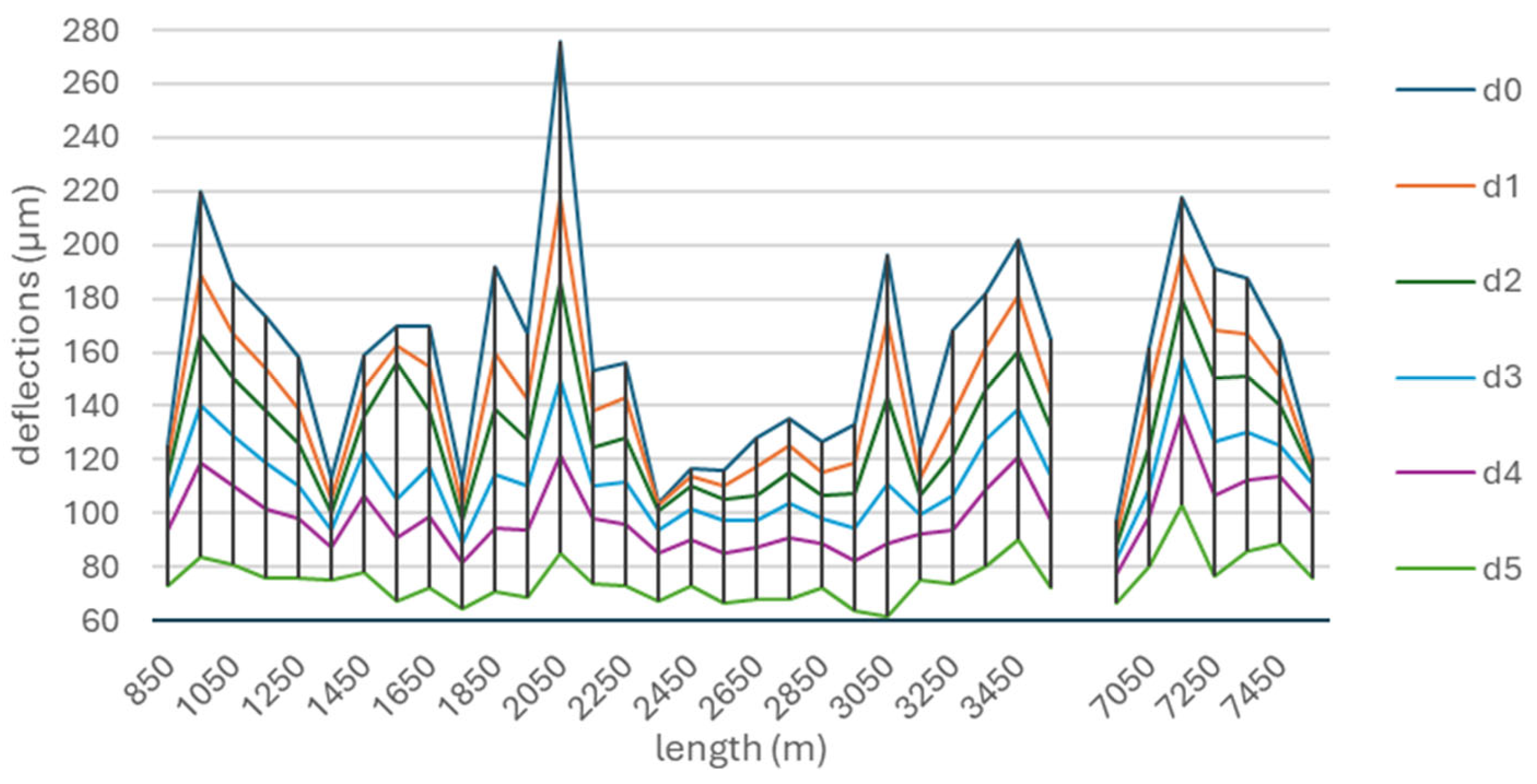
Figure 5 shows sections with high deflection values at km 0+900, 2+050, 3+050, and 3+300, indicating potential pavement weakness. Low deflection levels between km 2+300 and 2+900 suggest areas with intact structural capacity. These deflection variations help guide maintenance prioritization.
Figure 5.
Deflection results, left driving lane, direction Zagreb [23]. Adapted with permission from Ref. [23]. Copyright 2020, Hrvatske ceste d.o.o.
5. Modulus of Elasticity
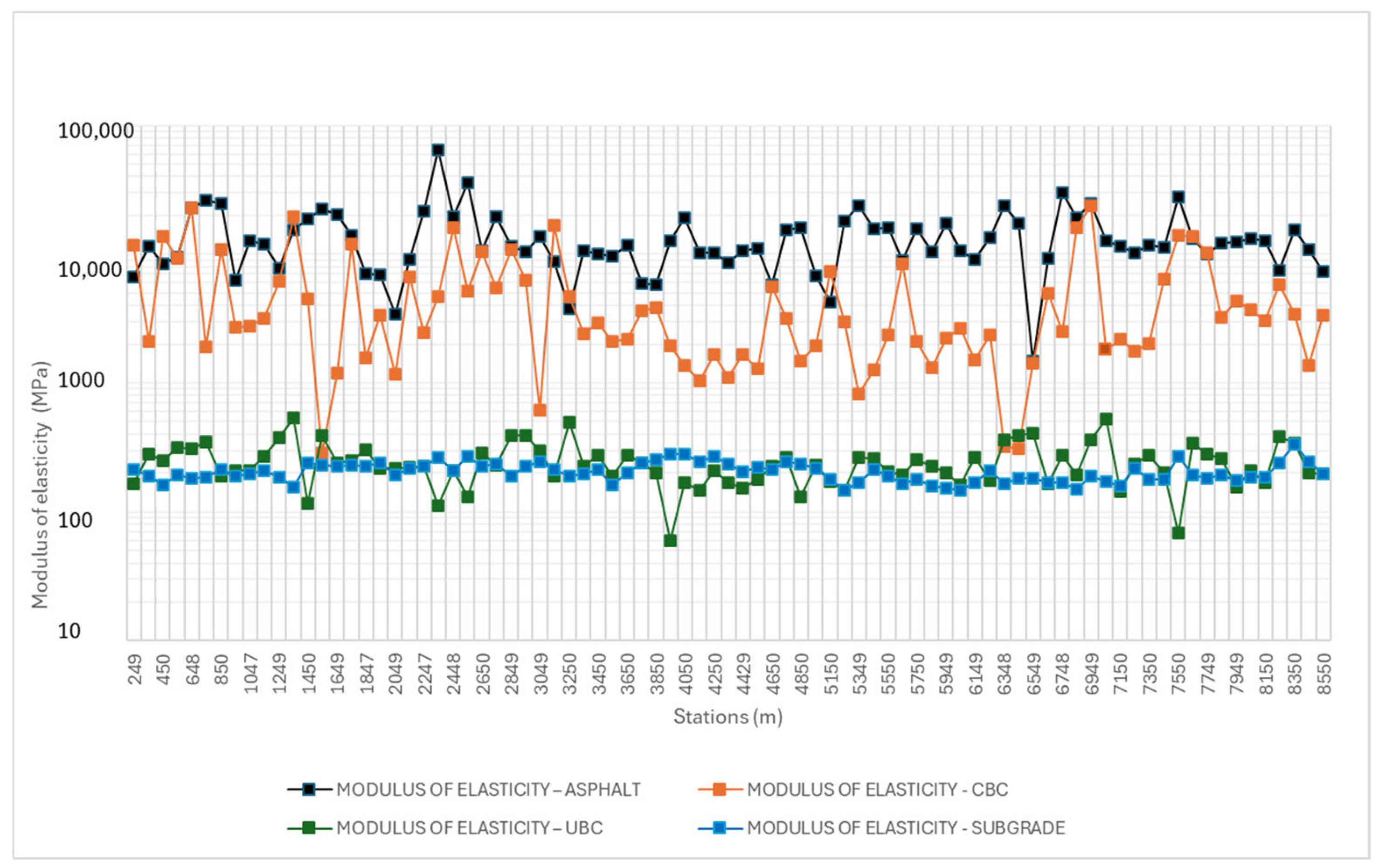
Deflection results from FWD testing were used with the cumulative difference method to determine the elastic modulus of homogeneous sections [23]. Figure 6 shows the modulus of elasticity for asphalt layers, the cement-bound course (CBC), unbound base course (UBC), and subgrade along the D28 Bjelovar bypass. Subgrade moduli range from 150 to 270 MPa. The CBC was identified as the critical layer, requiring strengthening, as indicated by fluctuations in its modulus of elasticity.
Figure 6.
Modulus of elasticity for asphalt, CBC, UBC and subgrade [19]. Reprinted with permission from Ref. [19]. Copyright 2020, Hrvatske ceste d.o.o.
6. Structural Strengthening of the Pavement
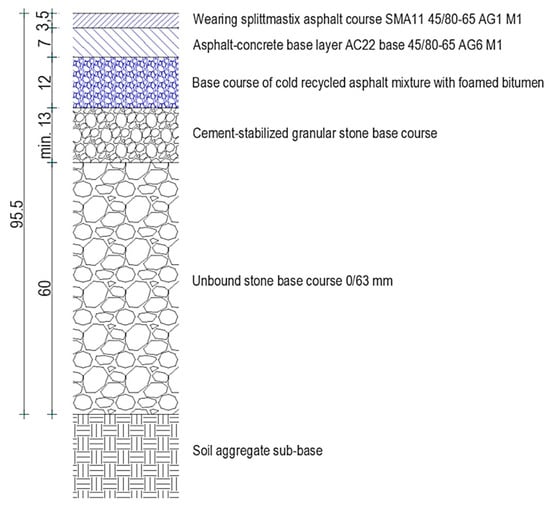
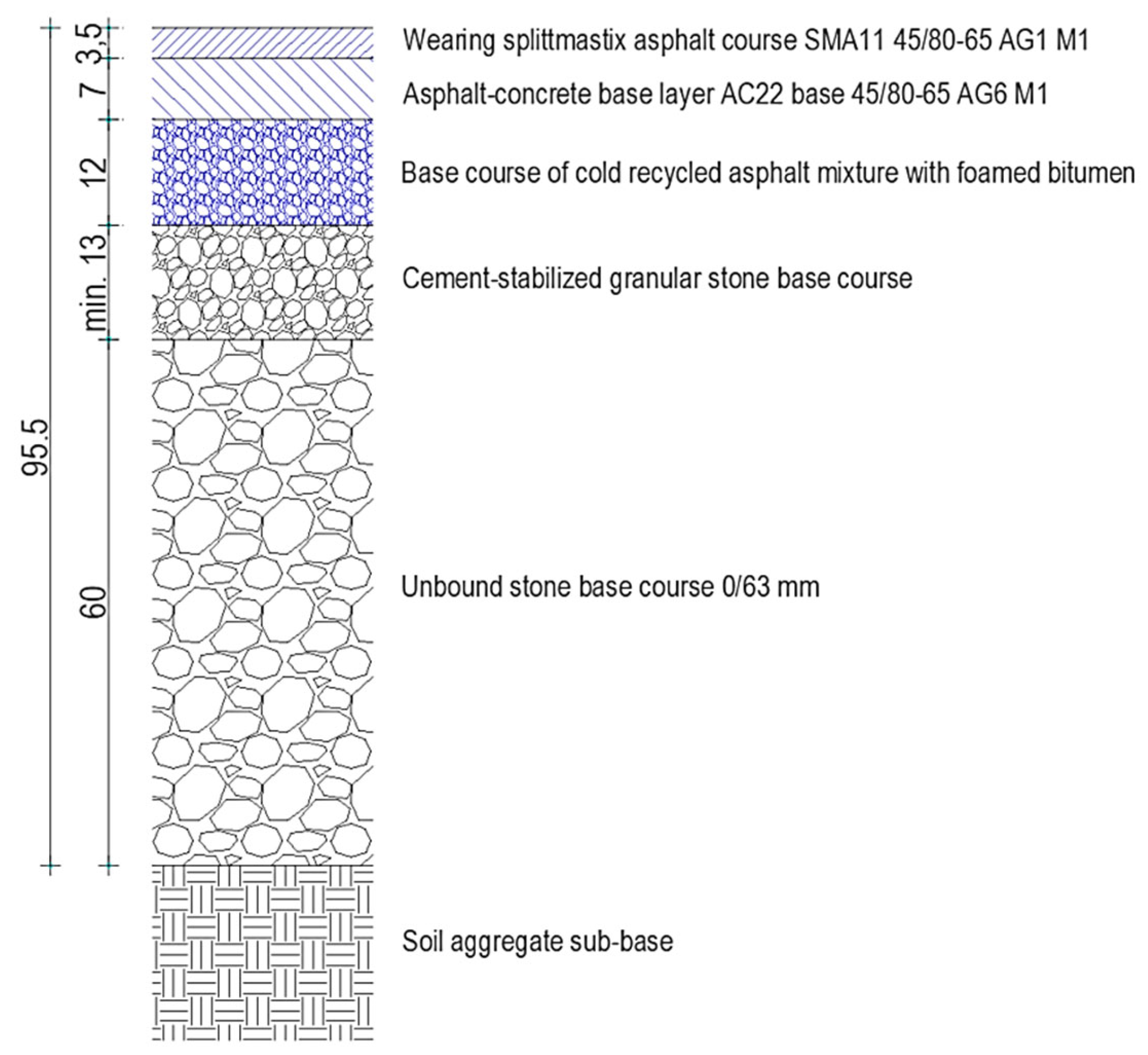
In May 2020, field investigations on the Bjelovar bypass determined pavement layer types and thicknesses, and tested samples of unbound mixtures. Pavement bearing capacity was evaluated using FWD deflection measurements and elastic modulus calculations, forming the basis for a rehabilitation proposal to strengthen the D28 state road. Laboratory tests confirmed that the gravel base course meets the specified requirements, as supported by FWD deflection measures. Visual inspections reveal deformations and cracks, with structural cracks corresponding to higher deflections than temperature-induced cracks. Elastic moduli for all pavement layers were calculated from deflection data and material properties, and stress–strain analyses determined the required reinforcement thickness. A 12 cm cold-recycled base course with foamed bitumen will be placed over the prepared CBC layer, using milled asphalt from the existing pavement as aggregate [23].
As part of the detailed design [18], pavement axis, vertical alignment, and edges were calculated at 5 m intervals, and the reinforcement of the pavement structure was dimensioned (Figure 7). A 20-year design period was assumed, with a 4% traffic growth rate used to determine the total equivalent heavy traffic load.
Figure 7.
Cross-section of the strengthened pavement layers on the D28 Bjelovar bypass [23]. Adapted with permission from Ref. [23]. Copyright 2020, Hrvatske ceste d.o.o.
7. Conclusions
Field surveys, sampling, and laboratory tests were conducted in 2020 on the state road D28 section constructed in 2001/2002 to evaluate pavement bearing capacity and guide rehabilitation planning. The pavement exhibited extensive cracking and rutting, compromising ride comfort and traffic safety. Sounding excavations determined layer composition and thickness, while deflection tests served as the primary means to assess structural capacity. Results identified the cement-bound base course (CBC) layer as critical, with bearing capacity loss indicated by deflections (d2 below 105 µm) and elastic moduli ranging from 600 to 4600 MPa. Damaged CBC areas will be rehabilitated through overlay placement or geogrid reinforcement.
The studied section of state road D28 exemplifies a proactive pavement management approach, as rehabilitation design began before the end of its 20-year design life. Despite prior investigations, laboratory tests, and project preparation, reinforcement works began only one month ago. Over the five years since testing, pavement conditions have deteriorated significantly, highlighting a delay in timely rehabilitation within modern road management frameworks. The proposed strengthening solution aligns with current sustainability goals by incorporating up to 60% milled asphalt in the cold-recycled bearing layer, promoting material conservation and recycling.
Author Contributions
Conceptualization, K.V. and S.D.; methodology, K.V. and S.D.; software, K.V.; validation, K.V. and S.D.; formal analysis, K.V.; investigation, K.V.; resources, K.V. and S.D.; data curation, K.V.; writing—original draft preparation, K.V.; writing—review and editing, S.D.; visualization, K.V.; supervision, S.D.; project administration, K.V. All authors have read and agreed to the published version of the manuscript.
Funding
This research received no external funding.
Institutional Review Board Statement
Not applicable.
Informed Consent Statement
Not applicable.
Data Availability Statement
The data presented in this study are available upon request from the corresponding author. The data are not publicly available due to their inclusion in official project documentation.
Conflicts of Interest
Author Karolina Vukelić was employed by the company Hidroregulacija d.o.o. The remaining author declares that the research was conducted in the absence of any commercial or financial relationships that could be construed as a potential conflict of interest.
References
- Sršen, M. Four-Language Dictionary of Road Engineering with Definitions, 1st ed.; AspeCta—Association for the Promotion of Social and Environmental Aspects of Sustainable Road Development: Zagreb, Croatia, 2011. [Google Scholar]
- Roberts, F.L.; Kandhal, P.S.; Brown, E.R.; Lee, D.Y.; Kennedy, T.W. Hot Mix Asphalt Materials, Mixture Design, and Construction, 2nd ed.; NAPA Education Foundation: Lanham, MD, USA, 1996; pp. 286–304. ISBN 953-6686-07-5. [Google Scholar]
- Rukavina, T.; Ožbolt, M. Pavement management system–data collecting. In Traffic Infrastructure Management; University of Zagreb, Faculty of Civil Engineering, Department of Transportation Engineering: Zagreb, Croatia, 2009; pp. 95–176. [Google Scholar]
- Čičković, M.; Bald, J.S. Rückrechnung der charakteristischen mechanischen Parameter von Verkehrsbefestigungen aus FWD-Messungen. Straße Und Autob. 2017, 68, 950–957. [Google Scholar]
- Qian, F.; Shanqiang, L.; Xinquan, X. Bearing capacity evaluation of asphalt pavement based on dynamic deflection equivalent. IOP Conf. Ser. Earth Environ. Sci. 2019, 300, 052041. [Google Scholar] [CrossRef] [Scilit]
- Marecos, V.; Fontul, S.; Antunes, M.L.; Solla, M. Evaluation of a highway pavement using non-destructive tests: Falling Weight Deflectometer and Ground Penetrating Radar. Constr. Build. Mater. 2017, 154, 1164–1172. [Google Scholar] [CrossRef] [Scilit]
- Keller, M. Pavement management. In Proceedings of the Fourth Croatian Conference on Road Management, Dubrovnik, Croatia, 29 September–3 October 2009; pp. 41–52. [Google Scholar]
- Haas, R.; Hudson, W.R.; Zaniewski, J.P. Modern Pavement Management; Krieger Publishing Company: Malabar, FL, USA, 1994. [Google Scholar]
- Moser, V.; Barišić, I.; Rajle, D.; Dimter, S. Comparison of different survey methods data accuracy for road design and construction. In Proceedings of the 4th International Conference on Road and Rail Infrastructure (CETRA 2016), Šibenik, Croatia, 23–25 May 2016; University of Zagreb, Faculty of Civil Engineering: Zagreb, Croatia, 2016; pp. 847–852. [Google Scholar]
- Babić, B. Pavement Structure Design; Croatian Civil Engineers Association: Zagreb, Croatia, 1997. [Google Scholar]
- Kuvačić, B.; Rukavina, T. Pavement management system on Croatian roads–settings and principles. In Proceedings of the Fourth Croatian Conference on Road Management, Šibenik, Croatia, 14–16 October 2009; pp. 33–44. [Google Scholar]
- Zekušić, M.; Črljenko, M. Visual inspection, investigation and alternative solutions of pavement restoration. In Seminar: Designing the Restoration of Asphalt Pavements; Croatian Asphalt Association (Hrvatsko asfaltersko društvo): Zagreb, Croatia, 2017. [Google Scholar]
- Sun, L. Structural Behaviour of Asphalt Pavements; Butterworth-Heinemann: Oxford, UK, 2016; ISBN 978-0-12-849908-5. [Google Scholar]
- Buttlar, W.G. Mechanisms of Cracking and Debonding in Asphalt and Composite Pavements; Springer: Cham, Switzerland, 2018. [Google Scholar] [CrossRef] [Scilit]
- Rukavina, T. Using a falling weight deflectometer and georadar to determine the existing and design the necessary pavement load-bearing capacity. In Seminar: Asphalt Pavements; Croatian Asphalt Association (Hrvatsko asfaltersko društvo): Zagreb, Croatia, 2014. [Google Scholar]
- COST 336. Use of Falling Weight Deflectometers in Pavement Evaluation, Final Report of the Action; European Cooperation in the Field of Scientific and Technical Research: Deflt, The Netherlands, 2005. [Google Scholar]
- Pandya, H.I.; Ali, A.A.; Mehta, Y.A. Enhancing Falling Weight Deflectometer (FWD) Testing: Comprehensive Review and Development of Robust Procedure in the United States. J. Test. Eval. 2024, 52, 2039–2054. [Google Scholar] [CrossRef] [Scilit]
- Labos Varaždin. Design Project of D28 Bjelovar Bypass Asphalt Pavement Special Maintenance; Labos: Varaždin, Croatia, 2020. [Google Scholar]
- Central Laboratory for Asphalt Technology. Temporary Study on Performed Field Research Works and Laboratory Tests of Materials from D28 Road Pavement Structure D28 Subsection 003, Section from km 0+1000 to km 8+600; Technical Report; Central Laboratory for Asphalt Technology: Sesvetski Kraljevec, Croatia, 2020. [Google Scholar]
- HRN EN 13286-47:2012; Unbound and Hydraulically Bound Mixtures—Part 47: Test Method for the Determination of California Bearing Ratio, Immediate Bearing Index and Linear Swelling. CEN: Brussels, Belgium, 2012.
- Tóth, C.; Primusz, P. Development of a Road Pavement Structure Diagnostic Procedure Based on the Virtual Inertial Point Method. Coatings 2022, 12, 1944. [Google Scholar] [CrossRef] [Scilit]
- Vukelić, K.; Šimun, M.; Dimter, S.; Čizmar, D. Ocjena stanja nosivosti kolničke konstrukcije državne ceste. Građevinar 2025, 77, 353–365. [Google Scholar] [CrossRef] [Scilit]
- TRIKprojekt j.d.o.o. Report Assesment of Pavement Structure Load Bearing Capacity (Structural Capacity) of the State Road D28, Subsection 003, Bjelovar Bypass from km 0+000 to km 8+600; TRIKprojekt j.d.o.o.: Zagreb, Croatia, 2020. [Google Scholar]

Disclaimer/Publisher’s Note: The statements, opinions and data contained in all publications are solely those of the individual author(s) and contributor(s) and not of MDPI and/or the editor(s). MDPI and/or the editor(s) disclaim responsibility for any injury to people or property resulting from any ideas, methods, instructions or products referred to in the content. |
© 2026 by the authors. Licensee MDPI, Basel, Switzerland. This article is an open access article distributed under the terms and conditions of the Creative Commons Attribution (CC BY) license.