


Abstract
Blockchain technology, with special features of decentralization, immutability, consensus mechanisms, and smart contracts, has been integrated into different areas of digital applications recently. However, its abstract concepts present a steep learning curve for beginners, especially in the absence of online resources that offer dynamic, hands-on learning experiences. In response to this problem, we developed a digital interactive teaching tool using the OwlSpace platform to explain what blockchain truly is in its four core foundational concepts. Interactive operations, guided workflows, and visual simulations are applied in the system to assist the learner in interpreting decentralized architectures, immutability of data interactively, the consensus formation process, and the mechanics behind smart contract operation. The system has also put a focus on conceptual understanding and gamified experiences rather than competitive ones, providing a practical and engineering-focused tool for introductory information engineering students.
1. Introduction
In today’s distributed system technology landscape, blockchain quickly rose to the top of the list of technical innovations [1,2]. Decentralized, immutability, consistency, and programmable smart contracts are the foundational characteristics of blockchain, making it possible for the right product to be applied to digital banking, traceable supply chains, patient records, and credentialed platforms at schools [3,4,5]. More real-world use-case applications continue to emerge, but the classroom has no current ability to include blockchain thinking in the basic computing curriculum. This gap comes from the fact that the fundamental ideas of blockchain still feel somewhat abstract and far from the way students feel in K-12th grade [6].
Currently, most of the education blockchain tools are development-oriented environments. Remix is an intelligent development environment in the browser that allows smart contracts to be written, compiled, and deployed to the Ethereum blockchain [7]. Although these methods have all shown their effectiveness, they share the same programming model. Therefore, they mainly attract younger audiences who already have programming experience or some aptitude for logical reasoning. This makes it quite a challenging learning curve for beginners or someone without a background in computer science [8].
To foster the learning curve in development-heavy blockchain environments in education, more researchers are looking to use gamification as an approach to improve instructional engagement and accessibility [9,10]. The use of gamification, i.e., applying game-oriented elements (e.g., narrative contexts, progressive steps, feedback loops, and role-based tasks) in a non-game context has been demonstrated to support more profound learners’ motivation and conceptual memory [11]. Gehrlein and Dengel [12], in their systematic review of the literature on blockchain at the K-12 level, found that there is a lack of age-appropriate resources and tools that introduce blockchain concepts in a way that is engaging and cognitively accessible.
To address this gap, we developed an interactive digital teaching tool based on the OwlSpace platform. OwlSpace is a block-based visual programming environment designed for science, technology, engineering, arts, and mathematics (STEAM) education that emphasizes modularity, visual logic, and user engagement. The tool developed in this study targets the four basic concepts of blockchain: decentralization, immutability, consensus mechanism, and smart contracts. Through guided visual simulations and user interaction, learners can experience blockchain operations such as node communication, transaction packaging, consensus voting, and automated contract execution without writing code, thus lowering the entry barrier to understanding.
In this study, we developed a modular, interactive educational system for teaching blockchain fundamentals and evaluated OwlSpace as an instructional platform for visual logic construction and interaction. The system’s applicability is validated in entry-level computing education. Using an ARCS-based instrument.
2. Related Work
2.1. Core Technologies in Blockchain
Blockchain systems are generally composed of decentralization, immutability, consensus, and smart contracts. Decentralization provides a distributed architecture to eliminate single points of failure and build resiliency into the system. Immutability achieved through hash-links and timestamping [13]. In hash-linking the data, a degree of validation with a timestamp is added so that the historical data cannot be changed. The consensus protocol is used to ensure consistency across distributed data. The smart contracts are to provide programmable and automatic execution of conditions without third-party execution.
2.2. Visual Programming and Interactive Simulation
Visual programming as a tool to promote learners’ interaction with technical material has also made significant strides, especially among students who have never programmed before. Block-based environments allow students to build computation processes without getting caught in textual syntax, creating a cognitive entry point and expanding access [14]. In this study, we used the OwlSpace platform that uses active visual programming and is devoid of any real-time feedback but does provide a simulation of blockchain concepts such as decentralization, consensus mechanisms, and immutability, as well as smart contracts [15].
2.3. Motivation Measurement Instruments
Keller’s Instructional Materials Motivation Survey (IMMS) is a validated measure of learner motivation contextualized in the attention, relevance, confidence, and satisfaction (ARCS) model, which has a sequence of Likert-scale items that measure four areas of motivation [16]. IMMS has been used extensively in computer-based and self-directed contexts to measure the motivational quality of instructional materials [17]. To offer a more flexible and streamlined means of administering a measure of student motivation in various contexts in educational settings, especially younger learners, a reduced instructional materials motivation survey (RIMMS) was proposed [18,19] to make measurement responsive to time constraints. RIMMS has shown strong psychometric reliability and validity for use in contexts with more adaptable formats than its use in a middle-school environment.
3. Methods
3.1. System Architecture and Instructional Platform
OwlSpace, a block-based visual programming platform, was used to construct all instructional modules. It allows learners to engage with blockchain logic through drag-and-drop blocks without requiring textual coding. The modules featured animated sequences, logic flows, and interactive actions tailored to effectively convey each blockchain concept. The user interface modules were custom-designed to reflect each learning scenario: ledger distribution, block immutability, consensus validation, and contract automation.
3.2. Module Descriptions
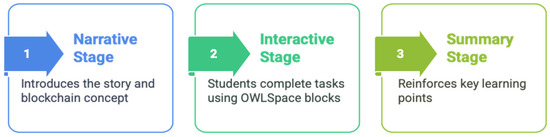
The instructional sequence for each module is visualized in Figure 1. It consists of three stages: a narrative screen to introduce the blockchain concept through storytelling, an interactive screen for hands-on logic block construction using OwlSpace, and a summary screen to consolidate key takeaways.
Figure 1.
Teaching phase sequence diagram.
The lesson plan designed for this study is shown in Figure 2, with the following four chapters:
Figure 2.
Blockchain education chapter diagram.
- Decentralization chapters: Introduce the concept of centralized versus decentralized ledger systems through a village ledger story.
- Immutability chapters: Demonstrates the irreversible nature of blockchain data using hash-linked blocks.
- Consensus chapters: Explain how distributed nodes validate data using collaborative simulations modeled on Proof-of-Work.
- Smart contract chapters: Teaches automatic execution of predefined conditions through an interactive delivery contract simulation.
3.3. Decentralization
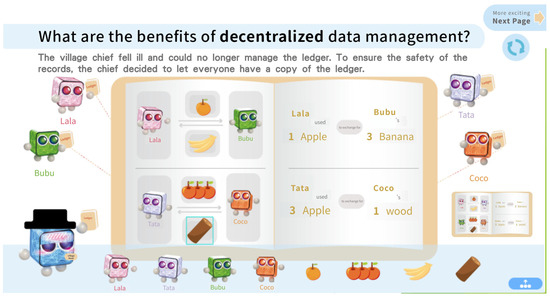
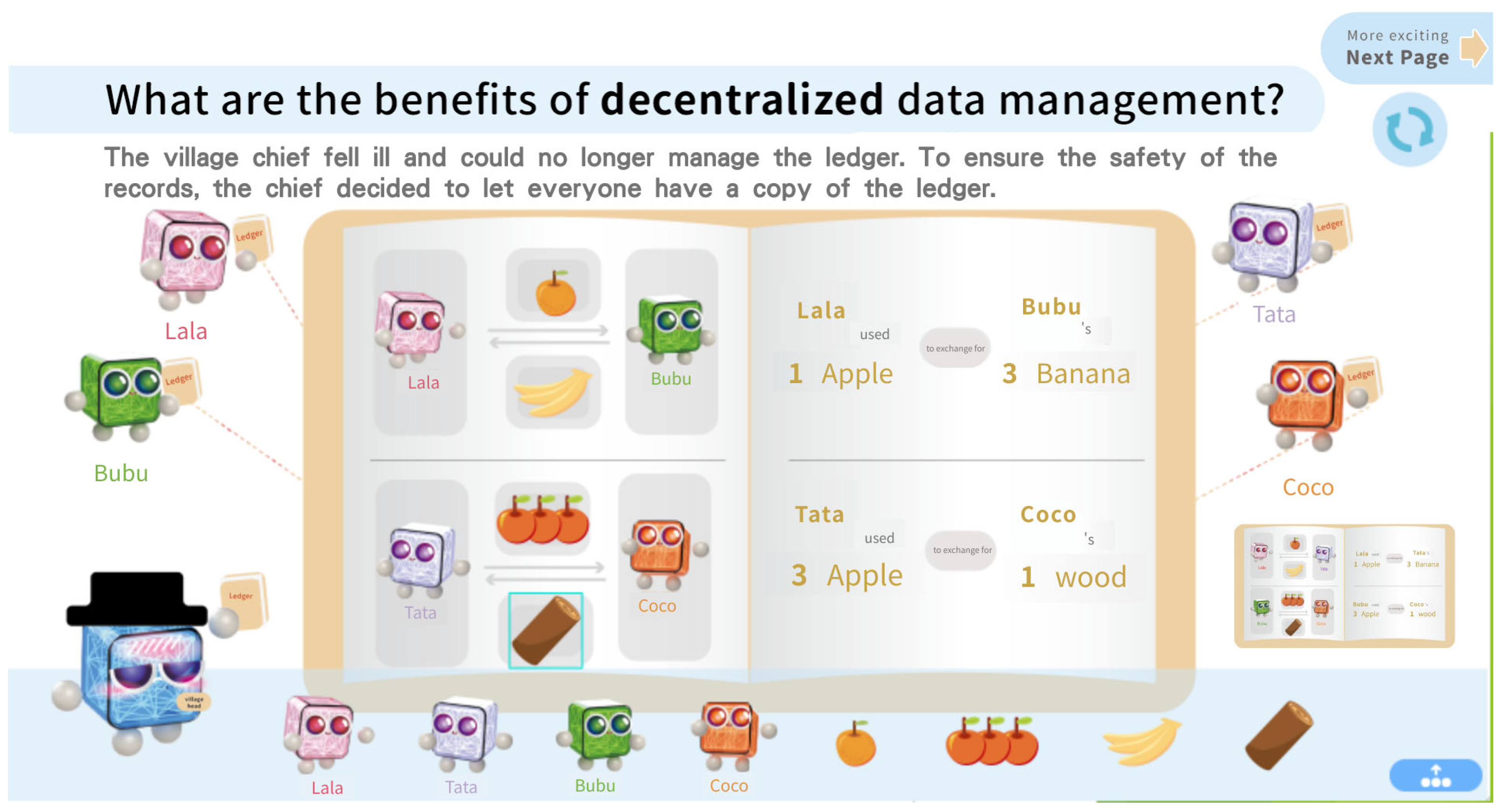
Students are taken through a controlled scenario in which a single ‘village chief’ kept a record of all transactions. The activity also changed to a stage in which the village chief could no longer be reached (identified as the failure point). Subsequently, a decentralized model was considered in which all ‘villagers’ kept copies of transaction records. This created redundancy and backup in the absence of one node.
- Narrative stage: The student is introduced to a simulated situation where the village chief is the only one who keeps a record of all the transactions. After that, the village chief can no longer be reached. This results in a single point of failure, which shows the challenges that accompany centralized systems, as shown in Figure 3.
- Interactive stage: The student interacts with the simulated transactions and observes changes in the transaction information, as shown in Figure 4.
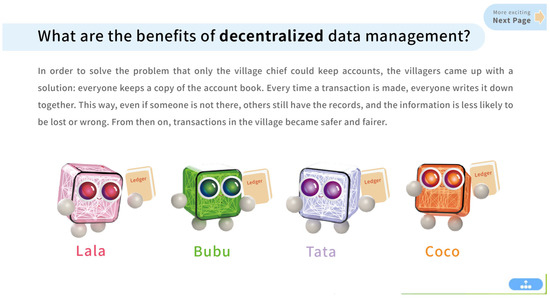
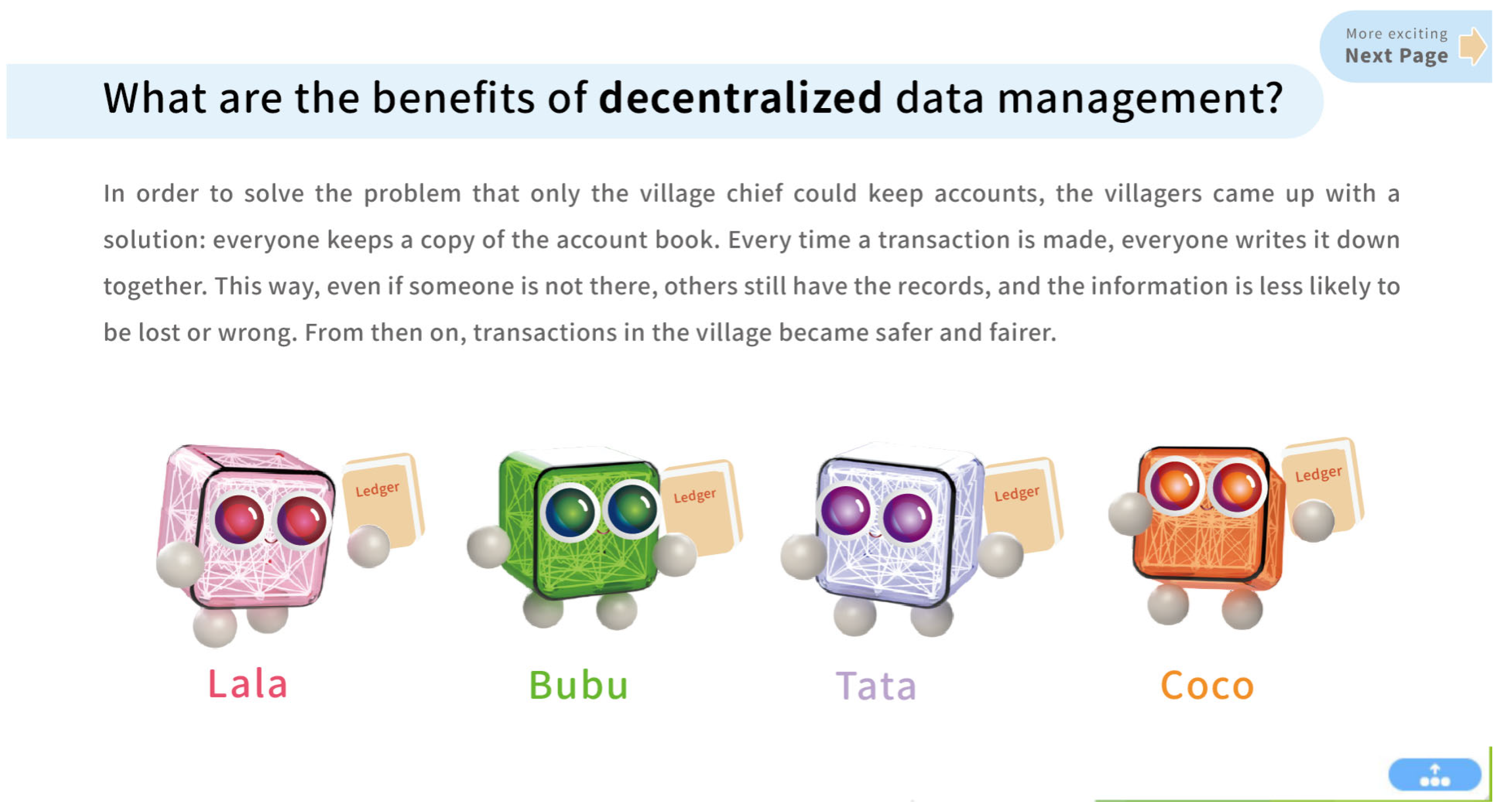
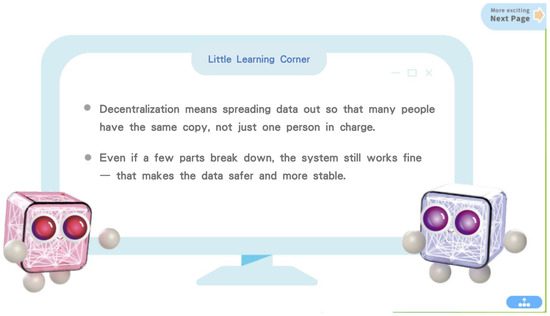
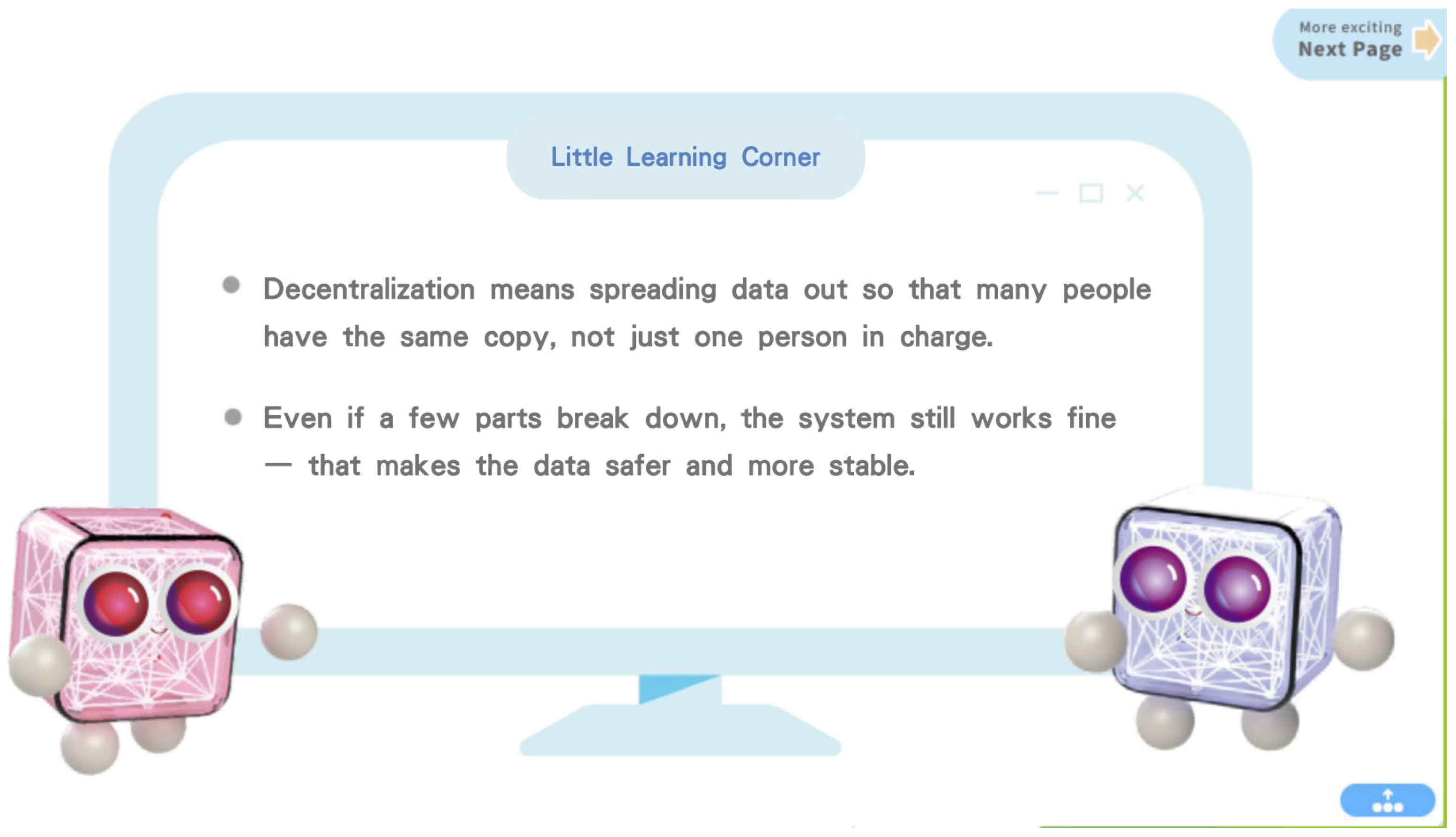
- Summary stage: The notion that in a decentralized system, the data is replicated in multiple nodes, thus improving the reliability and tolerance of the system to faults, is reinforced, as shown in Figure 5.
Figure 3.
Narrative stage of the decentralization chapters.
Figure 4.
Interactive stage of the decentralization chapters.
Figure 5.
Summary stage of the decentralization chapters.
3.4. Immutability
The students manipulated a simplified blockchain and observed the effects of trying to alter historical records. The module used hash simulation to demonstrate that any tampering invalidates the subsequent blocks, reinforcing the concept of irreversible data.
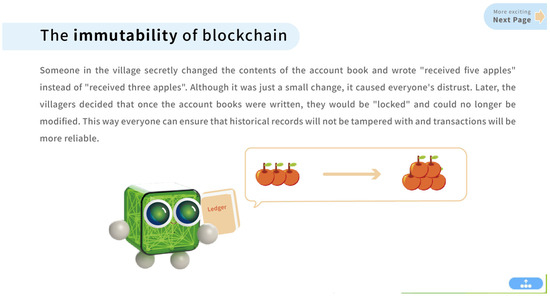
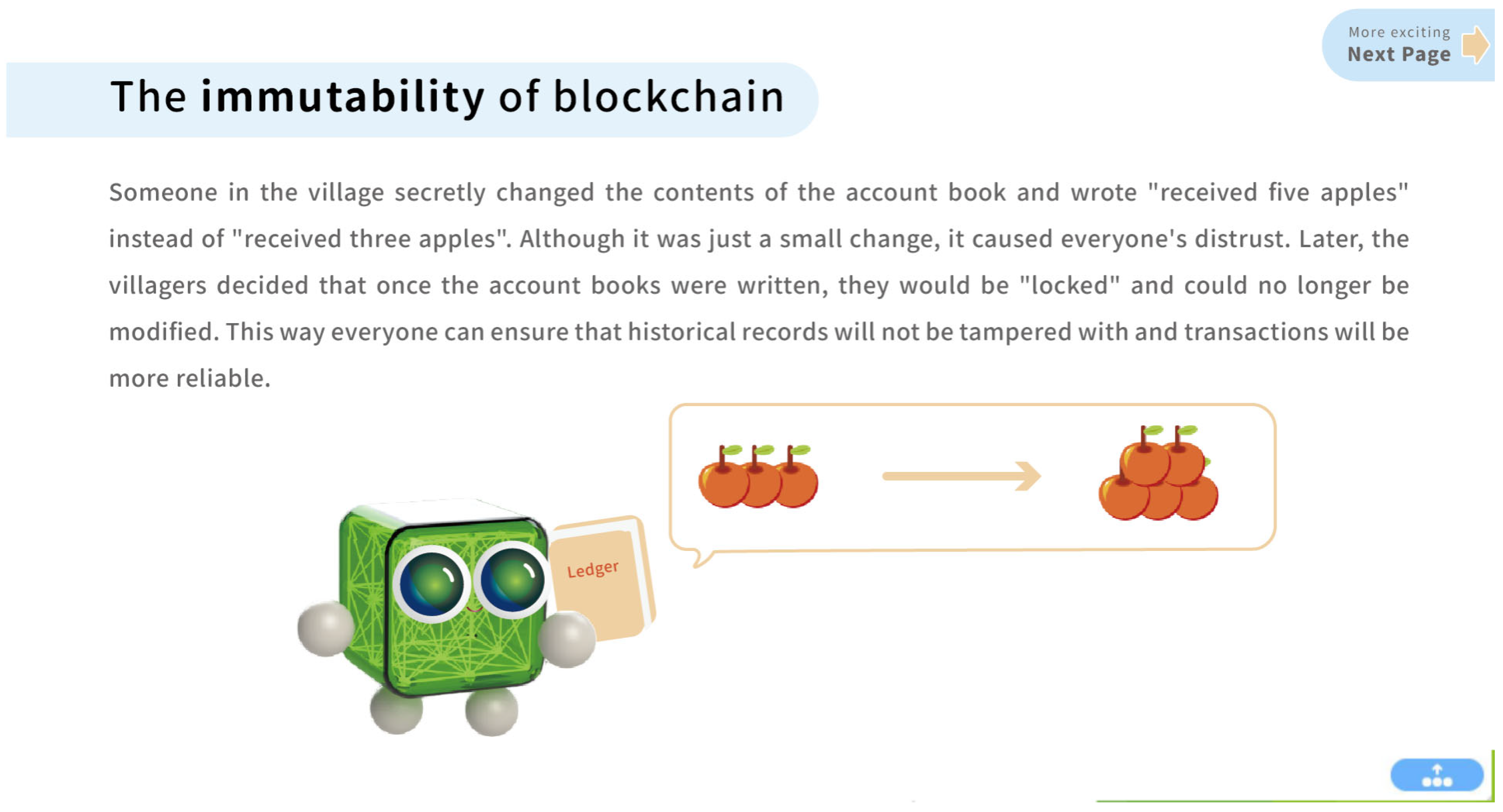
- Narrative stage: Learners were introduced to the concept of immutability through a story that emphasizes the need to secure the transaction history, as shown in Figure 6.
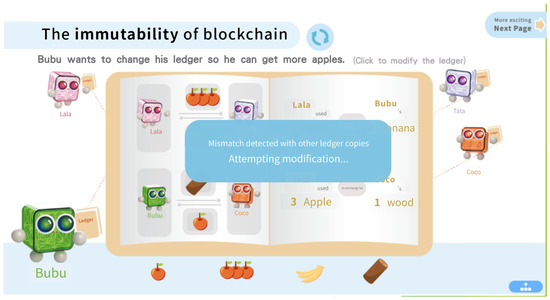
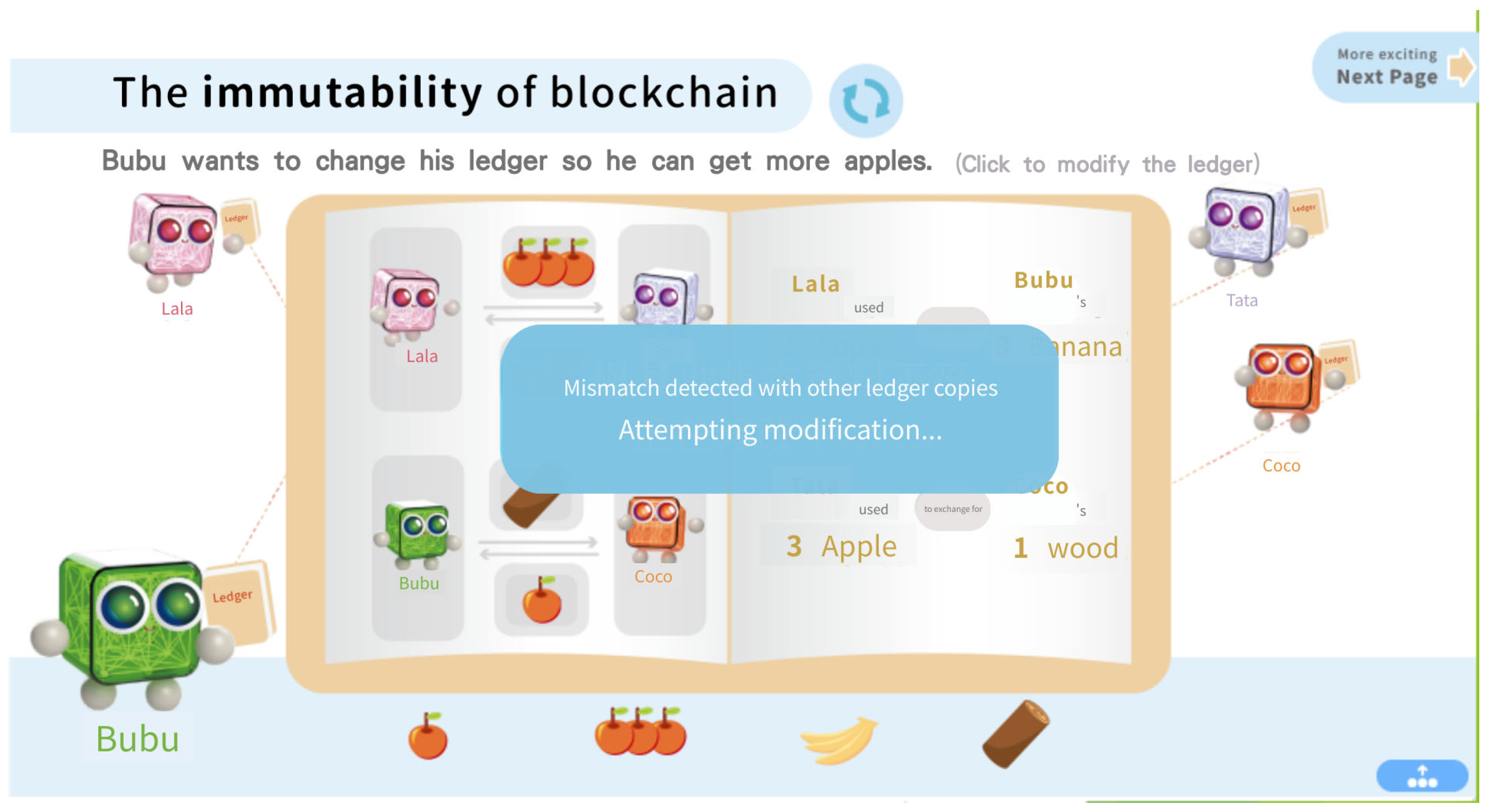
- Interactive stage: Students experimented with modifying past block data and observed how the hash links were disrupted, invalidating the blockchain, as shown in Figure 7.
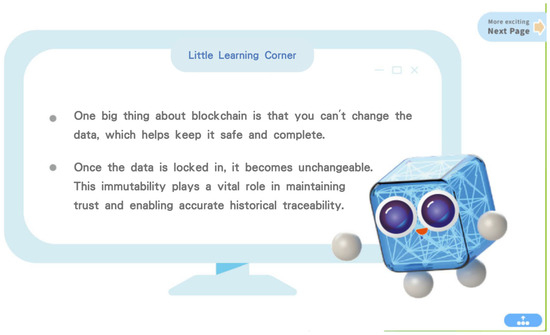
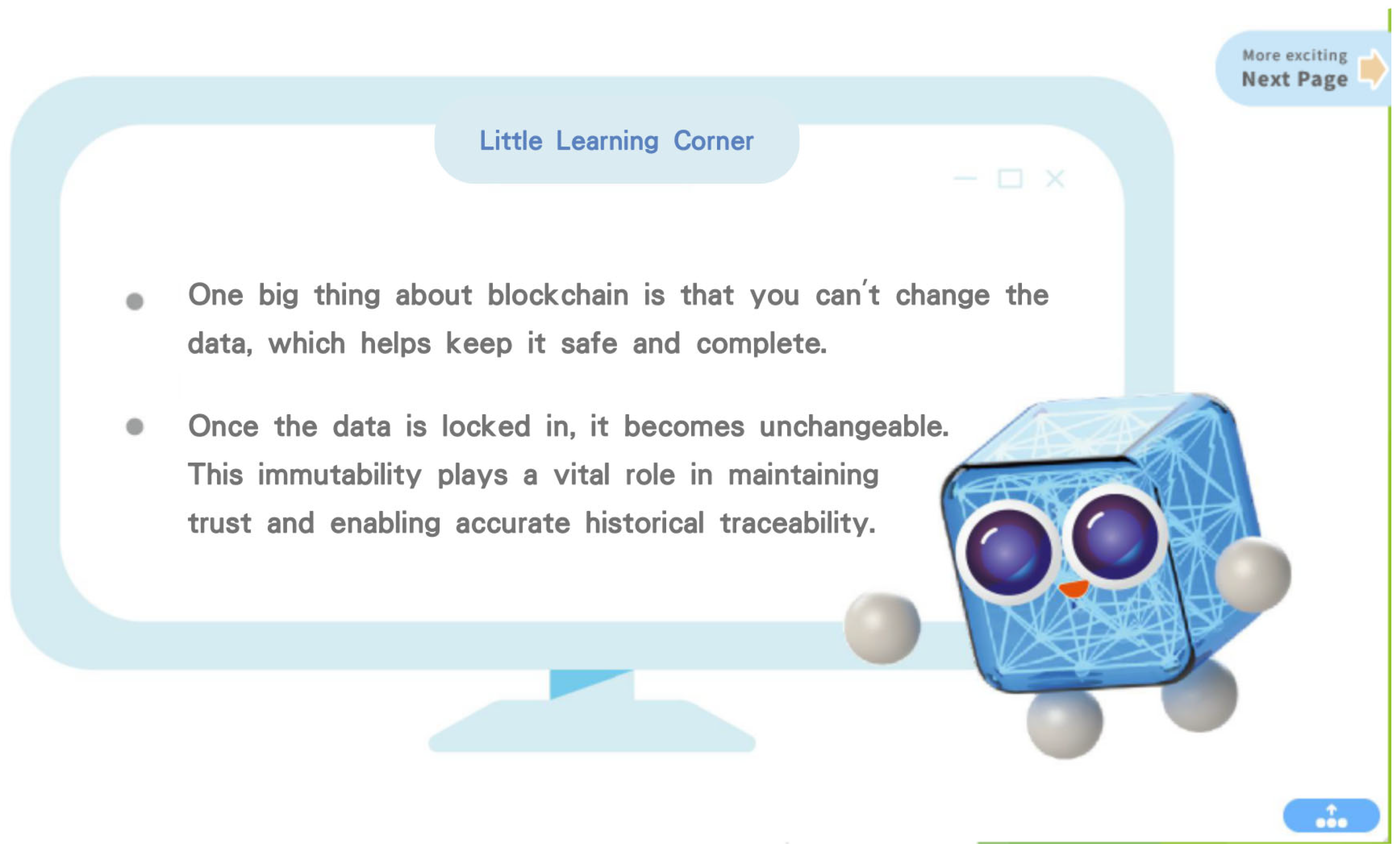
- Summary stage: The core idea that blockchain prevents unauthorized changes was reinforced, illustrating why data integrity is a key feature, as shown in Figure 8.
Figure 6.
Narrative stage of the immutability chapters.
Figure 7.
Interactive stage of the immutability chapters.
Figure 8.
Summary stage of the immutability chapters.
3.5. Consensus Issue
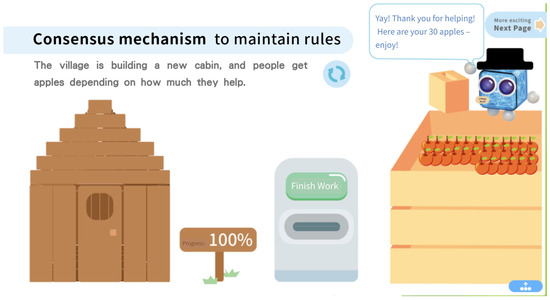
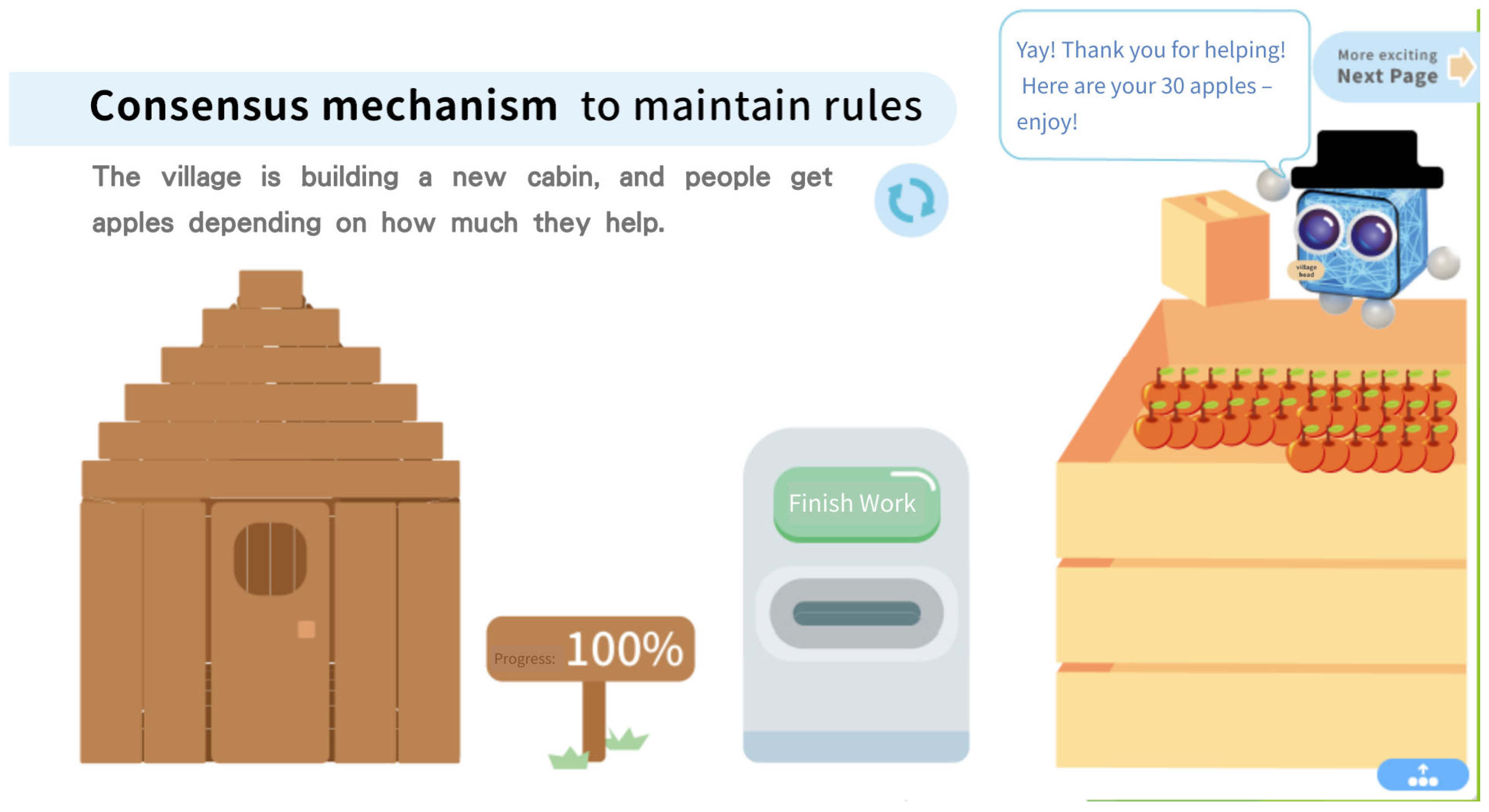
A proof-of-work simulation was presented using construction. Students gathered materials and collaborated on building a structure, receiving rewards (e.g., apples) proportionally. This modeled how consensus ensures fairness and validation within a blockchain network.
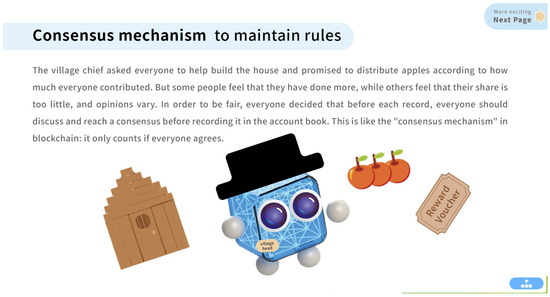
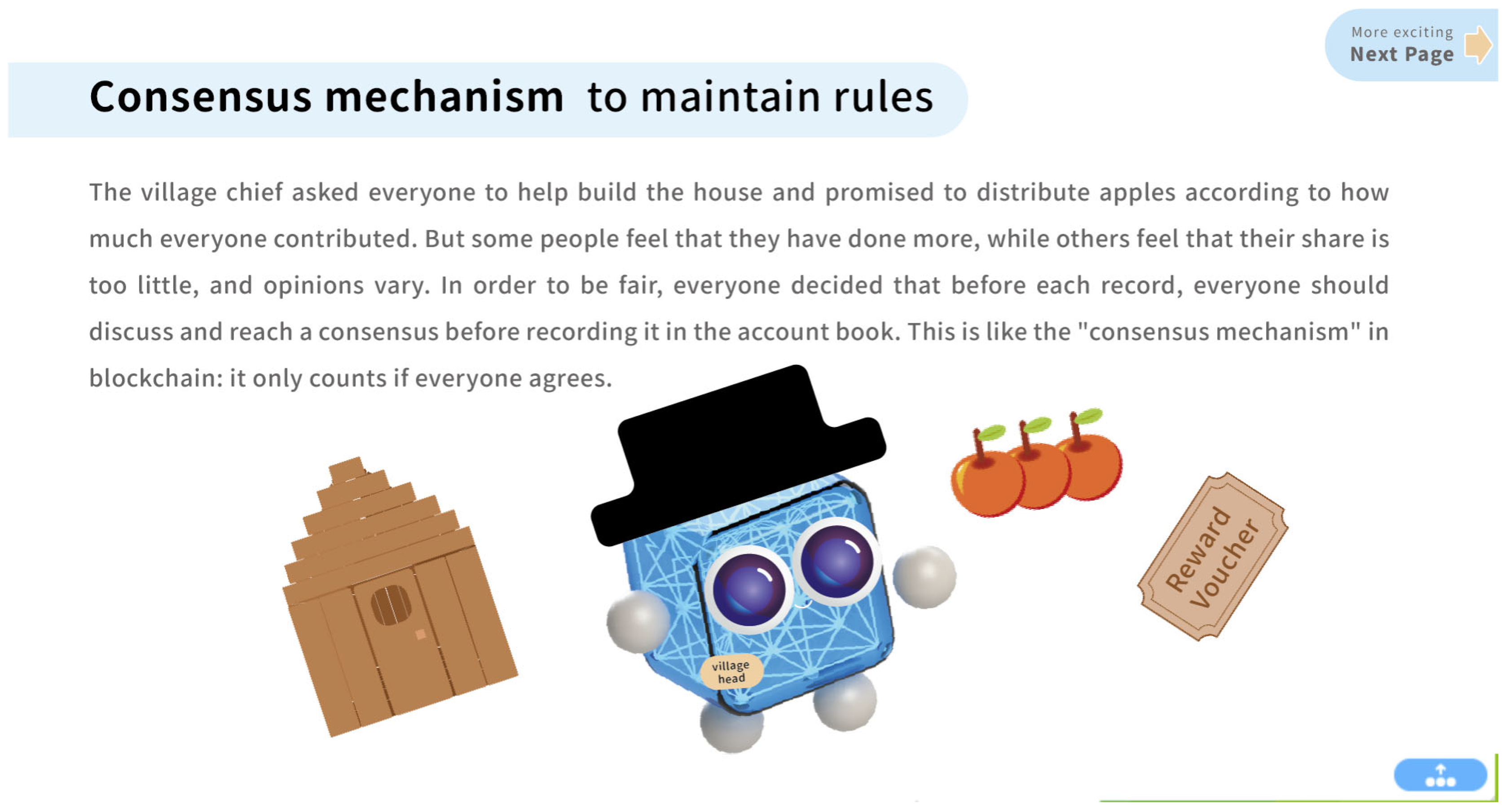
- Narrative stage: Students learned about consensus through a construction story, where the village participants contributed to the construction of a wooden house, as shown in Figure 9.
- Interactive stage: Participants participated in tasks that simulate material collection and received rewards based on effort, mimicking Proof-of-Work, as shown in Figure 10.
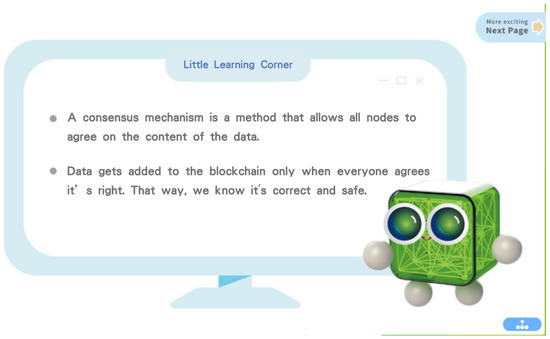
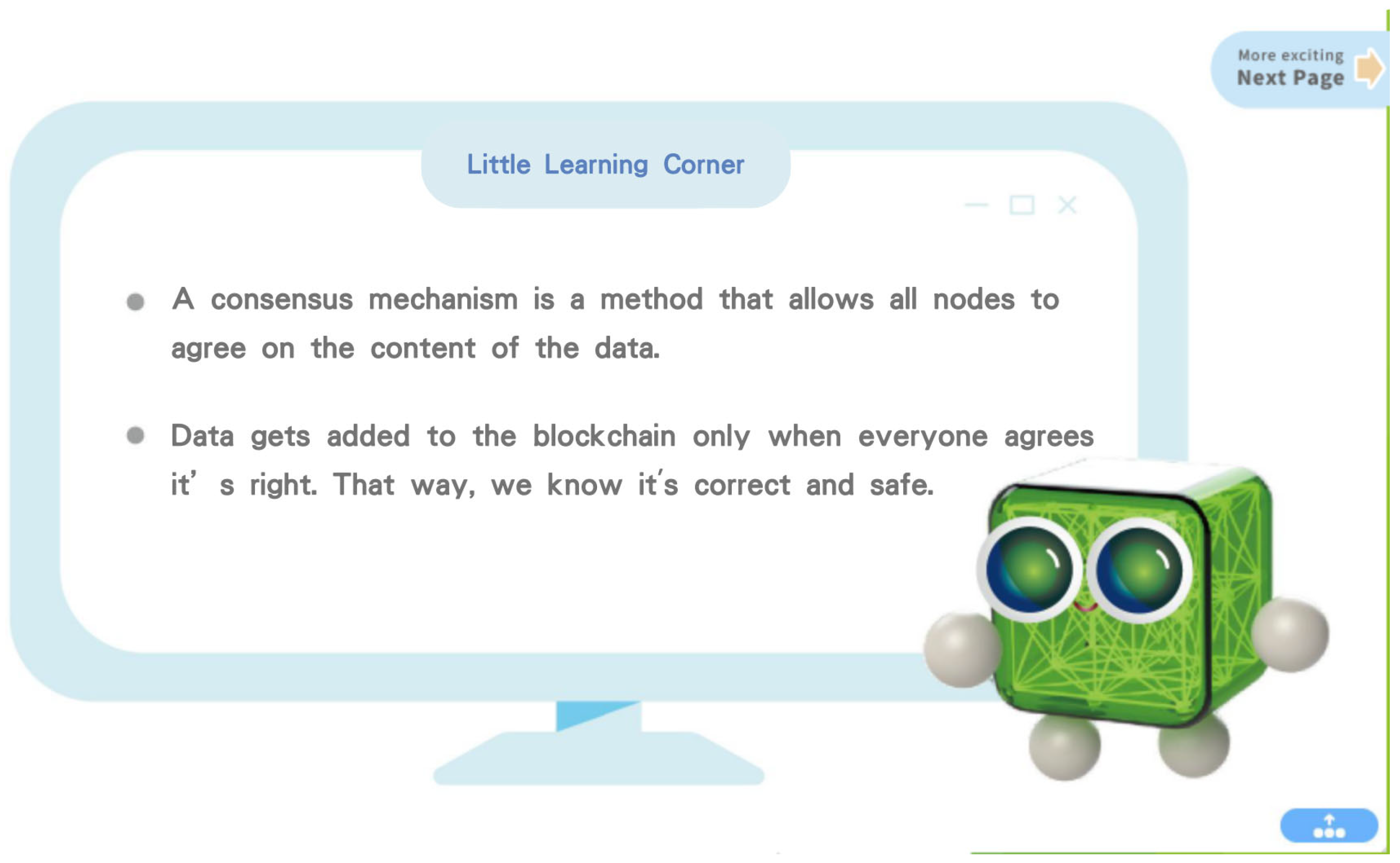
- Summary stage: The exercise illustrated how distributed agreement ensures fair validation and prevents manipulation in blockchain systems, as shown in Figure 11.
Figure 9.
Narrative stage of the consensus chapters.
Figure 10.
Interactive stage of the consensus chapters.
Figure 11.
Summary stage of the consensus chapters.
3.6. Smart Contract Issue
Through a narrative that involved a character named Cocoa and a robotic assistant, students implemented a smart contract that automated daily apple deliveries. They programmed condition-based logic in OwlSpace blocks, observing the contract self-execute when predefined criteria were met.
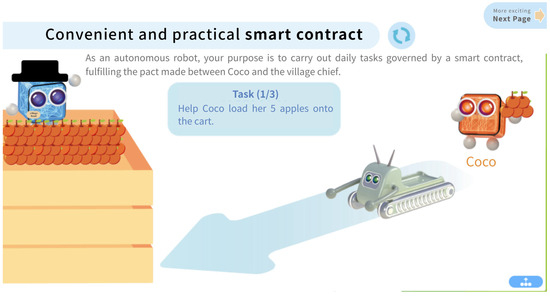
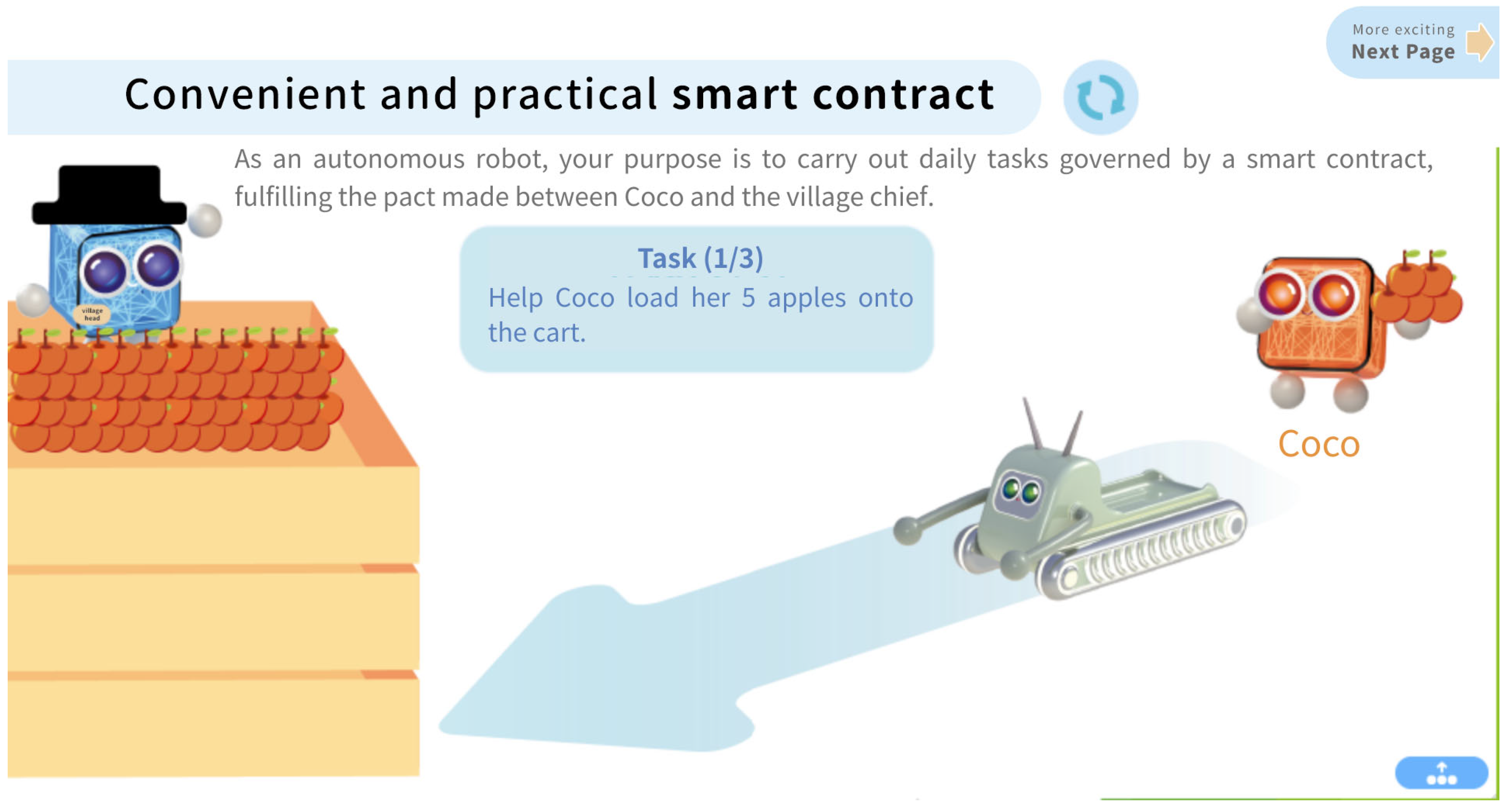
- Narrative stage: A storyline featuring Cocoa and a robotic helper introduced smart contracts as predefined agreements, as shown in Figure 12.
- Interactive stage: Students used OwlSpace to build logic blocks that automatically delivered apples under set conditions, as shown in Figure 13.
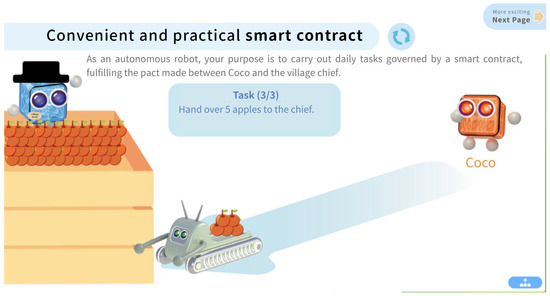
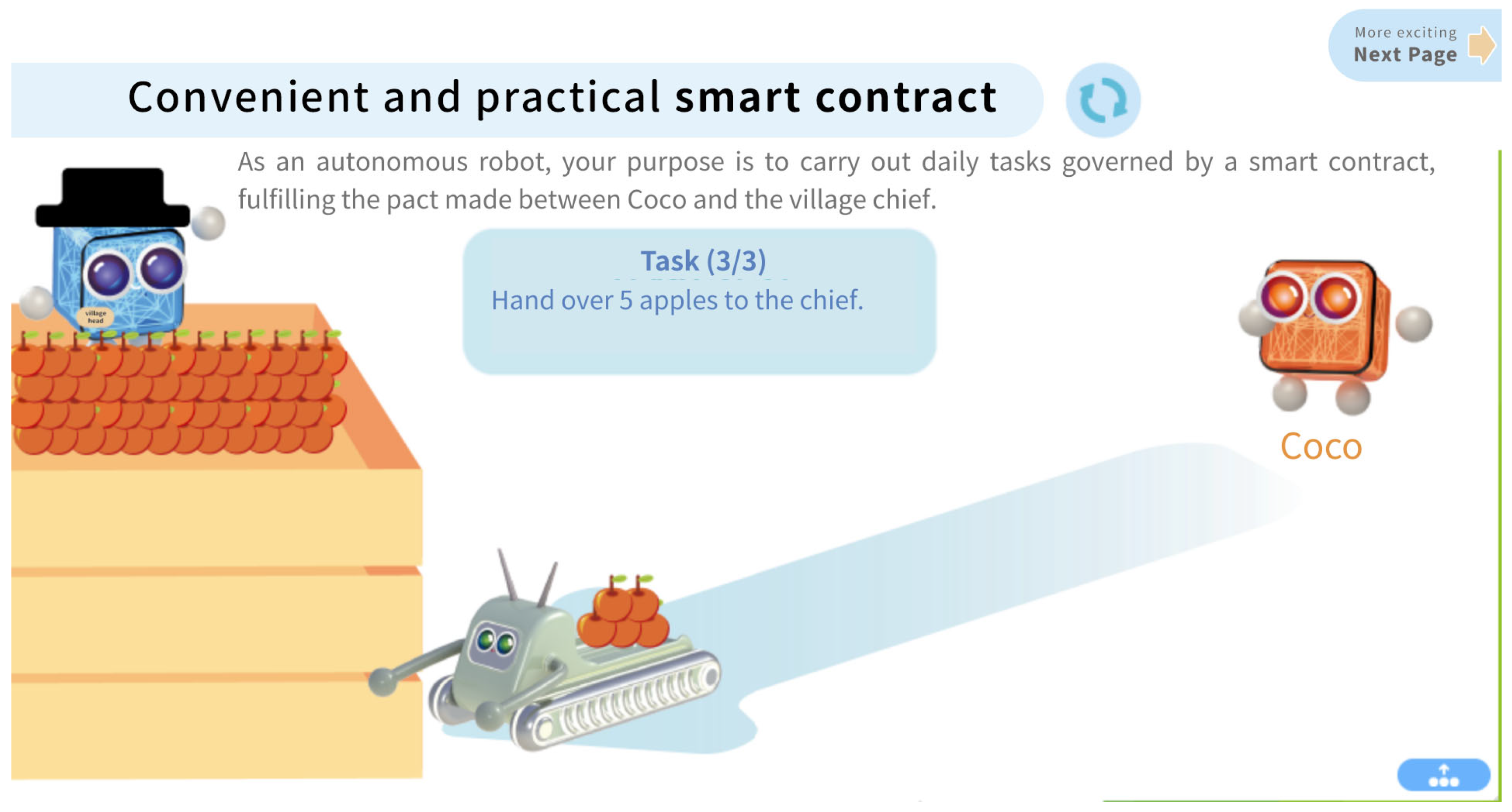
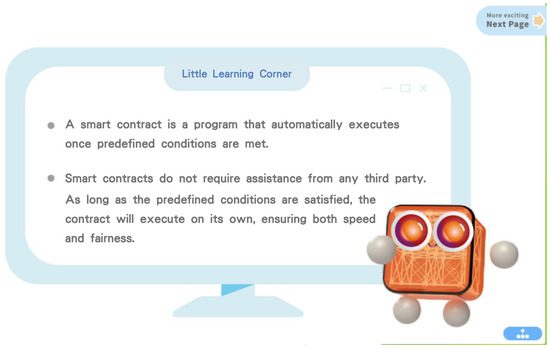
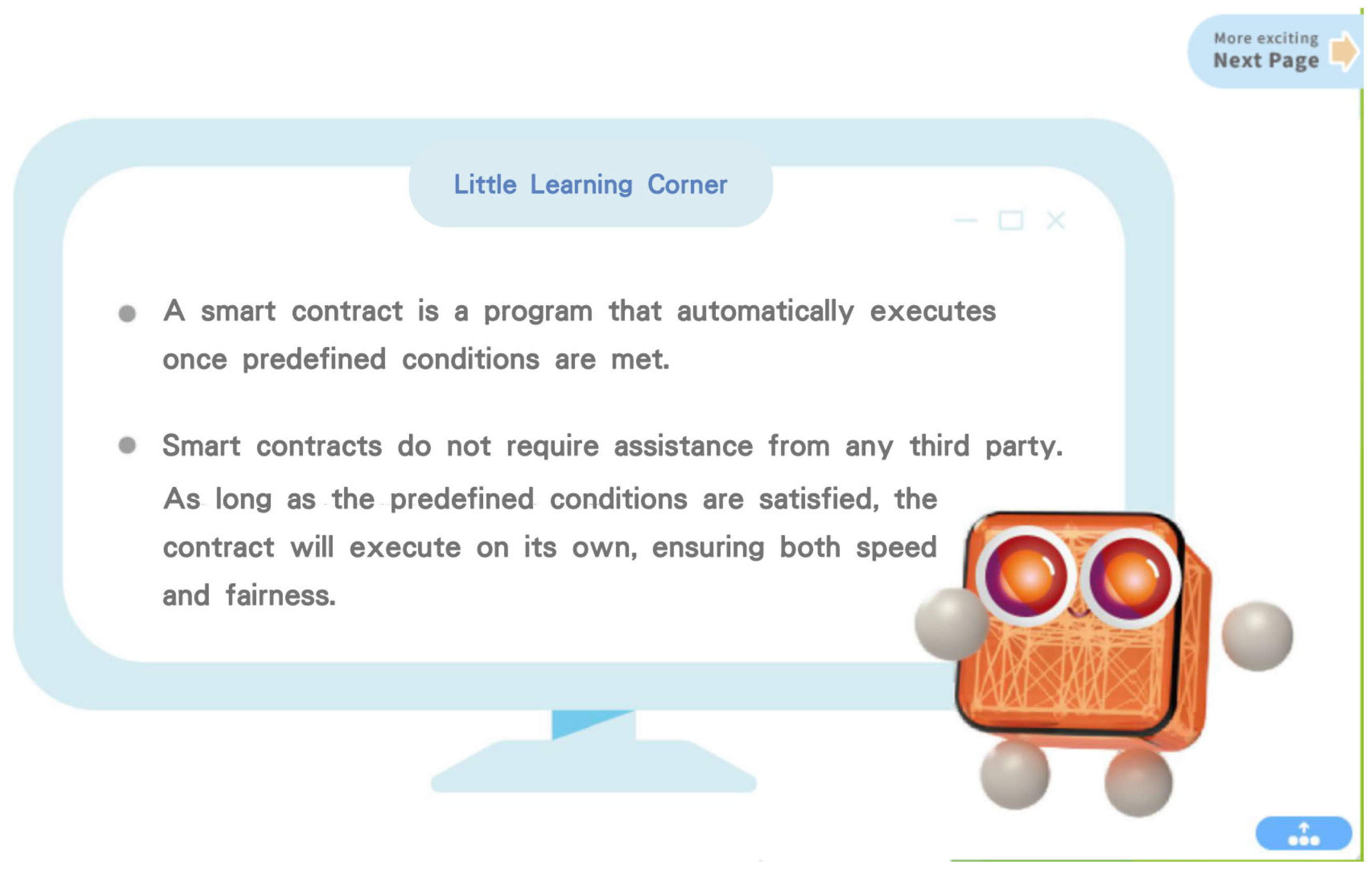
- Summary stage: Learners observed how smart contracts reduce reliance on intermediaries and execute actions autonomously when conditions are satisfied, as shown in Figure 14.
Figure 12.
Narrative stage of the smart contract chapters.
Figure 13.
Interactive stage of the smart contract chapters.
Figure 14.
Summary stage of the smart contract issue.
3.7. Participants and Implementation
18–22 year-old undergraduate students (n = 124) received an instructional intervention. The participants were not previously trained in blockchain or computer science. The instructional module experiences were facilitated in a traditional classroom setting using desktop PCs or tablets and the OwlSpace visual programming platform. They were order-specific, introduced the four modules and three parts to students: decentralization, immutability, consensus mechanism, and smart contract, and story explanation, interactive simulation, and concept review. The entire session took 90 min, which was evenly divided between each module for about 20 min. The students each worked on their own in the interactive OwlSpace during that activity, with the help of the instructors.
The participants completed the post-instruction questionnaire at the end of each module, which included questions derived from RIMMS. Consistent with the ARCS model of motivation, the survey included Likert-scale items that assessed four components of motivation: attention, relevance, confidence, and satisfaction, as shown in Appendix A, Table A1. Feedback was examined to explore the effectiveness of the instructional tool on behavioral interactions collected from the OwlSpace system.
3.8. Description of the Questionnaire
The post-instruction questionnaire served as the primary instrument for assessing the motivational impact of the instructional system on students. It was adapted from RIMMS, a condensed version of Keller’s original IMMS, which is grounded in the ARCS motivational model. This framework comprises the core constructs that were operationalized through the questionnaire items, as outlined in Appendix A. The instrument consisted of 12 items rated on a 5-point Likert scale, ranging from 1 (strongly disagree) to 5 (strongly agree), and was administered anonymously to all participants following completion of the instructional module. The scale was designed to capture students’ perceptions of interactivity, engagement, relevance, self-efficacy, and satisfaction in relation to their learning experience with blockchain content.
4. Results
4.1. Descriptive Statistics
Among the four motivational constructs assessed, Satisfaction yielded the highest average score (mean (M) = 4.41, standard deviation (SD) = 0.47), indicating that most participants found the learning experience enjoyable and rewarding. Confidence also received a high rating (M = 4.22, SD = 0.71), suggesting that the face-to-face instructional approach effectively enhanced students’ self-efficacy in understanding blockchain concepts. Relevance was rated at M = 4.19 (SD = 0.52), reflecting students’ perceptions of the content’s applicability to their personal lives and future academic pursuits. In contrast, Attention recorded the lowest average score (M = 4.03) and the highest standard deviation (SD = 0.75), indicating greater variability in engagement levels among participants (Table 1).
Table 1.
Descriptive statistics of RIMMS constructs.
4.2. Reliability Analysis
To assess the internal consistency of RIMMS used in this study, a reliability analysis was conducted using Cronbach’s Alpha. As shown in Table 2, the overall reliability coefficient across all four motivational dimensions was α = 0.924, demonstrating excellent internal consistency. When standardized, the Alpha value increased to 0.933. According to established psychometric criteria, a Cronbach’s Alpha above 0.70 is considered acceptable, while values exceeding 0.90 reflect excellent reliability. These results affirm the robustness of the RIMMS instrument as a valid tool for measuring student motivation in the context of interactive blockchain education.
Table 2.
Reliability test results (Cronbach’s alpha).
4.3. Inter-Item Correlation
The analysis results of inter-item correlations (Table 3) revealed strong positive relationships among all motivational dimensions. Notably, the correlation between Attention and Confidence was particularly high (r = 0.952), as was the correlation between Confidence and Satisfaction (r = 0.816). These findings support the structural validity of the ARCS motivational framework within this instructional setting, suggesting that engaging content, clearly defined learning objectives, and opportunities to develop competence interactively contribute to students’ motivation and satisfaction.
Table 3.
Inter-item correlation matrix.
5. Conclusions
We designed and evaluated an open-architecture instructional model grounded in interactive storytelling and visualization. The course was implemented on OwlSpace, a block-based STEAM education platform that enables novice learners—particularly those without prior programming experience—to explore foundational principles of blockchain technology. The pedagogical approach was assessed through both structured classroom implementation and motivational analysis based on the ARCS framework.
The instructional model comprises decentralization, immutability, consensus mechanisms, and smart contracts, each incorporating narrative elements, interactive simulations, and reflective summaries to convey essential blockchain concepts. OwlSpace demonstrated its effectiveness as an educational platform by supporting the construction of visual logic and fostering learner autonomy, particularly among students unfamiliar with coding. The motivational evaluation, supported by high internal reliability (Cronbach’s α = 0.924), confirmed the suitability of the RIMMS instrument for this learning environment. Moreover, the results underscore the educational value of narrative-driven, simulation-based instruction in enhancing engagement and comprehension of complex technical subjects such as blockchain.
The results of this study highlight the pedagogical benefits of integrating visual programming, modular storytelling, and motivational design into introductory engineering education. The results validate the effectiveness of OwlSpace for blockchain instruction and offer a scalable model for developing digital curricula tailored to novice learners in technically demanding domains.
Author Contributions
Conceptualization, C.-L.C. and K.-W.Z.; methodology, C.-L.C. and K.-W.Z.; software, K.-W.Z.; validation, K.-W.Z., resources, W.-Y.L. and L.-C.L.; data curation, W.-Y.L., T.-C.L., and C.-F.L.; writing—original draft preparation, K.-W.Z.; writing—review and editing, C.-L.C., K.-W.Z., W.-Y.L., T.-C.L., C.-F.L. and L.-C.L. All authors have read and agreed to the published version of the manuscript.
Funding
This research received no external funding.
Institutional Review Board Statement
Not applicable.
Informed Consent Statement
Not applicable.
Data Availability Statement
The data used to support the findings of this study are available from the corresponding author upon request.
Conflicts of Interest
The author Wei-Ying Li was employed by the company YingShun Technology Co., Ltd., The remaining authors declare that the research was conducted in the absence of any commercial or financial relationships that could be construed as a potential conflict of interest.
Appendix A
Interactive Blockchain Learning Materials: Learning Motivation Questionnaire:
The questionnaire used in this study to measure the intrinsic motivation of the students was based on the affective responses of the students to the interactive blockchain instructional materials designed on the OwlSpace Platform. The instrument was designed based on the RIMMS (Reduced Instructional Materials Motivation Survey) and is also an abbreviated and validated form of Keller’s Instructional Materials Motivation Survey (IMMS) based on the ARCS motivation model.
The 12 elements of the measurement instrument are mapped to the four motivational components of the ARCS model:
- Attention (Items 1–3): Concerns learners’ interest and cognitive involvement in the lesson.
- Relevance (Items 4 to 6): Measures perceived relevance and personal value of content.
- Confidence (Items 7–9): Assesses the confidence of the student confidence in their own ability to succeed.
- Satisfaction (Items 10–12): Assess affective satisfaction and the likelihood of referring to the learning event.
All elements were measured using a 5-point Likert scale from 1 (Strongly Disagree) to 5 (Strongly Agree).
Table A1.
Interactive blockchain learning materials-learning motivation assessment instrument.
References
- Aljumah, A. Blockchain-Inspired Distributed Security Framework for Internet of Things. Sci. Rep. 2025, 15, 10066. [Google Scholar] [CrossRef] [Scilit] [PubMed]
- Liu, X.; Dong, F.; Shui, W.; Geng, G. Blockchain in Digital Cultural Heritage Resources: Technological Integration, Consensus Mechanisms, and Future Directions. npj Herit. Sci. 2025, 13, 235. [Google Scholar] [CrossRef] [Scilit]
- Siddiqui, S.; Fatima, S.; Ali, A.; Gupta, S.K.; Singh, H.K.; Kim, S. Modeling of Queuing Systems Using Blockchain Based on Markov Process for Smart Healthcare Systems. Sci. Rep. 2025, 15, 17248. [Google Scholar] [CrossRef] [Scilit] [PubMed]
- Alsolami, E.; Al-khasawenh, M.A.; Alarood, A.A.; Alzahrani, A.O.; Ibraheem, A.A.; Zamani, M. A Reliable Framework for Supply Chain Management Using Cluster Based Blockchain for Intelligent Industrial Automation. Sci. Rep. 2025, 15, 22221. [Google Scholar] [CrossRef] [Scilit] [PubMed]
- Patel, A.; Sai, S.; Daiya, A.; Akolekar, H.; Chamola, V. Blockchain Enabled Traceability in the Jewel Supply Chain. Sci. Rep. 2025, 15, 3837. [Google Scholar] [CrossRef] [Scilit] [PubMed]
- Irudayam, L.; Breitinger, F. Teaching Blockchain in K9-12: Instruction Materials and Their Assessment. arXiv 2022, arXiv:2211.05933. [Google Scholar] [CrossRef] [Scilit]
- Guo, X.; Zuo, Y.; Li, D. When Auditing Meets Blockchain: A Study on Applying Blockchain Smart Contracts in Auditing. Int. J. Account. Inf. Syst. 2025, 56, 100730. [Google Scholar] [CrossRef] [Scilit]
- Chilana, P.K.; Alcock, C.; Dembla, S.; Ho, A.; Hurst, A.; Armstrong, B.; Guo, P.J. Perceptions of Non-CS Majors in Intro Programming: The Rise of the Conversational Programmer. In Proceedings of the 2015 IEEE Symposium on Visual Languages and Human-Centric Computing (VL/HCC), Atlanta, GA, USA, 18–22 October 2015; pp. 251–259. [Google Scholar]
- Tsang, Y.P.; Ka Man Lee, C.; Ho Wu, C.; Li, Y. Gamified Blockchain Education in Experimental Learning: An Analysis of Student’ Cognitive Well-Being. IEEE Trans. Educ. 2024, 67, 620–628. [Google Scholar] [CrossRef] [Scilit]
- Tsang, Y.P.; Wu, C.H.; Lee, C.K.M. BlockTrainHK: An Online Learning Game for Experiencing Blockchain Concepts. SoftwareX 2022, 19, 101167. [Google Scholar] [CrossRef] [Scilit]
- Çulha, D. A Gamification Model for Teaching Blockchain Programming. Int. J. Technol. Enhanc. Learn. 2024, 16, 222–234. [Google Scholar] [CrossRef] [Scilit]
- Gehrlein, R.; Dengel, A. Blockchain Technology in K-12 Computer Science Education?! Informatics 2024, 11, 79. [Google Scholar] [CrossRef] [Scilit]
- Kaden, S.R.; Lingwall, J.W.; Shonhiwa, T.T. Teaching Blockchain through Coding: Educating the Future Accounting Professional. Issues Account. Educ. 2021, 36, 281–290. [Google Scholar] [CrossRef] [Scilit]
- Holstein, S.; Cohen, A. Scratch Teachers’ Perceptions of Teaching Computational Thinking with School Subjects in a Constructionist Approach. Think Ski. Creat. 2025, 56, 101772. [Google Scholar] [CrossRef] [Scilit]
- Wei-Ying, L.; Tzu-Chuen, L. Effect of an OwlSpace Programming Course on the Computational Thinking of Elementary School Students. Inform. Educ. 2024, 23, 145–178. [Google Scholar] [CrossRef] [Scilit]
- Keller, J. Motivational Design for Learning and Performance: The ARCS Model Approach; Springer: New York, NY, USA, 2010; ISBN 978-1-4419-1249-7. [Google Scholar]
- Loorbach, N.; Peters, O.; Karreman, J.; Steehouder, M. Validation of the Instructional Materials Motivation Survey (IMMS) in a Self-Directed Instructional Setting Aimed at Working with Technology. Br. J. Educ. Technol. 2015, 46, 204–218. [Google Scholar] [CrossRef] [Scilit]
- Becerra, B.L.G.; Almendra, M.P.R. Measuring Student Motivation in a Statistics Course Supported by Podcast Using Reduced Instructional Materials Motivation Survey (RIMMS). In Proceedings of the 10th International Conference on Virtual Campus, JICV 2020, Tetouan, Morocco, 3–5 December 2020. [Google Scholar]
- Wang, S.; Christensen, C.; Xu, Y.; Cui, W.; Tong, R.; Shear, L. Measuring Chinese Middle School Students’ Motivation Using the Reduced Instructional Materials Motivation Survey (RIMMS): A Validation Study in the Adaptive Learning Setting. Front. Psychol. 2020, 11, 1803. [Google Scholar] [CrossRef] [Scilit]



Disclaimer/Publisher’s Note: The statements, opinions and data contained in all publications are solely those of the individual author(s) and contributor(s) and not of MDPI and/or the editor(s). MDPI and/or the editor(s) disclaim responsibility for any injury to people or property resulting from any ideas, methods, instructions or products referred to in the content. |
© 2026 by the authors. Licensee MDPI, Basel, Switzerland. This article is an open access article distributed under the terms and conditions of the Creative Commons Attribution (CC BY) license (https://creativecommons.org/licenses/by/4.0/).