


Abstract
Renewable hydrogen has become a versatile technology that can play a key role in the deployment of energy communities, although technological, economic, environmental, legal, and social challenges remain to be addressed. This study conducts a systematic review based on the Preferred Reporting Items for Systematic Reviews and Meta-Analysis (PRISMA) methodology that analyzes the current state of technologies, the different applications, challenges and limitations, and future lines of research related to the enabling role of hydrogen in energy communities. Results from the bibliometric analysis show sustained growth in the number of publications over the last five years (2020–2025), with a predominance of applications in which hydrogen is combined with other energy carriers (58%). The versatility of hydrogen has prompted the evaluation of different applications, with particular emphasis on energy storage to capitalize on energy surpluses (51%), mobility (19%), and heating (20%). The main existing barriers come from the absence of stable long-term regulation, interoperability between components and technologies, and a lack of real data. Overcoming these challenges should be based on new technologies such as artificial intelligence and the construction and operation of pilot projects. In addition, a Strengths, Weaknesses, Opportunities and Threats (SWOT) analysis has been conducted building upon the SHARED-H2 SUDOE project, yielding particularly insightful results through the active involvement of stakeholders in the preparatory process. Based on all the points given above, the research concludes that it is necessary to improve long-term policies and increase training at all levels aimed at active end-user participation and a profound restructuring of the energy system.
1. Introduction
Society faces a multitude of energy, environmental, and technological challenges caused by the continuous increase in energy demand [1], as well as the constant rise in global temperatures [2]. This growth in energy demand is driven by the development of emerging economies [3] and the spread of new technologies such as Artificial Intelligence (AI) and digitization, which require large data storage and computing capacities, materialized in data centers [4]. According to the International Energy Agency (IEA) [5], annual electricity demand is expected to increase by 4%, which means that by 2027, global energy demand will be around 3500 TWh higher than in 2024. Despite the different plans for the electrification of the economy implemented by different countries [6,7,8], according to data from the Organization of Petroleum Exporting Countries (OPEC) in its World Oil Outlook 2050 report [9], global oil demand will increase by 10.3% by 2030 (103.0 mboe/d) compared to 2024 levels (94.3 mboe/d). Despite efforts to increase renewable energy production, estimated at 24.5% by 2030 (59.0 mboe/d) compared to the 2024 level (47.4 mboe/d), oil will still play a significant role in the energy matrix during the Clean Energy Transition (CET) [9].
The consequence of using fossil fuels such as oil or natural gas (NG), which contain carbon in their composition, is an increase in carbon dioxide (CO2) emissions. According to the Climate Change 2023 Synthesis Report produced by the Intergovernmental Panel on Climate Change (IPCC), there is a direct correlation between the increase in anthropogenic emissions and global warming [10]. Global warming has a negative impact on health [11], generates more adverse and extreme weather events [12], affects biodiversity [13], and has a negative impact on energy resilience [14]. This creates a negative feedback loop between production, emissions, demand, and global warming.
In this context, solutions are needed to focus on reducing the use of fossil fuels and increasing energy generation through renewable energy sources [15]. Electrification is one of the most widely explored solutions [16]. However, there are sectors that are difficult to decarbonize through electrification [17], such as the thermal industrial energy demand [18] and mobility [19], due to the residual impact of electricity. Mobility is responsible for more than 25% of greenhouse gas (GHG) emissions [20]. In terms of energy consumption, the Heating, Ventilation and Air-Conditioning (HVAC) sector accounts for around 12% of final energy consumption worldwide [21], while mobility accounts for around 30% [22]. Therefore, the solutions proposed must not only focus on electrical applications using renewable energies such as solar or wind power but also include thermal applications and mobility in a holistic approach [23].
Renewable hydrogen, also commonly referred to in the recent literature as green hydrogen, is mainly produced through the electrolysis of water powered with renewable energies and is emerging as a versatile energy vector with the potential to enable the vertical integration of renewable energies into the decarbonization of multiple sectors [24]. Renewable hydrogen is therefore a strategic energy vector that allows surplus renewable energy, such as solar or wind power, to be stored for its use in transportation, thermal energy, raw materials for the industrial sector, and electricity production [25]. Within the context of energy communities, renewable hydrogen can be considered a local energy carrier, as its production is closely linked to the local availability of renewable resources and is typically intended for on-site storage and use [26]. Despite the versatility offered by renewable hydrogen, there are still many challenges to be overcome towards its effective integration into urban, rural, and industrial environments [27]. Although multiple financing instruments, such as the RedPowerEU program [28] and the NextGeneration funds [29], have been established, and numerous sectoral reports have highlighted both the benefits and challenges of renewable hydrogen [30,31], the rate of deployment remains below projected levels [32]. On the one hand, technological improvements are needed to increase the efficiency of the energy conversion process [33]. This improvement will directly enhance economic profitability and scalability [34], while increasing social acceptance [35] by offering a safe, clean, and resilient solution that supports local decarbonization and employment. On the other hand, regulations [36] and business models [37] need to be developed to effectively integrate hydrogen at the local level. Recent studies published in the journal Hydrogen analyze the different ways of producing renewable hydrogen and the challenges that need to be overcome for its effective integration into the energy infrastructures of different regions. Uzoagba C. E. J. et al. [37] analyzed the potential for renewable hydrogen development at both local and global levels. The results obtained in the review show that Africa could be a relevant stakeholder in the hydrogen sector due to its high solar and wind energy potential. Along the same lines, Vespa, M. and Hildebrand, J. [38] explored opportunities for hydrogen development in Luxembourg. Their research used qualitative analysis based on interviews with experts and professionals from different stakeholders in the renewable hydrogen sector. The main conclusions obtained show high expectations for the hydrogen sector in the country, but point to barriers such as cost and social acceptance, which can only be overcome through collaboration and effort by all stakeholders in communication and training.
In this regard, Energy Communities (ECs) included in Directive 2018/2001 of the European Parliament and of the Council, known as REDII from 2018 [39], represent a regulatory framework with the potential to accelerate the development of renewable hydrogen at the local level. REDII defines the concept of a Renewable Energy Community (REC) as an “autonomous and open legal entity controlled by partners or members located in the vicinity of the energy projects it develops” [40]. It follows that the goal is not economic performance, but rather to empower citizens and provide them with the tools to manage their own energy to mitigate their carbon footprint and increase their energy and economic savings [41]. Although the scope of RECs is more focused at the local and individual level, it also provides benefits at the global level. For example, they increase energy production and consumption in a distributed manner, taking advantage of local resources and reducing energy losses by bringing production and consumption closer together [42]. In turn, by involving citizens in the energy sector, they actively contribute to the CET, accelerating the process of transforming the current energy sector into a more distributed, intelligent, and resilient energy sector [43].
One of the main barriers to the expansion of ECs is the limited manageability of renewable resources, which constrains self-consumption and, consequently, reduces both profitability and stakeholder interest [44].
Storage, which allows for the management of the production-consumption balance, as well as increasing self-produced energy by taking advantage of surpluses, is a key technology for the viability of ECs [45]. Currently, the most widely used renewable energy in ECs is photovoltaic solar energy, being the objective to cover the electricity needs [46]. However, energy for thermal [47] and mobility uses [48] are very important and must be covered by other renewable energy vectors such as biomass [49], or geothermal [50]. In this context, recent research highlights the importance of hybrid storage solutions [51], which combine short-term storage such as batteries and supercapacitors with long-term storage such as hydrogen [52]. The aim of this combination is to increase the flexibility of the EC and improve overall efficiency through smart energy management [53]. Renewable hydrogen would offer added value over other storage technologies, as its flexibility would allow it to be used for several applications simultaneously [54]. Furthermore, if the characteristics of the EC required a multi-vector approach, hydrogen is the only energy vector that, apart from its direct use, has the technology to be transformed into electricity, gas, or sustainable fuels [55].
Since the publication of the REDII directive, there is still considerable disparity and heterogeneity in its implementation across the different member states [56]. During this period, developments in research into both EC and renewable hydrogen have been significant and have been explored jointly, as demonstrated in this research. However, there are few critical and systematic reviews that explore deeper into advances in this area. The database obtained and refined according to the methodology in Section 2 includes only five studies in the review category in which hydrogen is not the central topic of the research but is analyzed in conjunction with other technologies. Zhou, Y. [57] analyzed the energy transition of urban districts towards a carbon-neutral energy model. Their study analyzed two energy vectors: direct electrification and hydrogen. The results obtained indicate that hydrogen is a vector more focused on large districts and heavy mobility. The research focuses on a comparison between electrification and hydrogenation, focusing primarily on electrical energy and mobility, while thermal purposes are only transversally proposed. El-Eman, Rami. S et al. [58] analyzed advances in hybrid renewable energy and nuclear energy systems in multipurpose energy systems. In this case, hydrogen is mentioned as one of the ways to store energy in distributed systems, but it does not focus specifically on energy communities, nor is hydrogen the key topic of the review. Rossi, M. et al. [59] analyzed energy and micro-energy hubs within integrated energy communities. The results obtained show that hydrogen plays a key role in sector coupling and multi-vector systems due to its versatility in terms of technologies and uses. However, although it is one of the energy vectors analyzed in the document, hydrogen is not the main topic. Bahloul, M. et al. [60] reviewed batteries and key technologies for successfully integrating energy storage systems for citizens. Hydrogen is treated as one of the three technologies analyzed, along with batteries and thermal storage. However, the hydrogen analyzed was firstly used in the residential sector for power-to-power production and, secondly, for heating. Gharibvand, H. et al. [61] analyzed the different flexibility mechanisms, how to evaluate them, and the different effects of energy storage. In this regard, hydrogen was analyzed as one of the storage systems, concluding that efficiency and cost improvements are needed to make hydrogen production profitable.
Literature reviews on the integration of renewable hydrogen in energy communities do not analyze the role of hydrogen in a central way. Furthermore, hydrogen technologies are not at the same stage of development, being essential to analyze the possible uses of hydrogen both separately and in combination with other energy carriers. Therefore, a specific literature review is needed to compile developments in the different uses of hydrogen within an energy community, identify barriers and research gaps, and establish a series of recommendations to ensure that future research addresses the specific issues of its integration into ECs. This review aims to answer the following research questions: (i) What uses and technologies of renewable hydrogen are applicable in ECs? (ii) What challenges are being identified in the literature? (iii) What solutions are being proposed? (iv) What lines of research and future developments are recommended?
Despite numerous reviews in this field, no previous study has explicitly analyzed the role of renewable hydrogen within energy communities (ECs) in a comprehensive manner. This research therefore provides a holistic and original analysis of how renewable hydrogen can be integrated in ECs across different possible uses: single-use, multi-application, and multi-vector configurations. The study goes beyond existing reviews by not only analyzing technological applications but also identifying barriers, challenges, and future research directions that remain unexplored. Specifically, the novel contributions of this work include the following:
- A systematic review of 103 research papers published between 2019 and 2025, providing the most up-to-date overview of renewable hydrogen in ECs.
- A bibliometric analysis of the different uses of renewable hydrogen within a low-carbon economy, beyond seasonal storage, identifying the most common hydrogen technologies based on their use.
- A structured classification of hydrogen applications into single-use, multi-application, and multi-vector, along with an analysis of the associated barriers and recommendations for future research.
- Strengths, Weaknesses, Opportunities and Threats (SWOT) analysis was development thought Focus Groups transnational (France, Spain, and Portugal).
Altogether, this research offers a unique, integrative perspective on renewable hydrogen in ECs, combining technological, operational, and socio-economic dimensions that have not been addressed simultaneously in the previous literature.
The paper is organized as follows. Section 2 describes the database and method used to ensure the review can be replicated. Section 3 presents the results including the current state of the art, key challenges, and future directions. Section 4 discusses the main findings, and the results of SWOT matrix. Finally, Section 5 summarizes the main conclusions of the research.
2. Materials and Methods
This section outlines the methodology used to conduct a systematic literature review aimed at comprehensively addressing the research questions formulated in Section 1. This review includes studies that apply hydrogen technologies to energy communities. Table 1 sets out the potential uses of hydrogen within an energy community, identifying the different technologies involved and grouping them, according to their functional role in energy system, as commonly adopted in the literature [62,63].
Table 1.
Description of the main hydrogen uses included in the systematic review. Abbreviations: Power-to-Liquid (PtL); Direct Reduced Iron (DRI); Power-to-Power (PtP); Power-to-Gas (PtG); Fuel Cell (FC); Internal Combustion Engine adapted for hydrogen (ICE-H2); Gas Turbine (GT); Hydrogen Refueling Station (HRS); Compressed Hydrogen (CH2); Liquid Hydrogen (LH2); Combined Heat and Power (CHP); Solid Oxide Fuel Cell (SOFC); Micro Gas Turbine (MGT).
This classification provides an overview of the status of potential uses to support a clearer understanding of the conclusions of the research conducted. The maturity level classification distinguishes among five categories: research, laboratory scale, demonstration, emerging market, and commercial. A type of technology is considered commercially mature when it is proven, demonstrated, and widely available for commercial uses. Emerging market technology is proven and demonstrated, but its application is limited in the market. Demonstration scale technology is a technology that has been tested in relevant real-world environments such as a pilot plant or a specific application. In contrast, laboratory scale is considered a developing technology that has been validated in controlled environments or at the prototype level but lacks standardized application. Finally, technologies in the initial research phase are those that have no application beyond concept or simulations. Additionally, based on the set of criteria defined in Table 1, a classification framework has been established to organize the articles included in the review. Accordingly, and as will be explained in the following section, the reviewed studies are classified into single-use, multi-application, and multi-vector systems, depending on whether hydrogen is used for a single application, multiple applications, or in combination with other energy vectors as a sector coupler.
Scopus and Web of Science (WoS) have been used as reference databases. The search strategy consisted of an initial global search that included all terms referring to energy communities and different synonyms referring to hydrogen. The specific queries were as follows:
- Energy communities: TITLE-ABS-KEY (“energy communit*” OR “energy cooperative*” OR “citizen energy” OR “local energy system*” OR “community energy project*” OR “renewable energy communit*”).
- Hydrogen: TITLE-ABS-KEY (“hydrogen” OR “hydrogen energy” OR “green hydrogen” OR “hydrogen fuel” OR “renewable hydrogen”).
To ensure the replicability of this review and allow for updates progresses on the research topic, this research follows the Preferred Reporting Items for Systematic Reviews and Meta-Analysis (PRISMA) methodology [73]. Figure 1 shows the selection and refinement process of the research included in the literature review.
Figure 1.
PRISMA flowchart for selection and refinement of studies.
An initial total of 431 documents (SCOPUS: 195 and WoS: 236) was retrieved based on the search terms without applying restrictions. This systematic review focuses on recent advances, so the analysis period has been limited to publications from the last six years to date (2019–2025). This filtering resulted in a total of 334 relevant documents (SCOPUS: 168 and WoS: 166). This initial restriction step shows that more than 77% of the research has been published in the past six years to date, highlighting both the emerging nature and increasing significance of the topic. Papers indexed in the reference databases as “Book Chapter”, “Original review”, ‘Article’ and “Conference Paper” and using English as language, were taken into account. Following the initial identification, 39 documents were excluded (SCOPUS: 27 and WoS: 12). The database was limited to fields focusing on the application of renewable hydrogen as an energy carrier (electricity or thermal) or feedstock. Other subject areas such as “Medicine”, “Chemical Engineering” and “Chemistry” were excluded. Duplicate publications in the database were analyzed and removed. The 91 duplicate documents were eliminated, resulting in an eligibility-prepared database of 189 records.
Finally, all sections of the 189 selected articles were reviewed. As a result of this review, it was determined that 86 studies were outside the scope of the review. A study was considered outside the scope when (i) renewable hydrogen was not key to the work and was only mentioned as one alternative among others, and (ii) it focused on renewable hydrogen but in local applications other than an energy community, such as a hydrogen valley. Therefore, 103 studies were reviewed in detail and included in the systematic review. All authors of the articles participated independently in the process of including or excluding publications from the database. The consistency and transparency of the process were ensured using a shared document. Discrepancies between the results of each author in the refinement process were analyzed individually and resolved through regular meetings. Therefore, the final selection of reviewed articles was the result of the consolidation of individual analyses and the agreement by all authors with them.
3. Results
Following the PRISMA refinement process, 103 full-text articles were analyzed in depth. These research works were classified according to the simultaneity of hydrogen applications:
- (i)
- Single-use: Hydrogen is used for a single application.
- (ii)
- Multi-application: Hydrogen is used for two or more applications simultaneously.
- (iii)
- Multi-vector: Hydrogen is used simultaneously with other vectors, in such a way that hydrogen is used as a sector coupler.
The Section 3 has been divided into two subsections to provide a comprehensive review, both quantitative (Section 3.1) and qualitative (Section 3.2). Section 3.1 presents a bibliometric analysis with the aim of quantitatively analyzing research trends, search keywords, and the most relevant bibliographic sources. Section 3.2 provides a qualitative review of the different studies analyzed. This review is divided according to the simultaneity of hydrogen applications. In this way, the potential uses of hydrogen that are most widely researched in the literature and the most explored combination of technologies are identified, with the aim of identifying challenges and making recommendations for future research.
3.1. Bibliometric Analysis
Bibliometric analysis has been structured according to the recommendations set out in the study published by Donthu, N. et al. in 2021 [74]. The objective of the bibliometric analysis is to perform a quantitative analysis of recent publications to identify topic trends, research gaps, the most influential publishers, and journals in the field (Section 3.1.1. Performance Analysis), and the interconnections between different areas of study (Section 3.1.2. Science Mapping).
3.1.1. Performance Analysis
Performance analysis is very useful for detecting trends and lines of research in a specific field, as well as the evolution of technology and the interest of the scientific community. Figure 2 shows the number of publications classified according to the simultaneity of hydrogen applications defined above and the number of citations per year.
Figure 2.
Number of publications and citations per year on the integration of renewable hydrogen in ECs.
Figure 2 shows an upward trend in the number of publications between 2020 and 2024. The year 2019 falls within the scope of the systematic review, but no publications addressing the integration of renewable hydrogen in ECs were found in the databases analyzed. It was not until 2020 that the EU’s reconstruction strategy was established, with renewable hydrogen beginning to be proposed as one of the key energy pillars due to its versatility and its combination with other existing vectors. For this reason, during the period of 2020–2022, most published studies focused on the integration of hydrogen in combination with other vectors. From 2022 onwards, a slight change in trend can be observed in the distribution of topics. Multi-vector applications are declining slightly due to the technological complexity of operating several systems at once with different operational requirements. Therefore, research efforts are beginning to shift towards using hydrogen for a single purpose or for several applications, but without focusing on interaction with other vectors. The goal is to increase design accuracy and produce the amount of renewable hydrogen necessary for the selected demand. This allows for maximum utilization of hydrogen and better control over profitability. Over the last year, there has been a slight decline in the number of publications on these topics. There are no further data to conclude whether this is a trend or simply a slight decline due to the complexity of the technology and the fact that regulations are advancing more slowly than expected, reducing interest and eagerness for technological developments.
Figure 3 shows the percentage distribution of hydrogen uses in each category defined. The aim is to identify the main lines of research developed and to determine which hydrogen uses (Table 1) are most important based on the categories into which the research has been classified.
Figure 3.
Percentage distribution of the number of publications classified according to the hydrogen uses established in Table 1 and degree of simultaneity (inner ring: single-use, middle ring: multi-application, and outer ring: multi-vector).
The inner ring corresponds to the single-use category. As shown, most of the hydrogen use corresponds to PtP (62%), followed by mobility (17%) and feedstock (15%). This trend is justified by the greater maturity of the market for the technologies involved and the greater efficiency of the energy transformation process. The use of renewable hydrogen as a raw material to replace the current gray hydrogen is one of the most relevant uses of hydrogen, but these industries are placed in specific locations and are often not located near urban environments, where ECs are usually established. The middle ring shows the uses of the multi-application category. The trend is similar, although heating applications are particularly significant, occupying third place in the ranking led by PtP (39%), mobility (22%), and heating (18%). This trend is due to the need to increase the hours of use of hydrogen equipment to improve profitability. As shown in Section 3.2.2, CHP stands out, as it allows for the design of integrated and efficient systems capable of adapting to different demand curves. Finally, although the year abroad was dedicated to multi-vector research, with PtP (50%), heating (21%), and mobility (21%) continuing to dominate, there was a significant reduction in the use of hydrogen as a feedstock. This highlights the technological complexity of managing residential and industrial energy systems in conjunction with other energy vectors such as electricity or gas. Applications specifically addressing hydrogen as a backup system are not considered, as the focus of ECs lies in collaborative energy management. Consequently, critical facilities requiring continuous power supply are integrated into the EC energy management system rather than treated as standalone solutions.
Table 2 presents the annual distribution of publications by publisher and journal. More than half of the articles reviewed are published by Elsevier (54.8%), with particular emphasis on the journals Applied Energy (16 articles), Energy Conversion and Management (8 articles), and Energy (7 articles). These journals are recognized for their multidisciplinary nature within the field of energy, but above all for their strong focus on applied energy research. The Multidisciplinary Digital Publishing Institute (MDPI) is also a very relevant publisher for the integration of hydrogen in EC (21.1%), with its Energies journal standing out with 15 articles. The Energies journal also has a section specifically focused on hydrogen research. Finally, the Institute of Electrical and Electronics Engineers (IEEE) is distinguished for its collections of international conferences and congresses of great relevance to the sector (14.4%). As discussed in Section 3.2, one of the barriers identified is training, which is why conferences, where interaction is synchronous and direct, are one of the most important tools for disseminating results.
Table 2.
Yearly distribution of included papers (2020–2025), by publisher (in bold) and journal (in regular font), related to the integration of renewable hydrogen in EC.
3.1.2. Science Mapping
Science mapping is a type of analysis useful for identifying connections between different keywords, allowing the detection of connections between keywords and allowing the definition of trends and methodologies used in research [74]. VOSviewer 1.6.20 [75] was employed to analyze the generated database and carry out keyword co-occurrence analysis. The full counting method in VOSviewer has been used for this analysis. The minimum keyword occurrence is set to 8. As a result, 37 keywords met this criterion, while 997 were filtered out, as shown in Figure 4.
Figure 4.
Keyword co-occurrence network for research on the role of renewable hydrogen in ECs. The colors represent thematic groups: gray is assigned to “single-use”, blue to “multiple applications”, and green to “multi-vector”.
Figure 4 presents a keyword co-occurrence network, where each node represents one of the 37 identified keywords. The terms “single-use”, “multi-application,” and “multi-vector” do not appear in the original database. These keywords were introduced after carefully reviewing and classifying the different studies. The objective is to identify which keywords appear most frequently in each category defined. The dimensions of the nodes correspond to the number of occurrences of each keyword in the database, while the links indicate co-occurrence within the same document. The thickness of the links represents the strength of this co-occurrence, with thicker links denoting greater frequency. The colors represent thematic groups: gray is assigned to “single-use,” blue to “multiple applications,” and green to “multi-vector,” which correspond to the classification used in the review, as shown in Figure 2.
Table 3 shows the three groups into which the keywords have been grouped. The objective of the cluster analysis is to detect the most relevant points based on the simultaneity of hydrogen applications and the relationships between them.
Table 3.
Clustering hotspot in the role of renewable hydrogen in ECs.
3.2. Current Status, Challenges and Future Developments
This section compiles a qualitative analysis of the role of renewable hydrogen in ECs, identifying the most developed applications, the main technologies involved, and the main challenges identified in the literature. It is structured according to the simultaneity of hydrogen applications established throughout the article as follows: Section 3.2.1 presents research in which hydrogen is focused on a single use. Section 3.2.2 analyzes research in which hydrogen combines two or more uses simultaneously. Finally, Section 3.2.3 compiles research in which hydrogen is combined with other energy carriers such as electricity or NG, in many cases playing a key role as a sector coupler.
3.2.1. Single-Use Hydrogen
A review of the existing literature reveals that approximately 67% of studies focus on applications directly linked to energy balancing, emphasizing hydrogen’s role as an energy storage or conversion medium. Among the remaining applications, primary energy production and mobility each account for approximately 15% of single-use hydrogen studies, reflecting their relevance for renewable energy integration and decarbonization. In contrast, heating applications represent the smallest contribution, yet they offer opportunities for operational flexibility and cost optimization through hybrid heating systems and coordinated control strategies.
Analyzing firstly the contributions linked to the energy balance applications, recent research has focused on robust and adaptive optimization frameworks to manage uncertainties in renewable generation, demand, and market prices within Local Energy Communities (LECs). Khojasteh, M. et al. proposed an adaptive robust optimization approach for joint energy and regulation service management, integrating community-scale batteries and hydrogen storage systems to ensure resilience under uncertainty, while simultaneously enhancing operational flexibility, cost efficiency, and sustainability by maximizing local renewable energy use and reducing reliance on fossil electricity [76]. Similarly, Dorahaki, S. et al. developed an adaptive bi-level optimization model based on Stackelberg game theory to coordinate community energy storage and prosumer participation in multiple markets [77]. Earlier, Khojasteh, M. et al. introduced a robust max–min optimization strategy for hydrogen-integrated LECs, confirming that hydrogen enhances operational flexibility and reduces total energy costs by up to 38%, while also supporting sustainability by increasing the utilization of locally generated renewable energy and promoting a more environmentally friendly energy management [78]. Complementary approaches, such as cooperative Model Predictive Control (MPC), have also been applied to mitigate energy resilience risks in networked microgrids, demonstrating the increasing use of advanced control and optimization tools for resilient community energy management [79].
Building upon these frameworks, other works have explored multi-level management strategies to combine short- and long-term coordination of hybrid systems. Fu, A. and Cvetković, M. presented a four-stage receding-horizon strategy that integrates photovoltaics, batteries, and hydrogen components (electrolyzer and fuel cell) across yearly, monthly, day-ahead, and intraday horizons [80]. The approach distinguishes between seasonal hydrogen storage and daily battery use, enhancing self-sufficiency and flexibility. Similarly, Fu et al. demonstrated a local energy hub for urban environments implementing a comparable multi-scale coordination scheme, while Nistor. A. S. et al. validated through simulation that integrating hydrogen generators with smart SCADA systems enables improved grid interaction and renewable utilization at community level [81,82].
A common thread across these studies is the recognition of hydrogen as a long-term energy balancing and flexibility vector in energy communities. Multiple works demonstrate that integrating electrolyzers, fuel cells, and hydrogen storage enhances the system’s ability to balance renewable variability and provide ancillary services but also promoting sustainability by maximizing local renewable energy use and reducing dependence on fossil-based electricity [83,84]. Bianchi, F. R. et al. employed Reversible Solid Oxide Cells (rSOCs) to optimize transitions between electrolysis and fuel-cell modes, showing hydrogen’s dual role in power-to-gas and power-to-power pathways. By storing surplus renewable electricity as hydrogen and converting it back when needed, their approach not only enhances operational flexibility but could potentially avoid a significant reduction in CO2 emissions (around 5 tons of CO2 per year per 100 kWh/day of surplus PV generation), supporting decarbonization and increasing the effective use of clean, locally generated energy [85]. Other studies have validated hydrogen’s contribution to islanded or off-grid operation, such as Jin, L. et al. who compared hydrogen versus battery storage in a hydropower-based community [86], and Nastasi, B. and Mazzoni, S. who explored renewable hydrogen energy community layouts for autonomous operation using solar-driven electrolysis [87].
In parallel, several studies evaluate the techno-economic feasibility of integrating hydrogen into community-scale energy systems. Pera, L. et al. found that hydrogen storage becomes increasingly profitable as technology costs decrease [88], while Bekele, E. et al. emphasized the strong influence of electrolyzer investment costs on overall system feasibility [89]. Both studies also highlight that integrating hydrogen can increase renewable energy utilization and reduce reliance on fossil-based electricity, potentially avoiding several tons of CO2 per year per community, thereby combining techno-economic benefits with tangible environmental impacts. Similarly, Ciancio, A. and De Santoli, L.; Spazzafumo, G. and Raimondi, G.; and Raimondi, G. and Spazzafumo, G. demonstrated that hydrogen integration can significantly enhance self-sufficiency in renewable energy communities, although economic viability is still constrained by current technology costs [90,91,92]. Overall, these works highlight the importance of cost reduction and optimal system design for the widespread adoption of hydrogen-based solutions in energy communities.
In addition, the integration of hydrogen value chains within community-scale and regional systems has been increasingly explored to support decarbonization and energy independence. Katsaprakakis, D. A. et al. presented the Sifnos Energy Community as a pilot case for energy transition in insular systems, coupling hydrogen with pumped hydro storage and fostering local economic development [93]. By enabling the island to cover most of its electricity demand from renewable sources and hydrogen storage, this approach enhances energy autonomy, reduces reliance on imported fossil fuels, and could avoid tens of tons of CO2 per year, thereby contributing to the decarbonization and environmental sustainability of the local energy system. Sołtysik, M. et al.; and Böhringer, M. et al., also demonstrated how hydrogen integration in LECs and energy clusters enhances self-sufficiency and grid resilience, though economic viability still depends on technological maturity and policy support [94,95]. Finally, uncertainty in renewable production, load demand, and prices remains a key challenge in LEC operations. Tostado-Véliz, M. et al. addressed this using Information Gap Decision Theory (IGDT) for day-ahead scheduling in hydrogen-enabled energy communities, improving both self-sufficiency and resilience under uncertain conditions [96]. Li, N. et al. applied multi-objective optimization to assess hydrogen integration under various grid connection limits, revealing trade-offs between energy independence and grid stability. These contributions complement robust and bi-level optimization approaches, highlighting diverse methodological frameworks for addressing uncertainty in community-scale energy systems [97].
On the other hand, in relation to studies focusing on hydrogen production from primary energy sources, these works mainly explore the use of renewable energy and waste resources as feedstocks for renewable hydrogen generation, emphasizing techno-economic optimization and energy efficiency. Mojtahed, A. et al. proposed a landfill gas-based hydrogen system combining electrolysis, methane reforming, and a supercritical CO2 heat pump, achieving high energy efficiency and reduced hydrogen costs. In addition to these techno-economic benefits, the system converts methane from landfill gas into hydrogen, reducing net greenhouse gas emissions and supporting decarbonization efforts while improving overall environmental sustainability [98]. Pizzuti, I. et al. demonstrated that offshore wind integrated with PEM electrolyzers and battery storage can directly supply hydrogen for industrial applications while minimizing intermediate storage needs. By leveraging offshore wind, their system achieves high renewable utilization and avoids approximately 268 kt CO2 per year from wind energy use and an additional ~520 kt CO2 per year through green hydrogen [99]. Amin, A. et al.; and Bekele, E. et al. analyzed hybrid PtG and PtL systems within rural communities and emerging Hydrogen Valleys, showing improved renewable energy utilization, reduced CO2 emissions, and potential economic viability, with Bekele et al. reporting a 29.5% decrease in emissions compared to a business-as-usual scenario [100,101]. Finally, within this use, Jodry, A. et al. addressed industrial hydrogen hubs, integrating electrolysis with natural gas and biomethane, highlighting the importance of multi-vector energy integration and local renewable resources for cost-effective and flexible hydrogen deployment [102].
Hydrogen utilization represents a strategic pathway to enhance renewable energy integration and support decarbonization in community-scale mobility systems. Salehizadeh, M. et al. developed a sequential optimization framework that allocates excess residential PV generation to hydrogen production for FCEVs, coupled with community energy storage to manage demand response, achieving improved electricity cost savings and enhanced local energy flexibility [103]. Guo, M. et al. proposed a density- and correlation-based methodology to structure highway energy communities integrating traffic-power coupling networks with hydrogen refueling infrastructure, effectively managing stochastic energy demand induced by traffic flows. By optimizing the interaction between traffic-induced loads and local renewable energy sources, their approach enhances energy efficiency and can contribute to reductions in transportation-related CO2 emissions, highlighting the potential environmental benefits of integrating hydrogen and renewables in mobility-focused energy communities [102]. Additionally, Gronier, T. et al. investigated collective hydrogen production for bus fleets within energy communities, developing optimal grid interaction and hydrogen allocation strategies that balance economic performance with mobility requirements [104]. In urban zero-energy communities, Liu, J. and Yang, H. analyzed hybrid renewable energy systems with stationary batteries and mobile hydrogen vehicles, demonstrating significant improvements in renewable self-consumption, economic performance, and load coverage compared to battery-only configurations. Their results show that systems with hydrogen vehicles achieve renewable self-consumption ratios up to 94.45% and substantial reductions in CO2 emissions (≈75.96%) compared to baseline scenarios without hydrogen integration [105,106].
Finally, as mentioned before, hydrogen integration in heating systems represents the smallest contribution within single-use hydrogen applications. In this sense, Wang, Y. et al. investigated a hybrid heating network combining a dual-source heat pump with district heating, evaluating multiple control strategies based on cost optimization and low-temperature prioritization. Dynamic simulations demonstrated that strategies leveraging hourly electricity pricing and waste heat from hydrogen production significantly reduce annual energy costs, while tariff structures and price dynamics were identified as critical factors influencing system performance. This work illustrates the potential of coordinated control of multiple heat sources, including hydrogen-derived waste heat, to achieve efficient and economically viable heating in community-scale energy networks [107].
In order to provide an integrated overview of the analyzed literature, Table 4 summarizes the reviewed works according to their main technology and energy system configuration, the scale, and key limitations.
Table 4.
Summary of the main contributions within single-use hydrogen applications.
3.2.2. Several Uses of Hydrogen
The simultaneous use of hydrogen in several applications is a research line focus to increase the operating hours of hydrogen production facilities to increase profitability and reduce the cost of hydrogen production. In this regard, recent research focuses on finding the combination of applications that provides the greatest benefit to the EC. It should be borne in mind that the principle of EC management is based on the complementarity of consumption profiles, so those applications with consumption profiles that are out of sync in time will be those that, a priori, offer greater profitability.
A review of the existing literature reveals that approximately 40% of studies combine electricity production with thermal energy (CHP). In relation to other applications, energy storage combined with mobility (20%) in residential EC or with industrial use of hydrogen (20%) stands out. The remaining studies included in the multi-application category focus on the use of hydrogen as a feedstock and its combination with mobility or to provide grid regulation services in low-power distributed energy systems.
Decarbonization of mobility is a fundamental aspect of ECs, as it has a significant impact at the local level on health and quality of life in urban environments. FCV integration represents a completely zero-emission solution, which, combined with the speed of the refueling process, offers a solid alternative to mobility systems based on fossil fuels or batteries. However, vehicle usage patterns are highly random, which makes it difficult to efficiently design and manage production facilities. For this reason, and in order to increase profitability, it is vitally important that mobility-based solutions are combined with other uses that reduce this variability and guarantee sufficient operating hours to make the operation profitable. Ghasemnajad, H. et al. [109] analyzed the effect of mobility randomness on the design and management of an EC. Their research proposes an optimization framework based on Information Gap Decision Theory (IGDT) in which the uncertainty of consumption patterns can be analyzed through the variability of the distance traveled or refueling ranges. Mobility is combined with energy sharing models among community members, as well as with the thermal comfort of homes. The model generated is optimized with Mixed-Integer Linear Programming (MILP) with the aim of sizing the most economical PV, electrolyzer, and storage system located in parking lots. The results obtained indicate that they are robust, as they can tolerate up to 50% variability in the distance traveled. However, there are no experimental data from pilot cases available to validate the results obtained and improve the models. Alam, Md, M. et al. [110] proposed a framework based on AI and intelligent optimization algorithms for designing and operating low-voltage LEC microgrids. The framework they created is based on a two-level approach. The first level uses a clustering algorithm (K-means) to extract and classify demand patterns from the data; the second level uses this algorithm for optimization (MILP + Particle Swarm Optimization (PSO)) in design and operating costs. It uses a real LEC in Australia as a case study. In this case, hydrogen is used as a storage system to manage the variability of the renewable energies considered (PV, wind, and small hydro) and as fuel in FCVs. The results obtained show not only a significant improvement in costs (47.03–57.73%) compared to the grid-connected scenario, but also a 98.23% reduction in emissions compared to a coal-based reference scenario. However, the application of AI requires the acquisition of quality data. Sanz-Cuadrado, C. et al. [111] investigates the application of hydrogen as a raw material in rural ECs to reverse depopulation. The case study analyzed is a region of Spain in the vicinity of Calatayud. The research is based on a comparison of three scenarios to valorize the surpluses from the existing 4 MW facility in the municipalities: (i) the direct sale of energy, (ii) storage in batteries, and (iii) advanced uses of hydrogen in hydrogen refueling stations (HRS) and feedstock production for fertilizers. The results obtained show that the most profitable option in the short term is the direct sale of energy. The hydrogen-based scenario shows that the high cost of the technology reduces profitability, although it offers significant advantages in the long term, especially in the social sphere, which is one of the central pillars of the research.
CHP is one of the most relevant topics in the integration of hydrogen in ECs due to several advantages: (i) it improves system efficiency, since part of the hydrogen energy that cannot be used in the form of electricity is used in the form of heat; (ii) it reduces the complexity of management systems, since both electrical and thermal energy production are coupled in one system, requiring fewer components and technologies to be controlled; and (iii) it simultaneously addresses two of the most relevant consumption areas in the building sector by producing energy and heat together. Of note in this area are the studies by Gabbar, H.A. and Ramadan, A. [112], who propose a hybrid system combining renewable energies (PV and/or wind) and hydrogen in buildings. They compare several scenarios in a large building located in Oshawa, Canada. The comparison is made using simulations carried out in TRNSYS 16, in which hydrogen covers part of the electricity needs through FC, while heating needs are covered by direct combustion of hydrogen mixtures with NG. One of the peculiarities of this study is that it analyzes the risks of integrating hydrogen into an urban environment, in addition to the techno-economic study. The results show that the incorporation of hydrogen amplifies the decarbonization introduced by renewable energies, especially due to the reduction in NG use, achieving reductions from 540 to 324 tCO2/year, which represents an economic saving of around CAD 251,406 in carbon emission allowances. Despite the advantages, the authors identify that further research is needed on the scalability of these systems. Capuder, T. et al. [113] go one step further by creating a framework capable of optimizing the operation of a fuel cell in isolation, considering not only the energy criteria but also introducing dynamic regulation. A comparison of three different systems is made, one of which is hydrogen-based. The proposed hydrogen installation involves the use of an electrolyzer to produce hydrogen that will be used in a fuel cell focused on meeting heat needs as its primary objective and electricity second. The results show that the inclusion of dynamic stability in the optimization framework can increase costs by 6.2%. The dynamic stability analysis highlights the difficulty of integrating the main components into the grid, such as the electrolyzer and fuel cell, as they do not contribute to the stability of a small grid. Another very relevant approach is that taken by Martinez-Reverte, I. et al. [114], whose objective is to determine the impact of introducing FC in a cogeneration system in 4194 homes in Valencia (Spain) supplied by the NG network. Eight configurations are analyzed, varying different parameters such as thermal and electrical power, different operating modes, and different distributions. The selected configuration corresponds to a 4 MW central Phosphoric Acid Fuel Cell (PAFC), operating in thermal mode in winter and in electrical mode in summer. The investment in a system of this type is around EUR 15.2 million. Large investment required demonstrates the need for more research that takes into account different business models and incentives, such as that carried out by Caramanico, N. et al. [115]. The authors propose a techno-economic analysis of micro-CHP systems for use in buildings. Two technologies are compared, NG-SOFC and rSOFC, under different incentive schemes and different external environmental parameters. They use as a case study a set of simulated buildings using TRNSYS located in the city of Milan (Italy). Although it is not completely environmentally friendly, the most competitive technology is NG-SOFC, although rSOFC offers good results in ECs. This is because it reduces the number of components and increases the hours of use, which improves the distribution of investment among the different members.
Hydrogen can also add value to industrial ECs. Rosén, S. et al. [116] explored the role of hydrogen in an industrial region in Sweden, where there are three large hubs with hydrogen-intensive industries such as oil refineries and chemical plants. The aim of the research is to analyze the advantages of building a hydrogen transport pipeline linking the three hubs compared to a distributed system based on ECs. The results obtained indicate cost reductions in the price of hydrogen of between 12 and 17% due to the construction of the pipeline. This research is highly relevant as it also demonstrates the effect of scale in hydrogen-based systems and the importance of the distribution and transport stage. Similarly, Vokony, I. [117] presented a feasibility analysis of hydrogen integration in a real EC located in Hungary, which has the potential to become a pilot project serving as a testing laboratory. In this case, hydrogen would be used to meet the electrical and thermal energy needs of different industries, taking advantage of surplus renewable energy and technologies such as piston engines or MGTs. Another application analyzed is the use of hydrogen and natural gas mixtures in vehicles that allow for such fuel flexibility. However, the author points out that this specific application is prohibited in Hungary.
Finally, Sun, D. et al. [118] have conducted an in-depth analysis of the dynamic behavior of a hybrid EC that combines a wind farm with a hydrogen plant intended for direct sale through the NG network or for refueling vehicles. The proposed model was developed in Matlab/Simulink, which can be subjected to different wind speed scenarios or numbers of electrolyzers in operation. The results obtained indicate that the introduction of a hydrogen production plant in an appropriate manner provides stability to the system in the event of sudden changes in the grid. For example, in the event of a sudden drop of 15 MW, they have achieved frequency variations of 0.34 Hz, which is a very promising value.
Table 5 summarizes the key challenges and the dominant technologies associated with each hydrogen multi-application use category identified in the literature review.
Table 5.
Summary of the main contributions within multi-application hydrogen use.
3.2.3. Hydrogen Integrated into a Multi-Vector System
Multi-vector energy systems are a step in the evolution towards integrated models; they are able to combine electricity, gas, heat, and alternative fuels to improve the resilience, efficiency, and sustainability of the energy system. Hydrogen stands as key enabler for sector coupling, allowing the connection between independent sectors such as mobility, heating and electricity generation and consequently obtaining more efficient systems than when analyzed independently [119]; studies have shown that hydrogen can improve flexibility of the electricity grid [120], facilitate stationary energy storage [121], present an efficient integration in hybrid electricity–gas networks [122] and supply auxiliary services to the system [123].
Hydrogen performs multiple functions within a multi-vector energy system: long-term energy storage, being a complement to battery storage [124]; sector coupling, according to its processing through electrolysis or methanation [125]; decarbonization of hardly electrifiable sectors such as industry, aviation and heavy transport [126]; and participation in auxiliary systems and demand response [127].
The integration of hydrogen with renewable energies is one of the pillars of modern multi-vector energy systems. Coupling via electrolyzers mitigates renewable variability and improves the utilization of wind and solar resources. Recent studies have shown that electrolyzers can operate efficiently under dynamic renewable generation conditions [120,127,128].
In addition, integrated planning projects indicate that PV–H2 hybrid systems can reduce operating costs and emissions compared to exclusively electrical solutions [129]. Lei, L. and Wu, N. have demonstrated that collaborative multi-energy models complemented by optimization models can achieve a 17.67% reduction in emissions, with total system cost reductions of 16.59% [130]. The optimal expansion of hydrogen systems in scenarios with high renewable penetration has also been analyzed [60,131].
Many studies have focused on the modelling and optimization of multi-vector energy systems with hydrogen. In this field, stochastic and scenario-based optimization models have gained relevance, including models for optimal dispatch, infrastructure planning, and real-time operation. Several studies have developed complex mathematical models that integrate electrolyzers, fuel cells, storage, and thermal networks [122,132,133].
Some research has developed multi-objective optimization models to capture trade-offs between efficiency, costs and emissions. For example, Xie, C. et al. [126] demonstrated that the efficient integration of multi-vector energy systems could improve emissions reduction (59.9%) compared to single-vector systems that do not use batteries as storage systems (38.6%), while others have addressed the predictive control of multi-vector systems with hydrogen [134,135].
On the other hand, hydrogen stands out as a seasonal storage solution in combination with batteries to cover long time horizons. Hybrid battery–H2 architectures have been proposed that improve system resilience [124,136].
Recent studies also analyze the role of storage in smoothing demand peaks in urban contexts [137] and in isolated microgrids [123]. Regarding the latter, smart electrical systems are evolving towards multi-vector platforms that integrate hydrogen as a flexible resource. Some studies show that fuel cells can participate in primary and secondary regulation [119,138]; other proposals analyze hydrogen as a resource for alleviating grid congestion [139].
Hydrogen also allows renewable surpluses to be managed by converting them into higher-density energy products such as synthetic methane or liquid fuels [140,141]. These products can be used for electricity generation, and for heating and mobility, where hydrogen can also be directly used. Hydrogen-based mobility can play an important role in system stability thanks to the H2-based vehicle-to-grid (H2-V2G) concept. Studies in recent years have shown promising integration into public transport and logistics fleets [125,142].
Table 6 summarizes the key challenges and the dominant technologies associated with each hydrogen multi-vector use category identified in the literature review.
Table 6.
Summary of the main contributions within multi-vector hydrogen applications.
4. Discussion
Section 3 provides an in-depth analysis of the various studies published in relevant scientific journals. This review has made it possible to identify the main lines of research, the main challenges and limitations, and the value that renewable hydrogen brings to a low-carbon economy and its interactions with other energy carriers. It can be observed that in the different categories evaluated (single-use, multi-application, and multi-vector), the barriers to hydrogen integration are similar. The lack of real data is a barrier to design optimization, as well as adjusting hydrogen installation to present and future needs. The low availability of real data also has a negative impact on the development of efficient models and algorithms for the management and integration of a hydrogen facilities within an EC. Both barriers have an impact on the profitability of the final facilities, reducing social interest in and social acceptance of this technology.
In this regard, initiatives promoted by various supranational institutions such as the European Union (EU) are essential for introducing renewable hydrogen into ECs across different locations and configurations, and generating real success. The objective is to have a testing laboratory under real conditions that allows for the generation of knowledge and databases to provide a solid foundation for developing new business models that can be extrapolated to other ECs with different characteristics. Initiatives such as the SHARED-H2 SUDOE project entitled “Renewable hydrogen: a solution for flexible and distributed energy storage in LEC,” funded by the Interreg SUDOE program and co-funded by the EU, work to integrate renewable hydrogen within the regions included in the SUDOE territory. The SUDOE territory is composed of 26 NUTS-II regions across four States: three EU Member States: France, Spain and Portugal, and Andorra as a third country. Specifically, in France, this includes the regions of Nouvelle-Aquitaine, Occitanie, and Auvergne; in Spain, all territories except the Canary Islands; and in Portugal, only the mainland is included.
The development of SHARED-H2 SUDOE is structured around three pilot actions with different characteristics and uses of hydrogen: (i) Pilot 1 (Spain) integration of renewable hydrogen in an industrial EC where hydrogen would be used in rural activities in the surrounding area; (ii) Pilot 2 (France) is part of an existing self-consumption facility, where hydrogen would be used to take advantage of surpluses for both energy storage and to supply hydrogen to a set of fuel cell bicycles; (iii) Pilot 3 (Portugal) is a demonstration laboratory where application simulations will be carried out to adopt solutions for real cases, urban and regional mobility.
One of the main results of the project obtained during the first year is a situational diagnosis of the introduction of renewable hydrogen technologies in LEC. The diagnosis was developed through a SWOT analysis. A SWOT analysis is a very common tool in preliminary analyses and strategic planning [176,177], which allows for the identification of internal and external factors that are influencing the introduction of hydrogen in ECs. A series of focus groups were held with the aim of obtaining an evidence-based diagnosis that accurately represents the reality of the entire SUDOE territory and is not biased by the knowledge of the project members. A focus group consists of a group meeting led by a moderator using a script of topics. The aim is to encourage interaction between participants as a method of generating information [178].
A total of nine focus groups were organized, corresponding to each of the participating countries (three) and pilot actions (three). The 84 unique stakeholders who attended came from different countries within the SUDOE territory and represented the business sector (21%), professional associations (21%), public administrations and agencies (48%), universities (4%), and technology centers (6%) related to the energy and hydrogen fields. The moderation was carried out by the University of Salamanca, which was responsible for preparing the script with the appropriate questions, as well as ensuring a balance of participation among the different attendees. The questions were grouped into five thematic blocks: technological, economic–financial, environmental, legal–administrative, and social. This topic structure allowed for a holistic approach to the feasibility of integrating renewable hydrogen into EC. In turn, each of the blocks consisted of a balanced number of questions and was given a similar amount of time, with the aim of ensuring that the results were balanced, representative, and extrapolatable to other regions. The broad spectrum of attendees ensured that the results included not only the opinions of field experts, but also reflected the perceptions of all stakeholders involved, even if they did not have in-depth knowledge of the technology.
Figure 5 shows the main results of the SWOT analysis. No significant differences were detected between the different countries. It can therefore be concluded that the current situation and barriers to the introduction of renewable hydrogen are very similar. In terms of strength, S1 and S3 stand out. Renewable hydrogen is perceived as an energy vector capable of harnessing surpluses in multiple applications that would otherwise be fed into the electricity grid with limited remuneration. W1 and W3 are the most significant weaknesses, both related to the economic sphere. On the one hand, due to low technological maturity and limited implementation, Capital Expenditures (CAPEX) and Operational Expenditures (OPEX) of renewable hydrogen technologies are high. On the other hand, it is observed that financing programs prioritize large-scale hydrogen production projects and volumes, while the budget allocated to small-scale EC projects being limited. Renewable hydrogen represents a significant medium to long-term opportunity, as its flexibility and technological advantages over other storage systems, such as batteries, enable more effective use of local resources, reduce dependence on third parties (O2), and increase the Self-Sufficiency Ratio (SSR). However, the lack of political stability and long-term strategies for decarbonization and hydrogen integration (T1) constrains its safe deployment in EC-scale projects and discourages R&D on standardized, interoperable energy systems across technologies and suppliers (T2).
Figure 5.
SWOT matrix for renewable hydrogen in EC.
Analyzing jointly the literature review in Section 3 and the SWOT matrix shown in Figure 5, research carried out in the field of renewable hydrogen within an energy community delves deeper into opportunities and strengths, as it explores different uses aimed at exploiting surpluses and increasing energy independence, both in terms of electricity and gas. The scope of the research carried out is focused on overcoming the weaknesses detected in the SWOT analysis, as much of the research included in the review performs techno-economic analyses with the aim of detecting the most profitable uses and developing more efficient and robust management models. However, much more research is needed on the development of long-term policies and on establishing strategies that encourage investment in this type of project. Training at all levels is key to increasing knowledge about the urban and safe use of hydrogen and preventing public opinion from becoming a threat to this business model.
5. Conclusions and Future Directions
Energy communities (ECs), introduced in the REDII regulations in 2018, aim to improve energy system efficiency through decentralization, decarbonization, and active citizen participation. Central to ECs is the combination of efficient energy management and local use of renewable resources, where renewable hydrogen can play a key role. Hydrogen, produced via water electrolysis using surplus renewable energy, is a sustainable vector aligned with 2050 decarbonization targets. It can be applied in single-use, multi-application, or multi-vector configurations across applications such as PtP, CHP, mobility, and feedstock within energy communities. However, technical, economic, and social barriers (such as integration challenges, high component costs, limited real-world data, and regulatory gaps) hinder pilot projects and adoption. A holistic approach addressing technical, economic, environmental, regulatory, and social factors is therefore essential for successful implementation and active citizen participation in ECs.
In this research, the systematic review of 103 peer-reviewed studies published between 2020 and 2025 offers a comprehensive overview of the role that renewable hydrogen can play within an ECs. The most common and mature applications, as well as the main challenges and limitations being addressed by the scientific community, have been identified and analyzed. The review has been divided into two clearly differentiated parts. A quantitative analysis has been carried out through a bibliometric assessment that combines a performance analysis with science mapping techniques, and a qualitative analysis in which the main research published on the subject in the last six years has been reviewed and analyzed in depth. The research carried out demonstrates a growing and sustained interest in the integration of renewable hydrogen as a flexible energy vector capable of harnessing surplus renewable energy in different applications, either in isolation or in combination with other energy vectors. It has been shown that the main application of hydrogen is as a storage system to manage the intermittent production inherent in renewable energies such as PV and wind power (single-use: 62%; multi-application: 39%; multi-vector: 50%). However, other uses of hydrogen such as mobility (single-use: 17%; multi-application: 22%; multi-vector: 19%) or heating (single-use: 6%; multi-application: 18%; multi-vector: 24%) are also widely explored. In the case of heating, there are notable differences between single-use and combination with other uses and energy vectors. This is probably due to the low efficiency and profitability of direct hydrogen combustion in boilers, which means that as an isolated application it is not particularly attractive compared to other applications such as PtP or mobility. On the other hand, in the case of multi-application or multi-vector, joint use in CHP systems or as a fuel mixed with NG increases the efficiency of the overall system and reduces emissions.
Despite the maturity of hydrogen technologies (Table 1), high component costs and limited demonstration projects hinder real-world integration and the generation of experience and data for scaling up. This also slows societal understanding of hydrogen’s benefits. In this regard, the SWOT analysis carried out in the SHARED-H2 SUDOE project offers very interesting results by involving different stakeholders in the preparation process. Takeaways show that societal weaknesses and threats align closely with the challenges addressed in current research, confirming that the scientific community is correctly focused on overcoming barriers to hydrogen integration in energy communities (ECs). However, based on the analysis carried out, the following three priority lines of research are proposed to be addressed in the short term (five years):
- Development of a design tool with low human–machine interaction and a high degree of automation using AI-based optimization and data integration techniques. A key limitation identified is the shortage of qualified professionals, which creates pressure on the labor market and limits the participation of small and medium-sized enterprises (often the entities most familiar with local realities and driving ECs). Web-based platforms could democratize knowledge and support early-stage decision-making, enabling holistic and transparent comparisons between hydrogen technologies and other energy vectors.
- Development of full-scale pilot projects in different locations and with different applications for hydrogen use. The objective is twofold: to generate data that will enable the refinement of theoretical research and improvement of the models being developed, and to bring the technology closer to society so that it naturally and gradually becomes a real technological alternative demanded by the end user.
- Training programs, both highly specialized to train professionals working in the energy sector who are promoters of CE, and dissemination and outreach activities aimed at people with low technical qualifications. It should not be forgotten that CE is geared towards the active participation of the end user, so the degree of expertise should not be a barrier to most of the population becoming familiar with hydrogen technology and existing applications and their safe use.
Finally, it should be noted that the literature review is limited to papers written in English up to the year 2025 and indexed in SCOPUS and WoS. Rapid technological advances in the coming years could provide additional insights into the analysis carried out.
Author Contributions
Conceptualization, C.S.B. and N.V.-A.; methodology, N.V.-A.; validation, C.S.B., N.V.-A., V.C.-L. and S.L.; formal analysis, C.S.B., N.V.-A., V.C.-L. and S.L.; investigation, C.S.B., N.V.-A., V.C.-L. and S.L.; resources C.S.B., N.V.-A., V.C.-L. and S.L.; writing—original draft preparation, C.S.B., N.V.-A. and S.L.; writing—review and editing, C.S.B., N.V.-A. and S.L.; project administration, C.S.B. and S.L.; funding acquisition, C.S.B. and S.L. All authors have read and agreed to the published version of the manuscript.
Funding
This research was funded by SUDOE Interreg Program through SHAREDH2-SUDOE project. The authors also would like to thank the Ministry of Education of the Regional Government of Castilla y León providing contract for access of postdoctoral research personnel to the Spanish science, technology and innovation system to the first author of this paper (grant number: SA080P24). C.S.B. gratefully acknowledges her Ramón y Cajal grant (RYC2021-034720-I), funded by MCIN/AEI/10.13039/501100011033 and co-financed by the European Union through the “NextGenerationEU”/PRTR initiative.
Data Availability Statement
No new data were created or analyzed in this study.
Conflicts of Interest
The authors declare no conflicts of interest.
Abbreviations
The following abbreviations are used in this manuscript:
| AEL | Alkaline Electrolyzers |
| AI | Artificial Intelligence |
| CAPEX | Capital Expenditures |
| CCS | Carbon Capture and Storage |
| CET | Clean Energy Transition |
| CHP | Combined Heat and Power |
| CH2 | Compressed Hydrogen |
| DRI | Direct Reduced Iron |
| EC/ECs | Energy Community/Energy Communities |
| EU | European Union |
| FC | Fuel Cells |
| FCV | Fuel Cells Vehicles |
| GT | Gas Turbine |
| GHG | Greenhouse Gas |
| HVAC | Heating, Ventilation and Air-Conditioning |
| HRS | Hydrogen refueling stations |
| ISAC | Ice Storage Air Conditioning |
| IGDT | Information Gap Decision Theory |
| IEEE | Institute of Electrical and Electronics Engineers |
| IPCC | Intergovernmental Panel on Climate Change |
| ICE-H2IGDT | Internal Combustion Engine adapted for hydrogenInformation Gap Decision Theory |
| IEA | International Energy Agency |
| LH2 | Liquid Hydrogen |
| LECs | Local Energy Communities |
| MGT | MicroGas turbines |
| MILP | Mixed-Integer Linear Programming |
| MPC | Model Predictive Control |
| MDPI | Multidisciplinary Digital Publishing Institute |
| NG | Natural Gas |
| OPEX | Operational Expenditures |
| OPEC | Organization of Petroleum Exporting Countries |
| PSO | Particle Swarm Optimization |
| PAFC | Phosphoric Acid Fuel Cell |
| PV | PhotoVoltaic |
| PtG | Power-to-Gas |
| PtL | Power-to-Liquid |
| PtP | Power-to-Power |
| PRISMA | Preferred Reporting Items for Systematic Reviews and Meta-Analysis |
| REC | Renewable Energy Community |
| rSOCs | Reversible Solid Oxide Cells |
| SSR | Self-Sufficiency Ratio |
| SOFC | Solid Oxide Fuel Cell |
| SWOT | Strengths, Weaknesses, Opportunities and Threats |
| UHS | Underground Hydrogen storage |
| WoS | Web of Science |
References
- Hu, C.; Du, D.; Huang, J. The driving effect of energy demand evolution: From the perspective of heterogeneity in technology. Energy 2023, 275, 127361. [Google Scholar] [CrossRef] [Scilit]
- Abbass, K.; Qasim, M.Z.; Song, H.; Murshed, M.; Mahmood, H.; Younis, I. A review of the global climate change impacts, adaptation, and sustainable mitigation measures. Environ. Sci. Pollut. Res. 2022, 29, 42539–42559. [Google Scholar] [CrossRef] [Scilit]
- Atma, H.; Ruzzenenti, F.; van den Broek, M.A. Exploring the evolution of long-term electricity demand and load curves in emerging economies: A case study of Indonesia’s energy transition. Energy Strategy Rev. 2025, 60, 101805. [Google Scholar] [CrossRef] [Scilit]
- de Vries, A. The growing energy footprint of artificial intelligence. Joule 2023, 7, 2191–2194. [Google Scholar] [CrossRef] [Scilit]
- Electricity—Global Energy Review 2025—Analysis. IEA. Available online: https://www.iea.org/reports/global-energy-review-2025/electricity (accessed on 12 January 2026).
- Al-Shetwi, A.Q.; Abidin, I.Z.; Mahafzah, K.A.; Hannan, M.A. Feasibility of future transition to 100% renewable energy: Recent progress, policies, challenges, and perspectives. J. Clean. Prod. 2024, 478, 143942. [Google Scholar] [CrossRef] [Scilit]
- Barragán-Ocaña, A.; Cecilio-Ayala, E.; Silva-Borjas, P.; Cortés-Ruiz, J.A.; Hernandez-Cardona, E.-Y. Policies and sustainable energy transition in the global environment: Challenges for Latin America. Heliyon 2025, 11, e42295. [Google Scholar] [CrossRef] [Scilit]
- Sadorsky, P. Renewable energy consumption and income in emerging economies. Energy Policy 2009, 37, 4021–4028. [Google Scholar] [CrossRef] [Scilit]
- OPEC Digital Publications—World Oil Outlook. Available online: https://publications.opec.org/woo/chapter/142/2638 (accessed on 12 November 2025).
- (PDF) Climate Change 2023: Synthesis Report (Full Volume) Contribution of Working Groups I, II and III to the Sixth Assessment Report of the Intergovernmental Panel on Climate Change, ResearchGate. Available online: https://www.researchgate.net/publication/372768149_Climate_Change_2023_Synthesis_Report_Full_Volume_Contribution_of_Working_Groups_I_II_and_III_to_the_Sixth_Assessment_Report_of_the_Intergovernmental_Panel_on_Climate_Change (accessed on 12 November 2025).
- Abdul-Nabi, S.S.; Al Karaki, V.; Khalil, A.; El Zahran, T. Climate change and its environmental and health effects from 2015 to 2022: A scoping review. Heliyon 2025, 11, e42315. [Google Scholar] [CrossRef] [Scilit]
- Clarke, B.; Otto, F.; Stuart-Smith, R.; Harrington, L. Extreme weather impacts of climate change: An attribution perspective. Environ. Res. Clim. 2022, 1, 12001. [Google Scholar] [CrossRef] [Scilit]
- Pfenning-Butterworth, A.; Buckley, L.B.; Drake, J.M.; Farner, J.E.; Farrell, M.J.; Gehman, A.-L.M.; Mordecai, E.A.; Stephens, P.R.; Gittleman, J.L.; Davies, T.J. Interconnecting global threats: Climate change, biodiversity loss, and infectious diseases. Lancet Planet. Health 2024, 8, e270–e283. [Google Scholar] [CrossRef] [Scilit]
- Shafiei, K.; Zadeh, S.G.; Hagh, M.T. Robustness and resilience of energy systems to extreme events: A review of assessment methods and strategies. Energy Strategy Rev. 2025, 58, 101660. [Google Scholar] [CrossRef] [Scilit]
- Chien, F.; Chau, K.Y.; Sadiq, M.; Diep, G.L.; Tran, T.K.; Pham, T.H.A. What role renewable energy consumption, renewable electricity, energy use and import play in environmental quality? Energy Rep. 2023, 10, 3826–3834. [Google Scholar] [CrossRef] [Scilit]
- Boa Morte, I.B.; Araújo, O.d.Q.F.; Morgado, C.R.V.; de Medeiros, J.L. Electrification and decarbonization: A critical review of interconnected sectors, policies, and sustainable development goals. Energy Storage Sav. 2023, 2, 615–630. [Google Scholar] [CrossRef] [Scilit]
- Groppi, D.; Pastore, L.M.; Nastasi, B.; Prina, M.G.; Astiaso Garcia, D.; de Santoli, L. Energy modelling challenges for the full decarbonisation of hard-to-abate sectors. Renew. Sustain. Energy Rev. 2025, 209, 115103. [Google Scholar] [CrossRef] [Scilit]
- Pastore, L.M.; Groppi, D.; Feijoo, F.; Lentini, A.; Lo Basso, G.; Astiaso Garcia, D.; de Santoli, L. Long-term decarbonisation of hard-to-abate industrial thermal demand for 100% renewable energy systems. Energy 2025, 327, 136384. [Google Scholar] [CrossRef] [Scilit]
- Anam, M.Z.; Shakur, M.S.; Bari, A.B.M.M.; Debnath, B.; Bristy, F.T. Exploring the barriers to decarbonizing the transportation system: A pathway to a cleaner future in emerging economies. Innov. Green Dev. 2025, 4, 100256. [Google Scholar] [CrossRef] [Scilit]
- Henke, I.; Cartenì, A.; Beatrice, C.; Di Domenico, D.; Marzano, V.; Patella, S.M.; Picone, M.; Tocchi, D.; Cascetta, E. Fit for 2030? Possible scenarios of road transport demand, energy consumption and greenhouse gas emissions for Italy. Transp. Policy 2024, 159, 67–82. [Google Scholar] [CrossRef] [Scilit]
- González-Torres, M.; Pérez-Lombard, L.; Coronel, J.F.; Maestre, I.R.; Yan, D. A review on buildings energy information: Trends, end-uses, fuels and drivers. Energy Rep. 2022, 8, 626–637. [Google Scholar] [CrossRef] [Scilit]
- Scarinci, R.; Rast, F.; Bierlaire, M. Needed reduction in mobility energy consumption to meet the goal of a 2000-watt society. Transp. Res. Part Policy Pract. 2017, 101, 133–148. [Google Scholar] [CrossRef] [Scilit]
- Schreyer, F.; Ueckerdt, F.; Pietzcker, R.; Rodrigues, R.; Rottoli, M.; Madeddu, S.; Pehl, M.; Hasse, R.; Luderer, G. Distinct roles of direct and indirect electrification in pathways to a renewables-dominated European energy system. One Earth 2024, 7, 226–241. [Google Scholar] [CrossRef] [Scilit]
- Bampaou, M.; Panopoulos, K.D. An overview of hydrogen valleys: Current status, challenges and their role in increased renewable energy penetration. Renew. Sustain. Energy Rev. 2025, 207, 114923. [Google Scholar] [CrossRef] [Scilit]
- Guilbert, D.; Vitale, G. Hydrogen as a Clean and Sustainable Energy Vector for Global Transition from Fossil-Based to Zero-Carbon. Clean Technol. 2021, 3, 881–909. [Google Scholar] [CrossRef] [Scilit]
- Barbosa, L.T.; Vasconcelos, S.D.; Rosas, P.A.C.; Castro, J.F.C.; Barbosa, D.C.P. Assessment of Green Hydrogen as Energy Supply Alternative for Isolated Power Systems and Microgrids. Energies 2024, 17, 4774. [Google Scholar] [CrossRef] [Scilit]
- Iamarino, M.; D’Angola, A. Trends, Challenges, and Viability in Green Hydrogen Initiatives. Energies 2025, 18, 4476. [Google Scholar] [CrossRef] [Scilit]
- REPowerEU. Available online: https://commission.europa.eu/topics/energy/repowereu_en (accessed on 12 November 2025).
- NextGenerationEU: For a Stronger, More Resilient Europe—NextGenerationEU. Available online: https://next-generation-eu.europa.eu/index_en (accessed on 12 November 2025).
- IEA. Hydrogen. Available online: https://www.iea.org/energy-system/low-emission-fuels/hydrogen (accessed on 12 November 2025).
- Sampson, J. Hydrogen Insights 2024, Hydrogen Council. Available online: https://hydrogencouncil.com/en/hydrogen-insights-2024/ (accessed on 12 November 2025).
- Buonomenna, M.G.; Patonia, A. Green Hydrogen in Europe: Where Are We Now? Hydrogen 2025, 6, 105. [Google Scholar] [CrossRef] [Scilit]
- Yue, M.; Lambert, H.; Pahon, E.; Roche, R.; Jemei, S.; Hissel, D. Hydrogen energy systems: A critical review of technologies, applications, trends and challenges. Renew. Sustain. Energy Rev. 2021, 146, 111180. [Google Scholar] [CrossRef] [Scilit]
- Muñoz Díaz, M.T.; Chávez Oróstica, H.; Guajardo, J. Economic Analysis: Green Hydrogen Production Systems. Processes 2023, 11, 1390. [Google Scholar] [CrossRef] [Scilit]
- Maketo, L.; Ashworth, P. Social acceptance of green hydrogen in European Union and the United Kingdom: A systematic review. Renew. Sustain. Energy Rev. 2025, 218, 115827. [Google Scholar] [CrossRef] [Scilit]
- Wong, P.Y.L.; Lo, K.C.C.; Lai, J.H.K.; Wong, T.T.Y. Proactive Regulation for Hydrogen Supply Chains: Enhancing Logistics Frameworks in Australia. Energies 2025, 18, 3056. [Google Scholar] [CrossRef] [Scilit]
- Uzoagba, C.E.J.; Ikpeka, P.M.; Nnabuife, S.G.; Onwualu, P.A.; Ngasoh, F.O.; Kuang, B. Development of the Hydrogen Market and Local Green Hydrogen Offtake in Africa. Hydrogen 2025, 6, 43. [Google Scholar] [CrossRef] [Scilit]
- Vespa, M.; Hildebrand, J.; Vespa, M.; Hildebrand, J. Who Is in and How? A Comprehensive Study on Stakeholder Perspectives in the Green Hydrogen Sector in Luxembourg. Hydrogen 2025, 6, 87. [Google Scholar] [CrossRef] [Scilit]
- Directive (EU) 2018/2001 of the European Parliament and of the Council of 11 December 2018 on the Promotion of the Use of Energy from Renewable Sources (Recast) (Text with EEA Relevance.), Vol. 328. 2018. Available online: http://data.europa.eu/eli/dir/2018/2001/oj (accessed on 12 November 2025).
- Tarpani, E.; Piselli, C.; Fabiani, C.; Pigliautile, I.; Kingma, E.J.; Pioppi, B.; Pisello, A.L. Energy Communities Implementation in the European Union: Case Studies from Pioneer and Laggard Countries. Sustainability 2022, 14, 12528. [Google Scholar] [CrossRef] [Scilit]
- Li, L.; Lange, K.W. Planning Principles for Integrating Community Empowerment into Zero-Net Carbon Transformation. Smart Cities 2023, 6, 100–122. [Google Scholar] [CrossRef] [Scilit]
- Moroni, S.; Antoniucci, V.; Bisello, A. Local Energy Communities and Distributed Generation: Contrasting Perspectives, and Inevitable Policy Trade-Offs, beyond the Apparent Global Consensus. Sustainability 2019, 11, 3493. [Google Scholar] [CrossRef] [Scilit]
- Ikstena, R.; Lagzdiņa, Ē.; Brizga, J.; Kudrenickis, I.; Ernšteins, R. Energy Citizenship in Energy Transition: The Case of the Baltic States. Sustainability 2024, 16, 9665. [Google Scholar] [CrossRef] [Scilit]
- Llera-Sastresa, E.; Gimeno, J.Á.; Osorio-Tejada, J.L.; Portillo-Tarragona, P. Effect of Sharing Schemes on the Collective Energy Self-Consumption Feasibility. Energies 2023, 16, 6564. [Google Scholar] [CrossRef] [Scilit]
- Pasqui, M.; Becchi, L.; Bindi, M.; Intravaia, M.; Grasso, F.; Fioriti, G.; Carcasci, C. Community Battery for Collective Self-Consumption and Energy Arbitrage: Independence Growth vs. Investment Cost-Effectiveness. Sustainability 2024, 16, 3111. [Google Scholar] [CrossRef] [Scilit]
- López, I.; Gómez-Cornejo, J.; Aranzabal, I.; García, L.E.; Mazón, J. Photovoltaic Local Energy Communities—Design of New Energy Exchange Modalities—Case Study: Tolosa. Energies 2023, 16, 4000. [Google Scholar] [CrossRef] [Scilit]
- Fouladvand, J.; Mouter, N.; Ghorbani, A.; Herder, P. Formation and Continuation of Thermal Energy Community Systems: An Explorative Agent-Based Model for the Netherlands. Energies 2020, 13, 2829. [Google Scholar] [CrossRef] [Scilit]
- Martins, J.C.; Pinheiro, M.D. Energy Communities and Electric Mobility as a Win–Win Solution in Built Environment. Energies 2024, 17, 3011. [Google Scholar] [CrossRef] [Scilit]
- Ceglia, F.; Marrasso, E.; Roselli, C.; Sasso, M.; Coletta, G.; Pellegrino, L. Biomass-Based Renewable Energy Community: Economic Analysis of a Real Case Study. Energies 2022, 15, 5655. [Google Scholar] [CrossRef] [Scilit]
- Battaglia, V.; Ceglia, F.; Laudiero, D.M.; Maione, A.; Marrasso, E.; Vanoli, L. Empowering Energy Communities through Geothermal Systems. Energies 2024, 17, 1248. [Google Scholar] [CrossRef] [Scilit]
- Kumar, P.; Singh, O. Fuel Cell and Hydrogen-based Hybrid Energy Conversion Technologies. In Prospects of Hydrogen Fueled Power Generation; River Publishers: Gistrup, Denmark, 2024. [Google Scholar]
- Gálvez, R.M.R.; Mancera, J.J.C.; González, E.L.; Guzmán, D.T.; Peñate, J.M.S. Application of Electric Energy Storage Technologies for Small and Medium Prosumers in Smart Grids. Processes 2025, 13, 2756. [Google Scholar] [CrossRef] [Scilit]
- Pasqui, M.; Felice, A.; Messagie, M.; Coosemans, T.; Bastianello, T.T.; Baldi, D.; Lubello, P.; Carcasci, C. A new smart batteries management for Renewable Energy Communities. Sustain. Energy Grids Netw. 2023, 34, 101043. [Google Scholar] [CrossRef] [Scilit]
- Widera, B. Renewable hydrogen implementations for combined energy storage, transportation and stationary applications. Therm. Sci. Eng. Prog. 2020, 16, 100460. [Google Scholar] [CrossRef] [Scilit]
- Nebel, A.; Cantor, J.; Salim, S.; Salih, A.; Patel, D. The Role of Renewable Energies, Storage and Sector-Coupling Technologies in the German Energy Sector under Different CO2 Emission Restrictions. Sustainability 2022, 14, 10379. [Google Scholar] [CrossRef] [Scilit]
- Magni, G.U.; Battistelli, F.; Trovalusci, F.; Groppi, D.; Astiaso Garcia, D. How national policies influence energy community development across Europe? A review on societal, technical, and economical factors. Energy Convers. Manag. X 2024, 23, 100624. [Google Scholar] [CrossRef] [Scilit]
- Zhou, Y. Transition towards carbon-neutral districts based on storage techniques and spatiotemporal energy sharing with electrification and hydrogenation. Renew. Sustain. Energy Rev. 2022, 162, 112444. [Google Scholar] [CrossRef] [Scilit]
- El-Emam, R.S.; Constantin, A.; Bhattacharyya, R.; Ishaq, H.; Ricotti, M.E. Nuclear and renewables in multipurpose integrated energy systems: A critical review. Renew. Sustain. Energy Rev. 2024, 192, 114157. [Google Scholar] [CrossRef] [Scilit]
- Rossi, M.; Jin, L.; Monforti Ferrario, A.; Di Somma, M.; Buonanno, A.; Papadimitriou, C.; Morch, A.; Graditi, G.; Comodi, G. Energy Hub and Micro-Energy Hub Architecture in Integrated Local Energy Communities: Enabling Technologies and Energy Planning Tools. Energies 2024, 17, 4813. [Google Scholar] [CrossRef] [Scilit]
- Bahloul, M.; Trivedi, R.; Cardo-Miota, J.; Papadimitriou, C.; Efthymiou, V.; Nouri, A.; Khadem, S. Analysis of barriers and key enablers toward citizen ESS successful integration. J. Energy Storage 2024, 86, 111166. [Google Scholar] [CrossRef] [Scilit]
- Gharibvand, H.; Gharehpetian, G.B.; Anvari-Moghaddam, A. A survey on microgrid flexibility resources, evaluation metrics and energy storage effects. Renew. Sustain. Energy Rev. 2024, 201, 114632. [Google Scholar] [CrossRef] [Scilit]
- Hydrogen Council. Hydrogen for Net Zero. Hydrogen Council. Available online: https://hydrogencouncil.com/en/hydrogen-for-net-zero/ (accessed on 12 November 2025).
- Busch, T.; Derichs, J.; Klütz, T.; Linßen, J.; Stolten, D. The hydrogen supply chain—A comprehensive literature review incorporating purity analysis. Int. J. Hydrogen Energy 2025, 164, 149367. [Google Scholar] [CrossRef] [Scilit]
- Dumančić, A.; Vlahinić, N.; Skok, M. Replacing Gray Hydrogen with Renewable Hydrogen at the Consumption Location Using the Example of the Existing Fertilizer Plant. Sustainability 2024, 16, 6437. [Google Scholar] [CrossRef] [Scilit]
- Dell’Aversano, S.; Villante, C.; Gallucci, K.; Vanga, G.; Di Giuliano, A. E-Fuels: A Comprehensive Review of the Most Promising Technological Alternatives towards an Energy Transition. Energies 2024, 17, 3995. [Google Scholar] [CrossRef] [Scilit]
- Zakeri, A.; Coley, K.S.; Tafaghodi, L. Hydrogen-Based Direct Reduction of Iron Oxides: A Review on the Influence of Impurities. Sustainability 2023, 15, 13047. [Google Scholar] [CrossRef] [Scilit]
- Dash, S.K.; Chakraborty, S.; Roccotelli, M.; Sahu, U.K. Hydrogen Fuel for Future Mobility: Challenges and Future Aspects. Sustainability 2022, 14, 8285. [Google Scholar] [CrossRef] [Scilit]
- Franco, A.; Rocca, M. Industrial Decarbonization through Blended Combustion of Natural Gas and Hydrogen. Hydrogen 2024, 5, 519–539. [Google Scholar] [CrossRef] [Scilit]
- Barba, J.; Cañas-Carretón, M.; Carrión, M.; Hernández-Labrado, G.R.; Merino, C.; Muñoz, J.I.; Zárate-Miñano, R. Integrating Hydrogen into Power Systems: A Comprehensive Review. Sustainability 2025, 17, 6117. [Google Scholar] [CrossRef] [Scilit]
- Varkaraki, E.; Lymberopoulos, N.; Zachariou, A. Hydrogen based emergency back-up system for telecommunication applications. J. Power Sources 2003, 118, 14–22. [Google Scholar] [CrossRef] [Scilit]
- Yu, S.; Fan, Y.; Shi, Z.; Li, J.; Zhao, X.; Zhang, T.; Chang, Z. Hydrogen-based combined heat and power systems: A review of technologies and challenges. Int. J. Hydrogen Energy 2023, 48, 34906–34929. [Google Scholar] [CrossRef] [Scilit]
- Melikoglu, M.; Aslan, F.B. Green hydrogen blending in natural gas: A global review and a local analysis on Türkiye based on greenhouse gas emission reduction targets. Int. J. Hydrogen Energy 2025, 97, 150–159. [Google Scholar] [CrossRef] [Scilit]
- Page, M.J.; McKenzie, J.E.; Bossuyt, P.M.; Boutron, I.; Hoffmann, T.C.; Mulrow, C.D.; Shamseer, L.; Tetzlaff, J.M.; Akl, E.A.; Brennan, S.E.; et al. The PRISMA 2020 statement: An updated guideline for reporting systematic reviews. BMJ 2021, 372, n71. [Google Scholar] [CrossRef] [Scilit]
- Donthu, N.; Kumar, S.; Mukherjee, D.; Pandey, N.; Lim, W.M. How to conduct a bibliometric analysis: An overview and guidelines. J. Bus. Res. 2021, 133, 285–296. [Google Scholar] [CrossRef] [Scilit]
- van Eck, N.J.; Waltman, L. Software survey: VOSviewer, a computer program for bibliometric mapping. Scientometrics 2010, 84, 523–538. [Google Scholar] [CrossRef] [Scilit] [PubMed]
- Khojasteh, M.; Faria, P.; Vale, Z. Adaptive robust strategy for energy and regulation Service Management in Local Energy Communities. Appl. Energy 2025, 377, 124648. [Google Scholar] [CrossRef] [Scilit]
- Dorahaki, S.; Amjady, N.; Muyeen, S.M. An adaptive bi-level optimization model for market integration of community energy storage in local trading and upstream energy and regulation services. J. Energy Storage 2025, 123, 116715. [Google Scholar] [CrossRef] [Scilit]
- A Robust Strategy for Energy Management in Local Energy Communities|Energy Proceedings. Available online: https://www.energy-proceedings.org/a-robust-strategy-for-energy-management-in-local-energy-communities/ (accessed on 12 November 2025).
- Gonzalez-Reina, A.E.; Garcia-Torres, F.; Girona-Garcia, V.; Sanchez-Sanchez-de-Puerta, A.; Jimenez-Romero, F.J.; Jimenez-Hornero, J.E. Cooperative model predictive control for avoiding critical instants of energy resilience in networked microgrids. Appl. Energy 2024, 369, 123564. [Google Scholar] [CrossRef] [Scilit]
- Fu, A.; Cvetković, M. A Multi-Stage Energy Management Approach Incorporating Seasonal Hydrogen Storage in a PV-BESS-Electrolyzer-Fuel Cell System. In 2024 IEEE PES Innovative Smart Grid Technologies Europe (ISGT EUROPE); IEEE: New York, NY, USA, 2024; pp. 1–5. [Google Scholar] [CrossRef] [Scilit]
- Fu, A.; Bosrup, J.; Renzaglia, S.; Cvetkovic, M.; Kreijns, M.; Zeman, M. Design and Implementation a Local Energy Hub for Urban Environment. In 2024 IEEE 52nd Photovoltaic Specialist Conference (PVSC); IEEE: New York, NY, USA, 2024; pp. 728–730. [Google Scholar] [CrossRef] [Scilit]
- Nistor, A.-S.; Balaban, G.; Jeciu, R.; Lazaroiu, G.C.; Paun, N.; Popescu, L.; Stefan, R.; Kalogirou, S.; Roscia, M. Simulation of an Energy Community and a Hydrogen-Based Generator System. In 2025 13th International Conference on Smart Grid (icSmartGrid); IEEE: New York, NY, USA, 2025; pp. 280–283. [Google Scholar] [CrossRef] [Scilit]
- Ferrara, M.; Mottola, F.; Proto, D.; Ricca, A.; Valenti, M. Local Energy Community to Support Hydrogen Production and Network Flexibility. Energies 2024, 17, 3663. [Google Scholar] [CrossRef] [Scilit]
- Sołtysik, M.; Kozakiewicz, M.; Jasiński, J. The Potential for the Use of Hydrogen Storage in Energy Cooperatives. Appl. Sci. 2024, 14, 9753. [Google Scholar] [CrossRef] [Scilit]
- Bianchi, F.R.; Bosio, B.; Conte, F.; Massucco, S.; Mosaico, G.; Natrella, G.; Saviozzi, M. Modelling and optimal management of renewable energy communities using reversible solid oxide cells. Appl. Energy 2023, 334, 120657. [Google Scholar] [CrossRef] [Scilit]
- Jin, L.; Rossi, M.; Monforti Ferrario, A.; Alberizzi, J.C.; Renzi, M.; Comodi, G. Integration of battery and hydrogen energy storage systems with small-scale hydropower plants in off-grid local energy communities. Energy Convers. Manag. 2023, 286, 117019. [Google Scholar] [CrossRef] [Scilit]
- Nastasi, B.; Mazzoni, S. Renewable Hydrogen Energy Communities layouts towards off-grid operation. Energy Convers. Manag. 2023, 291, 117293. [Google Scholar] [CrossRef] [Scilit]
- Pera, L.; Gandiglio, M.; Marocco, P. Techno-Economic Assessment of Hydrogen-Based Power-to-Power Systems: Operational Strategies and Feasibility Within Energy Communities. Energies 2025, 18, 3254. [Google Scholar] [CrossRef] [Scilit]
- Bekele, E.; Ciancio, A.; Massulli, A.R.; de Santoli, L. Hydrogen Valleys for Local Energy System Decarbonization: An Assessment of the Environmental and Economic Aspects. J. Phys. Conf. Ser. 2024, 2893, 12085. [Google Scholar] [CrossRef] [Scilit]
- Ciancio, A.; De Santoli, L. Assessing the Levelized Cost of Hydrogen Production in a Renewable Hydrogen Community in South Italy. In 2023 IEEE International Conference on Environment and Electrical Engineering and 2023 IEEE Industrial and Commercial Power Systems Europe (EEEIC/I&CPS Europe); IEEE: New York, NY, USA, 2023; pp. 1–6. [Google Scholar] [CrossRef] [Scilit]
- Spazzafumo, G.; Raimondi, G. Economic assessment of hydrogen production in a Renewable Energy Community in Italy. E-Prime—Adv. Electr. Eng. Electron. Energy 2023, 4, 100131. [Google Scholar] [CrossRef] [Scilit]
- Raimondi, G.; Spazzafumo, G. Exploring Renewable Energy Communities integration through a hydrogen Power-to-Power system in Italy. Renew. Energy 2023, 206, 710–721. [Google Scholar] [CrossRef] [Scilit]
- Katsaprakakis, D.A.; Dakanali, E.; Dimopoulos, A.; Gyllis, Y. Energy Transition on Sifnos: An Approach to Economic and Social Transition and Development. Appl. Sci. 2022, 12, 2680. [Google Scholar] [CrossRef] [Scilit]
- Sołtysik, M.; Mucha-Kuś, K.; Kamiński, J. The New Model of Energy Cluster Management and Functioning. Energies 2022, 15, 6748. [Google Scholar] [CrossRef] [Scilit]
- Böhringer, M.; Choudhury, S.; Niersbach, B.; Hanson, J. Multi-Period Optimal Power Flow in Low Voltage Grids for a High Degree of Self-Sufficiency. In CIRED 2021—The 26th International Conference and Exhibition on Electricity Distribution; IET: Stevenage, UK; Volume 2021, pp. 2853–2857. [CrossRef] [Scilit]
- Tostado-Véliz, M.; Mansouri, S.A.; Rezaee-Jordehi, A.; Icaza-Alvarez, D.; Jurado, F. Information Gap Decision Theory-based day-ahead scheduling of energy communities with collective hydrogen chain. Int. J. Hydrogen Energy 2023, 48, 7154–7169. [Google Scholar] [CrossRef] [Scilit]
- Li, N.; Maselli, R.; Ziar, H.; van der Weijden, J.; Okur, Ö. Multi-Objective Optimization for a Grid-Connected Hydrogen Integrated Energy Community. In 2024 IEEE PES Innovative Smart Grid Technologies Europe (ISGT EUROPE); IEEE: New York, NY, USA, 2024; pp. 1–5. [Google Scholar] [CrossRef] [Scilit]
- Mojtahed, A.; Lo Basso, G.; Pastore, L.M.; Sgaramella, A.; de Santoli, L. Application of machine learning to model waste energy recovery for green hydrogen production: A techno-economic analysis. Energy 2025, 315, 134337. [Google Scholar] [CrossRef] [Scilit]
- Pizzuti, I.; Conti, M.; Delibra, G.; Corsini, A.; Castorrini, A. Energy Storage and Management of Offshore Wind-Based Green Hydrogen Production. Processes 2025, 13, 643. [Google Scholar] [CrossRef] [Scilit]
- Amin, A.; Petri, I.; Minett, S. Local energy community with a power-to-gas system: A feasibility case study and performance analysis. Renew. Sustain. Energy Rev. 2026, 225, 116147. [Google Scholar] [CrossRef] [Scilit]
- Bekele, E.A.; Sgaramella, A.; Ciancio, A.; Basso, G.L.; de Santoli, L.; Pastore, L.M. Power-to-gas and power-to-liquid systems in emerging hydrogen valleys: Techno-economic assessment of alternative fuels. Energy Storage Sav. 2025, 4, 148–156. [Google Scholar] [CrossRef] [Scilit]
- Guo, M.; Xia, M.; Chen, Q. Classification of highway energy community based on density and correlation of highway traffic-power coupling network. In 2023 IEEE 6th International Electrical and Energy Conference (CIEEC); IEEE: New York, NY, USA, 2023; pp. 1272–1277. [Google Scholar] [CrossRef] [Scilit]
- Salehizadeh, M.R.; Beyazıt, M.A.; Taşcıkaraoğlu, A.; Liu, J. A sequential decision-making framework for integrating renewable energy communities and refueling stations in hydrogen production. Appl. Energy 2025, 387, 125547. [Google Scholar] [CrossRef] [Scilit]
- Gronier, T.; Maréchal, W.; Geissler, C.; Gibout, S. Usage of GAMS-Based Digital Twins and Clustering to Improve Energetic Systems Control. Energies 2023, 16, 123. [Google Scholar] [CrossRef] [Scilit]
- Comparison of Renewable Energy Systems with Battery Vehicles and Hydrogen Vehicles for Application in a Zero-Energy Community in Hong Kong|Energy Proceedings. Available online: https://www.energy-proceedings.org/comparison-of-renewable-energy-systems-with-battery-vehicles-and-hydrogen-vehicles-for-application-in-a-zero-energy-community-in-hong-kong/ (accessed on 12 November 2025).
- Study on Hybrid Renewable Energy with Battery and Hydrogen Vehicle Storage Applications in a Zero-Energy Building Community in Hong Kong|Energy Proceedings. Available online: https://www.energy-proceedings.org/study-on-hybrid-renewable-energy-with-battery-and-hydrogen-vehicle-storage-applications-in-a-zero-energy-building-community-in-hong-kong/ (accessed on 12 November 2025).
- Wang, Y.; Zhang, R.; Meriläinen, A.; Kosonen, A.; Jokisalo, J.; Kosonen, R. Cost-optimal control for a small energy community heated with dual source heat pump and district heating. Energy Build. 2025, 336, 115622. [Google Scholar] [CrossRef] [Scilit]
- Hirano, Y.; Isozaki, K.; Adachi, K.; Fujita, T.; Gomi, K.; Yoshioka, T.; Yoshida, Y. Establishing a local energy planning and evaluation system prototype to support decarbonized community development. Energy Build. 2025, 332, 115450. [Google Scholar] [CrossRef] [Scilit]
- Ghasemnejad, H.; Dorahaki, S.; Rashidinejad, M.; Muyeen, S.M. An IGDT optimization model for a prosumer-oriented citizen energy community considering hydrogen parking lots, energy sharing and thermal comfort. Int. J. Hydrogen Energy 2025, 101, 972–982. [Google Scholar] [CrossRef] [Scilit]
- Alam, M.M.; Hossain, M.J.; Zamee, M.A.; Al-Durra, A. Design and operation of future low-voltage community microgrids: An AI-based approach with real case study. Appl. Energy 2025, 377, 124523. [Google Scholar] [CrossRef] [Scilit]
- Sanz-Cuadrado, C.; Narvarte, L.; Cristóbal, A.B. Energy Valorization Strategies in Rural Renewable Energy Communities: A Path to Social Revitalization and Sustainable Development. Energies 2025, 18, 2561. [Google Scholar] [CrossRef] [Scilit]
- Gabbar, H.A.; Ramadan, A. Integrated Renewable Energy Systems for Buildings: An Assessment of the Environmental and Socio-Economic Sustainability. Sustainability 2025, 17, 656. [Google Scholar] [CrossRef] [Scilit]
- Capuder, T.; Barać, B.; Kostelac, M.; Krpan, M. Three-Stage Modeling Framework for Analyzing Islanding Capabilities of Decarbonized Energy Communities. Energies 2023, 16, 4321. [Google Scholar] [CrossRef] [Scilit]
- Martínez Reverte, I.; Gómez-Navarro, T.; Sánchez-Díaz, C.; Montagud Montalvá, C. Evaluation of Alternatives for Energy Supply from Fuel Cells in Compact Cities in the Mediterranean Climate; Case Study: City of Valencia. Energies 2022, 15, 4502. [Google Scholar] [CrossRef] [Scilit]
- Caramanico, N.; Di Florio, G.; Baratto, M.C.; Cigolotti, V.; Basosi, R.; Busi, E. Economic Analysis of Hydrogen Household Energy Systems Including Incentives on Energy Communities and Externalities: A Case Study in Italy. Energies 2021, 14, 5847. [Google Scholar] [CrossRef] [Scilit]
- Rosén, S.; Göransson, L.; Taljegård, M.; Lehtveer, M. Modeling of a “Hydrogen Valley” to investigate the impact of a regional pipeline for hydrogen supply. Front. Energy Res. 2024, 12, 1420224. [Google Scholar] [CrossRef] [Scilit]
- Vokony, I. Hybrid Hydrogen–PV–e-Mobility Industrial Energy Community Concept—A Technology Feasibility Study. Clean Technol. 2021, 3, 670–684. [Google Scholar] [CrossRef] [Scilit]
- Sun, D.; Yu, J.; Zheng, W.; Ruan, J.; Zu, G. Multi-Energy Cooperative Primary Frequency Regulation Analysis of a Hybrid Plant Station for Wind Power and Hydrogen Production Based on Ensemble Empirical-Mode Decomposition Algorithm. Appl. Sci. 2023, 13, 12394. [Google Scholar] [CrossRef] [Scilit]
- Viesi, D.; Borelli, G.; Ricciuti, S.; Pernigotto, G.; Mahbub, M.S. Modeling the Optimal Transition of an Urban Neighborhood towards an Energy Community and a Positive Energy District. Energies 2024, 17, 4047. [Google Scholar] [CrossRef] [Scilit]
- Dorahaki, S.; MollahassaniPour, M.; Rashidinejad, M.; Siano, P.; Shafie-khah, M. A flexibility-oriented model for a sustainable local multi-carrier energy community: A hybrid multi-objective probabilistic-IGDT optimization approach. Appl. Energy 2025, 377, 124678. [Google Scholar] [CrossRef] [Scilit]
- Košnjek, E.; Sučić, B.; Loncnar, M.; Smolej, T. Energy Cost Centre-Based Modelling of Sector Coupling in Local Communities. Energies 2025, 18, 2688. [Google Scholar] [CrossRef] [Scilit]
- Graça Gomes, J.; Sammarchi, S.; Yang, Q.; Yang, T.; Chong, C.T.; Sousa, A.M.; Lim, J.S.; Li, J. Maximising sustainability: Planning and optimisation strategies for achieving 100% renewable energy communities in remote islands—A case study of Corvo Island, Portugal. Energy 2025, 319, 134802. [Google Scholar] [CrossRef] [Scilit]
- Ju, L.; Liu, L.; Han, Y.; Yang, S.; Li, G.; Lu, X.; Liu, Y.; Qiao, H. Robust Multi-objective optimal dispatching model for a novel island micro energy grid incorporating biomass waste energy conversion system, desalination and power-to-hydrogen devices. Appl. Energy 2023, 343, 121176. [Google Scholar] [CrossRef] [Scilit]
- Moshaver Shoja, Z.; Bohluli Oskouei, A.; Nazari-Heris, M. Risk-based optimal management of a multi-energy community integrated with P2X-based vector-bridging systems considering natural gas/hydrogen refueling and electric vehicle charging stations. Renew. Energy Focus 2025, 53, 100680. [Google Scholar] [CrossRef] [Scilit]
- Mokaramian, E.; Calderaro, V.; Galdi, V.; Graber, G.; Ippolito, L.; Siano, P. Sustainable local energy communities: The role of peer-to-peer trading, EVs, and RECs on social welfare and emissions. Sustain. Energy Grids Netw. 2025, 42, 101715. [Google Scholar] [CrossRef] [Scilit]
- Xie, C.; Wang, Y.; Gu, X. Synergistic integration of solid-state hydrogen storage with thermal and electrical energy storage: Multi-energy collaborative optimization. Energy Convers. Manag. 2025, 343, 120228. [Google Scholar] [CrossRef] [Scilit]
- Pizzuti, A.; Jin, L.; Rossi, M.; Marinelli, F.; Comodi, G. A novel approach for multi-stage investment decisions and dynamic variations in medium-term energy planning for multi-energy carriers community. Appl. Energy 2024, 353, 122177. [Google Scholar] [CrossRef] [Scilit]
- Laugs, G.A.H.; Benders, R.M.J.; Moll, H.C. Maximizing self-sufficiency and minimizing grid interaction: Combining electric and molecular energy storage for decentralized balancing of variable renewable energy in local energy systems. Renew. Energy 2024, 229, 120703. [Google Scholar] [CrossRef] [Scilit]
- Raimondi, G.; Spazzafumo, G. Integrating renewable energy communities and Italian UVAM project through renewable hydrogen chain. E-Prime—Adv. Electr. Eng. Electron. Energy 2024, 10, 100819. [Google Scholar] [CrossRef] [Scilit]
- Lei, L.; Wu, N. An optimal scheduling strategy for electricity-thermal synergy and complementarity among multi-microgrid based on cooperative games. Renew. Energy 2024, 237, 121575. [Google Scholar] [CrossRef] [Scilit]
- Alonso, A.M.; Costa, D.; Messagie, M.; Coosemans, T. Techno-economic assessment on hybrid energy storage systems comprising hydrogen and batteries: A case study in Belgium. Int. J. Hydrogen Energy 2024, 52, 1124–1135. [Google Scholar] [CrossRef] [Scilit]
- Andrade, C.; Selosse, S. Circular Economy for the Energy System as a Leverage for Low-Carbon Transition: Long-Term Analysis of the Case of the South-East Region of France. Energies 2024, 17, 1407. [Google Scholar] [CrossRef] [Scilit]
- Liu, Z.; Fan, G.; Meng, X.; Hu, Y.; Wu, D.; Jin, G.; Li, G. Multi-time scale operation optimization for a near-zero energy community energy system combined with electricity-heat-hydrogen storage. Energy 2024, 291, 130397. [Google Scholar] [CrossRef] [Scilit]
- Feng, W.; Ruiz, C. Risk management of energy communities with hydrogen production and storage technologies. Appl. Energy 2023, 348, 121494. [Google Scholar] [CrossRef] [Scilit]
- Battaglia, V.; Vanoli, L. Optimizing renewable energy integration in new districts: Power-to-X strategies for improved efficiency and sustainability. Energy 2024, 305, 132312. [Google Scholar] [CrossRef] [Scilit]
- Jin, L.; Rossi, M.; Ciabattoni, L.; Di Somma, M.; Graditi, G.; Comodi, G. Environmental constrained medium-term energy planning: The case study of an Italian university campus as a multi-carrier local energy community. Energy Convers. Manag. 2023, 278, 116701. [Google Scholar] [CrossRef] [Scilit]
- Raimondi, G.; Greco, G.; Ongis, M.; D’Antuono, G.; Lanni, D.; Spazzafumo, G. Techno-Economical Assessment for Combined Production of Hydrogen, Heat, and Power from Residual Lignocellulosic Agricultural Biomass in Huesca Province (Spain). Energies 2024, 17, 813. [Google Scholar] [CrossRef] [Scilit]
- Wang, G.; Blondeau, J. Optimal combination of daily and seasonal energy storage using battery and hydrogen production to increase the self-sufficiency of local energy communities. J. Energy Storage 2024, 92, 112206. [Google Scholar] [CrossRef] [Scilit]
- Zhang, P.; Mansouri, S.A.; Rezaee Jordehi, A.; Tostado-Véliz, M.; Alharthi, Y.Z.; Safaraliev, M. An ADMM-enabled robust optimization framework for self-healing scheduling of smart grids integrated with smart prosumers. Appl. Energy 2024, 363, 123067. [Google Scholar] [CrossRef] [Scilit]
- Ma, B.; Li, X.; Tan, Q.; Li, F. Multi-objective multi-stage distributionally robust chance-constrained low-carbon planning model for a novel integrated multi-energy microgrids incorporating data center considering real-time workload response and multiple uncertainties. Energy 2025, 332, 137110. [Google Scholar] [CrossRef] [Scilit]
- Kostelac, M.; Herenčić, L.; Capuder, T. Planning and Operational Aspects of Individual and Clustered Multi-Energy Microgrid Options. Energies 2022, 15, 1317. [Google Scholar] [CrossRef] [Scilit]
- Pastore, L.M.; Lo Basso, G.; Ricciardi, G.; de Santoli, L. Smart energy systems for renewable energy communities: A comparative analysis of power-to-X strategies for improving energy self-consumption. Energy 2023, 280, 128205. [Google Scholar] [CrossRef] [Scilit]
- Fan, G.; Liu, Z.; Liu, X.; Shi, Y.; Wu, D.; Guo, J.; Zhang, S.; Yang, X.; Zhang, Y. Energy management strategies and multi-objective optimization of a near-zero energy community energy supply system combined with hybrid energy storage. Sustain. Cities Soc. 2022, 83, 103970. [Google Scholar] [CrossRef] [Scilit]
- Mohseni, S.; Brent, A.C. Game-Theoretic Sectoral Demand Response Procurement in Multi-Energy Microgrid Planning. In 2022 IEEE Power & Energy Society General Meeting (PESGM); IEEE: New York, NY, USA, 2022; pp. 1–5. [Google Scholar] [CrossRef] [Scilit]
- Shoja, Z.M.; Mirzaei, M.A.; Seyedi, H.; Zare, K. Sustainable energy supply of electric vehicle charging parks and hydrogen refueling stations integrated in local energy systems under a risk-averse optimization strategy. J. Energy Storage 2022, 55, 105633. [Google Scholar] [CrossRef] [Scilit]
- Liu, J.; Zhou, Y.; Yang, H.; Wu, H. Uncertainty energy planning of net-zero energy communities with peer-to-peer energy trading and green vehicle storage considering climate changes by 2050 with machine learning methods. Appl. Energy 2022, 321, 119394. [Google Scholar] [CrossRef] [Scilit]
- Chaudry, M.; Jayasuriya, L.; Blainey, S.; Lovric, M.; Hall, J.W.; Russell, T.; Jenkins, N.; Wu, J. The implications of ambitious decarbonisation of heat and road transport for Britain’s net zero carbon energy systems. Appl. Energy 2022, 305, 117905. [Google Scholar] [CrossRef] [Scilit]
- Royapoor, M.; Wang, K.; Wardle, R.; Vahidinasab, V. The Role of Distributed Multi-vector Energy Assets in Economic Decarbonisation: Early Findings of a UK Demonstrator. In Whole Energy Systems: Bridging the Gap via Vector-Coupling Technologies; Vahidinasab, V., Mohammadi-Ivatloo, B., Eds.; Springer International Publishing: Cham, Switzerland, 2022; pp. 321–336. [Google Scholar] [CrossRef] [Scilit]
- Gao, J.; Meng, Q.; Liu, J.; Yan, Y.; Wu, H. Multi-energy cooperative optimal scheduling of rural virtual power plant considering flexible dual-response of supply and demand and wind-photovoltaic uncertainty. Energy Convers. Manag. 2024, 320, 118990. [Google Scholar] [CrossRef] [Scilit]
- Bartolini, A.; Carducci, F.; Muñoz, C.B.; Comodi, G. Energy storage and multi energy systems in local energy communities with high renewable energy penetration. Renew. Energy 2020, 159, 595–609. [Google Scholar] [CrossRef] [Scilit]
- Pastore, L.M.; Lo Basso, G.; Quarta, M.N.; de Santoli, L. Power-to-gas as an option for improving energy self-consumption in renewable energy communities. Int. J. Hydrogen Energy 2022, 47, 29604–29621. [Google Scholar] [CrossRef] [Scilit]
- Pastore, L.M.; Lo Basso, G.; Ricciardi, G.; de Santoli, L. Synergies between Power-to-Heat and Power-to-Gas in renewable energy communities. Renew. Energy 2022, 198, 1383–1397. [Google Scholar] [CrossRef] [Scilit]
- Viesi, D.; Mahbub, M.S.; Brandi, A.; Thellufsen, J.Z.; Østergaard, P.A.; Lund, H.; Baratieri, M.; Crema, L. Multi-objective optimization of an energy community: An integrated and dynamic approach for full decarbonisation in the European Alps. Int. J. Sustain. Energy Plan. Manag. 2023, 38, 8–29. [Google Scholar] [CrossRef] [Scilit]
- Jasinski, M.; Najafi, A.; Homaee, O.; Kermani, M.; Tsaousoglou, G.; Leonowicz, Z.; Novak, T. Operation and Planning of Energy Hubs Under Uncertainty—A Review of Mathematical Optimization Approaches. IEEE Access 2023, 11, 7208–7228. [Google Scholar] [CrossRef] [Scilit]
- Chaudry, M.; Jayasuriya, L.; Hall, J.W.; Jenkins, N.; Eyre, N.; Eggimann, S. Simulating flexibility, variability and decentralisation with an integrated energy system model for Great Britain. Sci. Rep. 2023, 13, 4772. [Google Scholar] [CrossRef] [Scilit]
- Fan, G.; Liu, Z.; Liu, X.; Shi, Y.; Wu, D.; Guo, J.; Zhang, S.; Yang, X.; Zhang, Y. Two-layer collaborative optimization for a renewable energy system combining electricity storage, hydrogen storage, and heat storage. Energy 2022, 259, 125047. [Google Scholar] [CrossRef] [Scilit]
- Chen, H.; Shao, J.; Jiang, T.; Li, X.; Zhang, R. Performance assessment of multiple-types co-located storage for uncertainty mitigation in integrated electric-gas system using generalized polynomial chaos. Appl. Energy 2024, 374, 123930. [Google Scholar] [CrossRef] [Scilit]
- Di Silvestre, M.L.; Massaro, F.; Montana, F.; Sanseverino, E.R.; Ruffino, S.; Sciumè, G. Renewable Energy Community Planning Combining Multi-Objective Optimization and Uncertainty Assessment. In 2024 IEEE International Conference on Environment and Electrical Engineering and 2024 IEEE Industrial and Commercial Power Systems Europe (EEEIC/I&CPS Europe); IEEE: New York, NY, USA, 2024; pp. 1–6. [Google Scholar] [CrossRef] [Scilit]
- Blumberga, A.; Pakere, I.; Bohvalovs, Ģ.; Blumberga, D. Transition towards Positive Energy District: A case study from Latvia. Int. J. Sustain. Energy Plan. Manag. 2024, 41, 71–86. [Google Scholar] [CrossRef] [Scilit]
- Domene, S.; Martin, S. Exploration of the Trade-off between Short Term (Battery) and Long Term (Hydrogen) Storage for a Wind Powered Energy Community. In 2023 IEEE PES Innovative Smart Grid Technologies Europe (ISGT EUROPE); IEEE: New York, NY, USA, 2023; pp. 1–5. [Google Scholar] [CrossRef] [Scilit]
- Garner, R.; Dehouche, Z. Optimal Design and Analysis of a Hybrid Hydrogen Energy Storage System for an Island-Based Renewable Energy Community. Energies 2023, 16, 7363. [Google Scholar] [CrossRef] [Scilit]
- Ahangar, H.G.; Yew, W.K.; Flynn, D. Smart Local Energy Systems: Optimal Planning of Stand-Alone Hybrid Green Power Systems for On-Line Charging of Electric Vehicles. IEEE Access 2023, 11, 7398–7409. [Google Scholar] [CrossRef] [Scilit]
- Lubello, P.; Pasqui, M.; Mati, A.; Carcasci, C. Assessment of hydrogen-based long term electrical energy storage in residential energy systems. Smart Energy 2022, 8, 100088. [Google Scholar] [CrossRef] [Scilit]
- Wang, J.; Xue, K.; Guo, Y.; Ma, J.; Zhou, X.; Liu, M.; Yan, J. Multi-objective capacity programming and operation optimization of an integrated energy system considering hydrogen energy storage for collective energy communities. Energy Convers. Manag. 2022, 268, 116057. [Google Scholar] [CrossRef] [Scilit]
- Conte, F.; Mosaico, G.; Natrella, G.; Saviozzi, M.; Bianchi, F.R. Optimal Management of Renewable Generation and Uncertain Demand with Reverse Fuel Cells by Stochastic Model Predictive Control. In 2022 17th International Conference on Probabilistic Methods Applied to Power Systems (PMAPS); IEEE: New York, NY, USA, 2022; pp. 1–6. [Google Scholar] [CrossRef] [Scilit]
- Kostelac, M.; Herenčić, L.; Capuder, T. Optimal Cooperative Scheduling of Multi-Energy Microgrids Under Uncertainty. In 2021 International Conference on Smart Energy Systems and Technologies (SEST); IEEE: New York, NY, USA, 2021; pp. 1–6. [Google Scholar] [CrossRef] [Scilit]
- Zhang, K.; Troitzsch, S.; Zhang, S.-Y.; Teh, E.S.P.; Subramanian, L.; Massier, T. Transactive Energy in an Urban Environment: A Case Study of Local Generation and Flexibility Potentials in a Singaporean Urban District. Front. Energy Res. 2021, 9, 632992. [Google Scholar] [CrossRef] [Scilit]
- Liu, J.; Chen, X.; Yang, H.; Shan, K. Hybrid renewable energy applications in zero-energy buildings and communities integrating battery and hydrogen vehicle storage. Appl. Energy 2021, 290, 116733. [Google Scholar] [CrossRef] [Scilit]
- Liu, J.; Yang, H.; Zhou, Y. Peer-to-peer energy trading of net-zero energy communities with renewable energy systems integrating hydrogen vehicle storage. Appl. Energy 2021, 298, 117206. [Google Scholar] [CrossRef] [Scilit]
- Liu, J.; Yang, H.; Zhou, Y. Peer-to-peer trading optimizations on net-zero energy communities with energy storage of hydrogen and battery vehicles. Appl. Energy 2021, 302, 117578. [Google Scholar] [CrossRef] [Scilit]
- Olympios, A.V.; Kourougianni, F.; Arsalis, A.; Konstantinou, C.; Kyprianou, A.; Papanastasiou, P.; Georghiou, G.E. Green hydrogen integration in the built environment: Cost-risk analysis via stochastic optimisation. In 2024 3rd International Conference on Energy Transition in the Mediterranean Area (SyNERGY MED); IEEE: New York, NY, USA, 2024; pp. 1–5. [Google Scholar] [CrossRef] [Scilit]
- Bianco, G.; Bonvini, B.; Bracco, S.; Delfino, F.; Laiolo, P.; Piazza, G. Key Performance Indicators for an Energy Community Based on Sustainable Technologies. Sustainability 2021, 13, 8789. [Google Scholar] [CrossRef] [Scilit]
- Chaudry, M.; Jayasuriya, L.; Jenkins, N. Modelling of integrated local energy systems: Low-carbon energy supply strategies for the Oxford-Cambridge arc region. Energy Policy 2021, 157, 112474. [Google Scholar] [CrossRef] [Scilit]
- Herenčić, L.; Melnjak, M.; Capuder, T.; Andročec, I.; Rajšl, I. Techno-economic and environmental assessment of energy vectors in decarbonization of energy islands. Energy Convers. Manag. 2021, 236, 114064. [Google Scholar] [CrossRef] [Scilit]
- Kyriakarakos, G.; Ntavou, E.; Manolakos, D. Investigation of the Use of Low Temperature Geothermal Organic Rankine Cycle Engine in an Autonomous Polygeneration Microgrid. Sustainability 2020, 12, 10475. [Google Scholar] [CrossRef] [Scilit]
- Kumar, L.; Sleiti, A.K.; Al-Ammari, W.A. A techno-economic evaluation and SWOT analysis of various hydrogen energy carriers: Production to distribution. Int. J. Hydrogen Energy 2025, 142, 1153–1167. [Google Scholar] [CrossRef] [Scilit]
- de Oliveira, D.S.; Costa, A.L.; Velasquez, C.E. Hydrogen energy for change: SWOT analysis for energy transition. Sustain. Energy Technol. Assess. 2024, 72, 104063. [Google Scholar] [CrossRef] [Scilit]
- Prieto Rodríguez, M.A.; March Cerdá, J.C. Paso a paso en el diseño de un estudio mediante grupos focales. Aten. Primaria 2002, 29, 366–373. [Google Scholar] [CrossRef] [Scilit] [PubMed]
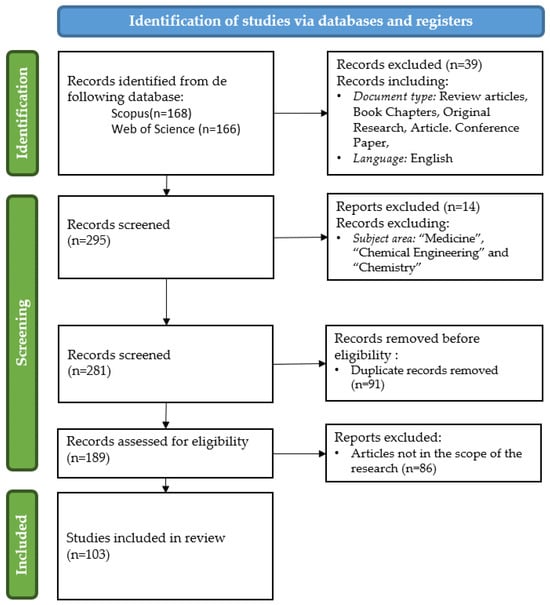
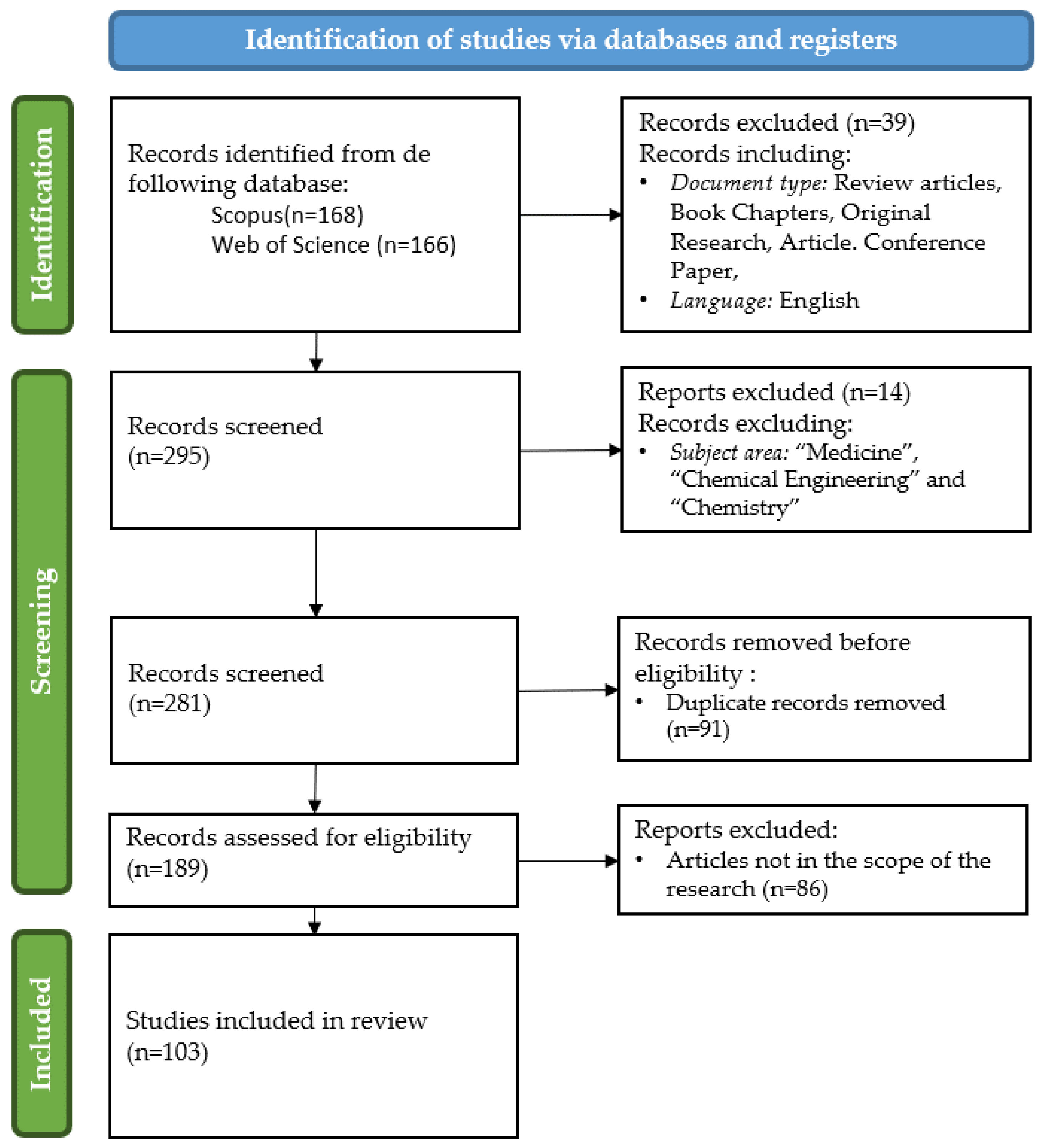
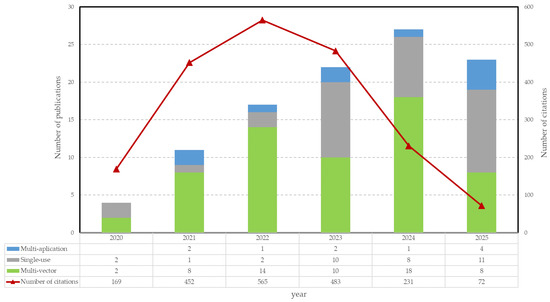
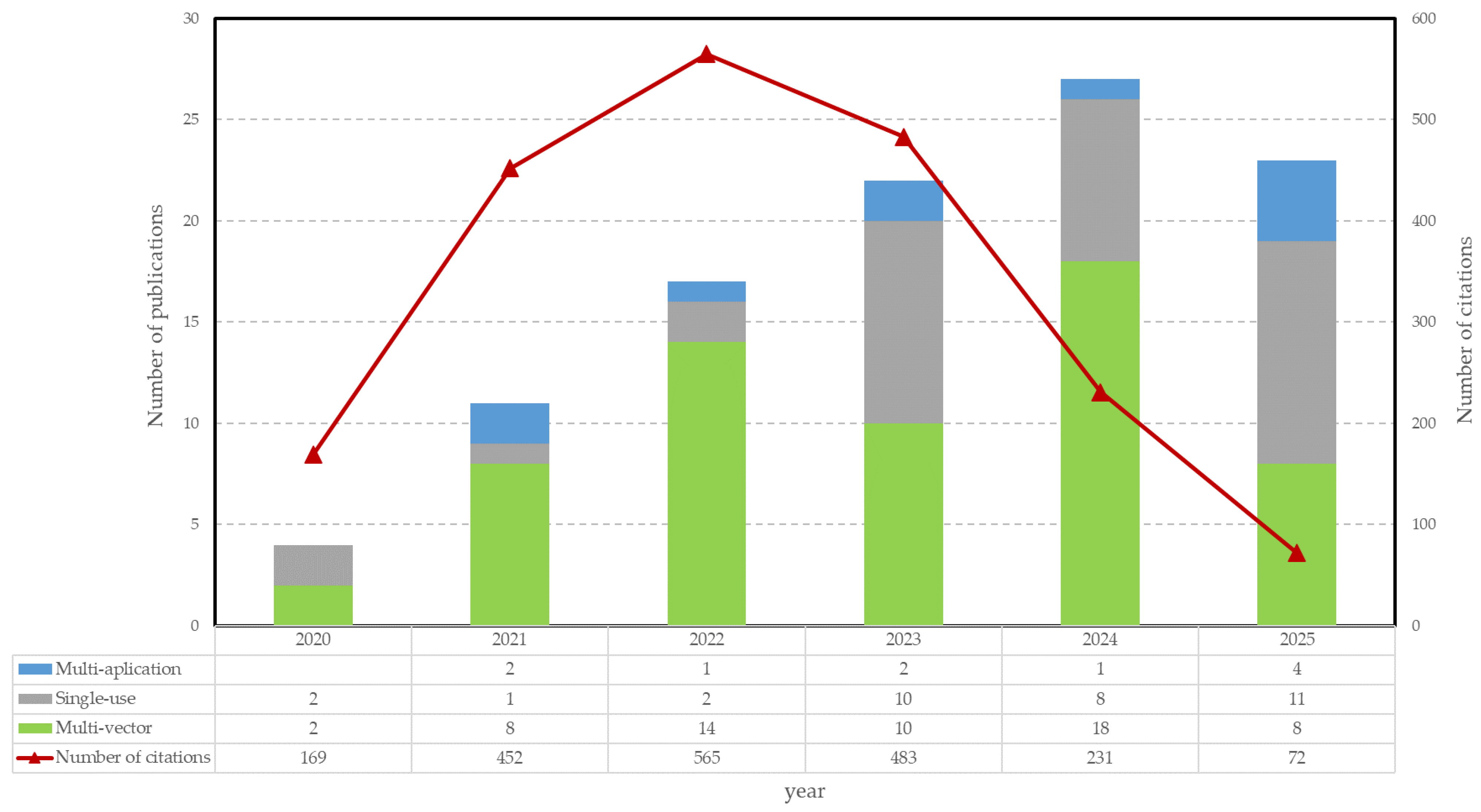
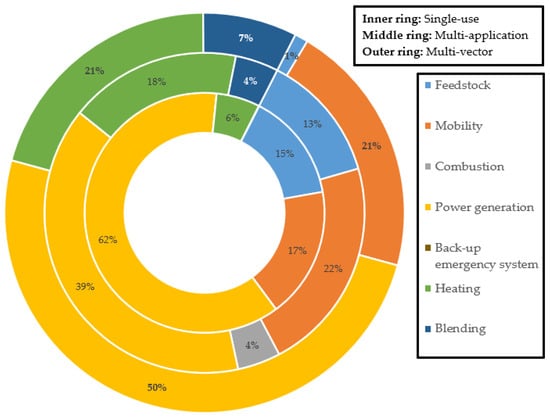
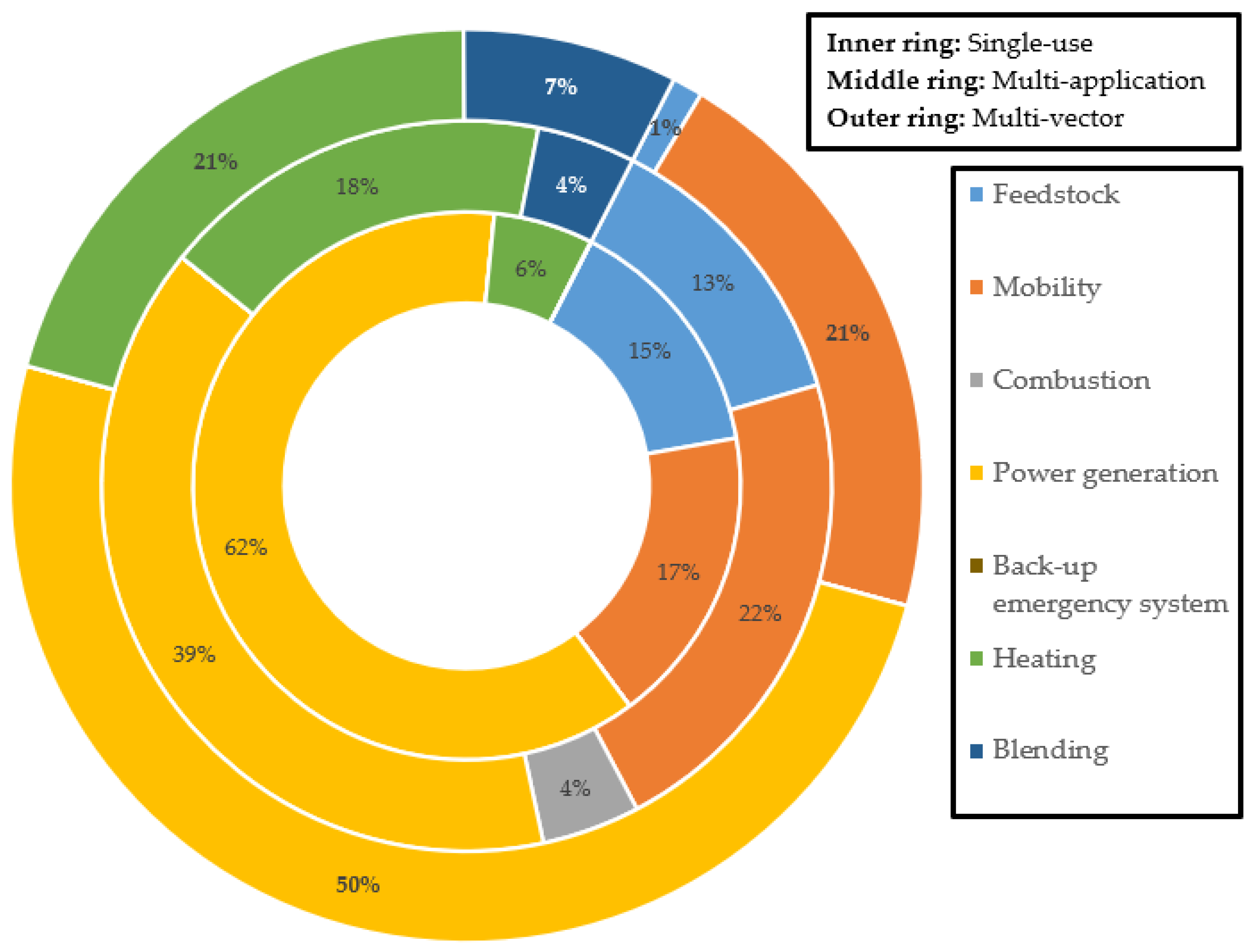
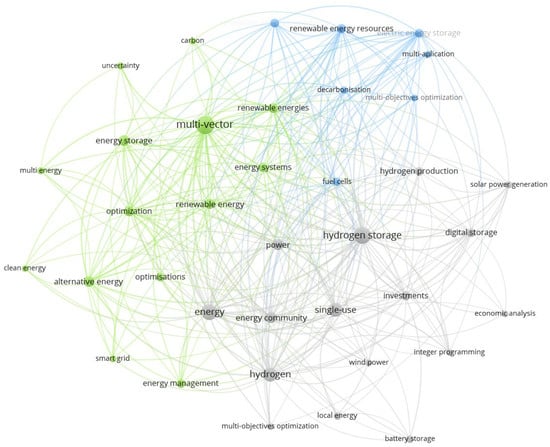
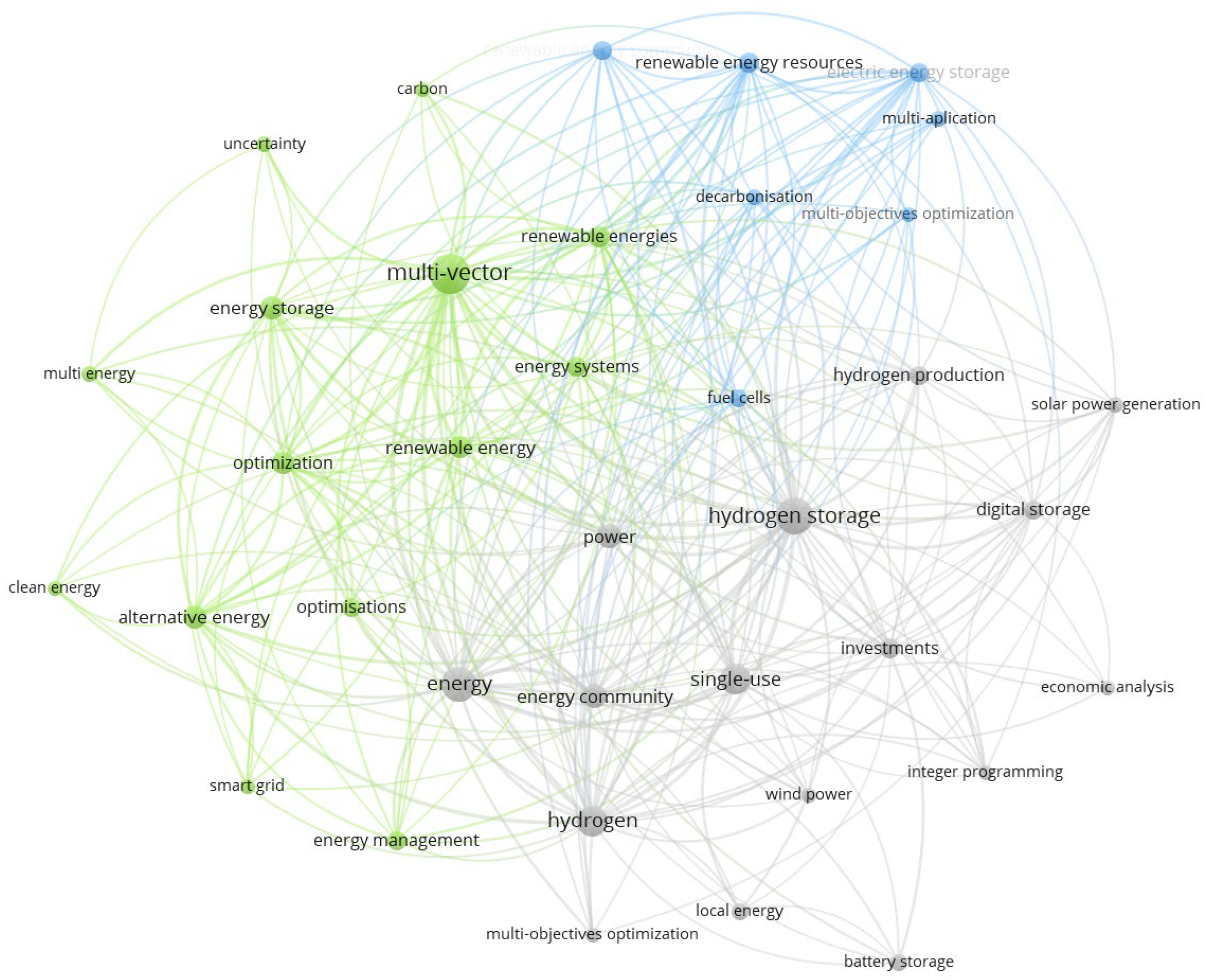
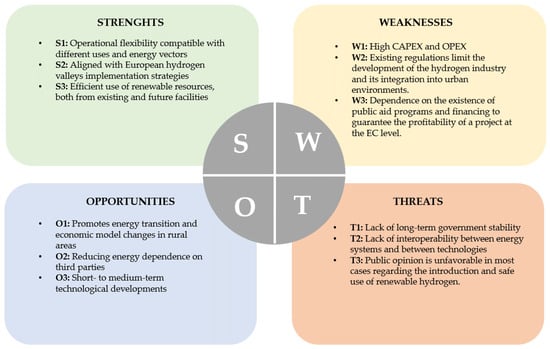
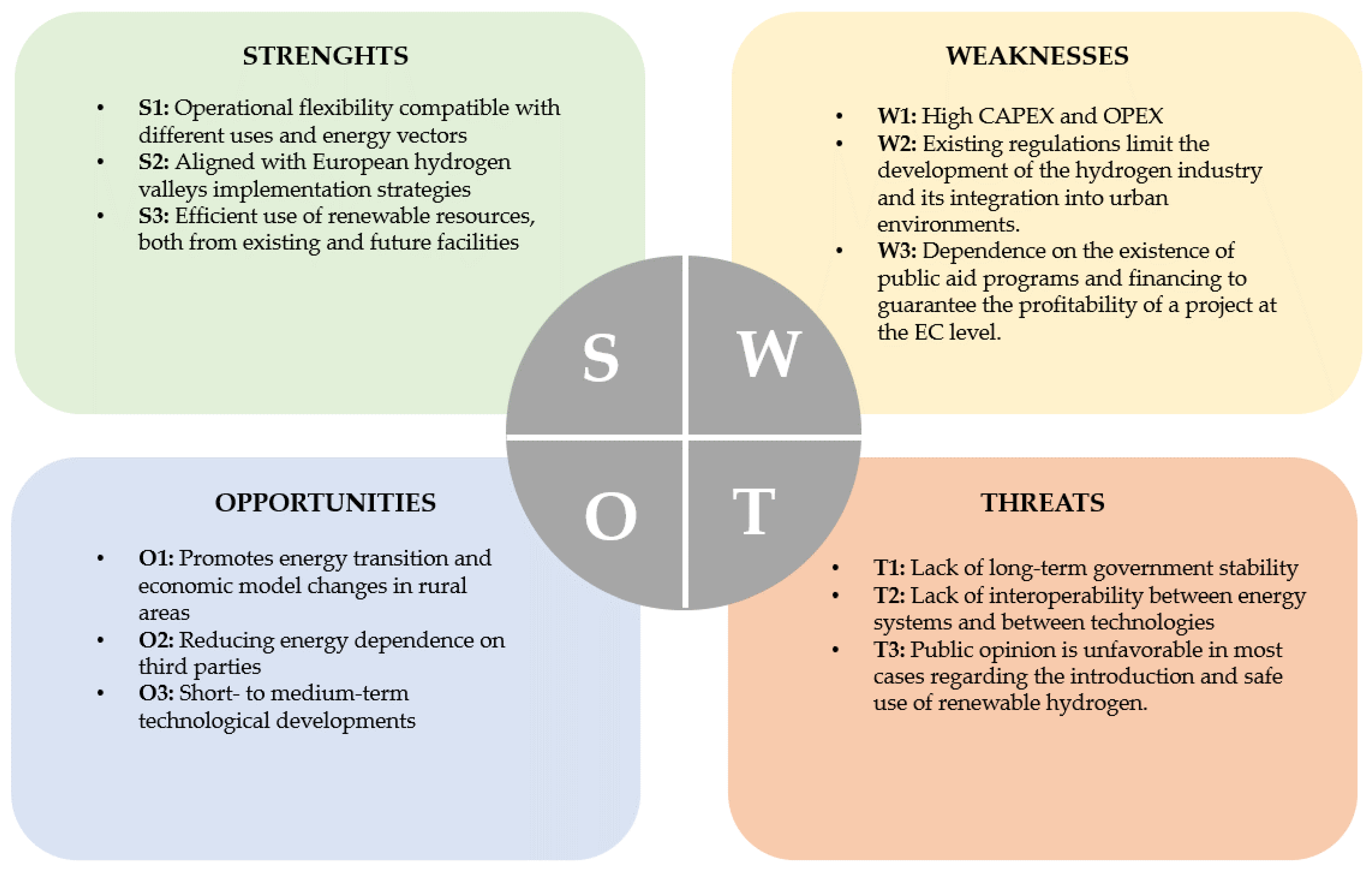

Disclaimer/Publisher’s Note: The statements, opinions and data contained in all publications are solely those of the individual author(s) and contributor(s) and not of MDPI and/or the editor(s). MDPI and/or the editor(s) disclaim responsibility for any injury to people or property resulting from any ideas, methods, instructions or products referred to in the content. |
© 2026 by the authors. Licensee MDPI, Basel, Switzerland. This article is an open access article distributed under the terms and conditions of the Creative Commons Attribution (CC BY) license.