
Skip to Content
HydrogenHydrogen
  • Article
  • Open Access

17 January 2026

Evaluating the Hydrogen Embrittlement Resistance of Nickel-Based Coatings as Diffusion Barriers for Carbon Steels


and
Department of Mechanical Engineering, Dalhousie University, Halifax, NS B3H 4R2, Canada
*
Author to whom correspondence should be addressed.

Abstract

This study evaluates the hydrogen embrittlement (HE) resistance of nickel-based electroplated coatings applied on cold-finished mild steel, with emphasis on their performance as diffusion barriers to impede hydrogen ingress. Nickel coatings were deposited using Watts plating bath under controlled electroplating parameters. Electrochemical hydrogen charging was performed in an alkaline medium at progressively increasing charging current densities to simulate varying levels of hydrogen exposure. Tensile testing was conducted immediately after charging to assess the mechanical response of both uncoated and nickel-coated specimens, focusing on key properties such as elongation, yield strength, ultimate tensile strength, and toughness. The results revealed a gradual degradation in ductility and toughness for the uncoated steel samples with increasing hydrogen content. In contrast, the nickel-coated specimens maintained mechanical stability up to a critical hydrogen threshold, beyond which a pronounced reduction in tensile response was observed. Fractographic analysis supported these trends, revealing a transition from ductile to brittle fracture characteristics with increasing concentrations of hydrogen. These findings highlight the protective capabilities and limitations of nickel-based coatings in mitigating hydrogen-induced degradation, offering insights into their application in industries where hydrogen embrittlement of structural materials is a major concern.

1. Introduction

The global demand for clean and sustainable energy has risen significantly over the years due to mounting concerns on environmental degradation, climate change, and the finite nature of fossil fuel resources. Fossil fuels continue to dominate the world’s energy supply and while they have been pivotal in driving economic and industrial growth, their usage is also accompanied by significant environmental repercussions. The combustion of fossil fuels are major sources of carbon dioxide (CO2) emissions, accounting for approximately 93% of global CO2 output [1], and contributing significantly to long-term ecosystem disruptions. The persistent reliance on carbon-based energy sources warrants the urgent need for more sustainable alternatives that have lower detrimental impacts on the environment. To address this, many countries are actively committing to strategies to decarbonize their economies through the adoption of cleaner energy initiatives. Among the viable options considered as cleaner energy carriers, hydrogen energy is identified as a promising prospect. Being the most universally abundant element, hydrogen is particularly attractive due to its recyclability, high energy content, and clean combustion profile [2]. When utilized as fuel, hydrogen energy produces only water as a by-product, making it a cleaner alternative to conventional fossil fuels. To foster the broader integration of hydrogen into modern energy applications, an approach being explored is hydrogen blending with natural gas. This method involves mixing a measured fraction of hydrogen with natural gas within a distribution system to create a blended gas mixture [1]. Since hydrogen combustion does not generate pollutants, its mixture with natural gas can aid in lowering greenhouse gas emissions and in reducing the overall carbon footprint from residential and industrial energy use [3]. Hydrogen energy has promising potential; however, its complete deployment is hindered by challenges relating to its safe production, transportation, and storage [4]. The lightweight nature, small atomic radius, and high diffusivity of hydrogen present a significant challenge as it tends to infiltrate structural materials. This issue results in a degradation phenomenon known as hydrogen embrittlement.
The embrittling effect of hydrogen was first discovered in 1875 by Johnson [5], who observed a temporary loss of toughness and breaking strains in iron immersed in acids. This discovery would go on to ignite what would become a century-long pursuit to understand hydrogen’s insidious interaction with metals. At its core, HE is a complex, multifaceted process, characterized by a significant deterioration of the mechanical properties, specifically the ductility and toughness, of metallic materials due to the presence of atomic hydrogen in their microstructure [6]. This degradation can result in sudden brittle fracture of a material that would normally be expected to deform plastically. The subject of hydrogen embrittlement is more prevalent in structural applications where materials are exposed to hydrogenated mediums for prolonged periods which ultimately results in premature material failure. Hydrogen atoms are extremely small and very mobile; this characteristic enables them to diffuse rapidly through metals. Even trace amounts of hydrogen can steadily establish conditions for embrittlement [7] and their accumulation within the metal structure can significantly alter its mechanical attributes. Preceding research have established that the presence of hydrogen in metals reduces their fracture toughness [8,9,10], fatigue strength [11,12], as well as their microscopic and macroscopic tensile strength [13,14,15] and this poses a major problem for various engineering practices. Hydrogen can be introduced into a material through several means. Common sources of hydrogen in metallic materials include electrochemical processes, such as cathodic charging and electroplating, pickling, corrosion reactions, as well as gaseous hydrogen sources like high-pressure hydrogen gas [16]. When hydrogen atoms are inside a metal, they can interact with microstructural discontinuities and crystal defects, which can also serve as trapping sites for hydrogen.
The level of embrittlement exhibited by metals and their alloys is heavily influenced by the quantity of hydrogen absorbed and the microstructural characteristics of the material, amongst other factors. Several metallic materials are known to exhibit susceptibility to HE, including high-strength steels, low-alloy steels, aluminum alloys, and super alloys. These materials are commonly utilized in several industries such as oil and gas, aerospace, construction, and manufacturing sectors, and are liable to compromised mechanical integrity due to hydrogen ingress. Metallic materials with body-centered cubic (BCC) and hexagonal close-packed (HCP) crystal structures are inherently more liable to hydrogen embrittlement, whereas face-centered cubic (FCC) metals exhibit little to no vulnerability to HE. The higher susceptibility of BCC metals, such as carbon and low-alloy steels, stems from the increased mobility of hydrogen within their crystal lattice [17]. Atomic hydrogen can destabilize metals by either reducing the cohesive bonding strength of metals atoms through a phenomenon known as hydrogen-enhanced decohesion (HEDE) [18], augmenting dislocation behavior which alters how metals deforms plastically through the mechanism of hydrogen-enhanced localized plasticity (HELP) [19,20], and in some cases, recombining into molecular hydrogen within the metal to create internal pressures that can prompt the initiation and propagation of cracks [21].
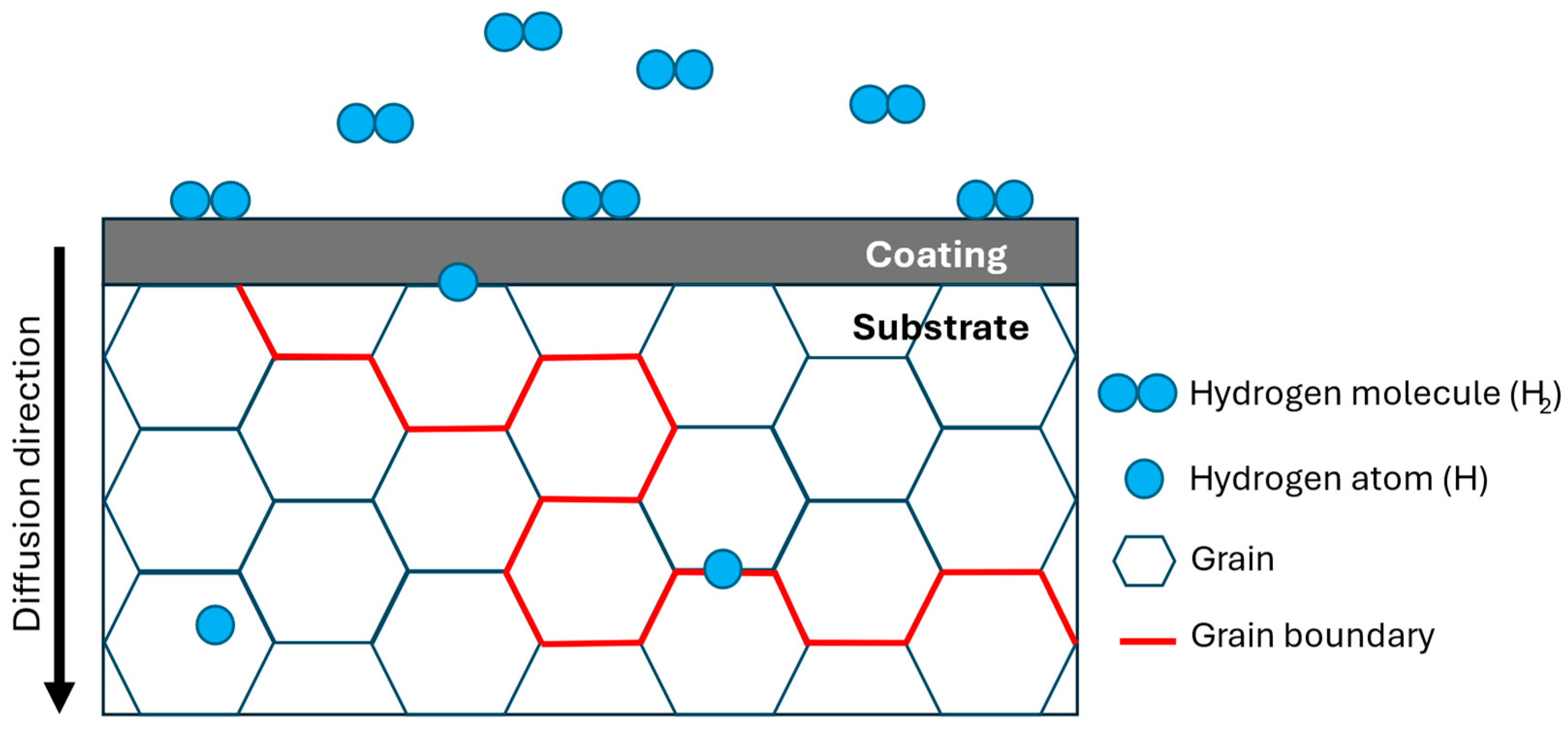
Given the extensive nature of HE, exploring effective mitigation strategies is paramount to ensure the integrity of structural materials and infrastructure. Most approaches typically aim to limit hydrogen ingress either by the selection of materials that restrict hydrogen permeation or by the application of surface treatments. Among the widely explored surface treatment solutions for mitigating HE are the use of hydrogen barrier coatings, which leverage the variation in hydrogen permeability between the coating material and metal substrate [22]. Such coatings serve as protective layers that hinder or slow down the diffusion of hydrogen atoms into the underlying material (substrate), as illustrated in Figure 1. Hydrogen molecules accumulate at the surface and subsequently dissociate into hydrogen atoms in an attempt to penetrate into the underlying substrate. The coating barrier significantly hinders this process by limiting the ingress of hydrogen. In some cases, the coating may not be entirely impermeable, and some fraction of hydrogen atoms manages to diffuse into the substrate and migrate to sites such as the coating-substrate interface, grain boundaries, or within the grain. The primary function of the coating barrier is to minimize hydrogen diffusion as much as feasibly possible, thereby reducing the concentration of hydrogen reaching the underlying metal and mitigating the risk of hydrogen-induced damage.
Figure 1. Schematic illustration of hydrogen diffusion through barrier coatings.
Multiple classes of coatings have been examined for this purpose, and they include ceramic, polymeric, and metallic coatings, each with distinct advantages and limitations. While ceramic coatings, such as titanium nitride (TiN) and silicon nitride (SiN), and polymeric coatings, like polyvinyl alcohol (PVA), often provide good barriers to hydrogen permeation, they succumb to brittleness or environmental instability under very harsh service conditions [23]. Metallic coatings, on the other hand, are well-known surface modification treatments vastly employed for their corrosion resistance and mechanical durability. Vanadium, titanium, and tungsten are some of the few metals with low hydrogen permeability [22]. Most of these metals, however, come with high cost and manufacturing complexities, which limit their application. This constraint warrants the need for other suitable alternatives. In this context, nickel-based coatings are recognized as suitable candidates for mitigating HE as they offer a favorable balance between cost, low hydrogen diffusivity, corrosion resistance, and ease of deposition through various scalable techniques. Several preceding studies have demonstrated the potential of nickel coatings in decreasing the permeability of hydrogen through structural materials [24,25,26]. Incorporating a nickel-rich interlayer within multilayered coatings has also been shown to effectively reduce hydrogen ingress in high-strength steels [27]. This barrier effect is beneficial for engineering applications where structural components are exposed to hydrogen-rich conditions, as it can delay hydrogen uptake and reduce the risk of HE.
Extensive research has been performed on HE; however, there is limited research regarding the use of pure nickel coatings as hydrogen diffusion barriers for HE mitigation. Most existing research on this subject is centered around nickel alloy and composite coatings, whilst the effectiveness of pure nickel coatings remains far less explored. This gap in the literature is quite significant as regulatory frameworks and industrial organizations depend on the latest research to support the safe implementation of hydrogen energy infrastructures. This study, therefore, seeks to bridge the gap by investigating the hydrogen embrittlement resistance of mild carbon steel materials coated with nickel as a hydrogen diffusion barrier. By examining the mechanical behavior of the coated steel materials under varying concentrations of hydrogen, this work aims to support the literature on nickel-based coatings as hydrogen barriers for the effective mitigation of hydrogen embrittlement.

2. Experimental Method

2.1. Test Specimens

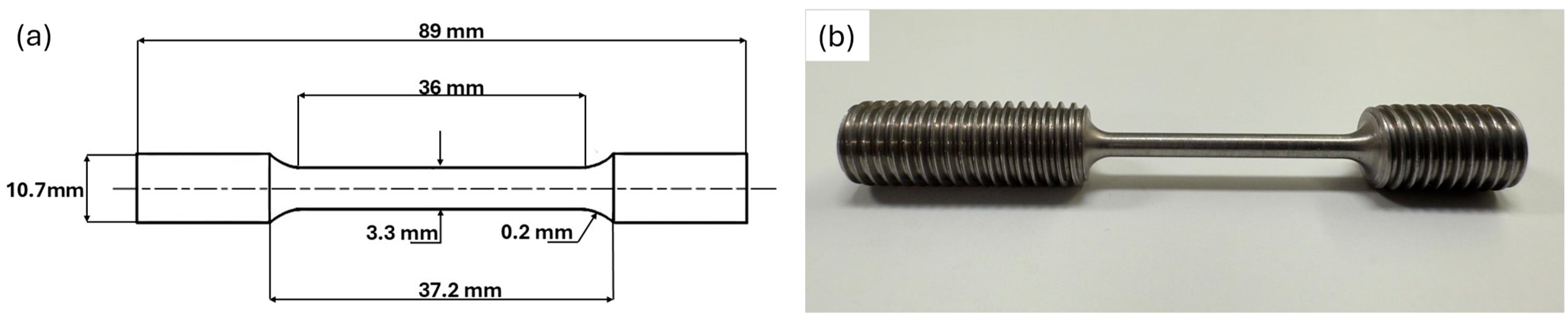
Cold-finished mild steel (AISI 1018) coupons were used as the material in this study. The test specimens were machined into a standard dog-bone geometry, as shown in Figure 2, to facilitate sufficient assessment of the tensile properties. To ensure maximum accuracy, the chemical composition of the mild steel samples was analyzed to verify compliance with industrial standards and to also check the potential presence of dissolved hydrogen. This analysis was essential as hydrogen may have been introduced during processing, handling, or storage conditions, which could affect the experimental results.
Figure 2. (a) Schematic drawing of the tensile specimen. (b) Actual tensile specimen.
The inductively coupled plasma (ICP) spectroscopy method was used to analyze the chemical composition of the test samples. This technique has a multi-element capability that enables precise quantification of individual elements in a sample matrix. The results of the elemental analysis are presented in Table 1 below.
Table 1. Results of elemental composition obtained from ICP spectroscopy analysis.

2.2. Nickel Electroplating

Deposition of nickel coatings onto the mild steel substrates was achieved by a galvanostatic electroplating technique. The process is driven by the application of a direct current within a two-electrode electrochemical cell. In this configuration, the steel substrate serves as the cathode and a nickel metal sheet serves as the anode, with both electrodes immersed in a plating bath. During the plating process, nickel ions in the electrolyte are electrochemically reduced at the cathode surface to form a metallic nickel-coated layer. Simultaneously, anodic dissolution of the nickel anode replenishes the nickel ions in the plating bath, maintaining ionic balance. The electrochemical reactions in this process are described below.
The primary reaction at the cathode involves the reduction of nickel ions to metallic nickel and is given by the following expression:
Ni2+ + 2e → Ni
At the anode, metallic nickel is oxidized to nickel ions by the following expression:
Ni → Ni2+ + 2e
Additionally, hydrogen evolution can also occur as a side reaction:
2H+ + 2e → H2
Prior to electroplating, all steel substrates underwent proper sample preparation to ensure good adhesion and uniform nickel deposition. First, the gauge sections of the test specimens were manually ground using silicon carbide abrasive papers and then polished to a surface finish of 3 microns (µm), using a diamond suspension polishing liquid, to minimize surface roughness. The polished specimens were then cleaned using soap and hot water to remove residual particulates. Meticulous care was taken to avoid physical contact with the polished surface after cleaning to prevent contamination.
To eliminate grease, oil, and dirt, the specimens were degreased in a heated alkaline solution with a composition of 30 g/L trisodium phosphate (Na3PO4), 30 g/L sodium carbonate (Na2CO3), and 50 g/L sodium hydroxide (NaOH). The samples were fully immersed in this solution at 85 °C for 5 min and rinsed afterwards with distilled water. Following degreasing, acid pickling was performed to remove oxides and scale. The specimens were immersed in 20% hydrochloric acid (HCL) pickling solution for 60 s and then rinsed thoroughly in distilled water. Next, surface activation was carried out by dipping the samples in 10% sulfuric acid (H2SO4) activation solution for 30 s, followed by a final rinse in distilled water. This step was essential to ensure a chemically reactive surface for the deposition of nickel. The threaded ends of the specimens were masked with chemical-resistant tape to ensure that only the exposed gauge area was coated with nickel. Importantly, the gauge area was accurately accounted for when calculating the required current for the electroplating process. After masking, the samples were suspended vertically in the electroplating cell with the plating bath maintained at a volume of 300 mL for all plating experiments.
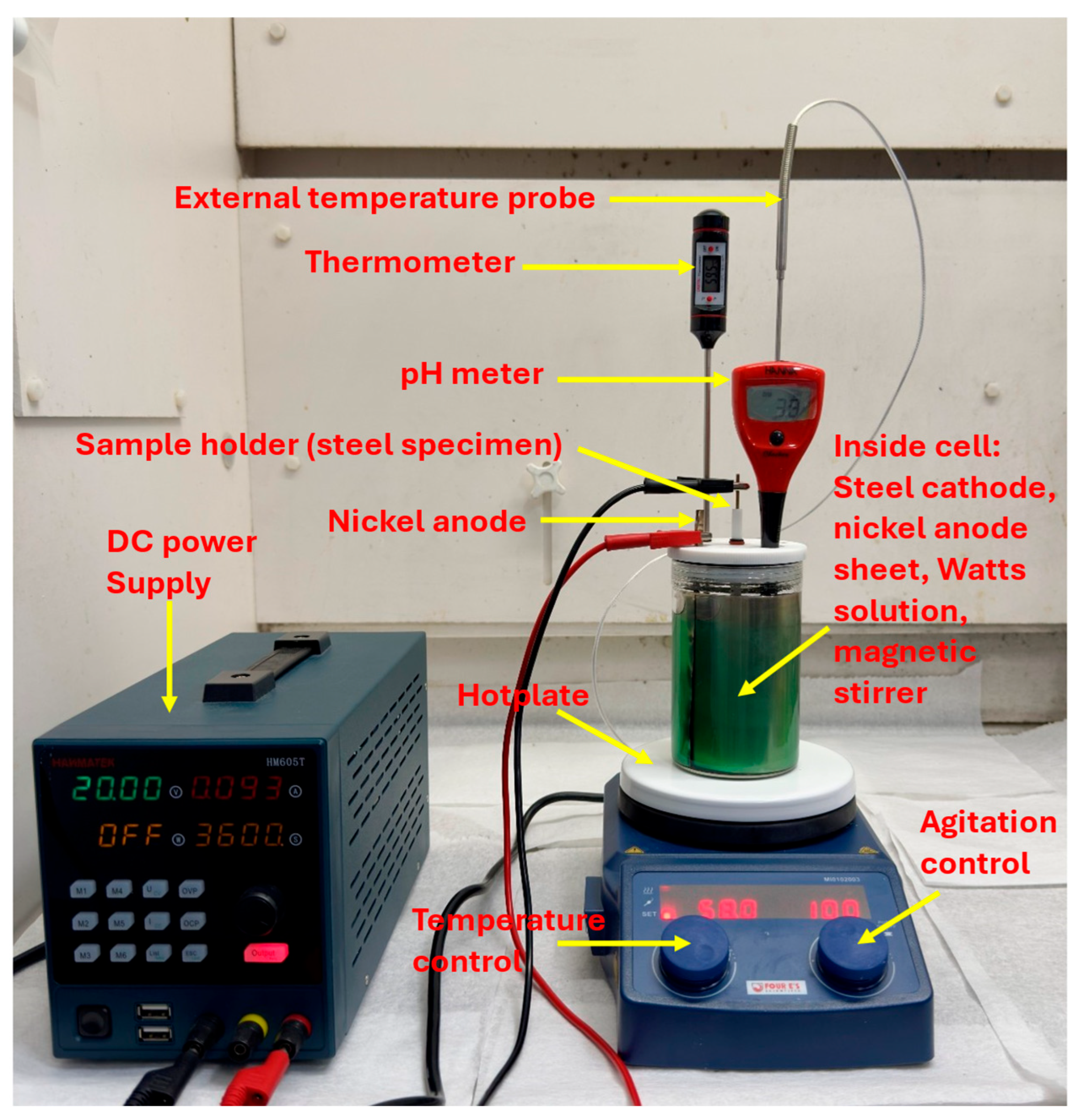
The electroplating setup is shown in Figure 3. It comprises a direct current (DC) power supply (Hanmatek, HM605T, Shenzhen, China) that delivers constant current to the plating system, a pH meter (Hanna Instruments Inc., Woonsocket, RI, USA) to continuously monitor the pH of the plating bath, an external temperature probe integrated with a digital hotplate device (Four E’s Scientific, MI0102003, Guangzhou, China) to regulate thermal input to the plating cell, and a calibrated thermometer to monitor the bath temperature throughout the process. Inside the electroplating cell was the Watts nickel plating solution, a nickel metal sheet (anode) that encircles the inner circumference of the plating cell, the steel substrate (cathode), and a magnetic stirrer (Four E’s Scientific, MI0102003, Guangzhou, China) for agitation. Both the bath temperature and agitation speed were controlled via an onboard control unit on the hotplate device to ensure consistent conditions throughout the electrodeposition process.
Figure 3. Experimental setup for nickel electroplating.
Nickel deposition was carried out using a standard Watts nickel plating bath formulation comprising nickel sulfate (NiSO4∙6H2O) as the primary source of nickel ions, nickel chloride (NiCl2∙6H2O) to improve anode dissolution and bath conductivity, and boric acid (H3BO3) as a buffering agent to stabilize the pH of the electrolyte. Chloride ions introduced by nickel chloride in the plating bath promote dissolution of the nickel anode by preventing the formation of passive films on the anode surface, which would otherwise inhibit its dissolution. In addition, nickel chloride improves the electrical conductivity of the electrolyte, ensuring an adequate supply of Ni2+ ions to the cathode, which is essential for consistent nickel deposition.
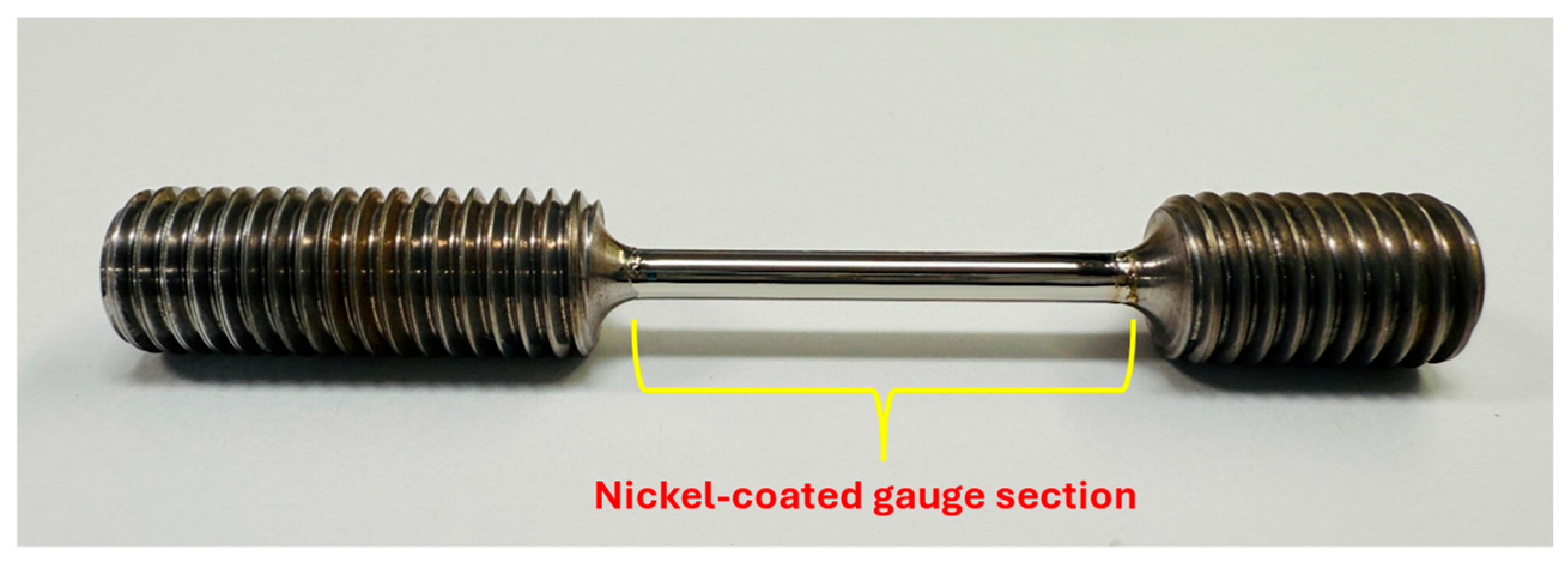
The pH of the plating bath was maintained between 3.5 and 4.5. The bath pH could be adjusted by adding drops of 10% by volume sulfuric acid (H2SO4) to lower the pH or drops of 25% by volume sodium hydroxide (NaOH) to raise the pH, if needed. The temperature of the nickel plating bath (Watts solution) was kept between the range of 50–60 °C, and mild agitation was applied with a magnetic stirrer at speeds of 100 rpm or less to promote uniform ion distribution. A constant current density of 25 mA/cm2 was maintained throughout the deposition process, with a plating time of 60 min (1 h). After electroplating, the nickel-coated steel specimens were rinsed thoroughly with distilled water to remove any residual chemicals from the surface, and then dried with warm air. The resulting nickel-coated specimen is shown in Figure 4. The plating parameters were controlled and kept consistent for all plating experiments.
Figure 4. Nickel-coated test specimen.
During nickel electroplating, hydrogen evolution occurs as an inherent side reaction that may lead to hydrogen being introduced into the steel substrates. In this study, hydrogen produced from the electrodeposition process is not treated as an independent variable but rather as an intrinsic and unavoidable outcome of the coating process. Since the test samples used are coated under identical electroplating parameters, the hydrogen incorporated during the nickel-plating procedure is relatively comparable across all coated samples, establishing a common baseline condition for subsequent analysis.

2.3. Electrochemical Hydrogen Charging

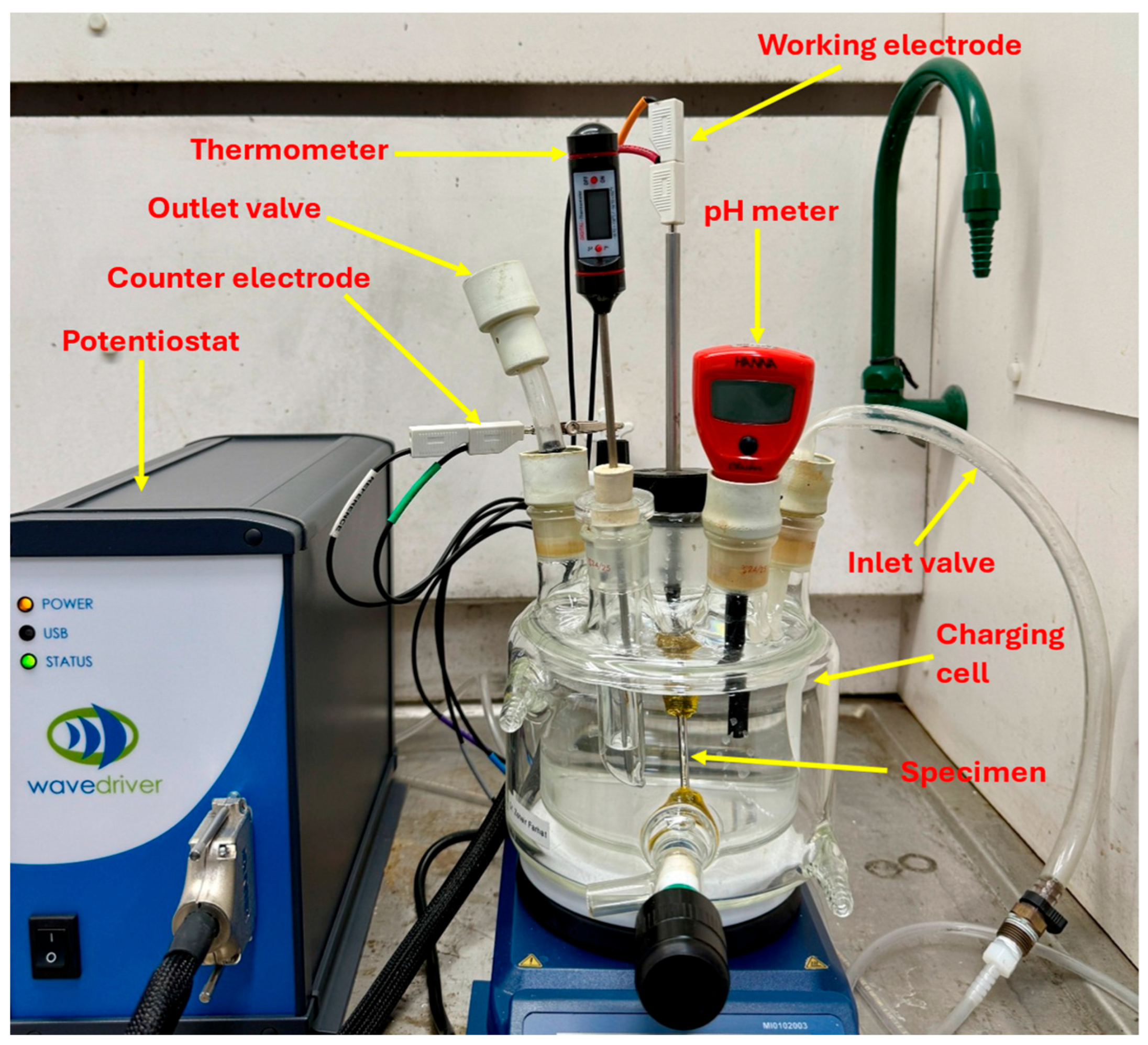
The nickel-coated test specimens were subjected to cathodic charging to simulate the conditions encountered by steel materials in hydrogenated environments. The experimental charging setup, shown in Figure 5, consists of a two-electrode system composed of a working electrode (connected to the nickel-coated specimen) and a platinum counter electrode. The working electrode induces a reduction reaction on the coated steel specimen, while the counter electrode completes the circuit through the flow of electric current. A potentiostat (Pine Research Instrumentation, Durham, NC, USA) with a maximum current capacity of 1 A was used to supply constant current to the electrochemical cell. The charging cell, which was hermetically sealed to maintain experimental integrity, was fitted with one-sided inlet and outlet valves to enable gas purging. The electrolyte used was an alkaline solution of 0.1 M sodium hydroxide (NaOH), uniformly mixed with 3.33 g/L ammonium thiocyanate (NH4SCN), used as a hydrogen recombination poison to prevent the formation of molecular hydrogen.
Figure 5. Experimental setup for electrochemical hydrogen charging.
To ensure accurate monitoring of the test conditions, a pH meter and thermometer were added to the setup through designated ports on the charging cell to monitor the electrolyte’s pH (11.4) and temperature (23.1 °C), respectively. The setup was interfaced with a computer system running software (Aftermath 2.1.13189), which enabled precise control of the experimental parameters. Prior to testing, the threaded ends of coated steel specimens were masked with a chemical-resistant tape to ensure only the nickel-coated gauge area experienced hydrogen charging. Before immersing in the charging solution, the exposed gauge area of the coated specimens was cleaned with acetone to remove any surface contaminants. The charging cell was purged with argon gas for approximately five (5) minutes for deaeration.
Electrochemical hydrogen charging was employed to introduce varying levels of hydrogen in both the uncoated and nickel-coated specimens. The applied current density was used as a control parameter to impose progressively increasing hydrogen exposure based on the established relationship between charging current density and hydrogen content under steady-state charging conditions [28,29]. In the absence of direct hydrogen quantification techniques, the hydrogen concentrations reported in this study represent estimated, relative hydrogen levels inferred from the indirect method of the applied charging parameters [30] rather than absolute measurements. All test samples were subjected to a constant charging duration of 180 min. The charging parameters are provided in Table 2.
Table 2. Selected electrochemical hydrogen charging parameters.

2.4. Tensile Testing

Uniaxial tensile tests were conducted on the nickel-coated steel specimens to evaluate their mechanical properties before and after hydrogen charging under varying conditions. These tests aimed to assess the influence of hydrogen diffusion on the tensile properties of the coated and uncoated samples for a comparative evaluation.
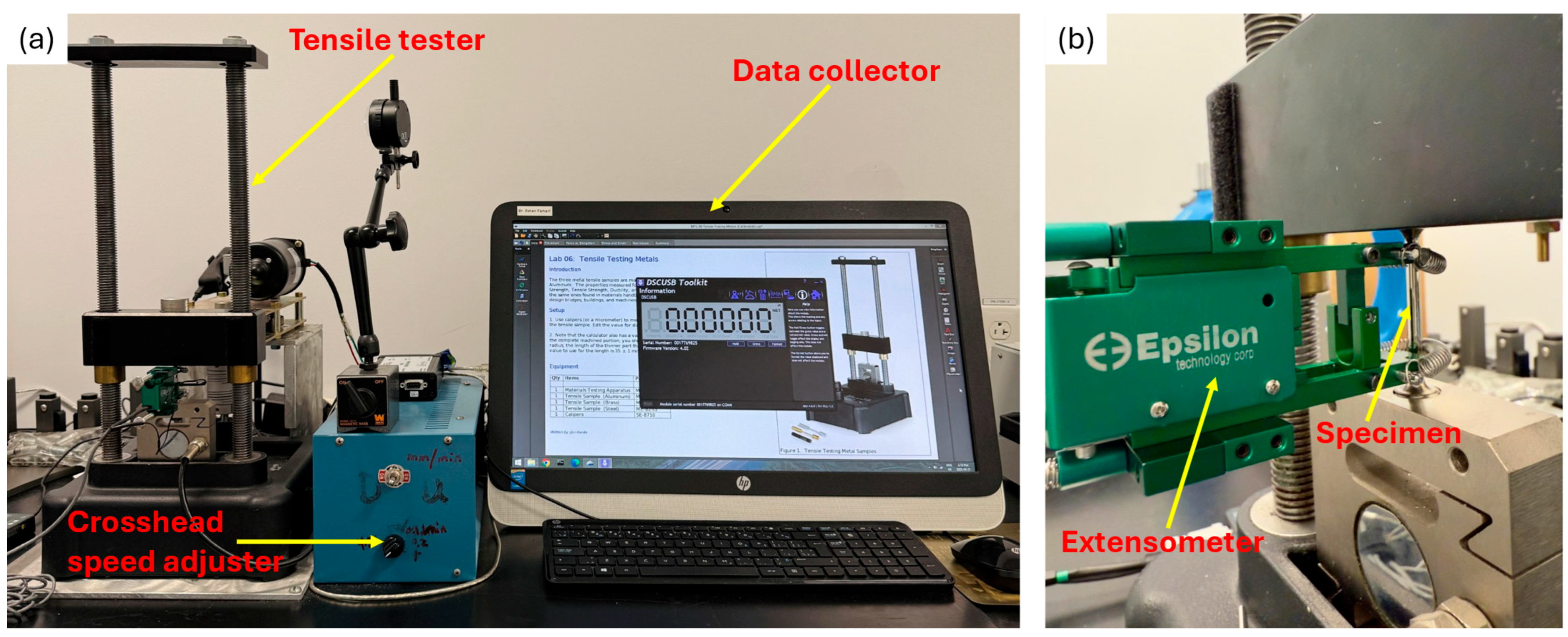
The tensile testing setup is shown in Figure 6. It includes a computer system installed with a software package ( PASCO Capstone 1.4.1) for data collection, and a PASCO tensile testing machine (ME-8236). Strain measurements were obtained using an extensometer (Epsilon Technology Corp, Jackson, WY, USA) with a gauge length of 1 inch, securely attached to the coated gauge section of each specimen to ensure accurate strain recording. The threaded ends of specimens were fixed into the upper and lower grips of the tensile tester to maintain axial alignment during loading. A constant crosshead speed of 5 mm/min and tensile strain rate of 0.2 min−1 was applied to each sample until fracture.
Figure 6. (a) Tensile testing setup. (b) Fitted the specimen in the grips with the extensometer.

2.5. Characterization Techniques

2.5.1. Metallography

The microstructural features of the nickel-coated, cold-finished mild steel samples were examined using standard metallographic procedures. The specimens were sectioned, mounted in epoxy resin, ground, polished, and etched in accordance with the outlined standards in [31,32]. Following preparation, microstructural analysis was conducted using both a Thermo Scientific AXIA ChemiSEM scanning electron microscope (SEM) (Waltham, MA, USA) and a confocal microscope (Keyence VK-X1000, Chicago, IL, USA). This dual approach enabled observation of the coating morphology and the microstructural features of the steel substrate at both low and high magnifications.

2.5.2. Hardness Testing

The hardness of the coated test samples was evaluated using the Rockwell hardness B scale test, which followed standardized protocols specified in ref. [33]. The sample surface was carefully prepared to ensure smoothness and cleanliness, minimizing any surface irregularities or contaminants that could affect the measurements. The sample was then firmly mounted on the testing platform of the hardness testing machine (Instron Wilson Hardness®, Rockwell 2000, Rolling Meadows, IL, USA). A 1/16-inch steel ball indenter was applied with an initial (minor) load of 10 kgf to establish proper contact and stable seating on the surface. Once stabilized, a major load of 100 kgf was applied, causing the indenter to penetrate further into the material. The testing machine automatically measured the depth of the indentation after maintaining the load for a specified dwell time.

2.5.3. X-Ray Diffraction Analysis

The nickel-coated steel samples were analyzed using the X-ray diffraction (XRD) method to characterize their crystalline phases. A portion of the sample was sectioned for this analysis. The surface of the sectioned portion was polished and cleaned. Diffraction analysis was conducted using a high-performance Bruker D8 Advance X-ray diffraction system (Bruker, Billerica, MA, USA), equipped with a high-speed LynxEyeTM detector and a Cu–Kα radiation source, operated at 40 kV and 40 mA. Sample scans were performed over a 2θ range from 20° to 100° with a step size of 0.049°. This enabled sufficient detection of diffraction peaks. The resulting diffraction data was processed using Bruker’s EVA software (DIFFRAC.EVA V7, DIFFRAC.Part11 V8) and compared against reference entries in the International Centre for Diffraction Data (ICDD) Powder Diffraction File (PDF) database for pattern matching. The diffraction patterns obtained from the analysis are discussed in the subsequent section.

3. Results and Discussion

3.1. Microstructure (XRD, Hardness, Confocal, and SEM)

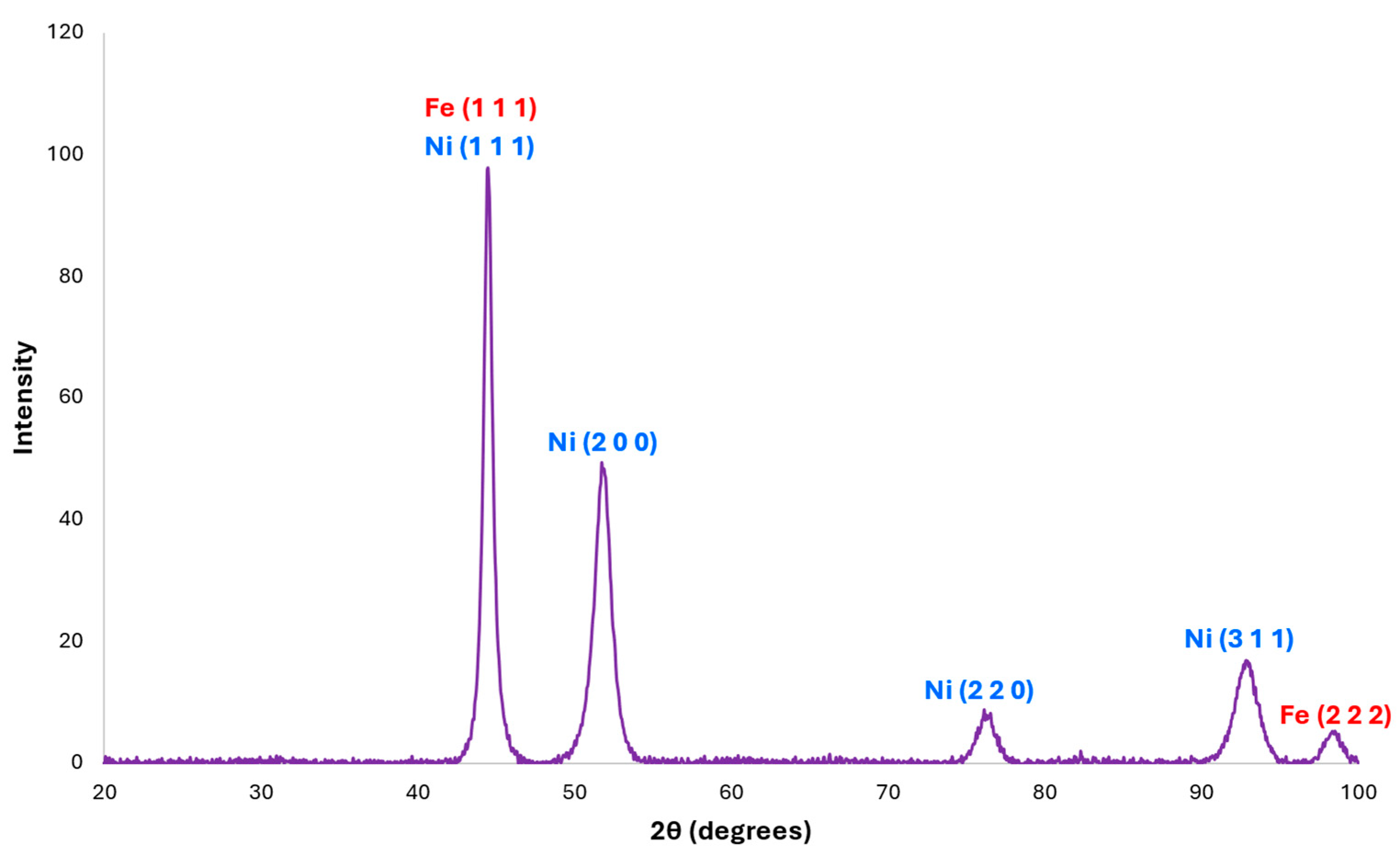
The X-ray diffraction (XRD) pattern for the nickel-coated, cold-finished mild steel sample is shown in Figure 7. The nickel layer depicted a face-centered cubic (FCC) structure, indicating a crystalline coating. Peaks for the underlying steel corresponded to a body-centered cubic (BCC) structure, confirming the ferritic phase of the mild steel.
Figure 7. XRD patterns of the nickel-coated mild steel.
Rockwell hardness test conducted on sectioned nickel-coated mild steel specimens yielded an average hardness value of 91.47 HRB. This value reflects a relatively high strength compared to an uncoated, fully annealed mild steel, which is typically in the range of 70 to 85 HRB [34]. Such levels of hardness are suitable for various structural applications, such as gas pipelines, where the mechanical attributes of strength and hardness are required.
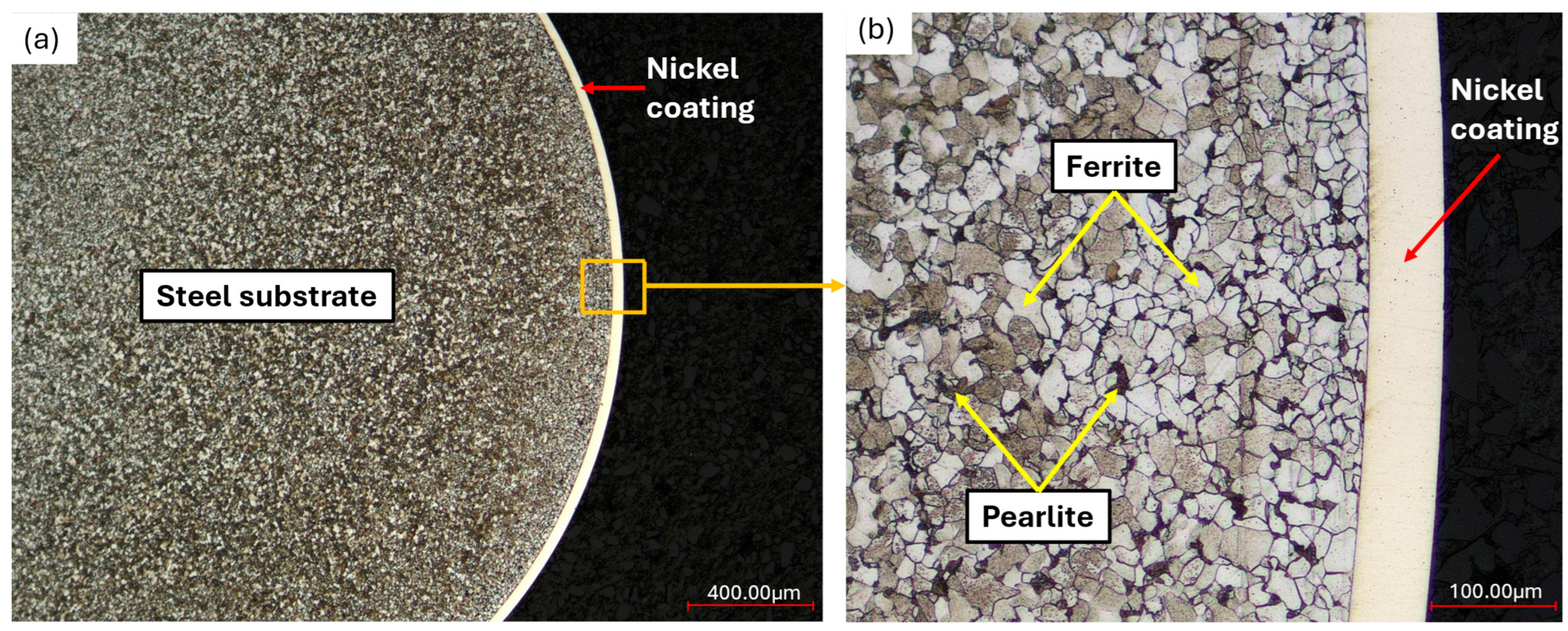
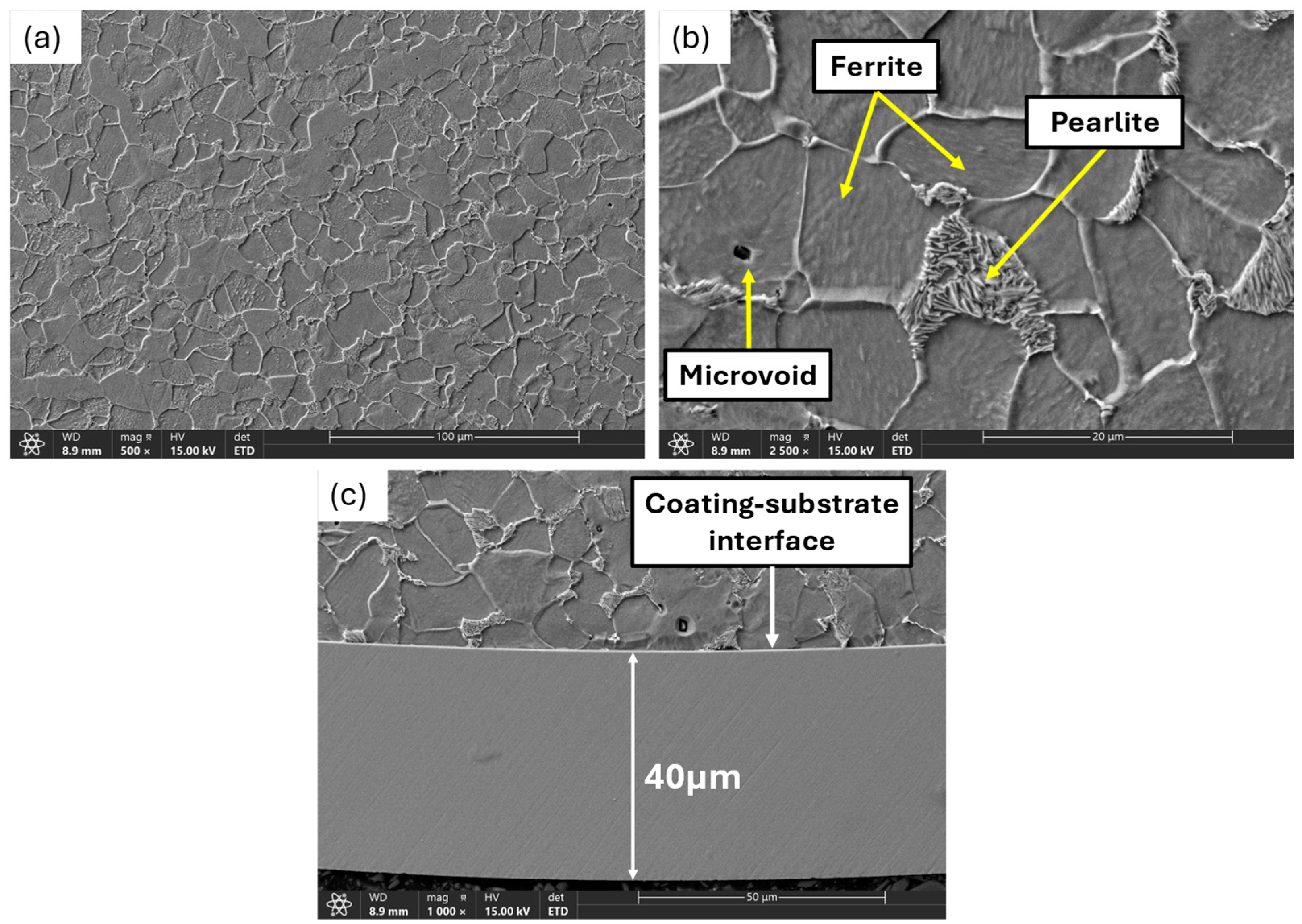
Metallographic analysis, performed using both SEM and confocal microscopy, revealed a microstructure comprising a homogenous distribution of ferrite and pearlite grains, as shown in Figure 8 and Figure 9.
Figure 8. Microstructural features of the etched coated steel specimen under a confocal microscope: (a) 5× magnification; (b) 20× magnification.
Figure 9. SEM images of etched specimen: (a) 500× magnification; (b) 2500× magnification; (c) nickel coating morphology and thickness.
Ferrite (α-iron) grains appeared as equiaxed, lighter phases, while pearlite, defined by alternating layers of ferrite and cementite (Fe3C), was observed as darker, lamellar phases. This microstructural composition is characteristic of low-carbon steels. In addition, SEM imaging also showed the presence of microvoids within the sample matrix. These microvoids observed on the etched surface are pre-existing features associated with the material’s manufacturing history, which encompasses cold-working and prior processing. These features may also act as potential trapping sites for induced hydrogen. The electrodeposited nickel coating appeared as a dense, uniform layer with an average thickness of approximately 40 microns (µm), as determined through preliminary cross-sectional analysis. A clearly defined interface was observed between the nickel-coated layer and the steel substrate, indicating good metallurgical adhesion of the nickel coating to the underlying mild steel.

3.2. Tensile Properties

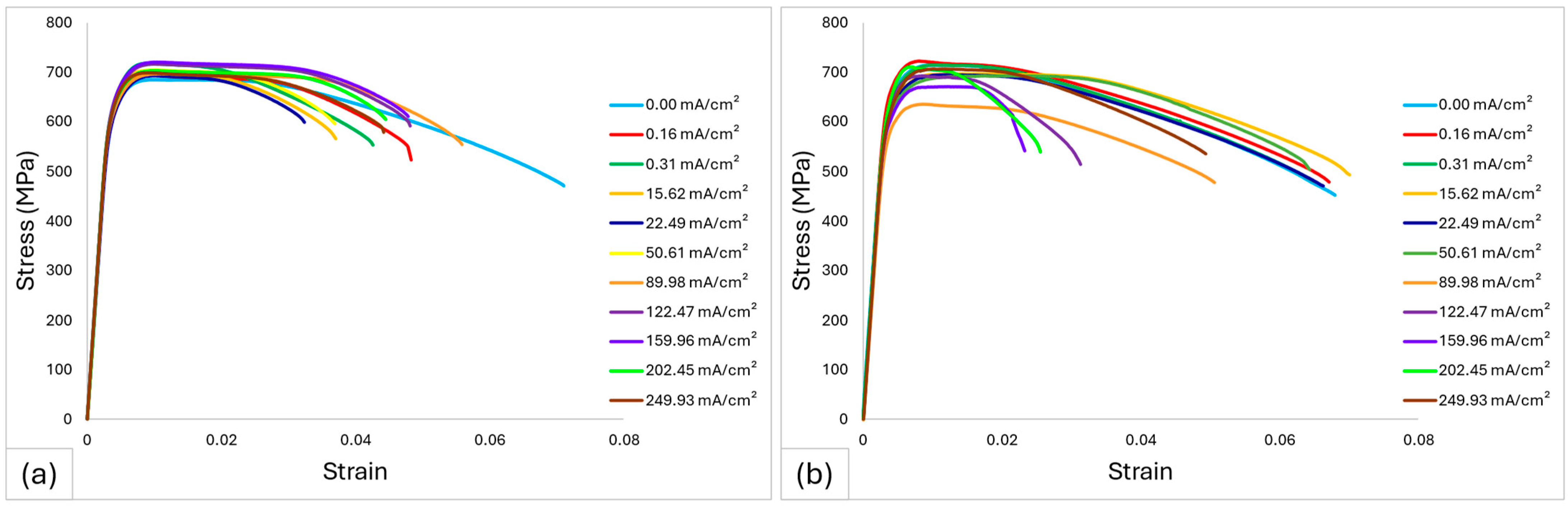
The tensile results for both coated and uncoated specimens subjected to electrochemical hydrogen charging revealed progressive yet distinct behaviors as illustrated by the stress–strain plots in Figure 10. The variation in tensile responses reflects the outcome of the interactions between hydrogen and the metals. Initially, as hydrogen content increased with rising current densities, the uncoated specimens displayed a clear susceptibility to hydrogen embrittlement, whereas the nickel-coated specimens showed an initial resistance to hydrogen-induced degradation, followed by a more abrupt embrittlement response at higher charging conditions. This contrasting behavior demonstrates the underlying differences in hydrogen ingress dynamics between the test samples and also points to the effectiveness and limitations of the electrodeposited nickel coating as a hydrogen diffusion barrier.
Figure 10. Stress–strain plots for various hydrogen charging current densities: (a) uncoated specimens; (b) nickel-coated specimens.
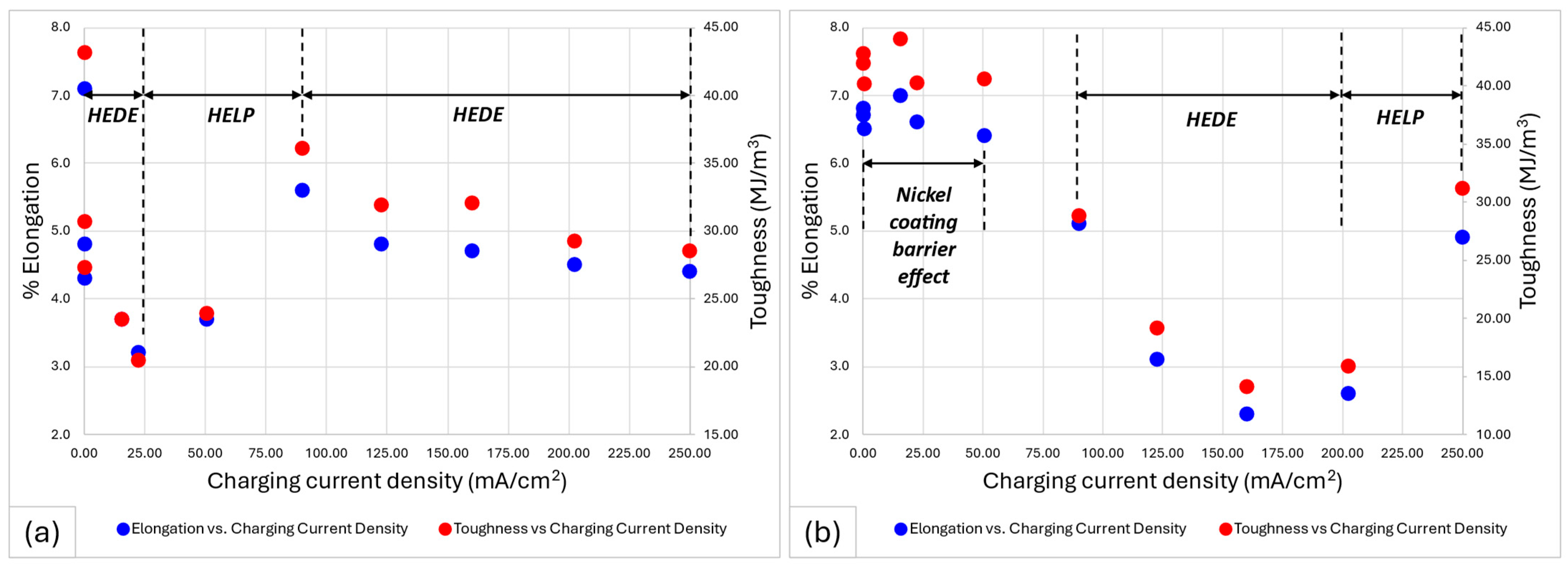
For the uncoated specimens, the embrittling impact of hydrogen is clearly observed at the early stages of cathodic charging. In the absence of induced hydrogen (0.00 mA/cm2), the sample reaches a percent elongation of 7.1%. This value establishes a baseline for evaluating the effects of hydrogen permeation. Following a rise in charging current density, ductility declines sharply to 4.8% at 0.16 mA/cm2. This immediate degradation highlights the pronounced sensitivity of low-carbon steels to diffusible hydrogen. The decreasing trend in ductility—measured as percent elongation—continues as values plummet to 3.2% at a current density of 22.49 mA/cm2. Interestingly, at 89.98 mA/cm2, there is an anomalous rebound in percent elongation, which rises to 5.6%. However, this gain is temporal as ductility continues to decline up to 4.4% at the highest charging current density tested in this study. Several factors, ranging from HE, hydrogen trapping, microstructural heterogeneity, and hydrogen-assisted decohesion and plasticity, collectively contribute to the tensile behavior depicted by the uncoated specimens.
In the case of the uncoated samples, the pathway for hydrogen’s ingress into the bulk steel material is direct in the absence of a physical coating barrier. Hydrogen enters the steel lattice through adsorption and subsequent dissociation at the surface during cathodic charging. Once absorbed, atomic hydrogen diffuses through the steel matrix. The uptake of hydrogen, however, is far from uniform as its diffusion is dynamically altered by a network of microstructural defects within the crystal lattice. Hydrogen atoms have a high affinity for certain microstructural features, such as vacancies, dislocations, and grain boundaries, which can serve as effective trapping sites for hydrogen. These sites can disrupt the mobility of hydrogen atoms and can also localize hydrogen at various zones within the steel’s microstructure. The buildup of hydrogen at these regions could undermine the material’s capacity to sustain plastic flow, which ultimately results in embrittlement.
Based on the findings of this study, the observed trend for the uncoated specimens can best be rationalized by the mechanistic interplay of HEDE, internal stress formation, and strain localization. From cathodic charging, regions of high hydrostatic stress become focal points for hydrogen accumulation. In this context, the role of HEDE becomes relevant. The introduction of hydrogen into the steel’s crystal structure reduces the cohesive strength between metal atoms, weakening metallic bonds and lowering the energy required to initiate and propagate cracks. This embrittlement mechanism, while occurring on an atomic scale, has macroscopic impacts. Hydrogen interacts preferentially with stress-concentrating features such as grain boundaries, inclusions, voids, and areas of elevated dislocation density. During tensile loading, these microstructural features, laden with hydrogen, become preferential sites for the nucleation of microcracks within the steel matrix. The growth of these microcracks results in the early onset of fracture, which manifests as reduced elongation portrayed in the steel’s tensile response. In addition, the absorption of hydrogen could alter the local stress state within the steel’s crystal structure. While hydrogen atoms are small, their accumulation within the steel’s crystal structure may also modify the stress condition of the metal due to their interaction with the aforementioned microstructural features, leading to localized internal stress concentrations that act synergistically with the applied load, consequently limiting the material’s ability to sustain plastic flow.
Induced hydrogen also augments the deformation behavior of the mild steel specimens by promoting strain localization through a phenomenon termed hydrogen-induced strain localization [35]. While hydrogen can facilitate dislocation motion, it does so unevenly. Rather than enabling uniform plastic flow, hydrogen encourages dislocations to move within concentrated slip bands, creating localized zones of deformation. These regions create stress concentrations due to strain incompatibility with the surrounding matrix, which can assist crack nucleation and growth. Consequently, the material fails prematurely, with elongation reflecting mostly localized plasticity rather than bulk uniform deformation. Hydrogen adsorption is also known to elevate dislocation emission at crack tips, which exacerbates crack expansion [36]. Collectively, these mechanisms lead to the deterioration of the steel’s structural integrity as depicted by its tensile response across varying hydrogen concentrations expressed in terms of the charging current densities.
The tensile response of the nickel-coated specimens revealed a distinctly different pattern from the uncoated samples. Across increasing charging current densities, the percent elongation illustrated a three-phase trend: a fairly stable plateau in ductility, followed by a sharp decline, and then a modest recovery at the final phase. Initially, the nickel coating imparts measurable resistance to hydrogen-induced degradation at low to moderate hydrogen concentrations. However, at much higher hydrogen levels, this resistance becomes progressively compromised. In the uncharged condition, the coated steel specimen achieved a percent elongation of 6.8%, slightly lower than the 7.1% recorded for the uncoated steel. This variation is likely due to residual stresses, subtle microstructural refinement, or surface hardening introduced during the electrodeposition process. While not severe, these factors may mildly suppress bulk elongation. At low to moderate current densities (from 0.16 mA/cm2 to 50.61 mA/cm2), the change in ductility appeared to be relatively minimal, with elongation plateauing between 6.4% and 7.0%. Though the metallic nickel layer is not entirely impermeable, it significantly reduces the hydrogen flux reaching the mild steel substrate. This result comes in stark contrast to the uncoated specimens, which portrayed a marked loss in ductility within the same range of charging current densities. The ductile traits of the mild steel at low to moderate levels of hydrogen can primarily be attributed to the hydrogen barrier effect of the electrodeposited nickel coating. Nickel has a hydrogen diffusivity several orders of magnitude lower than steel [37]. This intrinsic attribute implies that a coated layer of nickel metal has the tendency to impede or slow down the ingress of diffusible hydrogen. The deposited nickel layer, approximately 40 microns (µm) in thickness, is quite dense and thus serves as a diffusion barrier, hindering the mobility of hydrogen from reaching the steel substrate. This action delays the accumulation of hydrogen atoms and limits the extent of embrittlement within the substrate at the early charging stages. The effectiveness of the nickel-coated layer could also point to the potential role of internal defects within the coating structure that functionally act as hydrogen sinks [38] to temporarily confine hydrogen atoms, like a pinning effect, preventing them from diffusing further into the underlying steel material. Temperature is also an influential factor in the performance of the nickel coatings, as thermal conditions could affect both their mechanical stability and hydrogen transport characteristics. Elevated temperatures can increase atomic activity, which in turn can enhance hydrogen diffusivity through the coating and may induce minor microstructural changes such as grain growth or softening. In addition, the coating thickness also influences the effectiveness of the nickel coating as a diffusion barrier by lengthening the diffusion path for hydrogen migration. This action crucially suppresses the concentration of mobile hydrogen available to accumulate at microstructural features within the steel substrate. As a result, the steel material is able to sustain plastic deformation for longer durations prior to final fracture.
The results obtained for the nickel-coated specimens closely align with those reported by researchers in [39]. This agreement in experimental outcome strengthens the credibility of the present work and buttresses the reliability and consistency of our findings in this field of study.
The turning point emerges at much higher charging current densities, where the protective capacity of the nickel coating begins to degrade as the coated samples exhibit a pronounced reduction in ductility. This behavior highlights the limitation of the nickel coating as a hydrogen diffusion barrier under extreme hydrogen exposure. While the nickel coating effectively mitigates hydrogen ingress at low to moderate hydrogen content, its protective capability is not absolute. At comparatively moderate charging conditions, the nickel coating is able to limit the content of hydrogen into the steel substrate, resulting in relatively uniform plastic deformation and stable elongation. At higher charging current densities, however, a greater amount of hydrogen is electrochemically introduced to the coated specimens. Similarly, the rate of hydrogen generation at the specimen surface increases substantially, imposing a hydrogen flux that can exceed the coating’s capacity to effectively shield the underlying steel from the ingress of hydrogen. Under these high-flux conditions, hydrogen can collect at the coating-substrate interface where differences in hydrogen solubility, diffusivity, and trapping characteristics foster local hydrogen enrichment. Such interfacial accumulation is plausible under sustained hydrogen charging and can result in localized hydrogen concentrations that can have significant impacts on the deformation behavior of the coated steel.
At higher charging current densities, particularly between 159.96 mA/cm2 and 202.45 mA/cm2, the coated samples depicted a much lower tensile response compared to the uncoated samples within the same charging current densities. This behavior reflects a fundamental change in the deformation mechanism of these specimens. At more aggressive charging conditions, severe hydrogen exposure promotes pronounced strain localization within the steel substrate, which diminishes its ability to sustain uniform plastic deformation. In the coated specimens, this effect is exacerbated by the mechanical constraint imposed by the nickel layer that is comparatively stiffer and less accommodating of plastic strain. The resulting deformation incompatibility restricts strain redistribution along the gauge length and accelerates the buildup of localized stresses within the embrittled steel. During tensile loading, these localized stress concentrations promote early crack nucleation and rapid crack propagation, leading to premature failure and reduced elongation. In contrast, the uncoated specimens, although similarly affected by hydrogen, are not subjected to surface constraints and can redistribute strain more uniformly prior to fracture. As a result, the uncoated steel retains marginally higher elongation within this range of charging current densities. Importantly, this observation does not negate the protective role of the nickel coating but rather defines its operational limits. The coating functions effectively as a diffusion barrier up to a critical threshold beyond which the cumulative effects of localized hydrogen accumulation and deformation incompatibilities dominate the tensile response of the material.
From the stress–strain plots, the results demonstrated a clear correlation between percent elongation and toughness, as shown in Figure 11. For both uncoated and coated samples, these properties displayed synchronized fluctuations, rising and falling together, which is indicative of a consistent pattern. For the uncoated specimens, both properties followed a distinctive pattern: an initial decline, followed by a subsequent rise, then a further decline with increasing charging current densities.
Figure 11. Plots of % elongation and toughness vs. charging current density for: (a) uncoated specimens; (b) nickel-coated specimens.
In the early stages of hydrogen charging at low current densities, hydrogen atoms diffuse into the steel and gather at microstructural defects such as dislocations, grain boundaries, vacancies, and inclusions. These sites act as traps, concentrating hydrogen in critical areas where mechanical stress is typically highest during deformation. The presence of hydrogen at these locations weakens atomic cohesion across slip planes or interfaces, making it easier for cracks to nucleate and propagate under tensile loading. As a result, both the ductility and toughness of the material drop sharply for the uncoated specimens. As current densities rise progressively, the influence of hydrogen can often lead to conditions where dislocation movement is facilitated, resulting in a temporal increase in ductility. This phenomenon, known as hydrogen-enhanced localized plasticity (HELP), is a model that describes how hydrogen atoms reduce the energy barriers for dislocation motion. This explains the rise in the plot. The accumulation of hydrogen at dislocation cores and interfaces may reduce the resistance to the mobility of dislocations, making it easier for them to glide through the crystal lattice. Under these conditions, the steel exhibits a temporary increase in plasticity and ductility. At much higher charging conditions, however, both properties continue to decline at elevated hydrogen content, with the dominant HE mechanism being HEDE.
The nickel-coated samples, on the other hand, exhibited minimal changes in ductility and toughness during the early stages of charging at low to moderate charging current densities. Beyond the current density of 50.61 mA/cm2, however, there is a definitive decline in these mechanical properties. The continuous drop in both mechanical attributes indicates that at higher hydrogen content, the nickel coating is unable to effectively shield the underlying substrate from the ingress of hydrogen. As a result, hydrogen content reaches sufficient levels to enact similar embrittlement mechanisms shown in the uncoated samples. Moreover, the degradation is more abrupt in the coated samples, likely due to the localized accumulation of hydrogen atoms at specific interface regions like the coating-substrate interface or within the steel itself. Similarly, hydrogen evolution and occlusion, as well as residual stresses incurred during the electroplating process, could potentially amplify hydrogen’s adverse effects. As hydrogen content intensifies, its impact on dislocation dynamics at higher charging current densities can possibly lead to conditions where dislocation movement is aided, which results in a temporal rise in ductility through the HELP mechanism [40,41]. This behavior is a plausible explanation for the rebound in elongation at the highest current density tested in this study. This factor, along with other experimental variables such as hydrogen charging uniformity, surface conditions, and temperature stability, jointly contributes to the observed trend in the material’s tensile response.
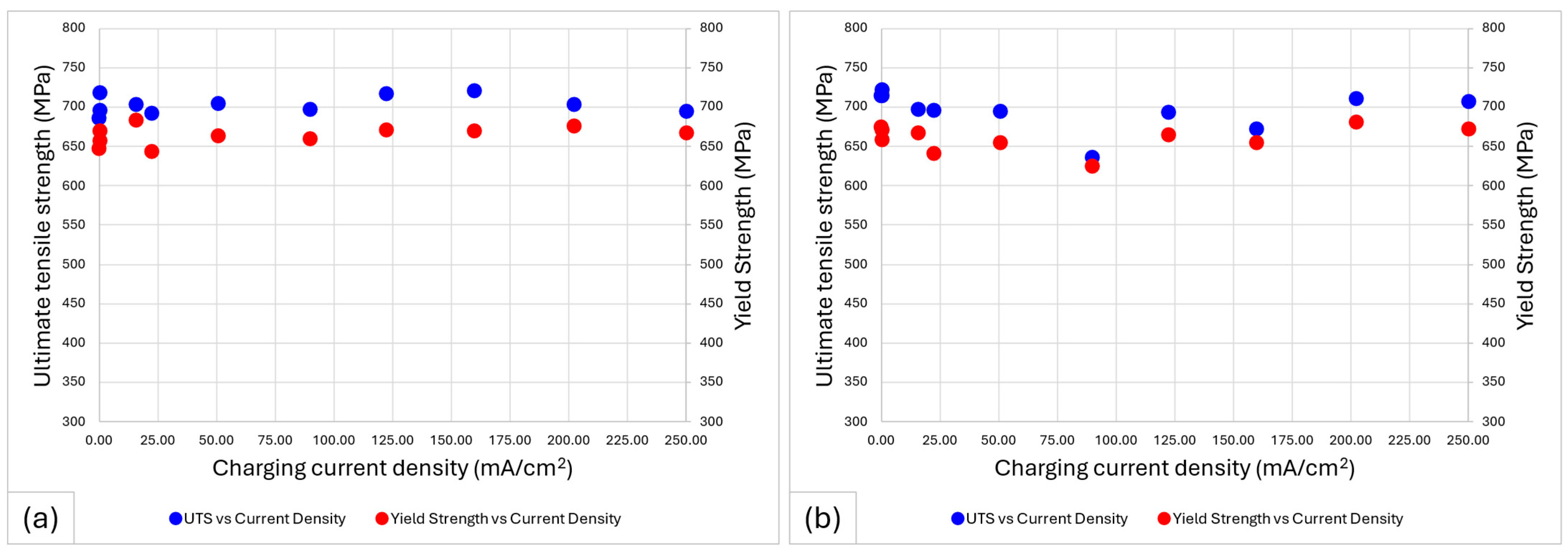
Furthermore, the ultimate tensile strength (UTS) and yield strength for both the uncoated and coated samples exhibited minimal variations across increasing charging current densities (Figure 12). This relatively stable trend indicates that the induced hydrogen, tested across varying current densities, did not significantly alter the material's capacity for elastic and plastic deformation under tensile loading. Additionally, the consistency in strength values suggests that the effect of hydrogen was negligible, such that no localized weakening occurred prior to yielding or maximum stress. In essence, while hydrogen can influence the ductile and fracture traits of the steel material, its impact on the material’s strength under uniaxial tension remained relatively limited across the tested experimental conditions.
Figure 12. Plots of ultimate tensile strength and yield strength vs. charging current density for (a) uncoated samples and (b) nickel-coated samples.
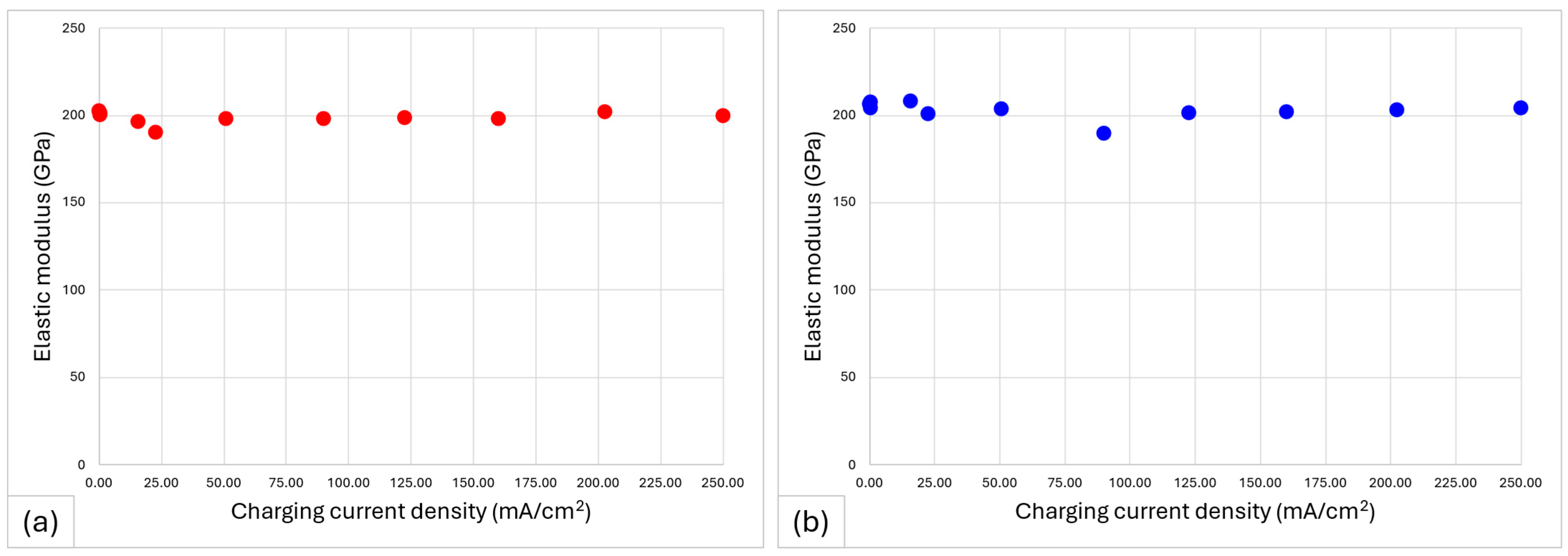
Furthermore, it was observed that the elastic modulus for both the coated and uncoated steel samples remained consistent across the tested hydrogen charging current densities, as portrayed by the linear trend in Figure 13. This stability reflects that the modulus of elasticity—an intrinsic material property tied to the atomic bonding forces within the crystal lattice—is generally unaffected by varying levels of hydrogen absorption. Unlike ductility and toughness, which are sensitive to microstructural damage or localized plastic deformation, the elastic modulus governs the material's response in the linear, reversible deformation region. The absence of any significant deviation suggests that the presence of hydrogen, even at elevated charging current densities, did not alter the stiffness or disrupt the elastic behavior of the material.
Figure 13. Plots of elastic modulus vs. charging current density for (a) uncoated samples and (b) nickel-coated samples.
From an industrial standpoint, structural materials are normally expected to perform reliably under both chemical and mechanical loads. The ability of steel materials to retain consistent mechanical properties under varying hydrogen concentrations is critical. Stability in core properties like the tensile strength and elasticity provides a foundation for mechanical predictability. At the same time, the observed sensitivity of ductility and toughness to hydrogen ingress draws attention to its consequential degradatory impacts that compromise structural integrity over time. These findings reinforce the importance of this study in substantiating theoretical predictions and enhancing the understanding of material response in hydrogen-rich environments. Similarly, they are also vital for the selection of suitable materials for various engineering applications and in guiding the implementation of effective mitigation strategies as it relates to hydrogen embrittlement.

3.3. Fractographic Analysis

The fracture surface of the nickel-coated mild steel samples were analyzed using a scanning electron microscope. The observed features are discussed below.

3.3.1. Ductile Fracture (Uncharged Sample)

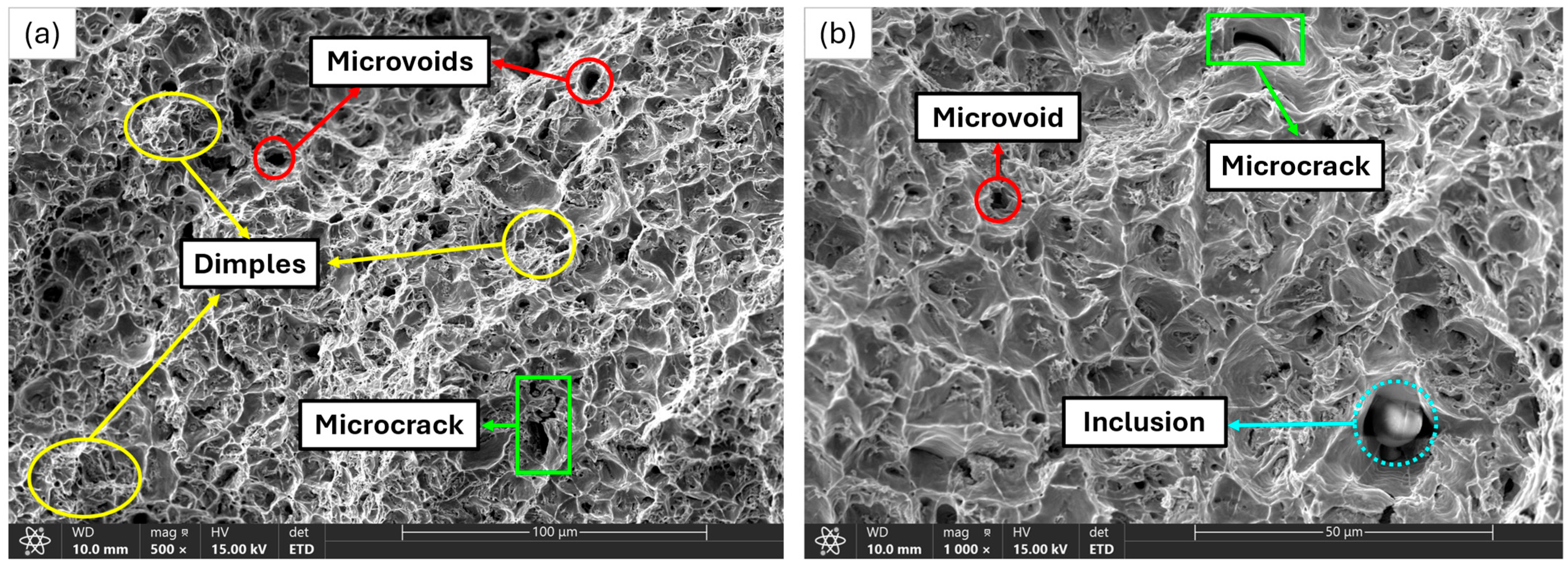
Examination of the uncharged nickel-coated mild steel specimen, following uniaxial tensile loading, revealed features that are characteristic of ductile fracture (Figure 14). These features include dimples, microvoids, shear lips, and a cup-and-cone fracture profile, all jointly describing significant plastic deformation prior to final rupture. The most prominent microscale feature observed across the fracture surface was the presence of dimples. The formation of these dimples originates from the nucleation, growth, and coalescence of microvoids, which are small cavities that develop within the material when subjected to tensile stress. As the steel deforms plastically, microvoid nucleation is typically initiated at sites of local stress concentration, such as microscopic inclusions or second-phase particles. These heterogeneities, embedded in the steel matrix, disrupt uniform stress distribution, promoting the initiation of voids. With continued loading, these voids expand, impinging upon each other and eventually coalescing into microscopic impressions termed as dimples. The dimpled fracture surface is a representation of the material’s ability to accommodate plastic deformation before failure. Microcracks were occasionally observed across the fracture surface, usually in regions undergoing high local strain. Although these small cracks did not propagate extensively, they likely formed during the latter stages of fracture through the coalescence of closely spaced microvoids. The presence of inclusions was also evident. Chemical composition was not performed on the inclusion phases; however, common inclusions found in plain carbon steel include sulfide or oxide-based particles.
Figure 14. SEM images of the fracture surface for the uncharged coated sample at (a) 500× magnification and (b) 1000× magnification.
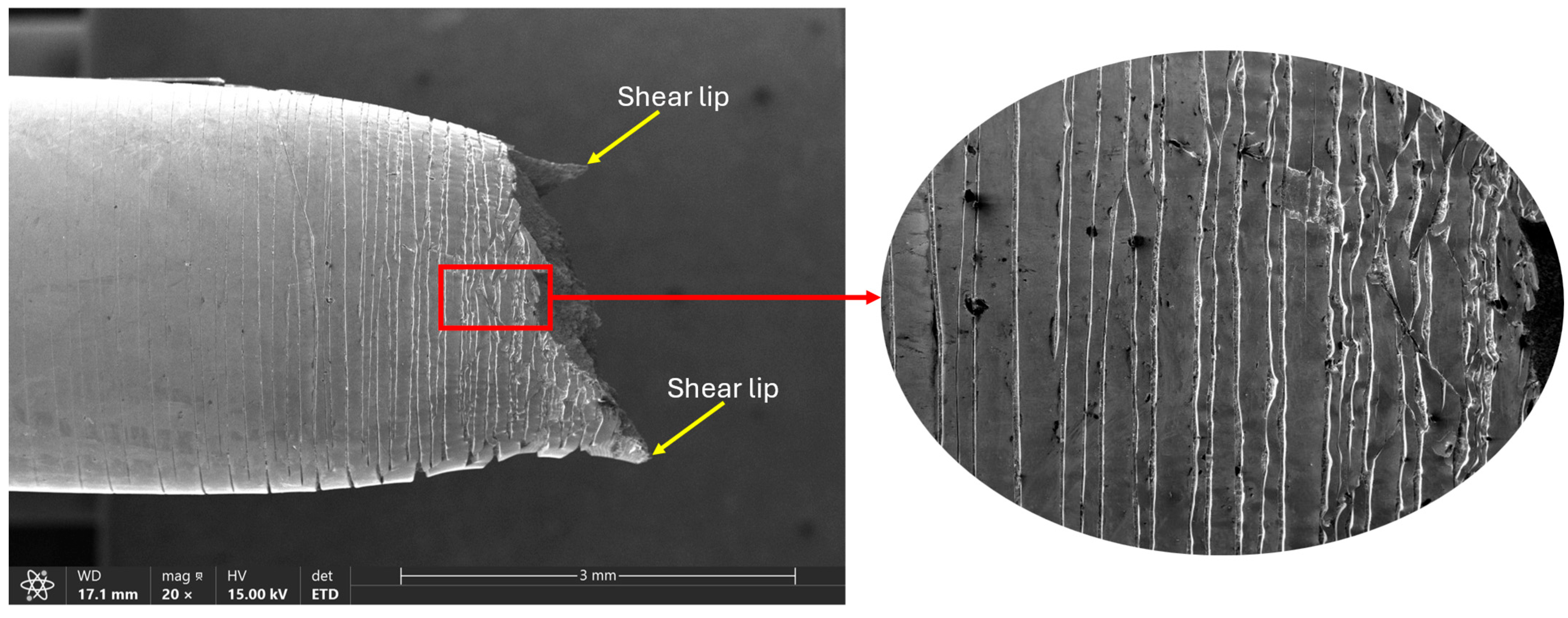
Furthermore, the fractured nickel-coated specimen developed a cup-and-cone fracture profile, which is a characteristic outcome of ductile failure under uniaxial tensile loading (Figure 15). The “cup” appeared as a concave depression, resembling the shape of an inverted cup, and represented the area experiencing the most tensile stress. The cone region, surrounding the cup, was more conical and slanted and represented the portion of the fracture that progressed along inclined shear planes. In addition, shear lips were clearly visible along the outer edges of the fracture surface, stemming from reduced cross-sectional area (necking). These features are raised, angled regions formed by localized shear deformation near the crack tip during fracture propagation, with their orientation usually aligning with the direction of maximum shear stress. Coating delamination of the nickel deposited layer was also observed near the fracture zone. The delamination is attributed to strain mismatch between the ductile steel substrate and the more brittle nickel coating. As the underlying steel experiences extensive plastic flow and necking, the nickel coating, limited in its ability to stretch, began to delaminate or separate from the substrate. The severity of delamination was more evident closer to the fractured area. For most of the coated gauge section, however, the coating remained fairly intact and did not exhibit widespread delamination, which suggests that the adhesion between the coating and substrate was mechanically robust in the absence of hydrogen charging.
Figure 15. Cup and cone fracture (left) and coating delamination (right).

3.3.2. Brittle Fracture (Charged Samples)

Analysis of the fracture surface characteristics of the coated charged samples revealed an array of distinct brittle features facilitated by the presence of diffused hydrogen. These included transgranular cleavages, facets, quasi-cleavage facets, river marks, microcracks, microvoids, and intergranular fracture. The evolution of fracture morphology, dissimilar from the uncharged sample, indicates a shift from ductile to brittle mode of fracture.
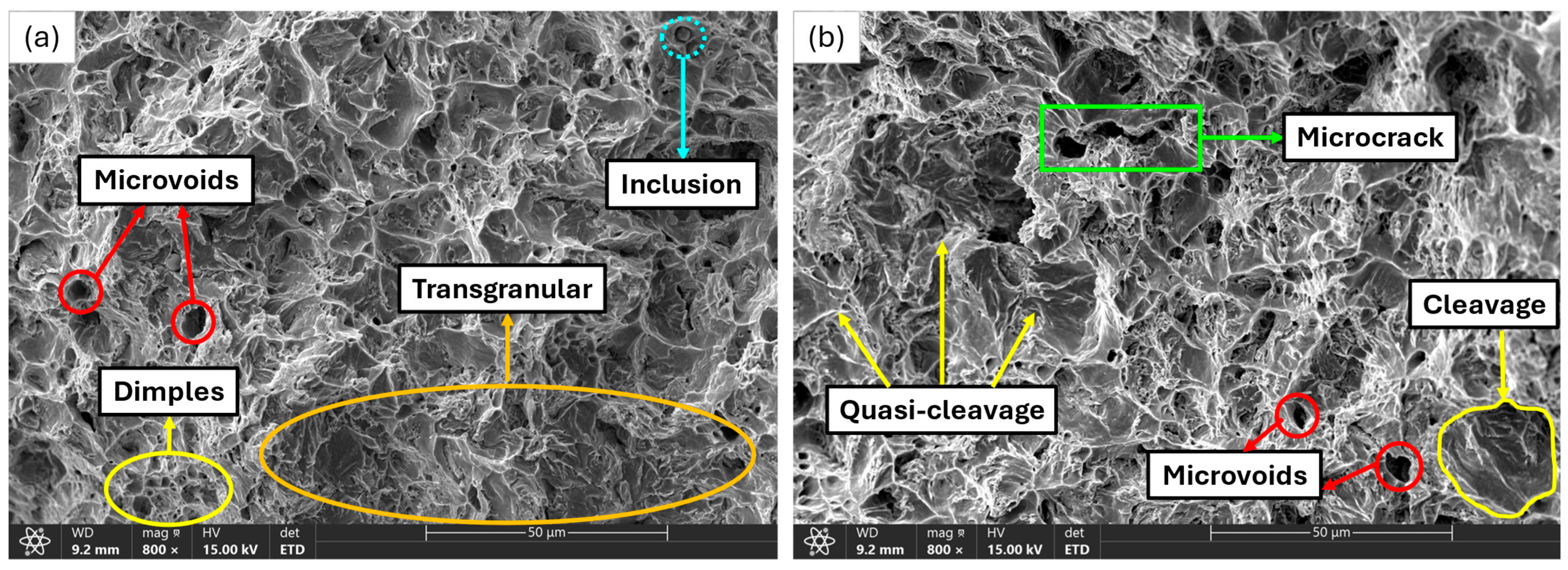
In the sample charged at a charging current density of 89.98 mA/cm2, the fracture surface portrayed a mixed mode of fracture with observed ductile and brittle characteristics (Figure 16a). The surface morphology featured a mixture of dimples, microvoids, inclusions, and isolated regions of transgranular cleavages. Microvoids appeared as small, cavity-like depressions sparsely scattered across the fracture surface. These tiny voids are known to initiate in areas of high local stress, often near inclusions or microstructural discontinuities. Further analysis showed the presence of dimples across portions of the fracture surface, which is indicative of the material’s retention of some capacity for plastic deformation. It is well established that hydrogen atoms, once absorbed into the steel matrix, tend to collect at microstructural defects, where they reduce the cohesive strength of the metal lattice and promote early failure. The presence of microcracks, most of which likely initiated from microscopic irregularities, provided further evidence of hydrogen’s embrittling effect. Hydrogen’s role in facilitating this feature lies in its tendency to localize at crack tips or regions of elevated stress, where they reduce the energy required for cracks to advance. In certain regions of the fracture surface, transgranular cleavages were also identified. These features depict brittle fracture paths along crystallographic planes that transverse through grains rather than grain boundaries. The cumulative presence of all these features highlights a transition from a ductile to brittle style of fracture.
Figure 16. SEM images of fracture surface: (a) 89.98 mA/cm2 charged sample; (b) 122.47 mA/cm2 charged sample.
The fracture surface of the specimen charged with a current density of 122.47 mA/cm2 presented a noticeable progression in embrittlement, with ductile features becoming more suppressed and brittle features more dominant (Figure 16b). Microcracks, microvoids, quasi-cleavages, and cleavages were observed on the fracture surface. Quasi-cleavages are transitional fracture modes that resemble crystallographic cleavages but lack their defined, flat, mirror-like appearance. Instead, the surface appears terraced, with faceted regions that are irregular and subtly curved. Over time, the term “quasi-cleavages” has been used to describe fracture surface features that cannot be characterized as either transgranular, intergranular, or true cleavages [42]. Nonetheless, these features indicate that crack propagated intermittently along low-energy paths, often deflected by microstructural barriers such as dislocations, second-phase particles, or grain boundaries.
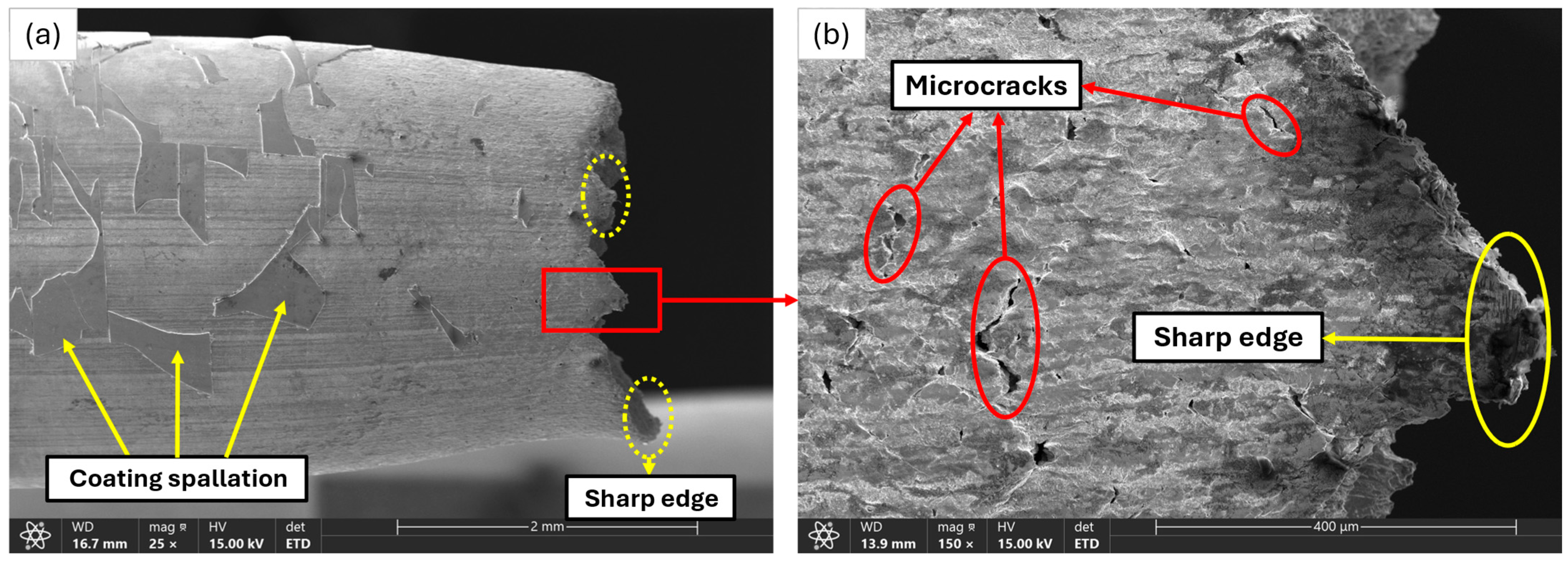
A notable shift in the overall fracture profile was observed in the hydrogen-charged samples compared to the uncharged sample. While the uncharged specimen exhibited a cup-and-cone morphology with surrounding shear lips, the charged samples, specifically the 89.98 mA/cm2 charged specimen, displayed sharp, angular fracture edges, adorned with microcracks (Figure 17). These sharp edges form due to less significant necking and shear deformation at the latter stages of rupture, resulting in sudden and unstable crack propagation. Accompanying these features were visible coating spallation, mostly near the fracture zone. Unlike the uncharged sample, where the nickel coating stayed intact, with delamination occurring mainly near the fracture area, here, the coating breaks up into smaller fragments during tensile loading. This action can be attributed to the strain incompatibility between the steel and nickel-coated layer and the potential accumulation of hydrogen at the coating-substrate interface. As the underlying steel deformed, the brittle coating was unable to accommodate the same level of strain, leading to cracking, peeling, and eventual detachment of the coating. The influence of induced hydrogen likely exacerbated this effect by further embrittling the interface, lowering adhesion strength, and promoting decohesion. The resulting fragments scattered across the fracture zone highlight coating instability under hydrogen-assisted degradation at elevated hydrogen levels.
Figure 17. Fracture profile of 89.98 mA/cm2 charged specimen: (a) sharp edges and (b) microcrack formation along the sharp edges.
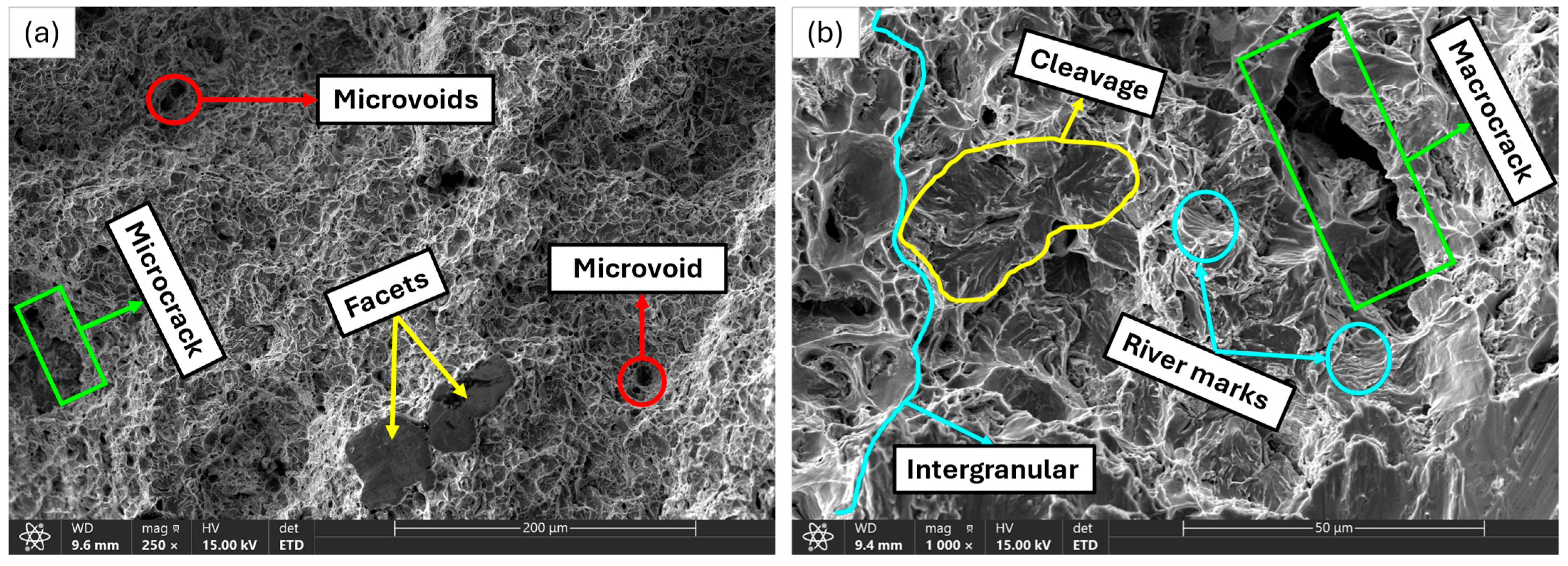
Further analysis on a 249.93 mA/cm2 charged specimen revealed clear signs of severe embrittling characteristics (Figure 18). Cleavage facets, macroscopically discernible, manifest as flat, expansive, glossy surfaces that are typically perpendicular to the applied stress direction, signifying brittle fracture across crystallographic planes. Similarly, microscopic river marks were also observed. These features manifest as patterns or grooves that depict the incremental advancement of cracks and also trace the direction of crack propagation. In some regions, an intergranular fracture was observed, where fracture occurs along weakened grain boundaries due to the accumulation of hydrogen. In some locations, macrocracks were also visible, indicating unstable crack growth and extreme embrittlement. Overall, the fracture behavior at higher charging current densities was mostly brittle, driven by a combination of crystallographic cleavages, grain boundary decohesion, and high crack propagation rates, undermining the material’s ability to absorb further strain or resist early fracture.
Figure 18. SEM images for 249.93 mA/cm2 charged sample at (a) 250× magnification and (b) 1000× magnification.

4. Conclusions

In this study, the hydrogen embrittlement resistance of nickel-based coatings applied onto cold-finished mild steels was investigated. A comparative evaluation of the tensile properties, specifically the elongation, yield strength, UTS, and toughness, was carried out for both the uncoated steels and the nickel-coated steels subjected to controlled electrochemical hydrogen charging. The specimens were exposed to progressively increasing hydrogen charging current densities to simulate hydrogen uptake in an alkaline environment. The key findings of this study are summarized below:
  • The steel samples under study had a microstructure primarily comprising ferrite and pearlite phases with sparsely scattered preexisting microvoids. The electrodeposited nickel coating formed a dense, uniform layer with a clearly defined interface to the steel substrate. The uncoated mild steel samples showed a gradual reduction in both percent elongation and toughness with increasing hydrogen contents, whereas the nickel-coated steel maintained a relatively stable response in ductility and toughness up to a critical hydrogen threshold beyond which these properties declined abruptly.
  • The percent elongation of the uncoated specimens decreased from an initial value of 7.1% to a minimum of 3.2% with increasing hydrogen concentrations. For the nickel-coated steel, the elongation plateaued between 7.0% and 6.4% at low to moderate hydrogen levels. However, beyond a charging current density of 50.61 mA/cm2, which corresponds to about 0.90 wppm hydrogen content in hydrogen permeation of steel, the protective capacity of the nickel coating began to degrade, resulting in a sharp decline in elongation to a minimum of 2.3%. Toughness followed a similar trend in both uncoated and coated specimens, mirroring the response in ductility.
  • The main mechanisms governing the observed behavior in tensile response are HEDE, HELP, and internal stress formation induced by hydrogen occupying interstitial sites and interacting with microstructural defects.
  • The yield strength, UTS, and elastic modulus exhibited minimal variations for both coated and uncoated samples across the tested hydrogen charging conditions. This indicates that hydrogen had a negligible influence on these properties.
  • Fractographic analysis of the nickel-coated specimens revealed a clear transition in fracture mode with increasing hydrogen content. The uncharged nickel-coated specimen showed ductile features such as microvoid coalescence and dimpling. In contrast, the charged specimens exhibited brittle fracture features such as cleavage facets, quasi-cleavages, river marks, and transgranular fracture. A mixed mode of fracture was observed on the 89.98 mA/cm2 charged sample, indicating a transitional state between ductile and brittle failure.

Author Contributions

Conceptualization, Z.F.; methodology, M.M.A. and Z.F.; validation, Z.F.; formal analysis, M.M.A. and Z.F.; investigation, M.M.A. and Z.F.; resources, M.M.A. and Z.F.; data curation, M.M.A.; writing—original draft preparation, M.M.A.; writing—review and editing, M.M.A. and Z.F.; visualization, M.M.A. and Z.F.; supervision, Z.F.; project administration, Z.F.; funding acquisition, Z.F. All authors have read and agreed to the published version of the manuscript.

Funding

This research was funded by the Natural Sciences and Engineering Research Council of Canada (NSERC), grant number RGPIN 05125-17.

Data Availability Statement

The original contributions presented in the study are included in the article; further inquiries can be directed to the corresponding author.

Conflicts of Interest

The authors declare no conflicts of interest.

Abbreviations

The following abbreviations are used in this manuscript:
AISIAmerican Iron and Steel Institute
BCCBody-Centered Cubic
FCCFace-Centered Cubic
HEHydrogen Embrittlement
HEDEHydrogen-Enhanced Decohesion
HELPHydrogen-Enhanced Localized Plasticity
HEMPHydrogen-Enhanced Macroscopic Plasticity
HESIVHydrogen-Enhanced Strain-Induced Vacancy
HIPTHydrogen-Induced Phase Transformation
ICDDInternational Centre for Diffraction Data
PDFPowder Diffraction File
SEMScanning Electron Microscopy
UTSUltimate Tensile Strength
XRDX-Ray Diffraction
YSYield Strength

References

  1. Sofian, M.; Haq, M.B.; Al Shehri, D.; Rahman, M.M.; Muhammed, N.S. A Review on Hydrogen Blending in Gas Network: Insight into Safety, Corrosion, Embrittlement, Coatings and Liners, and Bibliometric Analysis. Int. J. Hydrogen Energy 2024, 60, 867–889. [Google Scholar] [CrossRef]
  2. Hassan, Q.; Viktor, P.; Al-Musawi, T.J.; Mahmood Ali, B.; Algburi, S.; Alzoubi, H.M.; Khudhair Al-Jiboory, A.; Zuhair Sameen, A.; Salman, H.M.; Jaszczur, M. The Renewable Energy Role in the Global Energy Transformations. Renew. Energy Focus 2024, 48, 100545. [Google Scholar] [CrossRef]
  3. Islam, A.; Alam, T.; Sheibley, N.; Edmonson, K.; Burns, D.; Hernandez, M. Hydrogen Blending in Natural Gas Pipelines: A Comprehensive Review of Material Compatibility and Safety Considerations. Int. J. Hydrogen Energy 2024, 93, 1429–1461. [Google Scholar] [CrossRef]
  4. Meda, U.S.; Bhat, N.; Pandey, A.; Subramanya, K.N.; Lourdu Antony Raj, M.A. Challenges Associated with Hydrogen Storage Systems Due to the Hydrogen Embrittlement of High Strength Steels. Int. J. Hydrogen Energy 2023, 48, 17894–17913. [Google Scholar] [CrossRef]
  5. On Some Remarkable Changes Produced in Iron and Steel by the Action of Hydrogen and Acids. Proc. R. Soc. Lond. 1875, 23, 168–179. [CrossRef]
  6. Li, X.; Ma, X.; Zhang, J.; Akiyama, E.; Wang, Y.; Song, X. Review of Hydrogen Embrittlement in Metals: Hydrogen Diffusion, Hydrogen Characterization, Hydrogen Embrittlement Mechanism and Prevention. Acta Metall. Sin.-Engl. Lett. 2020, 33, 759–773. [Google Scholar] [CrossRef]
  7. Sobola, D.; Dallaev, R. Exploring Hydrogen Embrittlement: Mechanisms, Consequences, and Advances in Metal Science. Energies 2024, 17, 2972. [Google Scholar] [CrossRef]
  8. Chatzidouros, E.V.; Traidia, A.; Devarapalli, R.S.; Pantelis, D.I.; Steriotis, T.A.; Jouiad, M. Effect of Hydrogen on Fracture Toughness Properties of a Pipeline Steel under Simulated Sour Service Conditions. Int. J. Hydrogen Energy 2018, 43, 5747–5759. [Google Scholar] [CrossRef]
  9. Song, Y.; Chai, M.; Yang, B.; Han, Z.; Ai, S.; Liu, Y.; Cheng, G.; Li, Y. Investigation of the Influence of Pre-Charged Hydrogen on Fracture Toughness of As-Received 2.25Cr1Mo0.25V Steel and Weld. Materials 2018, 11, 1068. [Google Scholar] [CrossRef]
  10. Wang, R. Effects of Hydrogen on the Fracture Toughness of a X70 Pipeline Steel. Corros. Sci. 2009, 51, 2803–2810. [Google Scholar] [CrossRef]
  11. Ronevich, J.A.; Somerday, B.P.; San Marchi, C.W. Effects of Microstructure Banding on Hydrogen Assisted Fatigue Crack Growth in X65 Pipeline Steels. Int. J. Fatigue 2016, 82, 497–504. [Google Scholar] [CrossRef]
  12. Alvaro, A.; Wan, D.; Olden, V.; Barnoush, A. Hydrogen Enhanced Fatigue Crack Growth Rates in a Ferritic Fe-3 wt%Si Alloy and a X70 Pipeline Steel. Eng. Fract. Mech. 2019, 219, 106641. [Google Scholar] [CrossRef]
  13. Li, X.; Zhang, J.; Fu, Q.; Song, X.; Shen, S.; Li, Q. A Comparative Study of Hydrogen Embrittlement of 20SiMn2CrNiMo, PSB1080 and PH13-8Mo High Strength Steels. Mater. Sci. Eng. A 2018, 724, 518–528. [Google Scholar] [CrossRef]
  14. Li, X.; Zhang, J.; Shen, S.; Wang, Y.; Song, X. Effect of Tempering Temperature and Inclusions on Hydrogen-Assisted Fracture Behaviors of a Low Alloy Steel. Mater. Sci. Eng. A 2017, 682, 359–369. [Google Scholar] [CrossRef]
  15. Li, X.; Zhang, J.; Ma, M.; Song, X. Effect of Shot Peening on Hydrogen Embrittlement of High Strength Steel. Int. J. Miner. Metall. Mater. 2016, 23, 667–675. [Google Scholar] [CrossRef]
  16. Lynch, S. Hydrogen Embrittlement Phenomena and Mechanisms. Corros. Rev. 2012, 30, 105–123. [Google Scholar] [CrossRef]
  17. Rao, J.; Lee, S.; Dehm, G.; Duarte, M.J. Hardening Effect of Diffusible Hydrogen on BCC Fe-Based Model Alloys by in Situ Backside Hydrogen Charging. Mater. Des. 2023, 232, 112143. [Google Scholar] [CrossRef]
  18. Djukic, M.B.; Bakic, G.M.; Sijacki Zeravcic, V.; Sedmak, A.; Rajicic, B. The Synergistic Action and Interplay of Hydrogen Embrittlement Mechanisms in Steels and Iron: Localized Plasticity and Decohesion. Eng. Fract. Mech. 2019, 216, 106528. [Google Scholar] [CrossRef]
  19. Robertson, I.M. The Effect of Hydrogen on Dislocation Dynamics. Eng. Fract. Mech. 2001, 68, 671–692. [Google Scholar] [CrossRef]
  20. Birnbaum, H.K.; Sofronis, P. Hydrogen-Enhanced Localized Plasticity—A Mechanism for Hydrogen-Related Fracture. Mater. Sci. Eng. A 1994, 176, 191–202. [Google Scholar] [CrossRef]
  21. Chowdhury, M.F.W.; Tapia-Bastidas, C.V.; Hoschke, J.; Venezuela, J.; Atrens, A. A Review of Influence of Hydrogen on Fracture Toughness and Mechanical Properties of Gas Transmission Pipeline Steels. Int. J. Hydrogen Energy 2025, 102, 181–221. [Google Scholar] [CrossRef]
  22. Laadel, N.-E.; El Mansori, M.; Kang, N.; Marlin, S.; Boussant-Roux, Y. Permeation Barriers for Hydrogen Embrittlement Prevention in Metals—A Review on Mechanisms, Materials Suitability and Efficiency. Int. J. Hydrogen Energy 2022, 47, 32707–32731. [Google Scholar] [CrossRef]
  23. Shi, K.; Xiao, S.; Ruan, Q.; Wu, H.; Chen, G.; Zhou, C.; Jiang, S.; Xi, K.; He, M.; Chu, P.K. Hydrogen Permeation Behavior and Mechanism of Multi-Layered Graphene Coatings and Mitigation of Hydrogen Embrittlement of Pipe Steel. Appl. Surf. Sci. 2022, 573, 151529. [Google Scholar] [CrossRef]
  24. Luu, W.C.; Kuo, H.S.; Wu, J.K. Hydrogen Permeation through Nickel-Plated Steels. Corros. Sci. 1997, 39, 1051–1059. [Google Scholar] [CrossRef]
  25. Kim, K.B.; Park, K.; Lee, J.S. Hydrogen Permeation Behavior of Nickel Electroplated AISI 4340 Steel. Met. Mater. 1998, 4, 1013–1016. [Google Scholar] [CrossRef]
  26. Biggio, D.; Elsener, B.; Rossi, A. Ni-P Coatings as Hydrogen Permeation Barriers—A Review. Coatings 2025, 15, 365. [Google Scholar] [CrossRef]
  27. Hillier, E.M.K.; Robinson, M.J. Hydrogen Embrittlement of High Strength Steel Electroplated with Zinc–Cobalt Alloys. Corros Sci 2004, 46, 715–727. [Google Scholar] [CrossRef]
  28. Devanathan, M.A.V.; Stachurski, Z. The Mechanism of Hydrogen Evolution on Iron in Acid Solutions by Determination of Permeation Rates. J. Electrochem. Soc. 1964, 111, 619. [Google Scholar] [CrossRef]
  29. Iyer, R.N.; Pickering, H.W.; Zamanzadeh, M. Analysis of Hydrogen Evolution and Entry into Metals for the Discharge-Recombination Process. J. Electrochem. Soc. 1989, 136, 2463, Erratum in J. Electrochem. Soc. 1990, 137, 1016. https://doi.org/10.1149/1.2152173. [Google Scholar] [CrossRef]
  30. Li, Q.; Ghadiani, H.; Jalilvand, V.; Alam, T.; Farhat, Z.; Islam, M.A. Hydrogen Impact: A Review on Diffusibility, Embrittlement Mechanisms, and Characterization. Materials 2024, 17, 965. [Google Scholar] [CrossRef]
  31. ASTM E3-11(2017); Standard Guide for Preparation of Metallographic Specimens. ASTM International: West Conshohocken, PA, USA, 2017.
  32. ASTM E407-07(2015)e1; Standard Practice for Microetching Metals and Alloys. ASTM International: West Conshohocken, PA, USA, 2015.
  33. ASTM E18-20; Standard Test Methods for Rockwell Hardness of Metallic Materials. ASTM International: West Conshohocken, PA, USA, 2022.
  34. ASTM A370; Standard Test Methods and Definitions for Mechanical Testing of Steel Products. ASTM: West Conshohocken, PA, USA, 2024.
  35. Örnek, C.; Şeşen, B.M.; Ürgen, M.K.; Örnek, C.; Şeşen, B.M.; Ürgen, M.K. Understanding Hydrogen-Induced Strain Localization in Super Duplex Stainless Steel Using Digital Image Correlation Technique. MMI 2022, 28, 475–486. [Google Scholar] [CrossRef]
  36. Zhao, K.; Zhao, F.; Lin, Q.; Li, X.; Xiao, J.; Gu, Y.; Chen, Q. Effect of Loading Rate on the Dislocation Emission from Crack-Tip under Hydrogen Environment. Mater. Today Commun. 2023, 37, 107269. [Google Scholar] [CrossRef]
  37. Qin, Y.; Zheng, S.; Huang, F.; Jin, Y.; Ma, L. Preparation and Hydrogen Barrier Mechanism of Ni-Based Coatings on X80 Pipeline Steel. Int. J. Hydrogen Energy 2024, 96, 396–407. [Google Scholar] [CrossRef]
  38. Kročil, T.; Macháčková, N.; Prošek, T.; Steck, T.; Sharif, R. Hydrogen Embrittlement of Galvanized Press-Hardened Steels: A Review. Metals 2024, 14, 1285. [Google Scholar] [CrossRef]
  39. El Hajjami, A.; Gigandet, M.P.; De Petris-Wery, M.; Catonne, J.C.; Duprat, J.J.; Thiery, L.; Raulin, F.; Starck, B.; Remy, P. Hydrogen Permeation Inhibition by Zinc–Nickel Alloy Plating on Steel XC68. Appl. Surf. Sci. 2008, 255, 1654–1660. [Google Scholar] [CrossRef]
  40. Song, J.; Curtin, W.A. Mechanisms of Hydrogen-Enhanced Localized Plasticity: An Atomistic Study Using α-Fe as a Model System. Acta Mater. 2014, 68, 61–69. [Google Scholar] [CrossRef]
  41. Robertson, I.M.; Sofronis, P.; Nagao, A.; Martin, M.L.; Wang, S.; Gross, D.W.; Nygren, K.E. Hydrogen Embrittlement Understood. Metall. Mater. Trans. A 2015, 46, 2323–2341. [Google Scholar] [CrossRef]
  42. Djukic, M.B.; Zeravcic, V.S.; Bakic, G.; Sedmak, A.; Rajicic, B. Hydrogen Embrittlement of Low Carbon Structural Steel. Procedia. Mater. Sci. 2014, 3, 1167–1172. [Google Scholar] [CrossRef]
Disclaimer/Publisher’s Note: The statements, opinions and data contained in all publications are solely those of the individual author(s) and contributor(s) and not of MDPI and/or the editor(s). MDPI and/or the editor(s) disclaim responsibility for any injury to people or property resulting from any ideas, methods, instructions or products referred to in the content.

Article Metrics

Citations

Article Access Statistics

Multiple requests from the same IP address are counted as one view.