


Abstract
The purpose of this study was to investigate the effects of different feeding-promoting substances added to high plant protein diets on the growth, antioxidant, serum biochemical parameters, immune, and feeding-related genes of Procambarus clarkii. A total of 450 crayfish (3.94 ± 0.03 g) were selected and randomly divided into six groups, with each group consisting of three replicates and 25 crayfish per replicate. The crayfish were fed a basal diet without attractant (control group) and five experimental diets supplemented with 0.4% betaine (BET), 0.4% trimetlylamine oxide (TMAO), 0.4% squid paste (SQU), 0.4% dimethyl-β-propiothetin (DMPT), and 0.4% taurine (TAU). The feeding trial lasted for 6 weeks. The results showed that compared with the control group, the BET, SQU, DMPT, and TAU groups significantly improved in growth performance, weight gain rate, and specific growth rate of crayfish. Compared with the control group, the BET, MTAO, and SQU groups significantly increased hepatopancreas SOD, CAT, and T-AOC. Histological results showed that compared with the control group, all feeding attractant groups could alleviate hepatopancreas tissue damage. Compared with the control group, the TMAO and SQU groups significantly reduced serum GLU content as well as ACP and AKP activities. The results of gene quantitative analysis showed that, compared with the control, TMAO significantly upregulated the expression of tlr, nf-kb, propo, hsp70, and tgf-β, while TAU significantly increased the expression of hsp70, hsp90 and nf-kb genes. Compared with the control group, the expression levels of tor, 4ebp1, and s6k1 in the TMAO group were significantly increased. Compared with the control group, the expression levels of leptin and npy genes in the DMPT group were significantly increased. In summary, the addition of attractants to high plant protein feed has the effects of promoting growth, enhancing antioxidant capacity, improving digestive enzyme activity, alleviating hepatopancreas injury, improving immunity, and promoting feeding.
Key Contributions:
The study found that the addition of betaine, trimethylamine oxide, and squid paste to high plant protein feed can promote the growth of Procambarus clarkii, increase the weight gain rate, improve the activity of intestinal digestive enzymes, and reduce hepatopancreas tissue damage. Taurine, trimethylamine oxide, and dimethyl-β-propiothetine can rebalance the expression of pro-inflammatory and anti-inflammatory cytokines through different pathways, alleviate chronic inflammatory responses caused by high plant proteins, and enhance immunity.
1. Introduction
Fish meal is recognized as a high-quality protein source for aquaculture feed, and its supply shortage and price increase restrict the development of aquaculture feed [1]. Soybean meal and other plant proteins have a wide range of sources and low costs, which make them feasible alternatives [2]. However, their anti-nutritional factors and poor palatability will not only hinder the digestion, absorption, and feeding growth of aquatic animals [3] but also bring a series of adverse effects on the health of aquaculture animals [4,5,6]. Therefore, looking for a green feed attractant to improve the palatability of feed and promote the feeding and growth of aquatic animals has become a research hotspot [7].
Studies have shown that the addition of attractants to feed can increase appetite, improve food intake, promote digestion and absorption, and ultimately promote growth [8,9,10]. Currently, betaine [11,12], trimethylamine oxide [13], squid paste [14], dimethyl-beta-propiothetin [15], and taurine [16,17] are commonly used additives in aquatic feed. Betaine, also known as trimethylglycine, is found in various sources including beets, spinach, shrimp, and many other plants and animals [18]. In aquatic animal research, betaine can be used as a feed additive to improve feeding behavior in various aquatic species, promote growth, and alleviate oxidative stress [19]. Trimethylamine oxide is an alkaloid with a distinctive sweet and savory flavor, serving as a key attractant for fish and shrimp. Research indicates that it possesses growth-promoting effects, regulates lipid metabolism, and enhances antioxidant capacity [20,21]. Renowned for its potent cuttlefish aroma, squid paste as a natural feed attractant capable of inducing feeding behavior in various animals, including Eriocheir sinensis [4], Anguilla marmorata [22], and Pelodiscus sinensis [14]. Dimethyl-β-propiothetine (DMPT) is a highly regarded feeding stimulant, with studies reporting that DMPT can promote the growth of Eriocheir sinensis [4], enhance digestive capacity by increasing the activity of protease, lipase, and amylase in the intestines of Carassius auratus gibelio [23], and enhance the integrity of Ctenopharyngodon Idella intestinal structure [24]. Taurine is a non-protein amino acid found in various animals, including mammals, birds, and fish. It possesses biological functions such as antioxidant activity, immune modulation, and osmoregulation [25]. Due to its multiple biological functions, taurine is widely added to aquatic animal feed to enhance palatability, improve feed quality, and boost production efficiency. Its efficacy has been validated in aquatic species such as Monopterus albus [26], Channa striata [27], Litopenaeus vannamei [28], and Seriola rivoliana [29].
Procambarus clarkii, commonly known as red swamp crayfish, is one of the important freshwater aquaculture species in China. Because of its rich nutrition and delicious flavor, it is very popular in aquaculture in China. At present, the crayfish industry is facing the challenge of raw material scarcity for feed and rising related costs. Therefore, crayfish feed application research often uses alternative fish meal, such as soybean meal [30], rapeseed meal [31], and peanut meal [32], but these substitutes also have problems such as poor palatability and indigestion. Therefore, in the actual crayfish culture, attractants are often added to the feed to enhance palatability and promote feeding. However, existing studies on palatability enhancers in crayfish feed have mainly focused on evaluating the effects of single additives on the growth performance and antioxidant capacity of Procambarus clarkii. Scientific and systematic comparative analyses of the palatability-related effects of different attractants remain scarce. Therefore, the main purpose of this study was to investigate the effects of five attractants (betaine, trimethylamine oxide, squid paste, dimethyl-β-propiothetin, taurine) on growth performance, antioxidant capacity, and feeding-related gene expression of high plant protein feed crayfish. We hypothesized that by supplementing these attractants, the negative effects of high plant protein can be reduced by improving feed taste, enhancing immunity and digestive ability, and regulating the expression of key feeding-related genes, thereby promoting growth. The findings will provide a theoretical basis for the development of optimized compound feeds for crayfish.
2. Materials and Methods
2.1. Experimental Diets
The formulas and basic components of the feed are shown in Table 1. The main protein sources were soybean and rapeseed meals, the main fat sources were fish oil and soybean oil, and the carbohydrate sources were mainly flour. The study formulated a total of six isonitrogenous and iso-lipidic experimental diets, namely, a control diet (control) without attractants, 0.4% betaine (BET), 0.4% trimetlylamine oxide (TMAO), 0.4% squid paste (SQU), 0.4% dimethyl-β-propiothetin (DMPT), and 0.4% taurine (TAU), and the experimental diets were supplemented with carboxymethyl cellulose. BET (99.00%) were purchased from Shanghai Macklin Biochemical Co., Ltd., Shanghai, China. TMAO (99.00%), DMPT (98.00%) and TAU (99.00%) were purchased from Shanghai Yuanye Biotechnology Co., Ltd., Shanghai, China. SQU were purchased from Haixing County Tonghai Feed Raw Material Processing Plant, China. The ingredients were sieved in the laboratory through an 80-mesh sieve, pre-mixed in the formulas in gradual quantities, and then the dry powder mixture was remixed with soybean oil and fish oil. This mixture was made into pellets with a particle size of about 2 mm using a feed pelletizer (F-26, Science and Technology Industrial Factory, South China University of Technology, Guangzhou, China). Then, the feed was placed in a cool place and dried naturally. After drying, it was collected in a sealed plastic bag and stored in a refrigerator at −20 °C until use.
Table 1.
Formulations and proximate compositions of experimental diets (air-dry basis, %).
2.2. Experimental Animals and Feeding Management
The experimental crayfish were purchased from a farm in Jianhu County (Yancheng, China). Prior to the experiment, crayfish were cultured in six tanks (2 m × 1.5 m × 1 m) and acclimated for 1 week. During the acclimation period, the crayfish were fed with the control diet. Subsequently, 450 juvenile crayfish (3.94 ± 0.03 g) with similar body size were randomly assigned to 18 tanks (3 ponds for each treatment), with 25 crayfish in each tank. During the experiment, the crayfish were fed twice daily at 06:00–07:00 and 18:00–19:00. The initial feeding amount was set to 6% of the initial body weight of crayfish, which was adjusted with the increase in body weight in the later stages. The specific method was as follows: six crayfish were randomly sampled from each tank every week for weighing and the feeding amount was recalculated accordingly. The feeding amount adjustment standard was that most of the feed was ingested within 2 h. The culture experiment lasted for 6 weeks, during which the water temperature was 21.0 ± 3.0 °C, the dissolved oxygen was maintained at more than 6.5 mg/L, and the ammonia nitrogen content was no more than 0.02 mg/L.
2.3. Sample Collection
After 6 weeks of the feeding trial period, the crayfish stopped feeding and fasted for 24 h. The number of crayfish in each experimental group was counted, weighed, and recorded to calculate the final body weight (FBW), weight gain rate (WGR), specific growth rate (SGR), survival rate (SR), and feed conversion rate (FCR). For each treatment group, the hemolymph of crayfish was taken with a 1 mL sterile syringe and divided into three EP tubes (2 mL). After standing at 4 °C for 24 h, the hemolymph was centrifuged for 10 min (3500 r/min) (Hunan Hersey Instrument Equipment Co., Ltd., Hunan, China). The supernatant was taken and stored in a refrigerator at −20 °C for the determination of biochemical indicators. Live crayfish were dissected in an ice tray and their hepatopancreas and intestines were isolated. The hepatopancreas was immediately frozen in liquid nitrogen and stored in a refrigerator at −80 °C for subsequent detection of enzyme activity and gene expression. The intestines of crayfish were taken and frozen in liquid nitrogen to determine the intestinal enzyme activity. Moreover, hepatopancreas was collected from three crayfish per group (one crayfish per tank) for histomorphology observations.
2.4. Determination of Growth Index
In this study, all related parameters of growth performance and morphological indices were calculated using the following formulas:
Weight gain rate (WGR, %) = 100 × (final body weight − initial body weight)/initial body weight;
Specific growth rate (SGR, %day−1) = 100 × [ln(final body weight) − ln(initial body weight)]/42 days;
Survival rate (SR, %) = 100 × (final crayfish number/initial crayfish number);
Feed conversion ratio (FCR) = total food intake/(final crayfish weight − initial crayfish weight);
2.5. Determination of Feed Nutrients
The contents of moisture, crude protein, crude fat, and ash in the feed were determined according to the AOAC method [33]. The crude protein content was determined by the Kjeldahl method. The crude fat content was determined by Soxhlet extraction. The samples were burned at 550 °C in a muffle furnace, and the ash content was determined by the weight loss method.
2.6. Biochemical Assays
Six crayfish were selected from each treatment group (two crayfish were randomly selected from each tank), and 0.15 g hepatopancreas and intestine were collected. We added 9 times the volume of 0.9% saline solution to the tissue, mechanically homogenized this under ice-cold conditions (Jingxin Industrial Development Co., Ltd., Shanghai, China) with centrifugation at 3500 rpm for 10 min, to prepare 10% tissue homogenate. The supernatant was used for enzyme activity determination.
The levels of malondialdehyde (MDA, A003–1–2), total antioxidant capacity (T–AOC, A015–2–1), and total protein (TP, A045–4–2), as well as the activities of superoxide dismutase (SOD, A001–2–2), catalase (CAT, A007–1–1), and glutathione peroxidase (GSH–Px, A005–1–2), were measured in hepatopancreatic samples. Intestinal amylase (AMS, C016–1–2), lipase (LPS, A054–2–1), and trypsin (trypsin, A080–2) activities were also determined. In addition, albumin (ALB, A028–2–1), total protein (TP, C010–2–1), acid phosphatase (ACP, A060–2–2), alkaline phosphatase (AKP, A059–2–2), and glucose (GLU, A154–2–1) in the hemolymph were detected. The assay kits were all purchased from Nanjing Jiancheng Bioengineering Research Institute (Nanjing, China), and experimental procedures were carried out following the instructions provided.
2.7. Histological Analyses
Three crayfish individuals were selected from each group (one crayfish per tank). The hepatopancreas tissues were dissected immediately and fixed in 4% neutral formaldehyde solution for 24 h. Subsequently, the fixed tissues were sent to Wuhan Boerfu Biotechnology Co., Ltd. (Wuhan, China) for subsequent processing, including dehydration, clearing, paraffin-embedding, sectioning, and hematoxylin–eosin (H&E) staining. After the sections were scanned by a panoramic scanner, SlideViewer 2.9 software was used to randomly select three non-overlapping visual fields at 10× and 40× magnifications to observe the luminal gaps of hepatopancreas, structural integrity (e.g., star-shaped structure), and cell density. ImageJ 1.54 software was employed for quantitative analysis of the proportion of damaged area and cell density. The criteria for the determination of related cells and tissue structures were referenced from previously published studies [34].
2.8. Gene Expression Quantification
Three crayfish hepatopancreas were collected from each treatment group (one crayfish was randomly selected from each tank), and RNA was extracted independently from each crayfish. According to the manufacturer’s protocol, total RNA was extracted from the hepatopancreas tissues using the RNA Easy Fast Tissue/Cell Kit (Tiangen Biotech (Beijing) Co., Ltd.; DP451, Beijing, China). The concentration and quality of the RNA were evaluated on a zNano–3 microspectrophotometer, and reverse transcription was performed using the HiScript III RT SuperMix for qPCR (+gDNA wiper) kit (Nanjing Vazyme Biotech Co., Ltd., Nanjing, China) according to the manufacturer’s protocol. The analyses were carried out using CFX 90 Fast Real-Time PCR System (Bio-Rad, Hercules, CA, USA) and the ChamQ Universal SYBR Qpcr Master Mix (Vazyme, Nanjing, China) according to the manufacturers’ protocols. The qPCR primer sequences are shown in Table 2. The total volume of quantitative PCR reaction was 20 μL, including 10 μL (2 × ChamQ Universal SYBR qPCR Master Mix), 0.4 μL forward primer (10 μM), 0.4 μL reverse primer (10 μM), 1.0 μL cDNA template, and 8.2 μL DEPC water. β-actin was used as an internal control. The data were analyzed by 2−ΔΔCt.
Table 2.
Primers used for quantitative real-time PCR in this study.
2.9. Statistical Analysis
The statistical analyses were conducted using SPSS 26.0. The data were plotted by Origin 2024 software. Results are expressed as the means ± standard errors of the means. Variance homogeneity of the data was examined with Levene’s test. Data with homogenous variance were further subjected to one-way ANOVA followed by Duncan’s test. When variance homogeneity criteria could not be met, data were analyzed using Tamhane’s T2 test. The statistical significance was set at p < 0.05, and different letters indicate significant differences among treatments.
3. Results
3.1. Growth Performance
The weight gain rate (WGR) and specific growth rate (SGR) of each treatment group were significantly higher than those of the control group, and the WGR and SGR of the DMPT group and SQU group were the highest (p < 0.05, Table 3). However, there were no significant differences in the survival rate (SR) and feed conversion ratio (FCR) between the treatment groups and the control group (p > 0.05, Table 3).
Table 3.
Effects of different attractants on growth performance of P. clarkii.
3.2. Antioxidant Capabilities of the Hepatopancreas
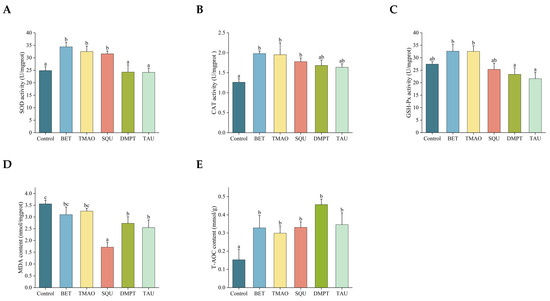
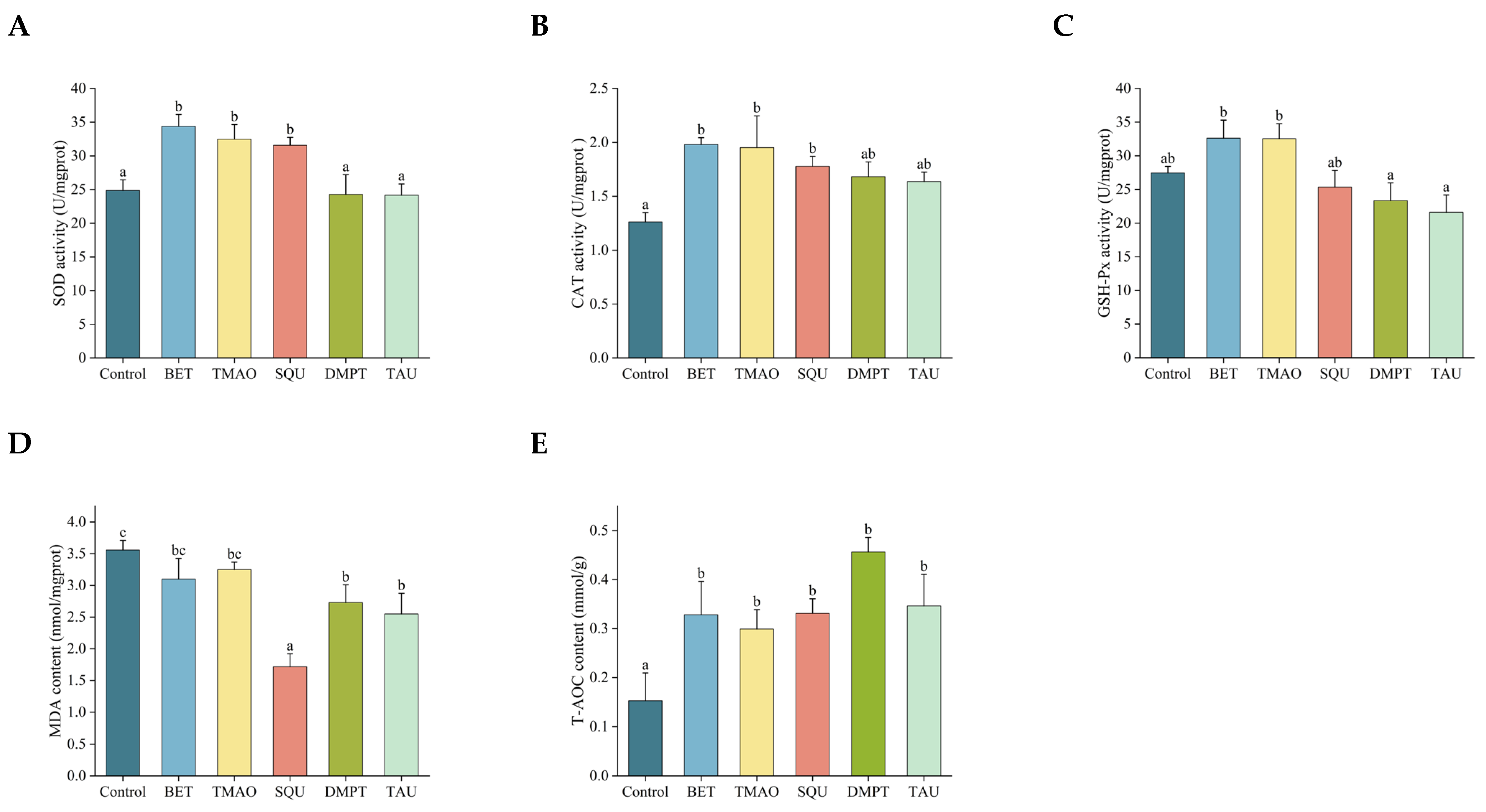
As shown in Figure 1, the activities of SOD and CAT in the BET group, TMAO group and SQU group were significantly higher than those in the control group (p < 0.05), though there was no significant difference between the DMPT group, the CAT group, and the control group (p > 0.05, Figure 1A,B). There were no significant differences in GSH-Px activity between each treatment group and the control group (p > 0.05), while compared with the DMPT group and TAU group, GSH-Px activity in the BET group and TMAO group was significantly increased (p < 0.05, Figure 1C). The MDA content of the SQU group was significantly lower than that of each treatment group (p < 0.05), and the MDA content of the DMPT group and TAU group was significantly lower than that of the control group (p < 0.05, Figure 1D). The T-AOC of the control group was significantly lower than that of the treatment groups (p < 0.05, Figure 1E).
Figure 1.
Antioxidant capacity of hepatopancreas in P. clarkii. Note: (A) SOD, superoxide dismutase; (B) CAT, catalase; (C) GSH-Px, glutathione peroxidase; (D) MDA, malondialdehyde; (E) T-AOC, total antioxidant capacity. The presented data represent the mean of six replicates. Different letters indicate statistically significant differences at a significance level of p < 0.05.
3.3. Hepatopancreas Histological Morphology
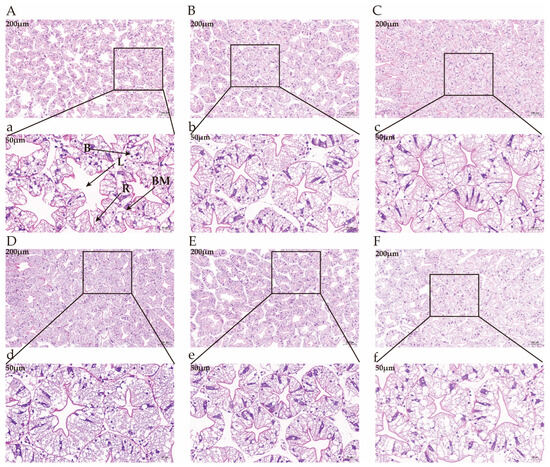
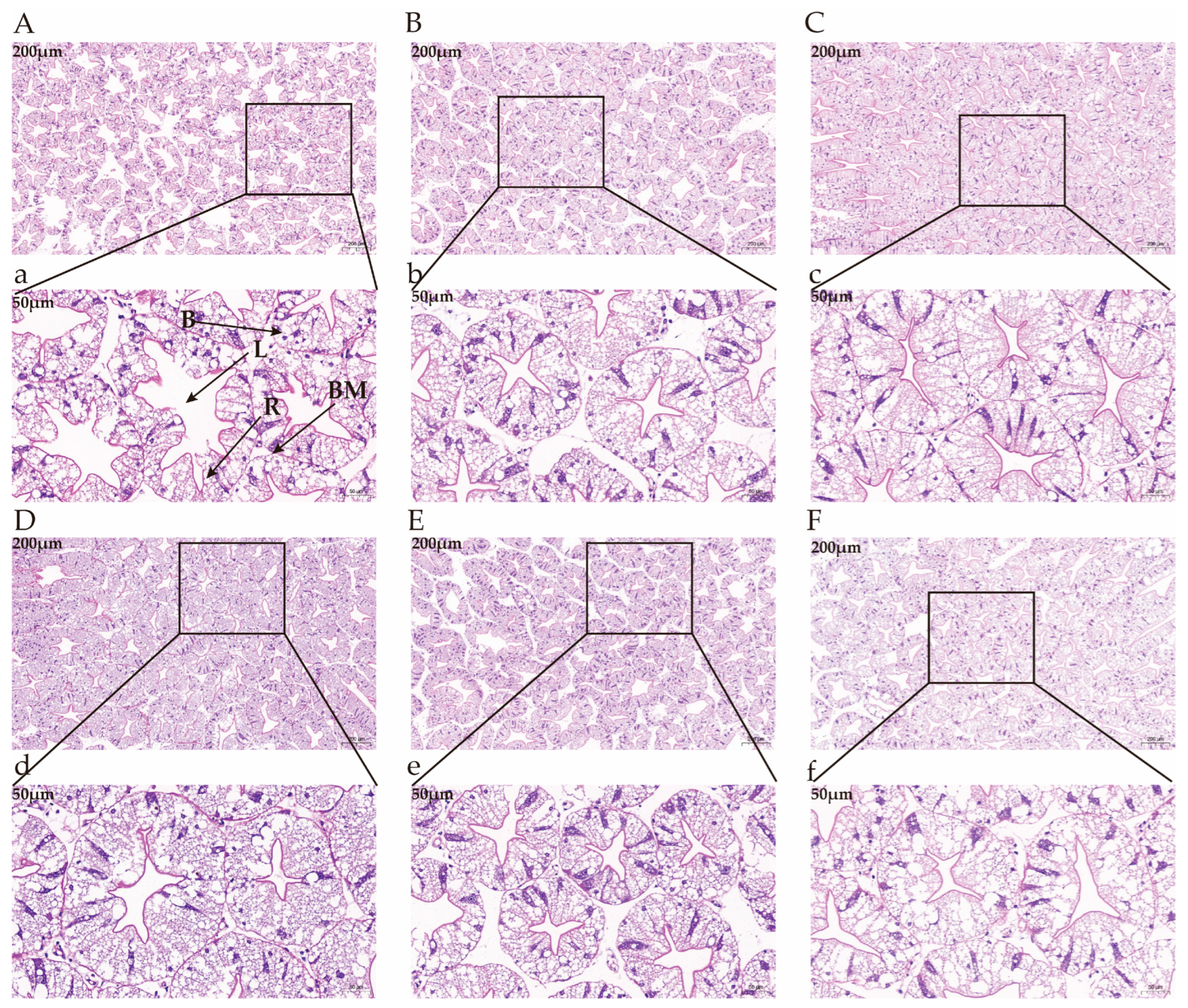
The histomorphology of the hepatopancreas of crayfish is shown in Figure 2. The hepatopancreas of the control group was loosely arranged. Compared with the control group, the boundary of hepatopancreas tissue in the BET group, TMAO group, SQU group, and DMPT group was clear, uniform in size, and closely arranged. The substrate surface was in close contact with the basement membrane and had structural integrity. In addition, the TMAO group and DMPT group had the lowest abnormal rate of hepatopancreas tubular structure, which was significantly lower than that of the control group (p < 0.05). The lumen expansion of each treatment group was significantly lower than that of the control group (p < 0.05). The B-cell content of the BET group and DMPT group was significantly higher than that of the control group (p < 0.05, Table 4).
Figure 2.
Hepatopancreas histological morphology. Note: In the figure are cross-sectional views of the hepatopancreatic tissue of P.clarkii of (A) control; (B) BET; (C) TMAO; (D) SQU; (E) DMPT; and (F) TAU (scale bar: 200 μm), as well as (a) control; (b) BET; (c) TMAO; (d) SQU; (e) DMPT; and (f) TAU (scale bar: 50 μm). B: B-cells, BM: basement membrane, R: R-cells, L: lumen of tubules.
Table 4.
Effects of different attractants on hepatopancreas of P. clarkii.
3.4. Hemolymph Biochemical Indicators
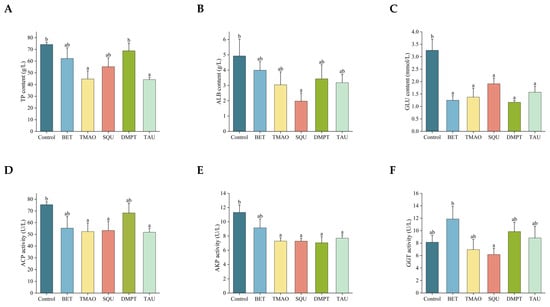
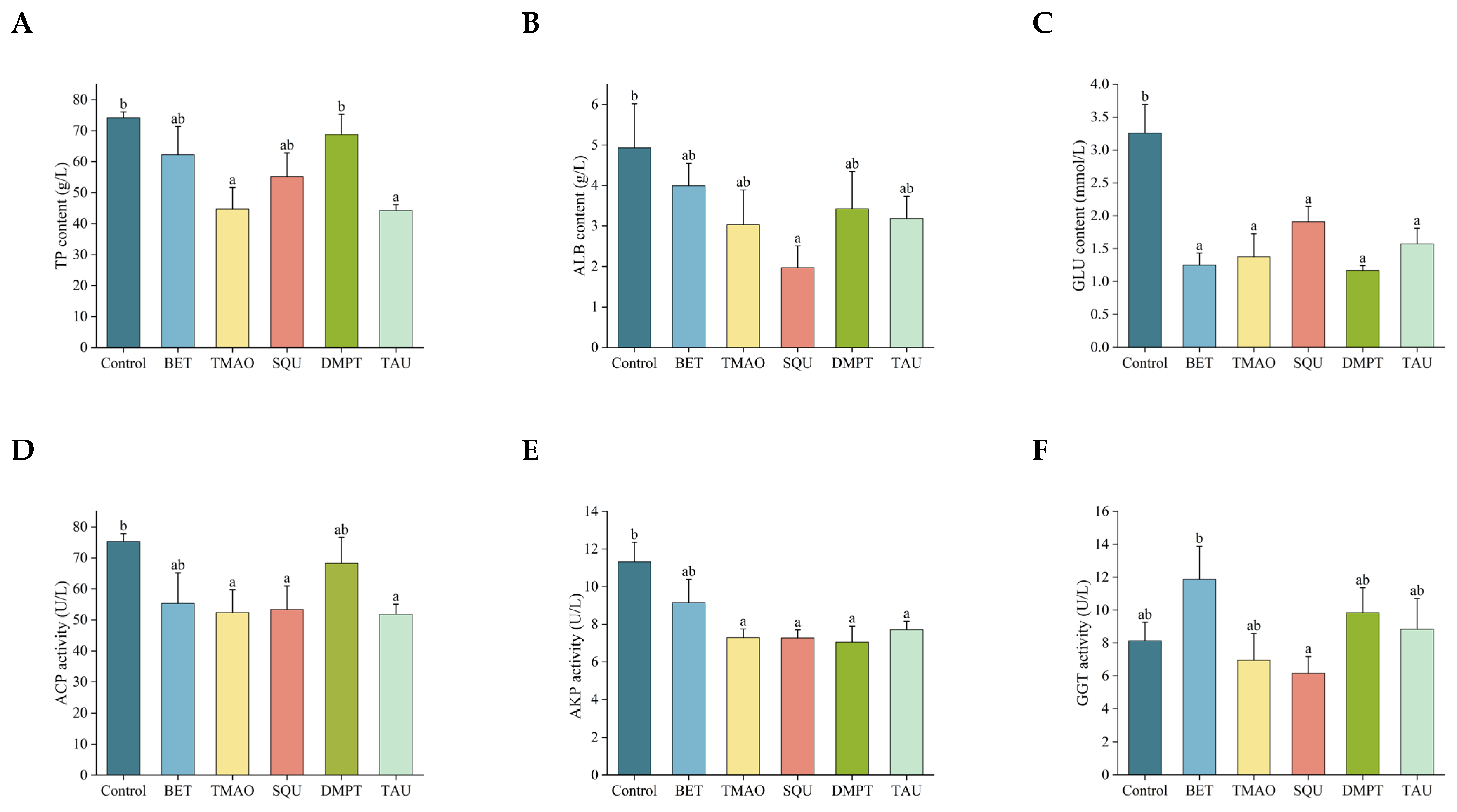
As shown in Figure 3, the TP content in the TMAO group and TAU group was significantly lower than that in the control group and DMPT group (p < 0.05, Figure 3A). The ALB content in the control group was significantly higher than that in the SQU group (p < 0.05), but there were no significant differences in the ALB content between the BET group, TMAO group, DMPT group, and TAU group compared with the control group (p > 0.05, Figure 3B). The GLU content of each treatment group was significantly lower than that of the control group (p < 0.05, Figure 3C). The activities of ACP and AKP in the TMAO group, SQU group, and TAU group were significantly lower than those in the control group (p < 0.05, Figure 3D,E), while the activities of ACP and AKP in the BET group were not significantly different from those in the control group. (p > 0.05). The GGT activity of the SQU group was significantly lower than that of the BET group (p < 0.05), but there were no significant differences in GGT activity among the other treatment groups (p > 0.05, Figure 3F).
Figure 3.
Biochemical indices of hemolymphs of P. clarkii. Note: (A) TP, total protein; (B) ALB, albumin; (C) GLU, glucose; (D) ACP, acid phosphatase; (E) AKP, alkaline phosphatase; (F) GGT, γ-glutamyl transferase. The presented data represent the mean of six replicates. Different letters indicate statistically significant differences at a significance level of p < 0.05.
3.5. Intestinal Digestive Enzyme Activity
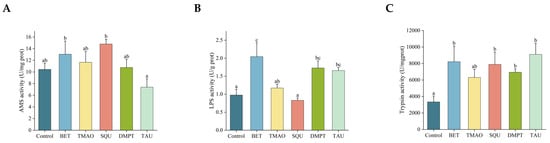
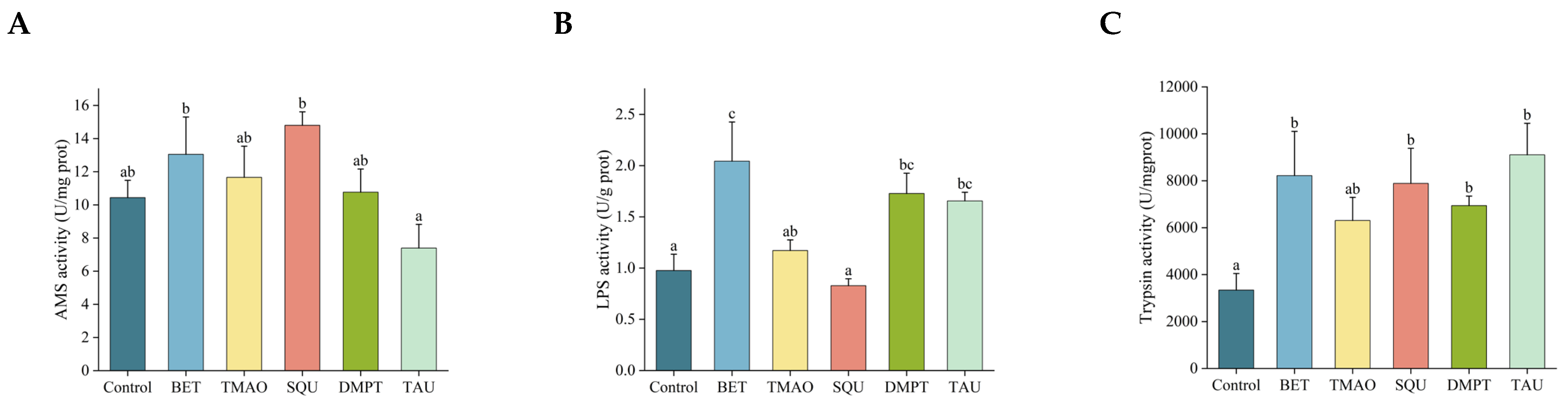
As seen in Figure 4, the AMS activity of each treatment group was not significantly different from that of the control group (p > 0.05), and the AMS activity of the TAU group was significantly lower than that of the BET group and SQU group (p < 0.05, Figure 4A). Compared with the control group and SQU group, the LPS activity of the BET group, DMPT group, and TAU group increased significantly (p < 0.05, Figure 4B). Except for the TMAO group, the activity of trypsin in the other groups was significantly increased compared with the control group (p < 0.05, Figure 4C).
Figure 4.
Intestinal digestive enzyme activity of P. clarkii. Note: (A) AMS, amylase; (B) LPS, lipase; (C) trypsin. The presented data represent the mean of six replicates. Different letters indicate statistically significant differences at a significance level of p < 0.05.
3.6. Immune-Related Gene Expression
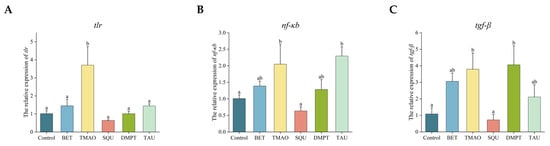
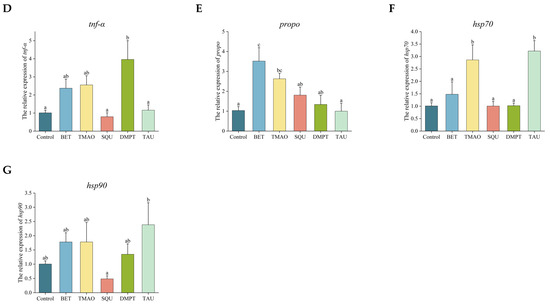
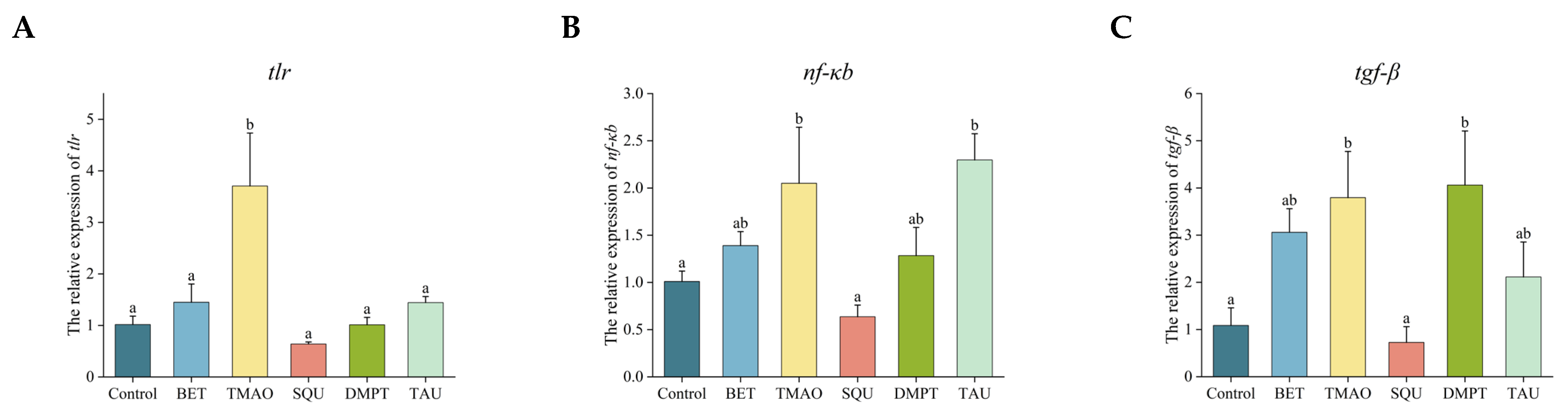
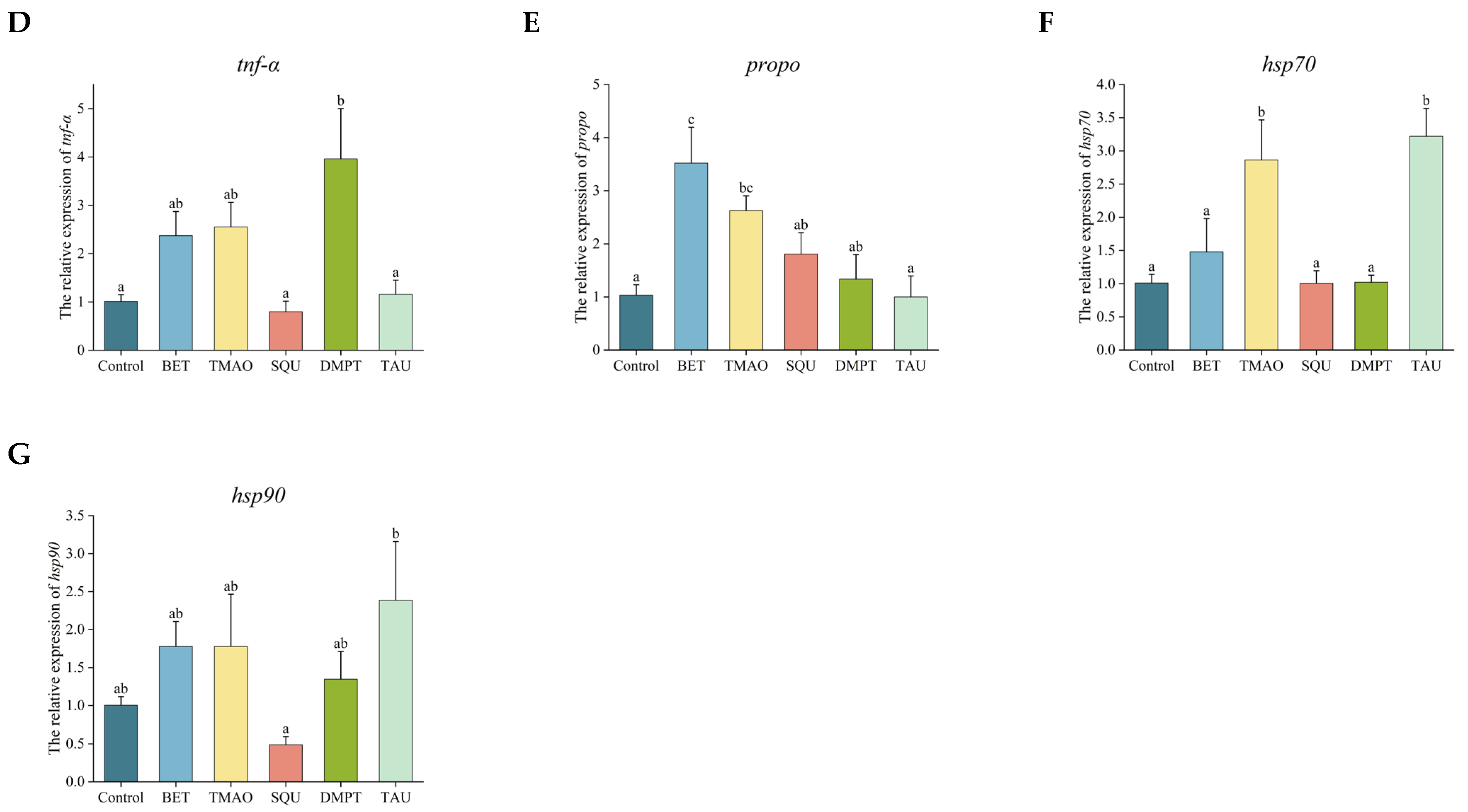
As shown in Figure 5, compared with the control group, the TMAO group significantly upregulated the expression levels of tlr, nf-κb, and tgf-β (p < 0.05), the TAU group significantly upregulated the expression level of nf-κb (p < 0.05), and the DMPT group significantly upregulated the expression levels of tgf-β and tnf-α (p < 0.05), while the BET group and SQU group had no significant effect on the expression levels of tlr, nfκ-b, tgf-β, and tnf-α (p > 0.05, Figure 5A–D). The expression level of propo in the BET group and TMAO group was the highest, which was significantly higher than that in the control group (p < 0.05), while there were no significant differences between the other treatment groups (p > 0.05, Figure 5E). In addition, compared with the control group, the TAU group significantly upregulated the expression levels of hsp70 and hsp90 (p < 0.05) and the TMAO group significantly upregulated the expression level of hsp70 (p < 0.05), while the other treatment groups had no significant difference in the expression levels of hsp70 and hsp90 (p > 0.05, Figure 5F,G).
Figure 5.
Expression of immune-related genes in P clarkii. Note: (A) Toll-like receptors (tlr); (B) nuclear factor kappa-b (nf-kb); (C) transforming growth factor-β (tgf-β); (D) tumor necrosis factor- α (tnf-α); (E) prophenoloxidase (propo); (F) heat shock protein 70 (hsp70); (G) heat shock protein 90 (hsp90). The presented data represent the mean of three replicates. Different letters indicate statistically significant differences at a significance level of p < 0.05.
3.7. TOR Signaling Pathway and Appetite Regulation-Related Gene Expression
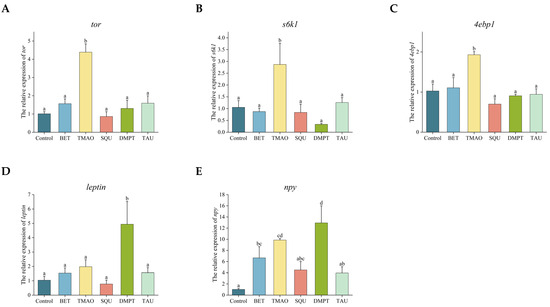
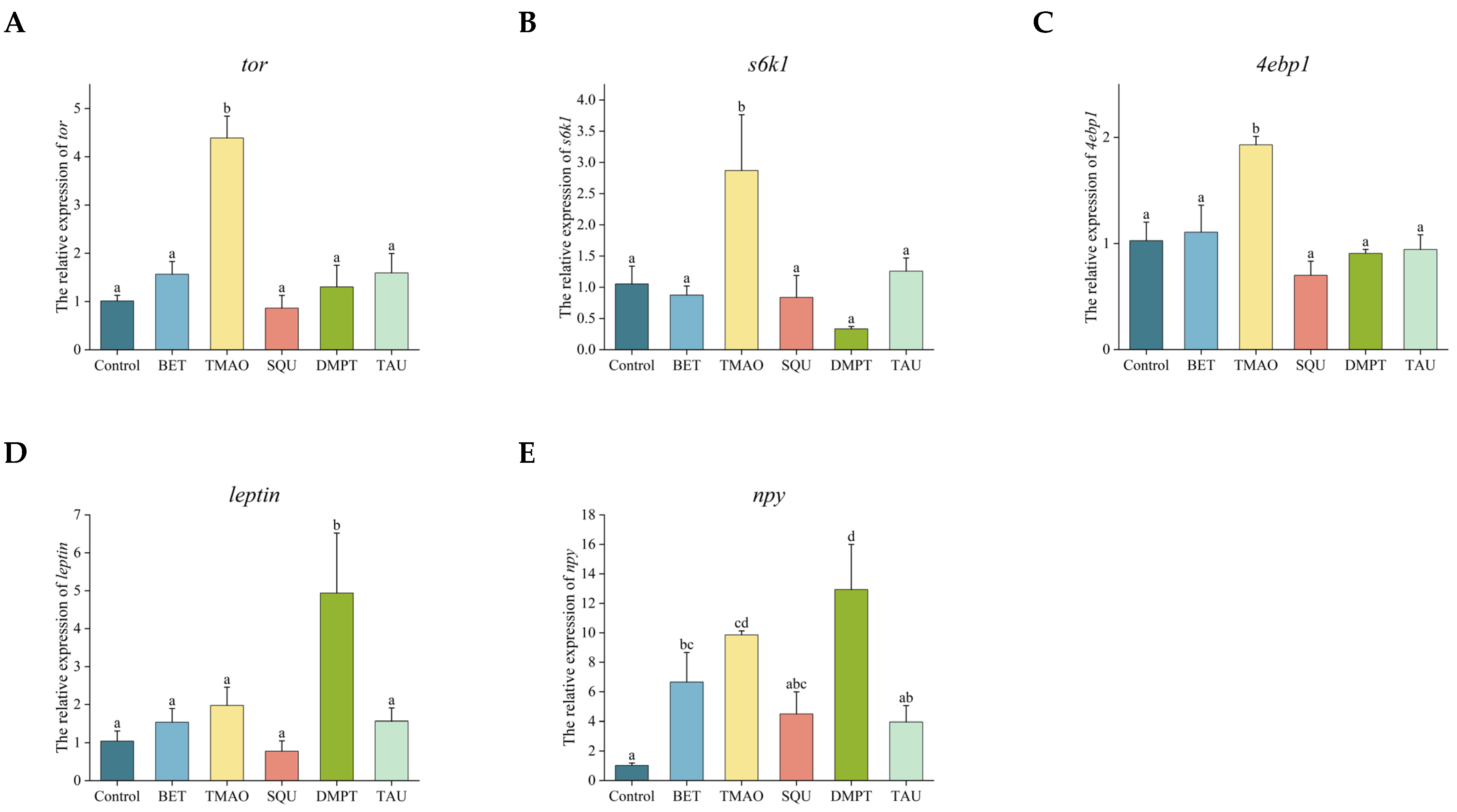
As shown in Figure 6, the expression levels of tor, s6k1, and 4ebp1 in the TMAO group were significantly higher than those in the other treatment groups (p < 0.05, Figure 6A–C). The expression of leptin in the DMPT group was significantly higher than that in the other treatment groups (p < 0.05, Figure 6D). The expression of npy in the BET, TMAO and DMPT groups was significantly higher than that in the control group (p < 0.05, Figure 6E).
Figure 6.
Expression of genes related to TOR signaling pathway and appetite regulation in P clarkii. Note: (A) Target of rapamycin (tor); (B) ribosomal protein S6 kinase 1 (s6k1); (C) 4e-binding protein1 (4ebp1); (D) leptin; (E) neuropeptide Y (npy). The presented data represent the mean of three replicates. Different letters indicate statistically significant differences at a significance level of p < 0.05.
4. Discussion
The key indicators of animal growth include final body weight (FBW), weight gain rate (WGR), specific growth rate (SGR), and feed conversion rate (FCR). In the study of aquatic attractants, many kinds of attractants such as active methyl, amino acids, and animal and plant extracts can increase the weight gain rate and specific growth rate of cultured animals [7,35,36]. In this study, the five attractants all showed significant growth-promoting effects. Among them, DMPT had the best growth-promoting effect, followed by SQU, TAU, BET, and TMAO. These results were also similar to previous studies [37]. Adding 5 g/kg DMPT to the feed can promote the intake of Micropterus salmoides and improve its growth performance [13], while the addition of squid paste to the feed can significantly increase the food intake and growth performance of Litopenaeus vannamei [38]. In a previous study in Macrobrachium rosenbergii, 0.5% supplementation of dietary betaine resulted in significantly better weight gain, FCR, per day growth, and feed intake compared to the control [39]. Previous studies have shown that supplementation of 0.24% TMAO in the diet of Chinese mitten crabs can significantly improve their SGR, WGR, and FCR [20]. However, there was no significant difference in FCR between the treatment groups and the control group in this experiment, although they were significantly different in the SGR and WGR indicators. This may be because the composition of the basic feed protein source was different from previous studies, and the species specificity of the attractant affected the effect of the attractant on the feed conversion efficiency [40].
The antioxidant defense system is critical for crustaceans to resist external stress, especially their lack of adaptive immunity, and this system is vulnerable to diet, external environment, and health status [41]. Therefore, reducing free radicals in the body and inhibiting lipid peroxidation damage are the key to maintaining good health. Superoxide dismutase (SOD), catalase (CAT), and glutathione peroxidase (GSH-Px) are antioxidant enzymes that play an essential and fundamental role in protecting biological systems from free radical attacks [42]. Studies have shown that adding betaine, trimethylamine oxide, and squid extract to the feed can increase the activity of SOD, CAT, and GSH-Px while reducing the content of MDA [13,36,43]. It is worth noting that MDA is considered to be a marker of free radical-induced lipid peroxidation and may be highly toxic, destroying cell structures and functions [44]. This means that the addition of attractants to the feed can improve the antioxidant capacity of aquatic animals. In this study, the activities of CAT and SOD in the BET, TMAO, and SQU groups were significantly higher than those in the control group, while the MDA level was decreased. In addition, compared with the control group, the T-AOC ability of each group was significantly improved, as T-AOC could indirectly reflect the health status of the organism. This indicates that the addition of BET, TMAO, and SQU to high plant protein feed can reduce the oxidative damage of crayfish. Compared with the control group, although the addition of DMPT and TAU had no significant effect on CAT, SOD, and GSH-Px of crayfish, it significantly increased T-AOC ability of the hepatopancreas and decreased MDA content, with similar results also observed in Micropterus salmoides [13]. This may be due to the time-lag effect of protein modification, gene transcription, and translation processes, resulting in inconsistent results [45]. Hepatopancreas is the main detoxification organ of crustaceans and the center of absorption, storage, and metabolism [46]. Previous studies have shown that the increase in plant protein will aggravate the pathological damage of hepatopancreas and eventually lead to a decline in growth performance [47]. In this experiment, some epithelial cells in the control group were necrotic and disintegrated, the hepatopancreas microsomes were sparsely arranged, and the lumen was deformed. After adding different kinds of attractants, the hepatopancreas cells of Procambarus clarkii were arranged evenly and closely, and the lumen was normal. This showed that the appropriate amount of attractant can regulate the arrangement of hepatopancreas cells, relieve their swelling, maintain the health of hepatopancreas, and thus promote the growth of Procambarus clarkii.
The content of total protein, albumin, glucose, and other biochemical components in the hemolymph of Procambarus clarkii is closely related to its nutrient metabolism. Since protein metabolism is mainly carried out in the hepatopancreas, hepatopancreas damage will lead to a decrease in protein metabolic rate, so the decrease in serum protein content is also used as an indicator to judge hepatopancreas damage. Albumin can be regarded as a factor related to both nutrition and inflammation. The increase in albumin levels may potentially reflect the presence of systemic inflammation in animals [48]. Blood glucose is a key factor in regulating the body’s life activities and also provides energy for tissue cells in dynamic balance. The results of this experiment showed that the levels of TP, ALB, and GLU in the control group were the highest; the TP content was significantly higher than that in the TMAO group and TAU group; and the ALB content was significantly higher than that in the SQU group. The GLU content of the control group was significantly higher than that of each treatment group. Acid phosphatase (ACP) and alkaline phosphatase (AKP) are well-established marker enzymes of macrophage lysosomes and key hydrolases involved in innate immunity. These enzymes not only hydrolyze invading pathogens, but also promote phagocytosis and the degradation of phagocytosed materials.γ-glutamyl transferase is an important index to evaluate hepatopancreas function. In this experiment, the activities of ACP and AKP in the control group were the highest, which were significantly higher than those in the TMAO group, SQU group, and TAU group. There were no significant differences in GGT activity between the control group and each treatment group. The results were also similar to the above antioxidant and hemolymph protein results. Current studies have shown that high plant protein feed will have a negative impact on the antioxidant and immunity of aquatic animals. By adding feed-promoting substances, this may help alleviate immune stress and reduce body damage [49,50]. Accordingly, the present results suggest that supplementation with attractants in high plant protein diets may moderately alleviate inflammatory-related responses, maintain glucose metabolic balance, and reduce stress in crayfish fed high plant protein diets.
Whole plant protein can cause adverse effects on the digestive ability of aquatic animals, resulting in decreased digestive ability [24]. The results of this experiment showed that the activities of intestinal amylase, lipase, and trypsin in the BET group were significantly higher than those in the control group. The activities of lipase and trypsin in the TAU group were significantly higher than those in the control group. The SQU group was significantly higher than the control group regarding amylase and trypsin activities. Previous studies have also shown that feed-promoting substances such as betaine, taurine, and squid paste can offset enzyme inhibition and enhance digestive enzyme activity, improving the ability of aquatic animals to degrade and absorb nutrients and thereby promoting their growth [7,38,51]. This shows that certain feed-promoting substances have a certain stimulating effect on intestinal digestive enzymes at specific concentrations, which can alleviate the negative effects of high plant protein on intestinal digestion of aquatic animals. The growth and weight gain rate of Procambarus clarkii also confirmed these results.
A toll receptor is the main pattern recognition receptor in crustaceans that plays an important role in recognizing microorganisms and inducing non-specific immune responses [52]. Upon activation, toll receptors form functional signaling complexes that trigger the NF-κB signaling pathway, which centrally regulates immune and inflammatory reactions by promoting the expression and secretion of downstream cytokines [53]. Tumor necrosis factor-α (tnf-α) acts as a key pro-inflammatory mediator, while transforming growth factor-β (tgf-β) functions as an important anti-inflammatory cytokine [54]. Phenoloxidase (propo) activation is one of the key enzymes for wound healing and pathogen killing in invertebrates. Previous studies have shown that propo is involved in the stress response of Procambarus clarkii to invading bacteria [55]. In this study, tlr, nf-κb, tgf-β, and propo genes were significantly expressed in the hepatopancreas of Procambarus clarkii after adding TMAO to high plant protein feed. This indicates that TMAO can slow down the stress response caused by high plant proteins, enhance the resistance to pathogens, and activate innate defense. Inflammation constitutes a basic component of the innate immune system and is an important defense mechanism against pathogens and tissue damage [56]. Compared with the control group, the expression levels of tnf-α and tgf-β in the DMPT group were also significantly increased, indicating that the inflammatory state was regulated. When aquatic animals are in a bad environment, it can lead to the destruction of proteins in the cellular environment, and the body will produce heat shock proteins (HSPs), including heat shock proteins 70 and 90, which act as molecular chaperones to protect cells during stress, preventing the aggregation of harmful proteins, promoting protein folding, and helping to repair damaged proteins [57]. In the present study, the relative expressions of hsp70, hsp90, and nf-κb were significantly higher in the TAU group than in the control group. These results suggest that taurine supplementation may alleviate stress responses and support innate immune defense in crayfish exposed to high plant protein-induced nutritional stress. Collectively, these observations indicate that different attractants may mitigate high plant protein-induced stress and inflammatory responses in Procambarus clarkii through distinct regulatory pathways involving pattern recognition, inflammatory signaling, and molecular chaperone expression.
TOR is a conserved serine (Ser)/threonine (Thr) protein kinase that activates downstream signaling pathways and transmits information through phosphorylation of translation regulators such as 4e-bp (4ebp1) and s6k to regulate physiological processes, such as cell growth, proliferation, and apoptosis [58]. Acanthopagrus schlegelii and Pelteobagrus fulvidraco studies have shown that there was a correlation between tor and the growth of aquatic animals [59,60]. Similarly, in a Litopenaeus vannamei study, high plant protein inhibited the expression of tor and s6k1 genes [61], and in Macrobrachium rosenbergii, when the plant protein exceeded 75%, the expression of tor and s6k1 genes was significantly downregulated [62]. In this experiment, compared with the high plant protein control group, the expression levels of tor, s6k1, and 4ebp1 genes in the TMAO group were significantly upregulated. Studies have shown that trimetlylamine oxide can promote the growth of aquatic animals, regulate lipid metabolism, and change body constitution [20]. These results imply that TMAO may alleviate the inhibitory effects of high plant protein on the TOR signaling pathway, which could partially explain the improved growth performance observed in the TMAO group. In addition, the growth of aquatic animals is closely related to appetite. The appetite regulation system has orexigenic and anorexigenic factors [63]. These neuropeptides determine the final feeding behavior of aquatic animals through information integration [64]. Neuropeptide Y (npy) is considered to be the most potent appetite-promoting peptide, which can significantly increase food intake in mammals and fish [65]. Leptin, as an antifeedant factor, is also involved in the regulation of feeding, metabolism, and growth [66]. The results showed that, compared with the control group, the leptin gene in the DMPT group was significantly expressed, while there were no significant differences in the other groups. The npy gene in the BET, TMAO and DMPT groups was significantly expressed compared with the control group. This was also similar to the results of the previous part of the growth study. These observations are consistent with the growth performance results observed in this study, suggesting that dietary attractants may induce the expression of npy in Procambarus clarkii, thereby supporting improved growth. However, SQU could significantly increase the growth and weight gain rate, even though the appetite factors detected in the SQU group were not significantly different from those in the control group. This pattern might be attributed to the fact that SQU is an animal-derived extract with potentially non-specific regulatory targets on appetite-related gene expression. For TAU, no significant difference was also found between the detected appetite-related genes and the control group, and the possible reason was similar to SQU. In addition, the study found that the DMPT group also increased the expression of the anti-appetite factor Leptin. Similar results were found in the juvenile GIFT tilapia study [23]. This may be attributed to the combined effect of multiple factors, including appetite-promoting and appetite-suppressing factors. When the promoting effect of a substance on the appetite-promoting factor exceeds the appetite-inhibiting factor, the integrated result is to promote feeding.
5. Conclusions
In conclusion, supplementation with 0.4% BET, TMAO, SQU, DMPT, or TAU in high plant protein diets improved the weight gain rate and specific growth rate of Procambarus clarkii. These different attractants also enhanced the antioxidant capacity and non-specific immunity of crayfish. Specifically, BET, TMAO, and SQU increased the activities of antioxidant enzymes in the hepatopancreas, while SQU, DMPT, and TAU reduced MDA content. Meanwhile, TMAO, DMPT, and TAU regulated the expression of immune-related genes and alleviated inflammatory responses. Furthermore, TMAO significantly upregulated the expression levels of tor, s6k1, and 4ebp1 in the TOR signaling pathway. In addition, DMPT promoted the expression of feeding-related genes leptin and npy, thereby improving feed intake and ultimately contributing to enhanced growth performance.
Author Contributions
Y.D.; Writing—review and editing, writing—original draft, formal analysis, and data curation. S.X.; Methodology and conceptualization. W.Z.; Methodology and conceptualization. W.Y.; Writing—review and editing, methodology, and conceptualization. Y.Y.; Methodology. Z.L.; Resources. B.P.; Resources. Y.W.; Resources. B.L.; Investigation. H.T.; Writing—review and editing, project administration, methodology, funding acquisition, and conceptualization. J.M.; Writing—review and editing, project administration, methodology, and funding acquisition. All authors have read and agreed to the published version of the manuscript.
Funding
This study was supported by the National Key R&D Program of China (2023YFD2402000), Public Welfare Applied Research Project of Huzhou City in China (2024GZ30), and Project of Xinjiang Uygur Autonomous Region Central Guidance for Local Science and Technology Development Fund (ZYYD2025CG03).
Institutional Review Board Statement
Animal procedures were performed in accordance with the regulations and approved by the Institutional Animal Care and Use Committee of Huzhou University (approval ID: ZJHU-DW-2025-062; approval date: 8 April 2025), in compliance with the Guide for Laboratory Animals established by the Ministry of Science and Technology (Beijing, China).
Data Availability Statement
The data that support the findings of this study are available from the corresponding author, Hongyan Tian, upon reasonable request.
Acknowledgments
We sincerely thank Qiongjie Wang and Xiaoping Guan for their assistance in the procurement of experimental resources and materials, which greatly supported the completion of this research. Their contributions are gratefully acknowledged.
Conflicts of Interest
The authors declare that they have no known competing financial interests or personal relationships that could have appeared to influence the work reported in this paper.
References
- Gamboa-Delgado, J.; Márquez-Reyes, J.M. Potential of Microbial-Derived Nutrients for Aquaculture Development. Rev. Aquac. 2018, 10, 224–246. [Google Scholar] [CrossRef] [Scilit]
- Jiang, W.; Jia, X.; Xie, N.; Wen, C.; Ma, S.; Jiang, G.; Li, X.; Chi, C.; Zhang, D.; Liu, W. Aquafeed Fermentation Improves Dietary Nutritional Quality and Benefits Feeding Behavior, Meat Flavor, and Intestinal Microbiota of Chinese Mitten Crab (Eriocheir sinensis). Anim. Nutr. 2023, 14, 1–19. [Google Scholar] [CrossRef] [Scilit]
- Francis, G.; Makkar, H.P.S.; Becker, K. Antinutritional Factors Present in Plant-Derived Alternate Fish Feed Ingredients and Their Effects in Fish. Aquaculture 2001, 199, 197–227. [Google Scholar] [CrossRef] [Scilit]
- Li, W.; Li, E.; Wang, S.; Liu, J.; Wang, M.; Wang, X.; Qin, C.; Qin, J.; Chen, L. Comparative Effects of Four Feed Attractants on Growth, Appetite, Digestion and Absorption in Juvenile Chinese Mitten Crab (Eriocheir sinensis). Aquaculture 2025, 594, 741441. [Google Scholar] [CrossRef] [Scilit]
- Tola, S.; Fukada, H.; Masumoto, T. Effects of Natural Feeding Stimulants and Glutamic Acid Supplementation on the Feed Intake, Growth Performance and Digestive Enzyme Activities of Red Sea Bream (Pagrus major) Fed Fish Meal-Free Soy Protein Concentrate (SPC)-Based Diet. Aquac. Res. 2019, 50, 1912–1920. [Google Scholar] [CrossRef] [Scilit]
- Urán, P.A.; Gonçalves, A.A.; Taverne-Thiele, J.J.; Schrama, J.W.; Verreth, J.A.J.; Rombout, J.H.W.M. Soybean Meal Induces Intestinal Inflammation in Common Carp (Cyprinus carpio L.). Fish Shellfish Immunol. 2008, 25, 751–760. [Google Scholar] [CrossRef] [Scilit]
- Lim, L.; Liew, K.; Ebi, I.; Shapawi, R.; Lal, M.T.M.; Liew, H.J.; Hamasaki, K.; Masuda, R.; Kawamura, G. Amino Acids as Chemoattractant and Feeding Stimulant for the Commercially Farmed Decapod Crustaceans: A Brief Review. Aquac. Res. 2022, 53, 333–343. [Google Scholar] [CrossRef] [Scilit]
- Al-Feky, S.S.A.; El-Sayed, A.-F.M.; Ezzat, A.A. Dietary Taurine Enhances Growth and Feed Utilization in Larval Nile Tilapia (Oreochromis niloticus) Fed Soybean Meal-Based Diets. Aquac. Nutr. 2016, 22, 457–464. [Google Scholar] [CrossRef] [Scilit]
- Xia, S.; Zhao, W.; Li, M.; Zhang, D.; Nan, L.; Qian, H.; Guo, C.; Yang, L.; Xuyun, G. Influence of 5′-Inosine Monophosphate and 5′-Guanosine Monophosphate on Growth, Feed Digestibility and Activity of Digestive Enzymes in Turbot Scophthalmus maximus. Aquac. Nutr. 2020, 26, 165–173. [Google Scholar] [CrossRef] [Scilit]
- Ai, C.; Leng, X.; Luo, Z.; Zhou, Z.; Ai, Q. A Review of the Latest Advances in Aquaculture Nutrition Research. J. Nutr. 2025, 155, 3267–3290. [Google Scholar] [CrossRef] [Scilit]
- Sanchez, M.S.d.S.; Lins-Rodrigues, M.; Pessini, J.E.; Barcellos, L.J.G.; Bittencourt, F.; Boscolo, W.R.; Signor, A. Dietary Supplementation of Betaine Improves Growth Performance and Reduces Lipid Peroxidation in Nile tilapia. Aquac. Nutr. 2021, 27, 1861–1870. [Google Scholar] [CrossRef] [Scilit]
- Jin, M.; Shen, Y.; Pan, T.; Zhu, T.; Li, X.; Xu, F.; Betancor, M.B.; Jiao, L.; Tocher, D.R.; Zhou, Q. Dietary Betaine Mitigates Hepatic Steatosis and Inflammation Induced by a High-Fat-Diet by Modulating the Sirt1/Srebp-1/Pparɑ Pathway in Juvenile Black Seabream (Acanthopagrus schlegelii). Front. Immunol. 2021, 12, 694720. [Google Scholar] [CrossRef] [Scilit]
- Yang, J.; Wang, H.; Fan, X.; Wang, J.; Zhao, J.; Xu, Q. Effects of Attractants on the Growth Performance, Antioxidant Capacity, Immunity, and Histology of Largemouth Bass Larvae (Micropterus salmoides). Aquac. Nutr. 2025, 2025, 9641984. [Google Scholar] [CrossRef] [Scilit]
- Sun, C.; Qian, Y.; Liu, W.; Xu, W.; Wang, K.; Liu, B. Dietary Squid Paste Supplementation Promotes Feed Intake via Brain-Gut Dynamic Response in Chinese Soft-Shelled Turtle Pelodiscus sinensis. PeerJ 2020, 8, e9031. [Google Scholar] [CrossRef] [Scilit] [PubMed]
- Sun, C.-X.; Xu, W.-N.; Zhang, D.-D.; Li, X.-F.; Li, P.-F.; Jiang, G.-Z.; Liu, W.-B. Different Preference Is Modulated by the Feeding Stimulants Supplementation in Different Chinese Soft-Shelled Turtle (Pelodiscus sinensis) Basic Diets. Aquac. Nutr. 2018, 24, 195–203. [Google Scholar] [CrossRef] [Scilit]
- Shi, M.; Yao, X.; Qu, K.; Liu, Y.; Tan, B.; Xie, S. Effects of Taurine Supplementation in Low Fishmeal Diet on Growth, Immunity and Intestinal Health of Litopenaeus vannamei. Aquac. Rep. 2023, 32, 101713. [Google Scholar] [CrossRef] [Scilit]
- Liu, J.-X.; Guo, H.-Y.; Zhu, K.-C.; Liu, B.-S.; Zhang, N.; Zhang, D.-C. Effects of Exogenous Taurine Supplementation on the Growth, Antioxidant Capacity, Intestine Immunity, and Resistance against Streptococcus agalactiae in Juvenile Golden Pompano (Trachinotus ovatus) Fed with a Low-Fishmeal Diet. Front. Immunol. 2022, 13, 1036821. [Google Scholar] [CrossRef] [Scilit]
- Craig, S.A. Betaine in Human Nutrition. Am. J. Clin. Nutr. 2004, 80, 539–549. [Google Scholar] [CrossRef] [Scilit]
- Yousefi, M.; Molayemraftar, T.; Hoseini, S.M.; Ghafarifarsani, H. Dietary Betaine Improves Immune Function, Antioxidant Status, Immune-Related Signaling Molecules, and Disease Resistance in Fish Species. Aquac. Nutr. 2025, 2025, 4596572. [Google Scholar] [CrossRef] [Scilit]
- Li, M.; Wang, A.; Lin, X.; Miao, H.; Liu, X.; Xu, J.; Ma, X.; Wu, Y.; Dong, X.; Ge, J.; et al. Effects of Dietary Trimetlylamine Oxide on the Growth Performance, Feed Utilization and Appetite Regulation of Chinese Mitten Crab (Eriocheir sinensis). Aquaculture 2023, 575, 739754. [Google Scholar] [CrossRef] [Scilit]
- Wang, C.; Xu, Q.; Xu, H.; Yi, J.; Wang, Y. Trimethylamine Oxide in Diets for Taimen (Hucho taimen):Effects on Growth Performance, Muscle Composition, Gastrointestinal Lipase Activity and Serum Biochemical Indices. Chin. J. Anim. Nutr. 2012, 24, 2279–2286. [Google Scholar] [CrossRef]
- Ndobe, S.; Muamar; Rosyida, E.; Widiastuti, I.M.; Mansyur, K.; Tantu, F.Y. Effect of Adding Squid Meal as an Attractant to Freshwater Eel (Anguilla marmorata) Feed on Elver Growth, Feed Palatability, Efficiency and Conversion. IOP Conf. Ser. Earth Environ. Sci. 2022, 1075, 012016. [Google Scholar] [CrossRef] [Scilit]
- Zou, Q.; Huang, Y.; Cao, J.; Zhao, H.; Wang, G.; Li, Y.; Pan, Q. Effects of Four Feeding Stimulants in High Plant-Based Diets on Feed Intake, Growth Performance, Serum Biochemical Parameters, Digestive Enzyme Activities and Appetite-Related Genes Expression of Juvenile GIFT Tilapia (Oreochromis sp.). Aquac. Nutr. 2017, 23, 1076–1085. [Google Scholar] [CrossRef] [Scilit]
- Liu, X.; Feng, L.; Jiang, W.-D.; Wu, P.; Jiang, J.; Tang, L.; Kuang, S.-Y.; Zhou, X.-Q.; Liu, Y. Dimethyl-β-Propiothetine (DMPT) Supplementation under the All-Plant Protein Diet Enhances Growth Performance, Digestive Capacity and Intestinal Structural Integrity for on-Growing Grass Carp (Ctenopharyngodon idella). Aquaculture 2019, 513, 734421. [Google Scholar] [CrossRef] [Scilit]
- Salze, G.P.; Davis, D.A. Taurine: A Critical Nutrient for Future Fish Feeds. Aquaculture 2015, 437, 215–229. [Google Scholar] [CrossRef] [Scilit]
- Zhang, J.; Che, C.; Cai, M.; Hu, Y. Taurine Improves Health of Juvenile Rice Field Eel (Monopterus albus) Fed with Oxidized Fish Oil: Involvement of Lipid Metabolism, Antioxidant Capacity, Inflammatory Response. Aquac. Rep. 2022, 27, 101388. [Google Scholar] [CrossRef] [Scilit]
- Hongmanee, P.; Wongmaneeprateep, S.; Boonyoung, S.; Yuangsoi, B. The Optimal Dietary Taurine Supplementation in Zero Fish Meal Diet of Juvenile Snakehead Fish (Channa striata). Aquaculture 2022, 553, 738052. [Google Scholar] [CrossRef] [Scilit]
- Wang, H.; Du, X.; Zou, J.; Wang, M.; Lei, Y.; Zhang, B.; Zhao, Y.; Jiang, L.; Chen, X.; Wang, Q. Taurine Supplementation Enhances the Resistance of Litopenaeus vannamei Postlarvae to Low-Salinity Stress. Biology 2025, 14, 1082. [Google Scholar] [CrossRef] [Scilit]
- Hernández-de Dios, M.A.; Maldonado-García, M.C.; Maldonado-García, D.; Guzmán-Villanueva, L.T.; Tovar-Ramírez, D. Dietary Taurine Improves Antioxidant and Lysozyme Activity, Carbohydrate-Related Metabolism, and Digestive Genes Expression of Longfin Yellowtail (Seriola rivoliana). Fish Physiol. Biochem. 2025, 51, 149. [Google Scholar] [CrossRef] [Scilit]
- Cai, M.; Dai, W.; Qiu, X.; He, Z.; Wang, A.; Chen, K.; Hu, Y. A Study on the Effects of Replacing Fishmeal with Soybean Meal in the Feed of Procambarus clarkii: Assessing Growth Performance, Immunity, and Gut Microbiota. Aquac. Rep. 2024, 36, 102184. [Google Scholar] [CrossRef] [Scilit]
- Tan, Q.; Song, D.; Chen, X.; Xie, S.; Shu, X. Replacing Fish Meal with Vegetable Protein Sources in Feed for Juvenile Red Swamp Crayfish, Procambarus clarkii: Effects of Amino Acids Supplementation on Growth and Feed Utilization. Aquac. Nutr. 2018, 24, 858–864. [Google Scholar] [CrossRef] [Scilit]
- Wu, M.; He, J.; Masagounder, K.; Huang, F.; Liang, H.; Dong, L.; Wen, H.; Jiang, M.; Lu, X.; Su, S.; et al. Optimal DL-Methionyl-DL-Methionine Supplementation in a Plant-Protein Diet for the Red Swamp Crayfish Procambarus clarkii. Aquac. Int. 2024, 32, 3079–3105. [Google Scholar] [CrossRef] [Scilit]
- AOAC. Official Methods of Analysis of AOAC International, 18th ed.; AOAC International: Gaithersburgm, MD, USA, 2005. [Google Scholar]
- Štrus, J.; Žnidaršič, N.; Mrak, P.; Bogataj, U.; Vogt, G. Structure, Function and Development of the Digestive System in Malacostracan Crustaceans and Adaptation to Different Lifestyles. Cell Tissue Res. 2019, 377, 415–443. [Google Scholar] [CrossRef] [Scilit]
- Dong, X.; Wang, J.; Ji, P.; Gao, X.; Sun, L.; Miao, S.; Lei, Y.; Du, X.; Zhang, X. Dietary Betaine Supplementation Promotes Growth, n-3 LC-PUFA Content and Innate Immunity in Macrobrachium rosenbergii. Aquaculture 2020, 525, 735308. [Google Scholar] [CrossRef] [Scilit]
- He, G.; Chen, X.; Zeng, Q.; Zhu, W.; Chen, Z.; Tan, B.; Xie, S. Effects of Compound Feed Attractants on Growth Performance, Feed Utilization, Intestinal Histology, Protein Synthesis, and Immune Response of White Shrimp (Litopenaeus vannamei). Animals 2022, 12, 2550. [Google Scholar] [CrossRef] [Scilit] [PubMed]
- Hua, X.M.; Shui, C.; He, Y.D.; Xing, S.H.; Yu, N.; Zhu, Z.Y.; Zhao, C.Y. Effects of Different Feed Stimulants on Freshwater Crayfish (Procambarus clarkii), Fed Diets with or without Partial Replacement of Fish Meal by Biofeed. Aquac. Nutr. 2015, 21, 113–120. [Google Scholar] [CrossRef] [Scilit]
- Zhu, T.; Morais, S.; Luo, J.; Jin, M.; Lu, Y.; Le, Y.; Zhou, Q. Functional Palatability Enhancer Improved Growth, Intestinal Morphology, and Hepatopancreas Protease Activity, Replacing Squid Paste in White Shrimp, Litopenaeus vannamei, Diets. J. World Aquac. Soc. 2019, 50, 1064–1077. [Google Scholar] [CrossRef] [Scilit]
- Felix, N.; Sudharsan, M. Effect of Glycine Betaine, a Feed Attractant Affecting Growth and Feed Conversion of Juvenile Freshwater Prawn Macrobrachium rosenbergii. Aquac. Nutr. 2004, 10, 193–197. [Google Scholar] [CrossRef] [Scilit]
- Normandes, E.B.; Barreto, R.E.; Carvalho, R.F.; Delicio, H.C. Effects of Betaine on the Growth of the Fish Piauçu, Leporinus macrocephalus. Braz. Arch. Biol. Technol. 2006, 49, 757–762. [Google Scholar] [CrossRef] [Scilit]
- Frías-Espericueta, M.G.; Bautista-Covarrubias, J.C.; Osuna-Martínez, C.C.; Delgado-Alvarez, C.; Bojórquez, C.; Aguilar-Juárez, M.; Roos-Muñoz, S.; Osuna-López, I.; Páez-Osuna, F. Metals and Oxidative Stress in Aquatic Decapod Crustaceans: A Review with Special Reference to Shrimp and Crabs. Aquat. Toxicol. 2022, 242, 106024. [Google Scholar] [CrossRef] [Scilit]
- Ighodaro, O.M.; Akinloye, O.A. First Line Defence Antioxidants-Superoxide Dismutase (SOD), Catalase (CAT) and Glutathione Peroxidase (GPX): Their Fundamental Role in the Entire Antioxidant Defence Grid. Alex. J. Med. 2018, 54, 287–293. [Google Scholar] [CrossRef] [Scilit]
- Risha, E.; Ahmed, F.; Khaled, A.A.; Hossain, F.M.A.; Akhtar, N.; Zahran, E. Interactive Effects of Dietary Betaine and Chromium Picolinate on the Immunomodulation, Antioxidative Response and Disease Resistance of Nile Tilapia (Oreochromis niloticus). Aquac. Res. 2022, 53, 3464–3477. [Google Scholar] [CrossRef] [Scilit]
- Wang, A.; Hui, W.; Deng, X.; Tian, H.; Zhang, W.; Xia, S.; Liu, F.; Yang, W.; Yu, Y.; Liu, B.; et al. Beneficial Effects of Haematococcus Pluvialis on Growth and Hepatopancreas Health Status in Crayfish (Procambarus clarkii) via Remodeling the Gut Microbial Metabolic Functions. Aquaculture 2025, 595, 741664. [Google Scholar] [CrossRef] [Scilit]
- Luo, Z.; Yu, X.; Wang, C.; Zhao, H.; Wang, X.; Guan, X. Trimethylamine N-Oxide Promotes Oxidative Stress and Lipid Accumulation in Macrophage Foam Cells via the Nrf2/ABCA1 Pathway. J. Physiol. Biochem. 2024, 80, 67–79. [Google Scholar] [CrossRef] [Scilit]
- Zhang, Y.; Li, Z.; Kholodkevich, S.; Sharov, A.; Feng, Y.; Ren, N.; Sun, K. Cadmium-Induced Oxidative Stress, Histopathology, and Transcriptome Changes in the Hepatopancreas of Freshwater Crayfish (Procambarus clarkii). Sci. Total Environ. 2019, 666, 944–955. [Google Scholar] [CrossRef] [Scilit] [PubMed]
- Mohammadi, M.; Imani, A.; Farhangi, M.; Gharaei, A.; Hafezieh, M. Replacement of Fishmeal with Processed Canola Meal in Diets for Juvenile Nile Tilapia (Oreochromis niloticus): Growth Performance, Mucosal Innate Immunity, Hepatic Oxidative Status, Liver and Intestine Histology. Aquaculture 2020, 518, 734824. [Google Scholar] [CrossRef] [Scilit]
- Sun, H.; Guan, D.; Wang, J.; Wang, Z.; Li, Y.; Han, H.; Li, X.; Fang, T. Effects of Glimepiride on Growth, Glucose Metabolism and Expression of p38MAPK, JNK in Skeletal Muscles of GIFT Tilapia. Aquac. Rep. 2021, 21, 100873. [Google Scholar] [CrossRef] [Scilit]
- Lu, X.; Tan, K.; Gong, Q.; Peng, Y.; Liang, M.; Xu, P.; Liang, X.; Liu, W.; Wu, Y.; Cai, X. Positive Effects of Lithospermum erythrorhizon Extract Added to High Soybean Meal Diet on Growth, Intestinal Antioxidant Capacity, Intestinal Microbiota, and Metabolism of Pearl Gentian Grouper. Aquac. Rep. 2024, 39, 102500. [Google Scholar] [CrossRef] [Scilit]
- Peng, K.-S.; Wu, N.; Cui, Z.-W.; Zhang, X.-Y.; Lu, X.-B.; Wang, Z.-X.; Chen, D.-D.; Zhang, Y.-A. Effect of the Complete Replacement of Dietary Fish Meal by Soybean Meal on Histopathology and Immune Response of the Hindgut in Grass Carp (Ctenopharyngodon idellus). Vet. Immunol. Immunopathol. 2020, 221, 110009. [Google Scholar] [CrossRef] [Scilit]
- Liu, Y.-J.; Guo, J.; Li, C.-D.; Han, S.-Y.; Cai, L. The Multi-Protective Role of Dietary Betaine in Largemouth Bass (Micropterus salmoides): Coordinating Antioxidant, Inflammatory, and Metabolic Homeostasis under High-Fat Diet Stress. Front. Physiol. 2025, 16, 1742669. [Google Scholar] [CrossRef] [Scilit]
- Xiao, C.; Zhang, Y.; Zhu, F. Effect of Dietary Sodium Butyrate on the Innate Immune Response of Procambarus clarkii and Disease Resistance against White Spot Syndrome Virus. Aquaculture 2021, 541, 736784. [Google Scholar] [CrossRef] [Scilit]
- Encinas-García, T.; Mendoza-Cano, F.; Porchas-Cornejo, M.; Peña-Rodríguez, A.; Enríquez-Espinoza, T.; Sánchez-Paz, A. The White Spot Syndrome Virus Hijacks the Expression of the Penaeus vannamei Toll Signaling Pathway to Evade Host Immunity and Facilitate Its Replication. Fish Shellfish Immunol. 2019, 92, 905–912. [Google Scholar] [CrossRef] [Scilit]
- Guan, T.; Wang, L.; Hu, M.; Zhu, Q.; Cai, L.; Wang, Y.; Xie, P.; Feng, J.; Wang, H.; Li, J. Effects of Chronic Abamectin Stress on Growth Performance, Digestive Capacity, and Defense Systems in Red Swamp Crayfish (Procambarus clarkii). Aquat. Toxicol. 2024, 268, 106861. [Google Scholar] [CrossRef] [Scilit]
- Qin, Z.; Babu, V.S.; Lin, H.; Dai, Y.; Kou, H.; Chen, L.; Li, J.; Zhao, L.; Lin, L. The Immune Function of Prophenoloxidase from Red Swamp Crayfish (Procambarus clarkii) in Response to Bacterial Infection. Fish Shellfish Immunol. 2019, 92, 83–90. [Google Scholar] [CrossRef] [Scilit] [PubMed]
- Zou, J.; Secombes, C.J. The Function of Fish Cytokines. Biology 2016, 5, 23. [Google Scholar] [CrossRef] [Scilit]
- Genest, O.; Hoskins, J.R.; Kravats, A.N.; Doyle, S.M.; Wickner, S. Hsp70 and Hsp90 of E. coli Directly Interact for Collaboration in Protein Remodeling. J. Mol. Biol. 2015, 427, 3877–3889. [Google Scholar] [CrossRef] [Scilit] [PubMed]
- Wullschleger, S.; Loewith, R.; Hall, M.N. TOR Signaling in Growth and Metabolism. Cell 2006, 124, 471–484. [Google Scholar] [CrossRef] [Scilit]
- Wu, D.; Zhou, L.; Gao, M.; Wang, M.; Wang, B.; He, J.; Luo, Q.; Ye, Y.; Cai, C.; Wu, P.; et al. Effects of Stickwater Hydrolysates on Growth Performance for Yellow Catfish (Pelteobagrus fulvidraco). Aquaculture 2018, 488, 161–173. [Google Scholar] [CrossRef] [Scilit]
- Irm, M.; Taj, S.; Jin, M.; Andriamialinirina, H.J.T.; Cheng, X.; Zhou, Q. Influence of Dietary Replacement of Fish Meal with Fish Soluble Meal on Growth and TOR Signaling Pathway in Juvenile Black Sea Bream (Acanthopagrus schlegelii). Fish Shellfish Immunol. 2020, 101, 269–276. [Google Scholar] [CrossRef] [Scilit]
- Yang, P.; He, C.; Qin, Y.; Wang, W.; Mai, K.; Qin, Q.; Wei, Z.; Song, F. Evaluation of Composite Mixture of Protein Sources in Replacing Fishmeal for Pacific White Shrimp (Litopenaeus vannamei): Based on the Changing Pattern of Growth Performance, Nutrient Metabolism and Health Status. Aquac. Rep. 2021, 21, 100914. [Google Scholar] [CrossRef] [Scilit]
- Ding, Z.; Zhou, D.; Zheng, J.; Chen, X.; Kong, Y.; Qi, C.; Liu, Y.; Tang, Q.; Yang, G.; Ye, J. Replacing Fishmeal with Soybean Meal Affects Survival, Antioxidant Capacity, Intestinal Microbiota, and mRNA Expression of TOR and S6K1 in Macrobrachium rosenbergii. J. Oceanol. Limnol. 2022, 40, 805–817. [Google Scholar] [CrossRef] [Scilit]
- Blanco, A.M.; Bertucci, J.I.; Valenciano, A.I.; Delgado, M.J.; Unniappan, S. Ghrelin Suppresses Cholecystokinin (CCK), Peptide YY (PYY) and Glucagon-like Peptide-1 (GLP-1) in the Intestine, and Attenuates the Anorectic Effects of CCK, PYY and GLP-1 in Goldfish (Carassius auratus). Horm. Behav. 2017, 93, 62–71. [Google Scholar] [CrossRef] [Scilit]
- Volkoff, H.; Hoskins, L.J.; Tuziak, S.M. Influence of Intrinsic Signals and Environmental Cues on the Endocrine Control of Feeding in Fish: Potential Application in Aquaculture. Gen. Comp. Endocrinol. 2010, 167, 352–359. [Google Scholar] [CrossRef] [Scilit] [PubMed]
- Nguyen, M.V.; Jordal, A.-E.O.; Espe, M.; Buttle, L.; Lai, H.V.; Rønnestad, I. Feed Intake and Brain Neuropeptide Y (NPY) and Cholecystokinin (CCK) Gene Expression in Juvenile Cobia Fed Plant-Based Protein Diets with Different Lysine to Arginine Ratios. Comp. Biochem. Physiol. Part A Mol. Integr. Physiol. 2013, 165, 328–337. [Google Scholar] [CrossRef] [Scilit]
- Poljaroen, J.; Tinikul, Y.; Tinikul, R.; Anurucpreeda, P.; Sobhon, P. Leptin-like Immunoreactivity in the Central Nervous System, Digestive Organs, and Gonads of the Giant Freshwater Prawn, Macrobrachium rosenbergii. Acta Histochem. 2017, 119, 569–581. [Google Scholar] [CrossRef] [Scilit] [PubMed]

Disclaimer/Publisher’s Note: The statements, opinions and data contained in all publications are solely those of the individual author(s) and contributor(s) and not of MDPI and/or the editor(s). MDPI and/or the editor(s) disclaim responsibility for any injury to people or property resulting from any ideas, methods, instructions or products referred to in the content. |
© 2026 by the authors. Licensee MDPI, Basel, Switzerland. This article is an open access article distributed under the terms and conditions of the Creative Commons Attribution (CC BY) license.