


Abstract
This study evaluated the effects of a commercially produced, ready-to-use probiotic supplement, dominated by lactic acid bacteria, on the growth performance and selected health indicators of salmon (Salmo salar L.) fry, parr, and presmolts reared for restocking purposes. The results indicated a stage-specific response to probiotic application. In salmon fry, short-term immersion baths were associated with reduced juvenile mortality and improved tolerance to fluctuations in temperature and dissolved oxygen. In parr, immersion treatments were linked to improved growth performance, condition factor, and a lower incidence of gill-cover necrosis compared to the Control group. In presmolts, short-term dietary supplementation with probiotics was associated with increased growth rates relative to Controls. Probiotic application was associated with changes in bacterial isolates and, in some groups, lower antimicrobial resistance (AMR) indices, particularly after 14 days of immersion treatment. Probiotic supplementation was associated with improved growth and increased tolerance to environmental stressors, indicating its potential to support fish welfare and sustainable aquaculture.
Keywords:
probiotics; lactic acid bacteria; immersion; Salmo salar L.; fry; parr; presmolts; antimicrobial resistance; Baltic region Key Contribution:
This study indicates that lactic acid bacteria-dominated probiotics may exert stage- and temperature-dependent effects in Baltic salmon juveniles reared in flow-through systems for restocking purposes, including potential improvements in growth, stress resilience, and reduction in gill necrosis. Notably, probiotic application was associated with reduced diversity of opportunistic bacteria and antimicrobial resistance patterns; however, these findings should be interpreted with caution. The results suggest that probiotics could serve as a supportive preventive measure to help reduce reliance on antibiotics in salmon hatcheries.
1. Introduction
Baltic salmon (Salmo salar L.) represent a geographically and genetically distinct population of Atlantic salmon that has specifically adapted to the Baltic Sea environment [1]. Baltic salmon is an apex predator in the Baltic Sea and one of the most valuable fish, serving as the primary target species for fisheries. It plays an important role in regulating aquatic food webs and maintaining ecological balance in the sea. Moreover, the estimated cultural services of salmon nowadays exceed the economic value of commercial landings [2,3].
Currently, hatchery-reared salmon outnumber their wild counterparts across the whole Baltic Sea, making the sustainability of hatchery practices critical. In 2022, altogether approximately 3.7 million hatchery smolts were released in the Baltic Sea by Sweden, Finland, Poland, Latvia, Lithuania, and Estonia, compared with just over 3 million wild-origin smolts entering the sea from rivers, representing only 79% of the overall Potential Smolt Production Capacity (PSPC) for the Baltic Sea [4].
In Latvia, salmonid reproduction and stock enhancements are managed by the Institute of Food Safety, Animal Health and Environment (BIOR), where salmon juveniles have historically been reared in natural river water under flow-through system (FTS) conditions, where juveniles are exposed to natural daily and seasonal temperature, oxygen, and other water parameter fluctuations, as well as to various pathogens. Rearing of salmon juveniles for restocking purposes is becoming increasingly challenging under current climate change conditions, as water temperature in FTS periodically exceeds the optimal range for salmon rearing in summers. The most common health problem within salmon juveniles in FTS is mortality and fin necrosis, periodically affecting up to 74% of fish, as well as bacterial infections and treatment complications caused by antimicrobial resistance (AMR). Another significant problem is gill cover reduction (16% prevalence), which, along with occasional physical injuries, weakens fish resilience and lowers survival [5]. These circumstances highlight the urgent need for alternative approaches to enhance juvenile immunity and maintain fish health.
Historically, antibiotics administered via medicated feed have been used for therapy against such pathogens as Aeromonas salmonicida and related bacteria [6]. However, rising concerns about antimicrobial resistance (AMR), in conjunction with regulatory and societal pressures, create a strong necessity to reduce the application of antibiotics and perform a transition toward preventive, welfare-oriented health management [7].
Probiotics are live microorganisms that confer health benefits to the host when adequately administered. They are successfully used in animal husbandry. In aquaculture, probiotics have been approved with the goal to improve aquaculture organism growth, facilitate more effective feed use, stabilize gut and skin mucosal microbiota, support modulation of innate immunity, and reduce incidences of opportunistic bacterial diseases [8,9,10]. Their system-level effects are particularly relevant in recirculation systems, where bacteria ensure operation of the biofilter and water quality in the system [11,12], but they may also mitigate risks in FTS by outcompeting pathogens in interfaces. It is important to note that probiotic performance can be dependent on temperature [13]; this is an aspect that is increasingly consequential as warming trends and elevated water temperatures in FTS promote biological processes and pathogen pressure.
FTS remains the standard approach for rearing salmon juveniles for restocking purposes in Latvia, where hatcheries such as Pelči incubate eggs and fry in flow-through tanks supplied with river water [14,15]. FTS uses water from rivers or other natural sources and discharges it back to the environment, which offers operational simplicity and lower capital requirements but has a higher dependence on natural conditions and incoming weather [16].
Recent summer periods in Latvia have highlighted the impact of elevated water temperatures on salmon reared in FTS. Water temperatures exceeding 18 °C are known to induce physiological stress responses in Atlantic salmon, while prolonged exposure to temperature above 20–22 °C may reduce feed intake and growth performance, impair welfare, and increase susceptibility to opportunistic bacterial infections. Elevated temperatures, therefore, represent an increasing challenge for salmon production in northern European hatcheries under changing climatic conditions [17]. Health monitoring data indicate that fin necrosis has become a widespread salmon health problem. The highest prevalence of necrosis has been observed on the dorsal and pectoral fins, while the caudal, ventral, and anal fins are generally intact [5].
Under the combined pressures of climate change and rising AMR, maintenance of the health and immunity of salmon juveniles has become one of the major challenges. The fulfillment of the national salmon restocking plan has become increasingly difficult because of disease-related mortality, especially in warm seasons when meteorological summer extends through September. During prolonged warm periods, acute disease outbreaks continue, requiring additional antibiotic treatments that often are unsuccessful [5]. Pathogen screening conducted in September 2023 in Latvian flow-through system (FTS) hatcheries revealed multidrug resistance among bacterial isolates recovered from diseased salmon juveniles, including Aeromonas salmonicida, A. eucrenophila, A. hydrophila, A. veronii, and A. bestiarum, which showed resistance to streptomycin, tetracycline, enrofloxacin, ampicillin, bacitracin, penicillin, gentamicin, kanamycin, lincomycin, trimethoprim, and several other antibiotics. The emergence of such multidrug-resistant bacterial strains may reduce the success of treatment and underscores the urgent necessity for alternative solutions to strengthen salmon immunity and resistance to diseases [18].
In flow-through (FT) hatcheries of the Baltic region, including Latvia, rising water temperatures linked to climate change are increasingly challenging for salmon rearing [19,20]. While probiotics have been studied more extensively in recirculating aquaculture systems [21], their application in hatcheries intended for salmon restocking purposes remains only sparsely investigated. Nevertheless, existing scientific evidence suggests that probiotics may help mitigate thermal stress by supporting fish intestinal barrier integrity, enhancing antioxidant responses, and reducing inflammation [8,22,23].
The study aimed to evaluate the effects of a lactic acid bacteria-based probiotic, applied via feed supplementation and water baths, on the growth performance and health of Baltic salmon juveniles in flow-through rearing systems, with particular emphasis on its potential to enhance fish resilience, reduce disease occurrence, and decrease reliance on antibiotic treatments in sustainable aquaculture.
2. Materials and Methods
2.1. Flow-Through System (FTS)
All rearing trials were conducted in the flow-through rearing system of the Fish Hatchery “Pelči” (FH), located in the Kurzeme region (Latvia) within the Venta River basin. The hatchery is supplied with natural flow-through water from the Sprinčupe River, a tributary of the Venta River, which provides full exposure to natural daily and seasonal fluctuations in water temperature, dissolved oxygen, and other environmental conditions.
2.2. Study Animals
Baltic salmon (Salmo salar L.) fry, parr, and presmolts of hatchery origin were used in the trials. Fish were fed according to the fish age and weight, following the manufacturer’s instructions (Aller Aqua A/S, Christiansfeld, Denmark.).
All procedures with fish were conducted in accordance with ethical principles and applicable animal welfare regulations. After completion of the study, all fish were released into the Venta River in accordance with the National Fish Resources Restocking Program.
2.3. Probiotic Product
The probiotic additive was a commercially produced, ready-to-use product applied in accordance with the manufacturer’s instructions. It contained 2.2 × 10⁶ CFU mL−1 of viable microorganisms [24]. Based on 16S rRNA gene sequencing, the microbial composition was dominated by lactic acid bacteria (95% relative abundance), with the presence of spore-forming Sporolactobacillus spp. (4.5%) and Weizmannia spp. (0.5%). The formulation also included fermented herbal extracts, phyto-ferments, sugar cane molasses, natural minerals, sea salt, and chlorine-free water.
2.4. Study Design
In all trials, fish were assigned to three regimes:
Control—fish were fed with feed without probiotics amendments;
ProbFeed—fish were fed with fish feed supplemented with probiotic suspension, 1 mL kg−1;
ProbBath—fish were fed with fish feed without probiotics and immersed in probiotic supplemented water (15 mL m−3) for 15 min once every 3 days.
The experimental unit was the tank. Replication was defined at tank level: fry trial—Control, n = 4 tanks; ProbFeed, n = 2 tanks; ProbBath, n = 2 tanks; parr trial—n = 2 tanks per treatment; presmolt trial—n = 2 tanks per treatment.
Fish were fed with a salmonid feed (Aller Aqua A/S, Denmark) according to the manufacturer’s feeding recommendations, adjusted to fish size, water temperature, and fish feeding activity. Feeding rates were regularly adjusted to minimize feed waste and ensure uniform feed intake among tanks (Table 1).
Table 1.
Proximate composition (% from dry matter) and energy content (MJ kg−1) of the fish feed used in fry, parr, and presmolt feeding trials.
Fish behavior in all tanks was monitored daily. The fish growth (weight and length), Fulton condition factor, smoltification stage, fin and gill cover condition were assessed at the beginning and end of every rearing trial.
Water temperature was checked three times per day, at 08:00, 14:00, and 20:00. Dissolved oxygen remained within optimal ranges throughout all rearing trial periods unless indicated otherwise.
2.4.1. Rearing Trials in FTS (Latvia)
Salmon Fry Trial (0+)
The fry trial was conducted from 1 to 31 May 2025. Eight tanks (1.8 m3 each) were used, with 10,000 fry stocked per tank. Two tanks were used as ProbFeed treatments, two served as ProbBath, and four tanks as Controls. Initial fry weight was 0.15 ± 0.03 g. Average water temperature was 12.9 ± 2.57 °C, with a minimum of 8.0 °C on 11 May and a maximum of 18.0 °C on 31 May. Temperature fluctuations reflected gradual temperature rise, characteristic for Latvia in the late-spring period. Oxygen saturation remained optimal.
Post-trial monitoring of fry performance continued after end of the trial until the end of July.
Parr Trial (0+)
The parr rearing trial took place from 1 to 14 August 2025. A total of 5000 parr were stocked per tank (1.8 m3 total volume; approximately 1.2 m3 of water per tank). Each treatment (Control, ProbFeed, ProbBath) had two replicates. Initial mean parr weight was 2.37 ± 0.33 g; mean length 2.53 ± 0.42 cm. Mean water temperature was 18.0 ± 1.08 °C, with fluctuations from 15.5 °C to 20.2 °C. In August, water temperature remained consistently warm, a known condition for elevated metabolic activity and increased susceptibility to infectious diseases.
Presmolt Trial (1+)
The presmolt trial was conducted from 2 to 16 September 2024. A total of 9000 one-year-old presmolts (34.39 ± 6.07 g) were distributed into six tanks (1.8 m3 total volume; approximately 1.2 m3 of water per tank), with 1500 individuals per tank. Treatment groups (Control, ProbFeed, ProbBath) were used in duplicate. Mortality of presmolts was not detected during the trial time. Mean water temperature was 16.16 ± 0.92 °C, with a minimum of 14.9 °C and a maximum of 18.4 °C.
2.5. Salmon Growth and Health Assessment
Fish growth and health were assessed by body weight, length, Fulton’s condition factor, smoltification stage, fin condition, and gill-cover condition. Assessments were conducted at the beginning and end of each trial.
Each treatment (Control, ProbBath, and ProbFeed) was conducted in replicate tanks, as specified in Sections Salmon Fry Trial (0+)–Presmolt Trial (1+). No significant differences in weight, length, or condition factor were observed between fish groups in tanks subjected to one treatment (p > 0.05). At least 50 fish per tank were randomly selected for biometric measurements. Sampled fish represented subsamples of the respective tanks and were used to characterize treatment-level responses.
Pseudoreplication resulting from repeated measurement of one and the same individuals was avoided by temporarily isolation of the measured fish from the main stock during the measurement procedure, ensuring that each fish was measured only once.
Fin necrosis was assessed for pectoral, abdominal, dorsal, anal, and caudal fins and graded from 0 (no visible damage) to 3 (severe necrosis). Gill operculum necrosis was recorded as present or absent for each individual fish.
After the specific health assessment was made, Fulton’s condition factor was calculated using the following formula:
where
K = 100 × W/L3
K = Fulton’s condition factor;
W = weight of the fish (in grams);
L = length of the fish (in centimeters);
100 = scaling factor so that typical K values fall near 1.0 for many fish species [25].
2.6. Isolation and Identification of the Bacteria
Fish pathogen isolation and antimicrobial susceptibility testing were performed for salmon parr (0+) in August and presmolts (1+) in September, during periods characterized by elevated water temperatures and increased susceptibility to bacterial infections. Bacterial isolates were obtained from pooled gill and skin mucus samples collected from at least 20 fish per tank.
Isolation of bacteria from fish samples was carried out using standardized methods and laboratory protocols. Samples were directly inoculated onto both non-selective and selective media, including blood agar, tryptone soy agar, MacConkey agar, and Cytophaga agar, and incubated at 22 ± 2 °C for 44 ± 4 h.
Following the isolation of pure cultures, bacterial identification was performed using matrix-assisted laser desorption/ionization time-of-flight mass spectrometry (MALDI-TOF MS).
2.7. Antimicrobial Susceptibility Testing
Antimicrobial susceptibility of bacterial isolates was determined using the standardized disk diffusion method in accordance with Clinical and Laboratory Standards Institute guidelines (CLSI VET04) [26]. Inhibition zone diameters were measured and interpreted based on CLSI clinical breakpoints.
The antibiotic panels were selected based on their relevance to salmonid aquaculture and current antimicrobial application practices. For parr (0+), susceptibility tests were performed with the following antibiotics: amoxicillin/clavulanic acid, ampicillin, doxycycline, enrofloxacin, erythromycin, florfenicol, gentamicin, kanamycin, oxytetracycline, spectinomycin, spiramycin, and trimethoprim-sulfamethoxazole. For presmolts (1+), tests were performed with doxycycline, enrofloxacin, florfenicol, and oxytetracycline [26].
The Multiple Antibiotic Resistance (MAR) index was calculated for each isolate as MAR = a/b, where “a” represents the number of antibiotics to which the isolate was resistant and “b” the total number of antibiotics tested. MAR values > 0.2 are commonly interpreted as indicative of exposure to environments with elevated antimicrobial contamination risk.
2.8. Statistical Analysis
Normality of data was assessed using the Shapiro–Wilk test. After homogeneity of variances and assumptions of normality were met, differences among treatments were analyzed using one-way analysis of variance (ANOVA). When significant differences in growth and health indices were detected, pairwise comparisons between groups were performed using Student’s t-test, using thresholds α = 0.05, 0.01, 0.001. Linear regression analysis was used to evaluate the relationship between water temperature and fry mortality. Microsoft Excel Version 2512 Build 16.0.19530.20184 and R v4.5.2. (R Core Team, 2025) were used for statistical analyses and visual representation of the data.
3. Results
3.1. Survival and Growth Performance of Baltic Salmon Fry (0+)
3.1.1. Fry Mortality During the Rearing Trial
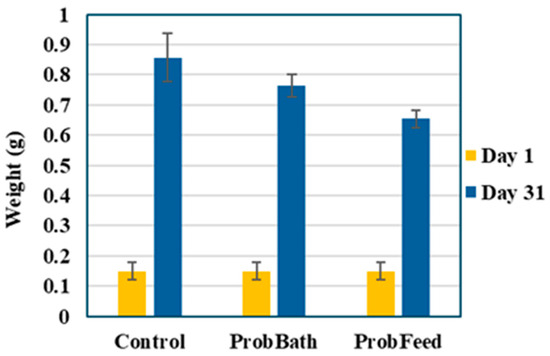
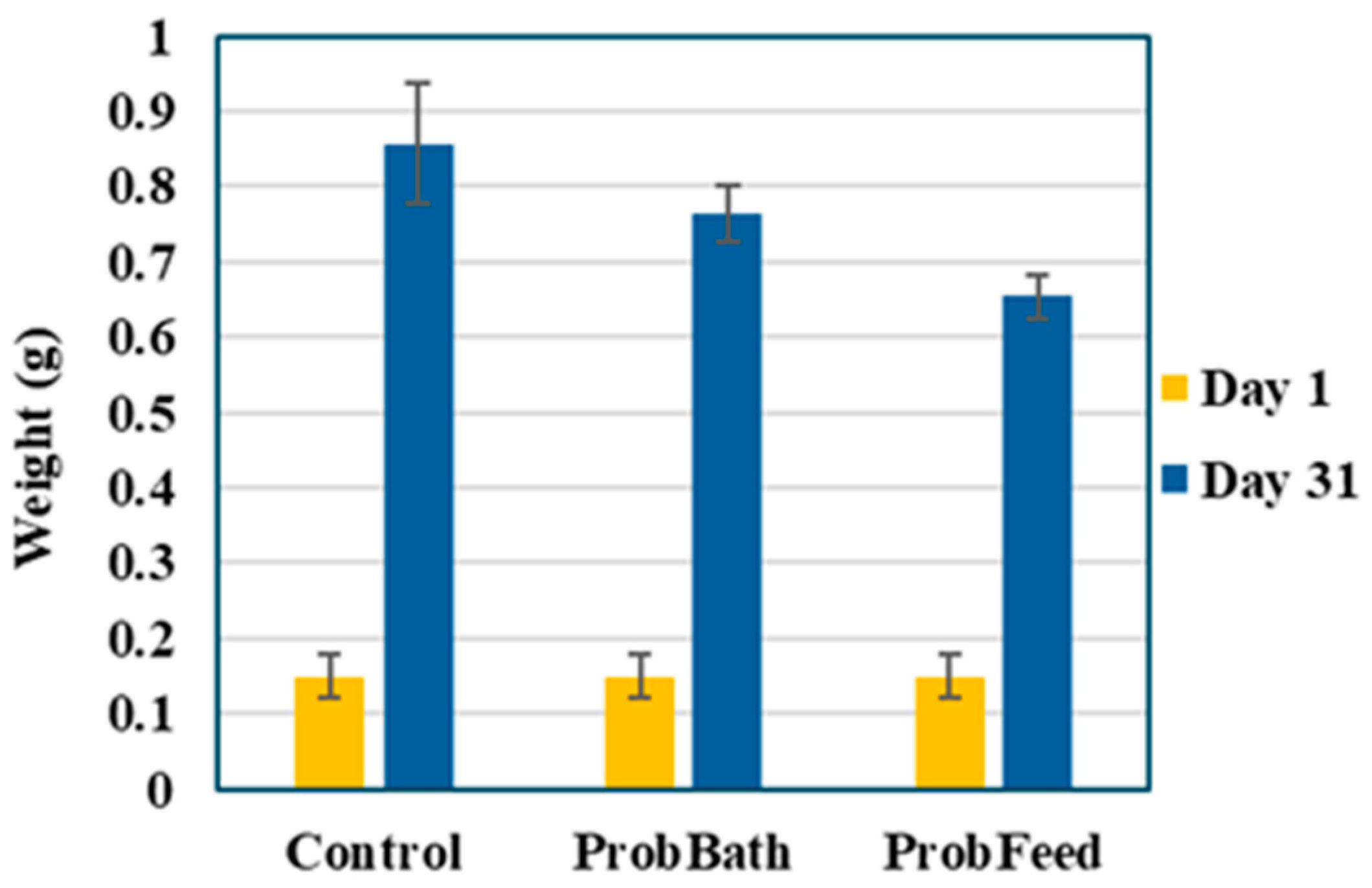
At the beginning of the rearing trial, fry across all groups had similar initial body weight (0.15 ± 0.03 g). After the 31-day rearing period, clear differences in growth became evident between groups. Fry in the Control group reached 0.86 ± 0.08 g, followed by 0.76 ± 0.04 g in ProbBath group, whereas fry in the ProbFeed group reached 0.64 ± 0.04 g, showing a significantly lower increase in body weight (p < 0.05) (Figure 1).
Figure 1.
Effect of probiotic treatments on body weight over 31 days. Mean weight (g) of fry in the Control, ProbBath, and ProbFeed groups measured on Day 1 and Day 31. Bars represent mean values and error bars indicate standard deviation (SD).
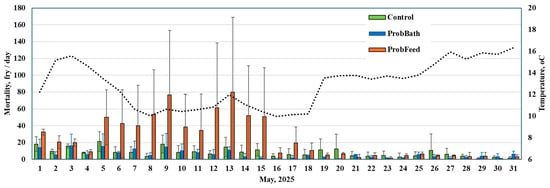
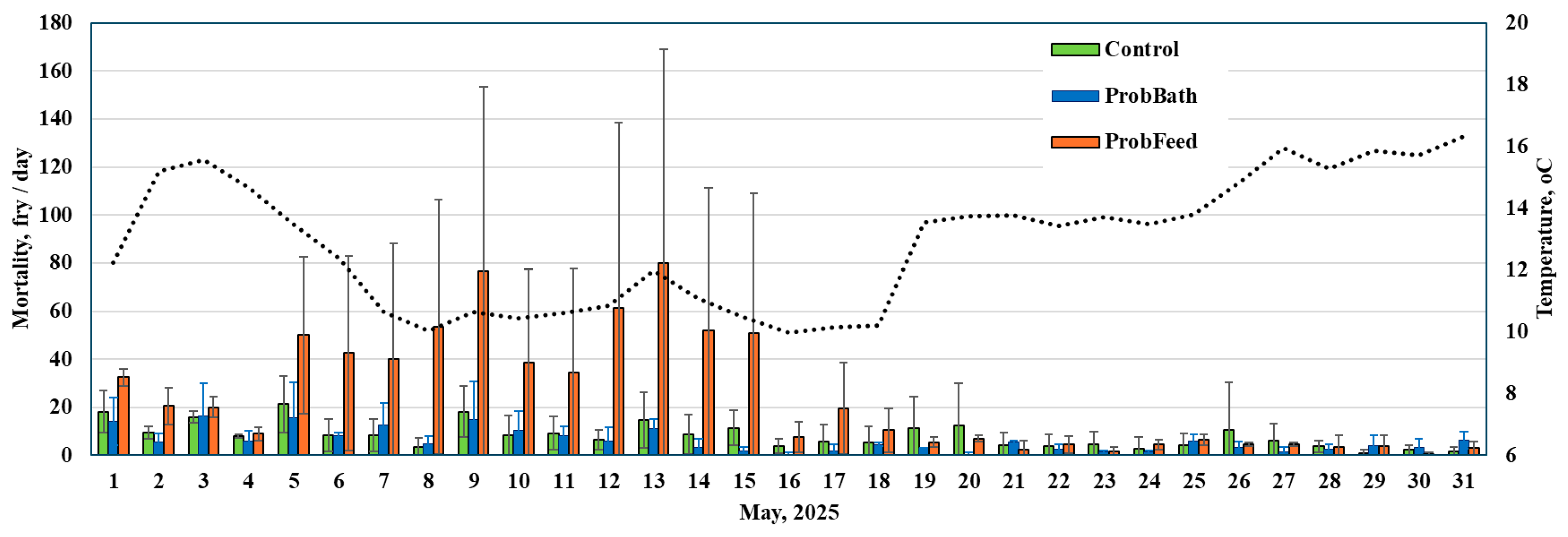
Mortality varied substantially among groups. The Control group displayed moderate mortality. The ProbBath group generally exhibited lower mortality, with only minor early peaks and almost no losses after Day 15. In contrast, the ProbFeed group showed the highest early mortality rates—reaching up to 80 ± 70 fry/day until Day 15—followed by a sharp mortality decline and stabilization toward the end of the trial (Figure 2).
Figure 2.
Daily mortality (vertical bars, mean ± SD) of fry in the Control, ProbBath, and ProbFeed groups during May 2025. The dotted curve reflects water temperature changes, plotted on secondary y-axis.
ANOVA confirmed significant fry mortality differences between treatments (p < 0.001), and pairwise comparisons indicated that the ProbBath group significantly differed from ProbFeed (p < 0.001) and from the Control group (p < 0.05).
3.1.2. Temperature-Related Mortality in Post-Fry Trial Period
Probiotic amendments were interrupted on 31 May, but fry continued to be monitored until 24 July. In June, water temperatures ranged from 13.6 to 19.3 °C (mean 16.3 °C), and mortality remained low across all groups, 4.7 ± 3.5 fry/day in the Control group, 5.6 ± 6.1 fry/day in the ProbFeed group, and 3.8 ± 2.9 fry/day in the ProbBath group.
In July, water temperatures continued to increase, fluctuating from 14 to 22 °C (mean 18 °C), approaching the upper thermal tolerance threshold for juvenile salmon. Warming coincided with several early-morning episodes with critically low dissolved oxygen concentration (~3.4 mg/L) at the beginning and middle of July. Under these stress conditions, mortality patterns diverged substantially between treatments.
In the Control group, mortality became highly variable. The first pronounced peak occurred on 1–5 July, reaching up to 99 fry/day, followed by a temporary decline. A second series of mortality peaks were observed on 13–24 July, with losses ranging between 79 and 184 fry/day.
In contrast, fry that had previously received probiotics exhibited markedly higher resilience to combined thermal and hypoxic conditions. In the ProbFeed group, daily mortality remained consistently low—generally below 10 fry/day throughout July—with only minor fluctuations and no major peaks. In the ProbBath group, mortality was also low, with only moderate increases (20–31 fry/day) during 4–5 July and 17–20 July, however the overall levels remained substantially lower than in the Control group.
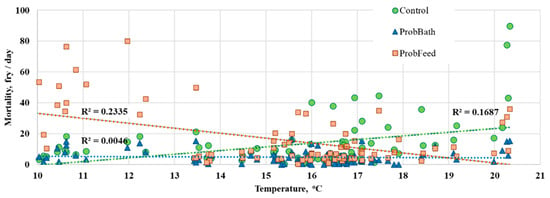
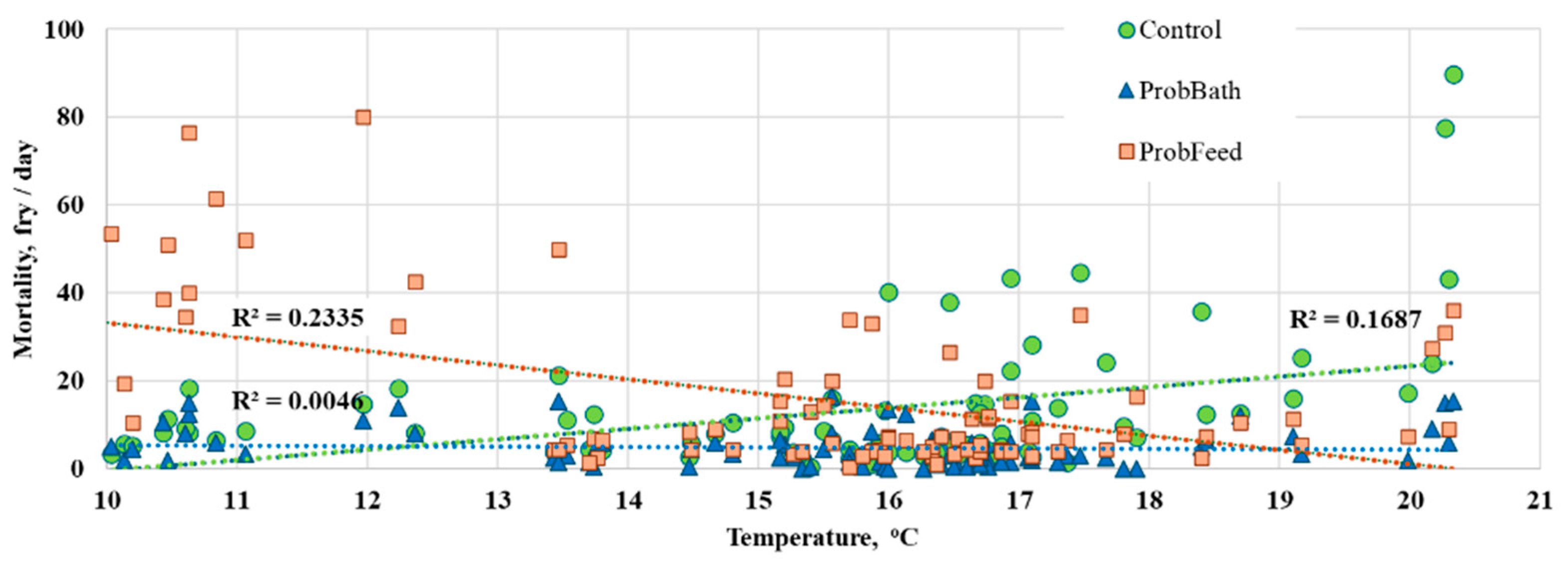
Regression analyses confirmed treatment-specific responses to temperature, showing that mortality in the Control group significantly increased with rising water temperature (β = +0.0708; R2 = 0.169; p < 9.42 × 10⁻⁵). Mortality in the ProbBath group showed no significant or neutral association with temperature (β = –0.0394; R2 = 0.0046; p = 0.537). Conversely, the ProbFeed group showed a significant decrease in mortality with increasing temperature (β = –0.0726; R2 = 0.2335; p = 2.81 × 10⁻⁶), indicating greater physiological resilience to rising water temperature (Figure 3).
Figure 3.
Relationship between water temperature and daily fry mortality in the Control, ProbBath, and ProbFeed groups (1 May to 24 July). Dotted lines represent linear regression with determination coefficients (R2).
3.2. Growth and Health Performance of Baltic Salmon Parr (0+)
3.2.1. Parr Growth Performance
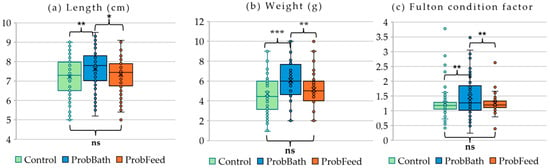
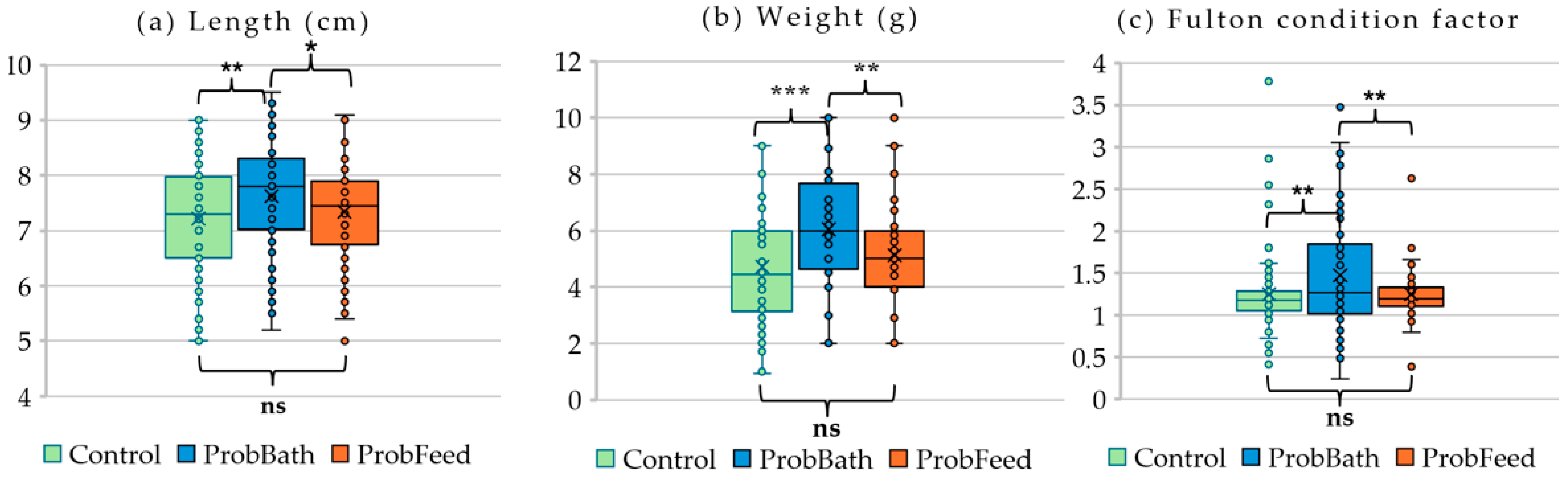
At the beginning of the trial, all treatment groups had similar initial body weight (2.37 ± 0.33 g) and length (2.53 ± 0.42 cm). After 14 rearing days, all groups showed clear increases in both parameters, with significant differences among treatments in length (p = 0.0078), weight (p < 0.001), and Fulton’s condition factor (p = 0.0029) (ANOVA). The ProbBath group achieved the maximal growth, reaching 7.62 ± 0.95 cm and 6.05 ± 1.92 g, and exhibited the highest Fulton’s condition factor 1.47, as confirmed by t-tests (Figure 4). The ProbFeed group showed moderate improvement, attaining 7.33 ± 0.84 cm and 5.09 ± 1.83 g, with a condition factor of 1.25 similar to that of the Control. The Control group demonstrated the lowest performance, with final length 7.22 ± 1.00 cm, weight 4.73 ± 1.87 g, and a condition factor of 1.25 (Figure 4). All fish exhibited age-appropriate smoltification.
Figure 4.
Comparison of (a) length (cm); (b) weight (g) and (c) Fulton’s condition factor (K) for parr (0+) between the treatments ProbFeed, ProbBath, and Control. The box range corresponds to the upper and lower quartiles, the horizontal line represents the median value and points indicate individual values outside the interquartile range. Statistical significance markers: ns = not significant; * = p < 0.05; ** = p < 0.01; *** = p < 0.001.
3.2.2. Gill-Cover Necrosis
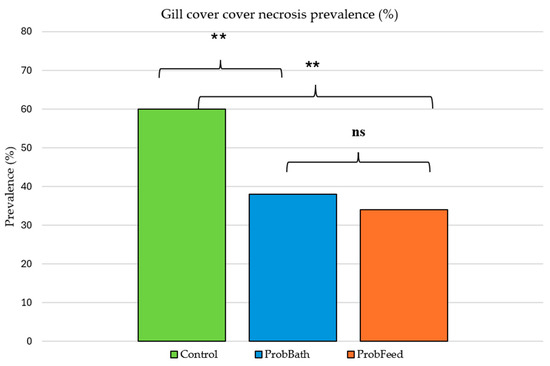
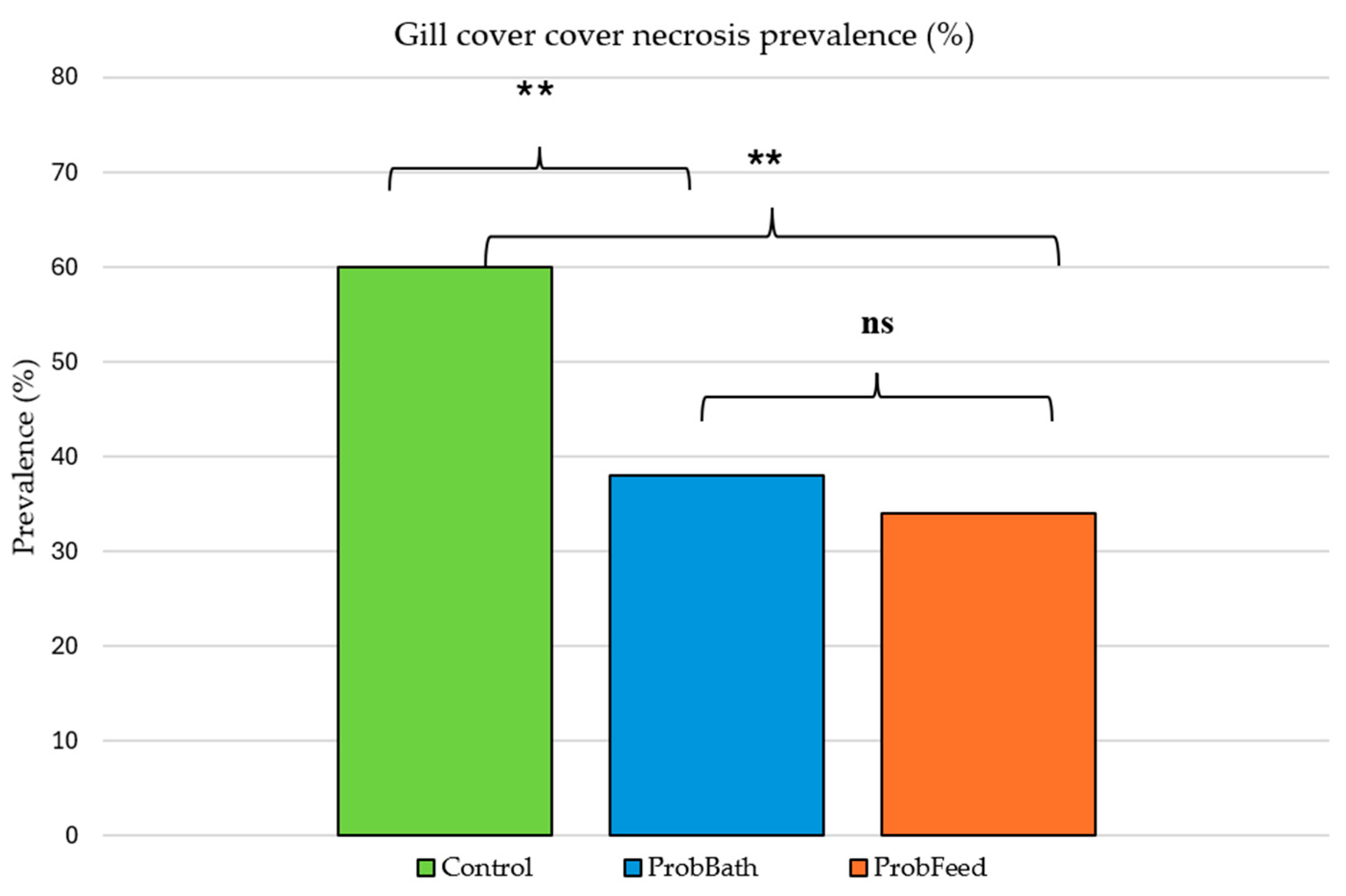
Both probiotic treatments resulted in a significantly reduced severity of gill-cover necrosis compared with the Control group. Fish fed with probiotics showed the lowest necrosis prevalence (34%), followed by the ProbBath group (38%), whereas the Control group exhibited the highest proportion of affected fish (60%). The difference between the two probiotic treatments (ProbBath vs. ProbFeed) was not statistically significant (p = 0.56), indicating that both probiotic application methods were similarly effective in mitigating gill tissue damage (t(198) = 3.17–3.80, p < 0.01). As shown in Figure 5, both probiotic groups displayed substantially lower necrosis prevalence compared with the Control.
Figure 5.
Occurrence of gill-cover necrosis in the ProbFeed, ProbBath, and Control treatments. The prevalence of necrosis (%) is shown as bar plots for each group, with statistical significance indicated above the bars. Star symbols indicate significance levels between groups: ns = not significant; ** = p < 0.01.
Results also demonstrate that probiotic administration via baths enhanced parr (0+) growth performance and body condition compared with the Control group, whereas probiotic supplementation with feed was less efficient and did not produce improvements relative to Control across growth parameters. Both probiotic treatments showed a clear reduction in gill necrosis prevalence compared with the Control group, confirming their protective effect, as illustrated in Figure 5.
3.2.3. Bacterial Isolation and Antimicrobial Resistance (AMR)
Pathogenic and opportunistic bacteria were isolated from salmon parr (0+) on Day 1 from ProbBath and ProbFeed treatments, and not from the Control. Aeromonas bestiarum was the predominant bacterial isolate identified (Table 2). Both probiotic treatments (ProbFeed and ProbBath) yielded A. bestiarum in both samplings on Day 1 and Day 14. In the Control group, A. bestiarum was detected only on Day 14, whereas Aeromonas veronii was detected exclusively in the ProbFeed group on Day 14.
Table 2.
Antibiotic susceptibility of pathogens isolated from different treatment groups with parr (R—resistant, S—susceptible).
Tests for the susceptibility to antibiotics (Table 2) showed that all isolates were susceptible to enrofloxacin, florfenicol, gentamicin, kanamycin, oxytetracycline, and trimethoprim–sulfamethoxazole. However, resistance was observed against β-lactam antibiotics (amoxicillin/clavulanic acid and ampicillin), macrolides (erythromycin, spiramycin), as well as spectinomycin and doxycycline.
The Multiple Antibiotic Resistance (MAR) index on Day 1 was 0.42 (ProbBath) and 0.25 (ProbFeed) (Table 2). On Day 14 all isolates from the ProbBath treatment were fully susceptible to all antibiotics (MAR = 0), while isolates from the Control and ProbFeed treatments showed moderate resistance (MAR = 0.17–0.33), primarily to β-lactams and macrolides.
3.3. Health and Growth Performance of Baltic Salmon Presmolts (1+) in FTS
3.3.1. Smolt Growth Performance
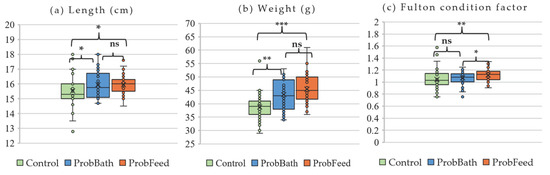
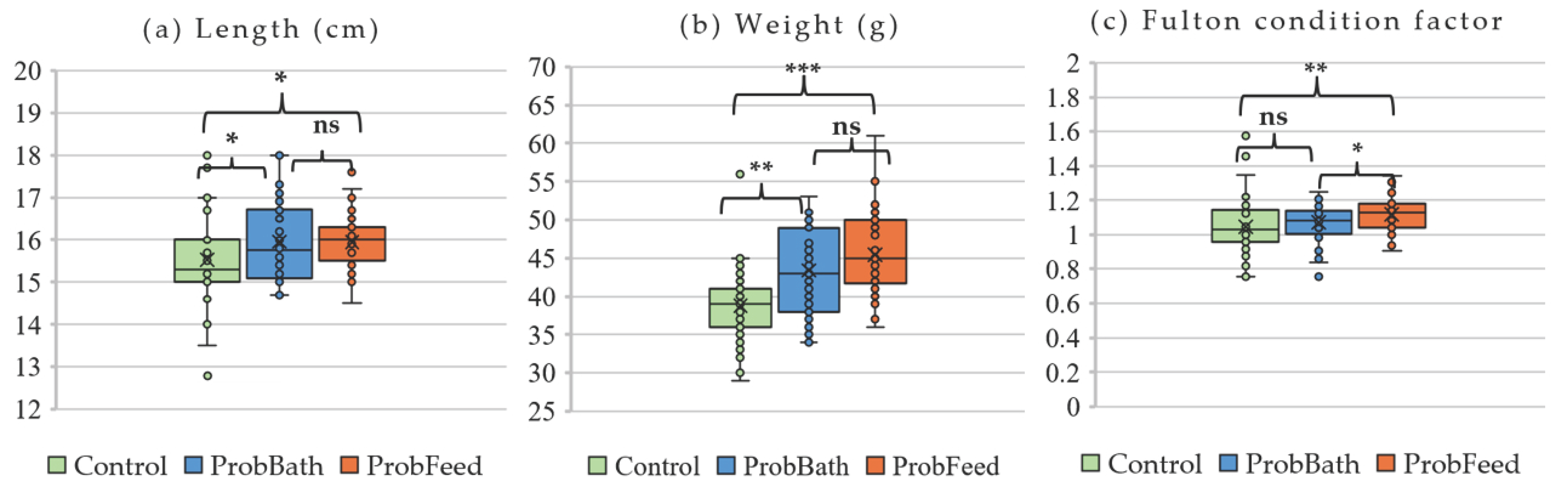
At the beginning of the rearing trial, the average presmolt weight was 34.48 ± 6.42 g and length 14.81 ± 1.26 cm across all groups. After 14 days, growth responses differed clearly between treatments. In the Control group, weight increased by 4.28 g and length by 0.72 cm. Fish in the ProbFeed group exhibited markedly pronounced growth; presmolt weight increased by 10.94 g and length by 1.14 cm, approximately twice the increment observed in the Control. The ProbBath group also showed enhanced growth, with weight and length increases of 8.91 g and 1.15 cm, respectively (Figure 6).
Figure 6.
Comparison of (a) length (cm), (b) weight (g) and (c) Fulton’s condition factor for presmolts between treatments ProbFeed, ProbBath and Control. The box range corresponds to the upper and lower quartiles; the horizontal line represents the median value and points indicate individual values outside the interquartile range. Statistical significance markers: ns = not significant; * = p < 0.05; ** = p < 0.01; *** = p < 0.001.
Fulton’s condition factor (Figure 6) was slightly higher in both probiotic treatments compared with the Control. The ProbBath group showed a statistically significant improvement relative to Control (p < 0.01), while the ProbFeed group did not differ significantly from the Control (ns). Differences between ProbFeed and ProbBath were also statistically significant (p < 0.05), indicating that probiotic baths improved presmolt body condition more effectively than supplementation with feed (Figure 6).
3.3.2. Bacterial Identification and Antimicrobial Susceptibility Testing
At the beginning of trial pathogenic and opportunistic bacteria were isolated from all treatment groups, revealing early-stage exposure of salmon presmolts to pathogens. Four bacterial taxa were detected: Aeromonas salmonicida, A. veronii, Pseudomonas spp., and A. bestiarum. The presence of multiple species indicates a heterogeneous bacterial background typical for rearing environments in flow-through hatcheries.
Susceptibility to antibiotics on Day 1 revealed group-specific differences. In the ProbFeed group, A. veronii, A. salmonicida, and Pseudomonas spp. showed resistance to florfenicol and oxytetracycline, indicating a multidrug-resistant phenotype. A. veronii isolated from the Control was additionally resistant to florfenicol alone. Importantly, no resistant isolates were detected in the ProbBath group on Day 1, despite the presence of A. salmonicida, A. bestiarum, and A. veronii, suggesting that probiotic bath treatments were not exposed to antimicrobial-resistant bacteria at this early time point.
On Day 14, the bacterial composition of the recovered isolates had shifted substantially. Each treatment yielded only a single identified bacterial species: A. bestiarum in both the Control and ProbFeed groups, and A. salmonicida in the ProbBath group.
Notably, none of these isolates exhibited AMR, representing a complete disappearance of resistance phenotypes observed on Day 1. This reduction was reflected in MAR index values, which declined to 0.00 in all groups on Day 14, compared with initial values of 0.00–0.50 on Day 1. The highest MAR value (0.50) belonged to ProbFeed isolates on Day 1, confirming the presence of multidrug-resistant strains early in the exposure period.
Results demonstrate that pathogenic bacteria were present across treatments. AMR was most pronounced in ProbFeed isolates on Day 1; however, it was no longer detected in any group by Day 14 (Table 3). The data also show reduced variability of bacterial isolates in the ProbBath group, suggesting a potential advantage of bath-applied probiotics in limiting the diversity of opportunistic bacterial isolates.
Table 3.
Susceptibility to antibiotics for bacteria isolated from Baltic salmon presmolts (1+) from different treatment groups. (R—resistant, S—susceptible).
4. Discussion
Most of the current probiotic research on salmonid health has been conducted in recirculating aquaculture systems, whereas information about FTS hatcheries, typical for Latvia, remains limited. The present study suggests that probiotics composed of lactic acid bacteria, Sporolactobacillus spp. and Weizmannia spp. may have beneficial effects on Baltic salmon fry, parr, and presmolts. The results indicate that probiotic efficiency is strongly influenced by fish developmental stage and water temperature.
In FTS, water temperature varies seasonally, ranging from near 0 °C in winter to above 20 °C in summer, creating challenging conditions for cold-water salmon juveniles. Under cooler conditions in early May (12.0 ± 2.3 °C), probiotic supplementation did not improve fry survival, suggesting reduced probiotic activity at lower temperatures. At this stage, dietary probiotics did not result in improved survival, whereas probiotic baths appeared more suitable. In contrast, during the second half of May, when temperatures approached and exceeded 15 °C, fry mortality decreased, and the positive effects of probiotics became more evident.
During July, when water temperatures averaged around 18 °C and occasionally exceeded 20 °C, probiotic-fed fry showed increased tolerance to thermal stress and oxygen deficiency. This can be associated with the functional properties of the probiotic community, dominated by lactic acid bacteria (LAB), supported by Sporolactobacillus spp. and Weizmannia spp. [27,28]. LAB are known to contribute to microbial balance and may help limit opportunistic bacteria through competitive exclusion and metabolite production. In addition, probiotics have been associated with improved mucosal protection and stimulation of innate immune responses, although these effects were not directly measured in the present study [28,29].
Sporolactobacillus spp. are known for their persistence under adverse environmental conditions due to spore formation, while Weizmannia spp. can contribute to digestive processes and nutrient utilization [30,31]. The combined activity of these bacterial groups may have supported improved resilience of fry during periods of elevated temperature, although the underlying mechanisms remain to be confirmed [32]. The results also suggest that probiotic effects become more pronounced under warmer conditions, likely due to increased metabolic activity of probiotic bacteria at temperatures above 15 °C [33].
At the presmolt stage, probiotic application via feed and baths was associated with improved growth performance. Fish receiving dietary probiotics showed the highest weight gain and increased length compared to the Control groups, while bath-treated fish also demonstrated notable improvements. These findings are consistent with previous studies reporting enhanced nutrient utilization and growth in fish receiving LAB- and Bacillus-based probiotics. The presmolt trial was conducted during a period of elevated temperature, which is typically associated with increased metabolic activity and higher susceptibility to pathogens. Under these conditions, improved growth in probiotic-treated groups indicates a supportive effect of probiotics on fish condition [10,34,35,36,37].
Initial microbiological screening revealed the presence of opportunistic bacteria, including Aeromonas salmonicida, A. veronii, and Pseudomonas spp., in both Control and probiotic-treated fish, reflecting the natural microbial load in flow-through systems. Resistant strains to several antibiotics were detected at the beginning of the trials, particularly among Aeromonas spp., confirming the presence of antimicrobial-resistant bacteria in the rearing environment.
During the experiment, shifts in bacterial composition were observed. Aeromonas spp. remained the dominant genus throughout the study, while Pseudomonas spp. were mainly detected at the initial sampling stage and were not consistently isolated at the trial end. This likely indicates temporal variation in microbial communities rather than a direct probiotic effect.
Following probiotic application, some changes in antimicrobial resistance patterns were observed. In several cases, MAR index values decreased and fewer resistant isolates were detected; however, these changes were not consistent across all groups, bacterial species, or samplings. While certain Aeromonas isolates showed reduced resistance profiles at later stages, this trend was not uniform and varied between treatments.
After 14 days, a reduced diversity of bacterial isolates was observed, and in the analyzed samples no antimicrobial resistance was detected. However, this finding should be interpreted cautiously, as it may also reflect natural microbial dynamics, environmental conditions, and the limited number of isolates, rather than a direct effect of probiotic application.
Overall, both probiotic delivery methods were associated with improved growth performance at the presmolt stage, while potential effects on microbial composition and antimicrobial resistance appeared to be variable. These findings highlight the strong influence of environmental factors on probiotic efficiency in FTS.
It should be noted that the present study did not include direct assessment of immune parameters, oxidative stress markers, or gut morphology. Therefore, the proposed mechanisms of probiotic action should be considered hypothetical. Further studies incorporating immunological and physiological analyses are required to better understand the pathways underlying probiotic effects in salmon juveniles reared in flow-through systems.
5. Conclusions
The findings indicate that the effectiveness of probiotics composed of lactic acid bacteria, Sporolactobacillus spp. and Weizmannia spp. is influenced by water temperature and fish developmental stage. Probiotic application strategies should therefore be adapted accordingly. During the fry and parr stages, probiotic baths appeared to be more suitable, as they improved survival without negatively affecting growth. In contrast, at the presmolt stage, dietary probiotics provided the most pronounced growth benefits. Additionally, dietary probiotics may contribute to improved resilience to thermal stress over time, although this effect appears to depend on environmental conditions.
The results of rearing trials suggest that probiotic application, particularly via immersion, may influence microbial dynamics in flow-through hatchery systems. However, the effects on antimicrobial resistance patterns were variable and dependent on bacterial species, antibiotics tested, and sampling time. While some reductions in the MAR index were observed after probiotic application, these trends were not consistent across all groups.
Our findings are generally consistent with previous studies, including those conducted by the Latvia University of Life Sciences and Technologies (LBTU) [38], suggesting that probiotics may contribute to limiting the spread of certain opportunistic bacteria. Nevertheless, based on the present data, the impact of probiotics on antimicrobial resistance and the prevalence of opportunistic bacteria and pathogens should be interpreted with caution.
Overall, the use of probiotics dominated by lactic acid bacteria shows potential as a supportive management tool in flow-through systems, particularly for improving fish performance under variable environmental conditions.
Consequently, to optimize probiotic effectiveness in flow-through hatcheries exposed to natural thermal fluctuations, the timing and method of application should be aligned with seasonal temperature dynamics and fish developmental stage.
Author Contributions
Conceptualization, R.M., S.P. and O.R.; Methodology, O.R., R.M. and K.M.; Implementation of experiments, O.R., R.D. and K.M.; Investigation, J.P., R.D., O.R. and K.M.; Data Analysis, S.P., O.R. and K.M.; Writing—Original Draft Preparation, S.P. and O.R.; Resources, J.P. and R.D.; Writing—Review & Editing, S.P. and O.R.; Visualization, S.P. and O.R.; Supervision, R.M.; Project Administration, Ž.B.; Funding Acquisition, Ž.B. All authors have read and agreed to the published version of the manuscript.
Funding
INTERREG project “Latvian and Lithuanian conjunction—Improvement of Baltic salmon and pikeperch rearing methods for more sustainable, resilient and healthy fish populations” (LL-00133, SPPwelfare).
Institutional Review Board Statement
The study did not require ethical approval because the fish were not subjected to experimental procedures defined under Directive 2010/63/EU on the protection of animals used for scientific purposes. In Latvia, this Directive is implemented through national legislation—Ministru kabineta noteikumi Nr. 1 (2019. gada 8. janvāris) “Zinātniskiem mērķiem izmantojamo dzīvnieku aizsardzības noteikumi”/Cabinet Regulation No. 1 (Adopted 8 January 2019) “Regulations Regarding the Protection of Animals Used for Scientific Purposes, issued in accordance with the Animal Protection Law (Dzīvnieku aizsardzības likums). https://likumi.lv/ta/id/304167-zinatniskiem-merkiem-izmantojamo-dzivnieku-aizsardzibas-noteikumi, accessed on 20 April 2026 According to legislation, ethical approval is required only when animals are subjected to procedures that may cause pain, suffering, distress, or lasting harm beyond standard husbandry practices. In this study, probiotic supplements were applied as part of routine salmon rearing practices in hatcheries of the Institute BIOR, as they are responsible for implementing the national fish resource reproduction program annually releasing various fish species into Latvian public waters (https://bior.lv/en/, access on 20 April 2026). As part of this mandate, the authors of this research continuously evaluate methods to improve fish health and welfare. The probiotics used are permitted feed additives under Latvian and EU legislation. Their application did not involve invasive procedures, experimental manipulation, or handling beyond standard aquaculture practices.
Data Availability Statement
The raw data supporting the conclusions of this article will be made available by the authors after request.
Acknowledgments
The authors are grateful to Rimas Budris and SMART FISHERY (Baltic Probiotics Ltd., Rucava, Latvia) for providing probiotic supplements for the research, and to Jeļena Avsejenko and Madara Streikiša for bacteria isolation and AMR assessments.
Conflicts of Interest
The authors declare no competing or financial interests. The probiotic was supplied solely for use in this study. The producer did not influence the study design, experimental design, data analysis, or the interpretation of results and manuscript content.
Abbreviations
| AMR | antimicrobial resistance |
| FH | fish hatchery |
| FTS | flow-through system for fish rearing |
References
- Salmon (Salmo salar) in Subdivisions 22-31 (Main Basin and Gulf of Bothnia) and Subdivision 32 (Gulf of Finland); ICES Stock Annexes; ICES: Copenhagen, Denmark, 2025.
- Kulmala, S.; Haapasaari, P.E.; Karjalainen, T.P.; Kuikka, S.; Pakarinen, T.; Parkkila, K.; Romakkaniemi, A.; Vuorinen, P.J. Ecosystem services provided by the Baltic salmon: A regional perspective on the socio-economic benefits associated with a keystone species. In Socio-Economic Importance of Ecosystem Services in the Nordic Countries: Synthesis in the Context of The Economics of Ecosystems and Biodiversity (TEEB); Kettunen, M., Vihervaara, P., Kinnunen, V., D’Amato, D., Badura, T., Argimon, M., Ten Brink, P., Eds.; Nordic Council of Ministers: Copenhagen, Denmark, 2012; pp. 266–276. [Google Scholar]
- LaMere, K.; Mäntyniemi, S.; Haapasaari, P. The effects of climate change on Baltic salmon: Framing the problem in collaboration with expert stakeholders. Sci. Total Environ. 2020, 738, 140068. [Google Scholar] [CrossRef] [Scilit]
- ICES. Working Group on Baltic Salmon and Trout Assessment (WGBAST). ICES Sci. Rep. 2023, 5, 53. [Google Scholar]
- Annual Report on the Research and Implementation of Measures for Regulation of Fish Resources; Institute of Food Safety, Animal Health and Environment BIOR: Riga, Latvia, 2024.
- Austin, B.; Austin, D.A. Bacterial Fish Pathogens: Disease of Farmed and Wild Fish, 5th ed.; Springer: Dordrecht, The Netherlands, 2012. [Google Scholar]
- Cabello, F.C.; Godfrey, H.P.; Tomova, A.; Ivanova, L.; Dölz, H.; Millanao, A.; Buschmann, A.H. Antimicrobial use in aquaculture re-examined: Its relevance to antimicrobial resistance and to animal and human health. Environ. Microbiol. 2013, 15, 1917–1942. [Google Scholar] [CrossRef] [Scilit]
- Ringø, E.; Van Doan, H.; Lee, S.H.; Soltani, M.; Hoseinifar, S.H.; Harikrishnan, R.; Song, S.K. Probiotics, lactic acid bacteria and bacilli: Interesting supplementation for aquaculture. J. Appl. Microbiol. 2020, 129, 116–136. [Google Scholar] [CrossRef] [Scilit]
- Hai, N.V. The use of probiotics in aquaculture. J. Appl. Microbiol. 2015, 119, 917–935. [Google Scholar] [CrossRef] [Scilit]
- Dimitroglou, A.; Merrifield, D.L.; Moate, R.; Davies, S.J.; Spring, P.; Sweetman, J.; Bradley, G. Dietary mannan oligosaccharide supplementation modulates intestinal microbial ecology and improves gut morphology of rainbow trout (Oncorhynchus mykiss). J. Anim. Sci. 2009, 87, 3226–3234. [Google Scholar] [CrossRef] [Scilit] [PubMed]
- Martins, C.I.M.; Eding, E.H.; Verdegem, M.C.J.; Heinsbroek, L.T.N.; Schneider, O.; Blancheton, J.-P.; d’Orbcastel, E.R.; Verreth, J.A.J. New developments in recirculating aquaculture systems in Europe: A perspective on environmental sustainability. Aquac. Eng. 2010, 43, 83–93. [Google Scholar] [CrossRef] [Scilit]
- Vadstein, O.; Attramadal, K.J.K.; Bakke, I.; Olsen, Y. K-selection as microbial ecosystem strategy in aquaculture. Front. Microbiol. 2018, 9, 2739. [Google Scholar] [CrossRef] [Scilit] [PubMed]
- Hoseinifar, S.H.; Sun, Y.Z.; Wang, A.; Zhou, Z. Probiotics as means of disease control in aquaculture: A review of current knowledge and future perspectives. Front. Microbiol. 2018, 9, 2429. [Google Scholar] [CrossRef] [Scilit]
- Purviņa, S.; Bajinskis, J.; Revina, O.; Medne, R.; Kondratjeva, N. Long-term Baltic salmon Salmo salar (L.) restocking experience in Latvia. Proc. Latv. Acad. Sci. Sect. B 2025, 79, 20–30. [Google Scholar] [CrossRef] [Scilit]
- Rutkovska, I.; Medne, R.; Purviņa, S. Seawater tolerance and morphological assessment of yearling sea trout (Salmo trutta L.). Int. Aquat. Res. 2019, 11, 295–302. [Google Scholar] [CrossRef] [Scilit]
- Bregnballe, J. A Guide to Recirculation Aquaculture: An Introduction to the New Environmentally Friendly and Highly Productive Closed Fish Farming Systems, 3rd ed.; FAO & EURIFISH International Organization: Copenhagen, Denmark, 2022. [Google Scholar]
- Elliott, J.M.; Elliott, J.A. Temperature requirements of Atlantic salmon (Salmo salar), brown trout (Salmo trutta) and Arctic charr (Salvelinus alpinus): Predicting the effects of climate change. J. Fish Biol. 2010, 77, 1793–1817. [Google Scholar] [CrossRef] [Scilit] [PubMed]
- Internal Microbiological Monitoring Data on Aeromonas spp. Isolated from Salmon juveniles in September; Institute of Food Safety, Animal Health and Environment BIOR: Riga, Latvia, 2025.
- Climate Change in the Baltic Sea 2021: Fact Sheet; Helsinki Commission, HELCOM: Helsinki, Finland, 2021.
- Jonsson, B.; Jonsson, N. A review of the likely effects of climate change on anadromous Atlantic salmon Salmo salar and brown trout Salmo trutta, with particular reference to water temperature and flow. J. Fish Biol. 2009, 75, 2381–2447. [Google Scholar] [CrossRef] [Scilit]
- Nurhasanah, A.; Rahardja, B.S.; Prayogo. Effect of probiotics in recirculating aquaculture system (RAS) on the concentration of ammonia, nitrite, and nitrate in the aquaculture of catfish (Clarias sp.). IOP Conf. Ser. Earth Environ. Sci. 2023, 1273, 012018. [Google Scholar] [CrossRef] [Scilit]
- Mashhadizadeh, N.; Khezri, S.; Eslimi Esfahani, D.; Mohammadzadeh, S.; Ahmadifar, E.; Ahmadifar, M.; Shahriari Moghadam, M.; El-Haroun, E. Enhancing growth performance, antioxidant defense, immunity response, and resistance against heat stress in Nile tilapia (Oreochromis niloticus) fed Saccharomyces boulardii and/or Bifidobacterium bifidum. Aquac. Rep. 2024, 39, 102462. [Google Scholar] [CrossRef] [Scilit]
- Merrifield, D.L.; Carnevali, O. Probiotic modulation of the gut microbiota of fish. In Aquaculture Nutrition: Gut Health, Probiotics and Prebiotics; Merrifield, D.L., Ringø, E., Eds.; Wiley-Blackwell: Oxford, UK, 2014; Chapter 8; pp. 185–222. [Google Scholar]
- ISO 4833-1:2013; Microbiology of the Food Chain—Horizontal Method for the Enumeration of Microorganisms—Part 1: Colony Count at 30 Degrees C by the Pour Plate Technique. International Organization for Standardization (ISO): Geneva, Switzerland, 2013.
- Fulton, G.W. The rate of growth of oysters. Fish. Board Scotl. Rep. 1904, 20, 1–27. [Google Scholar]
- Miller, R.A.; Gieseker, C.M.; Avendaño-Herrera, R.; Baron, S.; Buller, N.; Burbick, C.R.; Chuanchuen, R.; Dalsgaard, I.; Declercq, A.M.; Gaunt, P.S.; et al. Performance Standards for Antimicrobial Susceptibility Testing of Bacteria Isolated From Aquatic Animals, 3rd ed.; Clinical and Laboratory Standards Institute: Wayne, PA, USA, 2020. [Google Scholar]
- Simón, R.; Docando, F.; Nuñez-Ortiz, N.; Tafalla, C.; Díaz-Rosales, P. Mechanisms used by probiotics to confer pathogen resistance to teleost fish. Front. Immunol. 2021, 12, 653025. [Google Scholar] [CrossRef] [Scilit]
- Picchietti, S.; Fausto, A.M.; Randelli, E.; Carnevali, O.; Taddei, A.R.; Buonocore, F.; Scapigliati, G.; Abelli, L. Early treatment with Lactobacillus delbrueckii strain induces an increase in intestinal T-cells and granulocytes and modulates immune-related genes of larval Dicentrarchus labrax (L.). Fish Shellfish Immunol. 2009, 26, 368–376. [Google Scholar] [CrossRef] [Scilit]
- Ringø, E.; Hoseinifar, S.H.; Ghosh, K.; Van Doan, H.; Beck, B.R.; Song, S.K. Lactic acid bacteria in finfish—An update. Front. Microbiol. 2018, 9, 1818. [Google Scholar] [CrossRef] [Scilit] [PubMed]
- Ghosh, T. Recent advances in the probiotic application of the Bacillus as a potential candidate in the sustainable development of aquaculture. Aquaculture 2025, 594, 741432. [Google Scholar] [CrossRef] [Scilit]
- Santos, L.P.; Yoshimura, I.; Andrade, F.B.d.; Contiero, J. Biotechnological potential of Weizmannia ginsengihumi in the conversion of xylose into lactic acid: A sustainable strategy. Fermentation 2025, 11, 447. [Google Scholar] [CrossRef] [Scilit]
- Neissi, A.; Majidi Zahed, H.; Roshan, R. Probiotic performance of B. subtilis MS. 45 improves aquaculture of rainbow trout Oncorhynchus mykiss during acute hypoxia stress. Sci. Rep. 2024, 14, 3720. [Google Scholar] [CrossRef] [Scilit]
- Sionek, B.; Szydłowska, A.; Trząskowska, M.; Kołożyn-Krajewska, D. The impact of physicochemical conditions on lactic acid bacteria survival in food products. Fermentation 2024, 10, 298. [Google Scholar] [CrossRef] [Scilit]
- Lee, S.J.; Noh, D.I.; Lee, Y.S.; Hasan, M.T.; Hur, S.W.; Lee, S.; Jeong, S.M.; Lee, J.M.; Lee, E.W.; Kim, K.W.; et al. Effects of host-associated low-temperature probiotics in olive flounder (Paralichthys olivaceus) aquaculture. Sci. Rep. 2024, 14, 2134. [Google Scholar] [CrossRef] [Scilit]
- Nayak, S.K. Probiotics and immunity: A fish perspective. Fish Shellfish Immunol. 2010, 29, 2–14. [Google Scholar] [CrossRef] [Scilit] [PubMed]
- Ringø, E.; Olsen, R.E.; Jensen, I.; Romero, J.; Lauzon, H.L. Application of vaccines and dietary supplements in aquaculture: Possibilities and challenges. Rev. Fish Biol. Fish. 2014, 24, 1005–1032. [Google Scholar] [CrossRef] [Scilit]
- Revina, O.; Avsejenko, J.; Cīrule, D.; Valdovska, A. Antimicrobial resistance of Aeromonas spp. isolated from the sea trout (Salmo trutta L.) in Latvia. Res. Rural Dev. 2017, 1, 271–275. [Google Scholar]
- Gāliņa, D.; Valdovska, A. Comparison of a mixture of probiotics and its combination with buckwheat bran and herbals for piglet immune system, intestinal microflora and prevalence of resistant Escherichia coli. In Proceedings of the International Scientific Conference on Probiotics and Prebiotics IPC 2016, Budapest, Hungary, 21–23 June 2016; pp. 94–95. [Google Scholar]

Disclaimer/Publisher’s Note: The statements, opinions and data contained in all publications are solely those of the individual author(s) and contributor(s) and not of MDPI and/or the editor(s). MDPI and/or the editor(s) disclaim responsibility for any injury to people or property resulting from any ideas, methods, instructions or products referred to in the content. |
© 2026 by the authors. Licensee MDPI, Basel, Switzerland. This article is an open access article distributed under the terms and conditions of the Creative Commons Attribution (CC BY) license.