Article

Effects of Dietary Arachidonic Acid Concentration on Growth, Fatty Acid Profile, and Inflammatory/Redox Status of Juvenile Clam Sinonovacula constricta

by
Yuxiang Zhu
1,2,*,
Yueyue Fu
1,2,
Kai Liao
3,
Yang Liu
3,
Yang Zhang
3 and
Jilin Xu
3,*
1
National Engineering Research Center of Marine Facilities Aquaculture, Zhejiang Ocean University, Zhoushan 316004, China
2
Pingyang Institute of Science and Technology Innovation, Wenzhou 325400, China
3
School of Marine Sciences, Ningbo University, Ningbo 315211, China
*
Authors to whom correspondence should be addressed.
Fishes 2026, 11(5), 262; https://doi.org/10.3390/fishes11050262

Submission received: 31 March 2026 / Revised: 22 April 2026 / Accepted: 23 April 2026 / Published: 27 April 2026
(This article belongs to the Section Aquatic Invertebrates)

Abstract

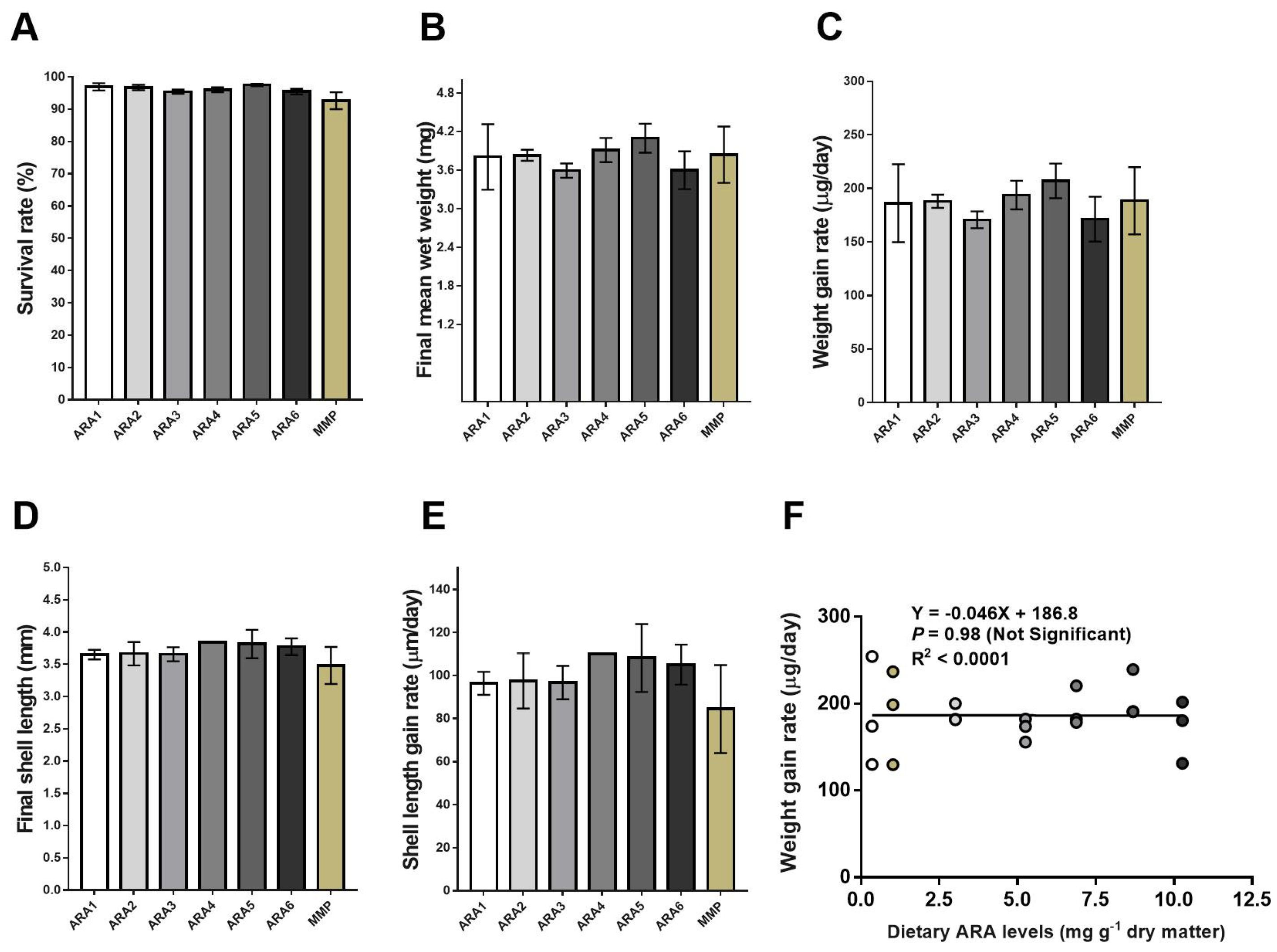
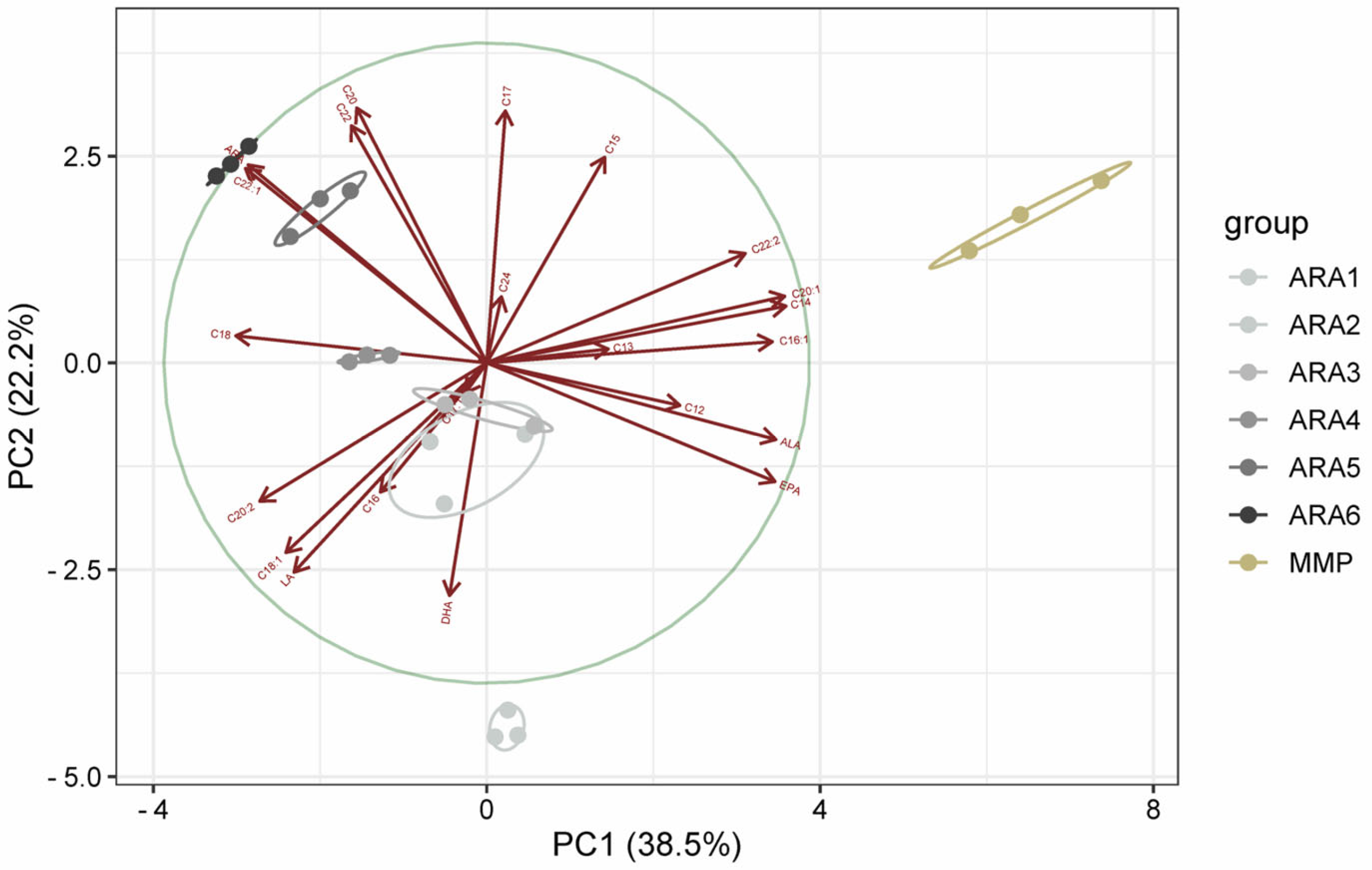
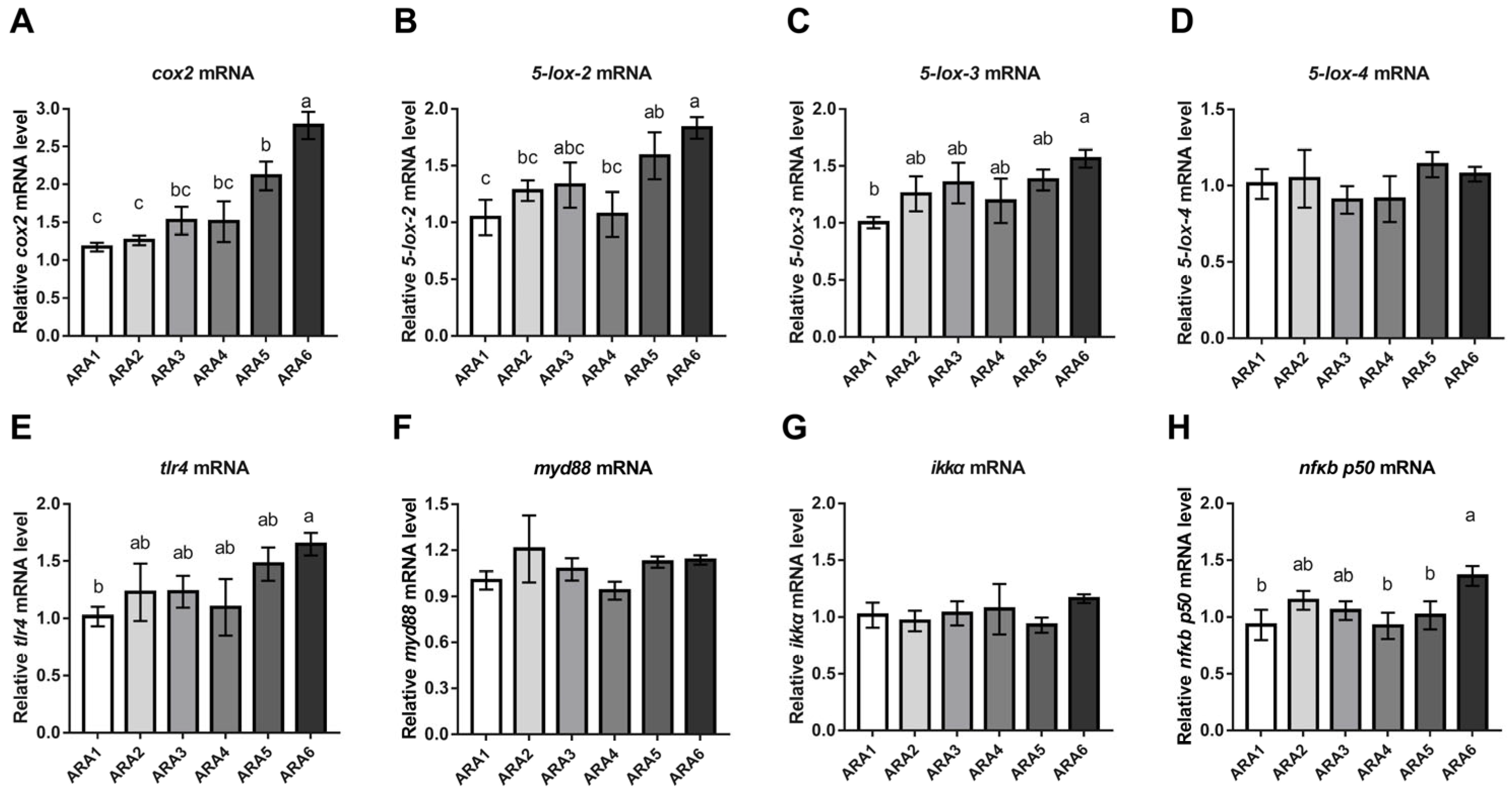
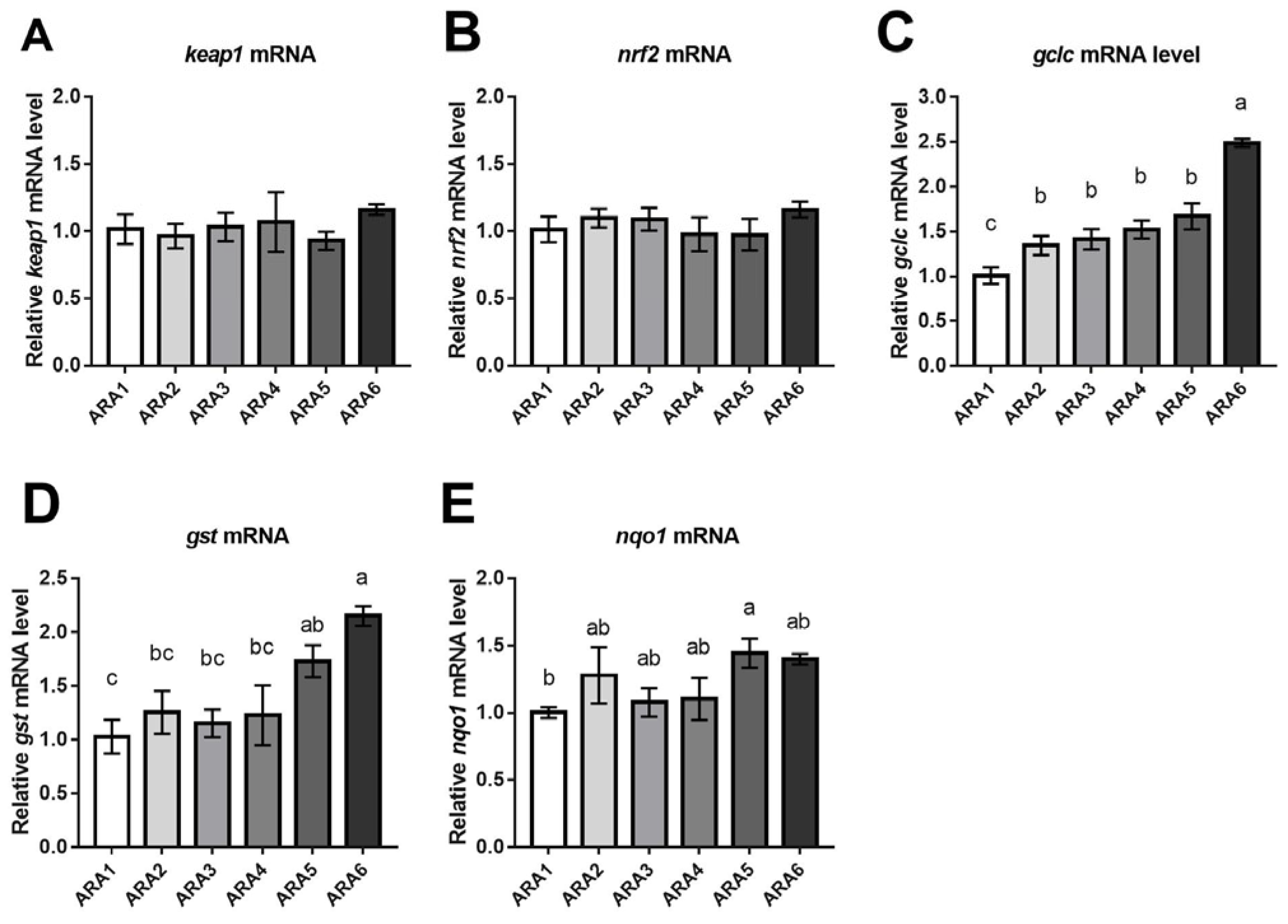
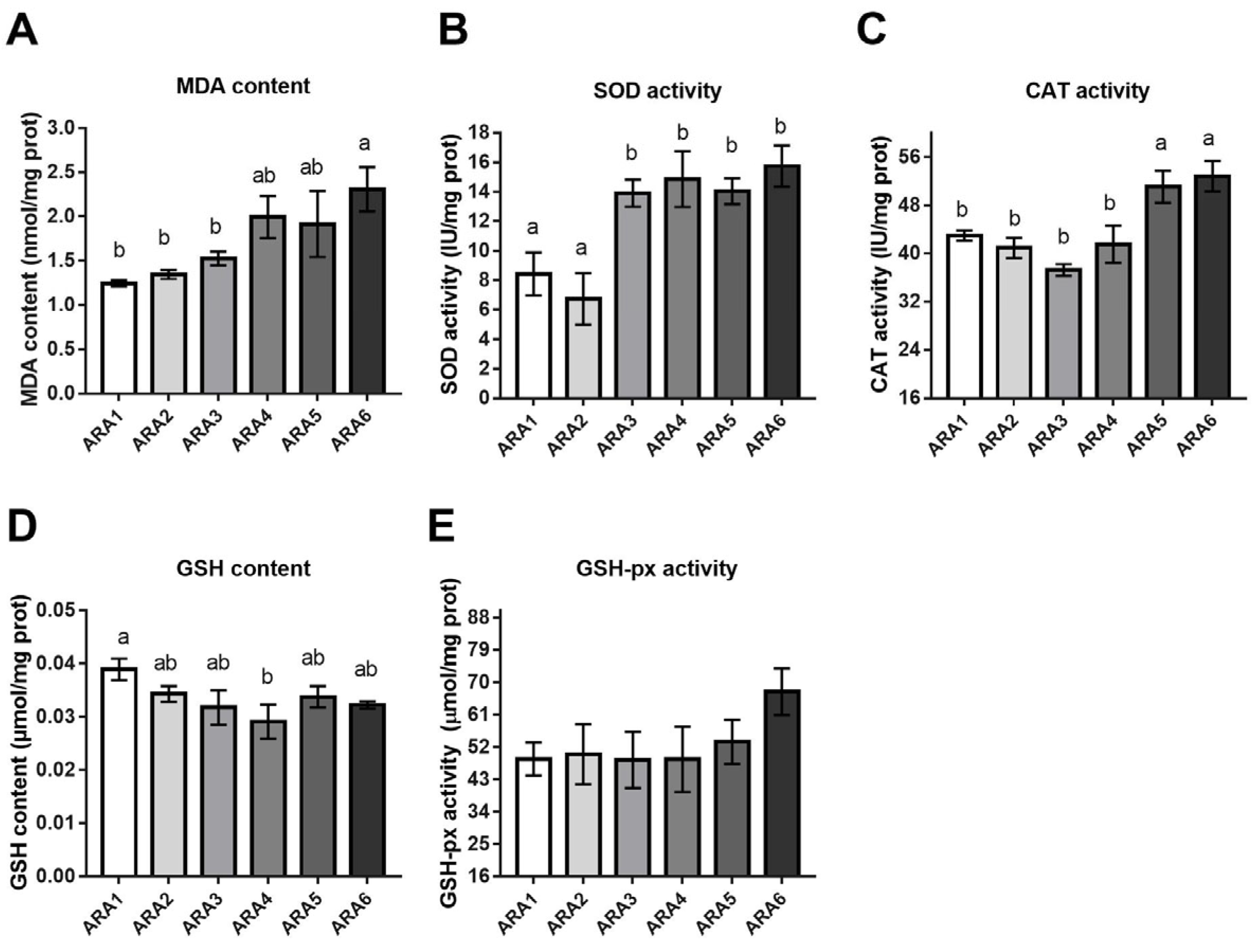
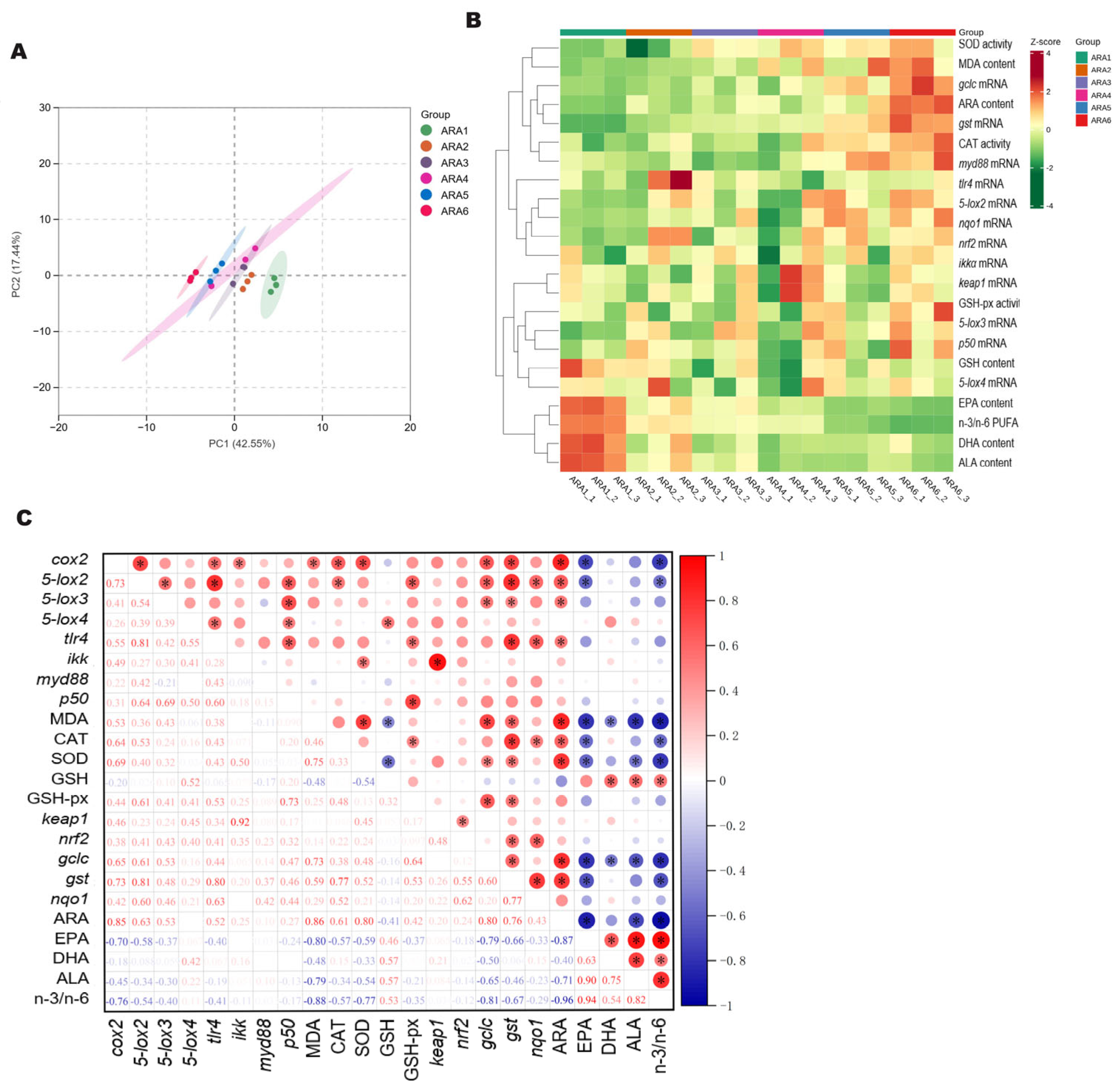
Dietary arachidonic acid (ARA) is essential for aquatic animal growth and health, but studies in bivalves are still limited. Here, microcapsule diets with increasing ARA concentrations (ARA1-6 groups: 0.35, 3.01, 5.25, 6.88, 8.69, and 10.27 mg g−1 dry matter) were prepared by spray drying, and clam Sinonovacula constricta juveniles were fed these diets for 14 days. Results showed that dietary ARA concentrations did not significantly affect clams’ survival, weight gain, and shell length gain rates. The clams in the ARA6 group had significantly higher crude lipid content than those in the other microcapsule groups. The ARA concentrations in the clams increased with higher dietary ARA, while n-3 polyunsaturated fatty acids (PUFAs) and eicosapentaenoic acid (EPA) concentrations decreased. The mRNA levels of cyclooxygenase 2 and 5-lipoxygenase type 2 were significantly higher in the ARA5 and ARA6 groups compared to the ARA1 group. The mRNA levels of 5-lipoxygenase type 3, toll-like receptor 4, and nuclear factor-kappa b p50 (nfκb p50) were significantly higher in the ARA6 group compared to the ARA1 group. As dietary ARA concentrations increased, the mRNA levels of glutamate–cysteine ligase catalytic subunit and glutathione S-transferase, along with malondialdehyde (MDA) content, increased in the clams. Additionally, the superoxide dismutase and catalase activities in the ARA5 and ARA6 groups were significantly higher than those in the ARA1 and ARA2 groups. Clam ARA content, acting as a central node, showed very strong positive correlations with MDA and cyclooxygenase 2, and very strong negative correlations with EPA and the n-3/n-6 PUFA ratio. Our results revealed that high dietary ARA, while not affecting growth, reduced the n-3/n-6 PUFA ratio and induced a response characterized by the upregulation of NF-κB and Nrf2 pathway genes in S. constricta.
Keywords: dietary arachidonic acid; fatty acid profile; inflammatory status; redox status dietary arachidonic acid; fatty acid profile; inflammatory status; redox status