

Next Issue
Volume 10, December
Previous Issue
Volume 10, August


Recycling, Volume 10, Issue 5 (October 2025) – 29 articles
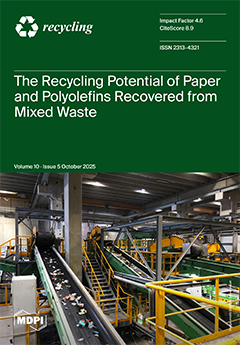
Cover Story (view full-size image): Mixed waste from urban areas and tourist regions contains lots of recyclable materials, including paper and polyolefins. Using the case study of Tyrol, Austria, this article evaluated the recycling potential of these materials recovered from mixed waste by two sensor-based sorting trials. The trial achieved a purity of the target fractions by up to 70%. Recovery of polyolefins could increase regional recycling rates by up to 16%, while paper recovery only adds a smaller boost. Although separating these materials slightly affected the heating values of the remaining waste, it proved technically feasible. While this improves resource efficiency and circularity, contamination and balancing recycling with energy recovery remain a challenge to be further investigated in future. View this paper
  • Issues are regarded as officially published after their release is announced to the table of contents alert mailing list.
  • You may sign up for e-mail alerts to receive table of contents of newly released issues.
  • PDF is the official format for papers published in both, html and pdf forms. To view the papers in pdf format, click on the "PDF Full-text" link, and use the free Adobe Reader to open them.
Order results
Result details
Select all
Export citation of selected articles as:
19 pages, 2477 KB  
Article
Development of an Advanced Life Cycle Impact Assessment Method to Evaluate Radioactivity in Construction Materials
by Cansu Özcan Kilcan, Uku Andreas Reigo and Alan H. Tkaczyk
Recycling 2025, 10(5), 195; https://doi.org/10.3390/recycling10050195 - 21 Oct 2025
Viewed by 650
Abstract
While reducing industrial environmental impacts, it is essential to verify that the perceived improvements do not cause unexpected side effects. In the construction materials sector, certain circular economy practices may potentially increase the exposure from natural radioactivity due to the elevated radionuclide content [...] Read more.
While reducing industrial environmental impacts, it is essential to verify that the perceived improvements do not cause unexpected side effects. In the construction materials sector, certain circular economy practices may potentially increase the exposure from natural radioactivity due to the elevated radionuclide content in processed naturally occurring radioactive material (NORM). This study presents the development of a life cycle impact assessment (LCIA) methodology accounting for NORM impacts in construction material life cycles from cradle to use. The methodology builds upon the LCA-NORM life cycle assessment framework previously established by the research group. The novel contributions include enhancements in (1) the dose units, (2) the use-stage exposure scenario, (3) the inclusion of radionuclide inhalation as an occupational exposure pathway and (4) the revisions of key parameters, including the dose conversion coefficients (DCCs). The updated characterisation factors yielded more conservative values at the use stage (e.g., 7 times higher exposure under pessimistic conditions due to radon inhalation) compared to the previous LCA-NORM outputs. An important advancement is the implementation of the new methodology in a novel custom-developed Python package (i.e., NORMIA) to integrate the custom elementary flows into LCA calculations of the Python library Brightway v.2.5. NORMIA generates characterisation factors that quantify the equivalent stochastic risk for human health and non-human biota per unit radionuclide emission and activity, based on user-defined inputs such as construction material type and density. With this study, a more holistic and accurate assessment of the environmental sustainability of construction materials is targeted. Full article
Show Figures

Figure 1

14 pages, 1367 KB  
Article
Introducing Reverse Osmosis and Membrane Distillation in the Recovery Process of N-Methylmorpholine N-Oxide in Cellulose Fiber Production
by Sofia Plakantonaki, Ioannis Tournis, Nikolaos Zacharopoulos, Evangelos Kouvelos, Andreas A. Sapalidis and Chrysoula Athanasekou
Recycling 2025, 10(5), 194; https://doi.org/10.3390/recycling10050194 - 20 Oct 2025
Viewed by 796
Abstract
This study serves as a proof of concept for the evaluation of two membrane technologies, reverse osmosis combined with membrane distillation, for the recovery of N-methylmorpholine N-oxide (NMMO) and water from generated wastewater by the textile manufacturing “Lyocell process”. This method utilizes NMMO [...] Read more.
This study serves as a proof of concept for the evaluation of two membrane technologies, reverse osmosis combined with membrane distillation, for the recovery of N-methylmorpholine N-oxide (NMMO) and water from generated wastewater by the textile manufacturing “Lyocell process”. This method utilizes NMMO to dissolve cellulose for the production of cellulosic yarn, resulting in wastewater that contains 1–2 %w/w NMMO. After an initial pretreatment to remove suspended solids, followed by a mixed ion-exchange resin, the stream was fed into a reverse osmosis membrane unit, concentrating the solution to approximately 10 %w/w NMMO. Following this step, the RO concentrate was introduced to a DCMD setup equipped with a PTFE microporous membrane, achieving a final concentration of a 70.5 %w/w NMMO aqueous solution, which is considered suitable for reuse. The main contribution of the present study is to establish, in principle, that the newly proposed method can be a modular and scalable alternative to the dominant multi-stage evaporation technologies. Full article
Show Figures

Figure 1

27 pages, 8857 KB  
Article
Second-Generation Recycled Concrete Aggregates: Comprehensive Characterization of Physical, Mechanical, and Microstructural Properties
by Farshad Ameri and Ildiko Merta
Recycling 2025, 10(5), 193; https://doi.org/10.3390/recycling10050193 - 15 Oct 2025
Viewed by 927
Abstract
The rapid expansion of concrete production has intensified the depletion of natural aggregate (NA) resources, necessitating sustainable alternatives in the construction industry. Recycling construction and demolition (C&D) waste offers a solution to enhance environmental sustainability and resource efficiency. Most existing studies have mainly [...] Read more.
The rapid expansion of concrete production has intensified the depletion of natural aggregate (NA) resources, necessitating sustainable alternatives in the construction industry. Recycling construction and demolition (C&D) waste offers a solution to enhance environmental sustainability and resource efficiency. Most existing studies have mainly focused on first-generation RCAs (RCA1), with little work on second-generation RCAs (RCA2), especially fine fractions. This study examined the properties of recycled concrete aggregates (RCAs) across first and second recycling cycles, focusing on their upcycling potential. Therefore, commercially sourced NAs and RCA1 were compared with lab-produced RCA2, both coarse and fine, derived from further recycling of first-generation recycled aggregate concrete (RAC1). Comprehensive tests assessed morphology and physical, mechanical, and microstructural properties to provide a clear insight into how RCA2 differs from RCA1. Average sphericity for coarse RCA1 was 0.81, an 8% decrease from NA’s 0.88, while RCA2 had an average sphericity of 0.76, a 14% decrease. The results revealed a progressive decline in aggregate quality with each cycle. RCA1 exhibited water absorption of 9.53% (fine) and 5.55% (coarse), while RCA2 showed higher absorption at 13.16% (fine) and 6.88% (coarse). RCA1’s crushing value was 25.9%, a 41% rise over NA’s 18.09%, while RCA2’s reached 29.2%, a 61% increase. Coarse RCA2 contained 51.03% attached old mortar, 50% more than the 33.95% in RCA1. Fine RCA2 showed significant performance reductions, limiting these aggregates to non-structural downcycling applications. Microstructure analyses confirmed RCA2’s porous structure, attributed to increased adhered old mortar, including multiple weak interfaces, and numerous microcracks compared to RCA1, necessitating careful consideration when using coarse RCA2 for upcycling in sustainable construction. Full article
(This article belongs to the Topic Solid Waste Recycling in Civil Engineering Materials)
Show Figures

Figure 1

19 pages, 1315 KB  
Article
Valorization of Industrial Wastewater Treatment Sludge in Eco-Friendly Mortars: Enhancing Thermal Insulation and Sustainability
by El Mokhtar El Hafidi, Abdelhadi Mortadi, Brahim Lizoul, El Ghaouti Chahid and Said Laasri
Recycling 2025, 10(5), 192; https://doi.org/10.3390/recycling10050192 - 15 Oct 2025
Viewed by 872
Abstract
The construction industry increasingly seeks sustainable solutions to reduce environmental impact and energy consumption. This study explores the innovative use of industrial sludge generated from the wastewater treatment of detergent manufacturing as a partial substitute for Portland cement in mortar production. The sludge, [...] Read more.
The construction industry increasingly seeks sustainable solutions to reduce environmental impact and energy consumption. This study explores the innovative use of industrial sludge generated from the wastewater treatment of detergent manufacturing as a partial substitute for Portland cement in mortar production. The sludge, characterized by high SiO2 (46.58%) and CaO (28.66%) content, was incorporated at substitution rates of 0% to 30%. Mortars were prepared and tested according to NF EN 196-1 standards for mechanical strength, and thermophysical properties were assessed using the Hot Disk TPS 1500 system. The results demonstrate that up to 20% sludge replacement maintains acceptable mechanical performance (compressive strength: 12.63 MPa at 28 days vs. 13.91 MPa for the control; flexural strength: 3.93 MPa vs. 4.65 MPa) while significantly enhancing thermal insulation. Thermal conductivity decreased from 1.054 W/m·K (0% sludge) to 0.797 W/m·K (20% sludge), and thermal diffusivity dropped from 0.6096 mm2/s to 0.504 mm2/s. XRD analysis revealed the formation of new phases, such as gismondine, indicating beneficial pozzolanic activity. These findings highlight the dual benefit of valorizing detergent sludge and improving building energy efficiency, offering an eco-efficient alternative to traditional mortars aligned with circular economy and low-carbon construction goals. Full article
Show Figures

Graphical abstract

15 pages, 475 KB  
Article
Wood Waste Valorization Using Organosolv Pretreatment and Enzymatic Hydrolysis: Experimental and Process Evaluation
by Aron Pazzaglia, Giacomo Fabbrizi, Mattia Gelosia, Tiziano Galmacci, Tommaso Giannoni, Alessandro Iapino, Andrea Nicolini and Beatrice Castellani
Recycling 2025, 10(5), 191; https://doi.org/10.3390/recycling10050191 - 13 Oct 2025
Viewed by 740
Abstract
Wood is a versatile resource within the circular economy, widely used across various applications. However, in the European Union, demand for wood continues to rise, leading to increased reliance on imports. The pulp and paper industry, closely linked to wood production, is also [...] Read more.
Wood is a versatile resource within the circular economy, widely used across various applications. However, in the European Union, demand for wood continues to rise, leading to increased reliance on imports. The pulp and paper industry, closely linked to wood production, is also experiencing supply shortages. To address these challenges, this study explores the use of wood waste (WW) as an alternative feedstock for pulp and glucose production. WW was collected from a mechanical treatment plant in Perugia, Italy, and processed using the organosolv method. This approach yielded a cellulose pulp with improved quality compared to previous research, achieving a cellulose content of 79.33% and a cellulose recovery rate of 94.59%. The optimized pulp was then subjected to enzymatic hydrolysis, producing 20.66 g of glucose per 100 g of initial WW, corresponding to a glucose concentration of 44.08 g/L and a cellulose digestibility of 51.03%. Additionally, a simulation model of a pilot-scale process was developed using Aspen PLUS software, assuming an annual processing capacity of approximately 5500 t of wood waste—equivalent to the quantity managed annually by a local waste treatment company in Perugia. This study highlights the potential of wood waste as a sustainable raw material for pulp and glucose production, supporting circular economy goals and laying the groundwork for future scale-up investigations. Full article
Show Figures

Figure 1

36 pages, 8903 KB  
Article
Sustainable Valorization of Bovine–Guinea Pig Waste: Co-Optimization of pH and EC in Biodigesters
by Daniela Geraldine Camacho Alvarez, Johann Alexis Chávez García, Yoisdel Castillo Alvarez and Reinier Jiménez Borges
Recycling 2025, 10(5), 190; https://doi.org/10.3390/recycling10050190 - 10 Oct 2025
Viewed by 1697
Abstract
The agro-industry is among the largest methane emitters, posing a critical challenge for sustainability. In rural areas, producers lack effective technologies to manage daily organic waste. Anaerobic digestion (AD) offers a circular pathway by converting waste into biogas and biofertilizers; however, its adoption [...] Read more.
The agro-industry is among the largest methane emitters, posing a critical challenge for sustainability. In rural areas, producers lack effective technologies to manage daily organic waste. Anaerobic digestion (AD) offers a circular pathway by converting waste into biogas and biofertilizers; however, its adoption is limited by inappropriate designs and insufficient operational control. Theoretical-applied research addresses these barriers by improving the design and operation of small-scale biodigesters, elevating pH and Electrical Conductivity (EC) from passive indicators to first-order control variables. Based on the design of a compact biodigester previously validated in the Chillón Valley and replicated in Huaycán under a utility model patent process (INDECOPI, Exp. 001087-2025/DIN), a stoichiometric NaHCO3 strategy with joint pH–EC monitoring was formalized, defining operational windows (pH 6.92–6.97; EC 6200–6300 μS/cm and dose–response curves (0.3–0.4 kg/day for 3–4 day) to buffer VFA shocks and preserve methanogenic ionic strength. The system achieved stable productions of 370–462 L/day, surpassing the theoretical potential of 352.88 L/day calculated by Buswell’s equation. A multivariable predictive model (linear, quadratic, interaction terms pH × EC, temperature, and loading rate) was developed and validated with field data: R2 = 0.78; MAPE = 2.7%; MAE = 11.2 L/day; RMSE = 13.8 L/day; r = 0.89; residuals normally distributed (Shapiro–Wilk p = 0.79). The proposed approach enables daily decision-making in low-instrumentation environments and provides a replicable and scalable pathway for the safe valorization of organic waste in rural areas. The design consolidates the shift from reactive to proactive and co-optimized pH–EC control, laying the foundation not only for standardized protocols and training in rural systems but also for improved environmental sustainability. Full article
Show Figures

Figure 1

11 pages, 3893 KB  
Article
Investigation of Aqueous Delamination Processes for Lithium-Ion Battery Anodes
by Eric Trebeck, Anting Grams, Jan Talkenberger, Sricharana Prakash, Julius Eik Grimmenstein, Thomas Krampitz, Holger Lieberwirth and Adrian Valenas
Recycling 2025, 10(5), 189; https://doi.org/10.3390/recycling10050189 - 7 Oct 2025
Viewed by 886
Abstract
Recycling of lithium-ion batteries (LIBs) requires efficient separation of active material from current collectors to enable high-quality recovery of both the coating and the metal foil. In this study, a water-based delamination process for anode foils was systematically investigated under variations in temperature, [...] Read more.
Recycling of lithium-ion batteries (LIBs) requires efficient separation of active material from current collectors to enable high-quality recovery of both the coating and the metal foil. In this study, a water-based delamination process for anode foils was systematically investigated under variations in temperature, particle size, ultrasonic power, and prior mechanical stressing of the particles. Mechanically cut and pre-folded foil pieces were treated in a batch setup at different temperatures (room temperature to 100 °C) and ultrasonic power levels (50 and 100%). Results show that higher temperatures strongly promote delamination, with 100% removal of the active layer achieved on the smooth foil side at 80 °C without ultrasonic treatment. Ultrasonic treatment at moderate power (50%) yielded greater delamination than at full power (100%), likely due to more effective cavitation dynamics at moderate intensity. Mechanical pre-stressing by folding significantly reduced delamination, with three folds effectively preventing separation. In comparison, mechanically comminuted particles from a granulator achieved similar delamination to three-folded particles after 5 min treatment, and higher delamination after 30 min. These findings highlight the importance of process parameters in achieving efficient aqueous delamination, providing insights for scaling low-energy recycling processes for LIB production scrap. Full article
(This article belongs to the Special Issue Lithium-Ion and Next-Generation Batteries Recycling)
Show Figures

Figure 1

22 pages, 1899 KB  
Review
Integrated Bioprocesses for Urban Food Waste: Insights into Biological Pathways, Process Integration, and Circular Economy Perspectives
by Sophia Bezerra da Silva, Rayssa Karla Silva, Íthalo Barbosa Silva de Abreu, Maria Helena de Sousa, Emmanuel Damilano Dutra, Allan Almeida Albuquerque, Marcos Antonio de Morais Junior and Rafael Barros de Souza
Recycling 2025, 10(5), 188; https://doi.org/10.3390/recycling10050188 - 2 Oct 2025
Viewed by 1061
Abstract
Food waste (FW) presents a critical issue, representing an environmental liability and a largely untapped resource. Its heterogeneity and low valorization rate among main-stream alternative treatments challenge its integration into economically and environmentally sustainable bioprocesses. We explore biorefineries as a solution that can [...] Read more.
Food waste (FW) presents a critical issue, representing an environmental liability and a largely untapped resource. Its heterogeneity and low valorization rate among main-stream alternative treatments challenge its integration into economically and environmentally sustainable bioprocesses. We explore biorefineries as a solution that can address the complexity of urban food waste through biological strategies capable of converting food waste into valuable products. Exploring the current landscape of FW biorefineries, this study focused on the interplay between feedstock heterogeneity, pretreatment strategies, microbial dynamics, and integration potential. We propose a framework distinguishing between robust fermentations that can use minimally treated FW and tailored fermentations, which require refined media pretreatment and/or supplementation to yield higher-value compounds. Drawing on recent techno-economic and life cycle assessments, this article evaluates process viability and environmental impacts across multiple scales, reinforcing the need for robust analysis to support decision-making. Real-world initiatives and policy frameworks are analyzed to contextualize technological advances within regulatory and infrastructural realities. By linking practical constraints to biochemical and operational strategies, this work outlines how food waste biorefineries can contribute meaningfully to circular economy goals. Instead of treating FW as an intractable problem, it is seen as a versatile feedstock that demands integration, investment, and adaptive process design. Full article
Show Figures

Figure 1

41 pages, 1309 KB  
Review
Unconventional Mining of End-of-Life Aircrafts: A Systematic Review
by Silvia Zecchi, Giovanni Cristoforo, Carlo Rosso, Alberto Tagliaferro and Mattia Bartoli
Recycling 2025, 10(5), 187; https://doi.org/10.3390/recycling10050187 - 29 Sep 2025
Viewed by 1329
Abstract
Advancements in material science have allowed us to exploit the potential of new era for aircraft production. High-performance composites and alloys have allowed us to improve the performance and durability of aircraft, but they have become more and more precious with time. These [...] Read more.
Advancements in material science have allowed us to exploit the potential of new era for aircraft production. High-performance composites and alloys have allowed us to improve the performance and durability of aircraft, but they have become more and more precious with time. These materials can provide significant advantages in use but are costly, energy-intensive to produce, and their recovery and reuse has become a critical step to be addressed. Accordingly, a new approach in which end-of-life aircrafts represent unconventional mines rather than a disposal challenge is becoming increasingly relevant, providing access to high-value strategic raw materials and aligning with circular economy principles including European Green Deal and the United Nations Sustainable Development Goals. The complexity of dismantling and processing hybrid structures composed of metal alloys, ceramics, and advanced composites requires multiple approaches able to integrate chemical, mechanical, and thermal recovery routes. Accordingly, this review critically discusses the state of the art of the routes of end-of-life aircraft treatments, evaluating the connections between technology and regulation, and positions material recycling and reuse as central pillars for advancing sustainability in aerospace. Furthermore, this review provides a comprehensive reference for addressing the technical, economic, and policy challenges of waste management in aviation, contributing to broader goals of resource circularity and environmental preservation set forth by international sustainability agendas. Full article
Show Figures

Graphical abstract

15 pages, 1154 KB  
Article
Treatment of Agro-Industrial Residue and Organic Community Waste Using Black Soldier Fly Larvae: Overall Performance Assessment
by Rathanit Sukthanapirat, Natpapat Chansakhatana, Somchai Baotong, Wannapa Pukdee, Kanda Lokaewmanee, Ramin Sriyoha, Ekkachai Kanchanatip and Samonporn Suttibak
Recycling 2025, 10(5), 186; https://doi.org/10.3390/recycling10050186 - 29 Sep 2025
Viewed by 1002
Abstract
The growing global population and rising organic waste generation necessitate innovative and sustainable waste management solutions. This study investigated the potential of black soldier fly larvae (BSFL) as a bioconversion agent for agro-industrial and community organic waste, with an emphasis on optimizing substrate [...] Read more.
The growing global population and rising organic waste generation necessitate innovative and sustainable waste management solutions. This study investigated the potential of black soldier fly larvae (BSFL) as a bioconversion agent for agro-industrial and community organic waste, with an emphasis on optimizing substrate composition for enhanced treatment performance of BSFL. Six rearing substrates were formulated by mixing brewery waste, vegetable and fruit waste, food waste, and sugar filter cake in varying ratios. The performance of BSFL was assessed using five key performance indicators, and an overall performance score was derived to compare substrate suitability across three dimensions: biomass yield, waste reduction, and larval development time. The results revealed that BSFL survival exceeded 97% for all substrates. The highest waste reduction rate of 67.52% was achieved with a 50:50 mixture of brewery waste and food waste. This mixture also attained an overall performance score of 0.77 out of 1, classified as “good”. In contrast, sugar filter cake proved unsuitable for BSFL rearing due to its low nutritional value. These findings offer practical guidelines for selecting optimal waste mixtures to improve the efficiency of BSFL-based waste management. Full article
Show Figures

Figure 1

17 pages, 1639 KB  
Article
Obtaining Nutraceutical Compounds from Agroindustrial Waste by Biotransformation with Pleurotus djamor
by Byanka A. Cruz-Moreno, Benito Parra-Pacheco, Linda Gilary Acosta-Lizárraga, Juan C. Silva-Jarquín, Juan Fernando García-Trejo, Humberto Aguirre-Becerra and Ana A. Feregrino-Pérez
Recycling 2025, 10(5), 185; https://doi.org/10.3390/recycling10050185 - 28 Sep 2025
Viewed by 518
Abstract
This study explores the production of nutritious edible mushrooms from mixtures of agave bagasse, an abundant agroindustrial byproduct, through the biotechnological application of solid-state fermentation using the edible mushroom Pleurotus djamor. The ability of the fungus to biotransform different mixtures of agave [...] Read more.
This study explores the production of nutritious edible mushrooms from mixtures of agave bagasse, an abundant agroindustrial byproduct, through the biotechnological application of solid-state fermentation using the edible mushroom Pleurotus djamor. The ability of the fungus to biotransform different mixtures of agave bagasse and corn stover into secondary metabolites of nutraceutical interest, such as polyphenols, organic acids, and bioactive polysaccharides, was evaluated. Biological efficiency (BE), morphological change, texture, and antioxidant capacity were also assessed, correlating the results with the impact of substrates and fungal developmental stages. The color, size, and margin of P. djamor basidiomas were observed to vary among treatments; BE progressively decreased from T0 (106.5%) to T4 (33.16%). Treatments with higher amounts of agave bagasse (T4) generated firmer fungi, with a fracture toughness of 7.06 ± 3.06 newtons. During fungal development, phenols, flavonoids, and tannins fluctuated. Treatment T0 showed the highest concentration of phenols (5.41 ± 0.92 mg GAE g−1). Treatment T4 stood out for its high antioxidant capacity (DPPH) (61.83 ± 12.16% inhibition). Finally, 17 non-phenolic secondary metabolites were found: L-valine, L-leucine, L-isoleucine, L, D-phenylalanine, L-proline, alanine, L-asparagine, serine, glutamic acid, linoleic acid, palmitic acid, butanoic acid, propanoic acid, pyrimidine, succinic acid, hexanedioic acid, and phosphoric acid. In conclusion, P. djamor can biotransform agroindustrial waste into edible fungi containing nutraceutical compounds. Full article
Show Figures

Figure 1

29 pages, 2522 KB  
Article
Recycling of Post-Consumer Silica Gel Desiccants as Reinforcing Filler in Natural Rubber Composites: The Effect of Coupling Agents and Comparison with Commercial Silicas
by Dener da Silva Souza, Ricardo Henrique dos Santos, Marcos Alves dos Santos, Gleyson Tadeu de Almeida Santos, Naiara Lima Costa, Samara Araújo Kawall, Abubakar Muhammad Dadile, Gabriel Deltrejo Ribeiro, Leila Maria Sotocorno e Silva, Fernando Sérgio Okimoto, Leandro Ferreira Pinto, Carlos Toshiyuki Hiranobe, Erivaldo Antônio da Silva and Renivaldo José dos Santos
Recycling 2025, 10(5), 184; https://doi.org/10.3390/recycling10050184 - 28 Sep 2025
Viewed by 777
Abstract
This study presents, for the first time, a systematic investigation of the use of micronized post-consumer silica gel as a reinforcing filler in natural rubber composites, in direct comparison with commercial silicas. Thirteen formulations were prepared using three types of silica (recycled, Copasil, [...] Read more.
This study presents, for the first time, a systematic investigation of the use of micronized post-consumer silica gel as a reinforcing filler in natural rubber composites, in direct comparison with commercial silicas. Thirteen formulations were prepared using three types of silica (recycled, Copasil, and ZC-185P) and three coupling agents (TESPT, VTMO, and Chartwell C-515.71HR®). The recycled silica exhibited high purity (97.33% Si) and irregular morphology but resulted in lower crosslink density (0.47–0.59 × 10⁻⁴ mol·cm−3) and inferior mechanical performance, with tensile strength up to 7.9 MPa and high abrasion loss (878–888 mm3). In contrast, ZC-185P silica combined with TESPT achieved the best results, with a tensile strength of 18.5 MPa, tear resistance of 99.36 N·mm−1, and minimum abrasion loss of 170 mm3. Although less efficient in reinforcement, composites containing recycled silica were successfully applied in the production of a functional rubber mat, demonstrating their practical viability. The results confirm the potential for valorization of spent silica gel as an alternative raw material for sustainable composites, contributing to the circular economy. Full article
Show Figures

Figure 1

23 pages, 1903 KB  
Article
Decarbonising Island Kitchens: Assessing the Small-Scale Flexible Balloon Digester’s Clean Cooking Potential in Fiji
by Rinal Rinay Prasad, Ramendra Prasad, Malvin Kushal Nadan, Shirlyn Vandana Lata, Antonio Comparetti and Dhrishna Charan
Recycling 2025, 10(5), 183; https://doi.org/10.3390/recycling10050183 - 28 Sep 2025
Viewed by 1413
Abstract
Access to clean cooking technologies is crucial for achieving SDG7 for remote households in small Pacific Islands like Fiji and for developed countries alike. Many small households in Fiji still rely on traditional biomass for cooking. This study explores the environmental sustainability and [...] Read more.
Access to clean cooking technologies is crucial for achieving SDG7 for remote households in small Pacific Islands like Fiji and for developed countries alike. Many small households in Fiji still rely on traditional biomass for cooking. This study explores the environmental sustainability and clean cooking potential of the Home Biogas 2.0 flexible balloon digester installed at Kamil Muslim College in Ba, Fiji. Comparative bench experiments were also performed. The bench-scale experiments produced higher biogas yields than the digester trials, with optimal outputs recorded from fresh cow dung (541 mL of cumulative biogas) and vegetable waste excluding rice (125 mL). When scaled, annual energy production from fresh cow dung reached 4644.64 MJ, equivalent to replacing 7.82 standard LPG cylinders, while vegetable waste produced 3763.76 MJ, offsetting 6.34 cylinders. Notably, biogas from cow dung exceeded the estimated annual household cooking demand of 3840 MJ for a family of four persons. The biogas produced from fresh cow dung provided an average cooking duration of 1 h 29 min, while biogas from vegetable waste lasted for 1 h 21 min. The economic analysis indicated that combining liquid digestate, used as biofertiliser, and biogas from cow dung resulted in the highest financial return, with a 67% Internal Rate of Return, a Net Present Value of $12,364.30, a Benefit Cost Ratio of 5.12, and a Discounted Payback Period of 1.28 years. This indicates the potential of Home Biogas 2.0 as a climate-smart technology that integrates renewable energy production, waste reduction, and sustainable agriculture, making it particularly suitable for rural and remote communities. Full article
Show Figures

Figure 1

16 pages, 6965 KB  
Article
Upcycling RDF with Mill Scale and Waste Glass for Eco-Friendly Ferrosilicon Alloy Synthesis via Carbothermic Reduction
by Krishmanust Sunankingphet, Thanaporn Chandransu, Sitichoke Amnuanpol and Somyote Kongkarat
Recycling 2025, 10(5), 182; https://doi.org/10.3390/recycling10050182 - 25 Sep 2025
Viewed by 543
Abstract
This study investigates the valorization of refuse-derived fuel (RDF), waste glass, and mill scale for sustainable ferrosilicon alloy production, contributing to zero-waste practices. RDF was blended with anthracite at ratios of 100, 90, 80, 70, 60 and 50 wt% (designated R1–R6) and applied [...] Read more.
This study investigates the valorization of refuse-derived fuel (RDF), waste glass, and mill scale for sustainable ferrosilicon alloy production, contributing to zero-waste practices. RDF was blended with anthracite at ratios of 100, 90, 80, 70, 60 and 50 wt% (designated R1–R6) and applied as a reducing agent in the carbothermic reduction of SiO2 and Fe2O3, thereby decreasing reliance on conventional fossil-based reductants. Ferrosilicon synthesis was conducted at 1550 °C using glass–mill scale blends with reducing agents R1–R6, producing samples named blends A–F. XRD analysis confirmed that the metallic products consisted predominantly of the FeSi intermetallic phase, with characteristic (110) and (310) peaks at 2θ ≈ 45.02° and 78°. The metallic products appeared as numerous small, shiny droplets, with yields ranging from 14.85 to 19.47 wt%; blends D–F exhibited the highest yields. In contrast, blends A–C produced metals with higher Si contents (23.34–27.11 wt%) due to enhanced SiO2 reduction and efficient Si incorporation into the Fe matrix. Gas analysis and oxygen removal showed that blend B achieved the highest CO generation and reduction extent. Cl removal during RDF heat treatment indicated minimal potential for dioxin and furan formation. Overall, blends A and C were identified as optimal, providing high Si content, satisfactory metallic yield, and reduced CO/CO2 emissions, demonstrating the effectiveness of RDF-based carbons for environmentally friendly ferrosilicon production. Full article
(This article belongs to the Topic Converting and Recycling of Waste Materials)
Show Figures

Figure 1

27 pages, 3239 KB  
Article
Determination of Quantitative Ratios (Mechanical and Dissolved) of Copper, Gold and Silver Losses in Vanyukov Furnace Slags Under the Conditions of the Balkhash Copper Smelter in Kazakhstan
by Nurlan Dosmukhamedov, Bakhtiyar Shambulayev, Leonid Dityatovskiy, Yerzhan Zholdasbay and Aidar Argyn
Recycling 2025, 10(5), 181; https://doi.org/10.3390/recycling10050181 - 25 Sep 2025
Viewed by 682
Abstract
This article focuses on the problem of processing slag waste from non-ferrous metallurgy, in particular, the loss of copper, gold and silver with slag during autogenous smelting in the Vanyukov furnace at the Balkhash Copper Smelter (BMZ). An analysis of factors affecting metal [...] Read more.
This article focuses on the problem of processing slag waste from non-ferrous metallurgy, in particular, the loss of copper, gold and silver with slag during autogenous smelting in the Vanyukov furnace at the Balkhash Copper Smelter (BMZ). An analysis of factors affecting metal losses, including electrochemical and mechanical components, is presented. This paper offers a comprehensive study of the distribution of Cu, Pb, As, Au and Ag between matte and slag, taking into account the unique characteristics of the raw material and the technological conditions of the copper smelter, which distinguishes it from previous studies. This paper establishes numerical values of dissolved and mechanical losses of valuable metals. It has been established that the most important quantitative result of smelting polymetallic raw materials in a Vanyukov furnace is the proportion of mechanical copper losses in the slag, which is approximately 75–80% of the total copper content in the slag. Mathematical models are proposed to predict the distribution of metals in the process of smelting and loss of copper, gold and silver with slag. It is proposed to integrate model representations into the technology control loop, which will optimize the process of metal recovery. This will lead to an increase in profitability and a reduction in the negative impact on the environment during copper production. Full article
Show Figures

Figure 1

16 pages, 2383 KB  
Article
Recycling Disassembled Automotive Plastic Components for New Vehicle Components: Enabling the Automotive Circular Economy
by Neeki Meshkat, Matthew Korey, Amber M. Hubbard, Kathryn Slavny, Ashish L. S. Anilal, Arit Das, Logan Kearney, Soydan Ozcan and Uday Vaidya
Recycling 2025, 10(5), 180; https://doi.org/10.3390/recycling10050180 - 25 Sep 2025
Viewed by 1595
Abstract
As the automotive industry increasingly relies on plastic components to meet fuel efficiency and emissions targets, the challenge of managing end-of-life vehicle (ELV) plastics continues to grow. Currently, more than 80% of ELV plastics in the U.S. are landfilled due to limited economic [...] Read more.
As the automotive industry increasingly relies on plastic components to meet fuel efficiency and emissions targets, the challenge of managing end-of-life vehicle (ELV) plastics continues to grow. Currently, more than 80% of ELV plastics in the U.S. are landfilled due to limited economic incentives and technical barriers to recycling. This study examines a mechanical recycling pathway for thermoplastic components disassembled from ELVs and assesses their usability for reintegration into new vehicle parts. Four representative materials were chosen based on material labels embedded in recovered parts and aligned with their virgin industrial equivalents: polypropylene (PP), 10% talc-filled PP (PP-T10), 20% talc-filled PP (PP-T20), and a 20% glass-/mineral-filled polyamide (PA6 + GF7 + MF13). The materials underwent shredding, drying, and injection molding before being characterized by particle size analysis, density measurement, thermal analysis (TGA, DSC), mechanical testing, and heat deflection temperature (HDT) evaluation. The results in this work indicated that minor differences in crystallinity were observed and small differences between model materials and ELV materials could have contributed to these changes. Mechanical testing revealed that neat polypropylene suffered a 15–20% reduction in stiffness and tensile strength, but talc-filled polypropylene and glass/mineral-filled nylon retained >90% of their modulus, strength, and heat deflection temperature values relative to virgin controls. Differences between virgin and ELV materials could have been attributed to use life degradation, contamination during use life, or even chemical/processing differences in model materials and ELV materials. However, these findings suggest that mechanically recycled, disassembled ELV plastics can retain sufficient structural performance to support circularity efforts in the automotive sector. Full article
(This article belongs to the Special Issue Challenges and Opportunities in Plastic Waste Management)
Show Figures

Figure 1

20 pages, 5612 KB  
Article
Enhanced Waste Sorting Technology by Integrating Hyperspectral and RGB Imaging
by Georgios Alexakis, Marina Pellegrino, Laura Rodriguez-Turienzo and Michail Maniadakis
Recycling 2025, 10(5), 179; https://doi.org/10.3390/recycling10050179 - 22 Sep 2025
Cited by 1 | Viewed by 2076
Abstract
Identifying the material composition of objects is crucial for many recycling sector applications. Traditionally, object classification relies either on hyperspectral imaging (HSI), which analyses the chemometric properties of objects to infer material types, or on RGB imaging, which captures an object’s visual appearance [...] Read more.
Identifying the material composition of objects is crucial for many recycling sector applications. Traditionally, object classification relies either on hyperspectral imaging (HSI), which analyses the chemometric properties of objects to infer material types, or on RGB imaging, which captures an object’s visual appearance and compares it to a reference sample. While both approaches have their strengths, each also suffers from limitations, particularly in challenging scenarios such as robotic municipal waste sorting, where objects are often heavily deformed or contaminated with various forms of dirt, complicating material recognition. This work presents a novel method for material-based object classification that jointly exploits HSI and RGB imaging. The proposed approach aims to mitigate the weaknesses of each technique while amplifying their respective advantages. It involves the real-time alignment of HSI and RGB data streams to ensure reliable result correlation, alongside a machine learning framework that learns to exploit the strengths and compensate for the weaknesses of each modality across different material types. Experimental validation on a municipal waste sorting facility demonstrates that the combined HSI–RGB approach significantly outperforms the individual methods, achieving robust and accurate classification even in highly challenging conditions. Full article
Show Figures

Figure 1

18 pages, 2394 KB  
Article
Harnessing Wheat Bran as a Phytochemical Bioresource: Release of Ferulic Acid Using Organosolv Treatment with Acidic/Alkaline Deep Eutectic Solvents
by Spyros Grigorakis and Dimitris P. Makris
Recycling 2025, 10(5), 178; https://doi.org/10.3390/recycling10050178 - 22 Sep 2025
Viewed by 551
Abstract
Wheat bran (WB) is a very abundant residual biomass, resulting from wheat processing. Although it can be used as feed without further processing, the utilization of WB as a bioresource of high valued-added chemicals would require task-specific treatments. In this context, the present [...] Read more.
Wheat bran (WB) is a very abundant residual biomass, resulting from wheat processing. Although it can be used as feed without further processing, the utilization of WB as a bioresource of high valued-added chemicals would require task-specific treatments. In this context, the present work aimed to used two newly reported deep eutectic solvents (DESs) for the effective organosolv treatment of WB to achieve a high-performance polyphenol recovery. One of the DESs used was alkaline, composed of glycerol and sodium carbonate (GL-SCar), and the other one was acidic, composed of glycerol and oxalic acid (GL-OA), and the treatments carried out were evaluated based on severity. Further optimization with a response surface methodology showed that treatment with GL-SCar could afford a maximum total polyphenol yield of 24.30 ± 2.34 mg ferulic acid equivalents per g of dry WB mass, the optimal settings being t = 172 min and T = 90 °C. Likewise, the GL-OA treatment yielded 23.21 ± 3.82 mg ferulic acid equivalents per g of dry WB mass, with the corresponding optimal conditions being t = 180 min and T = 90 °C. The examination of the polyphenolic profile of the extracts obtained revealed important differences in the composition, as the extract obtained with GL-SCar treatment was dominated by ferulic acid, whereas the extract produced with GL-OA treatment was enriched in a ferulate derivative, previously identified as a ferulate pentose ester. However, both treatments were shown to liberate only part of the bound phenolics, as judged by comparison with a reference alkaline hydrolysis. The difference in composition most probably defined the antioxidant effects of the extracts, with the GL-OA extract displaying more powerful antiradical and ferric-reducing power activity, despite the significantly lower polyphenolic concentration. The evidence that emerged from this investigation pointed to both DESs as solvents with high potency in polyphenol recovery from WB, yet further improvements are required to maximize yield. Moreover, it was shown that, due to their different nature (alkaline/acidic), both DESs could be suitably tuned for delivering extracts enriched in different phytochemicals. Full article
Show Figures

Figure 1

21 pages, 3420 KB  
Article
Characterisation of Fibre Mechanical Recycled Cotton Denim Fibres and the Effects of Their Properties on Yarns and Knits
by Ella Kärkkäinen, Taina Kamppuri, Lea Heikinheimo, Carla Joana Silva and Joana M. Gomes
Recycling 2025, 10(5), 177; https://doi.org/10.3390/recycling10050177 - 19 Sep 2025
Viewed by 1149
Abstract
The purpose of this study was to obtain a holistic view of mechanically recycled cotton from denim fabrics and the repurposing and recycling methods for similar fibres. A pre-consumer denim and three types of post-consumer denims were shredded into new fibres, which were [...] Read more.
The purpose of this study was to obtain a holistic view of mechanically recycled cotton from denim fabrics and the repurposing and recycling methods for similar fibres. A pre-consumer denim and three types of post-consumer denims were shredded into new fibres, which were characterised with single-fibre tensile testing, SEM imaging and DSC analysis. The opened cotton fibres were then blended with primary cotton with varying ratios and spun into yarns of 40 tex with a ring spinning machine. A ratio of 75/25 of recycled fibres to virgin fibres was obtained, with promising tensile strength results. Further, the yarns were knitted into single jersey fabrics, and abrasion testing was performed to evaluate their wearing out. Best abrasion resistance was obtained for knits consisting of 100% virgin cotton fibres and the knits consisting of a blend of pre-consumer and virgin fibres. The results suggest the yarns made with mechanically opened fibres are suitable for single jersey knits. SEM and DSC confirm the input of mechanical recycling defines the output. Moreover, the SEM pictures indicate there is little to no damage to single fibres caused by mechanical shredding, causing no further barriers for secondary use as raw materials. Full article
Show Figures

Figure 1

27 pages, 2159 KB  
Article
Technical Evaluation and Recycling Potential of Polyolefin and Paper Separation in Mixed Waste Material Recovery Facilities
by Anna-Maria Lipp, Dominik Blasenbauer, Hana Stipanovic, Gerald Koinig, Alexia Tischberger-Aldrian and Jakob Lederer
Recycling 2025, 10(5), 176; https://doi.org/10.3390/recycling10050176 - 12 Sep 2025
Cited by 1 | Viewed by 1047
Abstract
Mixed municipal solid waste (MSW) of cities and tourist-heavy areas typically contains elevated amounts of recyclable materials. In Austria, numerous material recovery facilities exist for processing this waste; however, they primarily focus on separating metals, neglecting the recovery potential of other recyclables. To [...] Read more.
Mixed municipal solid waste (MSW) of cities and tourist-heavy areas typically contains elevated amounts of recyclable materials. In Austria, numerous material recovery facilities exist for processing this waste; however, they primarily focus on separating metals, neglecting the recovery potential of other recyclables. To evaluate such potential for polyolefins and paper-based materials, two pilot-scale trials were conducted in a model region in Tyrol, Western Austria, accompanied by comprehensive sampling, waste characterisation, and material flow analysis. Pre-concentrates with up to 70% purity were obtained using two stages of near-infrared sorting, although challenges arose due to the presence of textiles and composite materials. This study found that separating polyolefins from mixed MSW could increase recycling rates in the region by up to 16% (absolute). Paper recovery also showed a modest increase. Polyolefin recovery slightly lowered, whereas paper recovery moderately raised the heating value. Recycling such materials is technically feasible, and forthcoming legislative changes are expected to create a market for these materials. Although fundamental questions remain regarding the optimal balance between recycling and refuse-derived fuel, as well as concerns about microbiological or chemical hazards, it can enhance resource efficiency, develop circularity, and aid comparison in regions with similar demographic and tourism characteristics. Full article
Show Figures

Figure 1

28 pages, 6514 KB  
Article
Integrated Circuits from Lighting Equipment: Presence and Characterisation of Precious Metals (Ag, Au, Pd, and Pt)
by Konstantinos M. Sideris, Konstantinos A. Liogas, Dimitrios Fragkoulis, Vassilis N. Stathopoulos and Panagiotis Sinioros
Recycling 2025, 10(5), 175; https://doi.org/10.3390/recycling10050175 - 12 Sep 2025
Viewed by 1038
Abstract
To reduce energy consumption in buildings and to maintain comfortable conditions, lighting equipment that includes light-emitting diode (LED) lamps and lighting management equipment is utilised. In this study, integrated circuits detached from lighting equipment were characterised for the presence of precious metals (silver, [...] Read more.
To reduce energy consumption in buildings and to maintain comfortable conditions, lighting equipment that includes light-emitting diode (LED) lamps and lighting management equipment is utilised. In this study, integrated circuits detached from lighting equipment were characterised for the presence of precious metals (silver, gold, palladium, and platinum). Their digestion was carried out with HNO3 and aqua regia solution on a hot plate and characterised using inductively coupled plasma optical emission spectroscopy (ICP-OES). The concentration of each element as a function of the type and origin of the integrated circuits varied as follows: silver, 652–3876 mg/kg; gold, 0–993 mg/kg; palladium, 0–74 mg/kg; and platinum was detected at a concentration below the quantification limit. These results indicate the need for selective removal and separate recycling processes for integrated circuits from the lighting equipment. Full article
Show Figures

Graphical abstract

34 pages, 7313 KB  
Review
Recycling Mineral Wool Waste: Towards Sustainable Construction Materials
by Martina Milat, Sandra Juradin, Nives Ostojić-Škomrlj and Anže Tesovnik
Recycling 2025, 10(5), 174; https://doi.org/10.3390/recycling10050174 - 12 Sep 2025
Cited by 1 | Viewed by 2081
Abstract
This literature review critically examines the incorporation of mineral wool waste (MWW), a byproduct of insulation materials, into new construction materials as a sustainable recycling strategy. Covering research published between 2000 and 2025, the review focuses on the effects of MWW on various [...] Read more.
This literature review critically examines the incorporation of mineral wool waste (MWW), a byproduct of insulation materials, into new construction materials as a sustainable recycling strategy. Covering research published between 2000 and 2025, the review focuses on the effects of MWW on various material properties and performance, including concrete, mortar, alkali-activated materials (AAMs), geopolymers (GPs), building ceramics, and asphalt. Experimental evidence demonstrates that MWW can enhance or alter the performance of these materials, offering promising opportunities for waste valorization. The review also identifies challenges related to optimizing material compositions and production methods, and highlights the need for further research to facilitate the industrial-scale application of MWW-recycled construction materials. By synthesizing current knowledge, this work aims to inform sustainable development and circular economy practices in the construction sector. Full article
Show Figures

Figure 1

21 pages, 6426 KB  
Article
Co-Pelletization of Rice Husk and Corncob Residues: Evaluation of Physicochemical Properties and Combustion Performance
by Eduardo D. Arroyo Dagobeth, Daniel D. Otero Meza, Juan J. Cabello Eras, Jorge L. Moya Rodríguez and Jairo G. Salcedo Mendoza
Recycling 2025, 10(5), 173; https://doi.org/10.3390/recycling10050173 - 10 Sep 2025
Viewed by 1197
Abstract
This study aimed to assess the physical, chemical, and combustion properties of pellets made from corncob and rice husk residues sourced in Sucre, Colombia, and to evaluate the performance of different blending ratios. Before pelletization, the residues were ground and processed using a [...] Read more.
This study aimed to assess the physical, chemical, and combustion properties of pellets made from corncob and rice husk residues sourced in Sucre, Colombia, and to evaluate the performance of different blending ratios. Before pelletization, the residues were ground and processed using a small-scale flat die pellet mill equipped with a 6 mm die. Physical properties were evaluated according to ISO standards for particle density, bulk density, and impact resistance assessment. Proximate and ultimate analyses, as well as heating values, were determined and compared against the ISO 17225-6:2021 classification for herbaceous biomass. The 70:30 corncob-to-rice husk blend (CC70:RH30) showed good quality, with 7.23% ash, 9.18% moisture, and an LHV of 15.19 MJ/kg, meeting the criteria for Class B pellets. Combustion performance was assessed using a custom-designed macro-TGA, revealing that co-pelletized blends exhibited improved ignition temperatures and comprehensive combustion indices compared to the individual feedstocks. Additionally, calorific values were proportional to the blending ratios. In summary, controlling the blending ratio of corncob and rice husk residues during pellet production allows modulation of both the total ash content and the lower heating value of the resulting solid biofuels, making them more suitable for thermochemical conversion routes such as combustion and/or gasification. Full article
Show Figures

Figure 1

22 pages, 1039 KB  
Review
On the Potential of Waste Tire Pyrolysis in Carbon Mitigation: A Review
by Yezi Wu, Qingzi Zhao, Junshi Xu, Shiqi Liu, Junqing Xu, Haochen Zhu and Guangming Li
Recycling 2025, 10(5), 172; https://doi.org/10.3390/recycling10050172 - 5 Sep 2025
Viewed by 2595
Abstract
This review aims to evaluate the carbon mitigation potential of waste tire (WT) pyrolysis through a life cycle assessment (LCA) perspective, with a focus on clarifying methodological differences across studies. The scope of the review covers the three main pyrolysis products—tire pyrolysis oil [...] Read more.
This review aims to evaluate the carbon mitigation potential of waste tire (WT) pyrolysis through a life cycle assessment (LCA) perspective, with a focus on clarifying methodological differences across studies. The scope of the review covers the three main pyrolysis products—tire pyrolysis oil (TPO), recovered carbon black (rCB), and tire pyrolysis gas (TPG)—and their roles in two interconnected mitigation pathways: (i) material substitution, where TPO can displace fossil diesel (≈2.7–3.2 kg CO2e/kg) and rCB can replace virgin carbon black (≈1.8–2.2 kg CO2e/kg), and (ii) energy self-sufficiency, where TPG (≈30–40 MJ/m3) offsets external fuels. Unlike earlier reviews that emphasized technical feasibility, this study synthesizes comparative LCA evidence to explain why reported mitigation factors vary widely, highlighting the influence of system boundaries, substitution ratios, and product quality. Harmonizing these conventions provides a consistent basis for cross-study comparison and positions WT pyrolysis as a strategic contributor to circular economy and decarbonization agendas. Full article
Show Figures

Figure 1

18 pages, 9239 KB  
Article
Sustainable Upcycling of Spent Battery Graphite into High-Performance PEG Anodes via Flash Joule Heating
by Yihan Luo, Jing Sun, Wenxin Chen, Shuo Lu and Ziliang Wang
Recycling 2025, 10(5), 171; https://doi.org/10.3390/recycling10050171 - 2 Sep 2025
Viewed by 1166
Abstract
The upcycling of spent lithium-ion battery graphite constitutes an essential pathway for mitigating manufacturing expenditures and alleviating ecological burdens. This study proposes an integrated strategy to upcycle spent graphite into high-performance porous expanded graphite (PEG) anodes, leveraging flash Joule heating (FJH) as a [...] Read more.
The upcycling of spent lithium-ion battery graphite constitutes an essential pathway for mitigating manufacturing expenditures and alleviating ecological burdens. This study proposes an integrated strategy to upcycle spent graphite into high-performance porous expanded graphite (PEG) anodes, leveraging flash Joule heating (FJH) as a core technique for efficient decontamination, interlayer expansion, and active etching. Results show that the binders and impurities are efficiently removed by FJH treatment, and the graphite interlayer spacing is expanded. The iron oxide, which acts as an etching reagent, can then be easily intercalated and laid into the decontaminated graphite for subsequent etching. A subsequent FJH treatment simultaneously releases oxidized intercalants and triggers in-situ metal oxide etching, yielding PEG with a rich porous architecture and enhanced specific surface area. This method successfully prepared high-performance porous expanded graphite anode material with a mesoporous structure. The resulting anode delivers a remarkable capacity retention of 419 mAh·g−1 after 600 cycles at 2C, outperforming the performance of commercial graphite anodes. This innovative approach offers a promising route for sustainable graphite reclamation. Full article
(This article belongs to the Special Issue Lithium-Ion and Next-Generation Batteries Recycling)
Show Figures

Graphical abstract

25 pages, 457 KB  
Review
Transformation of Brewer’s Spent Grain Through Solid-State Fermentation: Implications for Nutrition and Health
by Marcos Barrera-León, Elí Terán-Cabanillas, Roberto de Jesús Avena-Bustillos, Feliznando Isidro Cárdenas-Torres, Bianca Anabel Amézquita-López, Mario Armando Gómez-Favela, David Moroni Alemán-Hidalgo and Mayra Arias-Gastélum
Recycling 2025, 10(5), 170; https://doi.org/10.3390/recycling10050170 - 2 Sep 2025
Viewed by 3716
Abstract
Brewer’s spent grain (BSG), a by-product originating from the brewing industry, contains substantial amounts of fibers, proteins, and bioactive compounds; however, its utility is restricted by anti-nutritional factors. Solid-state fermentation (SSF) presents a viable method for improving the nutritional and functional properties of [...] Read more.
Brewer’s spent grain (BSG), a by-product originating from the brewing industry, contains substantial amounts of fibers, proteins, and bioactive compounds; however, its utility is restricted by anti-nutritional factors. Solid-state fermentation (SSF) presents a viable method for improving the nutritional and functional properties of BSG. Microorganisms such as Rhizopus oligosporus have been demonstrated to enhance nutrient bioavailability, facilitate the degradation of complex carbohydrates, and improve protein digestibility while simultaneously reducing anti-nutritional components. Furthermore, this fermentation process yields bioactive compounds that exhibit antioxidant, anti-inflammatory, and prebiotic properties, thereby contributing to improved gut health, the prevention of metabolic disorders, and enhanced nutritional outcomes. Additionally, SSF seeks sustainability by repurposing agro-industrial by-products, reducing waste, and promoting the principles of a circular economy. Collectively, these advantages underscore the transformative potential of SSF in converting BSG into a functional food ingredient, effectively addressing contemporary health and environmental challenges and offering innovative solutions for food security and sustainable development. Full article
Show Figures

Graphical abstract

24 pages, 8697 KB  
Article
Recycling of Marine Sediments in Cement-Based Materials by Stabilization/Solidification Treatment: Effect on the Mechanical and Microstructural Properties
by Claudio Moreno Cino, Andrea Petrella, Francesco Todaro and Michele Notarnicola
Recycling 2025, 10(5), 169; https://doi.org/10.3390/recycling10050169 - 1 Sep 2025
Viewed by 928
Abstract
Port maintenance causes large quantities of dredged sediment throughout the world. The disposal of this material in authorised landfills is economically disadvantageous, as well as being at odds with a circular economy model with a reduced impact on the environment. The application of [...] Read more.
Port maintenance causes large quantities of dredged sediment throughout the world. The disposal of this material in authorised landfills is economically disadvantageous, as well as being at odds with a circular economy model with a reduced impact on the environment. The application of stabilization/solidification treatment to dredged marine sediments allows an improvement of their physical and mechanical properties, together with the production of cement-based materials that can be used for road construction, as well as for making blocks and bricks. In this study, an experimental laboratory investigation is carried out on two samples of sandy sediments collected from the Mola di Bari harbour (Southern Italy), to identify sustainable management options for recovering materials that will be dredged. To assess the influence on mortars made from sediments with variable organic matter content and seawater, these were characterised from a chemical–physical point of view before and after washing treatment and oxidative processes. The products of the Stabilization/Solidification (S/S) treatment were evaluated in terms of workability, flexural and compressive strengths, and, furthermore, a microstructural study was conducted using SEM-EDX and optical microscopy to analyse the internal structure of the materials. The mechanical performance evaluation clearly demonstrated organic matter’s negative impact on strength development, resulting in a 16% reduction. Pre-treatments, such as sediment washing, effectively improved the performance of treated sediments (e.g., 24% increase in compressive strength). This study aims to demonstrate the benefits of recycling marine sediments in cement-based materials, highlighting how this process can enhance circularity and sustainability while reducing the environmental impact of dredging activities. Full article
(This article belongs to the Topic Advances and Innovations in Waste Management)
Show Figures

Graphical abstract

14 pages, 4168 KB  
Article
Manufacturing and Recycling of 3D-Printed All-Polymer Composites
by Itsari Phuangmali, Yao Xu, Leyu Lin and Alois K. Schlarb
Recycling 2025, 10(5), 168; https://doi.org/10.3390/recycling10050168 - 26 Aug 2025
Viewed by 1070
Abstract
The reinforcement of polymers with carbon or glass fibers is the reason for their incredible success as ideal lightweight construction materials. However, one challenge with these materials is their recyclability. True recycling, meaning achieving the same performance level as virgin material, is impossible, [...] Read more.
The reinforcement of polymers with carbon or glass fibers is the reason for their incredible success as ideal lightweight construction materials. However, one challenge with these materials is their recyclability. True recycling, meaning achieving the same performance level as virgin material, is impossible, especially with mechanical recycling processes, because the reinforcement structure is destroyed. Additionally, thermoplastics undergo molecular degradation and changes in the properties of the materials. Therefore, polymer fiber-reinforced plastics may have an advantage here, as polymer fibers are much more flexible than glass or carbon fibers. We investigated the production and recyclability of microfibrillar composites (MFCs) made of polypropylene (PP) and polyethylene terephthalate (PET). The samples were produced using extrusion-based 3D printing with different parameters, and their morphology and mechanical properties were examined. The samples were crushed, and the residue was fed back into the production line. The process was repeated with the samples produced from regenerate. The results prove that the printing process can be controlled to ensure the presence of fibers in samples made from recycled material. However, it is important to note that the mechanical properties decrease with each additional processing cycle. The choice of manufacturing parameters, especially in 3D printing, is crucial for achieving good properties. Full article
Show Figures

Figure 1

12 pages, 1894 KB  
Article
Pyrometallurgical Process to Recover Lead and Silver from Zinc Leaching Residue
by Cancio Jiménez-Lugos, Manuel Flores-Favela, Antonio Romero-Serrano, Aurelio Hernández-Ramírez, Alejandro Cruz-Ramírez, Enrique Sanchez-Vite, José Ortiz-Landeros and Eduardo Colin-García
Recycling 2025, 10(5), 167; https://doi.org/10.3390/recycling10050167 - 25 Aug 2025
Cited by 1 | Viewed by 1275
Abstract
During the roasting, leaching, and electrodeposition of zinc ores, lead–silver residues are produced. These residues contain valuable metals (Pb, Zn, and Ag) and toxic metals (Cd and As). In this study, a pyrometallurgical process is proposed for treating Pb-Ag residues, consisting of drying, [...] Read more.
During the roasting, leaching, and electrodeposition of zinc ores, lead–silver residues are produced. These residues contain valuable metals (Pb, Zn, and Ag) and toxic metals (Cd and As). In this study, a pyrometallurgical process is proposed for treating Pb-Ag residues, consisting of drying, roasting, and reduction steps to recover valuable metals, such as silver in a metallic Pb phase, while converting the waste into an environmentally friendly slag. First, the Pb-Ag residue is dried at 100 °C, then roasted at 700 °C, and finally reduced at a high temperature, with Na2CO3 as a flux and CaSi as a reducing agent, rather than carbon-based reducing agents (carbon or carbon monoxide), to minimize greenhouse gas production. The effects of the reduction temperature and the mass of the reducing agent were investigated on a laboratory scale. The metallic phase and slag obtained in the reduction step were characterized by their chemical composition and mineralogy via chemical analysis, X-ray diffraction, and SEM-EDS. The results showed that silver and lead formed a metallic phase, and that silver content decreased from 1700 ppm in the Pb-Ag residue to 32 ppm in the final slag at 1300 °C. The Pb-Ag residue and final slag were leached with an aqueous acetic acid solution to evaluate their chemical stability. Full article
Show Figures

Graphical abstract

Previous Issue
Next Issue
Back to TopTop