Abstract
Recycling of lithium-ion batteries (LIBs) requires efficient separation of active material from current collectors to enable high-quality recovery of both the coating and the metal foil. In this study, a water-based delamination process for anode foils was systematically investigated under variations in temperature, particle size, ultrasonic power, and prior mechanical stressing of the particles. Mechanically cut and pre-folded foil pieces were treated in a batch setup at different temperatures (room temperature to 100 °C) and ultrasonic power levels (50 and 100%). Results show that higher temperatures strongly promote delamination, with 100% removal of the active layer achieved on the smooth foil side at 80 °C without ultrasonic treatment. Ultrasonic treatment at moderate power (50%) yielded greater delamination than at full power (100%), likely due to more effective cavitation dynamics at moderate intensity. Mechanical pre-stressing by folding significantly reduced delamination, with three folds effectively preventing separation. In comparison, mechanically comminuted particles from a granulator achieved similar delamination to three-folded particles after 5 min treatment, and higher delamination after 30 min. These findings highlight the importance of process parameters in achieving efficient aqueous delamination, providing insights for scaling low-energy recycling processes for LIB production scrap.
1. Introduction
1.1. Background and Relevance
Global electric vehicle sales have increased to 6.6 million in 2021, with electric vehicles accounting for 10% of the worldwide car market in 2021 and the global electric vehicles fleet expected to account for 30% of all vehicles sold by 2030 [1]. In the EV sales outlook, Bloomberg New Energy Finance forecasts a substantial rise in lithium-ion battery demand, reaching 408 GWh by 2025 and 1293 GWh by 2030 [2].
However, this growth presents challenges related to resource consumption, as LIB production requires large quantities of metals such as lithium, cobalt, nickel, and manganese. With rising demand driven by modernization and electrification, the implementation of efficient disposal and recycling strategies is essential to minimize environmental impacts and promote sustainable waste management [3].
Moreover, production scrap can constitute up to 30% of the electrode mass during manufacturing [4]. With a specific capacity of 300 Wh/kg, a production scrap rate of 300,000 metric tons can therefore be expected for 2030 [5].
Graphite, designated as a critical raw material by the EU [6], is the dominant anode material in lithium-ion batteries due to its high electrical conductivity, layered carbon structure enabling efficient ion intercalation, and relatively low cost. By 2030, the demand for battery-grade graphite is projected to be four times higher than in 2023, when it reached 1000 kt for electric vehicles alone [7]. Copper, likewise, has extensive uses in defense applications such as in the aerospace, naval, space, and electronics industries [8], and offers high recovery value [9]. Therefore, efficient separation and recovery of anode materials, particularly graphite and copper from spent lithium-ion batteries, is vital for maximizing resource utilization and reducing environmental impacts.
Consequently, achieving the goal of improving the recyclability of these anode components and reintegrating them into the supply chain is essential in reducing the overall CO2 footprint, ideally through approaches that minimize chemical and thermal processing.
1.2. Direct Recycling as an Approach
Direct recycling is a process that reuses battery materials without converting them back to their raw chemical forms [9]. Unlike conventional methods such as pyrometallurgy or hydrometallurgy, it recovers functional cathode particles without decomposition into their constituent elements or dissolution and precipitation of the whole particle [10]. This preserves the original crystal structure of the material, enabling direct reuse in battery manufacturing and avoiding many process steps such as hydrometallurgy and resynthesis of the active material [11].
By preventing the destruction of spent battery materials and directly restoring degraded electrode materials, direct recycling retains a significant portion of the energy invested during the original manufacturing process [9,11]. This results in lower energy consumption, shorter processing times, and reduced CO2 emissions compared to conventional recycling methods [11]. In fact, if recycled products from each process are reused in LIB manufacturing, GHG emissions can be reduced by 2.85% for pyrometallurgy, 10.24% for hydrometallurgy, and 34.52% for direct recycling [12].
However, reconditioning of the recovered active materials may still be necessary before reuse [11].
The success of this approach relies heavily on the ability to separate electrode coatings cleanly and without structural damage, ensuring the recovery of pure, undamaged material fractions. Current research initiatives, such as the U.S. Department of Energy’s ReCell Center [13], are actively working to optimize these processes and promote the development of a closed-loop battery recycling system.
1.3. Current Research Landscape
Lithium-ion battery recycling typically begins with discharge, disassembly, and separation. Pyrometallurgy recovers metals such as cobalt and nickel through high-temperature treatment but entails considerable energy consumption and environmental impacts from combustion and calcination processes. Hydrometallurgy achieves higher recovery rates using chemical leaching solutions, but it demands substantial reagent input and subsequent wastewater treatment [14].
Among solvent-based delamination methods, N-methyl-2-pyrrolidone is widely used due to its high polarity and thermal stability. However, increasing regulatory restrictions and toxicity are driving efforts to replace it with safer alternatives [15]. Alternative reaction media, such as AlCl3–NaCl molten salt and chloride–glycerol deep eutectic solvents, were explored for detaching cathode materials from aluminum foils, but both the morphology and composition of the recovered cathode materials were altered [16].
Recently, the use of power ultrasound (10–1000 W/cm2, <100 kHz) has gained attention as a green and energy-efficient alternative for LIB recycling. Ultrasound has demonstrated potential in enhancing the delamination, separation, and regeneration of electrode materials, offering significant advantages over conventional solvent or heat-based methods [17].
1.4. Research Needs and Objectives
The rising demand for lithium-ion batteries calls for efficient and environmentally sustainable recycling methods, particularly for the recovery of critical anode materials such as graphite and copper. Existing delamination techniques typically involve high energy consumption, use of toxic acids, and significant wastewater generation, which can result in secondary pollution [18].
Although water-based delamination approaches have been explored, the quantitative evaluation of the effects of comminution on the separation efficiency between graphite and copper remains insufficient. This represents a significant research gap in the development of optimized, scalable recycling processes.
To address this, the present study investigates a simple, chemical-free delamination process using only water under systematically varied temperature conditions and particle sizes. Supported by fundamental investigations on the influence of temperature and particle size, the focus is on the effect of stressed, crushed particles. To further enhance delamination efficiency, ultrasound treatment is explored as a complementary process.
The primary objective of this work is the investigation of water-based delamination methods for recovering high-purity anode materials with minimal environmental impact. The findings contribute to enhancing the overall recyclability of lithium-ion batteries while ensuring high separation efficiency.
2. Results
2.1. Temperature
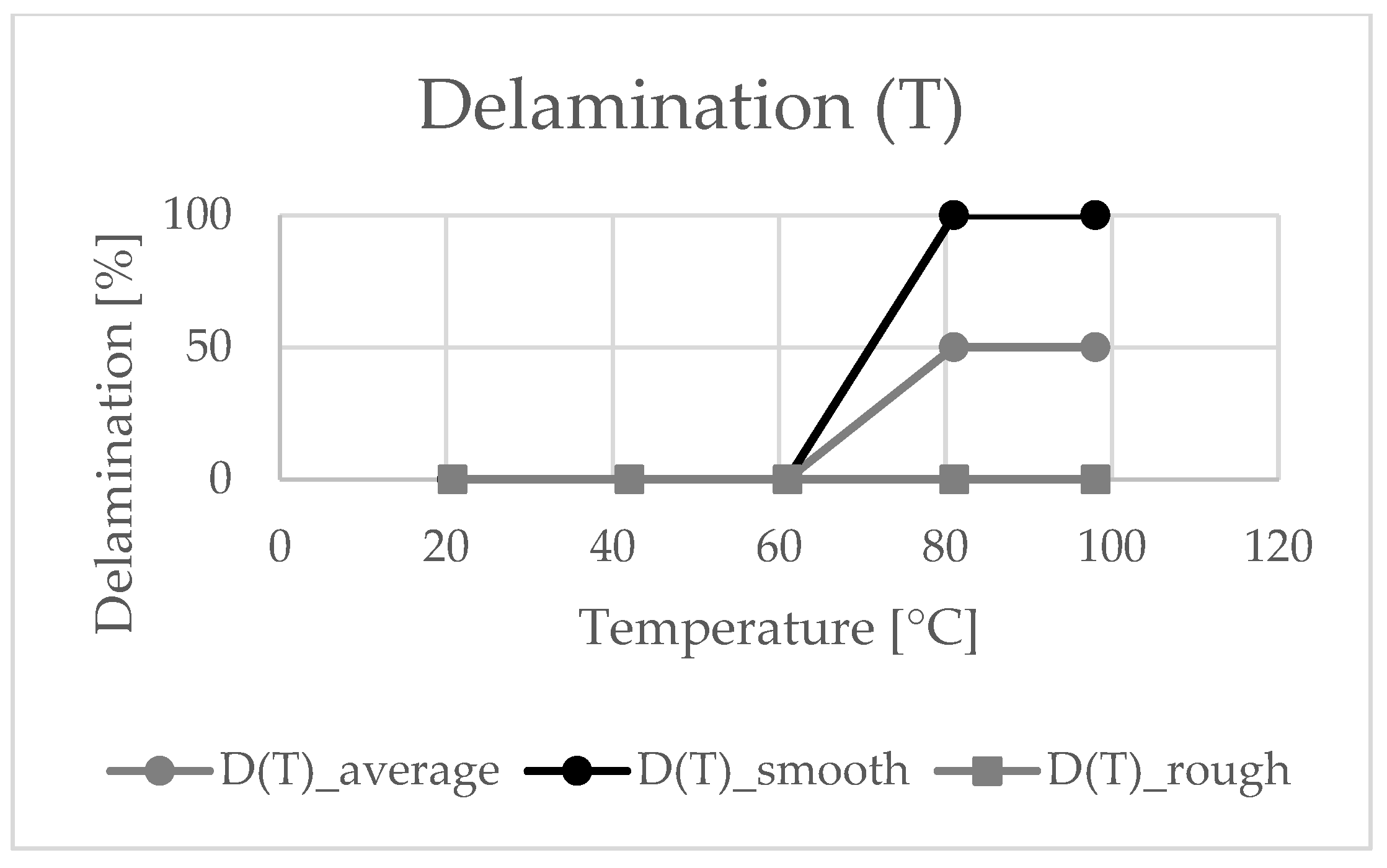
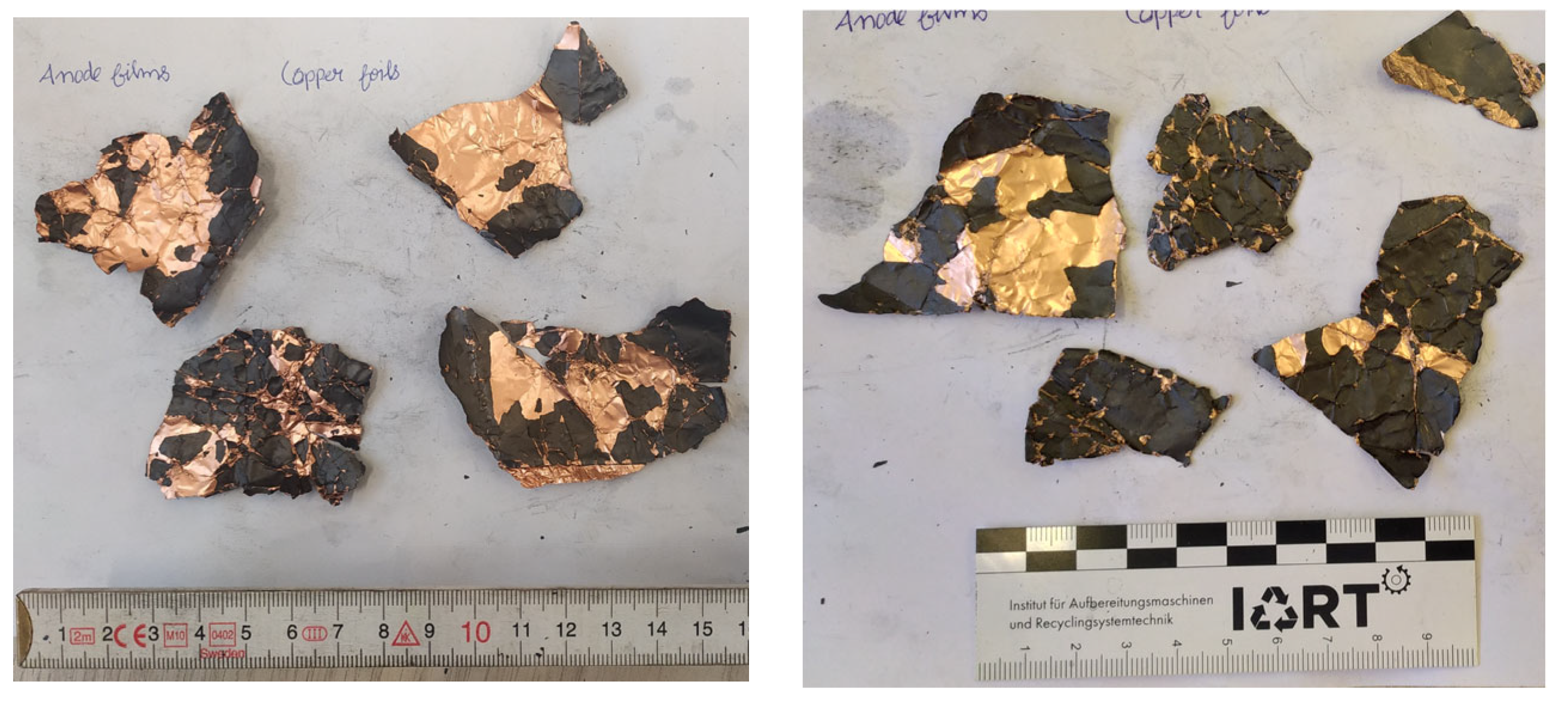
In Figure 1 the delamination progress is shown as a function of the temperature. There is no delamination till T = 60 °C. At 80 °C the delamination jumps to 50%. Obviously, there is a big difference in the delamination progress of the two sides of the foil. As you can also see in Figure 2, the particles are delaminated just on the side with the smooth surface. Even at T = 100 °C, the rough side remains coated.
Figure 1.
Delamination as a function of the temperature.
Figure 2.
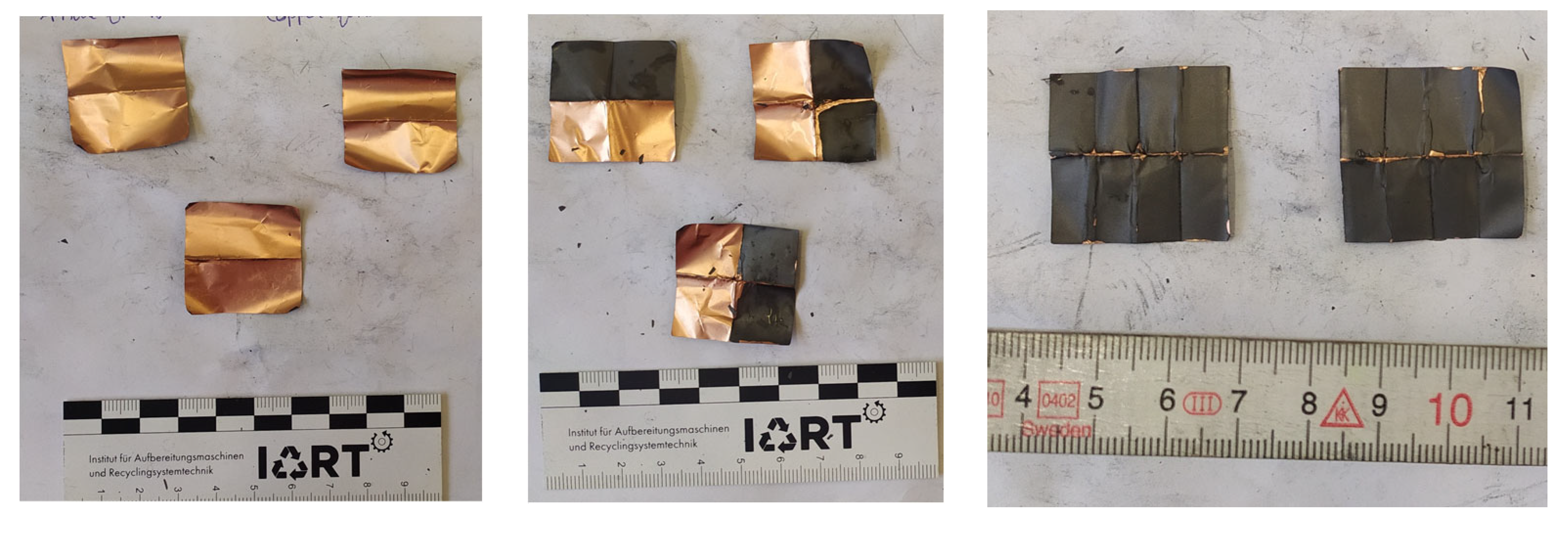
Particles after delamination at 80 °C: the front side (left) shows the smooth, delaminated surface, while the back side with the rough surface (right) remains coated.
2.2. Particle Size
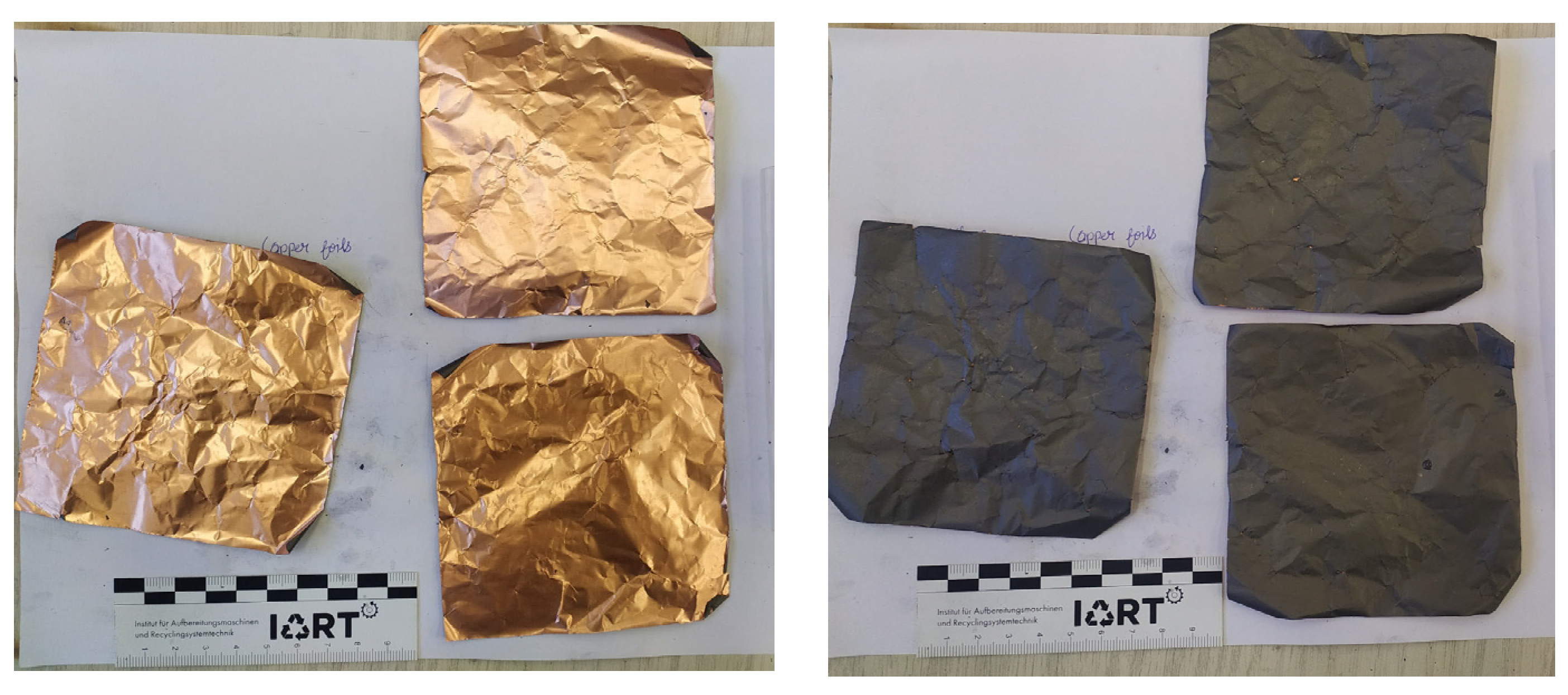
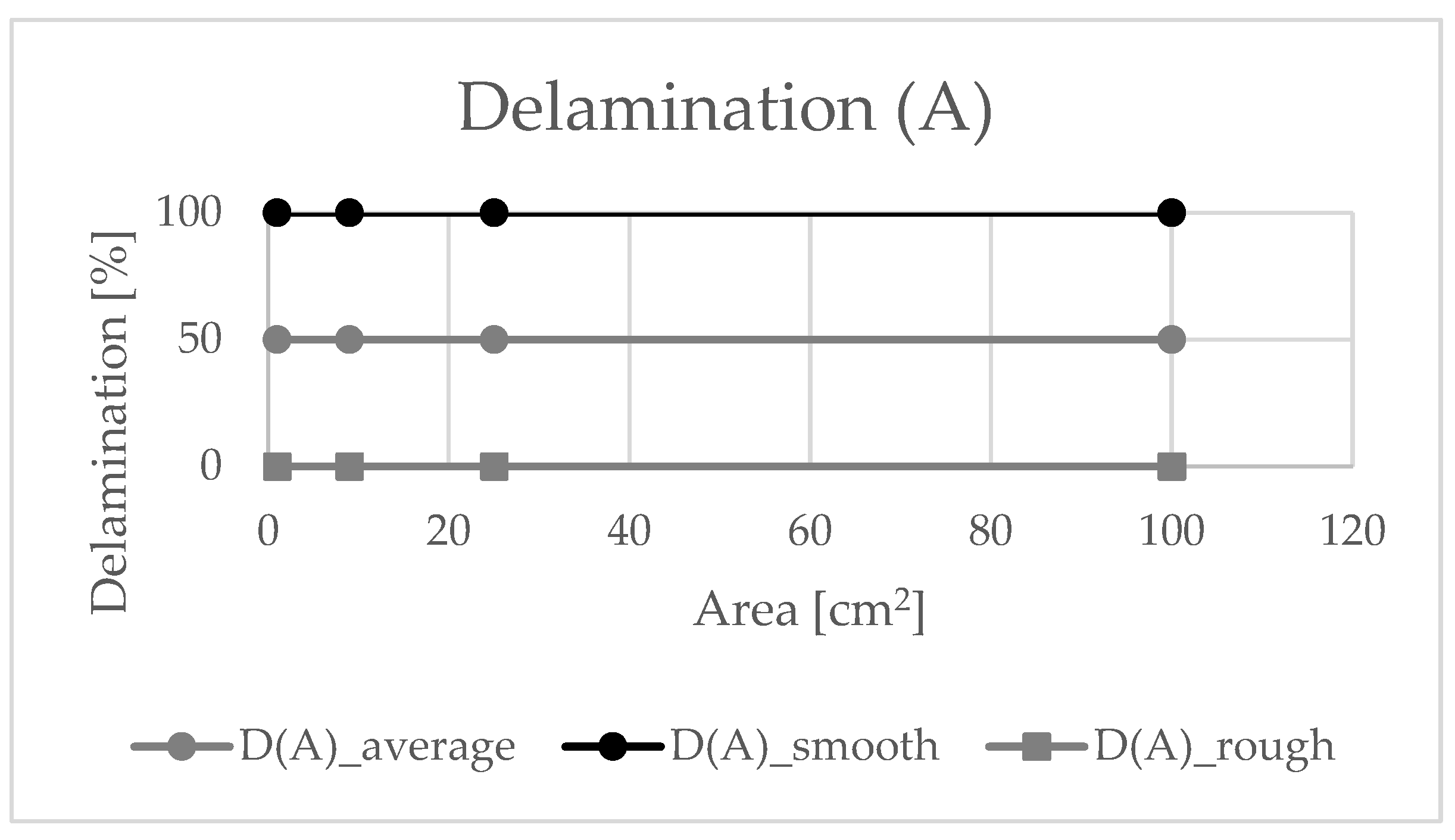
Based on the findings in Section 2.1, the experiments were carried out at 80 °C. In Figure 3 the delamination is shown as a function of the particle size. Across all particle sizes, an overall delamination of 50% was observed. As before, delamination occurred exclusively on the smooth side (100%), while the rough side remained completely intact (0%) (see Figure 4).
Figure 3.
Delamination as a function of the particle size.
Figure 4.
The 10 × 10 cm particles after delamination at 80 °C: the front side (left) shows the smooth, delaminated surface, while the back side with the rough surface (right) remains coated.
2.3. Ultrasonic Treatment
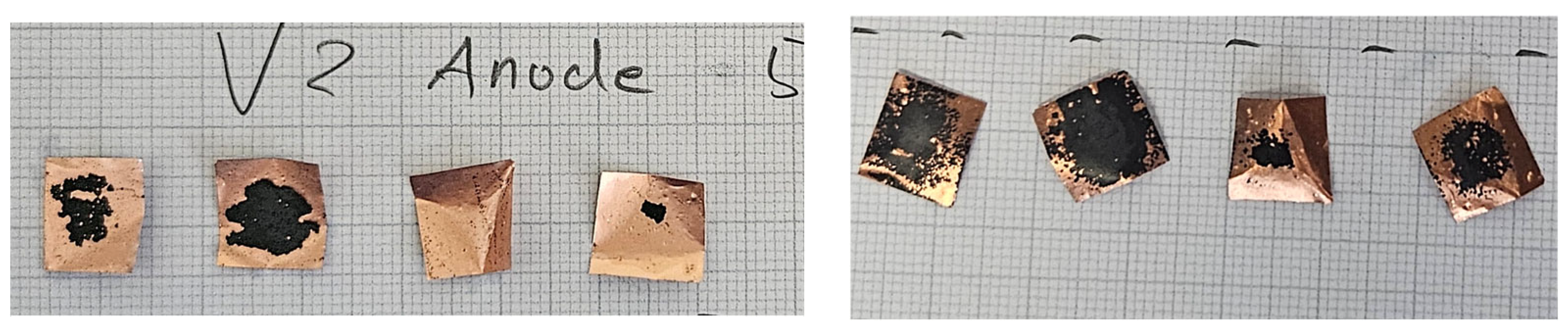
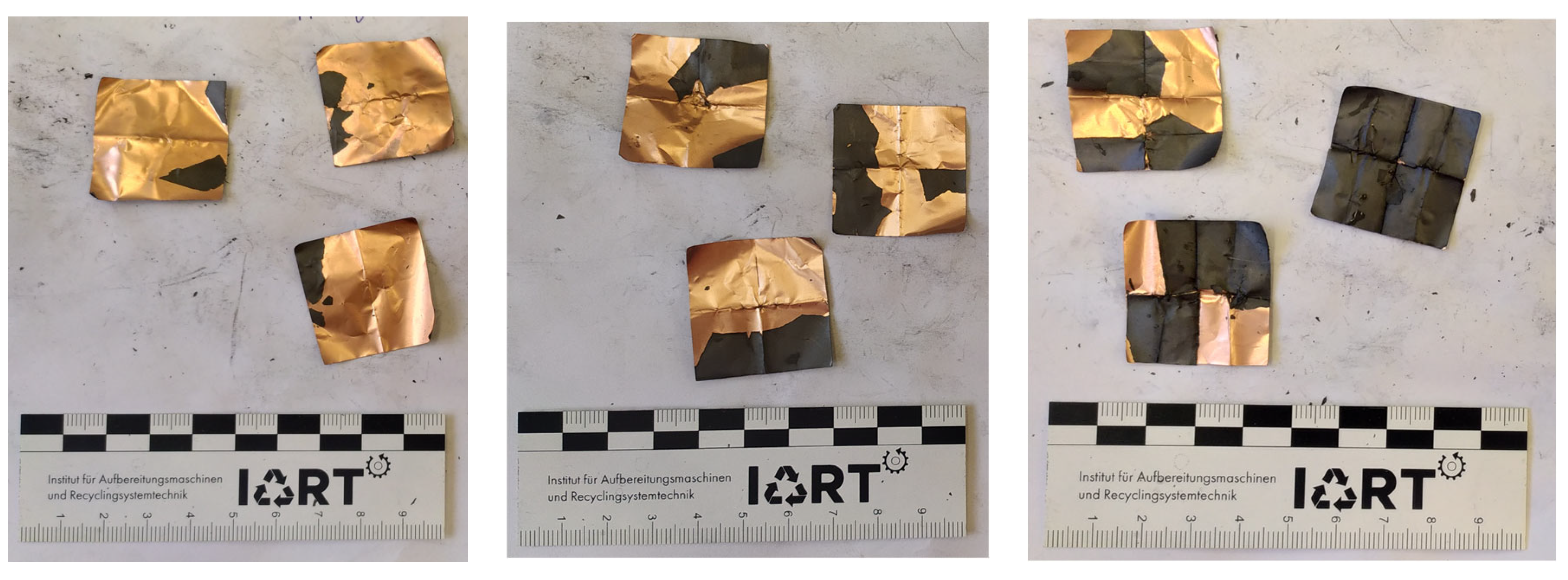
The results from the ultrasonic treatment are shown in Table 1. With an addition of ultrasonic power of 100%, an increase in delamination at T = 20 °C from 0 to 29% was observed. When reducing the ultrasonic power to 50%, the delamination increased to 65%. An increase in temperature (T = 60 °C) led to further improvements in delamination (92.65%). Even after 3 min experimental time, a delamination of about 72% was observed. In comparison to the initial experiments, there was better delamination behavior when using ultrasonic stress than without it under otherwise identical conditions. You can see the particles from the different experiments in Figure 5, Figure 6, Figure 7 and Figure 8.
Table 1.
Delamination results with ultrasonic treatment.
Figure 5.
Particles after treatment in experiment V1.
Figure 6.
Particles after treatment in experiment V2.
Figure 7.
Particles after treatment in experiment V5.
Figure 8.
Particles after treatment in experiment V6.
2.4. Precrushing and Deformation
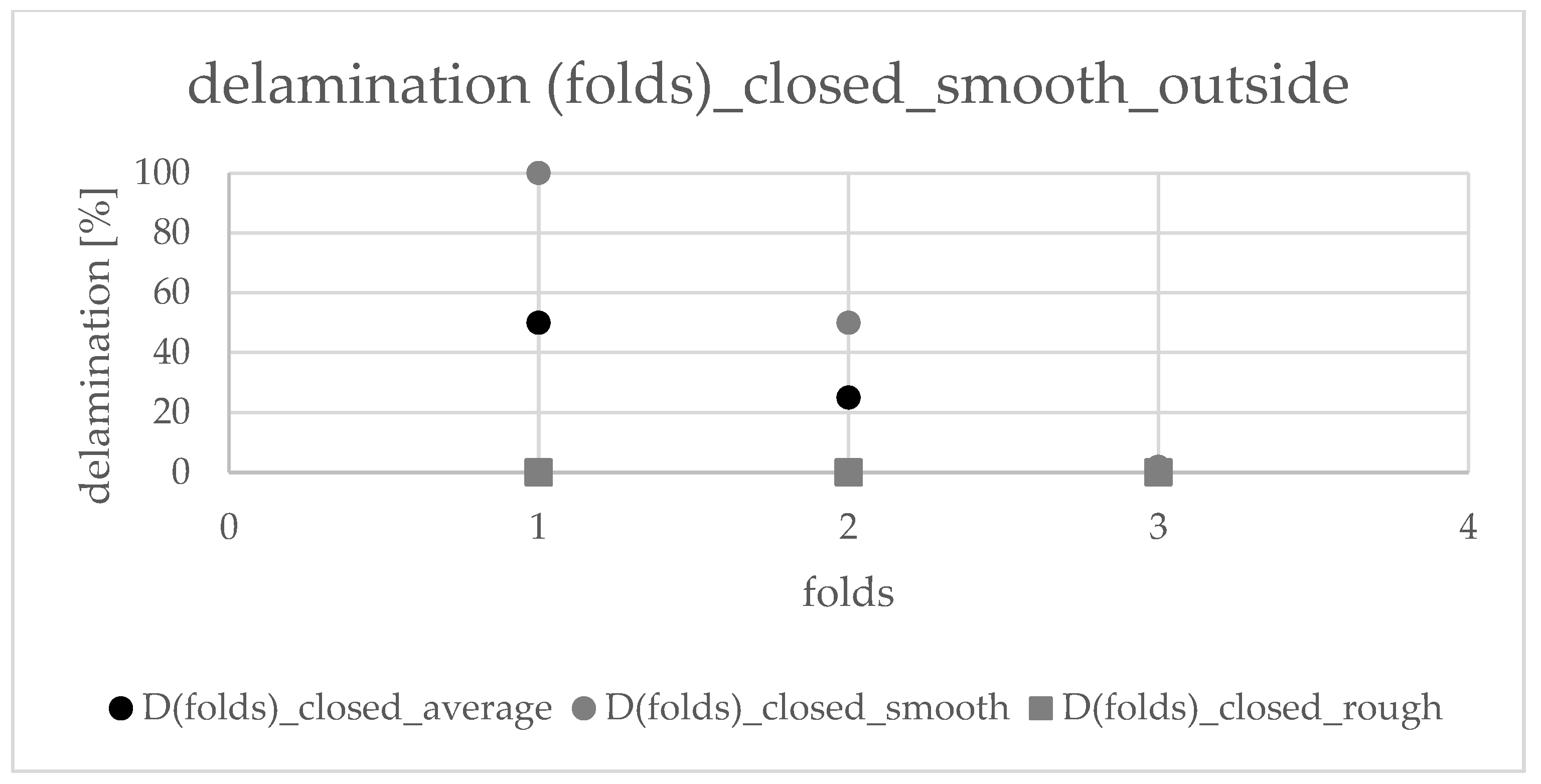
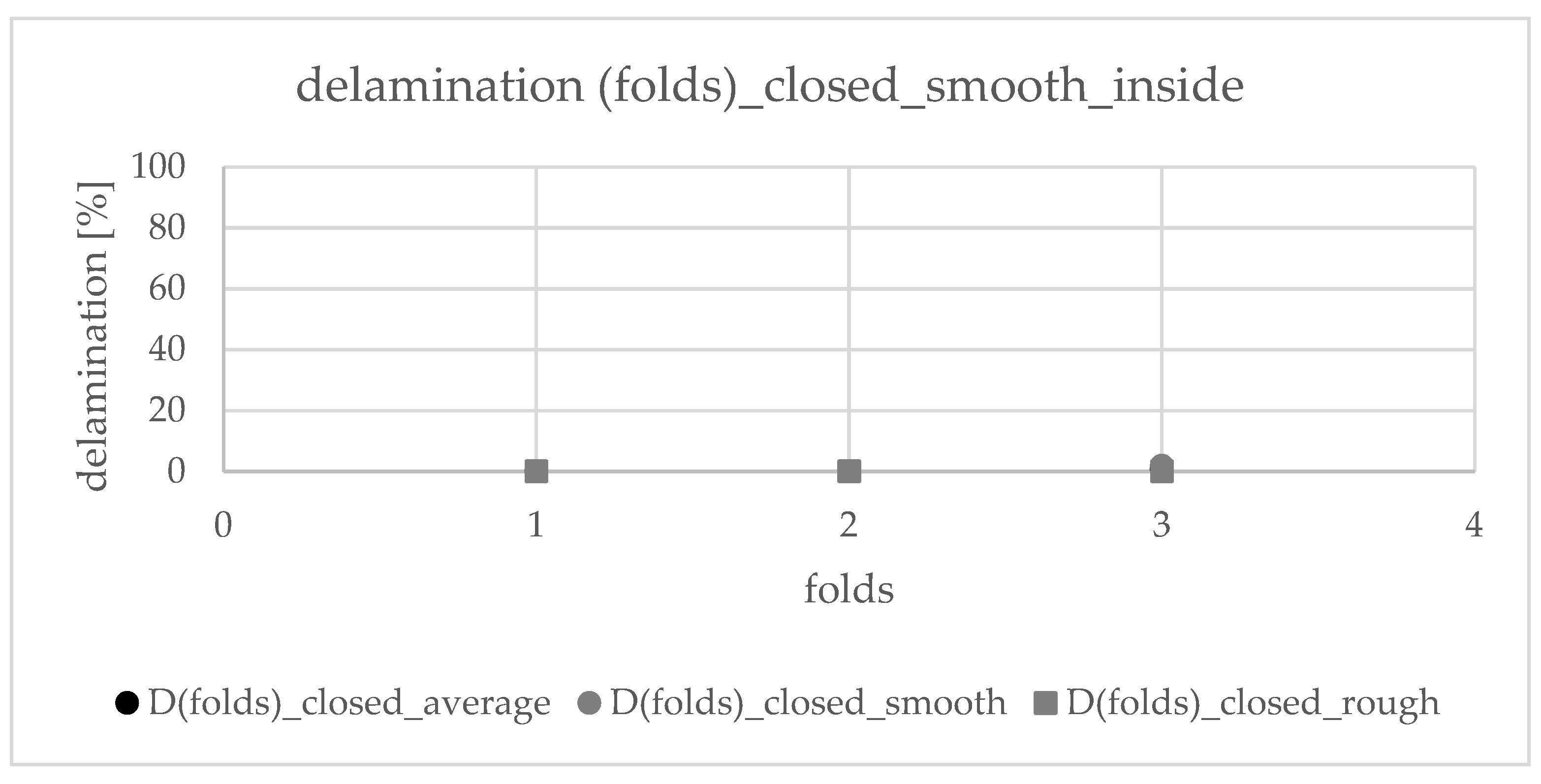
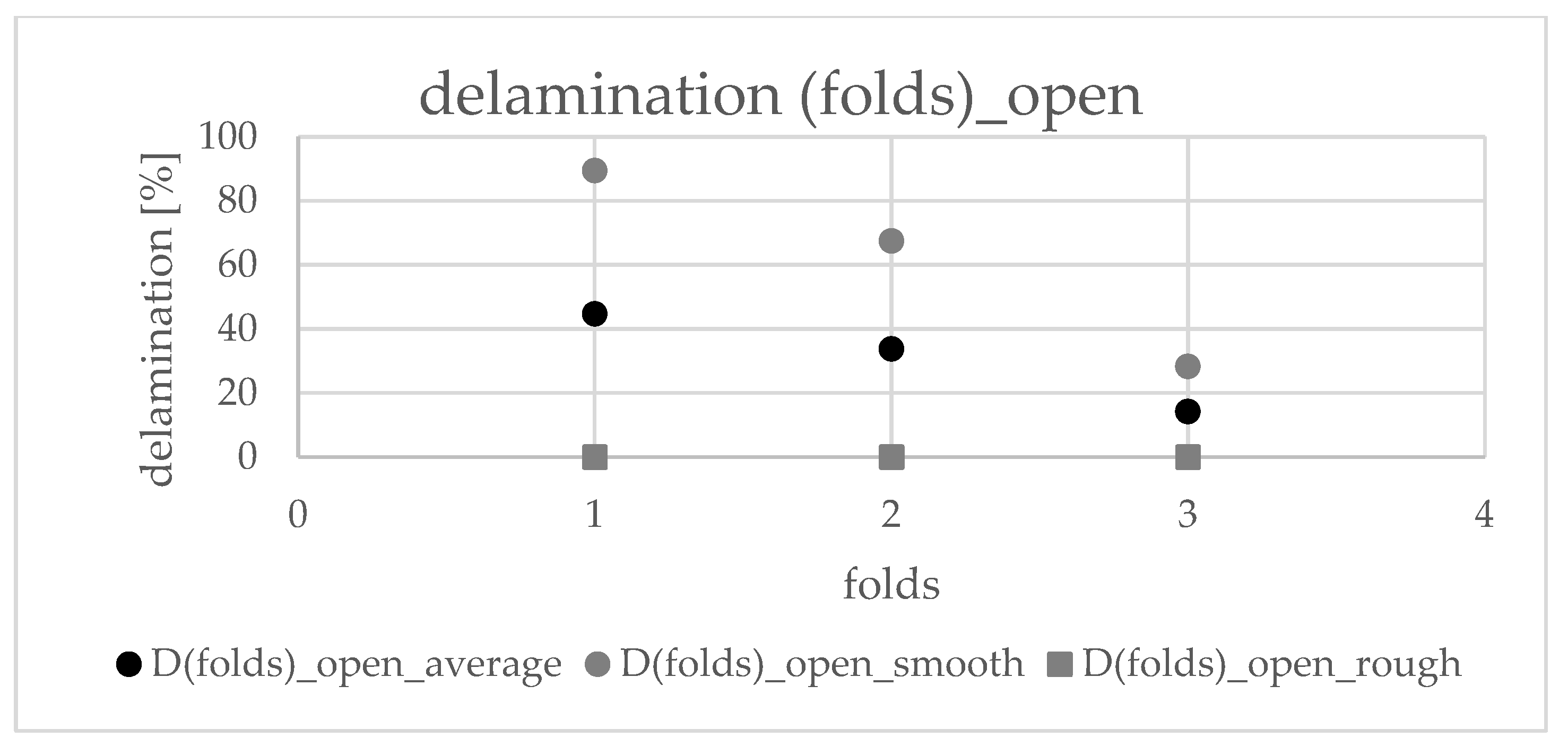
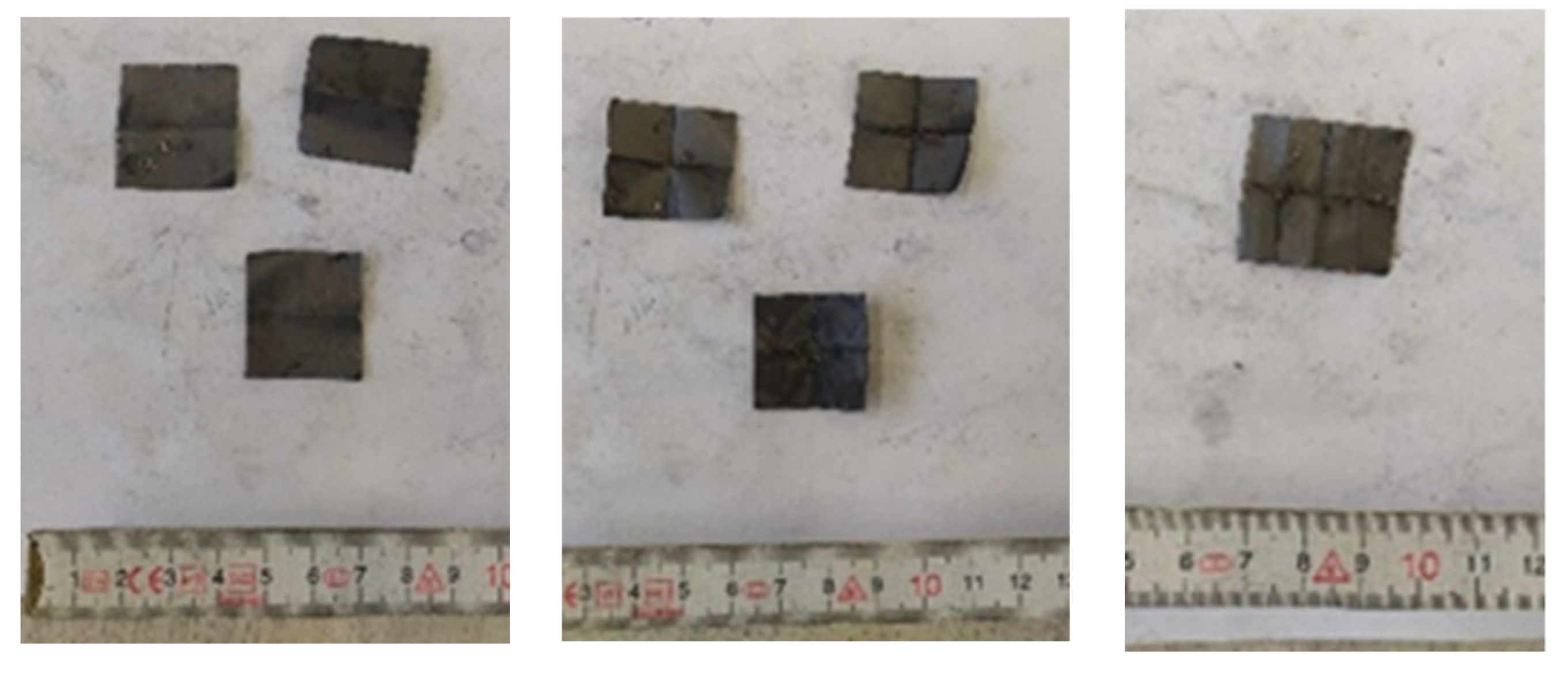
In Figure 9 and Figure 10, the delamination as a function of the folds is shown. The difference is that in the experiments shown in Figure 9, the side with the smooth surface was folded inward, whereas in the experiments shown in Figure 10, it was folded outward. When folding the smooth surface to the inside, you can see one fold is enough to inhibit any delamination. The slight increase after 3 folds is solely related to the stress caused by the folding itself. When the smooth surface is folded outward, a different pattern emerges. After a single fold, 100% of the smooth surface remains on the outside, resulting in 100% delamination on this side. When the smooth surface is halved by a second fold, the delaminated area is also reduced by half. From the third fold onward, no delamination occurs. The rough side remained laminated in all cases. Figure 11 shows, on the one hand, the delamination of folded but subsequently unfolded pieces. It can be seen that with an increasing number of mechanical stresses—in this case, folds—the degree of delamination decreases. The mechanically produced particles (granulator) were treated for 5 min in one case and for 30 min in the other. The particles treated for 5 min exhibit a similar degree of delamination (12.38%) to those folded three times. However, the delamination degree could be further increased (36%) by extending the treatment duration. In Figure 12, Figure 13, Figure 14 and Figure 15 the particles from the experiments are shown for visualization of the results.
Figure 9.
Delamination as a function of the folds. Folding configuration with the smooth (active) surface folded inward.
Figure 10.
Delamination as a function of the folds. Folding configuration with the smooth (active) surface folded outward.
Figure 11.
Delamination for folded and subsequently unfolded pieces.
Figure 12.
Particles after delamination test with the smooth (active) surface folded inward.
Figure 13.
Particles after delamination test with the smooth (active) surface folded outward.
Figure 14.
Particles after delamination tests on folded and subsequently unfolded pieces.
Figure 15.
Mechanically produced particles from a granulator after delamination treatment.
3. Discussion
This study demonstrates that aqueous delamination of LIB anode foils can be effectively achieved through adjustment of process parameters, particularly temperature, ultrasonic power, and particle pre-treatment. Across all particle sizes, the smooth foil side exhibited complete delamination under favorable conditions, whereas the dendritic, rough side remained coated in all cases without additional processing steps. Temperature proved to be the most influential factor, with elevated temperatures (80 °C) enabling 100% delamination on the smooth surface even without ultrasonic support. This effect is likely not caused by thermal softening of the binder (which remains thermally stable up to around 150 °C) but rather by a reduction in adhesive forces at the foil–coating interface induced by enhanced capillary action. At higher temperatures, the viscosity and surface tension of water decrease, facilitating deeper and faster penetration of the liquid into interfacial gaps and pores. This penetration may further weaken the adhesion between the coating and the foil, promoting more effective delamination. Ultrasonic treatment further enhanced delamination, but only when applied at moderate intensity (50%). A possible explanation is that moderate power promotes more stable cavitation behavior, generating effective shear forces at the interface, whereas excessive power may lead to uncontrolled bubble collapse and turbulent flow that reduce delamination efficiency. Mechanical pre-stressing by folding reduced delamination efficiency, which can be attributed to a decrease in the accessible active surface area and potential local compaction of the coating in the fold region. Three successive folds prevented delamination entirely. Similarly, particles mechanically comminuted by a granulator showed reduced initial delamination after 5 min treatment. An extended treatment time (30 min) overcame these effects, suggesting that prolonged exposure compensates for reduced surface accessibility. These results showed that efficient aqueous delamination depends on a combination of electrode surface roughness, accessible surface area, thermal effects on binder adhesion, and cavitation behavior. Moderate ultrasonic intensity at elevated temperatures appears to offer a favorable balance, while excessive mechanical pre-stressing during comminution or fold formation should be avoided. Future work should focus on scaling these findings to continuous systems, optimizing residence time, and developing selective delamination strategies for both foil sides to further improve process efficiency in LIB recycling.
4. Materials and Methods
A typical lithium-ion battery anode consists of graphite, conductive carbon, and a binder, such as polyvinylidene difluoride or a combination of carboxymethyl cellulose and styrene-butadiene rubber, coated onto a current copper collector [19].
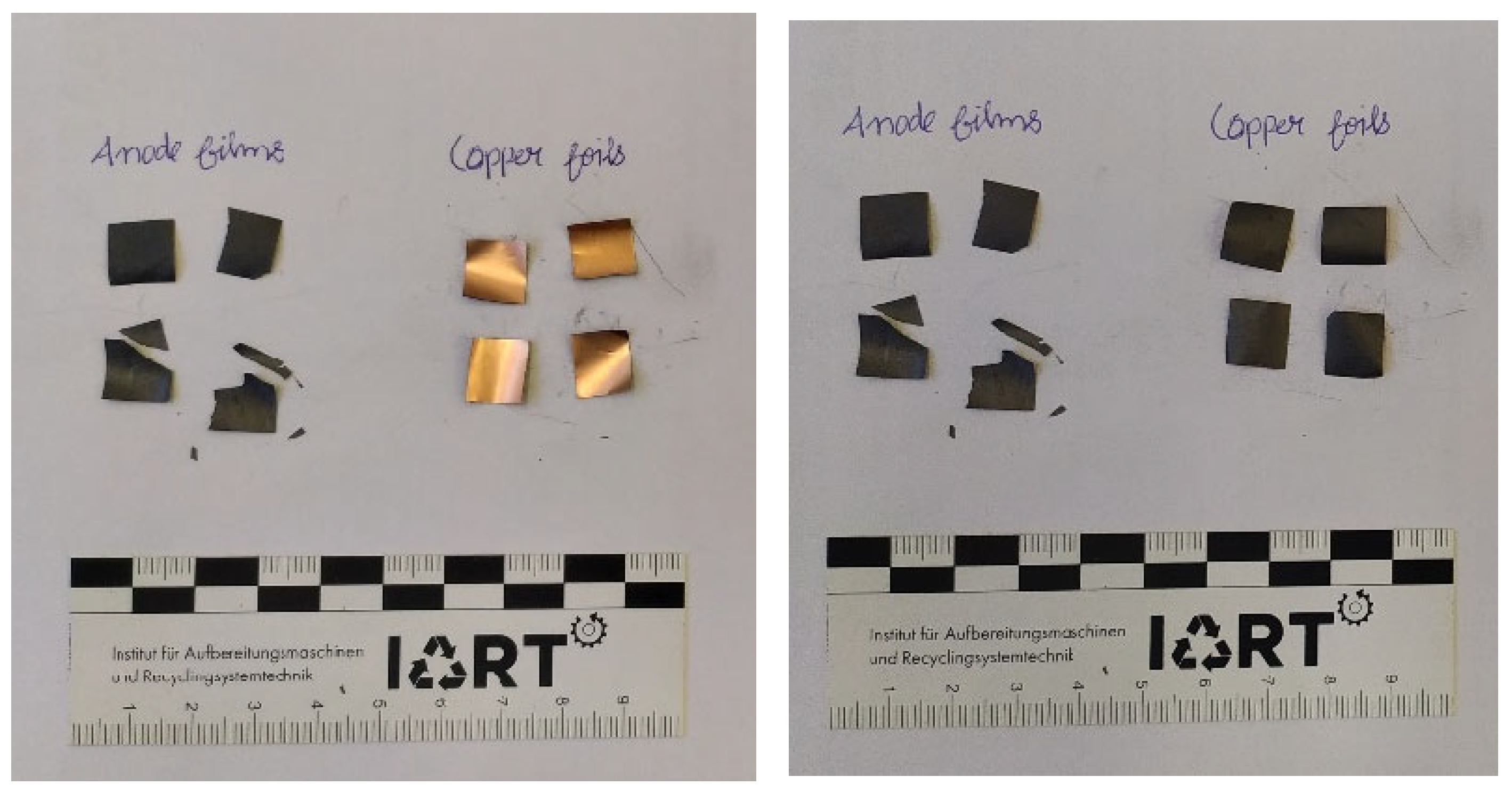
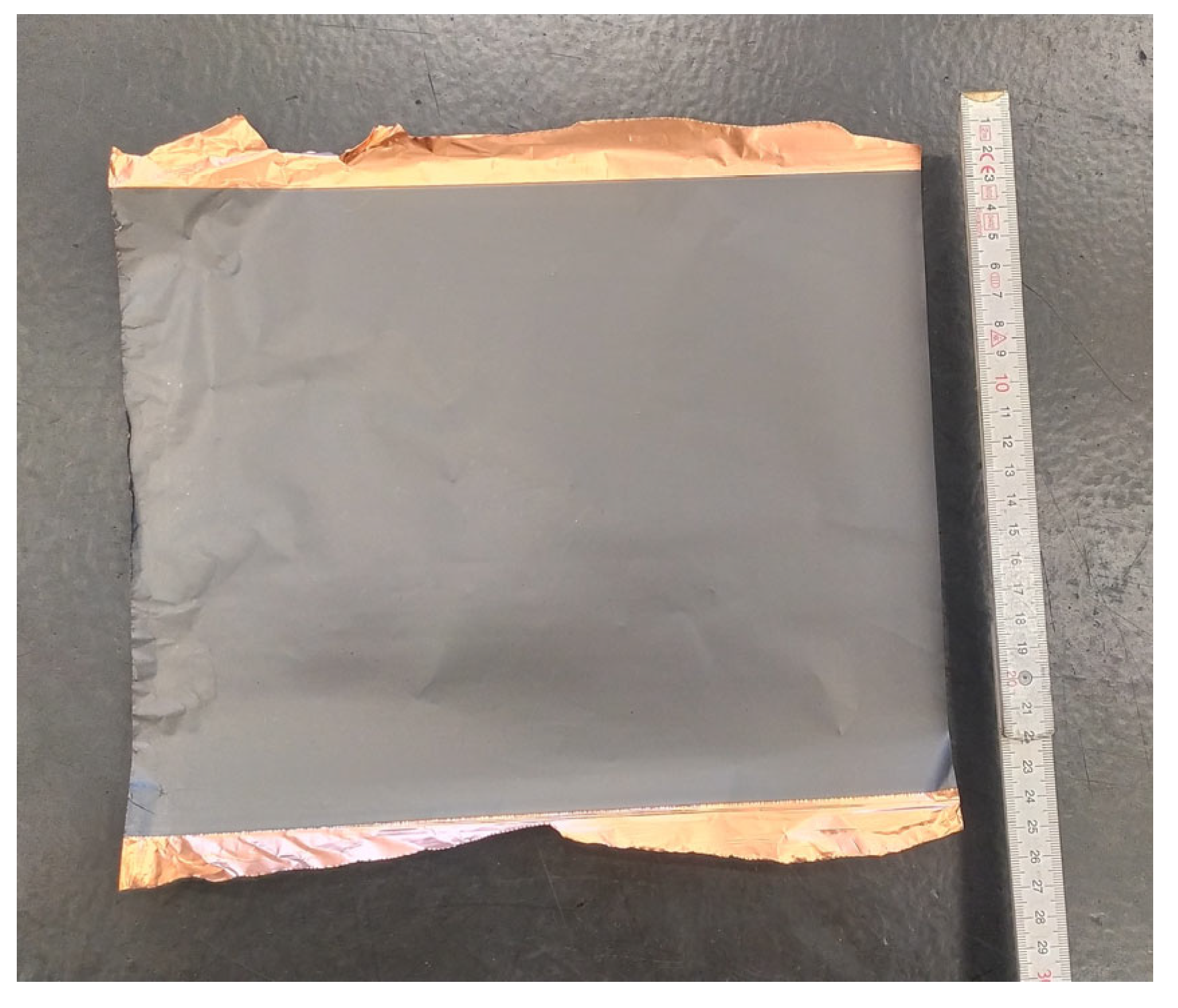
The anode foils used in this study (Figure 16) consist of copper foil, produced by electrolysis, coated with graphite using a polyvinylidene difluoride binder.
Figure 16.
Anode foil used in the experiments.
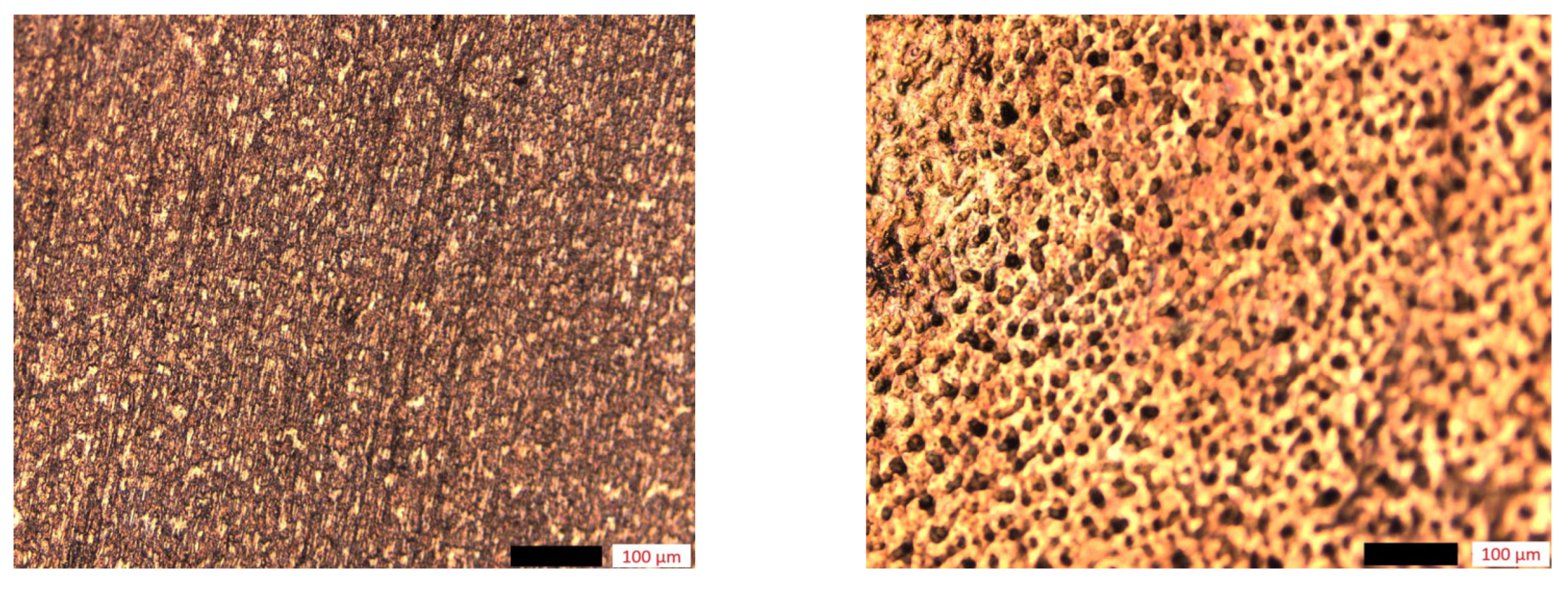
For characterization of the morphology of the foil, the uncoated part of the anode was evaluated via microscope. As you can see in Figure 17, the surfaces of the two sides differ. One side is smooth while the other side exhibits a more rough and dendritic morphology. The reason for that lies in the production method of the foil. Compared to rolled foils, foils produced by electrolysis exhibit two different surface structures.
Figure 17.
Anode foil with smooth surface (left) and dendritic, rough surface (right).
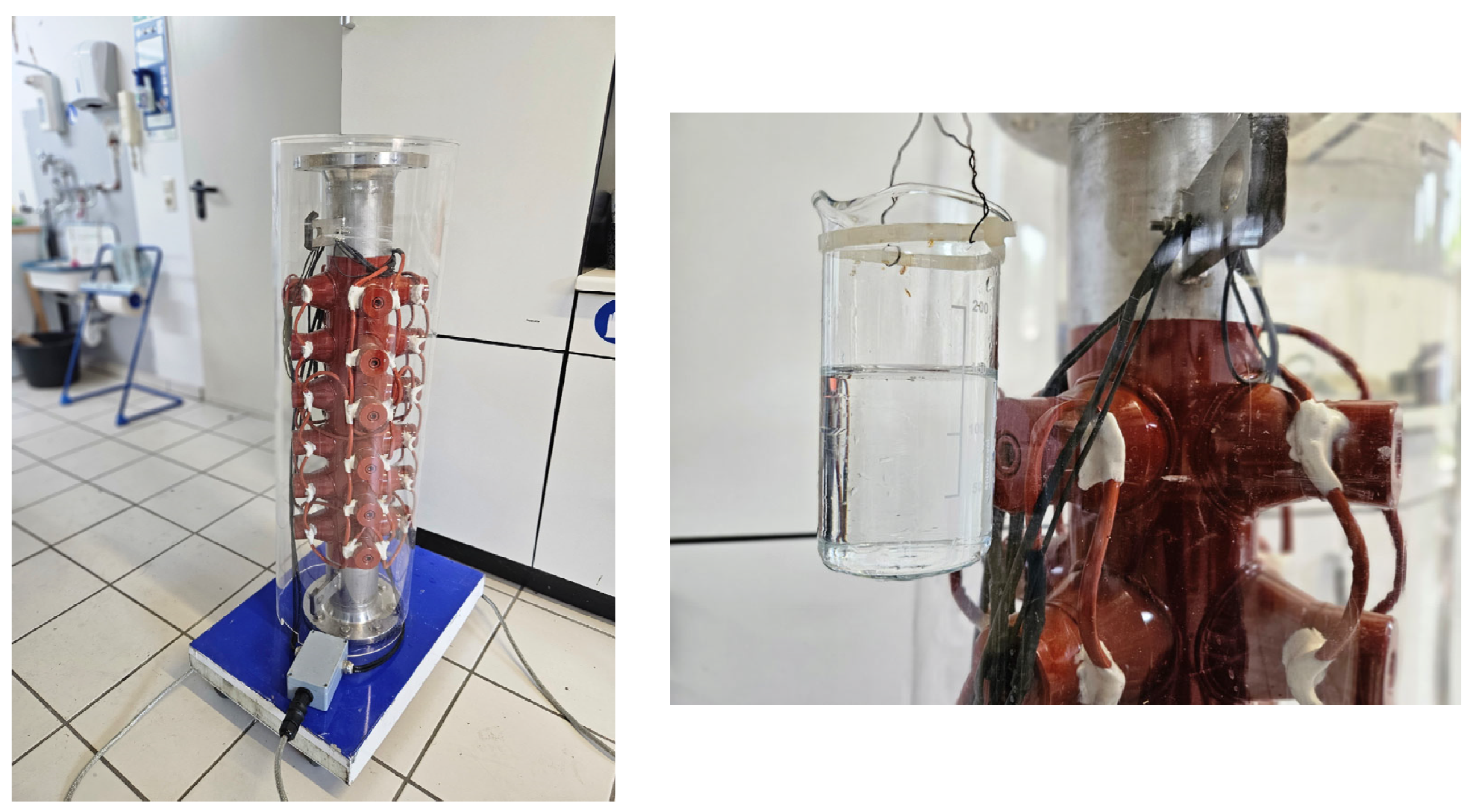
Experiments were performed using water baths heated with a standard laboratory heating device and continuous temperature monitoring. Mechanical stirring was applied during all tests. Ultrasound-assisted delamination trials were carried out at Weber Entec GmbH (76275 Ettlingen, Germany) using specialized equipment in the form of a Biopush flow cell (Figure 18).
Figure 18.
BioPush flow cell setup by Weber Entec GmbH.
To simulate real recycling conditions, the foils were comminuted using two devices. One was a rotary shear and the other one a granulator, resulting in fragments with various sizes and deformations (e.g., bends and folded edges).
The degree of delamination is defined as the percentage of the copper foil surface from which the graphite coating has been removed. It is calculated using image analysis in ImageJ software (Version 1.54p), as in Equation (1). Therefore, every particle was photographed separately under flat conditions to avoid inaccuracies.
4.1. Experimental Series
4.1.1. Temperature
A systematic series of delamination experiments was performed at temperatures between 20 °C and 100 °C (20 °C, 40 °C, 60 °C, 80 °C, 100 °C), using a fixed stirring time of 5 min, which was defined based on the investigations by Bai et al. [19] to study the influence of temperature on coating removal. For this purpose, the anode foil was cut into pieces measuring 1 × 1 cm.
4.1.2. Particle Size
To evaluate the effect of particle size on delamination, foil fragments measuring 1 × 1 cm, 3 × 3 cm, 5 × 5 cm, and 10 × 10 cm were prepared and treated at 80 °C for 5 min under constant stirring.
4.1.3. Ultrasonic Treatment
For the ultrasonic stress tests 1 × 1 cm particles were prepared. Both the influence of ultrasonic power (50 and 100%) and that of temperature (20 °C and 60 °C) were examined.
4.1.4. Precrushing and Deformation
To systematically investigate the influence of mechanical deformation, the particles were intentionally folded in a defined manner. The effect of one to three consecutive foldings was examined. For this purpose, 3 × 3 cm particles were folded once in the middle. In one scenario, the particles were unfolded again, simulating the fragmentation process in a granulator or rotary shear. In the second scenario, the folded particles were treated in their closed state.
In addition, the delamination behavior of the mechanically crushed particles was investigated.
Author Contributions
Conceptualization, E.T.; methodology, E.T.; formal analysis, E.T. and S.P.; investigation, A.G., J.T., S.P., A.V. and J.E.G.; data curation, S.P. and E.T.; writing—original draft preparation, S.P. and E.T.; writing—review and editing, T.K. and H.L.; visualization, E.T.; supervision, T.K. and H.L.; project administration, E.T.; funding acquisition, E.T., T.K. and H.L. All authors have read and agreed to the published version of the manuscript.
Funding
This research was sponsored by Deutsche Bundesstiftung Umwelt, grant number 39311/01-21/2.
Data Availability Statement
The original contributions presented in this study are included in the article. Further inquiries can be directed to the corresponding author.
Conflicts of Interest
Anting Grams and Jan Talkenberger are employees in Company Weber Entec GmbH. The remaining authors have no conflicts of interest to declare.
References
- Connelly, E.; Aryanpur, V.; Paoli, L.; Teter, J. Global Electric Vehicle Outlook 2022. Securing Supplies for an Electric Future. 2022. Available online: https://iea.blob.core.windows.net/assets/ad8fb04c-4f75-42fc-973a-6e54c8a4449a/GlobalElectricVehicleOutlook2022.pdf (accessed on 6 October 2025).
- Curry, C. Lithium-ion Battery Costs and Market. Squeezed Margins Seek Technology Improvements & New Business Models. 2017. Available online: https://roar-assets-auto.rbl.ms/documents/36549/BNEF-Lithium-ion-battery-costs-and-market.pdf (accessed on 6 October 2025).
- Ren, X.; Tong, Z.; Dai, Y.; Ma, G.; Lv, Z.; Bu, X.; Bilal, M.; Vakylabad, A.B.; Hassanzadeh, A. Effects of Mechanical Stirring and Ultrasound Treatment on the Separation of Graphite Electrode Materials from Copper Foils of Spent LIBs: A Comparative Study. Separations 2023, 10, 246. [Google Scholar] [CrossRef]
- Gaines, L.; Zhang, J.; He, X.; Bouchard, J.; Melin, H.E. Tracking Flows of End-of-Life Battery Materials and Manufacturing Scrap. Batteries 2023, 9, 360. [Google Scholar] [CrossRef]
- Wiechers, P.; Hermann, A.; Koob, S.; Glaum, F.; Gleiß, M. Development of a Process for Direct Recycling of Negative Electrode Scrap from Lithium-Ion Battery Production on a Technical Scale and Its Influence on the Material Quality. Batteries 2024, 10, 218. [Google Scholar] [CrossRef]
- Jiang, M.; Li, B.; Liu, X. Global value chain restructuring driven by critical material trade: A case study of graphite. Resour. Conserv. Recycl. 2025, 222, 108489. [Google Scholar] [CrossRef]
- Park, J.; Cho, S.-J.; Shin, S.; Kim, R.; Shin, D.; Shin, Y. Overview of graphite supply chain and its challenges. Geosci. J. 2025, 29, 329–341. [Google Scholar] [CrossRef]
- Bobba, S.; Carrara, S.; Huisman, J.; Mathieux, F.; Pavel, C. Critical Raw Materials for Strategic Technologies and Sectors in the EU: A Foresight Study; European Union, Publications Office of the European Union: Luxembourg, 2020. [Google Scholar]
- Xu, P.; Tan, D.H.S.; Jiao, B.; Gao, H.; Yu, X.; Chen, Z. A Materials Perspective on Direct Recycling of Lithium-Ion Batteries: Principles, Challenges and Opportunities. Adv. Funct. Mater. 2023, 33, 2213168. [Google Scholar] [CrossRef]
- Sloop, S.; Crandon, L.; Allen, M.; Koetje, K.; Reed, L.; Gaines, L.; Sirisaksoontorn, W.; Lerner, M. A direct recycling case study from a lithium-ion battery recall. Sustain. Mater. Technol. 2020, 25, e00152. [Google Scholar] [CrossRef]
- Lefherz, H.; Ahuis, M.; Dilger, N.; Kwade, A.; Zellmer, S. Sustainability of electrode scrap recycling—Quantifying the environmental benefit of direct recycling routes for battery production scrap. J. Energy Storage 2025, 132, 117688. [Google Scholar] [CrossRef]
- Shin, Y.; Kim, S.; Park, S.; Lee, J.; Bae, J.; Kim, D.; Joo, H.; Ban, S.; Lee, H.; Kim, Y.; et al. A comprehensive review on the recovery of cathode active materials via direct recycling from spent Li-ion batteries. Renew. Sustain. Energy Rev. 2023, 187, 113693. [Google Scholar] [CrossRef]
- Recell Center. Direct Recycling of Materials. Available online: https://recellcenter.org/research/direct-recycling-of-materials/ (accessed on 6 October 2025).
- Baum, Z.J.; Bird, R.E.; Yu, X.; Ma, J. Lithium-Ion Battery Recycling—Overview of Techniques and Trends. ACS Energy Lett. 2022, 7, 712–719. [Google Scholar] [CrossRef]
- Sliz, R.; Valikangas, J.; Vilmi, P.; Hu, T.; Lassi, U.; Fabritius, T. Replacement of NMP solvent for more sustainable, high-capacity, printed Li-ion battery cathodes. In Proceedings of the IEEE 16th Nanotechnology Materials and Devices Conference (NMDC), Vancouver, BC, Canada, 12–15 December 2021. [Google Scholar]
- Bai, Y.; Muralidharan, N.; Li, J.; Essehli, R.; Belharouak, I. Sustainable Direct Recycling of Lithium-Ion Batteries via Solvent Recovery of Electrode Materials. ChemSusChem 2020, 13, 5664–5670. [Google Scholar] [CrossRef]
- Tong, Z.; Ren, X.; Ni, M.; Bu, X.; Dong, L. Review of Ultrasound-Assisted Recycling and Utilization of Cathode Materials from Spent Lithium-Ion Batteries: State-of-the-Art and Outlook. Energy Fuels 2023, 37, 14574–14588. [Google Scholar] [CrossRef]
- Gupta, V.; Appleberry, M.; Li, W.; Chen, Z. Direct recycling industrialization of Li-ion batteries: The pre-processing barricade. Next Energy 2024, 2, 100091. [Google Scholar] [CrossRef]
- Bai, Y.; Li, M.; Jafta, C.J.; Dai, Q.; Essehli, R.; Polzin, B.J.; Belharouak, I. Direct recycling and remanufacturing of anode scraps. Sustain. Mater. Technol. 2023, 35, e00542. [Google Scholar] [CrossRef]
Disclaimer/Publisher’s Note: The statements, opinions and data contained in all publications are solely those of the individual author(s) and contributor(s) and not of MDPI and/or the editor(s). MDPI and/or the editor(s) disclaim responsibility for any injury to people or property resulting from any ideas, methods, instructions or products referred to in the content. |
© 2025 by the authors. Licensee MDPI, Basel, Switzerland. This article is an open access article distributed under the terms and conditions of the Creative Commons Attribution (CC BY) license (https://creativecommons.org/licenses/by/4.0/).