You are currently viewing a new version of our website. To view the old version click .

Journal of Fungi, Volume 3, Issue 4

December 2017 - 19 articles

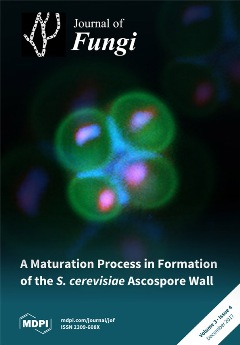
Cover Story: A two-day old ascus of the budding yeast S. cerevisiae were stained with a lipid droplet binding dye (blue). The cells also express a lipid droplet protein tagged with a red and a green fluorescent protein-tagged marker for the spore plasma membrane. The lipid dye binds droplets both within and outside of the spores. After several days, spores become impermeable to the dye (see article). View this paper
  • Issues are regarded as officially published after their release is announced to the table of contents alert mailing list .
  • You may sign up for email alerts to receive table of contents of newly released issues.
  • PDF is the official format for papers published in both, html and pdf forms. To view the papers in pdf format, click on the "PDF Full-text" link, and use the free Adobe Reader to open them.

Articles (19)

  • Review
  • Open Access
24 Citations
7,701 Views
24 Pages

The PHR Family: The Role of Extracellular Transglycosylases in Shaping Candida albicans Cells

  • Laura Popolo,
  • Genny Degani,
  • Carlo Camilloni and
  • William A. Fonzi

29 October 2017

Candida albicans is an opportunistic microorganism that can become a pathogen causing mild superficial mycosis or more severe invasive infections that can be life-threatening for debilitated patients. In the etiology of invasive infections, key facto...

  • Article
  • Open Access
20 Citations
6,977 Views
8 Pages

19 October 2017

Use of oral antifungals in the treatment of onychomycosis is commonplace; but their use can be limited by safety and patient concerns. Due to their broader safety margins, topical antifungals (efinaconazole, tavaborole, and ciclopirox) are a useful o...

  • Review
  • Open Access
2,295 Citations
75,012 Views
29 Pages

Global and Multi-National Prevalence of Fungal Diseases—Estimate Precision

  • Felix Bongomin,
  • Sara Gago,
  • Rita O. Oladele and
  • David W. Denning

18 October 2017

Fungal diseases kill more than 1.5 million and affect over a billion people. However, they are still a neglected topic by public health authorities even though most deaths from fungal diseases are avoidable. Serious fungal infections occur as a conse...

  • Review
  • Open Access
45 Citations
11,002 Views
12 Pages

The Human Mucosal Mycobiome and Fungal Community Interactions

  • Elizabeth A. Witherden,
  • Saeed Shoaie,
  • Rebecca A. Hall and
  • David L. Moyes

7 October 2017

With the advent of high-throughput sequencing techniques, the astonishing extent and complexity of the microbial communities that reside within and upon us has begun to become clear. Moreover, with advances in computing and modelling methods, we are...

  • Review
  • Open Access
57 Citations
12,233 Views
17 Pages

The Multifaceted Role of T-Helper Responses in Host Defense against Aspergillus fumigatus

  • Intan M. W. Dewi,
  • Frank L. Van de Veerdonk and
  • Mark S. Gresnigt

4 October 2017

The ubiquitous opportunistic fungal pathogen Aspergillus fumigatus rarely causes infections in immunocompetent individuals. A healthy functional innate immune system plays a crucial role in preventing Aspergillus-infection. This pivotal role for the...

  • Article
  • Open Access
7 Citations
6,253 Views
12 Pages

A Novel Assay Reveals a Maturation Process during Ascospore Wall Formation

  • Kai Zhang,
  • Leor Needleman,
  • Sai Zhou and
  • Aaron M. Neiman

2 October 2017

The ascospore wall of the budding yeast Saccharomyces cerevisiae consists of inner layers of similar composition to the vegetative cell wall and outer layers made of spore-specific components that confer increased stress resistance on the spore. The...

  • Review
  • Open Access
100 Citations
8,828 Views
12 Pages

27 September 2017

Interleukin-17 (IL-17) is a proinflammatory cytokine produced by adaptive CD4+ T helper cells and innate lymphocytes, such as γδ-T cells and TCRβ+ “natural” Th17 cells. IL-17 activates signaling through the IL-17 receptor, which induces other proinfl...

  • Review
  • Open Access
138 Citations
20,419 Views
28 Pages

Fungal Strategies to Evade the Host Immune Recognition

  • Marco J. Hernández-Chávez,
  • Luis A. Pérez-García,
  • Gustavo A. Niño-Vega and
  • Héctor M. Mora-Montes

23 September 2017

The recognition of fungal cells by the host immune system is key during the establishment of a protective anti-fungal response. Even though the immune system has evolved a vast number of processes to control these organisms, they have developed strat...

of 2

Get Alerted

Add your email address to receive forthcoming issues of this journal.

XFacebookLinkedIn
J. Fungi - ISSN 2309-608X