Article

Novel Yeasts Producing High Levels of Conjugated Linoleic Acid and Organic Acids in Fermented Doughs

1
Department of Agriculture, Food and Environment, University of Pisa, Via del Borghetto 80, 56124 Pisa, Italy
2
Interdepartmental Research Centre “Nutraceuticals and Food for Health”, University of Pisa, 56124 Pisa, Italy
3
Department of Translational Research and New Technologies in Medicine and Surgery, University of Pisa, 56123 Pisa, Italy
*
Author to whom correspondence should be addressed.
These authors contributed equally to this work.
Foods 2021, 10(9), 2087; https://doi.org/10.3390/foods10092087
Submission received: 22 July 2021 / Revised: 10 August 2021 / Accepted: 1 September 2021 / Published: 3 September 2021
(This article belongs to the Section Food Microbiology)

Abstract

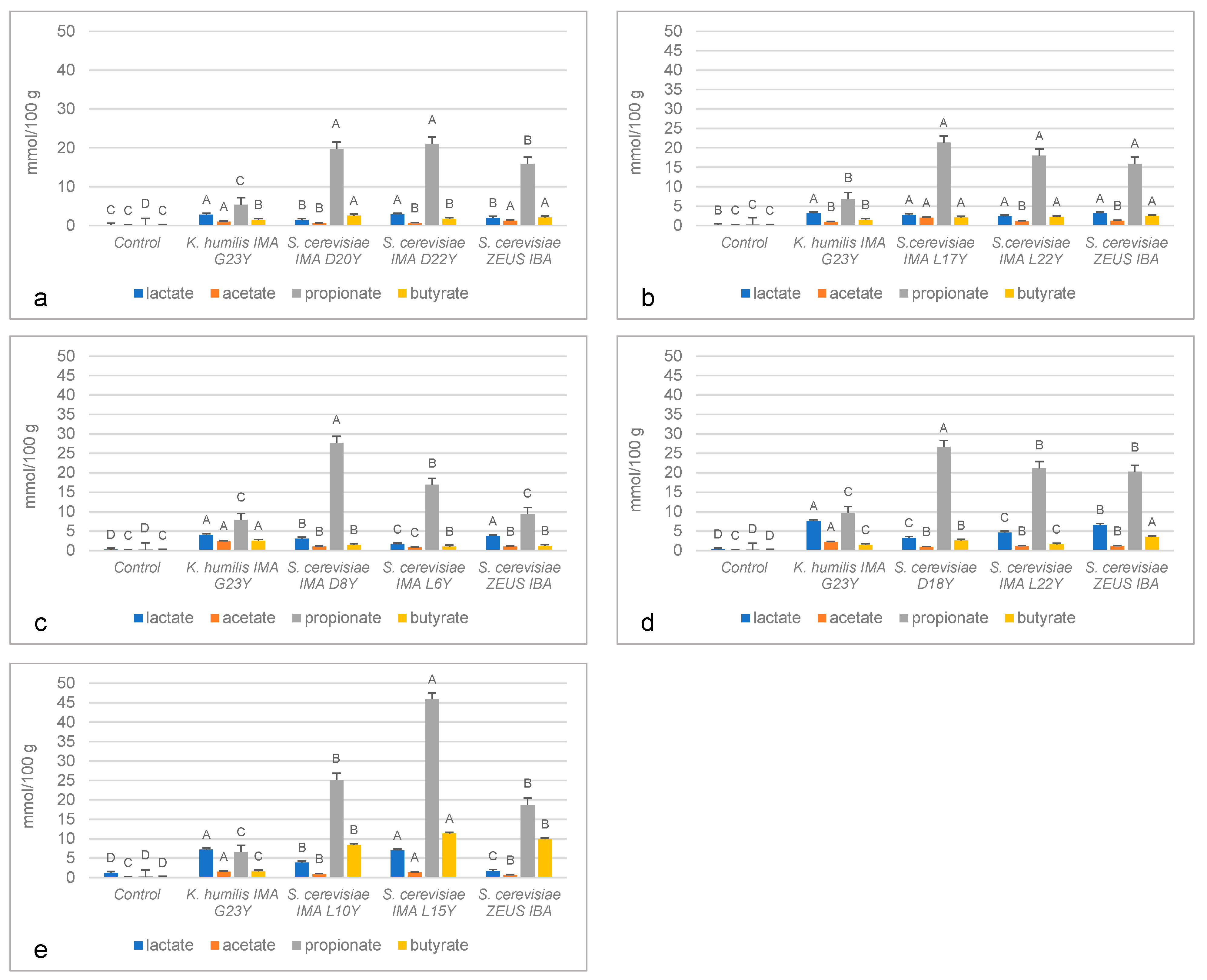
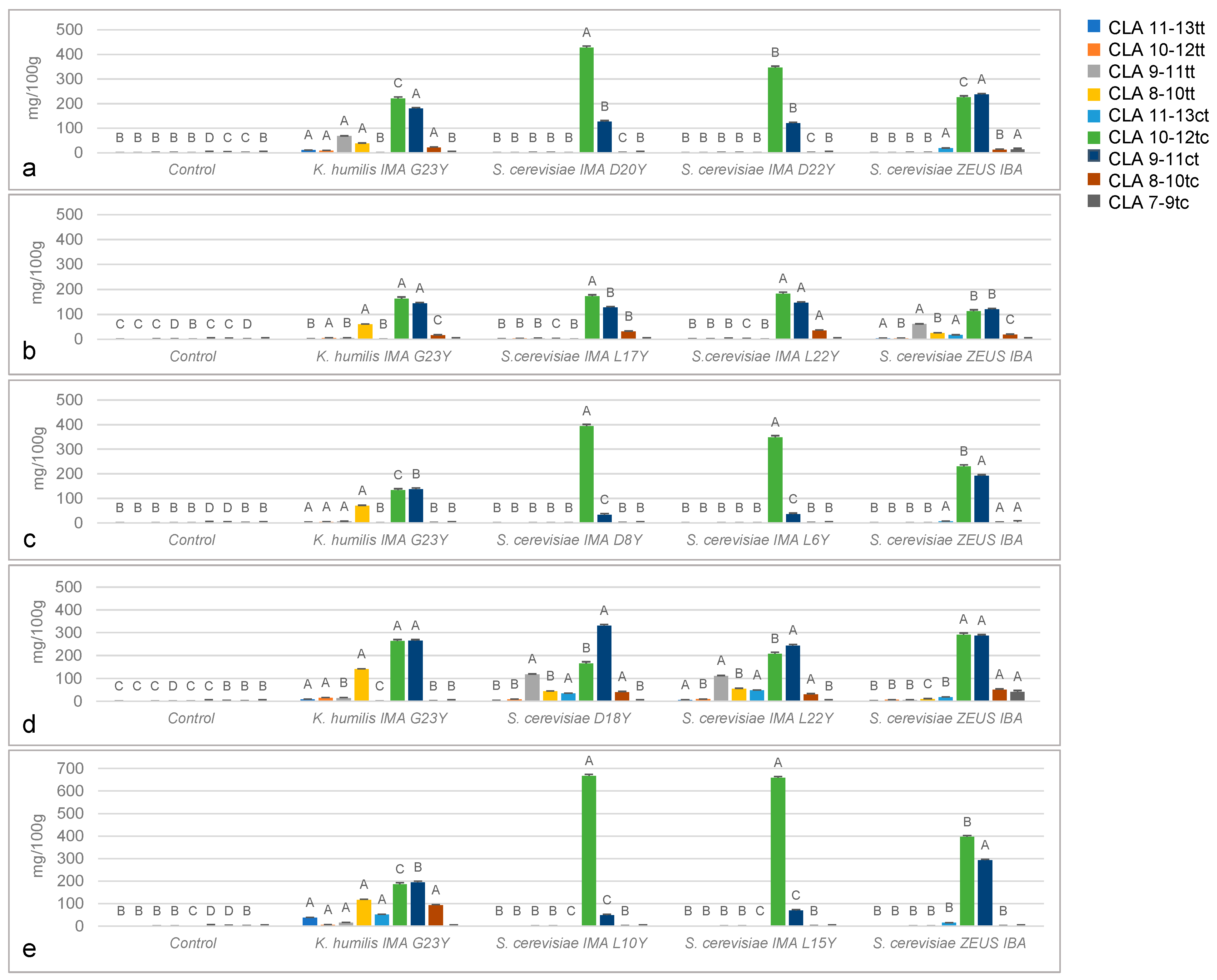
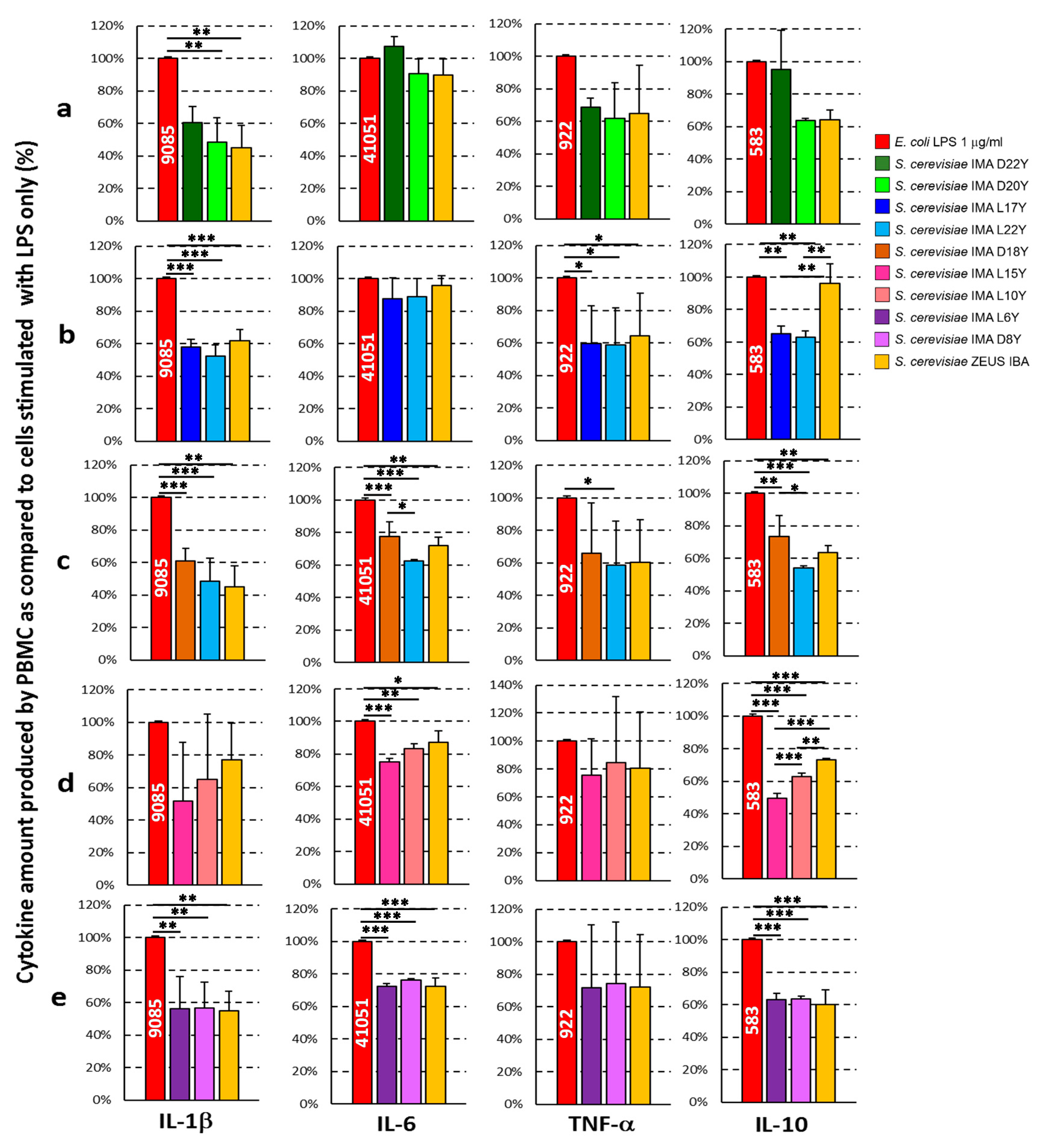
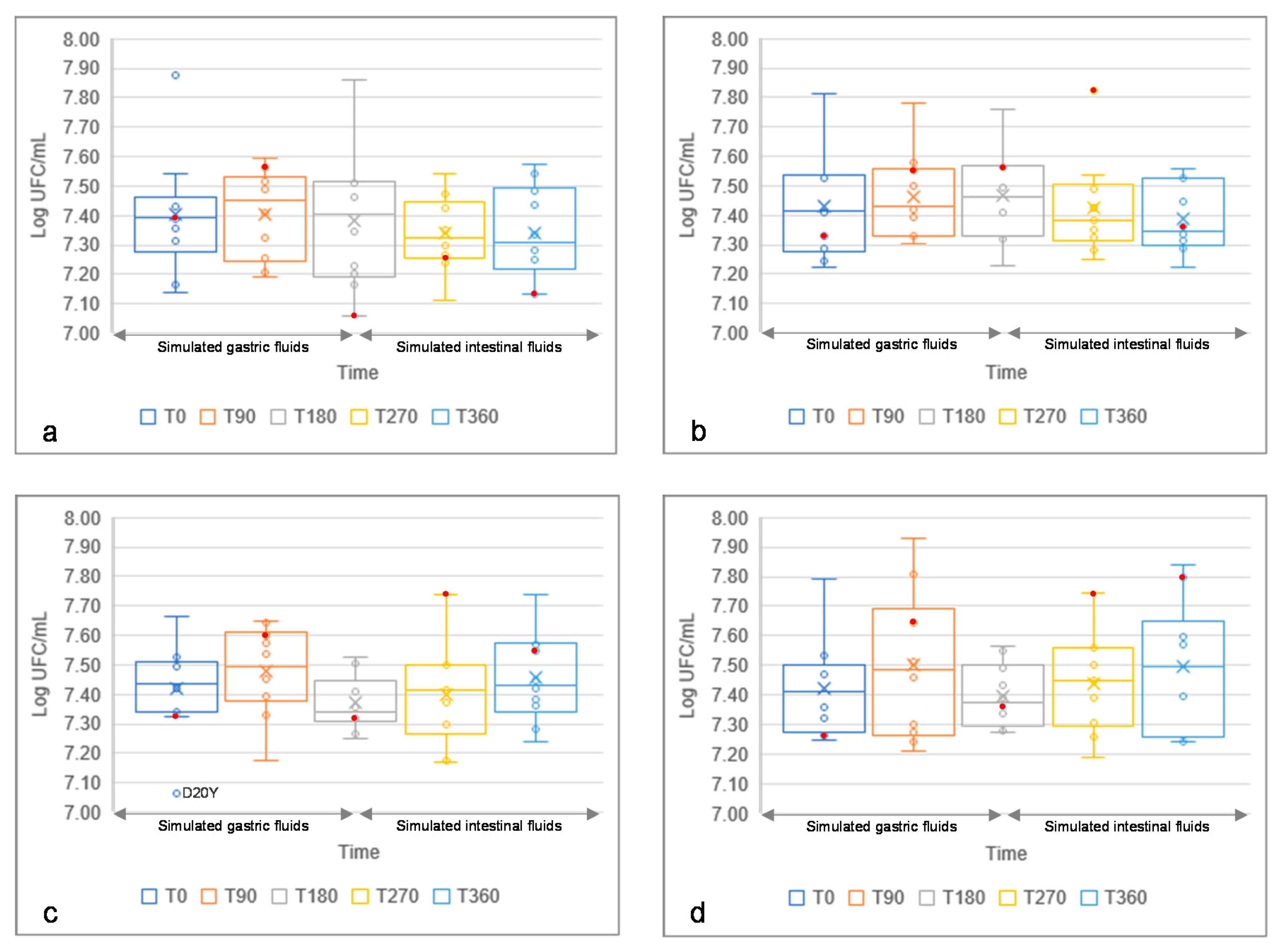
Traditional fermented foods are obtained by a complex consortium of autochthonous microorganisms producing a wide variety of bioactive compounds, thus representing a reservoir of strains with new functional properties. Here, doughs obtained using five different wholegrain flours were singly fermented with selected yeast strains, which were evaluated for their functional traits. Lactate, volatile fatty acids and conjugated linoleic acid isomers produced by fermented doughs were detected by HPLC, while dough anti-inflammatory capacity was measured on human peripheral blood mononuclear cells by flow cytometry. Yeast potential probiotic activity was assessed by evaluating their resistance to simulated gastric and intestinal fluids. For the first time we report evidence of yeast strains producing high levels of the conjugated linoleic acid (CLA) isomer CLA 10-12tc and propionic acid, which are known for their specific health benefits. Moreover, such yeast strains showed an anti-inflammatory capacity, as revealed by a significantly decreased production of the strongly pro-inflammatory cytokine IL-1β. All our Saccharomyces cerevisiae strains were remarkably resistant to simulated gastric and intestinal fluids, as compared to the commercial probiotic strain. The two strains S. cerevisiae IMA D18Y and L10Y showed the best survival percentage. Our novel yeast strains may be exploited as valuable functional starters for the industrial production of cereal-based innovative and health-promoting fermented foods.
Keywords: fermented foods; functional yeasts; bioactive compounds; Saccharomyces cerevisiae; probiotic activity; anti-inflammatory capacity; propionic acid fermented foods; functional yeasts; bioactive compounds; Saccharomyces cerevisiae; probiotic activity; anti-inflammatory capacity; propionic acid