


Abstract
Wood- and lignocellulosic-residue-derived constituents have attracted increasing attention in cementitious materials because they may support clinker reduction, waste valorization, moisture regulation, crack control, and longer service life. This review synthesizes evidence on wood ash, wood-derived biochar, and wood or lignocellulosic fibers in low-clinker and low-carbon-oriented cementitious systems, with emphasis on severe cold service involving freeze–thaw cycling, salt freezing, and chloride ingress. This review clarifies the evidence boundaries among direct wood-derived materials and related biomass or lignocellulosic analogues, because wood ash, non-wood biomass ashes, such as bamboo ash and bagasse ash, wood fiber, and non-wood plant fibers cannot be treated as equivalent materials. Wood ash is best regarded as a controlled partial binder replacement or filler whose performance depends on combustion temperature, oxide composition, alkali content, residual carbon, fineness, and water demand. Biochar is more appropriately treated as a low-dosage functional additive, commonly in the range of approximately 1–3 wt.% of binder, where it may assist internal curing, nucleation, moisture redistribution, and pore regulation; excessive dosage can increase porosity and reduce mechanical or transport performance. Wood and lignocellulosic fibers mainly contribute to crack control, toughness, and post-cracking behavior, but their effectiveness is limited by water absorption, swelling, lignin- and extractive-related hydration interference, and long-term interfacial degradation in alkaline matrices. Across these material classes, engineering performance is governed by the interfacial transition zone, pore-size distribution, moisture state, air–void compatibility, and exposure-specific durability response. The main contribution of this review is to propose a boundary-conscious framework for material classification, quantitative comparison, mixture-design screening, and severe-cold durability qualification. Future application requires source-specific characterization, water-demand control, treated fibers, low-dosage biochar optimization, and service-informed testing that couples freeze–thaw cycling, chloride transport, saturation state, and microstructural verification.
1. Introduction
1.1. Background: Low-Carbon Construction and the Need for Alternative Cementitious Constituents
One of the main goals of shifting to more sustainable built environments is the reduction in the embodied carbon of construction materials. This is why low-carbon cementitious systems are being developed via clinker reduction, waste valorization, and service-life extension due to the fact that Portland cement production still dominates GHG emissions [1]. In this framework, materials based on forest residue have received growing interest as functional components of cement-based materials. Of these, the most researched are wood ash, biochar, and wood fiber, all of which offer different avenues for changing cementitious mixes and also serve as outlets for biomass waste produced during logging and wood processing operations [2,3].
From an environmental perspective, the use of wood- and biomass-derived residues in cementitious materials is not only a clinker-reduction strategy but also a waste-management route. Wood ash, biochar, and lignocellulosic fibers are generated from forestry, wood-processing, agricultural, and biomass-conversion activities. Their incorporation into cement-based matrices may divert residues from landfill, uncontrolled disposal, or low-value use, and may support a more closed-loop material flow in construction. However, this environmental benefit can only be realized when the modified mixtures retain adequate durability and service life; otherwise, premature repair or replacement may offset the initial carbon or waste-disposal advantage.
However, these materials are more heterogeneous in comparison to typical supplementary cementitious materials and fillers. The behavior of these materials cannot be concluded based on their source category. It varies depending on the conditions of combustion, pyrolysis parameters, nature of feedstock, particle morphology, and compatibility with the cement matrix [2,4,5,6,7]. This variability presents opportunities and risks. Wood- and lignocellulosic-residue-derived constituents might be better in terms of hydration, pore refining, and crack resistance, as well as long-term durability, but uneven quality can also make fresh-state behavior, mechanical properties, and durability under field exposure unstable.
1.2. Wood- and Lignocellulosic-Residue-Derived Constituents in Cementitious Systems
The main application of wood ash is as an additional cementitious material or mineral filler. Its potential is found in reactive silica, calcium-bearing phases, and fine particles that can serve as fillers and, when appropriate conditions are provided, have pozzolanic reactivity [2,3]. Wood ash, however, is naturally variable. Combustion temperature, residence time, feedstock, and ash collection method all affect alkali concentration, fineness, reactivity, and water requirement [2]. Therefore, a material that increases the density of the matrix at one replacement ratio might decrease workability, increase setting rate, or disrupt behavior during its early age at other replacement ratios.
Biochar works in a different way. It is seen in many ways as a multifunctional additive that alters hydration, internal moisture distribution, and pore structure, rather than as a traditional SCM [5]. Its porous carbonaceous structure and controllable surface chemistry might offer nucleation sites for hydration products and change transport by changing pore connectivity and moisture storage [5,6,7,8]. Nevertheless, the action is highly sensitive to the conditions. Biochar might be used to densify the matrix or create defects, reducing strength and increasing permeability, depending on dosage, pore structure, and production route [8]. Both these aspects make biochar interesting, but also challenging to understand and manage in low-clinker cementitious systems.
Wood fiber is typically applied as a reinforcing agent that will enhance crack control, post-crack behavior, and toughness [9,10]. Its popularity is due to its being a renewable source, its low density, and its hierarchical fibrous structure that is able to span developing cracks [11,12]. Wood fiber, however, presents a special durability issue not encountered by mineral additions. Its hydrophilicity may result in water absorption, swelling, and continuous interfacial breakdown in alkaline cementitious systems unless proper pretreatment or surface modification is employed [9,13,14]. Its usefulness should, thus, not be based on initial reinforcement effectiveness but on matrix compatibility over time.
1.3. Why Severe Cold Exposure Matters
The materials are even harder to evaluate in the case of extreme cold zones, where the cementitious systems are not only mechanically and environmentally loaded, but also exposed to cyclic freeze–thaw action, salt freezing, and chloride ingress [15]. With this exposure, compressive strength alone cannot be used as an indicator. Moisture state, pore-size distribution, air–void characteristics, interfacial transition zone quality, and transport properties are all critical factors to consider to determine if the modified system will remain stable in service [15].
The exposure context is especially significant when it comes to materials produced by forest residues since every material class influences the moisture regime and pore structure differently. Wood ash can change the hydration products and the matrix density; biochar can change the saturation behavior and porosity; and wood fiber can enhance the crack resistance, but at the same time provide water-sensitive interfaces. The effects are interdependent rather than independent. They link the constituent properties and processing history to the microstructural development and eventually the field durability. Extreme cold exposure is, thus, an especially helpful perspective in engineering to assess the potential and the constraints of such materials.
1.4. Research Gaps
However, despite the fast-growing body of literature on biomass-derived constituents in cementitious materials, there are still some gaps.
First, the connections between composition, microstructural transformation, and engineering behavior have not been brought together. There is a huge body of literature that reports discrete increases in strength, shrinkage, or permeability; however, there is less literature explaining the inter-relationships between these responses by common microstructural processes, particularly when exposed to realistic conditions.
Second, material variability is also a significant barrier to cross-study comparison. It is especially apparent in the case of wood ash and biochar, where their properties are highly dependent on the source material and its thermal treatment, and characterization is usually inadequate to support the performance statements that are asserted [2,5].
Third, combined durability stressors remain underexamined. Freeze–thaw cycling, chloride ingress, and salt freezing are commonly studied separately, even though cold-region infrastructure often experiences them together [15]. The implications of wood- and lignocellulosic-residue-derived constituents under coupled deterioration mechanisms are, therefore, still insufficiently understood.
Fourth, despite increasing interest in hybrid formulations, the synergistic or antagonistic interactions among wood ash, biochar, and wood fiber have not been systematically synthesized [8,9]. No widely accepted framework yet exists for comparing their roles across fresh-state behavior, mechanical performance, transport resistance, and long-term durability.
1.5. Objective and Scope of This Review
With these conditions in mind, this review discusses the interaction between performance-durability-microstructure mechanisms of wood ash, biochar, and wood fiber in cementitious systems, especially in low-carbon construction and extreme cold use. Instead of considering these materials as independent additives, this review addresses their effect on hydration, pore structure, interfaces, cracking behavior, and durability-related transport processes at various scales.
The objectives are fourfold:
- (1)
- To evaluate the effects of intrinsic properties and processing pathways of wood ash, biochar, and wood fiber on the behavior of fresh-state, microstructural evolution, and macroscopic behavior;
- (2)
- To assess what effects these materials have on durability during extreme cold exposure, in particular, freezing–thawing, salt freezing, and chloride-related deterioration;
- (3)
- To determine practical implications in the area of mixture design and quality control, as well as performance-based material selection;
- (4)
- To propose directions for more consistent testing, interpretation, and future standardization.
This review focuses on wood ash, wood-derived biochar, and wood or lignocellulosic fibers used in cementitious systems. Non-wood biomass ashes and non-wood plant fibers are not treated as direct wood-derived evidence; they are used only as biomass-ash or lignocellulosic-fiber analogues when they provide mechanistic insight relevant to cement-based matrices. The terminology and evidence boundaries are defined in Section 2.
1.6. Structure of This Review
The rest of this review will be structured in the following way. Section 2 defines the scope, terminology, and evidence boundaries of this review, including the distinction between direct wood-derived evidence and biomass or lignocellulosic analogue evidence. Section 3 covers wood ash as an additional cementitious material, paying attention to composition, reactivity, workability, and durability effects. Section 4 looks at biochar as a multifunctional additive, covering aspects such as hydration, pore structure regulation and moisture transport, and mechanical performance. Section 5 discusses wood-fiber reinforcement, treatment methods, interfacial behavior, and crack control measures. Section 6 summarizes the relationships between constituent properties, microstructure, and engineering performance. Section 7 discusses the response of modified cementitious systems to extreme cold conditions, especially freeze–thaw cycles and salt-induced damage. Section 8 talks about the implications of mixture design and quality control. In Section 9, a general view on testing and research priorities is provided.
Overall, this review is intended to provide an integrated view of wood- and lignocellulosic-residue-derived constituents in low-clinker and low-carbon-oriented cementitious systems, while clarifying the technical limitations that must be addressed before broader use in cold-region construction.
The following figure is an overall summary of the conceptual framework that was created during this review to explain the functions of forest-residue-based materials in low-clinker cementitious systems. Three distinct material classes are outlined: wood ash, biochar, and wood fiber, having different main action pathways. Wood ash has a significant role in mineral-related action, such as reactivity, alkali-sensitive behavior, fineness, and a contribution related to hydration. Biochar controls moisture distribution and pore structure by absorption, internal porosity, particle size, and dispersion. Wood fiber works largely due to its reinforcing and interface actions, such as water absorption, swelling, bond stability, and pull-out. Such material-dependent pathways control two core microstructural areas—the interfacial transition zone (ITZ) and pore structure/moisture state—which regulate the mechanical and durable performance of the resultant cementitious systems. The Figure 1 emphasizes the fact that the ultimate applicability of these materials to severe cold service will depend on the way they affect interfacial stability, transport pathways, crack resistance, and freeze-thaw-related durability in a low-carbon construction framework.
Figure 1.
Conceptual framework linking wood- and lignocellulosic-residue-derived constituents, microstructural regulation, and engineering performance in low-clinker cementitious systems for severe cold service.
2. Scope, Terminology, and Evidence Boundaries
This article was designed as a structured narrative review rather than a formal systematic review. Its purpose is not to provide an exhaustive inventory of all biomass-derived construction materials, but to synthesize evidence on wood ash, wood-derived biochar, and wood or lignocellulosic fibers in cementitious systems for severe cold service. Emphasis is placed on studies that reported relationships among material composition, processing route, microstructural development, workability, mechanical performance, transport behavior, freeze–thaw resistance, salt-freezing response, chloride ingress, or interfacial stability.
In this review, wood ash refers to ash obtained from the combustion or incineration of wood or woody biomass. Wood bottom ash refers to the coarser ash fraction collected from the bottom of wood-fired boilers, incinerators, pulp-and-paper combustion systems, or wood-burning industrial units. Wood fly ash refers to the finer ash fraction captured from flue gas or dust-collection systems during wood combustion. These fractions may differ in particle size, residual carbon, soluble salts, alkali content, oxide composition, and cementitious performance; therefore, they should be reported separately whenever the original study provides this information.
Similarly, wood fiber refers to fibers derived from wood or woody lignocellulosic sources. Evidence from bamboo, banana, coconut, hemp, sisal, or other plant fibers is treated as lignocellulosic-fiber analogue evidence rather than direct wood-fiber evidence. These studies are used only when they clarify mechanisms relevant to cementitious matrices, such as water absorption, swelling, lignin- and extractive-related hydration interference, surface treatment, crack bridging, or interfacial degradation.
This review, therefore, uses a two-level evidence structure. Direct evidence refers to wood ash, wood-derived biochar, or wood fibers tested in cement paste, mortar, concrete, or stabilized mineral matrices. Secondary evidence refers to biomass ash or lignocellulosic-fiber analogues used only to support general mechanisms. This distinction is important because source category, combustion or pyrolysis conditions, particle morphology, chemical composition, and fiber anatomy can strongly alter cementitious performance.
A formal meta-analysis was not conducted because the existing literature remains highly heterogeneous in feedstock, processing route, replacement level, curing history, mixture proportion, testing procedure, and reported performance indicators. Instead, this review focuses on boundary-conscious synthesis, quantitative range comparison, and performance-based interpretation.
3. Wood Ash in Cementitious Materials
3.1. Chemical Composition and Reactivity of Wood Ash
Wood ash is also among the most inconsistent biomass-derived materials that are applied in cementitious systems, and this variability significantly defines its reactivity when it is an additional cementitious material (SCM). It does not have a standard chemical composition like other industrial mineral additions. The reactive and inert content ratios will determine the behavior with SiO2, CaO, Al2O3, Fe2O3, MgO, and alkali oxides often being the most important components [16]. Wood ash ought thus not be regarded as one material category whose behavior can be predicted across different sources.
The reactive silica and other finely divided mineral phases, which have pozzolanic potential, are mostly associated with the ability to react with Ca(OH)2 released in the process of cement hydration. In the case that this proceeds effectively, more calcium silicate hydrate (C-S-H) may be formed, leading to matrix densification and strength development at higher ages [17,18]. The high-silica biomass ashes are valuable as a source of mechanistic understanding but are not directly interchangeable with all wood ashes. One example is bamboo leaf ash (BLA), which has been found to consist of over 70 percent silica and to exhibit pozzolanic properties when processed appropriately [16]. Nevertheless, the concentration of silica is not enough; the mineralogical form, crystallinity, and fineness of the ash play an equal role.
Particle size also influences the performance since it impacts both the action of the filler and kinetic reactions. Research on finely ground fly ash has demonstrated that the decrease in particle size may enhance the rate of hydration-related reactions and hasten the pozzolanic contribution [17]. In the case of wood ash, this appears to be a form of analogical evidence. The grinding can lead to increased surface area and better packing, but its value is dependent: increased fineness can also increase the amount of water required or uncover unstable ingredients, based on the source of the ash and the history of combustion. Fineness is thus only significant when combined with the concept of composition.
The amount of alkali is also an important variable. The wood ash might have significant amounts of Na2O or K2O, which can change the hydration characteristics, compatibility with admixtures, and cause concerns about the durability of the concrete due to alkali-related issues [19]. The rest of the evidence is also largely based on other ash systems and must be seen as a mechanistic background instead of actual proof of wood ash. Two ashes that are applied at the same replacement level can act quite differently in practice when they have different alkali levels and mineralogical conditions. Generalizations of this kind are thus not dependable, except when the ash has been well defined.
On average, the reactivity of wood ash depends on the oxide composition, mineralogical state, particle-size distribution, and alkali content. It has a good potential in cementitious systems, provided that it is well characterized with detailed information and also its dependence on source is dealt with explicitly.
3.2. Effects of Combustion and Post-Processing Parameters on Wood-Ash Reactivity, Water Demand, and Durability Risk
The way in which wood ash is created has a strong influence on its performance in cementitious systems. The balance between reactive mineral phases, crystalline phases, residual carbon, and particle morphology is determined by combustion temperature, residence time, fuel type, ash collection method, and post-treatment. These factors account for the fact that one ash may be useful as an SCM or filler, whereas another may be ineffective at a comparable rate of substitution.
The level of combustion temperature is particularly critical. At low temperatures, incomplete combustion can result in excess residual carbon, which would increase water use and interfere with admixture properties. At high temperatures, reactive silica might change into more crystalline and less pozzolanic forms [16,20]. As biomass-ash analogue evidence, bamboo leaf ash calcined at approximately 700 °C has been reported to retain pozzolanic potential when processing conditions are appropriate [16]. Other silica-containing biomass ashes have shown similar trends [20], but they should be considered supplementary mechanistic data instead of replacements in wood ash-specific data sets.
The relationship between residence time and temperature is similar, as well. An extended residence can enhance the completeness of combustion but also cause mineral transformations that decrease reactivity; a short residence can retain higher levels of amorphous phases and leave too much carbon or incompletely transformed particles. Such distinctions are important because they influence the performance of the material in the fresh state and its subsequent matrix formation. As an example, high residual carbon can raise water demands, lower flowability, and make air entrainment more difficult with ramifications on handling and downstream durability [19]. The process is well known in the general literature on ash, but it varies depending on its source when applied to wood ash.
The fuel type adds yet another layer of variability. Various types of wood and biomass residues have various proportions of minerals, such that the final ash will be significantly different in Ca-rich, Si-rich, or alkali-rich nature. The direct comparative information in wood species is not extensive yet; however, research on other biomass ashes suggests that source-based variation can be translated into significant changes in strength and durability when ashes are integrated into concrete [21]. These papers highlight the significance of source control but do not exclude the necessity of wood-ash-specific qualification. An effective replacement level that works with one ash cannot be used with certainty with another.
Post-combustion processing is also important. Grinding can enhance the packing density and increase the surface area exposed to reaction, which promotes the filler effect, as well as pozzolanic contribution [17]. Moisture content and particle agglomeration can also be affected by ash collection and storage conditions; poorly stored or wet collected ash may act in a non-uniform manner when mixed and placed [22]. Such practical factors tend to be neglected in reports but have significant implications on reproducibility and cross-study comparability.
Combustion or calcination temperature is a primary control variable for ash reactivity. Low-temperature combustion may leave excessive residual carbon and incompletely transformed mineral phases, which can increase water demand and interfere with admixture performance. Intermediate temperature ranges, often around 500–700 °C for silica-rich biomass-ash analogues, may preserve more amorphous silica and support pozzolanic activity when fineness is adequate. Excessively high temperatures can promote crystallization of silica-bearing phases and reduce pozzolanic reactivity. Because these temperature effects are highly source-dependent, every wood ash used as a binder replacement should be reported with combustion temperature, residence time, ash collection method, LOI, particle-size distribution, and oxide composition.
The production parameters are thus no longer the background information. They are the main factors that define the behavior of wood ash in cementitious systems.
3.3. Effects of Wood-Ash Fineness, Residual Carbon, and Replacement Level on Workability and Strength Development
The ash of wood has the ability to change the fresh-state behavior and strength development, but the nature and extent of such an influence are extremely different. In the majority of instances, performance is a result of the combination of two mechanisms: a physical filler mechanism due to particle-packing and a slow chemical contribution due to pozzolanic or inactive hydraulic action. The factor that dominates depends on the ash fineness, morphology, residual carbon content, replacement level, and curing conditions.
The main factors that determine fresh-state workability are particle texture, porosity, and carbon content. Small mineral particles may enhance the packing process and create a higher density structure, but large pores or irregular particles can take up water and raise the demand of the mixture. Residual carbon has a high impact, especially since it can absorb water and admixture molecules, leading to decreased flowability, as well as air entrainment [19]. Fineness cannot, therefore, be used as a guarantee of good workability but is effective only when combined with low carbon content and favorable particle morphology.
The development of strength can also be seen as an equivalent equilibrium between early dilution and subsequent microstructural gain. Partial substitution of cement with wood ash at young ages can be used to lower compressive strength due to the fact that the ash tends to react more slowly than Portland cement and may initially serve as a filler. Reactive ashes over time might produce extra C-S-H by pozzolanic reaction, which could partly or wholly make up that initial loss [18]. This delayed addition is in line with findings on biomass ashes, including BLA, where moderate levels of replacement are superior to higher levels at advanced ages [16]. These types of comparisons are helpful in understanding potential trends, though they do not mean that all wood ashes have the same optimum range or reaction kinetics.
The reason why it is more fruitful to speak about the optimal replacement range is that a universal value is impossible to suggest. Moderate replacement levels have been found useful in many cases, particularly with ashes of appropriate particle sizes and chemical properties. After the replacement reaches excess, dilution, workability loss, or lack of reaction can dominate, causing decreased strength and increased variability [16,19,21]. The limit is also very source-specific and not able to be extrapolated to all wood ashes, especially when there is some supporting data based on other ash systems.
The mechanical performance of wood ash can also be enhanced by combining it with other finely reactive additions or by curing it. The results from SCM-rich systems indicate that pore refinement and dense interfacial development can balance out some of the mechanical penalty of slower-reacting mineral additions [23]. The results are mechanistically significant, but do not offer direct evidence of wood ash mixtures without wood ash-specific validation. Curing is particularly critical as further moisture supply is needed to support both the hydration and pozzolanic reaction [24,25]. Poorly cured systems will probably not realize the full benefit of wood ash.
The assessment of wood ash based on early compressive strength should, thus, not be used as the only criterion. The utility of this material will depend upon the interaction of the fresh-state performance, replacement dosage, curing conditions, and the subsequent-age microstructure formation in any specific binder system.
Grinding can increase wood-ash surface area and may accelerate filler and pozzolanic contributions, but this benefit is not unconditional. Very fine ash particles can increase water demand, reduce flowability, intensify admixture demand, and lower effective workability at a fixed water-to-binder ratio. High residual carbon can further absorb water and chemical admixtures, destabilize air entrainment, and reduce early strength. Therefore, ash fineness should be optimized rather than maximized. Practical mitigation measures include controlling loss on ignition, removing or limiting carbon-rich fractions, using particle-size grading rather than excessive grinding, adjusting the high-range water-reducer dosage, keeping a constant effective water-to-binder ratio, using prequalification flow tests, and combining wood ash with compatible supplementary cementitious materials when appropriate.
3.4. Alkali Content and Durability Implications
The importance of durability cannot be overstated, and it is also one of the least predictable factors related to the application of wood ash in cementitious products. Dense matrix formation and secondary hydration might enhance the prevention of fluid penetration; however, they may be negated by the introduction of excess alkalis, unstable pore structure, or incompatibility with the air–void system necessary to provide freeze–thaw durability.
The amount of alkali is an important issue. Wood ash contains Na2O and K2O, which can change the chemical composition of the pore solution and cause concern about alkali–silica reaction (ASR), especially in concretes with reactive aggregates [19]. The significance of this risk is determined not only by the overall content of alkali, but also by its level of replacement, the mineralogy of the aggregate, and the overall chemistry of the binder. There is much of the larger discussion of ASR, however, that has originated elsewhere than in other ash systems, so any conclusions drawn concerning wood ash based on alkali need to be qualified. Alkali content must then be considered as a main screening factor instead of a secondary compositional element.
In terms of chloride resistance, wood ash could have an advantage where it helps in refining pore structure and decreases transport connectivity in the cement matrix—the same broad principle behind most reactive mineral additions enhancing their resistance to ionic ingress [4,18]. Nevertheless, the transport behavior in fly ash or any other SCM-rich system must be considered in a mechanistic context, but not necessarily as equivalent. Wood ash does not always have a positive impact. If the ash content increases porosity, residual carbon, or internal heterogeneity, chloride transport will still remain high even with nominal clinker reduction. Chloride performance should, thus, be evaluated based on measured transport behavior and not inferred based solely on chemistry.
Freeze–thaw resistance is also more sensitive as it is based on saturation condition, critical pore structure, and air–void system stability. An appropriately treated wood ash can decrease the share of big hazardous pores by filler and pozzolanic effect, which can help support freeze–thaw durability [26]. This advantage can be eliminated, though, in case residual carbon impedes air entrainment or if high-alkali ash changes the freezing behavior of the pore solution [8]. It is particularly relevant in cold-region buildings, as the freeze–thaw process often occurs simultaneously with the chlorides of deicing salts. The fact that a wider set of frost-resistance data has been obtained by other SCM systems is helpful to mechanistically understand the problem but cannot exclude the requirement to test the durability of the wood ash.
The wood ash can also influence the resistance to sulfate or acidic environments, though the information in this regard is not as clear-cut. A denser refined matrix would likely be more resistant to chemicals, except that the actual result relies on the stability of hydration products and overall system chemistry [27]. Equally, moisture transport characteristics like water absorption and sorptivity could be better under conditions where pore refinement takes over, but could become worse with the introduction of porous or under reacted ash phases [21,28]. Since some of this interpretation is still based on neighboring ash systems, durability ought to be regarded as both positive matrix densification and negative ash variability risk, not as a constant result of adding ash.
The primary factors that determine the behavior of wood ash in cementitious systems are listed in Table 1.
Table 1.
Main control variables and evidence boundaries for wood ash used in cementitious systems.
To sum up, the durability aspects of wood ash cannot be simplified into one positive or negative tendency. The long-term performance of wood ash can be enhanced by proper control of its chemistry, particle size, and dosage, but the alkali content, carbon residues, and source-related variations still play an important role. Reliable application of such systems in low-clinker cementitious systems should, thus, be seen as a consequence of effective chemical characterization and durability-oriented screening.
4. Biochar in Cementitious Composites
4.1. Physical Properties of Biochar Relevant to Cementitious Systems
The use of biochar is being studied more and more as a multifunctional component in cementitious composite materials since its physical structure is radically different than that of traditional mineral fillers. It is produced by the biomass pyrolysis process in oxygen-restricted settings, and it usually has a high carbon concentration, well-developed internal porosity, and surface chemistry that depends significantly on the feedstock and thermal history [29,30]. In cementitious systems, these properties determine dispersion, moisture redistribution, hydration kinetics, and the network of pores related to transport.
The most important characteristics are the particle size, pore structure, specific surface area, and the moisture absorption capacity, whose values are highly dependent on the pyrolysis temperature, the heating rate, and the source of biomass [29,30,31]. The increased pyrolysis temperature usually leads to biochars with lower O/C ratios, high aromaticity, and enhanced physicochemical stability, as well as to the alteration of the pore accessibility and connectivity [31]. Such transformations determine how biochar behaves in cement paste, especially when it comes to water intake, precipitation of hydration products, and integration into the matrix.
The size of the particle is particularly significant since it defines the manner in which biochar acts as a micro-filler, a nucleation substrate, or a defect-generating inclusion. Fine particles can enhance local homogeneity and densification through the filling of voids and supplying surfaces to hydrate products [32,33]. Finer particles, on the other hand, might act as porous inclusions, introducing local heterogeneity or macrovoid-like defects when they are not well-matched to the matrix [32,33]. Porosity is another layer of complexity. Since biochar has the ability to absorb large volumes of water before and after mixing, it can change the effective distribution of water in the system significantly [34,35]. This is also the core of its often cited internal-curing effect, but it makes mixture design more difficult, with absorbed water not taken into consideration. The surface texture and morphology are also important factors: it is possible that rough, irregular particles have better mechanical interlocking and anchoring of hydration products than smooth particles [36,37]. Long-term physicochemical stability may be promoted by high carbon content, which is of importance when biochar is used either as a functional additive or as a carbon-retaining component of low-clinker cementitious systems [29,38].
Pyrolysis temperature strongly controls biochar behavior. Lower-temperature biochars generally retain more oxygen-containing surface groups and may show higher chemical reactivity and water affinity. Higher-temperature biochars often show greater aromaticity, higher stability, and altered pore accessibility. In cementitious systems, these differences affect water absorption, dispersion, nucleation potential, an effective water-to-binder ratio, and pore connectivity. Therefore, biochar studies should report feedstock, pyrolysis temperature, residence time, particle-size distribution, specific surface area, pore volume, and water absorption capacity.
This means that biochar cannot be regarded as an inactive filler. It is characterized by a joint system of size-, pore-, absorptive-, and surface-related properties that cannot be predicted on the basis of the identity of the feedstock with sufficient reliability.
4.2. Effects of Biochar Dosage, Porosity, and Water Absorption on Pore Structure
One of the key effects of biochar in cementitious composites is its role in water absorption and pore structure. Such an impact is frequently considered positive, but it has been shown in the literature that the response is significantly dependent on certain conditions. At small doses, biochar can purify the matrix by filling holes, acting as a substrate to deposit hydration products, and redistributing the internal water in such a manner that allows additional hydration to occur [29,38]. With these conditions, a decrease in water absorption and an increase in pore-size distribution have been documented.
The phenomenon tends to be more apparent when biochar is broken down into small particles and applied at low amounts. Examples of such additions are those at 1–3 wt percent, which have been linked to reduced water absorption and a more compact matrix, often associated with combined filler and nucleation effects [29,38]. This trend is not monotonic. When the dosage exceeds a certain level, intrinsic biochar porosity and particle clustering can become more detrimental than beneficial to densification, causing increased overall porosity and poorer transport performance [35].
The evidence of pore structure is one of the factors explaining such a double response. MIP and gas sorption measurements suggest that the use of biochar could decrease capillary porosity at moderate concentrations, especially in the case that the hydration products are deposited either within or outside the biochar-related pores [32,35,39]. In these circumstances, the matrix might become more homogeneous, and the pore connectivity could be lower. With greater replacement percentages, or with bigger particles, biochar can act as a porous inclusion that creates large holes and defects [35]. The result is thus not just a function of total porosity, but also depends on the size of the pores, their connectivity, and the spatial arrangement between biochar particles and hydration products.
Surface properties further shape the response. Biochar with higher accessible surface area may provide more sites for hydrate precipitation, contributing to a denser interfacial environment [33]. Some studies also suggest that surface carbonation and interactions with aluminate-bearing hydrates may stabilize local pore walls and reduce permeability [32]. Fine particles are more likely to be embedded within hydration products and incorporated into a continuous matrix, whereas coarse fragments are more likely to remain as discrete heterogeneities [32].
4.3. Effects of Biochar Particle Size, Surface Chemistry, and Dispersion on Hydration and Mechanical Performance
The effect of biochar on pore structure is, therefore, best understood as a balance between refinement and defect introduction. When particle size, porosity, dosage, and dispersion are well controlled, biochar may improve matrix compactness; when they are not, it may increase heterogeneity and weaken transport resistance. Biochar is thus better regarded as a formulation-sensitive regulator of pore architecture than as a uniformly beneficial pore refiner.
Biochar has impacts on hydration in several different ways, and the results are not necessarily consistent. In a few systems, fine biochar facilitates hydration by offering nucleation sites for other products like C-S-H and calcium hydroxide, thus helping to form the matrix earlier and become locally densified [32,33]. In others, it could slow down hydration by taking up the mixing water or giving off organic materials that hinder the cement reactions [37,40]. The control of acceleration or retardation depends on the physicochemical properties of the biochar and how it is added to the mixture.
The identical duality can be seen in the mechanical response. With comparatively small doses, particularly if the biochar is finely ground and well-distributed, small increments of compressive strength are commonly observed [29,31,33]. The gains are usually credited to nucleation, pore refinement, and enhancement of local packing. Median particle size biochars in the micrometer range have also been linked to quantifiable improvements in 28-day compressive strength, where they contribute to increased homogeneity in the formation of hydration products [33].
Although strength enhancement is not universal. Biochar can become overly porous and compromise the matrix when the dose surpasses an optimal level, or if the particle size is too large, which causes loss of compressive strength [34,35]. Such behavior indicates that biochar does not act as the usual SCM but more of a multifunctional porous additive with mechanical performance dependent on formulation to a great extent. The method of incorporation also counts. Replacing some of the fine aggregate with biochar may result in better ITZ performance and particle packing, leading to enhanced compressive and tensile-related properties [36]. In contrast, direct replacement of cement is not always a preferred option, unless the biochar can be used to counteract dilution through its high enough physicochemical activity [34].
The flexural behavior and the fracture response should be given a distinct account. Controlled biochar additions have also been linked to better fracture energy, increased crack tortuosity, and more extensive post-peak energy dissipation in some mortar and foamed-concrete systems [41,42]. Such consequences are often explained by crack deflection near biochar particles and by local stress redistribution of a more heterogeneous but energy-consuming microstructure. Biochar can thus be mechanically valuable in situations where the gains in compressive strength are not significant.
The practical significance of it should not necessarily be evaluated based on the increase in compressive strength alone. It is important to note how hydration and pore development, ITZ quality, and fracture behavior change over time, especially when durability and moisture-related performance is equally important alongside mechanical efficiency. The same biochar can enhance one performance measure and decrease another, depending on dose, mode of incorporation, and matrix compatibility.
4.4. Dual Role in Shrinkage and Permeability Control
The advantages of biochar are frequently associated with shrinkage control and permeability decrease, though in both these aspects the function of biochar is rather ambiguous. The main cause of the mitigation of shrinking is the process of internal curing. Since biochar has the ability to adsorb moisture and subsequently release it, it has the potential to maintain hydration and minimize self-desiccation, thus reducing the risk of autogenous shrinkage and early-age cracking [39,43]. It is especially important in low w/b systems, where the phenomenon of internal moisture redistribution has a significant impact on volumetric stability.
This internal-curing effect has been reported at moderate dosages to decrease autogenous and total shrinkage, particularly when biochar is combined with other admixtures, which help to induce further formation of hydrates inside the matrix [43]. The identical porous structure can be damaging if the dose is too high or the granules are too large. In such cases, higher porosity and extra moisture-loss routes might actually enhance drying shrinkage or instability in dimensions [43]. The result will depend on whether the advantage of moisture buffering is greater than the structural cost of porous inclusions.
A similar trade-off is observed when controlling permeability. Chloride ingress and carbonation depth may be minimized by finely dispersed biochar at reduced contents through pore structure refinement, enhanced local densification, and lower transport connectivity. In larger doses, the tendency can be reversed. If the biochar has added too many connected or poorly connected pores, permeability could go up instead of down [35]. Like shrinkage, it is a response that balances refinement and defect production.
Biochar may also interact beneficially with other admixtures. Synergistic effects have been reported when it is combined with crystalline admixtures, superabsorbent polymers, or carbonation-promoting curing regimes [39,43]. In such systems, biochar pores may act as sites for additional hydrate or carbonate precipitation, partially compensating for the porosity introduced by the biochar itself.
The main factors governing biochar performance in cementitious composites are summarized in Table 2.
Table 2.
The key factors governing the performance of biochar in cementitious composites.
Overall, biochar should be understood as a regulator of moisture state and transport behavior whose effect depends on formulation. Fine, porous, and well-dispersed biochar may improve both shrinkage resistance and permeability-related durability, whereas coarse particles or excessive contents may do the opposite. Its effect is, therefore, best interpreted as condition-dependent rather than inherently beneficial.
5. Wood-Fiber Reinforcement in Cementitious Materials
5.1. Fiber Types and Treatment Methods
Wood fiber and other lignocellulosic fibers are increasingly used as reinforcing phases in cementitious materials because they provide a renewable alternative to synthetic fibers and may improve crack control, post-cracking response, and energy absorption. In this review, the primary emphasis is on fibers derived directly from forest residues. Closely related lignocellulosic sources are discussed only where they provide transferable insight into reinforcement mechanisms relevant to cement-based systems, including cellulose-rich fibers and selected natural fibers, such as bamboo, hemp, jute, sisal, and agricultural lignocellulosic residues [45,46,47,48,49,50,51,52,53,54,55,56,57,58,59,60,61,62,63,64,65,66,67,68,69,70,71,72]. These related systems should, therefore, be interpreted as mechanistically informative rather than as direct equivalents of all wood-fiber systems.
The attractiveness of these systems is in their low density, hierarchical organization, and ability to bridge cracks, yet the biggest drawback is that they are inherently incompatible with the alkaline and humidity-sensitive cementitious environment [50,73,74,75]. The efficiency of lignocellulosic fibers as reinforcements will depend not only on the initial tensile characteristics but also on the dimensional and chemical stability of the fiber surfaces after incorporation into the matrix. The problem is particularly acute when wood fiber is used, and moisture sensitivity and interface stability can play a larger role in determining long-term utility than the mere nominal fiber strength.
The treatment is, hence, a design variable. The most frequent method is chemical modification, which involves alkali treatment, silane treatment, aluminate ester treatment, glycerol treatment, and alkyl ketene dimer (AKD) treatment [51,57,58,59,76]. Such techniques typically decrease water affinity, change surface chemistry, weakly eliminate boundary layers, or enhance bonding with hydration products. Bamboo fibers have been found to exhibit better interfacial properties when treated with NaOH [59], with silane treatment increasing hydrophobicity and matrix compatibility [51] and AKD treatment decreasing water absorption and swelling of hemp fibers with enhanced mechanical performance of composites [57,76]. These investigations offer valuable comparative information on how the performance of wood fiber could be enhanced by surface engineering, but it must not be inferred that they demonstrate similar behavior of all wood-derived fibers.
Physical and hybrid routes are also relevant. Mechanical refining and thermal treatment may alter surface roughness and fiber morphology [77], while matrix-side modification with supplementary cementitious materials (SCMs) may reduce free calcium hydroxide and moderate alkalinity [47,48,50,54,55,78]. In cellulose-fiber-reinforced mortars, for example, pozzolanic additions, such as diatomite, have been reported to consume CH and create a less aggressive environment for fiber survival [50,78]. These findings are particularly useful as a matrix-side mechanistic context, although their relevance to wood-fiber systems still depends on fiber type, treatment history, and matrix chemistry.
In short, the effectiveness of wood-fiber reinforcement depends as much on surface stability and matrix compatibility as on nominal fiber strength. Fiber treatment should therefore be regarded as a governing design parameter.
5.2. Water Absorption and Dimensional Stability of Wood and Lignocellulosic Fibers: Relevance to Matrix Compatibility
Water absorption and dimensional instability are not secondary properties of wood and lignocellulosic fibers; they directly determine their compatibility with cementitious matrices. When fibers absorb mixing water, they can reduce effective workability and alter the local water-to-binder ratio. During later wetting–drying or freeze–thaw exposure, swelling and shrinkage can generate interfacial stress, debonding, and microcracking. Therefore, water absorption and dimensional stability are directly linked to fresh-state behavior, fiber dispersion, ITZ stability, durability, and long-term crack-control efficiency.
The swelling phenomenon can be useful or harmful. Wetted or absorbent fibers can serve as inner water storage, maintain water content, and, in certain situations, minimize self-desiccation or autogenous shrinkage [63,73,77,79]. Too much or too frequent swelling, on the other hand, can create local stresses, break down the fiber–matrix interaction, and induce interfacial microcracks [74,75]. The largest part of the existing data is based on more extensive lignocellulosic fiber systems instead of wood fiber by itself, yet the underlying processes related to moisture are similar enough to provide information.
The answer relies heavily on the type of fiber, pretreatment, and dose. Raw fibers typically have greater water absorption levels compared to surface-modified fibers, which usually have superior moisture resistance. Hemp fibers treated with AKD have also been determined to have less water absorption and swelling compared to untreated fibers [57,76], and this has been similarly observed in silane-treated bamboo fibers [51]. The outcomes support the overall rule that dimensional stability is a variable feature and not an inherent characteristic of the natural fiber. Still, it must be pointed out that the extent of enhancement in wood-fiber systems is formulation-dependent and cannot be taken as a given fact until it is directly tested.
The volumetric fraction of fibers is also a significant parameter. The total water demand and composite water absorption tend to increase with higher fiber content due to the introduction of more hydrophilic surfaces [45,47,48]. There might, however, be an optimal range where the positive effects of crack control and internal curing are more favorable than the moisture-induced negative effects. Observations with small fiber volumes, mostly about 1 percent, indicate that durability and mechanical improvements can be gained with proper coordination between fiber treatment and matrix design [48,54]. Because most of these observations come from similar natural-fiber systems, these values must be considered as practical guidelines but not as universal limits on wood fiber.
The absorption of water and swelling should thus be seen as dominating, rather than secondary, variables when considering wood-fiber-reinforced cementitious composites. Practically speaking, they will determine dimensional stability, interface retention, crack initiation, and long-term durability.
5.3. Bond Mechanisms and Interface Degradation
The fiber–matrix interface plays a significant role in defining the effectiveness of lignocellulosic fiber as efficient reinforcements or poor inclusion. The process of load transfer relies on mechanical interlocking, physicochemical adhesion, and pull-out frictional resistance [74,75]. This interface is especially important in wood-fiber systems, where the same surface properties that can promote bonding can also make wood more susceptible to wetting and chemical attack. Although most of the detailed interfacial observations are found in related lignocellulosic fiber systems, the fundamental problem remains very pertinent to wood fiber, namely, that the initial bond quality is insufficient unless it can be sustained by an alkaline- and moisture-sensitive exposure.
The interlocking of materials is highly affected by surface roughness, fibrillation, and local morphology. Rough or treated surfaces tend to offer better anchorage when compared to smooth fibers, especially when hydration products may infiltrate surface irregularities or bind to exposed fibrillar structures [57,76]. Fiber surface groups and hydration products might also chemically interact [73], but the interaction could be less stable in cementitious systems since the interface changes during the alkaline and wet environment. The mechanisms are generally applicable to the wood fiber, but the strength and longevity depend on the fiber anatomy and the state of treatment.
Degradation of the interface is still one of the most significant challenges. Portland cement matrices are highly alkaline, and over time they can adversely impact the lignocellulosic materials via hydrolysis and dissolution, which leads to strength loss, embrittlement, or weakening of the interfacial region [50,73,74]. Swelling-induced stresses further aggravate this process by disrupting local bonding and creating debonded zones during repeated moisture fluctuations [74,75]. In some cases, microbial or biological degradation may also become relevant, although alkali attack generally remains the dominant concern in cement-based systems [50,58]. Again, the supporting literature often extends beyond wood fiber itself, but the durability concern is directly applicable to wood-fiber-reinforced cementitious materials.
Mitigation strategies operate from either the fiber side or the matrix side. Fiber-side approaches include hydrophobization and surface treatment, which reduce water uptake and stabilize the interface. AKD-treated hemp fibers and silane-treated bamboo fibers are representative examples in which improved hydrophobicity has been associated with better interfacial compatibility and mechanical performance [51,57,76]. These examples are mechanistically informative for wood fiber design, although not all treatment gains can be assumed transferable across lignocellulosic fiber types. Matrix-side approaches include the use of SCMs, such as fly ash or diatomite, which consume calcium hydroxide and may create a less aggressive chemical environment around the fiber [50,78]. Denser- or lower-alkalinity matrices may, therefore, help prolong fiber effectiveness by slowing chemical deterioration.
The key engineering issue is not whether an initial bond can be achieved, but whether that bond remains stable over time. For wood-fiber systems, interface durability is a governing performance criterion rather than a secondary materials concern.
5.4. Influence on Mechanical Properties and Crack Control
The main structural contribution of wood and lignocellulosic fibers in cementitious materials lies in crack restraint and improved post-cracking response. When adequately dispersed and bonded, such fibers can bridge microcracks, delay crack propagation, and increase the energy required for fracture [45,47,48,54,55,56,57,58,59,66,67,68,70,80]. Accordingly, they usually improve tensile, flexural, and impact-related properties more than compressive strength. For wood-fiber systems in particular, these mechanisms are central to their value, even though much of the currently available comparative evidence still comes from related natural-fiber-reinforced cementitious composites.
In the case of natural-fiber-reinforced cementitious systems, the moderate amount of fiber addition has always enhanced the split tensile strength, flexural resistance, and fracture behavior [47,48,54,57]. Such improvements can be commonly explained by crack bridging, pull-out resistance, and stress redistribution following matrix cracking, and could be further enhanced with the use of surface-modified fibers, which offer a more stable interface [57]. These findings offer valuable transferable information on wood fiber, but they must not be taken as indicating similar reinforcement performance of all lignocellulosic fibers. The advantage is also not endless. Too much fiber content can cause porosity, poor workability, and defects that cancel the reinforcing action, especially in compression [45,55].
The compressive strength can be more resistant to fiber addition than the tensile-related properties and can reduce slightly in case of excess fiber dosage or poor dispersion. This does not necessarily mean ineffective reinforcement. Cementitious composites with lignocellulosic fibers can also demonstrate better damage tolerance despite the small increase in compressive strength. Practically, the most critical question is whether the fibers enhance crack control and change the failure mechanism. The distinction is particularly significant when it comes to wood fiber since its main benefit is changing the fracture process instead of increasing compressive strength.
The most regular advantage is crack control. Fibers can minimize gap size and retard crack progression in distributed microcracks to unstable macrocracks by bridging developing cracks [77,81,82]. It has a greater value in systems prone to shrinkage cracking or brittle failure. The use of synthetic fibers like polypropylene is frequently employed as reference materials [81]; however, natural lignocellulosic fibers can be associated with qualitatively equivalent mechanisms provided that interface stability and moisture behavior are effectively managed. Their efficiency is determined by fiber length, aspect ratio, volume fraction, and bond stability, which jointly influence whether fibers rupture, pull out progressively, or debond prematurely [77]. A similar effect is a change in the nature of failure (brittle to more ductile or quasi-ductile) because the pull-out of fibers and progressive debonding dissipates energy and postpones catastrophic fracture [59,75,82]. The wider lignocellulosic literature can then be helpful in mechanistic interpretation, but quantified design claims will need wood-fiber-specific validation.
Quantitative ranges reported for wood- and related lignocellulosic-fiber-reinforced cementitious systems are summarized in Table 3. Because a large part of the available evidence comes from lignocellulosic-fiber analogue systems rather than direct wood-fiber systems, these ranges should be interpreted as design-screening ranges rather than universal acceptance limits.
Table 3.
Typical quantitative ranges reported for wood- and lignocellulosic-fiber-reinforced cementitious composites.
These ranges show that wood and lignocellulosic fibers should not be evaluated mainly by compressive strength. Their primary value lies in crack control, toughness improvement, residual strength, and fracture-process modification. At the same time, excessive fiber dosage or insufficient treatment can reduce workability, increase porosity, and weaken compressive efficiency. Therefore, the fiber dosage should be optimized together with surface treatment, dispersion control, water-demand correction, and long-term interface durability.
5.5. Lignin, Extractives, and Hydration Compatibility
Wood fibers are not chemically inert in cementitious matrices. In addition to cellulose and hemicellulose, they contain lignin, soluble sugars, tannins, waxes, and other extractives. These organic components can interfere with cement hydration by adsorbing on cement grains, delaying early hydration, modifying setting behavior, or weakening the early fiber–matrix interface. The inhibitory effect is especially relevant when untreated fibers or high fiber dosages are used. Therefore, wood fiber performance should not be interpreted only through crack bridging or tensile reinforcement. It also depends on chemical compatibility with the alkaline–cement matrix. Pretreatments, such as washing, alkali treatment, mineralization, silane treatment, hydrophobization, or supplementary cementitious matrix modification, can reduce the negative influence of lignin and extractives, but these treatments must be verified for each fiber source.
6. Cross-Material Quantitative Ranges and Performance Trade-Offs
Section 3, Section 4 and Section 5 show that wood ash, biochar, and wood or lignocellulosic fibers act through different mechanisms. However, their effects cannot be interpreted only with qualitative terms, such as higher, lower, improved, or reduced. To provide a clearer basis for comparison, typical dosage, processing, performance, and risk ranges reported in the literature are summarized in Table 4. These ranges are not proposed as universal design limits, because material source, processing route, mixture proportion, and curing condition strongly affect performance. They should instead be used as screening-level ranges for mixture design and evidence comparison.
Table 4.
Typical quantitative ranges reported for wood ash, biochar, and wood and lignocellulosic fibers in cementitious systems.
6.1. Interfacial Transition Zone (ITZ) Evolution
The interfacial transition zone (ITZ) is one of the most sensitive microstructural regions in cementitious materials because it determines how local heterogeneity is translated into macroscopic performance. In conventional systems, the ITZ is usually more porous and mechanically weaker than the bulk matrix as a result of wall effects, local water accumulation, and the preferential formation of relatively coarse hydration products near solid surfaces [83,84]. Any additive that changes particle packing, hydration kinetics, moisture redistribution, or interfacial chemistry may, therefore, alter ITZ structure and function.
The development of ITZ is different in wood/lignocellulosic-residue-modified cementitious systems, depending on the type of wood ash, biochar, and wood fiber used. Wood ash primarily works by filler effect and pozzolanic action. If it is finely ground and highly reactive, it can decrease local porosity and facilitate further C-S-H formation at interfacial zones, thus enhancing bond strength and minimizing the thickness of weak zones. It is similar to the ITZ refinement described with reactive mineral additives including silica fume and fly ash [85,86,87,88,89,90,91]. In this case, nevertheless, these systems ought to be considered as mechanistic analogs, not direct equivalents of the wood ash. The real reaction in wood-ash systems is still very much reliant on the chemistry of the ash, its fineness, and its alkali composition.
The impact of the biochar on the ITZ is rather conditional. Since it is porous, absorptive, and morphologically irregular, it can either stabilize or destabilize local interfaces based on the particle size, dose, and hydration conditions. Fine particles could form a substrate for hydration-product precipitation and facilitate a higher local matrix density [32,33,36]. Large or unevenly dispersed biochar might instead be weak inclusions that create porous or discontinuous interfacial zones that help to promote crack formation. The controlling equilibrium is thus between densification, with the assistance of nucleation, and weakening, due to the presence of porous inclusions.
The case of wood fiber is also different. In this case, the ITZ is a time-dependent fiber–matrix interface under the influence of moisture uptake, swelling, alkaline exposure, and progressive degradation [50,73,74,75]. In the short term, appropriate treatment and proper surface roughness can enhance bonding and crack-bridging effectiveness. After a more extended time, it may fail due to swelling, debonding, or chemical weakening of the fiber. The development of the ITZ in wood-fiber-reinforced systems is, therefore, not merely a bonding problem. It is also a durability problem.
As can be seen in the larger body of the literature dealing with cementitious materials, interfacial densification has always been found to enhance strength and transport resistance [84,85,86,87,88]. The interfacial porosity and enhancement of local mechanical integrity have been demonstrated by nanomaterials, reactive SCMs, and carbonation treatments [84,85,86,87,88,89,90,91,92]. These systems are not exact counterparts of forest-residue-produced materials, but they clarify a larger principle: the ITZ performance is better when hydration products are more evenly distributed, CH-rich weak zones are eliminated, and areas susceptible to cracking are reduced. Wood ash, biochar, and wood fiber could potentially shift the ITZ in such a direction by varying means and with a different level of confidence.
The real problem, therefore, is not whether or not there is an interface. The issue is whether such an interface would become increasingly dense, more stable, and more immune to environmental destruction with time. This question takes on particular significance in low-clinker cementitious systems where any interfacial gain should be viewed in conjunction with the variability of materials and their sensitivity to long-term exposure.
6.2. Pore Structure Modification and Its Impact
Pore structure offers another significant connection between composition and performance. Total porosity, pore-size distribution, and network connectivity in cementitious materials are very significant factors that affect mechanical behavior as well as transport behaviors related to durability [91,92,93,94]. It is especially relevant to low-carbon modified systems where the additives can change the process of hydration and packing simultaneously.
Forest-residue-based products change pore structure by different, though partially overlapping, paths. Wood ash could be used to refine the matrix when it functions as an effective fine filler and reactive mineral addition. In such circumstances, capillary pores can decrease, and pathways of transport can be more discontinuous with the filling of additional hydrates into space that is accessible to them [18]. The reverse may happen if the ash is too coarse, badly burned, or has a high residual carbon content. Heterogeneity rises. Pore refinement fails.
The influence of biochar is the most complicated due to the fact that the very internal porosity of biochar belongs to the cementitious system. It can be effective in reducing the effective capillary porosity at modest dose rates and with a small enough particle size to promote the development of hydration products and distribute internal water [32,35,39]. When present at greater levels, intrinsic biochar porosity might take over, increasing overall porosity, connected voids, and transport vulnerability [35]. The result of its action is, thus, more appropriately defined as an act of pore-structure regulation rather than plain pore refinement.
Wood fiber is less direct in its effect on pore structure. The fiber is not a mineral filler, but it changes the distribution of water locally, forms interfaces, and, in the case of poor dispersion or when swelling or debonding happens, it may create voids or channels [57,73,74,75,76]. Fiber-based control of cracking might also enhance the effective matrix integrity through constraining the coalescence of cracks. The overall outcome will depend on whether the decrease in crack connectivity is greater than the growth of interface-related porosity.
Wider research on nanomaterials, SCMs, and carbonation curing makes it easier to understand the performance consequences of pore refinement [88,91,92]. The studies can still be utilized in a mechanistic context, although they must not be viewed as a literal representation of similar pore structure reactions in wood/lignocellulosic-residue-modified cementitious systems. On average, smaller pore size in large capillaries, greater pore tortuosity, and decreased critical pore size are connected with higher chloride resistance, less water absorption, and superior freeze–thaw behavior [88,91,92,94]. However, in the case of forest-residue-derived systems, the main concern is not just total porosity. It is about the distribution of pore sizes, the storage of moisture, and the fact that the network remains appropriately discontinuous to prevent fluid movement and ice-related damage.
The pore structure must, thus, be taken as a governing variable. Workability, strength, shrinkage, chloride ingress, and freeze–thaw durability changes are all at least partly controlled by the ways in which wood ash, biochar, and wood fiber change the internal pore system of the matrix. In such an implication, pore refinement can be described as not an isolated term. It is a component of the overall performance logic of low carbon modified cementitious systems.
6.3. Coupled Effects on Strength and Durability
The relationship between microstructure, strength, and durability is not linear. Modified cementitious systems may have the same microstructural changes improving one parameter and decreasing another. This is particularly the case in materials based on forest residue. Isolated properties do not play such a significant role as coupled effects.
Wood ash is an obvious example. If the ash chemistry and fineness are suitable, the improvement in strength over time could be achieved by refining pores and densifying interfaces, which could also diminish the vulnerability associated with transportation. However, a high rate of replacement or low quality of ash can result in the introduction of dilution effects, unstable workability, and durability issues related to alkalis. The strength gain and durability enhancement will thus rely on whether the ash contributes positively to the microstructure or negatively to the binder chemistry.
The response of biochar is also not monotonic. Moderately dosed fine and uniformly dispersed biochar can enhance fracture behavior and moisture control, as well as transport resistance via nucleation effects, internal curing, and pore structure changes [29,32,33,38,39]. In larger doses, however, it could lead to an increase in porosity and a decrease in compressive strength, despite the presence of shrinkage-related advantages [34,35,43]. One aspect of a biochar-modified system might, therefore, be more durable and another less mechanically efficient.
The critical coupling of wood fiber is between crack control and interfacial stability. Fibers can enhance tensile behavior, fracture energy, and resistance to cracks that are useful in durability-reliant applications [45,47,48,54,55,56,57,58,59,80,81,82]. However, should the fiber–matrix interface degrade or the swelling cause localized debonding, the long-term durability advantage might be lost even when the initial mechanical characteristics are enhanced. Wood fiber performance should not be evaluated based on early-age flexural or tensile performance only. It needs to be evaluated based on the stability of reinforced microstructure in service exposure.
This tendency is in line with the rest of the cementitious literature. Interfacial densification, reduction in capillary pores, and crack-bridging mechanisms enhance resistance to chlorides, abrasion, and freeze–thaw action in general [84,85,86,87,88,89,90,91,92]. Conversely, porous interfaces, unstable pore networks, and high heterogeneities hasten deterioration in combined exposures [28,86,93]. These larger studies can serve as a helpful interpretative model, but it must not be viewed as quantitatively equivalent to wood/lignocellulosic-residue-modified cementitious systems, in which the results are more dependent on the source and formulation than the results of traditional SCMSs or nano-modifiers.
The key implication is simple. It should be multi-objective. The blend that can give the highest compressive strength may not be the best in terms of permeability or freeze–thaw resistance, and even the blend that performs well in controlling shrinkage can underperform because its interface is unstable. Low-clinker cementitious systems are, thus, more likely to require a balance between clinker reduction, durability retention, and mechanical adequacy, as opposed to maximization of any one of these properties to achieve an acceptable design. The most useful questions concerning the material classes discussed herein are comparative and conditional instead of universal ones: in which conditions does the enhancement of microstructure become a durable engineering advantage, and in which conditions does such improvement stay incomplete or transient?
6.4. Microstructural Characterization Techniques
The combined processes necessitate methodologies that can address interface characteristics, pore systems, and mechanical response at different scales. One approach is not enough. Interpretation with meaning often relies on the combination of methods that explain geometry, chemistry, and micromechanical behavior.
The method of mercury intrusion porosimetry (MIP) has been one of the most commonly applied procedures to determine the pore-size distribution and overall porosity of cementitious materials [91,94]. MIP with pressurization–depressurization cycling (PDC-MIP) has particular value, as it allows identifying accessible throat-controlled porosity over ink-bottle effects, which can affect conventional MIP readings [94]. Within the current framework, these approaches can be used to establish whether a given additive is actually improving the transport-related pore network or simply shifting pore volume around.
Scanning electron microscopy (SEM) with energy-dispersive X-ray spectroscopy (EDS) is necessary to view ITZ morphology, hydration-product distribution, fiber–matrix contact, and local heterogeneity [86,88,90]. The combination of SEM-EDS can be used to see whether biochar particles are contained in hydrates, whether wood ash adds to the denser interfacial areas, and whether wood fibers exhibit debonding or degradation in wood/lignocellulosic-residue-modified cementitious systems. These observations are useful; however, they ought to be interpreted with respect to the particular material system that is being studied, not necessarily through general cementitious analogues.
Nanoindentation and other similar local probing techniques bring one more level of information that reveals the variation in stiffness and hardness in the matrix and interfacial domains [84]. This is especially important when it is assumed that the ITZ will change due to the effect of the filler, secondary hydration, or localized degradation. Micro-hardness testing is a somewhat less complicated but still practical method of measuring the mechanical quality of an interface, in particular, when the densification of a weak zone is anticipated [87,89].
TGA, DSC, and XRD are thermal and phase analysis technologies that support these findings because they can detect hydration products and changes in CH consumption, carbonate formation, or phase assemblage [85,95,96,97]. They are useful in wood-ash systems to figure out whether a pozzolanic reaction is taking place or not. In biochar-containing matrices, they can illuminate whether there are other types of hydrate precipitation or carbonation-related reactions that occur with the observed pore-structure response. In fiber-reinforced systems, they primarily describe the surrounding matrix and not the fiber itself.
Further imaging and quantification techniques, such as backscattered electron imaging and image-based porosity measurement, can add more weight to the interpretation, provided that they are used in a proper manner [92]. Methodological integration is the main focus. Pore-structure measurements do not suffice to clarify the origin of a strength change—whether it is due to matrix densification or interfacial damage. SEM images cannot determine whether the transport-relevant pore network has changed. The reliable relationship between composition, microstructure, and engineering properties is observed merely when methods are integrated.
Microstructural characterization should, therefore, not be treated as an optional supplement to mechanical testing. For wood/lignocellulosic-residue-modified cementitious materials, it is central to determining whether observed changes in strength and durability reflect real structural improvement, temporary moisture effects, or unstable interfaces that may deteriorate later. This is especially important when adjacent material systems are used as mechanistic reference points, because only direct microstructural evidence can establish whether analogous mechanisms are actually operating in wood ash-, biochar-, and wood-fiber-modified matrices.
This figure depicts the combined deterioration and reduction pathways in cementitious systems based on forest residue due to the harsh cold-region exposure, with the presence of freeze–thaw cycles and chloride penetration (Figure 2). In the central matrix diagram, it is depicted that the representative microstructural characteristics are pores, microcracks, interfacial transition zones (ITZs), wood-fiber-like reinforcements, biochar particles, and mineral additions associated with ash dispersion. Freezing and thawing with chloride exposure occur at the same time, which leads to ice formation in pores, chloride movement across crack and pore systems, interface damage, and ongoing microcracking. Wood ash could be used to increase matrix density and decrease pore connectivity by secondary hydration and pore refinement against these deterioration pathways. Biochar could be used to control moisture redistribution and saturation state by internal curing and pore-related effects. Wood fiber could be used to inhibit crack spread through crack bridging and energy dissipation when interfacial stability is preserved. The last durability response is determined by the equilibrium between positive microstructural control and negative mechanisms like too much porosity, non-stable interface zones, and combined freeze–thaw–chloride harm. The figure highlights the fact that the performance in cold service cannot be attributed to any one mechanism, but rather to the interplay between the pore structure, moisture condition, interface stability, and cracking.
Figure 2.
Coupled deterioration and mitigation mechanisms of forest-residue-derived cementitious systems under freeze–thaw and chloride exposure.
7. Performance in Severe Cold Service Environments
7.1. Freeze–Thaw Resistance Mechanisms
Cementitious performance in severe cold areas is determined by the nominal strength, as well as by the response of the internal microstructure to the repeated freeze–thaw (F-T) cycling. The classical theories behind F-T deterioration, such as hydrostatic pressure, osmotic pressure, and salt crystallization-based mechanisms, all conclude that if the pore solution freezes, internal stresses arise, and damage happens if the pore system cannot reduce them efficiently [15]. Microcrack initiation, crack propagation, stiffness loss, and surface deterioration are driven by repeated cycling.
One of the most important variables is the critical saturation level at which freezing water causes cumulative damage instead of reversible volume change [15]. After this limit has been passed, the amount of free pore space and pressure-relieving capability available is not enough. The F-T resistance is then controlled mostly by the pore-size distribution, moisture condition, and pressure-relief properties in the matrix.
The mechanisms that control the properties of cementitious wood- and lignocellulosic-residue-derived constituents vary depending on the class of material. Wood ash can enhance F-T resistance during filler effects and pozzolanic reactions that modify the capillary pore structure, minimize transport connectivity, and restrict large detrimental pores in a way similar to reactive SCMs, like fly ash, might do when replacement and curing are effectively managed [26,98]. Although the SCM-rich systems are useful in providing mechanistic context, they cannot be considered directly comparable to all wood-ash systems. The advantage is situational. Poor-quality ash, the presence of residual carbon, which is incompatible with the process of air entrainment, or excessive replacement, which weakens the initial integrity of the matrix, may enhance the susceptibility instead. Biochar functions by storing moisture and regulating pores. Fine and properly dispersed biochar at low doses may promote pore structure and water redistribution due to internal-curing effects at low doses and thus minimize critically freezable water, whereas at higher doses of biochar, porosity may lead to increased heterogeneity and formation of vulnerable sites susceptible to localized freezing stress. Wood fiber works mostly by controlling cracks. When the fiber–matrix bond is stable, the fibers could hinder the growth of freeze-induced microcracks and postpone unstable cracking; when repeated moisture uptake, swelling, and interface degradation weaken the fiber–matrix bond, the advantage is lost [50,73,74,75].
Larger experiments prove that pore refinement, crack restriction, and regulated air systems are significant factors to consider when it comes to frost durability [26,99,100,101,102]. They are very informative on the level of mechanisms, even though most of the evidence is based on non-wood/lignocellulosic-residue-modified systems. On forest-residue-based materials, the main issue is finding out if the changed microstructure reduces the critical saturation, stabilizes interfaces, and avoids the concentration of freezing-induced stresses in the weak areas. When performing in extreme cold conditions, that is more important than any individual strength measure. The pertinent concern is thus not whether a material category is theoretically considered as being frost-resistant, but whether its particular formulation enhances the combined behavior of pore structure, moisture condition, and crack growth in cyclic freezing conditions.
7.2. Combined Effects of Freeze–Thaw and Chloride Attack
F-T deterioration is not often observed as an isolated phenomenon in many cold-service applications. Chloride ions are introduced into the pore system by exposure to coastal conditions, de-icing salts, and saline moisture environments, and this creates a coupled deterioration situation where the two phenomena of freeze–thaw cycling and chloride ingress feed off of each other [15]. Chlorides change the thermodynamics of pore solutions, increase the range of phase change, and interfere with moisture redistribution in thermal cycles; they also hasten reinforced corrosion and could cause cracking, which will enhance fluid movement and freeze-induced destruction [103].
This coupling is particularly significant in low-carbon altered systems since any additive that alters the pore structure, air–void stability, or interfacial quality will alter the way chloride-laden moisture is accumulated and frozen. Pore refinement of wood-ash systems could, however, be useful provided side effects of alkali are controlled satisfactorily, as well as compatibility with air entrainment. Chloride transport might be minimized by a denser matrix, but failure of the air–void structure or youthful strength may still result in an accelerated chloride–salt F–T failure. The experience in larger SCM-rich systems demonstrates that freezing of chloride–salt can be more damaging than the freezing of freshwater, with the rate of reduction in relative dynamic modulus being higher and the extent of mass loss being more serious [99]. Such results are helpful in comparative perspectives but cannot be considered quantitatively equivalent to systems containing wood ash, unless directly validated.
Systems with biochar are prone to exhibit similar coupled behavior as biochar changes both moisture storage and transport routes. Chloride penetration can be reduced when it leads to pore refinement and decreased connectivity. When connected porosity is increased, the converse may happen. If moisture ingress is made easier, there is higher salinity build-up, and the combined F-T–chloride degradation is more pronounced. The issue becomes even more difficult in the case of wood-fiber systems because both crack control and interface degradation are present at the same time. Fibers can minimize the crack width and slow down the crack propagation, but the fiber–matrix interface can fail under wet, alkaline, and cyclic thermal conditions, and the same areas can become highly permeable to chloride-bearing water.
Similar studies on recycled aggregate concrete, fiber-reinforced RPC, and SCM-based systems have established that pore refinement, stable crack control, and air–void protection should interact in concert during salt F-T exposure [99,104]. The systems are not identical analogues of FRDM; however, they explain the general reasoning behind the coupled deterioration. When considering forest-residue-based cementitious systems, durability ought to then be evaluated based on both combined exposure as opposed to individual freeze–thaw cycles. It is particularly relevant in low-carbon formulations wherein clinker reduction or waste valorization will have some significance only when the increase in deterioration due to transportation does not occur in saline freezing conditions.
7.3. Influence of Pore Structure and Saturation Degree
Pore structure and saturation level are among the most fundamental of the microstructural factors that control cold-region durability. The presence of water is not the only factor upon which F-T damage is based, but also the way water is distributed between pores of various sizes and how easily it can be moved during thermal cycling, as well as if there is enough space free in the pore during the freezing process [15]. Total porosity is thus not an adequate descriptor: the distribution of pore size and its connectivity, along with the critical pore range, are more important [105,106,107,108,109].
A well-developed and disconnected pore network will typically increase resistance as it decreases the volume of water that can freeze and restricts the transfer of stress across the matrix. Water in smaller pores might remain in a less easily freezable condition due to capillary and surface effects, whereas larger interconnected capillary pores have greater potential to facilitate ice formation and development of hydraulic pressure [15,109]. It is, therefore, not surprising that materials of the same overall porosity could exhibit significantly different F-T durabilities when the pore-size distribution and the air–void properties deviate.
The main issue concerning wood-ash systems is whether the ash has such an effect on the capillary porosity and transport connectivity so that it can reduce the effective critical saturation point. In the case of pozzolanic reaction and filler action prevailing, the matrix might be able to withstand moisture exposure better. When the ash quality is irregular, or the ash is not well-burned, fine, or carbon-rich, heterogeneity will rise, and this advantage could be compromised. The introduction of biochar offers another saturation-based mechanism due to its ability to take up, retain, and then release water [35,39]. It can be beneficial since it promotes hydration and reduces the transport connectivity, but harmful when biochar-related porosity leads to higher moisture retention in susceptible areas. Wood-fiber systems are sensitive in the same way because saturation degree is strongly related to fiber swelling and interfacial behavior. Moisture-accumulating fibers might function as mini-reservoirs, but can also induce interfacial strain and debonding with repeated wetting and freezing [57,73,76].
Additional studies on air-entrained concrete, pervious concrete, cold-curing systems, natural versus rapid freeze–thaw exposure, and moisture-regulating admixtures also demonstrate the relationship between pore architecture, saturation state, and frost-related damage [101,105,110,111]. Such studies are once more helpful in providing background information on the mechanisms, as most of them do not concentrate on systems based on forest residue. The main idea here is that forest-residue-based materials change the pore volume, but also affect the manner in which moisture is retained and distributed over time. When used in cold services, this difference is crucial. The same additive can lower transport connectivity but still raise local moisture retention if its pore system or interface is not stable.
7.4. Role of Air-Entraining Systems
Air-entraining systems are one of the oldest methods of enhancing F-T resistance, since they form tiny and evenly distributed voids which serve as pressure release points when ice is formed [8,106,107]. Their performance is based not only on the overall level of air content but also on the stability of the voids, their spacing, and their size distribution. The correct entrained matrix can thus be able to freeze better because the expansion pressure will be relieved before it can reach the level where cracks occur.
This problem is particularly important to wood/lignocellulosic-residue-modified cementitious systems due to the fact that the additives discussed in this review can interact with the air-void formation process. The effect of wood ash on entrainment may be particle fineness, residual carbon, and rheological transformation. Residual carbon is a particularly serious issue, as it has been known in more general ash-containing systems that it can absorb admixtures and destabilize entrained air [8,19]. Biochar presents an associated yet different challenge: its surface area and absorption properties may affect bubble stability, water requirement, and fresh-state rheology. Though biochar might have pore space of its own that may interact with frost behavior, it is not equivalent to properly entrained air. The internal porous inclusion and the stabilized air voids intentionally are of different sizes, connectivity, and pressure-relief efficiency. Wood fiber could also affect entrainment by influencing rheology and water distribution. Fibers can disrupt the stability of bubbles or locally change the distribution of voids in a poorly designed fresh mixture, although a properly balanced system could integrate crack restraint and sufficient air protection.
Data obtained on fly ash concrete and other modified cementitious systems indicate that air entrainment needs to be optimized instead of maximized [8,98,106,108,109,110,111,112,113,114,115,116]. The results of these studies provide useful comparative information on the behavior of air systems in low-reactivity or ash-containing binders, but are not intended to be a direct description of optimal values of all wood/lignocellulosic-residue-modified systems. Low total air contents, enough to create closely spaced small voids, are typically more effective than large air contents that create large or connected pores [8]. Such equilibrium is particularly critical with regard to low-carbon systems, wherein even initial strength and resistance to transport may already be vulnerable to cement substitution or addition of additives. Other methods of providing pressure relief, such as superabsorbent polymers and artificial antifreeze polymers, indicate that future frost-resistant systems will potentially not be based solely on conventional air entrainment [102,111,117,118,119,120,121,122,123,124]. Nonetheless, air-entraining systems are still core to the material groups discussed herein and should be regarded as a component in the design of wood-ash-, biochar- and wood-fiber-modified cementitious materials to be used in conditions of extreme cold [125,126,127,128].
8. Recommendations for Mix Design and Quality Control
8.1. Material Grading and Quality Control Checklists
Practical application of wood ash, biochar and wood fiber in cementitious systems requires first the regulation of variability based on sources. These materials are unlike standardized commercial constituents that can differ greatly in chemistry, particle morphology, moisture conditions, and surface properties. The mix design ought consequently to be initiated by material grading and quality control, rather than solely by replacement levels.
The most important factors in wood ash are chemical composition, fineness, mineralogical condition, and residual carbon. The important concern is to determine whether the ash can be used as a relatively stable supplementary cementitious material or merely as a low-reactivity filler. It should at least be assessed on the basis of oxide composition, loss on ignition, particle size distribution, and major crystalline phases [16,17,18,19]. More detailed information is provided by XRF/XRD, fineness testing, and simple strength–activity assessment, not by the nominal labels of the type biomass ash or wood ash. Wood ash that is meant to replace the binder can be accepted only if the chemistry and fineness are both consistent enough to allow repeatable hydration and strength build-up.
Grading of biochar should be based on physical functionality, not mineral reactivity. Since biochar is primarily effective in regulating pores, redistributing moisture, and engaging with hydration products, the important variables are particle size, accessible porosity, surface area, moisture absorption behavior, and tendency to disperse [29,30,31,32,33,34,35]. An excessively coarse or very agglomerative biochar is prone to acting as a defect-forming inclusion rather than as an addition that is useful. The highly variable absorptivity can also destabilize the effective water demand. The screening process should then practically involve determining the particle size, moisture uptake, or pre-saturation behavior, and, when feasible, morphology evaluation.
The main problem with wood fiber has been dimensional and interfacial stability. Length distribution, aspect ratio, water absorption, swelling tendency, and treatment condition are the parameters that must be used in grading the fibers [50,57,73,76]. No treated and untreated fibers must be perceived as the same. The ability of the material to enhance crack control or conversely add local heterogeneity and interfacial weakness depends much on surface-modification quality, moisture sensitivity, and geometric consistency.
The working protocol should, thus, have three levels, which include: source control, which includes source category, processing route, and storage condition; functional characterization, which includes chemistry of wood ash, absorptivity and morphology of biochar and moisture-related behavior of wood fiber; and verification of trial mixtures in representative paste, mortar, or concrete to determine workability, early strength trend and visible stability. This sequence lacking would make further mixture optimization and durability evaluation much less credible. The following guidelines must be perceived as a screening logic based on evidence, but not as rigid acceptance specifications that can be applied to any forest-residue-based materials.
8.2. Mix Proportion Strategies for Different Objectives
Forest-residue-based cementitious mixtures should be designed based on objectives rather than materials. The functions of wood ash, biochar, and wood fiber must be determined by the main goal: clinker minimization, resistance to freezing–thawing, crack reduction, or a multiple-objective compromise, as a combination that can be utilized successfully in one regard might not be the best in another.
In case the main goal is to reduce emissions, wood ash can be considered as the most straightforward lever since it is also able to substitute a portion of the Portland cement fraction. The design challenge would be to maintain a reasonable level of hydration and late-age behavior with decreased clinker requirements. This is typically beneficial to moderate-to-high replacement rather than arbitrarily high replacement. In cases of limited ash reactivity, smaller ash sizes, better curing, or small quantities of very reactive supplementary additions could possibly counteract early-age weakness [18,23]. The replacement of cement is only significant when the service life does not decrease.
In the case that the major goal is durability in severe cold, the design must be aimed at moisture management, pore refinement, and compatibility with the air system instead of just replacing cement. Wood ash can then be applied at dosages that enhance matrix refinement without compromising workability or air entrainment. The introduction of biochar at low dosage may be used to control moisture and pore structure. Wood fiber can be used sparingly to enhance crack control, as long as the fiber has been treated and the interface is stable. In such circumstances, water requirements, extent of saturation, and freeze–thaw performance could be more critical than the nominal compressive strength [15,26,35,39].
In the case that the goal is crack control and fracture resistance, wood fiber takes center stage. The design must, therefore, focus on dispersion and interface stability, as well as workable rheology, instead of maximum fiber volume fraction. Less well-treated fiber is frequently of greater worth than poorly treated fiber in higher quantities that cause clustering, excess water use, or unstable interfaces [57,75,82]. Biochar can also play a minor role by altering the moisture distribution and fracture properties, but it must not produce pores that negate the positive effect of fiber reinforcement.
With multi-objective design being probably the most realistic situation in sustainable construction, mixture proportioning must ensure a lower clinker content, desirable fresh-state properties, an enduring pore network, and steady crack restraint. Practically, it often implies that wood ash is used as a partial binder substitute, biochar is used as a low-dose functional additive, and wood fibers are used as a limited reinforcing phase instead of trying to maximize both at once. A staged approach is the best. Start with a stable reference mix. Then add wood ash in the amount that can be substantiated by its reactivity. After that, determine if low biochar dose enhances moisture-related performance. Lastly, determine if treated wood fiber has crack-control value without compromising workability or durability.
The strategies ought to be seen as design-based recommendations based on the available evidence, but not as universally accepted proportioning rules. The optimum ranges are specific to each system due to the variability in the materials produced by forest residues, and they need to be confirmed at the level of mixtures.
8.3. Risk Assessment and Mitigation Measures
The most significant dangers related to the use of forest residues in the production of cementitious materials are variability in the source, moisture-related instability, interfacial degradation, and the uncertainty of durability at service exposure. They ought to be solved by means of prequalification and mixture-level verification.
Source variability is the initial and the most persistent risk. Ash generated by wood-burning processes with different combustion systems can be dissimilar in terms of alkali content, fineness, and residual carbon. Biochar produced with different pyrolysis pathways and feedstocks might have different porosity, absorptivity, and dispersion properties. Wood fibers can be of different size, quality of treatment, and tendency to swell. The variability cannot be removed, but minimized by segregating the sources, pre-processing, and acceptance testing per batch. Structural cementitious systems should not be exposed to mixed-source materials unless they are characterized by a well-defined protocol.
Another significant risk is the early age performance loss, in particular, when wood ash is used as a binder substitute in mixtures. Reduced early reactivity can lower strength, slow down matrix densification, and make it more vulnerable to under-curing, especially in colder climates where hydration rates are slower [101]. The least complicated mitigations include restricting substitution to rates that do not exceed the quality of the ash, keeping moisture-containing curing, and depending on staged qualification instead of strength at later ages.
Another danger of moisture is instability, especially when concerning biochar and wood fiber. The alteration of inner water distribution by biochar can be either beneficial or harmful based on the dose and pore structure [35,39,43]. Wood fiber can swell, debond, or degrade in wet alkaline environments in the case of inadequate interfacial stability [50,73,74,75,76]. To alleviate these risks, the use of pre-saturation or water-adjustment protocols with biochar and surface treatment, alongside the controlling of the fiber content in wood-fiber systems, should be implemented.
The fourth risk is freeze–thaw and chloride durability uncertainty, particularly when applied to mixes designed to be used in extreme cold conditions. Although a material might be considered beneficial under normal laboratory conditions, it can behave differently under cyclic wetting, freezing, and salt exposure. Compressive strength should, thus, not be the sole basis of approving durability-sensitive mixtures, but these should be screened with regard to frost-related and transport-related indicators, which are pertinent to the exposure class of interest.
The mitigation sequence has been made simple: qualify the material source, qualify the constituent in paste or mortar, and, finally, check the mixture in application-related curing and durability conditions. The concept of risk management is best conceptualized as a series of stages that are based on evidence, not as an absolute list of items to be checked off.
8.4. Recommendations for Construction Control
The control of construction is necessary due to the fact that mixtures resulting from forest residue are usually more susceptible to field practice compared to traditional cementitious systems. The performance can change considerably with variations in water addition, mixing order, curing, or material storage, especially when absorptive or variable materials like biochar or wood fiber are used. Laboratory mix design should, therefore, be converted to clear batching, mixing, and curing procedures instead of mere nominal proportions.
Fresh-state control is the top priority. Fineness and carbon composition of wood ash can affect rheology. Absorption can also modify the effective water demand of biochar. The flowability of wood fiber may decrease, and the process of placing it may become more complicated in case of poor dispersion. Each field batch or production interval should be tested on fresh-state properties with the help of indicators like workability consistency, visible segregation, and, when possible, rheology-based qualification. Informal adjustments of water addition should not be made at the site unless those adjustments are specifically incorporated into the mix control protocol.
The next priority is sequence mixing and dispersion control. Biochar and wood fiber are particularly vulnerable to the way they are introduced. Sequencing can go wrong and cause agglomeration, imbalance of water locally, or uneven distribution of fibers. The absorptive elements should, thus, be added in such a way that they will conform to the intended water-accounting strategy, and fibers must be added at a sufficiently slow rate so as not to cluster.
A secondary priority is control curing, particularly in cold-service applications. Mixtures containing wood ash frequently need a lengthy curing period to achieve a late-age contribution, and low temperatures increase the vulnerability of early-age [101]. Internal water retention in biochar-containing systems can exist, which cannot be viewed as an alternative to external curing. Early shrinkage and local interfacial stress of wood-fiber-reinforced systems are also susceptible to premature drying, which could adversely affect their ability to control cracks at a later stage. Curing conditions should thus be applied to cold-region mixtures to safeguard the development of hydration and stability of dimension in the vulnerable early stage.
The last priority is field verification with non-destructive or minimally destructive techniques. In durability-sensitive applications, the in situ quality control ought not be based on standard compressive test specimens. Indicators that complement each other, like ultrasonic pulse velocity, electrical resistivity, and visual examination of cracks, can be helpful in providing evidence of mixture constancy and initial structural integrity. When exposure sensitivity is particularly sensitive, trial panels or mock-up elements could be warranted prior to full-scale implementation.
To conclude, construction workers need to consider these materials as engineered materials and not as generic waste replacements. Biochar changes water accounting. Wood fiber changes dispersion and shrinkage response. Wood ash changes both fresh-state behavior and later-age hardening. Finally, the control of construction should be based on four priorities: uniform fresh-state behavior, dispersion of the constituents under control, curing according to exposure, and field verification in correspondence with the goals of durability. The suggestions must be perceived as feasible control guidelines based on the current review but not as some generally accepted construction standards.
9. Standardized Test Framework and Future Research Directions
9.1. Proposed Standardized Test Framework
One of the biggest challenges that hinders the comparative analysis of studies on wood ash, biochar, and wood fiber in cementitious systems is the absence of enough standardized testing structure. The same materials can be tested with various curing procedures, replacement specifications, durability conditions, and microstructure characterizations, so the observed discrepancies could be due to methodological differences rather than real material properties. Since wood- and lignocellulosic-residue-derived constituents are inherently highly source-specific, improved testing consistency is necessary to provide credibility in comparison and more general use.
The framework should, at least, incorporate four interrelated areas that include fresh-state behavior, hardened mechanical response, durability under conditions of relevant exposure, and microstructural verification. When assessing workability of the fresh state, it is recommended to combine practical workability evaluation with one or more measures sensitive to absorptive or rheology-dependent constituents, because the measurement of slump or flow may not be sufficient when biochar or wood fiber significantly change water consumption, structure formation, set growth, or mixture stability, especially during cold-casting or printing processes [129,130,131,132,133,134,135,136,137]. Compressive strength is still a requirement but not enough for hardened response. Compressive strength is particularly important in wood-ash systems, flexural- or tensile-based behavior is typically more valuable in wood-fiber systems, and mechanical interpretation is related to pore- and fracture-based observations in biochar-containing systems [29,35,57,75,82,138,139,140,141]. Durability requires exposure-oriented assessment. The parameters involved here are freeze–thaw resistance, chloride induced transport, combined freeze–thaw–salt exposure, water absorption, and sorptivity, which all contribute to establishing whether the change in pore structure and moisture state enhances or reduces performance over the long run [15,28]. The main requirement in microstructural verification is functional linkage instead of instrumental scope: pore structure analysis, SEM-EDS, thermal analysis, and phase identification are especially valuable as they bridge the observed changes in strength or durability with underlying mechanisms [28,88,94,138,142,143,144].
Considering all these factors, this framework should be seen as a flexible guideline and not an inflexible list or a formal standard per se, but as a systematic minimal set of data, which is able to enhance comparability between the studies, materials, and classes. The current value here is in more consistent reporting and more interpretable cross-study evidence, not yet in formal standard-setting.
9.2. Suggested Test Combinations for Comprehensive Evaluation
Although a full test matrix is rarely practical in every study, several linked combinations are especially useful because they connect performance claims to mechanisms more effectively than isolated measurements. For cold-region durability, compressive strength alone is inadequate. A more informative combination includes freeze–thaw resistance, chloride-related transport, and water-uptake behavior, together with at least one microstructural technique capable of resolving pore structure or interface condition [15,28,94,144]. This is particularly useful for distinguishing actual pore refinement in wood-ash systems, beneficial versus detrimental moisture regulation in biochar systems, and persistent versus degrading crack control in wood-fiber systems.
For low-carbon optimization, especially where wood ash is used for clinker reduction and biochar or fiber plays a secondary role, a useful combination includes later-age mechanical testing, a reactivity-oriented assessment for wood ash, one permeability- or transport-related test, and an environmental accounting step, such as embodied-carbon comparison or life-cycle screening [138,145,146,147]. This helps avoid judging low-carbon mixtures solely by clinker replacement level or early-age compressive strength.
When buildability- or processing-sensitive applications are considered, fresh-state behavior, setting development, and interfacial quality of placed layers or phases need to be tested with the hardened performance, especially where absorptive biochar or dispersive wood fiber alters mixture stability [129,137,148]. When it comes to these situations, the most useful result is not a single performance measure, but rather how fresh-state control, structural stability, and maintained durability can be consistent when using the same formulation.
These combinations cannot be used instead of testing comprehensively when larger datasets can be considered. The merit of these groups is that they promote interconnected measurements over individual indicators of systems under interconnected mechanisms. They ought, hence, to be understood as assessment groups of evidential basis, rather than standard test packages.
9.3. Key Research Gaps and Future Directions
A number of research gaps are still restricting comparability and practical confidence. The first relates to reactivity measurement of wood ash. The available SCM-based methods are not sufficient to be applied to ashes with varied alkali content, residual carbon, and mineralogies, depending on sources. A stronger structure should be developed to differentiate behavior due to fillers, real pozzolanic contribution, and risk related to alkalis [134,146]. The second is about the stability of the wood fiber–matrix interface at coupled cold temperatures. Most of the reports still use the static or short-term test even though the associated service conditions would include repetitive wetting, freezing, swelling, and possible chloride penetration. There is, thus, still a significant need for long-term evaluation of interface degradation [15,145].
The third is about the double role of biochar to regulate pores and store moisture. Assertions on pore refinement or internal curing cannot be backed up by sufficient quantitative knowledge of how biochar characteristics influence critical saturation, distribution of the freezable water, and durability to freeze–thaw action [15,35,39,144,145]. The fourth relates to standardization of healing-or durability-based assessment of multifunctional systems. Since forest-residue-based materials are being progressively incorporated into self-healing ideas, internal curing plans, or hybrid low-carbon binders, it is not possible to compare them due to a lack of uniform pre-cracking procedures, healing requirements, and durability goals [135,145]. The fifth is about life cycle interpretation in extreme cold conditions. Most of the evaluations continue to focus on embodied carbon during the manufacturing process but do not consider the maintenance requirement, loss of service due to durability, and repair intervals in cold conditions, although the low initial carbon intensity cannot be taken as an indicator of environmental benefits unless freeze–thaw or chloride durability is poor [138,147].
Taken together, these gaps indicate that future progress depends on both deeper mechanistic resolution and more disciplined standardization. Just as importantly, future work should distinguish more explicitly between direct material-specific evidence and broader mechanistic analogy, since much of the current literature still relies on adjacent systems to interpret forest-residue-derived behavior.
9.4. Toward Unified Performance Indicators
A recurring problem in the literature is that similar materials are compared through different primary outcomes, such as compressive strength, chloride resistance, shrinkage, or freeze–thaw mass loss. As a result, overall performance and trade-offs remain difficult to judge. The field would, therefore, benefit from a limited set of unified performance indicators, not as rigid universal formulas, but as common reporting dimensions that make multi-objective comparison more transparent.
For severe cold durability, the most useful indicator should integrate more than one manifestation of damage. Relative dynamic modulus, mass loss, and chloride-related degradation should not be treated separately when the intended exposure is cyclic freezing in saline conditions [15,28]. For low-carbon mixtures, indicators should move beyond clinker replacement percentage and reflect not only embodied-carbon reduction, but also retained mechanical and durability performance over a relevant service period [138,147]. For wood-fiber-containing systems, an interface-sensitive durability metric is needed because conventional strength measures do not adequately show whether the fiber–matrix bond remains functional under wet, alkaline, and freeze–thaw exposure. A more informative approach would relate retained bond or fracture contribution to observed interfacial deterioration. For processing-sensitive systems, especially those involving layered placement or printing-related buildability, performance indicators should integrate fresh-state control, early structural stability, and retained durability rather than treating these as separate categories [137,138,139,140,141,142,143,144,145,146,147,148,149].
The path toward standardization should emphasize validation before formalization. Candidate indicators should first be tested through inter-laboratory comparison, then linked to exposure-relevant performance, and only afterward considered for broader standardization efforts [134,135]. The immediate need is, therefore, not a final formula for every case, but a more consistent reporting logic for inherently multi-objective systems in which reactivity, durability, crack control, and environmental performance must be judged together. In the present review, unified indicators are proposed as an interpretive direction for future work rather than as finalized metrics ready for immediate adoption.
A suggested evaluation logic under different design priorities is summarized in Table 5.
Table 5.
Suggested evaluation framework for wood/lignocellulosic-residue-modified cementitious materials under different design priorities.
10. Conclusions
Wood- and lignocellulosic-residue-derived constituents can contribute to low-clinker and low-carbon-oriented cementitious systems, but their value depends on source control, processing history, dosage, mixture compatibility, and service environment. They should not be treated as generic waste replacements.
Wood ash is most relevant as a controlled partial binder replacement or mineral filler. Its performance depends on oxide composition, combustion temperature, alkali content, residual carbon, fineness, water demand, and curing. Biochar is better understood as a low-dosage functional additive that can regulate moisture, hydration nucleation, pore structure, and fracture behavior, but excessive dosage may increase porosity and reduce mechanical or transport performance. Wood and lignocellulosic fibers contribute mainly to crack control and toughness, but their usefulness depends on water absorption, lignin and extractive effects, treatment quality, dispersion, and long-term interfacial stability.
For severe cold service, the decisive issues are not only compressive strength or nominal clinker replacement. Freeze–thaw resistance, chloride ingress, salt–freezing response, saturation state, air–void compatibility, pore-size distribution, and ITZ stability must be assessed together. The same constituent may improve one performance dimension while weakening another.
Practical application, therefore, requires a staged qualification framework: source-specific characterization, water-demand and workability control, hardened mechanical testing, coupled durability exposure, and microstructural verification. Future research should report processing temperatures, dosage ranges, water demand, quantitative mechanical and durability results, and evidence boundaries between direct wood-derived materials and biomass or lignocellulosic analogues.
Author Contributions
Conceptualization, W.F. and C.T.; methodology, W.F. and C.T.; investigation, W.F., S.J. and M.Z.; resources, C.T., M.Z. and N.X.; writing—original draft preparation, W.F.; writing—review and editing, C.T., S.J., M.Z., N.X. and Y.T.; visualization, W.F. and S.J.; supervision, Y.T.; project administration, C.T.; funding acquisition, C.T. All authors have read and agreed to the published version of the manuscript.
Funding
This work was supported by the Heilongjiang Provincial Natural Science Foundation Project (Project No. PL2024E019), entitled “Shrinkage-Reduction Technology and Expansion Efficiency Characterization of Cement-Based Materials Based on CaO Controlled Slow-Release Expansion”.
Data Availability Statement
No new data were created or analyzed in this study. Data sharing is not applicable to this article.
Conflicts of Interest
Author Meng Zang was employed by the Harbin Construction Engineering Research and Design Institute Co., Ltd. The remaining authors declare that the research was conducted in the absence of any commercial or financial relationships that could be construed as a potential conflicts of interest.
References
- Chen, L.; Huang, L.; Hua, J.; Chen, Z.; Wei, L.; Osman, A.I.; Fawzy, S.; Rooney, D.W.; Dong, L.; Yap, P.-S. Green Construction for Low-Carbon Cities: A Review. Environ. Chem. Lett. 2023, 21, 1627–1657. [Google Scholar] [CrossRef] [Scilit]
- Ekinci, A.; Hanafi, M.; Aydın, E. Strength, Stiffness, and Microstructure of Wood-Ash Stabilized Marine Clay. Minerals 2020, 10, 796. [Google Scholar] [CrossRef] [Scilit]
- Nascimento, L.C.; Junior, G.B.; de Castro Zavier, G.; Monteiro, S.N.; Vieira, C.M.F.; de Azevedo, A.R.G.; Alexandre, J. Use of wood bottom ash in cementitious materials: A review. J. Mater. Res. Technol. 2023, 23, 4226–4243. [Google Scholar] [CrossRef] [Scilit]
- Saha, A. Effect of class F fly ash on the durability properties of concrete. Sustain. Environ. Res. 2017, 28, 25–31. [Google Scholar] [CrossRef] [Scilit]
- Zhang, Y.; He, M.; Wang, L.; Yan, J.; Ma, B.; Zhu, X.; Ok, Y.S.; Mechtcherine, V.; Tsang, D.C.W. Biochar as construction materials for achieving carbon neutrality. Biochar 2022, 4, 59. [Google Scholar] [CrossRef] [Scilit]
- Yin, Y.; Yin, J.; Zhang, W.; Tian, H.; Hu, Z.; Ruan, M.; Song, Z.; Liu, L. Effect of Char Structure Evolution During Pyrolysis on Combustion Characteristics and Kinetics of Waste Biomass. J. Energy Resour. Technol. 2018, 140, 072203. [Google Scholar] [CrossRef] [Scilit]
- Abdelsayed, V.; Ellison, C.R.; Trubetskaya, A.; Smith, M.W.; Shekhawat, D. Effect of Microwave and Thermal Co-pyrolysis of Low-Rank Coal and Pine Wood on Product Distributions and Char Structure. Energy Fuels 2019, 33, 7069–7082. [Google Scholar] [CrossRef] [Scilit]
- Zhang, P.; Li, D.; Qiao, Y.; Zhang, S.; Sun, C.; Zhao, T. Effect of Air Entrainment on the Mechanical Properties, Chloride Migration, and Microstructure of Ordinary Concrete and Fly Ash Concrete. J. Mater. Civ. Eng. 2018, 30, 04018265. [Google Scholar] [CrossRef] [Scilit]
- Berger, F.; Gauvin, F.; Brouwers, H.J.H. The recycling potential of wood waste into wood-wool/cement composite. Constr. Build. Mater. 2020, 260, 119786. [Google Scholar] [CrossRef] [Scilit]
- Fernando, S.; Gunasekara, C.; Shahpasandi, A.; Nguyen, K.; Sofi, M.; Setunge, S.; Mendis, P.; Rahman, M.T. Sustainable Cement Composite Integrating Waste Paper-Based Cellulose Fibres: A Review. Polymers 2023, 15, 520. [Google Scholar] [PubMed]
- Maier, D.; Manea, D.L.; Tămaș-Gavrea, D.R.; Țiriac, A.; Costin, P. Wood–Cement Composites: A Sustainable Approach for Mitigating Environmental Impact in Construction. J. Compos. Sci. 2024, 8, 474. [Google Scholar] [CrossRef] [Scilit]
- Liu, J.; Lv, C. Research Progress on Durability of Cellulose Fiber-Reinforced Cement-Based Composites. Int. J. Polym. Sci. 2021, 2021, 1014531. [Google Scholar] [CrossRef] [Scilit]
- Han, J.Y.; Choi, Y.C. Microstructural Characteristics of Cellulosic Fiber-Reinforced Cement Composite. Materials 2025, 18, 59. [Google Scholar] [CrossRef] [Scilit] [PubMed]
- Zhou, M.; Ban, G.; Luo, Y.; Hu, Q.; Zhang, J.; Yu, K.; Hong, X.; Zhong, H. Influence of Wood Fiber on Mechanical and Thermal Insulation Properties of Lightweight Mortar. Coatings 2025, 15, 1094. [Google Scholar] [CrossRef] [Scilit]
- Luo, S.; Bai, T.; Guo, M.; Wei, Y.; Ma, W. Impact of Freeze–Thaw Cycles on the Long-Term Performance of Concrete Pavement and Related Improvement Measures: A Review. Materials 2022, 15, 4568. [Google Scholar] [CrossRef] [Scilit] [PubMed]
- Odeyemi, S.; Atoyebi, O.; Kegbeyale, O.; Anifowose, M.; Odeyemi, O.; Adeniyi, A.; Orisadare, O. Mechanical properties and microstructure of High-Performance Concrete with bamboo leaf ash as additive. Clean. Eng. Technol. 2022, 6, 100352. [Google Scholar] [CrossRef] [Scilit]
- Feng, J.; Sun, J.; Yan, P. The Influence of Ground Fly Ash on Cement Hydration and Mechanical Property of Mortar. Adv. Civ. Eng. 2018, 2018, 4023178. [Google Scholar] [CrossRef] [Scilit]
- Golewski, G. The Role of Pozzolanic Activity of Siliceous Fly Ash in the Formation of the Structure of Sustainable Cementitious Composites. Sustain. Chem. 2022, 3, 520–534. [Google Scholar] [CrossRef] [Scilit]
- Li, G.; Zhou, C.; Ahmad, W.; Usanova, K.I.; Karelina, M.; Mohamed, A.M.; Khallaf, R. Fly Ash Application as Supplementary Cementitious Material: A Review. Materials 2022, 15, 2664. [Google Scholar] [CrossRef] [Scilit] [PubMed]
- Amin, M.; Abdelsalam, B. Efficiency of rice husk ash and fly ash as reactivity materials in sustainable concrete. Sustain. Environ. Res. 2019, 29, 30. [Google Scholar] [CrossRef] [Scilit]
- Chindaprasirt, P.; Sujumnongtokul, P.; Posi, P. Durability and Mechanical Properties of Pavement Concrete Containing biomass ash analogue. Mater. Today Proc. 2019, 17, 1612–1626. [Google Scholar] [CrossRef] [Scilit]
- Waqas, R.M.; Butt, F.; Zhu, X.; Jiang, T.; Tufail, R.F. A Comprehensive Study on the Factors Affecting the Workability and Mechanical Properties of Ambient Cured Fly Ash and Slag Based Geopolymer Concrete. Appl. Sci. 2021, 11, 8722. [Google Scholar] [CrossRef] [Scilit]
- Adamu, M.; Mohammed, B.; Liew, M. Mechanical properties and performance of high volume fly ash roller compacted concrete containing crumb rubber and nano silica. Constr. Build. Mater. 2018, 171, 521–538. [Google Scholar] [CrossRef] [Scilit]
- Khan, M.A.; Memon, S.A.; Farooq, F.; Javed, M.F.; Aslam, F.; Alyousef, R. Compressive Strength of Fly-Ash-Based Geopolymer Concrete by Gene Expression Programming and Random Forest. Adv. Civ. Eng. 2021, 2021, 6618407. [Google Scholar] [CrossRef] [Scilit]
- Chithambaram, S.J.; Kumar, S.; Prasad, M.M.; Adak, D. Effect of parameters on the compressive strength of fly ash based geopolymer concrete. Struct. Concr. 2018, 19, 1202–1209. [Google Scholar] [CrossRef] [Scilit]
- Islam, M.M.; Alam, M.T.; Islam, M.S. Effect of fly ash on freeze–thaw durability of concrete in marine environment. Aust. J. Struct. Eng. 2018, 19, 146–161. [Google Scholar] [CrossRef] [Scilit]
- Kurtoğlu, A.; Alzeebaree, R.; Aljumaili, O.; Nis, A.; Gulsan, M.E.; Humur, G.; Cevik, A. Mechanical and durability properties of fly ash and slag based geopolymer concrete. Adv. Concr. Constr. 2018, 6, 345. [Google Scholar] [CrossRef] [Scilit]
- Akinyemi, B.A. Performance of wood bottom ash in cement-based applications and comparison with other selected ashes: Overview. Resour. Conserv. Recycl. 2021, 166, 105351. [Google Scholar] [CrossRef] [Scilit]
- Tan, K.-H.; Wang, T.-Y.; Zhou, Z.-H.; Qin, Y.-H. Biochar as a Partial Cement Replacement Material for Developing Sustainable Concrete: An Overview. J. Mater. Civ. Eng. 2021, 33, 03121001. [Google Scholar] [CrossRef] [Scilit]
- Cosentino, I.; Restuccia, L.; Ferro, G.A.; Tulliani, J.-M. Influence of pyrolysis parameters on the efficiency of the biochar as nanoparticles into cement-based composites. Procedia Struct. Integr. 2018, 13, 2132–2136. [Google Scholar] [CrossRef] [Scilit]
- Zhao, Z.; El-Naggar, A.; Kau, J.; Olson, C.; Tomlinson, D.; Chang, S.X. Biochar affects compressive strength of Portland cement composites: A meta-analysis. Biochar 2024, 6, 21. [Google Scholar] [CrossRef] [Scilit] [PubMed]
- Berti, D.; Biscontin, G.; Lau, J. Effect of Biochar Filler on the Hydration Products and Microstructure in Portland Cement–Stabilized Peat. J. Mater. Civ. Eng. 2021, 33, 04021263. [Google Scholar] [CrossRef] [Scilit]
- Zhou, Z.; Wang, J.; Tan, K.; Chen, Y. Enhancing Biochar Impact on the Mechanical Properties of Cement-Based Mortar: An Optimization Study Using Response Surface Methodology for Particle Size and Content. Sustainability 2023, 15, 14787. [Google Scholar] [CrossRef] [Scilit]
- Hylton, J.; Hugen, A.; Rowland, S.M.; Griffin, M.; Tunstall, L.E. Relevant biochar characteristics influencing compressive strength of biochar-cement mortars. Biochar 2024, 6, 87. [Google Scholar] [CrossRef] [Scilit]
- Lorenzoni, R.; Cunningham, P.; Fritsch, T.; Schmidt, W.; Kruschwitz, S.; Bruno, G. Microstructure analysis of cement-biochar composites. Mater. Struct. 2024, 57, 175. [Google Scholar] [CrossRef] [Scilit]
- Zhu, L.; Xu, X.; Zhou, W. Mechanical Properties of Concrete with Different Carya Cathayensis Peel Biochar Additions. Sustainability 2023, 15, 4874. [Google Scholar] [CrossRef] [Scilit]
- Roychand, R.; Kilmartin-Lynch, S.; Saberian, M.; Li, J.; Zhang, G.; Li, C.Q. Transforming spent coffee grounds into a valuable resource for the enhancement of concrete strength. J. Clean. Prod. 2023, 419, 138205. [Google Scholar] [CrossRef] [Scilit]
- Ling, Y.; Wu, X.; Tan, K.; Zou, Z. Effect of Biochar Dosage and Fineness on the Mechanical Properties and Durability of Concrete. Materials 2023, 16, 2809. [Google Scholar] [CrossRef] [Scilit] [PubMed]
- Wang, L.; Chen, L.; Poon, C.S.; Wang, C.-H.; Ok, Y.S.; Mechtcherine, V.; Tsang, D.C.W. Roles of Biochar and CO2 Curing in Sustainable Magnesia Cement-Based Composites. ACS Sustain. Chem. Eng. 2021, 9, 8603–8610. [Google Scholar] [CrossRef] [Scilit]
- Wang, Y.-S.; Wang, X.-Y. Multi-characterizations of the hydration, microstructure, and mechanical properties of a biochar–limestone calcined clay cement (LC3) mixture. J. Mater. Res. Technol. 2023, 24, 3691–3703. [Google Scholar] [CrossRef] [Scilit]
- Suarez-Riera, D.; Falliano, D.; Carvajal, J.F.; Celi, A.C.B.; Ferro, G.A.; Tulliani, J.M.; Lavagna, L.; Restuccia, L. The Effect of Different Biochar on the Mechanical Properties of Cement-Pastes and Mortars. Buildings 2023, 13, 2900. [Google Scholar] [CrossRef] [Scilit]
- Falliano, D.; De Domenico, D.; Sciarrone, A.; Ricciardi, G.; Restuccia, L.; Ferro, G.; Tulliani, J.-M.; Gugliandolo, E. Influence of biochar additions on the fracture behavior of foamed concrete. Frat. Ed Integrita Strutt. Struct. Integr. 2019, 14, 189–198. [Google Scholar] [CrossRef] [Scilit]
- Lin, X.; Castel, A.; Deng, Z.; Dong, B.; Zhang, X.; Zhang, S.; Li, W. Effect of crystalline admixtures on shrinkage and alkali-silica reaction of biochar-cementitious composites. Dev. Built Environ. 2024, 18, 100456. [Google Scholar] [CrossRef] [Scilit]
- Chen, X.; Beatty, D.N.; Matar, M.G.; Cai, H.; Srubar, W.V. Algal Biochar-Metal Nanocomposite Particles Tailor the Hydration Kinetics and Compressive Strength of Portland Cement Paste. ACS Sustain. Chem. Eng. 2024, 12, 3585–3594. [Google Scholar] [CrossRef] [Scilit] [PubMed]
- Jamshaid, H.; Mishra, R.K.; Raza, A.; Hussain, U.; Rahman, L.; Nazari, S.; Chandan, V.; Muller, M.; Choteborsky, R. Natural Cellulosic Fiber Reinforced Concrete: Influence of Fiber Type and Loading Percentage on Mechanical and Water Absorption Performance. Materials 2022, 15, 874. [Google Scholar] [CrossRef] [Scilit] [PubMed]
- Baghban, M.; Mahjoub, R. Natural Kenaf Fiber and LC3 Binder for Sustainable Fiber-Reinforced Cementitious Composite: A Review. Appl. Sci. 2020, 10, 357. [Google Scholar] [CrossRef] [Scilit]
- Nambiar, R.; Haridharan, M. Mechanical and durability study of high performance concrete with addition of natural fiber (jute). Mater. Today Proc. 2020, 46, 4941–4947. [Google Scholar] [CrossRef] [Scilit]
- Rajkohila, A.; Chandar, S.; Ravichandran, P. Influence of Natural Fiber Derived from Agricultural Waste on Durability and Micro-Morphological Analysis of High-Strength Concrete. Buildings 2023, 13, 1667. [Google Scholar] [CrossRef] [Scilit]
- Zhu, J.; Zheng, W.; Sneed, L.; Huang, Y.; Xu, C. Mechanical Properties of Plant Fibers Reinforced Alkali-activated Slag Cementitious Material at High Temperature. Ann. Chim. Sci. Matériaux 2019, 43, 249–255. [Google Scholar] [CrossRef] [Scilit]
- Wei, J.; Gencturk, B. Degradation of Natural Fiber in Cement Composites Containing Diatomaceous Earth. J. Mater. Civ. Eng. 2018, 30, 04018282. [Google Scholar] [CrossRef] [Scilit]
- Ban, Y.; Zhi, W.; Fei, M.; Liu, W.; Yu, D.; Fu, T.; Qiu, R. Preparation and Performance of Cement Mortar Reinforced by Modified Bamboo Fibers. Polymers 2020, 12, 2650. [Google Scholar] [CrossRef] [Scilit] [PubMed]
- Martinelli, F.R.B.; Ribeiro, F.R.C.; Marvila, M.T.; Monteiro, S.N.; Filho, F.d.C.G.; de Azevedo, A.R.G. A Review of the Use of Coconut Fiber in Cement Composites. Polymers 2023, 15, 1309. [Google Scholar] [CrossRef] [Scilit] [PubMed]
- Lilargem Rocha, D.; Tambara Júnior, L.U.D.; Marvila, M.T.; Pereira, E.C.; Souza, D.; de Azevedo, A.R.G. A Review of the Use of Natural Fibers in Cement Composites: Concepts, Applications and Brazilian History. Polymers 2022, 14, 2043. [Google Scholar] [CrossRef] [Scilit] [PubMed]
- Rajkohila, A.; Chandar, S.; Ravichandran, P. Assessing the effect of natural fiber on mechanical properties and microstructural characteristics of high strength concrete. Ain Shams Eng. J. 2024, 15, 102666. [Google Scholar] [CrossRef] [Scilit]
- Ibrahim, Y.E.; Adamu, M.; Marouf, M.L.; Ahmed, O.S.; Drmosh, Q.A.; Malik, M.A. Mechanical Performance of Date-Palm-Fiber-Reinforced Concrete Containing Silica Fume. Buildings 2022, 12, 1642. [Google Scholar] [CrossRef] [Scilit]
- Mydin, A.O.; Nawi, M.N.M.; Odeh, R.A.; Salameh, A.A. Durability Properties of Lightweight Foamed Concrete Reinforced with Lignocellulosic Fibers. Materials 2022, 15, 4259. [Google Scholar] [CrossRef] [Scilit] [PubMed]
- Song, H.; Liu, T.; Gauvin, F. Enhancing mechanical performance of green fiber cement composites: Role of eco-friendly alkyl ketene dimer on surfaces of hemp fibers. J. Mater. Res. Technol. 2023, 28, 3121–3132. [Google Scholar] [CrossRef] [Scilit]
- Jamshaid, H.; Ali, H.; Mishra, R.K.; Nazari, S.; Chandan, V. Durability and Accelerated Ageing of Natural Fibers in Concrete as a Sustainable Construction Material. Materials 2023, 16, 6905. [Google Scholar] [CrossRef] [Scilit] [PubMed]
- Geremew, A.; Outtier, A.; De Winne, P.; Demissie, T.A.; De Backer, H. An Experimental Investigation on the Effect of Incorporating Natural Fibers on the Mechanical and Durability Properties of Concrete by Using Treated Hybrid Fiber-Reinforced Concrete Application. Fibers 2025, 13, 26. [Google Scholar] [CrossRef] [Scilit]
- Furtos, G.; Molnar, L.; Silaghi-Dumitrescu, L.; Pascuta, P.; Korniejenko, K. Mechanical and thermal properties of wood fiber reinforced geopolymer composites. J. Nat. Fibers 2021, 19, 6676–6691. [Google Scholar] [CrossRef] [Scilit]
- Al-Zubaidi, A. Effect of natural fibers on mechanical properties of green cement mortar. AIP Conf. Proc. 2018, 1968, 020003. [Google Scholar] [CrossRef] [Scilit]
- Ferrández, D.; Zaragoza-Benzal, A.; Lamberto, R.P.; Santos, P.; Michalak, J. Optimizing Masonry Mortar: Experimental Insights into Physico-Mechanical Properties Using Recycled Aggregates and Natural Fibers. Appl. Sci. 2024, 14, 6226. [Google Scholar] [CrossRef] [Scilit]
- Zhang, X.; Pel, L.; Gauvin, F.; Smeulders, D. Reinforcing Mechanisms of Coir Fibers in Light-Weight Aggregate Concrete. Materials 2021, 14, 699. [Google Scholar] [CrossRef] [Scilit] [PubMed]
- Ahmad, J.; Majdi, A.; Al-Fakih, A.; Deifalla, A.F.; Althoey, F.; El Ouni, M.H.; El-Shorbagy, M.A. Mechanical and Durability Performance of Coconut Fiber Reinforced Concrete: A State-of-the-Art Review. Materials 2022, 15, 3601. [Google Scholar] [CrossRef] [Scilit] [PubMed]
- Katman, H.Y.B.; Khai, W.J.; Bheel, N.; Kırgız, M.S.; Kumar, A.; Benjeddou, O. Fabrication and Characterization of Cement-Based Hybrid Concrete Containing Coir Fiber for Advancing Concrete Construction. Buildings 2022, 12, 1450. [Google Scholar] [CrossRef] [Scilit]
- Abdalla, J.; Thomas, B.; Hawileh, R. Use of hemp, kenaf and bamboo natural fiber in cement-based concrete. Mater. Today Proc. 2022, 65, 2070–2072. [Google Scholar] [CrossRef] [Scilit]
- Bheel, N.; Tafsirojjaman, T.; Liu, Y.; Awoyera, P.; Kumar, A.; Keerio, M.A. Experimental Study on Engineering Properties of Cement Concrete Reinforced with Nylon and Jute Fibers. Buildings 2021, 11, 454. [Google Scholar] [CrossRef] [Scilit]
- Fonseca, R.; Rocha, J.; Cheriaf, M. Mechanical Properties of Mortars Reinforced with Amazon Rainforest Natural Fibers. Materials 2020, 14, 155. [Google Scholar] [CrossRef] [Scilit] [PubMed]
- Rao, P.; Ramakrishna, G. Oil palm empty fruit bunch fiber: Surface morphology, treatment, and suitability as reinforcement in cement composites- A state of the art review. Clean. Mater. 2022, 6, 100144. [Google Scholar] [CrossRef] [Scilit]
- De Azevedo, A.R.G.; Klyuev, S.; Marvila, M.T.; Vatin, N.; Alfimova, N.; De Lima, T.E.S.; Fediuk, R.; Olisov, A. Investigation of the Potential Use of Curauá Fiber for Reinforcing Mortars. Fibers 2020, 8, 69. [Google Scholar] [CrossRef] [Scilit]
- Bendahane, K.; Belkheir, M.; Mokaddem, A.; Doumi, B.; Boutaous, A. Date and doum palm natural fibers as renewable resource for improving interface damage of cement composites materials. Beni-Suef Univ. J. Basic Appl. Sci. 2023, 12, 37. [Google Scholar] [CrossRef] [Scilit]
- Bittner, C.; Oettel, V. Fiber Reinforced Concrete with Natural Plant Fibers—Investigations on the Application of Bamboo Fibers in Ultra-High Performance Concrete. Sustainability 2022, 14, 12011. [Google Scholar] [CrossRef] [PubMed]
- Choi, Y.C. Hydration and Internal Curing Properties of Plant-Based Natural Fiber-Reinforced Cement Composites. Case Stud. Constr. Mater. 2022, 17, e01690. [Google Scholar] [CrossRef] [Scilit]
- Addis, L.; Sendekie, Z.; Satheesh, N. Degradation Kinetics and Durability Enhancement Strategies of Cellulosic Fiber-Reinforced Geopolymers and Cement Composites. Adv. Mater. Sci. Eng. 2022, 2022, 1981755. [Google Scholar] [CrossRef] [Scilit]
- Hasan, K.; Horváth, P.; Alpár, T. Lignocellulosic Fiber Cement Compatibility: A State of the Art Review. J. Nat. Fibers 2021, 19, 5409–5434. [Google Scholar] [CrossRef] [Scilit]
- Song, H.; Liu, T.; Gauvin, F.; Brouwers, H. Improving the interface compatibility and mechanical performances of the cementitious composites by low-cost alkyl ketene dimer modified fibers. Constr. Build. Mater. 2023, 395, 132186. [Google Scholar] [CrossRef] [Scilit]
- Gamage, N.; Patrisia, Y.; Gunasekara, C.; Law, D.W.; Houshyar, S.; Setunge, S. Shrinkage induced crack control of concrete integrating synthetic textile and natural cellulosic fibres: Comparative review analysis. Constr. Build. Mater. 2024, 427, 136275. [Google Scholar] [CrossRef] [Scilit]
- Ince, C.; Derogar, S.; Ball, R.J.; Ekinci, A.; Yuzer, N. Long-term mechanical properties of cellulose fibre-reinforced cement mortar with diatomite. Adv. Cem. Res. 2018, 31, 343–352. [Google Scholar] [CrossRef] [Scilit]
- Hamzah, N.; Saman, H.M.; Baghban, M.H.; Sam, A.R.M.; Faridmehr, I.; Sidek, M.N.M.; Benjeddou, O.; Huseien, G.F. A Review on the Use of Self-Curing Agents and Its Mechanism in High-Performance Cementitious Materials. Buildings 2022, 12, 152. [Google Scholar] [CrossRef] [Scilit]
- Hasan, M.; Saidi, T.; Jamil, M.; Amalia, Z.; Mubarak, A. Mechanical Properties and Absorption of High-Strength Fiber-Reinforced Concrete (HSFRC) with Sustainable Natural Fibers. Buildings 2022, 12, 2262. [Google Scholar] [CrossRef] [Scilit]
- Ren, J.; Lai, Y. Study on the durability and failure mechanism of concrete modified with nanoparticles and polypropylene fiber under freeze-thaw cycles and sulfate attack. Cold Reg. Sci. Technol. 2021, 188, 103301. [Google Scholar] [CrossRef] [Scilit]
- Anas, M.; Khan, M.; Bilal, H.; Jadoon, S.; Khan, M.N. Fiber Reinforced Concrete: A Review. In Proceedings of the 12th International Civil Engineering Conference (ICEC-2022), Karachi, Pakistan, 13–14 May 2022; p. 3. [Google Scholar]
- Xu, Z.; Bai, Z.; Wu, J.; Long, H.; Deng, H.; Chen, Z.; Yuan, Y.; Fan, X. Microstructural characteristics and nano-modification of interfacial transition zone in concrete: A review. Nanotechnol. Rev. 2022, 11, 2078–2100. [Google Scholar] [CrossRef] [Scilit]
- Wang, X.; Dong, S.; Li, Z.; Han, B.; Ou, J. Nanomechanical Characteristics of Interfacial Transition Zone in Nano-Engineered Concrete. Engineering 2022, 17, 99–109. [Google Scholar] [CrossRef] [Scilit]
- Xi, B.; Zhou, Y.; Yu, K.; Hu, B.; Huang, X.; Sui, L.; Xing, F. Use of nano-SiO2 to develop a high performance green lightweight engineered cementitious composites containing fly ash cenospheres. J. Clean. Prod. 2020, 262, 121274. [Google Scholar] [CrossRef] [Scilit]
- Zhou, M.; He, X.; Wang, H.; Wu, C.; He, J.; Wei, B. Mechanical properties and microstructure of ITZs in steel and polypropylene hybrid fiber-reinforced concrete. Constr. Build. Mater. 2024, 415, 135119. [Google Scholar] [CrossRef] [Scilit]
- Meng, T.; Zhang, J.; Wei, H.; Shen, J. Effect of nano-strengthening on the properties and microstructure of recycled concrete. Nanotechnol. Rev. 2020, 9, 79–92. [Google Scholar] [CrossRef] [Scilit]
- Jiang, W.; Li, X.; Lv, Y.; Zhou, M.; Liu, Z.; Ren, Z.; Yu, Z. Cement-Based Materials Containing Graphene Oxide and Polyvinyl Alcohol Fiber: Mechanical Properties, Durability, and Microstructure. Nanomaterials 2018, 8, 638. [Google Scholar] [CrossRef] [Scilit] [PubMed]
- Kim, S.S.; Qudoos, A.; Jakhrani, S.H.; Lee, J.B.; Kim, H.G. Influence of Coarse Aggregates and Silica Fume on the Mechanical Properties, Durability, and Microstructure of Concrete. Materials 2019, 12, 3324. [Google Scholar] [CrossRef] [Scilit] [PubMed]
- Chinchillas-Chinchillas, M.J.; Rosas-Casarez, C.A.; Arredondo-Rea, S.P.; Gómez-Soberón, J.M.; Corral-Higuera, R. SEM Image Analysis in Permeable Recycled Concretes with Silica Fume. A Quantitative Comparison of Porosity and the ITZ. Materials 2019, 12, 2201. [Google Scholar] [CrossRef] [Scilit] [PubMed]
- Wang, L.; Jin, M.M.; Guo, F.X.; Wang, Y.; Tang, S.W. Pore Structural and Fractal Analysis of the Influence of FLY ASH and Silica Fume on the Mechanical Property and Abrasion Resistance of Concrete. Fractals 2021, 29, 2140003. [Google Scholar] [CrossRef] [Scilit]
- Chen, T.; Gao, X. Use of Carbonation Curing to Improve Mechanical Strength and Durability of Pervious Concrete. ACS Sustain. Chem. Eng. 2020, 8, 3872–3884. [Google Scholar] [CrossRef] [Scilit]
- Domagała, L. Durability of Structural Lightweight Concrete with Sintered Fly Ash Aggregate. Materials 2020, 13, 4565. [Google Scholar] [CrossRef] [Scilit] [PubMed]
- Zhang, Y.; Yang, B.; Yang, Z.; Ye, G. Ink-bottle Effect and Pore Size Distribution of Cementitious Materials Identified by Pressurization–Depressurization Cycling Mercury Intrusion Porosimetry. Materials 2019, 12, 1454. [Google Scholar] [CrossRef] [Scilit] [PubMed]
- Ortega, J.M.; Cabeza, M.; Tenza-Abril, A.J.; Real-Herraiz, T.; Climent, M.Á.; Sánchez, I. Effects of Red Mud Addition in the Microstructure, Durability and Mechanical Performance of Cement Mortars. Appl. Sci. 2019, 9, 984. [Google Scholar] [CrossRef] [Scilit]
- Ahmad, J.; Majdi, A.; Elhag, A.B.; Deifalla, A.F.; Soomro, M.; Isleem, H.F.; Qaidi, S. A Step towards Sustainable Concrete with Substitution of Plastic Waste in Concrete: Overview on Mechanical, Durability and Microstructure Analysis. Crystals 2022, 12, 944. [Google Scholar] [CrossRef] [Scilit]
- Van Der Putten, J.; Deprez, M.; Cnudde, V.; De Schutter, G.; Van Tittelboom, K. Microstructural Characterization of 3D Printed Cementitious Materials. Materials 2019, 12, 2993. [Google Scholar] [CrossRef] [Scilit] [PubMed]
- Al-Muhit, B.A.A.; Islam, M.M.; Islam, M.S. A review of fly ash concrete and its beneficial use case studies. Clean. Mater. 2022, 6, 100143. [Google Scholar] [CrossRef] [Scilit]
- Li, W.; Liu, H.; Zhu, B.; Lyu, X.; Gao, X.; Liang, C. Mechanical Properties and Freeze–Thaw Durability of Basalt Fiber Reactive Powder Concrete. Appl. Sci. 2020, 10, 5682. [Google Scholar] [CrossRef] [Scilit]
- Baricevic, A.; Pezer, M.; Rukavina, M.J.; Serdar, M.; Stirmer, N. Effect of polymer fibers recycled from waste tires on properties of wet-sprayed concrete. Constr. Build. Mater. 2018, 176, 135–144. [Google Scholar] [CrossRef] [Scilit]
- Zhang, K.; Guo, A.; Yu, Y.; Yang, B.; Yu, B.; Xie, C. Freeze–Thaw Damage Degradation Model and Life Prediction of Air-Entrained Concrete in Multi-Year Permafrost Zone. Materials 2023, 16, 7703. [Google Scholar] [CrossRef] [Scilit] [PubMed]
- Frazier, S.D.; Matar, M.G.; Osio-Norgaard, J.; Aday, A.N.; Delesky, E.A.; Srubar, W.V. Inhibiting Freeze-Thaw Damage in Cement Paste and Concrete by Mimicking Nature’s Antifreeze. Cell Rep. Phys. Sci. 2020, 1, 100060. [Google Scholar] [CrossRef] [Scilit]
- Wu, J.; Zhang, J.; Diao, B.; Cheng, S.; Ye, Y. Hysteretic Behavior of Eccentrically Loaded Reinforced Air-Entrained Concrete Columns under Combined Effects of Freeze-Thaw Cycles and Seawater Corrosion. Adv. Civ. Eng. 2018, 2018, 3931791. [Google Scholar] [CrossRef] [Scilit]
- Eriksson, D.; Wahlbom, D.; Malm, R.; Fridh, K. Hygro-thermo-mechanical modeling of partially saturated air-entrained concrete containing dissolved salt and exposed to freeze-thaw cycles. Cem. Concr. Res. 2021, 141, 106314. [Google Scholar] [CrossRef] [Scilit]
- Liu, H.B.; Luo, G.B.; Wei, H.B.; Yu, H. Strength, Permeability, and Freeze-Thaw Durability of Pervious Concrete with Different Aggregate Sizes, Porosities, and Water-Binder Ratios. Appl. Sci. 2018, 8, 1217. [Google Scholar] [CrossRef] [Scilit]
- Tolegenova, A.; Skripkiunas, G.; Rishko, L.; Akmalaiuly, K. Both Plasticizing and Air-Entraining Effect on Cement-Based Material Porosity and Durability. Materials 2022, 15, 4382. [Google Scholar] [CrossRef] [Scilit] [PubMed]
- Łaźniewska-Piekarczyk, B.; Miera, P. Frost Resistance of Concrete from Innovative Air-Entraining Cements. IOP Conf. Ser. Mater. Sci. Eng. 2019, 603, 042082. [Google Scholar] [CrossRef] [Scilit]
- Shi, Y.; Yang, H.; Zhou, S.; Wang, A.; Lv, X. Effect of Atmospheric Pressure on Performance of AEA and Air Entraining Concrete. Adv. Mater. Sci. Eng. 2018, 2018, 6528412. [Google Scholar] [CrossRef] [Scilit]
- Ge, X.; Ke, M.; Liu, W.; Wang, H.; Lu, C.; Mei, G.; Yang, H. Effect of the Internal Humidity of Concrete on Frost Resistance and Air Void Structure under Different Low Temperature Conditions. Materials 2022, 15, 5225. [Google Scholar] [CrossRef] [Scilit] [PubMed]
- Deng, C.; Yu, L.; Wang, H.; Liu, Z.; Fan, D. Frost Resistance Differences of Concrete in Frequent Natural Freeze–Thaw versus Standard Rapid Method. Buildings 2024, 14, 2489. [Google Scholar] [CrossRef] [Scilit]
- Craeye, B.; Cockaerts, G.; Maeijer, P. Improving Freeze–Thaw Resistance of Concrete Road Infrastructure by Means of Superabsorbent Polymers. Infrastructures 2018, 3, 4. [Google Scholar] [CrossRef] [Scilit]
- Kirthiga, R.; Elavenil, S. Potential utilization of sugarcane biomass ash analogue in cementitious composites for developing inorganic binder. Ain Shams Eng. J. 2023, 14, 102560. [Google Scholar] [CrossRef] [Scilit]
- Paul, M. Quality control of autoclaved aerated concrete by means of X-ray diffraction. Ce/Pap 2018, 2, 111–116. [Google Scholar] [CrossRef] [Scilit]
- Khan, K.; Aziz, M.A.; Zubair, M.; Amin, M.N. Biochar Produced from Saudi Agriculture Waste as a Cement Additive for Improved Mechanical and Durability Properties—SWOT Analysis and Techno-Economic Assessment. Materials 2022, 15, 5345. [Google Scholar] [CrossRef] [Scilit] [PubMed]
- Gebremariam, A.T.; Vahidi, A.; Di Maio, F.; Moreno-Juez, J.; Vegas-Ramiro, I.; Łagosz, A.; Mróz, R.; Rem, P. Comprehensive study on the most sustainable concrete design made of recycled concrete, glass and mineral wool from C&D wastes. Constr. Build. Mater. 2021, 273, 12169. [Google Scholar] [CrossRef] [Scilit]
- Mechtcherine, V.; van Tittelboom, K.; Kazemian, A.; Kreiger, E.; Nematollahi, B.; Nerella, V.N.; Santhanam, M.; de Schutter, G.; Van Zijl, G.; Lowke, D.; et al. A roadmap for quality control of hardening and hardened printed concrete. Cem. Concr. Res. 2022, 157, 106800. [Google Scholar] [CrossRef] [Scilit]
- Bos, D.; Wolfs, R. A quality control framework for digital fabrication with concrete. RILEM Tech. Lett. 2023, 8, 106–112. [Google Scholar] [CrossRef] [Scilit]
- Wang, R.; Wang, Y.; Devadiga, S.; Perkins, I.; Kong, Z.; Yue, X. Structured-light three-dimensional scanning for process monitoring and quality control in precast concrete production. PCI J. 2021, 66, 17–32. [Google Scholar] [CrossRef] [Scilit]
- Guo, Z.; Jiang, T.; Zhang, J.; Kong, X.; Chen, C.; Lehman, D.E. Mechanical and durability properties of sustainable self-compacting concrete with recycled concrete aggregate and fly ash, slag and silica fume. Constr. Build. Mater. 2020, 231, 117115. [Google Scholar] [CrossRef] [Scilit]
- Zandifaez, P.; Shamsabadi, E.A.; Nezhad, A.A.; Zhou, H.; Dias-Da-Costa, D. AI-Assisted optimisation of green concrete mixes incorporating recycled concrete aggregates. Constr. Build. Mater. 2023, 391, 131851. [Google Scholar] [CrossRef] [Scilit]
- Zhang, L.; Bian, M.; Xiao, Z.; Wang, X.; Han, B. A comprehensive review of cementitious composites modified with nano silica: Fabrication, microstructures, properties and applications. Constr. Build. Mater. 2023, 409, 133922. [Google Scholar] [CrossRef] [Scilit]
- Sun, Y.; Zhang, P.; Guo, W.; Bao, J.; Qu, C. Effect of Nano-CaCO3 on the Mechanical Properties and Durability of Concrete Incorporating Fly Ash. Adv. Mater. Sci. Eng. 2020, 2020, 7365862. [Google Scholar] [CrossRef] [Scilit]
- Dawood, E.; Al-Attar, A.; Zinad, O. The influence of wood ash on different cement mortar mixes. AIP Conf. Proc. 2020, 2213, 020073. [Google Scholar] [CrossRef] [Scilit]
- Adesina, A.; Zhang, J. Impact of concrete structures durability on its sustainability and climate resiliency. Next Sustain. 2024, 3, 100025. [Google Scholar] [CrossRef] [Scilit]
- Ptacek, L.; Strauss, A.; Grba, D.; Sattler, F.; Macha, M.; Kosta, A.; Marchtrenker, S.; Boisits, P.; Manninger, T.; Krispel, S.; et al. Performance based concrete quality assessment with gas permeability testing on site. Front. Built Environ. 2024, 10, 1396801. [Google Scholar] [CrossRef] [Scilit]
- Beushausen, H.; Torrent, R.; Alexander, M.G. Performance-based approaches for concrete durability: State of the art and future research needs. Cem. Concr. Res. 2019, 119, 11–20. [Google Scholar] [CrossRef] [Scilit]
- Fusade, L.; Viles, H.; Wood, C.; Burns, C. The effect of wood ash on the properties and durability of lime mortar for repointing damp historic buildings. Constr. Build. Mater. 2019, 212, 500–513. [Google Scholar] [CrossRef] [Scilit]
- Alexander, M.; Beushausen, H. Durability, service life prediction, and modelling for reinforced concrete structures—Review and critique. Cem. Concr. Res. 2019, 122, 17–29. [Google Scholar] [CrossRef] [Scilit]
- Rehman, A.U.; Perrot, A.; Birru, B.M.; Kim, J.-H. Recommendations for quality control in industrial 3D concrete printing construction with mono-component concrete: A critical evaluation of ten test methods and the introduction of the performance index. Dev. Built Environ. 2023, 16, 100232. [Google Scholar] [CrossRef] [Scilit]
- Maalek, R.; Lichti, D.; Ruwanpura, J. Automatic Recognition of Common Structural Elements from Point Clouds for Automated Progress Monitoring and Dimensional Quality Control in Reinforced Concrete Construction. Remote Sens. 2019, 11, 1102. [Google Scholar] [CrossRef] [Scilit]
- Choi, W.; Tae, S. Life cycle sustainability assessment method for concrete. Environ. Dev. Sustain. 2025, 27, 27611–27632. [Google Scholar] [CrossRef] [Scilit]
- Jungclaus, M.A.; Williams, S.L.; Arehart, J.H.; Srubar, W.V., III. Whole-life carbon emissions of concrete mixtures considering maximum CO2 sequestration via carbonation. Resour. Conserv. Recycl. 2024, 206, 107605. [Google Scholar] [CrossRef] [Scilit]
- Fan, J.; Shao, Y.; Bandelt, M.J.; Adams, M.P.; Ostertag, C.P. Sustainable reinforced concrete design: The role of ultra-high performance concrete (UHPC) in life-cycle structural performance and environmental impacts. Eng. Struct. 2024, 316, 118585. [Google Scholar] [CrossRef] [Scilit]
- Jhatial, A.A.; Nováková, I.; Gjerløw, E. A Review on Emerging Cementitious Materials, Reactivity Evaluation and Treatment Methods. Buildings 2023, 13, 526. [Google Scholar] [CrossRef] [Scilit]
- Van Mullem, T.; Anglani, G.; Dudek, M.; Vanoutrive, H.; Bumanis, G.; Litina, C.; Kwiecień, A.; Al-Tabbaa, A.; Bajare, D.; Stryszewska, T.; et al. Addressing the need for standardization of test methods for self-healing concrete: An inter-laboratory study on concrete with macrocapsules. Sci. Technol. Adv. Mater. 2020, 21, 661–682. [Google Scholar] [CrossRef] [Scilit] [PubMed]
- Ivanova, I.; Ivaniuk, E.; Bisetti, S.; Nerella, V.N.; Mechtcherine, V. Comparison between methods for indirect assessment of buildability in fresh 3D printed mortar and concrete. Cem. Concr. Res. 2022, 156, 106764. [Google Scholar] [CrossRef] [Scilit]
- Mortada, Y.; Mohammad, M.; Mansoor, B.; Grasley, Z.; Masad, E. Development of Test Methods to Evaluate the Printability of Concrete Materials for Additive Manufacturing. Materials 2022, 15, 6486. [Google Scholar] [CrossRef] [Scilit] [PubMed]
- Alexander, M.; Thomas, M. Service life prediction and performance testing—Current developments and practical applications. Cem. Concr. Res. 2015, 78, 155–164. [Google Scholar] [CrossRef] [Scilit]
- Liao, W.-C.; Chen, P.-S.; Hung, C.-W.; Wagh, S.K. An Innovative Test Method for Tensile Strength of Concrete by Applying the Strut-and-Tie Methodology. Materials 2020, 13, 2776. [Google Scholar] [CrossRef] [Scilit] [PubMed]
- Domagała, L.; Dobrowolska, J. The influence of an applied standard test method on a measurement of concrete stabilized secant modulus of elasticity. MATEC Web Conf. 2018, 163, 07001. [Google Scholar] [CrossRef] [Scilit]
- Junior, F.K.S.; Wally, G.B.; Teixeira, F.R.; Magalhães, F.C. Experimental assessment of accelerated test methods for determining chloride diffusion coefficient in concrete. Rev. IBRACON Estrut. Mater. 2021, 14, e14407. [Google Scholar] [CrossRef] [Scilit]
- Basheer, L.; Kropp, J.; Cleland, D.J. Assessment of the durability of concrete from its permeation properties: A review. Constr. Build. Mater. 2001, 15, 93–103. [Google Scholar] [CrossRef] [Scilit]
- Irico, S.; De Meyst, L.; Qvaeschning, D.; Alonso, M.C.; Villar, K.; De Belie, N. Severe Sulfuric Acid Attack on Self-Compacting Concrete with Granulometrically Optimized Blast-Furnace Slag-Comparison of Different Test Methods. Materials 2020, 13, 1431. [Google Scholar] [CrossRef] [Scilit] [PubMed]
- Kewalramani, M.; Khartabil, A. Porosity Evaluation of Concrete Containing Supplementary Cementitious Materials for Durability Assessment through Volume of Permeable Voids and Water Immersion Conditions. Buildings 2021, 11, 378. [Google Scholar] [CrossRef] [Scilit]
- Cappellesso, V.; di Summa, D.; Pourhaji, P.; Kannikachalam, N.P.; Dabral, K.; Ferrara, L.; Alonso, M.C.; Camacho, E.; Gruyaert, E.; De Belie, N. A review of the efficiency of self-healing concrete technologies for durable and sustainable concrete under realistic conditions. Int. Mater. Rev. 2023, 68, 556–603. [Google Scholar] [CrossRef] [Scilit]
- Jang, J.K.; Kalina, R.D.; Al-Shmaisani, S.; Ferron, R.D.; Juenger, M.C.G. Assessing Pozzolanicity of Supplementary Cementitious Materials Using ASTM Standard Test Methods. Adv. Civ. Eng. Mater. 2022, 11, 485–499. [Google Scholar] [CrossRef] [Scilit]
- Chajec, A. The use of granite powder waste in cementitious composites. J. Mater. Res. Technol. 2023, 25, 4761–4783. [Google Scholar] [CrossRef] [Scilit]
- Wolfs, R.; Bos, F.; Salet, T.A.M. Hardened properties of 3D printed concrete: The influence of process parameters on interlayer adhesion. Cem. Concr. Res. 2019, 119, 132–140. [Google Scholar] [CrossRef] [Scilit]
- ASTM C944/C944M-19; Standard Test Method for Abrasion Resistance of Concrete or Mortar Surfaces by the Rotating-Cutter Method. ASTM International: West Conshohocken, PA, USA, 2019. [CrossRef] [Scilit]
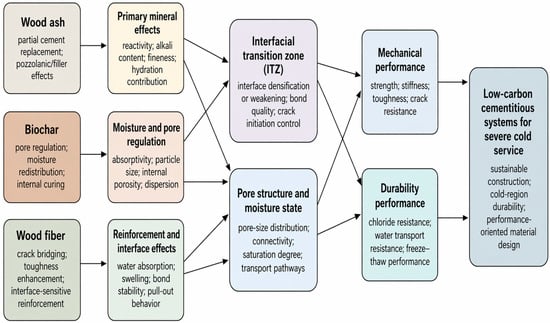
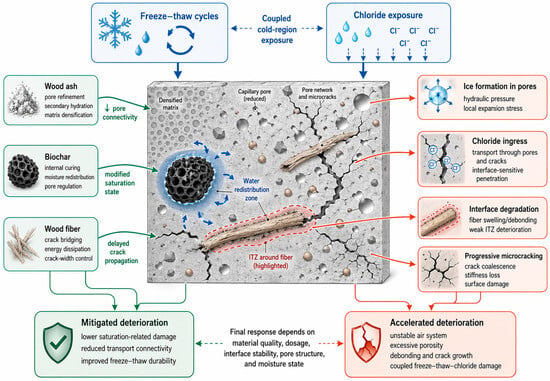
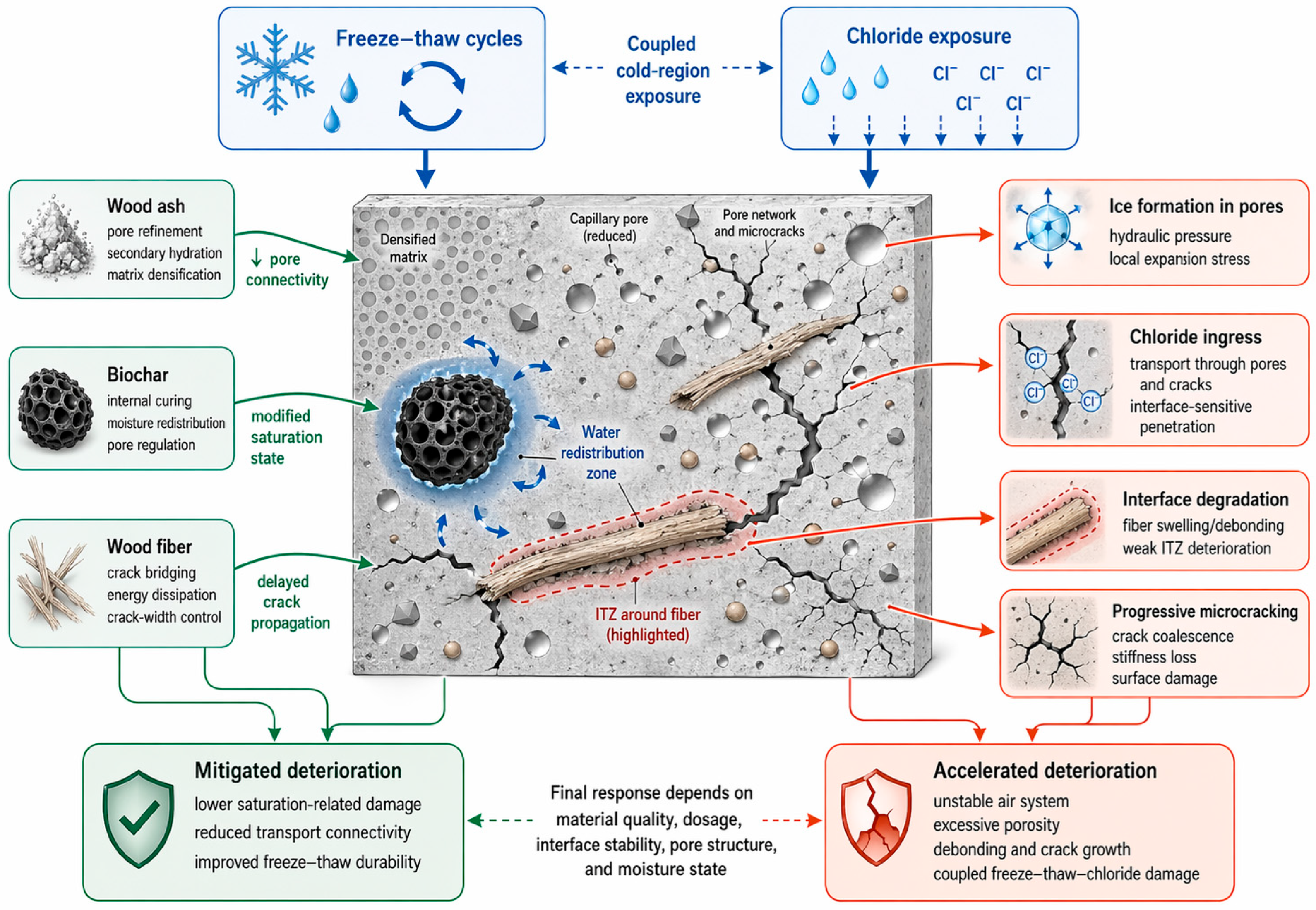

Disclaimer/Publisher’s Note: The statements, opinions and data contained in all publications are solely those of the individual author(s) and contributor(s) and not of MDPI and/or the editor(s). MDPI and/or the editor(s) disclaim responsibility for any injury to people or property resulting from any ideas, methods, instructions or products referred to in the content. |
© 2026 by the authors. Licensee MDPI, Basel, Switzerland. This article is an open access article distributed under the terms and conditions of the Creative Commons Attribution (CC BY) license.