


Abstract
In managed pressure drilling (MPD), wellbore flow states cannot be obtained in real time, so kick intervention decisions rely on the empirical judgment of engineers, which introduces a significant lag. The central hypothesis of this study is that fusing a physics-constrained transient two-phase flow model with real-time surface measurements through data assimilation can reconstruct the unobservable downhole flow state and, on this basis, enable quantitative and earlier prediction of the safe intervention timing than empirical judgment alone. To this end, this paper proposes a method for real-time inversion of wellbore flow states and safety intervention timing prediction based on the Ensemble Kalman Filter (EnKF). Using a transient wellbore gas–liquid two-phase flow model as the EnKF model operator, the method continuously assimilates real-time casing pressure, standpipe pressure (SPP), and pit gain data. This process dynamically corrects model prediction bias while maintaining multiphase flow physical constraints. Thus, the method achieves high-precision dynamic inversion of wellbore pressure profiles and gas holdup distributions. On this basis, the authors use the inverted states as initial conditions to calculate safety casing pressure with the multiphase flow model. The method then predicts intervention timing by combining three trigger conditions: safety casing pressure, pit gain, and the density difference between the inlet and outlet. The authors validated the method using kick scenarios from Well L and Well Z in the Shunbei block. The results showed that the mean absolute errors (MAEs) for casing pressure inversion were 0.113 MPa and 0.135 MPa, respectively. The MAEs for SPP were 1.324 MPa and 0.954 MPa. The MAEs for pit gain were 0.174 m3 and 0.114 m3. The inverted spatiotemporal distribution of gas holdup reflected the entire process of gas migration and expansion in the wellbore. Prediction results for intervention timing showed that the method issued early warning signals approximately 53 min and 29 min earlier than actual field operations. This method provides a quantitative decision-making basis with safety redundancy for MPD field operations.
1. Introduction
Global oil and gas exploration is steadily expanding into deep and ultra-deep reservoirs, where drilling operations face increasingly complex geological conditions. Narrow safe density windows and abnormally high-pressure formations pose severe well control challenges [1,2]. Wellbore pressure management is the core issue of drilling safety in these formations. A gas kick, which occurs when the bottomhole pressure falls below the formation pore pressure, is one of the most dangerous events during drilling: if it is not detected or controlled effectively, it can rapidly escalate into a blowout, causing casualties, environmental pollution, and massive economic losses [3,4].
Managed pressure drilling (MPD) is an advanced technology that precisely controls the annular pressure profile by adjusting the surface back pressure (SBP) in real time, and it has become a key method for safe drilling in formations with narrow safe density windows [5,6]. Unlike conventional drilling, MPD uses a closed-loop drilling system. This system consists of a rotating control device (RCD) and automated choke valves. The system maintains a constant bottomhole pressure and enables early detection of formation influxes. Therefore, operators can manage small-scale gas kicks without traditional shut-in procedures [1,7]. However, intervention decisions during MPD still rely on the empirical judgment of field engineers. These decisions include when to adjust SBP, increase mud weight, or perform a shut-in. This empirical approach is inherently subjective and lagged. Surface parameters respond significantly later than the actual downhole state, especially during rapid gas expansion or secondary influxes. Consequently, operators may miss the optimal intervention window. This lag leads to high casing pressure or even well control accidents.
Scholars have conducted extensive work on wellbore multiphase flow models to address these challenges. These transient wellbore hydraulics models use mass conservation, momentum conservation, and energy conservation equations. They also incorporate drift–flux correlations to describe gas–liquid slip behavior. Researchers widely use these models to simulate the spatiotemporal evolution of pressure, temperature, and gas holdup during a gas kick [8]. Shi et al. [9] established a drift–flux correlation based on extensive experimental data. This correlation is widely verified and applied in wellbore gas–liquid two-phase flow simulations. Recently, non-isothermal transient multiphase flow models for deepwater and high-pressure conditions have advanced significantly. These models achieve good results in gas kick simulations for both conventional drilling and MPD [4,5,10]. However, the prediction accuracy of forward simulation models is limited. Uncertainties in initial conditions, empirical closure relationships, and formation parameters cause these limitations. Examples of such relationships include the gas–liquid slip coefficient and the friction factor. These uncertainties accumulate over time. Consequently, model predictions gradually deviate from the actual wellbore state. This problem is particularly prominent in transient and complex conditions [11,12].
Meanwhile, researchers have increasingly applied artificial intelligence and data-driven methods to wellbore pressure prediction in recent years. Machine learning techniques include artificial neural networks (ANNs), support vector machines (SVMs), and long short-term memory (LSTM) networks. These techniques have shown good results in identifying kick events using surface drilling parameters [13,14,15]. Data-driven methods have advantages in fast computation. However, these methods fundamentally lack constraints from physical models. Furthermore, they do not possess a real-time correction mechanism to update prediction results continuously with new observation data. Therefore, these methods still have limited generalization capability under unknown conditions. Their ability to reconstruct full wellbore flow states is also limited.
Data assimilation methods provide a theoretical framework. This framework merges physical model predictions with real-time observation data to estimate the true state of dynamic systems. The Ensemble Kalman Filter (EnKF) is widely used in many fields [16]. This method approximates error statistics based on the Monte Carlo method. It also naturally adapts to nonlinear dynamics. Regarding wellbore flow modeling, Lorentzen et al. [17] first applied EnKF to the online correction of uncertain parameters in underbalanced drilling (UBD) two-phase flow models. Gravdal et al. [18] extended this method to estimate wellbore temperature and pressure during drilling. They achieved online model calibration by merging real-time sensor data. Recently, Wei and Chen [19] applied EnKF to estimate kick rates and distributions in subsea drilling risers. Their results showed that data assimilation can effectively reconstruct downhole gas–liquid distributions. Wei et al. [20] further combined EnKF with multi-depth pressure sensors and distributed acoustic sensing data. They achieved real-time monitoring and distribution estimation of gas migration in risers. These studies demonstrate the potential of data assimilation for wellbore flow state estimation. However, researchers have not yet reported the application of this method in MPD.
Based on existing research, this paper proposes a method for wellbore flow state inversion and safety intervention timing prediction in MPD based on data assimilation. The method uses a transient wellbore multiphase flow model as the model operator for the EnKF framework. It continuously assimilates real-time field observation data, including casing pressure, standpipe pressure (SPP) and pit gain. This process dynamically corrects model prediction bias while maintaining the physical constraints of the multiphase flow model. Thus, the method achieves high-precision dynamic inversion of wellbore flow states. On this basis, the authors further calculate the safety casing pressure required to maintain bottomhole pressure balance using the inverted states. The method then predicts intervention timing by combining multi-indicator trigger conditions. The authors validated the method using two wells from the Shunbei block in China as cases. The results showed that the method accurately tracked the dynamic evolution of wellbore flow states. The method issued early warning signals significantly earlier than the actual field intervention operations. This study provides a quantitative decision-making basis for field MPD operations. The novelty of this work is threefold. First, this is the first study to introduce EnKF-based data assimilation into MPD, whereas previous data-assimilation applications in wellbore flow have been restricted to underbalanced drilling and marine drilling risers. Second, instead of treating the empirical closure relationships (e.g., the drift–flux and gas–influx correlations) as fixed deterministic inputs, the proposed framework uses them only to provide physical constraints and prior estimates and continuously corrects the resulting model bias against real-time field measurements; this couples the mechanistic consistency of a physics-based model with the adaptivity of data-driven correction. Third, the work goes beyond state reconstruction and establishes a closed “real-time inversion–forward prediction–intervention decision” chain, in which the inverted flow states are used as initial conditions to predict the safe casing pressure and to trigger multi-indicator intervention alerts, thereby transforming reconstructed states into actionable operational decision support.
2. Data Assimilation-Based Inversion Method for Wellbore Flow States in MPD
Complex gas–liquid two-phase flow exists in the wellbore during MPD. However, traditional wellbore hydraulics models are limited by biased initial conditions and changing drilling parameters. Their results deviate from the actual wellbore flow states over time. Consequently, these models cannot provide a reliable basis for field decisions. Therefore, this paper establishes a real-time inversion method. This method uses a multiphase flow model as the base and EnKF as the assimilation framework. The method merges physical model calculations with real-time field data. It continuously corrects model bias while maintaining physical mechanism constraints. Thus, the method achieves dynamic inversion of wellbore flow states during MPD.
2.1. MPD Wellbore Multiphase Flow Model
This section establishes a dynamic calculation model for MPD. The authors develop this model based on transient wellbore multiphase flow theory and the MPD operation process. The model tracks the spatiotemporal distribution of liquid-phase and gas-phase parameters during MPD.
The authors reasonably simplify the multiphase flow model to establish the data assimilation framework. The specific simplifications are as follows: (1) The axial flow range in the wellbore is significantly larger than the radial flow range. Therefore, the model treats the wellbore flow as one-dimensional (1D) flow. (2) The gas phase and liquid phase have the same pressure and temperature at any given wellbore cross-section. The model also ignores interphase mass transfer between the two phases. (3) The model considers cuttings and drilling fluid as a single phase. It does not consider cutting transport separately. It should be emphasized that these simplifications mainly affect the single-step prior calculation of the forecast operator rather than the final inverted state. Because the proposed method is a real-time inversion framework, EnKF continuously corrects the model results at every time step against real-time casing pressure, SPP, and pit gain measurements. As observation data accumulate, the biases introduced by the above assumptions, together with those caused by inaccurate initial conditions, are progressively compensated, so that their influence on reconstruction accuracy remains limited. The applicability of these assumptions and their treatment under more complex conditions, such as horizontal wells with cutting beds or strong phase segregation, is further discussed in the Limitations.
- (1)
- Mass conservation equations
In Equations (1) and (2), A is the annular cross-sectional area; m2; , are the gas holdup and liquid holdup in the annular cross-section; , are the densities of the gas phase and liquid phase, kg/m3; , are the velocities of the gas phase and liquid phase, m/s; t is the time, s; z is the well depth, m; is the gas kick rate, m3/(m·s).
- (2)
- Momentum conservation equation
The drift–flux model treats the gas phase and the liquid phase as a single mixture. The model uses the mixture momentum conservation equation to solve for changes in wellbore pressure. The momentum conservation equation for the gas–liquid mixture section in the annulus is as follows:
Additionally, in MPD, other parts of the wellbore consist of single-phase flow regions for drilling mud. These regions exclude the annulus gas–liquid mixture section. The wellbore pressure in the single-phase flow region can be expressed as follows:
In Equations (3) and (4), P is the pressure of the gas–liquid mixture or the pure liquid phase in the wellbore cross-section, Pa; g is the gravitational acceleration, taken as 9.81 m/s2; θ is the inclination angle of the wellbore axis relative to the vertical direction; F is the frictional resistance term of the gas and liquid phases during the flow process.
- (3)
- Interphase heat transfer
The temperature distribution in the wellbore has a wide range during MPD. This distribution directly affects the physical properties of the drilling mud and gas kick. Consequently, it indirectly influences the wellbore flow state. Therefore, the dynamic model must consider the effects of temperature on the fluid. According to the laws of thermodynamics, the transient heat transfer model for the annular fluid is as follows:
In Equation (5), , are the constant pressure specific heat capacities of the gas phase and the liquid phase, J/(kg·K); Tf, Ta and Tp are the temperatures of the formation or casing, annulus, and drill string, K. A0, B0 are the thermal resistance coefficients between the annulus and the formation and between the annulus and the drill string. Their calculation method is as follows:
In Equations (6) and (7), λf is the formation heat transfer coefficient, W/(m·K); rco, rci are the outer radius and inner radius of the casing, m; Ua is the overall heat transfer coefficient of the annulus, W/(m2·K); TD is the dimensionless temperature defined by Hasan and Kabir [21]; rpi is the inner diameter of the drill string, m; Up is the overall heat transfer coefficient of the drill string, W/(m2·K).
Similarly, the transient heat transfer model for the fluid inside the drill string is:
- (4)
- Gas–liquid interphase slip relationship
The gas–liquid interphase slip relationship was proposed by Zuber et al. [22] and can be expressed as:
In Equation (9), c0 is the gas distribution parameter, which is dimensionless; v∞ is the gas phase slip velocity, m/s. c0 and v∞ are related to the gas–liquid two-phase flow regimes. Shi synthesized extensive experimental data from prior research [9] and established the equations for c0 and v∞, which have been extensively employed in wellbore gas–liquid two-phase flow simulations. Their applicability and reliability have been thoroughly validated, and the calculation methods are given by Equations (10) and (11):
In Equations (10) and (11), Ae is the gas distribution parameter for bubbly and slug flows, which is typically taken as 1.2 and is dimensionless; vm is the gas–liquid mixture velocity, m/s; vsgf is the minimum gas velocity required to prevent liquid film counter-current flow at the pipe wall, also known as the flooding velocity, m/s; vc is the characteristic gas velocity, m/s; Ku is the Kutateladze number, which is a type of dimensionless similarity parameter.
- (5)
- Gas inflow performance relationship (IPR) equation
In MPD operations, when the bottomhole pressure (BHP) falls below the formation pressure, formation gas continuously invades the wellbore. Unlike conventional well-killing processes, MPD regulates SBP by adjusting the choke valve to maintain BHP within a range slightly higher than the formation pressure. Nevertheless, gas kicks of varying intensities may still occur due to uncertainties in formation pressure prediction, encountering fractures, or drilling into high-pressure gas reservoirs. In this study, the gas inflow performance relationship (IPR) equation is employed to estimate the gas kick rate:
In Equation (12), qg is the gas production rate, m3/s; K is the formation permeability, 10−3 μm2; H is the formation penetration thickness, m; Pe is the formation pressure, Pa; Pb is the bottomhole pressure, Pa; T is the bottomhole temperature, K; μ is the gas viscosity, Pa·s; Z is the gas compressibility factor; re is the formation penetration radius, m. When the bottomhole pressure is greater than or equal to the formation pressure, the gas kick rate is zero; under such conditions, the MPD system is maintained in a balanced or overbalanced state.
- (6)
- Boundary and initial conditions
During MPD operations, SBP is regulated in real-time by the choke valve, and the wellhead boundary condition is defined as follows:
In Equation (13), is the time-dependent SBP, Pa, which is provided in real time by the field MPD system or acquired from mud logging data.
The bottomhole boundary condition is determined by the gas inflow performance relationship (IPR) equation (Equation (12)); specifically, the gas kick rate at the bottomhole depends on the difference between the formation pressure and the bottomhole pressure. The initial and boundary conditions for temperature are defined as follows:
In Equations (14) and (15), Ts is the surface temperature, K; G is the geothermal gradient, K/m; Hb is the bottomhole node, m.
For the initial conditions of the MPD process, it is assumed that a steady-state circulation of pure drilling fluid is established within the wellbore prior to the commencement of drilling. The initial pressure and velocity distributions at various points along the annulus are determined using a steady-state flow model. This steady-state pure-fluid assumption is used only to provide the initial prior at t = 0, rather than as an accurate description of the subsequent process. Its inaccuracy is precisely what the proposed real-time assimilation is designed to overcome, since EnKF rapidly corrects the initial bias as the casing pressure, SPP, and pit gain observations are assimilated at each subsequent time step.
- (7)
- Numerical solution scheme
The aforementioned governing equations can be discretized and solved using the finite difference method [23]. The model can be expressed in a unified format as follows:
In Equation (16), Wj, Fj(Wj) and Qj(Wj) (j = 1, 2, …, 5) denote the state, flux, and source terms of the hydraulics model and the corresponding temperature-dependent terms of the thermodynamics model. These PDEs are discretized and solved using the MacCormack predictor–corrector scheme [24]. This scheme features second-order accuracy and possesses a robust capability for capturing discontinuities.
The aforementioned dynamic MPD wellbore multiphase flow model is capable of calculating the spatiotemporal evolution of parameters such as wellbore pressure, gas holdup, and temperature based on the defined initial and boundary conditions. However, the predictive accuracy of this model is constrained by biases in initial condition settings and uncertainties in physical parameters (e.g., gas–liquid slip parameters and friction factors). These uncertainties can lead to a cumulative deviation of model predictions from the actual wellbore state over time. To address this issue, this study integrates the physical model as a model operator into a data assimilation framework based on EnKF. By fusing real-time observation data from the MPD process—including casing pressure, SPP, and pit gain—the model results are continuously corrected to achieve high-precision dynamic inversion of the wellbore flow state.
2.2. EnKF Inversion Framework
During actual MPD operations, various field sensors collect observation data containing noise; typically, such data are not directly incorporated into the calculations of complex wellbore hydraulic models. Data assimilation theory aims to integrate real-time observation data into these complex dynamic models. Under the dual constraints of model-generated data and real-time observations, the state variables of the wellbore hydraulics model are updated in real-time via EnKF. The updated hydraulic model can further reflect the dynamics of the observation data and invert complex wellbore flow states (such as gas holdup and wellbore pressure distribution). This approach reduces model error while simultaneously preserving the projection of prior information.
EnKF employs the Monte Carlo method to characterize the model error distribution based on predefined prediction errors and observation noises, thereby randomly generating a specific number of ensemble members to form an initial ensemble [16]. Following the initialization of EnKF parameters, the data assimilation process is divided into two primary stages: the forecast step and the analysis (correction) step. In the context of MPD, at each time step t, the calculated values of state variables corresponding to real-time observations—such as casing pressure, SPP, and pit gain—are first generated using the wellbore hydraulic model and the Monte Carlo method:
In Equation (17), is the i-th ensemble member during the EnKF forecast stage, where i represents the ensemble member index and j denotes the j-th state variable; is the model operator for EnKF, which in this study represents the wellbore hydraulics model; is the initial condition for the model operator calculations; is the potential error in model calculation, which is generally randomly generated from a predefined Gaussian distribution with a zero mean and covariance matrix Q; E is the identity matrix.
The mean value of the state variables prior to data assimilation is:
The calculation method for the covariance matrix Cj(t) of the calculated state variables is:
Following the forecast stage, the calculated values of the state variables need to be corrected using a filtering algorithm. The calculation method is:
In Equation (21), is the matrix at time t after data assimilation correction, containing i ensemble members with each member consisting of j state variables; is the matrix of real-time observation values at time t, consisting of j state variables with additive observation noise , the noise is randomly generated from a predefined Gaussian distribution with a zero mean and covariance matrix R; H is the observation operator of the EnKF; K is the Kalman gain of the EnKF, and the calculation method is:
After correcting each state variable for all ensemble members based on Equations (21) and (22), the result is:
After correcting the state variables based on Equation (23), the covariance matrix of the state variables is updated to:
As time step t advances and real-time observation data are incorporated, the data assimilation-based EnKF continuously corrects the calculated results of the model operator.
It should be noted that in the data assimilation framework proposed in this study, empirical equations within the hydraulics model—such as the gas production equation and drift–flux model—are only utilized to provide initial estimates and physical constraints for wellbore influx, rather than requiring precise calculation. The EnKF method is capable of extending the applicability of these empirical equations by adjusting the covariance matrix and incorporating real-time data. If the inversion performance is unsatisfactory under other complex conditions (e.g., fractured formations), the following strategies can be implemented: (1) Adjust the covariance matrix Q to increase the uncertainty weights of parameters associated with the empirical equations. (2) Replace the corresponding empirical equations with models specifically tailored for complex conditions.
2.3. Wellbore Flow State Inversion Model
Real-time casing pressure, SPP, and pit gain data collected during MPD operations are fed into the data assimilation-based EnKF as observation values to invert the wellbore pressure and gas holdup distributions. To complete the inversion of wellbore flow states, the conditions that the hydraulic model parameters must satisfy are as follows:
1. The time step interval of the model calculation is consistent with the sampling interval of real-time observations to ensure that corresponding observation data is available for assimilation and correction at each calculation time step.
2. The mean relative error of model calculation and the noise range of real-time observation data are pre-determined to establish the covariance matrices Q and R. The model error covariance matrix Q is a reflection of the hydraulic model uncertainty; its primary sources are discretization truncation error of the equations, gas–liquid slip relationship, friction coefficient error, and the uncertainty of the physical property parameters of the influx gas. In this study, historical well data is used for model prediction error statistics: The MPD data from multiple wells within the same block are utilized to run the physical model directly. The residuals for casing pressure, SPP, and pit gain are calculated, and the standard deviations of these residuals are , and . The covariance matrix $Q$ is a diagonal matrix, and the diagonal elements are the squares of the standard deviations of the errors for each state variable, i.e., . The observation error covariance matrix R is a representation of the sensor measurement noise and is obtained through a noise statistical analysis of 30 min of continuous measurement data under normal operating conditions; the covariance matrix is set as . The aforementioned Q and R matrices are constant during the inversion calculation to ensure the stability and convergence of EnKF. Keeping them constant avoids the covariance collapse and filter divergence that online variation in these matrices can readily induce under abrupt operating conditions, and the two field cases confirm that this setting maintains stable and accurate inversion throughout the highly non-stationary kick processes. A diagonal structure is adopted because the casing pressure, SPP, and pit gain are measured by independent sensors with weak mutual correlation, justifying a diagonal R, while for Q the correlations among state variables are already transferred implicitly through the physical coupling of the forecast operator rather than through its off-diagonal terms. A reliable explicit estimation of these off-diagonal cross-correlations would require a considerably larger historical sample than is currently available, and it is therefore not introduced in this study. Constant rather than adaptive and are adopted for two reasons. First, online adaptive updating introduces extra computation at every step and cannot guarantee that the complete inversion–prediction–decision loop is finished within a single real-time data interval, conflicting with the real-time requirement of the method. Second, during the abrupt managed pressure venting stage, innovation-driven updating tends to misattribute genuine operating-condition changes to the noise statistics and may destabilize the filter. Adaptive updating of the two matrices is left as future work.
3. During the inversion calculation process, the model calculates only one time step at a time; when new observation values are received and a new time step inversion is performed, the initial and boundary conditions of the model are based on the parameters from the previous time step.
When the aforementioned conditions are met, the steps for inverting wellbore flow states using the data assimilation-based EnKF are as follows:
Step 1: Set and initialize EnKF parameters. The parameters are the initial state variable ensemble , covariance matrices Q and R, model error , and observation noise , etc. Simultaneously, boundary conditions for MPD calculations, such as SBP, are established.
Step 2: Run the wellbore hydraulics model (model operator) to calculate the state variable ensemble at time step t. The perturbed state variable ensemble is generated by considering the impact of model error .
Step 3: Obtain real-time state data from surface logging data. The real-time state data is calculated by incorporating the impact of observation noise .
Step 4: Calculate the mean value and covariance matrix of the state variable matrix, and update the observation operator H and Kalman gain K.
Step 5: Correct the state variables at time step t to obtain the corrected ensemble . Invert the wellbore flow states (e.g., annular pressure and gas holdup distribution) at time step t.
Step 6: Set t = t + 1 and update the covariance matrix . Return to Step 2 for the next time step calculation, where the corrected ensemble is utilized as the initial condition.
Through the aforementioned inversion process, at each data update time step, EnKF uses current real-time observation data to correct the model results, ensuring that the inverted wellbore pressure and gas holdup distributions continuously approach the true wellbore flow state. As real-time data accumulates, the significant initial errors caused by insufficient prior information are gradually reduced, and the inversion accuracy becomes stable. This method integrates the mechanistic constraints of physical models and the dynamic correction of real-time data into a unified framework. It effectively overcomes the limitations of traditional forward models—such as sensitivity to initial conditions, error accumulation, and delayed response to sudden operating conditions—thereby providing reliable wellbore flow state information for the subsequent prediction of MPD intervention timing based on the inverted states.
3. Verification and Analysis of Inversion Accuracy
To verify the applicability and accuracy of the established data assimilation-based wellbore flow state inversion method under MPD conditions, two representative field cases (Well L and Well Z) are selected in this section. Inversion accuracy verification is conducted using actual surface logging data collected during the MPD operations of these wells. First, the basic operating conditions and data sources of the cases are introduced; subsequently, the inversion results are systematically compared with field-measured data. Finally, statistical error metrics are provided, and the convergence characteristics of the inversion model are analyzed.
3.1. Basic Case Information
Well L and Well Z, located in the Shunbei block of China, are selected as inversion validation cases in this section. Both wells are characterized by complex geological conditions, including developed fractures and high-pressure gas zones. During MPD operations, various degrees of gas kick events occurred, providing highly representative operating conditions for testing the applicability of the inversion method. Well L is a vertical well where a high-pressure gas kick event occurred; Well Z is a deviated well that experienced more than two kick events. The observation vector for the inversion model consists of real-time casing pressure, SPP, and pit gain, sampled at an interval consistent with the model calculation time step. The model error covariance matrix Q and the observation error covariance matrix R are determined by historical well data statistics and field sensor noise analysis, respectively.
- (1)
- Well L
Well L is a vertical well that encountered a high-pressure fractured gas reservoir at a depth of 7672 m, resulting in a gas kick event. The MPD process of this well is selected for inversion validation, and the basic parameters are provided in Table 1. At the start of the inversion simulation, the wellbore is assumed to be free of gas. After approximately 30 min of drilling, the surface gas holdup increases abruptly, and the managed pressure value is raised from 0 to 1.5 MPa. As gas continues its upward migration and expansion, the casing pressure rises gradually. At 102 min, the casing pressure increases sharply from 3.8 MPa to 5.9 MPa, leading to the pulling of drilling tools and the subsequent shut-in of the well.
Table 1.
Basic parameters of Well L.
- (2)
- Well Z
Well Z is a deviated well, and its basic parameters are listed in Table 2. During MPD, the total hydrocarbon content increased at 50 min. By monitoring the pit volume, SPP and casing pressure, the casing pressure was gradually increased from 0 to 5.2 MPa. However, the casing pressure decreased at 62 min and subsequently rose to 8.0 MPa at 80 min, at which point the well was shut in. The complexity of the operating conditions in this section is characterized by the abrupt changes in gas expansion rates. Furthermore, the rising trend of the casing pressure was not effectively suppressed even after manual managed pressure adjustments, ultimately necessitating the shut-in operation.
Table 2.
Basic parameters of Well Z.
Both of the aforementioned wells experienced high-pressure gas kick events during MPD. These cases are utilized to verify the applicability and accuracy of the proposed inversion method. For both wells, the EnKF ensemble size is set to 50, which is a computational compromise between the accuracy of the covariance estimation and the cost of real-time computation rather than a theoretical minimum. Since the Monte Carlo sampling error of EnKF decreases approximately as with the ensemble size N, and only three observation types (casing pressure, SPP, and pit gain) are assimilated in this low-dimensional problem, a few tens of members are generally sufficient to estimate the relevant covariances stably, which is also consistent with previous EnKF-based wellbore data-assimilation studies. The inversion results presented below confirm that 50 members already provide stable convergence and high inversion accuracy for both cases.
3.2. Comparative Analysis of Inversion Accuracy
Based on the actual surface logging data from the two wells, the established data assimilation-based inversion model is utilized to process real-time data at fixed intervals according to the original timestamps. Only the current observation data is received before each time step calculation to simulate the data acquisition interval during managed pressure drilling. Subsequently, the data assimilation-based EnKF is applied to invert the current wellbore flow states, including pressure distribution and gas holdup distribution. The inverted casing pressure, SPP, and pit gain are compared with field-measured data to obtain statistical error metrics and analyze the convergence characteristics of the inversion model. Specifically, the inversion accuracy of the wellbore pressure distribution is evaluated by comparing the inverted casing pressure and SPP with the observed values, while the inversion accuracy of the wellbore gas holdup distribution is assessed by comparing the converted pit gain with the observed data.
- (1)
- Inversion results of Well L
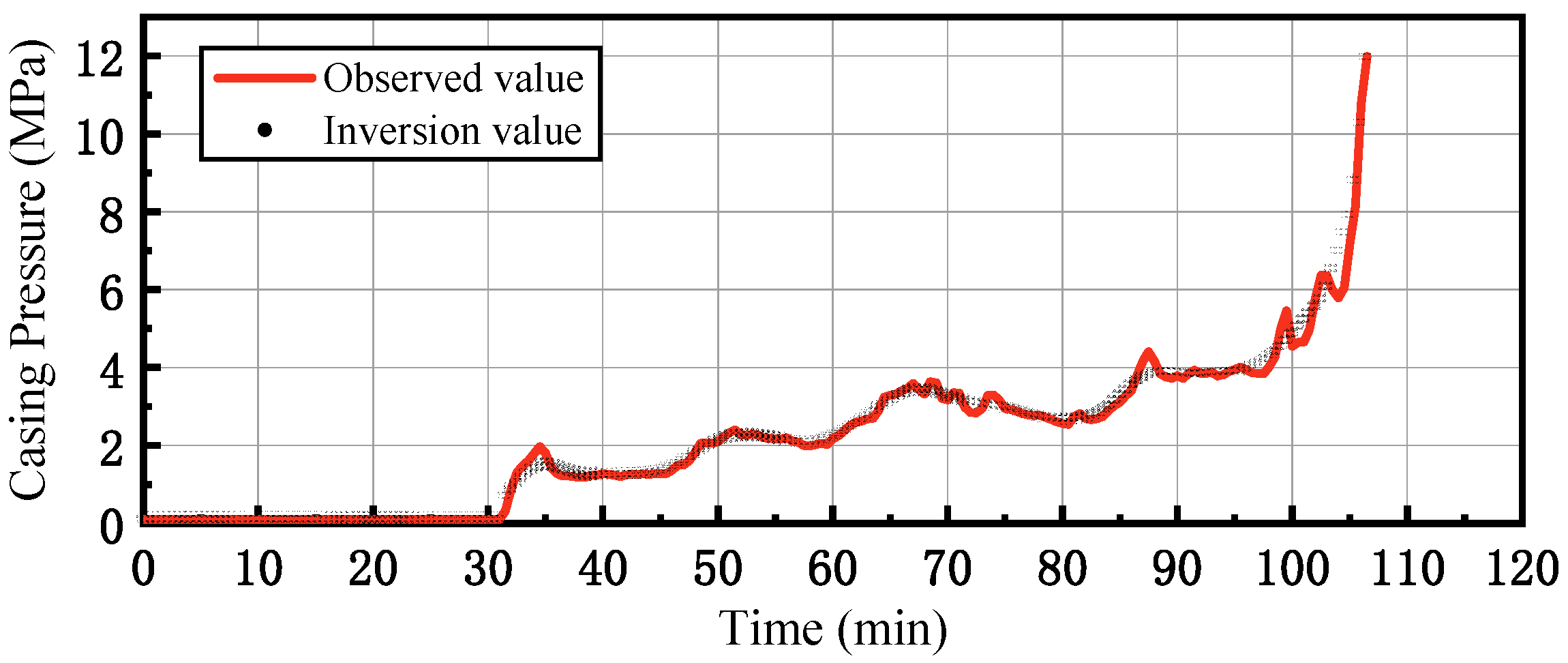
Figure 1, Figure 2 and Figure 3 present the inversion tracking results and absolute errors of the casing pressure, SPP, and converted pit gain throughout the MPD process of Well L. There are 214 data points for Well L during this period, with a data sampling interval of 30 s.
Based on the casing pressure inversion results (Figure 1), during the initial stage of MPD (0–31 min), a kick occurred in the wellbore, but it was not identified by the engineers. The casing pressure was maintained at 0.1 MPa, and the inverted values are in perfect agreement with the measured data. Starting from 32.0 min, the surface total hydrocarbon content increased, and the managed pressure was actively raised by the field personnel while the casing pressure began to rise. The inversion model captured the sudden casing pressure changes through data assimilation, and the inverted values converged rapidly to the vicinity of the measured data. During the subsequent stages—where gas continued to be discharged, the casing pressure gradually increased to 5.9 MPa at 102 min before shut-in, and the casing pressure stabilized at 11.98 MPa after shut-in—the inversion model maintained high tracking accuracy. The mean absolute error (MAE) of the casing pressure inversion for the entire process is 0.113 MPa, with a maximum absolute error of 1.434 MPa. This indicates that the inversion model is capable of maintaining robust tracking performance as the wellbore flow state becomes increasingly complex. Particularly in the final stage of rapid casing pressure increase (after 100 min), the inverted values are still able to fit the trend under the constraints of the physical model, despite the significantly increased rate of pressure change.
Figure 1.
Inversion tracking results and absolute errors of casing pressure throughout the MPD process of Well L.
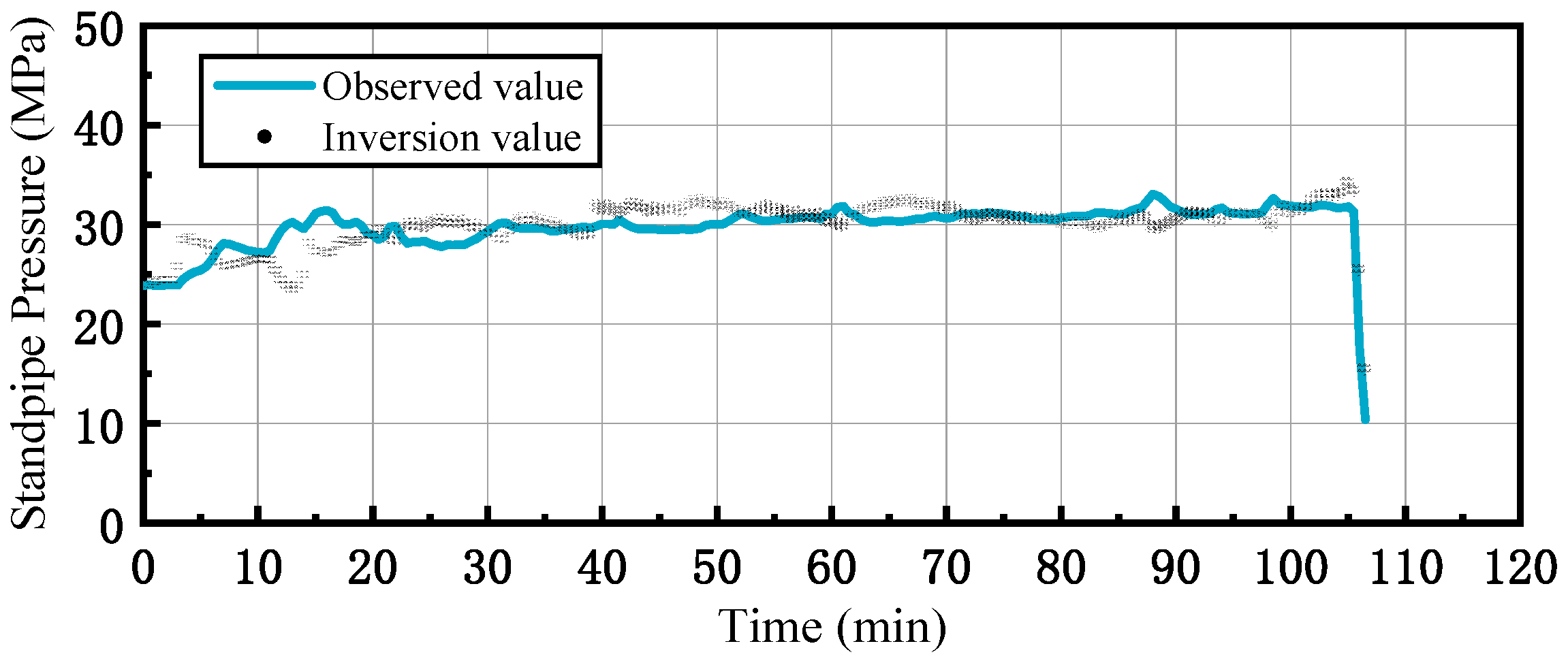
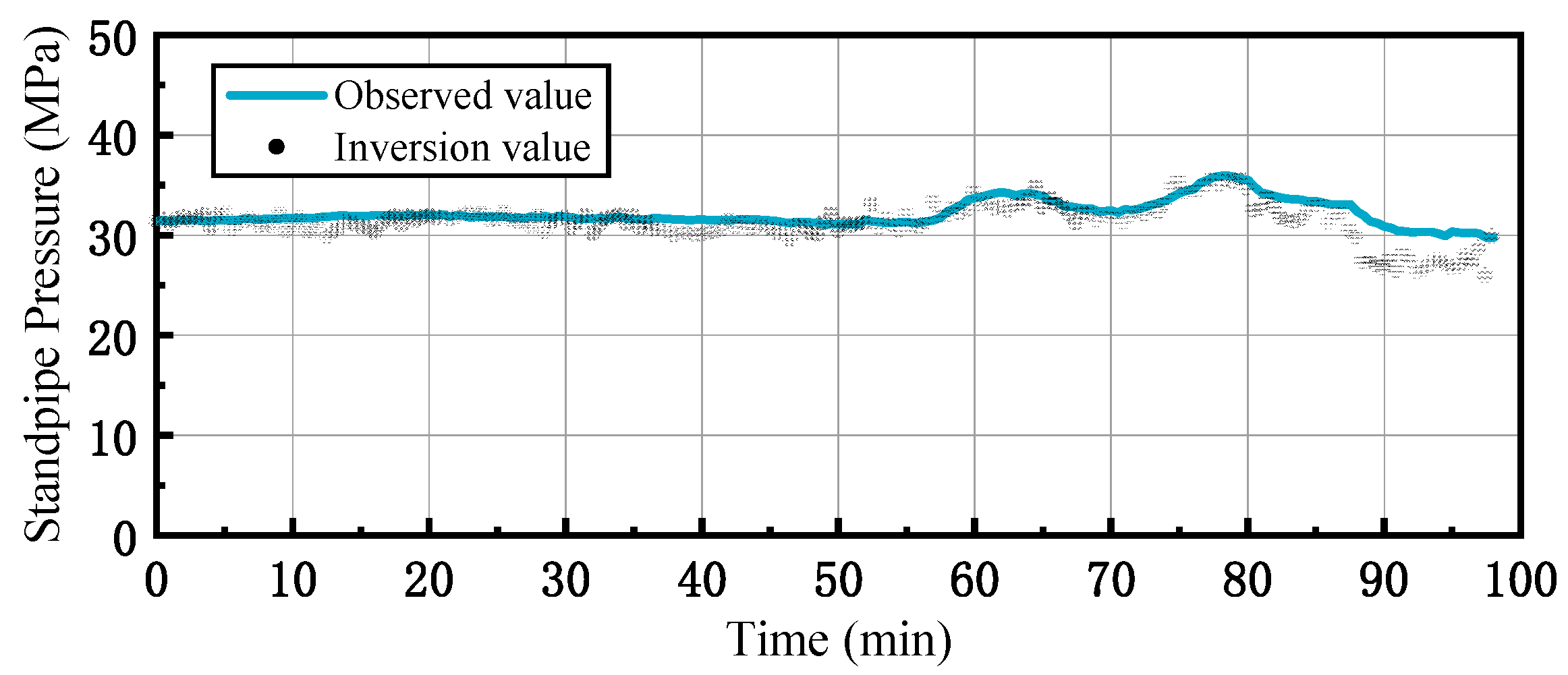
The SPP inversion results (Figure 2) indicate that the inversion model generally tracks the variation trend of the SPP well, although the inversion accuracy is relatively lower than that of the casing pressure. The MAE for the SPP inversion throughout the process is 1.324 MPa. The primary reason for the relatively large SPP error is that the SPP remains at a high level of 24–33 MPa, where it is subjected to the superimposed effects of multiple factors, such as pump rate fluctuations, changes in drilling parameters, and wellbore friction; consequently, its short-term fluctuations are more intense than those of the casing pressure. From a sectional perspective, the SPP MAE is 3.304 MPa during the first 20 min due to insufficient prior information at the beginning of the inversion. However, as real-time data accumulates and the covariance matrix of EnKF is continuously updated, the SPP MAE decreases to 0.88 MPa between 60 and 100 min. This 61.5% reduction in error demonstrates the continuous compensation capability of the data assimilation method for physical model biases. Accordingly, this SPP error can be decomposed into two parts. The first arises during the initial convergence stage, when the prior is insufficient, and is progressively eliminated as observations accumulate, as reflected by the reduction from 3.304 MPa to 0.88 MPa. The second is associated with operating condition disturbances such as pump rate fluctuations and rapid gas expansion; since the SPP is governed mainly by the friction pressure loss, the inversion needs to continuously receive real-time data to follow these disturbances, and the brief lag in this adaptation enlarges the SPP error. This can be corroborated by Well Z, whose SPP MAE stays at only 0.55 to 0.67 MPa under a stable pump rate but rises to 2.350 MPa during intensified gas expansion. Introducing the real-time pump rate and drilling-fluid rheology as additional model inputs or observation channels would reduce the SPP error caused by these disturbances.
Figure 2.
Inversion tracking results and absolute errors of SPP throughout the MPD process of Well L.
The pit gain inversion results (Figure 3) indicate that the inversion model is capable of accurately reflecting the gas distribution during the kick process. The MAE of the pit gain, converted from the inverted wellbore gas holdup throughout the process, is 0.174 m3. During the initial stage of the kick, the pit gain changed relatively slowly, and the inverted values are highly consistent with the measured data. As the gas migrated upward and expanded in the annulus, the pit gain increased at an accelerated rate; the inversion model, through continuous data assimilation corrections, was able to track this nonlinear growth process in a timely manner.
Figure 3.
Inversion tracking results and absolute errors of pit gain throughout the MPD process of Well L.
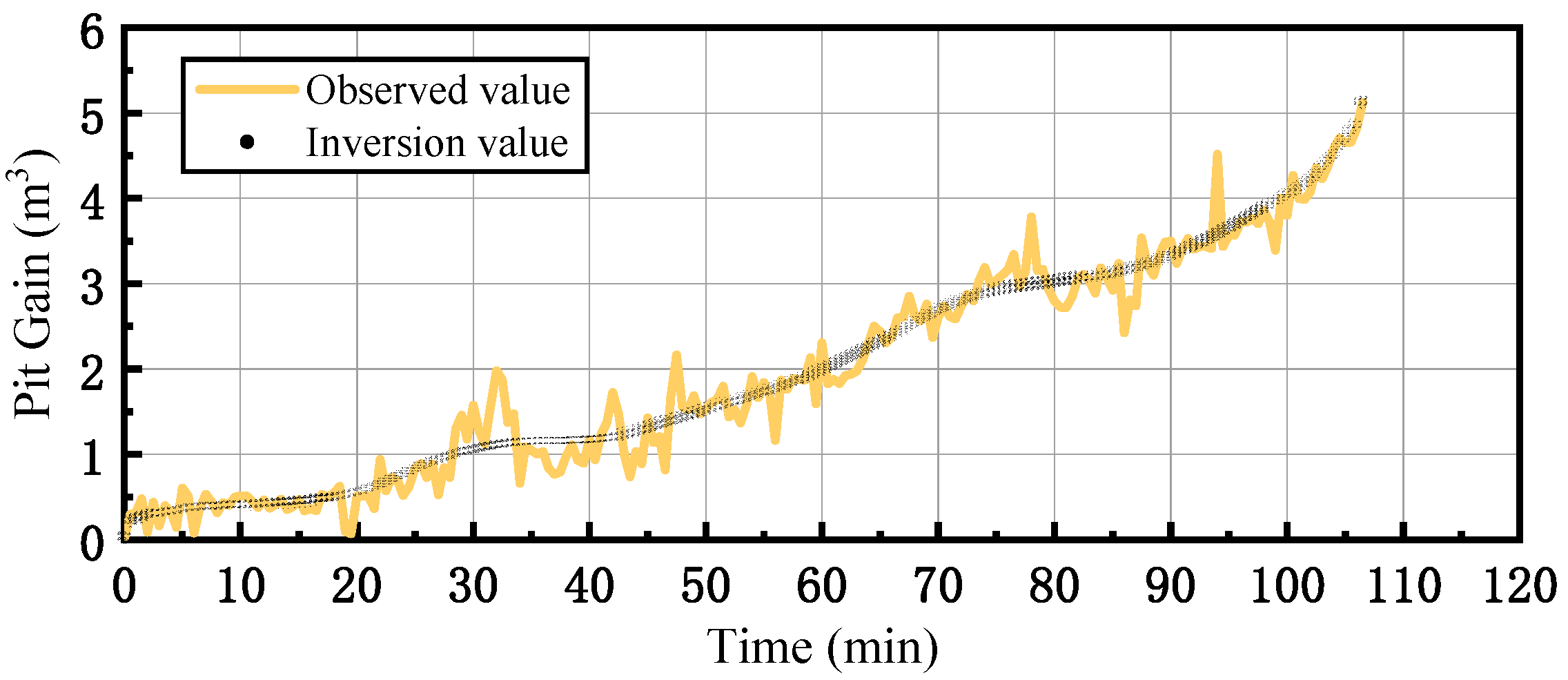
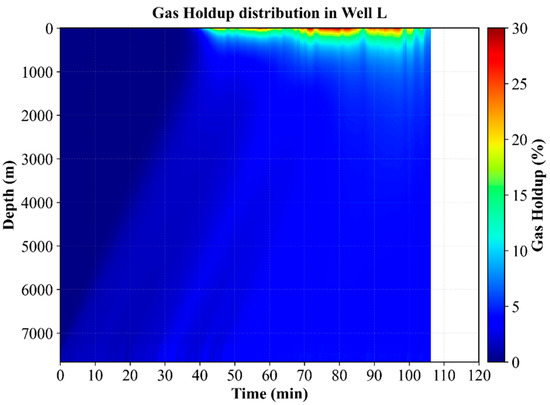
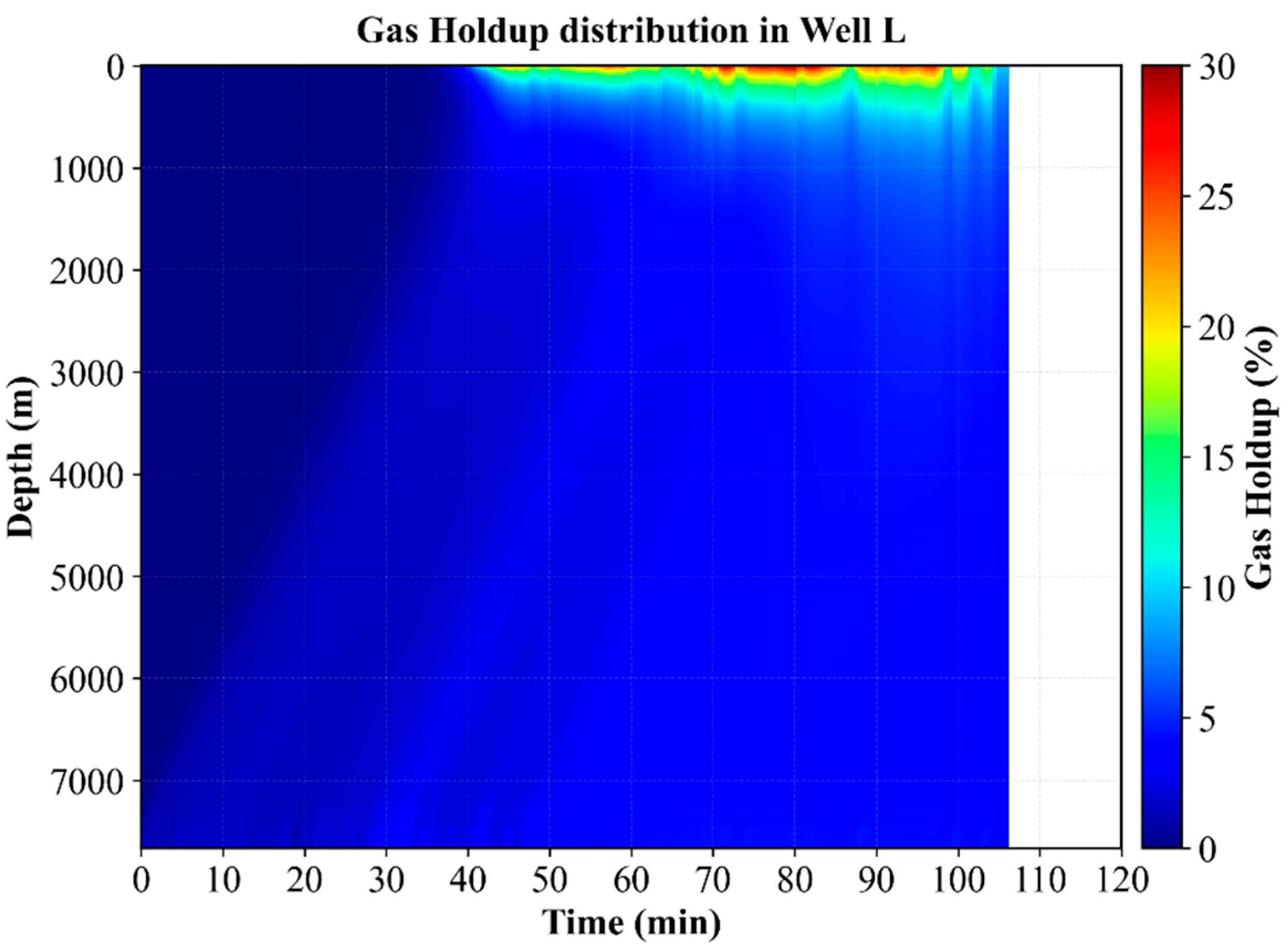
Figure 4 presents the cloud map of the annular gas holdup distribution for Well L obtained through inversion. The cloud map shows that the gas gradually migrates upward in the annulus along with the drilling fluid circulation. During this process, as the casing pressure is being progressively increased by the engineers and the wellbore pressure is gradually decreasing along the well depth, the gas expands continuously; consequently, the gas holdup exhibits a distribution characteristic that increases gradually from the bottomhole to the wellhead. Between 60 and 100 min, the cloud map indicates a significant increase in gas holdup in the near-wellhead area, which is consistent with the field observations of a sharp rise in the casing pressure. The inverted gas holdup distribution can intuitively reflect the migration and expansion processes of the gas kick within the wellbore, providing downhole state information for determining the timing of managed pressure intervention.
Figure 4.
Spatiotemporal distribution of inverted annular gas holdup for Well L.
- (2)
- Inversion Results of Well Z
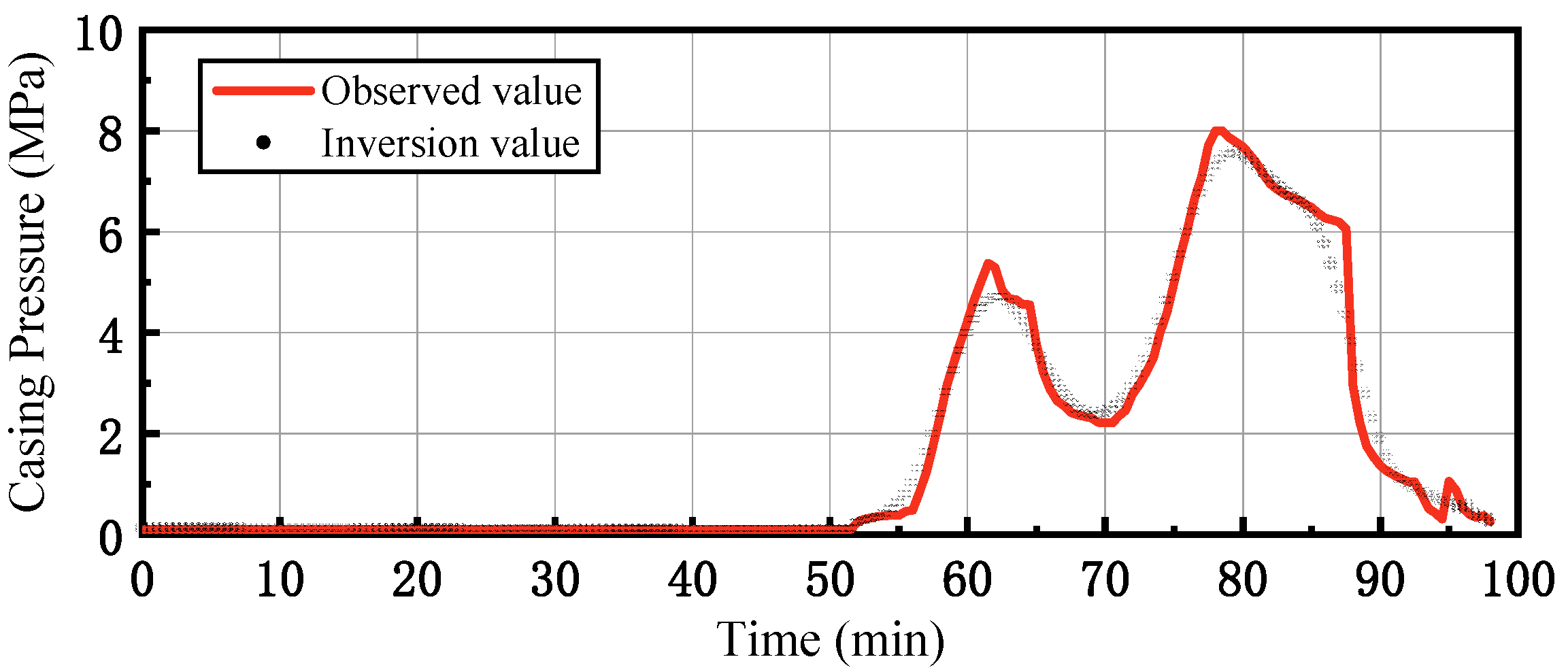
Figure 5, Figure 6 and Figure 7: Inversion tracking results and absolute errors of casing pressure, SPP, and converted pit gain throughout the MPD process of Well Z.
Based on the casing pressure inversion results in Figure 5, a kick occurred in the wellbore during the first 51 min, and the gas gradually migrated upward. The engineers did not detect the kick, and the casing pressure was maintained at a low level of 0.1 MPa. At this stage, the inverted values are in good agreement with the measured data. From 56 min, a large amount of gas was observed discharging from the wellhead, and the casing pressure was rapidly increased by the engineers, rising from 0.5 MPa to 5.4 MPa within a short period. The inversion model tracked these sudden changes in the casing pressure. Subsequently, the reduction in casing pressure at 62.5 min led to intensified gas expansion, and the casing pressure rose to 8.0 MPa at 77.5 min, at which point the field personnel decided to shut in the well. The shut-in was completed at 87 min, followed by blowdown and gas bleeding operations. The inversion model maintained favorable accuracy under these complex operating conditions. The MAE of the casing pressure inversion throughout the process is 0.135 MPa, with a maximum absolute error of 1.686 MPa. This indicates that although there is a brief lag in the response of EnKF to pressure surges, the overall convergence speed is fast, and the model is capable of fitting the variation trends effectively.
Figure 5.
Inversion tracking results and absolute errors of casing pressure throughout the MPD process of Well Z.
The SPP inversion results (Figure 6) indicate that the inversion model generally tracks the variation trend of the SPP well. The MAE for the SPP inversion throughout the process is 0.954 MPa, which is superior to that of Well L. This is primarily because the pump rate fluctuations were stable during the first 80 min of the simulation period for Well Z, resulting in less disturbance to the SPP; the MAE during this stage remains between 0.55 and 0.67 MPa. However, between 80 and 98 min, the SPP MAE increases to 2.350 MPa as the gas expansion is intensified by the reduction in the casing pressure. From an overall trend perspective, the inversion accuracy of the SPP is maintained at a high level.
Figure 6.
Inversion tracking results and absolute errors of SPP throughout the MPD process of Well Z.
The pit gain inversion results (Figure 7) indicate that the MAE of the pit gain, converted from the inverted wellbore gas holdup throughout the process, is 0.114 m3. During the stage where the gas expansion rate varies violently, the pit gain increases at an accelerated rate; the inversion model corrects the gas–liquid distribution within the wellbore through continuous data assimilation, and the converted pit gain maintains good consistency with the measured values.
Figure 7.
Inversion tracking results and absolute errors of pit gain throughout the MPD process of Well Z.
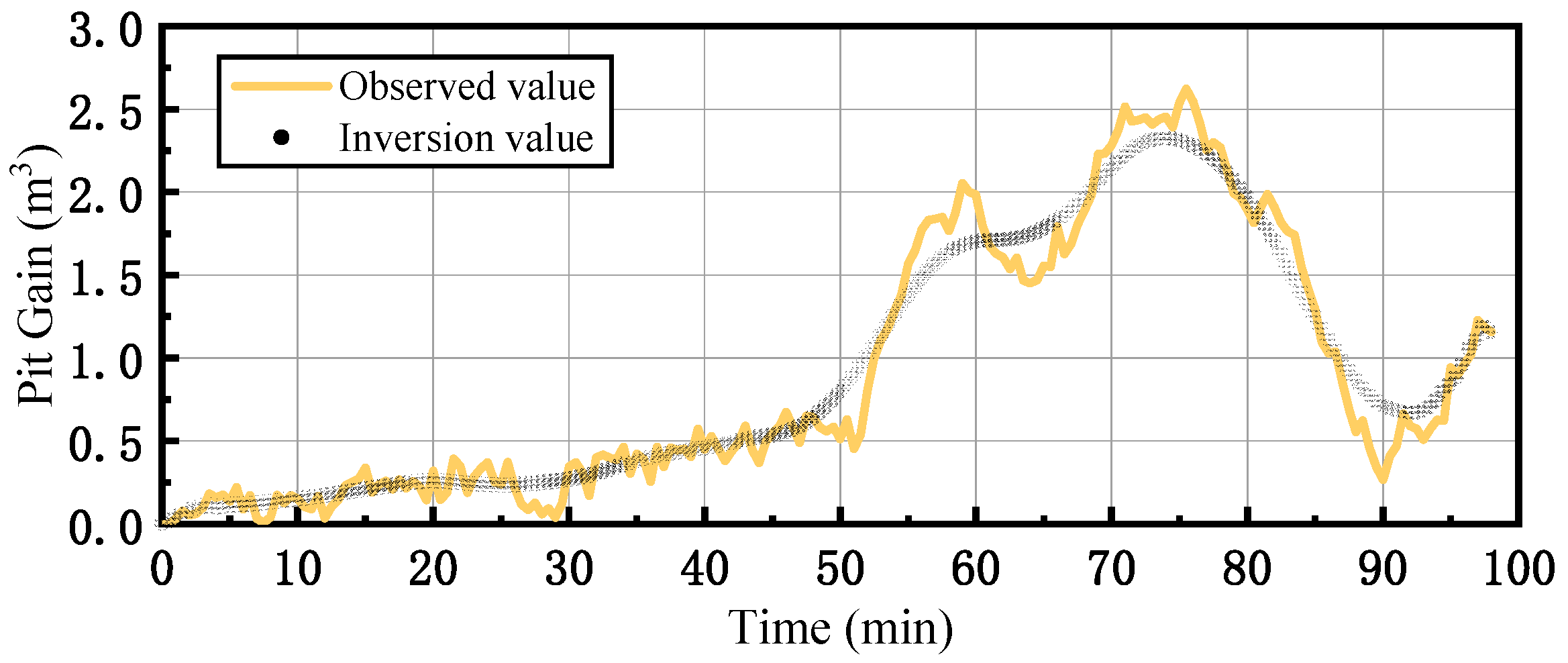
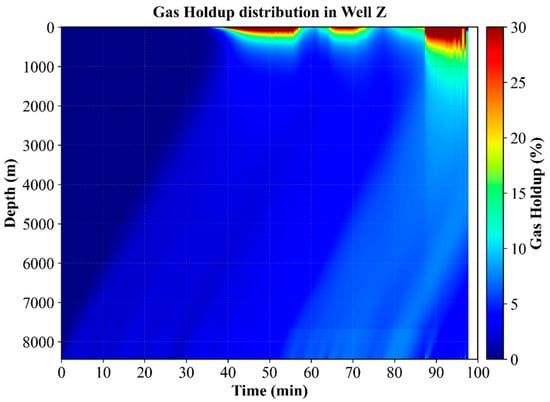
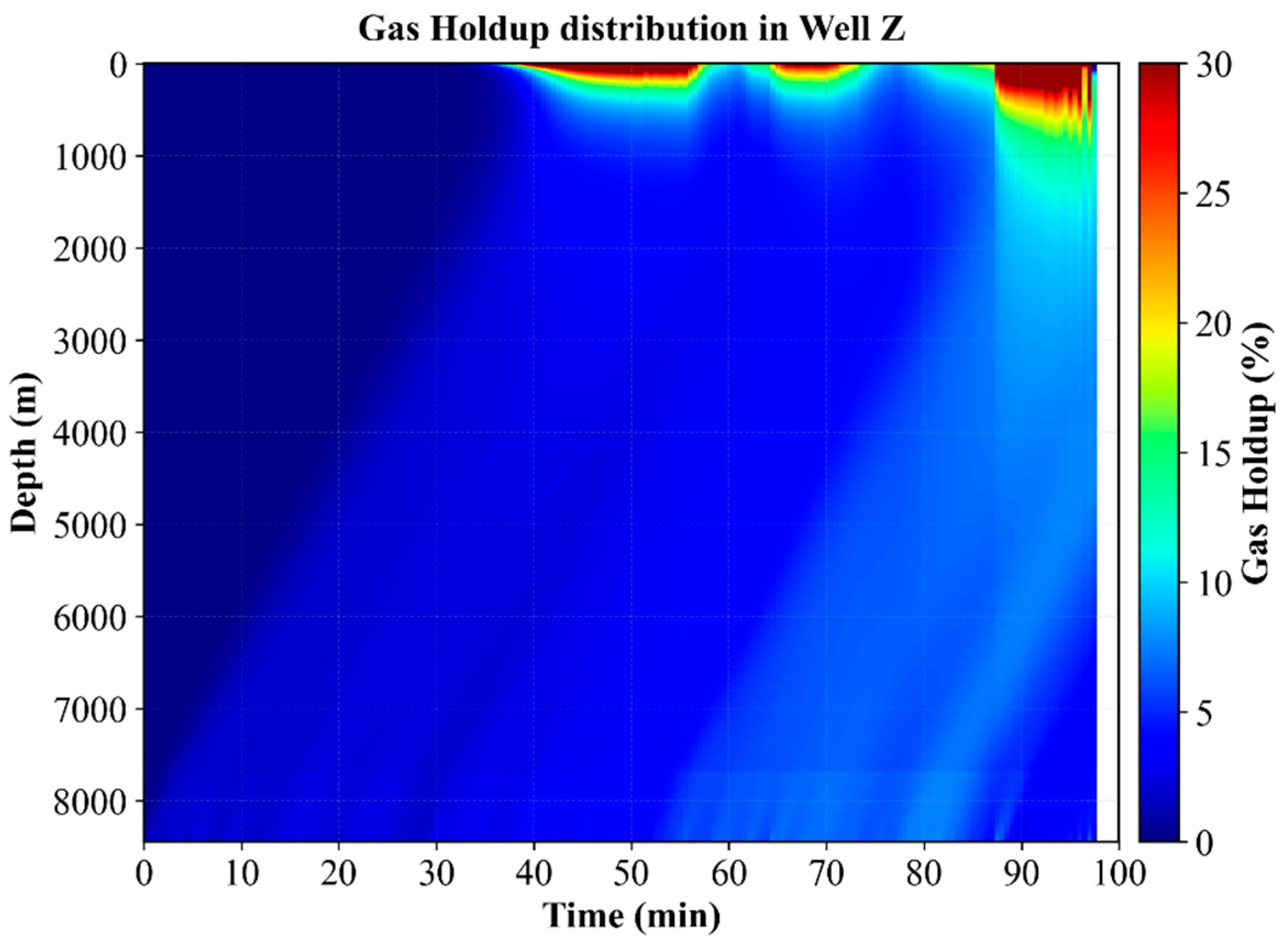
Figure 8 presents the cloud map of the annular gas holdup distribution for Well Z obtained through inversion. Since this well is a deviated well and the drilling fluid density is high, the upward migration velocity and expansion characteristics of the gas in the annulus are different from those of Well L. After the casing pressure was decreased at 62.5 min, the gas expansion accelerated and the gas holdup distribution exhibited a trend of rapid expansion toward the wellhead; this is consistent with the field observations of rising casing pressure and pit gain. Furthermore, intensified gas kick occurred multiple times for Well Z after managed pressure adjustments. Multiple fluctuations in gas holdup near the bottomhole are observed in the cloud map, reflecting the dynamic response characteristics of gas kick intensity to changes in bottomhole pressure. After the well was shut in at 87 min, a process of sudden gas holdup increase is also observed in the cloud map due to the gas being unable to be discharged in a short time and accumulating at the wellhead. In summary, the inverted gas holdup distribution can intuitively reflect the migration and expansion processes of gas kick within the wellbore under complex operating conditions, providing downhole state information for determining the timing of managed pressure intervention. Although the gas holdup fields in Figure 4 and Figure 8 cannot be measured point by point and thus have no spatially resolved reference, the inverted distributions are still quantitatively constrained by the real-time observations rather than assessed only qualitatively. On the one hand, the field is converted to the surface pit gain, which agrees with the measured pit gain at MAEs of 0.174 m3 and 0.114 m3 for Well L and Well Z and thereby constrains its cumulative gas content; on the other hand, the distribution governs the hydrostatic pressure of the gas–liquid mixture and hence the casing pressure, whose inverted values match the measurements at MAEs of 0.113 MPa and 0.135 MPa. The inverted gas holdup field is therefore anchored by two independent quantitative measurements at every time step.
Figure 8.
Spatiotemporal distribution of inverted annular gas holdup for Well Z.
As shown in Table 3 below, the inversion model demonstrates high accuracy under different operating conditions for both wells. The MAEs for the casing pressure inversion are 0.113 MPa and 0.135 MPa, respectively, indicating that the inversion model is capable of stable and reliable tracking of the casing pressure. The MAEs for the pit gain inversion are 0.174 m3 and 0.114 m3, respectively; these results are able to reflect the gas–liquid distribution within the wellbore and accurately calculate the variations in pit volume during the gas kick process. The MAEs for the SPP are 1.324 MPa and 0.954 MPa, respectively, primarily because the SPP is subjected to the superimposed effects of multiple factors, such as pump rate fluctuations, changes in drilling parameters, and wellbore friction. Comparing the two wells, the inversion accuracy of the SPP and pit gain for Well Z is superior to that of Well L, which is related to the relatively stable SPP fluctuations of Well Z during most of the simulation period.
Table 3.
Error statistics of inversion parameters for the two wells.
4. Prediction Method for MPD Intervention Timing Based on Inverted Wellbore States
Determining when to adjust managed pressure parameters during MPD is essentially a prediction and decision-making problem with temporal constraints. Traditional approaches rely on the analysis and judgment of parameters such as casing pressure and pit gain by field engineers, which is characterized by significant lag. Section 3 has verified that the inversion model is able to track real-time changes in wellbore gas–liquid distribution with high accuracy. On this basis, this chapter uses the inverted wellbore flow states as initial conditions and utilizes a multiphase flow model to predict the short-term future wellbore flow states. A logical chain of “real-time inversion–forward prediction–intervention decision” is proposed and validated using Wells L and Z in the Shunbei block.
4.1. Intervention Timing Prediction Method
4.1.1. Prediction Method for Safe Casing Pressure
During the MPD process, maintaining the BHP no lower than the formation pore pressure is the fundamental condition for preventing the continuous intensification of gas kick. Given a specific pump rate, current wellbore pressure, and gas–liquid distribution, the minimum SBP required to satisfy this condition is defined as the safe casing pressure (SCP). Its calculation relationship is as follows [25]:
In Equation (25), is the formation pore pressure, MPa; is the hydrostatic pressure generated by the annular fluid under gas–liquid mixed-phase conditions at the current moment, MPa; is the frictional pressure drop of the annular fluid flow, MPa.
Since EnKF inverts the annular gas holdup distribution and the pressure profile at each time step, the SCP at the current moment can be directly calculated based on the inversion results. Subsequently, a multiphase flow model is utilized to perform forward calculation of the flow state for the next step, thereby obtaining the predicted SCP . As the influx gas continuously migrates upward and expands in the annulus, the hydrostatic pressure of the gas–liquid mixed phase continues to decrease; consequently, the required SCP increases over time until it exceeds the pressure limit of the equipment or the operational capacity of the site.
4.1.2. Intervention Trigger Conditions
To comprehensively reflect the intensity of gas kick and avoid misjudgments based on a single indicator, three categories of intervention trigger conditions are established in this study. Satisfying any of these conditions is sufficient to trigger an intervention alert.
Condition 1 (SCP condition): The predicted SCP exceeds 5 MPa for a continuous 2 min. This condition directly reflects the requirement of SBP to maintain bottomhole pressure balance; the 5 MPa threshold is jointly determined by the pressure control capacity of the drilling equipment in the Shunbei block and the comprehensive consideration of the engineers.
Condition 2 (Pit gain condition): The predicted cumulative pit gain exceeds 1 m3 for a continuous duration of 2 min. This condition quantifies the threat level of the formation influx to site safety by estimating the surface volume converted from the influx gas; the threshold is determined based on the statistical analysis of typical influx volumes from historical kick events in the Shunbei block.
Condition 3 (Inlet–outlet density difference condition): The predicted drilling fluid density difference between the inlet and outlet exceeds 0.05 SG. This condition reflects the influence of the gas content in the annulus on the density of the returned fluid.
The design of these multiple conditions integrates physical model predictions with multi-indicator safety thresholds, enabling the quantification of the judgment regarding MPD intervention timing. These thresholds are block-specific and equipment-specific configurable parameters rather than universal constants. The 5 MPa SCP threshold is the safety upper pressure limit of the simplified MPD equipment in the Shunbei block, above which operation is still feasible but the safety redundancy for downhole complications is reduced, while the 1 m3 pit gain threshold is the overflow-judgment criterion commonly used on-site, beyond which the outlet is continuously monitored for overflow. The inversion, forward-prediction, and multi-indicator triggering framework itself is independent of these values, so transferring the method to other fields keeps the framework unchanged and only requires recalibrating the thresholds against the local equipment limits and historical kick statistics. Adjusting the SCP threshold mainly shifts the warning lead time, with a more conservative value giving earlier alerts but more false alarms and a more relaxed value giving later alerts; since an alert is issued once any single indicator is met, this multi-indicator redundancy reduces the sensitivity of the decision to the precise value of any individual threshold.
4.2. Case Studies of MPD Intervention Timing Prediction
In this section, the MPD kick conditions of Well L and Well Z are selected, respectively, to validate the intervention timing prediction method proposed in Section 4.1. By taking the real-time wellbore flow states obtained through inversion as the initial conditions, a multiphase flow model is utilized to calculate the SCP for the next time step, and a comparison with the actual field operations is then conducted.
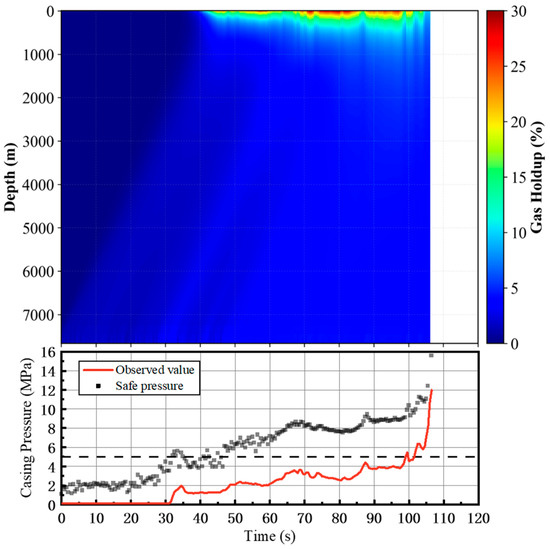
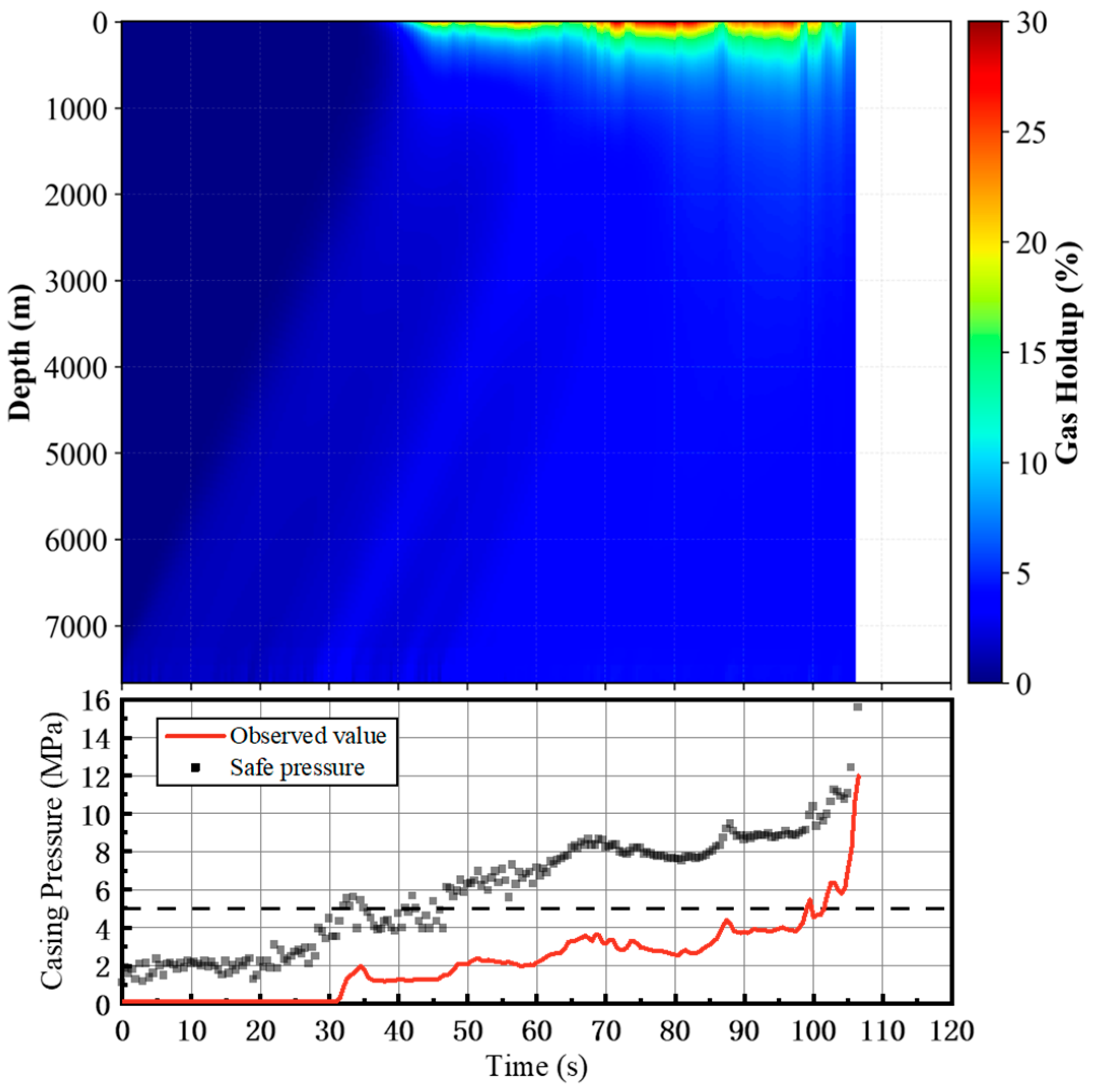
Figure 9 presents the intervention timing prediction results for Well L based on SCP. The upper panel is the spatiotemporal distribution of the inverted annular gas holdup, and the lower panel is the comparison curves between the measured casing pressure and the SCP, where the dashed line represents the 5 MPa safety threshold.
Figure 9.
Spatiotemporal distribution of inverted gas holdup and SCP prediction results for Well L.
During the initial 30 min of the MPD process, gas kick had already occurred within the wellbore; but it was not identified on-site in a timely manner, with the casing pressure maintained at 0.1 MPa. During this stage, the inverted gas holdup cloud map indicates that a low-concentration gas distribution has appeared near the bottomhole. However, since the gas has not yet undergone large-scale expansion, the SCP predicted for the next time step at each time point is consistently lower than the threshold; therefore, the system does not trigger an intervention alert. Starting from the 32nd min, as the total hydrocarbon at the wellhead increases, the casing pressure is actively increased from 0 to 1.5 MPa on-site. The inversion model simultaneously captures this casing pressure mutation and updates the gas–liquid distribution status within the wellbore.
During the 45–50 min interval, as the influx gas continues its upward migration and expansion within the annulus, the hydrostatic pressure of the gas–liquid mixed phase decreases significantly. Consequently, the SCP rapidly climbs to the 4–5 MPa range. At the 49th min, the system detects that the predicted SCP has exceeded 5 MPa for a continuous duration of 2 min, thereby triggering an intervention alert that advises the on-site team to promptly adjust pressure control parameters or prepare for a well shut-in. At this point, the gas holdup cloud map indicates that the majority of the gas has migrated to the upper-middle section of the wellbore (shallower than approximately 2000 m), and the gas holdup in the near-wellhead region is increasing rapidly; this validates the underlying cause for the SCP exceeding the threshold.
Thereafter, the predicted SCP continued to surge. At the 102nd min, the on-site casing pressure jumped from 3.8 MPa to 5.9 MPa, and the crew was forced to hoist the drill string and shut in the well. The intervention alert provided by the prediction system is approximately 53 min ahead of the actual on-site shut-in operation, offering a sufficient response time window for the field personnel. From an engineering perspective, if measures such as increasing the casing pressure or adjusting the pump rate are taken promptly following the intervention alert, the gas expansion process is theoretically delayed effectively, thereby avoiding the passive scenario of an emergency shut-in caused by a sudden SBP surge.
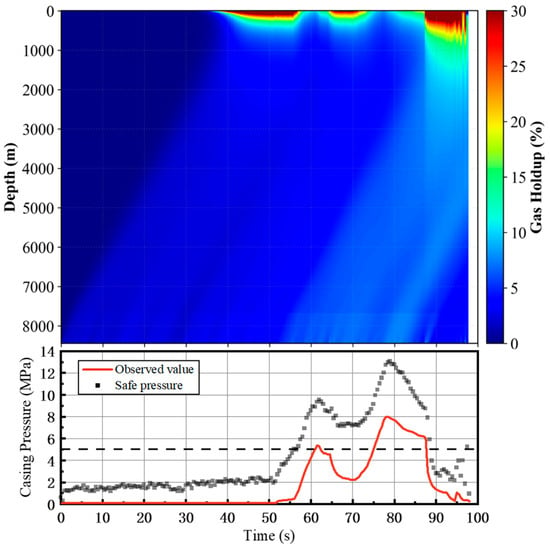
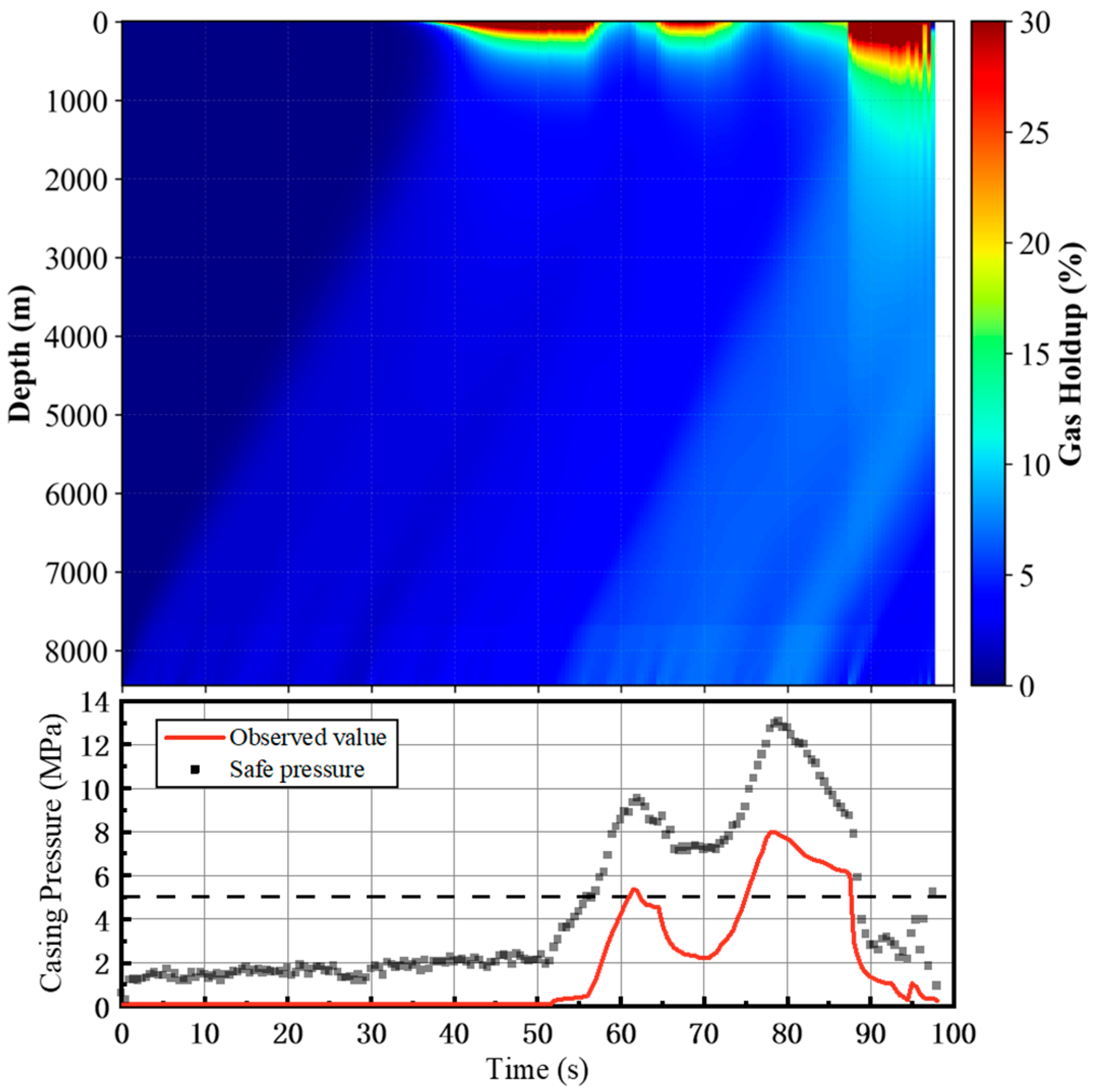
Figure 10 presents the intervention timing prediction results for Well Z based on the SCP. The operational conditions of this well are more complex than those of Well L: the upward migration of gas in the inclined section is influenced by the inclination angle, and the casing pressure exhibited a “rise–fall–rise” variation during the on-site pressure control adjustment process. These factors impose higher requirements on the robustness of the prediction system.
Figure 10.
Spatiotemporal distribution of inverted gas holdup and SCP prediction results for Well Z.
During the initial 51 min, gas kick occurred within the wellbore, and the influx gas gradually migrated upward along the annulus; however, the site engineers did not identify the kick, with the casing pressure maintained at 0.1 MPa. The gas holdup cloud map indicates that a low-concentration gas zone appeared from the bottomhole to the middle section of the wellbore during this stage. The predicted SCP increased slowly within the 1–2 MPa range and had not yet reached the threshold. Between 51 and 55 min, the SCP increased from 2 MPa to 5 MPa. Starting from the 56th min, the engineers rapidly increased the casing pressure from 0.1 MPa to 5.4 MPa. At approximately the 58th min, the system detected that the predicted SCP exceeded the 5 MPa threshold for the first time continuously, thereby issuing an intervention alert. This alert timing is almost synchronized with the timing of the casing pressure adjustment implemented by the site engineers, demonstrating high consistency between the prediction system and the engineers’ operational judgment. However, the pressure control value adjusted by the engineers was relatively low, which led to the subsequent intensification of the kick.
However, the casing pressure was actively reduced on-site at 62.5 min. The gas holdup cloud map dynamically displays a resurgence of gas holdup near the bottomhole after this moment, reflecting the physical response where the formation gas kick further increases following the reduction in BHP. Nevertheless, due to the gas discharge at the wellhead, the predicted SCP briefly declined before rising rapidly again. The casing pressure reached 8.0 MPa at 77.5 min, and the on-site well shut-in was completed at 87 min. For this case, the prediction system provided the first intervention alert approximately 29 min before the actual on-site shut-in operation.
Comparing the prediction results of the two wells, Well L is characterized by a large gas kick scale and a high gas expansion rate, with the prediction system achieving a lead time of 53 min. For Well Z, despite multiple on-site pressure control adjustments, the prediction system still provides an effective warning 29 min prior to the well shut-in. These two cases demonstrate that the MPD intervention timing prediction method based on inverted states provides engineeringly significant safety redundancy under various well types (vertical/inclined wells), gas kick intensities, and pressure control strategies, thereby validating the applicability and practicality of the proposed method. In terms of computational performance, all computations were performed in MATLAB R2022b on a workstation equipped with an Intel Core i9-13900K CPU and 64 GB of RAM.. On this platform, the average wall-clock time per step is 12.72 s for the inversion alone, comprising the forward computation and the EnKF correction, and 23.68 s for the complete loop that additionally includes the forward-prediction-based intervention decision, with the latter value depending on the prediction step length adopted in the decision. As both values are below the 30 s field data interval, the entire sequence of inversion, prediction, and decision can be completed within a single data interval, which confirms the real-time feasibility of the method on standard hardware.
5. Conclusions
Addressing the engineering requirements for early gas kick identification and intervention timing judgment during MPD in ultra-deep wells, this study establishes a real-time wellbore flow state inversion method based on EnKF data assimilation. On this basis, a framework for predicting safe MPD intervention timing based on the inverted states is proposed. The method is validated using field mud logging data from Well L and Well Z in the Shunbei block, and the main conclusions are as follows:
(1) A wellbore flow state inversion method for MPD integrating physical models with real-time data is established. By employing a transient multiphase flow model as the EnKF forecast operator and utilizing field-recorded casing pressure, SPP, and pit gain as the observation vector, model deviations are continuously corrected through a “predict–update” iteration loop. This approach achieves the dynamic inversion of wellbore pressure profiles and gas holdup distributions. The method overcomes the inherent deficiencies of traditional forward models, such as high sensitivity to initial conditions, error accumulation, and delayed responses to abrupt operational conditions.
(2) Field validation demonstrates that the inversion method is characterized by high accuracy. For the two test wells, the MAEs for casing pressure are 0.113 MPa and 0.135 MPa, respectively; the MAEs for pit gain are 0.174 m3 and 0.114 m3; and the MAEs for SPP are 1.324 MPa and 0.954 MPa. The spatiotemporal distribution cloud maps of the inverted annular gas holdup provide an intuitive reflection of the entire process of gas migration and expansion within the wellbore, effectively addressing the challenge of unclear wellbore flow states during MPD operations.
(3) A method for predicting MPD intervention timing based on inverted states is proposed. By taking the current wellbore flow states obtained through inversion as the initial conditions, SCP is calculated using a multiphase flow model; this, combined with multi-indicator trigger conditions, achieves the quantitative judgment of intervention timing. The validation results for Well L and Well Z demonstrate that the method issues alerts approximately 53 min and 29 min ahead of the actual on-site intervention times, respectively, providing a significant engineering safety margin for field operations.
(4) The method exhibits wide operational adaptability, although there remains room for further improvement. Validation results indicate that the method is effective across vertical wells, inclined wells, various drilling fluid densities, and different gas kick intensities. Future research should focus on the adaptive adjustment of the covariance matrix, the modeling of formation pressure uncertainty, the optimization of real-time computational efficiency, and region-specific threshold calibration to further enhance the applicability of the method across an even broader range of operational scenarios.
Several simplifying assumptions adopted in the multiphase flow model define the current scope of applicability and should be acknowledged. First, the wellbore flow is treated as one-dimensional, and radial variations in pressure and temperature within the gas and liquid phases are neglected; this is acceptable for the near-vertical and deviated ultra-deep wells studied here but may become less accurate for highly deviated or horizontal sections. Second, cuttings are lumped with the drilling fluid as a single phase and cutting transport is not modeled separately; in horizontal wells, the formation of cutting beds can significantly increase the frictional pressure drop and would therefore affect the safe casing pressure calculation, which is not captured by the present model. Third, interphase mass transfer between the gas and liquid phases (e.g., gas dissolution and exsolution, particularly relevant for oil-based muds) is neglected. Fourth, although the data-assimilation mechanism relaxes the required accuracy of the empirical closure relationships and the adopted drift–flux correlation spans the bubbly–slug-transition regimes, the available field datasets do not include a reference case dominated by strong phase segregation or churn flow, so the method has not yet been validated for such transitional-flow conditions. Future work will extend the model to multi-dimensional and cutting-transport-coupled formulations, incorporate interphase mass transfer, and seek field or high-fidelity synthetic datasets to validate the framework under strong phase segregation and horizontal-well conditions. In addition, the mud properties are assumed to be uniform along the wellbore apart from temperature and pressure effects, whereas in practice they may vary with location and operating time because of mud-system maintenance, contamination, or cutting loading; such spatiotemporal variations are not explicitly modeled and are left for future refinement. It should also be stressed that the decision thresholds (e.g., 5 MPa for SCP and 1 m3 for pit gain) are specific to the equipment and conditions of the Shunbei block; although the triggering framework is independent of these values, the thresholds themselves are not universal and may require recalibration when the method is applied to other fields or operating conditions. Furthermore, the present study does not include a direct quantitative comparison with classical forward-only models without data assimilation or with data-driven approaches such as LSTM; a systematic benchmarking against these methods is identified as a meaningful direction for future work. Finally, the ensemble size in this study was determined from theoretical analysis and the empirical performance observed in the field cases; a dedicated quantitative sensitivity and convergence analysis with respect to this parameter, which would further substantiate the present choice, constitutes a worthwhile refinement and is planned as part of future work.
Author Contributions
Conceptualization, X.C.; Methodology, X.C. and J.L.; Software, H.Y. and Z.L.; Validation, Y.Y.; Formal analysis, Y.Y. and J.L.; Resources, X.C.; Data curation, X.C. and W.G.; Writing—original draft, X.C., W.G., Y.Y. and Z.L.; Writing—review and editing, J.L. and H.Y.; Visualization, W.G. and H.Y.; Project administration, X.C., W.G. and J.L.; Funding acquisition, X.C. and Y.Y. All authors have read and agreed to the published version of the manuscript.
Funding
This research received no external funding.
Data Availability Statement
The data presented in this study are available on request from the corresponding author.
Conflicts of Interest
The authors Xiuping Chen, Wei Gao, and Yongzhi Yang were employed by the Sinopec Northwest Oilfield Company. The remaining authors declare that the research was conducted in the absence of any commercial or financial relationships that could be construed as a potential conflict of interest.
References
- Liao, Y.; Sun, X.; Sun, B.; Wang, Z.; Zhang, J.; Lou, W. Wellhead backpressure control strategies and outflow response characteristics for gas kick during managed pressure drilling. J. Nat. Gas Sci. Eng. 2020, 75, 103164. [Google Scholar] [CrossRef] [Scilit]
- Kinik, K.; Gumus, F.; Osayande, N. Automated Dynamic Well Control with Managed-Pressure Drilling: A Case Study and Simulation Analysis. SPE Drill. Complet. 2015, 30, 110–118. [Google Scholar] [CrossRef] [Scilit]
- Avelar, C.S.; Ribeiro, P.R.; Sepehrnoori, K. Deepwater gas kick simulation. J. Pet. Sci. Eng. 2009, 67, 13–22. [Google Scholar] [CrossRef] [Scilit]
- Sun, B.; Fu, W.; Wang, N.; Wang, Z.; Gao, Y. Multiphase flow modeling of gas intrusion in oil-based drilling mud. J. Pet. Sci. Eng. 2019, 174, 1142–1151. [Google Scholar] [CrossRef] [Scilit]
- Yang, H.-W.; Li, J.; Jiang, J.-W.; Zhang, H.; Guo, B.-Y.; Zhang, G.; Chen, W. A dynamic managed pressure well-control method for rapid treatment of gas kick in deepwater managed pressure drilling. Pet. Sci. 2022, 19, 2297–2313. [Google Scholar] [CrossRef] [Scilit]
- Smith, J.R.; Patel, B.M. A proposed method for planning the best initial response to kicks taken during managed-pressure-drilling operations. SPE Drill. Complet. 2012, 27, 194–203. [Google Scholar] [CrossRef] [Scilit]
- Wei, C.; Chen, Y. A study of the fixed choke and constant outflow method for riser gas handling. Process Saf. Environ. Prot. 2023, 174, 756–769. [Google Scholar] [CrossRef] [Scilit]
- Xu, Z.; Song, X.; Li, G.; Wu, K.; Pang, Z.; Zhu, Z. Development of a transient non-isothermal two-phase flow model for gas kick simulation in HTHP deep well drilling. Appl. Therm. Eng. 2018, 141, 1055–1069. [Google Scholar] [CrossRef] [Scilit]
- Shi, H.; Holmes, J.A.; Durlofsky, L.J.; Aziz, K.; Diaz, L.; Alkaya, B.; Oddie, G. Drift-flux modeling of two-phase flow in wellbores. SPE J. 2005, 10, 24–33. [Google Scholar] [CrossRef] [Scilit]
- Su, Y.; Ma, H.; Xia, L.; Peng, C.; Guo, J.; Shen, X.; Fu, J.; Tang, Y. Prediction and analysis of flow behavior during gas kicks considering wellbore–formation coupling and gas solubility. Front. Earth Sci. 2025, 13, 1558305. [Google Scholar] [CrossRef] [Scilit]
- Wei, C.; Adeyemi, T.; Sharma, J.; Chen, Y. Improved gas influx distribution estimation using interfacial area transport equation (IATE) enabled two-fluid model: An advanced modeling and full-scale experimental study. Int. J. Multiph. Flow 2024, 172, 104706. [Google Scholar] [CrossRef] [Scilit]
- Sleiti, A.K.; Takalkar, G.; El-Naas, M.H.; Hasan, A.R.; Rahman, M.A. Early gas kick detection in vertical wells via transient multiphase flow modelling: A review. J. Nat. Gas Sci. Eng. 2020, 80, 103391. [Google Scholar] [CrossRef] [Scilit]
- Yin, Q.; Yang, J.; Tyagi, M.; Zhou, X.; Hou, X.; Wang, N.; Tong, G.; Cao, B. Machine learning for deepwater drilling: Gas-kick-alarm Classification using pilot-scale rig data with combined surface-riser-downhole monitoring. SPE J. 2021, 26, 1773–1799. [Google Scholar] [CrossRef] [Scilit]
- Yin, Q.; Yang, J.; Tyagi, M.; Zhou, X.; Hou, X.; Cao, B. Field data analysis and risk assessment of gas kick during industrial deepwater drilling process based on supervised learning algorithm. Process Saf. Environ. Prot. 2021, 146, 312–328. [Google Scholar] [CrossRef] [Scilit]
- Obi, C.; Falola, Y.; Manikonda, K.; Hasan, A.; Hassan, I.; Rahman, M. A machine learning approach for gas kick identification. SPE Drill. Complet. 2023, 38, 663–681. [Google Scholar] [CrossRef] [Scilit]
- Evensen, G. The ensemble Kalman filter: Theoretical formulation and practical implementation. Ocean Dyn. 2003, 53, 343–367. [Google Scholar] [CrossRef] [Scilit]
- Lorentzen, R.J.; Fjelde, K.K.; Frøyen, J.; Lage, A.C.; Nævdal, G.; Vefring, E.H. Underbalanced and low-head drilling operations: Real time interpretation of measured data and operational support. In Proceedings of the SPE Annual Technical Conference and Exhibition, New Orleans, LA, USA, 30 September–3 October 2001; p. SPE-71384-MS. [Google Scholar] [CrossRef]
- Gravdal, J.E.; Lorentzen, R.J.; Fjelde, K.K.; Vefring, E.H. Tuning of computer model parameters in managed-pressure drilling applications using an unscented-kalman-filter technique. SPE J. 2010, 15, 856–866. [Google Scholar] [CrossRef] [Scilit]
- Wei, C.; Chen, Y. Improved understanding of gas influx behaviors during riser gas events: A data assimilation approach. In Proceedings of the AADE 2022 Fluids Technical Conference, Houston, TX, USA, 19–20 April 2022. [Google Scholar]
- Wei, C.; Chen, Y. A data assimilation-based method for real-time monitoring and estimation of gas influx size and distribution during gas migration in a marine drilling riser. Process Saf. Environ. Prot. 2025, 193, 1354–1369. [Google Scholar] [CrossRef] [Scilit]
- Hasan, A.; Kabir, C. Wellbore heat-transfer modeling and applications. J. Pet. Sci. Eng. 2012, 86, 127–136. [Google Scholar] [CrossRef] [Scilit]
- Zuber, N.; Findlay, J.A. Average volumetric concentration in two-phase flow systems. J. Heat Transf. 1965, 87. [Google Scholar] [CrossRef] [Scilit]
- Fjelde, K.K.; Karlsen, K.H. High-resolution hybrid primitive–conservative upwind schemes for the drift flux model. Comput. Fluids 2002, 31, 335–367. [Google Scholar] [CrossRef] [Scilit]
- MacCormack, R.W. The effect of viscosity in hypervelocity impact cratering. J. Spacecr. Rocket. 2003, 40, 757–763. [Google Scholar] [CrossRef] [Scilit] [PubMed]
- Vieira, P.; Arnone, M.; Russel, B.; Cook, I.; Moyse, K.; Torres, F.; Qutob, H.; Yuesheng, C.; Qing, C. Constant bottomhole pressure: Managed-pressure drilling technique applied in an exploratory well in Saudi Arabia. In Proceedings of the SPE/IADC Managed Pressure Drilling and Underbalanced Operations Conference and Exhibition, Abu Dhabi, United Arab Emirates, 28–29 January 2008; p. SPE-113679-MS. [Google Scholar] [CrossRef] [Scilit]

Disclaimer/Publisher’s Note: The statements, opinions and data contained in all publications are solely those of the individual author(s) and contributor(s) and not of MDPI and/or the editor(s). MDPI and/or the editor(s) disclaim responsibility for any injury to people or property resulting from any ideas, methods, instructions or products referred to in the content. |
© 2026 by the authors. Licensee MDPI, Basel, Switzerland. This article is an open access article distributed under the terms and conditions of the Creative Commons Attribution (CC BY) license.