


Abstract
Heavy crude oils exhibit complex rheological behavior governed by the interplay between temperature, pressure, and colloidal microstructure. In this work, the coupled influence of pressure and temperature on the viscoelastic response of five Mexican heavy crude oils was experimentally investigated under reservoir-relevant conditions. Steady and oscillatory shear measurements were performed at temperatures between 10 and 30 °C and at pressures ranging from atmospheric to 10.034 MPa. The results revealed pronounced shear-thinning behavior for all samples, with viscosity increasing systematically with pressure and decreasing strongly with temperature. Pressure effects were particularly significant at low temperatures, where enhanced elastic behavior and longer characteristic relaxation times were observed. Oscillatory measurements showed that pressurization shifted the viscoelastic crossover toward lower frequencies, indicating pressure-induced reinforcement of internal structures and reduced molecular mobility. The viscoelastic response was interpreted using a pressure-modified Arrhenius model, which successfully described the dependence of characteristic relaxation time on temperature and pressure. The fitted activation energies and activation volumes revealed systematic differences associated with crude oil composition and colloidal stability. Samples with lower resin-to-asphaltene ratios exhibited stronger pressure sensitivity and higher structural rigidity. The results demonstrate that pressure and temperature jointly control the relaxation dynamics and structural organization of heavy crude oils. These findings provide useful insights into flow assurance, transport, and production operations involving heavy crude systems under thermobaric conditions.
1. Introduction
Heavy crude oils constitute strategic energy resources worldwide; however, their production, transportation, and processing remain technically challenging due to their unfavorable physicochemical properties. These systems are characterized by high viscosity, low API gravity, elevated contents of heavy fractions such as resins and asphaltenes, and complex colloidal organization. Such characteristics strongly affect fluid mobility and create significant flow-assurance problems during reservoir production and transportation operations [1]. Recent studies have mainly focused on viscosity prediction and flow correlations under varying operational conditions, while fewer investigations have linked pressure effects with viscoelastic relaxation dynamics [2].
The rheological behavior of heavy crude oils differs substantially from that of simple Newtonian fluids because their internal structure evolves continuously in response to external variables such as temperature, pressure, and deformation history. According to colloidal descriptions of petroleum systems, asphaltenes may form aggregated structures stabilized by resins within a continuous maltene phase. Consequently, changes in thermodynamic conditions can modify intermolecular interactions and alter the balance between viscous and elastic responses. These structural changes directly influence transport behavior and operational performance [3,4,5].
Temperature has traditionally been recognized as the dominant variable governing heavy crude oil rheology because increasing temperature reduces viscosity and facilitates molecular mobility. In contrast, the influence of pressure has received considerably less attention, primarily due to the experimental difficulties of performing rheological measurements under controlled thermobaric conditions. Nevertheless, pressure may substantially influence molecular organization by reducing free volume and modifying intermolecular interactions, thereby affecting viscosity, viscoelasticity, and relaxation dynamics [1]. The temperature sensitivity of heavy oils has been linked to changes in the organization of heavy fractions and their structural interactions [6].
Previous studies have reported pressure-dependent changes in viscosity, wax formation behavior, and viscoelastic properties of heavy crude oils and related systems. However, these investigations have largely focused on isolated effects of temperature or pressure and have mainly emphasized viscosity measurements. Quantitative analyses linking pressure-induced viscoelastic changes to structural relaxation dynamics and compositional descriptors remain limited, particularly for Mexican heavy crude oils [7,8].
Understanding relaxation dynamics is particularly important because the characteristic relaxation time provides a physically meaningful descriptor of the structural response of complex fluids. Variations in relaxation time reflect changes in molecular mobility and internal organization and may provide information regarding structural reinforcement or breakdown under different thermobaric conditions [8,9]. Heavy oil rheology is strongly influenced by the formation and disruption of aggregate structures involving asphaltenes, resins, and heavy fractions [10]. Resins contribute to stabilizing dispersed asphaltene structures, whereas lower resin-to-asphaltene ratios may favor stronger intermolecular association [11].
Therefore, the objective of this work was to experimentally investigate the coupled effects of temperature and pressure on the rheological and viscoelastic behavior of Mexican heavy crude oils under reservoir-relevant conditions. Steady and oscillatory shear measurements were performed under controlled thermobaric environments to evaluate viscosity, storage, and loss moduli, and characteristic relaxation dynamics. A pressure-modified Arrhenius approach was further employed to correlate relaxation behavior with temperature, pressure, and compositional descriptors associated with colloidal stability. The results provide insights into pressure-induced structural reinforcement and contribute to improved understanding of flow assurance and transport phenomena in heavy crude systems [12,13].
Unlike previous studies focused primarily on viscosity changes under pressure, the present work integrates steady and oscillatory rheological measurements with relaxation dynamics and compositional descriptors, providing a unified interpretation of pressure-induced structural reorganization in heavy crude oils.
2. Materials and Methods
2.1. Heavy Crude Oil Samples
Heavy crude oil samples from different regions of Mexico were used in this study. Each sample was identified by a code, as summarized in Table 1. The crude oils were provided by the Union for Services in the Oil Industry of the Faculty of Chemistry at the National Autonomous University of Mexico (UNAM).
Table 1.
Identification and general characteristics of the heavy crude oil samples analyzed in this study.
2.2. Composition
The composition of the heavy crude oils was determined using the SARA (Saturates, Aromatics, Resins, and Asphaltenes) method, following American Society for Testing and Materials (ASTM) D4124. This technique enables quantification of saturates, aromatics, resins, and asphaltenes. The method consists of two main stages: chromatographic separation of crude oil components using thin-layer chromatography, followed by quantification using a flame ionization detector.
SARA fractionation was performed according to ASTM D4124 using an Iatroscan MK6-s (NTS Instruments, Tokyo, Japan) equipped with a flame ionization detector. Silica gel chromatographic rods (Chromarod®, Iatron Laboratories, Tokyo, Japan 1 mm diameter, 120 mm length, 6 nm pore size, 5 μm particle diameter) were used as the stationary phase.
A volume of 2 μL of crude oil was applied onto the Chromarod®. Sequential development was performed using n-hexane (Chromasolv® Plus, ≥95%, Sigma-Aldrich, St. Louis, MO, USA), toluene (Chromasolv®, ≥99.9%, Sigma-Aldrich), and a methanol/methylene chloride mixture (3:57 v/v) prepared from methylene chloride (HPLC Plus, ≥99.9%, Sigma-Aldrich) and methanol (HPLC grade, 99.95%, J.T. Baker, Phillipsburg, NJ, USA), selectively eluting saturates, aromatics, and resins/asphaltenes, respectively. Quantification of each fraction was achieved using the flame ionization detector [14].
Elemental composition of carbon (C), hydrogen (H), nitrogen (N), and sulfur (S) was determined using a PerkinElmer 2400 CHNS elemental analyzer (Perkin-Elmer, Norwalk, CT, USA). Prior to analysis, the instrument was calibrated according to standard procedures [15,16]. Approximately 20 mg of each crude oil sample, carefully handled to minimize moisture contamination, was introduced into the analyzer. Elemental determination was carried out via complete and instantaneous oxidation of the sample at 975 °C. Helium (99.999%, Praxair, Danbury, CT, USA) was used as the carrier gas, and cystine served as the calibration standard.
2.3. Rheology
Rheological measurements were conducted using a Discovery Hybrid Rheometer (DHR-3, TA Instruments, New Castle, DE, USA) operating in stress-controlled mode and equipped with a high-pressure cell. A concentric cylinder geometry was employed (inner cylinder: 44 mm length, 26 mm diameter; gap: 3.5 mm depth and 2 mm lateral spacing). The sealed pressure cell allows operation up to 140 bar (2000 psi) over a temperature range of −10 to 150 °C. The sample volume was 9.5 ± 0.5 mL.
Samples were pressurized with high-purity nitrogen (99.9%, Praxair), while dry air supplied by a compressor was used to operate the rheometer. Measurements were performed at temperatures between 10 and 30 °C and pressures ranging from atmospheric pressure to 10.034 MPa.
Rheological measurements for each crude oil were performed following a three-step protocol. First, linear viscoelastic conditions were identified and used throughout subsequent experiments. Second, samples were equilibrated at fixed temperature and pressure and subjected to oscillatory shear over a defined angular frequency range, ensuring deformations remained within the linear viscoelastic regime (<10%). This step allowed determination of the storage and loss shear moduli (G′ and G″). Third, samples were subjected to steady shear flow to determine viscosity over a specified range of shear rates.
Prior to testing, each sample underwent a pretreatment protocol under mild conditions, consisting of equilibration at the minimum temperature and pressure of the experimental range (10 °C and atmospheric pressure). Samples were held under these conditions for 2 min, followed by steady shear at 10 s−1 for 10 s to ensure mechanical homogenization.
Oscillatory shear tests were conducted over an angular frequency range of 0.1–100 rad s−1 to obtain viscoelastic material functions (G′ and G″). Subsequently, steady shear flow tests were performed over a shear rate range of 0.1–100 s−1 to determine the viscosity (η). The pressure was then increased to the desired value, and oscillatory and steady shear tests were repeated. Measurements were carried out at atmospheric pressure and at 3.447, 6.865, and 10.034 MPa. After completing the pressure sequence, the temperature was increased to complete the full experimental matrix at 10, 20, and 30 °C.
3. Results and Discussion
3.1. Composition and Colloidal Structure of Heavy Crude Oils
The compositional characterization of the heavy crude oils studied, including SARA fractions, elemental composition, and API gravity, is summarized in Table 2. The analyzed samples exhibited API gravities between 8 and 16, corresponding to heavy and extra-heavy crude oils according to conventional classification criteria. Sample M078, with an API gravity of 8, was classified as extra-heavy, whereas the remaining samples corresponded to heavy crude oils.
Table 2.
Compositional characteristics and API gravity of the heavy crude oils used for structural and rheological interpretation.
Considerable differences in SARA composition were observed among the crude oils, particularly in the relative proportions of resins, asphaltenes, and aromatic fractions. Resins and asphaltenes accounted for a significant proportion of the heavy fractions across all samples, whereas saturated compounds exhibited substantial variability. Such compositional differences are expected to modify the internal colloidal organization of the crude oils and consequently influence their rheological response.
According to colloidal descriptions of petroleum systems, asphaltenes may form dispersed aggregates stabilized by resins within a continuous maltene phase. Under this framework, the balance between resins and asphaltenes is particularly relevant, as it determines the degree of colloidal stabilization and the tendency toward structural aggregation. Systems with lower resin-to-asphaltene ratios are expected to exhibit stronger intermolecular association and greater structural rigidity, whereas higher resin contents may promote stabilization of dispersed structures and increased molecular mobility [17].
The aromatic and saturated fractions may also influence structural organization. Aromatic compounds contribute to maintaining asphaltenes in a dispersed state, whereas saturated hydrocarbons may favor structural ordering phenomena under low-temperature conditions. Consequently, compositional differences among the investigated crude oils suggest distinct internal organizations that may lead to different rheological and viscoelastic responses under thermobaric conditions.
These compositional characteristics provide an initial structural framework for interpreting the pressure- and temperature-dependent rheological behavior discussed in the following sections.
3.2. Coupled Pressure–Temperature Effects on Viscosity and Flow Behavior
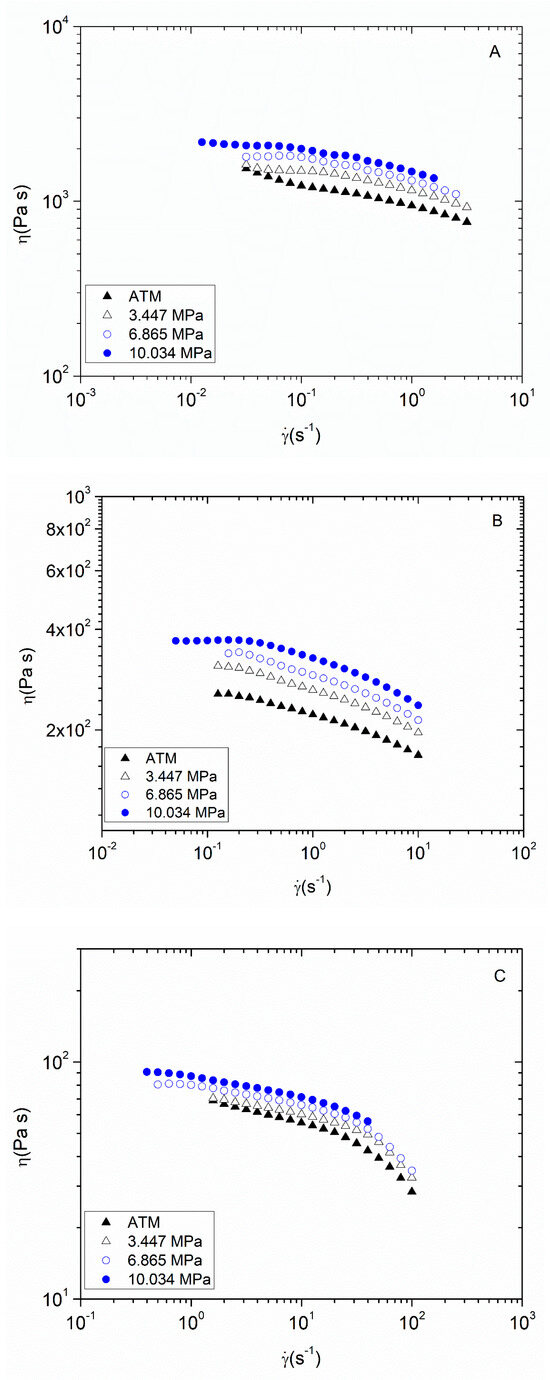
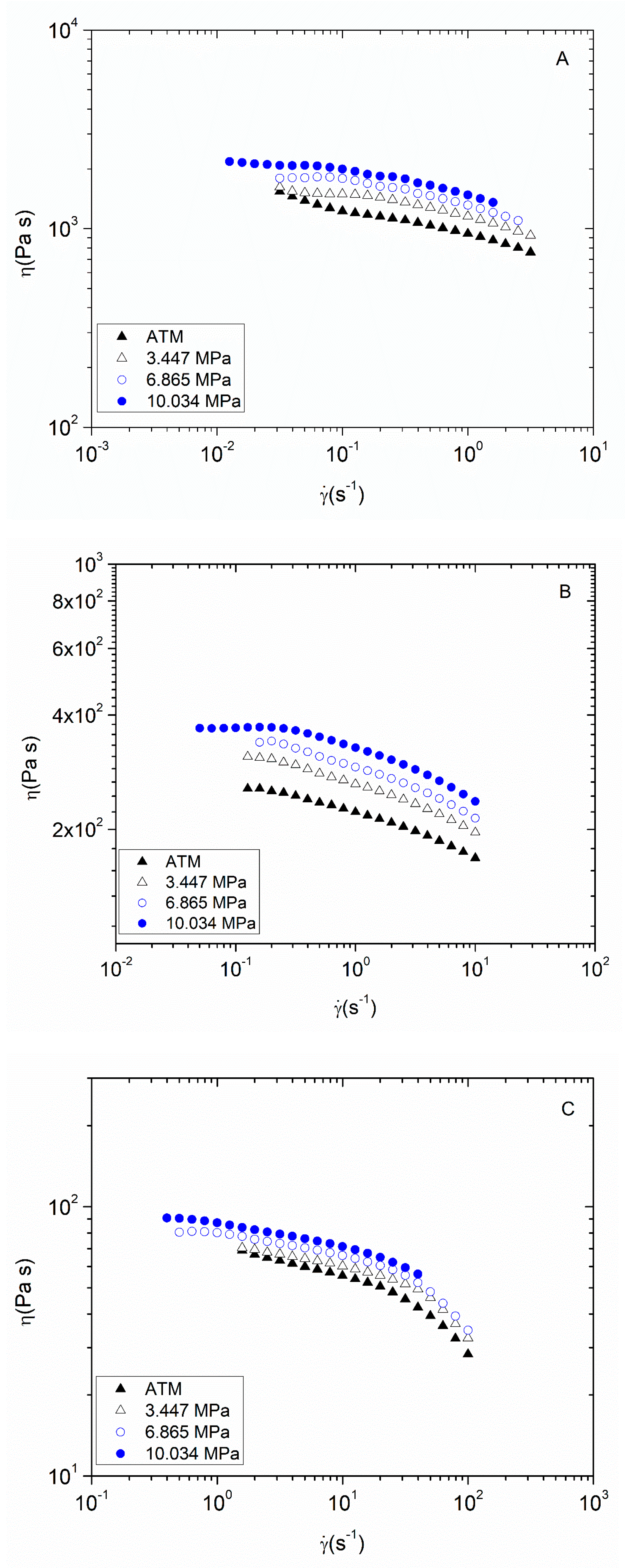
Figure 1 shows the viscosity of crude oil M136 as a function of shear rate under different temperature and pressure conditions. Similar trends were observed for the remaining crude oils and are presented in Appendix A. The rheological response of all samples exhibited a clear dependence on both temperature and pressure, indicating that flow behavior is governed by coupled thermobaric effects.
Figure 1.
Viscosity (η, Pa s) of crude M136 as a function of shear rate (, s−1), under isothermal conditions (10 °C (A), 20 °C (B), and 30 °C (C)) at different pressures: atmospheric pressure ATM (▲), 3.447 MPa (∆), 6.865 MPa (o), and 10.034 MPa (●).
Under all investigated conditions, viscosity decreased continuously as shear rate increased, confirming shear-thinning behavior characteristic of structured complex fluids. This response suggests progressive disruption and reorganization of internal structures under applied deformation, reducing resistance to flow as shear intensity increases. The effect was more pronounced at low temperatures, with higher viscosities and steeper slopes observed.
Temperature exerted a dominant influence on viscosity. Increasing temperature from 10 to 30 °C resulted in a substantial reduction in viscosity over the entire shear-rate range. This behavior can be attributed to enhanced molecular mobility and weakening of intermolecular interactions, which facilitate structural rearrangement and reduce resistance to flow. At elevated temperatures, the reduction in viscosity indicates a transition toward less organized internal structures.
Pressure produced the opposite effect. At constant temperature, increasing pressure systematically increased viscosity across all shear rates. Pressurization reduces free volume and enhances intermolecular interactions among heavy fractions, leading to greater resistance to structural rearrangement and, consequently, increased viscosity. The magnitude of this effect, however, was strongly temperature dependent.
The pressure effect was significantly more pronounced at low temperatures. For example, at 10 °C and low shear rates, pressurization from atmospheric pressure to 10.034 MPa resulted in substantial increases in viscosity, whereas at 30 °C, the corresponding changes were comparatively smaller. This behavior suggests that thermal energy progressively reduces the system’s sensitivity to pressure-induced volumetric constraints.
Importantly, pressure modified mainly the magnitude of viscosity rather than the qualitative flow behavior. The overall shape of the viscosity–shear-rate curves remained essentially unchanged, indicating that pressure does not significantly alter the pseudoplastic nature of the fluids but rather shifts the flow resistance.
To further quantify deviations from Newtonian behavior, experimental flow curves were fitted using the power-law model. The results showed that temperature produced a substantial reduction in non-Newtonian characteristics, whereas pressure effects were comparatively smaller. These observations indicate that temperature primarily controls structural flexibility, while pressure mainly influences the strength of intermolecular interactions.
Overall, these results suggest that temperature and pressure act through competing mechanisms: temperature promotes molecular mobility and structural relaxation, whereas pressure restricts molecular rearrangement through volumetric constraints. The observed rheological response, therefore, emerges from the balance between these opposing effects. The opposite effects of temperature and pressure suggest that the flow behavior is governed by the competition between thermal activation and volumetric restriction. Temperature increases molecular mobility and promotes structural rearrangement, whereas pressure reduces free volume and increases the persistence of intermolecular associations. Therefore, the pressure-induced increase in viscosity should not be interpreted solely as a densification effect but rather as evidence of a slower structural reorganization under compression.
To quantitatively describe the flow behavior, experimental data were fitted using the power-law model:
where k corresponds to the consistency index and n to the flow behavior index. Because apparent viscosity was analyzed instead of shear stress, the exponent obtained from viscosity curves corresponds to n − 1 rather than n.
Flow behavior indices remained below unity under all investigated conditions, confirming pseudoplastic behavior. Increasing temperature produced a slight increase in n, indicating a tendency toward more Newtonian behavior due to reduced structural organization. Pressure effects on n were comparatively smaller, suggesting that pressure primarily modifies flow resistance rather than the nature of the flow behavior itself. The quantitative effect of pressure on viscosity at representative structural regimes is summarized in Table 3.
Table 3.
Pressure-induced relative changes in viscosity at representative structural regimes of the flow curves for crude oil M136.
Consequently, the rheological response arises from the balance between thermal activation and pressure-induced flow restriction. The same experimental protocol and analysis were applied to the remaining crude oils, whose results are provided in Appendix A.
3.3. Pressure-Induced Viscoelastic Reinforcement
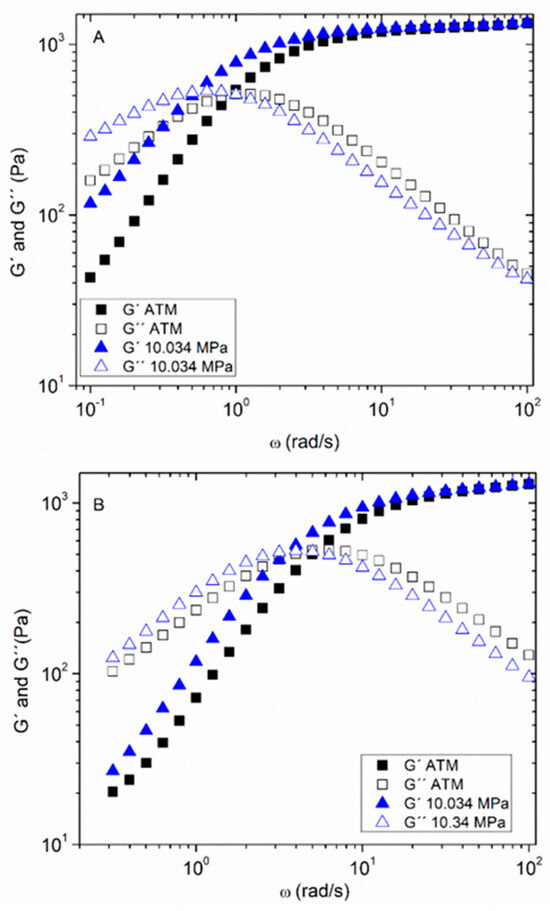
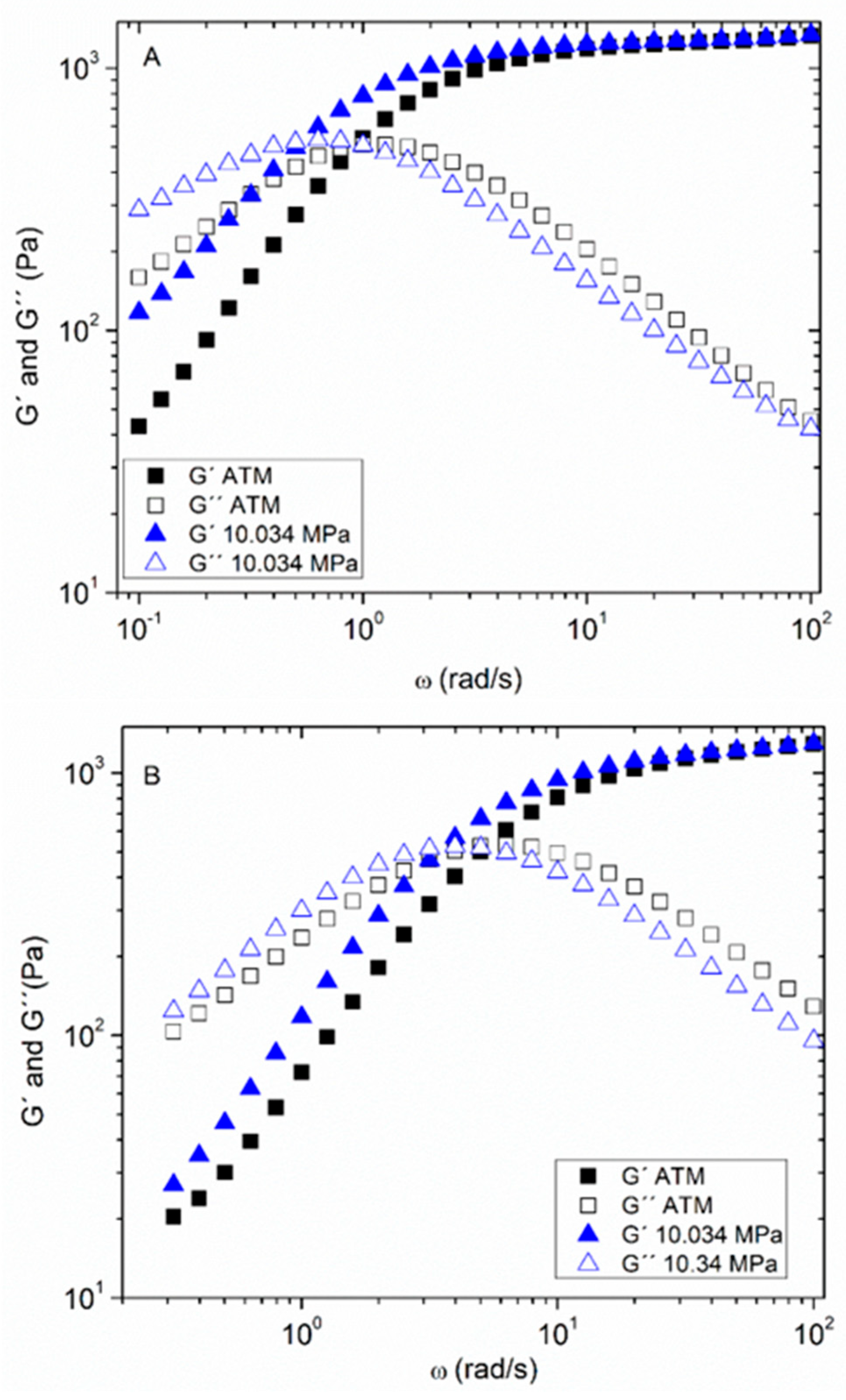
Oscillatory shear tests were performed under linear viscoelastic conditions, following a commonly used approach for asphalt-like materials, in which temperature and pressure are held constant while frequency is varied. From the G′ and G″ curves (see Figure 2), three characteristic viscoelastic regions can be identified.
Figure 2.
Crude oil M136, G′ and G″ modules in oscillatory frequency ω function, when the sample was at constant temperature (10 °C (A) and 20 °C (B)) and pressure (atmospheric pressure or 10.034 MPa). The markers ■ y □ correspond to G′ and G″ modules respectively when crude oil was at atmospheric pressure; the figures ▲ y ∆ correspond to G′ and G″ modules respectively when crude oil was 10.034 MPa.
The crossover frequency between G′ and G″ provides information about the system’s characteristic structural response time. Under the single-relaxation-time Maxwell approximation, the characteristic relaxation time can be estimated as:
where is the crossover frequency at which equals .
Increasing pressure shifted the crossover toward lower frequencies, indicating longer characteristic relaxation times and delayed structural rearrangement.
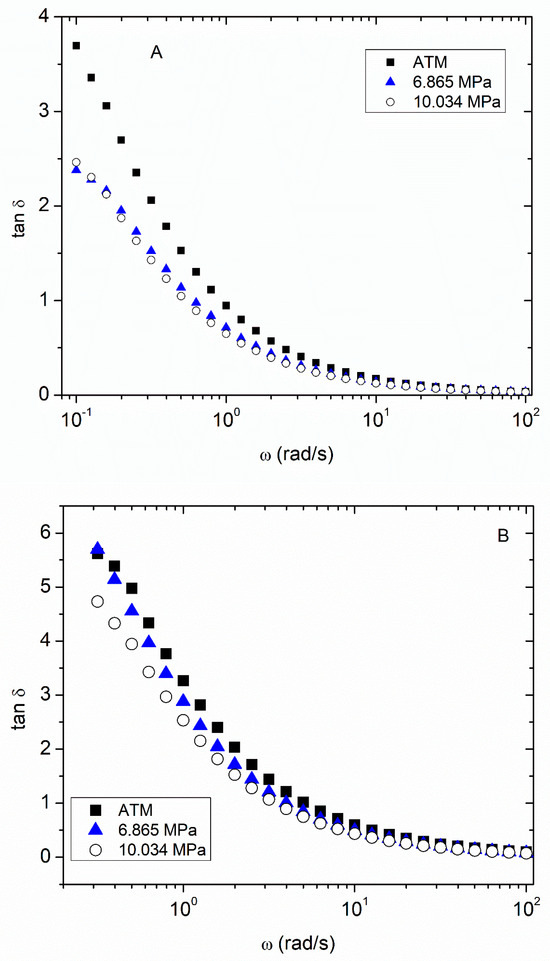
Figure 3 shows the loss factor tan δ (G″/G′) of crude oil M136 as a function of frequency at 10 and 20 °C under atmospheric pressure and elevated pressures. At frequencies below 10 rad s−1, tan δ decreases with increasing pressure, indicating a relative enhancement of elastic behavior. At higher frequencies, tan δ values converge, showing that pressure has no significant effect in this regime (see Figure 3).
Figure 3.
Crude oil M136, tan δ as a function of the oscillation frequency ω, when the sample was submitted to constant temperature (10 °C (A) and 20 °C (B)) and atmospheric pressure (ATM), 6.865 or 10.034 MPa.
The comparable pressure sensitivities of viscosity and characteristic relaxation time at 10 °C suggest that both properties are governed by related structural rearrangement mechanisms. Under these conditions, the internal colloidal structure is sufficiently persistent for pressure to affect both flow resistance and relaxation dynamics in a similar manner. As temperature increases, viscosity becomes less pressure-sensitive than λ, suggesting partial decoupling between steady-flow resistance and dynamic structural recovery.
3.4. Relaxation Dynamics Under Thermobaric Conditions
A sensitivity analysis was performed to evaluate the influence of pressure on both viscosity and characteristic relaxation time as a function of temperature. The results are summarized in Table 4.
Table 4.
Effect of Temperature on the Pressure Sensitivity of Viscosity and Relaxation Time.
For viscosity, the pressure sensitivity, expressed as (d(ln η))/dP, decreases significantly with increasing temperature. Specifically, values decreased from 0.050 at 10 °C to 0.007 at 30 °C. This trend indicates a progressive reduction in the dependence of viscosity on pressure as temperature increases. The observed behavior suggests that, at higher temperatures, the system becomes less sensitive to compressibility effects, likely due to enhanced molecular mobility and reduced intermolecular interactions.
A similar trend is observed for the characteristic relaxation time. The pressure sensitivity of the relaxation time, given by (d(lnλ))/dP, shows a decrease with increasing temperature, from 0.046 at 10 °C to 0.023 at 30 °C. This reduction indicates that the influence of pressure on relaxation dynamics diminishes at elevated temperatures.
The decrease in sensitivity to both viscosity and relaxation time suggests a weakening of the fluid’s internal structure as temperature increases. At lower temperatures, stronger intermolecular interactions and enhanced structural ordering enhance the effect of pressure, whereas at higher temperatures, thermal energy disrupts these structures, reducing their response to pressure.
Overall, these results are consistent with the pressure-modified Arrhenius model, in which the contribution of the activation volume term diminishes at higher temperatures as thermal effects become increasingly dominant.
The similar pressure sensitivities observed for viscosity and characteristic relaxation time at low temperature suggest that both properties may originate from a common structural mechanism. Under these conditions, pressure appears to delay internal rearrangement processes, simultaneously increasing resistance to flow and extending characteristic relaxation times. As temperature increases, viscosity becomes progressively less pressure-sensitive than relaxation dynamics, indicating a partial decoupling between steady-flow resistance and dynamic structural recovery.
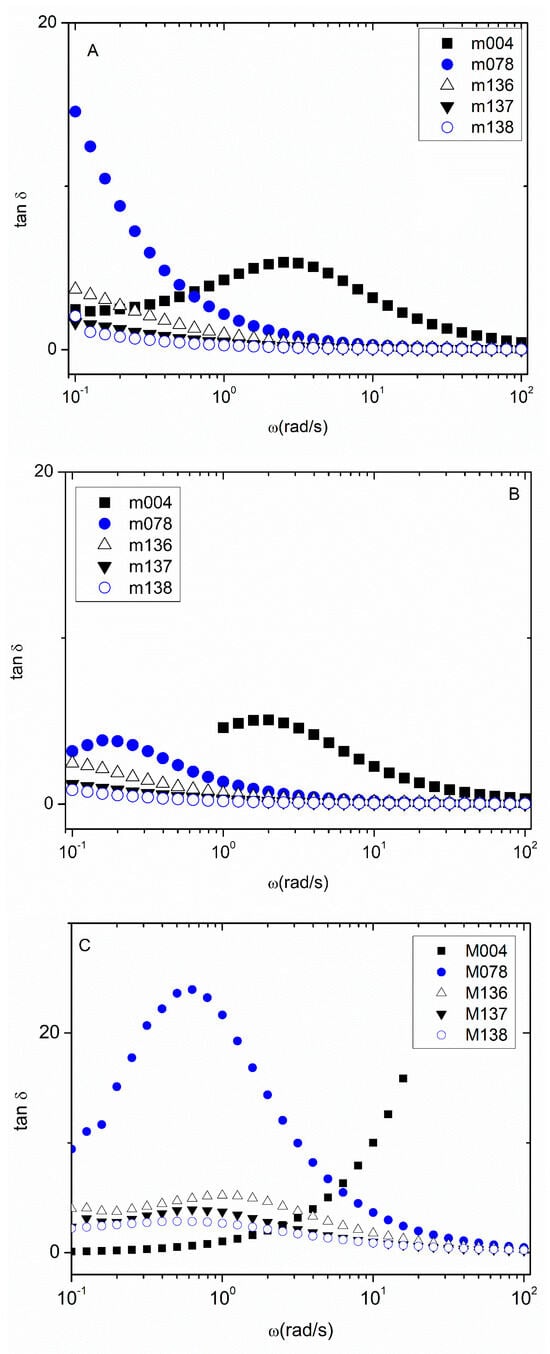
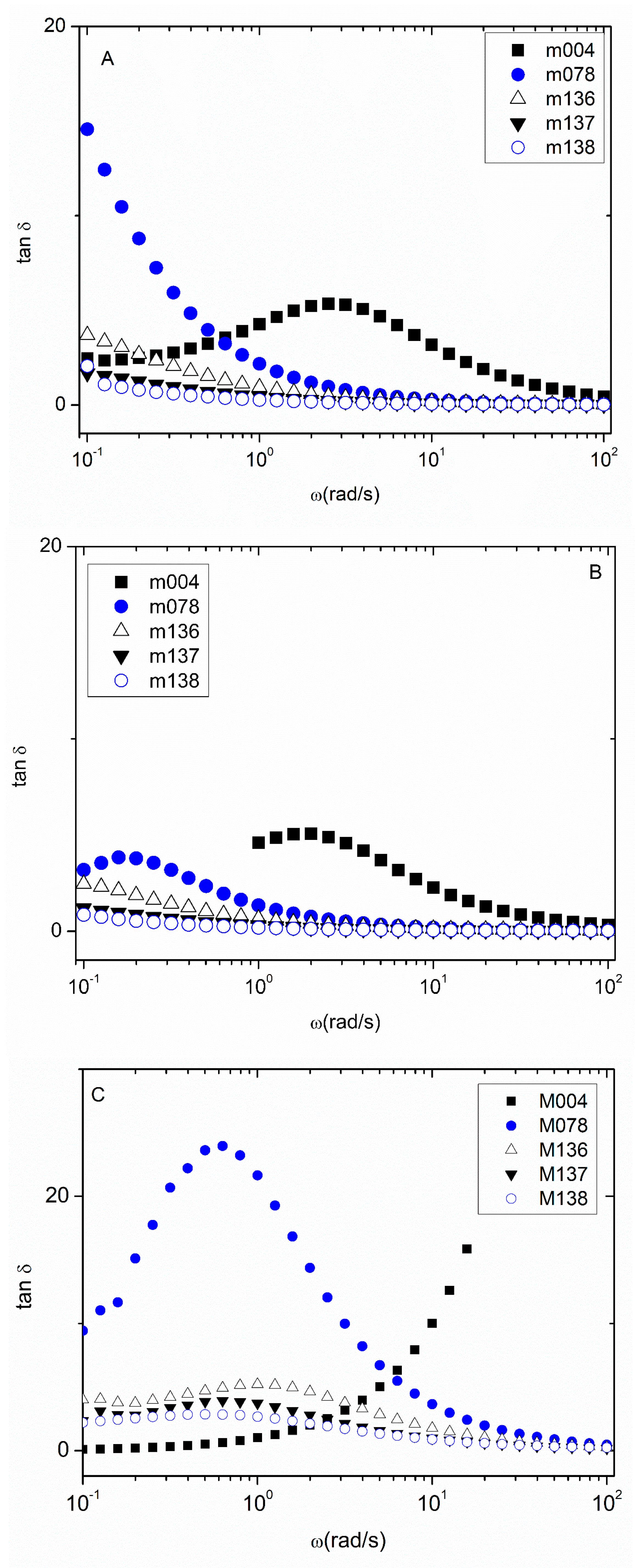
Among the studied samples, M078, M136, and M137 mainly exhibited Regions 3 and 4, with monotonically decreasing tan δ values, indicating increasingly elastic and structured behavior. Among them, M078 showed the highest elasticity, followed by M136 and M137 [5].
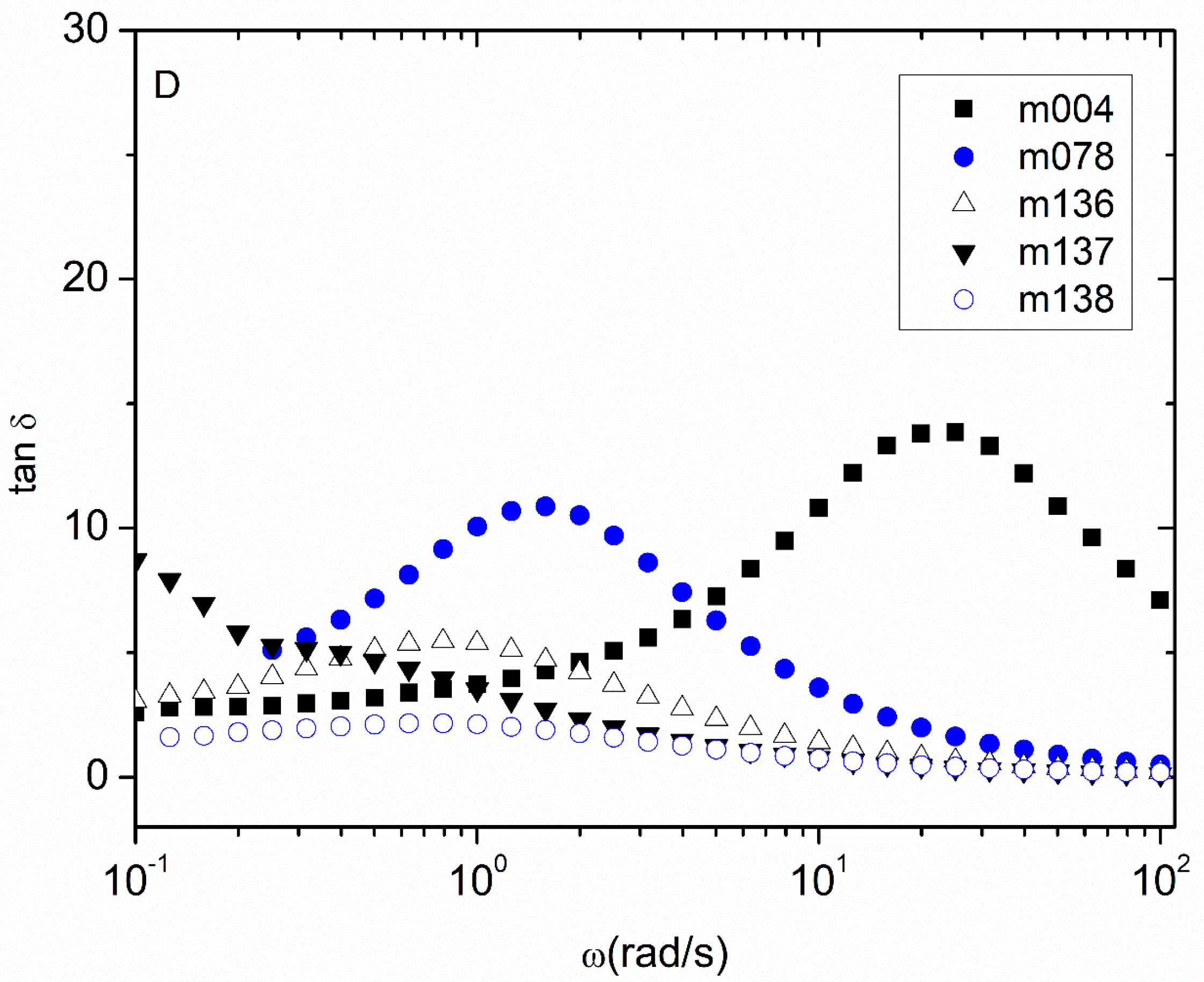
At 10 °C, comparison between atmospheric pressure and 10.034 MPa (Figure 4A,B) shows that pressure slightly modifies the viscoelastic response. M136, M137, and M004 exhibited moderately higher tan δ values (≈30%) in Region 3 under pressure, while values in Region 4 remained similar. In contrast, M078 displayed a complete viscoelastic transition under high pressure, with a well-defined tan δ maximum followed by a decrease and a plateau at low tan δ, indicating pressure-induced enhancement of elastic structuring at low temperature.
Figure 4.
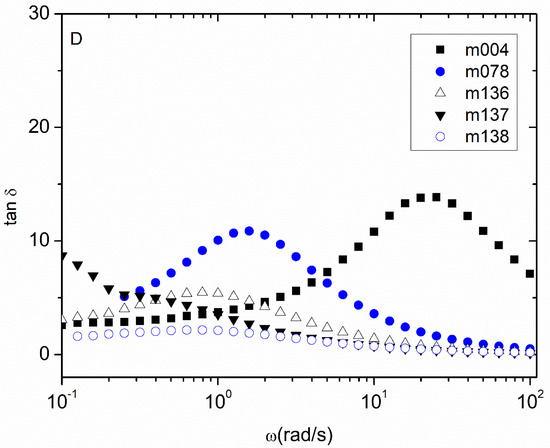
Tan δ as a function of oscillation frequency ω (rad/s) for four heavy crude oil samples: M004, M078, M136, M137 and M138, under different temperature and pressure conditions: (A) 10 °C and atmospheric pressure; (B) 10 °C and 10.034 MPa; (C) 30 °C and atmospheric pressure; and (D) 30 °C and 10.034 MPa.
At 30 °C (Figure 4C,D), all samples exhibited similar viscoelastic profiles regardless of pressure, although tan δ values were slightly lower at high pressure, consistent with increased elasticity. Pressure shifted the tan δ maxima toward higher frequencies in M004 and M078, confirming that pressurization tends to enhance elastic characteristics across temperatures.
At atmospheric pressure, increasing the temperature from 10 to 30 °C significantly altered the viscoelastic response. M004 lost the intermediate viscoelastic regions and exhibited lower tan δ values at low frequencies, while tan δ increased at higher frequencies. For M078, M136, and M137, tan δ increased with temperature, particularly at high frequencies, indicating a shift toward viscous-dominated behavior.
Under high pressure, temperature effects were more pronounced. M078 and M004 showed tan δ maxima that shifted to higher frequencies at 30 °C, accompanied by substantially higher tan δ values. M136 and M137 remained in the elastic-dominated regime (Region 4) at both temperatures, although tan δ magnitudes increased at higher temperatures.
Overall, the results demonstrate that increasing pressure enhances elasticity and characteristic relaxation times, whereas increasing temperature promotes viscous behavior. These trends are consistent with the colloidal nature of heavy crude oils and are influenced by SARA composition and colloidal stability, with higher resin and asphaltene contents leading to more resistant structural networks, in agreement with previous studies on heavy crude oils and complex colloidal materials.
3.5. Composition–Structure Relationships and Relaxation Dynamics
Characteristic relaxation time (λ) was used as a physically meaningful descriptor of the structural dynamics of heavy crude oils because it reflects the characteristic timescale associated with internal rearrangement processes. The dependence of this relaxation time on temperature and pressure was modeled using a pressure-modified Arrhenius Equation (2) similar Arrhenius-type and Maxwell-based rheological approaches have been previously reported for heavy crude oils, bitumen systems, and Drilling Fluids [6,18,19,20]:
where is the pre-exponential factor associated with the intrinsic relaxation time of the system in the absence of activation barriers, is the activation energy governing the thermal dependence of the relaxation process, and is the activation volume accounting for the effect of pressure. The variables T and P correspond to absolute temperature and pressure, respectively, while R is the universal gas constant.
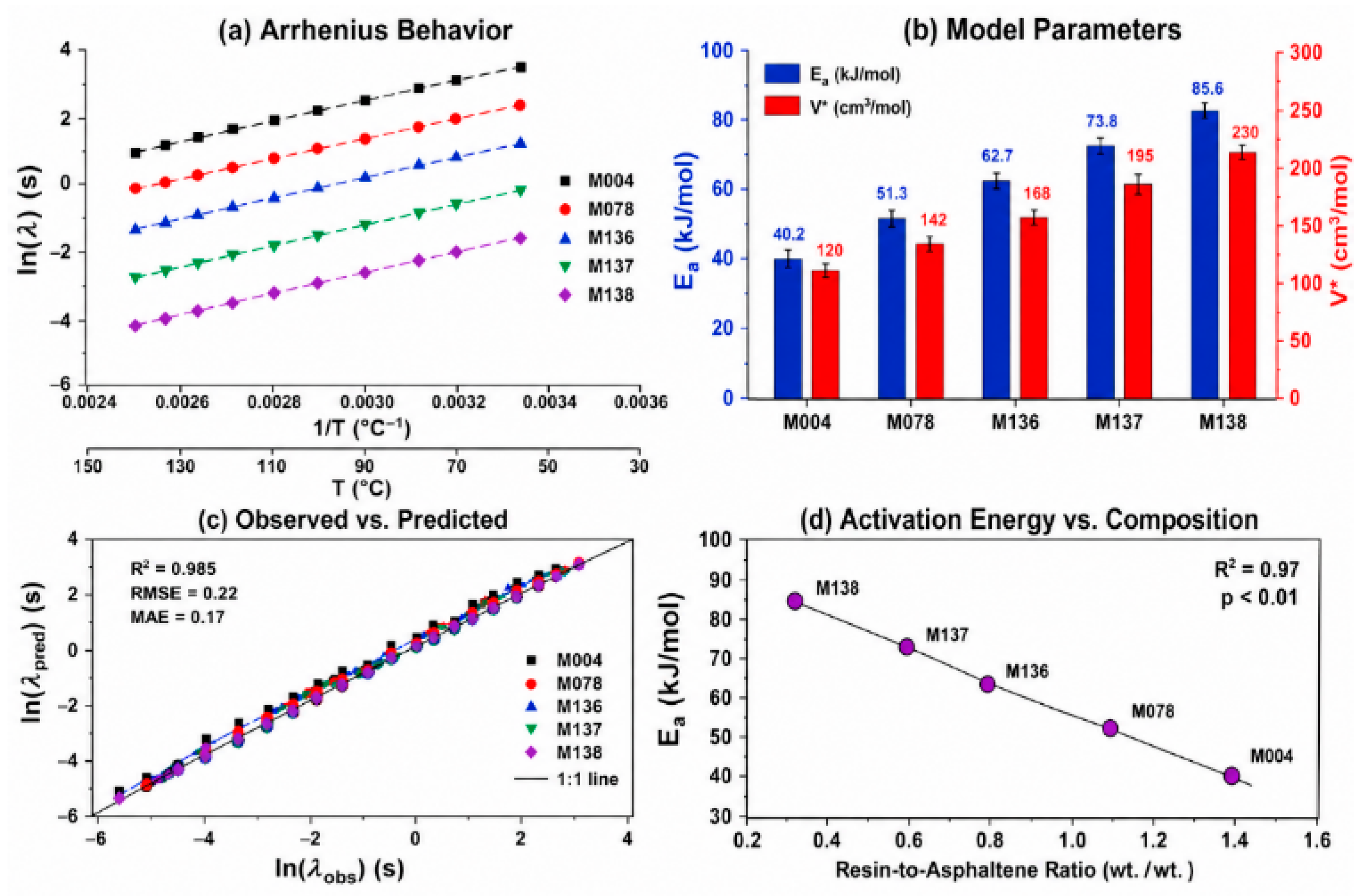
Model parameters were obtained via linear regression of the equation in logarithmic form, enabling simultaneous estimation of the pre-exponential factor, activation energy, and activation volume. The goodness of fit was assessed using and RMSE values. Model parameters obtained from regression are summarized in Table 5. Figure 5 illustrates the Arrhenius behavior and the resulting model parameters.
Table 5.
Viscoelastic Relaxation Parameters Obtained from the Pressure-Modified Arrhenius Model.
Figure 5.
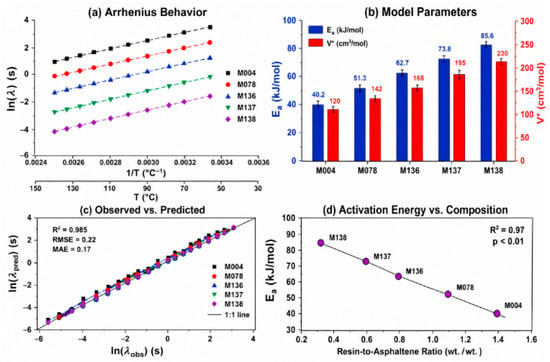
(a) Arrhenius plots, (b) model parameters, (c) model validation, and (d) composition–structure relationship for the studied crude oils.
Figure 5 shows (a) Arrhenius plots of the characteristic relaxation time (ln λ vs. 1/T) for all crude oil samples. (b) Estimated model parameters obtained from the pressure-modified Arrhenius equation, including activation energy (Ea) and activation volume (V*). (c) Observed versus predicted logarithmic relaxation times, indicating the goodness of fit of the model. (d) Correlation between activation energy and resin-to-asphaltene ratio, illustrating the effect of compositional balance on structural dynamics.
The characteristic time of heavy crude oils shows a strong dependence on both temperature and pressure, as illustrated in Figure 5a. All samples follow a pressure-modified Arrhenius behavior, confirming that the governing mechanism is thermally activated and influenced by volumetric constraints.
The activation energy increases systematically from M004 to M138, indicating a progressive increase in structural rigidity (Figure 5b). These results suggest a possible relationship with compositional features, particularly the balance between asphaltenes and resins, as shown in Figure 5d. Samples with lower resin-to-asphaltene ratios exhibit higher activation energies, suggesting stronger aggregation and reduced molecular mobility [21].
The activation volume remains positive for all samples (Figure 5b), demonstrating that pressure acts to retard the process by reducing free volume and enhancing intermolecular interactions. This effect is more pronounced in highly structured systems such as M137 and M138. The effect of composition is implicitly incorporated into the model through the fitted parameters, particularly the activation energy and activation volume, which reflect differences in molecular structure and colloidal stability among crude oils.
The relationship between activation energy and resin-to-asphaltene ratio should be interpreted as a compositional trend rather than a universal correlation. Lower resin-to-asphaltene ratios may reduce colloidal stabilization, favor stronger aggregate interactions, and increase the energetic barrier for structural relaxation. In contrast, higher resin contents may facilitate dispersion of asphaltene-rich structures and reduce the apparent rigidity of the system.
The model accurately captures the experimental data, as evidenced by the strong agreement between observed and predicted values (Figure 5c). Minor deviations observed in M004 are attributed to its high aromatic content, which may induce structural heterogeneity and non-ideal behavior [11].
4. Conclusions
The rheological behavior of heavy crude oils from different regions of Mexico was evaluated under pressures ranging from atmospheric to 10.034 MPa and temperatures between 10 and 30 °C. Nitrogen pressurization allowed the isolated assessment of pressure effects within the linear viscoelastic regime. In addition, the characteristic relaxation time was successfully described using a pressure-modified Arrhenius model, confirming that the viscoelastic response is governed by a thermally activated mechanism influenced by volumetric constraints.
The results indicate that viscosity, viscoelastic moduli (G′ and G″), and relaxation dynamics are strongly influenced by compositional parameters, including API gravity and colloidal stability. A systematic increase in activation energy from M004 to M138 reflects a progressive enhancement in structural rigidity, which correlates with the resin-to-asphaltene ratio. Lower ratios promote stronger aggregation, leading to higher activation energies, longer relaxation times, and reduced molecular mobility. At lower temperatures, where intermolecular association and structural ordering become more significant, pressure has a stronger effect on the viscous response, increasing the characteristic relaxation time and indicating structural reinforcement.
The mechanical response of the crude oils exhibited polymer-like viscoelastic behavior, with simultaneous increases in the storage and loss moduli under pressure, confirming strengthening of internal structures. The positive activation volumes observed across all samples indicate that pressure retards relaxation by reducing free volume and enhancing intermolecular interactions. This effect is more pronounced in highly structured systems.
Overall, the relative dominance of thermal effects over pressure provides quantitative criteria for transport modeling. The excellent agreement between experimental and modeled data validates the use of the pressure-modified Arrhenius approach to describe the viscoelastic behavior of heavy crude oils. These results highlight the importance of incorporating the combined effects of temperature, pressure, and composition in rheological models, as well as in the design and operation of production and transportation systems for heavy crude oils.
Author Contributions
Conceptualization, E.A.G.-G. and R.H.-N.; methodology, E.A.G.-G.; validation, E.A.G.-G., J.F.B.-A. and R.H.-N.; formal analysis, E.A.G.-G.; investigation, E.A.G.-G.; resources, R.H.-N. and S.L.-R.; data curation, E.A.G.-G.; writing—original draft preparation, E.A.G.-G.; writing—review and editing, R.H.-N., J.F.B.-A. and S.L.-R.; visualization, E.A.G.-G.; supervision, R.H.-N.; project administration, R.H.-N.; funding acquisition, R.H.-N. All authors have read and agreed to the published version of the manuscript.
Funding
This work was supported by the infrastructure and experimental facilities developed under the Sectoral Fund CONACYT-SENER-Hidrocarburos (Project No. 185183).
Data Availability Statement
The datasets generated and analyzed during the current study are available in the repository at https://zenodo.org/records/19992408, accessed on 13 June 2026, and are also available from the first author upon reasonable request.
Acknowledgments
CONACYT for the scholarship awarded to EAGG with number 245732, and to Unidad de Servicios para la Industria Petrolera (USIP) of the Faculty of Chemistry at the National Autonomous University of Mexico. The following people are also acknowledged for their support: Luis Antonio Cervantes Montejano and Brenda Zulema Reyes Pacheco.
Conflicts of Interest
The authors declare that there are no conflicts of interest regarding the publication of this paper. The funding sources were not involved in the study design; in the collection, analysis, or interpretation of data; in the writing of the manuscript; or in the decision to submit the article for publication.
Abbreviations
The following abbreviations are used in this manuscript:
| UNAM | National Autonomous University of Mexico |
| ASTM | American Society for Testing and Materials |
| DHR | Discovery Hybrid Rheometer |
| SARA | Saturates, Aromatics, Resins, and Asphaltenes |
| API | American Petroleum Institute |
| ATM | Atmospheric Pressure |
| H/C | hydrogen-to-carbon atomic ratio |
Appendix A
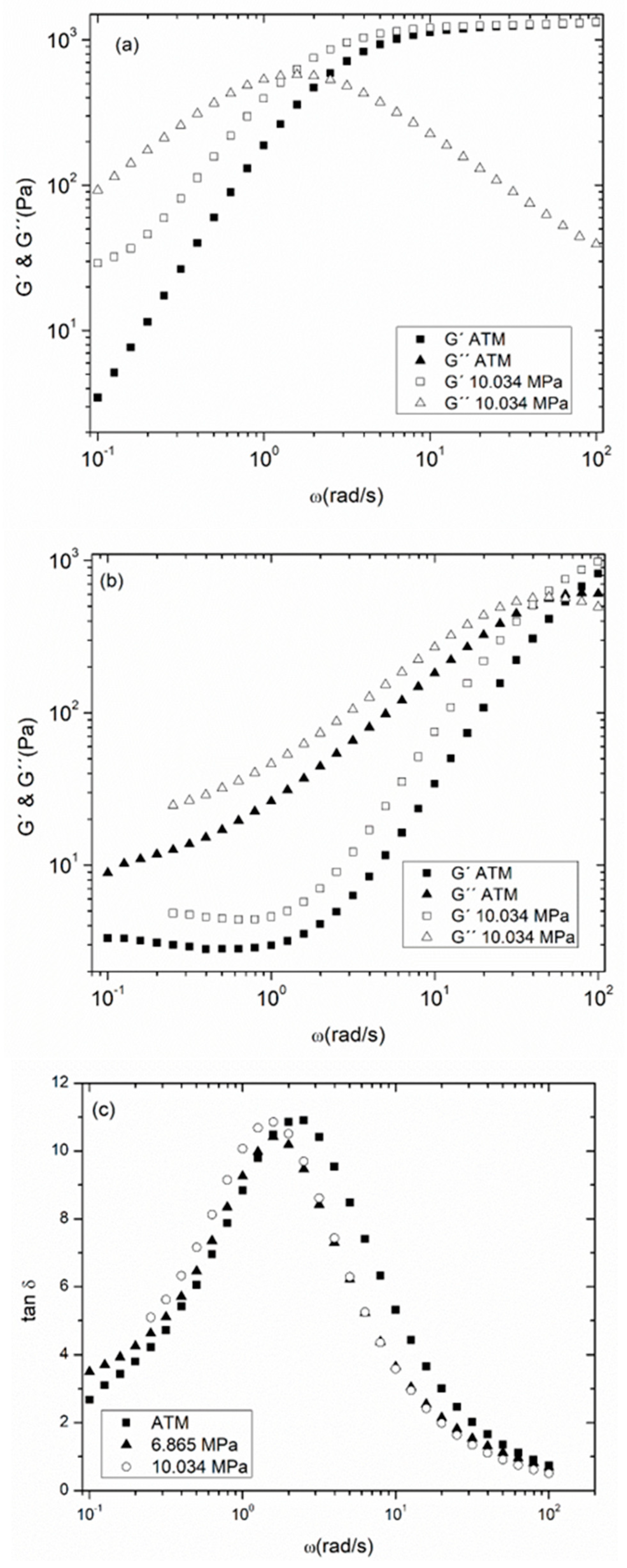
This appendix presents the rheological and viscoelastic results obtained for crude oils M137, M138, M004, and M078. Figure A1, Figure A2, Figure A3 and Figure A4 show the viscosity (η) as a function of the shear rate () under isothermal conditions at 10 °C (a), 20 °C (b), and 30 °C (c), and at different pressures: atmospheric pressure (ATM) (▲), 3.447 MPa (∆), 6.865 MPa (ο), and 10.034 MPa (●). Figure A5, Figure A6, Figure A7 and Figure A8 present the oscillatory shear results for crude oils M137, M138, M004, and M078, including the storage modulus (G′) and loss modulus (G″) as a function of angular frequency (ω) at atmospheric pressure and 10.034 MPa, and at temperatures of 10 °C (a) and 30 °C (b). The symbols ■ and ▲ represent G′ and G″, respectively, at atmospheric pressure; whereas □ and ∆ represent G′ and G″, respectively, at 10.034 MPa. The corresponding loss factor (tan δ) as a function of angular frequency (ω) is also shown for each crude oil at 30 °C (c) under atmospheric pressure (■), 6.865 MPa (▲), and 10.034 MPa (○). The experimental procedures and interpretation of the results presented in this appendix follow the methodology described in Section 2.3 of the main manuscript.
Figure A1.
Viscosity (η) of M137 crude as a function of shear rate (); data obtained through the simple shear flow samples in isothermal conditions (10 °C (a), 20 °C (b) and 30 °C (c)), and under different pressures: atmospheric pressure (ATM) (▲), 3.447 MPa (∆), 6.865 MPa (ο) and 10.034 MPa (●).
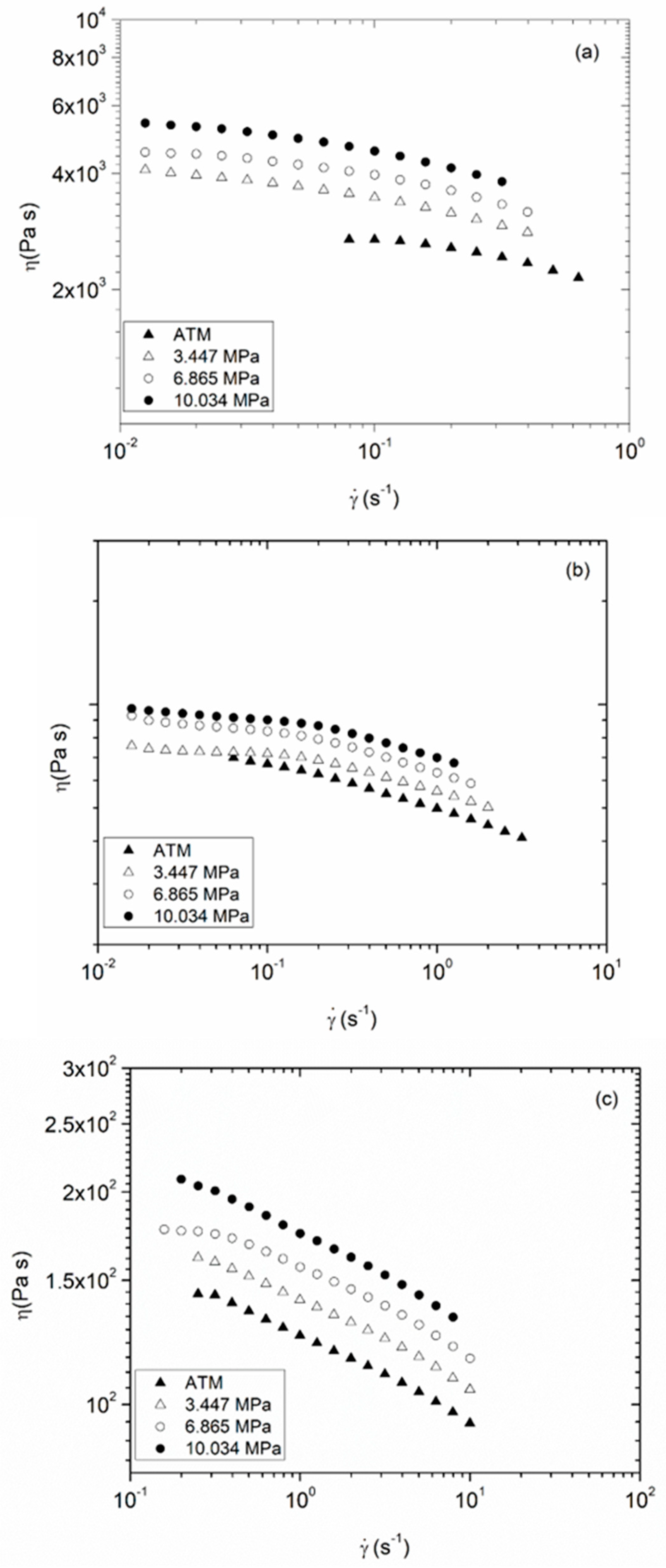
Figure A2.
Viscosity (η) of M004 crude as function of shear rate (); data obtained through simple shear flow samples in isothermal conditions (10 °C (a), 20 °C (b) and 30 °C (c)), under different pressures: atmospheric pressure (ATM) (▲), 3.447 MPa (∆), 6.865 MPa (ο) and 10.034 MPa (●).
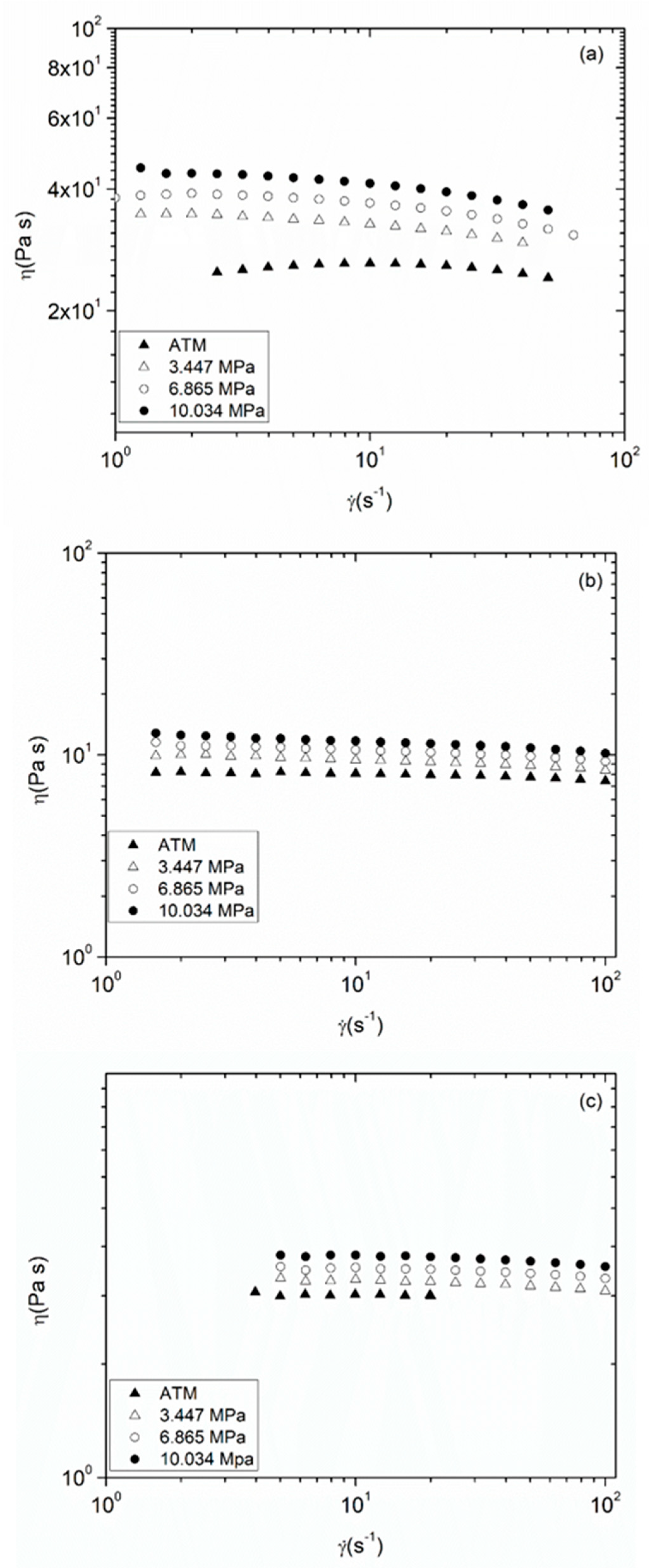
Figure A3.
Viscosity (η) of M078 crude as a function of shear rate (); data obtained through the simple shear flow samples in isothermal conditions (10 °C (a), 20 °C (b) and 30 °C (c)) and under different pressures: atmospheric pressure (ATM) (▲), 3.447 MPa (∆), 6.865 MPa (o) and 10.034 MPa (●).
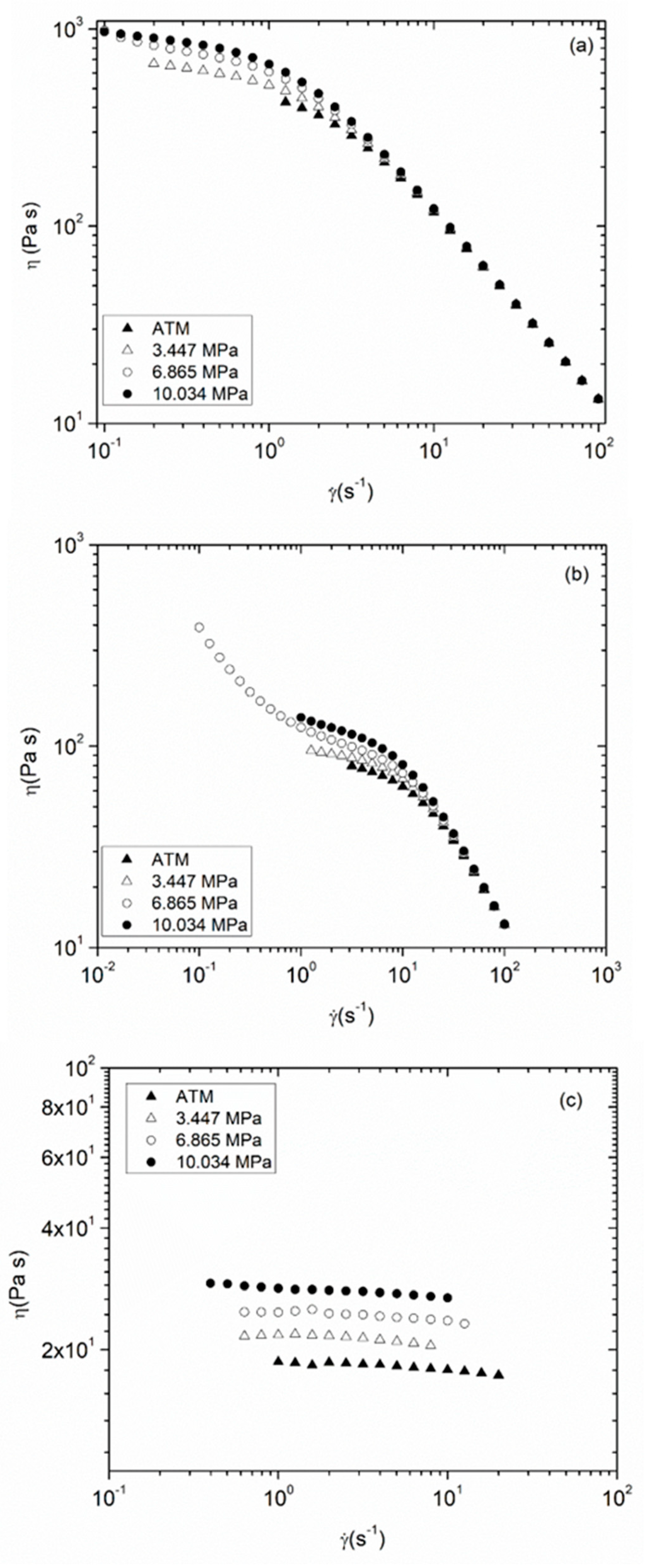
Figure A4.
Viscosity (η) of M138 crude as a function of shear rate (); data obtained through the simple shear flow samples in isothermal conditions (10 °C (a), 20 °C (b) and 30 °C (c)), and under different pressures: atmospheric pressure (ATM) (▲), 3.447 MPa (∆), 6.865 MPa (o) and 10.034 MPa (●).
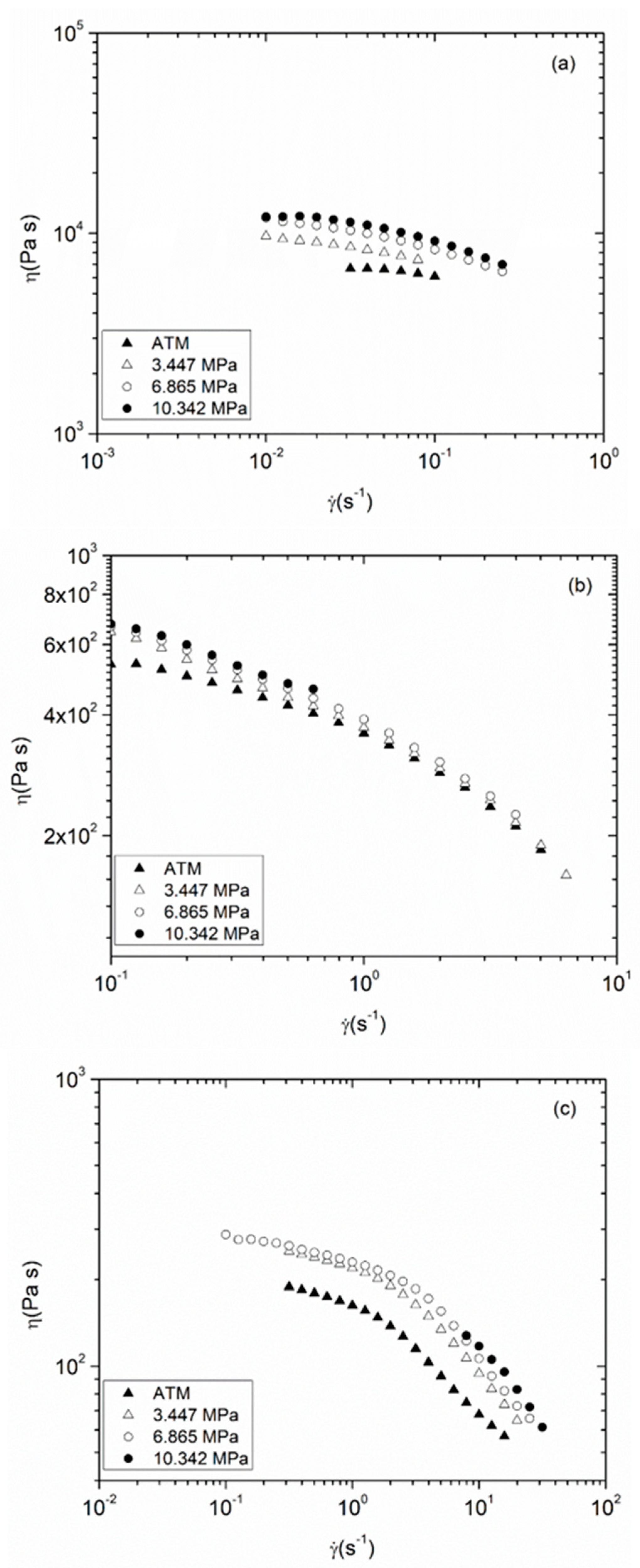
Figure A5.
Storage modulus (G′) and loss modulus (G″) modules of M004 as a function of angular frequency (ω) when crude oil was submitted to different pressures (atmospheric pressure (ATM) and 10.034 MPa) to 10 °C (a) and 30 °C (b). The figures ■ and ▲ correspond to G′ and G″ respectively when crude oil was at 0 MPa; whereas figures □ and ∆ correspond to G′ and G″ respectively when crude oil was at 10.034 MPa. Tan δ as a function of oscillation frequency (ω) of M004 to 30 °C (c). When crude oil was submitted to pressures of atmospheric pressure (ATM) (■), 6.865 MPa (▲) and 10.034 MPa (○).
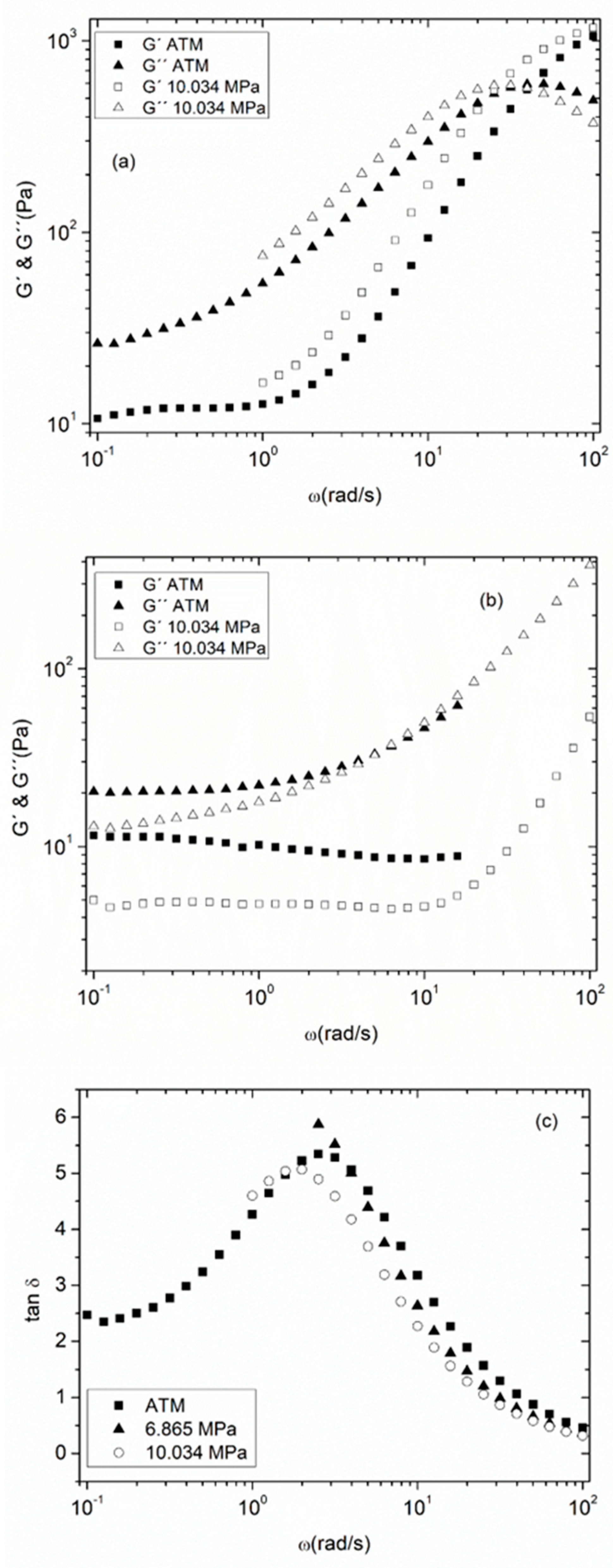
Figure A6.
Storage modulus (G′) and loss modulus (G″) modules of M138 as a function of angular frequency (ω) when crude oil was submitted to different pressures (atmospheric pressure (ATM) and 10.034 MPa) at 10 °C (a) and 30 °C (b). The figures ■ and ▲ correspond to G′ and G″ respectively when crude oil was at 0 MPa; whereas figures □ and ∆ correspond to G′ and G″ respectively when crude oil was at 10.034 MPa. tan δ as a function of oscillation frequency (ω) of M138 to 30 °C (c). When crude oil was submitted to pressures of atmospheric pressure (ATM) (■), 6.865 MPa (▲) and 10.034 MPa (○).
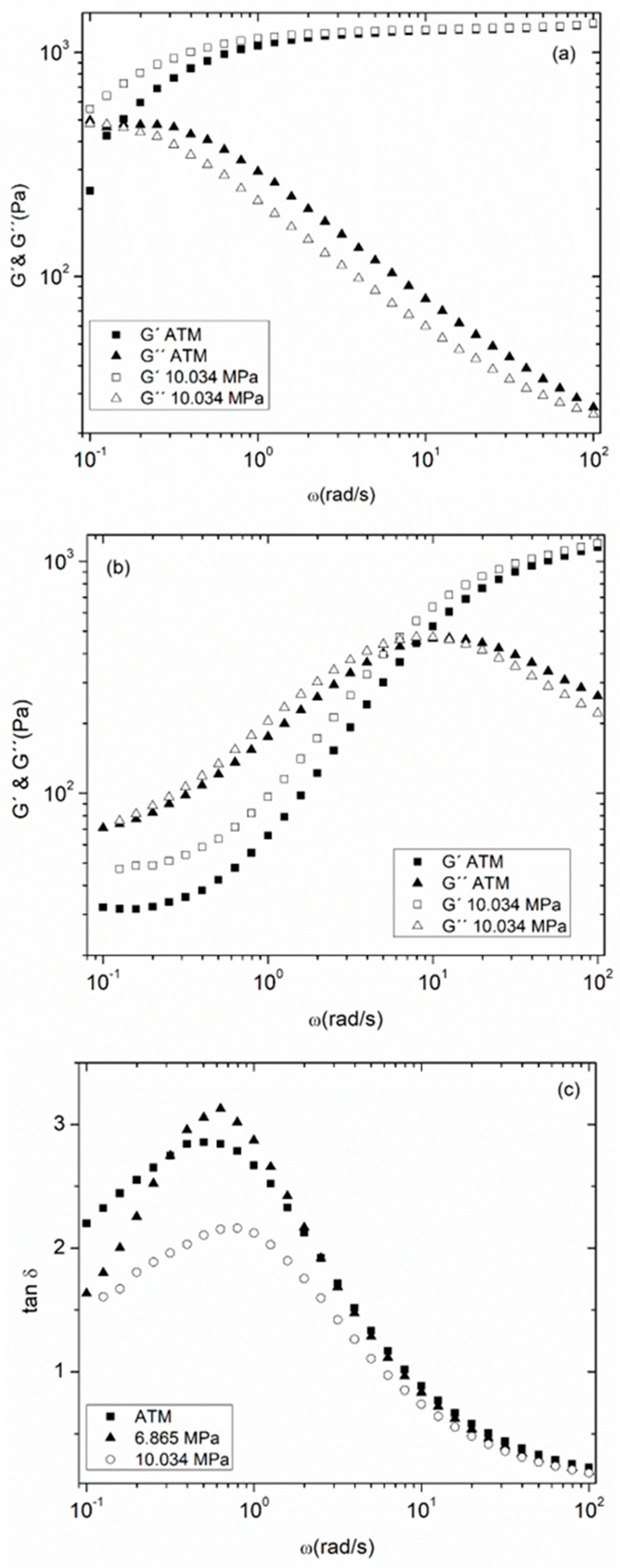
Figure A7.
Storage modulus (G′) and loss modulus (G″) modules of M137 as a function of angular frequency (ω) when crude oil was submitted to different pressures (atmospheric pressure (ATM) and 10.034 MPa) at 10 °C (a) and 30 °C (b). The figures ■ and ▲ correspond to G′ and G″ respectively when crude oil was at 0 MPa; whereas figures □ and ∆ correspond to G′ and G″ respectively when crude oil was at 10.034 MPa. tan δ as a function of oscillation frequency (ω) of M137 to 30 °C (c). When crude oil was submitted to pressures of atmospheric pressure (ATM) (■), 6.865 MPa (▲) and 10.034 MPa (○).
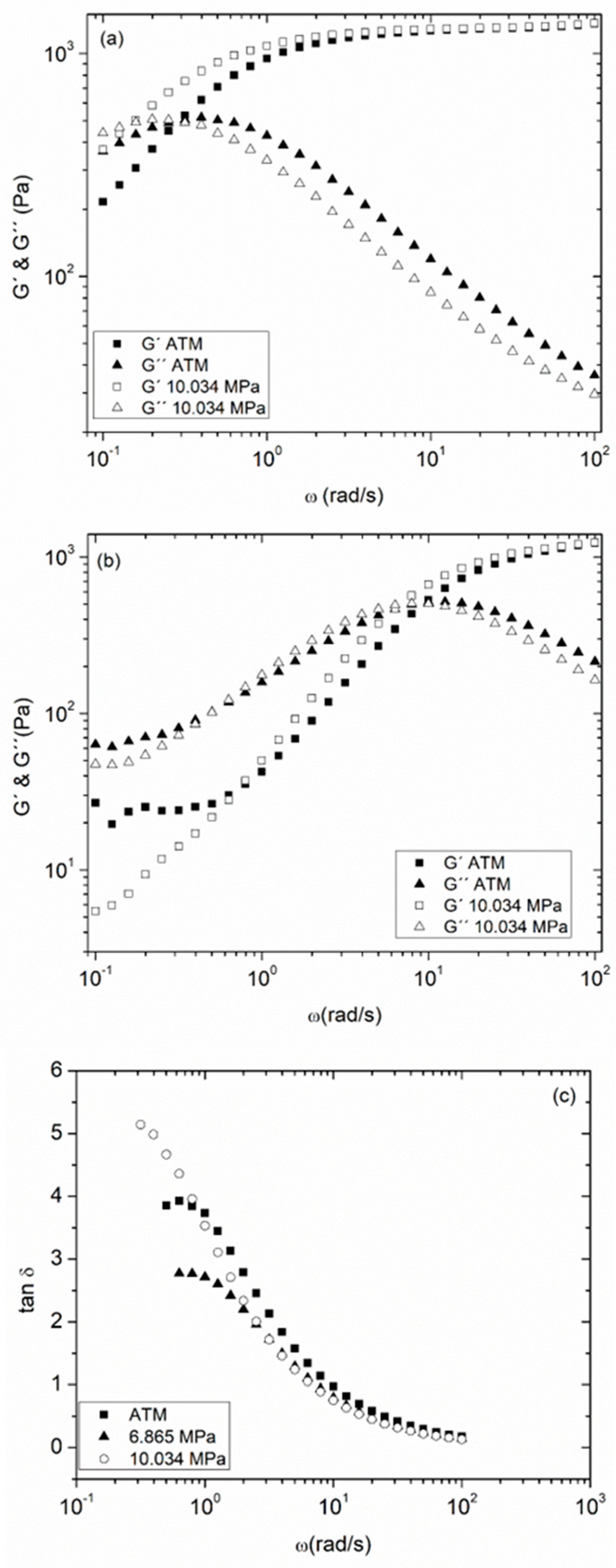
Figure A8.
Storage modulus (G′) and loss modulus (G″) modules of M078 as a function of angular frequency (ω) when crude oil was submitted to different pressures (atmospheric pressure (ATM) and 10.034 MPa) to 10 °C (a) and 30 °C (b). The figures ■ and ▲ correspond to G′ and G″ respectively when crude oil was at 0 MPa; whereas figures □ and ∆ correspond to G′ and G″ respectively when crude oil was at 10.034 MPa. tan δ as a function of oscillation frequency (ω) of M078 to 30 °C (c). When crude oil was submitted to pressures of atmospheric pressure (ATM) (■), 6.865 MPa (▲) and 10.034 MPa (○).
References
- Gounder, R.M. Introductory Chapter: Heavy Crude Oil Processing-An Overview. In Processing of Heavy Crude Oils-Challenges and Opportunities; IntechOpen: London, UK, 2019. [Google Scholar]
- Badalan, M.; León Aboytes, E.; Sigalotti, L.D.G.; Guzmán, E. Rheological Characterization and Viscosity Correlation for a 9.5° API Extra-Heavy Crude Oil of the Southern Gulf of Mexico. Fluids 2026, 11, 70. [Google Scholar]
- Li, G.; Zhang, H.; Li, M.; Shen, Z.; Tian, A.; Wang, L. Study on Coal Wall Spalling Mechanism of Large Mining Height Working Face Based on Folding Mutation Theory. Sci. Rep. 2026, 16, 15277. [Google Scholar] [PubMed]
- Shakeel, A.; Mahmood, H.; Farooq, U.; Ullah, Z.; Yasin, S.; Iqbal, T.; Chassagne, C.; Moniruzzaman, M. Rheology of Pure Ionic Liquids and Their Complex Fluids: A Review. ACS Sustain. Chem. Eng. 2019, 7, 13586–13626. [Google Scholar]
- Ilyin, S.O.; Strelets, L.A. Basic Fundamentals of Petroleum Rheology and Their Application for the Investigation of Crude Oils of Different Natures. Energy Fuels 2018, 32, 268–278. [Google Scholar]
- Lei, H.; Cai, C.; Zhang, B.; Luo, J.; Chen, P.; Xiao, D. Experimental Study and Rheological Modeling of Water-Based and Oil-Based Drilling Fluids Under Extreme Temperature–Pressure Condition. Energies 2025, 18, 4687. [Google Scholar] [CrossRef] [Scilit]
- Mortazavi-Manesh, S.; Shaw, J.M. Effect of Diluents on the Rheological Properties of Maya Crude Oil. Energy Fuels 2016, 30, 766–772. [Google Scholar]
- Sugirtha, V.; Sivabalan, S. Effects of Imidazolium-Based Ionic Liquids on the Rheological Behavior of Heavy Crude Oil under High-Pressure and High-Temperature Conditions. Energy Fuels 2017, 31, 8764–8775. [Google Scholar] [CrossRef] [Scilit]
- Xue, Y.; Wu, W. Characterization of Brittleness Evolution of Hot Dry Rock during Cyclic Thermal Treatment. Acta Geotech. 2026. [Google Scholar] [CrossRef] [Scilit]
- Afra, S.; Nasr-El-Din, H.; Socci, D.; Cui, Z. A Novel Viscosity Reduction Plant-Based Diluent for Heavy and Extra-Heavy Oil; SPE: Richardson, TX, USA, 2016; p. SPE-179523-MS. [Google Scholar]
- Balestrin, L.B.; Loh, W. Recent Developments on the Elucidation of Colloidal Aspects of Asphaltenes and Their Relevance to Oilfield Problems. J. Braz. Chem. Soc. 2020, 31, 230–243. [Google Scholar]
- Mortazavi-Manesh, S.; Shaw, J.M. Effect of Pressure on the Rheological Properties of Maya Crude Oil. Energy Fuels 2016, 30, 759–765. [Google Scholar]
- Sakthivel, S.; Velusamy, S. Eco-Efficient Rheological Improvement of Heavy Crude Oil Using Lactam Based Ionic Liquids at High Temperature High Pressure Condition. Fuel 2020, 276, 118027. [Google Scholar] [CrossRef] [Scilit]
- Webb, E.B.; Rensing, P.J.; Koh, C.A.; Sloan, E.D.; Sum, A.K.; Liberatore, M.W. High-Pressure Rheology of Hydrate Slurries Formed from Water-in-Oil Emulsions. Energy Fuels 2012, 26, 3504–3509. [Google Scholar]
- Kholmurodov, T.; Mirzaev, O.; Affane, B.; Tajik, A.; Romanova, K.; Galyametdinov, Y.; Dengaev, A.; Vakhin, A. Thermochemical Upgrading of Heavy Crude Oil in Reservoir Conditions. Processes 2023, 11, 2156. [Google Scholar] [CrossRef] [Scilit]
- Davronova, G.; Kurbanov, M.; Bozorova, L.; Safarova, M.; Mamatova, S.; Salayev, M. Separation of Organic Sulphur Compounds from the Heavy Oil Fraction in the Participation of Sulfuric Acid. New Mater. Compd. Appl. 2026, 10, 175–185. [Google Scholar]
- Speight, J.G. Petroleum Asphaltenes: Part 1. Asphaltenes, Resins and the Structure of Petroleum; Les Asphaltenes, Composes Petroliers. Partie 1: Asphaltenes, Resines et Structure Du Petrole. Oil Gas Sci. Technol. Rev. IFP 2004, 59, 467–477. [Google Scholar] [CrossRef] [Scilit]
- Abivin, P.; Taylor, S.D.; Freed, D. Thermal Behavior and Viscoelasticity of Heavy Oils. Energy Fuels 2012, 26, 3448–3461. [Google Scholar] [CrossRef] [Scilit]
- Zakirova, G.; Pshenin, V.; Tashbulatov, R.; Rozanova, L. Modern Bitumen Oil Mixture Models in Ashalchinsky Field with Low-Viscosity Solvent at Various Temperatures and Solvent Concentrations. Energies 2022, 16, 395. [Google Scholar]
- Liu, H.; Xu, Y.; Chen, H.; Zhang, J.; Xu, J. Viscoelastic Behavior and Constitutive Relation of Heavy Crude Oils. ACS Omega 2022, 7, 30816–30822. [Google Scholar] [PubMed]
- Li, Y.; Wang, Z.; Hu, Z.; Xu, B.; Li, Y.; Pu, W.; Zhao, J. A Review of in Situ Upgrading Technology for Heavy Crude Oil. Petroleum 2021, 7, 117–122. [Google Scholar]

Disclaimer/Publisher’s Note: The statements, opinions and data contained in all publications are solely those of the individual author(s) and contributor(s) and not of MDPI and/or the editor(s). MDPI and/or the editor(s) disclaim responsibility for any injury to people or property resulting from any ideas, methods, instructions or products referred to in the content. |
© 2026 by the authors. Licensee MDPI, Basel, Switzerland. This article is an open access article distributed under the terms and conditions of the Creative Commons Attribution (CC BY) license.