


Abstract
This study evaluated the effect of different sprouting methods on the morphological traits, pigmentation, and bioactive compound content of radish sprouts (Raphanus sativus L.). The following four sprouting techniques were compared: tray (T), sprouter (S), jar (J5–J20), and tank (R5–R20), varying in seed density and aeration conditions. The results demonstrated that the sprouting method significantly influenced growth parameters and phytochemical profiles. Sprouts produced using the tray (T) and sprouter (S) methods exhibited the highest mass and lowest dry matter content, reflecting favorable hydration and aeration. Sprouter-grown sprouts were particularly rich in chlorophyll (47.6 mg/100 g DW) and ascorbic acid (11.36 mg/100 g DW), indicating optimal photosynthetic and antioxidant metabolism. Tray-grown sprouts showed the highest polyphenol (919.8 mg GAE/100 g DW) and anthocyanin (217.0 mg C3G/100 g DW) concentrations, suggesting enhanced synthesis of secondary metabolites under mild abiotic stress. A comparative assessment using a three-point scale confirmed that sprouter, tray, and low-density tank methods provided the most favorable nutritional and sensory attributes. Overall, both technological factors and genetic background determine the nutritional quality of radish sprouts, offering practical guidance for optimizing sprout production and developing functional foods.
1. Introduction
Sprouts are young plants in the early stage of growth. The first reports on their culinary use date back to ancient times in Far Eastern cultures [1]. Currently, due to their high nutritional and health-promoting values, they are becoming increasingly popular, especially among people who care about a rational and properly balanced diet [2,3,4,5]. In recent years, animal-based products have often been replaced by plant-based foods [6]. Due to their rich nutritional composition, sprouts can also be considered a valuable component of a plant-based diet, providing an easily digestible source of vitamins, minerals, and bioactive compounds that support human health [7,8,9]. Vegetarian diets have a beneficial effect on human health by preventing the development of civilization-related diseases such as cancer, cardiovascular diseases, diabetes, obesity, and other metabolic disorders [10,11].
During plant germination, complex chemical substances are broken down into simpler compounds such as mono- and oligosaccharides, amino acids, oligopeptides, and free fatty acids [12,13]. Therefore, the components formed as a result of enzymatic hydrolysis during sprout development are more bioavailable to the organism compared to seeds or mature plants. Sprouts of cruciferous plants (including radish, broccoli, kale, horseradish, wasabi, mustard) are particularly valuable due to their high content of microelements, glucosinolates, isothiocyanates, and phenolic compounds [14,15]. Phenolic compounds and glucosinolates exhibit antioxidant properties by reducing excessive levels of reactive oxygen species, decreasing oxidative stress in the organism, and consequently preventing the development of chronic diseases and cancers [16]. Moreover, isothiocyanates are known for their detoxifying, hepatoprotective, and chemotherapeutic properties [17]. Antioxidant compounds have immunomodulatory, anti-inflammatory, antiviral effects and slow down the aging processes of the organism [18,19,20].
Anthocyanins, responsible for the red color of radish sprouts, have a positive effect on vision, memory, and brain functions and help prevent the development of type 2 diabetes, obesity, and cardiovascular diseases [21]. Plant sprouts are also a valuable source of dietary fiber, which prevents colorectal cancer and improves intestinal peristalsis. According to Zieliński et al. [22], cruciferous sprouts contain about 20% more fiber compared to their seeds. Moreover, during germination, the content of antinutritional compounds in plants decreases, such as galactosides, pentoses, lectins, and protease inhibitors [16,23]. In addition to these benefits, sprouts are a rich source of vitamin C, although its content varies widely among different types. Radish sprouts exhibit the highest levels, ranging from 70 to 350 mg per 100 g dry weight [24,25], followed by buckwheat sprouts with 203 mg/100 g DW [26]. Broccoli sprouts contain moderately high amounts of vitamin C, ranging between 84 and 113 mg/100 g DW [24], whereas mung bean and African millet (Fura) sprouts have lower concentrations, with 21 mg/100 g DW and 15 mg/100 g DW, respectively [27]. The lowest levels of ascorbic acid are found in sunflower and alfalfa sprouts, both containing approximately 10 mg/100 g DW, highlighting radish and buckwheat sprouts as particularly rich dietary sources [25].
Sprouts can be grown all year round, both at home and on an industrial scale. Home sprouting methods are becoming increasingly popular due to their simplicity and low cost, allowing consumers to produce fresh sprouts independently. At the same time, large-scale industrial germination enables the mass production of sprouts, making them widely available and easily accessible on the market. Among various home sprouting techniques, the jar method is one of the most commonly used, employing a tall container covered with a membrane that allows drainage of excess water. To facilitate the drainage of excess liquid, the container should be inverted and positioned at an angle [28]. On both small and large scales, sprouting can be conducted on a moistened, water-retaining substrate such as lignin, cotton fabric, or jute fiber. Excessive evaporation can be prevented by film covering its surface. The film acts as a barrier, keeping the moist while also regulating its temperature [29]. Favorable conditions for home sprouting can be achieved using a sprouter—a device made of several perforated trays, usually made from plastic, equipped with a valve to drain excess liquid. The collected water can be reused for spraying the sprouts. Rapid sprout growth can be achieved using the tank method with a conical reactor equipped with a pump supplying compressed air. In this system, the seed suspension is continuously aerated and gently mixed, ensuring uniform access to water, air, and light throughout the germination process. The conical tank shape, together with constant aeration, facilitates even sprout development and accelerates growth [8].
Elicitation allows modification of the chemical composition of sprouts by changing cultivation conditions. In response to unfavorable environmental conditions, plants produce protective secondary metabolites such as glucosinolates and phenolic acids [30]. Cultivation conditions can be modified by biotic factors (essential oil extracts, toxins, proteins, plant hormones, oligosaccharides, polysaccharides, lipopolysaccharides) or abiotic factors (light, humidity, temperature, minerals, chemical elements, mechanical damage) [30].
The aim of this study was to evaluate the effect of four different sprouting methods on the content of selected bioactive compounds in radish sprouts (Raphanus sativus) and to assess their overall quality. The study included comprehensive analyses of sprout characteristics, such as dry matter content, color (L*, a*, b*), and dimensions (root, stem, and leaf length, as well as fresh weight). Additionally, the nutritional and bioactive composition was determined, including chlorophylls a and b, ascorbic acid, total polyphenols, and anthocyanins.
2. Materials and Methods
2.1. Seeds
The plant material used in the study consisted of radish seeds (Raphanus sativus L. var. sativus), provided by TORSEED S.A. (Toruń, Poland). The seeds were stored in a dry, dark place. The same variety of seeds was employed consistently in all experimental procedures.
2.2. Sprouting Methods
Four sprouting methods were applied: tray method (T), sprouter method (S), jar method (J), and tank method (R).
2.2.1. Tray Method (T)
A plastic tray (dimensions: 25 × 40 × 5 cm) was lined with cotton wool, which was then moistened. Two radish seeds were placed per 1 cm2 of surface. The prepared sprouts were covered with transparent polyethylene film suitable for food contact to prevent water loss. Growing seeds were sprayed with distilled water every 8 h. After 5 days, the sprouts were harvested and subjected to analysis. Three independent trays were used as three biological replicates.
2.2.2. Sprouter Method (S)
Sprouting was carried out using a three-level transparent polypropylene sprouter (BIO-NATURA, Raszyn-Rybie, Poland). Two seeds were placed per 1 cm2 of each tray. The transparent walls ensured even light distribution, promoting uniform sprout growth. The sprouts were irrigated every 8 h, while excess water drained through siphons into a reservoir at the bottom of the sprouter, which was replaced once daily. Sprouting lasted for 5 days. Each level of the sprouter served as one biological replicate, resulting in three independent replicates.
2.2.3. Jar Method (J)
Sprouting was conducted in cylindrical glass containers (1 L) with three seed filling variants: 5% (J5), 10% (J10), and 20% (J20). Seeds were weighed on an analytical balance with 0.001 g accuracy, placed in the jars, and distilled water added up to 1 L. Initially, seeds were soaked for 6 h to accelerate imbibition. After draining, the containers were covered with a cheese cloth. Subsequent soaking was performed every 12 h for 15 min. Sprouting of radish seeds lasted for 5 days. For each variant (J5, J10, J20), three separate jars were used as three biological replicates.
2.2.4. Tank Method (R)
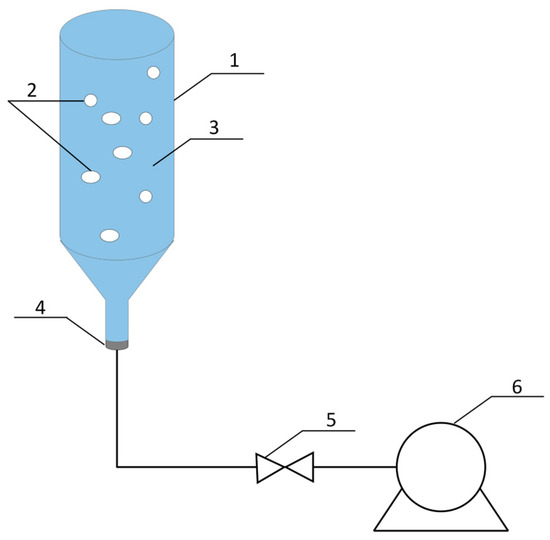
Sprouting was conducted in laboratory polyethylene reactors (1 L), with a cylindrical upper part and a conical lower part (Figure 1). Three seed suspension variants were used: 5% (R5), 10% (R10), and 20% (R20). Seeds were weighed with 0.001 g accuracy (50 g, 100 g, and 200 g), placed in the reactors, and filled with 950 g, 900 g, or 800 g of distilled water, respectively. The suspensions were continuously aerated and gently mixed using compressed air supplied through a nozzle at the bottom of the reactor (flow rate 2 L/min). The growing medium was replaced every 24 h. Sprouting of radish seeds lasted for 2.5 days. When the sprouts reached the appropriate stage of development, they were separated from the medium using a sieve, allowing excess water to drain, and the remaining moisture was gently removed with blotting paper. For each density variant (R5, R10, R20), three independent reactors were used as three biological replicates.
Figure 1.
Scheme of a sprouting stand (1—a glass reactor, 2—air bubbles, 3—growing medium, 4—a plug with a stub pipe, 5—a valve, 6—an air pump) [8].
2.3. Analytical Methods
2.3.1. Determination of Sprout Dry Matter
Dry matter content was determined using a moisture analyzer (RADWAG, Radom, Poland) with accuracy of 0.01%. Approximately 2 g of sprouts was sampled and dried at 120 °C until reaching constant weight. Measurements were performed in three replicates, and results are expressed as mean values.
2.3.2. Determination of Sprout Color
Sprout color was measured colorimetrically using a Chroma Meter Konica Minolta CR-410 (Tokyo, Japan). Color parameters were determined according to the CIE Lab model, calculating the achromatic component L* and the chromatic components a* and b*. Each sample was measured three times, and mean values are reported.
2.3.3. Determination of Sprout Dimensions
From each sprouting, 10 sprouts were sampled, and root, stem, and leaf lengths were measured using a digital caliper. The sampled sprouts were also weighed on an analytical balance (RADWAG, Radom, Poland). Results are expressed as mean values.
2.3.4. Determination of Chlorophyll Content
Chlorophyll content was determined spectrophotometrically according to Michalczyk and Macura [25]. Approximately 1 g of ground sprouts, weighed on an analytical balance (Radwag AS 220.X2 PLUS, Radom, Poland), was extracted with 50 mL of chilled 80% acetone and thoroughly shaken for 3 min. The mixture was then centrifuged at 3500× g for 5 min (model 320R, Hettich GmbH, Tuttlingen, Germany). The absorbance of the supernatant was measured at 646 and 663 nm using an HP/Agilent 8453 UV/Vis Spectrophotometer (Santa Clara, CA, USA). Measurements were performed in three replicates, and chlorophyll content is expressed as mg per 100 g dry matter of sprouts.
2.3.5. Determination of Ascorbic Acid Content
Ascorbic acid was determined spectrophotometrically according to PN-A-04019:1998 [31]. Approximately 10 g of ground radish sprouts, weighed on an analytical balance (Radwag AS 220.X2 PLUS, Radom, Poland), was extracted with 200 mL of 2% oxalic acid. After centrifugation at 3500× g for 5 min (model 320R, Hettich GmbH, Tuttlingen, Germany), a pH 4.0 buffer and formaldehyde were added to remove interfering reductants. The mixture was left in a refrigerator for 24 h. A fixed volume of Tillmans’ reagent was added, followed by 10 cm3 xylene, and left for 20 min for phase separation. Absorbance of the xylene layer containing unreacted Tillmans’ reagent was measured at 500 nm using the spectrophotometer (HP/Agilent 8453 UV/Vis Spectrophotometer, Santa Clara, CA, USA). Measurements were repeated three times, and results are expressed as mean values in milligrams per dry matter of sprouts.
2.3.6. Determination of Polyphenol Content
Polyphenols were extracted from 2 g of ground radish sprouts, weighed on an analytical balance (Radwag AS 220.X2 PLUS, Radom, Poland), using 40 mL of 1% acetic acid in methanol in an ultrasonic ice-water bath for 8 min (PS-10A Ultrasonic Waterbath Adverti, Łódź, Poland). The mixture was then centrifuged at 3500× g for 5 min (model 320R, Hettich GmbH, Tuttlingen, Germany). Polyphenol content was determined using the Folin–Ciocalteu method by measuring absorbance at 765 nm [8,32]. Measurements were performed in three replicates, and mean values were calculated. Total polyphenol content is expressed as milligrams of gallic acid equivalents (mg GAE/100 g DW).
2.3.7. Determination of Anthocyanin Content
Anthocyanin content was determined using the differential pH method [21]. Anthocyanins were extracted from 2 g of ground radish sprouts and weighed on an analytical balance (Radwag AS 220.X2 PLUS, Radom, Poland) with methanol in an ultrasonic ice-water bath for 8 min (PS-10A Ultrasonic Waterbath Adverti, Łódź, Poland). After centrifugation at 3500× g for 5 min (model 320R, Hettich GmbH, Tuttlingen, Germany), the extracts were divided into two test tubes, and buffers at pH 1.0 and pH 4.5 were added. Samples were then incubated for 1.5 h in the dark without oxygen. Absorbance was measured at 510 nm and 700 nm. Measurements were performed in three replicates, and mean values were calculated. Total anthocyanin content is expressed as milligrams of cyanidin-3-glucoside equivalents (mg C3G/100 g dry matter).
2.3.8. Statistical Analysis
The results were subjected to statistical analysis using one-way analysis of variance (ANOVA) and Tukey’s test at a significance level of p < 0.05. Analyses were performed using MS Excel 2016.
3. Results and Discussion
3.1. Dry Matter Content and Mass of 10 Sprouts
The results regarding sprout dimensions, mass, and dry matter content are presented in Table 1.
Table 1.
Dry matter content, mass, and dimensions of radish sprouts depending on the sprouting method.
The sprouting method significantly influenced the mass, dry matter content, and dimensions of radish sprouts (Table 1). Sprouts produced using the tray (T) and sprouter (S) methods had the highest mass, at 0.62 g/10 sprouts and 0.65 g/10 sprouts, respectively, while exhibiting the lowest dry matter content (18.8%). In contrast, sprouts grown in jars (J5, J10, J20) showed a lower mass (0.36–0.37 g/10 sprouts) but higher dry matter content, which increased with a higher seed density (29.2–34.6%). Tank-grown sprouts (R5, R10, R20) had intermediate mass values (0.42–0.45 g/10 sprouts) and a relatively lower dry matter content compared to jar-grown sprouts.
Regarding sprout dimensions, tray-grown sprouts exhibited the longest roots, stems, and leaves, whereas sprouts from jars generally had shorter stems and leaves, with root length decreasing as seed density increased. In tank-grown sprouts, root length was highest at the lowest seed density (R5) and decreased slightly with increasing density. Stem and leaf lengths in tank-grown sprouts were relatively uniform across the three density variants. These results suggest that continuous aeration and mixing in the tank method promote growth, while higher seed density in jars restricts sprout development, likely due to reduced access to light, water, and oxygen. Similar dependencies were reported by Attri et al. [33], who observed that the average length of radish sprouts varied depending on seed color and harvest year. In their study, which employed a sprouting method similar to the tray approach, sprouts from brown seeds harvested in 2017 reached an average length of 24 ± 0.5 mm, whereas sprouts from gray seeds reached 27 ± 0.7 mm for the 2018 harvest. As seed coat color is a genetically controlled trait in radish and other Brassicaceae, regulated by genes such as RsTTG1 and RsTT8 [34,35], these results support the conclusion that both genetic factors (such as seed color) and environmental conditions (such as light, oxygen, and nutrient availability) influence sprout elongation.
3.2. Color of Sprouts
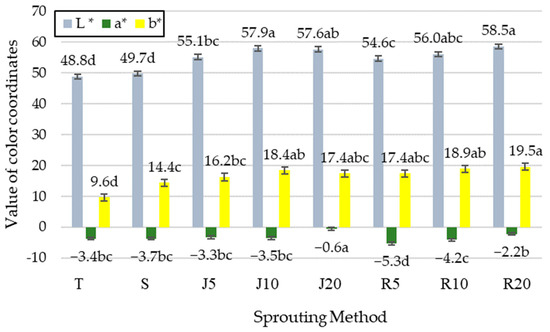
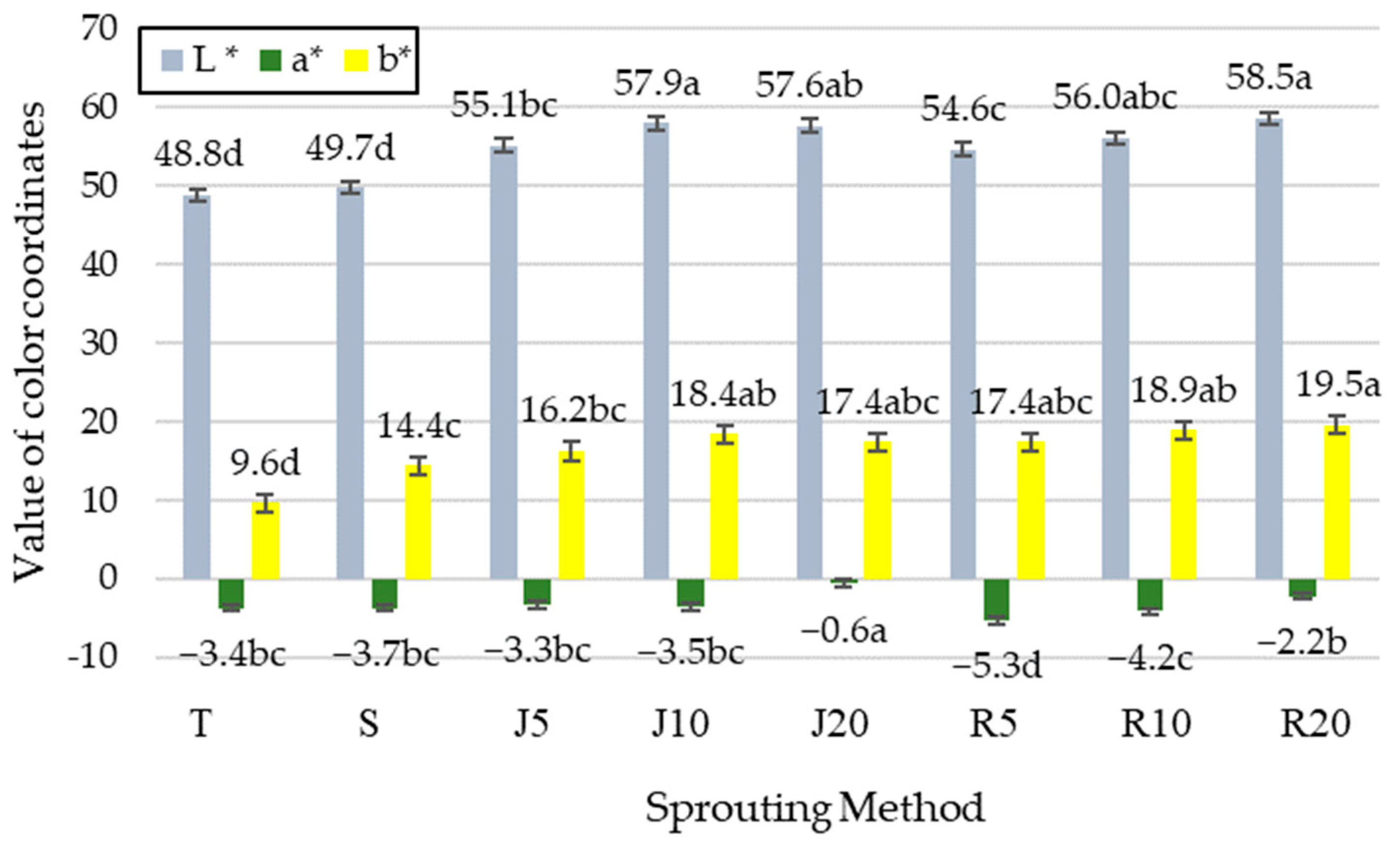
Statistically significant differences in the color parameters of radish sprouts were observed depending on the sprouting method used (Figure 2). Sprouts grown on the tray and in the sprouter exhibited the lowest lightness (L*) values, indicating a darker and more intense green coloration. In contrast, in jar and tank methods, lightness increased with higher seed density, suggesting that sprouts grown under more crowded conditions were lighter in color. The color of sprouts produced on the tray, in the sprouter, and in jars with 5% seed filling showed a comparable share of green hues. The lowest a* value, corresponding to the strongest green coloration, was recorded in tank-grown sprouts. However, as seed density increased in both jar and tank methods, the intensity of green color decreased, likely due to reduced light availability. The b* value, which reflects the contribution of yellow tones, was lowest in tray-grown sprouts, while higher seed density in jars and tanks resulted in increased yellowness. These observations prove that light access and plant density are key factors influencing the pigmentation and visual quality of radish sprouts. Light is widely recognized as one of the most influential environmental factors affecting seed germination and early seedling development, with its spectral composition, intensity, and duration profoundly impacting growth and pigment formation [36]. Wiktor et al. [37] studied various drying methods of radish sprouts, and the color parameters obtained for fresh tray-grown sprouts in their study were similar to those presented in the current work. Szulc et al. [8] employed the tank method to produce broccoli and radish sprouts. In their study, the color of radish sprouts differed in terms of the L* and b* parameters, which were lower compared to the present results, whereas the a* values, reflecting the proportion of green coloration, were similar. Overall, these results indicate that both the sprouting method and seed density strongly affect the color characteristics of radish sprouts. Tray and sprouter methods favor the development of darker, greener sprouts, while higher seed densities in jars and tanks lead to lighter and more yellowish sprouts. Comparison with previous studies confirms that these effects are consistent across different experimental setups, highlighting the importance of controlling light exposure and aeration to optimize the visual quality and market appeal of fresh radish sprouts.
Figure 2.
Color of radish sprouts depending on the sprouting method (a, b, c, d—samples with the same letter in the line do not differ significantly).
3.3. Chlorophyll Content
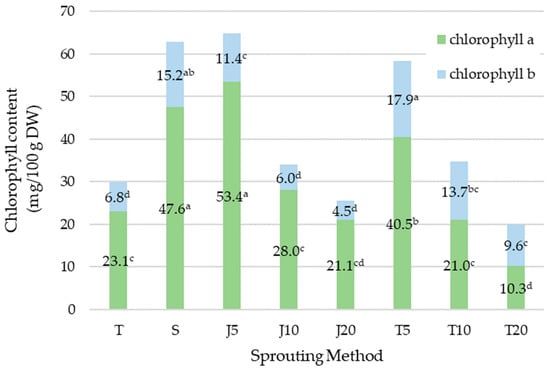
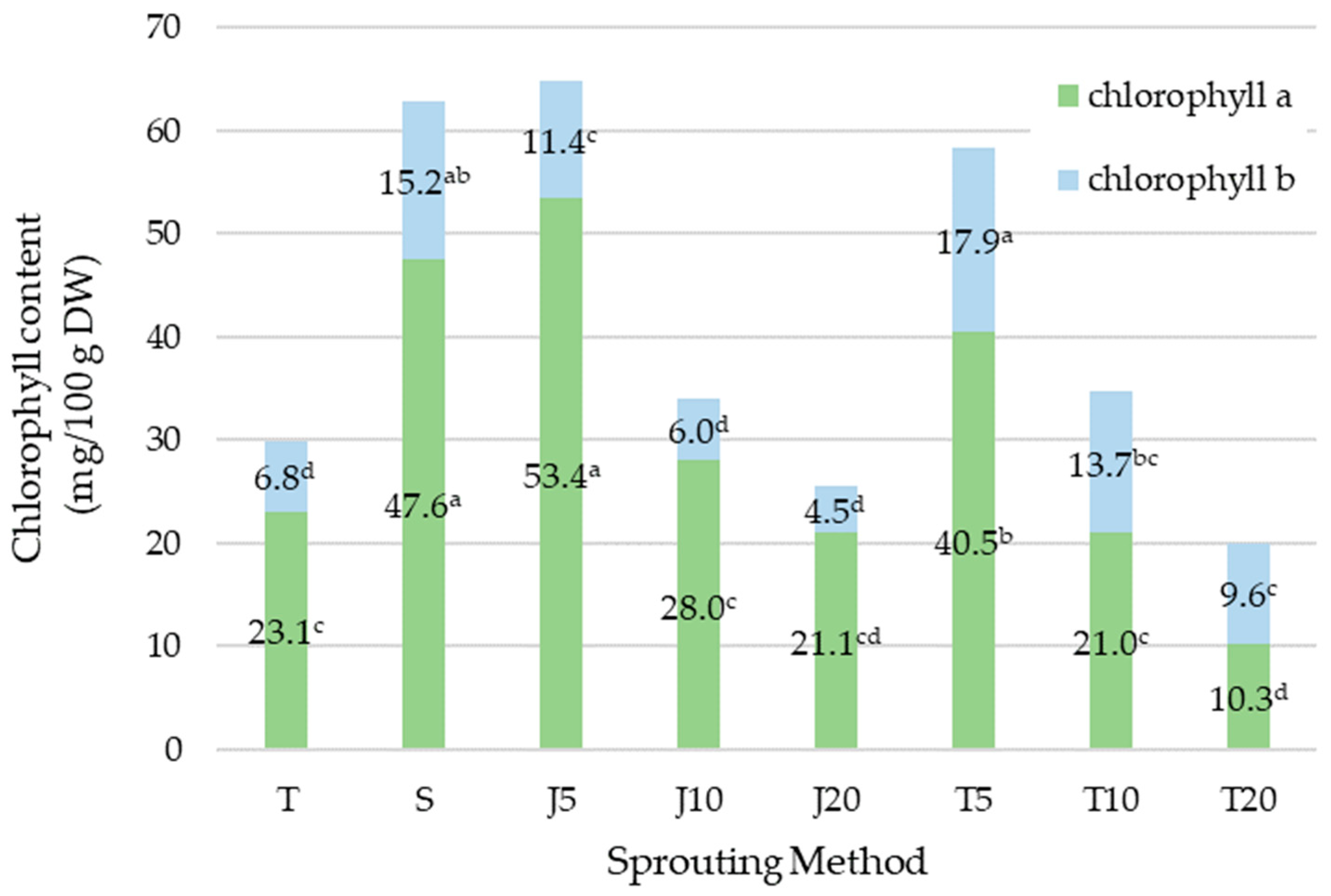
The chlorophyll a to chlorophyll b ratio in radish sprouts generally approximated 3:1, consistent with previous reports [38]. In this study, the sprouting method had a pronounced effect on chlorophyll accumulation (Figure 3). Sprouts grown in the sprouter (S) exhibited the highest chlorophyll content, with 47.6 mg/100 g DW of chlorophyll a and 15.2 mg/100 g DW of chlorophyll b, more than doubling the total chlorophyll observed in tray-grown sprouts (T: 23.1 mg/100 g DW a; 6.8 mg/100 g DW b). Among jar-grown sprouts, the lowest seed density (J5) produced the highest chlorophyll a (53.4 mg/100 g DW) and chlorophyll b (11.4 mg/100 g DW), while increasing seed density to J10 and J20 reduced chlorophyll a to 28.0 and 21.1 mg/100 g DW, and chlorophyll b to 6.0 and 4.5 mg/100 g DW, respectively. Similarly, in tank-grown sprouts, the lowest density (R5) yielded higher chlorophyll a (40.5 mg/100 g DW) and chlorophyll b (17.9 mg/100 g DW) compared to denser treatments R10 (21.0 and 13.7 mg/100 g DW) and R20 (10.3 and 9.6 mg/100 g DW). These results suggest that higher seed density limits light penetration, thereby reducing chlorophyll synthesis. The variety of radish seeds may also influence chlorophyll accumulation. Although Guo and Zhu [39] reported variability in chlorophyll content among radish varieties used for sprouting (38.6–55.0 mg/100 g DW), the chlorophyll levels observed in the present study fall within this range. The differences observed here, however, do not result from varietal variation, as in Guo and Zhu [39], but from the sprouting methods applied. Overall, continuous aeration and optimal spacing in the sprouter method promote chlorophyll accumulation, underscoring the critical role of growth conditions in enhancing photosynthetic pigment content in radish sprouts.
Figure 3.
Chlorophyll content in radish sprouts (a, b, c, d—samples with the same letter in the line do not differ significantly).
3.4. Ascorbic Acid, Polyphenols and Anthocyanins Content
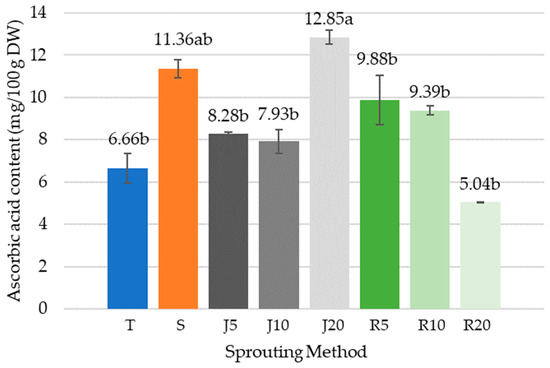
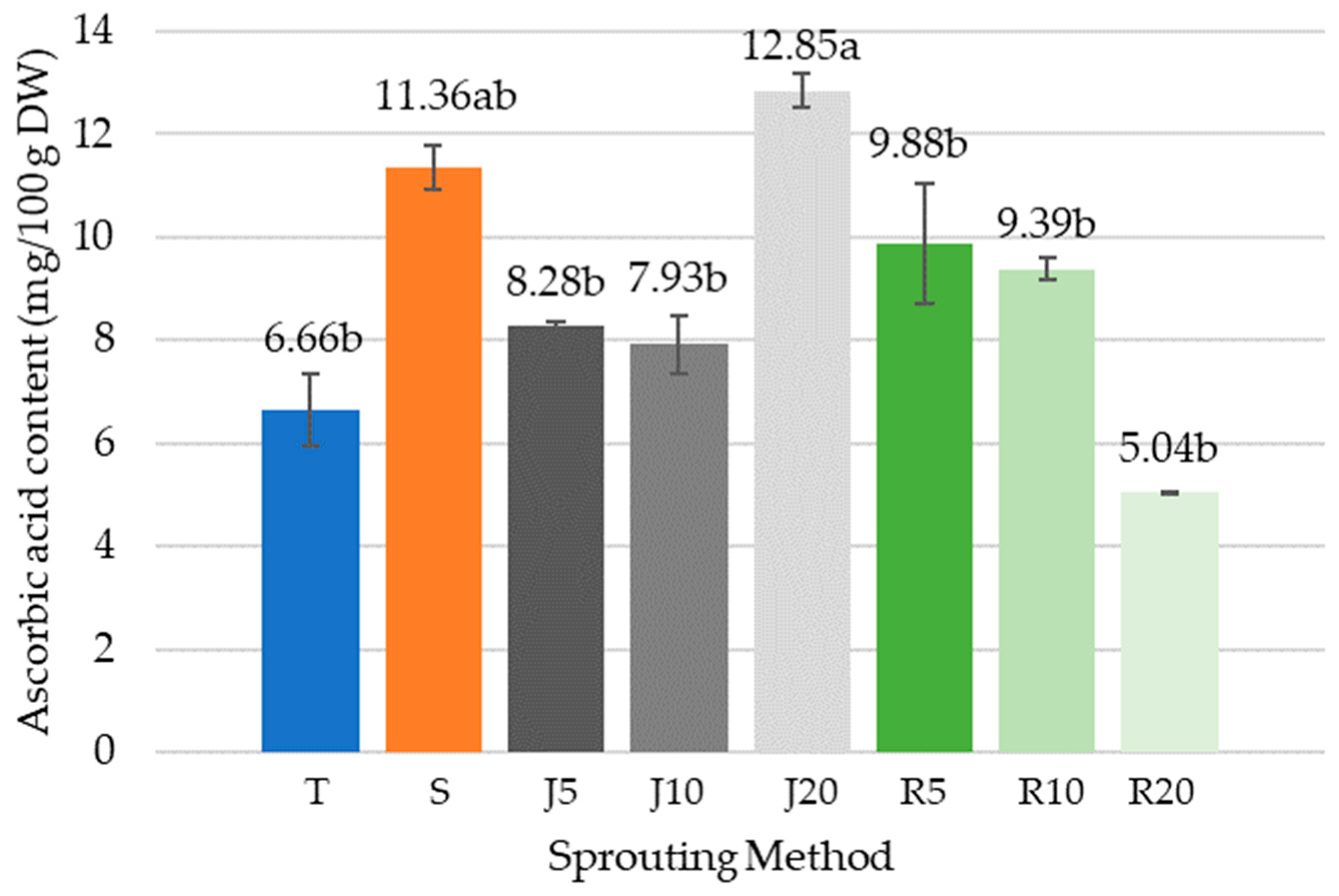
A statistically significant effect of the sprouting method on ascorbic acid content in radish sprouts was observed (Figure 4). Sprouts grown in the sprouter (S) exhibited nearly twice the ascorbic acid concentration compared to tray-grown sprouts, with values of 11.36 mg/100 g DW and 6.66 mg/100 g DW, respectively. Uniform exposure to light in the sprouter contributed to increased ascorbic acid accumulation. In contrast, seed density in the R method did not significantly affect ascorbic acid levels, which ranged from 9.88 mg/100 g DW (R5) to 5.04 mg/100 g DW (R20). Among jar-grown sprouts (J), the highest seed density (J20) resulted in a notably higher ascorbic acid content of 12.85 mg/100 g DW, compared to 8.28 mg/100 g DW (J5) and 7.93 mg/100 g DW (J10). These results indicate that continuous aeration and uniform illumination in the sprouter favor ascorbic acid synthesis, while the response to seed density varies across sprouting systems.
Figure 4.
Content of ascorbic acid depending on the sprouting method (a, b—samples with the same letter in the line do not differ significantly).
It should be noted that in addition to sprouting conditions, the radish variety can also influence the accumulation of vitamins and other bioactive metabolites. Tilahun et al. [40] reported that vitamin C content in radish microgreens varied significantly among different cultivars, ranging from 12.108 to 23.627 mg/100 g DW, highlighting that genotypic factors also play a crucial role in determining nutritional quality.
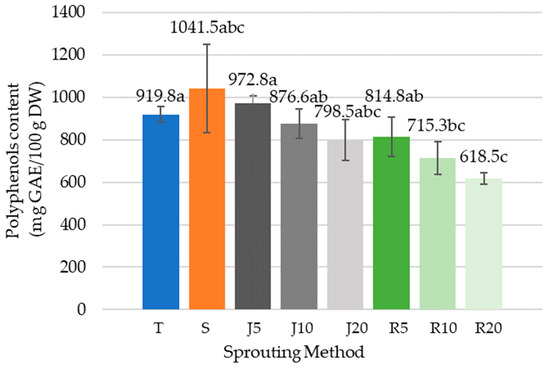
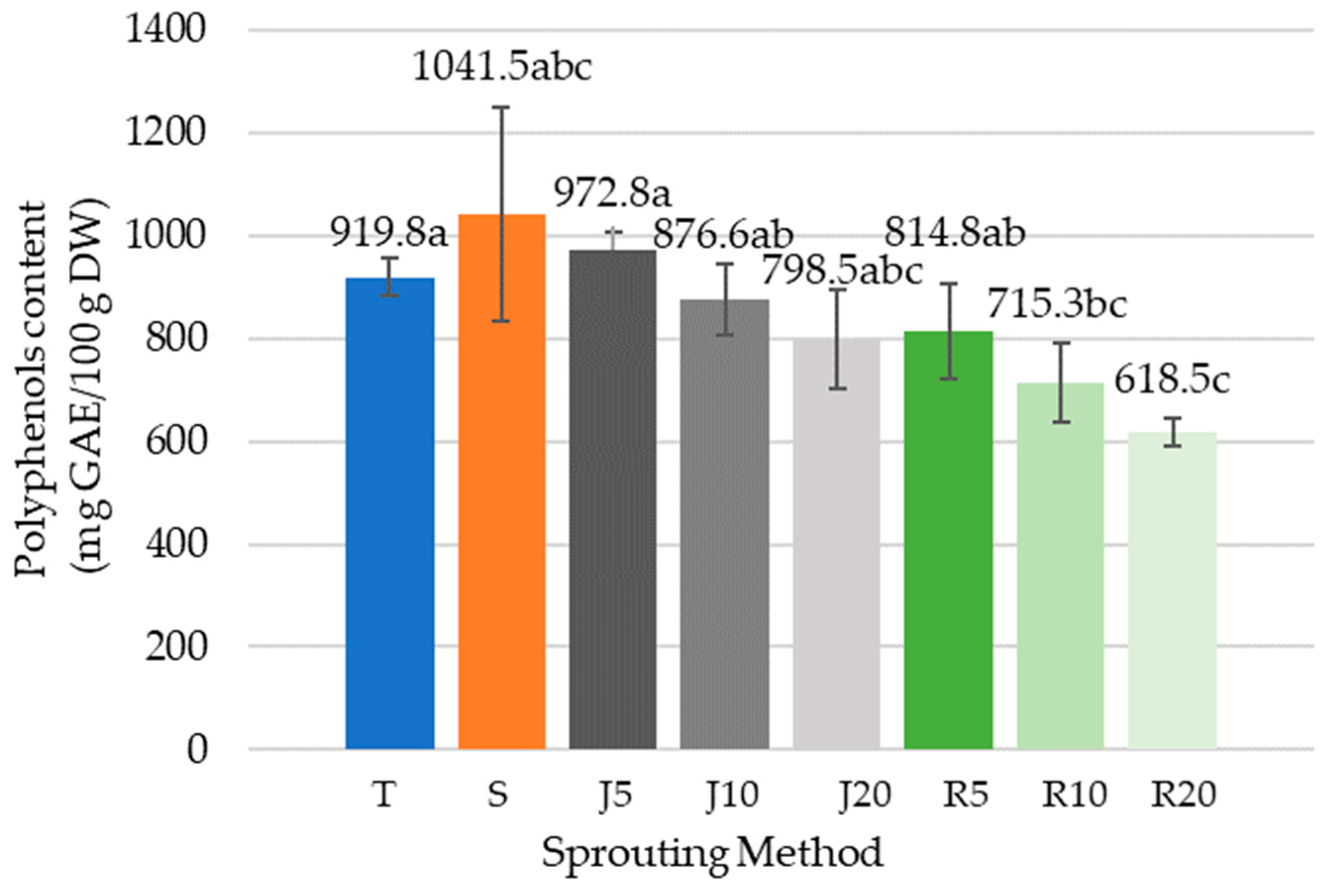
During the germination process, significant changes occur in the content of polyphenolic compounds. The polyphenol content in sprouts is generally higher than in ungerminated seeds [16]. In the present study, the highest total polyphenol content was observed in sprouts grown using the sprouter (S; 1041.5 mg/100 g DW) and tray (T; 919.8 mg/100 g DW) methods (Figure 5). Sprouts obtained using the tank (R) method contained lower polyphenol levels compared to those produced by the jar (J) method. An increase in seed density, both in the jar and tank systems, negatively affected the total polyphenol concentration in the sprouts. Similarly, Guo and Zhu [39] reported that in 7-day-old radish sprouts, the total polyphenol content ranged from 1.31 to 2.12 mg GAE/g FW, which is consistent with the levels obtained in this study when expressed on a dry matter basis. Szulc et al. [8] applied the tank method, in which the seeds accounted for 10% of the suspension, and the resulting radish sprouts contained 665–680 mg GAE/100 g FW, corresponding to values comparable to those obtained in this study for R10 sprouts (715.3 mg GAE/100 g DW). In contrast, Wiktor et al. [37] used the sprouter method and reported exceptionally high polyphenol levels of over 5000 mg GAE/100 g DW in 4-day-old radish sprouts, approximately five times higher than those measured in the present study. These findings collectively demonstrate that the sprouting method and aeration exert a substantial influence on the synthesis and accumulation of polyphenolic compounds in radish sprouts, while other variables, such as illumination and duration of germination, may also play a role as potential influencing factors.
Figure 5.
Content of polyphenols depending on the sprouting method (a, b, c—samples with the same letter in the line do not differ significantly).
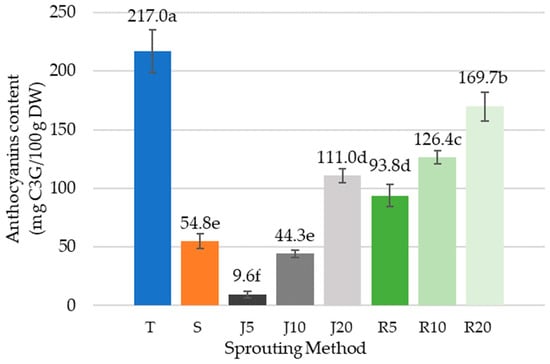
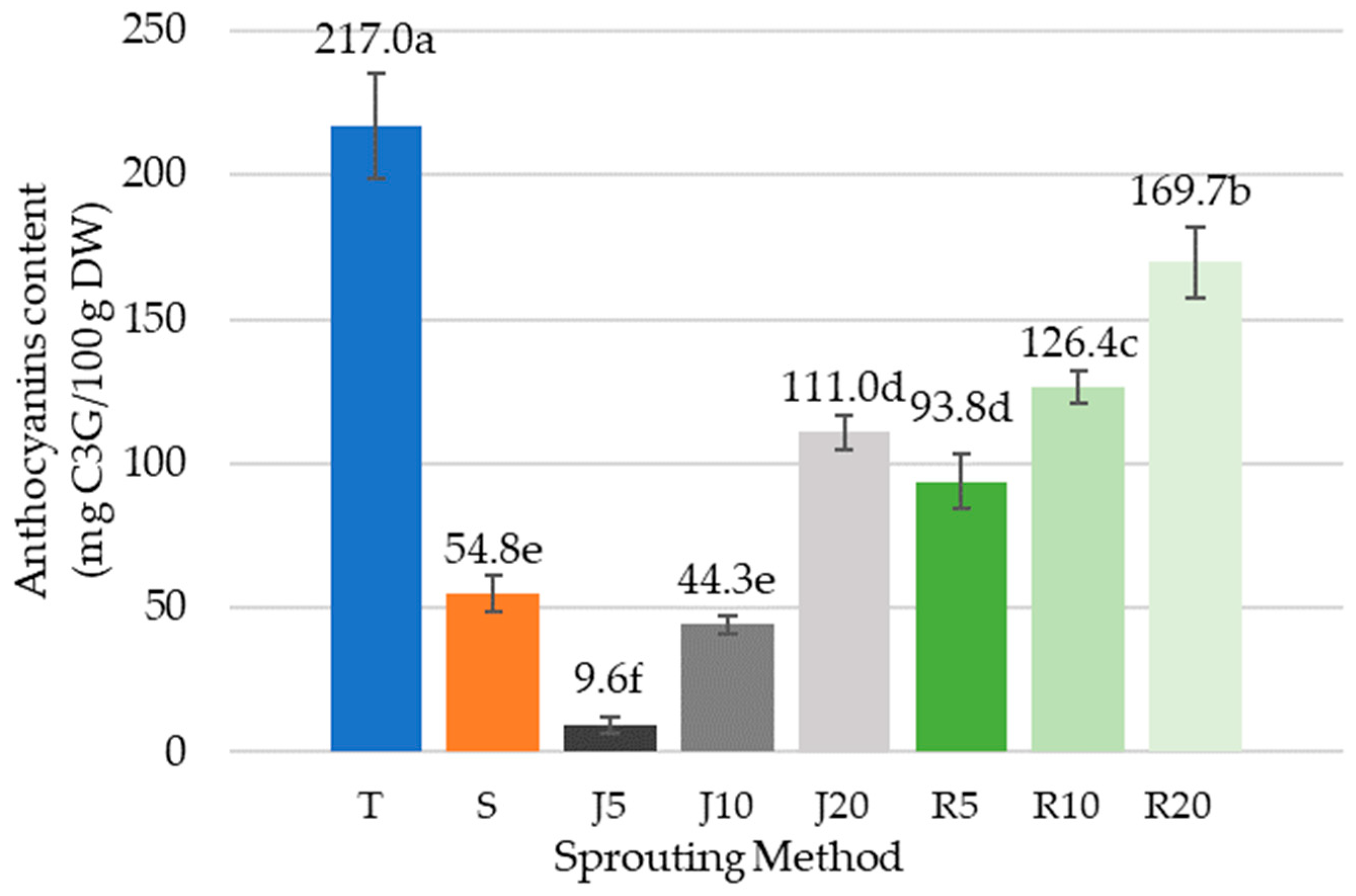
Anthocyanins are a group of water-soluble flavonoids that occur in plants in glycosylated or acylated forms. These compounds act as secondary metabolites produced by plants in response to environmental stressors, serving protective and adaptive functions. Anthocyanins are also responsible for the coloration of vegetables and fruits, and in the case of radish cultivars, high anthocyanin content enhances their visual appeal, producing attractive blue, purple, and red hues that can draw consumer attention [37]. In the present study, the sprouting method had a statistically significant effect on the anthocyanin content in radish sprouts. The highest concentration of anthocyanins was found in tray-grown sprouts (T), which contained 217.0 mg C3G/100 g DW, more than four times higher than in sprouts grown using the sprouter method (S; 54.8 mg C3G/100 g DW) (Figure 6). In both the jar (J) and tank (R) methods, anthocyanin content increased with seed density. In jar-grown sprouts, levels ranged from 9.6 to 111.0 mg C3G/100 g DW, whereas in tank-grown sprouts, concentrations increased from 93.8 to 169.7 mg C3G/100 g DW. This trend suggests that higher seed density, which limits access to light, water, and oxygen, induces abiotic stress in developing sprouts, stimulating the biosynthesis of secondary metabolites such as anthocyanins, as reported in previous studies [41,42,43].
Figure 6.
Content of polyphenols depending on the sprouting method (a, b, c, d, e, f—samples with the same letter in the line do not differ significantly).
The sprouter provided more favorable growth conditions, resulting in lower anthocyanin accumulation due to reduced stress. Although anthocyanins are sensitive to oxygen and light exposure, their increased accumulation under stress conditions enhances the bioactive and nutritional value of radish sprouts, offering potential benefits from a consumer perspective. In the present study, only one radish variety was used; therefore, inter-varietal differences were not experimentally assessed. However, literature reports indicate that genetic variation among radish varieties can strongly influence anthocyanin accumulation. For example, Baenas et al. [44] reported more than a tenfold difference in anthocyanin concentration among radish sprout varieties, ranging from 15.8 mg TAC/100 g FW in China Rose to 180.0 mg TAC/100 g FW in Rambo Red. Similarly, Tilahun et al. [40] observed substantial variation in anthocyanin content among five radish microgreen cultivars, with concentrations ranging from 5.02 to 90.65 mg/g DW. These observations suggest that both varietal characteristics and sprouting conditions can influence the synthesis of anthocyanins and, consequently, the nutritional and sensory quality of radish sprouts, although in this study, the effects of variety were not directly measured.
To better illustrate the influence of the sprouting method on the properties of radish sprouts, a comparative summary was prepared in the form of Table 2, where individual parameters were evaluated on a three-point scale (expressed using the “+” symbol). The lowest values of each parameter were assigned a single plus (+), representing the least favorable result in terms of concentration or consumer perception, while three pluses (+++) indicate the highest concentration or the most desirable trait from a nutritional and sensory standpoint.
Table 2.
Comparison of radish sprouting methods.
The results of this study demonstrate that the sprouting method exerts a significant effect on the morphological characteristics, pigmentation, and bioactive compound content of radish sprouts. Sprouts obtained using the tray (T) and sprouter (S) methods exhibited the highest mass and lowest dry matter content, reflecting favorable moisture and aeration conditions. In contrast, sprouts produced in jar (J) and tank (R) systems, particularly at higher seed densities, accumulated more dry matter but developed shorter shoots and roots, likely due to limited access to light, oxygen, and water.
Color analysis revealed that lower seed density and better light access promoted darker and greener sprouts, while increased density resulted in lighter, more yellowish coloration. These findings highlight the strong influence of aeration and illumination on the visual and physiological quality of sprouts.
Among the analyzed bioactive compounds, the sprouter method (S) favored the accumulation of ascorbic acid and chlorophyll, suggesting that optimal oxygenation and light exposure enhance both photosynthetic and antioxidant metabolism. In contrast, tray-grown sprouts (T) excelled in visual appeal, as indicated by the lowest a* values, reflecting a more intense green coloration preferred by consumers. These sprouts also exhibited the highest antioxidant content, particularly polyphenols and anthocyanins. Jar-grown sprouts (J), especially at higher seed densities, promoted dry matter accumulation but limited pigment synthesis. Tank-grown sprouts (R5–R10) maintained a balanced composition of bioactive compounds while achieving good growth and appearance. It is worth noting that the tank method allows for a twofold reduction in germination time, resulting in higher productivity compared to the other methods. However, excessive seed density (R20) slightly reduced quality due to decreased aeration.
The observed patterns indicate that increasing seed density induces abiotic stress, which enhances anthocyanin biosynthesis despite reduced chlorophyll levels and growth parameters. This phenomenon reflects the adaptive function of phenolic compounds as protective metabolites under stress conditions.
4. Conclusions
Sprouting conditions have a strong impact on the nutritional and sensory quality of radish sprouts. The choice of sprouting method and management of factors such as aeration, light exposure, and seed density determine the accumulation of key bioactive compounds and pigments. The sprouter method provides optimal oxygenation and light, promoting higher levels of vitamin C and chlorophyll, which support antioxidant activity and enhance photosynthetic metabolism. In contrast, the tray method favors the synthesis of polyphenols and anthocyanins, improving antioxidant content and visual appeal. Adjusting sprouting conditions allows producers to tailor sprout composition according to desired functional or sensory properties, providing a practical approach for developing high-quality, health-promoting foods.
Author Contributions
Conceptualization, J.S.; methodology, J.S. and J.G.; validation, J.G.; formal analysis, J.S.; investigation, J.S. and J.G.; resources, J.S.; data curation, J.S.; writing—original draft preparation, J.S. and J.G.; writing—review and editing, J.S.; visualization, J.S.; supervision, J.S.; project administration, J.S. All authors have read and agreed to the published version of the manuscript.
Funding
This research received no external funding.
Data Availability Statement
All data generated or analyzed during this study are included in this published article.
Conflicts of Interest
The authors declare no conflicts of interest.
References
- Lee, J.-D.; Shannon, J.G.; Jeong, Y.-S.; Lee, J.-M.; Hwang, Y.-H. A Simple Method for Evaluation of Sprout Characters in Soybean. Euphytica 2007, 153, 171–180. [Google Scholar] [CrossRef] [Scilit]
- Weiss, A.; Hammes, W.P. Efficacy of Heat Treatment in the Reduction of Salmonellae and Escherichia Coli O157:H– on Alfalfa, Mung Bean and Radish Seeds Used for Sprout Production. Eur. Food Res. Technol. 2005, 221, 187–191. [Google Scholar] [CrossRef] [Scilit]
- Fahey, J.W.; Ourisson, P.J.; Degnan, F.H. Pathogen Detection, Testing, and Control in Fresh Broccoli Sprouts. Nutr. J. 2006, 5, 13. [Google Scholar] [CrossRef] [Scilit]
- Świeca, M.; Dziki, D. Improvement in Sprouted Wheat Flour Functionality: Effect of Time, Temperature and Elicitation. Int. J. Food Sci. Technol. 2015, 50, 2135–2142. [Google Scholar] [CrossRef] [Scilit]
- Aloo, S.O.; Ofosu, F.K.; Kilonzi, S.M.; Shabbir, U.; Oh, D.H. Edible Plant Sprouts: Health Benefits, Trends, and Opportunities for Novel Exploration. Nutrients 2021, 13, 2882. [Google Scholar] [CrossRef] [Scilit] [PubMed]
- Coucke, N.; Slabbinck, H.; Vermeir, I. The influence of food category, dietary lifestyle, and consumption context on willingness to substitute animal-based food products with plant-based analogs. Appetite 2025, 218, 108396. [Google Scholar] [CrossRef] [Scilit] [PubMed]
- Alkhatib, A.; Tsang, C.; Tiss, A.; Bahorun, T.; Arefanian, H.; Barake, R.; Khadir, A.; Tuomilehto, J. Functional Foods and Lifestyle Approaches for Diabetes Prevention and Management. Nutrients 2017, 9, 1310. [Google Scholar] [CrossRef] [Scilit]
- Szulc, J.; Czaczyk, K.; Dobrowolska, A.; Gozdecka, G.; Błaszak, B. Elicitation as a Process of Enhancing Bioactive Compounds Concentration in Sprouts. Processes 2024, 12, 174. [Google Scholar] [CrossRef] [Scilit]
- Gan, R.-Y.; Lui, W.-Y.; Wu, K.; Chan, C.-L.; Dai, S.-H.; Sui, Z.-Q.; Corke, H. Bioactive Compounds and Bioactivities of Germinated Edible Seeds and Sprouts: An Updated Review. Trends Food Sci. Technol. 2017, 59, 1–14. [Google Scholar] [CrossRef] [Scilit]
- Baroni, L.; Rizzo, G.; Galchenko, A.V.; Zavoli, M.; Serventi, L.; Battino, M. Health Benefits of Vegetarian Diets: An Insight into the Main Topics. Foods 2024, 13, 2398. [Google Scholar] [CrossRef] [Scilit]
- Wang, T.; Masedunskas, A.; Willett, W.C.; Fontana, L. Vegetarian and Vegan Diets: Benefits and Drawbacks. Eur. Heart J. 2023, 44, 3423–3439. [Google Scholar] [CrossRef] [Scilit]
- Márton, M.; Mándoki, Z.; Csapó, J. Evaluation of biological value of wheat sprout: I. Fat content, fatty acid composition. Acta Univ. Sapientiae Aliment. 2010, 3, 53–65. [Google Scholar]
- Márton, M.; Mandoki, Z.; Csapó-Kiss, Z.; Csapó, J. The Role of Sprouts in Human Nutrition. A Review. Acta Univ. Sapientiae Aliment. 2010, 3, 81–117. [Google Scholar]
- Li, R.; Zhu, Y. Encapsulation of Sulforaphane from Cruciferous Vegetables in mPEG-PLGA Nanoparticles Enhances Cadmium’s Inhibitory Effect on HepG2 Cells. Nanomaterials 2025, 15, 615. [Google Scholar] [CrossRef] [Scilit]
- Ağagündüz, D.; Şahin, T.Ö.; Yılmaz, B.; Ekenci, K.D.; Duyar Özer, Ş.; Capasso, R. Cruciferous Vegetables and Their Bioactive Metabolites: From Prevention to Novel Therapies of Colorectal Cancer. eCAM 2022, 2022, 1534083. [Google Scholar] [CrossRef] [Scilit]
- Frias, J.; Zieliński, H.; Piskuła, M.K.; Kozłowska, H.; Vidal-Valverde, C. Inositol Phosphate Content and Trypsin Inhibitor Activity in Ready-to-Eat Cruciferous Sprouts. Food Chem. 2005, 93, 331–336. [Google Scholar] [CrossRef] [Scilit]
- Hoch, C.C.; Shoykhet, M.; Weiser, T.; Griesbaum, L.; Petry, J.; Hachani, K.; Multhoff, G.; Bashiri Dezfouli, A.; Wollenberg, B. Isothiocyanates in Medicine: A Comprehensive Review on Phenylethyl-, Allyl-, and Benzyl-Isothiocyanates. Pharmacol. Res. 2024, 201, 107107. [Google Scholar] [CrossRef] [Scilit]
- Ahmed, M. Targeting Aging Pathways with Natural Compounds: A Review of Curcumin, Epigallocatechin Gallate, Thymoquinone, and Resveratrol. Immun. Ageing 2025, 22, 28. [Google Scholar] [CrossRef] [Scilit]
- Zahra, M.; Abrahamse, H.; George, B.P. Flavonoids: Antioxidant Powerhouses and Their Role in Nanomedicine. Antioxidants 2024, 13, 922. [Google Scholar] [CrossRef] [Scilit] [PubMed]
- Roşian, Ş.H.; Boarescu, I.; Boarescu, P.-M. Antioxidant and Anti-Inflammatory Effects of Bioactive Compounds in Atherosclerosis. Int. J. Mol. Sci. 2025, 26, 1379. [Google Scholar] [CrossRef] [Scilit] [PubMed]
- Kaniewska, J.; Gozdecka, G.; Domoradzki, M.; Szambowska, A. Przydatność przetwórcza i charakterystyka owoców jagody kamczackiej i jej przetworów. Nauk. Inż. Technol. 2013, 4, 58–67. [Google Scholar]
- Zieliński, H.; Frias, J.; Piskuła, M.K.; Kozłowska, H.; Vidal-Valverde, C. Vitamin B1 and B2, Dietary Fiber and Minerals Content of Cruciferae Sprouts. Eur. Food Res. Technol. 2005, 221, 78–83. [Google Scholar] [CrossRef] [Scilit]
- Gulewicz, P.; Martínez-Villaluenga, C.; Frias, J.; Ciesiołka, D.; Gulewicz, K.; Vidal-Valverde, C. Effect of Germination on the Protein Fraction Composition of Different Lupin Seeds. Food Chem. 2008, 107, 830–844. [Google Scholar] [CrossRef] [Scilit]
- Martinez-Villaluenga, C.; Peñas, E.; Ciska, E.; Piskula, M.K.; Kozlowska, H.; Vidal-Valverde, C.; Frias, J. Time Dependence of Bioactive Compounds and Antioxidant Capacity during Germination of Different Cultivars of Broccoli and Radish Seeds. Food Chem. 2010, 120, 710–716. [Google Scholar] [CrossRef] [Scilit]
- Michalczyk, M.; Macura, R. Wplyw warunkow przechowywania na jakosc wybranych, dostepnych w obrocie handlowym, malo przetworzonych produktow warzywnych. Żywn. Nauka Technol. Jakość. 2008, 15, 96–107. [Google Scholar]
- Kim, Y.; Kim, J.; Lee, Y.; Kang, I. Comparison of the Chemical Components of Buckwheat Seed and Sprout. J. Korean Soc. Food Sci. Nutr. 2005, 34, 81–86. [Google Scholar] [CrossRef] [Scilit]
- Maneemegalai, S.; Nandakumar, S. Biochemical Studies on the Germinated Seeds of Vigna Radiata (L.) R. Wilczek, Vigna mungo (L.) Hepper and Pennisetum typhoides (Burm f.) Stapf and C.E. Hubb. Int. J. Agric. Res. 2011, 6, 601–606. [Google Scholar] [CrossRef] [Scilit]
- Szulc, J.; Gozdecka, G.; Czaczyk, K. Metody otrzymywania kiełków—Od upraw domowych do produkcji przemysłowej. Żywn. Nauka Technol. Jakość. 2017, 24, 27–40. [Google Scholar] [CrossRef] [Scilit]
- Zhang, L.; Wang, Z.; He, Z.; Ma, X.; Ma, B.; Tian, J.; He, J. Effects of Gravel-Sand and Plastic Film Mulching on Soil Water and Temperature Retention in Cold and Arid Regions without Irrigation. Sci. Total Environ. 2024, 934, 173350. [Google Scholar] [CrossRef] [Scilit]
- Abellán, Á.; Domínguez-Perles, R.; Moreno, D.A.; García-Viguera, C. Sorting out the Value of Cruciferous Sprouts as Sources of Bioactive Compounds for Nutrition and Health. Nutrients 2019, 11, 429. [Google Scholar] [CrossRef] [Scilit]
- PN-A-04019:1998; Agricultural and Food Products—Determination of Vitamin C. The Polish Committee for Standardization: Warsaw, Poland, 1998.
- Singleton, V.L.; Rossi, J.A. Colorimetry of Total Phenolics with Phosphomolybdic-Phosphotungstic Acid Reagents. Am. J. Enol. Vitic. 1965, 16, 144–158. [Google Scholar] [CrossRef] [Scilit]
- Attri, P.; Ishikawa, K.; Okumura, T.; Koga, K.; Shiratani, M.; Mildaziene, V. Impact of Seed Color and Storage Time on the Radish Seed Germination and Sprout Growth in Plasma Agriculture. Sci. Rep. 2021, 11, 2539. [Google Scholar] [CrossRef] [Scilit]
- Lim, S.-H.; Kim, D.-H.; Lee, J.-Y. RsTTG1, a WD40 Protein, Interacts with the bHLH Transcription Factor RsTT8 to Regulate Anthocyanin and Proanthocyanidin Biosynthesis in Raphanus Sativus. Int. J. Mol. Sci. 2022, 23, 11973. [Google Scholar] [CrossRef] [Scilit]
- Niu, M.; Bao, C.; Chen, J.; Zhou, W.; Zhang, Y.; Zhang, X.; Su, N.; Cui, J. RsGSTF12 Contributes to Anthocyanin Sequestration in Radish (Raphanus sativus L.). Front. Plant Sci. 2022, 13, 870202. [Google Scholar] [CrossRef] [Scilit]
- Kafka, A.; Lipok, J.; Żyszka-Haberecht, B.; Wieczorek, D. Effect of Different Colours of Light on Chosen Aspects of Metabolism of Radish Sprouts with Phosphoromic Approach. Molecules 2024, 29, 5528. [Google Scholar] [CrossRef] [Scilit] [PubMed]
- Wiktor, A.; Wasilewska, K.; Barba, F.J.; Dadan, M.; Koubaa, M.; Roohinejad, S.; Nowacka, M.; Witrowa-Rajchert, D. The impact of different drying methods on quality of radish sprouts. Zesz. Probl. Postęp. Nauk. Rol. 2019, 41–51. [Google Scholar] [CrossRef] [Scilit]
- Ferruzzi, M.G.; Blakeslee, J. Digestion, Absorption, and Cancer Preventative Activity of Dietary Chlorophyll Derivatives. Nutr. Res. 2007, 27, 1–12. [Google Scholar] [CrossRef] [Scilit]
- Guo, C.; Zhu, Y. Comparative Analysis of Phytochemicals and Antioxidant Activities in Seeds and Sprouts of Different Varieties of Radish (Raphanus sativus L.): TOPSIS-Entropy Weight Method. Front. Plant Sci. 2025, 16, 1531570. [Google Scholar] [CrossRef] [Scilit]
- Tilahun, S.; Baek, M.W.; An, K.-S.; Choi, H.R.; Lee, J.H.; Hong, J.S.; Jeong, C.S. Radish Microgreens Produced without Substrate in a Vertical Multi-Layered Growing Unit Are Rich in Nutritional Metabolites. Front. Plant Sci. 2023, 14, 1236055. [Google Scholar] [CrossRef] [Scilit]
- Naing, A.H.; Kim, C.K. Abiotic Stress-Induced Anthocyanins in Plants: Their Role in Tolerance to Abiotic Stresses. Physiol. Plant. 2021, 172, 1711–1723. [Google Scholar] [CrossRef] [Scilit]
- Kovinich, N.; Kayanja, G.; Chanoca, A.; Otegui, M.S.; Grotewold, E. Abiotic Stresses Induce Different Localizations of Anthocyanins in Arabidopsis. Plant Signal Behav. 2015, 10, e1027850. [Google Scholar] [CrossRef] [Scilit] [PubMed]
- Baenas, N.; García-Viguera, C.; Moreno, D.A. Elicitation: A Tool for Enriching the Bioactive Composition of Foods. Molecules 2014, 19, 13541–13563. [Google Scholar] [CrossRef] [Scilit] [PubMed]
- Baenas, N.; Ferreres, F.; García-Viguera, C.; Moreno, D.A. Radish Sprouts—Characterization and Elicitation of Novel Varieties Rich in Anthocyanins. Food Res. Int. 2015, 69, 305–312. [Google Scholar] [CrossRef] [Scilit]

Disclaimer/Publisher’s Note: The statements, opinions and data contained in all publications are solely those of the individual author(s) and contributor(s) and not of MDPI and/or the editor(s). MDPI and/or the editor(s) disclaim responsibility for any injury to people or property resulting from any ideas, methods, instructions or products referred to in the content. |
© 2025 by the authors. Licensee MDPI, Basel, Switzerland. This article is an open access article distributed under the terms and conditions of the Creative Commons Attribution (CC BY) license (https://creativecommons.org/licenses/by/4.0/).