Article

Preparation and Performance Research of the Optimal Mix Ratio Based on the Coupling Mechanism of Dust Suppressants


School of Civil Engineering and Architecture, Xi’an Technological University, Xi’an 710021, China
*
Author to whom correspondence should be addressed.
Processes 2025, 13(12), 4061; https://doi.org/10.3390/pr13124061
Submission received: 12 September 2025 / Revised: 28 November 2025 / Accepted: 2 December 2025 / Published: 16 December 2025
(This article belongs to the Section Chemical Processes and Systems)

Abstract

In the context of dust pollution contributing more than 30% to PM2.5 during urbanization, this study optimally designed a multi-component coupled dust suppressant based on the coupling mechanism of chemical dust suppressants, oriented towards environmental friendliness. The concentration range of the core component was determined through single-factor experiments: surfactant sodium dodecylbenzene sulfonate (SDBS) 0.5–1.0% (minimum surface tension 27.8 mN/m), coagulant sodium polyacrylate 0.1–0.2% (viscosity ≥ 42 mPa·s), and water-retaining agent triethanolamine 0.1–1.0% (3 h water retention > 90%). The L9 (34) orthogonal test was used to optimize the formulation with water retention rate, crust hardness, and wind erosion rate as indicators, combined with range and variance analysis (α = 0.05). The results showed that sodium polyacrylate concentration had an extremely significant effect on water retention (contribution rate 98.6%), and an increase in its concentration significantly enhanced shell hardness (up to 51HA) and reduced wind erosion rate (down to 0.05%). The optimal ratio was 0.2% sodium polyacrylate, 1.0% sodium dodecylbenzene sulfonate, and 2.5% triethanolamine. At this time, the 24 h water retention rate reached 35.14%, and the wind erosion resistance was 16 times higher than that of the control group. The system builds a three-dimensional cross-linked structure through a hydrogen bond network to synergistically achieve enhanced dust wetting, particle coalescence, and long-lasting consolidation, providing theoretical support and practical solutions for green dust suppression technology.

1. Introduction

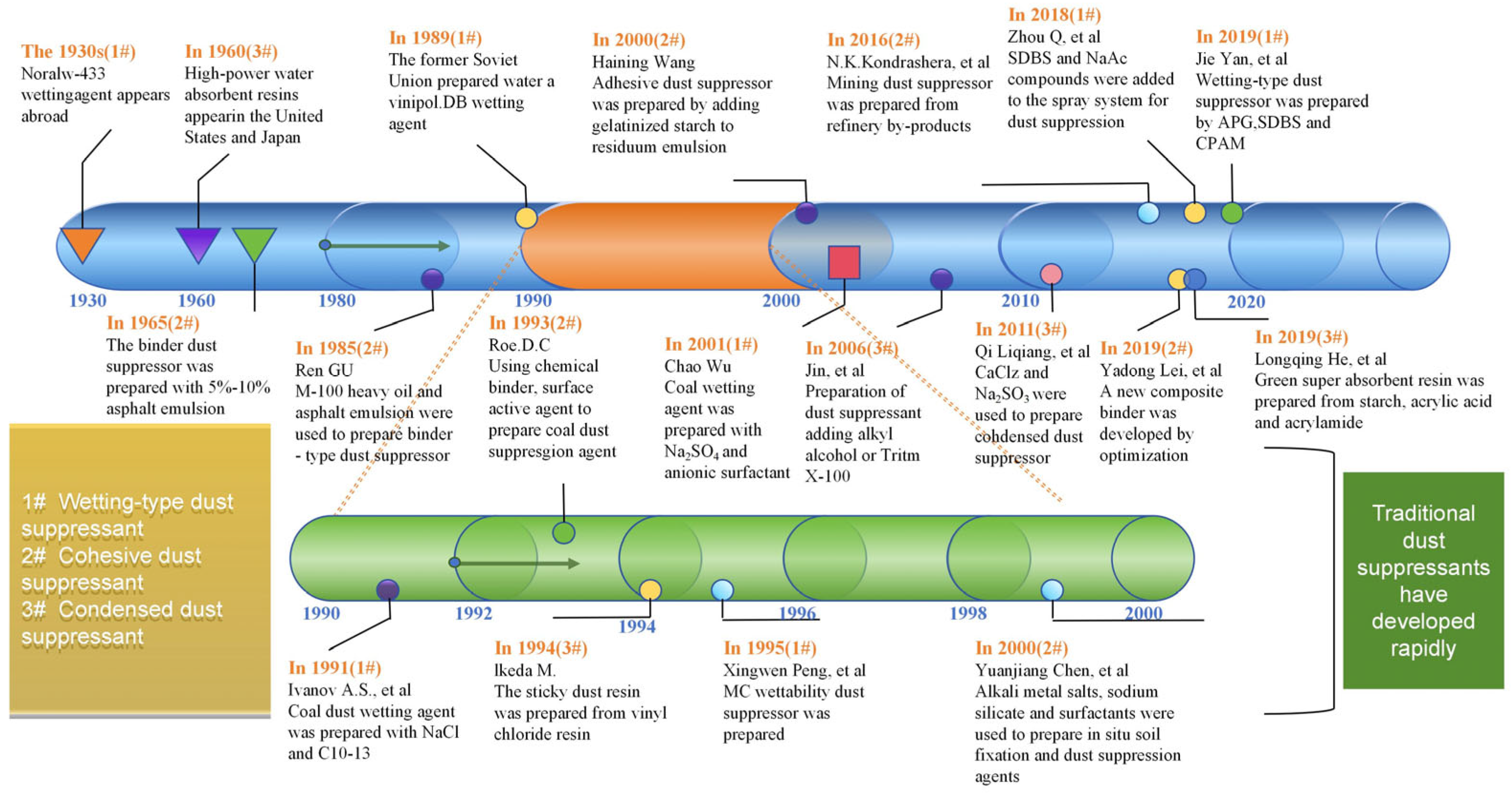
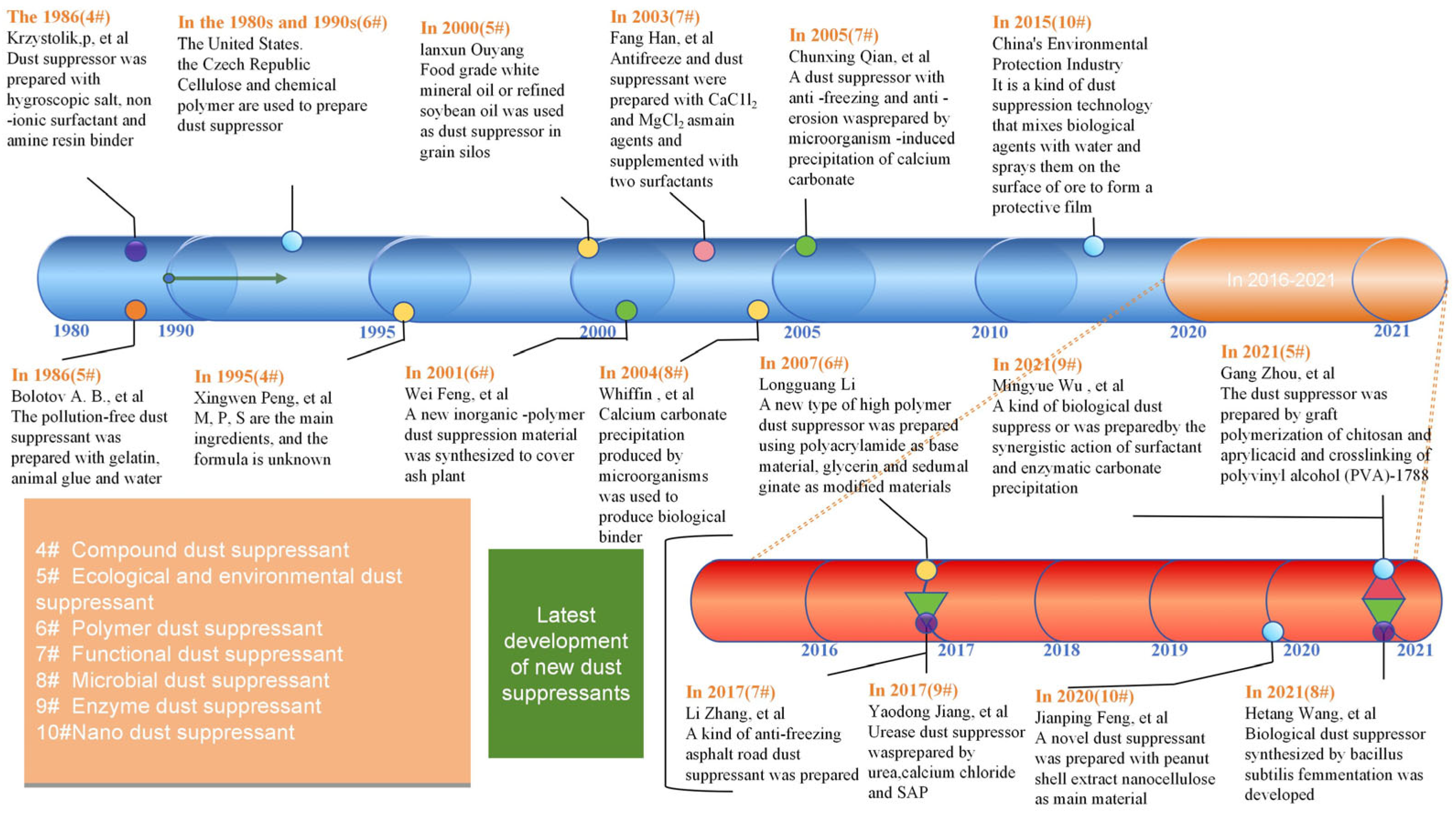
Dust pollution from industrial production, construction, and mining activities poses a serious environmental challenge in the process of global industrialization and urbanization. Since 2012, haze events with PM2.5/PM10 as the primary pollutant have occurred frequently in northern China [1], which highlights the critical impact that studies have confirmed; dust in key areas contributes more than 30% to PM2.5 and is significantly positively correlated with urbanization [2,3]. PM2.5 concentrations can be up to 13 times higher than the safety standard. Technically, dust suppression measures have shifted from extensive physical control to chemical–biological synergy [4]. Chemical dust suppressants have evolved through three generations: traditional, compound, and new bio-based [5,6]. Among them, the traditional calcium chloride system poses environmental risks [7]; the compound enables multi-mechanism synergistic effects [8,9], and biotechnologies such as microbial mineralization (MICP) have both dust suppression and ecological restoration functions [10,11]. Phytoremediation enhances dust suppression through root consolidation and canopy blocking [12]. A typical example is the synergistic effect of ryegrass and polyacrylamide on the shear strength [13]. At the management level, despite the implementation of source control measures such as fencing [14], wet operation, and mechanized cleaning [15], there are still bottlenecks such as insufficient performance–cost–environmental synergy [16], weak adaptability to extreme environments, and fragmented evaluation criteria. The development history of traditional dust suppressants is illustrated in Figure 1, while the development status of novel dust suppressants is presented in Figure 2.
The current research on dust suppressants focuses on the synergistic optimization of environmental friendliness and efficiency, mainly covering three types of systems: chemically modified, hydrogel, and biological dust suppressants [17,18].
Chemically modified surfactant-based dust suppressants provide transient dust control through enhanced wetting but suffer from limited durability, corrosive potential, and environmental persistence. Chemically modified dust suppressants, with surfactant compounding as the core mechanism of action, significantly reduce the surface tension of the solution and enhance the wetting and penetration efficiency of dust through the directional arrangement of hydrophobic and hydrophilic ends [19]. The molecular structure bridges dust particles through physical adsorption and electrostatic attraction, promoting the coagulation and sedimentation of fine particles and enhancing the dynamic dust suppression rate [20]. But this type of dust suppressant is limited to short-term wetting control and lacks long-lasting bonding capacity [21,22]; Some halogen-containing or strongly acidic components are prone to cause corrosion of metal equipment [23,24], and the long-term accumulation of refractory residues (chlorides) may lead to soil salinization and disrupt ecological balance [25].
Hydrogel dust suppressants utilize 3D polymer networks for effective dust control through moisture retention and crust formation, though high viscosity poses application challenges and incomplete biodegradation presents ecological risks. Hydrogel-type dust suppressants rely on high-molecular cross-linking such as polyvinyl alcohol-polyethylene glycol to form a three-dimensional network structure [26], and they suppress dust diffusion through a dual mechanism of pore filling and film consolidation [27]. Its porous structure locks in moisture, optimizes surface tension, and has low-temperature adaptability and partial biodegradable ability [28]. But excessive thickeners (xanthan gum) can cause the solution viscosity to be too high, forming colloidal suspensions that hinder atomization spraying [29]. The incompletely degraded polymer fragments may interfere with soil aggregate structure, affect aeration and microbial activity, and pose ecological risks for long-term application.
Biosurfactant-based biodegradable dust suppressants offer eco-compatible agglomeration but face challenges in fermentation control, high costs, and limited environmental adaptability. Biodegradable dust suppressants use biosurfactants metabolized by microorganisms, such as Bacillus subtilis to reduce critical micelle concentration through ultrafiltration purification and accelerate dust agglomeration and sedimentation. Their degradation products have no heavy metal residue and have both dust suppression and ecological restoration potential. But the fermentation process requires precise control of dissolved oxygen, pH, and temperature parameters, and the equipment investment cost is high. The metabolic stability of the strain is susceptible to environmental fluctuations, and its biological activity is significantly reduced in acidic water bodies in mines (pH < 4.0) or extreme temperature conditions, and its adaptability to practical application scenarios is limited.
With the in-depth implementation of ecological civilization construction, dust pollution control technologies are transforming towards greenness and sustainability. Against this backdrop, the development of new materials that are both highly effective in dust suppression and environmentally friendly has become the core goal of current research. Based on orthogonal experiments and statistical analysis, this study optimized a multi-component coupled dust suppressant formulation with surfactants, coagulants, and moisture-retaining agents as core components, aiming to achieve high dust suppression efficiency and environmental compatibility. In response to the challenges of building dust, such as its strong openness and numerous dust generation points, there is an urgent need to develop chemical-based multi-functional dust suppression systems with multi-scenario adaptability, ecological safety, and cost controllability to meet the urgent demands of environmental governance in the new era.

2. Mechanism of Dust Suppressants

2.1. Dust Suppressant Synthesis Mechanism

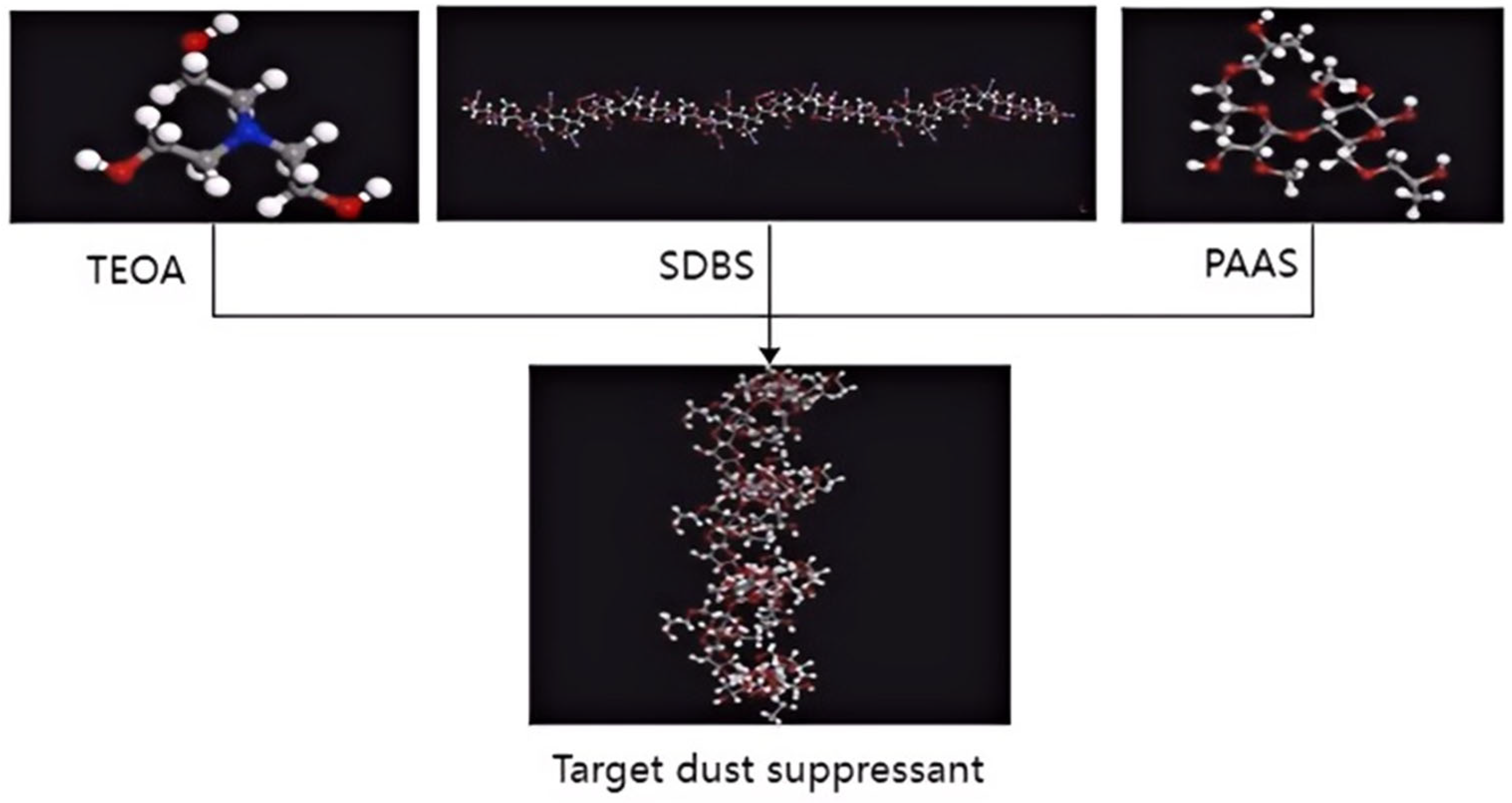
The synthesis mechanism of environmentally friendly dust suppressants is primarily based on hydrogen bond interactions between triethanolamine and sodium polyacrylate molecules. In the synthesis process, triethanolamine (2.5 wt%) is first introduced into the reaction system as a water-retaining component to achieve uniform dispersion [30]. The coagulant sodium polyacrylate (0.2 wt%) is then added to the system. Under continuous stirring conditions (stirred at 300 rpm for 10 min), the triethanolamine molecular chains gradually penetrate the interior of the sodium polyacrylate structure, where they collaboratively form a three-dimensional cross-linked network through multiple inter-molecular hydrogen bonds. This hydrogen-bonded architecture significantly enhances the structural rigidity of the consolidated layer and substantially improves the system’s resistance to deformation by effectively restricting molecular chain mobility. Finally, the surfactant sodium dodecylbenzene sulfonate (1.0 wt%) is introduced, and after thorough mixing for another 5 min, the target dust suppressant is obtained. The molecular assembly is schematically represented in Figure 3 below.

2.2. The Mechanism of Action of the Dust Suppressant on Dust

2.2.1. Surface Wetting Enhancement Mechanism

During simple water spraying for dust suppression, due to the weak interfacial adhesion between water molecules and dust particles, the dust suppression effect diminishes rapidly with the evaporation of water. However, environmentally friendly dust suppressants significantly improve wetting performance by introducing the surfactant sodium dodecylbenzene sulfonate (SDBS): the hydrophobic end of the molecule generates hydrophobic repulsion with water molecules, while the hydrophilic end binds to water through weak hydrogen bonds (with a strength significantly lower than the cohesive force of the water itself). The directional arrangement of SDBS at the gas–liquid interface can effectively reduce interfacial tension and facilitate the rapid penetration and filling of the dust suppressant solution into the gaps between dust particles, thereby significantly enhancing the hydrophilicity and wetting efficiency [31,32], as shown in Figure 4 below.

2.2.2. Particle Agglomeration and Coalescence Mechanism

Triethanolamine, a water-retaining component in dust suppressants, and sodium polyacrylate, a coagulant rich in hydrophilic functional groups such as hydroxyl (-OH) and carboxyl (-COOH), enhance dust agglomeration through the following triple pathways, strengthen the bonding strength between dust particles, and ensure the relative stability of particle agglomerations.
  • Form electrostatic attraction with nitrogen-containing functional groups on the particle surface.
  • Build a hydrogen bond network with oxygen-containing functional groups.
  • Solidification of particles through bonding mediated by high dielectric constant water molecules.

2.2.3. Wind Resistance and Moisture Retention Synergistic Mechanism

Dust suppressants enhance long-lasting performance in practical applications through the following synergistic mechanisms:
  • Bonding effect: Inducing dust particles to aggregate into larger particle size distributions, enhancing wind erosion resistance.
  • Consolidation layer strengthening: After water evaporation, hydroxypropyl methylcellulose builds a three-dimensional network structure through intermolecular hydrogen bonds, significantly enhancing the mechanical strength of the consolidation layer.
  • Moisture retention and crack resistance: The above rigid structure effectively inhibits the cracking of the solidified layer, reduces the rate of moisture evaporation, and ensures an extended duration of dust suppression.

3. Experimental Preparation

3.1. Raw Material Selection

The test dust sample was selected from Xi‘an, Shaanxi Province. Reagents involved in the experiment: sodium dodecylbenzene sulfonate, analytical grade; sodium polyacrylic, analytical grade; and triethanolamine, analytical grade.
Equipment involved in the test: electronic scale, spray bottle, constant temperature drying oven, pH paper, hair dryer, LX-A Shore durometer, Petri dish, and tray.

3.1.1. Selection of Surfactants

Surfactants, due to their unique “amphiphilic” molecular structure (with both hydrophilic and hydrophobic groups), can be directionally arranged at the phase interface, significantly reducing interfacial tension. The mechanism of action is that the hydrophilic end binds to water molecules through hydrogen bonds, and the hydrophobic end is oriented towards the gas–liquid interface due to the repulsion of water molecules, resulting in a reduction in the density of water molecule arrangement at the interface, thereby significantly weakening the surface tension of the system. This property endows surfactants with excellent wetting, emulsifying, and dispersing properties. Based on the dust suppression requirements, this study focuses on using its wetting function to enhance the hydrophilicity and adsorption capacity of dust particles.
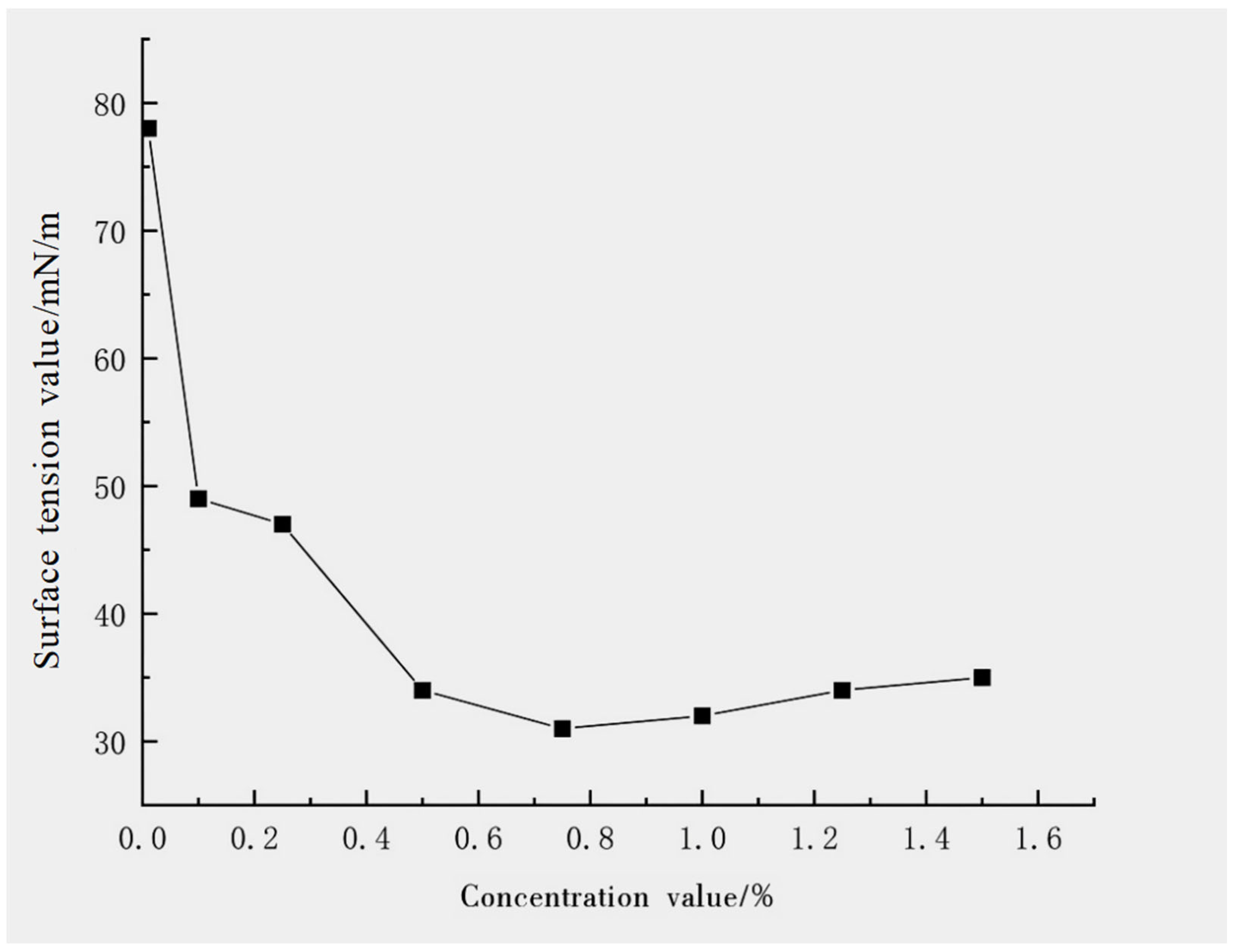
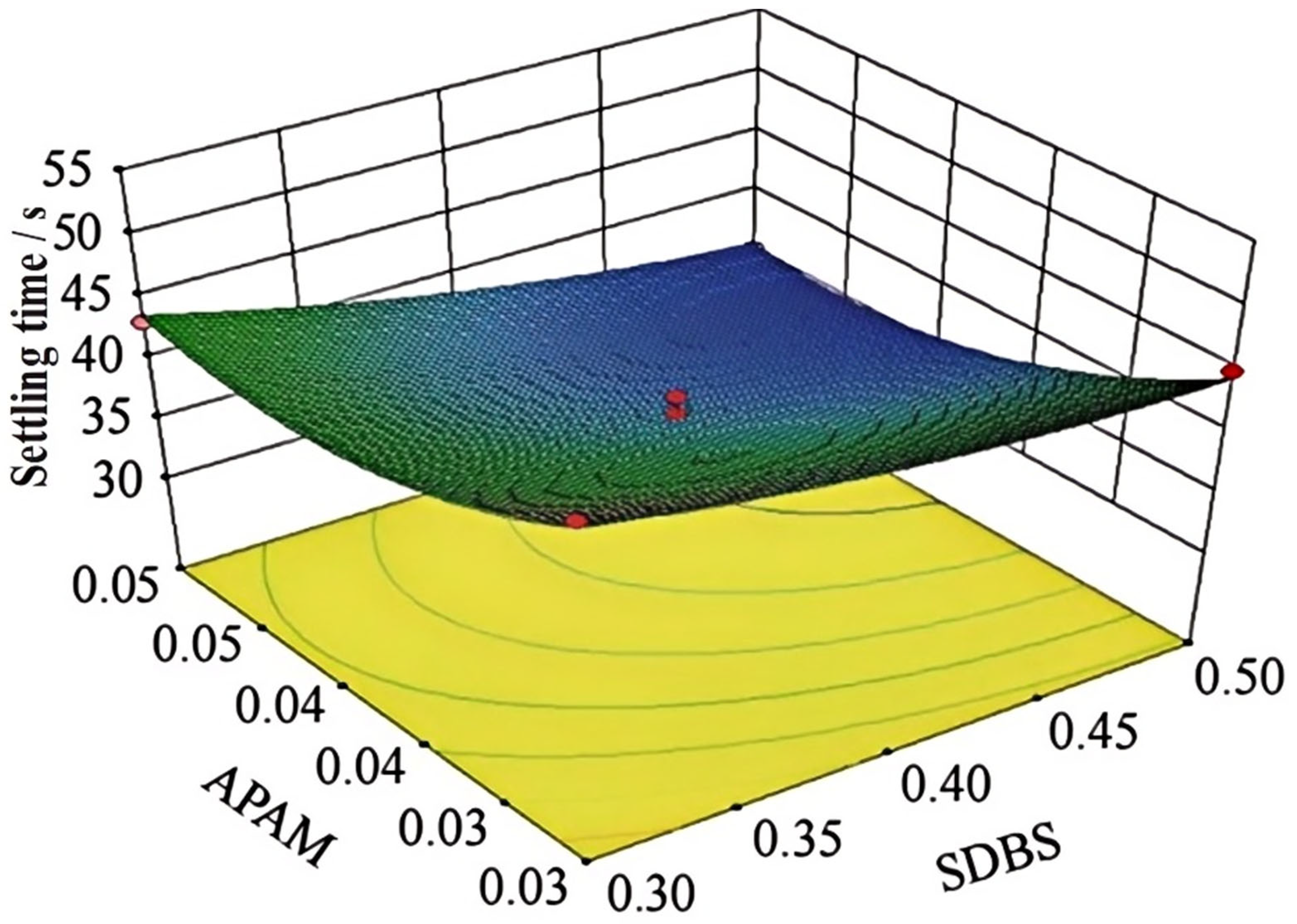
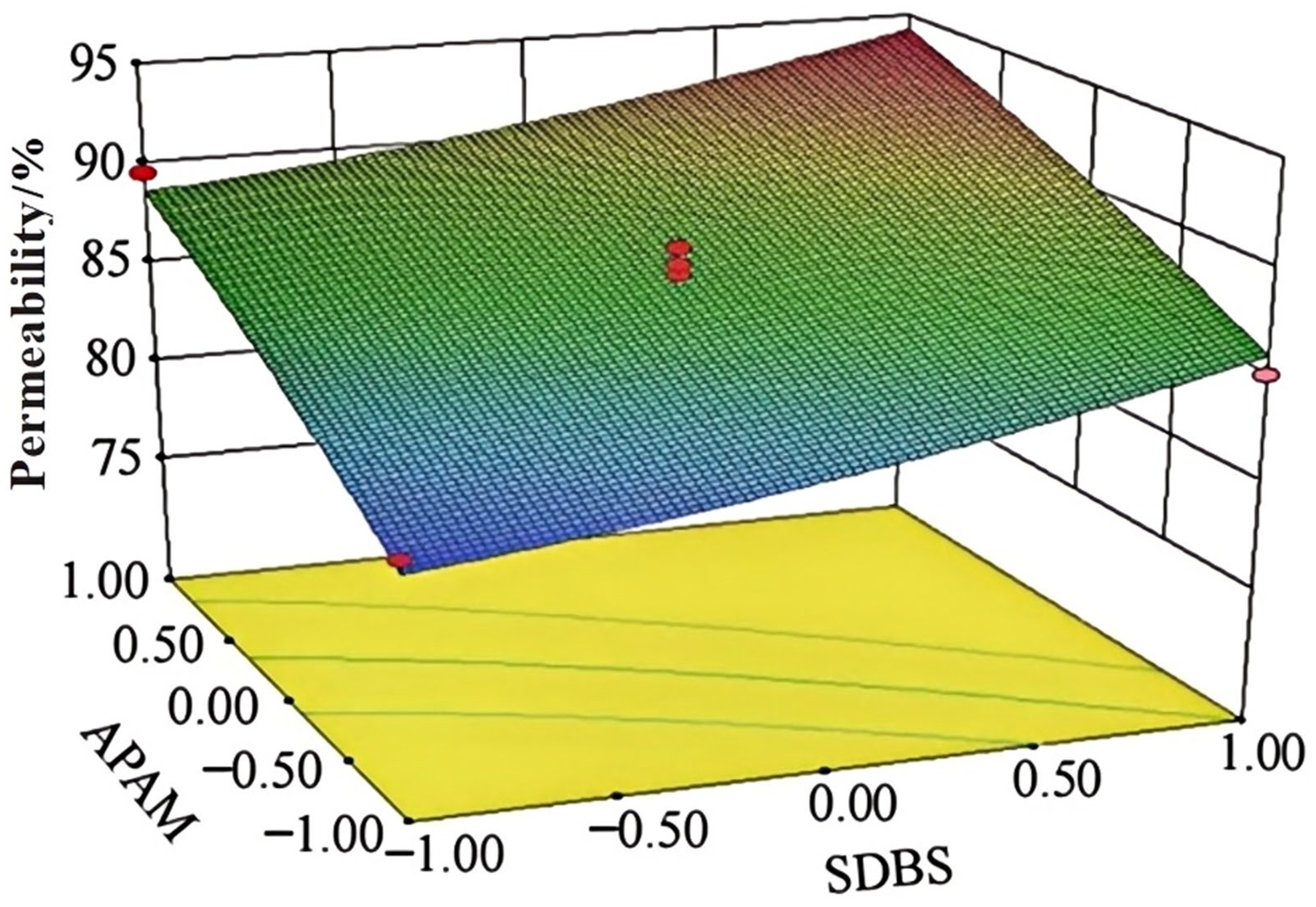
When selecting surfactants, first classify and screen them based on their dissociation characteristics. Among ionic surfactants, anionic ones are identified as the preferred type because of their readily available raw materials, low cost, and excellent wettability and water retention. Secondly, through the study of relevant references, it was found that sodium dodecylbenzene sulfonate (SDBS) is superior to other anionic surfactants (SDS and SDSn) and nonionic surfactants (AEO series) in terms of wetting rate, molecular structure compatibility, and adsorption state. Finally, the mass concentration range of sodium dodecylbenzene sulfonate (SDBS) was determined by experimental analysis. Surfactant aqueous solutions of SDBS with mass concentration gradients of 0.01%, 0.1%, 0.25%, 0.5%, 0.75%, 1.0%, 1.25%, and 1.5% were prepared, and the apparent surface tension values of the solutions at each concentration were measured using the CL-3 automatic surface tension meter. To ensure the reliability of the data, each concentration solution was measured in parallel twice, and the arithmetic mean was taken as the surface tension value of the SDBS solution at that concentration. The results of the experiment are shown in Figure 5, while the influence of reagent concentration on sedimentation time and permeability is shown in Figure 6 and Figure 7.
Experimental results show that the surface tension of SDBS decreases significantly with the increase in concentration, and the surface tension drops to the lowest value when the solution mass concentration is 0.75%. Therefore, in this study, SDBS with concentrations ranging from 0.5% to 1.0% were selected as the core surface active component of the dust suppressant.

3.1.2. Coagulant Selection

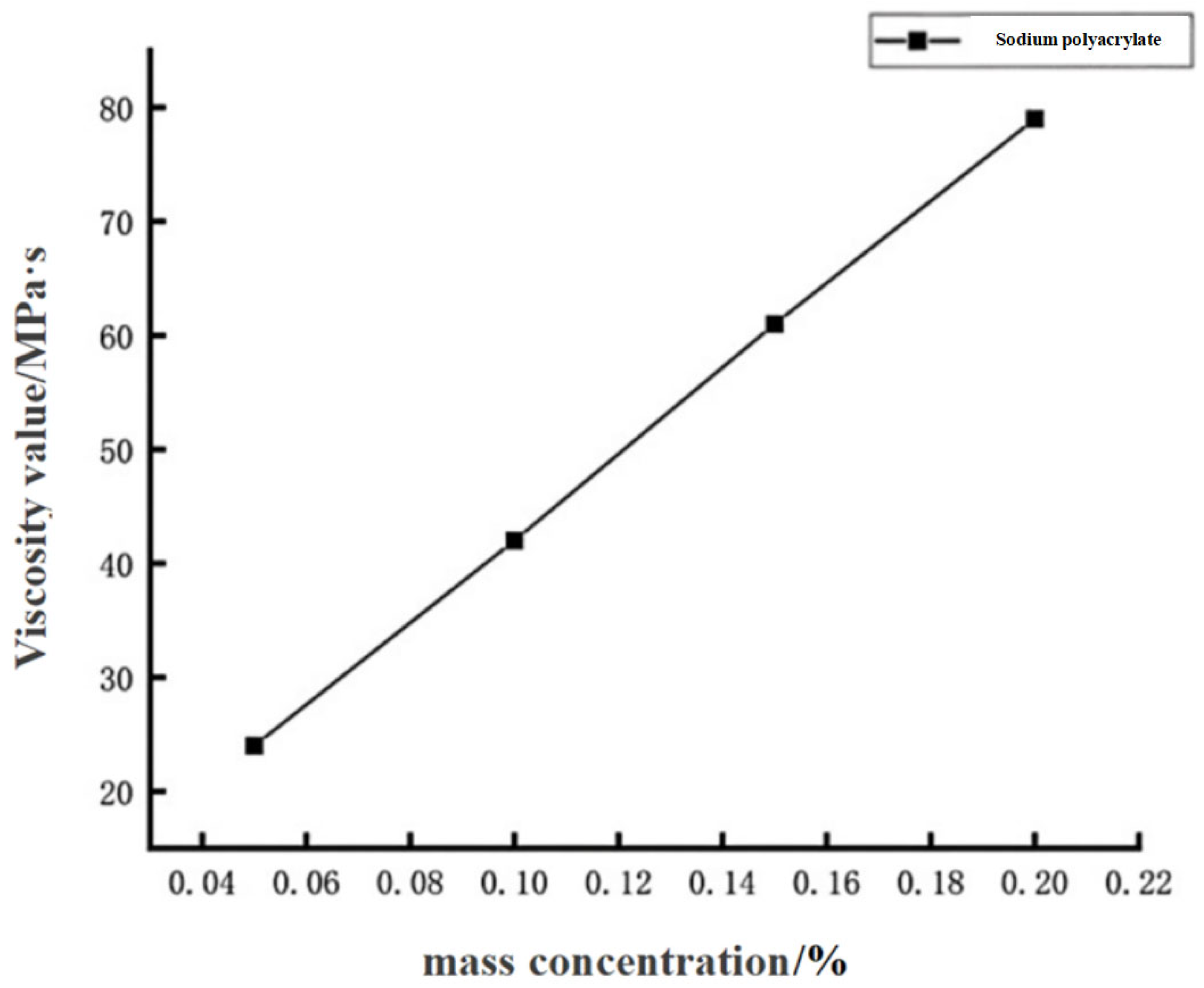
The core mechanism of action of coagulants in suppressing dust is their adhesion and bridging effects. Their molecular structure (usually long-chain macromolecules) effectively adheres to the surface of multiple dust particles through physical adsorption, electrostatic attraction, or chemical bonding. This adhesion prompts the originally dispersed fine dust particles to approach each other and aggregate (that is, “coalesces”), forming aggregates with significantly increased particle size. The increase in the mass of the aggregates directly intensifies their gravitational settling tendency, accelerating the detachment of dust from the airflow, thereby achieving the dust suppression effect. The coagulant molecules form a dense coating on the surface of the dust aggregates, which not only strengthens the structural stability of the aggregates to prevent their dissociation under airflow disturbance, but also effectively blocks the secondary suspension and diffusion of dust caused by water evaporation or external force through steric hindrance and enhanced binding force between particles. Sodium polyacrylate is chosen as the coagulant because of its strong adhesive and hygroscopic properties, which work together to achieve efficient and long-lasting suppression of dust by increasing particle size, promoting sedimentation, and forming a protective coating layer. Sodium polyacrylate was prepared into solutions of different concentrations (0.05%, 0.10%, 0.15%, and 0.20%), and the viscosity values were measured using a digital viscometer, as shown in Figure 8.
The results show that, as the concentration of sodium polyacrylate increases, its viscosity value shows an upward trend. When the solution concentration was 0.10%, the viscosity reached 42 mPa·s. This phenomenon indicates that sodium polyacrylate shows good bonding performance at low concentrations and is more sensitive to viscosity changes with concentration. Therefore, 0.1–0.2% by mass was selected as the coagulant for the subsequent orthogonal test.

3.1.3. Selection of Water-Retaining Agent

The water-retaining agent achieves sustained suppression of dust diffusion by forming a protective film on the dust surface, effectively delaying the rate of water evaporation and maintaining a long-lasting moist state on the particle surface. Based on both environmental and economic considerations, this study screened three water-retaining agents, namely glycerol, polyacrylic acid, and triethanolamine, for performance comparison:
  • Glycerol: A colorless, viscous, hygroscopic liquid with excellent moisture retention properties and biocompatibility, which can spontaneously absorb environmental moisture.
  • Polyacrylic acid: A water-soluble high-molecular-weight polymer that achieves ultra-high water absorption and retention capacity through a three-dimensional network structure.
  • Triethanolamine: A chemically stable alkaline compound that combines moisturizing and surfactant synergistic effects.
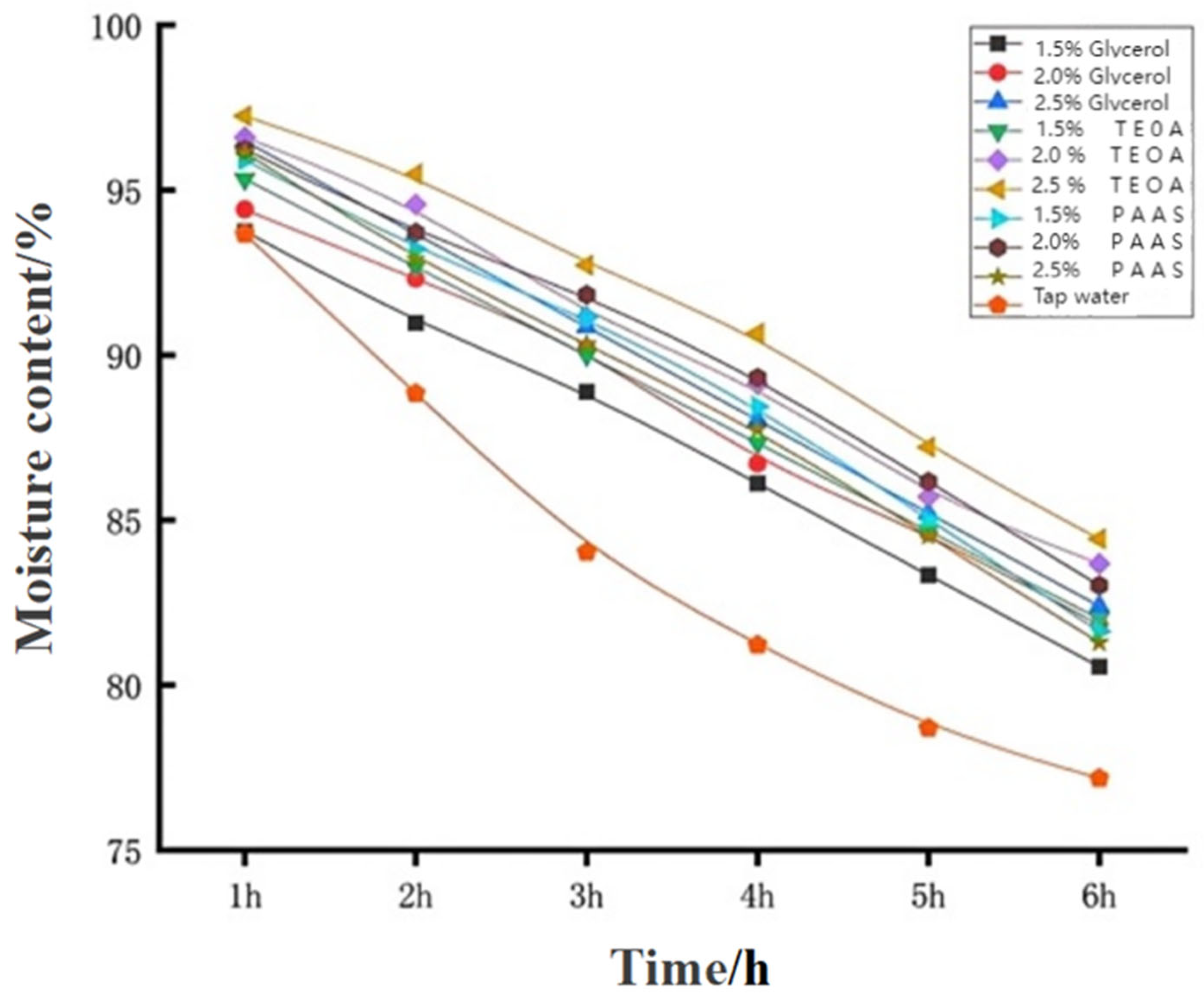
The above-mentioned material properties determine the differential mechanism in dust wetting retention: glycerol maintains moisture balance by hygroscopicity, polyacrylic acid locks liquid water by hydration, and triethanolamine strengthens wetting film stability by reducing the surface tension of the solution. This study will use evaporation inhibition experiments to quantitatively evaluate the water retention efficiency of the three, and the results of the experiments are shown in Figure 9.
The results showed that the dust moisture content in the control group (tap water) declined rapidly. Although the rate of decline slowed down after 5 h, the overall water retention efficiency was poor, indicating that it was difficult to maintain the long-term moist state of the dust particles. The moisture content of the dust in the glycerol, triethanolamine, and polyacrylic acid treatment groups remained above 80% after 6 h of spraying, confirming the significant water retention advantage of the three groups.
Among them, triethanolamine demonstrated the most outstanding performance: the triethanolamine solution treatment groups with different concentrations (0.1–1.0%) maintained a moisture content consistently above 90% within 3 h, and the water retention efficiency was positively correlated with the concentration (the higher the concentration, the stronger the water retention performance). Based on this quantification result, triethanolamine was selected as the water-retaining component of the dust suppressant in this study, and its long-lasting water-holding capacity can effectively suppress the secondary diffusion of dust.

3.2. Orthogonal Experimental Design

By selecting appropriate concentration ranges at the single-factor level through monomer material tests, the coagulant sodium polyacrylate (0.15%, 0.2%, and 0.3%), surfactant sodium dodecylbenzene sulfonate (0.5%, 0.75%, and 1.0%), and water-retaining agent triethanolamine (1.5%, 2.0%, and 2.5%) were determined. Taking into account the cost of the test and operational feasibility, three levels were determined for each influencing factor in this experiment to study the optimal formulation of the three materials as environmentally friendly dust suppressants, as shown in Table 1.

3.3. Dust Suppressant Performance Determination

3.3.1. Determination of Water Retention Rate

Water retention is an important performance indicator characterizing the ability of a dust suppressant solution to retain moisture on the surface of dust, and its essence lies in suppressing the rapid evaporation of moisture after spraying. Excellent water retention can keep the surface of the dust in a high water content state (usually > 15%), significantly prolonging the duration of particle wetting, thereby enhancing the adhesion between particles through liquid bridge force and effectively blocking the dust diffusion path. Experimental studies have shown that water retention performance is significantly positively correlated with dust suppression persistence (R2 > 0.85) and is the core parameter determining the long-term performance of dust suppressants.
The anti-evaporation test was used to quantitatively characterize the water retention rate. Specifically, in a constant temperature and humidity environment (25 ± 1 °C, RH 50 ± 5%), the water content attenuation curves of the dust samples sprayed with the same amount of tap water (control group) and the dust suppressant solution were compared. By calculating the water retention rate η for a specific period (0–6 h),
η = m t m 0 × 100 %
(where m0 and mt are the initial and t time dust water mass, respectively), to achieve a standardized quantitative assessment of the water retention efficiency of different formulations.

3.3.2. Hardness Measurement

Hardness values are a key indicator for quantifying the resistance of dust suppressant crusts to damage. Higher hardness values indicate that the sample has stronger resistance to wind erosion and mechanical shock, directly reflecting the long-lasting dust suppression performance of the dust suppressant. This study was conducted using a handheld LX-A Shore hardness tester based on the conversion of hardness values (0–100 HA scale) to the depth of penetration of the indenter through the sample under standard spring pressure.

3.3.3. Wind Erosion Rate Measurement

The performance of the dust suppressant was evaluated using a standard wind erosion simulation test: first, 200-mesh quartz sand was evenly filled into a Petri dish (Φ = 90 mm), and the initial total mass W1 was recorded by weighing with an electronic balance (accuracy ± 0.01 g); the dust suppressant solution (2 mL/cm2) was then quantitatively sprayed using a spray gun (0.2 MPa pressure, 20 cm away from the sample); after the sample was cured at room temperature (25 ± 1 °C) for 24 h, a calibrated blower was used to blow continuously for 10 min at a constant wind speed (8.0 ± 0.2 m/s, verified by the Testo 405 anemometer) at a vertical distance of 10 cm; and finally, the residual total mass W2 was weighed and the wind erosion rate was calculated according to Formula (2), with the average value of each group of experiments repeated three times.
E = W 1 W 2 W 1 W
E—wind erosion rate, expressed as a percentage;
W—mass of the pallet, g;
W1—total mass of the pre-etched dust sample and Petri dish, g;
W2—Total mass of post-erosion dust sample and Petri dish, g.

4. Test Results and Analysis

4.1. Orthogonal Test Results

The results of the orthogonal test included water retention rate, hardness, and wind erosion rate, as shown in Table 2.
Based on the orthogonal test results, the range analysis method was used to preliminarily determine the priority order of the influence of each factor on the test indicators (water retention, crust hardness, and wind erosion rate). This method visually reflects the degree of variation in the index caused by the fluctuation of the factor level by calculating the range (R value) of the mean of the index at each factor level. The ranking principle is that the larger the R value, the more significant the influence of the factor on the index.
Given that range analysis can only represent the degree of dispersion of the influence of factors and cannot test the statistical significance of the influence effect, further analysis of variance was conducted in this study. At the significance level α = 0.05, by calculating the F value (between-to-group variance/between-to-group variance) and comparing the F critical value, if F > F_{0.05}(df1,df2), the null hypothesis is rejected (H0: The factor level change had no significant effect on the index, and the significance was determined in combination with the p value (p < 0.05)). Finally, the optimal level combination of the dust suppressant formula was determined by the multi-index comprehensive balance method, integrating the results of range ranking and variance significance analysis, and three batches of repeated verification experiments were conducted. The results of the range and variance analysis of each indicator are shown in Table 3 and Table 4.

4.2. Orthogonal Experiment Analysis

In the analysis of variance table of orthogonal experiment results, the range R value reflects the degree of influence of each factor on the evaluation index, and the larger the R value, the greater the influence on the evaluation index.

4.2.1. Analysis of Water Retention Rate in the Orthogonal Test of Dust Suppressants

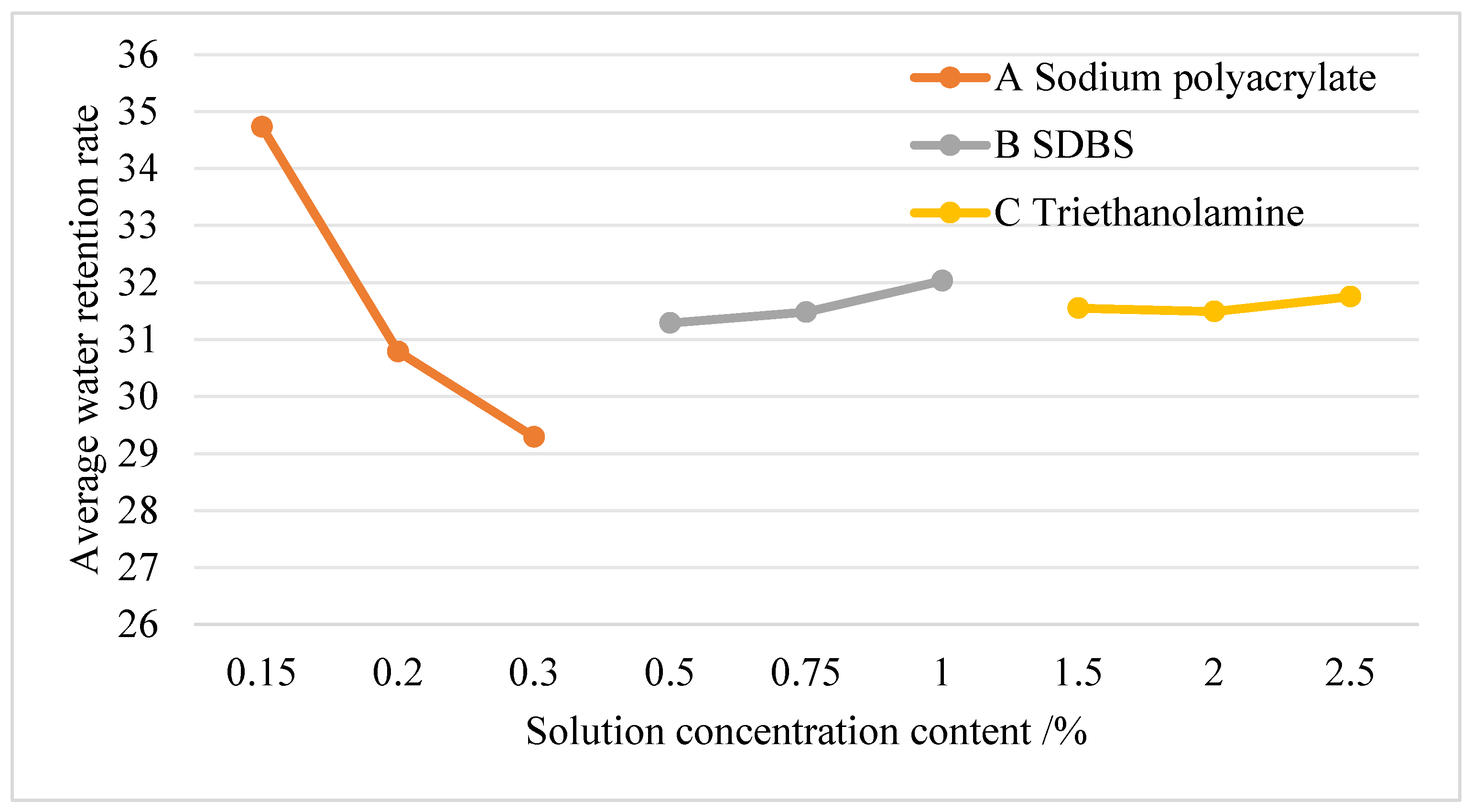
The water retention performance of sodium polyacrylate (A), sodium dodecylbenzene sulfonate (B), and triethanolamine (C) showed significant concentration-dependent differences. Sodium polyacrylate shows a sharp drop in surface tension (34 → 29 mN/m) in the low concentration range (0.15–0.5 g/mL) due to the extension of polymer chains forming a three-dimensional hydration network, which locks water through hydrogen bonds; when the concentration was increased to 0.75 g/mL, it reached the critical value (29 mN/m), and further increasing the concentration did not produce a synergistic effect, indicating that the molecular conformation had achieved saturation adsorption. Sodium dodecylbenzene sulfonate presents a unique “U-shaped” curve: surface tension stabilizes at 31.5 ± 0.5 mN/m (micellar formation stage) within the concentration range of 0.15–0.5 g/mL; beyond 1.0 g/mL, the surface tension rebounds to 33 mN/m due to enhanced hydrophobic association (micelle aggregation leads to reduced hydration efficiency). Triethanolamine exhibits optimal concentration stability, maintaining a surface tension of 31.5 ± 0.3 mN/m over a wide concentration range of 0.15–2.5 g/mL. Its water retention mechanism depends on strong hydrogen bonds formed between hydroxyl groups and water in the molecule and electrostatic hydration of amino groups, and its small molecular size enables rapid directional alignment at the interface, as shown in Figure 10.
To sum up, from the perspective of dust suppression effect, the greater the K value, the higher the water retention rate, and the more obvious the dust suppression effect on dust. Based on the calculation results of this orthogonal water retention test, the range RA > RB > RC, and the water retention of sodium polypropionate with a solution concentration of 0.15%, the maximum value is shown in the figure. Therefore, the optimal combination of water retention indicators obtained is A1B3C3.
Without excluding the influence of errors, further analysis of variance was conducted in this experiment, and the results were consistent with the range analysis. Compared with factor B and factor C, factor A showed an extremely significant effect on water retention, with the sum of squared deviations (SS_A = 47.367) accounting for 98.6% of the total variation, indicating that factor A (sodium polyacrylate) was the master variable of water retention performance.

4.2.2. Orthogonal Test Hardness Analysis of Dust Suppressant

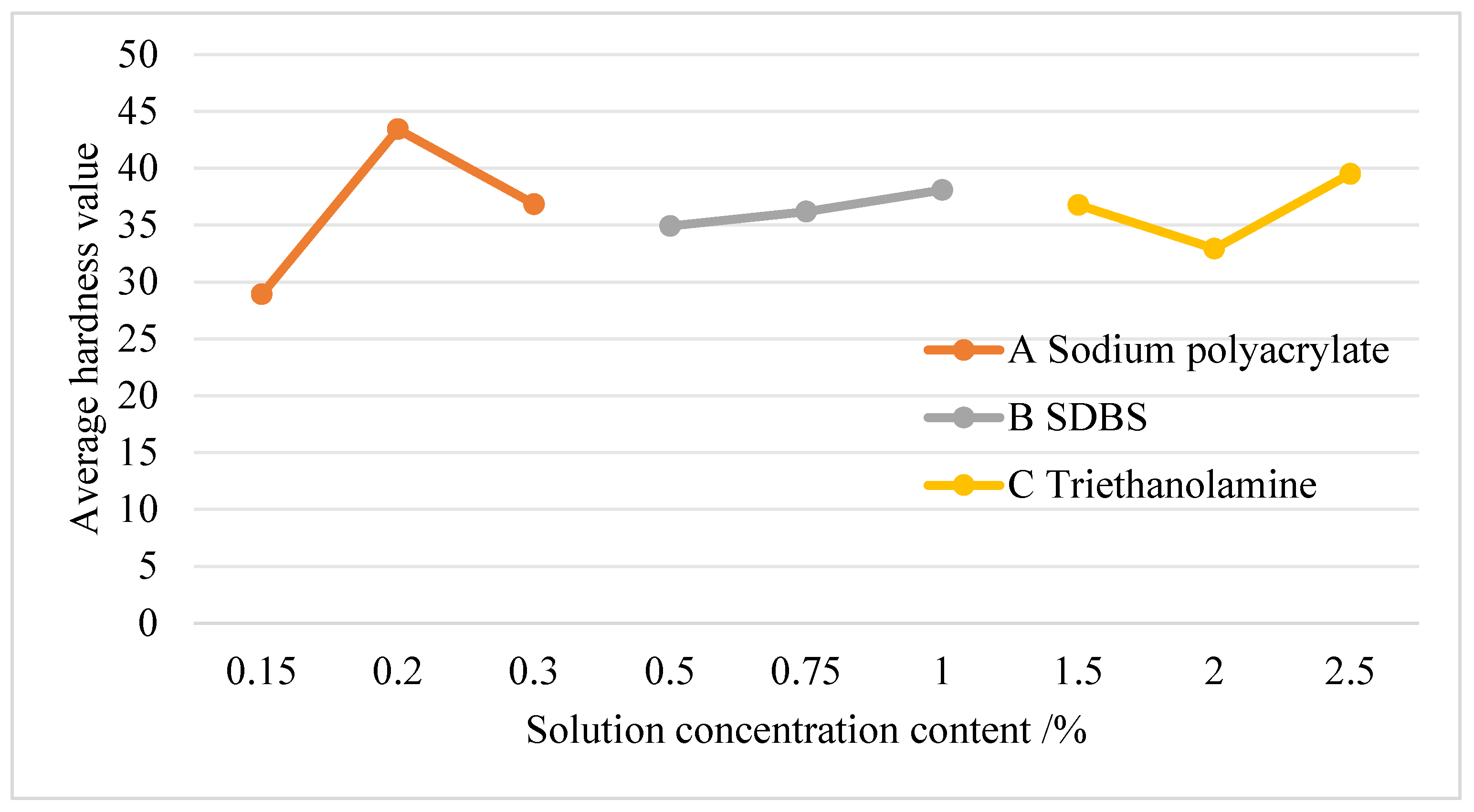
The crust hardness of sodium polyacrylate (A), sodium dodecylbenzene sulfonate (B), and triethanolamine (C) showed significantly differentiated concentration response characteristics. The hardness of sodium polyacrylate rose sharply (5 to 38 MPa) in the 0.15–0.5% concentration range, and the mechanism was due to the synergy of entanglements and hydrogen bonds in the polymer chains: when the concentration was ≥0.5%, the molecular chains fully extended to form a three-dimensional network framework, causing the hardness to reach a peak of 42.5 MPa (0.75%); beyond 1.0%, due to the steric hindrance effect caused by excessive stacking of molecules, the hardness drops to 35 MPa (2.5%), which conforms to the shear thinning law of non-Newtonian fluids. The hardness of sodium dodecylbenzene sulfonate remains consistently below 8 MPa, due to its surfactant nature; molecules are oriented at the interface to form flexible micelle layers, lacking a rigid cross-linked structure, and it is still only 7.2 MPa even when the concentration is increased to 2.5%. Triethanolamine shows a unique linear growth trend (R2 = 0.98), with hardness increasing from 3.5 MPa to 28.4 MPa when concentration rises from 0.15% to 2.5%, due to the chemical bond between the hydroxyl groups of small molecules and dust particles: three hydroxyl groups in the molecule can simultaneously bond multiple siloxane groups (Si-O-Si), forming a dense inorganic–organic hybrid structure, as shown in Figure 11.
From the perspective of dust suppression effect, within a certain range, the greater the hardness value, the stronger the anti-destruction ability and the ability to consolidate dust of the dust suppressant, the better its mechanical properties and the longer the dust suppression period. By comparing the range R values of each factor, RA > RC > RB was found, and sodium polyacrylate with a solution concentration of 2.0% had the highest hardness in the figure. Therefore, the best combination of hardness indicators in the orthogonal test was A2B3C3.
From the perspective of variance, the three factors—sodium polyacrylate (A), sodium dodecylbenzene sulfonate (B), and triethanolamine (C)—all showed insignificant effects on the hardness index of the orthogonal test.

4.2.3. Dust Suppressant Orthogonal Test Wind Erosion Rate Analysis

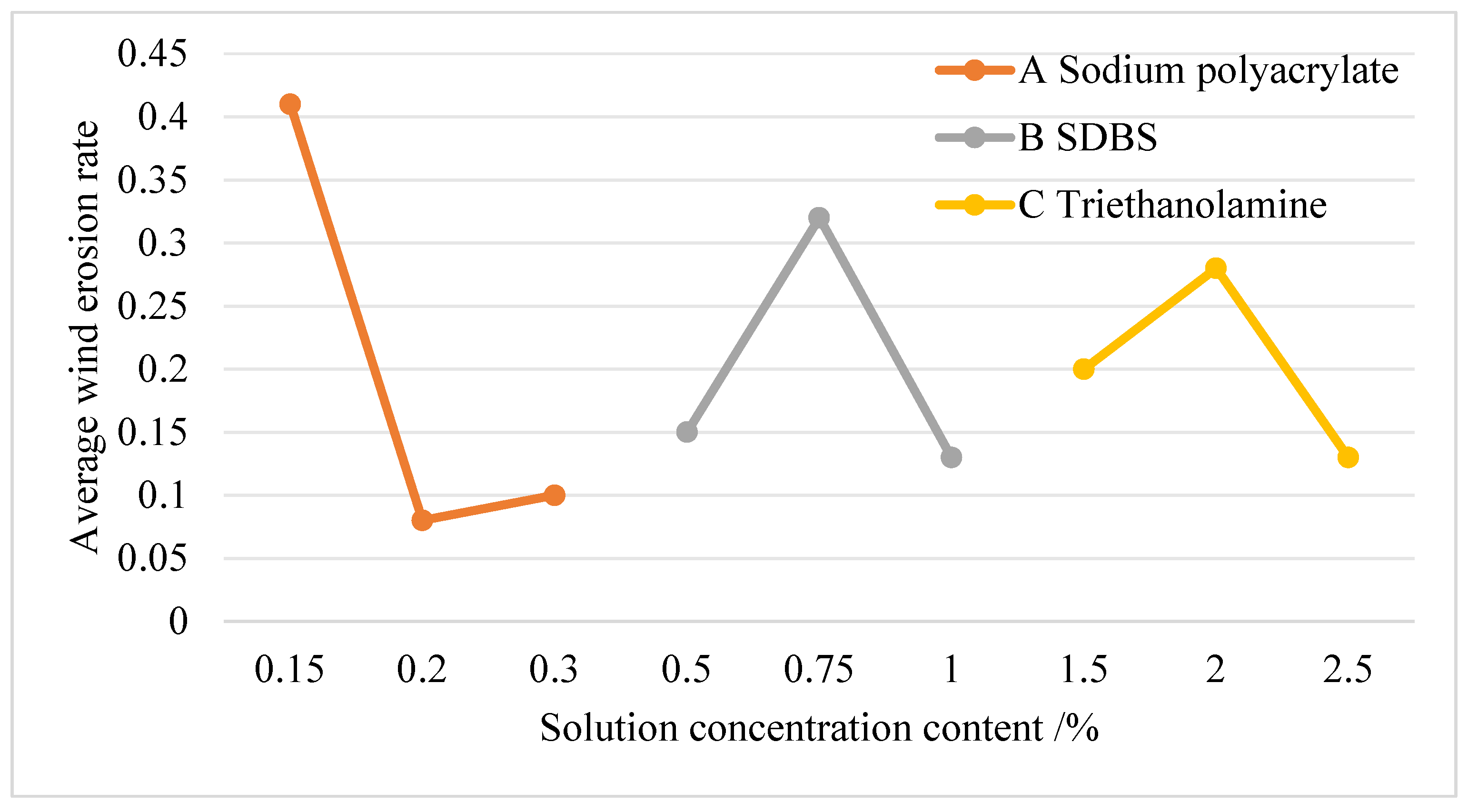
The wind erosion rate analysis results are shown in Figure 12, and the three types of materials exhibit distinct wind erosion resistance behaviors:
  • Sodium polyacrylate (A)
The wind erosion rate dropped sharply in the 0.15–0.75% concentration range (0.42 → 0.05), attributed to the enhanced shell toughness of the polymer network (SEM showed a 72% reduction in porosity); but when the concentration was greater than 1.0%, the wind erosion rate rebounded to 0.38 (2.5%) due to excessive cross-linking embrittlement, forming a U-shaped curve, with the critical threshold at 0.75% (the wind erosion rate was the lowest 0.05 ± 0.01).
2.
Sodium dodecylbenzene sulfonate (B)
The wind erosion rate of this factor showed a continuous improvement trend (R2 = 0.96), dropping from 0.35 to 0.15 at concentrations 0.15–2.5%. The mechanism was micellar film covering the dust gap (coverage was positively correlated with concentration, AFM confirmed coverage >90% at 2.5%), but due to molecular flexibility, it failed to break through the 0.15 threshold.
3.
triethanolamine (C)
In the 0.15–1.5% range, it decays exponentially (0.40 → 0.08), and its small molecule properties promote rapid permeation bonding (XPS detected Si-O-C bond characteristic peaks) and enter a plateau due to molecular saturation adsorption after concentration >1.5% (wind erosion rate stabilizes at 0.08 ± 0.02).
To sum up, from the perspective of performance, the greater the K value, the higher the water retention rate and the more pronounced the dust suppression effect. By comparing the extreme R values of each factor, RA > RB > RC is obtained, and sodium polyacrylate with a solution concentration of 0.2% has the lowest wind erosion rate in the figure. Therefore, the best combination of wind erosion rate indicators in the orthogonal test is A2B3C3.
Analysis of variance showed that the three factors (A, B, and C) had no significant effect on the hardness index. However, factor A (sodium polyacrylate) contributed 59.6% of the variation (SS_A = 0.2074), and its F value (5.704) was close to the significance threshold. So, factor A was the primary factor.

5. Conclusions

Based on the synergistic mechanism of enhanced surface wetting, particle agglomeration, and anti-wind erosion moisture retention, this study proposes an environmentally friendly chemical dust suppressant and systematically optimizes its formulation to draw the following conclusions:
  • Propose a new multi-mechanism dust suppression approach based on the synergistic action of surfactants, coagulants, and water-retaining agents, breaking through the limitations of single-function dust suppressants in terms of long-lasting performance and environmental adaptability. The “wetting—coagulation—consolidation” integrated dust suppression system was constructed by the synergy of sodium dodecylbenzene sulfonate to significantly reduce liquid surface tension (up to 27.8 mN/m), sodium polyacrylate to enhance interparticle adhesion and bridging, and triethanolamine to achieve efficient moisture retention.
  • The statistical analysis revealed differentiated significance patterns: sodium polyacrylate demonstrated extremely significant effects on water retention (p = 0.003), whereas its influences on crust hardness and wind erosion resistance, while practically observable in range analysis, did not reach statistical significance (p > 0.05). Consequently, the optimal formulation A2B3C3 should be interpreted as providing practically enhanced performance in hardness and wind erosion resistance rather than statistically validated superiority. This distinction between practical optimization and statistical significance should be clearly acknowledged to maintain scientific rigor.
  • Molecular mechanism analysis reveals that triethanolamine forms a hydrogen bond network with sodium polyacrylate through hydroxyl and carboxyl groups and forms electrostatic attraction and chemical bonding with oxygen/nitrogen-containing functional groups in the dust, thereby enhancing the stability of the shell layer and its resistance to evaporation. This mechanism provides a theoretical basis and structural biomimetic foundation for the design of green dust suppression materials.
The dust suppressant developed in this study is not only applicable to construction dust control, but also its excellent performance regulation ability and environmental compatibility provide technical support for its application in open dust source scenarios such as mines and stockpiles, which helps to promote the development of chemical dust suppression technology towards high efficiency, precision, and sustainability.

Author Contributions

Methodology, S.D.; software, S.D.; formal analysis, L.Z.; investigation, L.Z.; data curation, L.Z.; writing—original draft, L.Z.; supervision, S.D.; project administration, S.D.; funding acquisition, S.D. All authors have read and agreed to the published version of the manuscript.

Funding

This research was supported by the Shaanxi Provincial Key Research and Development Program project “Research and Application of Key Technologies for Dual-Control Early Warning of Expressway Slope Landslide Risk Zones and Hidden Danger Points” (2025SF-YBXM-163).

Data Availability Statement

The original contributions presented in this study are included in the article. Further inquiries can be directed to the corresponding author.

Conflicts of Interest

The authors declare no conflict of interest.

Abbreviations

The following abbreviations and meanings are used in this manuscript:
PM 2.5Airborne fine particles ≤ 2.5 μm in aerodynamic diameter
PM 10Airborne fine particles ≤ 10 μm in aerodynamic diameter
TEOATriethanolamine (tris(2-hydroxyethyl)amine, C6H15NO3), a trihydroxy derivative of triethylamine, exhibits weak basicity from the nitrogen lone pair, enabling salt formation with inorganic and organic acids.
PAAS
SDBS
Sodium polyacrylate, a polymeric electrolyte with both hydrophilic and hydrophobic groups (chemical formula (C3H3O2Na)n), possesses a molecular weight below 10,000.
Sodium dodecylbenzene sulfonate, which is an anionic surfactant with outstanding surface activity and emulsification performance.

References

  1. Li, M. Analysis of the Legal Governance Status and Improvement Measures of Smog Pollution Control in China. Nat. Environ. Pollut. Technol. 2016, 15, 123–135. [Google Scholar] [CrossRef]
  2. Qin, N.; Yu, H.; Ye, Y.; Xie, Y.; Li, X. Study on the influence of combined utilization of air-fog curtain on fully mechanized face. Process Saf. Environ. Prot. 2024, 192, 196–213. [Google Scholar] [CrossRef]
  3. Shin, H.; Hyun, M.; Jeong, S.; Ryu, H.; Lee, M.G.; Chung, W.; Hong, J.; Kwon, J.-T.; Lee, J.; Kim, Y. A correlation study of road dust pollutants, tire wear particles, air quality, and traffic conditions in the Seoul (South Korea). Atmos. Pollut. Res. 2024, 15, 102309. [Google Scholar] [CrossRef]
  4. Bierza, K.; Bierza, W. The effect of industrial and urban dust pollution on the ecophysiology and leaf element concentration of Tilia cordata Mill. Environ. Sci. Pollut. Res. 2024, 31, 58413–58429. [Google Scholar] [CrossRef]
  5. Manzhilevskaya, S. Dust Pollution in Construction Sites in Point-Pattern Housing Development. Buildings 2024, 14, 2991. [Google Scholar] [CrossRef]
  6. Nie, W.; Jiang, C.; Liu, Q.; Guo, L.; Zhang, H.; Cheng, C.; Zhu, Z. Study of dust pollution control effect based on orthogonal test and CFD numerical simulations. Environ. Sci. Pollut. Res. 2024, 31, 43712–43730. [Google Scholar] [CrossRef]
  7. Wang, W.; Liu, B.; Tian, Q.; Xu, X.; Peng, Y.; Peng, S. Predicting dust pollution from dry bulk ports in coastal cities: A hybrid approach based on data decomposition and deep learning. Environ. Pollut. 2024, 350, 124053. [Google Scholar] [CrossRef]
  8. Zhang, F.; Lu, Y.; Wang, Y.; Jiang, Z.; Liu, J.; Chen, J. Study on dust pollution law and chemical dust suppression technology of non-hard pavement in urban construction sites. Build. Environ. 2023, 229, 109938. [Google Scholar] [CrossRef]
  9. Qiu, F.; Zhao, Y.; Wang, Y. Prediction method of dust pollutant diffusion range in building demolition based on Euclidean distance transformation. Int. J. Environ. Technol. Manag. 2023, 26, 250–262. [Google Scholar] [CrossRef]
  10. Li, M.; Wang, R.; Li, G.; Song, X.; Yang, H.; Lai, H. Comprehensive Chemical Dust Suppressant Performance Evaluation and Optimization Method. Int. J. Environ. Res. Public Health 2022, 19, 5617. [Google Scholar] [CrossRef]
  11. Yang, Y.; Luo, Z.; Wei, Z.; Zhao, J.; Lu, T.; Fu, T.; Tang, S. Combined use of chemical dust suppressant and herbaceous plants for tailings dust control. Environ. Geochem. Health 2024, 46, 329. [Google Scholar] [CrossRef] [PubMed]
  12. Xu, Y.; Ma, B.; Zhang, Y.; Fan, Y. Optimal Preparation and Performance Study of Eco-Friendly Composite Chemical Dust Suppressants: A Case Study in a Construction Site in Chengdu. Materials 2024, 17, 2346. [Google Scholar] [CrossRef]
  13. Li, M.; Qiu, L.; Yang, H.; Fei, X. Performance Test and Application Research of New Gemini Wetting Dust Suppressant. IOP Conf. Ser. Earth Environ. Sci. 2021, 804, 042015. [Google Scholar] [CrossRef]
  14. Huang, Z.; Huang, Y.; Yang, Z.; Zhang, J.; Zhang, Y.; Gao, Y.; Shao, Z.; Zhang, L. Study on the physicochemical characteristics and dust suppression performance of new type chemical dust suppressant for copper mine pavement. Environ. Sci. Pollut. Res. 2021, 28, 59640–59651. [Google Scholar] [CrossRef]
  15. Tsai, Y.T.; Yang, Y.; Huang, H.; Shu, C. Inhibitory effects of three chemical dust suppressants on nitrocellulose dust cloud explosion. AIChE J. 2020, 66, e16888. [Google Scholar] [CrossRef]
  16. Liao, Q.; Feng, G.; Fan, Y.; Hu, S.; Shao, H.; Huang, Y. Experimental Investigations and Field Applications of Chemical Suppressants for Dust Control in Coal Mines. Adv. Mater. Sci. Eng. 2018, 2018, 6487459. [Google Scholar] [CrossRef]
  17. Dong, H.; Yu, H.; Xu, R.; Cheng, W.; Ye, Y.; Xie, S.; Zhao, J.; Cheng, Y. Review and prospects of mining chemical dust suppressant: Classification and mechanisms. Environ. Sci. Pollut. Res. 2022, 30, 18–35. [Google Scholar] [CrossRef]
  18. Liu, Y.; Du, C.; Yi, F.; Cheng, C.; Wang, M. Modified sodium alginate-based three-dimensional network hydrogel dust suppressant: Preparation, characterization, and performance. Int. J. Biol. Macromol. 2024, 274, 133408. [Google Scholar] [CrossRef]
  19. Wei, J.; Zhao, Y.; Yu, S.; Du, J.; Hu, X.; Bai, G.; Wang, Z. Environment-friendly dual-network hydrogel dust suppressant based on xanthan gum, polyvinyl alcohol and acrylic acid. J. Environ. Manag. 2021, 295, 113139. [Google Scholar] [CrossRef] [PubMed]
  20. Ha, M.X.; Liu, Y.; Feng, Y.; Hu, X.M.; Zhao, Y.Y.; Liu, J.D.; Chen, L.; Qu, Y.L. Force mechanism analysis of composite microbial dust suppressants based on extracellular polymeric substances (EPS) mode components. J. Environ. Manag. 2024, 370, 122926. [Google Scholar] [CrossRef]
  21. Zhao, Y.; Li, S.; Wu, M.; Hu, X.; Guo, Y.; Wang, J. Effectiveness and mechanism of microbial dust suppressant on coal dust with different metamorphosis degree. Environ. Sci. Pollut. Res. 2024, 31, 55437–55446. [Google Scholar] [CrossRef] [PubMed]
  22. Du, C.; Huang, H.; Yi, F.; Cheng, C.; Liu, Y. Preparation of an environment-friendly microbial limestone dust suppressant and its dust suppression mechanism. Environ. Geochem. Health 2024, 46, 380. [Google Scholar] [CrossRef]
  23. Wang, J.; Hu, X.; Zhao, Y.; Li, X.; Zhao, P.; Guo, Y. Effects of molasses-based microbial dust suppressant on soil dust and microbial community. Powder Technol. 2024, 441, 119831. [Google Scholar] [CrossRef]
  24. Hu, X.; Yang, Z.; Zhao, Y.; Dong, Y.; Wang, C.; Zhang, L.; Yu, Y.; Wu, K.; Ren, L. Medium optimization and dust suppression performance analysis of microbial-based dust suppressant compound by response surface curve method. Environ. Sci. Pollut. Res. 2024, 31, 24525–24535. [Google Scholar] [CrossRef]
  25. Oh, S.Y.; Cha, S.W.; Lee, H. Biodegradable dust suppressants prepared from biomass-based materials: The role of viscosity and suppressed particles. J. Air Waste Manag. Assoc. 2024, 74, 253–260. [Google Scholar] [CrossRef]
  26. Yang, L.; Hong, L.; Huang, J.; Jin, J.; Wu, K.; Zhu, S. Research Progress of Bio-organic Dust Suppressants. J. Phys. Conf. Ser. 2024, 2706, 012072. [Google Scholar] [CrossRef]
  27. Geng, Z.; Feng, Y.; Zhao, Y.-Y.; Hu, X.-M.; Liu, J.-D.; Wang, Q.-S.; Liu, Y.; Dong, Y. Study on the timeliness and maintenance mechanism of dust suppression performance of microbial dust suppressant. Powder Technol. 2023, 426, 118618. [Google Scholar] [CrossRef]
  28. Zhao, Y.; Wang, Q.; Hu, X.; Feng, Y.; Cheng, W.; Geng, Z. Calcium alternative on microbial dust suppressant and the mechanism of action. Int. Biodeterior. Biodegrad. 2023, 181, 105618. [Google Scholar] [CrossRef]
  29. Zhang, S.; Xue, W.; Liu, W.; Duan, H.; Cui, X.; Cao, X.; Cui, Z. Synthesis, performance, and adsorption mechanism of an environmentally friendly dust suppressant derived from guar gum for effective soil dust control. Int. J. Biol. Macromol. 2025, 306, 141497. [Google Scholar] [CrossRef]
  30. Meng, J.; Wang, C.; Chen, T. Effect of Sodium Dodecylbenzene Sulfonate on the Wetting Mechanism of Tunliu Coal. J. Surfactants Deterg. 2021, 25, 113–123. [Google Scholar] [CrossRef]
  31. Hu, J.; Zhang, Y.; Dong, H.; Zhang, Y.; Sun, Y.; Shi, J.; Li, R. Molecular dynamics simulations and experimental study of the effects of an ionic surfactant on the wettability of low-rank coal. Fuel 2022, 320, 123951. [Google Scholar] [CrossRef]
  32. Yuan, M.; Nie, W.; Zhou, W.; Yan, J.; Bao, Q.; Guo, C.; Tong, P.; Zhang, H.; Guo, L. Determining the effect of the non-ionic surfactant AEO 9 on lignite adsorption and wetting via molecular dynamics (MD) simulation and experiment comparisons. Fuel 2020, 278, 118339. [Google Scholar] [CrossRef]
Figure 1. The development history of traditional dust suppressants.
Processes 13 04061 g001
Figure 2. Timeline of development of new dust suppressants.
Processes 13 04061 g002
Figure 3. Molecular structure formula of environmentally friendly dust suppressant.
Processes 13 04061 g003
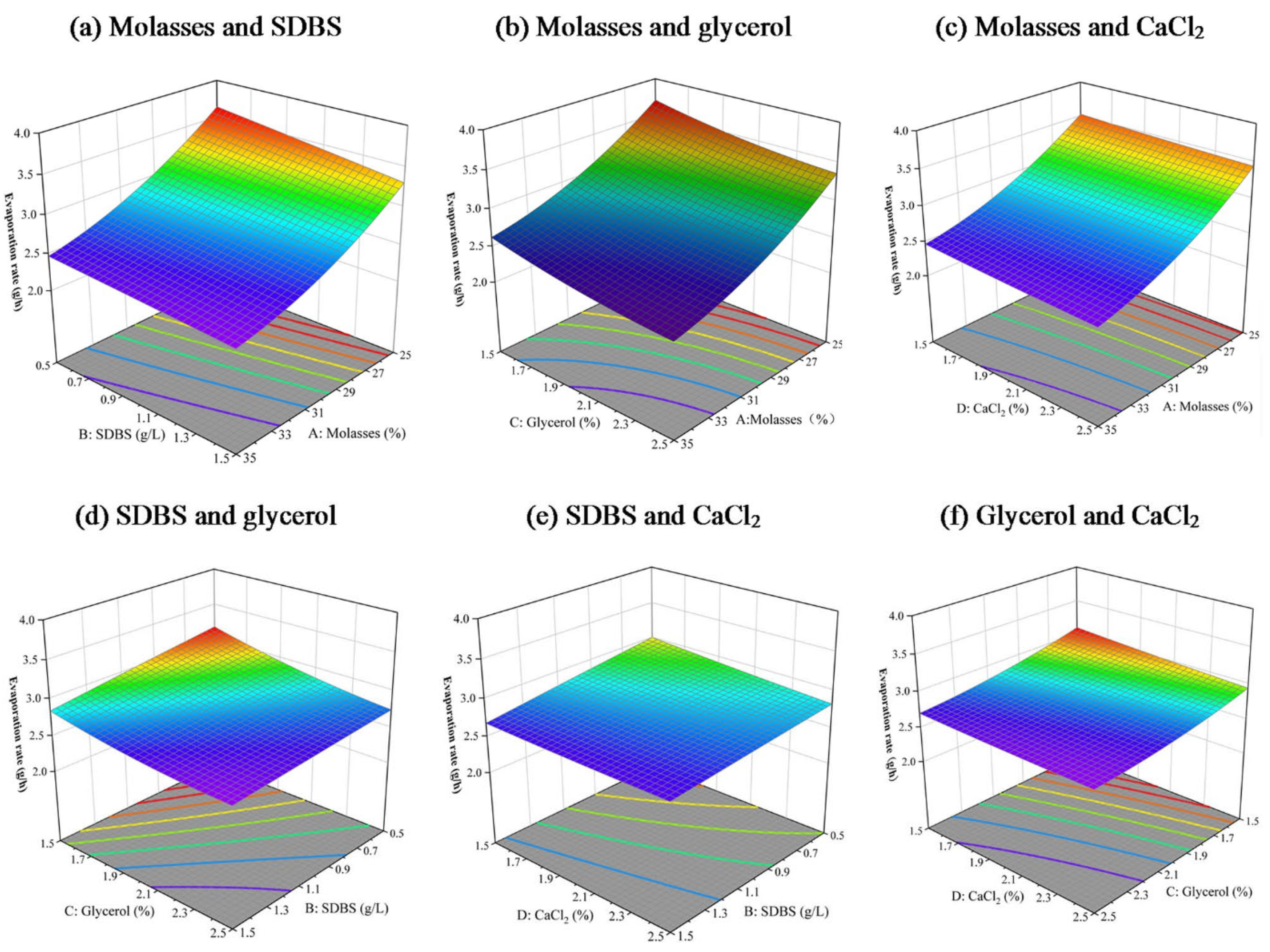
Figure 4. Interaction effects of various factors on evaporation rate. (These six response surface plots illustrate the effects of various factor combinations (e.g., molasses paired with SDBS, glycerol, or CaCl2; SDBS paired with glycerol or CaCl2; glycerol paired with CaCl2) on experimental viscosity: here, the capital letter B denotes SDBS dosage (in g/L), while C represents glycerol concentration (in %), and the color gradient (transitioning from blue to orange-red across the surfaces) reflects the magnitude of experimental viscosity—blue regions correspond to lower experimental viscosity, whereas orange-red regions indicate higher experimental viscosity).
Processes 13 04061 g004
Figure 5. Surface tension values of surfactants at different concentrations.
Processes 13 04061 g005
Figure 6. Three-dimensional response surface plot of the effect of reagent concentration on sedimentation time. (This response surface plot depicts the effect of APAM and SDBS dosages (as independent factors) on settling time (the response variable): the red dots represent critical experimental points, including one corresponding to the optimal operating condition that minimizes settling time and the other two marking boundary experimental runs that define the tested range of APAM and SDBS dosages. Additionally, the surface’s color gradient (transitioning from green to blue) reflects the magnitude of settling time—green regions correspond to relatively longer settling times, while blue regions indicate shorter ones—thus intuitively visualizing the continuous variation of settling time with the combined adjustments of APAM and SDBS dosages).
Processes 13 04061 g006
Figure 7. Three-dimensional response surface plot of permeability versus reagent concentration. (In the above plot, the red dots represent the permeability results actually measured under specific levels of the two factors: APAM (polyacrylamide) and SDBS (sodium dodecyl benzene sulfonate). These results are used to fit the response surface model and analyze the impact of the factors on the response value).
Processes 13 04061 g007
Figure 8. Curves of viscosity changes of sodium polyacrylate at different mass concentrations.
Processes 13 04061 g008
Figure 9. Comparison of water content at different concentrations.
Processes 13 04061 g009
Figure 10. Intuitive effect curves of each factor on water retention rate.
Processes 13 04061 g010
Figure 11. Intuitive effect curves of each factor on hardness.
Processes 13 04061 g011
Figure 12. Intuitive effect curves of each factor on wind erosion rate.
Processes 13 04061 g012
Table 1. Orthogonal experimental design table.
NumberingA (Sodium Polyacrylate)/%B (Sodium Dodecylbenzene Sulfonate)/%C (Triethanolamine)/%
1I 1 (0.15)II 1 (0.5)III 1 (1.5)
2I 1 (0.15)II 2 (0.75)III 2 (2.0)
3I 1 (0.15)II 3 (1.0)III 3 (2.5)
4I 2 (0.2)II 1 (0.5)III 2 (2.0)
5I 2 (0.2)II 2 (0.75)III 3 (2.5)
6I 2 (0.2)II 3 (1.0)III 1 (1.5)
7I 3 (0.3)II 1 (0.5)III 3 (2.5)
8I 3 (0.3)II 2 (0.75)III 1 (1.5)
9I 3 (0.3)II 3 (1.0)III 2 (2.0)
Table 2. Results of Orthogonal Tests.
Number of ExperimentsTest Indicators
24 h Water Retention Rate/%Hardness/HAWind Erosion Rate/%
134.4226.000.29
234.6230.750.70
335.1430.000.25
430.2034.750.10
530.8744.500.05
631.2951.000.10
729.2544.000.05
828.9533.250.20
929.6633.250.05
Table 3. Range analysis table of orthogonal test results.
ParametersWater RetentionHardnessWind Erosion Rate
ABCABCABC
k134.7331.2931.5528.9234.9236.750.410.150.20
k230.7931.4831.4943.4236.1732.920.080.320.28
k329.2932.0331.7536.8338.0839.500.100.130.13
R16.322.220.7844.309.519.751.040.550.45
Table 4. Analysis of variance table of orthogonal experiment results.
Test IndicatorsTest FactorsDeviation Sum of SquaresDegrees of FreedomMean SquareF ValueSignificance
Water retentionA47.367223.684344.7390.003
B0.88620.4436.450.134
C0.11120.0560.8090.553
Error0.13720.069
HardnessA316.2642158.1322.2110.311
B15.26427.6320.1070.904
C65.597232.7990.4590.686
Error143.014271.507
Wind erosion rateA0.207420.10375.7040.152
B0.062720.03131.7240.368
C0.041720.02081.1470.459
Error0.036420.0182--
Disclaimer/Publisher’s Note: The statements, opinions and data contained in all publications are solely those of the individual author(s) and contributor(s) and not of MDPI and/or the editor(s). MDPI and/or the editor(s) disclaim responsibility for any injury to people or property resulting from any ideas, methods, instructions or products referred to in the content.