Abstract
This study addresses the critical issue of fossil fuel dependence and its environmental impacts by examining bioelectrochemical systems (BES) for converting CO2 into sustainable biofuels. A bibliometric analysis was conducted on 87 Scopus documents (2010–2025) using RStudio (Bibliometrix) and VOSviewer to map co-authorship, co-citation, and keyword networks. Results show exponential growth since 2017, dominated by Environmental Science, Chemical Engineering, and Energy. China leads in publication volume, while Belgium excels in international collaboration and impact per article. Research networks are concentrated in Europe and Asia, with significant underrepresentation of Latin America and Africa. Thematic clusters center on CO2, microbial fuel cells, and bioenergy, indicating a shift toward material and process optimization. Influential authors such as Bajracharya S. focus on microbial electrosynthesis. However, key research gaps persist: limited integration of direct carbon capture technologies, inadequate biofilm characterization, and a scarcity of industrial-scale studies. Moreover, fewer than 10% of studies include comprehensive life cycle assessments (LCA) to evaluate the environmental footprint of BES. We propose a standardized LCA framework integrating techno-economic and circular economy metrics to advance BES from lab-scale proofs-of-concept to industrially viable, net-negative carbon technologies. The analysis also underscores a critical gap in policy and regulatory research, which is essential to create enabling conditions for the demonstration and scaling of BES technologies.
1. Introduction
The growing dependence on fossil fuels has triggered an unprecedented environmental crisis, marked by rising greenhouse gas emissions, depletion of non-renewable resources, and the intensification of climate change [1]. Within this context, the pursuit of sustainable and clean energy sources has become a global priority [2]. Among emerging alternatives, bioelectrochemical systems (BES) have garnered significant attention for their ability to convert carbon dioxide (CO2) into useful energy compounds via electrically assisted biological processes [3]. This technology enables the production of biofuels such as methane, ethanol, butanol, and other hydrocarbons using electrogenic microorganisms and specialized catalysts [4]. However, despite its potential, BES still face technical and economic challenges that hinder scalability, efficiency, and industrial adoption [5]. The lack of interdisciplinary integration, fragmented knowledge, and insufficient methodological standardization obstruct the coordinated advancement of this promising research direction [6].
Next-generation biofuels derived from CO2 through bioelectrochemical systems offer an innovative solution for mitigating climate change and diversifying the global energy matrix [7]. Unlike conventional biofuels, these do not compete with food production or require vast areas of arable land. Moreover, they valorize CO2 as a raw material, closing the carbon cycle and fostering a circular economy [8]. Their development addresses not only energy demands, but also international sustainability targets, decarbonization efforts, and the push for a just energy transition—especially in regions highly vulnerable to environmental degradation and reliant on fossil fuels [9,10].
The evolution of biofuels has moved from first-generation technologies—based on food crops like corn and sugarcane—to more sustainable alternatives [11]. Second-generation biofuels introduced lignocellulosic residues and agricultural byproducts, while the third-generation incorporated microalgae and specialized microorganisms [12]. Within this trajectory, bioelectrochemical systems are emerging as a fourth generation, integrating microbiology, electrochemistry, and biotechnology to transform CO2 into energy compounds via electrically controlled metabolic pathways [13]. Microbial electrosynthesis (MES) technologies have shown the ability to produce methane, acetate, ethanol, and butanol with high selectivity and low environmental impact. Recent research has explored the use of porous electrodes, hybrid catalysts, and optimized cell architectures to enhance process efficiency [14]. Additionally, microbial strains capable of fixing CO2 and efficiently transferring electrons have been identified, opening new possibilities for decentralized energy production [15]. Despite these advances, the scientific literature still exhibits considerable thematic fragmentation, with diverse approaches and heterogeneous results that hinder knowledge consolidation and the identification of priority areas for technological development [16].
Given the increasing complexity and multidisciplinarity of the field, bibliometric analysis is essential to map the current state of knowledge, identify emerging trends, and uncover critical research gaps in the study of CO2-derived biofuels via bioelectrochemical systems [17]. Using the Scopus database as the primary source ensures wide coverage of peer-reviewed scientific literature, providing data that is both high-quality and representative [18]. With tools such as RStudio (using the Bibliometrix package (4.2.1)) and VOSviewer, researchers can generate visualizations of co-authorship networks, co-citation patterns, keyword co-occurrence, and temporal publication trends [19]. These analyses enable a deeper understanding of scientific collaboration dynamics, dominant thematic clusters, influential journals, and leading institutions in the field [20,21]. This review targets BES for CO2 conversion due to their dual potential in carbon mitigation and sustainable fuel synthesis. Given the field’s rapid but fragmented growth, a bibliometric synthesis is crucial to consolidate knowledge, reveal research trends, and guide future efforts toward scalable applications.
Accordingly, the primary objective of this study is to explore and characterize the global scientific landscape surrounding the production of next-generation biofuels from CO2 via bioelectrochemical systems. This entails identifying key research lines, prominent contributors, dominant technologies, and thematic gaps through a bibliometric analysis based on the Scopus database and visualized using RStudio and VOSviewer. To that end, the following research questions will be addressed:
Q1: How has global scientific output evolved, and which disciplinary areas are the most active?
Q2: What patterns of institutional and geographical collaboration prevail in current research?
Q3: Which journals and authors exhibit the highest productivity and impact in BES for CO2 conversion, and what bibliometric indicators reflect their leadership?
Q4: What emerging thematic axes are revealed through keyword co-occurrence and temporal evolution, and how do they shape future trends in microbial electrosynthesis?
Q5: What research gaps currently hinder the development of scalable and standardized bioelectrochemical systems?
While bibliometric studies can map productivity, this work aims to diagnose systemic methodological shortcomings—particularly the lack of standardized life cycle assessments (LCA)—that hinder the translation of BES from lab-scale curiosities to scalable climate solutions. Unlike previous reviews, we synthesize scattered LCA references into a coherent critique and propose a research agenda focused on sustainability quantification, bridging bibliometrics with actionable environmental engineering.
2. Methods
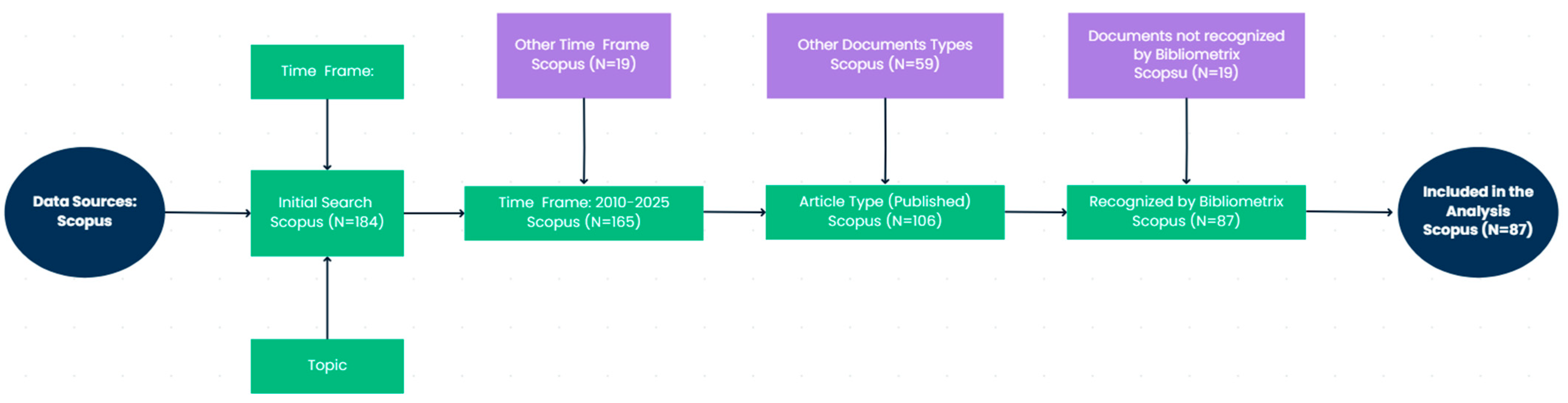
A bibliometric methodology was employed to systematically map the research landscape. The Scopus database was queried using the following search equation: (“biofuels” OR “biofuel” OR “bioenergy”) AND (“bioelectrochemical systems” OR “BES” OR “microbial fuel cells” OR “microbial electrosynthesis” OR “microbial electrolysis cells”) AND (“CO2 reduction” OR “carbon dioxide conversion” OR “CO2 utilization” OR “CO2 fixation”) AND (“sustainability” OR “green energy” OR “renewable energy”) OR (“production” OR “generation” OR “conversion”) OR (“microorganisms” OR “electroactive bacteria” OR “biocatalysts” OR “biofilms”). This strategy retrieved 87 relevant documents published between 2010 and 2025. This study employs a quantitatively driven approach, ensuring objectivity through numerical data and standardized metrics. The core quantitative data extracted include publication counts, citation numbers, authorship details, and keyword frequencies, processed into bibliometric indicators (h-, g-, m-indexes, SCP, MCP).
For the bibliometric analysis, RStudio (2023.06.1+524) with the Bibliometrix package (4.2.1) was employed to compute metrics such as the h-, g-, and m-indexes, as well as to obtain productivity statistics by country, author, and journal. In parallel, VOSviewer (1.6.19) was used to generate and visualize co-authorship networks, journal co-citation maps, and keyword co-occurrence graphs, along with the temporal evolution of terms. Modularity resolution parameters were adjusted to obtain coherent thematic clusters. The interpretation of results combined quantitative findings (metrics and indicators) with qualitative insights (a review of the 20 most central documents), enabling the identification of research concentrations, thematic gaps, and emerging trajectories. Finally, strategic conclusions were synthesized, and emerging research directions were formulated. The methodological process is summarized in the flowchart presented in Figure 1.
Figure 1.
Document selection flowchart. PRISMA diagram showing the identification and screening process that resulted in the final 87 articles analyzed.
3. Results and Analysis
3.1. Global Scientific Production
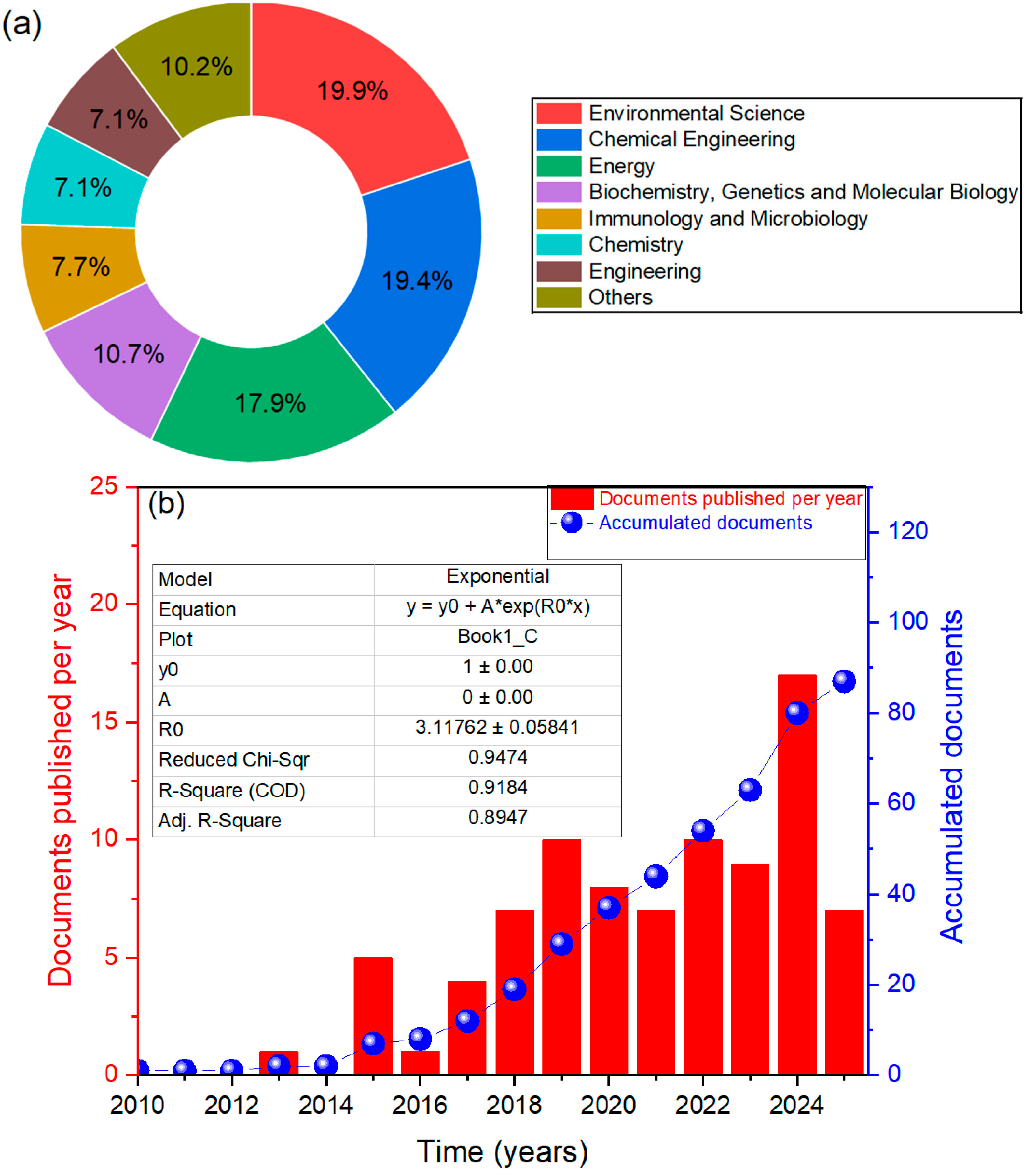
Figure 2a illustrates the percentage distribution of scientific documents across thematic areas related to next-generation biofuels from bioelectrochemical systems. The most prominent fields include Environmental Science (20.9%), Chemical Engineering (19.9%), and Energy (18.4%). These are followed by Biochemistry, Genetics and Molecular Biology (10.2%) and Engineering (7.8%), while disciplines such as Medicine (2.4%), Agricultural and Biological Sciences (2.4%), and Materials Science (1.5%) show lower representation. These data reveal critical patterns in the current disciplinary orientation of biofuel research within bioelectrochemical systems. The dominance of Environmental Science and Chemical Engineering suggests a prioritized focus on developing sustainable solutions for environmental management and energy production. This aligns with the cross-disciplinary nature of bioelectrochemical systems, which integrate biotechnology, electrochemistry, and environmental remediation to generate clean and efficient energy sources [22]. The significant presence of Energy as a thematic area reinforces this trend, highlighting growing interest in optimizing energy conversion, storage, and recovery from renewable sources. The ranking of Biochemistry, Genetics and Molecular Biology in fourth position underscores the importance of understanding and modifying key microbial metabolic pathways to enhance system performance—consistent with recent advances in genetic manipulation of electroactive microorganisms. Conversely, areas like Medicine and Materials Science appear with lower percentages, which could be interpreted as opportunities for future interdisciplinary research. For instance, the development of novel electrode materials or the assessment of biomedical applications of these systems remains in its early stages. Overall, the data not only pinpoint the core areas of scientific output but also delineate thematic gaps that could guide future collaborative research efforts [23,24].
Figure 2.
Publication trends and growth. (a) Distribution of documents by dominant subject areas. (b) Annual and cumulative publication counts, showing exponential growth fitted from 2017 onward (R2 = 0.89).
Figure 2b presents red bars indicating the number of publications per year, blue dots representing the cumulative total, and a purple line modeling growth through exponential fitting. The growth of annual scientific output was modeled using an exponential function of the form y = y0 + A·exp (R0·x). This choice is based on: (1) the visual pattern of accelerated growth observed since 2017, typical of emerging research fields with high adoption rates; (2) the model’s strong statistical fit (adjusted R2 = 0.89, reduced χ2 = 0.95); and (3) its consistency with exponential growth patterns reported in bibliometric studies of disruptive energy technologies. This model reflects a positive feedback mechanism characteristic of areas gaining relevance in response to urgent global needs, such as energy transition and CO2 mitigation. This surge may be attributed to the rise of emerging bioenergy technologies and the urgent need for sustainable alternatives to fossil fuels [25]. The observed surge in publications in 2024, compared to previous years and the partial data for 2025, can be attributed to two main factors. First, there is a natural indexing delay in academic databases; publications from late 2024 and most of 2025 may not yet be fully indexed in Scopus at the time of data retrieval (early–mid 2025), making 2024 appear as a peak. Second, the increased output in 2024 likely reflects a cumulative effect of growing research investment, maturing technologies in microbial electrosynthesis, and heightened policy focus on carbon-neutral energy solutions following major international climate commitments. This pattern is consistent with the overall exponential growth trajectory, where 2024 represents the most recent complete year of indexed research activity. According to Biotech Spain, initiatives such as BioCAs-CCU are driving advanced biofuels through CO2 capture strategies and the use of waste and green hydrogen, generating renewed academic and technological interest [26]. Furthermore, bioelectrochemical systems like microbial fuel cells (MFCs) have shown promise for simultaneous energy generation and wastewater treatment. The exponential model suggests not only an increase in scientific production but also an accelerated pace—consistent with the global push toward decarbonization and energy transition [27].
These values not only quantify academic interest but also anticipate a dynamic future for advanced biofuels from bioelectrochemical systems, offering quantitative evidence of the scientific momentum surrounding BES and reinforcing their consolidation as a strategic research area in the global energy transition [28].
3.2. Geographic Distribution of Academic Collaboration in CO2 Research
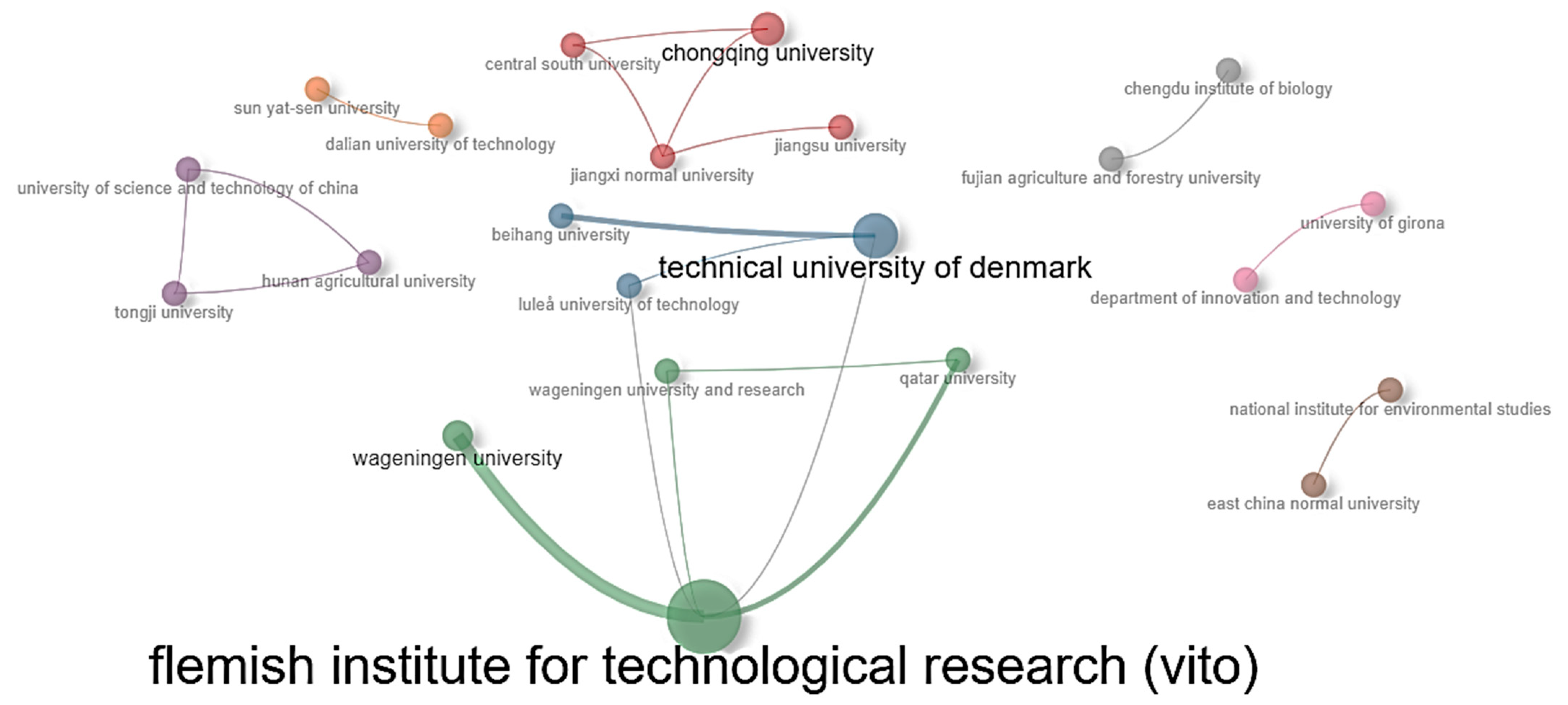
Figure 3 illustrates the institutional network of scientific collaboration in the field of bioelectrochemistry applied to CO2 capture, highlighting the connections between universities and research institutes from various countries. The central position of the Flemish Institute for Technological Research (VITO) in Belgium reveals its leading role, as it is linked to several key institutions such as the Technical University of Denmark, Wageningen University and Research (Netherlands), and Qatar University. This prominence suggests that VITO functions as a strategic hub for technical expertise in CO2 conversion technologies. The Technical University of Denmark also stands out, collaborating with Beihang University (China), Luleå University of Technology (Sweden), and again with Wageningen, illustrating Denmark’s strong intercontinental collaboration strategy with active links to Asia and Europe. This positions Denmark as a critical actor in advancing bioelectrochemical methodologies.
Figure 3.
Institutional collaboration network. Co-authorship map highlighting VITO (Belgium) as a central hub and showing strong domestic collaboration among Chinese institutions.
In contrast, the upper-left sector of the figure clusters Chinese institutions such as Chongqing University, Central South University, Jiangxi Normal University, and Jiangsu University. Although internal collaboration is strong, their international ties appear limited, signaling an opportunity to expand collaborative horizons beyond national borders [29,30]. This pattern reflects a relatively endogenous structure of scientific development in China, with potential for global consolidation. Spain is represented by the University of Girona, connected to the Department of Innovation and Technology, indicating growing interest in sustainability and innovation within the Iberian research ecosystem. However, the network reveals a notable absence of institutions from Latin America and Africa, highlighting significant gaps in global participation [31]. This lack of representation opens the door for researchers from these regions to establish strategic partnerships and contribute context-specific perspectives grounded in their unique socio-environmental realities [32]. There is substantial room for comparative studies between technologies used in the Global North and adaptive solutions emerging in Latin American contexts. These data not only reveal who is conducting research, but also where research is lacking—thus guiding the map toward a more inclusive and transformative science.
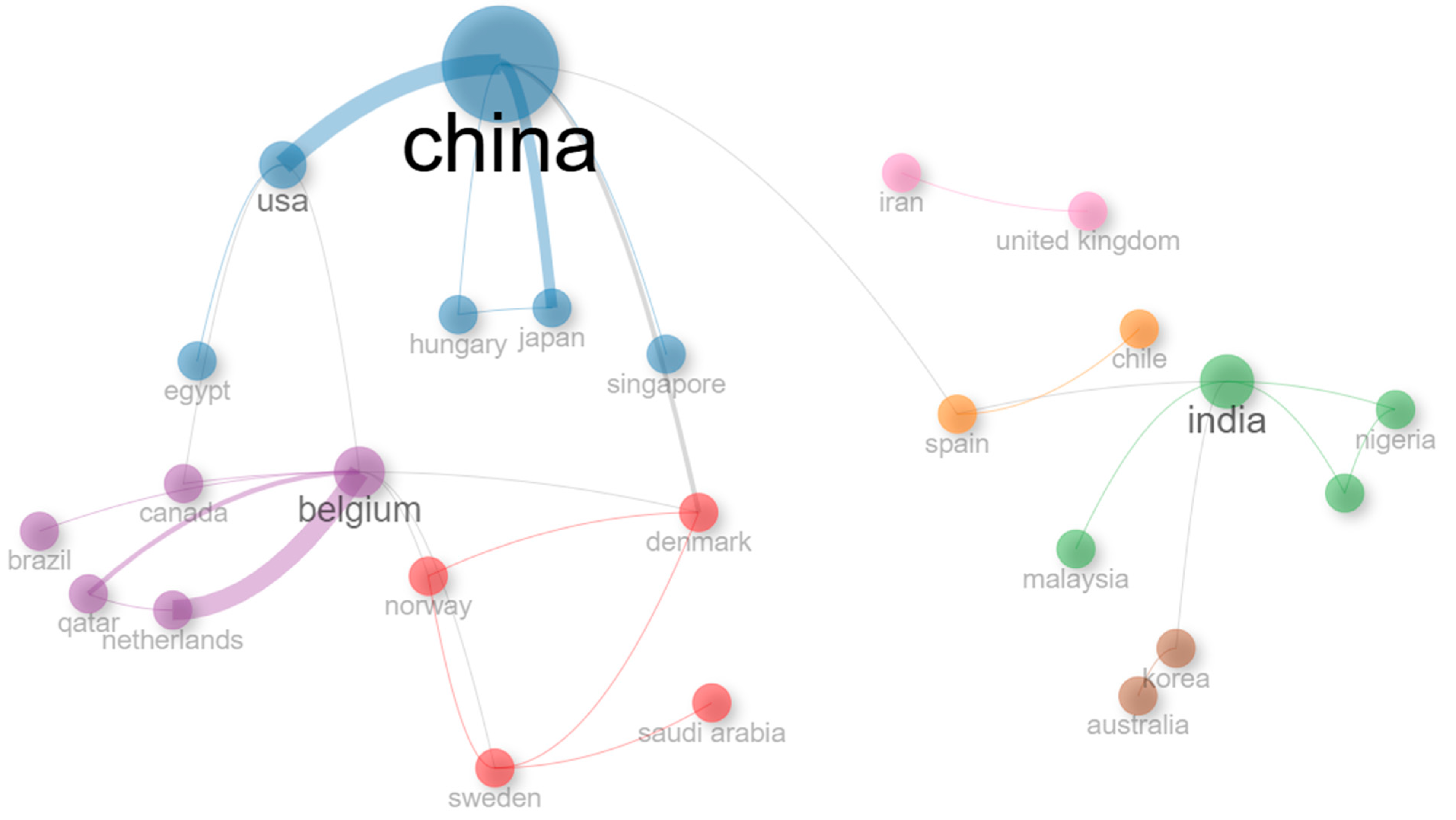
Figure 4 depicts the international scientific collaboration network focused on research in bioelectrochemical systems for CO2 capture and conversion. In this visualization, China and India emerge as key nodes of research activity, reflecting a multipolar structure that interlinks diverse global regions. China, connected to countries such as the United States, Hungary, Japan, Singapore, and Egypt, demonstrates a collaboration strategy oriented toward both technological powerhouses and emerging regions. Its leadership is evident in the volume of scientific publications and active participation in large-scale international projects. One example is the ELECTRA project, funded by the European Union—a joint initiative between Europe and China that has developed electromicrobial technologies for environmental bioremediation [33,34,35]. Participating Chinese institutions included the University of Science and Technology of China, Nanjing University, Nanjing Agricultural University, and the Institute of Microbiology of the Chinese Academy of Sciences, reflecting the country’s high level of specialization and commitment in this field.
Figure 4.
International collaboration network. Co-authorship links between countries, illustrating the leadership of China and India and the underrepresentation of Latin America and Africa.
India, meanwhile, is linked to Nigeria, Malaysia, South Korea, and Australia, positioning itself as a scientific catalyst in the Global South. Its leadership has been strengthened in areas such as the use of agricultural waste as substrate for biofuel production and the optimization of hybrid biocathodes [33]. Institutions like the Indian Institute of Technology (IIT) have developed electrosynthesis models applicable to both rural and industrial contexts. European networks are also present, with Belgium collaborating with Canada, Brazil, Qatar, and the Netherlands, while Denmark connects with Norway, Sweden, and Saudi Arabia. These partnerships reflect a strong interest in clean technologies, energy efficiency, and circular economy solutions, emphasizing Europe’s expertise in life cycle analysis and industrial scalability. However, the figure also reveals important gaps: there is limited integration of countries from Latin America, North Africa, Central America, and major players such as Germany or France.
Table 1 summarizes scientific output and citation impact by country in the field, clearly identifying China as the absolute leader in publication volume (37 articles, 42.5%), with a moderate collaboration network (27% MCP) and a total of 1015 citations. Although its average citations per article (27.4) are solid, they fall short compared to countries with lower output but higher per-publication impact. Belgium, with only 6 articles (6.9%), stands out for its extremely high international collaboration (83.3% MCP) and an exceptional average of 177.3 citations per article—suggesting a highly connected and specialized research strategy. Belgium hosts the Flemish Institute for Technological Research (VITO), renowned for its focus on sustainable chemistry and carbon capture via advanced membranes. India (9 articles, 10.3%) displays a more nationally oriented approach (11.1% MCP) but maintains a respectable citation average (33.4), reflecting its rising prominence in agricultural waste conversion technologies and hybrid biocathodes [36]. South Korea and Spain also demonstrate medium–high impact (111 and 113 citations per article, respectively), suggesting well-established research lines in applied bioelectrochemistry. In contrast, countries such as Malaysia, Singapore, the Netherlands, and Denmark show lower volume and citation counts, indicating potential for expansion. Notably absent are countries like Germany, France, and Italy, as well as entire regions including Latin America, North Africa, and Eastern Europe—revealing significant geographic gaps. The application of customized microbial consortia adapted to tropical, rural, or resource-constrained conditions presents a key opportunity to develop accessible and context-sensitive technological solutions [37]. Additionally, the integration of artificial intelligence is emerging as a transformative tool, facilitating predictive modeling of electrochemical processes, operational parameter optimization, and bibliometric data analysis to detect emerging trends [38]. Moreover, life cycle assessment (LCA) and industrial scalability evaluations in emerging contexts could help identify the true environmental and economic impacts of each technology, enhancing their viability for real-world applications [39].
Table 1.
Scientific distribution and impact metrics by country in bioelectrochemical systems applied to CO2.
The analysis reveals a marked underrepresentation of regions such as Latin America, Africa, Eastern Europe, and Central Europe, as well as the absence of key actors such as Germany and France. This geographic gap not only reflects inequalities in the distribution of scientific resources but also limits the development of context-sensitive technological solutions. For instance, the adaptation of BES to tropical climates, the use of local biomass, or the integration with emerging circular economies in these regions could contribute significant innovations that are not currently considered in studies predominantly focused on Asia and Western Europe.
3.3. Emerging Thematic Axes
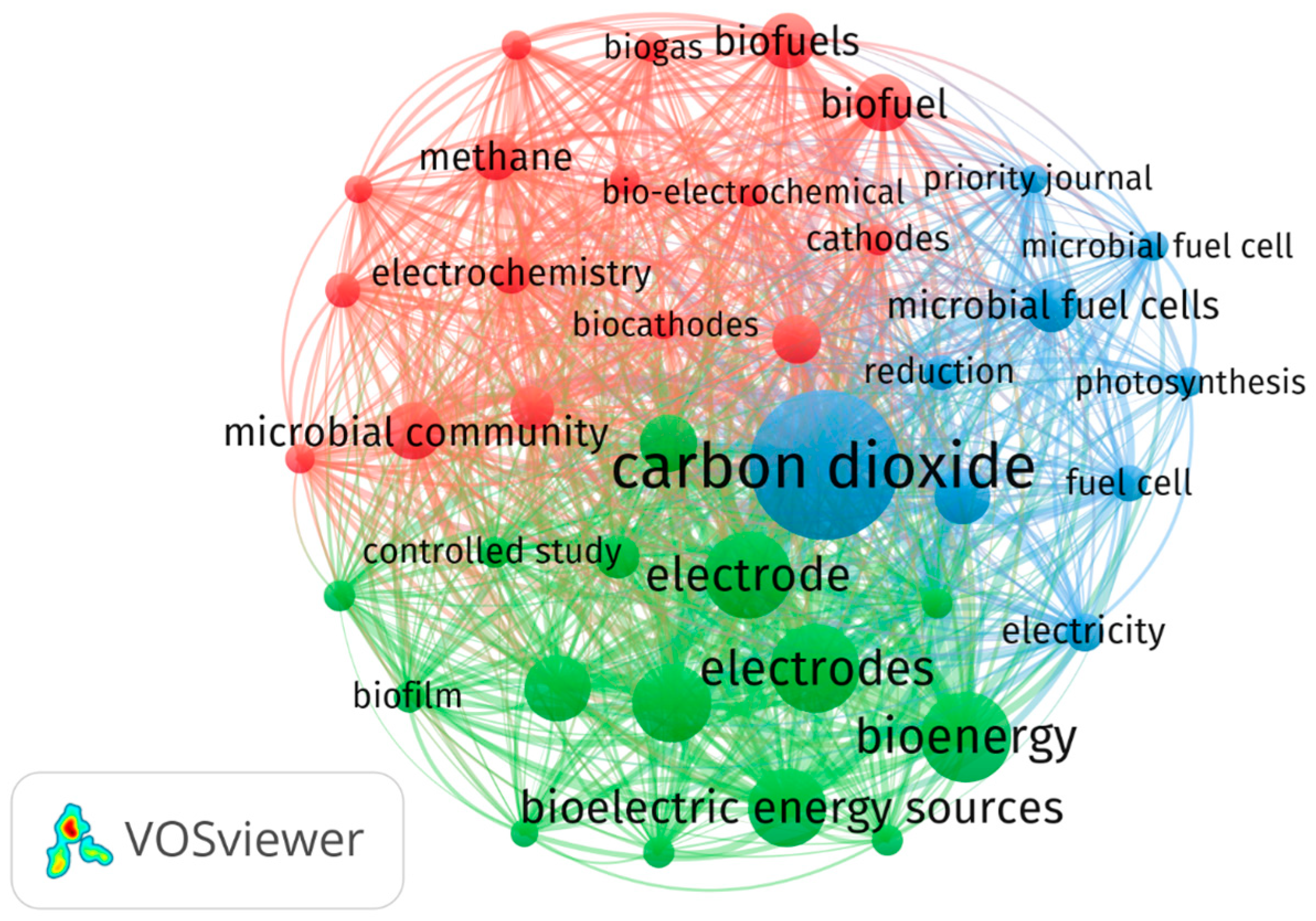
Figure 5 displays the keyword co-occurrence network generated using VOSviewer, revealing three primary clusters: a red cluster dominated by terms such as carbon dioxide, bioenergy, and biofuel; a green cluster emphasizing electrode, bioelectric energy sources, and microbial fuel cells; and a blue cluster featuring terms like biogas biofuels and controlled study. The most prominent node is carbon dioxide, reflecting the centrality of CO2 as a feedstock or byproduct in bioelectrochemical systems. Its strong connection with bioenergy and electrode suggests a growing focus on the capture and conversion of CO2 into energy products via microbial fuel cells. The limited representation of the term biofilm in the co-occurrence network reflects not only a bibliometric gap but also a critical technological one, as biofilms are fundamental to electron transfer in BES, functioning as living biocatalysts attached to electrodes. Their structural characterization (e.g., fluorescence microscopy, electrochemical impedance spectroscopy) and functional assessment (metabolic activity, electronic conductivity) are essential to optimize CO2 conversion efficiency, yet the absence of systematic studies on biofilm engineering—whether through genetic modification or controlled operational conditions—continues to hinder the reproducibility and scalability of BES [40]. Future research should therefore prioritize multimodal characterization of biofilms integrating electrochemical, microbiological, and imaging techniques; the design of synthetic biofilms using microbial consortia optimized for CO2 fixation; and the genetic modification of electroactive strains to overexpress outer membrane cytochromes or key enzymes in the CO2 reduction pathway.
Figure 5.
The nodes are connected by links whose thickness reflects the link strength calculated by VOSviewer (values available in the Supplementary Data). For example, the strongest link is between ‘carbon dioxide’ and ‘bioenergy’ (strength = 12), followed by ‘electrode’ and ‘microbial fuel cells’ (strength = 9). This quantitatively confirms the thematic centrality of CO2-to-bioenergy conversion.
Another significant gap is the weak representation of biofilms and their electrochemical role. Despite their essential function in electron transfer within MFCs, the limited appearance of this term in the co-occurrence network suggests that structural characterization, functionality, and optimization of biofilms remain underexplored [41]. This gap presents a valuable opportunity to advance the microbial and biophysical understanding of bioelectrochemical system performance. Furthermore, the absence of terms related to hybrid technology integration—such as Direct Air Capture (DAC) or Bioenergy with Carbon Capture and Storage (BECCS)—indicates that this emerging area with high innovation potential is still largely overlooked in current academic literature [42,43]. In light of these gaps, and considering recent EERA Bioenergy reports along with newly indexed publications, several research avenues are recommended for early-career researchers [44]. These include the design of controlled studies to assess CO2 capture efficiency under various electrode and biofilm configurations; development of nanomaterial-functionalized electrodes to enhance electron transfer and selectivity toward energy products like methane or ethanol; and evaluation of genetically modified biofilms to increase energy productivity and CO2 conversion [45].
Similarly, the low co-occurrence of the term controlled study in the keyword network not only indicates a bibliometric gap but also highlights a critical methodological deficiency in the field, as most published studies focus on feasibility demonstrations under specific conditions but lack comparative and replicable experimental designs that would allow isolation of the effects of key variables such as electrode type (material, surface area, porosity), microbial inoculum composition (pure strains vs. consortia, prior adaptation), operating conditions (applied potential, CO2 concentration, pH, temperature), and reactor configuration (volume, geometry, batch vs. continuous mode). This lack of methodological standardization hinders direct comparison across studies, limits reproducibility of results, and obstructs the identification of optimal parameters for scalability; to overcome this barrier, the adoption of harmonized experimental protocols is proposed, including full or fractional factorial designs to evaluate interactions among multiple variables, the use of reference materials and positive/negative controls in all experiments, standardized reporting of performance metrics (Coulombic efficiency, specific production rate, current density), and open data platforms for sharing raw datasets and detailed experimental metadata, since only through controlled and systematic studies will it be possible to move from proof-of-concept toward robust optimization and industrial standardization of BES.
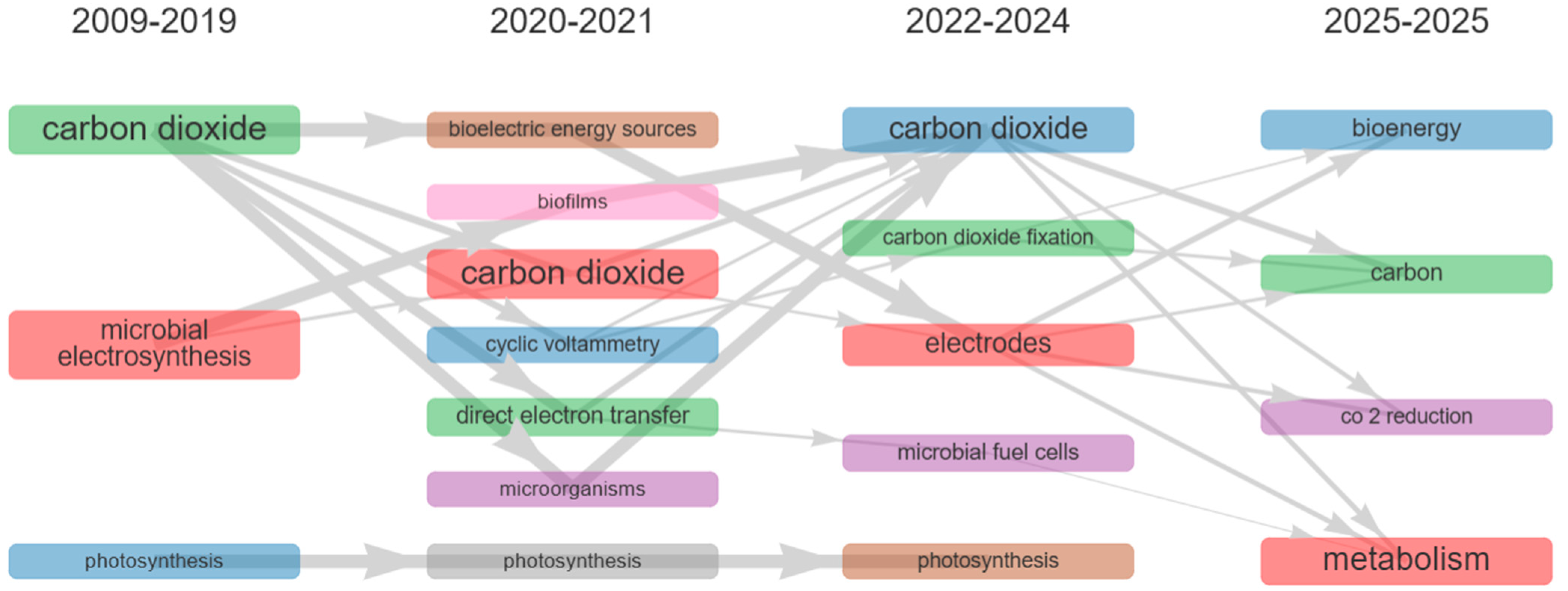
Figure 6 illustrates the temporal evolution of keywords associated with research in this field, divided into four periods (2009–2019, 2020–2021, 2022–2024, and 2025). This visualization allows for the identification of shifting thematic and technological priorities, highlighting both well-established lines and emerging areas. During the 2009–2019 period, dominant keywords such as carbon dioxide, photosynthesis, and microbial electrosynthesis reflect an initial focus on CO2 capture and its conversion through photosynthetic or microbial pathways. At this stage, research was primarily concerned with understanding the biochemical and electrochemical fundamentals of carbon fixation [46]. In the 2020–2021 timeframe, thematic diversification became evident with the appearance of terms like biofilms, cyclic voltammetry, and direct electron transfer, signaling growing interest in electron transfer mechanisms and electrochemical characterization. This shift marked a transition toward optimizing materials and system processes. Between 2022 and 2024, the emergence of concepts such as carbon dioxide fixation, microbial fuel cells, and CO2 reduction suggests the consolidation of bioelectrochemical technologies for converting CO2 into energy products.
Figure 6.
Overlay of dominant keywords across four periods, showing a shift from foundational concepts (2009–2025) to process optimization and bioenergy (2025).
The temporal evolution of keywords reveals a persistent absence of terms such as genetic engineering, synthetic biology, or metabolic engineering even in the most recent period (2025), indicating that despite advances in synthetic biology, its application in BES for optimizing electroactive microorganisms remains incipient. Genetic engineering could enable the overexpression of CO2-fixing enzymes (e.g., formate dehydrogenase, carbon monoxide dehydrogenase), the modulation of metabolic pathways to increase the production of ethanol, butanol, or methane, and the creation of chimeric strains that combine electroactive capacity with tolerance to industrial conditions (pH, temperature, CO2 concentration). This gap represents a transformative opportunity, as the convergence between microbial electrochemistry and synthetic biology could accelerate the development of tailor-made biocatalysts designed to maximize conversion efficiency and operational stability. This temporal progression reveals several notable research gaps. For instance, the limited presence of terms related to hybrid technology integration—such as Direct Air Capture (DAC) and Bioenergy with Carbon Capture and Storage (BECCS)—suggests an untapped opportunity to explore synergies between bioelectrochemical systems and direct carbon capture strategies [47]. Moreover, the sparse appearance of concepts like genetic engineering and synthetic biology indicates that the potential to enhance microbial efficiency through genetic modification remains largely underutilized [48,49]. Beyond integration with carbon capture technologies, advanced biofilm engineering and genetic modification of electroactive microorganisms emerge as priority areas, since biofilms are not merely passive biolayers but living electroconductive scaffolds whose architecture and microbial composition determine electron transfer kinetics. Future research should explore genetic engineering strategies to enhance bacterial adhesion, surface cytochrome expression, and oxidative stress tolerance; the design of synthetic consortia in which complementary species cooperate in CO2 reduction (for example, butanol-producing Clostridium paired with Geobacter as an electron donor); and in situ, real-time biofilm characterization using electrochemical biosensors and omics techniques such as metagenomics and transcriptomics. These advances would not only address the gaps identified in bibliometric analyses but also shorten the distance between laboratory feasibility and industrial scalability.
It is worth noting the significant absence of terms such as Direct Air Capture (DAC) and Bioenergy with Carbon Capture and Storage (BECCS) within the co-occurrence network. This suggests that, despite their synergistic potential, the integration of BES with advanced carbon capture technologies has not yet permeated mainstream scientific literature. This thematic gap represents a key opportunity for future research aimed at closing the carbon cycle more efficiently.
3.4. Bibliometric Overview of the Most Influential Research in Microbial Bioenergy
Table 2 presents the ten most cited articles in the field, highlighting the notable presence of Bajracharya S., who appears as the lead author in five of the ten listed publications. His scientific work focuses on microbial electrosynthesis (MES) and the bioelectrochemical conversion of CO2 into value-added chemicals, employing both pure and mixed microbial cultures. The most cited paper, published in Bioresource Technology in 2015, has accumulated 301 global citations and 24 local citations, reflecting its impact both internationally and within the analyzed corpus. This study explores the use of graphite felt and stainless steel as cathode materials, underscoring a concern for the efficiency and technical viability of the selected materials [50,51]. From a technological perspective, the reviewed articles concentrate on CO2 reduction, the design of gas-diffusion biocathodes, and the production of compounds such as acetate, ethanol, and other chemicals via microbial pathways [52]. However, the analysis reveals several research gaps. First, there is limited representation of studies integrating life cycle assessment (LCA) or economic evaluations—critical for industrial scalability. Second, there is minimal exploration of genetic engineering approaches to optimize specific microbial metabolic pathways. Furthermore, most studies focus on laboratory conditions, with scarce evidence of pilot-scale or real-world applications. Several emerging research lines can be proposed, offering new opportunities for investigators in the field of bioelectrosynthesis and sustainable CO2 conversion. One promising direction is the development of advanced electrodes functionalized with nanomaterials to improve both selectivity and efficiency in the electrochemical transformation of carbon. Additionally, integrating microbial electrosynthesis with direct air capture technologies presents a promising avenue to enhance overall system efficiency and promote closed carbon-cycle strategies at industrial scales [53].
Table 2.
Top 10 most cited articles on the topic.
Parallel to this, the use of artificial intelligence and computational modeling is gaining traction as a key tool for optimizing complex metabolic networks and operational parameters in bioelectrochemical systems, enabling the prediction of nonlinear behaviors and accelerating innovation in experimental design [54]. Another essential area is the environmental and economic evaluation of these hybrid systems through LCA and cost–benefit studies, ensuring both technical feasibility and long-term sustainability [55]. Finally, the exploration of lignocellulosic waste as alternative substrates offers a strategic path to diversify carbon sources and reduce reliance on pure feedstocks, thereby improving the ecological profile of the process [56]. The global trend in this field clearly points toward interdisciplinarity—merging biotechnology, materials science, process engineering, and systems analysis. This convergence not only accelerates the development of sustainable energy solutions, but also equips researchers to tackle the challenges of climate change through integrated and highly innovative approaches. These proposals thus outline a valuable roadmap for new researchers seeking to contribute to scientific and technological progress in the transition toward a low-carbon economy.
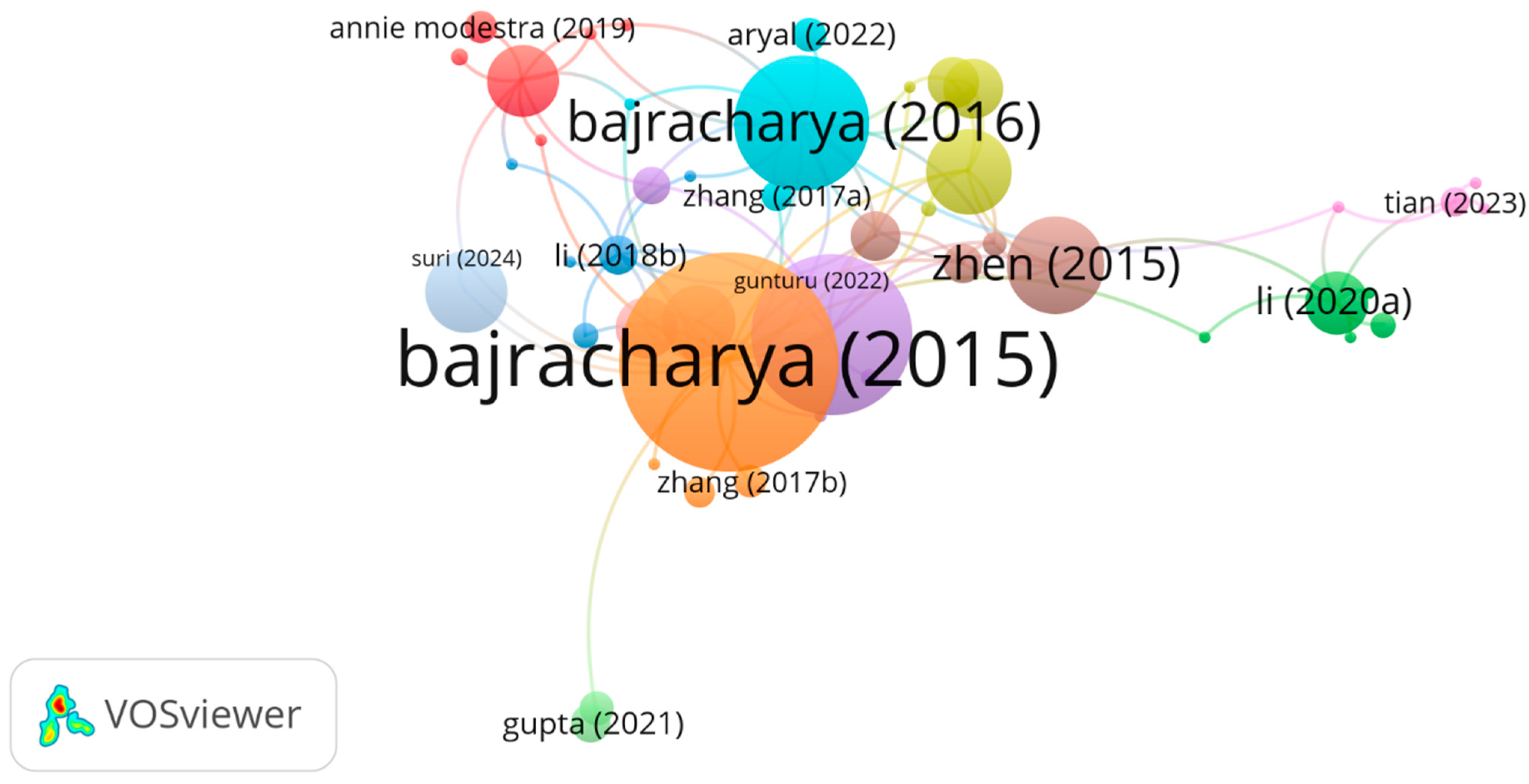
Figure 7 depicts the co-authorship network focused on research into next-generation biofuels derived from CO2 via bioelectrochemical systems. The node representing Bajracharya (2015) [50] stands out as the most prominent, indicating his central role in scientific output and in facilitating collaborative networks. Well-defined clusters are visible, suggesting the presence of cohesive scientific communities working on similar thematic lines, such as microbial electrosynthesis, biocathode design, and CO2 conversion into chemical products [60]. However, several peripheral nodes—such as Gupta (2021) [24] show limited connectivity, which may reflect emerging researchers or research lines not yet integrated into the broader global network. The network is concentrated around a few authors, indicating limited geographic and institutional diversity. This presents an opportunity to foster more inclusive collaborations, particularly with researchers from underrepresented regions such as Latin America, Africa, or Southeast Asia. The scarce presence of authors linked to disciplines such as artificial intelligence, circular economy, or synthetic biology further highlights a lack of interdisciplinary integration, despite their growing relevance in the design of advanced bioelectrochemical systems [61]. It is therefore essential to encourage interdisciplinary studies that combine bioelectrochemistry with computational modeling, artificial intelligence, or life cycle assessment tools—toward a more holistic understanding of system performance under varying conditions [62]. Despite the cohesion observed within the clusters, the co-authorship network reveals a notable concentration around authors and institutions from Europe and Asia, with limited representation from researchers in Latin America, Africa, and other emerging regions. This lack of geographic and institutional diversity may constrain thematic and methodological innovation, as region-specific perspectives—such as the use of local agricultural waste, adaptation to tropical climates, or applications in resource-limited settings—are not sufficiently integrated into the mainstream research landscape. Future international and inter-institutional collaborations could enrich the field with multidisciplinary approaches and more inclusive technological solutions.
Figure 7.
Author co-authorship network showing the central role of Bajracharya S. and revealing clustered research communities alongside isolated, emerging authors.
Table 3 presents the most productive authors in the field, with Bajracharya S. standing out due to an h-index of 5, an m-index of 0.556, and a total of 301 citations—reflecting high productivity and significant influence in the area since 2015. His research has focused on microbial electrosynthesis (MES) and the bioelectrochemical conversion of CO2 into value-added chemicals such as acetate and ethanol, using biocathodes and mixed cultures [50]. Other authors, including Patil S. A. and Pant D., also show notable metrics, suggesting the presence of a consolidated collaborative network across Europe and Asia, particularly in Belgium, India, and the Netherlands. Another noteworthy aspect is the temporal diversity of PY_start (year of first publication), ranging from 2013 to 2023 [2,50]. This indicates that the field is attracting both established researchers and new voices, a positive trend for thematic and methodological renewal. However, it is also evident that some authors with recent publications exhibit low h- and m-index values, which may be due to insufficient time to accumulate citations—but could also signal a need for greater visibility and impact of their work. Most authors focus on electrochemical and microbiological aspects, yet there is limited representation of experts in life cycle assessment, circular economy, or public policy—hindering comprehensive evaluation of the technological viability [63]. Furthermore, few studies address industrial scalability or integration with direct air capture (DAC) technologies, despite their growing relevance in the global decarbonization context [64]. The incorporation of artificial intelligence to model metabolic networks and adjust operational conditions in real time represents another promising avenue. Interdisciplinary studies are also needed that combine bioelectrochemistry with synthetic biology, economics, and energy policy—as well as analyses of scientific collaboration networks to identify bottlenecks in knowledge transfer and promote internationalization [65].
Table 3.
Main scientific sources by productivity, citations and bibliometric indexes.
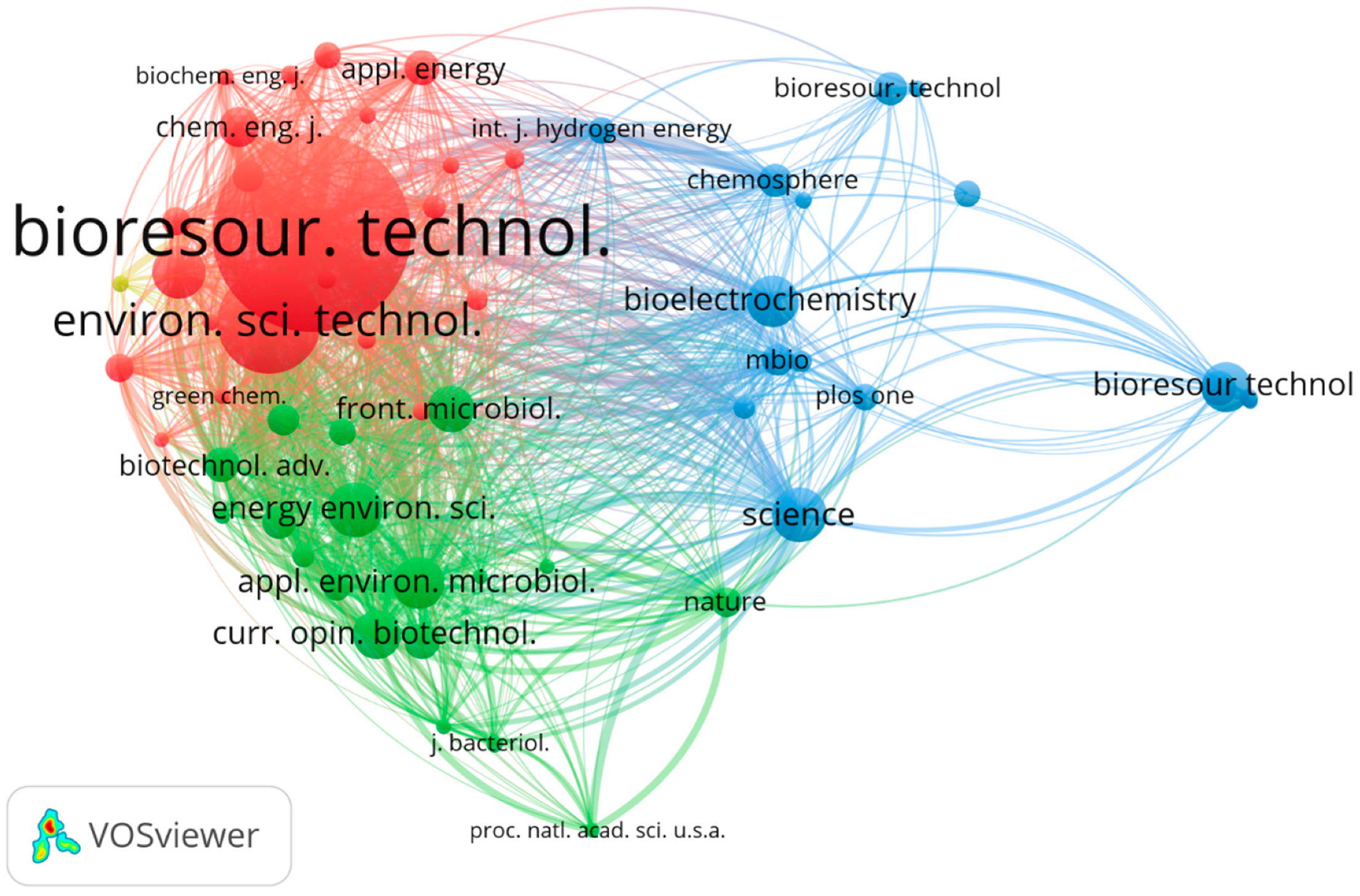
Figure 8 presents a journal co-citation network, revealing three main clusters that highlight areas of specialization and interconnected editorial communities. The red cluster includes journals focused on chemical engineering and environmental resources—such as Bioresource Technology, Environmental Science & Technology, Chemical Engineering Journal, and Applied Energy. Their strong interconnectivity indicates that research on cathode materials, gas diffusion processes, and reactor design is frequently published within these sources. The green cluster, featuring Biotechnology Advances, Energy & Environmental Science, Applied and Environmental Microbiology, and Current Opinion in Biotechnology, is oriented toward advanced biotechnology and environmental microbiology. This grouping underscores the significance of biofilm characterization and emerging metabolic pathways in the research landscape. Lastly, the blue cluster comprises high-impact generalist or pure bioelectrochemistry titles—Bioelectrochemistry, mBio, PLoS One, Science, and Nature—highlighting links to broad theoretical and methodological advances. This bibliographic map affirms the interdisciplinary nature of bioelectrochemical systems (BES), where interaction among process engineering, materials science, and microbiology is essential. Nevertheless, the dominance of engineering and biotechnology journals suggests underrepresentation of other dimensions—such as techno-economic evaluation, science policy, or social impact. Recent studies describe BES as “emerging biotechnologies” with strong potential for carbon neutrality, but they also point to critical challenges for scaling and economic viability (e.g., material costs, microbial stability) [66]. Based on this lack of emphasis on economic and regulatory aspects, several research gaps emerge as promising directions for early-career investigators. First, the development of methodologies for environmental and economic-financial evaluation—such as life cycle assessment and cost–benefit analyses—is essential to justify industrial adoption of BES. Recent reviews emphasize the urgency of improving such analyses at pilot and plant scales (see BES scale-up review) [67]. The integration of BES with direct air capture (DAC) or BECCS (Bioenergy with Carbon Capture and Storage) technologies remains largely unexplored and could open synergistic routes for CO2 sequestration and valorization [68]. Likewise, designing electrodes based on functionalized nanomaterials and applying genetic engineering to exoelectrogens to optimize electron transfer represent areas of high methodological innovation [69].
Figure 8.
Journal co-citation network. Clusters of frequently cited journals in engineering/environment (red), biotechnology (green), and general science (blue), with Bioresource Technology as a central node.
3.5. Emerging Perspectives and Research Opportunities in CO2 Conversion
A fundamental prerequisite for overcoming the identified gaps is the strengthening of experimental rigor. The scarcity of controlled and comparative studies—highlighted by bibliometric analysis—must be addressed through robust experimental designs that allow the decoupling of effects and the quantification of uncertainties. For example, parallel experiments comparing different electrode materials under identical microbial and operational conditions, or inter-laboratory replicability studies, are essential for building a reliable and transferable knowledge base.
One of the most critical gaps identified in the current literature is the scarcity of pilot studies and industrial-scale deployments. Although numerous works demonstrate laboratory viability, few have comprehensively addressed techno-economic and life cycle assessments under real-world conditions [40,59]. Implementing advanced computational models and applying artificial intelligence to simulate microbial community behavior and operational parameters may offer a pathway to overcome this barrier—optimizing energy performance and cost-efficiency prior to full-scale plant construction [70]. Another relevant gap lies in the design of smart electrodes. While materials like graphite and stainless steel exhibit favorable electrochemical properties, the integration of nanomaterials (e.g., porous carbon, metal oxides, graphene) is emerging as a key trend to enhance electron transfer and selectivity toward specific products such as ethanol, methane, or organic acids. Recent studies propose the use of conductive hydrogels to stabilize denser and more robust biofilms, potentially increasing current density and CO2 conversion efficiency by up to 30% compared to conventional configurations [60,71].
Standardization and Certification: Development of internationally recognized sustainability standards and life-cycle assessment (LCA) methodologies specific to BES-derived products is crucial. These standards must account for net carbon balance, water footprint, and social sustainability to ensure genuine environmental benefits and prevent greenwashing [59,61].
Financial and Market Incentives: Policy instruments such as carbon pricing, tax credits for carbon capture and utilization (CCU), renewable energy credits for BES-coupled systems, and green public procurement can dramatically improve techno-economic viability. Blended finance models de-risking early-stage demonstrations are essential [62,71].
Regulatory Sandboxes and Roadmaps: Governments should establish regulatory sandboxes that allow for testing BES technologies in real-world settings under relaxed regulations, facilitating data collection for future policy. National and regional research and innovation roadmaps must explicitly include BES within their bioeconomy and decarbonization strategies [49,63,72].
International Collaboration: Harmonizing policies across borders, particularly between major economies (EU, USA, China) and emerging regions, can create larger markets and accelerate global knowledge transfer. Initiatives like Mission Innovation or the International Renewable Energy Agency (IRENA) could play pivotal roles in fostering this alignment [73,74].
One of the most promising—yet still underexplored—opportunities is the integration of bioelectrochemical systems (BES) with advanced carbon capture technologies, such as direct air capture (DAC) and bioenergy with carbon capture and storage (BECCS). This synergy could transform BES into platforms for valorizing captured CO2, closing the carbon cycle and producing fuels with net-negative emissions. For example, a coupled DAC-BES system could capture CO2 from the atmosphere or point sources, convert it into methane or ethanol through microbial electrosynthesis, and store the surplus in the form of stable bioproducts. Preliminary studies suggest that this integration could improve overall conversion efficiency by 20–30%, while also reducing operating costs by utilizing surplus renewable energy.
However, this integration faces critical challenges: the low concentration of CO2 in DAC streams (≈400 ppm) limits microbial conversion kinetics; reactor scale-up requires modular and flexible designs; and the stability of biofilms under variable pH and temperature conditions remains a barrier. Future research should focus on: Designing hybrid bioreactors that couple capture and electrosynthesis modules, developing microbial strains adapted to low CO2 concentrations and conducting life-cycle analysis and techno-economic assessments to validate industrial feasibility.
3.6. Commercialization Challenges for CO2 Valorization via BES
The transition of BES from laboratory prototypes to commercial-scale CO2 valorization faces significant, interconnected barriers. Techno-economic hurdles are foremost: current systems exhibit low production rates, often below 5 g m−2 day−1 for compounds like acetate, which is orders of magnitude lower than industrial fermentation processes. Material costs contribute substantially, with electrode materials (e.g., carbon cloth, catalysts) accounting for an estimated 30–50% of capital expenditure [63,64]. Furthermore, the electrical energy input required for CO2 reduction can exceed 50 kWh kg−1 of product, challenging net energy positivity and economic viability without subsidized or renewable electricity. Process stability and scalability present another major constraint. Biofilm viability and electrochemical activity often decline beyond 30–60 days of operation due to poisoning, detachment, or microbial community shifts. Scaling reactors from milliliter to cubic-meter volumes introduces mass transfer limitations, pH gradients, and uneven current distribution, reducing overall efficiency. Pilot-scale studies are rare; fewer than 5% of published BES studies progress beyond 10 L volumes, leaving a critical gap in performance data under real-world conditions [65].
3.7. Economic and Market Barriers Further Impede Adoption
Techno-economic analyses suggest minimum selling prices for BES-derived chemicals are currently 2–5 times higher than fossil-based equivalents, without accounting for carbon credits. The market for many electro-synthesized chemicals (e.g., C2–C4 organics) is both volatile and competitive, requiring BES products to match stringent purity standards [63]. Moreover, the lack of standardized life-cycle assessment (LCA) methodologies leads to inconsistent reporting of environmental benefits, undermining claims of carbon negativity. And in the infrastructural and policy gaps complete the challenge. There is no established supply chain for large-scale BES components, and integration with point-source CO2 emitters (e.g., biogas plants, industrial flues) requires costly gas conditioning and compression [66]. Regulatory frameworks for “electro-fuels” or “renewable chemicals of non-biological origin” remain underdeveloped in most regions, failing to provide investment certainty or certification pathways.
A critical barrier to the adoption of BES is the scarcity of detailed economic assessments, as only 5% of the studies analyzed include cost–benefit analyses or pilot-scale feasibility models. Future efforts should integrate life-cycle assessments (LCA) and profitability models that account for carbon subsidies, electrification costs, and the value of byproducts. Moreover, the synergistic integration of BES with DAC, solar or wind energy, and waste biorefineries could enhance overall efficiency and reduce operating costs—an area that remains largely unexplored in the current literature.
3.8. Artificial Intelligence and Computational Modeling
Unlocking Predictive Design and Scale-Up The gap identified in the bibliometric analysis regarding the underutilized potential of artificial intelligence (AI) and computational modeling is not merely thematic but represents a methodological bottleneck that hinders the optimization and scalability of BES [73]. Our keyword and temporal evolution analysis confirms that terms such as machine learning, artificial intelligence, computational model, and digital twin appear with marginal frequencies (<2% of documents), despite their proven impact in related fields such as heterogeneous catalysis and bioprocess design [74]. This lag represents a transformative opportunity: the complexity of BES—where electrochemical dynamics, evolving microbial consortia, and mass transfer interact—makes them ideal candidates for AI tools capable of navigating multivariate spaces that are impossible to explore experimentally. We propose an integrated methodological pipeline to address this gap, structured in three phases. First, predictive modeling of biofilms and consortia using machine learning algorithms (e.g., Random Forest, Recurrent Neural Networks) trained with omics (metagenomics, transcriptomics) and electrochemical data would enable prediction of biocatalyst composition and activity under operational conditions [75]. Second, multi-objective optimization of parameters using genetic or swarm algorithms could simultaneously balance Coulombic efficiency, current density, product selectivity, and energy cost, accelerating the identification of optimal operating points [76]. Third, the development of multiscale simulations and digital twins coupling reactor models (CFD) with microbial kinetics would allow virtual design and scale-up testing from laboratory prototypes to pilot plants, with significant savings in time and resources [77]. An illustrative case is the use of convolutional neural networks to analyze microscopy images and correlate biofilm architecture with electron transfer—an approach scarcely explored to date. To realize this potential, it is imperative to establish open and standardized data repositories compiling operational data, microbial composition, and performance metrics across diverse BESs [78]. Only through this convergence of bioelectrochemistry, data science, and process engineering can the field move from heuristic experimentation to rational, predictive design, drastically shortening the path toward industrial implementation.
4. Conclusions
This bibliometric analysis maps the evolving research landscape of next-generation biofuels from CO2 via bioelectrochemical systems (BES). The field has grown exponentially since 2017, driven by global demands for sustainable energy and carbon neutrality. Its interdisciplinary structure centers on Environmental Science, Chemical Engineering, and Energy. Scientifically, collaboration is concentrated in East Asia and Northwestern Europe, while regions such as Latin America and Africa remain underrepresented, limiting globally inclusive partnerships. Core researchers and high-impact journals have shaped foundational knowledge in microbial electrosynthesis and reactor design. Keyword evolution reveals a trajectory from CO2 fixation toward biofilm optimization, electrochemical refinement, and integration with bioenergy and metabolic engineering. Despite advances, scalability faces critical barriers: lack of standardized controlled studies, insufficient biofilm electrochemistry understanding, minimal integration with direct air capture (DAC), and scarce pilot-scale and techno-economic assessments. The low co-occurrence of “controlled study” underscores the need for reproducible experimental protocols.
Future research must prioritize hybrid systems combining CO2 capture and valorization, supported by techno-economic and life-cycle assessments. The underrepresentation of Latin America, Africa, Eastern Europe, and key European nations restricts contextual solution development. Inclusive, interdisciplinary collaboration—integrating electrochemistry, microbiology, materials science, and synthetic biology—is essential to advance BES as pillars of a low-carbon circular economy. This study recommends (1) standardizing assessment protocols, (2) promoting pilot projects integrating BES with DAC and renewables, and (3) fostering inclusive partnerships with underrepresented regions to diversify technological and social perspectives.
Author Contributions
Conceptualization, S.J.R.-F.; Data curation, F.D. and D.D.-N.; Formal analysis, A.A.-M. and R.L.; Investigation S.J.R.-F.; Software, R.N.-N. and A.A.-M.; Validation, M.G.C. and R.L.; Writing—original draft, S.J.R.-F. All authors have read and agreed to the published version of the manuscript.
Funding
This research has been financed by the Universidad Autonoma del Peru.
Institutional Review Board Statement
Not applicable.
Informed Consent Statement
Not applicable.
Data Availability Statement
The original contributions presented in this study are included in the article. Further inquiries can be directed to the corresponding author.
Conflicts of Interest
The authors declare no conflict of interest.
References
- Modestra, J.A.; Matsakas, L.; Rova, U.; Christakopoulos, P. Prospects and trends in bioelectrochemical systems: Transitioning from CO2 towards a low-carbon circular bioeconomy. Bioresour. Technol. 2022, 364, 128040. [Google Scholar] [CrossRef]
- Sahoo, P.C.; Pant, D.; Kumar, M.; Gupta, R.P.; Srivastava, U. Unraveling the potential of solar-bioelectrochemical CO2 conversion for third generation biorefineries. Curr. Opin. Electrochem. 2024, 45, 101513. [Google Scholar] [CrossRef]
- Amulya, K.; Mohan, S.V. Augmenting succinic acid production by bioelectrochemical synthesis: Influence of applied potential and CO2 availability. Chem. Eng. J. 2021, 411, 128377. [Google Scholar] [CrossRef]
- Saratale, G.D.; Banu, J.R.; Nastro, R.A.; Kadier, A.; Ashokkumar, V.; Lay, C.-H.; Jung, J.-H.; Shin, H.S.; Saratale, R.G.; Chandrasekhar, K. Bioelectrochemical systems in aid of sustainable biorefineries for the production of value-added products and resource recovery from wastewater: A critical review and future perspectives. Bioresour. Technol. 2022, 359, 127435. [Google Scholar] [CrossRef]
- Singh, N.K.; Mathuriya, A.S.; Mehrotra, S.; Pandit, S.; Singh, A.; Jadhav, D. Advances in bioelectrochemical systems for bio-products recovery. Environ. Technol. 2024, 45, 3853–3876. [Google Scholar] [CrossRef]
- Barbosa, S.G.; Peixoto, L.; Alves, J.I.; Alves, M.M. Bioelectrochemical systems (BESs) towards conversion of carbon monoxide/syngas: A mini-review. Renew. Sustain. Energy Rev. 2021, 135, 110358. [Google Scholar] [CrossRef]
- Bolognesi, S.; Bañeras, L.; Perona-Vico, E.; Capodaglio, A.G.; Balaguer, M.D.; Puig, S. Carbon dioxide to bio-oil in a bioelectrochemical system-assisted microalgae biorefinery process. Sustain. Energy Fuels 2022, 6, 150–161. [Google Scholar] [CrossRef]
- Khandelwal, A.; Chhabra, M.; Lens, P.N. Integration of third generation biofuels with bio-electrochemical systems: Current status and future perspective. Front. Plant Sci. 2023, 14, 1081108. [Google Scholar] [CrossRef]
- Ayol, A.; Peixoto, L.; Keskin, T.; Abubackar, H.N. Reactor designs and configurations for biological and bioelectrochemical C1 gas conversion: A review. Int. J. Environ. Res. Public Health 2021, 18, 11683. [Google Scholar] [CrossRef]
- Lee, Y.J.; Moon, B.C.; Lee, D.K.; Ahn, J.H.; Gong, G.; Um, Y.; Ko, J.K. Sustainable production of microbial protein from carbon dioxide in the integrated bioelectrochemical system using recycled nitrogen sources. Water Res. 2025, 268, 122576. [Google Scholar] [CrossRef]
- Liu, H.; Qin, S.; Li, A.; Wen, J.; Lichtfouse, E.; Zhao, H.; Zhang, X. Bioelectrochemical systems for enhanced nitrogen removal with minimal greenhouse gas emission from carbon-deficient wastewater: A review. Sci. Total Environ. 2023, 859, 160183. [Google Scholar] [CrossRef]
- Ying, Z.; Qiu, Q.; Ye, J.; Chen, H.; Zhao, J.; Shen, Y.; Chu, B.; Gao, H.; Zhang, S. Mechanism, performance enhancement, and economic feasibility of CO2 microbial electrosynthesis systems: A data-driven analysis of research topics and trends. Renew. Sustain. Energy Rev. 2024, 202, 114704. [Google Scholar] [CrossRef]
- Agasam, T.; Savla, N.; Kalburge, S.J.; Thypparampil Karunakaran, S.; Pandit, S.; Jadhav, D.A. Microbial electrosynthesis: Carbon dioxide sequestration via bioelectrochemical system. In The Future of Effluent Treatment Plants; Elsevier: Amsterdam, The Netherlands, 2021; pp. 113–132. [Google Scholar]
- Finkelstein, J.; Swartz, J.; Koffas, M. Bioelectrosynthesis systems. Curr. Opin. Biotechnol. 2022, 74, 211–219. [Google Scholar] [CrossRef]
- Stöckl, M.; Claassens, N.J.; Lindner, S.N.; Klemm, E.; Holtmann, D. Coupling electrochemical CO2 reduction to microbial product generation–identification of the gaps and opportunities. Curr. Opin. Biotechnol. 2022, 74, 154–163. [Google Scholar] [CrossRef]
- Siddha, S.; Kumar, M. Algae-based bioelectrochemical systems for bioremediation and co-generation of value-added chemicals. In Algae Based Bioelectrochemical Systems for Carbon Sequestration, Carbon Storage, Bioremediation and Bioproduct Generation; Academic Press: Cambridge, MA, USA, 2024; pp. 171–188. [Google Scholar]
- Donthu, N.; Kumar, S.; Mukherjee, D.; Pandey, N.; Lim, W.M. How to conduct a bibliometric analysis: An overview and guidelines. J. Bus. Res. 2021, 133, 285–296. [Google Scholar] [CrossRef]
- Lazarides, M.K.; Lazaridou, I.Z.; Papanas, N. Bibliometric analysis: Bridging informatics with science. Int. J. Low. Extrem. Wounds 2023, 24, 515–517. [Google Scholar] [CrossRef]
- Kumar, M.; George, R.J.; Anisha, P.S. Bibliometric analysis for medical research. Indian J. Psychol. Med. 2023, 45, 277–282. [Google Scholar]
- Ülker, P.; Ülker, M.; Karamustafa, K. Bibliometric analysis of bibliometric studies in the field of tourism and hospitality. J. Hosp. Tour. Insights 2023, 6, 797–818. [Google Scholar] [CrossRef]
- Pessin, V.Z.; Yamane, L.H.; Siman, R.R. Smart bibliometrics: An integrated method of science mapping and bibliometric analysis. Scientometrics 2022, 127, 3695–3718. [Google Scholar] [CrossRef]
- Quraishi, M.; Wani, K.; Pandit, S.; Gupta, P.K.; Rai, A.K.; Lahiri, D.; Jadhav, D.A.; Ray, R.R.; Jung, S.P.; Thakur, V.K.; et al. Valorisation of CO2 into value-added products via microbial electrosynthesis (MES) and electro-fermentation technology. Fermentation 2021, 7, 291. [Google Scholar] [CrossRef]
- Lee, J.W.; Lee, J.; Kim, J.Y.; Bang, J.; Jeon, S.S.; Lee, H.; Lee, S.Y. Production of Lactic Acid Directly from CO2 by a Bioelectro-Hybrid System. ACS Sustain. Chem. Eng. 2025, 13, 4202–4210. [Google Scholar] [CrossRef]
- Gupta, P.; Noori, M.T.; Núñez, A.E.; Verma, N. An insight into the bioelectrochemical photoreduction of CO2 to value-added chemicals. Iscience 2021, 24, 102294. [Google Scholar]
- Li, Y.; Xia, D.; Xie, Y.; Dong, R.; Cao, M.; Li, Q.; Wang, Y. Direct CO2 Transformation to Malate via Bioelectrosynthesis upon Engineered Shewanella oneidensis. J. Am. Chem. Soc. 2025, 147, 15397–15407. [Google Scholar] [CrossRef]
- Weliwatte, N.S.; Minteer, S.D. Photo-bioelectrocatalytic CO2 reduction for a circular energy landscape. Joule 2021, 5, 2564–2592. [Google Scholar] [CrossRef]
- Nastro, R.A.; Salvian, A.; Kuppam, C.; Pasquale, V.; Pietrelli, A.; Rossa, C.A. Inorganic Carbon Assimilation and Electrosynthesis of Platform Chemicals in Bioelectrochemical Systems (BESs) Inoculated with Clostridium saccharoperbutylacetonicum N1-H4. Microorganisms 2023, 11, 735. [Google Scholar] [CrossRef]
- Baek, G.; Lee, J. Algae-derived electrodes in bioelectrochemical systems: A review. J. Environ. Chem. Eng. 2024, 12, 112535. [Google Scholar]
- Kim, M.; Li, S.; Song, Y.E.; Lee, D.Y.; Kim, J.R. Electrode-attached cell-driven biogas upgrading of anaerobic digestion effluent CO2 to CH4 using a microbial electrosynthesis cell. Chem. Eng. J. 2022, 446, 137079. [Google Scholar] [CrossRef]
- Srivastava, R.K. Bioenergy production in bioelectrochemical system. In Bioelectrochemical Systems: Current and Emerging Applications; Springer: Singapore, 2021; Volume 2, pp. 61–81. [Google Scholar]
- Malik, M.; Laura, J.S. Further Thrust Areas in Constructed Wetlands, Bioelectrochemical Systems for Water Research and Energy Recovery. In Integrated Bioeletrochemical–Constructed Wetland System for Future Sustainable Wastewater Treatment; Springer Nature: Singapore, 2025; pp. 237–261. [Google Scholar]
- Chavez, B.A.; Raghavan, V.; Tartakovsky, B. A comparative analysis of biopolymer production by microbial and bioelectrochemical technologies. RSC Adv. 2022, 12, 16105–16118. [Google Scholar] [CrossRef]
- Sidhu, B.S.; Ayis, S.; Gould, J.; Elliott, M.K.; Mehta, V.; Kennergren, C.; Butter, C.; Deharo, J.-C.; Kutarski, A.; Maggioni, A.P.; et al. Risk stratification of patients undergoing transvenous lead extraction with the ELECTRa Registry Outcome Score (EROS): An ESC EHRA EORP European lead extraction ConTRolled ELECTRa registry analysis. EP Eur. 2021, 23, 1462–1471. [Google Scholar] [CrossRef]
- Diemberger, I.; Segreti, L.; Rinaldi, C.A.; Svendsen, J.H.; Kutarski, A.; Younis, A.; Laroche, C.; Leclercq, C.; Małecka, B.; Mitkowski, P.; et al. Transvenous Lead Extraction in Patients with Cardiac Implantable Device: The Impact of Systemic and Local Infection on Clinical Outcomes—An ESC-EHRA ELECTRa (European Lead Extraction Controlled) Registry Substudy. Biology 2022, 11, 615. [Google Scholar]
- Mehta, V.S.; O’Brien, H.; Elliott, M.K.; Wijesuriya, N.; Auricchio, A.; Ayis, S.; Blomstrom-Lundqvist, C.; Bongiorni, M.G.; Butter, C.; Deharo, J.-C.; et al. Machine learning–derived major adverse event prediction of patients undergoing transvenous lead extraction: Using the ESC EHRA EORP European lead extraction ConTRolled ELECTRa registry. Heart Rhythm 2022, 19, 885–893. [Google Scholar] [CrossRef]
- Herkendell, K. Status update on bioelectrochemical systems: Prospects for carbon electrode design and scale-up. Catalysts 2021, 11, 278. [Google Scholar] [CrossRef]
- Aeshala, L.M.; Singh, S. Bioelectrochemical Systems for the Conversion of CO2 into Sustainable Production of Fuels. In Whole-Cell Biocatalysis; Apple Academic Press: Burlington, ON, Canada, 2024; pp. 335–354. [Google Scholar]
- Ibrahim, I.; Salehmin, M.N.I.; Balachandran, K.; Me, M.F.H.; Loh, K.S.; Abu Bakar, M.H.; Jong, B.C.; Lim, S.S. Role of microbial electrosynthesis system in CO2 capture and conversion: A recent advancement toward cathode development. Front. Microbiol. 2023, 14, 1192187. [Google Scholar] [CrossRef]
- Kumar, T.; Jujjavarappu, S.E. A critical review on an advanced bio-electrochemical system for carbon dioxide sequestration and wastewater treatment. Total Environ. Res. Themes 2023, 5, 100023. [Google Scholar] [CrossRef]
- Chaurasiya, A.; Budania, Y.; Shah, G.; Mishra, A.; Singh, S. Carbon-based electrodes for photo-bio-electrocatalytic microbial fuel and electrolysis cells: Advances and perspectives. Mater. Horiz. 2025, 12, 7865–7893. [Google Scholar] [CrossRef]
- Lekshmi, G.S.; Bazaka, K.; Ramakrishna, S.; Kumaravel, V. Microbial electrosynthesis: Carbonaceous electrode materials for CO2 conversion. Mater. Horiz. 2023, 10, 292–312. [Google Scholar]
- Castañeda-Losada, L.; Adam, D.; Paczia, N.; Buesen, D.; Steffler, F.; Sieber, V.; Erb, T.J.; Richter, M.; Plumeré, N. Bioelectrocatalytic cofactor regeneration coupled to CO2 fixation in a redox-active hydrogel for stereoselective C–C bond formation. Angew. Chem. Int. Ed. 2021, 60, 21056–21061. [Google Scholar] [CrossRef]
- Biel-Nielsen, T.L.; Hatton, T.A.; Villadsen, S.N.; Jakobsen, J.S.; Bonde, J.L.; Spormann, A.M.; Fosbøl, P.L. Electrochemistry-Based CO2 Removal Technologies. ChemSusChem 2023, 16, e202202345. [Google Scholar] [CrossRef]
- Chandrasekhar, K.; Raj, T.; Ramanaiah, S.V.; Kumar, G.; Jeon, B.H.; Jang, M.; Kim, S.H. Regulation and augmentation of anaerobic digestion processes via the use of bioelectrochemical systems. Bioresour. Technol. 2022, 346, 126628. [Google Scholar] [CrossRef]
- Somu, P.; Paul, S. Microalgal mediated bioelectricity generation and concomitant value-added products recovery from wastewater treatment in the bioelectrochemical system: Current status and future perspectives. In Development in Wastewater Treatment Research and Processes; Elsevier: Amsterdam, The Netherlands, 2023; pp. 1–16. [Google Scholar]
- Van Impe, J.F.; Léonard, G.; Bhonsale, S.S.; Polańska, M.E.; Logist, F. A Stochastic Techno-Economic Assessment of Emerging Artificial Photosynthetic Bio-Electrochemical Systems for CO2 Conversion. Syst. Control Trans. 2025, 4, 1383–1388. [Google Scholar]
- Morya, R.; Sharma, A.; Pandey, A.; Thakur, I.S.; Pant, D. Microbial electrosynthesis systems toward carbon dioxide sequestration for the production of biofuels and biochemicals. In Biomass, Biofuels, Biochemicals; Elsevier: Amsterdam, The Netherlands, 2022; pp. 279–297. [Google Scholar]
- Karishma, S.; Kamalesh, R.; Saravanan, A.; Deivayanai, V.C.; Yaashikaa, P.R.; Vickram, A.S. A review on recent advancements in biochemical fixation and transformation of CO2 into constructive products. Biochem. Eng. J. 2024, 208, 109366. [Google Scholar] [CrossRef]
- Lim, J.; Choi, S.Y.; Lee, J.W.; Lee, S.Y.; Lee, H. Biohybrid CO2 electrolysis for the direct synthesis of polyesters from CO2. Proc. Natl. Acad. Sci. USA 2023, 120, e2221438120. [Google Scholar]
- Bajracharya, S.; ter Heijne, A.; Benetton, X.D.; Vanbroekhoven, K.; Buisman, C.J.; Strik, D.P.; Pant, D. Carbon dioxide reduction by mixed and pure cultures in microbial electrosynthesis using an assembly of graphite felt and stainless steel as a cathode. Bioresour. Technol. 2015, 195, 14–24. [Google Scholar] [CrossRef]
- Bajracharya, S.; Vanbroekhoven, K.; Buisman, C.J.; Pant, D.; Strik, D.P. Application of gas diffusion biocathode in microbial electrosynthesis from carbon dioxide. Environ. Sci. Pollut. Res. 2016, 23, 22292–22308. [Google Scholar] [CrossRef] [PubMed]
- Bajracharya, S.; Vanbroekhoven, K.; Buisman, C.J.; Strik, D.P.; Pant, D. Bioelectrochemical conversion of CO2 to chemicals: CO2 as a next generation feedstock for electricity-driven bioproduction in batch and continuous modes. Faraday Discuss. 2017, 202, 433–449. [Google Scholar] [CrossRef] [PubMed]
- Bajracharya, S.; Srikanth, S.; Mohanakrishna, G.; Zacharia, R.; Strik, D.P.; Pant, D. Biotransformation of carbon dioxide in bioelectrochemical systems: State of the art and future prospects. J. Power Sources 2017, 356, 256–273. [Google Scholar] [CrossRef]
- Li, J.; Li, Z.; Xiao, S.; Fu, Q.; Kobayashi, H.; Zhang, L.; Liao, Q.; Zhu, X. Startup cathode potentials determine electron transfer behaviours of biocathodes catalysing CO2 reduction to CH4 in microbial electrosynthesis. J. CO2 Util. 2020, 35, 169–175. [Google Scholar] [CrossRef]
- Li, X.; Angelidaki, I.; Zhang, Y. Salinity-gradient energy driven microbial electrosynthesis of value-added chemicals from CO2 reduction. Water Res. 2018, 142, 396–404. [Google Scholar] [CrossRef]
- Zhang, Z.; Song, Y.; Zheng, S.; Zhen, G.; Lu, X.; Kobayashi, T.; Xu, K.; Bakonyi, P. Electro-conversion of carbon dioxide (CO2) to low-carbon methane by bioelectromethanogenesis process in microbial electrolysis cells: The current status and future perspective. Bioresour. Technol. 2019, 279, 339–349. [Google Scholar]
- Zhen, G.; Kobayashi, T.; Lu, X.; Xu, K. Understanding methane bioelectrosynthesis from carbon dioxide in a two-chamber microbial electrolysis cells (MECs) containing a carbon biocathode. Bioresour. Technol. 2015, 186, 141–148. [Google Scholar] [CrossRef]
- Li, M.; Zhou, M.; Luo, J.; Tan, C.; Tian, X.; Su, P.; Gu, T. Carbon dioxide sequestration accompanied by bioenergy generation using a bubbling-type photosynthetic algae microbial fuel cell. Bioresour. Technol. 2019, 280, 95–103. [Google Scholar] [CrossRef]
- Wang, Z.; Leary, D.H.; Malanoski, A.P.; Li, R.W.; Hervey, W.J., IV; Eddie, B.J.; Tender, G.S.; Yanosky, S.G.; Vora, G.J.; Tender, L.M. A previously uncharacterized, nonphotosynthetic member of the Chromatiaceae is the primary CO2-fixing constituent in a self-regenerating biocathode. Appl. Environ. Microbiol. 2015, 81, 699–712. [Google Scholar] [CrossRef]
- Izadi, P.; Korth, B.; Harnisch, F. On assessing the energy efficiency of bioelectrochemical systems for cathodic synthesis and remediation. J. Power Sources 2025, 652, 237631. [Google Scholar] [CrossRef]
- Chandrasekhar, K.; Kumar, A.N.; Raj, T.; Kumar, G.; Kim, S.H. Bioelectrochemical system-mediated waste valorization. Syst. Microbiol. Biomanufacturing 2021, 1, 432–443. [Google Scholar] [CrossRef]
- Yang, Q.; Qi, X.; Luo, K.; Guo, R.; Wang, D.; Fu, S. In situ production of single-cell protein in microbial electrochemical systems via controlling the operation and CO2 addition. Biochem. Eng. J. 2025, 220, 109738. [Google Scholar] [CrossRef]
- Sayed, E.T.; Abdelkareem, M.A.; Obaideen, K.; Elsaid, K.; Wilberforce, T.; Maghrabie, H.M.; Olabi, A.G. Progress in plant-based bioelectrochemical systems and their connection with sustainable development goals. Carbon Resour. Convers. 2021, 4, 169–183. [Google Scholar] [CrossRef]
- Debnath, K.; Dutta, S. Bio-electrochemical system analysis and improvement: A technical review. Clean. Circ. Bioeconomy 2023, 6, 100052. [Google Scholar] [CrossRef]
- Hu, X.M.; Liang, H.Q.; Rosas-Hernández, A.; Daasbjerg, K. Electrochemical valorization of captured CO2: Recent advances and future perspectives. Chem. Soc. Rev. 2025, 54, 1216–1250. [Google Scholar]
- Grand, T.; Jenkins, D.; Maskell, D.; Zhuang, S. Valorisation of carbon dioxide from fermentation in craft brewing: Potential technologies, brewer interviews, and implication for a ‘three-level valorisation system’. J. Am. Soc. Brew. Chem. 2025, 83, 248–259. [Google Scholar]
- Lin, R.; Deng, C.; Zhang, W.; Hollmann, F.; Murphy, J.D. Production of bio-alkanes from biomass and CO2. Trends Biotechnol. 2021, 39, 370–380. [Google Scholar] [CrossRef]
- Sharma, M.; Salama, E.S.; Thakur, N.; Alghamdi, H.; Jeon, B.H.; Li, X. Advances in the biomass valorization in bioelectrochemical systems: A sustainable approach for microbial-aided electricity and hydrogen production. Chem. Eng. J. 2023, 465, 142546. [Google Scholar] [CrossRef]
- Choudhary, M.; Verma, P.; Ray, S. A comprehensive review on bio-electrochemical systems for wastewater treatment: Process, electricity generation and future aspect. Environ. Dev. Sustain. 2024, 26, 1–30. [Google Scholar] [CrossRef]
- Liu, S.H.; Lee, K.Y. Performance of a packed-bed anode bio-electrochemical reactor for power generation and for removal of gaseous acetone. J. Environ. Manag. 2022, 314, 115062. [Google Scholar] [CrossRef] [PubMed]
- Kumar, A.; Aeshala, L.M.; Palai, T. Bioelectrochemical reduction of CO2 into formic acid using Escherichia coli whole-cell biocatalyst. J. Appl. Electrochem. 2025, 55, 1201–1212. [Google Scholar] [CrossRef]
- Kumar, K.K.; Deeba, F.; Pandey, A.K.; Islam, A.; Paul, D.; Gaur, N.A. Sustainable lipid production by oleaginous yeasts: Current outlook and challenges. Bioresour. Technol. 2025, 421, 132205. [Google Scholar] [CrossRef]
- Li, C.; Li, H.; Li, P.; Dang, Y.; Sun, D.; Guo, D. Enhancing predictions of acetate and ethanol production from microbial electrosynthesis using optimized machine learning models. ACS Sustain. Chem. Eng. 2024, 12, 4264–4275. [Google Scholar] [CrossRef]
- Feng, Z.; Luo, Y.; Li, D.; Pan, J.; Tan, R.; Chen, Y. Integrating digital twins and machine learning for advanced control in green hydrogen production. Chain 2025, 2, 1–14. [Google Scholar] [CrossRef]
- Yuan, H.; Wang, X.; Lin, T.Y.; Kim, J.; Liu, W.T. Disentangling the syntrophic electron transfer mechanisms of Candidatus geobacter eutrophica through electrochemical stimulation and machine learning. Sci. Rep. 2021, 11, 15140. [Google Scholar] [CrossRef] [PubMed]
- Lesnik, K.L. Consider the Community: Developing Predictive Linkages Between Community Structure and Performance in Microbial Fuel Cells. Ph.D. Thesis, Oregon State University, Corvallis, OR, USA, 2017. [Google Scholar]
- Lv, M.; Yao, Q.; Qin, Z.; Li, C.; Chen, Y.; Li, Z.; Chen, F. Leveraging weak electrical stimulation and artificial intelligence for sustainable microbial dehalogenation in groundwater remediation. In Water Security: Big Data-Driven Risk Identification, Assessment and Control of Emerging Contaminants; Elsevier: Amsterdam, The Netherlands, 2024; pp. 475–490. [Google Scholar]
- Yu, Y.; Li, J.; Xing, D.F.; Zhou, C.; Meng, J.; Li, A. Developing Physiologically Compatible Electron Donors for Reductive Dechlorination by Dissimilatory Iron-Reducing Bacteria Using Machine Learning. ACS EST Eng. 2025, 5, 1191–1201. [Google Scholar] [CrossRef]
Disclaimer/Publisher’s Note: The statements, opinions and data contained in all publications are solely those of the individual author(s) and contributor(s) and not of MDPI and/or the editor(s). MDPI and/or the editor(s) disclaim responsibility for any injury to people or property resulting from any ideas, methods, instructions or products referred to in the content. |
© 2025 by the authors. Licensee MDPI, Basel, Switzerland. This article is an open access article distributed under the terms and conditions of the Creative Commons Attribution (CC BY) license (https://creativecommons.org/licenses/by/4.0/).