You are currently viewing a new version of our website. To view the old version click .

Biomolecules, Volume 11, Issue 5

May 2021 - 156 articles

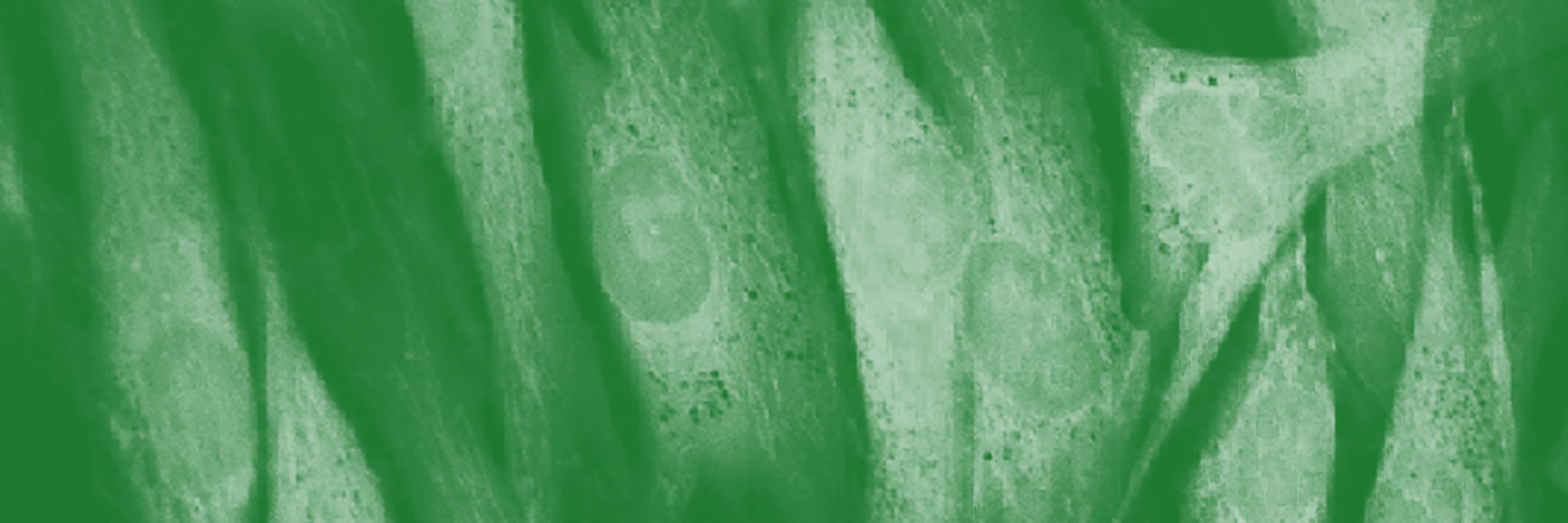
Cover Story: Cardiac glycosides (CGs), well known for their cardiotonic properties, are commonly used in cardiac medicine. The biological activity of CGs is derived from the inhibition of Na+/ K+-ATPase, which is responsible for maintaining the resting potential and the balance of intracellular ions. Recently, novel applications of CGs have emerged. Since the ATPase is involved in a complex signalling cascade linked to apoptosis, CGs could be useful as anticancer agents. In addition, CGs are capable of inducing immunogenic cell death of cancer cells resulting in a strong induction of the anticancer immune response, in some cases leading to tumour eradication. In addition, CGs affect levels of various immune system markers and, thus, could be used to treat inflammation and some autoimmune diseases. Due to their immunogenic activity, CGs represent potentially very useful clinical, multifunctional compounds. View this paper
  • Issues are regarded as officially published after their release is announced to the table of contents alert mailing list .
  • You may sign up for email alerts to receive table of contents of newly released issues.
  • PDF is the official format for papers published in both, html and pdf forms. To view the papers in pdf format, click on the "PDF Full-text" link, and use the free Adobe Reader to open them.

Articles (156)

  • Article
  • Open Access
17 Citations
4,318 Views
11 Pages

L-Proline Activates Mammalian Target of Rapamycin Complex 1 and Modulates Redox Environment in Porcine Trophectoderm Cells

  • Ning Liu,
  • Ying Yang,
  • Xuemeng Si,
  • Hai Jia,
  • Yunchang Zhang,
  • Da Jiang,
  • Zhaolai Dai and
  • Zhenlong Wu

L-proline (proline) is a key regulator of embryogenesis, placental development, and fetal growth. However, the underlying mechanisms that support the beneficial effects of proline are largely unknown. This study used porcine trophectoderm cell line 2...

  • Article
  • Open Access
20 Citations
4,505 Views
14 Pages

Breast cancer is a complex heterogeneous disease with multiple underlying causes. The polyamines putrescine, spermidine, and spermine are polycationic molecules essential for cell proliferation. Their biosynthesis is upregulated in breast cancer and...

  • Article
  • Open Access
26 Citations
4,373 Views
10 Pages

Plasma Extracellular Vesicle α-Synuclein Level in Patients with Parkinson’s Disease

  • Chen-Chih Chung,
  • Lung Chan,
  • Jia-Hung Chen,
  • Yi-Chieh Hung and
  • Chien-Tai Hong

Background: The most established pathognomonic protein of Parkinson’s disease (PD), α-synuclein, is extensively investigated for disease diagnosis and prognosis; however, investigations into whether the free form of α-synuclein in the blood functions...

  • Article
  • Open Access
13 Citations
4,011 Views
14 Pages

Antimicrobial Activity of Cyclic-Monomeric and Dimeric Derivatives of the Snail-Derived Peptide Cm-p5 against Viral and Multidrug-Resistant Bacterial Strains

  • Melaine González-García,
  • Fidel Morales-Vicente,
  • Erbio Díaz Pico,
  • Hilda Garay,
  • Daniel G. Rivera,
  • Mark Grieshober,
  • Lia Raluca Olari,
  • Rüdiger Groß,
  • Carina Conzelmann and
  • Franziska Krüger
  • + 14 authors

Cm-p5 is a snail-derived antimicrobial peptide, which demonstrated antifungal activity against the pathogenic strains of Candida albicans. Previously we synthetized a cyclic monomer as well as a parallel and an antiparallel dimer of Cm-p5 with improv...

  • Article
  • Open Access
14 Citations
4,135 Views
20 Pages

Beneficial Modulation of Lipid Mediator Biosynthesis in Innate Immune Cells by Antirheumatic Tripterygium wilfordii Glycosides

  • Kehong Zhang,
  • Simona Pace,
  • Paul M. Jordan,
  • Lukas K. Peltner,
  • Alexander Weber,
  • Dagmar Fischer,
  • Robert K. Hofstetter,
  • Xinchun Chen and
  • Oliver Werz

Tripterygium wilfordii glycosides (TWG) is a traditional Chinese medicine with effectiveness against rheumatoid arthritis (RA), supported by numerous clinical trials. Lipid mediators (LM) are biomolecules produced from polyunsaturated fatty acids mai...

  • Review
  • Open Access
28 Citations
5,682 Views
15 Pages

Role of Biomolecules in Osteoclasts and Their Therapeutic Potential for Osteoporosis

  • Xin Zhao,
  • Suryaji Patil,
  • Fang Xu,
  • Xiao Lin and
  • Airong Qian

Osteoclasts (OCs) are important cells that are involved in the regulation of bone metabolism and are mainly responsible for coordinating bone resorption with bone formation to regulate bone remodeling. The imbalance between bone resorption and format...

  • Article
  • Open Access
1 Citations
2,677 Views
12 Pages

Impact of Venoarterial Extracorporeal Membrane Oxygenation on Alkaline Phosphatase Metabolism after Cardiac Surgery

  • Thomas Poschner,
  • Anne-Kristin Schaefer,
  • Doris Hutschala,
  • Georg Goliasch,
  • Julia Riebandt,
  • Klaus Distelmaier,
  • Martin H. Bernardi,
  • Martin Andreas,
  • Ruud Brands and
  • Tandis Aref
  • + 2 authors

(1) Alkaline phosphatase (AP) is consumed during cardiopulmonary bypass (CPB). A high AP depletion leads to an impaired outcome after cardiac surgery. However, data is scarce on the postoperative course of AP under venoarterial ECMO (VA-ECMO) support...

  • Article
  • Open Access
9 Citations
3,719 Views
10 Pages

Evaluating Mechanisms of IDH1 Regulation through Site-Specific Acetylation Mimics

  • Joi Weeks,
  • Alexandra I. Strom,
  • Vinnie Widjaja,
  • Sati Alexander,
  • Dahra K. Pucher and
  • Christal D. Sohl

Isocitrate dehydrogenase (IDH1) catalyzes the reversible NADP+-dependent oxidation of isocitrate to α-ketoglutarate (αKG). IDH1 mutations, primarily R132H, drive > 80% of low-grade gliomas and secondary glioblastomas and facilitate the NADPH-depen...

  • Review
  • Open Access
89 Citations
8,108 Views
21 Pages

Carotenoids from Cyanobacteria: Biotechnological Potential and Optimization Strategies

  • Fernando Pagels,
  • Vitor Vasconcelos and
  • Ana Catarina Guedes

Carotenoids are tetraterpenoids molecules present in all photosynthetic organisms, responsible for better light-harvesting and energy dissipation in photosynthesis. In cyanobacteria, the biosynthetic pathway of carotenoids is well described, and apar...

of 16

Get Alerted

Add your email address to receive forthcoming issues of this journal.

XFacebookLinkedIn
Biomolecules - ISSN 2218-273X