

Skip to Content

Antibiotics, Volume 12, Issue 5

2023 May - 150 articles

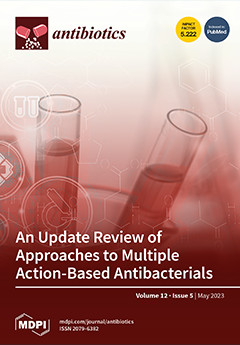
Cover Story: Aspects of recent approaches to countering antimicrobial resistance through the design and development of antibacterial drug combinations, multiple action-based small molecule antibacterials, and prodrugs are discussed in this review, together with some suggestions for future work. The areas covered, amongst others, include nanoparticulates in drug combinations, single-molecule non-cleavable hybrids, and selective activation mechanisms for prodrugs. Many opportunities exist for innovative developments in the general multi-targeting area for antibacterials to help address antimicrobial resistance challenges. View this paper
  • Issues are regarded as officially published after their release is announced to the table of contents alert mailing list .
  • You may sign up for email alerts to receive table of contents of newly released issues.
  • PDF is the official format for papers published in both, html and pdf forms. To view the papers in pdf format, click on the "PDF Full-text" link, and use the free Adobe Reader to open them.

Articles (150)

  • Article
  • Open Access
18 Citations
4,194 Views
12 Pages

Genome-Based Retrospective Analysis of a Providencia stuartii Outbreak in Rome, Italy: Broad Spectrum IncC Plasmids Spread the NDM Carbapenemase within the Hospital

  • Valerio Capitani,
  • Gabriele Arcari,
  • Alessandra Oliva,
  • Federica Sacco,
  • Gaia Menichincheri,
  • Linda Fenske,
  • Riccardo Polani,
  • Giammarco Raponi,
  • Guido Antonelli and
  • Alessandra Carattoli

Providencia stuartii is a member of the Morganellaceae family, notorious for its intrinsic resistance to several antibiotics, including last-resort drugs such as colistin and tigecycline. Between February and March 2022, a four-patient outbreak susta...

  • Article
  • Open Access
5 Citations
6,412 Views
16 Pages

Background: Anaerobic Gram-negative bacteria (AGNB) play a significant role as both pathogens and essential members of the human microbiota. Despite their clinical importance, there remains limited understanding regarding their antimicrobial resistan...

  • Article
  • Open Access
17 Citations
4,611 Views
15 Pages

Antimicrobial Resistance of Escherichia coli Isolates from Livestock and the Environment in Extensive Smallholder Livestock Production Systems in Ethiopia

  • Biruk Alemu Gemeda,
  • Barbara Wieland,
  • Gezahegn Alemayehu,
  • Theodore J. D. Knight-Jones,
  • Hiwot Desta Wodajo,
  • Misgana Tefera,
  • Adem Kumbe,
  • Abebe Olani,
  • Shubisa Abera and
  • Kebede Amenu

The objective of this study was to characterize the distribution of antimicrobial resistance (AMR) of Escherichia coli (E. coli) isolated from livestock feces and soil in smallholder livestock systems. A cross-sectional study was carried out sampling...

  • Article
  • Open Access
26 Citations
4,295 Views
11 Pages

Chemical Composition of the Cinnamomum malabatrum Leaf Essential Oil and Analysis of Its Antioxidant, Enzyme Inhibitory and Antibacterial Activities

  • Aswathi Moothakoottil Kuttithodi,
  • Arunaksharan Narayanankutty,
  • Naduvilthara U. Visakh,
  • Joice Tom Job,
  • Berin Pathrose,
  • Opeyemi Joshua Olatunji,
  • Ahmed Alfarhan and
  • Varsha Ramesh

Cinnamomum species are a group of plants belonging to the Lauraceae family. These plants are predominantly used as spices in various food preparations and other culinary purposes. Furthermore, these plants are attributed to having cosmetic and pharma...

  • Review
  • Open Access
12 Citations
4,876 Views
25 Pages

From Gene to Transcript and Peptide: A Deep Overview on Non-Specific Lipid Transfer Proteins (nsLTPs)

  • Carlos André dos Santos-Silva,
  • José Ribamar Costa Ferreira-Neto,
  • Vinícius Costa Amador,
  • João Pacífico Bezerra-Neto,
  • Lívia Maria Batista Vilela,
  • Eliseu Binneck,
  • Mireli de Santana Rêgo,
  • Manassés Daniel da Silva,
  • Ana Luiza Trajano Mangueira de Melo and
  • Ana Maria Benko-Iseppon
  • + 1 author

Non-specific lipid transfer proteins (nsLTPs) stand out among plant-specific peptide superfamilies due to their multifaceted roles in plant molecular physiology and development, including their protective functions against pathogens. These antimicrob...

  • Article
  • Open Access
6 Citations
2,442 Views
10 Pages

We assessed the clinical results of irrigation and debridement (I&D) with antibiotic-impregnated calcium hydroxyapatite (CHA) as a novel antibiotic delivery system for the treatment of prosthetic-joint-associated infection (PJI) after total hip a...

  • Article
  • Open Access
13 Citations
3,934 Views
12 Pages

Chronic Suppressive Antibiotic Treatment for Staphylococcal Bone and Joint Implant–Related Infections

  • Giancarlo Ceccarelli,
  • Beatrice Perciballi,
  • Alessandro Russo,
  • Paolo Martini,
  • Francesco Marchetti,
  • Marco Rivano Capparuccia,
  • Giancarlo Iaiani,
  • Silvia Fabris,
  • Massimo Ciccozzi and
  • Daniele De Meo
  • + 3 authors

Prosthetic joint infection (PJI) and fracture-related infection (FRI) are difficult-to-treat conditions in patients with severe comorbidity or significant surgical risk. In cases not eligible for standard strategy, debridement procedures with the ret...

  • Communication
  • Open Access
7 Citations
3,512 Views
9 Pages

Cefiderocol is a novel cephalosporin recently approved by the FDA to aid clinicians in the fight against multidrug-resistant (including carbapenem-resistant) gram-negative organisms. The primary objective of this study is to evaluate the 14- and 28-d...

  • Systematic Review
  • Open Access
4 Citations
6,694 Views
16 Pages

Clinical Equivalence between Generic Versus Branded Antibiotics: Systematic Review and Meta-Analysis

  • André Cotia,
  • Haliton Alves Oliveira Junior,
  • Jessica Y. Matuoka and
  • Ícaro Boszczowski

Regulatory authorities authorize the clinical use of generic drugs (GD) based on bioequivalence studies, which consist of the evaluation of pharmacokinetics after a single dose in vitro or in healthy individuals. There are few data on clinical equiva...

  • Article
  • Open Access
11 Citations
4,935 Views
15 Pages

Cross-Sectional Study for Detection and Risk Factor Analysis of ESBL-Producing Avian Pathogenic Escherichia coli Associated with Backyard Chickens in Pakistan

  • Muhammad Adnan Saeed,
  • Muhammad Saqlain,
  • Usman Waheed,
  • Syed Ehtisham-ul-Haque,
  • Aman Ullah Khan,
  • Aziz ur Rehman,
  • Muhammad Sajid,
  • Farhan Ahmad Atif,
  • Heinrich Neubauer and
  • Hosny El-Adawy

The increasing incidence of extended-spectrum β-lactamase (ESBL)-producing Escherichia (E.) coli in backyard chicken farming in Pakistan is of serious concern. This study aimed to assess the prevalence, antimicrobial resistance patterns and risk...

  • Article
  • Open Access
2 Citations
2,693 Views
14 Pages

Cold Atmospheric Plasma Exerts Antimicrobial Effects in a 3D Skin Model of Cutaneous Candidiasis

  • Sarah Fink,
  • Michael Fischer,
  • Sebastian Spange,
  • Oliver Beier,
  • Kerstin Horn,
  • Jörg Tittelbach and
  • Cornelia Wiegand

Cutaneous candidiasis is characterized by an overgrowth of Candida leading to skin inflammation and infection. Similar to bacteria, Candida can develop tolerance to common antifungal drugs. Cold atmospheric plasma (CAP), with its proven antimicrobial...

  • Article
  • Open Access
12 Citations
4,602 Views
17 Pages

Performance of a Pilot-Scale Continuous Flow Ozone-Based Hospital Wastewater Treatment System

  • Takashi Azuma,
  • Miwa Katagiri,
  • Naobumi Sasaki,
  • Makoto Kuroda and
  • Manabu Watanabe

Antimicrobial resistance (AMR) is becoming a global concern. Recently, research has emerged to evaluate the human and environmental health implications of wastewater from medical facilities and to identify acceptable wastewater treatment methods. In...

  • Article
  • Open Access
3 Citations
3,344 Views
11 Pages

Evaluating the Counseling Standards and Ability of Pharmacy Staff to Detect Antibiotic-Drugs Interactions: A Simulated Client Study from Pakistan

  • Muhammad Majid Aziz,
  • Muhammad Fawad Rasool,
  • Muteb Alanazi,
  • Tareq Nafea Alharby,
  • Jowaher Alanazi and
  • Bader Huwaimel

Effective and safe medication use can be maximized by providing medication counseling, which aims to optimize therapeutic results. This approach improves the effectiveness of antibacterial treatment, reduces treatment expenses, and mitigates the emer...

  • Article
  • Open Access
4 Citations
3,446 Views
15 Pages

Novel bacterial topoisomerase inhibitors (NBTIs) are a new class of antibacterial agents that target bacterial type II topoisomerases (DNA gyrase and topoisomerase IV). Our recently disclosed crystal structure of an NBTI ligand in complex with DNA gy...

  • Article
  • Open Access
7 Citations
4,147 Views
13 Pages

Prevalence and Antibiotic Resistance Pattern of Streptococcus, Staphylococcus, Neisseria meningitidis and Enterobacteriaceae in Two Reference Hospitals of Yaoundé: An Overview before and during COVID-19 Pandemic Era

  • Cecile Ingrid Djuikoue,
  • Willy Yamdeu Djonkouh,
  • Cavin Epie Bekolo,
  • Rodrigue Kamga Wouambo,
  • Raspail Carrel Founou,
  • Paule Dana Djouela Djoulako,
  • Gilder Tonfak Temgoua,
  • Benjamin D. Thumamo Pokam,
  • Nicolas Antoine-Moussiaux and
  • Teke R. Apalata

The COVID-19 pandemic led to tremendously use of antimicrobial due to the lack of proper treatment strategies, raising concerns about emergence of antimicrobial resistance (AMR). This study aimed at determining the prevalence and antibiotic resistanc...

  • Article
  • Open Access
15 Citations
4,671 Views
16 Pages

Adaptive Laboratory Evolution of Staphylococcus aureus Resistance to Vancomycin and Daptomycin: Mutation Patterns and Cross-Resistance

  • Vladimir Gostev,
  • Olga Kalinogorskaya,
  • Julia Sopova,
  • Ofelia Sulian,
  • Polina Chulkova,
  • Maria Velizhanina,
  • Irina Tsvetkova,
  • Irina Ageevets,
  • Vladimir Ageevets and
  • Sergey Sidorenko

Vancomycin and daptomycin are first-line drugs for the treatment of complicated methicillin-resistant Staphylococcus aureus (MRSA) infections, including bacteremia. However, their effectiveness is limited not only by their resistance to each antibiot...

  • Communication
  • Open Access
2 Citations
2,707 Views
10 Pages

Purpose/Introduction: A decline in antibiotic (AB) prescriptions was reported during the coronavirus 2019 (COVID-19) pandemic. Therefore, we investigated AB utilization during the COVID-19 pandemic using data from a large database in Germany. Methods...

  • Article
  • Open Access
20 Citations
5,197 Views
15 Pages

Characterization of blaKPC-2 and blaNDM-1 Plasmids of a K. pneumoniae ST11 Outbreak Clone

  • Camila Maria dos Santos Boralli,
  • Julian Andres Paganini,
  • Rodrigo Silva Meneses,
  • Camila Pacheco Silveira Martins da Mata,
  • Edna Marilea Meireles Leite,
  • Anita C. Schürch,
  • Fernanda L. Paganelli,
  • Rob J. L. Willems and
  • Ilana Lopes Baratella Cunha Camargo

The most common resistance mechanism to carbapenems is the production of carbapenemases. In 2021, the Pan American Health Organization warned of the emergence and increase in new carbapenemase combinations in Enterobacterales in Latin America. In thi...

  • Article
  • Open Access
8 Citations
3,572 Views
15 Pages

Identifying Predictors Associated with Risk of Death or Admission to Intensive Care Unit in Internal Medicine Patients with Sepsis: A Comparison of Statistical Models and Machine Learning Algorithms

  • Antonio Mirijello,
  • Andrea Fontana,
  • Antonio Pio Greco,
  • Alberto Tosoni,
  • Angelo D’Agruma,
  • Maria Labonia,
  • Massimiliano Copetti,
  • Pamela Piscitelli,
  • Salvatore De Cosmo and
  • on behalf of the Internal Medicine Sepsis Study Group

Background: Sepsis is a time-dependent disease: the early recognition of patients at risk for poor outcome is mandatory. Aim: To identify prognostic predictors of the risk of death or admission to intensive care units in a consecutive sample of septi...

  • Article
  • Open Access
14 Citations
3,282 Views
14 Pages

Cytotoxicity and Antibiofilm Activity of Silver-Polypropylene Nanocomposites

  • Denise Bellisario,
  • Loredana Santo,
  • Fabrizio Quadrini,
  • Maryam Hassiba,
  • Nour Bader,
  • Shazeda H. Chowdhury,
  • Mohammad K. Hassan and
  • Susu M. Zughaier

The development of biocompatible nanomaterials that interface with human skin and tissue is critical for advancing prosthetics and other therapeutic medical needs. In this perspective, the development of nanoparticles with cytotoxicity and antibiofil...

  • Article
  • Open Access
3 Citations
4,535 Views
16 Pages

Challenges in the Implementation of the NeoOBS Study, a Global Pragmatic Observational Cohort Study, to Investigate the Aetiology and Management of Neonatal Sepsis in the Hospital Setting

  • Amy Riddell,
  • Aislinn Cook,
  • Nathalie Khavessian,
  • Sally Ellis,
  • Davide Bilardi,
  • Erika Correia,
  • Tomislav Kostyanev,
  • Alessandra Nardone,
  • Neal Russell and
  • Tatiana Munera-Huertas
  • + 44 authors

Neonatal sepsis is a significant cause of mortality and morbidity in low- and middle-income countries. To deliver high-quality data studies and inform future trials, it is crucial to understand the challenges encountered when managing global multi-ce...

  • Article
  • Open Access
4 Citations
3,602 Views
29 Pages

Effect of Indole-Containing Pyrazino[2,1-b]quinazoline-3,6-diones in the Virulence of Resistant Bacteria

  • Mariana C. Almeida,
  • Nikoletta Szemerédi,
  • Fernando Durães,
  • Solida Long,
  • Diana I. S. P. Resende,
  • Paulo Martins da Costa,
  • Madalena Pinto,
  • Gabriella Spengler and
  • Emília Sousa

Drug resistance is rising to alarming levels, constituting one of the major threats to global health. The overexpression of efflux pumps and the formation of biofilms constitute two of the most common resistance mechanisms, favoring the virulence of...

  • Article
  • Open Access
6 Citations
2,393 Views
12 Pages

Antimicrobial coatings have a finite lifetime because of wear, depletion of the active ingredient, or surface contamination that produces a barrier between the pathogen and the active ingredient. The limited lifetime means that facile replacement is...

  • Article
  • Open Access
8 Citations
3,064 Views
14 Pages

Evaluation of Five Host Inflammatory Biomarkers in Early Diagnosis of Ventilator-Associated Pneumonia in Critically Ill Children: A Prospective Single Center Cohort Study

  • Maria Sdougka,
  • Maria Simitsopoulou,
  • Elena Volakli,
  • Asimina Violaki,
  • Vivian Georgopoulou,
  • Argiro Ftergioti,
  • Emmanuel Roilides and
  • Elias Iosifidis

Background: Early diagnosis of ventilator-associated pneumonia (VAP) remains a challenge due to subjective clinical criteria and the low discriminative power of diagnostic tests. We assessed whether rapid molecular diagnostics in combination with Cli...

  • Article
  • Open Access
8 Citations
4,214 Views
17 Pages

Employing Gamma-Ray-Modified Carbon Quantum Dots to Combat a Wide Range of Bacteria

  • Zoran M. Marković,
  • Aleksandra S. Mišović,
  • Danica Z. Zmejkoski,
  • Nemanja M. Zdravković,
  • Janez Kovač,
  • Danica V. Bajuk-Bogdanović,
  • Dušan D. Milivojević,
  • Marija M. Mojsin,
  • Milena J. Stevanović and
  • Biljana M. Todorović Marković
  • + 1 author

Nowadays, it is a great challenge to develop new medicines for treating various infectious diseases. The treatment of these diseases is of utmost interest to further prevent the development of multi-drug resistance in different pathogens. Carbon quan...

  • Article
  • Open Access
20 Citations
4,784 Views
17 Pages

Adverse Drug Reactions Relevant to Drug Resistance and Ineffectiveness Associated with Meropenem, Linezolid, and Colistin: An Analysis Based on Spontaneous Reports from the European Pharmacovigilance Database

  • Bogdan Ioan Vintila,
  • Anca Maria Arseniu,
  • Anca Butuca,
  • Mihai Sava,
  • Victoria Bîrluțiu,
  • Luca Liviu Rus,
  • Dan Damian Axente,
  • Claudiu Morgovan and
  • Felicia Gabriela Gligor

Antimicrobial resistance is considered one of the major threats to public health and is an important factor that influences the patient’s outcome in the intensive care unit. Pharmacovigilance can help raise awareness of potential drug resistanc...

  • Review
  • Open Access
3 Citations
3,393 Views
12 Pages

Antibiotic stewardship (AS) programs have become a priority for health authorities to reduce the number of infections by super-resistant microorganisms. The need for these initiatives to minimize the inadequate use of antimicrobials is essential, and...

  • Article
  • Open Access
7 Citations
3,594 Views
16 Pages

Genomic Characterization of Antibiotic-Resistant Campylobacterales Isolated from Chilean Poultry Meat

  • Macarena Concha-Toloza,
  • Mónica Lopez-Cantillo,
  • Jose Arturo Molina-Mora and
  • Luis Collado

Due to the lack of knowledge about Campylobacterales in the Chilean poultry industry, the objective of this research was to know the prevalence, resistance, and genotypes of Campylobacter, Arcobacter and Helicobacter in 382 samples of chicken meat pu...

  • Article
  • Open Access
1 Citations
3,497 Views
10 Pages

The Real Practice Prescribing Antibiotics in Outpatients: A Failed Control Case Assessed through the Simulated Patient Method

  • María Guadalupe Miranda-Novales,
  • Karen Flores-Moreno,
  • Mauricio Rodríguez-Álvarez,
  • Yolanda López-Vidal,
  • José Luis Soto-Hernández,
  • Fortino Solórzano Santos and
  • Samuel Ponce-de-León-Rosales

The first level of medical care provides the largest number of consultations for the most frequent diseases at the community level, including acute pharyngitis (AP), acute diarrhoea (AD) and uncomplicated acute urinary tract infections (UAUTIs). The...

  • Article
  • Open Access
3,235 Views
18 Pages

Evaluation of Alternative Doxycycline Antibiotic Regimes in an Inhalational Murine Model of Q Fever

  • Kate A. Clay,
  • M. Gill Hartley,
  • Adam O. Whelan,
  • Mark S. Bailey and
  • Isobel H. Norville

The timing of the initiation of antibiotic treatment has been shown to impact the clinical outcome of many bacterial infections, including Q fever. Delayed, suboptimal or incorrect antibiotic treatment has been shown to result in poor prognosis, resu...

  • Article
  • Open Access
2 Citations
2,864 Views
14 Pages

The presence of pharmaceuticals in aquatic ecosystems mostly originates from wastewater treatment plants (WWTPs) and such a situation can be responsible for significant negative impacts on natural ecosystems, such as estuarine and coastal areas. Bioa...

  • Article
  • Open Access
3 Citations
2,679 Views
13 Pages

Epidemiological Impact on Use of Antibiotics in Patients Hospitalized for COVID-19: A Retrospective Cohort Study in Italy

  • Zaira Maraia,
  • Tony Mazzoni,
  • Miriana Pia Turtora,
  • Alessandra Tempera,
  • Marco Spinosi,
  • Anita Vagnoni and
  • Isidoro Mazzoni

The increased incidence of antimicrobial resistance during coronavirus disease 2019 (COVID-19) is a very important collateral damage of global concern. The cause is multifactorial and is particularly related to the high rates of antibiotic use in COV...

  • Review
  • Open Access
5 Citations
4,050 Views
14 Pages

Does Nitrofurantoin Improve the Portfolio of Vets against Resistant Bacteria in Companion Animals?

  • Cristina Vercelli,
  • Michela Amadori,
  • Graziana Gambino and
  • Giovanni Re

In clinical practice in dogs and cats, antimicrobials are frequently used, sometimes overused or misused, increasing antimicrobial resistance (AMR). In order to limit the phenomenon, laws have been enacted and guidelines for prudent and rational use...

  • Systematic Review
  • Open Access
28 Citations
11,520 Views
26 Pages

Stenotrophomonas maltophilia (SM) represents a challenging pathogen due to its resistance profile. A systematic review of the available evidence was conducted to evaluate the best treatment of SM infections to date, focusing on trimethoprim/sulfameth...

  • Review
  • Open Access
22 Citations
4,517 Views
17 Pages

Combating Microbial Infections Using Metal-Based Nanoparticles as Potential Therapeutic Alternatives

  • Rajwinder Kaur,
  • Kirandeep Kaur,
  • Mohammad H. Alyami,
  • Damanpreet Kaur Lang,
  • Balraj Saini,
  • Mohammad F. Bayan and
  • Balakumar Chandrasekaran

The nature of microorganisms and the efficiency of antimicrobials have witnessed a huge co-dependent change in their dynamics over the last few decades. On the other side, metals and metallic compounds have gained popularity owing to their effectiven...

  • Review
  • Open Access
30 Citations
16,131 Views
16 Pages

Six Long-Standing Questions about Antibiotic Prophylaxis in Surgery

  • Massimo Sartelli,
  • Marja A. Boermeester,
  • Miguel Cainzos,
  • Federico Coccolini,
  • Stijn W. de Jonge,
  • Kemal Rasa,
  • E. Patchen Dellinger,
  • Deborah A. McNamara,
  • Donald E. Fry and
  • Philip S. Barie
  • + 15 authors

Surgical site infections (SSIs) are the most common adverse event occurring in surgical patients. Optimal prevention of SSIs requires the bundled integration of a variety of measures before, during, and after surgery. Surgical antibiotic prophylaxis...

  • Article
  • Open Access
3 Citations
3,206 Views
12 Pages

Concentrations of Co-Administered Meropenem and Vancomycin in Spinal Tissues Relevant for the Treatment of Pyogenic Spondylodiscitis—An Experimental Microdialysis Study

  • Josefine Slater,
  • Maiken Stilling,
  • Pelle Hanberg,
  • Sofus Vittrup,
  • Martin Bruun Knudsen,
  • Sara Kousgaard Tøstesen,
  • Josephine Olsen Kipp and
  • Mats Bue

Co-administration of meropenem and vancomycin has been suggested as a systemic empirical antibiotic treatment of pyogenic spondylodiscitis. The aim of this study was, in an experimental porcine model, to evaluate the percentage of an 8-h dosing inter...

  • Communication
  • Open Access
5 Citations
3,662 Views
8 Pages

Molecular Detection of Metronidazole and Tetracycline Resistance Genes in Helicobacter pylori-Like Positive Gastric Samples from Pigs

  • Francisco Cortez Nunes,
  • Emily Taillieu,
  • Teresa Letra Mateus,
  • Sílvia Teixeira,
  • Freddy Haesebrouck and
  • Irina Amorim

Antimicrobial resistance is a major public health concern. The aim of this study was to assess the presence of antibiotic resistance genes, previously reported in Helicobacter pylori, in gastric samples of 36 pigs, in which DNA of H. pylori-like orga...

  • Article
  • Open Access
17 Citations
4,952 Views
16 Pages

Antimicrobial Use by Peri-Urban Poultry Smallholders of Kajiado and Machakos Counties in Kenya

  • Florence Mutua,
  • Gideon Kiarie,
  • Miriam Mbatha,
  • Joshua Onono,
  • Sofia Boqvist,
  • Emily Kilonzi,
  • Lawrence Mugisha,
  • Arshnee Moodley and
  • Susanna Sternberg-Lewerin

Antimicrobial use (AMU) is a major driver of antimicrobial resistance (AMR). An understanding of current practices can lead to better targeting of AMU-reducing interventions. An analysis of the distribution and current usage of veterinary drugs in pe...

  • Article
  • Open Access
5 Citations
3,108 Views
14 Pages

Daptomycin Pharmacokinetics in Blood and Wound Fluid in Critical Ill Patients with Left Ventricle Assist Devices

  • Stefanie Calov,
  • Frederik Munzel,
  • Anka C. Roehr,
  • Otto Frey,
  • Lina Maria Serna Higuita,
  • Petra Wied,
  • Peter Rosenberger,
  • Helene A. Haeberle and
  • Kristian-Christos Ngamsri

Daptomycin is a cyclic lipopeptide antibiotic with bactericidal effects against multidrug-resistant Gram-positive bacteria, including methicillin-resistant Staphylococcus aureus (MRSA) and vancomycin-resistant Enterococcus faecalis (VRE). For critica...

  • Article
  • Open Access
3 Citations
2,284 Views
14 Pages

Quinolone Resistance in Gallibacterium anatis Determined by Mutations in Quinolone Resistance-Determining Region

  • Kasper Rømer Villumsen,
  • Toloe Allahghadry,
  • Magdalena Karwańska,
  • Joachim Frey and
  • Anders Miki Bojesen

Control of the important pathogen, Gallibacterium anatis, which causes salpingitis and peritonitis in poultry, relies on treatment using antimicrobial compounds. Among these, quinolones and fluoroquinolones have been used extensively, leading to a ri...

  • Article
  • Open Access
8 Citations
2,652 Views
13 Pages

Diflunisal Attenuates Virulence Factor Gene Regulation and Phenotypes in Staphylococcus aureus

  • Liana C. Chan,
  • Mihyun Park,
  • Hong K. Lee,
  • Siyang Chaili,
  • Yan Q. Xiong,
  • Arnold S. Bayer,
  • Richard A. Proctor and
  • Michael R. Yeaman

Virulence factor expression is integral to pathogenicity of Staphylococcus aureus. We previously demonstrated that aspirin, through its major metabolite, salicylic acid (SAL), modulates S. aureus virulence phenotypes in vitro and in vivo. We compared...

  • Article
  • Open Access
15 Citations
3,390 Views
19 Pages

The main objective of the study was to evaluate whether or not implementing selective dry cow therapy (SDCT) on commercial dairy farms reduces antimicrobial consumption without negatively affecting future performances when compared to blanket dry cow...

  • Article
  • Open Access
8 Citations
2,867 Views
12 Pages

Skin and soft tissue infections (SSTIs) are associated with significant morbidity and healthcare costs, especially when caused by methicillin-resistant Staphylococcus aureus (MRSA). Vancomycin is a preferred antimicrobial therapy for the management o...

  • Article
  • Open Access
8 Citations
3,636 Views
20 Pages

Nontyphoidal Salmonella species are one of the main bacterial causes of foodborne diseases, causing a public health problem. In addition, the ability to form biofilms, multiresistance to traditional drugs, and the absence of effective therapies again...

  • Feature Paper
  • Article
  • Open Access
7 Citations
3,145 Views
17 Pages

Electrospun Membrane Based on Poly(L-co-D,L lactic acid) and Natural Rubber Containing Copaiba Oil Designed as a Dressing with Antimicrobial Properties

  • Marcelo Formigoni Pinto,
  • Bruna V. Quevedo,
  • Jessica Asami,
  • Daniel Komatsu,
  • Moema de Alencar Hausen and
  • Eliana Aparecida de Rezende Duek

Drug delivery systems of natural antimicrobial compounds, such as copaiba oil (CO), have become relevant in the scientific community due to the recent prevalence of the public health complications related to antibiotic resistance. Electrospun devices...

  • Article
  • Open Access
10 Citations
3,975 Views
13 Pages

Antibiotics Knowledge, Attitudes and Behaviours among the Population Living in Cyprus

  • Mark J. M. Sullman,
  • Timo J. Lajunen,
  • Buket Baddal and
  • Menelaos Apostolou

This study investigated the knowledge, attitudes and behaviours towards antibiotics among the general public living in the Republic of Cyprus (RoC) and the Turkish Republic of Northern Cyprus (TRNC) by using an online questionnaire. Differences were...

  • Article
  • Open Access
7 Citations
2,921 Views
11 Pages

A significant increase of microbial resistance to glycopeptides (especially vancomycin-resistant enterococci and Staphylococcus aureus) prompted researchers to design new semisynthetic glycopeptide derivatives, such as dual-action antibiotics th...

  • Review
  • Open Access
11 Citations
3,771 Views
19 Pages

Understanding Antimicrobial Resistance Using Genome-Scale Metabolic Modeling

  • Tania Alonso-Vásquez,
  • Marco Fondi and
  • Elena Perrin

The urgent necessity to fight antimicrobial resistance is universally recognized. In the search of new targets and strategies to face this global challenge, a promising approach resides in the study of the cellular response to antimicrobial exposure...

  • Feature Paper
  • Article
  • Open Access
8 Citations
4,581 Views
17 Pages

Phylogenetic Analysis of Escherichia coli Isolated from Australian Feedlot Cattle in Comparison to Pig Faecal and Poultry/Human Extraintestinal Isolates

  • Yohannes E. Messele,
  • Darren J. Trott,
  • Mauida F. Hasoon,
  • Tania Veltman,
  • Joe P. McMeniman,
  • Stephen P. Kidd,
  • Steven P. Djordjevic,
  • Kiro R. Petrovski and
  • Wai Y. Low

The similarity of commensal Escherichia coli isolated from healthy cattle to antimicrobial-resistant bacteria causing extraintestinal infections in humans is not fully understood. In this study, we used a bioinformatics approach based on whole genome...

of 3

XFacebookLinkedIn
Antibiotics - ISSN 2079-6382